284 Mike Bledsoe & Mark England: Cognitive Fitness & Building Verbal Strength
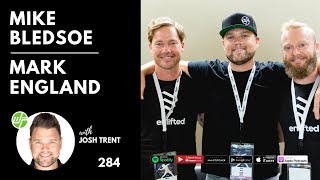
Episode 284 of Wellness Force Radio (host Josh Trent) is a live interview (Paleo FX, Austin) with Mike Bledsoe and Mark England about cognitive fitness, verbal strength, and their Enlifted/Procabulary programs. The guests share personal stories (Mark’s Thailand experience, ‘enlightened poop’, injury and identity shift; Mike’s long fitness background), define cognitive fitness as an integrative practice of breath, language, movement and identity, and explain Procabulary’s tools for replacing conflict language with architect language to improve perception, down-regulation, learning speed, and sustainable performance. The conversation emphasizes process-oriented identity work, kindness, and practical techniques (breath, language reframing) to reduce tunnel vision and increase adaptability.
Chapters
What we do with people is we start teaching them how to organize their mind, how to make meaning, good meaning out of what's going on in their body, to create a way of organizing the mind to make it not only effective, but creative. The way that most people's minds are built right now is. It's very destructive. There's a lot of focus on what people do not want to happen. The pictures and the stories that are being generated in your mind over and over and over again is creating, creating your reality. I've had the experience, I've watched other people go through the experience of changing their perception of the world through changing their language. And then all of a sudden, colors get brighter and the ability to see opportunities that this opportunity was fucking right under my nose this whole time. Oh, now I know how to take advantage of it.
That's Mike Bledsoe, and this is episode 284 of Wellness Force Radio, where we discover the physical and emotional intelligence to live life well. Welcome to Wellness Force. This is Josh Trent. I trust you're having a beautiful day wherever you are, in the car, outside, well, you're alive, we're breathing, we're still here. You made it. This is half the battle is just being in this physical meat suit. Have you been seeing the incredible content we've been putting out for Wellness Force over the past two weeks? The behind the scenes tour of Paul Check's Heaven house on our YouTube channel, the Birch organic mattress product review, the double dose of podcasts over the past month, twice a week. There is so much rich content for you to Explore over@wellnessforce.com podcast and this week I have a big question for you. Have you ever heard of the term cognitive fitness? I've heard of cognition, I've heard of fitness, but this is the first time I've heard them put together. Cognitive fitness is a fascinating term and an even deeper subject to explore. We're learning about what this means to increase our wellness from sought after coaches and speakers Mark England and Mike Bledsoe. Today on the podcast, this wraps our final live in person episode from Paleo FX in Austin, Texas. Now, this episode was very unique. We were sitting on a couch at the top of a VIP stairwell as thousands of people were walking by and we just happened to be having a powerhouse conversation about the power of our words for the quality of our lives. We talked about this on the show with Mary Shores. But Mark England, he is the founder of Procabulary. Mark would say we're using, quote, the language of getting things done. Mark has been studying methods and techniques for personal empowerment for 10 plus years. He has a Master's degree in International Education and is a NLP Master Practitioner. Now he does something really unique. He blends his academic and spiritual presence. Along with Mike Bledsoe, the former host of Barbell Shrugged and the host of the Bledsoe Show. He's also the co founder of of Enlifted with Mark England. Now this Enlifted program, it's a breakthrough mindset program designed to create and sustain lasting mental frameworks for increased cognitive fitness and verbal strength. Speaking of being strong, I was just flexing my bicep. The strength comes equally from our mind and body. When it comes to CrossFit workouts or hiking or swimming or literally anything you do. Our show sponsor today is a huge supporter of keeping you physically and athletically ready. It's about recovery, really. We don't get stronger when we work out. We actually get stronger when we recover properly. This is why Wellness Force partnered with Life Aid Beverage Company, creators of the Fit Aid Zero and the Fit Aid Zero RX. So far after my workouts, the favorite is the Fit Aid Sugar Free Zero. Check this out. It has glutamine, glucosamine, turmeric, BCAAs, CoQ10 Full Spectrum B Complex. This is officially now my favorite recovery drink after the gym or hikes or nature. I'm loving this. I know you're gonna love it too, because you're part of this show with us. Actually, get $20 off 48 cans of the Zero and the Zero RX. It tastes amazing. This is the ultimate hookup. 20 bucks off, really generous. And if you're already looking for a healthy, nutrient rich beverage that can give you better recovery, give yourself the gift. $20 off 48 cans of 0 and 0 Rx. You can mix and match over@wellnessforce.com 0 that's wellnessforce.com 0 support our friends over at Life Aid who support this podcast and at the same time recover better and smarter with a great tasting drink. Now, we all know that life changes and we grow wiser. Our bodies change too. Our goals change. If we're going to live in these dynamic meat suits on this dynamic blue ball in space, the whole set it and forget it mindset is not going to work. Cognitive fitness, which we're talking about today on the show with Mark and Mike, is about dynamism. It's about adaptability and capacity over time. They say being cognitively fit means having access to a variety of practical tools for a variety of different Situations that these are utilized to build a framework for sustained success. We also talk about Procabulary, founded by Mark England that I personally have gone through and Lauren from our team has gotten massive value from this online language up leveling program. Builds fun and simple, easy to use tools that can help you discover direction and purpose and really turbocharge your goals. We all communicate with words all day long, so in your daily tasks, in regular communication, I think you're gonna be really surprised by some of the turnarounds and reframes that we use with language on this. This was a true fun back and forth like tennis match conversation where the two of the brightest minds in wellness and personal development sat down with me live at Paleo. I know you're gonna love this conversation. Make sure you give Mark England and Mike Bledsoe a huge shout on Instagram and social and of course learn more about Procabulary and enlifted at the show notes page for wellnessforce.com28 4 Mike this.
Has been coming for me and you for like a year, Mark. December we met, I was on my way to Thailand doing some soma breath work and a friend said, you need to talk to Mark England not just about Procabulary, but about life. What is it about you that draws people into you, man?
I don't know, man. It could be my slow southern draw. It could also be that sometimes when people are traveling to Thailand, they want to talk to someone who's already been there.
Yeah.
So I can. I can say yes to that. What'd you think? What do you think of the Land of Smiles, bro?
Well, the same with Thailand. It was abject poverty and total chaos, but also extreme beauty and total presence. And the thing I liked the most was these people love no matter where they are. It's a very interesting way to learn about life is to go to a foreign country and out there they sell gasoline out of whiskey bottles on the street that you pour into a scooter. Very crazy environment. Yet most people are there. There's two kinds. There's like people that go there to kind of escape and they just want to go to like tantra classes and kind of escape from the real world. And then there's people that go out there to do it.
Are you saying tantra classes are not the real world?
Well, they're part of tantra. Can be in the real world, but there's workshop divers that just go from like workshop to workshop.
That sounds pretty ideal to me.
Yeah, it does sound good. But.
But when we Connected.
It's funny. Like, meeting you in person in Encinitas. Totally different than on the phone. Have you guys ever experienced this? You talk to somebody on the phone and you meet him in person. It's like, whoa, I've done that. Complete polar opposites. Like, you struck me on the phone as, like, someone who had, like, lots of energy. And then when I met you in person, I didn't know if you just done, like, a combo ceremony or something, but you were very grounded. It was almost like you were in almost like a teaching mode of some sort. Remember when I met you at the store?
100.
What were you going through that day?
That's how I. Bro, man.
Yeah.
Yeah. I like. I like. I like a slow pace. Yeah, a slow, smooth pace. The beard had something to do with it. I grow that thing in, and I get. I get even a little more feral, which I like.
Okay. Yeah, yeah. And you have a big kickboxing background.
I've done some kickboxing.
You've worked on your inner caveman for quite some time.
I have, man. It's. You know, I look at dogs and the little dogs that. You see that. That. The little yappy dogs that just. That shake a lot, they're. They're very nervous. Those things used to be wolves. When I put two and two together, that humanity is basically in a process of continually domesticating themselves, I was like, man, I gotta get a little more wild. That was about 15 years ago. And, yeah, it works.
Mm.
I feel better.
Yeah.
I feel wilder.
And the roots run deep. You're in Thailand for how many decades? Almost 10 years.
I was over there for 10 years.
Mike, have you been in Thailand?
No.
What's up? You're gonna go.
Keep avoiding it.
What's the avoidance process?
He just wants to go with us.
Oh, yeah.
Well, true.
This is fascinating to me because travel builds so much character, builds so much heart, you know, to go around the world. What have you learned the most by living in Thailand?
That's a very, very good question. What have I learned the most?
Yeah.
Thailand broke me, and I needed that. So I went over there for kickboxing, and shortly after I got there, I found myself on the operating table getting my second knee surgery. So the game changed, the whole thing stopped. And I would have been a very small fish in a very big pond anyway, because that is the Mecca of Thai boxing, obviously. Bangkok. And then I'm sidelined and watching my dream happen for other people while I'm all wrecked. And I'm so glad that that happened, because I was in a very self serving mode. The most important thing for me, number one, was competition and fighting. And I gave, you know, I was a good friend and everything, but. But I gave very little back to the community. I didn't even think about it. I had to have that, that version of me and my addiction to that version of me, that identity smashed. And I wasn't going to do it on my own. I needed, I needed a massive change of environment. It is exactly on the other side of the globe of Richmond, Virginia from where I'm from. Bangkok is on the very opposite side.
Of the earth and the opposite magnetic pole.
Opposite. It's, it's a complete opposite. And I went over there, smashed myself up and I'm like, I'm not going home. I'm not going back to that life, not being able to participate, because that's what everybody knew me as. And I was like, okay, well, I'm gonna stay here and suffer till I figure things out.
Yep.
And I will always be grateful to Thailand, eternally grateful. And I'll always go back. So, you know, it's a, it's a decent trip to get over there, man.
Three, two boats, three planes, a lot.
Of sitting, a lot of sitting, a.
Lot of like, like it was 20 hours for me to get to Thailand.
You know, on one of those 14 hour flights. You know, you get in, you watch two movies, eat, have a meal, take a nap and you wake up and you still got eight hours. Yeah, it's, it's a thing, but, but it's, it's, it's always so close to me. In my, in my mind, it's like, oh, Thailand is just right there. All I got to do is tap some keys and I'm, I'm walking out the airport in Bangkok. And when I hit, when I walk out of the airport in Bangkok and I smell Thailand, it's got a certain smell to it and feel it and hear Thai language, people speaking Thai. I'm home, dude. I'm, I've always got, I've always got a place to go. I'll always feel comfortable there. And yeah, it gave me, it gave me the opportunity to, to learn the language game, to learn the story game, and to, and to give me the opportunity to reflect on myself in a way that I could not possibly do in the United States. Not a chance.
So did you come to procabulated fruition out there? Is that where it flourished? Is that where the seed was planted?
Yes.
Yeah.
Yes.
And you had been instructing for how long out There. By the time vocabulary came up, eight years. Eight years.
Yeah. So I was. I lived in Bangkok for five years. I was a sports teacher at a international school. Great job, man. Loved. Loved the kids. Yeah, I played dodgeball. I played dodgeball. I took kids swimming. Just super fun. Taught them Frisbee, like we do. One whole quarter, just Frisbees. That's it. I take 30 kids and a stack of Frisbees out to the field and just pitch them. I was also on an American calendar. And so I had four months paid vacation every year. And an enlightened poop changed my whole life. It's it.
An enlightened poop.
Enlightened doo doo.
Does Mike know this story?
Maybe.
I've never heard this.
You never heard this? Okay, so I'm all fucked up, man. Just. I'm in a body that is hurting. Oh, wait, I am. Emotionally. I didn't. I lost the dexterity in my face due to the story I was telling myself about myself and what happened to me. I had all the people to blame, and just victimhood descended my face. I could. I didn't laugh for a whole year. I couldn't get my face in position to.
Are we talking, like a physical thing, or is this an emotional scene?
Both.
Both? Yeah.
You know, our emotions, they influence what we do with our face. And if someone stays bitter for. I wasn't even bitter, dude. I was seething. I was seething. Martial arts was my only avenue of expression. That really scratched the itch. And when that was gone, man, I reverted back to all my old bad habits, plus some. So anyway, I'm sitting at the pool with the high school and middle school sports teacher, and he hands me this book. He goes, you should check this out. It's called the Tao of Health, Sex and Longevity by Daniel Reed. And it's about how the Taoists go about cultivating health. Talked about the meridian systems and energy and fasting and sleeping and meditation and sexual practices. Acupuncture, and I'd had some acupuncture in college. I was like, okay, well, that makes sense. And I'm thumbing through this. This book, and it gets to pooping, and it showed a guy sitting on the toilet and it diagrammed his insides. And then it showed a guy squatting and how it aligned. And I'm like, I gotta take a shit right now. So I said, watch the kids. I went in to the bathroom, squatted down on the toilet, and had a glorious elimination.
Wow.
I stood up and it was.
It.
It. Lights went on in My head, I literally felt more alive. I had never had a poop like that in my entire life.
This is a truly enlightened poop.
It's a truly enlightened poop. I walked out of the. I was immediately sold. Walked right out of the bathroom, went over the dude. And, and, and I was like, I'm taking this book and I'm reading. He goes, better than that. Go talk to our vice principal. Because there's a fasting resort on the island of Koh Samui. You went to Copanyang?
Yes.
Did you go through Koh Samuel?
I stopped there to get like an extended visa, but I didn't have an enlightened poop.
Right, right. You've probably been pooping enlightened for a while now.
Yeah.
So he goes, there's a, there's a fasting resort that's built. The owner actually knows Daniel Reed and their fasting protocol is built off of this book. I said, sign me up. I can start here. I can do something. This was a, you know, we're talking, we're talking later. And, and he's, he's opening about taking action, big picture, what he sees in the fitness industry. This was, this was an av. I needed a way to start to work on myself. It didn't matter what it was. I could have started it anywhere. I just, I had no point to begin. This was it. And so I quadrupled down on doing these detoxes. And so I would go down with my, on my. When I had vacations and I'd do seven day intestinal tract cleansing programs. And at the time, the spa was hot. It was hopping. You know, 50 people from all around the world that are weird like you, in a similar way, they want something enough to. Where they will pay to not eat and stick 5 gallons of coffee water up their ass twice a day and really clean everything out, man. And so you can imagine, guess what? Everybody's talking about their poops. Guess what else. Everyone's talking about everything else under the sun as far as practices, alternative health practices. It was a mecca of practitioners and people coming in that studied different things. So I had numerous, numerous paradigm shattering conversations until I was like, okay, I'm going to go get trained in this one style of story work. I went to an emotional detox seminar. My first, fourth trip down there. Me and my dumb ass. I, I snickered at it. The guy was like, hey, man, there's an emotional detox seminar tonight. I was like, emotional detox. He goes, dude, you need to go. Yes, and he said it in a way that he spelled me. He put a spell on me.
And is this like a mentor of yours or a friend?
Good question. What ended up happening is I went to this, this emotional detox seminar and the guy that was facilitating it was a 70 year old British guy. And he ended up being my mentor in this work.
He sounds like he's the Kwan. He sounds like he's on a mountain.
Barry Musgrave, I talk about him a lot when it's time to talk about this part of the story. He was known as Barry the Builder in Totnes in England. And one of his son's best friends committed suicide. He had a very successful building business. And he looked at that, looked at the carnage that it's. That it caused. And he goes, there has to be a better way. He sold his business and traveled around the world studying the best modalities of basically liberating people from the stories of themselves. And he was giving a seminar on emotional freedom technique. It's the tapping, okay. And I watched him take a girl through a story that she was all was messed up about. Told the story at first rendition, angry in tears. Second rendition, changed some words around sad, no tears. Third rendition, took out the end, switched something in the front. Now she's, now she's neutral, dude. So much so she goes, you know, it was about her boyfriend and a bad breakup. She goes, you know, that guy was actually kind of weird. It was never going to work out anyway. We six minutes before she was pissed, man. She hadn't been in a relationship in over four years because she was hanging on, she was gnawing on that bone. And I saw that and I said, that's, that's not my. Thank God I had the awareness to, to make this connection. I was like, that's not my story. But that's, that's the mechanism of the story. That's the mechanism. There's a mechanism.
It almost sounds way like nlp.
It's, it's come from nlp.
Yes.
So the, the founder, Gary Craig, he studied some, he studied nlp, he's a master NLP practitioner and thought field therapy, which is where he got the tapping. And he took some of the language modalities from NLP and the tapping and combined it in to create eft. And then he gave it away, dude. So I went, I would, in that seminar, I watched him do this work with this person. And then he's like, okay, pair up and work with the person next to you. And I'm like, I I listened to this girl tell me a story about something. I don't even remember what, but I was, you know, facilitating it. And then it came time for me to tell her. I was like, nope, I'm not saying anything to anyone. I got up and I just rolled, man. But what I did do, I took action. I went to an Internet cafe and I downloaded the 80 page manual on how to do that on yourself. And I went to work.
Yeah. And what year is this Exactly?
This is 2003.
2003?
Yeah. 2003.
Yeah.
And went through the 80, went start seeing results. I'm like, give me all the, Give me all the DVDs. I ordered 88. It was like 82 DVDs. And what. One of the reasons that EFT is what it is now, the dude, he, he's. I can't. Like, if someone buys all those DVDs, you can't sell them, but you can make a hundred copies and give them away. He just shotgunned it out all over the place anyway, watched all the DVDs, started working with people and I'm like, I need to meet this guy. It's one of the things that I've done that I'm. That I've made good decisions about in the development of my skill set. I go and I train with the founders of the systems that most impress me. And I'm eight for nine in seeking out.
Do you feel like people do that with you as well?
They are, yeah.
Is that what attracted Mike to you?
No, that's a.
That's a different story. We'll get there in a minute. Yep, Yep.
So I go do a training with. With Gary Crai. I moved down to that same spa and worked there. And that's where I cut my teeth. Doing a tremendous amount of sessions one on one. I lived in a hut on the beach on an island in the Gulf of Thailand. Never wore shoes. If I said, if I. If I'm in shoes, something bad has happened and. Yeah, yeah. And then I was also giving presentations. I knew I needed to leave. Like, I knew. I knew because I came to what in quantum mechanics is called a choice point. I'm sitting in my hammock. One of my favorite things to do, and if I really got pushed, it's my favorite thing to do, is to speak publicly. I love presenting because I see it for what it is, in my opinion, which is a craft. It is an orchestration. And the last 10% of orchestrating a transformational experience for people. That last 10%, there's so much fine tuning and detail. It's a motherfucking razor's edge. And when I used to fight, that's a razor's edge too. This line of work parallels that for me in the way it holds my focus. So there are very few things that hold my attention, okay? And consistently hold my attention. And, and this is one of them. So I'm in my hammock and I'm, dude, I had the life, bro, you know, early 30s, living on the beach in Thailand. I had the best bungalow on the beach. My commute was a 300 yard walk down to the spa on the beach, okay? That was my commute. I had everything that any 30 young, 30 year old guy could want. Magic.
What was missing then?
Pressure. So I'm watching, I'm watching world class speakers, YouTube channel, YouTube videos, presentation seminars. And I'm, I'm thinking to myself, this is the, this is the power of a thought when it lands, when it, when it takes up residence in one's mind. I thought to myself, I can do that. So I'm watching people give presentations to 25,000 people filling out a stadium. And I look at that and I was like, I can do that. Now I'm screwed.
Because seed was planted.
Because now I have only two choices. I can either stay in where I was, okay, and be the guy that does what he does and have that in the back of my mind that I could have done that, or now I have to go out and do that. And I looked at those two paths and I was like, I go back to, one of my favorite quotes is that I would rather be trampled in the stadium than be a spectator in the stands. So I left paradise and tripled down on the presentation work. And in the process of that, and I'll take this story up to Mike Bledsoe, where we met, and then hand it off to him. So.
Be my guest.
I took, I was having lived on that island for five years and all these people coming into the spa, I accumulated a network, global network of like minded people in a lot of the major cities in the world. And so I would find out where I, what I wanted to study and, and contact a friend there. Whether it was London or LA or Istanbul or Sydney. Friends everywhere. Because you know, you go through a cleanse like that with people and it's, it's, it's, it's a bonding experience.
You're also doing some deep soul work as well.
Big time, man. People are having breakthroughs and revelations and, and, and making major life decisions.
How did You. How did you first hear about him? What did that look like?
I'm, I'm back in Thailand after I partnered up with my business partner, Adam Chen, our business partner now and enlifted. We partnered up in 2014 and it's 2016. I was over there for a. We're doing a little work trip and I just get CrossFit podcasts stuck in my head. Another, another idea. And I'm like, okay, cool. Who do I know? I contact three box owners and two athletes. Who's got the best podcast in CrossFit? And everybody came back. Barbell shrugged. And then our buddy Matt Walruth, he followed up with another email, said, oh, by the way, we have a mutual friend that knows Mike Bledsoe, Daniel Rafael. I was like, I'll take that contact, Daniel. Put me in touch with Mike Bledsoe, please. We get an email correspondence and ping pong back once, maybe twice, and we're on the calendar. Did his show January 20, 2017. And a lot of very cool things happen.
That's when the bromance probably started because there seems to be a unique bromance between you two. I mean, it's not the average business or friendship. It's pretty palpable. It's pretty obvious. Mike, you've been in fitness for 20 years plus, right? When did you actually start.
Start working out?
Yeah.
When was your first foray to the Barbell?
I was 15. I was prepping for it before I could touch it. I remember I, I wanted to start lifting weights when I was 13, but my parents, the gym that my parents were members at, you couldn't go in the weight room until you were 15. So they said you have to wait till you're 15. So on my 15th birthday, I got my driver, my learner's permit to drive, and then I went and got my gym membership. And before that I spent two years reading about training and nutrition and I was doing calisthenics and stuff at my house. But on my 15th birthday, I was in the gym and yeah, I loved it.
Yeah. This is the shared energy of business and mindset and fitness that you guys have. You started kickboxing when?
2000.
2000. So there's like, there's like 40 years between the two of you.
96.
40 plus years between the two of you. This love, this passion for the physical and lifted is a fascinating concept, man. Tell people that don't know anything about enlifted what it is.
Well, it started off as Mark and I were hanging out and we wanted.
To throw A festival?
Yeah, we wanted an enlisted festival.
No, no, just a festival.
Just a festival.
Okay.
So we. We're hanging out and we started hanging out socially and yeah, it was a good. It was over. It was about a year of hanging out. No intention of wanting to do anything other with each other, other than be friends. And so we were hanging out at least once a month, so regularly. And then, yeah, about a year into the relationship, we. We go. Oh, I see. Where we could. We could put up together a little workshop. Well, we got talking about doing festivals, and there's workshops at festivals, and so let's put together a little workshop.
We'll.
We'll do it at my house. We'll put together a little invite, we'll charge people some money and so we.
Call it Flow Stated.
We called it Flow Stated. That was the first name. And we had fun. We had fun doing it. There's a little bit of movement. There's a little. I don't know, I think we did a little movement, a little breath, little language, and we had no idea what we were doing. Like, he has his skill sets, I have my skill sets. We have understandings of each other's skill sets. Enough.
We had a chalkboard with a bunch of crazy man's math on it.
Oh, man, I need to look all that up because that. That'll be funny. Now we have pictures.
The pictures.
I have it on my phone. Yeah, it's been about a year and a half now. So where it started to where it is now, that's. That's actually interesting.
So, dudes, the seed for Enlifted was planted less than two years ago?
Yeah, it was a year and a half ago.
A year and a half ago, yeah. What actually is it? What is Enlifted?
It's a cognitive fitness training company.
And what does that mean, cognitive fitness?
So everyone is. Has intellectual and emotional demands on their life, right? You go throughout the day and your mind is creating all these stories throughout the day, and maybe you do something that causes an emotional response. I mean, most likely we're experiencing. We're having emotional responses constantly throughout the day.
I'm having one with you in this moment.
So what ends up happening is we go throughout the day and we're having emotional responses, and a lot of them we don't like, so we want to avoid them. So then we create these stories of avoidance, and then they pile on top of more stories, and next thing you know, you know we're having shitty days and. And our shitty weeks. Yeah, shitty weeks. Shitty weeks starting in the months and.
Years, which turns into like a perma.
Mood, and then it turns into our identity. Once our identity gets locked in and shitty. Now we've got. Now we've got something to contend with. Yeah, we have a real gorilla in the room.
Yeah. People go, that's just how I am. I'm depressed. You know, I'm this, I'm that. And so the reason that this happens with people, the reason this happens to people is not really their fault. Because we're raised in an environment where you're born and then you're taught by your parents on how to. How to be, how to behave, how to. The words they're using are forming your thoughts, and the words that they're using were formed by their parents when they were being raised. So we're basically being raised by a bunch of children, and everyone's got a lot of shitty, childlike thoughts. And those are the things that are still bouncing around in our heads as we. As we age now. There's no organization to it, so it just kind of gets dumped on you as you're getting older. And then you go into a classroom and now you've got a teacher, and you see where I'm going with this. It's just shit's just getting piled on top of shit. So a big part of what we do is. And. And no one ever goes through and cleans it out because we don't know how. And this is why I say it's not your fault, but it is your responsibility, because now you know. And once you know, now you got to make a choice, like Mark's choice point. It's like, oh, I could have been. I could just stay in the hammock or I could do something great. I can take some action and, and get in the. In the stadium. So what we do with people is we start teaching them how to organize their mind, how to. How to make meaning, good meaning out of what's going on in their body, their emotions. We create a way of organizing the mind to make it not only effective, but also creative. And so we're helping people be more productive, efficient, creative, all of these things, because the way that most people's minds are built right now is. Is very destructive. And so there's a lot of focus on what they. What people do not want to happen. And the. The pictures and the stories that are being generated in your mind over and over and over again is creating your.
Reality, even if they're not real. Which is the craziest part.
Right.
Well, it's the majority of them aren't.
It's the lens. Yeah, it's the, it's the. And then there's also the lens of how you see the world. So you walk around, you may not even recognize that there's all this really cool stuff going on because your, your vision is so narrow. I've had the experience. I've watched other people go through the experience of changing their perception of the world through changing their language. And then all of a sudden colors get brighter.
Yes.
And the ability to see opportunities, that this opportunity was right under my nose this whole time. Oh. Now I know how to take advantage of it. And it's because people's minds are, they're, they're really. It can be narrow at times. And my mind has been narrow a lot in the past. And I imagine that in five years from now I'll look back on 37 year old Mike and go. And that's, that's the thing is if I'm not giggling at the way that I thought a week ago, I'm not growing. So it's a good thing to look back on ourselves and giggle at how silly we were.
And also everybody's doing the best they can with the consciousness they have at each given moment. And I look at the way you guys came together through athletics with this understanding of like the beauty of life. You both have this curious playfulness to you and you're both teachers, which is kind of rare to have both of those things. Like, usually people fall into like just the playful category. They're not being serious, they don't want to speak. Or the other side of the coin. You guys seem to have both.
There's this, a new era. So there's a new era of teacher coming in. The old teacher will not survive.
What's the new teacher's name?
The new teacher? Actually, this was coined by. I don't know if it was coined by him, but I was, I was at his conference. He lives in Bali.
Shit.
What's his name? He runs Wealth Dynamics.
Oh, interesting. Somebody right now is listening and they're.
Going, I know who it is.
Yeah, yeah. He's not going to mine right now.
Yeah, that's fine.
That's fine. He called it, he calls it the leading learner.
The leading learner.
Yeah. And so the leading learner wasn't really possible in the past in the same way it is now. So what we get to do is because we have social media and we have constant access to information so people get to watch my day to day. Right. And they get. You're. You're a leading learner, too. We're podcasting. Right. So they get to tune into your conversation for an hour, two hours, three hours a week. They're following you on Instagram. And so they're learning because you're learning. So you're leading the learning process. And so you're a student. Right. And so the best teachers are students. I mean, if you want to look at all this philosophical. Every great teacher, you know, considers themselves a student. I have a friend, Zach Evanesh. His. One of his quotes is always a white belt. And I've heard of martial artists wanting to be buried, you know, in their white belts that were. You know, they were black belts. And so the. The. What we're witnessing now in the 21st century is we get to be leading learners, which makes my job so much easier. I don't have to know it all. All I got to do is be curious.
It relieves such a pressure valve, which then with. Without that pressure, you can be so much more powerfully creative.
Yeah.
Because you don't have to seem perfect, that you're on the mountaintop.
I'm curious. And sometimes people come to me. Like, last year, you said this. I'm like, whoa, whoa, whoa. I was wrong.
Yeah.
You know, it's okay. I, again, I gotta be able to laugh at myself from a week ago. I gotta be able to. People go, oh, I want to listen to your podcast. Should I start at the very beginning? I say, no, start at the most recent.
Don't listen to mine at the beginning.
Listen the most recent and go back. Because if you listen to what I said three years ago, I've found a lot of stuff out since then.
Yeah.
So the leading learner is the new teacher. And if somebody's not willing to be vulnerable publicly in their learning process, it's just not interesting to people anymore. Because this is way more interesting.
And both of you talk from your heart space all the time. Would you consider yourself a man that wears your heart on your sleeve?
No.
That's honest. I see there's flowers on your sleeve. Not hard.
I do have some flowers on my sleeve.
How do you. How do you wear your emotions different than Mike? What's the differentiator between you two? There's a blend there that works.
That's a good question. How do I do it differently? I hold back more than Mike does. It's in my nature, and I appreciate a stoic approach. Mike is real time. There are pros and cons to both. And I watch him I learn from him. He's more emotionally fluid than I am.
What does he learn most from you?
I think what's really cool about our friendship right now up to this point is I think we've learned both from each other a lot about. From each other's strengths. So I've seen Mark loosen up over the past few years and be more expressive more quickly. And then for me, I've learned to watch what I say before it comes out. And so being around Mark has caused me to really slow down my speech, really slow down and consider the words I said before they come out of my mouth. I remember. I remember growing up and hearing, you know, that advice is, you know, watch what comes out of your mouth. Or don't, you know, don't you think before you speak? Before you speak. That's a common one.
Yeah.
Which I actually. I don't like that. So I think that's bad advice. What is a better way of saying it is say what you mean. So what ends up happening is there's thinking before you speak is different than thoughtless speech. And so when I'm speaking from the heart, which is where I like to speak from, is the heart and the body have no words. Right. The heart and the body speak with feeling.
Yes.
And then you have this mind that needs to translate the feeling into a message that is going to land for somebody else. Right. So this is the. This is the. The key to communication, really. And most people suck at it. And I am always trying to get better at it. And so he's really good at it. If you speak from the.
It's a skill. It's a superpower.
If you speak from the mind only then the mind is there as a protector and generates mostly fear. And so people who speak from mind only are going to have a really hard, challenging life, and it's going to feel very. Feel very unsatisfied.
They have a large audience, though, because a lot of those minds are set up for fear as well.
Yeah. I mean, but who wants to be a part of that crowd?
Not me, baby.
Yeah.
So. So the challenge is like, okay, how do I translate? My heart and body are saying, you know, my body is my intuition. My heart is my. Is my drive, it's my intention. It's where I'm going. And it creates my vision, but it's created from a feeling. And so what I get to do now is my job is to say, how do I link my body, my heart, my mind in a way that is going to land for you in a way. And that makes sense. And so generating from here, from my heart is where I want to generate my communication from. But I need to be carefully curating and articulating every word so that it means to you what it means to me. Right. And so now I've got to be in connection with the other person too, because I need to know how you're going to hear it. So I've got to be picking up on how your filters. So a. I got to get through my own. I got to get through my own and say what it is I really mean. Right. And then I have to consider how you're listening. And so some of the big pitfalls and Mark's really helped me with this is I was doing a pretty good job before. And then when I was introduced to procabulary and a lot of the way that Mark teaches and the way that he lives his life is my heart speaking and my. And I'm generating words. My mind is generating words, but it's actually not saying the words are coming in my mouth actually don't match what's happening in my heart.
Yeah.
Because I'm just like, right, it was thoughtless speech. And a lot of people call that self expression, but it's an immature version of self expression. And a lot of people go around hurting other people's feelings saying, well, I'm just self expressed. It's like, no, you're a dick.
Or they'll say something like, this is just my truth, brother.
Exactly.
It's like your truth is kind of sloppy.
Yeah.
Like I can't actually feel your truth.
That's a really good way of putting it. Is. It's sloppy.
Your truth is a little sloppy. I want to take it in.
But so it's. I. I take 100% responsibility for my communication. And that means that if it's not landing for you in a way that is. Is the way I intended it to, I am looking for a way to improve that. So yeah, being around Mark has taught me to speak more. This is what my heart's saying. What is it that I'm really trying to say? Because a lot of times my heart's trying to say something. And then for one example, one type of conflict language in vocabulary is negations. And a lot of times the mind, the heart will say what it wants and then the mind will come in and only let out what it does not want. And so learning to. If you start cutting out the negations and start focusing on only affirmations and as an example and as your heart speaks, everything slows down, becomes more intentional and it's thoughtful speech.
The architect, the conflict. This is what I dig about vocabulary. I'm 36% into the course, by the way, my man. This is an amazing program you've created and I can see why the blend of fitness and mindset and language is so powerful. I've been triggered really hard lately by people's speech. When someone says, I should go there. That word should. That specific word is like a dagger. It like hurts me when I hear people say it lately. Why do you think that triggers me? And that's obviously the conflict language. Correct one.
I want to speak up into that real quick. I think for you there's an opportunity to be. And when you get all the way through the course, yeah, this will help. But I think you have an opportunity to instantly translate other people.
So I already feel like I'm getting some nuances of it already.
Yeah, so big ones. People say the more aware I've become of language, which is by the day. It's in there, it's happening all the time. There's constant analysis. I become way more compassionate. And that when someone is speaking in a way that I wouldn't speak, I know they don't know. I know they don't know, and it's okay. And I get to translate for them on the spot. And you know, what that does for me is I know exactly what their heart's saying. I won't say exactly, but I'm more accurate in knowing what they really mean than they do at times. And so my ability to communicate with them is at an all time high. And. And I think that's a, that's a pro level move when it comes to leadership and influence.
And who would have known that procabulary has a mystic connection where you can actually sense what somebody means from their heart and they don't know. That's. That's powerful, man. How did you even come up with the conflict and the architect?
This thing started and I almost puked.
You got shitting and puking in your stories.
I got nauseous when I put pen to paper for the first time. I was two years into my coaching practice, I'm 12 now, and a client said, this is great. And when I go home, what do I do? And I was like, okay, cool. And I wrote out a couple of paragraphs and I stared at those paragraphs and I looked at the next 40 years of my life and I'd never looked at my life that way before. And I Said, I'm going to be distilling and developing and researching this one message, which is summarized in one word. Abracadabra. Interestingly enough, I'm going to be doing this for a long time. This is a monumental amount of work. And then it began.
And this was not inspired by Half Baked whatsoever, the movie.
Not at all.
Okay.
Which I watched that clip because I'm.
Going right to Half Baked right now.
Hilarious. Absolutely hilarious clip. We'll get to Abercrombie in a second. So I wrote down two paragraphs. I'm like, oh, well, you know, we're missing that out. Then two paragraphs turned into four, and four turned into eight, and eight turned into a page, and then one page turned into two pages, and then. Then it had three pages. And then I was. I was looking at this thing. I'm like, shit. Right around the same time is when I was having that conversation with myself about, you know, do I go out and master the art of public speaking, or do I stay in my hammock and know that I could have. There's some other soft talk for you. You know, I guess I could do that.
Define soft talk real quick. For people that don't know, soft talk.
Is the soft talk keywords.
I thinks maybes, possibly, probably kind of is kind of.
Sort of. It's almost like they soften our position on things, create an immense amount of indecision. Indecision is extremely stressful. It's a certain flavor of stress, and if it's prolonged, then it can get people sick, even. Yeah, it robs people of. Yeah, it robs people of confidence. It creates a lack of solidity, people, and makes it generally uncomfortable to speak into existence. Generally uncomfortable. And with enough soft talk, impossible to speak into existence and then take action on what we want. It also, syntactically, it's really weird. So I think I will go to Paleo effects. Okay. How many eyes are in that statement? There's two, I think I. Now there's two of me. Why do I need another version of me in the. In the conversation about what I'm going to do? No. Either I am or I'm not. Make the statement feel how it feels and navigate accordingly.
When you say feel how it feels, though, this is what Mike was talking about. Maybe it's even a factor of what HeartMath describes as coherence, like true coherence between the breath and the heart. So I'm just curious, like, how have you used that type of awareness in this structure of procabulary, in Other words, the somatic experiencing of the words. Did you take that into account when you designed the conflict and the archetype or the architect?
It's a part of it for sure. And I got granular with the words, observing what words people were saying. So most people, their thought processes are looping and global. I want to take the thought process out of someone's head, get it on paper. And it's not that I want to do it. I do do this, get it on paper. And now we can. Now that it's. Now that it's on paper, it's got. It's got bookends on it. There's a start and a finish. It could be one sentence, it could be hundred. It doesn't matter. It is now finite instead of this infinite loop. And we can start to observe what words are keeping their focus locked in place with the glue of their emotional response as the adhesive. So my car. My car got stolen in August of 2018. I walk out the door where my car was parked the night before and it's now gone.
Cool.
Call the cops. They're coming. Call my dad. Hey, dad, car got stolen. I need the farm truck. The farm truck, which he's seen is ridden in it. It's badass. Mint condition 1985 Ford F152. Tones of brown. Call it brown and browner. And it sits out at the farm. It's one of my father's prized possessions. He bought it new right off the showroom.
Where's the farm?
The middle of Virginia. 10 minutes outside of a one stop light town called Dillwyn, Virginia. He's been there twice.
I've been looked at funny there.
It's. Oh, dude, I don't know if. I don't know if you know what.
A food line sleeve in the beard.
No, it's better than that. He rushed it. Dude.
Oh, wow.
I was enjoying myself.
Here's what happened. So I take Mike Bledsoe to town, which is the one stop light. We have two convenience stores. A supermarket called Food Lion. You ever heard of a food line?
No. It sounds very specific.
Then a Chinese restaurant called China, just so nobody gets confused. Okay. Mike goes into the supermarket food line wearing party boy shorts.
They're just short shorts, not party boy shorts to them.
They have never seen anything like this.
I've got party boy shorts but with.
A hand with a fanny pack on.
Yeah. Short shorts like ranger panties, fanny pack. The zero sandals.
Zero sandals and a. And a tank top and flat brim cap. It. It's. Nobody dresses like that there. It's all. It's all. It's. They're country, bro. I mean, country. Country. And so, you know, he. He scratched. He scratched the record there. Interesting side note. Very interesting. So I take the farm truck and I drive that thing around Richmond for two months. And it definitely didn't take two months. It took. It took almost just. Just one day of me driving that farm truck around Richmond to start seeing Ford F150s 1985s all over the place. We've all had that. We've all had that happen to us.
Mine was a 66 Mustang in high school.
You bought it.
66 Mustang. I had a 66 Mustang.
Oh yeah.
Mine was badass. Mine was a 289.
289. White on the outside.
Mine was blue.
Yeah, blue interior.
Shut the fuck up.
Yeah, that's really cool.
So this association, the neuro association is what you're pointing to.
What people can research this, everyone. The reticular activating system. This is so important in. In the conversation of. Of how our words influence us as far as the hardware is concerned, as far as the identities we create. Knowing that this is part of the process, it helps people make sense of their experience, of their story, of why they see what they see, of why, like Mike said earlier, why some people miss opportunity. Why will three people be in the same environment and one person will see the opportunity to network or develop, you know, a business or something. The other two completely miss it. And a lot of that comes down to the words we use. So if I think, you know, everybody's out to get you, man. You know, you can't, you can't. There it is. You can't trust anybody. If I grow up and my. My dad says that or my mom says that, you know, men are men you can't trust.
Money doesn't grow on trees.
Money doesn't grow on trees. So, you know, you. You can't trust anybody. And I go, I then go out into the world with that filter in place. I'm literally for the same reason that I started seeing 1985 Ford F150s all over the place. So the reticular activating system, it locates things. It locates what we're looking for. Whatever we deem important, it finds more of it. Whatever we. Whatever we. And whatever we focus on it, it thinks that that's the thing to find more of. And while it's finding more of that, that one thing, it's editing out the other things. I didn't see any Blue vans, no white Ozmobiles, nothing. Just those trucks. So you can't trust anybody or, you know, it's, it's it, you, it, you just you, you can't get ahead these days. You hear that 20, 30 times.
Life is hard.
Life is hard. Yeah, life is hard. And the person saying it, who's probably much bigger in stature, stature, stature than you, and they're, they're emotional potentially when they say it, that is, that magnetizes that, that concept, that idea, it goes in and it starts to do what it's already doing for that person.
I'm pretty sure that I just got a download that this is a hard drive reprogram. Because this, the files are stored from childhood, like you even talked about, right? Really early. So procabulary in these systems are going in there and rewiring, literally, almost like you're pulling chips in and out like Data did in Star Trek. Taking out chips and putting in new ones. This is not just language, it's a reprogramming of the synapses and how they actually work.
It goes deep.
It goes deep. And what else goes deep?
You can start, you can bring to the surface and then you can go as deep as you want.
Yes, including with your breath. We talk a whole lot. Breath is a huge component of this, of this conversation, of enlifted. So when people use conflict language, it's called conflict language for a reason, because it creates conflict. Whether I'm blaming someone, there's your projections, or I've got the worst case scenario going on, you know, I don't want this to happen. Let me stare at that 20, 30 times throughout the day, that'll suffice. And then I'm umming and erring about the things that I possibly could do one day if only such and such would happen. There's the soft talk. I've got a Molotov cocktail of highly inflammatory language that puts me in a sympathetic nervous system response, a stress response. And guess what the fuck happens? My breathing gets trapped in my chest and my, my shoulders are tight and my jaw is tight and my body doesn't move very well. And guess what else is all locked up My butthole, my pucker, I'm puckered up a tight ass. And when someone's breathing mechanics are messed up and they enter into an athletic endeavor, what's going to happen? Mike Bledsoe Tunnel vision.
And we see this. I was introduced to tunnel vision specifically in the military. You start getting into people. It's really popular there. You get into a firefight and can't hear anything. And all you can see is what's in front of you or the thing, the immediate threat. And it's really easy to get flanked when you're having that experience. Happens in sports competitions. Stress gets really high, breath gets short, cortisol goes up. Tunnel vision. You can only see the threat. You can only see the thing that's. That is that. And you get closed off to everything else. You get closed off to other possibilities so that. So when it comes to story, we get attached to that story and we get tunnel vision on that story. And it's the only thing we can see. We've all run into it. We have a friend who is freaking out about a thing, and we go, hey, it's not that big of a deal. There's. What about this, this and this? No, no, they can't even hear you. Right? We've all witnessed that. But we all do it to some degree, right? So we get so focused in on the story. How many, countless times I've. In my entrepreneurial career, I end up locked in an office somewhere trying to solve a problem that if I just did some breath work, went for a walk outside, talked to a few people, I'd realize that the thing I was focused on was never going to solve the issue in the first place.
Why do we get distracted on these things that don't matter then? Like, what actually is that?
It's the tunnel vision. It's the getting attached to the story because the story is not true. It's an opinion. Most of the time it was like.
There'S a girl that stood up in the workshop, did yesterday, and she. She read off, you know, I'll never make it. I'm not lovable. People don't really respect me. And then seven other statements and we worked. We talked her down from that emotional ledge and then pointed out the fact that those aren't facts, that those are just opinions. That part of her believes because she has another part of her that goes out and engages in life. And it's. It's. People have very little awareness of how they know what they're saying. They have very little awareness, education about how the words are interacting with them. The mechanism of story. We talk about that a lot. And we've inherited a language with some glitches, bro. Conflict language. People. People take it in or it goes into them and we inherit it. Language is an inheritance. We inherit it from our parents and from their parents, and along with the magnitude of emotions and feelings they've created. And it gets Passed down like this emotional wave. I see it like that in my mind. And then we inherit the storytelling mechanism, too, and the tones and inflections. And you hear that thing, oh, you sound just like your mother. Well, you actually know what you do. And then someone locks themselves up. They get into comparison. Hell, and I'm an I'm not good enough story. And then they go in the gym and they hurt themselves. I'm sitting here today because I hurt myself. Nobody hurt me. I fueled my athletics career with fear.
Based on the thought processing and the improper conflict language.
Yeah.
That came way before the gym.
Yeah. That something's wrong with me and I'm not good enough. And I'm gonna go beat some people's asses to prove that I am.
This is why people push so hard in the gym. I never thought about the connection to thought process and language, how that transfers to training. I've never made that connection.
Rest days freak people out. They have a cheat meal and they want to immediately go run a half marathon to burn the damn thing off. And 17 other ways of piling, like count starts shit on top of shit on top of shit.
Yeah. Expecting that it will someday get better if they work hard enough. If they white knuckle it enough.
Yeah. And eventually it's conditional. And we coined the term cognitive fitness because mindset is limited. I had a mindset. I am a mediocre athlete. What I did possess was. Was a mindset that when I got into the ring, I rose to the occasion. I was a mediocre guy in the gym, in the ring, I was a fucking ringer. And I thought that was a really cool thing until I lost the ability due to injury. So I only had one gear. Push harder, get stronger, be tougher. Just tough it out. Okay? And when I lost the. The opportunity to walk that dog, as in, I couldn't work out. I wasn't fighting. That dog turned on me. I didn't have an off switch for it. I didn't have mental mobility practices. I didn't have any down regulatory practices. In my story, it was either in your face or asleep. And that I almost. I almost didn't make it back from that man.
What do you mean you didn't make it back?
I didn't care if I lived or died. I wasn't suicidal. But I do remember a couple of occasions. One of them, I'm hauling ass down a highway in. In a main road in. In Bangkok, drunk, and. And I'm observing myself, and I'm like, don't care if I go. If I go now, at least the, the, the. There'll be a legacy there. You know, people, People will, I'll, they'll remember me as that fighter, that guy. I was, I was only 27 years old, man. And I'm not alone. My identity, the depth we did. I did a TED talk on this. The definition of identity is the fact of being who or what a person is. We all see ourselves differently than we did when we were five. Our identities are not facts. They're not the facts of who we are. Identity is an ongoing, fluid, flexible process. The pro in procabulary is not for professional. It's for process. Process vocabulary. Procabulary puts people in process. It gets them going, it gets them breathing, it gets them moving. Different thinking, different stuff like that. That's a big deal because you can do this. I could have done that for 30 years. And I also recognize that about a year. And I'm like, wait a minute. If I do this for another three decades, then I, I, I didn't lose. I, I beat myself. What a waste. What a waste. I was like, there's got to be something better. Then the book shows up. Doo doo time. Heavenly Doo doo. And then I'm off to the races.
The enlightened poop. The enlightened everything land.
The enlightened poop.
You know what's fascinating, too, is I was reading on your site and in your coursework, there's this concept of. And Mike even brought it up to me when I was triggered by the should. It's practicing kindness as you go through your vocabulary, training the kindness. Practice goes against the angry dog that you're talking about. Can you dive into that a little bit? Because the kindness is a skill set of its own. Being kind to oneself in the learning process, developing.
Developing the ability to be kind. I did not have the ability to be kind. I did not have the ability to be kind to myself, first and foremost. And 90% of the time when I was kind to other people, I was faking.
You're faking being faking.
Oh, yeah. I did have my moments. I've been a cold motherfucker most of my life, and I'm coming out of that. Okay. It's a process. And I'm, I'm just, Just like the way that I normally.
Every day, a process.
I want to point something out, which is being kind to yourself allows you to learn much faster.
Much. Thank you, people.
You know, it.
It's got a stigma around it.
You know, forget, Forget the. Yeah, forget any hippie dippy like, oh, I'm gonna be kind. Shit, if you're kind to yourself, you can learn faster. It's a trick to. To be sharper, smarter. I can be compassionate and kind. I recognize this when I trained jiu jitsu is. I remember one of my coaches, his black belt from Brazil. He goes, hey, man, you want to know what? I can tell that guy is gonna be really good. And I can tell that guy is going to leave. He said what the difference was. It's like that guy's laughing every time he gets choked every time he gets armbarred. He's enjoying the process of learning because he was being kind to himself. He didn't go, I just up. I just got caught in an arm bar. No, he's like, he's laughing at himself. He's being kind to himself. He's being kind. He's. He's inside the process. And I remember that was very early in my jiu jitsu career. And he points that out and I go, cool. And I. Because there was a reason he was telling me that. It's because I wasn't laughing when, when I was. I was. He could. I wasn't the worst. I wasn't the worst about beating myself up, about making mistakes on the mat, but I could have been a lot better. And I started getting a lot better. I put a lot of attention into making it playful.
Yeah.
So, I mean, that's another thing. People go, oh, why is this? How can this guy pick up this skill so fast? He looks like he's just having a good time. It's the good time that's making him good at picking up the skill faster. It's not a. It's not the other way around. People, people mistake results and byproducts constantly.
What about enlifted Allows people to access that joy point where they can learn faster.
It helps them down regulate. When I'm up, regulated. Look this one up. Amygdala hijack. When I'm upregulated and stressed and mad because I got arm barred or whatever, I didn't hit the lift I was looking for. I get that tunnel vision and it's very hard. Damn near impossible. For better information, also called learning to come in. You've seen this. People drive and they're late and they're stressed out. They have to turn the radio down because they can't even hear themselves think. Sometimes they're up over the steering wheel like this. They're top heavy. The breath is trapped up here. We get people breathing. We start the conversation with words. And through that process, and we've got breath practices coming and movement practices coming. Start it with the words and translating. Coming out of a thought and spoken word habit, that creates a lot of conflict and stress into one that's, that's so conflict language to architect language, the breath begins to descend down into the abdomen. And when that happens, people become much better learners because they're listening, because they're open. They have mental real estate available to unlearn what they've learned. The definition of unlearn is to undo the effect of. And whether it's a story or a new lift or you want to be better at relationships, get that breathing working for you, man. Most people's breathing works against them. It's the same with people's language. Most people's language works against them. We help people get their language to work for them. Because when someone's language is working against them, I know it, I lived it. Everything's an uphill battle, man. I gotta push this rock up that hill as opposed to, you know, other ways.
So at the foundation is the breath, then right above that is the language. But don't those two things all stem into like an imprinting of belief? Isn't belief at the bottom of it all what someone actually believes? How much belief processing work do you guys go through?
What, what, what are beliefs made of?
Well, beliefs are just information. They're evidence that's been collected.
But what a. If you have a belief, what are, what's that belief made of?
Whatever my imagination says.
So it's the words. Yeah, the belief has. Is a phrase.
Right.
So of course we work with that. Yeah, it's.
It's everything.
It's everything.
It's the base of it all.
Yeah, I mean, we can about identity. I am this, I am that. I am tired. You know, people, people, I am sick, I am.
I'm healthy. I mean, it goes both ways. Daniel Coyle, in his book Talent Code, they track music students in middle school. And so they had them identify themselves as a musician, as someone who's just taking a class, or someone who'll practice for two to three years. All throughout middle school, the people that identified themselves as musicians could practice the less, could practice the least, and they got the better the fastest simply because they identified themselves as such. My life changed for me the day that I identified myself as a martial artist. I walked in the gym different. And we're all doing this for better and for worse. Most of the time it's a mixed bag. So what is what it is and let's get, let's, let's, let's tip the scales in our favor.
Yeah. I identify myself as a trusting, authentic, inspiring leader. How do you identify yourself today?
I'm a world class CEO.
Yeah.
So I do want to touch on this because this is something I've been thinking about. I don't think I've talked to Mark about this is we have actions that are, that come from thoughts and thoughts come from. Are run through the filter of beliefs. But beliefs are run through the filter of identity. And so there's layers to this. And so I think the deepest work is the identity work. You we can play around. Most people play in the realm of action. Just you know, do the thing which.
Is healthy in some way.
It's better than not doing it's better.
Intelligent action, inspired action.
Well I'll say this is a lot of people like for. We'll take, we'll do this with fitness. All right. I've got my workout plan so I'm going to take action by. I'm going to do the workout and I'm going to eat the way I'm supposed to. But if, if there's not a, if you don't have solid thinking and beliefs behind your why in that whole situation you're end up hitting failure, missing days, not not being able to be flexible with it. There's going to be a lot of issues there. So like action for most people are taking action but there's so much inflexibility underneath that that and there's all these shitty beliefs and identity underneath it that it makes it difficult. The action is hard. It's like a grind. I. There's a, there's an organization that I used to participate in that they would say things like don't believe your feelings, just take action. And that was one of the things I had an issue with with that program. Overall, 99% what they're doing is awesome. But that's one of those things where I'm like here's the issue is I think it's the hard way to go is because there's a lot of ways to transform who you are. Right. And one is to take action. Repetition. I keep doing this thing and I'll become this thing. But what if you can go all the way back to the identity, shift the identity and now the action becomes automatic. Now I'm having to spend way less energy to do the thing. I'm doing the same thing. I'm now doing it better. But if we can go all the way back to identity. Why are people not doing this? Because they don't know how. If they knew how to shift their identity instantly into being something new, they would start. The behavior would automatically show up. There'd be a lot less emotional stress in the process and they'd have way more energy. At the end of the day, trying to re pattern things with, with brute force and willpower breaks is. Yeah, it'll break you. It's hard.
But it's also so alluring in media like Gary Vaynerchuk. Like, you got three hours at 3am to work.
You show me that person and I'm going to show you someone who's aging quickly.
Yeah.
Who's got bags under their eyes for sure. All right, so who's. I have some friends that are pushing that right now. And I'm like, I've known you for three or four years and you've aged 10. Right. It happens in the entrepreneurial world a lot. So good for you. For putting money in the bank or for making an impact, whatever. Cause. But you're killing yourself in the process.
This is the blend.
And here's the thing is you're gonna, I'm gonna watch. And I have watched the wheels come off, they get sick, they have to take real time off, they quit. Whatever it is that we're doing, they can't, they can't keep it up, can't do it. It's not sustainable. So what we really focus on is how do we create sustainability over time with ease. I'm not saying you're not gonna have challenge. I've had shifting my identity into something that's much different than what I was before. That comes with challenges. I have to learn a whole lot of new things, but it's, it's happened. I'm able to take on new shit a lot faster than I used to and a lot faster than a lot of other people.
What did you let go of? The old identity.
It's funny.
This concept of my new life is going to cost me my old one. I've been saying that a lot lately. I posted on Social. I'm like, it came up with Christine yesterday in the podcast the New Life. The world class CEO, the founder of procabio and lifted the host of Wellness Force. Like there's something that had to die in order for the new thing to emerge. What died?
The conversation I've been having with myself is if I really. I have to look at where I came from. And it wasn't, it was much different than what I am Now. And I realized that the level of success that I can have in being what I want to be, that I'm living into who I am becoming is only limited to what I am willing to give up. And I've recently, I've been pretty good at letting go. My relationship with fear is pretty good. I think I have some natural tendencies in that direction already and I've developed them. I recently had put everything on the table. I said, there's nothing that. I used to have some sacred cows. I had some things like, I won't. I won't let go of this. One of those things has been my marriage. So it was. That was something that shifted my identity that used to be completely off limits. I will do. I will change anything. I will shift anything, but not that. And I think a lot some people would say you've gone too far, you know, And. But for me, that was. That was the deal I made. I had some conversations with myself, had some conversations with the universe. And I said, you know, really show me my heart and get really in touch with my heart. And I made an oath to take action on what it is in my heart was telling me. And I made an oath that. And I made a promise that every single thing in my life is on the table. Because I'm 37. My life has been really fucking cool. I've lived more life than almost anybody I know. I run into people. I'm like, mark's one of the few people. I'm like, you've lived as much life as me for sure. It's been good. I live a good life. It's beautiful. It's easy. Let's. You know, I could just be sitting in the hammock, but I'm ready to fucking really get after it.
Yeah.
And everything's on the table and I actually. I don't know where it's going. Like know.
That's a beautiful thing, isn't it?
I have identities I'm living into. But it's never going to stop. I'm going to keep growing. I'm going to keep having fun. I'm going to keep teaching. And I'm of the mindset as I'm going all the way to the top. Where is the top? I don't fucking know. But I'm going to keep moving and we'll see. It's going to be a good book.
That's a great way to cap the show. Enlifted me. Is everything you just spoke to?
Yes.
So you live it and breathe it, man. And so do you it's been a joy to talk to you guys today.
Thank you.
Josh, what is going on for the rest of the conference? What are you guys excited about speaking?
We have a. We get to talk. We have an hour long workshop together.
Yeah.
And we have a booth here. And we have a, we have a team of people that are team. A team down on the floor selling coaching and we're having fun. This is the most fun conference.
This is the best conference of the year.
It's the fucking best.
Thank you, Michelle and Keith, the entire crew of Paley and we're talking about enlifted more at wellness force. So wellnessforce.com forward slash group. Also, I just want to say, you guys, the way that you articulate yourselves, this has been the most powerful conversation about language I've ever had. And we had Mary Shores who wrote Conscious Communications on the show but in lifted took it a step further and I got love for Mary too. So thanks guys for coming on.
Thanks for having us, man.
Yeah.
Hey my friend, thank you for hanging out and growing with me today. Everything you learn on this podcast starts with your morning practices. So from over 200 world class guests and counting, we've distilled the gems, the best of the best science backed practices down into a 21 minute morning system guaranteed to increase the positive flow in your day. Get this free and powerful 21 minute life changing system over@wellnessforce.com M21 if you enjoyed this episode episode. Tap your phone, share it with someone you care about because that is how we all get better together. Supporting the show is easy. Leave us a five star review right now from your phone. It helps us reach other smart and conscious people like you. Either tap your phone and hit the link in purple that says review this podcast or go to wellnessforce.com review and this show doesn't stop here. We're continuing the discovering process in our private Facebook group. You can be a part of it.
I'll.
All you have to do is go to wellnessforce.com group and I'll welcome you at the door.
Okay?
Now you get to go out into your world and live your life well. So until I see you again real soon, I'm wishing you love and wellness.
More from Josh






Your child's future start before pregnancy... and even before conception! #podcast

MD Reveals: Your Healing Creates Your Child's Reality (The Souls Coming In Need Strong Bodies)



