288 Greg Woodhill: What Porn Does To The Brain & Heart
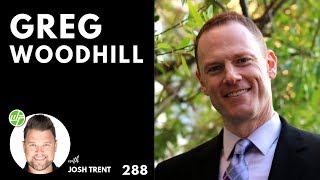
Episode 288 of Wellness Force Radio (host Josh Trent) features licensed psychotherapist Greg Woodhill discussing pornography and sex addiction: how porn shapes sexual arousal templates (especially when exposure occurs in childhood), its effects on brain reward circuitry (dopamine, novelty/tolerance), and the emotional roots (shame, unresolved trauma, eroticized rage). The episode covers history and definitions of sex/porn addiction, warning signs/diagnostic criteria (preoccupation, loss of control, time spent, withdrawal, tolerance, harmful consequences), social implications (early exposure, regulation challenges, smartphone impact), and therapeutic approaches emphasizing emotional processing, vulnerability, and spiritual/inner-child work.
Questions this video answers
Episode 288 of Wellness Force Radio
Greg Woodhill — licensed marriage and family therapist (psychotherapist)
sexandrelationshiphealing.com
Organifi (Organifi.com) — use code WellnessForce for 20% off
A 2017 Tech Addiction CA figure cited that over 40% of kids had seen pornography by ages 11–13 (referenced conversationally)
Chapters
A person who watches porn, especially if that is how their sexual brain develops in their teenage years, they are having an experience with a two dimensional screen. So just think about porn is never going to laugh at your physique, tell you you're too fat, too ugly, too thin, that your penis is too large, too small, that you had an orgasm too fast or can't lie. You know, porn doesn't judge you. So the attachment to the sexual experience being one where the user is completely in control, it's a one person. So right then and there, you take that person and you put them in a room with a living, breathing person with feelings, with needs, with preferences, right? Our brain changes because of our experience so that we can much easier do the things that we do on a repetitive basis. So if that's what I have as my day to day sex life and then I get in bed with a real person, it's like a record scratch.
That's Greg Woodhill. And this is episode 288 of Wellness Force Radio, Wellness Force Rad, where we discover the physical and emotional intelligence to live life.
Well, you can have the same brain states as someone who's done an hour of meditation every day for 40 years. There's a lot of losses that we go through. So the ability to be able to.
Cope with those losses is very important.
To build skill in it, because loss will happen.
You can be fatigued and depressed, right?
So then the challenge is what's the.
Best order of operations for trying to.
Help someone identify what the root cause of their problem is? Do you like yourself when you look in the mirror? What are you saying to yourself? What do you think about other people? How do you look at the truth? You know, you have to have spiritual courage, to really grow spiritually. Because if you really want to take guidance from your soul, you have to be ready to realize that many of the things that you're asking for guidance on, your ego has some kind of an addiction to or an investment in.
Welcome back to the podcast. This is your host, Josh Trent. Today, I'm straight up honored, really thrilled to bring on Greg Woodhill. He's become a friend of mine. He is a powerful, and I say capital P, powerful marriage and family therapist. He's a licensed psychotherapist. He's spent thousands of hours really helping men and women uncover the root cause of sex and porn addiction. Now, what's really unique about this podcast, I know you're going to get so much from this, is that not only does Greg have the licensure and the academic background, but he also has the presence training and the spirituality training to be able to support healing and transformation for people across the globe. So if you know anyone or maybe you yourself are dealing with a habit, whether it's pornography or alcohol or any kind of habit that just seems to be gnawing at your consciousness, this is a deep dive for us to take a look at this together and see why it's pulling you or someone you love away from intimate relationships. Maybe it's sabotaging your productivity, or maybe you're just curious about what the research is now showing about the detrimental effects to the brain, specifically the limbic system, the reward circuitry in our brain. When it comes to dopamine and serotonin and pornography. This episode is going to be polarizing, but it's also gonna be a rich one. And I think one of the most powerful things that Greg will teach us today, when we look at the concept of healing, whether it's trauma or addiction or really just the root cause of why people treat each other so poorly, it's because deep down in the subconscious, we all know there's things down there that drive our behaviors. A lot of times they're so in the darkness that they're happening when. Without us even knowing that they're there. But when you really look at healing, what's so powerful about Greg's work that he learned at the University of Santa Monica? And he says this, and I quote, healing is the application of love to the places inside that hurt. Just let that land for a moment. This is so true. Because if we know where it's hurting on the inside, then that's where we get to shine the love on. And this show is very close to my heart because throughout my 20s and even early 30s, when I was using pornography very unconsciously, I would go to porn when I was feeling uncomfortable and I wasn't able to express my emotions properly. In my healing journey, I've gotten to look at porn in the same way that I look at food or any other distraction in my life. And that was a real journey. I'm not gonna lie to you. It's a real hard journey to look at the shadow, because in the shadow, this is where all the answers are. But the shadow can be intimidating sometimes for many people, paralyzing, depending on what we've gone through in life, because we've all built these coping mechanisms, you know what I mean? A lot of times it could be coffee or shopping or porn or food or anything else. It's ways that we cover how we're actually feeling. But deep down in the root, there's a way to get there. And it's not on your own. It's through licensed therapists like Greg. This took me almost 10 years to heal my relationship with porn. And Greg, when it comes to pornography, he is one of the best in the world. He talks about the psychology of change, habit reformation. We explore all the nuances about reprogramming the brain and using sexuality as a true connection tool, which sex is life force. This is where we all come from. It deserves incredible respect. And so if you're feeling like right now that part of your life is not getting respect, this is gonna be a powerful episode for you. Be sure to go to his website at gregwoodhill. Com. If you're currently struggling with any kind of an addiction, specifically though pornography addiction, or if you know somebody in your life who is struggling, they do not have to struggle and suffer anymore. There is light, but it comes from being vulnerable, Opening up about what you're really dealing with. This episode is gonna be a powerful res. Share this with somebody that you know who is currently struggling. And as we talk about the impact of addiction, it's important to bring up food and hydration as well. Because whether you have someone you love or you're aware of this HALT acronym, H A L T. Hungry, angry, lonely, or tired, if any one of those four things are going on, you are more likely. All human beings are more likely to go towards addictive behaviors. So if the body's not getting the nutrition it needs, this is when all of us are going to make the poor decisions. And this is why every single day, sometimes three times a day, depending on how much energy I need or how dehydrated I am, I use my organifi. This is literally every day in the morning, I drink it. It tastes amazing. I've been doing it for almost two years now. And I wanna offer you something really special from our friends at Organifi. They have given you 20% off of all their products. All you have to do is go to Organifi.com WellnessForce and use the code WellnessForce. You can share that code with as many people as you want. Share it with your grandma, you know, your grandpa, or the neighbor down the street that bothers you, give them the hookup. Here's the real value behind this, though. Organifi is an adaptogenic plant blend. Adaptogens are plant compounds. They go deep down into our cells in the mitochondria and they give us energy where we need it the most. They're very smart plants. That's why they're called adaptogenic. This can take care of our hungry mind and our hungry body. And it's by the way, eating calories does not satisfy our hunger most of the time. If we're eating low quality calories, it's really the nutrient value within those calories that matters the most. So start your day or your afternoon pickup with Organifi Green. You get the hookup. You're part of the WellnessForce community with us. Organifi.com WellnessForce use code WellnessForce. You get 20% off so you can calm the monkey mind and get some energy so you can have an amazing day. Now, let's have this podcast unfold together right here, right now on Wellness Force. You know, this topic is so fascinating to me. It's something that I have a lot of history with sex and pornography. Gosh, Greg, so many people, men and women, you know, sex is something that we do to procreate our species. Sex and food, I feel like they're the big ones when it comes to comfort and just being a human being there. There are certain ways that we express ourselves as human beings. This, this category of sex, though, it has a bit of a dark side when people are a little bit ashamed to talk. How do you see this unfolding in your work as far as people's openness about talking about sexuality in the public light?
Well, I love that question, Josh. What I love, one of the things I love so much about being able to work with men who struggle with porn addiction is that sometimes I'm the first person that they've ever come and told the truth to. And you can imagine what an honor that is to know that men, they do keep this secretive. They keep it compartmentalized. One of my missions is to get all of us, men, women, everybody, to be talking about what porn has done in their life, the way they use it, the way they've not used it, whether they've overused it at times, and what effect it's having on them. I think porn and our own porn use should just become part of the conversation. And I think that's a. It's an enormous shift. I understand that's not coming anytime soon, but I want people, and I, and I work with people to take those steps to at the very least be able to share with the people they love in their life what effect porn has had on their life. And in many cases, it's had a profound effect.
Josh, we're going to go to the Roots today, too, because, you know, as a certified sex addiction therapist, I didn't know that sex addiction therapists could be certified in that niche. How long has that niche even been around sex addiction therapy?
Well, the first 12 step groups that I'm aware of sprung up in around 30 years ago, more than 30 years ago. And that is when sex addicts started coming together in the alcoholics anonymous model and saying, hey, this walks like a duck. It quacks like a duck. It feels like a duck. Like, this is an addiction. You know, they went through the diagnostic criteria. They went through everything that alcoholics test themselves against and say, this is how sex is in our life. And let me be clear about what that doesn't mean. It's commonly confused with someone who's addicted to having intercourse, because we use the word sex to mean, you know, having intercourse with somebody. Sex addiction is all encompassing. That means pornography. Some people go to a sex addict's anonymous meeting and say, I can't stop watching pornography. For some, it's voyeurism. For some, it is infidelity in their relationships, having anonymous sex, having unsafe sex, compulsively masturbating to the point where it's injuring them and taking all the other important things in their life away so that they're not paying attention to those things. It's paying for sex, whether that's prostitution or massage parlors. So all of these people came together and started saying, we alone are powerless to stop this. It feels like addiction. And they treat it like addiction. And guess what? They got better.
What do you think people get wrong about addiction? Because there's many faces to the severity of an addiction. When does a behavior, an unwanted behavior, actually become an addiction? I think that's a unique question because we're exploring the root of addiction. So when does a man or woman know that they have a sex addiction?
The diagnostic criteria, the one piece actually that pops out to me as such a beautifully defining sentence for addiction is it's ruining my life, and I can't stop. Those two things put together, I think, are what crosses someone over From I love to do this, from I can't stop doing this, and the consequences, internally or externally or both, are ruining my life. And the criteria that people use for addiction for, let's say, drug and alcohol addiction are the same for process addictions. Addictions like compulsive overeating, gambling, sex and porn addiction. It's I can't stop. It's drowning on all the other important things in my life, whether that's School or my work or my relationship or my family and kids? Am I preoccupied with it all the time? Am I trying to stop and I can't? Or am I failing to resist impulses? So I think about drinking or I think about watching porn, and then I can't stop thinking about it until I do. And the other things that we know about through chemical addiction are tolerance, which means that I used to drink a beer, then I took six beers to get me drunk, then I took more, and then whiskey, and then two times more than that. And you need more volume. But in sex and porn addiction, it's measured by variety.
Yeah. And the novelty aspect. Right. And we know about the limbic brain. Actually, Dr. John Gray talked about this on the show. You're bringing me right back to this moment here, Greg, where I asked him, I said, if you were an addict and you had to choose between being a food addict and. And being a porn addict, which one would you choose? And I know this is a very challenging question, especially Dr. John Gray. And he said, you know, Josh, I would much rather be a food addict, because that's something that I think I could manage if I got the right kind of help. But men, especially men that have a porn addiction, that their pride and their unresolved pain, and it's. It's such a issue in America. I mean, is there any statistics you could share with us? Is there any numbers or facts or figures, specifically when it applies to men, when it comes to porn addiction? Because this is a massive topic that a lot of the media is keeping in the dark.
Yes, you're right. It is. And I think people are embarrassed. So it's one of the reasons, I think somebody like you wanting to bring this out in the open, talk about it on your show is phenomenal, because I think we need to be talking about it. I'm gonna fail you here when you ask me about statistics, and I'll tell you why. A lot of times I have read studies that say, absolutely, we can conclusively prove there is such thing as porn addiction. And then I've seen studies that say it is not possible for this to be an addiction. And one of the things I've heard, especially about young people, is it's impossible to get a control group. How do we find people to do these studies who have never watched porn, who don't have access to porn, versus those who are addicted to it? So I hear stats. I hear facts and figures all the time. And my brain works so anecdotally I hear them, and then they go right out the window.
That's a good point. That's a really good point. I am going to link something in our show notes that was fascinating to me. And I thought about this. You know, between the ages of 11 and 13, this is a high percentage of young boys and girls as well. But this is actually From Tech Addiction CA and this is porn addiction statistics from 2017. So I'm sure there are a lot more now. But it just made my heart hurt because I thought about, you know, all these percentages of kids that are seeing this, like, before the age of 13. This is when over 40% of kids, based on this research, have seen pornography. Like, it just boggles my mind that we live in a world where there's stipulations on alcohol, there's stipulations for healthy use of cannabis and CBD and all the other controlled substances. But with porn, it is a 24 7, 365 in your face, whatever device you want it kind of situation. What do you think about that as far as control and limiting children's access to this so that the seeds don't get planted so early?
It's such a great topic and it's so mired because some states have actually declared porn as a public health emergency. I love the theory behind that. And let me just say this, Josh. I take no moral, ethical, or religious stance on porn. I don't go out on the sidewalk with a sandwich board saying, hey, do you watch porn? If so, you need to come see me because you need to stop.
Thank you for saying that. Yeah, I'm not trying to demonize porn either. This is just something we're exploring today.
Yeah. And what I know is for some, they can take it or leave it. It's great.
Yeah.
I personally, I love alcohol. I can drink, I can get drunk, but I don't crave it. It doesn't ruin my life. I can stop. I drink it. When I think about it, some people are like that with porn. It doesn't mean that if you watch porn that you have a problem or that you're an addict. But governments are talking about this. And here's the biggest problem that I see so far. The state governments that are trying to put limitations on this, they're calling it a public health emergency. Most of the backers are religious. And that is when a lot of people, because what the porn industry has said forever, they've really rallied behind freedom of speech. Now we know. And sitting across from me in my office, when I ask people, especially men in their 20s. What age did you first start watching porn? I'm shocked when it comes out of the range of from 8 to 12 years old. What I mean to say is those are the ages I hear most often. If someone says 15 or 16 these days I think, wow, that's really late. With iPads and iPhones and high speed Internet and free streaming pornography that's been around for about the last what, 12 to 15 years. When I thank God that when I was 8 and 10 years old and 12 years old, I'm 44 now, that didn't exist. If you wanted to watch porn, you had to sneak it on late night cable or you had to go rent a tape or somehow get a hold of it or borrow a tape from someone. And you know what was amazing? That tape comes to an end and you can rewind it and watch it. But since we started this conversation, I don't know, a hundred one thousand, fifty new videos have been put online. It's infinite. And when I, If I was 10 or 12 years old and people as you know, are googling kids are googling things they have their brains aren't ready for and they have no idea. So this is my prediction from the question you asked. I don't think there will ever be be successful legislation that is going to crack down on porn other than things like click here if you're 18 or parental monitoring. I don't think that the state or the federal government is ever going to come up with something that people are going to approve of because they're just going to say hey, it's freedom of speech, it's porn, don't be so sex negative. And so it's scary because I don't think there's a way to regulate it that I see in the near future.
And the powerful point that I want to make here is we've seen big tobacco go to court, we're seeing now Monsanto go to court. So we're seeing aspects of big food and agriculture be held accountable for what they're doing. This is a five and a half billion with a B global industry, the pornography industry. So we're talking about more money than anyone could ever spend really in their lifetime for most people. So that happens every single year. And the same statistic that just shocked me to my core was that 70% of men that are between 18 to 24. So this is when like we're basically a man who's so supercharged at this point. We have so much testosterone, we're basically a walking stick filled with Liquid. I'll leave that to your imagination. So this is the time when we're most susceptible to learning what it's like to be really intimate with an actual woman that has hair and personality and doesn't just give exactly what the 18 year old wants. Yet when it comes to porn, and this is the question for you, how does porn train the mind of men to be less understanding and less compassionate than they would be in learning from an actual woman?
What a question. What a great question. It does it in two different ways in my opinion. The first of all, the first of the two is that a person who watches porn, especially if that is how their sexual brain develops, as they're developing this arousal template in their teenage years, they are having an experience with a two dimensional screen. They're interacting with a non human object. So just think about, the door is closed. Porn is never going to laugh at your physique, tell you you're too fat, too ugly, too thin, that your penis is too large, too small, that you had an orgasm too fast or are lasting too long. Porn doesn't judge you. Right. It's an inanimate object. So the attachment to the sexual experience being one where the user is completely in control. Forward, backward, see something slow motion, pause, you know, looking for. Exactly. And if they don't like this angle of a person's body, well then let's find the other angle. Let's go to the parts that they like. They are totally in control. It's a one person system. So right then and there you take that person and you put them in a room, as you said, with a living, breathing person, with feelings, with needs, with preferences. Right. And with their own eyes and ears. So now the brain knows this isn't what I'm trained for, this isn't what the neuroplasticity as you talk about here on the show, from time to time our brain changes because of our experience. And that does it for a good reason. It's evolutionary so that we can much easier do the things that we do on a repetitive basis. So if that's what I have as my day to day sex life and then I get in bed with a real person, it's like a record scratch, you know, the brain, the body doesn't know what to do. Now part two of my answer to your question is what we see in pornography is made by men, for men in general. That is the vast amount of pornography is produced by men, filmed by men, and it's made to be consumed by men. The women in heterosexual Pornography. The women have become expert at selling that which the producers want to sell at. Being hurt feels good. Being dominated feels good. Being humiliated, being called names, being put in positions that are completely for the man's pleasure and dominance and not at all for the woman. Again, this is in straight porn. And that sells to someone whether they believe it, whether they tell themselves, okay, I'm going to watch something that's not realistic, but I'm just going to watch it. The brain doesn't know the difference. The brain doesn't come up away from that saying, oh, I really liked watching this hard, visceral, violent, you know, pornography with a man really, like, dominating this woman. But now I want to go make sweet love to my wife. It affects us. So I think in those two different ways. Now you put those two together and it has a supercharged effect that a person prefers. If they. If they overuse pornography or if they're addicted to pornography, it becomes what they prefer. I came up with the term. I think others have used it, you know, many years ago, I came up with it is pornosexual, which, it's not a sexual orientation. But I use it to describe someone who, rather than being with a man, woman, both or neither, they'd rather be with pornography. That's their first choice. Because that is what they've become attracted to now. Doesn't mean suddenly they're not attracted to real people. But it's like, I talk to so many men, they see a beautiful woman walking down the street and their first thought is, I gotta watch porn. Not I gotta walk up to that woman or I have to go, you know, or if they're in a relationship, I wanna go home and, you know, have intercourse or be romantic or sexual with my partner. No, it's. It's, ooh, I gotta. I have to masturbate. I have to watch porn. It becomes their go to. For all of those reasons. I find that a little scary in the way it affects our brain.
The go to aspect is the most frightening to me because we are. I've always believed this, Greg. We are half beast, half spirit. You know, we're a meat suit. We're embodied by a spirit and a soul and they're both kind of communicating to each other at all times. So if the conduit, if our brain health, the way that these synapses connect and fire when it comes to a stimuli of a beautiful woman or a handsome man, whatever your sexual orientation is, this pornography aspect. And again, we're not demonizing this. This is only for People that recognize that are doing the emotional work to be self aware enough to understand that pornography is something that is getting in the way of you loving and connecting with people that you want to. I think this is the baseline of our conversation. What's most triggering to me though, and what I'd love your thoughts on is when people are having that sensation. And I've heard this explained as a trigger action response. The cue model that Duhigg talks about. Whoever you follow when it comes to the stimuli and then the response, what exactly is happening for a man that sees a beautiful woman and then he goes and has the response to actually use porn instead of do the natural thing that human evolution has forged, which would be go and talk to the woman. What's actually happening there from a brain perspective?
Well, to retreat behind closed doors is safe. I read a great article years ago and if I can find it, I'll send it to you. It was about hyper stimulation, hyperstimulation, where a certain type of bug was. One of the examples saw a 2 liter bottle of Coca Cola discarded on the side on the grass and it TR to procreate with that bottle until it died because it was the color red that is like the mating call for that species. And it was so huge and so red that this thing just kept trying to procreate with it to the point where it didn't eat, it didn't do anything and didn't successfully procreate and eventually it died. So that's happening with pornography. I think we have a natural, natural desire and a need to procreate. And what I believe happens is when someone gets so consumed with pornography that it takes their natural drive and it funnels it into a place that is solo and secretive and far, far, far less dangerous and less scary than walking up to that woman we're talking about and saying hello, she can reject you, Porn can't. So I think it's almost like this very natural, like this carnal drive that we all have and should have. It's great that we have it. It's why we're alive today.
Yes.
And it's, it's become siphoned off to a place where the brain now craves that to, it's been hyper stimulated because the amount of dopamine that is created in the brain of somebody who uses pornography in an addictive way is far greater, I should say, in high speed Internet pornography, far greater than what a real life encounter can create. And let me be clear about what I'm not saying I'm not saying it's better or more exciting. I think in person, any kind of in person, sexual intercourse or romance or physicality is far better in every way. But as far as dopamine, that's the feel good blasts in the brain that thrive on variety. As you were saying earlier, and then say, come here, get more, pay attention here. They put horse blinders on and circumvents our prefrontal cortex so that all we do is we crave and we want. So the people go back to that feeling over and over again. Instead of how do I enrich my life? Because frankly, it's scary. And I'll tell you, I've worked with a lot of men in their 20s who are saying exactly what you just said. I'm afraid to walk up to a woman. I don't know how to do it. And some of them even have the awareness to say, I feel like these swiping apps and pornography and my smartphone have robbed me from the experience of getting to know how to interact with women in the real world. Or. And I've had people say, you know, men say that they, that the same thing is true for men who date men. I don't know how to approach men. I know how to swipe. I know how to go on a, you know, on a Tinder or a Bumble. I know how to watch porn. But to walk up to someone at a bar, at a party, at the library, on the street, in a store and say, hey, how are you? My name's so. And so they say, I don't know how to do it. And I'm. And I really, really get sad about that.
This is what's powerful for me. And, and I have a young nephew.
He's.
He's 15 and he's in high school. And I've had conversations with him about this because I've never really talked about this too much on the show. But there was a point in my life where pornography ruled my actions. I mean, to the point where I had. And I've actually been very open about sex addiction in the past and how I've healed that. And pornography is just a stone throw away from men wanting to feel validation about unresolved emotion. And so I'd love to steer our conversation towards. Even though you've talked about the dopaminergic pathway, we know that there's this massive body of research coming out right now about the gut brain axis. You know, serotonin being produced in the gut, dopamine primarily coming from the brain. So we are this vessel that's holding the spirit. That spirit deserves loving, attenuated practice. Going up to women in public, when women approaching men in public, we're built and designed for that. But when we flip the coin around, where exactly are we as a society where we're not having this in higher conversations? In other words, what is your role to spotlight? Not just that porn is bad, because that's not what we're talking about, right. But the real damage and solutions that's coming when people start holding this with more respect is an issue.
Well, I think smartphones have hurt us as much or more than they've helped us. Nah, I can't say that. Let me say this because you could say that.
I mean, a lot of people are nodding their heads.
I wonder if I agree or not. But smartphones have changed our life. It made life better in infinite ways. Right? And by tomorrow, there will be yet even another way it makes our life better. I have noticed in my life a lethargy, anxiety, sometimes trouble sleeping, finishing between a client and I have another client in five minutes. I pick up my phone, I check my email, check my text, I check my Instagram, I check my Facebook. Why? Eight, ten years ago, I could check my email once a day. I could check my. You know, it's become so immediate and this need to distract has become. And I feel in my life, and I see it in other people's life, it has become the go to people in elevators, everybody on their phone, people on, you know, in coffee shops or let's say on a subway or at restaurants. Four people sitting at a table together, all of them looking at their smartphone. So I think we have been conditioned for some years now to be less relational as far as eye to eye, person to person contact like you're talking about. So one of the things that I know, and I want to highlight something you said a moment ago. I truly believe that a porn addict, and before we finish, I want to actually describe what, you know, the way that people can assess for whether or not they're a porn addict. Because I don't want to just throw that term out there lightly.
Yes.
But a porn addict is looking for warmth, comfort, connection, and many other very positive things that we could list. A porn addict isn't saying, you know, I want to, you know, I'm more sexual than the average person. I just need to disappear. I just want to see women or men be harmed. A porn addict is looking for connection. And it is a way their brain has found to find, like this synthetic version of Connection. So I don't think. Well, I don't think. It's not that I don't think this. It's obvious. There's nothing wrong with wanting that. There's nothing wrong with wanting to feel warmth and intimacy and connection. And I know some porn addicts who know that. They say I'm really looking for connection. I just realized I'm doing it in a way where I'm never going to get it. It. So what I find with people who overuse pornography and then they're able to stop, either quit completely or severely moderate it, they find themselves afraid. And I mean that in a really good way. They find themselves connecting with people having conversations with their partner or their spouse, their children. They find themselves vulnerable because they don't have that armor, they don't have that novocaine that they've been shooting into themselves every day. So it really brings them out of this type of cocoon. And you know, I have the other side of the coin from that question you asked earlier about this gentleman. You were mentioning this doctor with food addiction, unless a person is binging and purging and then there's medical issues, if a person is overeating compulsively on a day to basis, eventually the body is going to show the rest of the world what's happening. Yeah, they're going to gain weight. A porn addict walks around in the world and nobody knows. So they're binging on pornography every single day. But then they walk out in the world and they go to the gym and they go to, you know, Chipotle and order something and people look and respond and Starbucks and they just say, hey, how you doing? How's your day? They don't look at someone and say, oh, that person has an eating problem. Or they don't look at that guy and say that person has a porn problem because it's really hidden. So my challenge to all of us, including myself, and this doesn't have anything to do with pornography. Can we look up, look up from the devices, put them away, turn them off, and actually sit, whether we're by ourselves or with others, and feel what we're feeling, talk to other people and be curious instead of doing what I think we've become accustomed to and that's disappearing into our phones. I have no idea if I've answered your question or not.
I think you answered it tenfold because the way that Dr. Gray was talking about this was that there's neural wiring, there's circuitry in the brain. Like you had mentioned that's very carnal. I mean, Greg, we're talking about very ancient intelligence here. You know, the drive to eat, the drive to procreate, the drive to drink water and the drive to breathe. Those are the things that literally dictate so many of our decisions every single day. Yet we're talking about this pornography addiction. And yes, of course, in this conversation, we're going to figure out how people can learn if they're actually addicted, what stage they're at. Absolutely. Because we don't want a blanket statement anyone here. But I will say this, and it's something that you had mentioned from a friend of mine. I actually was inspired by this. When you were on the Matty Moon show and Maddie's been on the show, and it just hit me in the chest like a ton of bricks. You said people gravitate to porn when they're trying to work through unemotional material from the past.
Yep, yep.
Can you dig into that for us so that we can understand that?
Oh, yeah. It's such a rich topic. I'm glad you asked. We all have unresolved issues. And when I say unresolved issues, I mean we have hurt, we have shame, we have pain. We feel inadequate in some way. Some of us feel. We feel the inferiority complexes that we go through life and. And we learned those things. We didn't come out of the womb with those feelings. So through our childhoods and our parents, I think our parents did the best they could possibly do, given what tools they had. Unfortunately, some of the time, their best wasn't very good. And we learned that we should feel ashamed of ourselves, that we don't have a right to speak, that we should be ashamed of being a man or ashamed of being a woman. And more than anything, what I see over and over again in the people in my office are people who have unresolved feelings and emotions toward a specific gender. So for the ease of the conversation, let's say, and this is mainly who shows up in my office is heterosexual men who have problems with porn. A man in high school and junior high felt completely inadequate. It didn't get the girl he wanted, never dated the pretty cheerleader or whoever it was, you know, had crushes that were unrequited throughout his entire youth. So therefore, he goes through life feeling less than he feels ashamed. He feels inadequate. And so what happens in pornography is it allows people to access that unresolved material. And the worst part about it is, Josh, they usually don't even know they're doing it. So an Example is something called eroticized rage. And that is where I am so angry and so hurt or ashamed. And all of those feelings have become funneled into what turns me on. So let's go back to my example. Let's say that I feel I felt inadequate throughout high school, and then I get, now I'm a man and out about in the world, and I still feel like women are better. Like I can never get the beautiful woman that I wanted and that I met. Even if that's proven wrong, by the way, even if that person goes on to have great relationships with beautiful women, still there can be a kernel inside that feels less than so. Through pornography, he gravitates toward something that is showing a man being dominant over a woman, a beautiful woman being, quote, unquote, owned or humiliated. Some of the very mainstream things in porn that are in almost every porn scene, those things have become standard, but they can be very degrading to women or to men. But basically that there's somebody that, who is submissive and who is being. And in general in heterosexual porn, that is the woman 99% of the time. So the man with this unresolved anger and hurt and shame can watch that porn and love and really become wired around an experience where I get so turned on by seeing a woman being dominated and degraded and humiliated. And that becomes what fuels his sexual desire. And he doesn't realize it's coming from a wounded, traumatized place inside of him. And the biggest problem with that is that since they don't know it, it's not healing it. If I sat in a room with you, Josh, and I said, you know, throughout my life, I felt unworthy and I felt ashamed. And this is what happened in my childhood. And we're brother to brother, man to man, and you empathize with me and we talk about ways I can heal it. And just talking to you about it is healing. I'm getting to it. I'm scratching the actual emotional itch. I'm getting love, compassion, empathy from you, and I'm healing the part inside that needs it. With porn, it's a one person system. So in fact, what I see is it builds that inadequacy feeling. It builds the shame and the rage. It just makes it more and more. And the person has no idea that they're exercising a muscle that they don't want to exercise, right? One that is angry and hurt and wants to see people, people dominated. And that's one of the ways that objectification comes into play. And a lot of people think that objectification means I look at someone and I want to have sex with them. Therefore, I'm objectifying. Absolutely not. That's not objectification. Like you said, it's like we're supposed to look at people and be turned on.
Yeah, that's how our wiring works. Naturally.
That's it. I don't. I don't want anyone not to feel that. And I work with men to really feel objectification is, I see you, I'm turned on by you, and I want to use you for my pleasure. Whether that's in fantasy or in real life, you are an object to me. I'm going to use you as an object so that I can feel either satisfied sexually or feel better about myself. That is it. So if I see someone and I say, wow, she's just beautiful and she's sexy and, you know, I'm turned on, just, you know, she's the type of woman that I would go hit on. That's not objectification. I think that's really healthy. But porn trains people to objectify. And to your. To your question, I think that objectification just feeds these unresolved issues where people have no outlet, no healthy outlet to actually heal the hurt that's underneath the surface. And what happens when we heal those? We feel more peace. We feel more joy and love. And when we're exact, you know, you know, we're exacerbating the situation because it's just feeding that loop. It's like the old. You've heard, I'm sure, before the saying, the little anecdote that the Native American teenager goes to the tribe chief and says, chief, I'm so terrified because there's these two wolves in my brain, and one of them is angry and cunning and wants to kill and murder and pillage and is selfish. And the other one is kind and loving and sweet and compassionate and wants to do good. Which wolf will win? And the chief says, which wolf will you feed? And I love that because it's representative of everything we do in our life and everything we're talking about here today. If I'm feeding the wolf in my brain that wants to be powerful over another person, wants to be dominant, because I feel so badly about myself, that wolf is going to get bigger and stronger. And that's what I see in my office.
I love this because that is a beautiful metaphor for really just the human universal condition, Greg. I mean, everything that happens, whether it's this eroticized rage, which I'd never heard before, this unresolved anger that's felt as a turn on. Or maybe it's just treating someone in public that triggers us with kindness. It's a choice point. We all reach the same choice point in different fractals of human experience where I could choose in any moment to come from a place of love, to come from a place of fear. But it's not always that easy. I feel like if it was that easy, if we could flick a light switch and make all of our choices from a place of love, well, then everyone would be loving all the time. But that's not the environment that we live in. There's so many things that get to be dissolved, understood, felt. Really. From all the work that you're doing with your clients and all the things that you're putting out in media, My sense from you, and I'd love your thoughts on this is you're giving people a permission slip to feel what exactly it is they're actually feeling in their bodies. This is like Greg, the man who gives the golden tickets for people to feel their emotions.
That's exactly. Exactly right. You nailed it. And you know, and take a wild guess at which gender has more trouble feeling and sharing their emotions. It's ours.
Yeah.
It's men.
It's men.
And that is. And that is one of my missions, is exactly what you said. I've asked men in my entire career as a therapist many times in different situations. What are you feeling right now as you're talking about this? Something that's very deep and meaningful. What are you feeling? The answers that come back are something along the lines of, well, I feel like it was really unfair what happened to me. Me, I feel that my wife wasn't being kind or nice or I feel like she was being a bitch. And I say, hold on a second. That's great. Not great. Not those thoughts. But it's like. But you're naming thoughts. You just said thoughts. Let's go back. What are you feeling? First, check in with your body. Where are you feeling it? And now can we put names to those emotions? And what are those emotions trying to tell you? And it is very hard. And I give men all the credit in the world because we are not trained for this. We are trained to hide those feelings that if I say to you on the playground, hey, you hurt my feelings. Oh, I'm in trouble. I'm gonna get bullied. I'm gonna get mocked. Maybe for the rest of the time in that school, I'm gonna get beat up. The only response that is socially acceptable is f you or Punch you back or insult your mother or something, you know, or just go back and forth. It's never like, hey, you're my friend. And that really didn't feel good. I didn't like the way we're not trained to do it. So it is an honor for me to be in the room with men who are saying, oh, wow, I guess I'm really sad. How did you feel in that moment? Oh, wow. I was ashamed. I was really feeling a lot of shame. I was feeling bad about myself. Now what's happening in the room is intimate and the best. Not the best. But one of the huge parts of therapy is, can you take what happens, whether I don't care if it's therapy, coach your friends, reading, whatever it is that help someone heal? Can you transfer what's happening in that professional relationship into the personal relationships in your life? Can you sit across from me and say, I felt ashamed when my spouse called me such and such. To go back to your spouse and say, hey, I just realized I felt really ashamed when you said that to me yesterday.
Yeah.
And it's a language. It's like learning a new language for them. And so. So for the people who are addicted to pornography, it's a beautiful way to shoot novocaine right into those feelings so that they can distract and numb and not have to sit with it because it's painful. The intention of addiction is positive. Not the outcome, not by a long shot, but the intention of addiction. I want to feel better. I want to feel good. I want to feel happy. I don't want to feel this pain. That's a good intention. The lie that addiction says is, come over here with me. Me. I'll help you. I'll distract you. You won't have to feel those feelings, and everything will be better. And that's a lie, because eventually things aren't better. If it's true addiction, life starts falling apart.
This is why I was so excited to get this powerful message through you, Greg, on the show, because this is a conversation that truly deserves as much light as possible. Think about how this conversation and how most addiction even starts where things that are in the dark, they continue to stay in the dark. Well, how do we. How do we let go of things? By shining light on them. It's not just a metaphor of dark and light. You know, I think about Jesus in the desert, and whether you're religious or not, you know, the devil would tempt Jesus when he was fasting with bread, and he said, don't worry about it. All you have to do is eat my bread and sell your soul to me, and you can have all the joy and all the ecstasy you want. And Jesus turns to him and he's like, get out of here, Satan. Like, I refuse this. And he literally practiced his loving will to let go of having the pain be something that wasn't teaching him. I think the pain can be a beautiful teacher for all of us, and I'd love your thoughts on this. Through some of my readings and some of my lessons, through plant medicine and through breath work, in the past two years, I've come across this concept of chaos versus order. You've talked about it a couple times. I have a sense that when there is massive chaos in the universe, whether it's weather or a storm inside of ourselves, it's chaos actually trying to find peaceful order. And you talked about it a little bit with. Addiction is actually there to give us something. It's trying to show us something. How do you see the chaos of addiction being order and being love for people that are willing to actually feel what it is is going on.
If there's a tornado blowing around my head, my house, it's blowing. You know, cars and cows and papers and houses are just being bl. Broken apart. I am fully in survival mode, right? I'm in crisis mode. How do I stay alive? How do I stay safe? What I'm not thinking about in that chaos, Josh, is, you know, I feel really bad about myself sometimes. I feel really inadequate. I feel insecure. I have this imposter syndrome. Forget all that. I'm thinking, how quickly can I get down in the cellar? Can I survive this? Am I going to live? And I think that's one of the things that chaos of addiction gives addicts, is it gives them something to juggle and focus on other than what does it feel like to just sit here right now? And that applies to two different things about addiction. One is in the actual act of the addiction, whether I'm drinking, whether I'm binge eating, taking drugs, you know, compulsively binging on porn, I'm not having to sit with the now because I'm in my addiction. Then there's the aftermath of the addiction. I'm putting out fires. I'm trying to keep my family together. I'm trying to this, I'm trying to that. I'm trying to stay out of jail. You know, these are the things that as the effects of addiction, the overwhelm of what happens when the person is in their addiction for days, weeks, months, and years, that also becomes a distraction. So I think that's the. It's almost like I have this image in my head as you were talking about that if someone in the middle of a tornado just going like this calming breath, like, oh, good, Oh, I can juggle, I can run, I can save, I can this and that, I don't have to sit with what is. And I think that's what it does for people. I think they crave. They just crave the distraction. And I think chaos can be a huge distraction.
This is why when you take away a rattle from a baby, it cries, because that's where all of its focus was. And I think all of us are going through, in a way, a recognition of true adult embodiment or a child that's running our adult lives. Because I think about the unprocessed emotion and this eroticized rage and thinking versus feeling. You've dropped so many incredibly powerful concepts in this show. You're listening right now. Go through the show again. If you're feeling the resonance in your heart and your chest, if you're feeling the triggers or if you're upset with some of the stuff we've been talking about, or if you feel like this is your message, give yourself the permission to go through this entire podcast again. Because there was such weight and such gravitas here. I want to give people the understanding of where they actually are. Greg, can we talk about how to identify what phase of the addiction cycle that we possibly could be in so that we can actually deal with the storm instead of being on social media?
Media? I'd love to. So let me. Very quickly, I'm going to just list these off. These are the diagnostic criteria for porn addiction. And again, this might be the type of thing you have to slow down and listen to again. And then I'm going to give you resources of where to go and actually take. Yes, no quizzes to give you an answer, but here they are. Are you preoccupied all the time about a specific. About porn? Let's say, do you try to stop porn and you can't stop doing it? Do you think about it? And once you think about it, you have to go, then do it. Do you spend more time than you originally planned to do it? So I'm going to do it for 15 minutes and an hour and a half goes by over and over again. Are you spending an inordinate amount of time doing it where you should be, where you're planning it or doing it or recovering from watching porn instead of doing homework, instead of Attending to your family, your job, or your health? Do you ignore other important things? And then here's the one I said earlier. Do you continue despite harmful consequences to your life? The last two are, do you go through withdrawal? Do your body or your emotions, your brain? Do you get agitated, angry, or even have some sort of physical withdrawal when you take time off from watching porn? And finally, tolerance. Does what used to turn me on not turn me on anymore? Do I need something more violent, more visceral, more crazy, more taboo in order to get the same high I did before? So if those resonate with you, then you can start looking into this as like, wow, maybe I actually have a problem and I'd love to drop a website. Is that okay, Josh?
Yes, go for it, please.
And I have no affiliation with this website. I know the person who designed it. I know a lot of people are getting a lot of help. It's sex and relationshiphealing.com sexandrelationshiphealing.com they have so many free resources for people who identify as sex addicts and porn addicts and also, very importantly for partners, people who are partners of sex addicts and porn addicts. And on there, they do have. You can go on and take quizzes. Yes. No, am I a sex addict? Am I a porn addict? So those are self assessments where privately, just like we're talking about, like in the comfort of you and your phone or you and your laptop, you can take assessment tools that will say, here's the likelihood that you actually have an addiction to this thing that you do. So, so if those things resonate with you and some of the negative consequences that some people, some men say that they get erectile dysfunction, they cannot get an erection when they're with a real life partner, but they can when they masturbate or when they watch porn. Another one is delayed ejaculation is watching porn over and over again. Mean that when you have sex with an actual partner means that you can't. You have to fantasize about someone outside of the room or fantasize about porn in order to have an orgasm. When you're having sex with somebody else and have you felt like you have a decreased libido to your partner if you're in a relationship that is like, if you're not, do you have a decreased libido? Like, I don't. I've had people say that they feel dead from the waist down. Like, I don't want to go out and have sex. I don't want to go out and meet Somebody, I just want the porn. Or if you're in a relationship, have you dropped all of that? That. That fire you used to have to connect physically with your partner? These are signs that you want to look at and say, I'm resonating with this. I don't want this anymore in my life, and maybe I need to do something about it.
This is powerful, this intersection that we always explore, Greg, and you explored it really profoundly with us. It's between the physical and the emotional, this intelligence so we can live our life well. And I think about the spiritual component of this, too. Do you consider yourself to be a spiritual man?
I call myself a New Ager, yes.
What does spirituality actually mean to you as we look at physical and emotional intelligence?
What it means to me is that we are all born with our essence is love. That's it. It's who we are. I've heard people correct it over and over again. I want to love myself. I want to learn to love. And I've heard masters and teachers say, no, no, no, no, no. You don't need to learn to love or love yourself. You need to allow the love that you were born with and remove the obstacles that are in front of it. And so, as somebody who does believe in love and compassion and that, I hope a higher intelligence in the world, that one of the biggest obstacles to feeling positivity, peace, love, joy and connection and intimacy with other people for a lot, especially a lot of young men, is the fact that porn is their lifeline. And when someone is an addict, and this is. Some people find this controversial, what I'm about to say. And some people think it's just standard, common knowledge. Yeah. If you are addicted to pornography, I have yet to meet the man who finds a way to moderate porn in their life so that they can just use it when they want. It no longer has the pull. I think it can be done, but the people I work with, they need to stop. You can still drink, unless you're an alcoholic. You can still have fun, you can still play. You can have great sex. But if pornography is your drug and you consider yourself an addict, then removing porn from your life, it's a hard, very, very difficult thing. I don't say it lightly. When I tell somebody, it's like, take a week and try. Take a month. See what it feels like to not have that in your life. Because part of them feels like they're going crazy. They've really leaned on it for so long. So that is my answer is like anything that's addictive or compulsive, like you said, including eating, including things that are very natural and normal and that we want to do. When they're taken to an addictive extreme, they take us out of the loving and they take us out of connecting with other people.
And that's why we're here. And I really enjoyed your definition of what it means to be spiritual or spiritually connected. And I want to place a caveat for everyone listening here. This episode is going to be very polarizing. It might be very controversial for some. And so if you're feeling like this is something that will really serve someone to be a better father, to be a better mother, just to be a better human. Human. Share this podcast Literally. Take the inspired action, take the loving action. Share this episode with somebody that you know is going to get some healing or even a starting place for their healing from this podcast. So, Greg, thank you for your gifts. Thank you for doing what you do. As parting guidance, can you share with us how you see wellness in your life? You know, with all the work you've done and all the people that you've. You've helped in their healing, how would you define wellness for us? What can we learn about your definition of wellness?
Such a great question. My definition of wellness is. Thinking about myself as an infant and the care, the round the clock care that I would give to myself. If I were the father of myself as a little infant, infant, I would be thinking all day, is what I'm doing gonna help this baby grow? Is it gonna help this baby feel loved? Am I talking to this baby in a way that's, you know, and in an affective voice that's gonna, that's gonna calm it, soothe it, make it feel great about itself and taking that into, into our lives and how we treat ourselves every, every day, how what I read, what I watch, what I eat, how I exercise, the type of people I surround myself with, the type of podcasts I listen to, like Wellness Force Radio? How am I feeding my soul in the same way I would, as if I were an infant?
We'll let that land for a moment because I was feeling that in my chest as you were saying it. The metaphor of us healing our inner child, doing our work so that we can show up a powerful with a capital piece man or woman. Greg, thank you for your work. Thank you for giving people back their power by giving them permission to feel their feelings and do their work first. Such a joy to have you on the show, man.
It was such a pleasure. Thanks for having me. Josh.
Hey, thanks for listening to the show my friend. Everything you learned on this podcast starts with your morning practices. So from over 300 world class guests, we pulled together six simple yet powerful morning practices down into a 21 minute system guaranteed to increase your vibration, vibration and the way that you feel every day. Get this free powerful guide over@wellnessforce.com M21 and if you love this show, share it with somebody. Share it with somebody that you love or that you care about. You can support the show easily by leaving us a five star review on iTunes. Just go to wellnessforce.com review or if you're on your phone, just tap it. Hit the link in purple that says review this podcast and the journey does not stop here. We're continuing this discussion process in our private Facebook group over@wellnessforce.com group. You can be a part of it. You already are. All you have to do is join us@wellnessforce.com group and I will welcome you at the door. Now go out into your life and live your life well. And until I see you again real soon, I'm wishing you love and wellness.
More from Josh






Your child's future start before pregnancy... and even before conception! #podcast

MD Reveals: Your Healing Creates Your Child's Reality (The Souls Coming In Need Strong Bodies)



