291 Drew Manning: Lessons Learned From Running 100 Miles To Save Children
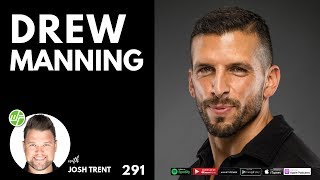
Episode 291 of Wellness Force Radio: host Josh Trent interviews Drew Manning (Fit to Fat 2 Fit). Drew describes attempting to run 100 miles (completed ~80, to be finished later) to raise awareness and funds for Operation Underground Railroad (Tim Ballard). He frames extreme public challenges as hooks to raise consciousness about issues (e.g., child sex trafficking). The episode also covers Drew's past Fit to Fat to Fit experiment, his motivations rooted in early religious/sport upbringing, recovery from pornography and divorce, his spiritual work (plant medicine experience at Rythmia), tattoos with messages of vulnerability and 'imua' (move forward), and his new parenting-focused project Single Daddy Daily. Drew defines wellness as integrated physical, mental, emotional, and spiritual transformation.
Questions this video answers
About 80 miles (with ~19.5–20 miles planned to complete 100).
Drew's brother's 45th birthday (his brother proposed the challenge).
Operation Underground Railroad (founder Tim Ballard).
Approximately $10,000 (speaker-stated estimate).
Single Daddy Daily.
Chapters
I would say this 100 mile idea was on par with the fit to fat 2 fit idea, which. The fit to fit to Fit idea was more of a long term physical traumatic experience. I'll say. Yeah. But it was also mental and emotional. That's what I learned from Fit to Fat to Fit. I've done smaller experiments here and there, but this was 24 hours of suffering for the greater good. Sometimes that's what it takes, I feel like, for humans to raise their consciousness or awareness of, like, maybe I should change. And. And it takes something crazy that catches their attention, but also motivating them to say, wow, that really opened my eyes.
That's Drew Manning. And this is episode 291 of Wellness Force Radio. Wellness Force Radio, where we discover the physical and emotional intelligence to live life.
Well, you can have the same brain states as someone who's done an hour of meditation every day for 40 years.
There's a lot of losses that we go through. So the ability to be able to cope with those losses is very important to build skill in it, because loss will happen.
You know, you have to have spiritual courage to really grow spiritually. Because if you really want to take guidance from your soul, you have to be ready to realize that many of the things that you're asking for guidance on your ego has some kind of an addiction to or an investment in.
Hey, everybody, welcome back to the podcast. It's Josh Trent. Today we have my really great friend, the host of the Fit to Fat 2 Fit Experience podcast. All around genuine, amazing human being, the one and only Drew Manning. This is Drew's second time coming on Wellness Force. The first time he was here was about two years ago. He talked about emotional fitness. Well, today we're pivoting from that type of fitness. We're talking about more physical fitness and how it pertains to our spiritual contribution while we're on the planet. Drew actually almost ran 100 miles in 24 hours to help raise human consciousness. And you really gotta stop yourself here. How does running almost 100 miles in a day raise human consciousness? Well, people like Drew believe that shockingly powerful things, athletic events, weight loss. As you know, he lost a lot of weight. I think it was almost 100 pounds that he lost to get him on Dr. Oz over five years ago. These big events that are out in the public spotlight, they. They shine light on darker situations. And the one we're shining it on today is sex trafficking with children. This organization called Operation Underground Railroad. We'll talk about why Drew ran almost 100 miles with his brother in 24 hours. I got to sit with Drew in Orange county at the Pasea Hotel right after he ran almost 100 miles. And he was using the Normatec boots. You can kind of hear it in the background during this show. I gave him some CBD cream for his knees. I mean, this dude was hurting, but he is such a wellness warrior. I've known Drew for, gosh, I think three years now, maybe even more. And my friendship with him has allowed me to see even deeper parts of. Of just how much he is truly of service to our wellness world. And I know this topic, childhood sex trafficking. It's probably something that you don't wanna hear about, but check into that. Take a deep breath. How many things in our life do we not want to deal with or hear about? If we could just find solutions through inspiring podcasts like this, then we can start taking those solutions and applying them to the real world. This is exactly why I'm so proud and honored, really, to bring Drew on this show to talk about the connection between our Underground Railroad and Drew Manning. We also talk about masculinity. We talk about connection to childhood. You know Drew's gonna go deep when he comes on Wellness Force. We talk about men's self worth, how this is changing in our society. We talk about why Drew believes that putting yourself in the public spotlight, doing challenging things is the perfect way to shine light on dark subjects like childhood sex trafficking. We also talk about the Operation Underground Railroad, where they do such great work in this world. If you're a parent, share this podcast if you have children or nieces or nephews or you just care about the welfare of children across the world, make sure you click and share this podcast. This is a powerful show. We also talked about porn addiction in our society, Drew's journey through that, and the power of vulnerability. When it comes to sharing our stories, Drew shares his own story of divorce and the journey of creating fit to fat2fit. And this quote really sums everything up. Drew says, instead of allowing life to create struggles for you and throw obstacles in your way, creating your own struggles allows you to get a step ahead of the game. I mean, that's the one big takeaway from this entire podcast and this game that we're playing. Whether it's like workouts or hiking or just recovering from a gym session or being in nature, most people forget that in the game of life, recovery is actually what happens after you work out. This is where all the magic is. This is why Wellness Force partnered with Fit Aid for The sugar free zero and the zero RX from life aid beverage company. These drinks, they taste amazing. They're perfectly designed with the vitamins and minerals for the rapid recovery after you work out. So check this out, you guys, whatever game you're playing, these supplement infused drinks, they're there and they're packed with glucosamine, glutamine, turmeric, branch chains, full spectrum, B complex. It is the shit. Can I say that? Well, I just did. It is the shit. You're gonna love this. And because you're here with us, you actually get 20 bucks off 48 cans, which is the best deal I've seen online. 20 bucks off, really generous. All you have to do is go to wellnessforce.com 0z E R O. That's wellnessforce.com 0support our friends who support this podcast and get some vitamins, minerals and nutrients into your body so you can recover better and smarter. Now let's drop in with the one and only Drew Manning in Orange County, California, live and in person on Wellness Force. Drew, thank you for having me at the Pasea Hotel.
Well, welcome. You're welcome, Josh. You can come to the Pasea Hotel anytime to visit me. I live here.
Let's talk about this, man. You just ran 80 miles. 80 miles.
Did I?
For two. For two purposes. One of them was to connect with your brother. It was his birthday.
Yeah.
But the other big purpose is Operation Underground Railroad, which. Let's dig into that. Like, why'd you do this thing?
What's this all about? Yeah. So let me kind of back it up to where it first started. We first started reading the book Can't Hurt Me by David Goggins, which we've talked about before. Right. Great book. Super motivating. David Goggins story is super inspiring. That's why he's been all over the podcast world. He's been on, you know, all these shows. Anyways, my brother was super inspired by it, and since his birthday was coming up, he's like, let's do a challenge for my birthday. And for whatever reason, he came up with the idea of 100 miles. And he's like, this is his idea. His idea. So he came to me because we've done some, like, crazy hikes, hard things in the past, but nothing like this. And he's like, hey, let's run 100 miles for my 45th birthday. I'm like, bro, I don't. I've never ran a marathon. I've never even ran a half marathon. And here you are asking me to do 100 miles. So I said, how about this? Why don't we do an eight hour test run to see how our bodies can handle, you know, moving for eight hours. That's only one third of it. And so we did it here in Huntington beach when I was visiting. And it's a 14 and a half minute pace. It's not like you're running the whole time. So in your mind, it's like a baby jog. Yeah. You're thinking, oh, yeah, I could maintain that for eight hours. And the first four hours were pretty good. I was like, dude, we got this. The next four hours, everything was hurting. Walking hurt. And I could barely walk afterwards, but we did it. So I said, hey, let's train for the next month and we're gonna do it. So we. But we had to come up with a reason, like a why behind it. And that's why I was thinking of, let's donate to charity. Let's do some good with this idea put out there on social media. And I was like, Operation Underground Railroad. Tim Ballard, Me and him used to CrossFit back at Saratoga Springs. CrossFit in Utah when our first started. And they didn't have any kind of like funding or, you know, big names to, you know, their organization, so no one really knew who they were. But he's. I believed in what his mission was. And ever since then, I find ways to support them as much as possible. And now you got people like Tony Robbins and Glenn Beck backing them up and talking about them and raising money for them. And now they're. They're big time. Like, Tim Ballard's all over the place. He's on Fox News all the time. And you got celebrities like Ashton Kutcher. They're even making a Hollywood movie about Tim Ballard, which, by the way, look for that coming up. I think the next year, a real Hollywood movie with real actors. And it's gonna be amazing. So that's that. That was our why.
Yeah. And it's a big ass why.
Yeah.
And you're no stranger to these. N equals ones like these hardcore physical. Physical experiments. People know you. You gained like 80 pounds, then you lost it. So this. How many times have you done these physical things to prove a greater point, really, which wakes people up to consciousness. I mean, whether it's physical or emotional, what you do really is you're this catalyst for a physical threshold being breached in some way. How many times have you done these physical things?
I would say this 100 mile idea was on par with this. The fit to Fit to fit idea, which. The fit to fit to fit idea was more of a long term physical traumat experience. I'll say. Yeah. But it was also mental and emotional. That's what I learned from Fit to fat to fit. But I would say I've done smaller experiments here and there. Spartan race. But this was 24 hours of suffering for the greater good. My fit to fat fit was a year, right?
Yeah.
But sometimes that's what it takes, I feel like, for humans to, to like you said, raise their consciousness or awareness of like, maybe I should change. And it takes something crazy that catches their attention but also motivating them to say, wow, that really opened my eyes. So for example, I remember Morgan Spurlock, Super Size Me, Right?
Yes.
Crazy experiment for three.
We all remember him throwing out of the. Throwing up out of the window.
Exactly. We all know and we all realize, okay, maybe McDonald's isn't as healthy as I thought it was or maybe I shouldn't eat fast food. And sometimes it takes something crazy like that to raise our awareness of like, okay, maybe I should make some changes. And then you see the power of documentaries now and how powerful those are in influencing people to either do good or bad, depending on how you look at like forks over spoon, forks over knives. Yeah. Or.
Yeah.
What was the newest one?
There's been so many. What the health.
Yeah. What the hell. Yeah. Super influential. So what I'm doing is, is kind of the same thing in a smaller degree of trying to raise people's level of awareness of like, maybe we should make some changes. And this crazy idea catches your attention, which is the hook.
Yep.
But what's the message behind it? And that's kind of what I try and bring my, you know, my, my philosophy is my beliefs to the table.
Yeah. And you take people to the table of keto. So Complete wellness is your brand. You have a book, Complete Keto, that came out and I've always been fascinated ever since I first met you, man. Like your ability to withstand the elements and suffering. Like when I had learned about you, actually it was shauna from Organifi two years ago at. Two and a half years ago at PaleoFX, that's when I first met you and I didn't really know much about your background. And then I, and then I realized, like, oh, you were the trainer that lost all that weight to prove to CL that you could feel what it was like to be in their shoes.
Yeah.
And I'm curious for you, like, where does this enduring suffering piece come from?
It's a good question. I think a lot of it has to do with my perception of the way I was raised, the religion I grew up in, which was Mormonism, playing football and wrestling. From a very young age, I felt like suffering was something that made you better and something you needed to do to become better. Whether it's at a sport or at religion of, hey, if I suffer more, then people will love me more, you know, like, oh, poor Drew suffering, you know, And I think maybe that's kind of my survival mechanism as a kid was, okay, maybe I'm not great at certain things, but if I can show people I'm good at sports or if I could show people I'm good at religion, you know, then that's kind of my sense of self worth. And it was misguided, but that was my perception as a kid because I didn't have anyone else teaching me otherwise, because I felt like if I go to football practice and I get yelled at, I'm like, okay, I don't want to get yelled at again, so I'm going to do better. Or if I go to church and I sin and I find. And my leaders found out that I sinned, okay, here's your punishment. Okay, I don't want that punishment anymore, so I'm going to try not to do that. And sometimes we feel like as men, it's a broken system, but it works to a certain degree to hopefully help us become better. But eventually that's what broke me as a man. And. And once I learned how to get out of that, then my whole life opened up to the real me, a very authentic life for the first time. Because living that way is a very inauthentic way to live, because you're living for other people.
And it's so ego driven too, because at least if they're suffering, the ego still knows that there's always going to be some kind of line of suffering and then it can be right about the suffering.
Exactly.
So there's a big part of that, I think, for all people listening, that it doesn't have to be so challenging and we can stick in the challenges that serve our soul, the challenges that we select. What is the next challenge? I mean, you're sitting on the bed with Norma Tech boots. You. You hobbled over to the door to say hello to me. Do you even care about the next challenge right now? I mean, is that even in your consciousness?
It's so funny. It is. My brother and I have already kind of planned it out, but it's nothing. I Don't think that's crazy, but crazy is all relative. That depends on who you're asking. Some people think a 5K is crazy. Right. But some people think 100 miles. Oh, that's easy. So it depends on who you ask, but we have talked about that, and I think just really quick, just to let people know. When I go into these suffering things like this, what I just did, it's coming from a different place. It's coming from a place of self love instead of self hate, which is the way I grew up. So that's what the paradigm shift for me was, coming from a place of self hate versus self love. I can go into these challenges and it's a different motivation for me to get through it. Instead of, like, beat myself up, hate yourself, punish yourself. Like, I love my body now and I felt bad for my body, had to do what it did, but I feel like we have a better relationship now. And it's like, look, I know this hurts. I know this sucks, but we can do hard things and we're going to be better because of this. Even though it sucks and it hurts. Like, we. We think self love is no suffering. Like, oh, yeah, don't. You don't want your muscles to be sore because you love your body, but you don't grow from lack of sore muscles. You have to suffer in order to grow. And so I feel like if I can create my own struggle. Joe Rogan talks about this. Creating your own struggle and growing from that. And then when life throws struggles at you, because no matter who you are, you're gonna have life throw struggles at you.
Yeah.
Instead of waiting for life to throw struggles at you and forcing you to grow from that, you're already a step ahead by creating your own struggles. And that's why, you know, doing tough workouts every once in a while is really important to. To mentally prepare yourself and to strengthen your. Your body and your mind for those moments when life punches you in the face.
And in those moments, then you've already experienced the kind of pulling adversity.
Yeah.
So you're more prepared.
Yeah.
You show up, like, twice as prepared.
Yeah. And it doesn't mean I do this stuff all the time. Right, right.
Because who runs 100 miles more than once in a lifetime, if ever.
Oh, yeah.
Like, if ever.
A small percentage of people. There are people out there that do it. I just has.
But you're not Dean Carnazes, you know.
No.
Some people are built anatomically for this. I look at you, I don't really see you as, like, being the runner?
No.
Would you describe yourself as a runner?
Not at all. I'm anti runner.
You're anti runner. You enjoy the gym?
My cardio is lifting weights faster. Yeah.
So, okay, so you did the 80, and now you're going to do the 19.5 or 20 with him later.
Yeah. So we. Once I'm healed, I'm having a big family reunion in Utah two weeks from now. So that'll give me my body time to heal. We'll finish it together as a team. And then we talked about our next adventure, which could possibly be an Appalachian Trail run slash hike adventure where we have to run with our backpacks as many miles as we can in X amount of time. We don't have the details, but stay tuned. It'll be for a good cause. And I think these are the types of things for me that I need to motivate myself, because if I just keep going through the same three sets of 10, I want to look good, that I get burnout. I get burned out. I really do. Because then I'm, like, going through the motions. I'm like, what am I trying to get good at here? Like, yeah, I. I want to look good, but I'm not as obsessed as I used to be.
You remind me so much right now of something that Jacqueline said. Jack Lane was one of the OG fitness guys. I mean, we're talking, like, 1960s. He was on TV, 1950s, and he was like, you know, people that are unhappy, it's challenging for them to lose weight, because the more they're unhappy, the more their body's holding on to the weight. Yes, I paraphrase, but that's essentially what he said and what you said about, like, yeah, if I'm going to the gym and I'm doing three sets of 10, the motivation barometer is way lower than if I'm doing it to serve children across the world in slavery.
Yes.
Like, did you go into that emotional mental place where maybe you're on mile 50 or mile 60 or something and everything's hurting? Did you connect with the kids that you were serving at that point? Like, how did you get through the dark parts of this?
Yeah, it's that bigger why behind wanting to do it. And the second thing on top of that is accountability, like, putting it out there to the masses, saying, this is what I'm going to do.
I'm doing this.
It was those two things that helped me push through, because I never would have trained the way I did and never would have because I'm not a runner. I hate running. If I just said, hey, I want to run and get in shape to run, like, I. There's times where I would have been like, you know what? I don't feel like going on a run today. I'm just going to stay home. No one's going to know. Yeah. But there's times where I'm like, no, I. On this day, at this time, this is happening and people are going to be watching. I have to do this. And I want to raise money for Operation Underground Railroad because I know how much it costs to save one child. We think it's easy. It's something you go and. And you do. But, like, they. The logistics involved to work with these local law enforcements in different countries to pull these children out of trafficking. And then not just that. How do you rehab them? You know, like, how do you help them find their families and get out of this vicious cycle? It's not something as simple as, like, oh, yeah, here's 50 bucks and that'll help save a child. It's like $10,000.
So is that the number? Is it 10,000 for one child?
I think so. It's a lot.
That's because you have to go through local and state and all this different government. We're talking about third world countries here where guerrilla gangs hold the highest precedence.
Oh, yeah.
So you have to, like, go into there. I mean, the videos are shocking. We'll link this in the show notes. I was. We were talking before we recorded. I. The first time I heard about this Operation Railroad, Underground Railroad, I was so angry for like an hour.
Yeah.
Because I had always heard of these things possibly occurring. But the way that it was portrayed and the way it was articulated, like, it's an immense amount of suffering that I don't think people could even begin to conceptualize. And so being the bereavement or being the easer of that suffering through financial compensation earned through running or earned through an event. That's noble, man. That's so noble. And it actually gives me like a feeling of a deep breath and a reprieve for at least somebody's doing something about it.
Yeah.
How did you even first learn about the Underground Railroad?
I first learned about it from Tim Ballard, who was at the CrossFit gym that we worked out at. Right. And so that's the thing is, I wasn't aware of it. Like most Americans, we're not exposed to that kind of stuff. We see movies maybe, but, like, we don't really think about 2 million kids being enslaved in sex slavery worldwide and, you know, having kids of your own, you just don't want to think about those things. Like, you want to stay in your own little bubble and be like, no, the world's, you know, rainbow and sunshine, like, everywhere. And it's not. And. And it's hard to fathom. You look at your kid and you think, my kid could be one of those millions of kids out there being sold for sex slavery. But I'm so blessed and grateful to live in a nation where it does. I mean, it happens in this nation, but my girls aren't exposed to that, and I don't have to live that. But then you watch the movies, the documentaries, and it happens in these other countries, and it's sickening. It's the saddest thing. And so I think the thing that we talked about before the podcast was separating yourself from that. The angry, like, nature that you get by watching this. Who are these people? Like, you just want them to be gone from this earth so that there's no kids.
Yeah. Like, let's. Let's put a bullet in their heads. I think that was what I was thinking.
Yeah.
Somebody just killed all these people that are doing this.
Because you think of a kid suffering, and it's just you, everyone. I think that's a universal hurt. When you think of a kid suffering, for the most part, it's a universal pain that everyone feels. And it's like, who are these, you know, disgusting humans that are doing these. These awful things? But it exists. So what can we do? Stay angry. Right. Which doesn't do anyone any good. Or, you know, I'm not gonna go on a mission. Like, I'm probably not gonna go on a mission to do this with Tim Ballard, but if I can raise money for them to go do what they do best, I can sleep easy at night.
Yeah. You know, and cash flow is oxygen. That's how you're breathing this mission, helping to breathe this mission into life.
Yeah.
Because without cash, I mean, nothing really happens. So then I could see this being. You know, there's. There's people that do weight loss challenges, and there's people that, like, donate money in their company to lose. What if this could form or even, like, metamorphosis into a national, like, fundraising week or fundraising month, where everyone in the country could get behind this and scale it 20x.
I know. I think there's a lot of great ideas. And this is what I see Tony Robbins do at his events, is he'll say, I'm putting in $10,000 to this. Raise your hand if you want to donate to this cause. And I'll show a little clip of Tim Ballard in his movie, and people jump up and be like, all right. And before you know it, $2 million is raised. Right. So there are people like Kim that have that power of influence to do something like that. But, you know, for people like you and me, it's like, okay, what can we do? Like, hey, guys, go donate. But it needs. There needs to be something else bigger than that to get people's attention. Like, hey, guys, I'm running 100 miles in 24 hours.
What?
Drew, the non runner, is running 100 miles, and he hasn't trained for more than a month to do this. Okay, let me look into this. You know, so sometimes you need to do something crazy like that to catch people's attention, or, you know, something like you just suggested that's a great idea, like National Human Trafficking, Trafficking Awareness Day. That was really long. Hashtag.
But yeah, we could work on the hashtag.
We can work on that.
But essentially, like, what I'm touching on and the question I really have for you, like, the deep down question, is, why put yourself in the public spotlight about it? Because, yeah, it's not the first time you've done something in the public spotlight for the greater good. However, there's something unique about this one, especially with the mission behind it. Like, why did you choose this right now?
Well, like I said, it was my brother's idea. And I felt like I wouldn't have come up with this idea myself, but because he did, and I wanted to support him, I felt like we needed to have, you know, a charity to tie it to and our fit that, you know, and then when. When it all came together, I'm like, this is why it's happening. You know, at first I was like, okay, that's just a crazy idea. Why would we do this? But now, all the pieces coming together and seeing, like, how supportive everyone was, people were checking in on my Instagram lives, my Facebook lives. They're sharing my posts.
Yeah.
Nothing else really got this much attention from. You know, I'll post motivating or inspiring stuff, but this, I felt like, caught, like, wildfire. Everyone was watching, like, is Drew gonna be able to do it? Like, this is insane. I can't believe he's doing this. And it just raised more awareness for our. And I felt like it had to be something like this just because I know how people think, and I can't. If I just said, hey, guys, this is a great organization. Go donate. Maybe some people would have, you know, checked it out, but I felt like this is what I do I'm pretty good at, is catching people's attention with a crazy idea, but then hooking them with a bigger message.
This reminds me of the book Contagious, actually. And they talk about marketing strategies. Like, people love sharing content that makes them look good in their friend's eyes.
Yes.
So if somebody's sharing a message about a guy that never runs, but now he's doing 100 miles to save children that are in sexual slavery, that's how we win, dude.
Yeah.
That's how we capitalize on the, on the part of marketing that can actually meet people and, and help people where they are.
Yeah. And I think when it comes to charities, there's very few that are very black and white. Like, this is evil. This is good. This is one of those charities that's like, okay, are you on the side of evil? Are you on the side of good? And 99.9 of people are like, this is an evil thing happening. I want to be on the side of good in this situation, you know, versus some charities is like, yes, that's important. But it doesn't really concern me or affect me. This is something that, dude, this is happening. This is crazy. I, like, I can't believe that this exists. And I think it, it brings people from all different backgrounds together to join forces for common cause of like, let's save the kids.
Yeah. You know, and because we can all connect with that, it's hard for us to understand how to save an orangutan in like a certain part of the Amazon. Not that there's anything wrong with that. It's actually, you know, as said before, cash flow is oxygen. So the, the oxygen that we're all breathing right now is at a very pivotal point in human consciousness. Like, you recently went to Costa Rica. You had tremendous up leveling in your human consciousness.
Yeah.
You shared it with your audience super bravely, by the way. I haven't told you that in person, but just so brave the way you did it, man. And I'm, I'm curious from a consciousness perspective, like, you've got the complete keto, you have complete wellness. You've done this event. It's like, what are you actually doing here? Like, what are you doing here on planet Earth?
That's an awesome question. Well, first of all, I have you to thank for the Costa Rica experience because. Shout out to rythmia. They reached out. Did they reach out to you? Did you reach out to them?
No. Wellness Force partnered with Rythmia. We've worked with them for over a year.
Okay.
Yeah.
And you did it. And then I was like, okay, I.
Just connect my friends that I think have amazing hearts and audiences that deserve consciousness.
Higher.
Higher levels of consciousness.
So, yeah, I think you're inspired to introduce me to them.
I was definitely inspired because I was like, drew gets to go.
Because I've research it, I've studied, I've talked to friends that have done ayahuasca or plant medicine, and I've never felt called to do it until. Until rhythmia happened. And you introduced me to them, and it was a very spiritual experience for me and spiritual awakening moment for me to have. And it was one of those moments where I was like, okay, how do I share this with my audience? I was very concerned about that because, you know, you know your audience, you know, your demographic, and sometimes if you put something out there that's they're not ready for, it could go south. But I've kind of experimented with that with my audience of, you know, first of all, fit to fight to fit. But then also my personal divorce story, which is very. A private thing to share that people were kind of uncomfortable with. But at the end of the day, it was a positive thing that really influenced people to have courage and have the bravery to share their story and own their story and embrace vulnerability as a strength. And so I feel like, you know, what I'm doing here on Planet Earth is to give people permission to be brave, to be brave enough, and to have the courage to own their story and embrace vulnerability. And I feel like I'm able to do this in a. An industry of health and fitness, as that's the hook. But then on the other end of that is the mental, emotional, spiritual transformation that comes with a physical transformation. So we all here in America think the end all, be all is physical transformation. Once you have this body, everything opens up for you.
You're now worthy of our.
Worthy. Yes, exactly. People treat you better, and. And people will love you more, and. And, you know, and then you'll give yourself permission to like yourself too. But it's a myth that we buy into. And so my hope is to bring this empathy, a better understanding of the importance of mental, emotional, spiritual transformation in the fitness industry, which is obsessed with physical transformations. But I think people are starting to realize that just like money, if you have more money doesn't mean your problems are gonna go away, and your. Your. Your happiness level is gonna be. You know, 10x if you have X amount of money, I think we all realize that that's not the key. Same thing with physical transformation. So if I could hook people with the physical transformation, complete keto, complete wellness. You know, you see my programs online. Yes, they work for physical transformation, but is that bringing you fulfillment? And I would say no.
Well, and also, when people are going through anything that's complete, whether it's keto or wellness or body transformation, they're at some point going to, in going to go into the closet and clean out all the dark stuff that hasn't been dealt with that's driving the poor food decisions, that's making them not sleep. All that stuff's going to come up.
Yeah.
So it's a Trojan horse, really approach of what you're doing. You're like, yeah, you're going to look great when you take my programs, but I'm also going to allow you to face your dark shit.
Yeah. Which is sometimes unsexy. And people don't, you know, don't want that. But at the end of the day, that's what separates people from a true lifestyle change. And just doing another diet. I think people that just do another diet, they realize that, okay, I've been down this same path over and over and over again, but it never sticks. Why not? Because I'm too afraid to dig deep and pull that dark stuff out of me. And once that dark stuff is out of me, then I can be free to love myself and give myself permission to care about my health. And I think the, the problem is our perception of what health and fitness needs to be is. It's this suffering thing of starving myself and beating myself up in the gym to look a certain way so that I'll love myself, so that other people will love me and then all my problems will be fixed. And if we approach it from a totally different perception of, like, I love myself, I want my body to be as optimal as possible so that the mental, emotional, spiritual side of me is optimized as well. And we're all working together in these parallels. That's complete health. Right. That's a complete transformation rather than just a physical transformation. So, yes, it's a different approach to a certain industry that has been given a bad rap for a long period of time because it turns people off. You know, 90% of Americans out there don't really care about, oh, what's the, what's the best diet? Or what's the best, you know, exercise or workout program? Because they're like, nah, that's not for me. I don't want to get six pack. Like, I just, you know, they'll just keep living their lifestyle the same way, but they're turned off by like, you know, for example, the bodybuilder industry, because they're like, that's not how I want to look. It's like, well, it doesn't have to be that way. Yeah. And I think it's people's perceptions of the health and fitness industry and my hope is to help change that. It doesn't have to be this, this suffering type of approach.
Yeah. Well, you've, you've got your work cut out for you. And I'm glad that there's you and, and people like you out there because, you know, I got to go to fitcon and see the massive booth with the dancing ladies wearing no clothes and the guys with their shirts off from the Bang drink, the fizzy drink company. And I don't know much about their products. I'm not just trying to make this a negative hit to Bang, but we all kind of sense that there is an old way of being and an old way of narration around fitness and health. It's still out there. And I feel like now we're at this point where. Have you ever heard the analogy, like, when you pull on something, it tugs for its life just as you're about to release it. Feel like that's the old narrative of fitness. Like with the Bang companies or the women, you know, basically naked and like, you know, using sex to sell. And we're in a new, we're in a new era where that actually doesn't resonate with people like it used to.
Yeah.
And I think your way of being in your way of speaking this into existence with the complete understanding of transformation instead of just like, hey, I look good. My question for you is, like, how do you walk the lane between the two? Because, like, you're a super fit guy, you know, part of your body being your billboard is how people find you and reach you.
Yeah.
How do you not fall prey to the demise of like, the ego based fitness narrative? Like, how do you stay true to that?
That's a good question. I think you have to be smart about being able to play both games or both sides of the coin here. And what I mean by that is I know there's certain techniques that I have to play or games I have to play on the fitness side of things.
Here's Drew eating a cupcake with his shirt off.
Like, I have do you know a shirtless selfie every once in a while. But I feel like it's my messaging behind it after that that hopefully helps people change their perception. So, yes, I am this fit guy and people, and people that don't know me might look at me and be like, oh, just another trainer with a six pack ab tattoos. Like probably just a, you know, a meathead jock that, you know, is telling me to lift weights, you know, and get. And here's how to get shredded. And I get that. And I feel like that's a game you gotta play sometimes. But then from there it's your messaging after that. Like what, what ride do you take them on after that point that, you know, pulls them in your direction of what you're trying to do for people. And I feel like if people that consume my content after they watch an ad and this happens all the time, People like Drew, thank you so much. I saw your ad on Facebook. I clicked on the program thinking it was just gonna be a 30 day keto program. But it was so much more than that because you, you know, taught me about mindset. You taught me how to love myself. You taught me about positive affirmations and meditation and a gratitude list. And now before I know it, yes, my body's changing and I'm not as obsessed about that number going down the scale, but I'm super happy with who I am and I love myself because I'm feeling better. And the program does work, but it's. It's more so their perception is starting to shift about themselves, about health and fitness and what success really looks like on a program. It's. Success isn't based off of that number on the scale going down. It's so much more than that. It's about who you're becoming while you're taking that journey up the mountain. Right. And so, yeah, it is a game you gotta play sometimes. It's just knowing how to. How to navigate people through those, through those waters.
I like the way you play the game on your cover of Complete Keto because at first glance, if somebody were to only see it for half a second, they might think this is just another book with a really fit guy telling us to eat high fat. But if they actually took a breath and looked at the COVID they would see that on the inside of your arm, there's a tattoo that says vulnerability is strength.
Yeah.
And I noticed that was strategically positioned on the COVID Was that your idea to position that with the tattoo being visible like that?
That's an interesting question. I don't know if I thought about at the moment, all I wanted to do was have my arms open as the food was presented there. And I felt like that was my. My. The. The position of power for me was my arms like this. And then after the fact, I realized that all my tattoos were showing. So on one side, it says vulnerability is strength, which is something that changed my life. And on the other side, it says imua, which is the Hawaiian word for progressing forward and moving forward in life. And these two, you know, sayings right here, these quotes or words on my. On my arms have a lot of meaning to me. Deeper meaning than physical transformation. Right. And it's funny you point that out, because now I'm so glad that that was the picture that I decided to use, was to show people, you know, these words of power.
When did you get that tattoo? When did you get it?
Vulnerability to strength. I got right before podcast episode 100 aired, which was the podcast. If you haven't listened to it, you can go on itunes and listen to. It's my most downloaded podcast, for obvious reasons. I open up and talk about why I got divorced. And I remember when it was coming out, I asked my tattoo artist who was doing this army, I said, hey, can you ask one of the other guys here that isn't busy to just do this really fast? And he's like, yeah, for sure. So I was there with both arms open, same position.
It's like the Jesus position.
Exactly. On the cross. Maybe a little. A little bit less painful getting tattoos.
Yeah.
But, yeah, they were both tattooing me at the same time because I'm like, I need a picture of this right before the podcast airs.
Was it almost like a. A badge of transition or a badge of transformation? Does that remind you of something when you see it?
Oh, 100%. Like, when I began, when I went public with my story, that's why I got this. This. This tattooed on my arm, because I knew I was going public with my story, which once I put it out there to the, you know, the masses, there's no turning back. And so, for me, I felt like I was finally ready to share my story, and that's why I got that tattoo at the same time. And it's scary stepping into the arena. Like Brene Brown says, you know, it's really scary to take the courage to step into the arena, because once you're in the arena, you know, you can't control people's reactions, you know, and this is a very sensitive subject of talking about lying, having an affair, pornography addiction, where you're hiding all that from the world and pretending like that stuff doesn't exist. Once you open up and tell people that, it opens up their wounds. And I learned this just recently. I just did a posted a video on my igtv, you know, kind of summarizing my story where the. For the first time at this event called Powerful youl in la, I was on stage and that was the first time I shared it from stage. I shared on my podcast. But on your podcast, you're talking to yourself. Yeah. Into a microphone. No one's there with you. And you push, you know, you put push it out there to itunes and you know, people are listening to it. But this is different because people are watching you in the audience. And this is my first time doing it on it from stage. And it was a really powerful experience for me.
What was so powerful about it? Because it was probably terrifying and liberating at the same time.
It was both. Yeah.
Right. Because it's a very. What's more vulnerable than talking about relationships and learn lessons and relationships to a room of people.
Exactly.
Let alone just ourselves.
Exactly. It was terrifying because the emotions came up. Surprisingly, the emotions are, I think, will always be there. As I was talking about it, I got emotional about it. I'm like, wow, there's still emotions behind it. Because it's such a powerful experience of what happened that. And I knew that people listening it, you know, people are affected by this. People really are affected by shame and guilt. Lying, which manifests itself in the forms of affairs sometimes, or certain addictions. It doesn't just have to be pornography. It could be certain. A million other addictions.
Yeah.
And so opens up their wounds. And so you can feel the hurt that you've caused and you can feel the hurt that is there in the audience. And I was like, you know, people could stone me, they could hate me. I don't know how they're going to react to it. I just have to share my story in hopes that, you know, at least one person will be inspired and motivated to take the courage to own their story and say, you know what? I'm breaking the cycle. I'm not living an inauthentic life anymore. And this is what I needed because for me, I remember Terry Crews. You remember him?
He was one of the first big people, big movie stars that came out about pornography.
Exactly.
And I was blown away because this is a guy we've seen on, like the old Spice commercials. You know, he was a half horse, half man. And I was so proud of him for Doing that because. Because porn was something that ruled my life for so long.
Yeah.
And it rules a lot of men's lives. I just had Greg Woodhill on the show, and we talked about this in depth of the literal rewiring of the brain. I mean, it's not something where it's like, oh, I should be looking at that, or, oh, I wonder if I have a problem.
Yeah.
I think I heard the term of addiction. It's something that you can't go without for more than three days, and you wish you could stop. Like, that's the true kind of definition of addiction.
Yeah.
I took us a little bit off there because I really wanted to share that. Like, this is something that all men share, especially in this modern age of pornography. It's a very. It's like the. It's an elephant in the room, per se. Because in the same vein, where people don't want to talk about childhood sex slavery, everyone's watching porn. No one wants to talk about the detrimental effects. Oh, no one wants to really explore it.
And I think it's part of our culture as men. It's something like, don't ask, don't tell. Like, just don't bring it up. Don't admit you do it. You know, do it, like, if you want, but don't let people find out, because if they. You do, they'll be disgusted. Like, dude, that's gross. Like, you do that, like, in the basement, the lights turn off by yourself. Like, you're just creepy. But then you realize, all normal men, you know, like, this isn't just me. And that's what I had to. That was the first step to helping me recover from. It was real, was normalizing. It was realizing I wasn't the only one. And it was my. I went to addiction recovery program afterwards of, like, hey, these are all normal dads. Just like me. Like, I thought I was. Obviously, I didn't think I was the only one. But you feel like you're alone. Like, who's gonna go touch? Like, oh, dude, I'm struggling with porn. Can you help me? Oh, it's not a problem. Exactly.
I watch porn all the time, man.
Yeah. Or, you know, in my. In my case, in the religion I grew up in, it's like, like, very taboo to talk about. Like, you talk about in church, but then no one talks about afterwards. It's like, okay, yep, I'm not gonna do that. But people do it, and they don't have an outlet. And so normalizing is one thing, and then from there, it's changed your perception of it. I think like Tony Robbins, he's the one that said nothing in this life has any meaning except for the meaning you give it or you give power to it. So it is what it is. It could be evil or good. In my opinion, I'm more on the side of pornography change, especially if young men are consuming it, thinking that's reality, and they grow up thinking that's what love is and that's what sex is, then obviously there's going to be some very unhealthy relationships in their life with women if they grow up with that as their guiding light of. Of what a relationship's supposed to look like. And then also on the flip side of that, women growing up watching chick flicks thinking that's what reality is.
That's a really good point.
And there's a great movie with Scarlett Johansson. I can't remember the actor's name, but he's like a Jersey Shore type of guy.
Yeah.
And he's addicted to pornography and that becomes his drug. But it shows this clip of him watching porn and his, his, the. The light in his brain lights up the same way Scarlett Johansson is watching a chick flick, thinking that's what love is. This fantasy love of this movie of this perfect guy that comes and saves them. And, and both of their perceptions are skewed and their expectations are based on those things that they're consuming. And that's why they're on different wavelengths and different levels. And when she finds out he looks at porn, she thinks he's disgusting, and he thinks she's unrealistic for her expectations of being this perfect man based off the movies she watches. So it's interesting how men and women consume two different things that are fantasies, but in their minds, that's what they want reality to be.
It's the same limbic circuit activation. It's the same reward circuitry.
Right? Yeah.
Oh, the princess with the glass slipper and the knight in the shining armor. Or the screen that delivers 24, 7, 365. Any woman of any race, of any style that I want. And we weren't designed for where we are and how we live now. We just weren't. Man, like, like you lead a life through a primal or a ketogenic lens. Why aren't we also taking that approach to how we consume information as well? Yeah, because the same way that we eat, move and sleep, it. It gets to be lived through the same thought, feeling, action lens. Yet we live in a world where that lens is so Cloudy with narrative and story. And just honestly, that's been fed to us for so long. Like, what is the gap closure between eating, moving, sleeping from the primal keto lens to thinking, feeling, acting in the primal keto lens? How do you connect those two?
Yeah, I think it's. It's hard. You gotta. I like to choose a really hard question. That's a really hard question. I think you just pick and choose because I think that's kind of what the biohacking world is trying to do is all these technological advances and these cool things, like, you know, blue light blocker glasses and like, yes, you can still consume that stuff, but. And from a healthier perspective, you know, I'm saying, like, so maybe that's one approach to it. But, you know, I still like to go watch a movie every once in a while. Like, I love watching movies, and that's kind of like where I can turn my brain off, you know, and. And shut it off for a second.
But you're not watching. Like, do you watch horror movies? Like scary movies?
It's been a while since I watched. I just. I'm not a. I don't have a lot of time. Yeah, I did back in the day.
Okay.
But not anymore.
Okay. Well, what kind of content do you. When you do want to turn your brain off? Is it documentary, is it educational? Like, what do you do to shut off the brain that's still healthy for the brain?
Sports. I think sports are still healthy.
Yeah.
You know, even though you gotta watch commercials in between or like, you know, it's. The stories like that are still inspiring. So I'll watch, you know, like the NBA Finals or the super bowl, but then when sports aren't on. Yeah. What do I do? That's a good question. If I can, I'll go out in nature. That kind of helps shut my brain off.
Yeah.
You know, but in a different way. Like, watching TV just isn't the healthiest thing. I know that. But every once in a while I like that escape you were you.
You were telling me when I got here, I forgot this about you. You were the seventh child of 11 children.
It's true.
So there. There was something where parents can't pay attention to 11 kids all at once.
No.
So there had to have been some psyche that formed for you where you learned how to Occupy yourself, being seven out of 11.
Yeah.
And that has transitioned into how you operate as a man now. What is that. What was that thing that you figured out when you were young that transferred to now about occupying yourself I mean.
Probably the TV thing. Like we growing up in the 80s, you know, playing, you know, video games Saturday morning, watching cartoons, you know, eating.
Nintendo with the square box. You put that under your T shirt and blow on it. And then it would.
Worked every time. Man, I know so little things like that growing up in that era. I mean, I don't play video games anymore. Nothing against them. I just don't have the time to do that. But that definitely would shut off your brain. I just don't have Give myself a lot of opportunities to shut off my brain in those situations, because I feel like, one. It's a waste of time. But that's. I feel like I put pressure on myself. Like, there's so much to do to change this world for the better. And when I'm shutting my brain off, that's like an opportunity lost. I feel like sometimes. So I feel guilty sometimes, but I feel like you got to have a healthy balance. You can't just be always, go, go, go. All right, how am I gonna impact the world today? What's the big idea? Yeah, and. And. And 100% stay focused on that, because I feel like that's how you burn out. So for me, I'm okay with shutting my brain off every once in a while, but just the right amount, you know? When do you do it? How often do you do it? Do you feel guilty when you're doing it? Should you be answering email? Should you be creating YouTube content or Facebook lives or. Yeah, there's always something to do. But I feel like, just like any other job, you'll get burnout if you don't take a break.
I feel like that all the time, where whenever I'm doing anything, I'm like, should I be doing more? And it's this voice. It's like this incessant almost chorus that pops up in my mind. Does that voice rule you now differently than it did when you started the journey? Because when you started the journey, you were wearing scrubs. You were still in the medical industry. Like, that was a totally different world for you. That voice probably had a different narrative than it does now.
It. Yeah. And social media has totally changed in the past eight years since I started Fit to fit to fit.
So.
Right. It's. So what's the word I'm looking for? It's so much more saturated than what it used to be. Right. So now I see people, I'm like, wow, this person's making this content, doing this. Like, I should be doing that too. And I feel like that's the game you got to play sometimes of, yes, you have to do that stuff, but am I getting caught up in the, you know, keeping up with the Joneses kind of mentality of, like, I have to do this, otherwise my brand will become irrelevant? And, yeah, it does cause unnecessary stress in my life. I'll be totally honest with you, because you do have to stay relevant. You do need cash flow. Right. Otherwise we wouldn't be able to do these podcasts. You won't be able to travel here, and I wouldn't be able to do what I do as well. So you got to find ways to make money, otherwise no one's gonna listen, you know, there's no platform, you know, and so, yeah, I'm trying to do my best to find that balance. And then also being a dad to two daughters and then trying to have relationships in my life and family and friends, like, making time for that, which is really important as well. You could become the healthiest, most successful, you know, brand owner or influencer out there. But at what cost? You know, at what cost? Like, you know, you could have zero friends and never eat out and, you know, make a big impact on the world. But you and I, you know what I'm saying?
Yeah, I do. And you and I operate in this world where there is so many influencers, and I'll just say, without naming names, there is a large portion of them that on a podcast, it's way different than when we're off a podcast. Like their heart, their ability to communicate from that heart space or just who they are as a human being, the energy that they. They emit and how I feel when I'm around them. It's so different when it's lights, camera, action on or lights, camera, action off. And I gotta tell you, like, I would much rather be a person that serves a million people a year and be super happy with my life than to serve 100 million people a year and hate who I am. Like that, for me, feels so much better. And I can sense my sense on you is that you're going to continue to grow in your, I guess you could say, popularity or whatever. You seem to have this recipe for staying grounded through the process. Although you said you're honest, sometimes the voices come up, and I deal with balancing all these things. Do you think that fatherhood plays a role in you staying grounded?
Is that.
Is that a piece of it?
100%. I think that is something that I have to dedicate time to. It's not something that I, you know, I literally am one of those people that I can't not dedicate time to it, right? Like, I. It's so important to me. And there's probably people out there that for them, it's not that important. I don't judge them, right? There's people that out there that will maybe just have their nanny or their spouse take care of their kids, and they'll see them when they're, you know, older. For me, I'm not about that because I only have a short few years with my daughters to have a real, real impact on them before they're, you know, gone off to high school or college and being influenced by the world. My hope is to really ground them with the things that I think are important. And if I don't do that, then I feel like I, I, I probably failed as a dad because I feel like I only had one opportunity in their early years to learn from me because, you know, remembering how it was with my parents when I went off into the world, it was like, well, you know, my parents didn't really teach me a lot, so I've got to learn from experiences of my friends and what they went through. And that's not always the best advice, you know. And so I feel like I want to ground my daughters with, you know, the life lessons that I've learned so far that have really changed my life versus just micromanaging them all the time. And so for me, I have to dedicate time to that, and that's what grounds me when I'm sitting there cooking with my daughters. You know, I'm making them breakfast and packing them their lunches and writing little notes in their lunches, like reminding them that they're loved and to be kind today. And just little things like that that I never had that I feel like probably would have made a huge difference in my life, you know. And so I'm trying to pay it forward, if you will, with my daughters so that they come from a place of their dad loves them and they have permission to love themselves, and then they'll manifest that on other people by loving other people. And that's my hope at least. And so it does keep me grounded because it's something bigger than fit to fat to fit, something bigger than physical transformation. I feel like this is how you really, really make an impact on the world, is by teaching your kids to be better than you. And that's how the next generation will eventually, you know, move forward.
I really felt that.
Man, thank you.
Thank you for being that kind of a dad. Because I just had a massive healing with my father. I told my audience I was going to do it a long time ago, but I waited four months, you guys. When I had my last ceremony, arrhythmia, a lot of stuff came up. And I promised the entire group, and actually Gerard and Jay Brown on the podcast that I would share everything with my father on the podcast. Well, the reality was, is that I shared everything to him on the phone after I spent three days in nature. And it just happened, actually, a week ago. And it was the most connected, loving, powerful, present conversation I've ever had with this man. And it's a testament to my work that I've done through breath work and plant medicine. The reason I'm sharing this is because you reminded me of how powerful a father's role is in people's lives. And. And that power has a very strong weighted gravitas to the ground.
And that is.
I think that's my intuitive question to you was around this fatherhood and how it grounds you. Is there any other way that you feel grounded besides being a father? Like, is it your audience messaging you? Like, what are the other components of you staying grounded in a media world that constantly levitates people up to ego? Are there other pieces besides being a father that allows you to be a great father? Because as you know, it affects all of us.
I think it comes down to me, you know, investing time into myself and doing that self work that needs to be done to heal myself and better myself. Because I feel like if you're coming from a broken place, broken relationships, you can only give so much to your kids, you know, and it's based off of what, you know, like, I don't blame my parents for anything because I feel like they did the best they could with what they were given from their parents. And so for me, in order to pass on, you know, or to be more of an influence, a positive influence in my daughter's lives, I have to invest time in improving myself. And so that comes from a personal development world where I'm reading books, I'm listening to podcasts.
Yeah.
Working with a therapist, a life coach, whatever it takes, you know, doing plant medicine to expand my consciousness and my awareness of, like, how can I better serve my daughters? And if I don't spend time doing that, and if I'm just focusing only on, you know, my physical health, then that's all I'm going to pass on to my daughters. I need to give them the best of what I'm being given so that they have all the tools when they get to this stage in life that they can be better than I am, you know, and that. That's my hope. And so I feel like the thing that helps me stay grounded is the little things like meditation, positive affirmations, gratitude, lists, you know, taking care of my physical health, you know, finding ways to. To raise my awareness or my consciousness so that I can constantly be thinking of, like, okay, what can I teach my daughters in this situation? What kind of life lesson can I. Can I give to them in this experience? So that when they, you know, become of age, they remember that, and they're like, my dad taught me this, you know, because that's all we can go off of as a kid, is what did my parents teach me in this situation? Well, if they didn't teach me anything or they just said, we'll figure it out on your own, and I'm being influenced by TV and movies and magazines and friends and coaches, then I'm just a sum of all those things.
And this is such a nuanced process, because there is one side of the coin where there is such a thing as allowing your children to get banged up and get bloody and kind of go through the lessons. So you don't want to be a helicopter parent. Right. Where you're constantly, like, you know, putting your hand over the edges of tables and making sure they're not climbing too high on the playground. It's like, they're never going to grow that way either. But then the other side of it, where it's complete hands off, and you're not giving them any direction at all. There's a lot of parents that listen to Wellness Force, like, how do you approach that from a parenting perspective? And also talk about this fatherhood podcast that you have as well.
Yeah, that's a great idea.
This is like a newfound passion for you, right? Like sharing your. Your parenting style with other people.
Exactly. So, you know, there does need to be that balance. But I think naturally, with the way it is for my daughters, they get exposure to that. So they go to their moms every other week. And when they're at their moms, I don't control what she teaches them, what experiences she gives them, or the memories being made with her. But I have trust in her that she has the same mindset as me. Like, for example, they're currently in Kenya doing humanitarian project, planting trees, you know, delivering healthy water to families that need it, helping build schools. Wow. They're having these experiences of service, you know, that I know will impact Their life tremendously, more than I can imagine, probably. So that when they grow older, they see life from a different perspective. And so they're getting these experiences of growth. And when they're at school, I can't control if some kid's mean to them or says something mean to them. I know it's happened. And as a parent, you want to protect your kid, but you have to understand that they are going to go through that struggle and they're going to grow from it. Just like I've gone through struggles in my life and it sucked at the time. But all of it is for a greater good. And so for me, having experienced that, I can then pass it on to my girls when they have a bad experience and, like, something sucks. I can say, you know what? I've been through bad experiences myself. I promise you that this will lead to something good. Just be patient with life. It'll teach you what you need to learn. And versus, like, oh, yeah, go after this person because they did this to you. And that's, you know, I think that's more of a reactive state of mind. I have had my own personal experiences that have taught me differently. And if I could pass it on to my daughters, they'll be so much better off than where I was. You know, they're 8 and 9 and they're light years ahead of me when I was that age.
You can already tell, oh, 100%.
And so I think you need to have that balance and realize that you can only control what you can control as a parent. And you gotta let go of the things that you can't control. And sometimes those things that are gonna happen to your kid are gonna suck. It's gonna be hard.
What was one of the hardest things as a father that was as far as a control perspective that was hard to let go of.
Seeing your child sick and go through a sickness you can't. Like, you could give medicine, you can try and take away their pain. That's one of the first, earliest lessons in life of how. Showing you how powerless you are in certain situations. And every parent is going to go through that, and every parent should go through that to realize that you have to let go of control. And it sucks. Embrace the suck at first, but breathe through it and realize that it's for the greater good.
Yeah.
You know, and so that's. You learn that you're kind of forced into that. And then other times, you know, your kid's gonna struggle with a friend at school that's gonna be mean to them and you want to be like, yeah, punch that kid in the face, you know, but that's not the right thing to do. You know that.
But it's like, we're not encouraging.
No. Especially on kids. But at the same time, you know that that's going to suck for them in the moment where they come home, they're heartbroken, they're crying because their feelings were hurt.
Yeah.
And teach them. Find something to teach them from it. But to be a better person through it all versus, like, be bitter and hate that person, you know?
This is so powerful because the evolution of life is that it always stacks growth upon growth. And I see you, like, coming from the world of fitness, then keto now complete and having the wellness conversation.
Yeah.
And this podcast with the fatherhood.
Yes.
So this is, like, the evolution of life coming through you, man. What's this podcast all about? Why did this even happen? The one where you're talking about being a conscious father.
Yeah. So it's called Single Daddy Daily. And they. I teamed up with this guy named Evan demarco who was referred to me through a mutual friend of ours. And I looked omax health guy, and we had very similar situations being single dads. And we decided to form a podcast because it was a passion of his, but he needed a partner. And I'm like, dude, this is something that is a passion project for me. Like, I try and intertwine that. Is that the right word? Or blend that with my Fit to Fat Fit brand as a dad. And it works to a certain degree for sure, because my demographic is moms and dads. But I wanted to do something focused solely on this. And so we joined forces to create Single Daddy Daily, which is a podcast. It's a website. There will be products and retreats eventually coming up soon.
What kind of retreats are you going to do for this?
What's the retreat? So Single Daddy Daily isn't just for single dads. I just want people to. To be aware of that. It is two single dads. But we're bringing on experts in different fields of, you know, childhood therapy and, you know, dating experts, sex experts, single moms, married moms and dads. So we're bringing on all different types of people. It's for parents in general, with the, you know, an emphasis, I would say, on single parenting and how hard that is.
Yeah.
And so, yeah. What types of retreats? We haven't scheduled any yet, but that's the goal is to create some retreats for. For men and women moms and dads that can come together to learn. I would say kind of similar to what my brain already teaches. Physical transformation, Mental, emotional, spiritual transformation. But as a parent and what that means, like what? It looks differently than someone that's single with no kids, that's trying to take care of their body, it's different. As a parent, you approach life differently when you have kids. You really do. And it's coming from that mindset instead of, you know, just your general health and fitness type of person looking to get shredded so that they can go to the club and get some attention.
And that's the level of consciousness that someone's at. So no one's wrong. I'm not. I'm not saying that looking sexy when you're naked is a bad thing.
Yeah.
It's actually kind of primal. It's kind of nice.
Yeah.
But it's not the long term sustainable motivation that I've heard you pull from.
Yeah.
You know, whether it's being a good father for your children or being a conscious leader for these men and women that follow complete wellness and complete keto.
Yeah.
There is some part of you, and I think this is why we're friends. This is the part of you that I really respect. You have this sense of understanding when people are in pain, where their brain goes. Because I think you've been there.
Yeah.
And what I really like to ask you is for the people that have listened to this and they're feeling like these little peaks of inspiration and understanding connecting more with you. If they're in that space right now, in this current moment in their life, maybe it's the job or the relationship or just their health or something. And it feels like there's no way out. It feels like they're just in the pit of despair. What's the first thing they do?
That's a good question. And there are people that are stuck there. And I. For me, empathy is really powerful. And I think I've kind of always naturally been an empathetic person, but it really came out of me when I did fit to fit to fit. Yeah. And then it came out of me even more going through what I went through with my divorce and putting that story out there. So to empathize with someone is really powerful because no one, and this is a quote that I live by, is no one cares how much you know until they know how much you care. So if you're a health coach, a trainer, a life coach, you could have the best intentions, you could have the best knowledge, all the knowledge in the world of how to help fix someone. But unless that person feels like you care about them, they're probably not going to be willing to listen to you until they feel like there's some level of empathy. And I feel like that's how you make a change in this world. And so I feel like, for me, if you can come from a place of empathy, people are more willing to listen. Now, with that being said, what would I say to that person that is in that despair and that's going through that suck right now?
Maybe there's a narrative. They say, drew, you don't understand 100. You don't understand what I'm going through.
I agree with you. You know, I do. I don't know what it's like to be you. And the first thing I would say to them is, you're worth it to keep fighting, though. And you are worth it to keep fighting. No matter who you are listening to this, no matter how bad things suck right now, you are worth it to keep fighting. Whether it's your physical health, mental health, emotional health, spiritual health, you're worth it to keep moving forward. Whether you do it through me or a different person, like, it doesn't matter to me. You're gonna, you know, you're gonna, you know, be attracted to someone's vibration. That's. That's, you know, that is part of your tribe, you know, I'm saying, what's the vibe? Your tribe, your vibe. Yes. Yeah, that's what I was trying to say.
Okay, you just ran 80 miles.
Exactly what are we talking about? No, I think every person needs, like, I could tell someone, they're beautiful, they're smart, they're worth it. They have to believe that, you know, so it needs to come from them at some point that they believe that they can do it, that they can do hard things. Because we could tell them all day long that they're worth it, but they have to believe it themselves. So it's that self belief that's going to motivate them to take that first step. So whether that's buy complete keto, whether that's, you know, go listen to your podcast. It's that first step of self belief that then it becomes possible the how of how they're going to become better will start to come, you know, become more clear. But until then, you know, they're looking for these miracle pills or drugs or ways of fixing themselves, but it's just that first step of self belief where they're like, okay, I believe in myself, but how am I going to get out of this. Well, maybe I should start with physical health or maybe I should hire this life coach or listen to this podcast, and then they start taking those little baby steps towards progressing.
Yeah, man. Two years ago, you told me about Byron Katie, and she has this first question out of four, and the question is, when someone's going through stress or strife or anger or something that's really taking them down to a dark place, ask the question, is that true?
True? Yeah.
Is that true? And just pause. And just pause for a moment. I mean, it's. The truth is so simple sometimes, Drew. And so I want to thank you for that. You were like the third person. But when you told me about it, I was like, okay, if Drew says this, I'm going to give Byron Katie's work a go. And it really helped, man. So thanks for doing that. And as parting guidance for us here, because I know you have to move. Drew's been sitting here like a champ with Norma Tech boots on. He can't barely walk, but he's been doing this podcast. It's been epic to talk with you. It was maybe a year and a half ago that I asked you this, and your answer was profound then, but I'm curious how you see wellness now, you know, with all that you've accomplished and even post race.
Yeah.
What does wellness mean to you? Like, how do you define wellness now in your life?
Yeah, it's probably very similar. Cause I don't remember what I said back then, but I'm hoping it's similar to the way I feel now. And it's something we've kind of touched on. It's. It's the combination of physical, mental, emotional, and spiritual transformation and constantly moving forward in all four of those categories. And I feel like if you have all four of those pillars or categories, you know, in unison, moving together instead of, I'm only. I'm gonna sacrifice everything to look a certain way. Right. And maybe there are seasons of that. But if you can, you know, change perception of what it needs to look like and realize that you have to work on all of those at the same time to progress in this life, that's what real wellness is, is complete transformation in the physical, mental, emotional, spiritual. And then I think everything else follows. If you can focus on all four of those, the. The problems that our perception of that is. Oh, that's too hard to do all that at the same time. Is it. Is that true? Is that true? Is that true?
Is that actually true? Sometimes it might feel like it is, but is it universally True. I would say no. It just feels like it because of certain levels of consciousness and challenges.
Yeah. It's our perception of, like, well, I have to go to the gym for two hours a day. I have to, you know, meal prep my meals. I have to, you know, meditate for 10 minutes, and I have to do this gratitude list, and then I have to. To go to church or, you know, journal or all this pressure from social media to do all these certain things. It's like, no. Find what works best for you, you know?
Yeah.
If that's going for a walk on the beach instead of, you know, doing three sets of ten at the gym, then maybe that's what you need to do at this time, you know, or retiring this life coach or listening to this podcast or, you know, changing one thing in your diet today, you know, then that's what works best for you.
What was the name of that thing on your wrist? And that means keep moving forward.
Keep moving forward.
This is awesome. Drew Manning F to fat to fit.com also fit to fat experience podcast.
Yep.
Say that so people can hear it.
Fit to fat to fit. With the number two.
With the number two.
Not to. That's the TV show. But Fit to fat to fit everything is branded in my social media. Everything.
Follow Drew. He's an inspiring man. You've become a great friend, man. So thank you for coming on the show. Thanks for having me here at the Pasea Hotel.
Yeah, man. So glad you made it after running 80 miles.
And we'll keeping track for these extra 19.5 as well.
Okay. I'll keep posted about that. Yeah. Because I'm gonna finish it. I like to stay true to my word. And I was disappointed that it couldn't finish the hundred. But you know what? I learned so much from it that I want to finish the full 100.
Yeah. And it's not a failure because I think it's so easy to be hard on oneself for not achieving a certain finish line or goal. But there ain't no finish line until we die, man. It's all good. All right, you guys, we're gonna talk about Drew a lot this coming week. Wellnessforce.com group group also look into Drew's programs. The complete keto program is not. If you just want to eat high fat, there's a lot more mindset around that. Also, make sure that you go to wellnessforce.com radio. That's where all of our show notes are with Drew. And until I see you again very soon, I'm wishing you love and wellness hey, thanks for listening to the show my friend. Everything you learned on this podcast starts with your morning practices. So from over 300 world class guests, we pulled together six simple yet powerful morning practices down into a 21 minute system guaranteed to increase your vibration and the way that you feel every day. Get this free powerful guide over@wellnessforce.com M21 and if you love this show, share it with somebody. Share it with somebody that you love or that you care about. You can support the show easily by leaving us a five star review on iTunes. Just go to wellnessforce.com review or if you're on your phone, just tap on it. Hit the link in purple that says review this podcast. And the journey does not stop here. We're continuing this discovering process in our private Facebook group over@wellnessforce.com group. You can be a part of it. You already are. All you have to do is join us@wellnessforce.com group and I will welcome you at the door. Now go out into your life and live your life well. And until I see you again real soon, I'm wishing you love and wellness.
Sam.
More from Josh






Your child's future start before pregnancy... and even before conception! #podcast

MD Reveals: Your Healing Creates Your Child's Reality (The Souls Coming In Need Strong Bodies)



