303 Aaron Hinde: Faith, Family, Fatherhood, & FITAID
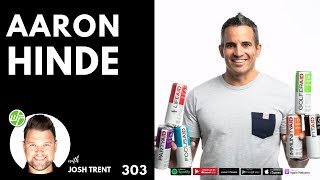
Episode 303 of Wellness Force Radio: an on-location interview (Santa Cruz mountains) between host Josh Trent and Aaron Hinde (founder/CEO of Life Aid / FitAid). Major themes: parenting and the formative influence of caregivers (children "download" behaviors 0–7), spiritual practices and tools for presence (breathwork, Wim Hof, psilocybin), leadership and company culture (authenticity, Kaizen/one-degree improvements), entrepreneurship and financial humility (bankruptcy and recovery), and beverage-industry advocacy (concerns about high-caffeine energy drinks and artificial sweeteners; FitAid positions itself as a cleaner functional beverage). Notable factual claims in this chunk: Life Aid / FitAid launched around 2011; some energy drinks contain ~300–350 mg caffeine; FDA guidance cited that teens should not consume more than 100 mg caffeine/day; an assertion that sodas are limited to ~70 mg caffeine (speaker uncertain).
Chapters
Primarily as a father, these kids from 0 to 7 years old are strictly in download mode. You know, they're not even making, like, rational decisions. They're literally just absorbing everything. So as a parent, our responsibility, everything that they see us do that they hear us say, you know, everything that we're teaching them, everything that they're downloading will affect them positively or negatively for the rest of their life. Like, the shit that they have to deal with is all a result of us as a parent. So that responsibility is heavy. So do I speak to them in scarcity mode? Do I eat McDonald's every day in front of my kids or do I eat clean? You know, that programming can affect these kids in perpetuity.
That's Aaron Hind, and this is episode 303 of Wellness Force Radio. Wellness Force Radio, where we discover the physical and emotional intelligence to live life well.
You can have the same brain states as someone who's done an hour of meditation every day for 40 years. There's a lot of losses that we go through. So the ability to be able to cope with those losses is very important to build skill in it, because loss will happen. You know, you have to have spiritual courage, to really grow spiritually. Because if you really want to take guidance from your soul, you have to be ready to realize that many of the things that you're asking for guidance on, your ego has some kind of an addiction to or an investment in.
Pumpkin spice. That's all I'm going to say. Okay. Halloween is coming, and if you're looking for a drink that is a superfood that'll make you sleep amazing, look no further than the turmeric and reishi infused gold pumpkin spice from Organifi. It's my favorite drink in the evenings. If there was one drink I could have on an island and I had some almond milk, it would be Organifi Gold. They support Wellness Force. You can have this anytime you want. I would take it at night, though. It's very calming. It's got adaptogens. I've talked about adaptogens on the show. This podcast is brought to you by Organifi Gold. And the gold has mushroom extract, it has lemon balm, and for a limited time, you can get the pumpkin spice Organifi to give you that quality sleep during the holiday season, which can be kind of stressful. Just go to Organifi.com WellnessForce use code WellnessForce. You get 20% off the pumpkin spice Gold, the turmeric and reishi infused gold that'll make you sleep like A little baby. Even if you're fighting with your relatives, even if the holidays are stressing you out, this is the antidote to stress. Make sure you go to organifi.com wellnessforce use code wellnessforce. You get 20% off because you're here with us on the show. Today on the podcast, we're talking with Aaron Hind. And I got to interview Aaron on his porch in the Santa Cruz mountains as the sun was setting. No joke. It was a scene from a movie. You get to be in this movie with us. We're creating the movie as we go along. We're talking with Aaron today about not just Fit Aid and Life Aid beverage company for Aaron's second time his return to the show, but we're also exploring concepts about faith, family, being a father, being a mother, being a parent, taking care of people that are depending on you to provide for them, not just financially, but emotionally, spiritually and mentally. How do we hold this? How do men and women hold each other and take care of one another from a place of true service? This is Aaron's life. You know, I was so impressed watching Aaron with his family. I got to stay in his home. I get to see how he interacts with his friends. I got to visit the Life Aid headquarters to watch him and Orion, who was also the co founder of Life Aid beverage company workout. And I have to say, this company, they walk their talk. There is something really special about Life Aid beverage company, creators of the Fit Aid, the Fit Aid rx, the Fit Aid Zero. And it's more than just a health company. Aaron has come from Santa Cruz. He grew up there. He's got a very unique story. And the way that he went from chiropractic to business to next thing to next thing to entrepreneur venture number 46, it seemed like he has perseverance. We can learn a lot from someone like this. You know, being the leader of an $80 million company, this is a really unique introspection for us all. To be able to see into the mind of a successful businessman, a successful father, and somebody who provides for the people that he cares about. Not everyone is built like Aaron Hind. And I think the way that his mind works, you're really going to get a lot from. The gems in this podcast include mental resilience, mental fortitude, how to actually expand your consciousness. Yes. Using some plants and also using ways of being breathwork. We talk about fitness, nutrition. We also explore sucralose and aspartame and the way that Aaron is so passionate about getting these extra Heavy, crazy caffeine drinks out of the hands of kids. You know that so many kids out there are drinking 80-150mg of caffeine a day. We get to put a stop to this, not just because it's providing deleterious mental habits for them later in life, but because kids and teenagers weren't designed for that much caffeine. Neither were adults either. And this is why Aaron is really passionate about getting the right kinds of beverages into people's hands so that we can all be healthy. Capital B. Capital E, B. It's not about the doing. And this is what you're going to learn from Aaron. There's a certain way of being that he has that I think you're going to get a lot from. Make sure you go to the Show Notes page. Today it's wellnessforce.com 303. Learn more about Aaron Hind and explore all the videos and links and information about Aaron and life aid. And oh, by the way, one more thing. This trip that I took to Santa Cruz, I met with Jay Brown, who's been a guest on the show. I went to Rhythmia with Jay earlier this year and I was down there sleeping in Aaron's guest room. Woke up with a massive spider bite on my back. Got so sick. Check this out. I got so sick from the spider bite, I had to go to the emergency room to urgent care just to make sure that it wasn't a brown recluse. Okay, you know what the spiritual meaning is of spider bites? This is why it's perfect for this show. It's patience. It's about having patience. It's about cultivating patience. I flew home a day early and I reflected on this, and it was an absolute window of truth. Aaron, the way that he's led his entire life, has been about cultivating patience and perseverance. And that's the lesson that all of us can get from Aaron today on this show. And it's a lesson that I think we're going to carry every day, every week, every year for the rest of our lives while we're here on this planet. So as you listen, I want to challenge you. I want to plant this seed in your garden. Where in your life can you cultivate more patience? Patience. Where in your life can you cultivate more patience?
Where?
In all of our relationships with business and work and everything that we do. Let's be patient. Let's cultivate that patience, that virtue, and let's take that into everything that we do. Now let's drop in live and in person from Aaron Hines house in the Santa Cruz Mountains at sunset. I mean, just describe where we are, the beauty of this space.
We are deep in the Santa Cruz Mountains. About as deep as you can get, actually.
Yeah, I mean, there's you. You have a plot of land that looks like it's something out of a story. Brook Lane.
Yeah, I mean, we're off the grid, you know, like I said, you know, deep in the mountains. We're probably 15 miles from the ocean, but we're looking over the Pacific through the clearing there and. Yeah, surrounded by, you know, redwoods and madrones and oaks and got our little slice of heaven.
Aaron, this has been the coolest podcast trip I've ever taken to the mountains. Like, the amount of nature and just being able to watch you with your family and just being here, I feel like I'm a field reporter or something. Great to have you looking behind the scenes to, like, a really successful, not just businessman, but just a successful life. You know, I think a lot of people that listen to the show, they desire to have abundance in all things, but I found that the desire for a lot of people having the desire. There's not a clear path between desire and having. It's about the being. And this is what I get from you, man. You have this embodiment phase. We always talk about the three phases of intelligence on Wellness Force, the gathering. Everybody's stuck in the gathering. And then some people apply, some people try it on, but we're all working towards embodiment, where you can just feel from somebody that they've actually embodied the tools and the ways of being that they've done this. And, you know, it's been an incredible road since, gosh, even since a year and a half ago, since Spartan Race. Bring people up to date, man. This is your second time on the show.
Yeah, it's been quite a ride. I mean, we're extremely grateful for, you know, our team, the opportunities that we've been given, the community, the support and yeah, we've, you know, we've gone from basically a CrossFit niche brand, and we're still very faithful to CrossFit. We're still, you know, a big sponsor of CrossFit games, the official recovery drink. But we've been CrossFit only to now, you know, fit aids a recovery drink at Spartan Race. We're in bodybuilding now, doing stuff with powerlifting one ton challenge Focus Aids, just crushing it at Whole Foods and Walmart and CVS and Kroger. So it's pretty exciting. You know, just our year over year growth and the deal flow now, you know, like some of the celebs that we get to, you know, chat with and athletes and it's just amazing, you know.
And also behind this too is we're going to talk about how you wrote an article for the newspaper here in San Jose and it was about sucralose and aspartame and you know, the science that we've been learning about aspartame. This thing is an aflatoxin. So it literally goes into the crevices of the brain and it's an excitatory toxin. So it increases inflammation in the brain. And this article that you wrote, we're gonna link it in the show notes. This is a big piece of why you actually do what you do to bring health to not just adults, but to children.
Yeah, I mean look in full transparency, the first line of the article, I say this may seem hypocritical or self aggrandizing coming from someone who's in the healthy energy drink space. Right. But I also am coming at it as, you know, a former chiropractor. I'm coming at it as a father of two teenagers part I do mention, you know, artificial sweeteners is a big, you know, part of that article. But the big thing that got me motivated was not only the use of sucrose and aspartame, which is now rampant and I believe needs to be outlawed. Just like we don't use asbestos and we don't, you know, we don't have.
Lead and paint anymore.
Yeah, exactly. But the caffeine content specifically in some of these energy drinks and pre workouts that are marketed to kids. There is zero checks, zero regulation going on right now. Right now you cannot have over 70 milligrams, I believe it is of caffeine in a soda. But there are no limits on energy drinks. The FDA has already looked at this issue and said teenagers should not have consumed more than 100 milligrams of caffeine per day.
That's a lot for a teenager, man.
These drinks have 300 to 350 milligrams, you know, and kids are drinking one or two of them and then going to train or do a CrossFit workout or high intensity workout. I mean no wonder there's Facebook pages about parents whose children have died as a result of this. I've put in a request for the center for Poison Control on I want to know exactly how many kids have had an adverse effect or died. I Mean, people were getting minimal jitters to heart palpitations, to arrhythmias, to myocardial infarction as a result of this completely unregulated area. We were talking earlier, look at the other legal drugs, tobacco, tobacco, alcohol. Right?
They've all had their time in court.
Exactly. They've had their time in court. There's sensible regulation around it. You get cut off at the bar, you drink too much. You can't even drink until you're 21. You can't smoke until you're 18, you know. But caffeine is a stimulant, which I am not anti caffeine at all. I mean, I have my cup of coffee in the morning. I enjoy that our focus aid drink has 100 milligrams of natural caffeine in it. But taking a responsible approach when it comes to children, you know that my 13 year old son could go down to 711 and buy two bangs and chug them and there's nobody saying, well, wait a second, you can't do that. You know, you're not old enough. It just doesn't make sense to me.
Me.
And it's causing harm. As, as business owners we know that it causes harm. It sells. Right. Because it jacks you up. It's like back in the day, in our day. Right. We're in our 40s, you know, no dos, remember? No dos. And you know, Four Loko. And there's been all these things that happen. Remember the pre workout rip feel? Used to have a Fedra in it, right?
Yes. People run with like sweatsuits on and try to lose five pounds before a wrestling match.
Yeah. I mean, and that, that's part of my fear because I remember being in World Gym when I was, you know, 16, I took a little too much rip fuel and my body went into such a severe reaction. My heart was racing so hard. It hadn't been beating 210 beats a minute. I completely freaked out. I'm lying on the floor, I'm sweating. The coaches, you know, the trainers are around me, hey, are you okay? Aaron, are you okay? I'm like, oh man, I took this stuff. They're like, oh, you took too much pre workout. And I'm laying there and I'm going, is this it? Is this how I'm gonna die? I'm 16 years old and I OD'd on pre workout that I got at GNC.
Oh man. You know, I remember I was at 24 hour fit, 2014, 2004 actually. And it was like my very first year of training and my fitness manager worked out with this guy, and all of a sudden he just falls to the floor. They have to put him in the corner of the room and his feet go up and everybody's like, what's going on with this guy? And they said, oh, he took the product. At the time, whatever we were selling, you know, the most. The most stimulated product for pre workout. And I think Even then in 2004, I was like, maybe there's like a better way to do this than amping yourself up before exercise. And especially with kids, you know, I've seen the way that are such a dedicated father. Like, this has been one of the coolest times of me hanging out with kids that aren't my nephews. My brother's a great father as well. And so I see that in you. And there's something about your fatherhood love and the love that you have for your kids that helps you fuel not just this mission with life aid, but also this epidemic of sucralose and aspartame and caffeine and all this stuff going in the drinks. What is that? Is it your fatherhood or is it your business mind? Or is it both?
I think it's both. It's both. But primarily as a father, you know, we were talking earlier at breakfast, these kids from 0 to 7 years old are strictly in download mode. You know, they're not even making, like, rational decisions. They're literally just absorbing everything. So every, as a parent, our responsibility, everything that they see us do that they hear us say, you know, everything that we're teaching them, everything that they're downloading will affect them positively or negatively for the rest of their life. Like this quote unquote shit that they have to deal with is all a result of us as a parent. So that responsibility is heavy. So do I eat McDonald's every day in front of my kids or do I eat clean? You know, what's that? You know, do I speak to them in scarcity mode? You know what I got when my parents did the best job they possibly could and they're loving and they live here on the property. They're awesome parents. But, you know, they. I heard a lot from my mom. Money doesn't grow on trees, you know, Money doesn't grow on trees. Well, actually, it does grow on trees because it's paper and the federal government just prints it on the paper. So it literally grows on trees.
You live in a home surrounded by trees with your parents on it.
Yeah, exactly, exactly. But that type of Thing you know that programming can affect these kids in perpetuity.
I think so. And one other piece that I'm feeling is that, you know, we all have responsibilities. Everybody has money to be made because that's how we live is by. Cash flow is oxygen. So there's a way that we earn the money too. That's just as important as the money that we earn, you know, And I see you earning money in an integrous way. And in the health and wellness space, there are so many brands. I heard you speaking on the phone earlier, like 99% of most brands that come out in the beverage industry, they fail. Why is that? Like why, why do have you guys succeeded compared to all these brands that come out? What is the secret sauce?
Well, I'd like to think, you know, that we are striving for complete authenticity, you know, and when I, and I say striving for, it's almost like when someone asks like, oh, are you religious? I'm like, well, you know, I'm a struggling Christian is how I would describe myself. You know why? Because I'm not Christ. Like not even close, you know, but I'm conscious of it, you know, I truly want to be the best version of myself. And we truly want to create the best version of our products. We're constantly taking that Kaizen attitude of improvement. Improvement. Looking at customer feedback. Oh, there's a natural form of vitamin E instead of synthetic. Let's switch to the natural and making them clean and efficacious and something that I feel good to give my own family.
Yeah, I mean, that's the integrity mark. You wouldn't sell something to a customer that you wouldn't feed to your family.
Yes.
Period. And I think that's the disconnect with a lot of these people. And look, I'm just going to go for it. I am throwing bang under the bus. I was at fitcon with Drew Manning and we're looking across the way and there's like half naked women jumping on a stage selling all these drinks with like hundreds of milligrams of caffeine. And it's polarizing on its own. It's not even polarizing because I bring it up. It's polarizing because that's the world we live in. There are people that sell products that are not healthy at all, yet they're marketed like they're healthy. And these companies, I think that's why they kind of rise and fall. But there is something about Fit Aid and Life Aid as a company. I got to spend Some time there today. And, like, people are just relaxed.
Yeah.
Like, the energy in the office. I don't know if it's the Santa Cruz vibe or what.
Probably the weed smoke in the air.
How would you describe the company culture?
Oh, man. Well, we have incredible human beings that we bring to the table. Right. Like, the quality of every person on our team is so high that even though we, you know, are from. I think we represent, you know, six different countries in the office and maybe five different decades apart between the oldest and the youngest, everybody's a killer human being. And so when you just bring good people together and you have that diversity, like, and everyone is held to a high level of accountability, everyone takes extreme ownership, like, good things happen. It's all about, you know, managing kind of what we talked about last time, just being on the right trajectory, you know, the right trajectory over time. It's that Henry Ford concept. When everyone is moving forward together. Success takes care of itself. It's that alignment, that trajectory.
There's something about you that's different, though, than most CEOs or entrepreneurial friends that I have. And your energy is relaxed all day. I don't see you amping out and going down. You're pretty middle as far as emotionality. I'm sure you have a bandwidth where you can go to sharp and light if you need to. But just my seeing in you and even being around your family, it's very even keeled. Like, what is that about you? How did you develop that even keelness?
I was, you know, I was a hothead when in my 20s and just a lot of testosterone. And then, you know, it was really my wife, God bless her, just is like, dude, you need to chill out. You know, I mean, her being a little older and wiser than me.
Okay.
You know, helped keep me in check a little bit. And then I realized, especially when you're dealing with your team or even, you know, even family, some people respond to, like, an aggressive in your face manner. Most people don't, you know, so if you want to have people achieving at their highest possible potential, you don't treat them in a manner that causes them to go into their shell. Right. You be Socratic with them and then you get them to come to a conclusion that, you know, is best for them and for the business unit and the company and we move forward. Yeah.
You also seem like you're good at letting go of things because there's no way that you guys could have had as much growth as you've had if you were emotionally Attached to people or things working out. Like, what is this Kaizen philosophy that you speak about?
Well, you know, I read a lot, a lot of audiobooks, podcasts, just like this one. And, you know, trying to consume the right information for where you're at in your life like that you can actually take action on. And not just taking a shotgun approach, but being very specific, very targeted, I think helps move, move you. We talk about in customer. In our customer service meetings, everyone has to bring one degree of difference, you know, and it may be one little tweak in how we're doing something, or one little system change or one little macro change in an email. But if we're all thinking, how can we improve one degree, one degree, guess what happens after 12 months, after 24 months, after 10 years, you know, you got that shit dialed.
This is just incremental wins. Incremental every single day.
Small, small, but daily consistent.
And. And I' so I'm 39, and I can remember when I was 29, 28, how differently I saw the world, you know. Do you ever reflect back on when you started? What year did you start life aid?
2011.
So 2011, CrossFit wasn't in its full swing yet. It was like, right before that. And you timed it properly, but also too, like, there was something about the recipe of success that brought this thing to fruition. Like, what was the recipe of success? It wasn't just timing. Timing was a part of it.
Yeah. I had several entrepreneurial ventures prior to this, and none of them had done great. My chiropractic practice did really well. My iris eye drops did okay. But they were all learning lessons. It was like, oh, that big lesson, you take to the next thing and that big lesson. And so it was a culmination of that. And then I met Orion, who was really good with, you know, finance and investors and balance sheets and P Ls and shit that I couldn't. Accounting stuff that I hated, I was not good at, and I didn't like it. Yeah, you know, I'm, you know, more on the sales and marketing side of things. That's the stuff I really love and get passionate about.
Alan Watts said, I hate all these checks and balances and letters. They're all arid. They don't smell like anything. They don't interest him.
Yeah. So, you know, that synergy of him and I and then our wives, you know, becoming best friends and our daughters being best friends and just where we can work and be on vacation, but it doesn't feel like work because it's just shooting the shit and coming up with great. All our big, great breakthroughs have been over, you know, a little tequila or a little whiskey, maybe a couple toques. And, like, that's where we move the needle.
Yeah, man, it's cool to see all the friendships that you have in work, because I think a lot of people want to separate work and life. Like, okay, I'll work my regular job, and then when I'm done, I'll have my outside life exist for you.
That's total, absolute.
How so?
Are you telling me that you have a big blowout fight with your wife and you go to work the next morning and it's not going to affect you or your boss just yells and gets down your throat and then you go home? And that's not going to affect your interactions with your family? There is no work and there is no personal life. It's just life, you know, it's just life, period. You know, so we have to approach it like that. And people bring, you know, when. When that. Personal things come up. Let's. Let's figure it out. You know, you need the day off. Take the day off. Like, what do you need? You need, you know, some financial support to get through this. Then let's figure that out. Like, all obstacles can be overcome. We got to treat people like human beings and treat them how we or they want to be treated. You know, it's kind of coming back to super basic, like, golden rule stuff.
Right. Well, and also just, you know, feed your body healthy foods, drink water, be out in nature, do things that we were designed to do.
I noticed right when you got to our property, you took your shoes off and started grounding. I was like, all right, I like that.
Well, and also, there's something so special about being here because there's like zero emf. I feel so good out here, just taking these big breaths. What kind of trees are these?
Well, we've got these back here, these really pretty leaves. These are madrones. You know, the oaks are like these gnarly with the kind of stickier leaves on them. This is a big fir tree right here. This thing's awesome.
This reminds me, I was telling you, my grandparents had a place in Humboldt. And for anyone listening, if you've ever been out to the redwood forest or the Santa Cruz mountains, you know, there's like a distinct smell.
Yeah.
And the. The Japanese call this shinren yoku. They actually prescribe it to their patients where they're like, we need you, Mr. Smith, to go in nature three times a week for 30 minutes, and they'll write it out on a paddle. And the reason I'm bringing this up is because there's a natural way to live. The more even keel, the emotional fluidity, whatever you've developed, that's the emotional part, but then there's the physical part too, you know. And so what we put in our bodies, like if we're putting aspartame and sucralose and all these chemicals that can completely decimate our microbiome, that's not going to give us the space to be emotionally resilient, because everything we do physically, it affects our emotions 100%.
What you put in your body is a direct reflection of, of how you show up in the world, whether you're look at like, professional athletes. You know, I've had the opportunity to talk to a lot of professional athletes, you know, in the last few years. They take that shit so seriously. So seriously. I had Antonio Brown tell me I am a Ferrari. And whatever I put in this Ferrari is going to be high octane, like, boom. He's breaking down how he's a Ferrari. I'm like, all right, you're a Ferrari. And he was talking about our drinks and that kind of thing. But we have to pay attention to the food source. The best example, because if you eat clean, do this experiment for me. Because I eat clean most of the time. I mean, I like to eat good food, whole foods, organic foods. Once in a while, usually late night, two in the morning, I'm coming home, out with friends, and I see that Mickey D sign. Like a Big Mac sounds pretty good right now. And I'll swing through that, drive through, and I'll get the Big Mac. And again, it takes me about 12 months. I learn my lesson, then I forget and I do it again.
People are cringing right now, Aaron, what are you doing?
Yeah, I eat that thing and it tastes so good. Whatever chemicals they put in there just hit those taste buds. You're like, oh, my gosh, this is the best thing. And then about 20 minutes later, I am sick. Sick. My body is reacting to the poison that I just gave it. I'm sick. I can't sleep. I have heartburn. You know, sometimes I'll even gag and throw up. I mean, it's that bad. How bad? Like, so if you fast off of the garbage and then reintroduce it, it's shocking. But people are doing that to their bodies day in and day out with energy drinks and soda pop and Big Macs and Whoppers and all this garbage. Like, are you kidding me? Yeah, this is your temple. We only have one shot at this as far as we know.
So why do you think this hasn't been more of a conversation in the media? Is there things getting in the way of it or do people just not know enough about it?
It's all marketing. It's all marketing for, you know, since the 1950s, the, you know, science has been manipulated. The talking heads have been demonizing fat.
You haven't had a TV for 17 years.
Correct, right, correct.
So Aaron's in the knowing.
Yeah. Yes, they've been. They were demonizing fat and propagating sugar. You know, no fat. No fat this, no fat that. So all these processed foods that people have consumed have been high sugar. No fat. Well, we know we need good fats in our diet and we know excessive sugar is very damaging. Right, but that wasn't. There's still medical doctors out there. If you go in, they're pitching the 1960s diet to you. It's bizarre. It's bizarre. So what it's creating is just chronic inflammation in the body. And chronic inflammation leads to about every disease that's out there.
Yes.
You know, so we look at diabetes rates and certain cancers and this and that, and everything continues to regress more and more in this country. It's like we're almost in 2020 and we haven't figured out the cure for cancer yet. We haven't got people off preventable type 2 diabetes. Are you kidding me? You know, what the hell is wrong here? The whole paradigm has failed.
It's not about the information itself. It's about the information getting out in the correct way. All the information, all the words, everything we need, we already have it. It's just who's paying for it and how is it getting out there? So what's the biggest foe to the beverage industry then? You know, to what you're doing? Because obviously, like, you've supported the show. We're grateful for these products. We love the products. I love the sugar free one, by the way. The one, the one that we talked about that tastes like an orange but better.
Yeah, the fit 8.
0. So what is the biggest nemesis of this information getting out? Who's blocking it? Like, what's in the way of this?
I think a lot of the old dogs are just, you know, they're just not keeping up on the latest and greatest.
Who are the old dogs, though?
Well, you know, a lot of your family docs and some of the people in the media and the Talking heads and the quote, unquote, nutrition experts. You know, I mean, we were talking earlier that these early proponents of, hey, excessive sugar is bad for you and these processed foods, and maybe we should have a little bit more protein or healthy fats. They were outcasts. They were demonized back even as early as the, you know, the 80s and into the 90s. Like, no, no, no, that's. So I think it's going to change, and it is changing. And we're seeing products that are much cleaner and. And, you know, Walmart now sells more organic food than Whole Foods does.
This is a win.
Yeah, it's win. It's a win. It's a win. But it's slow. It's the Titanic, and we're slowly turning it in the right direction, but it takes a while. It starts in the coast. It starts on the west coast, usually for nutrition. Then the coasts get it, and then it slowly works its way in towards the middle of the United States.
Well, and also, like, the bigger company is, the more sway they have. Let's be honest. You know, if you're in the top 5 of alcohol companies, you kind of get what you want. If you're in the top five of beverage companies, specifically, what would you call your niche? Like, what is the world that you operate in the most? What's that called?
Like, functional beverages.
If you're in the top five in functional beverages and those beverages all band together and they agree, like, hey, guys, let's at least. We know we're competitors, but let's at least have some standards that we all apply to. As far as caffeine and aspartame and sucralose. Is that happening?
No, but I want to make that happen. I'd like to make it happen.
Yeah.
Yeah, I'd like to make it happen. And I think there's two ways it can happen. One, we band together as entrepreneurs and business owners and create these standards and live by them and say, is this good for the consumer? Is it not? And if it's not, we don't put it in the product. Like, I think that's a moral obligation on my part. And I, you know, and I think it should be on their part as well. Well, the other way is podcasts like this, where we're getting information out. People do their own research, they come to their own conclusion and say, hey, I'm not going to purchase those products anymore. You know, I mean, nobody, you said lead paint. Nobody's going out buying lead paint, if you could even buy it. But you Know, no one's going to go buy that because they know, why would I toxify my house with this?
And I can see a day in the future where just like tobacco and now we're even seeing 5G in courts. The beverage industry has kind of been an outsider. We people think of food industry. Beverage industry is totally separate. I mean, different regulations, different laws, different policies. Right. It's not the same thing as the food industry. It's totally separate wing.
Yes, well, we're all under, you know, Food and Drug Administration, fda. But just as far as public awareness. Yeah, absolutely. I mean, people, you know, look at gluten free and the vegan movement beyond meat, you know, all of that is very prevalent in the food industry. Yet the beverage industry, you can still put half naked 20somethings on Instagram and sell millions of cans. It's like, wait a second here. Let's actually look at the nutrition label. Look at what we're putting in our body. Because I'm convinced liquid sugar is what has caused the diabetes epidemic.
Stomach, what do you mean by that? Specifically, liquid sugar? What about all the other foods that are laid in with all these sweet points from behavioral scientists?
Yeah, that's a big part of it. But I hear even today from people writing into customer service and testimonials, we get. I was drinking 10 Dr. Peppers a day today, in 2019. 10 Dr. Peppers a day. I was doing this, I was doing that. Thank you. You got me off this. I'm like, really? 70 milligrams of sugar is what's basically in a big Gulp. That is the same dose of sugar that you would get if you went in to see if you had type 2 diabetes and they gave you a glucose tolerance test.
You said milligrams, but it's grams.
I'm Sorry, grams.
It's 70. Think about how many teaspoons of sugar that is.
Yes, 70 grams of sugar.
I mean, yeah.
Oh, no, it's so much. It's so that reaction that we're looking for, like, okay, you're a diabetic or you're not, you're giving that to your body every day. When you're consuming this much sugar, you know, pile 70 grams, get a scale out and take teaspoons of sugar. You get 70 grams. Look at what a pile it is. It is insane.
Well, the research is in, I mean, sugar in copious amounts. Actually, sugar just mostly in general is not healthy for most people's immune system. Of course, there's always these people and we all have them. Like my Friend Sean, he could eat a sleeve of Oreos and wake up with a new six pack. Like, there are just certain people that can eat whatever they want. But for the majority of us here in this conversation, there are some certain dietary practices that work well and they all kind of align. I don't care if it's the Omad diet or ketosis or vegetarian or Paleo. They all have this common thread between avoiding processed sugars and avoiding hardcore stimulation to the nervous system. So when I look at what you guys are doing, I mean, how would you say that you'll be a part of this in five years? Do you think you'll be on boards? Do you think you'll be in policymaking for this?
I'd love to be. Absolutely. I mean, you know, I was an elected official twice here in Santa Cruz county on the school board side of things. I would love to lead policy around this. I'd like to see the change come from within the industry, first and foremost. You know, I'm not a big fan. I'm more of a libertarian. So, you know, I don't think that the government should just be regulating everything. I'd like, you know, the consumer and responsible business practices to regulate themselves and have changed that way.
There's capitalism, and then we've talked about conscious capitalism. I love John Mackey.
I met him. I had lunch with him.
How was he in person?
Awesome. Yeah. Like, incredible guy. Very much a practicing what he preaches. Like, you know, he's all about, you know, like Whole Foods is the name. He's all about Whole Foods, not as the company, but as a way of life.
Yes, yes. Yeah. Because I think about this phrase, conscious capitalism. A pain point for a lot of people, Aaron, is finance. You know, I would say if you ask most people in America, they've either lost their purpose or they're on the wrong track or they're figuring out their life. And I would say finance is probably the biggest stressor for them.
So that what that happens is people get into scarcity mode because finance, right. So then they. They're playing the short game instead of long game. The short game is just chasing the quick, quick buck. Because I'm in scarcity mode and I've got all this financial pressure. And that's a whole nother conversation. Right. Like, well, why do you have all this financial pressure? Oh, I went in debt 200 grand for student loans, and then I was. Which I've done 260. Yes. I was told I need to, you know, spend a million dollars on a House and have this big mortgage and drive this car for that. You know, it's like, okay. We get stuck in the wheel real easily. I was there, you know, I was there, you know, I mean, God, the dark times of, you know, 10 years ago in October, you know, I was bankrupt.
Like, zero. Money in the bank.
No, as in bankrupt, as in filed bankruptcy.
Nothing.
Yeah, I had a practice that was making so much money. I'm looking around and friends from high school who I know are making 15 bucks an hour are making million dollars a year in real estate. You know, in 2007, everyone's flipping and doing this. So, you know, in 2007, I'm like, well, I gotta get in the real estate game, you know, So I go and.
Cause you were in that short game mentality, was that.
Yeah, I mean, I was in a keeping up with the Joneses mentality. Like, oh, look at, you know, everybody's balling and making all this money, and I was making incredible money. But I'm comparing myself to everybody and like, oh, they're, you know, doing better on the outside. They got a nicer car, they got, you know, bigger house, whatever. And so I go out and I buy three properties, and they're all in construction. So I go to these construction loans. Well, you know, 2008 hits, and we know what happened there. And I had months where I had. I was still generating huge money. You know, I had a great, successful practice, but I'd bring in, you know, say 50 grand in one month and have 70,000 go out.
Oh, that can only last for so long.
It only lasted for so long. I held on for, like. Like six months, and then it was like, there's nothing left.
How do you get to the bottom of that and climb up? How do you climb up from there?
It was my darkest days. It really was. It was so dark and just so depressing.
And this is while you're. This is while you have a family.
Yeah, yeah. So upset with myself. I mean, I was just like, here I am, you know, I'm 30, like, 34 years old. I'm supposed to be in the prime of my life. And. And I got this great wife and family, and we had just bought the property. We're living in a 400 square foot trailer. But I told Rama, hey, we're going to build our dream house on top. So let's just live in the trailer on the property, and within a year, we'll start construction, because the economy is never going to turn around and things will never get tight. And when that happened and I just lost. I lost everything. I was at the deepest, most embarrassing embarrassment. Humility. I needed it though. I needed it.
Why did you need it so much?
I needed it because I was cocky. 1. I needed it because I have traditionally just been dumb with money. And that taught me that, that how to live so frugally, forced to live so frugally that now I completely respect and appreciate when I'm generating income. And I think that I'm smarter with things, you know, I'm not just impulse buying bullshit just to have bullshit to get a little short term dopamine hit and then I'm stuck with some payment on something. You know, I'm just, I'm making better decisions. I hope I'm making better decisions. I'm 10 years older than I used to be. You know, that's the whole point. I think that's why old people, you can sit around in a rocking chair and just smile. It's like, well, grandpa, you know, why are you smiling? It's just all that accumulated knowledge. I think at some point near death, we like finally kind of figure it out. And then it's just that satisfaction of being totally in the moment going, oh, thank you. What a life.
The skill set of humility is a challenging one in some industries, I would say in this beverage and sports and CrossFit and like you're able to travel and you can basically go to almost anything that's relevant to your beverage and you can be a force there. You could be an influence there. I would think that if one wasn't structured very strongly in ignoring the egoic mind and really being centered, that there could be a lot of distractions, you know, going out to these shows and doing these things. Like, what's the center for you? How do you stay centered to Aaron and to your family and everything else.
Part of it is I, you know, I don't, I don't want anyone to put me on a pedestal. And I try not to put people on a pedestal. Like, I'm just a dude. I'm just a dude. I might be, you know, a little bit more driven or put in more effort than the guy next to me. But I'm just a dude. And I'm just taking, trying to take care of myself and my family and my tribe and my parents and, you know, and my friends and, and do good work in the world. So I think anybody out there, I don't care how rich or famous you are, you're just dudes and chicks and we're all just Doing the best that we can. And we all have shit that we're dealing with. We all have the same fears and insecurities. And, you know, you remind yourself, like, look at the ground right there. See that dirt? We were talking yesterday, like the whole history of the world exists in that dirt.
And in the trees and the leaves.
In the trees and leaves. We're going to all return to that dirt. Give it enough time. We will be dirt, right? Our body will decompose, we will break down. The earth will reabsorb us and we're going to be part of that dirt. And that little reminder keeps you humble.
You know, I just want to pause there because the weight of that, for many of us, focusing on the fact that we're all going to die and that we're all going to the same place, which is back to the earth, can be overwhelming. So if somebody hasn't done any work, maybe with breath or with psychedelics or plants, like, you know, there's a part of you that explores much more than people are aware of. And in your exploration of emotional intelligence and maybe philosophy and any other modalities you can mention, like what's, what's really made the difference for you, man, to maintain the center. This is a very high stress. It could be a very high stress job that you have.
I think you gotta, you know, find out who are your mentors, who are you attracted to and why, you know, what qualities, what are they doing that you admire, what are they doing really well and see if that works for you. So it's not one thing. You mentioned breath. Well, you know, I really got into Wim Hof breathing. So that's part of my routine. Yeah, five minute journal, you know, diet, you know, going into ketosis, you know, morning prayers and rituals. Psilocybin. I mean, it's been. And I grind up my psilocybin and I'll pack it into these little gel caps and I weigh it out. And I know exactly how much it weighs. I know how it affects me and my body. And once a month to take a little half a gram and just be out in nature and just have that heightened sense of emotion stemming from appreciation that makes you so present. And when you're present, all the weight of the world can be on your shoulders and it's completely lifted away because it cannot coexist. You know, being completely present in the moment. And the fear or worry or weight of the past or anxiety of the future cannot coexist.
Yeah. Because in that present moment, like presence is being There without any judgment, without something else being in that space, because there only is this moment. And I think this goes to my other question where I asked you, how do you maintain this center? For me, I'm just curious. As a business owner myself and as an entrepreneur, what I find myself doing is getting into spirals where I'll work really hard and kind of burn out and then I'll come back down and I'll work really hard and burn out and then I'll come back down. And some of these sine waves are like way bigger than other ones. So what advice do you have to people that are either entrepreneurs listening or that are just an entrepreneur of their family? Being a human being right now is entrepreneurial. So what is that for us? How do we shorten the sine waves, the ups and the downs, and stay more in the middle?
It's a great observation and a great question and I'm still trying to figure it out myself. I think the biggest thing that we need to do as entrepreneurs is be really in tune with our bodies and the signs. I know all this shit to keep my body healthy. And I'm just today recovering from, you know, throwing my low back out. I was hiked, we had a flood here at the house and so I've been in home in repair mode. So I was carrying a 3 quarter inch sheet of plywood and you know, twisting wrong and I lit myself up and I've been lit up and I know, Aaron, you go get your low back adjusted once a month. You get a massage once a month. You start every workout with some core work. Like I know it works for me, you know, if you get a little lit up, you know, I do my stretches, do daily yoga, ice your low back, all this stuff, stuff. And it's just like killing momentum in business. When you have business momentum and then it fades that, that sine wave of the business cycle, it's because we stop doing all the little. So paying attention to the signs and being consistent with your routine, whether that's nutrition and diet and exercise, mindfulness, breathing, you know, plant medicines, whatever it is, but knowing, oh, you know, it's been about a month since I've done a little plant medicine and I'm feeling a little stressed and weight and I find my mind wandering too much and I'm really not present with people and I'm on my phone too much. Maybe it's time that I need a little half a day to myself and oh, there's the reset I needed for me.
I feel that in My solar plexus. Like if I've been working too hard or I'm not grounded like you're describing, it'll be right here. Do you have anywhere in your body where when you know it's time to let go, it shows up physically for you?
Yeah, yeah, yeah, absolutely. Right in my suboccipitals and then as well as L5, which is interesting because those are both like heavy parasympathetic nervous system, you know, brain stem up at C1, you know, your whole, your whole low back, you know, nerve plexus coming out of the sacrum and L5, those two areas. If you just had somebody, you know, come behind you in traction and traction your neck and do like some digital massage under those suboccipitals or traction low back, like how much relief you can get. And so for me those areas light up and it affects all kinds of my systems. Like I can't shit if my low back's lit up and I get out of regular digestion and I'll get really tight and headachy. And it's like, Aaron, you know better why you're choosing to suffer. Jesse Elder says, because pain is inevitable in life. It's a choice whether you suffer. And when I get like I'm choosing to suffer, I know exactly what I need to do to get.
We're all getting a payoff though, don't you think, Aaron? So like in the fast pace of life, if anyone is not doing the checks and balances on the self care stuff or the daily practices that got them to wherever they are, what is that? What is that about the human psyche that allows us to forget how we actually achieved what we wanted and enjoyed the process? Why do we forget the enjoyment, enjoyment process of creation? You know, what is that about our psyche? I don't understand.
Because we're chasing the pot of gold at the end of the rainbow, you know, and some of us are just, you know, it's hard for me brother, because you know, I get driven and I get in that mode of like only if we do this or if only I get to that point and I'm chasing, chasing and I'm reminded, usually through either my wife reminding me or my body reminding me or you know, somebody, somebody reminding me in a way that's usually not totally pleasant. Like, dude, chill the fuck out. You know, the world doesn't rotate around you, you can not respond to that email and life will go on like relax.
Have you found when you're in those moments of flow where you stop the Egoic drive where you're like, I have to do everything and you just choose to let go. Do you find that those spans of time where you've really let off the gas that things come your way that were unexpected as far as abundance, when you just let go and trust.
Yeah, because you're open, you know, you become a beacon. You become a beacon. If you're like this little abundance beacon or you're a flow beacon, then you're hypercognizant of, of everything you're attracting. You're like, oh, that parking space. I knew there was going to be a parking space for me in rush hour and here it is and boom, it opened up just for me. You know, like the universe starts conspiring on your behalf. Like you hear that, like it literally does. And then that, that conspiring begets more conspiring. And it's like things just start really falling in place. And then you get flow. But then what happens is we come out of that sine wave and we get complacent, we get unappreciative, we get ah, you know, whatever. That's just the way it is. And then we stop doing all the little things. We stop taking the moments to, you know, appreciate and be thankful. We stop doing the self care. We start eating shitty and you know, it kind of falls apart again.
And at the bottom of everything you just said is, do I love myself? Do I fucking care and love myself enough to just recommit as quickly as I can to those things? It's a recommitment. Yeah, it's constantly.
How quickly can you recommit? How quickly can you recommit?
Because the cycles of recommitment are going to happen.
Yeah, right. They're inevitable.
There's no way that we go through this world. I think, you know, spirit, God, whatever you want to call the thing, the existential, eternal, all being energy. When that energy brought us here, it knew we were going to have challenges. It knew like there is no way that we got put on this earth to have just puppy dogs, candy canes and roses all the time.
That would be boring. Boring.
That would be boring. That's why we need the dark and the light.
How can you have appreciation if there's nothing to compare it to?
Yeah.
You know what I'm saying? Like if you ate Haagen Dazs all the time, it would be like eating the mush on the Matrix. You'd be like, oh, this again. You know. But when you have it, you know, once a month, you're like, this is the best ice cream I've ever had.
That's so true. So you have this connection there in your kitchen, there's a really cool picture. And it's one of the oldest pictures of Jesus you mentioned. Like, half the face is really clean, the other half is dirty. And you put your hand up to it. What's the name of it?
It's called the Two Faces of Christ.
The Two Faces of Christ. We're going to put this photo in.
Oh, it's heavy.
You guys. You guys got to look at this. You put your hand up and you can see it. And what it represents is what Alan Watts calls the duality, Right? And I've been really going deep into Alan Watts lately. I think he lived in San Francisco real close to here. And there's a lot of philosophers that have come out of this area. This is a very educated area. I mean, we're very close to Silicon Valley. There's the San Jose, which is like another tech bubble. And any. There's this picture you have. And right away I was like, I already knew you were a spiritual man, but when I saw that picture in your kitchen and we were talking with your family about it, I was like, Aaron's got a connection to higher power. Like, you have a connection to higher power. You have some type of faith process that you have. What is that?
Well, I've seen shit, you know, I mean, When I was 17, I took psilocybin for the first time. I took way too much. My friend was like, oh, yeah, I've done it. You know, here, take this. And I was just mesh, okay. I took way, whatever. And it hit me so hard. And I was in Boulder Creek just a few minutes from here, and I remember it starting to hit me. And my friend who I took it with, John, he comes up to me, he's like, bro, this is the strongest shit I've ever taken. I'm like, are you kidding me? This is my first time. And I'm lying in bed. I'm lying in bed and I'm looking at the ceiling. And literally, literally, these demons are coming for me. They're coming to get my soul. And my guardian angel is right by my side, swooping back and forth, taking these demons out. Boom. Another one comes. Boom. For hours. And it wasn't tiring. Just like, boom, boom. Kept defending me, defending me. It was. It fucking changed my life. I came out of that like, okay, there's definitely a God. There's a whole spiritual realm that we don't know about. I don't give a shit what anyone says. Exactly. I experience that in my nervous system and I feel that. And then since then, I've seen like weeping icons, like mer producing icons. And you know, my sister, I told you yesterday, is a nun. My sister became a nun at 15. And she's so with her whole life and spirit, believes what she believes, and has complete and utter faith that I respect her. She was a top of her class. I mean, she's just a smart, athletic, popular young woman. And for her to make that shift at such a young age and to see that dedication level, I go, there has to be something there. And there is something there. And I've seen people heal miraculously and I've witnessed things in my life and I've seen how everything is interconnected. You know, every one of us is connected. And to me, I was talking with Bronson, like Bronson, you know, what do you believe? Do you believe in my son, 13 year old? Do you believe in God or do you believe in big bang? And what did he say? He's like, well, you know, I think God created the big bang. And I'm like, I never talked to him about that before. But that's exactly what I believe too, you know, because it's a lot easier for me and just with my experiences to believe that there is an all knowing, all loving force out there that created us in the image and likeness, meaning we all have the ability, we all are called, to elevate ourselves to the absolute best version. And imagine not only the best version, imagine the perfect version of ourselves, you know, Imagine the perfect version of ourselves.
Yeah, it sounds like we already are. I mean, you're perfect, I'm perfect. We're all perfect individuations of God. I mean, people are waking up to the fact that we're God. And that statement is very polarizing. If I were to say, Aaron, you're God and you're gonna be like, josh, you're God. People don't like that. But the reality is if we're made in the likeness of God and that we're a segment of God, then we're God because that's our source.
Even there's certain philosophers and theologians that even talk about Jesus struggling, being fully human, struggling with his divinity, in his humanity, going, going, do I really buy into this, that I'm God? And as soon as he fully bought into that, you know, then all this miraculous stuff starts to happen. So we all have that ability, I think, to fully buy into that. And then, you know, we can move mountains or we can do miraculous things. We can heal people. There are people healing people today. Yeah, well, that's your heal people, your.
Roots, you know, it's. So I'm just getting this from you now. I don't know why I didn't think about this earlier. Your roots have always been as healing healer.
Yeah.
Your buddy's here last night, and you're doing chiropractic work on him. And that was your base. You went from, like, entrepreneurialism, getting your ass kicked, doing hundreds of phone calls, I think you had mentioned, for like a year straight, calling out a phone book. There's something about your level of awareness that possibly did come from when you were 17. I mean, that seems like that really was a pivotal moment for you, not only in recognizing there was God, but also do you think that that possibly altered your path as an entrepreneur to have the tenacity and the flow to get through it all, that event?
Yeah, because it was such a struggle. And typically we avoid obstacles in life. And when you can avoid an obstacle and you're just faced with it and you're dealing with it, you come out a different person. You know, what is it? Ryan Holiday says the obstacle is the way. You know, it's that whole philosophy of whatever's put in front of us is. Is the path. We're not trying to go around it. We're trying. We go. We. We deal with it because it is the path. Path. The only way that we can progress and move forward is by. By accepting that challenge.
I think it let Louise Hay, you know, the founder of the. The Hay House movement, reaches million, hundreds of millions of people. And she said the only way out is through, you know, emotionally. People try to go around stuff.
Yeah. Or medicate themselves.
Medicate themselves. Or pacify what's really going on.
Right.
And there is something to be said about having a trust tribe. You mentioned that you provide for your family, you provide for your tribe.
Yeah.
What is. What does tribe mean to you? Like to have. What is it? What does a real tribe mean? To have a tribe?
It's. It's people that are resonating on the same vibration or very similar vibration, because for me, it's not divine, defined by, you know, location, ethnicity, you know, socioeconomic status. If I look at what I consider our tribe and who the individuals in that tribe, the only commonality is we are on the same wavelength and that wavelength, and we all are striving to be the best versions of ourselves, to treat other people with that respect, to have that trust that, hey, I can leave my kids with you. And I know that they are going to be totally safe and protected to the same degree that I would protect them myself to the same degree. They know that I'm going to protect their kids and provide like to have other men that. That. That are actual, you know, men.
Yeah.
And women that are strong women and. And children that, you know, are better than we were, you know, that are. That are in more enlightened.
Yeah.
You know, that are even more. That truly will. Will end wars, will end famine, will end homelessness. You know, can actually come up with solutions because they're not bound by all these. The limitations and bullshit that we got fed on the television between, you know, zero and seven years old.
Yeah, everybody's. I love that you said that because sometimes people can think that having friends is the same as having tribe. I think they're very different because I have a lot of friends who are like third and fourth rung, especially in like the media world where everybody tries to be your friend because they're like, hey, I want to be your friend because I want to get to that guy. You know, that's a thing. And so my question for you is, like, how do you differentiate somebody who's a friend. Friend. Versus somebody who could be in your tribe? You know, what are their characteristics? What are their ways of being that are in your tribe specifically compared to just being a friend?
Yeah, well, I would diff. I would just. I would define things a little bit differently than. Than you're framing them. So I wouldn't. I would call someone in. Someone that's a friend is in the tribe. But I don't have, you know, tons of friends. I have lots of acquaintances, but people that, you know, I can really open up to and feel comfortable and feel supported and be vulnerable around and not feel judged. I mean, that's a smaller group of people and those are the real friends. You know, I think everybody else is, you know, an acquaintance. And there's nothing wrong with acquaintances. Totally. You know, I mean, we, we live in this world and, and you know, you can be acquaintances with your banker and your accountant and, you know, customers and this and that, but it's okay that you're not friends with everybody. It's okay that not everyone's in your tribe because the great thing about tribe is you attract who you're going to retract and you're also going to repel who you're supposed to repel.
If you have self awareness, if you're being yourself yeah, yeah, yeah.
If you're totally authentic, you know, then be authentic and attract other authentic people that are on that same wavelength, then you have a true tribe. You get. You force somebody. Oh, well, you know, they're. They've got a hundred thousand followers on Instagram, so, you know, we need to let them in our tribe or, you know, this person was on a TV show, so we got to let them in our tribe. And. No, no, that's how you kill a tribe, you know, because the wrong person to try will kill a tribe. Yeah.
Oh, that's such a great way to describe it. So. Because I think about this skill set that you mentioned of, like, hey, can I be vulnerable in some of this? And then. And they're not judging me, can I open up without judgment in front of my real friends? Only comes, I think, Aaron, through experience, I don't know if there's a formula or a PDF for that to figure out who you can really be vulnerable in front of. That's just come through life experience. I feel like.
Yeah, it does. But I think the more in tune we get to, the more our intuition, if we're really paying attention to intuition, it always guides you, the right direction, always. So when you meet somebody and you connect with them and you shake their hand or you give them a hug, you look them in the eye, you know, your intuition knows. Right. Then we're going to get along really well. Yeah, we're going to be. We're going to. We're in the same tribe or we're not.
You know, this is so great. This is why I've enjoyed staying with you and why I love talking to you. Because, God, dude, in the business world, you're an anomaly. You're a fucking anomaly. Like, I don't know what it is about you. And actually, I've gotten my finger closer to it in this conversation. I feel like it's a combination of everything that you've gone through and the choices that you've made made, which could be a blanket statement, but there is a certain way that you kind of stayed above the bankruptcy, being at the bottom, having all these things happen that might have honestly just forced most people to say, you know what, maybe this isn't my path. Maybe I'm not supposed to do this, you know, and having the monkey mind take over. Could you share with somebody who's maybe a creator themselves? You know, they have a dream, they have something that they really care about, and they're in that moment currently of, like, wanting to quit, like, wanting to stop Yeah.
I mean, literally, I just say, lord have mercy. Just show me what I'm supposed to do here, because I do not have all the answers. And I've fucked up so many times in so many ways. And just, you know, like I said, you just. Sometimes you hit the bottom and you take a breath and you say, okay, there's a lesson here, and it's a big lesson. The bigger the challenge, the bigger the lesson. And when you come out of that, you're like, holy. I was destitute. You know, I was ready to tap out. I was like, that's it. Give me a bottle of something. Yeah, give me a, you know, whatever, and I'm gonna go to Neverland for while. But, no, when you come out on the other end, you go, you know, with the right support group and, you know, the right people around me and the right mindset, like, I can. I can. I can do this. I can do this. And I can take a beating, too. Life will beat me down, and I'm going to have that pain, but I'm not going to choose to suffer, and I'm going to just keep moving forward.
I think it's. I'm curious how you feel. A paradigm between being the controller of the best possible outcome in your own life, having a choosing mindset versus being a victim. And I've fallen into that. Like, I've been a victim many times in my life where I'm like, oh, God, why is this happening to me? What's going on? Even before I started the podcast, I had gotten fired from a technology industry, which was the best thing that ever happened to me. Driving home, felt this surge of fear and this surge of possibility at the same time. And I was like, all right, I'm gonna go for it, you know? And I think that's when most of us get cracked to our core, when we're, like you said, we're beaten down to our knees, where the element of faith and just surrendering to God or something, whatever this is, surrendering to its power. Yeah, that's really what I feel from you.
Yeah. And opening up, you know, even your posture, opening. Sometimes I'm up here and the sun's shining on me, I'll just stretch my hands out and open up my palms and just absorb the energy. And it's. And it's powerful. Like, it's all right there. It's all right there. It's like Neo in the Matrix, man. You can just, like, you know, you can either work with this or you can fight it, you know, and if you fight it, it creates stress, it creates hardship.
What's like one of the times in your life where you can say, yeah, I really thought that one the most, whatever that one was.
Oh, man. And, well, from, you know, a relationship perspective, you know, my wife married me when I was in my mid to late 20s, and, you know, I just. I was an immature, you know, cocky, you know, just young kid. And I'm just so thankful that, you know, she had the patience and tolerance for me to, you know, allow me to mature. I will tell you a funny story about it. She. She said I was like, my 29th or maybe my 30th. It was my 30th birthday. So all our friends are here and big three zero. And she says something and she says to the God, you know, honey, I think at 35 you're gonna be perfect. And I'm 30. I'm like, what the hell? So, you know, I'm still pretty. What the hell? And then. And then I'll never forget my 35th birthday. Come around. And she's like, honey, remember When I said 35, I meant 45.
Oh, my God.
And I'm like, God, I am such a slow learner sometimes. But I do learn. It just takes me longer, and sometimes I got to get cracked on the chin a few times.
So was it like the resistance of just maturing as a man? Because there is a psychological term called Peter Pan syndrome, you know, where men don't really step up to the power of their lives and they just kind of want to be Peter Pan forever. Did you feel like maybe you had a little. Little Peter Pan when you're at your end of your 20s?
Yeah, I think it was just being selfish, you know? Yeah. Like, you know, that's an interesting way to say it. You've got a pregnant wife at home. But I'm going out, you know, Thursday night till two in the morning, playing poker for my weekly poker game and, you know, maybe losing a couple hundred bucks that we really didn't have to lose, you know, like that. Like, it's just immature immaturity. It was selfishness, you know. You know, again, I learned the hard way. I gotta sometimes get cracked a couple times and, like, you know, have the hard experience or the hard conversation and then reflect and then go, you know what? He's right or she's right, or, you know, I need to be cognizant of that perspective because I know and trust that person. And they're probably giving me some sound advice. Like, it's so easy Especially as a man, to just. Just be immediately defensive. Absolutely. And resistant, you know, or just immediately go on the defense.
Well, because that's how we were taught. I mean, the. The movies of John Wayne, like, not saying much, but when he would say, it would always be, like, anger or some kind of frustration.
Exactly.
These are our heroes, you guys. So, like, you know, have mercy on us. And there's such a. Cool. Really cool is a tiny word. There's a powerful movement happening where men are getting things done. They're also being in their deepest heart, like you. You have no qualms about being you. You're emotional. You might cry when you're excited about something or when you love something or when you're happy about something. It's this new masculine. And we talked about this with Dr. J. Teeta on the show. The new masculine, the alpha male of our past, has morphed. It's transformed into a man that knows how to get things done, how to take care of responsibilities and hold space emotionally for his wife, his girlfriend, whoever it is. There's something that I want to ask you about that because. Because I think you embody a lot of those qualities, and I've got to see it, you know, like just hanging out with you and your family. How did you cultivate that? How did you cultivate the getting things done and the emotional intelligence, both?
Hmm. Well, I've always been really driven, so, I mean, I'll go out and work. I'll outwork anybody. I mean, I love to, you know, get out and get physical work done and work from sun up to sundown. So that part of it, I think, that really feeds into being an entrepreneur is just, for whatever reason, just that drive thrive. The emotional part of it was really challenging for me. I was a small, skinny, underdeveloped kid, you know, and. And very emotional. Very emotional to bet on top of all of that, you know, so I get picked on and pushed around and, you know, I'd cry at school because I was getting smacked on or something, you know.
Yeah.
And. And so my whole struggle in my late teens and twenties is to hold back that emotion because I'm like, you're weak. You're a pussy. Hold all that back. And it took me a long time that, you know what? That needs to come out once in a while. It's just me. And it's okay to, you know, be expressive and get emotional, and you can still. You're no less of a man.
Yeah.
You know, if you cry once in a while and there's Things you should cry about, you know?
Absolutely. Yeah. I think this is a testament to why you have people that are so close in your life. Like, you're basically half. Your house is, like, built for a party. You know, you have all this space in your home for people to come over, and there's people coming over tonight. And, you know, I think about the way you've created your life. Part of a big part of the show is how do we discover, Aaron, this physical and emotional intelligence for the end result so we can live our life well? That's why we're doing this. What does that mean to you to live life well? Like, how do you define wellness now? A year and a half ago, I asked you that at Spartan Race almost two years ago. What does living life well mean to you now? What does wellness to you now?
It's living the dream, you know, it's being as much in the moment as we can. For me, it's drinking good wine, it's having fun with friends. It's being appreciative of the abundance that is in all of our lives. I mean, you're probably listening to this right now. In the United States, you could have been born in fucking southern Sudan getting your arms chopped off with machetes.
You know, it's not funny. The way you put it was.
No, I'm just saying we won the lottery just by virtue of we're here and have the equipment to even listen to this. We have a car. We have an ice. You know, life is good, people. Life is good. Start paying attention to all the little good things in life. You know, it's pretty damn awesome. And it makes you happy to just be appreciative of it, pay attention to it, watch it unfold, and then smile, knowing you had a big part in that. Like, you attracted that. You created that.
Yeah. One of the coolest moments I've had is you're driving your kids to school and you ask them this question when you drop them off. And I'd never heard it before. How did you put it? You said, today is a day filled with unlimited possibility.
Yeah. Today is a fabulous day filled with opportunity and potential.
Yeah. This is a rare thing. How many people listening can say, oh, my parents said that to me before school. That's pretty rare.
I hope it works because I've been saying it for a long time, but.
There'S a story that you told me, and this was 20 years ago, that someone had told you, if you do that for five years, you'll be a millionaire.
Yeah. Yeah. And it happened. Exactly.
Who, who was that?
Marshall Silver, the hypnotist, told me that was that. I saw him speak on the stage. He hypnotized a bunch of people. And I'll never forget he had this Rolex on that was all diamonds. It was like one of three. And it was sparkling so brightly from the stage. I'm like, I'm going up there. Like, I went up. Apparently I'm not hypnotizable. So I got kicked off. But There was like 10 people left and he fully hypnotized him. So this guy was good. He'd been on like David Letterman and this kind of shows. So afterwards I see him at the bar, so I go sit next to him like, hey, Marshall, I really enjoyed your, you know, presentation today. And I said, look, I'm, I'm just starting, you know, as an entrepreneur and, you know, I'm broke and you have any, any thing I can do or mantras or anything that can, you know, improve my stature in life. And he said, yes, I do, Aaron. He said, every day you say, today is a fabulous day filled with opportunity and potential and in five years you'll be in Millionaire. It sounds so ridiculous, doesn't it?
Sounds so stupid. Like a level.
I video it every day for the last 20 years. I've been saying.
And it's worked, it's worked.
Oh, man, it's funny.
Thank you so much for having me, man. Thank you for supporting Wellness Force. You know, we believe in fit Aid. I love these products. I love what's in the drinks. If people don't know about this, like, how would you describe it to somebody that you just meet on the street? Like, this is why I love my product.
Yeah, I mean, basically we make vitamins. You'll actually enjoy drinking, you know, so instead of choking down a bunch of horse pills and getting the burps or not knowing if these things are quality or if your body's even absorbing them at all, which most of the horse pills don't get absorbed. FYI, having some enjoyable, refreshing drink that has very targeted supplements to aid in your lifestyle, your avocation, whatever you're about, whether it's post workout recovery, whether you're into nootropics for brain health, whether you're out partying on the weekend like we're going to do this weekend, you need a little 5 HTP in your party aid, or whether you need a little immune boost with immunity aid. We've got problems. Products that truly benefit you. They're efficacious, they taste good. And you know, they're clean.
Yeah. And they're from a great source too. Non gmo, the BPA free cans. The company actually is in the old Wrigley gum building here in Santa Cruz. So there's history. Man. What a joy. Aaron. Thank you. People can go to wellnessforce.com 0 to get the better than orange drink. My favorite. But also, where can they engage more with this brand from a social impact level? You know we talked about the sucralose and aspartame.
Yeah.
Are you guys, is, is Life Aid going to be putting out anything where they're taking a stand for that in their social channels or in their branding and messaging?
Absolutely.
Because it seems like this is a big fire behind the next wave of just evolution of consciousness. Really?
Yeah, yeah. I mean, check us out. LifeAid or IT Aid are our two big active accounts on Instagram primarily. And you know, if you have any questions for me, always shoot me a text or ornhind on Instagram.
Dm, don't give us your cell phone dude, cause you're gonna have way too many people texting you. But we'll link how to contact your company and you in the show notes for sure. Aaron. Thank you brother. Hi brother. Lots of love and lots of appreciation for being here in the Santa Cruz mountains. We're talking about Aaron. We're talking about more of his story in the WellnessForce group. It's wellnessforce.com group and enjoy your life people. Let's take deep breaths. Let's just enjoy. Let's enjoy this thing. And also if you haven't downloaded our M21 guide, it is amazing people like Aaron that have come on the show, you know, 325, 330 people and we've just distilled the things that are the threads between these successful men and women and we distilled them into six things. You can get that@wellnessforce.com M21. Josh and Aaron were out from the beautiful Santa Cruz mountains.
Peace.
Hey, thanks for listening to the show my friend. Everything you learned on this podcast starts with your morning practices. So from over 300 world class guests, we pulled together six simple yet powerful morning practices down into a 21 minute system guaranteed to increase your vibration and the way that you feel every day. Get this free powerful guide over@wellnessforce.com M21 and if you love this show, share it with somebody. Share it with somebody that you love or that you care about. You can support the show easily by leaving us a five star review of on iTunes. Just go to wellnessforce.com review. Or if you're on your phone, just tap it. Hit the link in purple that says, review this podcast. And the journey does not stop here. We're continuing this discovering process in our private Facebook group over@wellnessforce.com group. You can be a part of it. You already are. All you have to do is join us@wellnessforce.com group and I will welcome you at the door. Now go out into your life and live your life well. And until I see you again real soon, I'm wishing you love and wellness.
More from Josh






Your child's future start before pregnancy... and even before conception! #podcast

MD Reveals: Your Healing Creates Your Child's Reality (The Souls Coming In Need Strong Bodies)



