311 Mark Wolynn | It Didn't Start With You: Ending The Cycle of Inherited Trauma
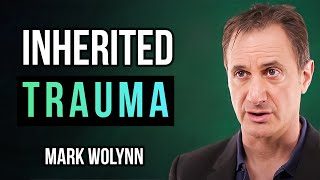
This is a Wellness Force Radio interview (episode 311) with Mark Wolynn about his book "It Didn't Start With You: How Inherited Family Trauma Shapes Who We Are and How to End the Cycle." Wolynn explains inherited trauma (epigenetic marks, small non-coding RNAs, DNA methylation/histone changes) and describes a practical method for tracing "trauma language" across three generations ("trauma-gram"/core language). He recounts his own healing (vision loss recovered after addressing a multigenerational attachment wound), clinical examples (a client who cut to "bleed out" linked to a grandfather's death), and proposes reconciliation practices (somatic holding, mindful practices, two-chair/seat techniques) that can shift limbic-driven responses and potentially reverse inherited effects. The episode mixes scientific studies (Holocaust, 9/11, mouse separation research) with somatic/spiritual approaches and clinician training resources.
Chapters
When a trauma happens, it changes us. Literally. It causes a chemical change in our DNA. The best way to say it is we're born into fears and feelings and anxieties and depressions that aren't ours. We do not enter the world with a clean hard drive. To use a computer analogy, there's, you know, an operating system already in place that contains the fallout of our parents traumas, our grandparents traumas, maybe even our great grandparents traumas. And we're born with feelings that we can't explain, which is why I wrote the book. I wrote this book because people are living in the dark. I wrote this book because we're walking around with a mystery that we can't explain.
That's Mark Wolin. And this is episode 311 of Wellness Force Radio.
Wellness Force Radio, where we discover the physical and emotional intelligence to live life well. You can have the same brain states as someone who's done an hour of meditation every day for 40 years.
There's a lot of losses that we go through. So the ability to be able to cope with those losses is very important to build skill in it, because loss will happen.
You know, you have to have spiritual courage, to really grow spiritually, because if you really want to take guidance from your soul, you have to be ready to realize that many of the things that you're asking for guidance on your ego has some kind of an addiction to or an investment in.
Welcome back to the podcast. This is Josh Trent. This is also Wellness Force. This is where we discover physical and emotional intelligence so that we can just live our life well. That's the whole point of being here on planet Earth anyways. To live our life well. But here's the big question for today. What if your feelings, your thoughts, and even your ways of being the way that we react to life instead of responding, what if those aren't yours? In other words, what if you've inherited them from families? This is exactly what we're exploring on today's show. I cannot wait. I want to start the podcast right now. I want to give you a pre frame, though, because this guest that we have on today, Mark Wolin, he literally blew my mind. And I know that I get excited about a lot of episodes on Wellness Force, but this one above all else, you get to share this with anyone in your life who is dealing with generational pain. What does that exactly mean, generational pain? It's inherited trauma. And right now we have the director of the Family Constellation Institute, the Inherited Trauma Institute, the Hellinger Institute of Northern California, and One of the leaders in the world around ending the cycle of inherited trauma. This is the one and only Mark Wolin. I got to learn about Mark's work after hearing him on the Mark Groves podcast. I reached out and I said, I have to interview you for Wellness Force. I read his book. It didn't start with how inherited family trauma shapes who we are and how to end the cycle. Check this out. Depression, anxiety, chronic pain, phobias, obsessive thoughts. The evidence is compelling, my friends. The roots of these issues may reside in the traumas of our grandparents, great grandparents, and definitely our parents. The latest research affirms this. The traumatic experiences that pass from our parents to future generations. This is emotional inheritance. It's hidden in everything, by the way, from our epigenetic expression to our gene expression, to everyday language. This plays a way bigger role in our health than anyone has ever understood until now. This is cutting edge science. This is a breakthrough podcast. I know you're going to get so much out of this. And if you yourself have ever felt like we. Why do I keep doing these cycles where I get unwanted results, banging my head against the wall? Maybe it's relationships or money or just anything at all. If you're caught in a vicious cycle, it might not even be yours. This book, we talk about family constellation. We talk about this concept, what it means when it comes to us absorbing familial behaviors. We also talk about why inside of trauma is the seed of healing. And we'll talk about my story, too, where I get very open on this podcast. You know, I know it's always good when I have a little bit of nervous about going and sharing my story on a show, because I know when I do that, it unlocks everyone with us to dig in and actually share their own. No matter if you're a spiritual person or if you consider yourself to be more logistical, you want hardcore science. This podcast covers both hemispheres. You're going to get the spiritual explanation. You're also going to get the scientific explanation where we talk about the scientific pathway of trauma being stored. Chemical tags, DNA, RNA messengers, and the way that our epigenetics express generational trauma. It's fascinating to me. This really, really opened up a big space in my intelligence. I feel like this was a quantum leap for me to understand myself and how I show up in relationships. This actually sparked an exercise where Kerry, Michelle, my girlfriend, and I, we did a Mark Wohlan exercise where we held each other. I'll link it in the show notes. It's on YouTube. Now you can check it out. It's@wellnessforce.com 311. That's where you can get all the show notes and links and resources and the video of me going deep with my love, my lady, my partner, where I won't spoil the surprise for you, but we actually did one of the exercises that Mark suggested. When I told Mark that I was born very premature, less than £5, in an incubator. And then I found out that my love was the same way. She was born in an incubator and she was having trouble breathing. These things that happen early in our life, especially when we come into the world with greater challenges than others, they shape how we love, how we interrelate, and how we connect as adults. I know you're gonna love this podcast. Let's dig in right now for this incredible understanding of why it didn't start with you and how we can end the cycle of inherited trauma with the one and only Mark Wohlen. Mark, welcome to Wellness Force. Thanks for coming on the show.
Thank you for having me, Josh.
This is really special for me. I was telling you before we recorded probably one of the most powerful books that's come out in my consciousness at least this year. And this book, by the way it's called, it didn't start with How Inher Family Trauma Shapes who We Are and How to End the cycle. I want to tell a quick story before we dig into your story. We had Mark Groves in the podcast, one of our most popular episodes. And from that episode, we had more comments and more engagement about your book than anything else that we ever mentioned on the show. And I thought, okay, we have to have Mark on the podcast because not only is this book impactful for us because there's so many blind spots that people have, but also because so many things that you cover in the book are really not even covered in modern day psychology and modern science. So we look at this concept of inherited family trauma. A lot of the scientific field in psychology doesn't necessarily focus on this because they're really focused on more medications and dealing with the 3D. The current. What is. How did you come across this? What does this mean to you, this definition of inherited family trauma? How did you find this line of work?
So many years ago, I started working with cases I couldn't explain. We'd have symptoms, anxieties that would begin suddenly after a certain event or when we would reach a certain age, or we would. All of a sudden we'd have a certain experience. We'd have a child. We'd get married, and our life would just flip into a pathway we couldn't understand. Depression, anxiety, obsessive behaviors, obsessive thoughts. And I've always been a guy who's been looking for the links. You know, I kind of see myself as the guy with the flashlight. And so when there's something that doesn't make sense, that's what interests me. When there's something that we can't get to the bottom of, that's where I get lit up. So, you know, along the way, I ended up developing this method for looking at inherited trauma. But, you know, the way it starts is I lose my own vision. I have trauma of my own. And, you know, this is 28 years ago. I began to lose the vision in one of my eyes.
And when you started to lose the vision, did it come on all of a sudden, or was it more gradual?
You know, it. One day, faces disappeared, so it sort of just came right on. And I couldn't make sense of it at the time. Of course it was. I was terrified. And it was keeping me from connections because all I could think about is I was going to go blind. It was 28 years ago, and I'm diagnosed with this chronic form of retinopathy. And the doctors, they can't cure it. And they tell me that, well, all we can say is maybe it's related to stress, which never helps. And then, by the way it was progressing, they told me that I was likely going to lose the vision in the other eye, too. And at this point, I can't read road signs. And it's almost like if you put your fist in front of someone's face and you try to see through your fist, I would see this dark gray blot, which blotted out people's features. It was right in my central vision. And now I'm told that I'm going to lose it in the other. And you can imagine I'm pretty panicked and desperate, and I go on the search for healing. I literally. I leave my family, I leave my city, I leave my work, I leave my relationship. And I start following what would look like wisdom. Wherever I would hear or see or read a book or hear a great teacher, I would try to find this teacher or read this book or take this training program. And, you know, this search literally leads me around the world. I mean, as far as Indonesia, where.
I'm studying this whole time, your eye is still progressively declining in health. You're getting blinder and blinder. The whole time you're doing the meditation and the searching and everything, nothing is working.
I'm juice fast and hands on healing and acupuncture and vitamins, supplements. Nothing is working. And, you know, I don't know this. I'm still on the outside. I don't understand that I'll be led inside at this point. But of course, that's what happens. And I'm being led to these teachers. You know, there's one funny story I talk about in my book where I'm waiting in line all day to have a satsang meeting with this great master, this great teacher. And I get to the front of the line and I'm thinking by this time I've been several years into meditation, that he, you know, this has been going on for years at this point, that I'm thinking that the master is going to tell me what a great meditator I am. Instead, he looks right through me and tells me to go home and make peace with my parents. And, you know, I was livid. I thought, what, you know, I had no idea what he was talking about at the moment. So I went to another master. Same thing happened. I get to the front of the line, same exact words, go home and make peace with your parents. Well, this time I listened to. I learned from these teachers some fundamental principles, one of which is the importance of healing my relationship with my parents, which was pretty broken. And before I could heal it with them, I had to look behind. I had to heal what I couldn't see. I don't know this at the time, but what stands in the way is inherited family trauma, specifically the fact that I had inherited the anxiety in my family history for generations and on all four sides, each of my grandparents is orphaned in some way. Josh. They all lose their. Three of them lose their mothers when they're babies, and the fourth loses her dad when she's one. And ultimately she loses her mother, too, because her mother's grieving. And the anxiety that I'd carry, the feeling of being broken from a mother's love being disconnected, this was the real cause of my vision loss. So the more I explore it, the more I'm beginning to see that the reason my mom can't connect with me is she's the daughter of an orphan. Her mother, who loses both of her parents at age 2, and her dad, who loses his mother at age 5, who dies in childbirth, and my dad, similar stuff on his side. And I'm beginning to see the big picture that nobody can love, nobody can really make anybody feel safe. The parenting was as good as it's gonna get. Because, you know, I always say my parents were loving, but they weren't good at parenting, which made sense. Made sense because they didn't get from their parents that heart feeling, that emotional feeling. So what was passed down into my family, this feeling of being broken from a mother's love. I think I talk about this in the book. I remember being a small boy, five or six years old, and whenever my mom, she would leave the house, I would run into her room and pull open her drawers and cry into her scarves and her nightgowns, breathing in the scent.
Yeah.
Literally thinking that I'd never see her again. And all I would have left with her would be her scent. But as I looked at the whole history, that would have been true for my grandparents. Their moms die suddenly in terrible ways. Childbirth, falling through the ice, a sudden sickness. And all they would have left would be their mother's robe or night coat. And I remember telling my mom, 40 years later, you know, when you would leave, I would cry into your clothes. And it was funny. She looked at me and said, oh, I did that when my mom would leave. And my sister reading the book said, honey, you did that too. I cried into mom's clothes when she would leave. So here's this pattern, you know, the exact same thing that we did, being passed down in our family. And I'm fast forwarding, but after healing, the broken bond with my mom, the broken attachment, my sight comes back. My vision, it comes back. I never expected it to. I didn't even count on it at that point. You know, I wasn't doing this so my eye would get better at this point. I'm on a search, man. I'm just on a. On a search to learn and heal.
I gotta pause you here, and I'm sorry to interrupt. I am just utterly fascinated that you were able to go through the meditation, the healing work, receive these downloads. Really, this sounds like the beginning of the hero's journey for you at 28, going to meditation and traveling yet the entire time? Mark, this is what I can't really get over. And I'd love to ask you about this. Your vision is declining. Wasn't that causing psychological and physiological stress? Like, how did you get through losing your vision and being present with what is and accepting what is?
That's such a great question. I had this teacher in Indonesia, and, you know, he'd say, who in the now of the present moment? You know, in that teacher voice, he would say, who in the now of the present moment has a problem right now. And of course, I'd raise my hand, I'd say, in the now of the present moment, I can't see you.
Yeah.
And he. And he would just say, and I didn't get it. I had to do this, like 20 times with this poor guy. And finally I got it. He said, mark, perhaps Sarah's ears aren't as good as Johan's and Wilhelm's knee. Everybody was either Dutch or German at this particular place. Wilhelm's knees aren't as good as Hans. And all of a sudden, I got. It hit me like a bolt of lightning that even if I couldn't see, there was something deeper beneath the me that couldn't see the other eye, the eye that was okay, that I wasn't. I had been identified with my vision loss. So I'd been running around not being okay because I couldn't see. And all of a sudden, part of the healing, I think Josh was realizing that I was okay even though I couldn't see. And I remember people say, mark, how you doing back then? And I'd say, I'm great. And they'd say, you mean your eyes cleared up? And I'd say, no, but I'm great. And that, man, that was like. The lights went on.
Wow.
That was very big moment for me.
This is huge. This is huge. Because I'm thinking about how many thousands of people that are listening are dealing with health complaints that almost feel like a spike in their progress. You know, I can't even imagine losing eyesight for not knowing why and going on a frenetic search around the world. I mean, talk about. Literally, it's almost like Luke. Luke in Star wars, you know, he loses everything and he has to go on this journey. It's the same thing with you. It's like. It's like your life. And you talk about this in the book. It's like a little scene from a movie, because you traced it, actually. And here in the intro in the book, you talked about this being to a moment where one day you were waiting in line for that satsang, the spiritual master that two different masters told you, go home and heal your relationship with your parents. And you were actually with your mom on the driveway, and you realized that when you would hold her, when you finally got the download from the teacher, you went to go hold her, and it was like you had to sit with her holding you. And you said in the book you felt like you were going to burst. Can you take us to that moment?
Yeah. Yeah. So I realized, I never knew why, that when my mom would hug me, I would tighten down, clamp down, as though I were going to implode. I was curious about it, but I hadn't made, you know, I hadn't ever excavated deeply enough to know what had happened. I didn't know I had a break in the bond with her. I would learn that later. I would teach that later. Along the way, I'm going to develop a method for how to heal attachment issues and how to heal inherited family trauma. But at this time, I'm just listening to these teachers who tell me I have to open my heart to her. But my heart isn't open. My heart's tight. And I know she's going to hug me and I'm going to feel that I'm going to turn into an iron drum. And that's what I did. But instead of breaking the hug, as I would have in the past, I said to her, mom, don't stop. Keep holding me, please. And she would just hold me, and I would follow it inside. Because I had a lot of meditation practice, a lot of mindfulness work at this point. And I was following like, ah, isn't this interesting? I'm tight here. I'm shutting down here. So I was following it with the curiosity of a scientist in the sense of. Until I was able to soften, until pieces could let go, until something burst and it was my heart. And, you know, there were tears and all sorts of things that would come later, and I would do more healing with her. And along the way, my eye starts to clear up, and I'd given that up. I never thought my eye would clear up.
It's so fascinating that when you let go of the I having to be healed and you were just at peace with what is. I can sit here and try to conceptualize it. No one knows what it feels like to be Mark and to have that go down. It's so fascinating to me that when you finally said, I surrender to this being healed, that it healed, what do you make of that?
Well, you said it yourself, beautifully put. Surrender. You know, there's these movements in healing, surrender, expansion. But ultimately, to hit that expansion, we've got to surrender into it. And that's where a lot of us get hooked. You know, the surrender. We can't surrender because we have either an identity that keeps us tight or an ego structure that keeps us holding on to an idea about who we are or what we need. When we get beyond all of that, a lot of times people will Say my cancer was my greatest teacher, or my, you know, my marriage falling apart or my losing the job. You know, these are our teachers. We get to a point where nothing. There's nothing. There's only. All right, I get it. I just have to let go and ride the wave. And it was riding that wave that led to this expansion, this inner expansion.
Well, I know it was challenging, but I'm so incredibly grateful that you went through this because the book wouldn't exist if you didn't go through that. And there was another part in the book where you mentioned your ophthalmologist told you that with the amount of scarring you had on the retina that you should not be able to see. Like, literally. This is the energetic and spiritual component of healing that we talk about on the show so much from our leaders in the world that cannot be explained purely by science. It just can't.
No, it can't. You know, I go, and I'm not able to. I'm not supposed to be able to read an eye chart because of all the scarring. And I, you know, I read the eye chart fine, and the guy looks in my eye and says, well, that's strange. You have so much scarring in your retina that you shouldn't be able to see that. And he starts to make excuses. Maybe the light is ricocheting off the side. But, you know, what I think I've learned is that we're not so solid, that nothing really is that solid. People say we're energy. And I guess that situation is almost, for me, a living proof that we're not that dense, that. That there's this energetic level that we, when we can surrender into. More is possible.
I find this to be such a great connection point with somatic experiencing what we're feeling in our body. We talked about this on the show. And then also the energetics, the things that are around us that we can't even see. And a lot of these are links to our past. You mentioned in the book, just as we inherit eye color and blood type, we also inherit the residue from traumatic events. Love this word. The residue. These events have taken place in our family. And it's so interesting because you say, well, while our physical traits are easily discernible, the emotional legacy is often hidden from us. Can you expound upon that a little bit?
Oh, absolutely. The best way to say it is we're born into fears and feelings and anxieties and depressions that aren't ours. We do not enter the world with a clean Hard drive, to use a computer analogy, there's, you know, an operating system to continue that analogy already in place that contains the fallout of our parents traumas, our grandparents traumas, maybe even our great grandparents traumas. And we're born with feelings that we can't explain, which is why I wrote the book. And, you know, why is this? I mean, you have to look at what happens when there's a trauma. When a trauma happens, it changes us. Literally. It causes a chemical change in our DNA and this changes the way our genes function, sometimes for generations. So technically, there's a chemical tag or an epigenetic tag that attaches to the DNA and tells the cell to use or ignore a particular gene based on what will help us survive this immediate experience. But it also changes how we act or feel. So if there's a situation in a past generation, we can become sensitive or reactive to their trauma from what was passed forward so we can better deal with it. But the problem is that we can inherit a stress response with the dials set to 10. I'll give you an example. If our grandparents come from a war torn country and there's bullets being fired and bombs going off and no one's safe, and people are lined up in the square being shot and men in uniform, our parents would develop an epigenetic adaptation, a biological skill set at the chemical level for the molecular level. Really? They would develop to look at it in terms of traits, they might develop quicker reflexes and sharper reaction times. That's on that level. But what's making that happen is there are these molecular changes. Maybe small non coding RNA molecules in a high concentration are being formed based on what's needed for this trauma. So we're inheriting their situation. But what if we're not born in a war? What if we're not born in a.
War environment, which is the majority of us.
Yes, majority of us. Here we are walking around triggered, anxious, activated, flooded or frozen, experiencing a car backfiring or a policeman in a uniform, and we're dipping into this generational trauma and we don't make the link. We're prepared for a catastrophe that isn't ours. And we never make this link, Josh. That our anxiety, our hypervigilance, our shutdown, our depression could be connected to our parents and our grandparents. We just think we're wired this way. That's what I hear all the time. Well, I'm just wired this way. This is how I am.
This is just who I am. Yeah, exactly. I'm excited to talk more about your core language, because later on in the podcast we're going to talk about the non verbal trauma and the verbal trauma language, which is something you developed over decades here for the logical people listening and for the emotional and more spiritual people listening. You know, Alan Watts calls them prickles and goo. Right. Some of us are more spiritual minded and some of us are more linear and logical minded for the logical people. The fascinating part for me that you discuss in the book is this scientific pathway of trauma where you talk about the chemical tag which you mentioned already. This attaches to our DNA. This tells the cell to use or discard certain genes. This is the scientific level of how we actually inherit this trauma and how it's played out in our lives. Could you go a little bit deeper into that?
Yeah, yeah. And it can be experienced for three generations. So with humans, they can see it easily for two that, you know, there's this Rachel Yehuda, she's the one who looked at Holocaust survivors and the children born to pregnant mothers from the attack in 9 11. You know, she tells us that if one of our parents has post traumatic stress disorder, that we are three times more likely to have symptoms of ptsd. And you know, she's done the work looking at the Holocaust survivors and their children and that they share the exact same gene changes in the exact same region of the very same gene. And I have all those studies in my book. And then there's other researchers that can say, hey, we can see it for three generations because we can look at studies with mice and we can even cause adversity to study to little mice, which they do, they separate them from their mothers and then they look at the biology and they can see that there are these mechanisms, DNA methylation, histone modification. Where they're focusing right now is on small non coding RNAs. Now RNA is, that is the messenger. It's copied from DNA. It acts as a messenger and it actually instructs the cells ribosomes to, to produce specific proteins. And the proteins will turn genes on or depending what's happening, off. But our cells also contain something called small non coding rna. Now they don't produce proteins, but they piggyback on the messenger rna, interfering with their function, either amplifying or decreasing, causing more or less of these proteins, more or less of these genes. And that's the physiology. But for me, what I'm interested in and getting it to the emotional level, which I think is what you're asking me, is I find that when a trauma happens, that there's something else that goes on. That language, trauma language, what I call core language, is left that we also carry the residues of this particular language, for instance, clues all of a sudden after trauma are left behind in the form of emotionally charged words and sentences. And I find this creates a breadcrumb trail. And if we know how to follow it, it'll lead us. So for me, I was following my eye, which was a form of non verbal trauma language. But I'll get to that in a minute. What the nonverbal and the verbal means. But when we know how to follow this language, it's like finding the missing piece of the puzzle that lets the whole picture come into view and finally gives us a context for the way we feel. In the book, I talk about trauma theory and I talk about how when there's a traumatic event, our hippocampus becomes compromised, our language centers become compromised, and significant information will bypass the frontal lobes. So the experience of the trauma, the exactly what happened, it can't be named or ordered through words. And so because we don't have the words, this information gets stored in our body as fragments of memory, fragments of images, fragments of body sensation. For me, blindness, fragments of emotion. It's like the mind blows up and we lose the story. But what remains are these physical and emotional and memory and language pieces, these.
Symptoms, the symptoms that we're experiencing, whether it's weight gain or stress or postural problems, neck pain. I mean, you could have a laundry list of symptoms. But like you said, the breadcrumbs are being followed back to some piece of trauma. And it could be in this lifetime or it could be three generations back. I just want that to hit home for people because I think so many people, they're trying to fix what's going on right now without even taking into consideration what happened that actually coded them into this world. We talked about the scientific part of it. Some people are just coded for war, Mark. Some people come into this world and in utero, maybe their mother was stressed. I can even think about my life. You know, I was born less than five pounds. I was premature. I spent two weeks in an incubator. What connection? Before we do talk about that core language, what connection might this make to how I would behave as an adult?
Okay, that's great. So if you don't mind, if I can get in there with you, that you had this early trauma where you'd be in an incubator, there can be a physical feeling like there's a glass wall between true connection, because your mom's on the other side of that glass wall. There can be a feeling of I'm left, I'm abandoned. There can be a feeling of I'm not important, I don't exist. These are the verbal trauma. This is that verbal trauma language I'm talking about. So I'll give you the verbal and the non verbal. So the verbal could be sentences that might show up from being left in an incubator. I don't matter. I don't exist. I'm not important. I'm abandoned. They left me. They reject me. I'm not saying those are the sentences. I'm just saying that in a trauma like this, there can be those components. I remember working with one woman who was in an incubator and her eyes would wince whenever she would get close to you for contact. The closeness was too. There was too much connection. She had to almost wince it out so she could moderate how much connection she could receive. A non verbal component of the incubator might be a feeling that I'm on the other side of a glass wall. Or it could be even what happened to me, that when my mom goes to connect with me, I feel my defense disconnects from her. Yeah. Or just the opposite, because I'm in an incubator and I need connection with her. I could then bond with her by being the good son, making sure that I'm tuning into her and giving to her rather than receiving.
I just got a big chill in my body when you said that. I mean, a couple things you've mentioned for me have rang true, which I've talked about this on the show. So my mom was manic, bipolar. A lot of people listening. They've dealt with family members that have mental health. I can look back, Mark, and one of the things that your book brought up for me was when I got into the third portion of the book, which is really like the reconciling, you know, it's the understanding of. You call it pathways to Reconnection. And I was reading Pathways to Reconnection and I was thinking, oh, my gosh. My mom moved every year for 20 years and her mom came from the Great Depression. My grandfather was in World War II. It was just this series of trauma and really being wired for war within their bodies that transferred down the line. And one other fascinating thing. And I. And I know that we've been peppering the audience here with the core language. I promise you guys we're going to get there right now. It's just I'm here organically in the moment with you. And I was reading a portion of your book where you talked about three generations being implanted, where if we have a mother who's three generations back, our egg. Our egg that we will become as a human being three generations back was formed when she was in our great grandmother. I mean, to me, there is no.
Clear case in our grandmother. Yeah.
Yes.
Embryologists have known this for hundreds of years, that the cell line stops dividing when our grandmother is five months pregnant with our mother. So all the eggs, our mother will have, one of those eggs, being us, will be in the womb of grandma when mom is five months, a fetus. So our grandmother's experience, as you might say, if you now take in the work of Bruce Lipton, who talks about how a mother's emotions can biochemically alter the genetic expression of the offspring in utero with her feelings. Now all of a sudden, we're in there too. So grandmother's emotions and Mom's emotions. Yeah, it's fascinating. So when people come to me, they really don't know what's going on. Usually they start with a symptom. But as you know from the book, I ask questions to gather their core language, to gather their trauma language. And one of those questions is, so tell me. You know, Josh, I would ask you. So, Josh, tell me about your worst fear. If the worst thing happened to you. If things suddenly fell apart, you don't have to answer this, but if things absolutely just. Just went south, if things went terribly wrong, what's the worst thing that could happen to you? And then the way people answer this, Josh, this is one of the questions I use for determining their trauma language. And it goes in two different directions. If it's the wound of attachment, let's say from the way mine would have been with all these mothers who died early, and then they couldn't. In the next generations, they couldn't parent with enough sauce, you know, with enough secret sauce, because, you know, they didn't receive it because the mothers in the generations before had died. The attachment language, the trauma. And this is the trauma language of attachment. A broken attachment will look like this. I'll be abandoned. I'll be left. I'll be rejected. I won't matter. I won't exist. There'll be no one there. I'm all alone. And then there's a generational language, and that would sound like this. I'll harm somebody. I'll do something terrible. It'll all be my fault. I'll be blamed. I'll be ostracized. I'll be hated. You see how it stems from something generational in that type of language. And the other language comes from attachment. And what we know from the mice, which is amazing, we know that when they separate little baby mice from their mothers that the effects can be observed, the behaviors and the biology can be observed for three generations. In other words, the mice show symptoms of what humans would call depression, and the symptoms worsened as the mice aged. In fact, in one study, some of the male mice didn't exhibit the symptoms themselves, but appeared to epigenetically transmit the behavioral changes to their female offspring. That would be like dads going off to war and coming back numb and daughters shaking jittery from the foxhole that the father numbed out not to feel. And the daughter's experiencing his fight, flight or freeze mechanism, his shutdown, his anxiety, his shaking. But as we know from trauma, it's an equal opportunity employer that mothers affect sons or daughters, fathers affect daughters or sons. And so anyway, as you're saying, that's the trauma, the verbal trauma language I listen to. And when it's non verbal, if I can just share this, I look for the physical and emotional symptoms that show up after an unsettling event. I'll look for the fears and anxieties that strike suddenly when we reach a particular age. Often it's the same age that something traumatic happened in our family history. Also look for the depression or the destructive behaviors that arise after a situation that's similar to something that happened in the family history. So if it's non verbal, it's also mirrored in our relationships in the repeated ways we deal with money and success. All of this is the breadcrumb trail that I'm after.
This episode is brought to you by Cured Nutrition, creators of the organically farmed USA sourced best CBD oil on the market, hands down. I love this product. They are a sponsor for the show because this 100% raw hemp oil from Cured, this is what can get people to sleep soundly as well as a bunch of other things. Did you know this? Did you know that hemp oil, full spectrum hemp oil can actually help with digestion and mood and joint pain and a list of other things that the FDA doesn't want people to say they'll help them with because. Because then the pharmaceutical industry won't make that much money. You know what I'm talking about. There are alternative ways, organic ways, less expensive ways to sustainably take care of your health, reduce inflammation and give you that calm, restful sleep with A beautiful mindset. This is where you begin with the hemp oil from Cured. They gave us 15% off. All you have to do is go to wellnessforce.com curedwellnessforce.com or cured. You get 15% off this organically farmed hemp oil. I love the founder. Make sure you go to episode 300. By the way, Joe, he actually interviewed me about my story, my life for the kickoff with Cured. You're going to love this company. I'm so excited to introduce you to Cured and why I believe in them because, first of all, they have integrity. A lot of companies out there when it comes to hemp oil and cbd, they, hey, they look good on paper, but when you get the product and you actually dig into the research, it's a totally different story. You can trust them because I do. And I trust that you'll give this a test drive. That's wellnessforce.com cured use code wellnessforce to get 15% off with the code wellnessforce. Over at wellnessforce.com cured the one piece that I'm fascinated by too is you talk about creating a trauma grammar, an inherited family trauma gram. And this is where in your work you have courses which we're going to link at the show notes page today, where people can get training with you in person. They can go through this map creating not just the core language map but also the trauma gram. Can you explain to us how you came up with this? I mean, this to me seems like something that was downloaded by higher intelligence. I don't care if you are the linear person or the spiritual person, for you to come up with this core language and how this relates to a trauma gram, this doesn't necessarily fall into the scientific logic category, you know, how did you come up with this?
Oh, I, you know, you track. You need some way to map it. So if somebody's telling me what happened in the family history, what I'm looking for is I'm looking, I'm following a line. So first I'm listening to that language and I'm wondering where that language really lives. Is that my client's trauma or is it her mother or grandmother or father's or grandfather's trauma? Is this my client's symptom? And if I look at, you know, those other questions I ask in the back of chapter, I forget the chapter, but it's the core complaint chapter. I list those 10 questions, very important questions. So we know how to trace it and we. When I map it out, you can literally follow a trail, a pathway between the generations that. Oh, my gosh, my grand. That was his sentence. His sentence. I've done. He did something terrible. He was hated. He was ostracized. And here I am feeling like I'll do something terrible and I'll be hated now. Be ostracized. And it never was me in the. You know, that's the connection I want people to make. I wrote this book because people are living in the dark. I wrote this book because we're walking around with a mystery that we can't explain. And we are thinking that we are this way, that these are our sentences, our feelings, our anxieties. You know, I feel like I should tell a story that links back so the listeners have an idea, but I don't know how much time.
Yes, let's tell the story because I think conceptually we can understand. Hey, the thoughts and feelings that I'm having, they don't feel like mine. They just don't. I've been feeling this a lot all of 2019. I know we're getting some hell yeses emotionally from the audience because, man, some of these thoughts that we have and some of these feelings that we have, Mark, they just don't feel real. They're just like. It's like a leaf blowing into my yard. So please tell the story.
So about 25 years ago, and this is also. You keep asking me how I learned to do this work. My first teacher was a client, this woman. I'm going to call her Sarah for the sake of the interview. She's 24 years old, and she's a cutter. But she cuts so deeply that she hits a vein or a vessel, an artery, and has to be rushed to the hospital because she's about to bleed to death. And her parents just say, oh, my God, Sarah, what have you done? And that's not a real name. They take her to the hospital and they lock her in a psych ward for about three weeks. Weeks. And so her nonverbal trauma language is, why the heck is she cutting so deeply that she almost bleeds out and bleeds to death? Clue number one. But we don't know yet. So she gets out of the psych ward, and I hand her a pen, and I say, here, Sarah, pretend this is your knife and you're going to cut into your arm or your leg like you do. But right before you do it, just hold it to your body. And all of a sudden, I could see she lost the color in her face. All the blood drained out of her face. And she started to dissociate And I said, right there, right there, Sarah, what's that feeling? What's that thought right there? And she looked at me and goes, I deserve to die. I don't deserve to live. And here I am looking at a 24 year old woman whose life had just begun. Josh. And I said, sarah, what have you done? Did you cause an accident, take someone's life? Did you break up with someone who took his or her life? She was no, nothing like that. So now I have the verbal trauma language. I don't deserve to live. I've got the nonverbal, I've got the verbal. But back then I didn't know what I was looking at. So I'm in the dark. I look at her relationship with her mom, it's perfect. I look at a relationship with a dad, perfect. She's able to receive their love and not take care of their feelings, but able to let them take care of her feelings. I said, okay, I better look at her attachment. It was awesome. She had this safe, strong, secure attachment with her mom. I was flummoxed. So luckily I asked the right question. I said, okay, tell me about your grandparents. I didn't even know why I was asking that because we didn't look at those things back then. And sure enough, she dropped the bomb. Her grandmother was an alcoholic and she was driving the car drunk and she crashed into a pole. She left, but grandpa went through the windshield and got caught on the glass and bled to death before the ambulance arrived. And here's the whole story. And I went, oh, oh. And you know, everything made sense. And I knew what to do with her. I put two chairs out in the middle of the room and I had her tell her grandfather, hey, grandpa, I cut myself and I nearly bleed to death. And I said, add this sentence, the way you bled to death. And she said, the way you bled to death. She never met her grandfather, right? And here she's having this conversation. And I said, tell your grandmother that you feel that you don't deserve to live. I feel like I don't deserve to live. But grandma, this isn't my feeling. It's what you would have felt. And all of a sudden she's crying and she visualizes her grandparents who are dead. She's never met them behind her as sort of like spirit guides or angels in a way. I don't know the word to use, but she could visualize them with her. So whenever she would go to cut, she feels their love instead of this feeling. And she stopped cutting. It was Profound. And then after that, I met my great teacher, Bert Hellinger, and I studied with him for many years in Germany and Austria and here in the States. And yeah, it was really quite a profound experience to have that case be my teacher. Life is my. As we all know, for all of us, life is our teacher if we let it and surrenders the outcome because there's very little we can control.
We're in a school for souls here, Mark. I'll tell you, man, and I just got so many different chills when you're telling that story, because I'm thinking, first of all, how did Mark know to put the two chairs and to have the. The telegram, the transmission with the grandparents? Like, this is why I'm saying you operate so profoundly and powerfully here in the 3D world where you're helping people get through their traumas. They're living now, but those traumas, they're so connected to parents, grandparents, even great grandparents three years back. And. And one thing that you said really struck me, and it goes to every core component of your teaching, and it was something you said. Inside the trauma is the seed that's planted for healing. Inside the trauma is the seed of healing. So, oh, good. How do we grow that seed so that it comes to fruition so we can heal? Because then, guess what? We can break the chain. We can have children that come into the world that are powerful, that are present, that are conscious. But we got to be a good farmer. We got to actually tend to the garden. So how do we do that? How do we take care of the seeds?
Only giving the listeners the bad news that we're all in the same boat and it's sinking. Right? Right. But there's actually a lot of good news. So let me start telling some of the good news. So researchers, right now, they can reverse the trauma symptoms in mice. And that. That's massive. So they can take the mice that they traumatized, then they can untraumatize them by having them experience positive experiences, which is where I'm going to go and put the mice in positive environments. And not only do their behaviors improve, but it actually also inhibits the enzymes that cause DNA methylation, which is one of those mechanisms that cause repetition in the following generations. So it inhibits these mechanisms that cause histone modifications, DNA methylation. So the mice are no longer having the freak out, and they're no longer passing it to the next generations. And mice aren't the only ones that benefit, obviously, from positive experiences. It's how you and I heal so how does the listener heal? Well, the listener, you, me, we need to have an experience that's potent enough and meaningful enough that we'll practice it. In other words, something very meaningful, like mindfulness, like gratitude, like generosity, like putting our hands on our heart or the place in our body that starts to have anxiety or when we know we dissociate, to find that place in our body and to bring our hands there and our breath there and say even something simple, Josh, like. Like holding our solar plexus whenever we start to get triggered. And say, I've got you. And it's adult us holding little us. I've got you. I'm here. I'll keep you safe. I'll breathe with you until you and I integrate. Until you and I are one. So these experiences that are meaningful are powerful enough to pull traction away from the midbrain, the limbic brain, the limbic lockdown, the amygdala. That's already.
What is the limbic lockdown? What is that?
When our. You know, I stole that from Kerry, who works with me, Carrie, who assists me in my trainings, she used that word, and I love it. You know, when our amygdala become triggered and stays triggered and has now grown to twice its normal size. And now, instead of experiencing life, we're just experiencing limbic hell. We're experiencing a release of cortisol that's shutting our body down and making us fearful and making us dissociate. In other words, we are entranced by the stress response, and the stress response becomes our reality rather than the opposite, which is our healing state, our mindful state. So the idea to do an experience, to have an experience that can pull energy away from the stress response, the midbrain, the limbic brain, and bring engagement to the other parts of our brain, specifically the prefrontal cortex, where we can integrate and we can heal. And these are experiences. For instance, like Sarah, the one I just talked about. She then, instead of cutting, which would be a limbic state, an amygdala driven I don't deserve to live state, instead, she's feeling the softness of her grandmother and grandfather behind her back, holding her, saying, we're here. You're safe. And then all of a sudden, and she's in a different part of the brain, man. She's in a part of her brain that is her deep, mindful. You know, the studies I talk about in the book show that even after eight hours of meditation, it was enough to change even gene response. The. Oh, my gosh, the pro Inflammatory gene response was able to shift after just that little bit of meditation. So when we start to have experiences that we trust, that feel good, that feel right, that we believe in, then all of a sudden we start to pull away engagement from the stress response, bring engagement to different parts of our brain, start to weave new neuronal structures, new neural pathways together even, and stimulate the release of feel good neurotransmitters like dopamine and oxytocin or dopamine and serotonin and gaba, even feel good hormones like oxytocin and estrogen start to release. And then all of a sudden, everything can change. But the key is practice, practice, practice. Find an experience that means something and practice it. Practice feeling the sensations of the experience. The sensations. That's the warm body, spine softening, heart calming. Yeah.
Wow. So much to unpack. We need like an entire other podcast on just cultivating the seeds of healing. So now that we've done an incredible back and forth about the trauma itself, how it's inherited, we understand the core language, we understand that you have programs to map this out so that you can ask the right questions, figure out where the trauma is coming from, when people actually work with you one on one. Do you do sessions one on one at this point, or is it only in groups?
No, I. I do one on one zoom sessions.
Zoom sessions.
There's a little bit of a waiting list to get in to see me, but. But they can call Carrie and she can schedule a zoom session.
What's coming up for me right now, just from a place of curiosity for our world, is, does it ever occur to you, Mark, does this ever happen in sessions where you see that we're all just walking around computers and we're all the same, we all have the same biology, we're all connected to the same source that is love. We're all just wondering, how are we going to heal ourselves, but yet the mechanisms of healing really go down to the same thing which is going within. Do you ever get this sense in sessions that we are potentially in a simulation or we might be computers ourselves?
Absolutely. You know, we're also similar. I teach in my book about the four unconscious themes. It might be a little too much to go into here, but each of us have two or three of the four themes. And I teach, you know, these are the four ways. And I'll let the reader read that from the book. Yes, but the four ways we get pulled away from life force, the four ways we lose vitality, the four ways our relationships go into struggle. The four ways our health and our careers, our money gets affected. And I'll save something for the book. But yeah, there's only one of four ways, and each of us are experiencing two or three of them. Yeah. So, yes. So much. And you know those core sentences that I talk about in the book? I'll be alone, I'll be left, I'll be abandoned, I'll hurt someone, I'll go crazy, I'll be locked up. All those sentences, there's only about 30 or so. We're so similar.
Yeah.
And really, you know, this is teachable, which is why I teach trainings anymore. I teach clinicians how to. To bring this work into their coaching practices, into their psychology practice, their medical practices, how to get clinicians to look at the three generational link and to look at the traumas of the parents and the grandparents.
One of the things that's so fascinating to me about your work is that it unlocks a completely brand new door for people. And behind that door is permission to let go of the things that we really deep down know aren't actually ours. And I think that flies in the face of modern psychology, where they're just dealing with how do you get from A to B and what medications and what PDF or what program or what linear thinking can get people from A to B, but you're bypassing the entire Alphabet, mark. I mean, you're going to a different code that allows people to let go. It's. It's really. Do you ever feel like you're in a way, a harbinger of permission slips? You give people permission to let go of things that they deep down really know aren't theirs?
Well, I'm teaching this work to lots of clinicians, so there's a lot of good people out there that are now bringing this work into their therapy practices. I think it's in the zeitgeist now. So I think that what people are starting to realize, that attachment issues are way bigger than we realize. And the early traumas, I'm looking from conception to age 10, when I work with people, I want to know the very first experiences when you come into the world. So I'm working with both attachment and with inherited family trauma. And really the job of the clinician is to discern where I need to work with my client. Is this inherited trauma or is this attachment? And what we know from the mice, and this is the crazy thing, Josh, when the mice were separated from the mothers for only a short time, for two weeks, for the first three Three for the first three, for only two hours a day for the first two weeks of life. The mice could exhibit these symptoms of depression for three generations. And biologically, they had the similar biological alteration, the epigenetic alteration, similar non coding RNA molecules in each of the three generations. So now that we're learning that the attachment is three generational. Josh. It might not be our attachment with our mother. It might be our mother's attachment with her mother, our father's attachment with his mother, our grandmother, or grandfather's attachment with their mother as well as ours. Yeah, so what I, you know, like in my family, I found out attachment was going. Attachment issues were going back forever.
Wow, Mark. So I want to respect your time. I am going to take out that first nine minutes when we were talking. So technically we're still within an hour. Could we go another six minutes together? Is that all right with you? Okay. There's something that came up for me when I read your book, and it was in that last section. It was in chapter 12, the core language of relationships. And this one sentence, I want everybody to feel this. The distance from your pain, your grief, your unattended wounds is the distance from your partner. Stefan and Andre Levine, embracing the beloved. That right there says it all for me in why we pick our beloveds. What is it about the characteristics that we're really trying to heal? Our childhood wounding, which, by the way, we've already explored, might not even be ours. It might be three generations, generations back. Can you unpack this for us, this concept of that distance? Because the pain, the grief, the unattended wounds, if that's the distance from our partner, how do we close the gap?
Okay, let's say we have a break in the attachment with our mom. And let's say that attachment is because I say in the book several times that our mom is the template for future relationships. The early. What's early and unresolved with her sets the stage for what we will experience with a partner. So we will either repeat by choosing a partner who if Mom. So our defense as mom was distant, or mom ignored us, or we had to take care of mom's feelings. So whatever the defense is, that's going to show up in our relationships. Very likely that when Stephen and Andrea Levine or Levine say that the distance from your pain, your grief, your unattended wounds is the distance from your partner, what they're really saying is that we're going to either choose a partner who will also ignore us, who will also be disconnected, who will also be distant, who will also be cold, who will also give us the same Jewish that we did or didn't get in order to heal it. Remember the seed? We talked about this, the seed of the contraction. The seed of the contraction contains the expansion. So we are repeating the traumas for an opportunity, as Freud would say in repetition, compulsion to seek a better outcome, that we are seeking these traumas, the same contractions, for an opportunity to heal. And in so doing, we will either choose a partner who's cold, or we'll make that partner cold because we'll expect them to be cold. So if we're waiting for her to be cold like our mother was, or disconnected, we're already hyper vigilant. And of course she'll see that we don't trust her and she will become what we think she will be.
This is powerful. I think so many people can sense that they are in this. You know, there's a therapist, I believe it's Hendrix, he calls it a mongo therapy where we attract the partner that's going to heal our deepest wounds. And when I hear you explain, closing the gap comes really just with awareness. Is it as simple as communicating? Once we've done the work with you and with people that are professionals?
Not awareness alone. We start with the awareness. But then, you know, the last part of my book, the reconciliation part of my book is, you know, part one of the book, I teach you to be a detective. You're going to become a detective of your trauma language and your family history. And you're going to do, you know, the second part of the book, you're going to trace it and you're going to do your trauma gram and, you know, trace it and figure out where this is all coming from. But the third part of the book, and what we're talking about here is we've got to have practices, awareness, and then a practice that we will practice. So, for example, with that partner that I've attracted who's mirroring to me the same wound that I had with my mom, let's say I now have to find a way not to let my triggers go off rampant, but to find a way to. To follow what's engaging or disengaging in my body and be able to be present and to be able to say, hey, I felt myself just go away and I don't want to go away. Could you put your hand here? Or I'm going to put my hand here so that young part of me doesn't fragment. And there's many things we can do in These practices. So we don't follow the same reactive stream. Instead, we respond to these traumas in a way where we can heal them. Yeah.
This is the ultimate healing that we're all working towards. And that is what is the truth that my body is trying to tell me. What is the body intelligence? What is our physical intelligence? And at the intersection of both, Mark, is wellness. On one side we have physical. On the other side we have emotional. And of course, below that, that spiritual which runs everything. I believe everything we do is spiritual in some way. But if you were to talk about that middle and if you were to give us parting guidance about wellness, how would you define that? You know, how does Mark define wellness? What does wellness mean to you?
Playing lots of guitar, aside from playing lots of guitar, Making sure that we, you know, I'm going to say something. You know, it's kind of odd. Shake the family tree, but we've got to shake the family tree. We've got to. To. Got to see what falls out. We've got to see what stories have never been told, what secrets were hidden, what traumas never healed all the way, which is key. And then we've got to do our healing work. So we've got to see how we're reliving those traumas and what we can do to bring strength and peace inside. What practice can we. And then I would talk about the traumas to our children, tell our kids, because they don't keep quiet, get open, as I would say, and tell our kids what is really going on so they have a hook on which to put their coat because they're wearing it.
Anybody that's resonated with that definition, I felt that so much in my stomach, actually. It was like an excitement that I felt from your definition of wellness. And whenever I feel that feeling, I know we're onto something good. Mark, thank you so much for the work that you're doing. Thank you for writing this book and making it through this degeneration in your eye and just sticking and moving forward through the truth. I mean, gosh, like, this is the true definition of a wellness. Warrior is just like somebody that seeks the truth. So can you share with us where people can connect and how can we support you as a community? How can we support you this book and you as a wellness force community?
Well, first of all, thank you for having me on your show. I've really enjoyed this conversation, Josh, and thank you for reading my book. The book is that people can get in touch with me. Markwolyn.com, W-O-L-Y-N n.com they can also hook up with me on Facebook and Instagram. On Facebook, what I do every week is I put out the new studies in inherited family trauma. So if you're on that page, you'll get the newest studies and all the way in which this brand new research, because it is a brand new field, is moving and it's just an exciting field to watch. But, but thanks again for having me. Loved it. Love talking with you.
Thank you. And as we say goodbye, I just want to let you guys know this is a very deep episode for me personally. So if this resonated with you, go to markwillin.com download some of the resources he has. Go to the show notes. It's wellnessforce.com 311. You can get involved in everything he's doing and just mark deep bow. And I want to leave us with a quote from Thich Nhat Hanh, who's in chapter 14 for core language medicine. This really sums up the majority of our conversation. And I know people are going to listen to this episode again. But let's say goodbye with this quote. If you look deeply into the palm of your hand, you will see your parents and all generations of your ancestors. All of them are alive in this moment. Each is present in your body. You are the continuation of each of these people. Hey, thanks for listening to the show, my friend. Everything you learned on this podcast starts with your morning practices. So from over 300 world class guests, we pulled together six simple yet powerful morning practices down into a 21 minute system guaranteed to increase your vibration and the way that you feel every day. Get this free powerful guide over@wellnessforce.com M21 and if you love this show, share it with somebody. Share it with somebody that you love or that you care about. You can support the show easily by leaving us a five star review on iTunes. Just go to wellnessforce.com review or if you're on your phone, just tap it. Hit the link in purple that says review this podcast. And the our journey does not stop here. We're continuing this discovering process in our private Facebook group over@wellnessforce.com group. You can be a part of it. You already are. All you have to do is join us@wellnessforce.com group and I will welcome you at the door. Now go out into your life and live your life well. And until I see you again real soon, I'm wishing you love and wellness.
Sa.
More from Josh


Your child's future start before pregnancy... and even before conception! #podcast
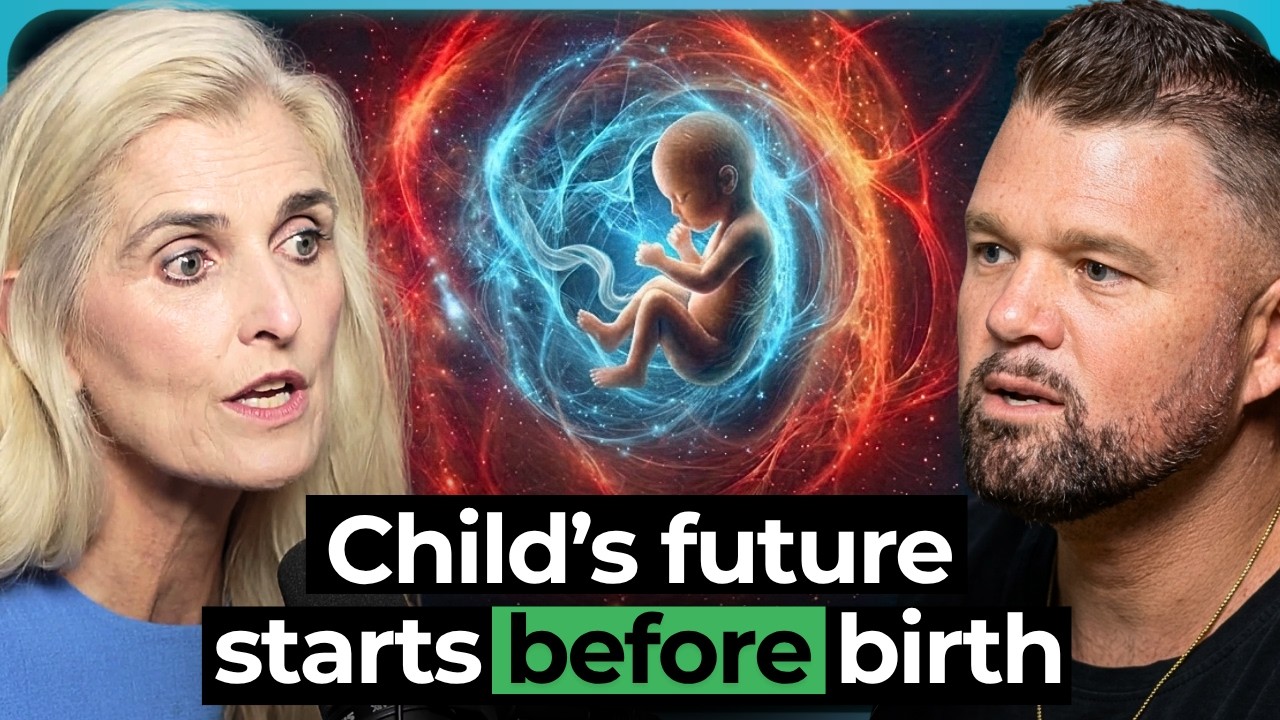
MD Reveals: Your Healing Creates Your Child's Reality (The Souls Coming In Need Strong Bodies)