312 Kevin Kelly: What Technology Can Teach Us About Self Love
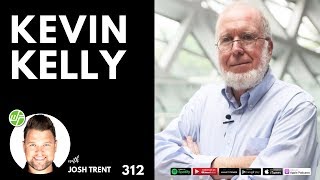
Episode 312 of Wellness Force Radio (host Josh Trent) features Kevin Kelly (cofounder of Wired) in a wide-ranging interview (recorded Dec 3, 2019). Kelly explains the 'technium'—the interdependent system of technologies that behaves like a lifelike, self-organizing extension of evolution—and argues technology expands human possibilities and can improve humanity if guided well. Key themes: evidence-based, iterative adoption of technology; the parent/child metaphor for stewarding tech; ethical translation of human values into machines (trolley/self-driving car examples); nature informing design; spiritual viewpoints (self-created God, pronoia) and psychedelics as affirming experiences. Kelly also endorses continuous reevaluation of technologies and measuring them by how well they enable love (broadly defined as opening possibilities and supporting expression).
Chapters
Love to me is opening up possibilities, keeping things open and going. It's support for expression. It's all these other things. It's not just kind of like a feel good thing. And so if we can continue to measure our technologies by how well we do that, that's a good metric for evaluating whether we want to change what we're doing or not. We are blessed with technology by increasing the ways in which we can do things. If we're making a that's going to decrease options, which is like a gun does. We need to be very, very wary and very, very careful about what we do with that kind of technology. We should be very ready to embrace it, but we should also be really quick to let it go or change it. As we see as you have adjusting and revamping and reworking it, that is the pattern that we're going to have forever.
That's Kevin Kelly, and this is episode 312 of Wellness Force Radio.
Wellness Force Radio, where we discover the physical and emotional intelligence to live life well.
You can have the same brain states as someone who's done an hour of meditation every day for 40 years. There's a lot of losses that we go through. So the ability to be able to cope with those losses is very important to build skill in it, because loss will happen. You know, you have to have spiritual courage to really grow spiritually, because if you really want to take guidance from your soul, you have to be ready to realize that many of the things.
That you're asking for guidance on, your.
Ego has some kind of an addiction to or an investment in what's going on. Podcast land, it's Josh Trent. I'm glad you made it back to Wellness Force, because today we have one of my dream guests coming on the show. I mean, literally, if you'd have told me in 2015 that I'd be interviewing the founder CEO of Wired magazine, Kevin Kelly, on Wellness Force, I would have said, shut the front door. And that's kind of how I feel emotionally right now. You are in for a huge treat. This podcast took an incredible turn. We talk with Kevin Kelly about something very unique, something fascinating for me, and that is what can technology teach us about love, about self, love, about loving the people we're in relationships with and about loving the people in our community. If you don't know who Kevin is, he is the senior maverick at Wired magazine. He co founded this magazine in 1993 and served as its executive director for its first seven years. He wrote a book called the Inevitable, which we'll touch on today. It's a New York Times and Wall Street Journal bestseller. He's also the co found and co publisher of the Cool Tools website where since 2003 he's been reviewing practical tools that'll actually help humans. Kevin has a incredible presence. You're gonna feel this. Not only is he a bestselling author, but he's also a spiritual and practical guide for people out there that want to understand the technium. This is a really unique concept. The technium. The technium. I had to whisper it. The technium. The technium is actually consciousness expressing itself through technology. We're going to talk about this more why Kevin believes that the technium is actually like a child. We'll explore this gap between technology being harmful and technology being healing for humans. And we also explore Kevin's spiritual side how a trip on LSD on his 50th birthday. I couldn't believe we talked about this. This is so, so cool. A trip on his 50th birthday really reaffirmed his love and his service towards humanity and this global community. It was utterly fascinating. This. You'll love the way we got there on the podcast. It was super unexpected. This community is so special. I cannot wait for 2020. It's coming real soon. Less than 30 days away and a lot of people are already focused on the New Year. I wanna let you guys know right now there's no such thing as a New Year's resolution. You can resolve to treat your body with love and with care right now and the first step to that is taking a deep breath. I created a free resource for you where you can make that first step for your nutrition, your breath work and your morning practices. @wellnessforce.com I worked on this guide for a few months and I'm so proud to be able to give it to you as my gift. It is going to revolutionize your morning practice. If you've been struggling with your morning practice or meditation or breath work, this is yours. Wellnessforce.com M21 within the M21 guide, we're also giving you discounts for Organifi which is our show sponsor. Organifi I love for three main reasons. It's filled with organic superfoods. Their adaptogens and adaptogens are what promotes energy from our cells from the inside out. Adaptogens like spirulina, chlorella, ashwagandha and other powerful plant compounds. This is what gets delivered in the Organifi product and this is why we've been so proud to be with them on our show here for two years, you can do this. Start your new year's resolution by throwing it out the window and instead grab a container of Organifi green. You can go to organifi.comwellnessforce they give you 20% off. This is your sign. If you've for a guidepost on resetting, do it now. Do it before the holidays. Organifi.comWellnessForce Use code WellnessForce to get 20% off your entire order. Give it as a gift too. That's a perfect stocking stuffer. Imagine like giving this to a family member who you subtly want to be more healthy. You don't want to tell them, hey, you need to eat better, but you can put some organifi green in their stocking. This is perfect. Organifi.com wellnessforce code wellnessforce for 20% off. Let's get into this episode with Kevin Kelly again. This is my dream guest. I'm super stoked to be able to share this podcast with you. And I know you're going to get a lot out of this. If you struggle with technology habits or if you've just been trying to understand the connection to technology and the human, this is going to be an amazing show for you. If you like this podcast, it would mean a lot to me. Can I ask you for a favor? Can you support me? Can you support the team? Just share this podcast with someone that you care about, somebody that needs to hear these messages, somebody that gets to grow their physical and emotional intelligence. When you do this, this, you'll be entered to win a monthly supply of organifi. Anyways, we'll pick someone at the end of this month. It's probably gonna be you. If you're feeling it, just go to wellnessforce.com review leave us a review. It helps the show and it would mean a lot to our entire team. So thank you for wellnessforce.com review. Now let's drop in deep with the one and only Kevin Kelly. Kevin, welcome to Wellness Force.
It's a real privilege to be here. Thanks for inviting me.
Hey, it's a privilege to talk with you. You know my beginning of my entrepreneur's Jo, I learned about your concept of the thousand true fans and I have to tell you, it changed my life. It really did. Because it gave me this understanding that when I look through a window of what really is and that is that there's 7 billion people in the world and I only need to reach a thousand of them to make an impact, it just changed my life, man. So I Want to start our conversation by just thanking you live here on the show.
You're very, very welcome. I'm so glad to hear that. And I think it is a realization that can liberate many, many people. So you don't have to be aiming for. It's not going to happen. And you're aiming for something that's much more likely to be achieved. Yeah.
The way that you've done everything in your life. And we're going to explore Wired magazine and the technium and, you know, the inevitable laws, and I even want to pick your brain on Moore's Curve, Just figure out if that even applies anymore with Moore's Law. But let's start here. I mean, people know you as really the founder, the chief, the man that brought Wired magazine into the world. And for people that don't know what Wired magazine was when you started it and what it is now, just paint a quick picture for us. You know, what was that genesis through you? Why did that even come about?
I was editing another magazine before that called the Whole Earth Catalog, which was a bible for do it yourselfers. The genesis of the idea for Wired actually came from a couple, Louis Rosetto, Jane Metcalf, and they hired me as the editor. And the idea was to make a magazine that felt like it was being mailed back from the future. You would get it in your mailbox and you would feel like it was coming from 20 years into the future. And our premise was to not explain the future too much, to assume it, and to also fill it with a fairly optimistic view. Because 20 years later, we thought the universe, you know, the universe would be working, things would be better, and we were going to show how they were better than today. And that optimism was very contrarian. Like today, the general mood. Twenty years ago, this had the dot com boom. There was this idea that technology was maybe not all that it lived up to be. People were getting tired of it. And we're saying, no, no, no, no, this is just beginning. We're just at the dawn. We're just at the first day. Just wait till you see what's going to happen in the next 20 years. And I think that optimism was one of the things that sort of propelled attention to it. And also the fact that we were convinced that the Internet was going to be this big life changing thing and most people were dismissing it as something that teenagers were doing. We're saying, no, no, no, no, no. This is really important.
Yeah. And what blows me away too is don't you feel like we're at another point where when the Internet was coming out and there were these naysayers that mentioned, ah, the Internet's not going to be anything and it's going to be for teenagers and kids. This is. We are with really 5G and with all the Internet of things and the ways that we're all quote connected, I think so many people are not seeing the radical impact of how already these things are infiltrating our lives and even from a social construct too. I was asking you before we recorded hey Kevin, as you're the master of technology and humanity in the nexus, do you still even struggle with technology yourself? And you had mentioned, well, if it's specific, yes, sometimes I do. So I'm curious how you see this with people that might come to you for consulting or just your sense of this in the world. The way that technology is affecting our humanity at our deepest core, our ability.
To communicate, I think it's improving our ability to communicate. I think it's actually in the long term improving our humanity. I think the kind of worry that we have about AI, the fact that each time we make a new kind of artificial intelligence, we nibble away at what we thought humans could do. No longer do we think, oh, only we can play chess, only we can drive cars, only we can make write music. In fact we're finding out that AI can, various types of AIs can do all those things. And so then we say, well, what are we here for? What's our role? And what are we going to do when robots and AIs become greater? And the answer is we're going to become better humans. We make these machines and as we make them, we're making ourselves better humans. And so there's lots of examples of that from the fact that when we have self driving cars, we have to give them some sense of values. About the famous trolley problem. Should a self driving car swerve to save the safety of the passenger first over the pedestrian or the pedestrians over the passenger? That's to make a decision. We have to decide right now. That kind of ethical problem is difficult because as humans we're terrible at it. We don't have a very solid, deep ethical foundation. We're very inconsistent, we're very, very superficial. And it's actually not hard to teach AIs and artificial intelligence and robots values. The difficult part is that we don't have very good values to transmit. And so as like a child, a parent and a child, as we kind of have to teach the AIs, it turns out that we're actually having to become better at it ourselves. And that's one example in the way in which our technology is making us better humans.
What do you mean when you said that sometimes translating our values to machines is challenging because we don't have good values? Can you elaborate a little bit on that? Because I feel like I have really good values.
Well, what I mean is, okay, when we're in a car and there's an accident happening, something, the car goes swerving, are you going to swerve to save the safety of yourself first or are you going to favor the pedestrian?
Yeah.
How will you do it?
Personally, I think I would swerve to save the most amount of people. So if I looked at it in that linear fashion, how many people could I save based on my next action? Whatever that answer is.
Right. And so in the famous trolley problem where you could kill one person and save five, you would kill the one person?
I believe so, yeah.
Right. So we can kind of, you know, if you explore that problem, man, I'd.
Rather kill no one.
Well, I'm just telling you that what we know from philosophy is that that's a problematic stance. Right? And so we as a society haven't yet agreed on what it is because when we examine our own ethics, like in these kinds of cases, we find out that they're very inconsistent. They're not consistent enough to actually program a robot or a self driving car. Okay? And so we give ourselves a pass all the time. People don't, people don't actually behave that way when they're driving. And if you examine them later on they say, well, it happened too fast, I couldn't think about it, it was just reflexive, I wasn't really steering. But we don't give that kind of excuse to robots. They actually have enough time. So we have to think out all these things to a degree that we don't ourselves have to think about. Right. And so like in war, we allow a human to kill another human in a way that we would not allow a robot to kill. Yeah, right, because robot kills it. It's very methodical and we say that's terrible, a human does it with emotion, or they're just reflexive and we say that's okay. And so we give humans a pass because their ethics are, we're inconsistent, we're not very shallow. And I'm not talking about you individually, I'm talking about people. General. Yeah, and so we say, well, it's okay for a human soldier to kill another soldier, but it's not okay for the machine to do it, even though the machine probably will never be accused of a war crime, because they're just following instructions.
Yeah.
And so in that way, our ethics are inconsistent in the sense that we haven't really extended them. And we didn't realize that until we had to teach the robots, which are very illogical and they only follow rules. And we realize, oh, my gosh, I thought this was a really good system, but now once I have to kind of put it down on paper and make it through logical, I realize it doesn't really hold up any water.
Wow. Thank you for going in depth on that, because I can even think about, wow. When we really have to explain why we do what we do, we really start to understand a deeper level of the humanity behind it. You know, our choices about how we treat one another. And I could even think, you know, in your book, you talk about that there's 12 real big pieces. The inevitable. This is your book. And it was 2016 that the book came out correct? 2016. I remember reading the book when it first came out because I was hosting a different show. Most people don't know this, but before Wellness Force, I hosted a show about fitness technology. And I was explaining to you before we recorded here, my heart really pulled me in that direction, because I don't know if you can relate to this, Kevin. I think most of us, when something new comes out, specifically in technology, I think we all feel that novelty rush where we're like, oh, it's a new wearable, it's a new Fitbit, it's a new something where we can have this quantified data that's going to teach us something about ourselves. And I started to go down this road of understanding that, you know, there's some great devices out there and then there's some that are just making money, you know, And I think you could. You could probably say that about any industry. How have you seen that evolution unfold as far as devices and novelty versus what's really going to serve the human at their deepest core? How have you seen this evolution change?
Well, the thing about new technologies is that even the inventors don't know what they're really going to be good at. I like to tell the story about Thomas Edison, who was the inventor of many things, including the phonograph, recording sound. And while he was working on the device to record sound, he was making a list of all the things that he thought it would be useful for the number one use of his recording sound equipment. The phonograph, he imagined, would be to record the words of a dying. The last words of humans. And he had some other ideas that would be really good for recording church sermons. And you could pass them on way down at the very bottom. He said, oh, maybe we might be used to recording music. So he himself, the inventor, didn't understand exactly what these technologies are going to be used for. And it takes a while to figure out the best job. It's kind of like inventions are like babies. They're born and people, the parents have some ideas of what they want this thing to turn into, but it actually takes a generation of actual use to determine what things are for. And so, like, in terms of the Fitbits and other kind of devices in the world, there's lots of aspirations of the inventor. They have some ideas, but then they meet reality and how people actually use them. And it takes a while for this technology to kind of find its right place in our lives. And the thing about it is that a lot of people critique that and say, that's a mistake, or those people were dumb or that's evil, or whatever it is. There are some ways that this system is broken, but in fact, you cannot figure out these things by thinking about them. The only way to figure out how technology really is useful or how it is good and what its bad parts are, is through use. That's why I preach this embrace of technology. But we want to be constantly vigilant, so we. We should be very ready to embrace it, but we should also be really quick to let it go or change it. Yeah, as we see, as you have. So this stance of kind of initial embrace and then later on adjusting and revamping and reworking it, that is the pattern that we're going to have forever. So I can tell you that in another hundred years, there'll be a new technology, and there'll be some people who are going to say, well, we need to prohibit it, we need to stop it. Other people who are just kind of like, yeah, bring it on. This is the future. Well, actually, what it is is like, bring it on, let me try it, and we'll see what it's really good for.
Yeah, that's a perfect way to say it. Because think about what happened when the automobile came out. It was the same thing, right? People were like, oh, they're going to kill the horse and buggy. Yeah. Because the automobile is a lot more fun and it does a lot more. And I think it does have a deeper service to humanity. Look at how many Lives are served by that evolution of technology. I can even think in the wellness industry, Kevin, you know, there's a lot of devices out there now that we're seeing continuous glucose mon. We're seeing that fed to the medical records. So we could have, if we chose the same stance, to be like, you know what? Technology's evil. It's not going to help us. But it actually is. I'm curious how you feel this point of us really deciding if a piece of technology is worthy of humanity. Is there a common thread that connects all devices and all things?
Well, one thing I would warn against is this idea of a once and for all decision. This is sort of the FDA idea. Things are approved and they're there. I think we should have constant reevaluation, constant testing. So just because something was okay or good before doesn't mean it's always going to be. We should be evidence based. We should be looking at the evidence. And that's the other thing, is that when we are evaluating new technologies, we want to evaluate them on the evidence of how they're actually being used, not in the ways we could imagine them being misused. So a lot of people kind of decide that they don't like Facebook, whatever it is, because they can imagine how it might be misused, not based on the evidence of whether it actually is being misused or whether their data or what effect it has on them, but they're kind of basing it on sort of the imagined harms of it rather than the actual evidence. So I'm all for evidence based, but continuously evidence based. So when a new technology comes along, at first there'll be some promises and there'll be a lot of critics about people who are afraid of it. There'll be some people who will want to block it immediately, saying precautionary principle. You need to prove that this is not harmful before we can use it. That's impossible. So let's use it and try it and keep monitoring, looking at the evidence, seeing how it works. It doesn't work. And we'll change our use of it as we go along. And every technology will have a cost. Every technology will have downsides, every technology will have harms, but those harms have to be compared to the harms of the old technology. So right now, whatever health system you're on, there are inherent harms in that. And so the new harms have to be compared to the old harms. You can't just compare the new and assume that the existing stuff works without harm.
There's something about you that I don't know if you have a belief in a higher power or if you consider yourself to be a spiritual man. But you chose to live in Pacifica, and Pacifica seems to me like a place where people would go to connect with nature and to connect with something other than technology. Why did you choose that place with all you do for tech?
So it's a very mundane answer. We're living in Pacifica, which is a place on the coast, has a bad weather. It's foggy right now. It's foggy most summers. It was a little cheaper because it was foggier. Silicon Valley had not yet reached Pacifica. So it was a cost differential. We could afford it. But now the pressures in Silicon Valley have pushed so hard that that doesn't matter anymore. So even though the weather is lousy, people are still moving in, and that price differential has evaporated. So having said that, I'm looking out here, and I'm on the national park boundary, and in 15 minutes, 17 minutes, I can be in the offices of Wired in San Francisco. We have Mountain lion, we have Bobcat, we have Coyote right there. And so that is important, that this touching of the artificial and the natural, because I think both of them are really two faces of the same thing. And the distinction between nature and the mechanical is not as great as people think. Both of them reflect the divine in this term, and both of them have ways that they can teach us. So I am particularly interested in the ways in which biology can teach the mechanical, the artificial, the machines. So we're making machines more and more and more complicated. The Internet, things like this. And the only way to really manage them is to manage them the way that biology manages itself. So I go to nature to look for answers on how we can construct our artificial systems to work better, because nature has kind of figured that out over billions of years. And so we look at things like the immune system, which is a really good way to kind of deal with the malware on the Internet, things like viruses, which we aptly named, but spam, other things like that. We have to take kind of a biological model to deal with them, which says, first of all, you can't eliminate them. This idea of zero tolerance, that's a very unworkable idea. We actually have to tolerate a certain amount of it. We learn from each interaction. We build up the immunity. So models like that, I think, are very, very important to while we're trying to make more and more complicated technology. And when we come to things like Artificial intelligence or the mirror world, where things are so complicated, really the only way we're going to make anything out of them is to import the principles of biology. And so I think becoming familiar with those principles in biology and the wildness in nature are important. And besides the fact that that realm must exist on its own because it supports the artificial world.
Have you ever been out in nature and gotten however you want to describe it, a download, an idea, a creative breakthrough where it would never have happened if you weren't in nature? Have you ever received something like that out there?
Oh, of course, yes, always. I mean, I try to do a walk most days and I walk in the hills and I spent plenty of time hiking the Appalachian Trail, things like that. So that happens on a regular basis. The ideas are small most of the time, but nonetheless they're important. And I think the other thing that nature, that kind of spending time in nature can do is that it can release us from spending time in the artificial. So it was one of the reasons why I travel and one of the reasons why I emphasize the value of traveling is that it's other. It requires us to have a little different mind and perspective. And that perspective can return back with a different way of seeing the mechanical built world that we've made with new ideas. And so that's only a bit. There is just the benefit of kind of the enjoying the clean air and the exercise. That's its own reward as well. So there are multiple reasons to go into nature. And then finally I have to add that our civilization is built on the robust subsidy of a functioning Gaian planet that is healthy and is supporting us. So there is a system of nature that underlies and supports like farming and agriculture, right? So you have to have a healthy microbiome, you have to have healthy water, clean water, you have to have, you know, good sunshine and reasonable rains in order to grow the food that we need. And so there's yet another reason to be interested in nature and spending time there and protecting it. Because ultimately our high tech lives rest upon that foundation.
And so many people come to your work because they're interested in learning about how technology can actually help them where they are. And then there's some people that come to your work because they just want like the cutting edge research about what piece of technology can make me money. I'm not saying either one's right or wrong. I'm just saying that you have a broad array of people that are attracted to your work. And one of the things that completely blew me away. When I found out about this concept, and you already mentioned it, when you mentioned the divine, how nature and technology are really seamed into the divine is this concept of the technium. And when I first heard it, I thought, of course, that's true. Something within me just lit up and I was like, ah. And I've told this to so many of my friends and so many podcasters, actually, that technology is really just something that's coming from consciousness. Technology is a representation of consciousness. Can you unpack how you see the technium now and share with people maybe how that's changed since the beginning?
So my argument is that the technium is not human made. And I'll explain what I mean by the technium. So we all know what technologies are. You know, if you hold up a spoon, that's a piece of technology. A water bottle is technology. The light bulb, desk, concrete is a kind of technology. So these are all technologies, but these technologies form a system. So in order to make a hammer, we need a saw, and the saw needs to be made by the hammer. So they're kind of self reinforcing. So today, to make anything requires maybe 50 other technologies present. So if you want to manufacture an iPhone, you have thousands of other technologies that you need. If you want to make a book, print a book, you need the technologies of printing, of paper making, of metal working. You need so many things. So we have this complex dependency codependency where all these technologies depend on other technologies for their existence. That web, that system of all those technologies co dependent on each other, that is the technium. So the technium is a system. And while no individual part of that system, no individual technology, is a lie. The system as a whole, the technium as a whole exhibits lifelike attributes, just as you could say, well, there's no neuron in your brain that is thinking, but the system of neurons thinks together. So in that sense, these technologies are inert. But together they form this system called a technium, that does exhibit lifelike behaviors. So this, this technium, like life, is rooted in the same origin. So it's rooted in the beginning of the Big Bang. So from the Big Bang onward, there has been this extropy of the universe running down, but there's a little tiny thread in little tiny neighborhoods relatively to the scale of the universe of increasing order. Instead of decreasing order, it's increasing order and it's called exotropy. And it's the sense of self organization, the way that stars self organize and maintain their existence over billions of years. A galaxy will self organize into this shape and keep rotating. Planets can self organize. And then life is self organizing. And now recently we've had mind self organized from life. And technology is a self organizing force coming from the mind. And so this self organization in the Technium has its roots in the same self organization of life. In fact, it's an extension of evolution, of living evolution. And so for that reason, it has its roots in the same place that life has roots. And so it's compatible with life and it's an extension of life. So basically it's evolution accelerator, the evolution, natural evolution accelerated. And so there is two things about this view. One is that the difference between living systems and artificial systems is very small. And secondly, when we make technology, when we're making things, when we're inventing things, even if they're consumables that would be thrown away, we are participating in a very long arc through the universe of this increasing choices and possibilities, the same thing that evolution in life is doing. So we're part of something bigger when we make invent things. Technology is a big thing. It has a spiritual dimension, if you want. And so it's exploding the possibility space, which is what we as humans want, because every one of us was born with a slightly different mix of talents and abilities. And we need the help of the things that we make to express those. So if you can imagine Beethoven, imagine Beethoven being born a thousand years before anybody had invented musical instruments like a piano. That talent would have been. We wouldn't have gone.
We would have not received his gift.
Yeah, we wouldn't have it. And that's a blow to him and to us. Yeah. And then you could kind of go through any other genius you can imagine from, you know, Lucas, or, you know, Alfred Hitchcock, without the cinema and the loss that we would have had. Which means that today, somewhere in the world, there are these other Shakespeare geniuses who have been born who are waiting for us to invent their technology so they can express their genius. And they may die before we invented, which is a shame. So we have a moral obligation to kind of keep inventing these new things, these new possibilities.
So many things to unpack there. I'll start here. You have also talked about the Technium as being a child of humanity. You know, our job is really to be a good steward, a good parent. Now, I'm not a parent yet. Yet I know all the parents listening can agree it's a constant balancing act of how much they control and how much they surrender to what is and I can think about the metaphor of the technium in parenting. If we're a steward, if we're going to take care of this child with loving care, because we know it's a part of consciousness and so are we, how do we balance this? I mean, what does that even look like? To tighten our grip around it and produce technology just for the sake of production versus surrendering to what is? I don't know if there's a clear answer for that.
No, there isn't. In fact, there is a fundamental contradiction, fundamental tension between the fact that we humans, we individuals, are both the masters of what we create. We are the creators, and at the same time we are also the created. So as we make the tools, the tools make us. We are both the parent and the child at the same time. We are the parent of the technology and then we are also the recipient, the child of it, we get affected. So we are the creator and the created at the same time. We are the parent and the child at the same time. And that will be true in a thousand years. We'll still be wrestling with this fact that we are two faced, that the relationship we have with technology is two faced, where we are both the masters and the slave at the same time. And that is impossible to unravel. And so that complication of being torn and being conflicted by technology will forever be with us because we are both at the same time making it and then being made by it.
I think about this phrase as above, so below. And you know, it's, it's something that I think is applied to wrong situations. But I can definitely see how it applies here. Because if we're always wielding, and this might be an answer, if we're always wielding the growth of technology, the attention of technology, so that it's taking care of our earth, our bodies, our wellness, and loving one another, well then we can never go wrong. Right? Because that's a guideline for parenting in itself. What's your sense on that?
That, Yeah, I think we can measure the desirability of technologies by the degree to which it encourages us to love or enables us to love each other. And love in the broadest sense for me is not just an emotional affection. Love to me is opening up possibilities, opening, keeping things open and going. It's support for expression. It's all these other things. It's not just kind of like a feel good thing. And so if we can continue to measure our technologies by how well we do that, that's a good metric for evaluating whether we want to change what we're doing or not. And we are blessed with technology by increasing the ways in which we can do things. So we still have face to face conversation. There are still millions or billions of times a year, a day when people will come together and meet face to face and have a meal, that will never go away. But we also have these other options where we can do what we're doing right now, which is we can use electronic technology, have a meeting, even the fact that we're not in the same place. And that option also hopefully will never go away. And then we're going to make some other options were to do it like in three dimensions in artificial reality. And those were increased, but that's not going to. But we'll still be meeting face to face. And so what we have is we have more choices. And some people would prefer or better or excel in face to face. And other people have an ability to connect over the wires.
Yes.
And so we will discover and people who have this talent will express their genius. And that is all good. But as long as, you know, we, if we're making a technology that's going to decrease options, which is like a gun does when you kill somebody, they don't have any options anymore. We need to be very, very wary and very, very careful about what we do with that kind of technology. And so I think you're right. This is a really good way to measure whether something is a technology that we want to change.
I love the way you describe. Some people are going to be great at face to face and connection. Some people are going to be more, you know, great at technology, possibly writing code, prickles and goo. I don't know if you're a fan of Alan Watts.
I have heard Alan recorded. I never met him personally, but I wish I had his voice.
I wish I could interview him. Kevin, because, you know, there's so many. There's a similarity between you and him and I. There's this concept in Native American American culture and it's the elder concept. And it has nothing to do with someone's age. It has their ability to gather information, apply information, and then lastly embody the lessons of that information. And this is what we talk about on Wellness Force. So much is real. Intelligence is not how smart you are. You know, artificial intelligence, human intelligence. It's not about how many books you've read or how many PDFs that you've downloaded. It's about someone's ability to actually embody those lessons and put them out there. And for you I have this sense of. And I'd love for you to unpack this. There's a reason why you found. You co founded the All Species Foundation. This is the nonprofit. It's going to categorize every living thing on Earth. There's a reason why you've written us about these inevitable forces that are compelling us. There's a reason why you came up with the Technium and how it's a parent and a child relationship. What is it about you? What is your connection to spirit, to higher power that drives all of these things?
Yeah, I mean, I want to say one thing, you were talking about intelligence. I think intelligence is very overrated. And actually one of the fallacies that we have collectively at this time is what I call thinkism, which is this idea that thinking about things will create solutions or that we have to apply more thinking. And I think that's a fallacy of middle aged guys like me who like to think.
I think we all think a lot, too much.
I think doing, doing is a much more effective way of accomplishing things in the world. And I think that you have to do and use things in order to find out again what they're good for, not just think about them. But where do I get the strength? Yeah. So I definitely believe that there is a higher being, an outside being. To me, there's only kind of two versions of creation. Either the world kind of always was, the universe always was, but that's not very satisfying. Or you have a God who always was and that's not very satisfying either. So I don't think any explanation of the origins of the universe is anyone's going to be unsatisfying. Logically. It's kind of, it's going to be paradoxical.
Yeah.
So my definition of God is the being that created itself. It's a self created being. Okay, well that is inherently fundamentally unsatisfying because we don't understand what that means. It's like self created.
I can't even conceptualize that. I don't know if a man's mind could conceptualize.
Right, right. So any kind of story we tell is not going to be, it's going to be riddled with paradox. And I think there's an elemental, fundamental, necessary paradox at the basis of creation. Just from what I can understand. But nonetheless of the two stories, for me, the story of the universe always being there or the stories of a self created God, I much prefer the self created God. It makes a better story. So that's my orientation, is that I think there is this self creation. And that self creation is dispensed into the universe itself. And so the universe is self creating something else. And that's self creation. This long line of self organization, self creation that we see with life and the mind. And now we are agents of this self creating our own descendants with AIs and robots that where we play God ourselves again. We are both the God, the creators, and we are the creator because when we make the technology, it shapes us. So that position, I think, is a reflection of the divine. So for me, the stuff that we're talking about, this technology, and by the way, most of the technology in the world is not the new stuff. It's all the old stuff. It's the concrete, the paving, plumbing. There's more old technology than there is new. And all that technology together is a reflection of the divine. As much as a redwood forest and a beautiful meadow is a reflection of the divine. Both of them, I think, reflect this idea that there's a bigger story that we're part of.
Yeah, I had a moment like this when I was actually in a psychedelic journey and I remembered the honoring, the absolute incredible honoring feeling that I had to see literally hundreds of thousands of generations spanning behind me and in front of me. You and I are one page. We are one page in this cosmic book. I'm curious if you've ever explored any of those tools for your own expression or expansion yourself.
The psychedelics, Yes. I was a hippie who never took any drugs except I had a out of the body experiences in the dentist chair when I was a teenager that were very fundamental. They didn't know what they were called. They didn't have a name at the time. Now they call it out of the body experiences. Was using nitric oxide for the anesthesia. And they were very, very fundamental in kind of piercing the veil of reality for me. I never took any drugs other than those in the dentist chair until I was 50, when on my birthday, my 50th birthday, I took LSD as a sacrament and I had a guide. And that was. That was a very powerful experience. But it wasn't life changing in a sense because I was kind of already there. It was more life confirming rather than life changing. And so I have, you know, I have not. And I don't drink, I've never been drunk, so I don't feel I have needed those. When I've had them, they have kind of confirmed my outlook that I already have. I didn't need much persuasion that we're all connected. I Didn't need much persuasion to understand that the difference between the living and the inert was very, very small. I didn't need much persuasion to understand that the universe is a pro noia that is conspiring to help us. Everybody in the world is working together to try and help me. That's the pronoia. And that I think I already believed.
It's also an incredible mindset because it's the awareness of what is. And when we look at the duality of choice, there's so many philosophers that have spoken about this. You know, look at the yin yang symbol itself. What is that duality within technology? How would you describe the yin yang energy of technology?
Well, it's absolutely there. As I said, most of the problems we combat today in the world were generated by previous. Most of the problems were generated by previous technology. Most of the. All the problems I think going forward are going to be created by the technology of today. They're going to make new problems. Technology makes almost as many new problems as solutions. And so there may be even half. But the point is that. And you know, there are people who make it their business to kind of find the problems with technology and bring attention to them and try to remove them. And I have great admiration for that. That's not what I like to do. Just as like there is people who love to find, proofread and find errors in the story. We need them. We need people like that. They're essential. But that's not my interest. My interest is looking for the positive and the optimistic because I think we can't make a world that we want in the future unless we can visualize it first. I think it's really, really important to imagine something in order to make it, particularly as it becomes more complicated. So we have to try to imagine a future that we want to live in in order for any hope of that happening. And so I am trying to assist that vision, that vision making. I'm trying to assist that task of trying to imagine. How do we imagine a world that's full of ubiquitous artificial intelligence and it has ubiquitous gene editing, it has ubiquitous monitoring, surveillance, it has ubiquitous, you know, urbanization. How do we imagine that world and say, well, I want to live in that? And that's what I see, what I'm working on, because I think it's very, very important. There's definitely going to be new problems, big problems created by anything we come up with. And my answer, the answer, I think, think is to those new problems. The answer is always going to be we solve the old problems with new technology, which will make new problems. We solve that with new technology. So generally, the answer to a problem with technology is not less of it. It's not to turn it off, turn it away, turn it down. The answer to the problems of technology is not less of it, but more technology, more and better technology. So that's the difference is I'm very technocentric in that sense. And I think that, you know people who are like, well, I'm going to give up Facebook. I'm not going to use this, I'm going to turn off that. I'm going to prohibit this. That doesn't work.
Yeah, yeah.
Thanks to all those things. Is to try to come up with better technologies which will have their own problems, and then we have to make up new technologies to solve those.
And one could also feel into the truth that as we do anything from a place of love and service, technology can be a part of that, doesn't have to be the enemy. Kevin, thank you for coming on the show. One last thing that I'd love for you to share is you've written on kk.org that when your children left home, you wanted to give them a box of tools and, you know, just really books containing ideas and possibilities that they. They might not encounter otherwise.
Yeah, yeah, yeah, yeah. What.
What can you share with us as parting guidance about ways of being and tools in regards to wellness?
Yeah, that's a really good, deep question. I'm trying to think of what kind of wellness tools we talked about. Yeah, I don't think the box had any tools that were directed at wellness, but I do know that except for maybe we didn't have it in the box, but we did give all the kids the genetic testing 23andMe kit. I'm very pro information. I think that again, while there are problems with things like gene sequencing, that the benefits outweigh it. And there's a huge an awareness and knowledge that can be gained by knowing as much as you can about your genes and finding out much about it. And of course, every year there's more and more learned. And so I think what these kids taught my kids was that they are basically inherently in good shape and healthy and that that means that the onus of kind of having that good health really rested on their outlook and their perspective. Doctors will tell you again and again that a person's spirit, I mean, there's no distinction between your body and your mind, between your soul and your mind. It's one system and what you think and how you use your mind has a huge impact on your body and vice versa. And so your genes and your body are really hard to amend and control. We have a lot more flexibility. We have a lot more room to maneuver, I think, in our mind, in our outlook. I am a naturally temperamentally optimistic person. This isn't something that I created, something I was born with. And so the final thing I want to say about wellness and things like that, or even wealth is that there's a huge role of luck. I was lucky to choose my parents. I was lucky they had the parents I had because I had genes that didn't have a lot of problems with it. I was lucky to inherit the temperament that I had because I was very optimistic. I was lucky to be born in the country that I was born in, which was America. I was lucky to be born in the race. I was because I was privileged. There are so many things that I am lucky about and I want to acknowledge the fact that a lot of people who are successful are successful because they are lucky and they need to own up to that fact. I think if you do, then you can become grateful and it's with gratefulness that you really have true happiness.
Kevin Kelly, thanks for coming on Wellness Force and sharing your knowledge. We look forward to all you're going to create in the future and you guys can learn more@kk.org Kevin, thank you for coming on.
It's been my pleasure. Thank you for having me.
Hey, thanks for listening to the show, my friend. Everything you learned on this podcast starts with your morning practices. So from over 300 world class guests, we pulled together six simple yet powerful morning practices down into a 21 minute system guaranteed to increase your vibration and the way that you feel every day. Get this free, powerful guide over@wellnessforce.com M21 and if you love this show, share it with somebody. Share it with somebody that you love or that you care about. You can support the show easily by leaving us a five star review on iTunes. Just go to wellnessforce.com forward slash or if you're on your phone, just tap it. Hit the link in purple that says review this podcast. And the journey does not stop here. We're continuing this discovering process in our private Facebook group over@wellnessforce.com group. You can be a part of it. You already are. All you have to do is join us@wellnessforce.com group and I will welcome you at the door. Now go out into your life and live your life well. And until I see you again, real soon. I'm wishing you luck, love and wellness.
More from Josh






Your child's future start before pregnancy... and even before conception! #podcast

MD Reveals: Your Healing Creates Your Child's Reality (The Souls Coming In Need Strong Bodies)



