319 Dr. Jud Brewer: Simple Ways To Break Bad Habits
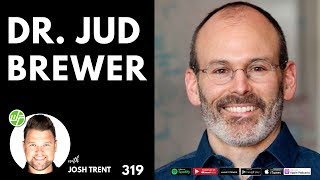
Episode 319 of Wellness Force Radio (host Josh Trent) — recorded Jan 7, 2020 — features Dr. Jud Brewer discussing how mindfulness and reward-based learning can break bad habits and treat addiction-related behaviors. Core points: habit loop = trigger → behavior → reward; update reward value via mindful attention (e.g., mindfully eating to notice diminishing reward — ~15 repetitions to substantially reduce reward); curiosity as a counter to craving and fear; apps (Eat Right Now, Craving to Quit, Unwinding Anxiety) show clinical effects (reported 40% reduction in craving-related eating; 63% reduction in validated anxiety scores in an RCT). The conversation also covers addiction definition (continued use despite adverse consequences), trauma’s role in learned habit loops, intolerance of uncertainty, and the linkage between connection/kindness and well-being.
Questions this video answers
About 15 times.
About 40% reduction.
About 63% reduction over two months.
Continued use despite adverse consequences.
Eat Right Now, Craving to Quit (or Craving to Quit/Craving to Quit app), and Unwinding Anxiety (anxiety program).
Chapters
Behavior change isn't based on the behavior. It's based on the results or the reward of the behavior. So the first step here is we say, go ahead and eat. And a lot of them are really freaked out by that because they've had food rules forever. We say, don't just eat mindlessly. Pay attention as you eat and see what it's like. See what the reward is as you eat. And then we have them check in with their body afterwards. What did you get from this? Do you feel content afterwards? And the piece there is. It helps their brains get that accurate and updated information. This is helping their overdofrontal cortex update that reward value. And what we found is if you do this about 15 times, that reward value goes from pretty high to close to zero. You know, imagine eating the food and then go through the process of actually eating it and then realizing, wait a minute, this is not that rewarding. It was like me realizing that peanut butter and honey sandwiches were much more rewarding than eating donuts.
That's Dr. Jud Brewer, and this is episode 319 of Wellness Force Radio. Wellness Force Radio, where we discover the.
Physical and emotional intelligence to live life. Well, you can have the same brain states as someone who's done an hour of meditation every day for 40 years. There's a lot of losses that we go through.
So the ability to be able to cope with those losses is very important.
To build skill in it, because loss will happen. You know, you have to have spiritual courage, to really grow spiritually, because if you really want to take guidance from your soul, you have to be ready to realize that many of the things that you're asking for guidance on, your ego has some kind of an addiction to or an investment in.
What's up, my friend? Welcome to 2020. It's a new decade. Can you believe this? 2020. Here we are. This is the day. This is the time when everybody talks about resolutions. New Year's resolution. I'm going to lose weight. I'm going to get a six pack. I'm going to stop smoking. I'm going to be kinder. You know what? Let's be real. 90 plus percent of people, I'm gonna hit you with the cold hard truth right now so we can all just be in that space together. 90 plus percent of people that make, quote, resolutions do not succeed. Don't take this route. You don't have to do this. I've been here for almost 40 years on this planet, spinning around. And I'll tell you this anytime I've ever worked with a client when I was a trainer or I've had people that I've worked with online that do our programs that have done coaching with me, that they never resolve to do something just because it's a new decade. That resolve, it starts with a loving, kind, powerful decision that you make within yourself. But in this podcast today, we're exploring where that decision actually comes from. We're talking with Dr. Jud Brewer, one of the most powerful speakers and lecturers and professors when it comes to behavior change. How do we actually do the new thing that we promise ourselves and how do we keep that sustainable? How do we make the changes for our wellness and our health, our physical, emotional and spiritual health? How do we actually back those up with inspired action, with the kind of action that we can trust and with that trust that builds day over day, week over week, month over month, so we can actually transform. We talk about this on the podcast today in depth with Dr. Jud Brewer. If you haven't heard of Judd, he is the Director of Research and Innovation at the Mindfulness center and Associate professor in Psychiatry at the School of Medicine at Brown University. He's also a research affiliate at mit, but before that he he held research and teaching positions at Yale University and at the University of Massachusetts center for Mindfulness. You could say that he's definitely skilled in the mindfulness arts. That is for sure. Beyond his academic resume, you're also gonna feel in his voice and the way that he communicates. He's so incredibly humble, yet so powerful and this is rare. This is why this show is so special and this is why I think you're gonna connect deeply with Judd. He blends modern science and ancient wisdom. He's published numerous peer reviewed articles and train US Olympic coaches. He's been featured on 60 Minutes. He has a TEDx video called a Simple Way to Break a Bad Habit that has over 8 million views. We are very, very fortunate to be able to learn from Judd on the podcast today we're gonna talk about attention spans, reducing the trigger behavior reward loop model that happens in our brain. We'll explore his app based programs for eating anxiety and smoking, why they're HIPAA compliant. We also understand this concept of cognitive understanding versus emotional and embodied understanding. We'll talk about the default, the limbic system and why curiosity leads us to being and transcends fear based living. This is what we're doing for 2020. I don't know if you feel it like I do. I'm sure that you do. If you're here. There is something powerful happening to consciousness. This is not hippies around a fire with guitars. There is powerful things happening right now in me, in you, in our community. It is happening today, in this moment. 2020 marks a special time for us in human evolution. Addiction is going to be a thing of the past because we are coming now. Bear with me for a minute because I want to talk to you about how special this episode really is. Mental health is the focus for wellness force in 2020. Hands down, this is where we're going. I've made a big pivot this year in 2020. I just don't know if what I stand for has been said enough. And as we start this new decade together, hang with me for a few minutes where I put the stake in the ground. We believe at Wellness Force that this growing mental health crisis, it represents an opportunity for humanity to come together and heal. We believe that our food, our water, our air that we breathe will be natural, organic and free from pesticides and pollution. We believe that money and financial health are both abundant for all humans who are willing to rise with the new social sharing economy. We believe that all humans deserve to have the resources to live with optimal mental, physical and emotional health. We believe that through awareness, intelligence and inspired action that all humans can choose to eat, move and sleep well. And we believe that all humans deserve to lead a fulfilled, healthy and vibrant life made by their own design and lived in the way that they choose. We believe that the way we treat ourselves, each other and our planet are all reflections of our place in human evolution. And we believe the time for a positive change in our world is now, starting with the world inside of you. So now you know what Wellness Force stands for in 2020 and beyond. And if this resonates with you, join me. Because what we stand against is that we live in a society that is currently financed and fueled by unconscious capitalism that uses weapons of mass media distraction, demineralized foods and fear based consumerism that is causing global depression and sabotaging mental health. We stand Wellness Force stands against unconscious capitalism and the companies and systems that place profit over people and who harm our mental, physical and emotional health. So for the love of the planet and for ourselves, we Wellness Force believes that through this syndication and the pure sharing of conscious media through this podcast, Wellness Force Radio, this is where we help humans discover wellness intelligence. The physical, the emotional, we can all overcome these weapons of mass media distraction, consumption of demineralized foods and fear based consumerism. We're going to do this together in 2020. We're doing this by increasing awareness through conscious media and with a call to arms for this community to heal ourselves and others by using three powerful tools. We're going to be launching a stress reduction breathwork program in February. We're partnering with an organic superfood company named Purium and we're providing wellness intelligence and life design programs here on wellnessforce.com we believe in this new conscious business model. Capitalism is not the enemy. Money's not the enemy. It's actually how our society is fueled and we believe in this new social sharing economy. Because the world is changing so fast, we we're in the middle of a massive economic transformation. The Internet and social media have completely shifted their traditional way of doing business and the economy of our parents generation, it's pretty much non existent. We believe that money and financial health are abundant. And this is why I'm offering you the chance to join my team. If you're interested in joining the Wellness Force mission, if what I said resonates with you and you want to make a big change on this planet, go over to wellnessforce.com team. You'll be able to join our mission, join the movement and you can be a part of the Wellness force movement in 2020 to help end the mental health crisis and be a part of humanity coming together to heal. Now that you know where we're going, if it feels good, join us. And if you know other people, tell them about our movement because the rebrand and the pivot that Wellness Force is making in 2020. Actually, let me check that. It's not a rebrand, it's not a pivot. It's just a refocus and a re empowerment of the things we've always known, but we just haven't spoken them loud enough. So in 2020, we will not be silenced, we will not back down and we will defeat this mental health crisis together. Mental health is something that I've struggled with and my parents on both sides and many generations before me, but it stops here. I make the choice just like you do. And that inspired action leads us to new outcomes. So join this Wellness force movement in 2020. Help end the mental health crisis. Be a part of humanity coming. And we can do this with wellness intelligence, organic superfoods and stress reduction breathwork. Join us@wellnessforce.com team all right, are you ready? Let's do 2020. And if you're hearing this years from now, let's do this moment right now. Let's use simple ways to break bad habits with Dr. Jud Brewer as we move forward together. So I always ask this before we record too, man, what are you most grateful for today? You know, what's embodied in you? What are you most stoked on in life?
So I was just talking to my team about. They're like, yeah, we're really poised to help a ton of people change behavior. And I was thinking how grateful I am about it's not just helping them break bad habits, but in the process waking up to how wonderful it feels to feel connected and to be kind and have those become their new habits. This is what we need in this world more than anything right now in terms of how divisive people are. Like, people have forgotten how we're all humans trying to in our country, it doesn't matter if we're Republican or Democrat. It's like we're all human trying to make the world a better place. And we need to put that stuff down and remember what it's like to just connect with each other. And I was just thinking how grateful I am for when people learn these mindfulness tools. That's their kind of their side effect. I think of it. Most people think of what's the side effect of a medication. You watch the commercial and then it's like half the commercial for this. The side effect is like, oh, connection, kindness, compassion. Wow, what a different side effect profile they're getting with these things, man.
I'm actually going to put that in. That was so good because it's just such a pleasure to have you on the podcast, Dr. Jedburu. Welcome to Wellness Force. I've been following you for at least a year now. Saw the TEDx, a simple way to break a bad habit. So many millions of people, man, have seen this work. And today, you know, as I mentioned to you before we recorded, my intention with this conversation is for all of us to take a collective deep breath and reassess for this new 2020. Because there's so much white knuckling and there's so much pressure around having to change. And I'm really stoked to explore the nuances of your model and your where we get to do this. It's not just a egalitarian new age way of reframing words. Like, we actually get to understand how we can all be more curious, man. So thank you for your work. Thank you for coming on the show.
Thanks for having me.
There's a big part of my curiosity that sparks right away where I'm like, okay, tell us about addiction. Tell us about addiction. Because, you know, whether you follow Gabor Mate or anyone in that leading edge of addiction research, there's. Everybody has their own way of describing it, you know, and there's many people out there that consume products or their drinks or smoking or even pornography. There's a lot of things that really disconnect people from themselves. And I remember hearing Gabord say this. He's like, you know, the opposite of addiction is human connection. And I'm curious if you feel your expertise gives you the same type of definition or do you have something else where you really see addiction as a different way to describe it, different understanding?
I think one definition of addiction that I learned in residency training, when I was training to be an addiction psychiatrist, I found was very helpful, was this simple definition of continued use despite adverse consequences. And so to kind of frame that side of things, I think we can come back to the connection when we talk about rewards and ways to bring that online more. But if we start at the far end of discussion, continue just despite adverse consequences, it really simplifies things, whether it's a chemical or a behavior. Am I suffering? Basically, is what it says, continued use despite adverse consequences. And that really gets at the heart of this and also even starts to speak to the evolutionary origins of how this process got set up in the first place.
I love your story leading up to this. A great conversation that I got to view portions of was you and Rich Rol. And, you know, your mom was, like, watching you doing athletic events. And you are an athlete for many years, right? And adolescence. I think you're a BMX racer or a motorbike racer.
Bmx.
Yeah, bmx. And. And you were eating junk food in between everything. And what was making you feel most tired was the food you're eating. Your mom was like, hey, why don't you eat a peanut butter and honey sandwich? And it totally changed your energy. And you talked about how that connected to this mind, body, food connection. And I'm curious how you see food not just its addictive properties, because we're all cavemen and cave women with old reptilian brains. But. But how do you see food based on your own story, really allowing us to go within and to be curious. What's the connection with food and curiousness with us inhabiting our bodies?
Well, I think it starts with just understanding how our minds and bodies work. And so, you know, maybe even from a simple standpoint, not overly simplistic, but simple, just to make sure we're all on the same PA we can think of this Caveman, cave woman brain as one that helps us survive. And that's really, that's good. Survival is a good thing. And so you can actually simplify things to just three basic elements. A trigger, a behavior, and a reward. So for example, if, you know, for survival, if we see some food, then we eat the food, there's the behavior. Our stomach sends this dopamine signal to our brain that says, remember what you ate and where you found it. So there's that reward. And that process is set up to help us survive, both from a finding nutrient standpoint, but also from avoiding danger. You see the danger, you run away, you live. So that basic framework, in modern day, everybody has a refrigerator. So with that in mind, our brains are still on survival mode and we have to understand that piece. So I didn't understand how my brain worked. I didn't understand how nutrition worked. My brain said, oh, donuts good, taste good. This is my teenage caveman brain. When I was BMX racing, my brother worked at Dunkin Donuts one summer and his bonus was that he got to bring all the old donuts every night from work. So we had a freezer full of donuts that I just thawed in the microwave for a minute. That was my summer diet, was donuts. So that compared to eating peanut butter and honey sandwiches was a real difference that I started to notice myself. And that really highlights this critical aspect of this reward based learning system. So that trigger behavior, reward, what drives future behavior is not the behavior itself. So it's not the fact that I ate the donuts, but it's the reward that drives the behavior. So the sugar rush, the, you know, the pleasurable feel of the jelly and the donut, whatever, you know, and that reward is what drives future behavior. So in modern day, we're so focused on just the behavior like stop doing that, stop eating the donut. But we haven't actually paid attention to the reward process itself. That's not how things are set up. The willpower part of our brain is the weakest from an evolutionary standpoint. It's the first that goes offline when we get stressed, or when we're lonely, or when we're angry, when we're hungry, all these things that drive us to eat, there's no way that that young part of the brain is going to compete with these older, stronger, evolutionarily conserved parts of the brain. So I didn't know how my brain worked. And so if I wanted to stop eating donuts, it probably would have been challenging to do so because my Brain would be like, why are you doing that? These taste pretty good. But what I started to realize, and I didn't know this at the time, so I can look back at this now and say, oh, this is what happened. But all I know is that I was eating peanut butter and honey sandwiches and doing better at races. So the reward was different. Remember, reward is what drives behavior. The reward was I was winning races, whereas the reward previously was I was not winning as many races. And so the reward value is different. And that's actually what helped me naturally change behavior. And that's in modern day now, I should say my modern day. When I look at this, decades later. My lab's been studying the mechanisms of how this works. We've been looking at reward based learning, really understanding these mechanisms so that we can target them specifically and find ways to help people tap into those natural rewards. And there are many of them that we might not even notice.
Oh, this is so fascinating to me because underneath this you talked about the reward. It's like we're all looking for the reward in some way. And whether that's a variable reward or consistent reward, there's some kind of chemical cascade or embodied understanding. You know, the body intelligence of, oh, that feels good in my body. Whether it's sex or food, or even taking a deep breath, I think all of us really just want to achieve that place of peace. Don't you see? Really, like the scientific explanation of this really dovetailing with a more spiritual explanation. And that is all of us are looking for peace. We're all peace seekers.
So my lesson, studying this, literally we're studying this right now. And so let's unpack this a little bit because I think we can really get into what we're talking about. Why do we seek peace? So let me ask you this. Actually, let me set this up with a tiny bit of neuroscience. So there's a part of our brain called the orbitofrontal cortex, and it stores reward value. It's got this hierarchy of reward value. So, for example, let's use food as an example. If I eat broccoli versus chocolate, my brain says, okay, chocolate, it's more rewarding then if we get the nuances. My brain has this very nuanced part of this chocolate meter. So it's like milk chocolate, low down on the list, dark chocolate, certain types of dark chocolate, certain types with sea salt. And then you add in maybe a little almond or something.
Now you're getting dangerous, man.
Yes, yeah, all that. So the idea there is our brains Learns the reward values of these different behaviors so that it can chunk that information and store it for easy retrieval. The benefit of that is it doesn't use a lot of cognitive energy when we see the food and our brain says, oh, rewarding. Go do that. So that's important to know because that hierarchy is what determines different behaviors and what we're going to do with this. A behavior versus B behavior. So let's go back to the seeking peace piece. Let's take two mental states. Okay? Let's take fear. Let's take some obvious ones. Fear and joy. Which one feels better?
Well, the joy.
Yeah. So that joy is going to be higher in that reward hierarchy of our brain. Okay. My lab's actually studying a bunch of different mental states now to see if we can actually. If there is a universal hierarchy of these mental states that our brains naturally categorize as more rewarding. And there may be a quality to these things that's not just pleasurable or not pleasurable, but there may be a quality of these that actually holds a lot of this explanatory power. So let me ask you this now. Which one of these feels closed or contracted versus open and expansive? Joy versus fear?
Well, fear at its core is contracting so somatically, that feels. Contracting like in my solar plexus.
Yeah, yeah. And that makes sense. You know, if you're being chased by the saber tooth tiger, your goal is to make yourself as small as contracted as possible so you can prot your organs. There may be even a hierarchy around closed versus open states in terms of the open states just being more rewarding than the closed states, the seeking peace. So does peace feel closed or does it feel open?
Expansive open?
Yeah. There may be this natural hierarchy there that we can actually tap into if we can bring awareness to these different states. So, for example, okay, now, now here's one that a lot of people in our studies get mixed up a little bit. So with words like contentment or joy, I'm trying to think of some of these others. You know, above.90% of people in our studies say those. They all say these are open. Okay. And fear, anxiety, feeling, you know, things like that. Universally, 90%+ will say that those feel closed. But craving is an interesting one because there's a mix of people. Some say it feels open, some say it feels closed because they're probably associating a bunch of things that come with the craving with that. They're not really looking at the craving itself. So what would you say with regard to craving? Would you say it feels open or closed for you?
Well, this is a challenging one, Judd, because I, like you, sat in Vipassana and they talked about craving and aversion. And the more that I sensed into it, I was like really open about my craving. Like if I have a craving, it's a desire. And to me, not all desires feel compressing. So it's a challenging answer because of my context, because of my history. So I could say it could be either one.
Yeah, yeah. And that's. I think you're really highlighting something really important when people aren't paying attention. Let's say somebody has a craving for chocolate because we've been. Or donuts or whatever. So if you can think back to the time pre Vipassana when things were maybe a little simpler for you, would you say. How would you say that, Phil?
I would say that cravings unconsciously drew me towards addictions and towards things that did not serve my heart or why I'm here on the planet at all. They were very constricting.
Yeah. Okay, so constricting. Right. And there's this restless. So there, I would say most people can tap into this restless, driven quality of craving, which also makes sense because that craving is there to get us off the couch to do something. Remember, it's a survival mechanism.
Yes.
So get up and eat or get up and run away from whatever's chasing you. Right. So there's this restless, contracted quality that says do something, which doesn't feel the same as when we are content, when we're peaceful, when we're connected with folks, where there's not a restless quality to it. So we can even see, you know, there's restlessness, there's contraction that comes with these driven qualities of things. Now it doesn't mean that a craving is a bad thing, but this just goes back to this hierarchy of our brain saying, okay, craving doesn't actually feel as good as connection or curiosity or kindness or things like that. And we can actually. We've even created app based mindfulness training programs to specifically help people tap into this reward hierarchy so they can clearly see how rewarding certain behaviors are and how unrewarding others are not. Because they don't all have the benefit of being able to go through a Vipassana retreat, for example.
Sure. And I know you. I'm. I'm excited to share your story where I think you said it was the middle of winter and you were sweating through shirts and this is your own experience in sitting with all your academic training. You're even like, listen, I'VE gone through all this schooling and I understand, I know the data, I know the research, but yet putting it into practice and just being aware and being curious, as you've talked about in so much media, it's in that, it's in that inception point. It's almost like a flash point where the trigger comes up. We're never gonna have a life without triggers, Jed. Like we're all gonna be triggered. Let's just surrender to that fact. But it's before we get the trigger and the reward, there's this middle piece, and that middle piece is actually the bicep training for our mind when it comes to mindfulness. And we've explored this topic of mindfulness on the show so much. But you know, you've written for mindful.org, people see you as probably one of the world's leading contributors and speakers in this area of mindfulness. It's those moments. Can you take us to those moments where we're deeply triggered and then we know there's a reward coming? How do we get to the reward? With an insertion of self love, self care and peace in the middle instead of the deleterious effects to our health and going to things that don't serve us?
Yeah. Well, let's start with contrasting this to what people typically do. So you mentioned earlier this white knuckling piece, you know, that's it's, let's just say it's a great business model for the weight watchers of the world because.
No doubt it drives the whole fitness industry.
Yeah, well, they can say, look, if you just eat the salad instead of the cake, you're going to lose weight. The formula is accurate, it works. It's just not how our brains work. They can say, well, you failed the formula. You need to sign up for another year. As compared to perhaps taking a look to see, is that the formula that's really going to help people change their behavior again? Behavior. Behavior change isn't based on the behavior. It's based on the results or the reward of the behavior. So the first step here seems paradoxical, which is, you know, in our, and we have this app based Eat Right now program where we train people in mindfulness, you know, step by step to really start paying attention. The first step we have them do is we say, go ahead and eat. And a lot of them are really freaked out by that because they've had food rules forever. And some folks, they're like, I feel like I'm going to go to food jail if I don't Follow the food rules. So I say, well, just trust yourself. Follow the natural law rather than your own food law and just go ahead and eat. And they're worried that they're just going to eat forever or whatever, pig out. But what they find is when they pay attention, when they eat, we say, don't just, just don't just eat mindlessly. Pay attention as you eat and see what it's like. See what the reward is as you eat. So that first bite, what's that feel like? What's the second bite feel like? What's the third bite feel like? And we have people actually go through an exercise right in the app where it walks them step by step, check to see why you're eating. Is it because you're stressed? Is it because you're hungry? Take that bite, eat, eat the way you normally do. And then we have them check in with their body afterwards. What did you get from this? Do you feel content afterwards? And the piece there is. It helps their brains get that accurate and updated information. This is helping their orbitofrontal cortex update that reward value. And what we found is if you do this about 15 times. So we, we have this thing called the craving tool in our Eat Right now app where we have people, we have them pay attention as they eat, and then the next time they have a craving, we have them go through this exercise of imagining what it was like the last time you ate this food. And if their craving goes up, they haven't become disenchanted yet. And we say, okay, go ahead and eat some more. Because the old habits are there for a long time. So it's not necessarily going to happen right away. But after about 15 times, that reward value goes from pretty high to close to zero as they imagine eating the food and then go through the process of actually eating it and then realizing, wait a minute, this is not that rewarding. It was like me realizing that peanut butter and honey sandwiches actually did were much more rewarding than eating donuts.
Yes.
And it's not like you have to do this for 15 years. It's like 15 times on average through our program. And of course they have to go through the modules of the program, et cetera, so they can actually learn the mindfulness training. But that's actually a doable thing. In one study, we got a 40% reduction in craving related eating. So we could specifically help people get right at the mechanism of that which drives eating. And in a published scientific study, we actually see huge reductions. 40% reduction is pretty remarkable with an.
App it's fascinating to me 15 times because as you're explaining it, I think we've all been there where we're about to eat the thing or do the thing or smoke the thing or whatever the thing. And there's the observer, kind of almost like Jiminy Cricket peeking over our shoulder, and it's saying, hey, I'm watching you do this. And then there's the doer who's actually doing it. There's the systems in place as you described them. They're habit loops. They're deeply ingrained synaptic grooves where they've been run through almost like pathways in a forest for some. For some people, decades. Right. And I want to challenge you here just because I think either it's my ego or it's the collective wanting me to ask this question. This amazing conversation with Dr. Judd is brought to you by our friends at Life aid beverage. Com company. They have made the best CBD recovery drink for 2020. And I know this because when I drink it, I actually feel different five minutes later. The proof is in the pudding. The proof is in the report card. And it felt so incredible for me to consume this beverage over the past couple weeks. The rosemary, the agave, the lemon balm, the hemp, the THC free, by the way, the cannabinoids extract. Your body's going to absorb all of that. This, this recovery drink will give you the calmness that you deserve. And you actually will absorb all of this CBD because they have a patented microcellular nano encapsulation process, which is super fancy science language for your body's actually going to absorb what you drink. So you might have been stressed out this week. This is a big week for a lot of people. Give yourself the gift of de stressing. Take a break with Life Aid cbd. They're giving our Wellness Force community a special offer. You get $15 off an entire case of life aid. Just text the word Force to 4747. 47. That's Force. Just text that to 47. 47. 47. You get 15% off your case of Life Aid CBD, and you can relax and have a nice break. Take a break right now. Take some Life Aid CBD. Let's get back with Dr. Brewer. These deeply ingrained habits, the ones that are built off of childhood trauma, the ones where these survival mechanisms were put in place for some type of a deep breath tool. But that tool, the person knows it's not healthy for them, yet they keep going to it. Do they really look at the trauma first, or is the trauma actually secondary when it comes to sitting with this, being the observer, going through the 15 times? Do you heal these things simultaneously looking at the mechanism and also looking at the traumatic healing?
Yeah. It's a really good question. I'm glad you asked it. So let's use a specific example. I'm thinking of a patient that I saw in my clinic. She's one of our early pilot testers for our Eat Right now program. She came to me when she was just under 30 years of age, very unhealthy weight. And what she described was that she was binging on entire large pizzas 20 out of 30 days a month, okay? And she met all the criteria for binge eating disorder. And what she described was that when she was about 8 years of age, her mom started emotionally abusing her, okay? And her mom had survived the Khmer Rouge genocide, and so probably was dealing with a lot of trauma herself. So my patient came in and she said, you know, I eat as a way to numb myself from negative emotions. And so you can imagine. So first thing we did was we mapped out this habit loop, okay? Negative emotion, binge eat. And then that brief relief came from numbing herself. And she'd been doing this 20 out of 30 days a month. On top of that, she would feel guilty at times. She'd feel really guilty about binging because she's like, I shouldn't binge eat. We can get to the shoulds later. But she's like, I shouldn't binge eat. And she felt so guilty sometimes would trigger another binge because there was the negative emotion. And her brain was this one trick pony. All it knew how to do was, oh, negative emotion, eat, right? And so we can see how this was set up from some childhood trauma, let's say. But she was learning to deal with it in the present day, right? She wasn't being traumatized now. She was just reenacting that habit leap that was set up from that original learning. And what she learned to do was to work with that. With that habit loop itself so that, you know, because that's. That's what's here in the present day. The trauma is not here. It's. It's how they're working with those memories. It's how they're working with the emotions. It's how they're working with all the stuff that. That kind of gets drawn into the present moment from those. From those memories. And what she. You know, what's the. One of the first things that she realized was that when she was looking in the mirror, she would judge herself. She didn't like the way she looked. She didn't like that she couldn't control herself. And so she started bringing in as part of our programming this loving kindness practice where people can learn to kind of bring in self kindness instead of the self judgmental habit loop. You can imagine the trigger. She looks in the mirror, the behavior as she judges herself, and then the result is she goes and eats because she feels bad, because she's judged herself. She realized she can actually replace that judgment with self kindness and that it felt so much better. And so there's one way that she was starting to heal was, you know, you could even think of it as daily flagellation of self judgment.
Yeah. And there's something that people get from this too, because no matter what it is, I've heard this from many people in your field. Everyone's getting something, even if it's something that is hurting them. There's some kind of mechanism in the body or in the mind or maybe both. I'd love to hear your thoughts on this. There's some way that even when people are hurting themselves, they're still validating some type of belief. They're still validating something where they are getting a reward in some way, as crazy as that sounds. What is that?
Yeah, there's actually some decent studies out there suggesting what that actually is, which is, I remember a study from a couple of years ago where this research group looked at people who are depressed and they basically offered them, you know, they checked to see what would they rather listen to. Depressing music or, you know, happy music. And they chose depressing music. Pictures. Same thing, depressing pictures. And the kicker was that they gave them a strategy to not be, you know, that would help them move out of depression versus kind of keep them wallowing in it. And they chose this emotional strategy to stay there. And what they concluded, or hypothesized was that we go to what we know, the depression itself, that that depressed mood was comfortable and familiar because it was kind of a habit of the mind. And that familiarity of, you know, it doesn't matter if it's depression or being in an abusive relationship. We can think of all these things where there's some comfort in the known and there's a lot of discomfort in the unknown. So this makes sense because our brains are set up to try to predict the future. And so what our brains hate is uncertainty. And in some situations, our brains hate uncertainty worse or more they'd rather have depression or being in an abusive relationship than stepping out of it. Now, I'm not making a blanket statement for everyone, but this is just something for all of us to consider. Is like, when I'm changing behavior, how much does the uncertainty play a role in that? Because uncertainty feels uncomfortable. And can I actually just bring awareness to that uncertainty and say, oh, here's discomfort. Maybe it's because this is new. I'm stepping out of my comfort zone and just knowing that and seeing that and like, learning to be with the discomfort can help us start to move into different ways of being.
Ah, this is so powerful.
Even that makes a lot of sense from a scientific standpoint.
God, this is so powerful. Like, let's let that land for a moment, because going back to the beginning of our conversation, the white knuckling aspect, there is some kind of certainty when someone white knuckles because at least they can feel, for lack of a better term, the grip.
Right?
So it's like, oh, things don't work out for me because whenever I try my hardest, AKA white knuckling, there's always evidence that my subconscious or my conscious is collecting. That's a loop feedback to me where it doesn't work out. You know, it could be relationships, it could be finances, it could be health goals. There is something really ancient, though, Judd, about this brain. You know, I've always said on the show, like, we're half beast, we're half spirit. We're. We're a soul in a meat suit on a rock in the middle of outer space, and we're all kind of making meaning out of this thing as we go along. What's your sense on the certainty aspect? What is the old school really Ancient, Very ancient part of the brain that drives so many of us to white knuckle, even if it is a false sense of control.
Yeah, I don't know how ancient it is. It's probably a more modern. Well, we're talking like hundreds of thousands versus millions of years, because the super ancient one is the survival piece. Right. And there's this. Our brains are actually set up to try, you know, when they find a food source to kind of utilize that food source. But if we're too locked into that and the food source dries up, our brains also need to be able to explore and find new food sources from a certainty standpoint. That piece, you know, in terms of. It really depends on what our brain is locked in on. Like, you know, is there. So is there a lot of certainty here? But I need to have a little bit of Flexibility so that I don't get locked in my habits too much. I think in modern day it's much easier to control a lot of our external environment. And so we have this intolerance for uncertainty where we just don't. You know, it's like, I want to know how quickly my computer is going to boot up. I want to know how quickly my car is going to start. I want to know how long it's going to take me to get to work. And we have all these things set up to reduce that uncertainty. If you look at the New York City subway system, this is a great example of that. Years ago, they installed these things in the subway stations telling people how soon the train would come. And what that did was reduce uncertainty. It didn't matter if it was two minutes away. People would rather know that the train was 15 minutes away. They'd be happier with that than not knowing that the train was just about to pull up to the station because the uncertainty was driving them nuts. So we've installed all these things to try to give us this illusion of certainty where we can control everything in life, but the reality is we really still don't have that much control. So what's the ultimate certainty? Which is, I think the ultimate would be learning to be comfortable with uncertainty and to thrive in uncertainty. To not see that as something negative, but just see it as something that's part of life and that it's okay for things to be uncertain. You know, that's what helped us move from these, you know, locking in a food source when that food source dried up to not just sitting there going, where's, you know, when's this food going to come again? And saying, okay, maybe I should look elsewhere.
Yeah. Oh, big, big, big takeaway for me because I did a lot of studying about Maslow's hierarchy, and at the bottom of it was food. Right above that was safety, right? Then procreation, then our sharing, our gifts, actualization, everything else. But at the bottom of it was safety. So I think whatever model we look at, and especially what you talked about this, we've become intolerable to having something be unknown. There's this. How did you phrase it? You were intolerable to uncertainty.
We just don't like uncertainty.
We can't deal with it right because we're programming ourselves. We're getting programmed by everything in our lives that is coming at us. And it's almost as if we're experiencing this divergence with capitalism and technology and the constant quest for year over year over Year growth, which does not follow the laws of nature. And then on the other side of it, we're nature's beings, we're Gaia and we're the universe itself, expressing us here in human form. How do we understand how to balance these two worlds? A massive question. I know your work helps people in this understanding, but how do we balance the two? You know, we live in a capitalistic world where part of that is the driver for so many people's anxiety and suffering. And then, of course, there's awareness on the other side. Do you think that the awareness will eventually change the capitalistic model, or do you think there's a feedback loop between the two in some way?
There probably is. I mean, I think there are feedback loops underlying most things. So that the short answer is probably in terms of those feedback loops.
Not that you have a crystal ball. We're not, we're not expecting you to predict the future, but I'm just curious how you feel.
Yeah, well, the one thing I would say is, you know, with this big question, is that the more that we can understand ourselves, and I think of it as a body mind, you know, because separating the body and mind is a little artificial. But the more we can understand this body mind continuum, the more we can see where we're driven, the more we can see where we might really be butting up against things that are just way beyond our control. And the more we can see where our urges are driving us beyond our needs. So capitalism, for example, we can say, I want to make X amount of money. Do I really need that? Is this going to help me be happier? Is this going to help the world be a better place? Or is this going to deplete the world's resources and am I going to be stepping on people's heads to get there? What is actually more rewarding in the long term? Is it trying to get more and more and more? I heard this saying that was attributed to John Rockefeller. When somebody said, how much is enough? He said, just a little bit more. That seems pretty universal in the world right at the time. So it's like that's never gonna, that's never gonna pan out for us. But if we don't realize that it's never gonna pan out for us, we're gonna be chasing that our entire life. So if we understand and see, oh, here's a drive, this is gonna help me survive, here's a drive, this is just in excess because I'm scratching that itch or I'm comparing myself to somebody else. Or I'm feeling inadequate. We can start to separate out what we actually need versus what these drives are that are based on this capitalistic society trying to get us to consume and buy things? Because that's what drives the economy, at least in this growth economy.
Such a great answer. What we need versus what is actually the quest, you know, the quest for like having all the possessions, the stacking of the white picket fence and the boats and the cars and all these things. And I'm not saying there's innately anything wrong with that. I don't think there's anything wrong with acquiring things if they bring someone true joy, and especially if acquiring those things contributes to the peace and happiness and leaving something of legacy for other people. But I think really we're at a quandary as a society. And before you and I even recorded, I was like, don't you experience this collective shift where we're all waking up to the truth that there is so much more to life than what we've been told? There is a consciousness that is up, leveling so much right now. And I know you work in very academic and scholarly worlds where maybe this conversation isn't always welcome, you know, but there's something I sense in you. You know, you're a very, you're a very educated man, but you're also a very spiritual man. Is part of your mission to blend these two in any way?
Well, you know, they've naturally come together. I don't think I have to do much there beyond just keep doing the research. So from a reward standpoint, this is one thing that we're really looking to unpack more carefully in my lab is, is there a natural. Will people naturally rate connection over getting stuff? And if that's the case, if that's set up, and my hypothesis is yes, that is the case, at least it's the case for me. My guess is the case for you. It just feels better when we're connected, when we're kind, when we're compassionate, than trying to get stuff. And so literally getting is contracting, right? You have to pull stuff toward you. Yes, versus connecting is the opposite. So I don't think it takes much to link the spiritual and the scientific. It's just, it's just finding the language that says, oh yeah, duh, yeah, and then proving it scientifically. And I think we're, you know, pretty soon, if others haven't already shown this, I think we're gonna see this pretty clearly. It's, it's a no brainer for my brain it's like, well, there's only so much I can get. It doesn't actually give me that much happiness because I want, you know, I want more. If it's a car or, you know, a certain type of surfboard or whatever, you know, it's not the surfboard that makes me happy. It's actually out there surfing and being part of nature. You know, it's not, it's not getting a paycheck at the end of the day. It's actually, you know, being in clinic, helping my patients that I really find valuable. And so that connection, I mean, that's priceless. I mean, it's hard. Well, I should say it's hard to put a price on that. That in my experience, hard to put a price on that. But it's certainly more rewarding than thinking, you know, I'm going to get paid X number of dollars to see this patient.
I know that people are getting so much out of this already. And there's this concept that I want to dig into with you here. And it's this curiosity concept. We've explored it a lot on the show. The only thing is, is that cultivating curiosity when we're deep in a trigger or when we're not taking care of our bodies, basically, quote, when we're in the shit. Cultivating curiosity can sometimes be the furthest thing from our mind or our awareness. Do you have specific ways in which you guide people to be curious even when the trigger is real hot?
Yes. I think of curiosity as a superpower for us. And I'm thinking of, we have this app for anxiety called Unwinding Anxiety. And there was somebody. So we have this online community where people can keep a journal and track their progress and we can also support them along the way. And somebody wrote, I'll just paraphrase because I don't remember exactly which wrote, but it was something around. I never really quite bought into the benefits of curiosity, but I had this wave of panic that came on and instead of automatically having fear, my response was, that's interesting. And I remember writing that took the wind right out of its sails. I wasn't just saying it, I actually felt it. And so the idea is to train that curiosity muscle or to awaken it so much that it becomes our natural habitual reaction, you know, or response in the moment. And so reward based learning standpoint makes sense. What feels better, curiosity or fear? Duh. Right. But like you're saying, when we're in the middle of it, where, you know, we're getting clobbered it's hard to just like, you know, draw it up. So what we do is I train people in a secret mantra. But I have to. I say two conditions. One, you know, you can't try to sell it to somebody. And two, don't ask me how to spell it. But that's just the way to kind of pique some curiosity in it. And I remember we were doing this retreat with the women's Olympic water polo team and leading the seven day silent meditation retreat. They, I don't think any of them had been in silence for more than a couple of hours at a time before. So this whole new experience for them. About day three, my co leader and I bust out our mantra. We hike up to the top of this ridge with them. We're in Colorado, beautiful place, in silence. And then we say, okay, 1, 2, 3. And then we go, hmm. And that's the mantra because it's. It pulls us out of our head into our direct experience. And it's a little playful, you know, it's like, okay, here's this craving. Hmm, what does it feel like in my body? So what does. So, you know, let's just do this together. So when you go, hmm, what does it feel like? Like, what does that actually do in your experience?
I feel the vibration in my throat and then there's a bit of openness or like tingling sensation in the heart area. It's like, it's like almost like I'm watch movie or something.
So you reported openness and it's like you're not in the middle of it. You're not sucked in. It's like you're watching a movie. So what that does experientially is help us open and turn toward our experience and get curious about what it actually feels like in this moment so that we can train that and we can see, oh, well, does it feel pleasant or unpleasant to be curious? What would you say?
Oh, very pleasant. I mean, that's the state that I love to be in.
Yeah, yeah. So there's this rewarding state that's open that helps us turn toward our experience. So if we can train ourselves to be curious all the time, then that's the natural reaction that comes in when, you know, when the panic hits. And so that's one of the simplest ways that I've found to help people just start to train themselves to be curious. One of the top questions that I get the greatest hits in terms of people saying, how do I get curious? Say, if you're not feeling curious in any One moment you can just get curious about what it feels like not to be curious and then you're curious. So it's really limitless in that respect. The other thing is that curiosity. So with these habit loops, trigger behavior, reward. Typically these reward based mechanisms are based on getting something outside of ourselves. So we eat the food, we smoke the cigarette, we look at the cute pictures of puppies on Instagram, we do something outside of ourselves to get that brief hit. What curiosity does is two things. One, with these external things, we become habituated because that's how our brains are set up. They're like, okay, I learned how this is, you know, how rewarding this is. I chunk that and then I start doing it automatically. So if it's, you know, if we're bored and we're looking at cute pictures of puppies on Instagram, our brain says, I've seen cute puppies, you know, give me puppies and kittens, you know, I need something cuter. And then it's like, okay, I need puppies, kittens and babies, you know, and it just goes on and on and on. Because we become habituated with curiosity, it's internal. So it's not something that our brain becomes habituated to because it's not something that we're learning thing. It's a process, it's not a destination, it's a journey unto itself. And so that journey unto itself is non habituating and more rewarding than these externally based rewards. It doesn't get much better than that.
Yeah. And honestly, the open versus the closed, I think we all can relate to this. The somatic, whether you want to say feeling or sensation, we all know what it's like when we're feeling contracted. We all know what it's like when we're feeling open. And I gotta go back because I promised people that we'd explore this. You were in Vipassana and even with all your training, you were saying how stressful it was in certain moments for you to just be, you know, to just be there and just be curious about what was happening. And I think that really fuels in a way how you serve people now is by doing the work yourself. You know, you've actually walked the talk, man. You've been in the Vipassana wondering like, why am I soaking this T shirt? Can you take us there? And like what you learned in that moment of what was the gem there for you?
Yeah, well, the gem was that I brought my western thinking mind to the first 10 years of my mindfulness practice, which was, you know, the white knuckle, like, okay, just force it. And I even remember on my first seven day retreat, I was, by day three, I was crying uncontrollably on the shoulder of the retreat manager because I was like, I cannot meditate. I don't know how to do this. You know, like I made it through college, I made it into medical school and I can't pay attention to my breath. What's wrong with me? So I had brought. And I did that for years, for a number of years, until I realized that it wasn't about forcing my concentration. And there was a. I actually wrote a paper about this with my meditation teacher called why is it so hard to Concentrate? Or is it. It's actually, it's actually a chapter in my book. Yeah, yeah. But the idea is that there are these. In the ancient Buddhist psychology, they talk about reward based learning and they talk about bringing awareness and interest. Dhamma Bechaya is the technical term, but it's like interest or curiosity. And if you bring those two together six steps down the road, concentration naturally arises. And so I'd been trying to brute force this for 10 years. That's why I was sweating through T shirts in the middle of winter on meditation retreats, taking naps every break that I could because I was exhausted. And then realizing that it's actually about bringing curiosity to the fore and bringing that curiosity in. When you're curious about something, how hard is it to concentrate on it?
It's super easy.
Effortless.
Yeah, yeah.
Is effortless. This practice is effortless if we know how our minds work. And so I didn't know for 10 years, I didn't know how my mind worked. And I realized this. And then of course my research mind says, okay, let's go study this in the lab to see if this is actually true. And so we developed these app based mindfulness training programs to see if we could incorporate this right at the heart and see if we could actually get meaningful clinical changes in people by giving them these simple practices, you know, like 10 minutes a day for 20 or 30 days. You know, we've had five times the quit rates of gold standard treatment for smoking cessation. Even with our, we have this craving to quit out for smoking. We even found that we could get brain changes with an app. Specific brain changes in these brain regions that are activated when we get caught up in craving, deactivated when people meditate. We found that we could, we found specific correlations between reductions in brain activity and changes in smoking. As I mentioned before, with Our Eat right now program. 40% reduction in craving related eating. We've found this with our anxiety program. So we have this unwinding anxiety app. Are you ready for this? We just analyzed some data from a randomized controlled trial. We got a 63% reduction in clinically validated anxiety scores in people with generalized anxiety. 63%. So if that were a pill, I mean that would be the blockbuster pill of all time for anxiety. 63% reduction in this is over two months. Huge. So bringing in that awareness, helping people understand how their minds work, bringing in that curiosity, huge changes even with simple app based mindfulness training program.
So we're going to link that in the show notes. It's@drjudd.com there's smoking and anxiety and our relationship with food, like they're all there. It seems like those are the big three. Have you ever, have you ever explored the pornography element, especially for men?
Yeah. It's funny you mentioned that. We've had people, a number of people ask us to develop a program. It takes a couple of years for me to develop, to carefully develop a new app. But we've had people use our other programs to actually change their entire porn habits because we say, okay, we're hoping to work on this, but in the meantime use one of these other ones, use the same practices. And they found that successful. So the elements are there. We just haven't. My lab hasn't gotten the funding to actually make one of those apps yet. But the hope is that we'll be able to help people because that is a huge and very not talked about area of concern.
It's absolutely fascinating to me. I feel like it is the new smoking, the new anxiety, the new eating disorder, yet it's only been around for what, I don't know, 30 years or something. 40 years if you look back, especially high speed. And we had a specialist on the show, Greg Woodhelm, we talked about this where it is something that men are coming to this specifically because it's their way of achieving what you describe as the reward. I mean, what's a greater reward rather than sex? Sex and food are pretty big drivers for us. Right. So I'm curious if in the future your office and really your work will lean on in that direction in any way.
Yeah, I mean it's, it's already starting to move in that direction because people are just asking for it. I wish, I wish we could do it more quickly, to be honest. Yeah, well, we get people suffering out.
There, we get to have the funding for that and I think as we all start to collectively awaken the money, the energy, because money is just energy, the money will find its way there. I got two quick questions for you, man, because I know that you have a life and your life is very meaningful as you are helping so many people. But to help us understand what intelligence actually is, you know, we always talk about physical and emotional intelligence on the show. So how would you describe this? I mean, what is your definition of physical intelligence and what's your definition of true emotional intelligence?
You know, I would actually combine those two because I don't see it's hard for me to separate them just on the fly. Have to think more about this. And I would say that intelligence, a lot of it has to do with what we've been talking about today, where if we can really sense these subtle sensations, feelings in our body, you know, even simplifying it to contracted versus expanded, you know, there's a physical element, there's a. There's an emotional element to that. And so there's. If we can be intelligent around seeing those pieces of our experience, it's going to help us, you know, change bad habits, support habits that are helpful. Right? Because connection feels good, compassion feels good, kindness feels good, curiosity feels good. It's going to help us foster all these things simply through bringing awareness to seeing how painful the contracted ones feel and how non painful, how rewarding the pleasant ones feel. So I would say in terms of physical and emotional intelligence, just really knowing our psychophysical being and just seeing these elements and being able to link those up both with mental behaviors and physical behaviors will make us tremendously intelligent.
And I love that definition. I can flashback. Two years ago, I was sitting with Dr. Tim Brown and a panel of people and someone actually said this. I don't know who it is. Somebody's going to write it and tell me. But they said that true mindfulness is being present in a current moment without the presence of judgment. And to me, that just. It just relaxed my entire nervous system. It gave me a truthful understanding about what being mindful actually is for people that are just starting their journey, you know, they're just beginning to explore mindfulness awareness, habit loops, things like this. Where can they begin? I mean, what is the beginning steps for mindfulness?
Yeah, I like that definition. I think it's. And you can even frame the non judgment because sometimes that can be a mouthful for people as curiosity. So we're not assuming we know what's going to happen, right? Because our brain's trying to predict the future. But we can notice that push and pull where our brain says, I want more of that, I want less of that. That's based on previous behavior our brain trying to predict, saying, I want to do that again, because this was helpful for me before. So that mindfulness really is just being aware, noticing those pushes and pulls, being curious. Right. And that curiosity helps us not be sucked into the habitual reaction so that we can respond with awareness. So I think I love that definition. I would just add that positive framing of curiosity to the non judgment piece. And I would say for each of us to explore this, we can start any moment right now. We can just get curious in any one moment. Am I feeling contracted or am I feeling expanded? And what's the cause and effect relationship? What did I do or what happened that led me to be contracted so I can learn that what happened that led me to be expanded. And if we can just start to see that cause and effect relationship clearly, it's going to help us naturally start to let go of the things that feel contracted because they're not rewarding and hold on and move towards the ones that are.
This is why I love talking to human beings like you. It was, by the way, it was Dr. Michael Gervais, he's the one that said it. It just came to me. I love that you added the curiosity element because if we don't have that, then we're more susceptible to being a victim. We're more susceptible to being in fear, to being reactionary. And you've talked about this, really, curiosity, you've said, is something that allows us to transcend all of that. So we're not so reactionary. I mean, this has been a rich conversation. I'm sorry. So grateful for the work that you do in this world. And as parting guidance, can you share with us how you see wellness? You know, at the middle of that physical and emotional that, that you talked about with real. What true intelligence actually is, I think there's also spiritual and it's a blending of these two in the middle where we get to live our life well, you know, the understanding of all these three, these three energies and forces. But how do you see this judge? I mean, what's your, what's your definition of wellness?
I would say wellness is really, you know, okay, you know, just feeling into that wellness is where we're just, we're feeling content each moment. And that, that really comes from stepping out of our old habitual reactions and into being and that, you know, we can be content with a craving, we can be content with things not going our way. But we can bring that contentment. We can naturally lean and learn to live in that contentment simply by finding the conditions that support it. And because it feels rewarding itself, we'll naturally find that place as we bring awareness more and more in. And that contentment is going to go hand in hand with kindness and connection, you know, because that feels pretty darn good as well. So I would say, you know, that's what I would call wellness.
I love that you mentioned kindness. Kindness to me feels so rewarding when I'm kind, man. I get a feedback loop of happiness and warmth. And as you talked about openness, expansion, where can people go to connect with you? We're going to link so many things. This show notes is going to be like 50 bullets. I'm telling you because we covered a lot of ground. You know, do you think first of all, we missed anything? And then secondly, where can people find you?
I think that's good. We did cover a lot. So I have a website, drjudd.coM-R-U-Com people can follow me on Twitter ud Brewer. J u d B R E W E R. I'm not one of those habitual tweeters, but I will tweet when there's something that I find is meaningful to tweet about. But certainly my website has information about all of our apps. You know, the craving to quit, the eat right now, and the unwinding anxiety app as well is we have a bunch of free resources. We even have a whole free course for healthcare providers if they want to learn about the latest research on mindfulness. We put a bunch of stuff together there. Because like you're saying, it feels good to give.
Yes, it does, man. And giving without expectation, a lesson that consistently reinforces my life, it always bubbles up. It's like, where am I giving from? Am I giving from that curiosity and from that love? Or am I giving because I want something in return? And that is a life's work. So you guys make sure you go to the show notes Dr. Judd. Thank you. Deep bow for the work you're doing in the world and just igniting more curiosity in people. And if you got anything out of this podcast, tweet that curiosity to Dr. Judd. Let us know how you're feeling. And before we see you again, which is going to be next week, I'm wishing you love and wellness. Hey, thanks for listening to the show, my friend. Everything you learned on this podcast starts with your morning practices. So from over 300 world class guests. We pulled together six simple yet powerful morning practices down into a 21 minute system guaranteed to increase your vibration and the way that you feel every day. Get this free powerful guide over@wellnessforce.com M21 and if you love this show, share it with somebody. Share it with somebody that you love or that you care about. You can support the show easily by leaving us a five star review on I iTunes. Just go to wellnessforce.com review or if you're on your phone just tap it. Hit the link in purple that says review this podcast and the journey does not stop here. We're continuing this discovering process in our private Facebook group over@wellnessforce.com group. You can be a part of it. You already are. All you have to do is join us@wellnessforce.com group and I will welcome you at the door. Now go out into your life and live your life well and until I see you again real soon, I'm wishing you love and wellness.
More from Josh






Your child's future start before pregnancy... and even before conception! #podcast

MD Reveals: Your Healing Creates Your Child's Reality (The Souls Coming In Need Strong Bodies)



