322 David Hauser: How To Create Personal Freedom & Be Unstoppable In Life
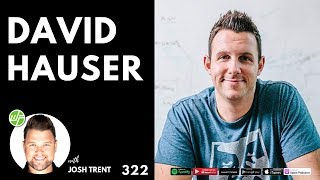
Transcript of a Wellness Force Radio interview (episode 322) with David Hauser and host Josh Trent. Hauser describes his journey from running businesses and working 100‑hour weeks to a decade-long personal optimization process (yoga, breathwork, intermittent fasting, testing) and presents an "optimization framework" (identify → test/measure → improve → routine). The conversation covers emotional intelligence, routine as freedom, marketing integrity, food system concerns, and practical, low‑cost wellness actions.
Chapters
So I think the thing that's changed the most for me is really identifying and saying, I need to find what works for me. Right. And I spent a lot of years thinking I just need to listen to what other people are doing right and how it works for them, and listening to conventional wisdom. And when I understood that what was important was how it worked for me and how I felt and how I performed, that was a paradigm shift that I just can't compare to anything else. Right. And that allowed me to then just try all of these other things and then find what worked for me. But until I stepped into that mode, understanding that the important factor was me, kind of this individual testing, nothing was possible at that point until that happened.
That's David Hauser, and this is episode 322 of Wellness Force Radio. Wellness Force Radio, where we discover the.
Physical and emotional intelligence to live life. Well, you can have the same brain states as someone who's done an hour of meditation every day for 40 years.
There's a lot of losses that we go through. So the ability to be able to cope with those losses is very important to build skill in it, because loss will happen.
You know, you have to have spiritual courage, to really grow spiritually, because if you really want to take guidance from your soul, you have to be ready to realize that many of the things that you're asking for guidance on, your ego has some kind of an addiction to or an investment in.
Hey, what's up, everybody? It's Josh Trent. You made it to Wellness force. How's your 2020 going? Are you in the flow? Are you creating right now from a flow state? Are you feeling momentum or have you hit a stitch? Have you had a chink in the armor? This podcast is gonna be perfect timing for you wherever you are, but especially if you felt how challenging it can be to actually stay committed to what you promised yourself. You know, right now, a lot of New Year's resolutions or just goal setting in general, people are facing the mirror. A lot of the mentality out there is that in order to achieve your goals, you have to white knuckle. You have to struggle. You have to strive for this and bleed for it. Sometimes that's true, but not all the time. Can you relate to this? I mean, when it comes to being unstoppable about our goals, there is another path, I promise you. Now, let me ask you this. When you think of the term unstoppable, what do you think about? You might visualize a professional athlete or some kind of physical pursuit. You know, Climbing a mountain, unstoppable. But the term unstoppable also applies to fathers, mothers, students, first responders, literally anyone who makes the decision to ultimately care so deeply about themselves that they've promised themselves they're not going to quit. And although this is really admirable to not quit, in order to withstand that kind of a promise to yourself, it takes wellness and health and performance and finance and really an optimized life. This optimized life is going to be the challenge for all of us because we know that life is going to bring us challenges. So the more optimized we are, the greater we can be to meet these demands. And this is why I'm thrilled to bring you today's episode with our guest journey, David Hauser, where we're going to explore what it takes to really get what we want. And that is freedom. How to create personal freedom from this optimized life and be unstoppable. You know, David was a wildly successful entrepreneur before becoming a speaker and an author. He was making tens of millions of dollars, but his health was suffering, hundred hour weeks, being overweight and tired and unwell. He eventually embarked on a journey of self optimization and self discovery, which really, in my opinion, was a journey of self love that led him to create what he calls the human optimization framework. Now, not only is David a father, a husband, a businessman, but he's also a devout yogi. He has one foot in practical life and another foot in spirituality. He spent over a quarter of a million dollars exploring health and wellness to find the things that actually move the needle for us human beings. I think you're gonna be really surprised by the way at what he found. It's going to help you directly in your life and you're not gonna have to spend this $250,000 plus you can just learn it from him. The solutions are very inexpensive. I promise I'll just leave it at that. I like David. I know you're gonna connect with him too. If you enjoy this podcast, please share it with a friend. Share it with somebody who's working on creating their own personal freedom, who's working on being unstoppable in their life. And when you share this podcast, even more when you leave us a review on itunes, it allows the show to grow. And we can keep bringing you this free but powerful information and intelligence so we can all heal. And that's what we're doing. We're all healing. No one's perfect. Everybody's perfectly imperfect. If this resonates with you, do us A favor. I'd really appreciate it. Can you go to itunes and leave us a five star review? I read these reviews personally and the team would so appreciate you. Our entire movement would feel your wake of truth. Just leave us a five star review on iTunes or you can go to wellnessforce.com review. This mission is nothing without you and this movement is nothing without us. Thank you, my friend, for leaving the review. So now let's drop in together and with David Hauser. David Hauser, welcome to Wellness Force.
Thanks for having me, Josh.
I've been pumped for this one. You know, Unstoppable is the book that you wrote. And I hear this phrase unstoppable, and I think a lot of people get confused about what it actually means. For some people, unstoppable is like this rigid. I got a white knuckle, I got a stress, I got to be in strife in order to lead an unstoppable life. And then on the other side of it, which I know you've found, which I'm excited to explore with you, it's not about the white knuckling and the straining. It's more about the understanding that there's a way to optimize the whole process. How do you define this? How do you define the word unstoppable? This is a perfect way for us to jump off.
Yeah, I think it's really, it's interesting. I think of it as just like individually being amazing. Right. Like, and each person has their own idea of what amazing means. Right. And that could be in work, in life, in family, or across all of those things. Right. And so when I think about Unstoppable, it just means, like, on my journey, nothing is going to stop me getting where I want to go. And I define where I want to go. Right. And that could be a day of relaxation. Right. It doesn't mean that I am, you know, go, go, go. I think that's the key. It's like really defining what I want.
There are so many people that are listening or watching that are possibly in a position right now where they're in the rat race, they're in the wheel, and they're stuck there. And I know because, man, there was a big part of my life where I was there. And you actually used to work hundred hour weeks, which blows my mind. I can't even imagine the load on your physiology with that. Two companies, you know, $30 million plus in annual revenue, an investment from Mark Cuban. You know, you've really understood how to be successful in the business world. But it took a toll on you, you know, it took a toll on your physiology and your mental health. Share with us that quick journey, just so we know what even got you here in the first place, man.
Yeah, I mean, I think I like, like a lot of entrepreneurs, I just thought like, all you had to do was work hard and long, right? And I just like doubled down on that. So I was like, okay, well, I mean, I gotta hustle and I gotta do more and more and more, right? And I would stay up until 3, 4 in the morning working because I felt like it was quiet time, quote, unquote, Right. I obviously later on discovered that was very unproductive time, as sleep is far more important. But so I just put in lots of hours and over the years it took a big toll on me. Right? So gaining weight or not being able to lose weight, eating really bad foods, not sleeping, having brain fog most of the afternoon, not being able to be productive, like all of those things start to catch up. And I decided to over a 10 year period. It took me a long time to start making those changes. And I'd say roughly in the middle of that journey is when I found a tremendous amount of frustration. And I think a lot of people can identify with this, which is I looked out and I said, what do do, right? I don't know what to do. So I just listened to what people said and in general it was eat a low fat diet and exercise and don't eat as much, right? So kind of count calories, output more energy and eat a low fat, relatively high carb diet, right? And I did that to the extreme. Like went from not running to running Boston Marathon, went from not swimming to doing triathlons and Ironmans, right? So like I said, doubled and tripled down on that. And the frustration of being at a race and being like, I've put in hundreds of hours of exercise and I'm overweight. This doesn't make sense. And just that happened again and again with diet, with supplementation, with sleep. I'm like, wait a second. What I've been told by kind of general wisdom is not working. So I got to do something different.
And that phase was how long for you going through the low fat, the high carb, the kind of confusion ocean that so many of us swim through. How long was that phase for you of discovery?
Six plus years, probably six years.
Yeah.
And just weight bouncing all over the place. Like I'd lose a little bit and then gain it all back. And just an ongoing frustration of always feeling hungry. It Was just constant.
And for the parents listening, you're also a father. So was that during the time where you were taking care of other lives as well?
No, I didn't have kids at the time, so I had a little more freedom in terms of my time, Even though I had a lot of work stress and a lot of work time and pressure. But, yeah, I had a little more freedom at home, which allowed me to say, I'm going to invest 30 hours a week doing training for an ironman.
Yeah. It's so interesting. Before we recorded, you were like, I was telling all my employees of my companies that they needed massage and they needed to watch their nutrition and hydration and all these things. But there was a gap. And I think if we really are honest with one another, that gap happens to all of us. It's what we say versus what we do. There's a disconnect, you know, And I'd love for you to share just so that we can connect with you on that as human being to human being. What was it about the gap? Like, why was that gap existing for what you were telling others to do versus what you were doing yourself?
Yeah, I think as an entrepreneur, I felt like the gap for me was like, I felt like I had to put more and more time in to be successful. And like, that was the determining factor where now that I look back on it, I realize really what the determining factor of success was. One, the team around me, and then two, my productivity and ability to get that team doing the things we should be doing. Right. And that has nothing to do with number of hours or amount of effort put in. That has to do with being able to have clear thoughts and be able to be engaged and have, you know, good conversations and listen to people. All of those things are very different than what I was doing. But, yeah, like, I spent a lot of time and years and money supporting our team members and saying, it's important you be healthy so you don't come to work sick. It's important that you do these things to recover and you take vacations. And, like, I was up there standing saying, everyone has to take a vacation. You get four weeks paid time off. You have to use it. And I wasn't taking a vacation. Right. And I think we all get stuck in this trap of, like, we know at the base level what is the right thing from a health perspective, and then we don't apply it to ourselves. Right. Like, part of it is just doing it right.
Man. One of the most powerful guests we had on and there's parts of your personality that remind me of him that I see in you. And his name is Dan Pardi. Dr. Dan Pardee. He's the founder of Human OS, Human Operating System. And he talks about the ways that most human beings. There's this phrase that applies to all of us, and it's knowing without doing is the same thing as not knowing. It's the exact same thing. And it's this gap between us, you know, really gathering information, which is this overarching theme for wellness for us. How do we gather it, how do we apply it, and then how do we embody it? How does it actually lock into our body? And when I hear you explain this to your employees, I'm thinking to myself, there must have been a moment. There must have been a come to Jesus moment, a bottom of the barrel moment or something where you're like, okay, I know all these things. I'm now going to surrender and just do them. You know, Was it a moment or was it more cumulative?
No, it was more cumulative. And then a friend of mine, I think, just kind of challenged me because he knew that, like, if he had. If he said the right thing, like, I just do it just to prove him wrong. And that was the Boston Marathon, and he knew that I didn't run, and he knew that I spent way too much time in the office. And he's like, david, I think it's impossible. I'm gonna run the Boston Marathon, but there's no way that you're gonna get ready in the next four months to do it. And I'm like, okay, like, I'm gonna do it, right? And that was the beginning of that journey, right? Like pulling me out of the office, which did a bunch of positive things, but also, it was just a challenge, right? I'm like, well, someone said, I can't do it. I'm going to really prove them. I can.
So it was almost like a ping on the ego where you're like, hold on, I can do this.
Yeah.
Yeah. So from an ego perspective, too, because we always talk about the fuel for our journey. And you talk about it in your work, where it's really about questioning conventional wisdom and discovering your truth. And I love that too, because, you know, the discovering process of physical, emotional intelligence, it changes all the time. Don't you think that I'm curious how you feel about this? Our truth quote, quote. Can change every year, even. Even over a month. You know, I'd love for you to share what you think about that. And you know how your Truth has evolved over the past five to seven years in the creation of Unstoppable and everything else.
Yeah. So I think the thing that's changed the most for me is really identifying and saying, I need to find what works for me. And I spent a lot of years thinking I just need to listen to what other people are doing right and how it works for them and listening to conventional wisdom. And when I understood that what was important was how it worked for me and how I felt and how I performed, that was a paradigm shift that I just can't compare to anything else. Right. And that allowed me to then just try all of these other things and then find what worked for me. But until I stepped into that mode, understanding that the important factor was me, kind of this individual testing, nothing was possible at that point until that happened.
Individual testing, like 23andMe. Blood tests, lab tests?
No, just individual, meaning me. Right. So like a study of one, rather than looking at what big studies are. Right. Like when I eat this diet, what do I feel? When I sleep this many hours, how do I feel? Right. Not what the study says or what I should do or what everyone else is doing. Right. Like, that paradigm shift is what allowed things to actually change.
That's a big one. Because I just have this sense that most people, they don't want to give. For some reason, there's a part in the psyche where they don't want to give themselves that space to iterate. You know, they don't want to give themselves that space to just honestly take a deep breath and be like, on Saturday from 12 to 3, I'm just going to play around with what works for me. I'm just going to explore what that is. Is that why it's scary?
I think it is for a lot of people. For me, it was scary. Right? It's much easier to say, okay, let me listen to an expert, and then just do it. Right. Like, now, the doing part isn't easy, but. And then as long as we do it, the next step, next step, right. However, I've taken out a whole piece, which is I don't have to worry, I don't have to think. I'm just like, well, he said to do this, I'm going to do it right? And I think the scary part is, like, saying, like, well, maybe that's wrong. And I got to spend the time to figure out what's right for me, and I got to maybe look at five things instead of one thing. All of those are scary propositions. When you start to go down that path. But that's where the benefit is. Right. One of our core values as a family is life begins at the edge. Right. And unless you push yourself to that uncomfortable point, there's very little discovery that happens. There's very little moving forward that happens. You just sit kind of standing still.
Do you run your family like you ran your business? It's interesting. You said core values as a family.
Yeah. So I actually wrote about this in my email list recently. It took me a year plus for us to develop this. And it was kind of an ongoing conversation where I said, I'd like to do this, these core values as a family. But as our kids are starting to get older, it's been become much more important so we can point to these things. It was a year, year and a half process. I wish that I run it more like my business. However, unlike my business, I'm not in control of everything. So it's a little bit different type of an environment. Right. It's much more. Less kind of. It's more building of consensus in the house. Right. And getting people on board than a company where I can just kind of make a decision. And we're just moving in that direction. Right. But I try, I do try.
I feel like a big part of Unstoppable and really the energy and the movement behind this book and what you're doing with your audience is you're unlocking people to. You're unlocking like a door of fear in people. Because when I look at the optimization framework that we'll talk about and I even think about the question, how do we discover our truth? These can be things that are intimidating. You know, they can be very scary. The walls can seem really tall when we take a real deep emotional inventory. And I'm curious if you'd be willing to share, you know, when you started to take your own inventory about the optimization and doing the testing and everything, was there something that you were scared to let go of? You know, was there a habit or a way of being or something that really it kind of put you to your knees where you're like, I don't know if I can let that go.
Yeah, I think there were two things that happened at the same time. One was we were in the process of selling one of the businesses. Grasshopper. So it kind of freed me up to have more time and I was very scared about that. Right. Like, what do I do with more time in being? Like, even if I wasn't working 100 hour weeks anymore, I was working much More reasonable amounts of time. But stepping away from the business, like, what am I going to do? Right? Like, that was a very scary proposition. And so kind of backfilling that with really focusing on myself was scary, right? Because it's the first time in my life that I had the time to do it and the desire to do it. And then I think the other piece, when you start to actually look at how do I change? The scary piece, which you talked about before, is if it's about me, I have to put a lot more effort in. I can't just read one book. I have to read 20 books. I can't just look at one study. I got to read 20. And that is a very scary proposition. When you say it's not about taking a pill, it's not about a quick fix. Like, I'm going to have to put some real work in. That's scary.
The pill mentality and, like, the quick fix mentality. God, man. It's in our marketing world everywhere. Like, we're in such a fascinating time, David. There's so many people that are really good at marketing now, you know, and marketing has evolved incredibly well. And I can ask you this from a spiritual and a business perspective, too, because the way that marketing has shifted, you know, the average attention span is now like six seconds or less. Less than a goldfish. The way that. That copywriting and just the way that we're even in Wellness Force, we're constantly figuring out, how do we reach people where they are so that we can bring them to the greater truth, to the greater awareness that we're all connected and that loving and caring for one another is the fuel that'll actually provide all the abundance we'll ever, ever need. But when it comes to marketing and copywriting, there is something to be said about being in integrity. And how have you been in integrity? How have you used integrity in your marketing for unstoppable?
Yeah. This is a really interesting question because I remember when we first. When I was first kind of thinking about the book and, like, I was working on the outlining process, and I had a conversation with my friend Noah Kagan, and he's like, dude, if you want to sell a lot of books, you have to have, like, that one thing, like, forget what is actually there, but, like, tell people to, like, eat only broccoli for a year or some very ridiculous statement that is easy to follow and extreme enough. I'm like, yeah, I get it. I could probably sell a lot more books now. My goal wasn't to sell A lot of books, my goal was to actually give back to other people and empower people on their journey. But it was a very clear differentiation at that point. I'm like, okay, I get that. I'm sure I could do it. But really, when I wrote the book, I'm like, the truth is, the diet is not that difficult. Eat whole foods and don't eat a lot of sugar. Relatively easy. And add in some fasting. That's a relatively easy thing. But people don't want to hear that because it's not extreme and it's not a simple rule. You dig into each of those, and there's more levels and more levels. It's not just eat broccoli every day for a year. Right.
That would be pretty compelling, though. Right. Like David hauser says, Eat 100 days of broccoli, have the best life ever.
Exactly. Right.
This is at the core of the question. Yeah, go ahead.
But I think it was a challenging question, right? Like, how do I deal with that? And you know what. What is it? To stay true to what I believe and also get the message out there. And I think there's some balance in between. And I tried to stay very true to my message, and it probably was at the detriment of the marketing of the book. Right?
Yeah. But it feels better. And you can sleep at night.
Yeah, yeah. And it's the truth. Right. Like, if you asked me, we're sitting down, having coffee, like, that's what I would have told you. I would have said, eat whole foods, don't eat sugar and process foods and carbs and fast on a regular basis in some fashion. Simple.
Yep. So much of your work, and I know I already talked about the framework. We're going to get there, you guys. I just. I got to ask you about the emotional side of this, because with the optimization framework, there are some guidelines that people can really live the best life ever. I mean, these are very simple things, but yet the way that you've articulated them are powerful, because sometimes hearing the message 52 times, it's like hearing it the 53rd time. It clicks, it, like, sinks in. But before that, there's emotional intelligence work. I'd love to hear what you even feel about emotional intelligence. You know, how would you define someone's emotional intelligence? Their ability to be a dynamic, emotional human being?
Yeah. Yeah. I think along this journey, there's a lot of points where that becomes really important. And I think the first area is just adopting an optimization mindset, which is very different for a lot of people. Right. Like, just understanding that I can optimize myself is not something we're taught or that is kind of generally accepted. Right. And I think that's kind of stepping back and saying, like, okay, like, I can do this. And that's the first step before the framework. And that's why it's pretty early in the book. But I do think emotional intelligence is very important because as we're going through all of these steps, it is very important to identify with the feelings that you have both emotionally and physically. And I think most of us, and for me for sure, I tried to ignore those as much as possible. Right. I tried to cover them up. If I had a headache, I'd take Tylenol. If something was painful, I would try to push it out and ignore it. Right. And I think most people go through life that way. And this is challenging. When you actually want to change something, you have to open yourselves up and say, okay, like, how. How do I actually feel in the moment, right now, today, and what's happening? And that's difficult.
Who's modeled emotional intelligence for you in your life?
So I think the best model was probably my mom growing up. But anything your mom does, you kind of want to ignore, right? Because like, you're like parents, you can't be right.
Sure.
She also told me sleeping was probably a good idea and I needed to get sleep. And I'm like, that can't be right. Clearly she's been right on a number of areas. And I think also my partner dawn, she has modeled that as well as we've had kids and like, how do you deal with kids and how do you show them those behaviors? Right. On a day to day basis? So she's modeled that really well in our house.
Seems like this is a story I've heard from men. I've been in men's groups for quite a while and I get the deepest learning from my partner, Kerry Michelle. And you're getting deep learning from your mom and from your wife. And what do you think this is about? The masculine psyche, where, you know, we explore this pendulum of masculine feminine energy on the show a lot. And it seems like you've gotten the majority of lessons about emotional health and emotional intelligence from women. Why do you think that is for a lot of men?
I think it's because from a societal perspective, it's accepted that that's how women are and behave, so it's easier for them to identify with those things. Just emotions in general, guys are supposed to not have emotions. If you look at it from the highest level of society. I think luckily that's starting to shift now. So even you making a statement like I've been in men's groups, those types of groups have shifted tremendously over the last few decades. I think that's super positive. Right. Like just even being in a group where you can have those discussions, that was not happening 50 years ago. Right. And you know, so I think that things are starting to get better in that way. But yeah, I think it's just they're more allowed to have that so they probably learn faster and easier.
I'm thinking of 50 years ago, it was more like men's group was a bunch of guys getting drunk. You know, that was exactly right. That was probably men's group. Right. So we've come a long way, man. And just for the men and women listening, I'm going to link a valuable resource. It's David Dieta, the Way of the Superior Man. I'll link it in the show notes if you're interested in men's work. So man, have you read the book?
Yeah, absolutely.
It's an incredible book. It's about. And even though it's written from the man's perspective, women can get so much from that book. Because at the end of the day, I'm curious how you feel about this. What drives me the most to succeed in life and in business and just in general is my love and connection to my partner and my legacy and the family that I want to create. And I'm curious how you feel about that as a driver for you.
Yeah. There's two things that I try to optimize in my life now, which is happiness and legacy. So happiness is like I try to make decisions that are going to make me the most happy. Right. And that's a personal optimization. Legacy is like how do I give back and how do I build something great for my kids? And it actually has zero to do with money. Right. So although I have money, my kids actually will get almost none of it, if anything, outside of education and health and wellness. Right. But like how do I build the structures around them to set them up for success? And like what does that mean from a long term perspective for me, like that's my legacy is how do my kids succeed on their own? For me, that's the most important.
So in what way does that legacy or leaving those two things behind when you leave, how does that drive you? You know, because you won't be here forever. We're all going to leave at some point, you know, I know it's a dark topic, but the reality is it doesn't have to be so dark if we just surrender to the fact that it's true. Right. How do you feel about that?
Yeah, for me it's about making those decisions every day instead of putting them off. I think earlier in my life I just kept putting it off and saying, like, those are things that happen later. Right. Rather than making decisions today that even if it's a tiny step in that direction, the tiniest step today is a step more than there was yesterday. Right. And so like, for me, it's just about like day to day decisions. Like, is this a decision that aligns with those two goals? And if it's not, then my answer is no, or I'm not going to do it or I'm not interested or whatever. Right. And that to me is more important than like some grand vision of what it's going to be like in 20 years. Because maybe I don't get to that. I don't know. Right. And I think that's the key. We don't know.
You spent a quarter of a million dollars or more on health exploration, biohacking, testing. This is a lot of money. Right. So. So some people are in a position where that, that may or may not ever be a possibility for them. And what you did was take a large investment in your own health and it was a quarter of a million dollars. Why did you spend that much money? And for the people listening that maybe don't have those resources right now, how can they learn from you if they don't have the quarter of a million?
Yeah. So I think the reason that I ended up in that space is I'm obsessive, Juan. So I don't do anything halfway. There's probably a lot of things I didn't have to do, but I did do. I was lucky enough that I had both the capital and the time to invest. But the most important thing really is after all that investment, the most important things actually don't cost anything. Right. So let's talk about very specifics, like sleep. Like, I've done crazy sleep testing and I have devices like the PEMF devices and all these other things. Right. However, the most important thing is going to sleep about 9, 9:30 at night, getting up naturally, not having light in the room, maybe buying a $100 pillow to, you know, like the most expensive thing is a cooling mattress. Right. And that's not required. There's great benefit. But like those are all cheap things. The same for eating the cheapest Thing possible is don't eat, which is fasting. It took me a long time to discover that. I spent a lot of other time doing lots of other things and spending lots of money. But not eating breakfast saves money. There's no cost involved. I think my goal with the book was to give that back and say, look, you actually don't have to do the blood testing. I do. Right. Like I do quarterly blood testing. That's a lot of blood and a lot of tests. I don't recommend people do that.
Yeah.
I'm obsessed with data. I find it interesting. I enjoy it. I have the luxury of spending a little bit of money on it. But it's not required and not needed. Right. So I would say don't do it at all.
Yeah. The intermittent fasting is an interesting one because depending on people's nervous system health or maybe their stress loads or there's a lot of other factors at if intermittent fasting is not for everyone. We did a full phenomenal episode with Mike Mutzl from High Intensity Health. We'll link that in the show notes as well. How did you come to find that intermittent fasting was a fit for you and did you have anxiety when you did it? Did you have jitteriness? How did that work out for you?
Yeah, so I had a lot of anxiety not doing it, but thinking about it because I struggled for the longest time just always feeling hungry. Like when I had tested different diets, I did a pure plant based vegan diet for six or eight months. Even. Even then I was just always hungry and for years. So I was very concerned with like, how could I possibly fast if I'm always hungry? Yeah. One, finding a diet that worked for me, a relatively high fat diet, allowed me to kind of make that next step and try fasting. So I think there's some anxiety before for me, I try to do I just try to skip breakfast. Right. So 16 to 18 hour days of fasting, so I eat one to two meals. It just was pretty easy. And I think for most people that is the easiest thing to do. Right. And if we look at the data, 16 hours gets us almost all the benefit. Right. There's additional benefits at 20 hours and 24 and we can talk about multiple days and why that may or may not be good. Right. But a 16 hour fast just means skipping breakfast for the vast majority of people. That's both possible and easy.
Yeah. And what did you do as far as work to your nervous system health in order to be able to sustain this intermittent fasting? Because what we've seen is that, yes, there is research that states there's incredible benefits. You know, the autophagy and the controlled hunger pains and the cortisol and all these different things. And those are all true. And there's an equal truth for many people where they come into intermittent fasting and maybe their nervous system or their intestinal health or just their body can't handle it, it's another load or a strain on them. What have you seen with people reading the book and just in your own research about that?
Yeah. So I think one of the things you touched on right there was gut health. That is extremely important because our gut controls so many things. And it is very hard to fast, even if you're eating a diet that should allow for fasting. If your gut health is messed up, if you have leaky gut and other gut problems, it makes fasting tremendously harder. So I would for sure look at it holistically. Right. Like I encourage people to work with like a functional doctor, not a functional practitioner, but a functional doctor doctor, medically certified doctor that looks at the entire picture and says, how do we work on the gut? How do we do these things? But you asked me personally, what did I do? I found yoga and I spent. I practice now six days a week in addition to lifting weights and doing other things. But that practice, both from a movement perspective, you're twisting and moving in different directions, helps with the gut and digestion, helps with the entire nervous system, the vagus nerve, all of the things that control the body. Right. You're activating during that process. You also work on breath, right?
Go for it. You were speaking my language. I was literally just going to say the vagal nerve and breath work, but please continue.
Yeah, I mean, so like just you work on breath, you work on mindfulness and like all of those things together for me has been tremendously effective.
Total sleep breakthrough in 2020. I've been using cured full spectrum hemp oil. Let me tell you what it's not. It's not for getting high. We know this. It is non psychoactive. It has no THC. It has 100% terpene rich cannabinoid rich full spectrum organically grown hemp oil. What does this actually do to the body? The reason I love this is because it down regulates the sympathetic nervous system. If you look at the research on PubMed and everywhere else, although the FDA does not allow anyone to make bold claims, this I can speak from a personal perspective. I take this organically grown Colorado hemp in the evenings I hold it under my tongue for 60 seconds. I back this up with my data from the oura ring. My deep sleep increases, my restlessness goes away and I just sleep better. And we know that whether you're having digestive issues or joint pains or sleep issues, the most important thing for your recovery is your sleep. So if you've been struggling with sleep, give Cured full spectrum organically grown hemp a test drive. You get 15% off because you're here with us in the Wellness Force mission. It is wellnessforce.com cured enter code wellness force at checkout you get 15% off your organically grown hemp. If you've been looking for a hemp product that has been tested and vetted, give Cured a test drive@wellnessforce.com cured use the code wellnessforce to get 15% off your entire order. Let's talk about the breathwork component too. And by the way, you guys, I know we're going to get to the optimization framework. I know I've been like dangling that out there. I've just been enjoying this conversation. So we will get there, so stay tuned. I have this question burning inside of me about breathwork because we've been working on a breathwork program for the Wellness Force audience and it's around how do we actually use breathwork to control the only autonomic lever we have? Think about it, man. You and I, we're being breathed by something. There's some higher intelligence that breathes us and we can pull the lever and change our own breath so that we can deal with stress. So my question for you is, with yoga, with all these things that you've done in the five year period and such a large investment in your own health, breathing is also free too. You know, breathing is free. And how have you learned about breathwork and what has breathwork done for you in your life to optimize?
Yeah. So for me, it was a very interesting journey because it came as a discovery through yoga and because of my enjoyment of going to yoga classes, I actually did a 200 hour teacher training. So I became certified and there was a lot of breath work in that. So that was part of the journey. But for me, just the realization that breath is one of the only things that the human body can control both consciously and subconsciously. Right. So I can't change my blood pressure now. Maybe there's a few people that have some weird way of doing this. Right?
If you're Wim Hof, you can.
Yeah, whatever. Right. But in general, I can't Start thinking about my blood pressure and lowering, right? But I can focus on my breath and change it instantaneously, right? And that, to me, is very powerful. And, you know, you bring up a great point about Wim. Like, I've gone to a number of his workshops and he's. He's both crazy and interesting, and it's a whole different story. But the most powerful takeaway from that is just breath can make such a huge impact to almost feeling like you're high, right? That to me says there is so much power there. How do we utilize that power? And that's the next question, right? Like, very powerful, very important. What do I do? Right? Like, that's what people want to know. And I have this conversation with people all the time. I'm like, the first step is probably just taking a deep breath and actually understanding what that means. Where your stomach expands and then your lungs expand. Because most of us walk around all day kind of hunched over a little bit. Stomach sucks, so we look thinner, right? And every breath we take is sort of short and not good. Most of the population is not even taking a deep breath a day. Like, just one, right? So, like, that's where I tell people to start. Like, close your eyes and take one deep breath.
Let's do it right now. Let's do it right now. You mind? Everybody, let's take a deep breath together. And then Dave is going to drop more wisdom on us. So just big inhale through your nose, big exhale through your mouth. I mean, just taking one breath, man, it just shifts us so much. Imagine if we take six of them.
And it just slows everything down and you refocus, right?
It's beautiful.
But what's really interesting for me is, like, doing that is very difficult because in yoga, I've spent, spent now multiple years breathing only in and out of my nose with a new jai breath. Right? Now, of course I know how to breathe, and I've done all sorts of other techniques, but that's become more natural for me. So if I naturally take a breath while meditating, it's all in and out through the nose in a very specific way.
And why do you focus on that? Because from what I know, when we're inhaling through the nose, it's sympathetic activation. When we're exhaling through the mouth, it's parasympathetic activity. But there is something to be said about doing only nostril breathing. That has a lot of health benefits. The nitric oxide increase and things like that. Did you do it because you Learned it in yoga or did you learn something else about the nasal breathing?
I think there's a lot of things. For me, it's a type of yoga I practice, which is a vinyasa flow, focuses on that type of breathing, and it's a very intentional breathing that brings focus back to it. So when you're breathing in and out through the nose with a little bit of sound, that sounds as it's kind of the back of the throat still breathing out through the nose, that creates a heat within the body. Right. And that's very effective for yoga. So it's just become very natural for me to breathe like that when I kind of focus on my breath.
I love this. And if you guys are curious about breathwork, we give you a free breathwork guide. It's wellnessforce.comm21. It's part of our guide. So download that, David. Now, let's talk about the framework, because I've mentioned it three times. This is the optimization, man.
You've built it up so much.
I know you got to deliver now. No, but. But I do believe in this, because the principles that you're about to share, yes, you may have heard them before, but this might be the right time, you know, this might be the right time for you to actually apply these things. So tell us about the optimization framework.
Yeah, so this is a framework that I really stole from other places and kind of continuous improvement or a B testing frameworks like that we experience in our businesses as entrepreneurs. And it's quite simple at the base. However, there's lots of complexities as you start to dig in. And the framework is simple. It's identify the issues that are important to us. The first step is identify. That could be brainstorming, that could be listening to our bodies. That could be past experiments. That could be issues or symptoms we're experiencing, things we want to change or have changed. All of that starts to fit into this category. What do I want to do? Where do I start? The next step is, okay, now that I've identified that, how do I do something about it? How do I track it, measure it, test it, analyze it? Right? Like that's the next step. And part of that is formulating a hypothesis, right? And when we use the word hypothesis, sometimes it scares people, Right?
Pretty scientific. Yeah.
Yeah, Right. But it's quite simple. Like do A, expect B, right? Like that's it. Very simple. If I sleep at 9pm, do I feel better in the morning when I wake up? That's a question, right? And I can do Things to test that and then measure it. The last step being improve. And this to me is the one that's the most kind of at home for me, which is once I found the things that start working, how do I build that into a routine and systemize and document those learnings? So I do it again and again. And routine for me is the biggest thing that has set me free. I do the same thing every morning. I get up at the same time. I, without an alarm clock, I go to the gym, I practice yoga, I start my day at the same time. My calendar set out all of those things. So building it into a routine and then the last step of bringing it all back together is like, how do I evolve and how do I move faster than biological evolution? Right. Like, how can I be better than what would take generations to happen? Right. And that could be something very small, like doing B12 supplementation, right. Like, that has tremendous benefits. If I've identified it in the first stage as something I want to do, I figured out what I'm going to do about it. I'm going to take B12 supplements, I'm going to see how I feel, and I'm going to do blood testing to see if it actually has been optimized. And if that has worked, I then go back to the final step, again improve, which is I put it into my routine. I take the same supplement every day again and again, right? So it's quite simple. But. But it works. And that's what I built everything on.
And I love that you said it's quite simple because again, like, full transparency here, you're not reinventing the wheel, but you are articulating about the wheel so that it looks like it spins really smooth. Because when you mentioned this, you said something really powerful. You said, my routine is what gives me freedom. Let that land for a moment. Because so many people, like, they don't use the calendar to schedule things. They'll sleep in and get up and do things at odd parts of time. And then these are the people that I find have the most anger or the most resentment or the most uncomfortableness in their life because the results they're getting aren't wanted. But yet, if you look at someone's routine, if you really understand, like, how they're designing their routine and routines can be changed, that is, in my opinion, the source of most frustration and most anger in life is people that haven't figured out that one piece yet that you mentioned, how the routine can actually be the ultimate freedom. It's such a Paradox, though, because I think for so many personality types, they're like, well, if I have to use the calendar and if I have to have a routine, then I'm not free. But it's the other way around, man. Can you expound on that?
Yeah. I had this argument, my friend, like, two days ago. He's like, dude, I don't know how you can get up and go to the gym the same time every day. What's wrong with you? Your life must be so boring. I'm like, no, my life is the opposite of that. I've taken away all the complexity of decisions for the things that you. That are not important from a decision standpoint. I wear the same black, not the exact same shirt, obviously. Lots of the same shirts that are black. I wear the same 20 pairs of jeans that are all exactly the same. You take away that decision to free me up the rest of the day. So my life is actually the opposite of boring. I think that's the same with routine. It sounds very rigid. However, it allows the rest of the day to be totally unrigid. And I can schedule in listening to an audiobook for two hours. Right. And that's tremendously freeing. And it's a learning experience, and it's fun and enjoyable. Even though it was quote, unquote, scheduled. Right. I just put it on my calendar. That's all.
I love this because you're speaking my language, man. I have had so much flack from friends that they'll be like, why'd you schedule our dinner in your calendar? And I'll send them a calendar invite. And I say, because I care about you and I don't want to forget it. You know, I don't.
I don't. I have dinner with my partner scheduled tonight. Right.
Cool.
And it's on the calendar.
Date night to my girlfriend is in our calendar. So take this home. You guys like. Like what David was talking about routine and freedom, like they're peanut butter and jelly. Like they're linked so closely together. Because I gotta say, and I'm curious how you feel if there's not a routine, if there's not something set in stone, the odds of things executing, the odds of things actually happening are less if there's no routine, if there's no schedule, if there's no really just personal accountability to the promises that we make to ourselves. Yeah.
I think what's really interesting, too, from a success standpoint, like, if you look at the most successful people in the world, they all identify routine as critical. Now, it doesn't mean the same routine, Right. Some people say I gotta wake up at 4 in the morning. Some people say I sleep until 10 in the morning. Like it's not the same routine. However, they all have a routine and they follow it rigidly.
Yeah. And this, I think it's that word rigidity that scares people. But rigidity can create more space. So if we're rigid about the things that we know we want to do, but that can be challenging, then it can create more space for freedom and flexibility. Like, like you said, there's a two hour audiobook on your calendar where you can just enjoy your audiobook. But that might not have gotten done if you didn't put it down there. And the reason I'm coming back around on this is because this stuff a big powerful speaking point that you're bringing to us, man. If we don't lock it in, if we don't actually commit and then have an external framework for accountability, the odds of it happening are a lot less. I'm curious if you can share anything else about accountability, like other ways that you keep yourself accountable to promise. That's really what this is. You know, we make a promise. How do we follow through and keep ourselves accountable to our own promises?
Yeah, I think one is calendar, right? So like you can utilize that in a lot of different ways. Scheduling things in and out, also scheduling free time, scheduling thinking time. That's another powerful use of the calendar for me. Email is also very powerful because it requires me to follow up because I set my own rules, I should follow up same day at the best case, next day, the worst case. That sounds scary, but my inbox is at zero every night. I feel very good about it and I get a tremendous amount done because I've set my own rules for it and I follow them again and again and again. Right. And I create habit around it. So I think those tools are super important to be able to create personal accountability where I don't have a boss standing over me saying this is due tomorrow or something. Right.
Email can be like the bane of people's existence. It can be like the biggest stressor in life. How do you manage email? Like how do you actually do that so that it's not only you?
I love email. I love it.
Oh, you love email?
I love email.
Okay.
I think it is one of the best things in life. So like I prefer to push conversations to email first before a phone call as much as possible. Now there's times where a phone call makes much more sense or there's A discussion that doesn't make sense over email and I'll push that the opposite direction. However, like if someone reaches out cold to me and says let's schedule call for a phone call, I'm like, no, my answer is absolutely not. Let's have at least two email exchanges and go back and forth about this. Because I can do it during meetings, between meetings, at night, I can do it at any time. Which means I can accomplish far more during the day, Right. Also in running businesses and having multiple people around me that can accomplish far more than I can. Email is a very powerful tool because I can push work out off my desk to other people and then they can push it back to me when it's done. That's not as effective on the phone. Now there's key times that the phone is most important, but email is primary. I hate instant messenger and Slack and things like that. I think it is the most distracting, worst possible communication method unless it's replacing text message. Which text message has their use for, right? Like if I need something instantly, that's what a text message is. If I replace text message with slack, that's fine. If I try to. What a lot of organizations do today is replace email with Slack. That is the dumbest idea I've ever heard. And I will have tremendous fights with people over this because they're like, slack is the best thing. And there's, you know, I can't believe I'm like, yeah, it's good for a limited use case. But replacing a well known established technology mechanism of email which is asynchronous with something that is not asynchronous makes no sense.
And is it because we're pulled away from the tasks at hand and we.
Always break concentration and then in larger organizations, slack then becomes this stressor where like I feel like I have to catch up and I got to read all the previous conversations because I might have missed something important. Right? Like all of these horrible behaviors that just get worse and worse as the organization gets bigger. Like I've seen Slack in 100 and 200 and 300 person employee companies that has tons of channels and it is like the most stressful thing because in the morning you're like, oh my God, there's 22 channels that I need now go to read back on all this stuff and 99% of it was not meant for me.
Yeah, yeah, it's because we're being harvested. And I don't mean to paint a dark picture here, but it is dark at times because a lot of these technology companies, specifically social media, Instagram, Facebook, you know, we had Nir Eyal on the show and he used to advise these companies on how to make products as addictive as humanly possible. And the thing that blows my mind is that we can just choose to not engage. You know, just because someone says, just because a company says or even a workplace says, this is the way we're going to do it. The whole point of us living and discovering intelligence is to speak our truth. I'd love to talk about this as we wrap the show because speaking the truth above all else that you talk about in your book can sometimes be the most challenging thing. How have you learned to speak your truth? And how have you showed others certain ways where they can just step into their truth whenever they want?
Yeah, this is a challenging one, right? So, like, the social media topic I think is really interesting. I deleted it from my phone, right? And that's a very weird thing to do in this age, right? And what really happened when I did that was I got free time back, right? Instead of scrolling through Facebook every minute that's free on my phone, I just got a free moment back. Like just one moment, right? And out of all of those moments, that adds up to creative thinking and my brain actually thinking through important problems and questions, right? But if I tell someone and they're like, what do you mean? Why would you do that? That makes no sense. Facebook's the most popular thing. Or why don't you have TikTok or, I don't know, whatever else my kids I'm sure have, right? Snapchat, whatever, Right. And yeah, so I think that that's difficult, but I run into this problem quite often, which is it is sometimes difficult to speak my truth about, like, my diet or like how I want to live my life when it conflicts with others. So there's this balance of I want. If someone asks me about that, I'll tell them how I feel in a very personal way, what it means to me, not what it means to them. Because I think as soon as you start telling someone what it means to them, they turn off. I can have a conversation with someone who's 100% plant based, and as soon as I say I eat a high fat diet, they start turning off. So I reframe it about me. The way I eat is this way, and I respect the way everyone else eats. But it has worked for me the best. And that's been a challenge to learn over the last kind of four years.
Why was it so challenging?
Because it's hard. It's not how we typically communicate. Right. Like, we typically communicate expecting to deliver a message compared to just communicating about something that's important to me and how I feel about it and my feelings about it and my experience with it is something you can't dispute. Right. And our typical method of communication is like to deliver a message of something I want you to do or not do or get on board with me. And that's a shift. That's hard.
Yeah. Thank you for being so honest about that. Because we're talking about speaking our truth and if we make it about us and just being authentic about us and not make it about the other person, that seems powerful. And there's a lot of information out there on leading a great life, optimizing your life. One of the things I love most about your work is you just cut to the truth real quick, you know, And I think. I don't know if that's because of your business background or because you're a busy father or what, but there is something.
I grew up in New York, so it's just like this, like, directness. Let's get to the truth so many times.
Well, just a few questions, man, before we say goodbye. The first one is, in this world of health and wellness, and actually, let's just forget about health and wellness, just in the world in general, what breaks your heart the most about our current society right now? And the second question is, what do you think your work is doing to help bring more love and more presence to the solution?
Yeah. So the thing that really gets me upset the most is our food supply and food system. That is, there's so many deeper levels to that, but it has been destroyed over the last 50 plus years to a point where it's near impossible to walk through a supermarket and buy almost anything healthy. All of the middle aisles are just total garbage, Right. And those are the cheapest items in the store, which means the people that have the least. Have the least number of options, Right. And they have cheap products filled with garbage. And that's our fault as a group. Right. And I think that is tremendously sad. When we look at the impact of that, it's even sadder, right? Like, more than 50% of Americans are obese or overweight. More than 50% are diabetic or pre diabetic. And pre diabetic is just bullshit. That's literally you are diabetic. You just haven't gotten one glucose number higher. Right. And it's just really sad that there's no reason that we should be here. And so for me, how do I contribute to fixing that? I thought about this a lot, actually, and we actually looked at building a technology solution to help people with these things. And what we ultimately decided was the way to actually change behavior is one, identify it as a problem and give people the knowledge to say, okay, this is a problem and I should do something about it. And that's hopefully part of what the book does. And then two, give people the products that they can buy that are healthy, yet still convenient. Right, because it's not convenient to carry around avocados in your bag when you're traveling, but it might be convenient to carry around another product. And we can make products that are good. Right. And there's companies like Primal Kitchen and others, you know, that have done a great job of this. So I started a company and worked with some guys working on. On this in this space, like, providing great products that I think fit that need.
Awesome. And the reason I ask you this is because at the bottom of it all, why would we even want to live a life well unless we were doing it to leave some kind of contribution to the men and women that are coming after us? I mean, you and I, David, we're a page in a book, man. There's hundreds of thousands of generations behind us, and if we take care of the world and honor her, then there'll be hundreds of thousands of generations ahead of. So this question about living life, well, it's really wellness. How does David Hauser define wellness? What does living a life well and being well, mean to you?
Yeah. So for me, it's really optimizing for the longest healthy life possible, not the longest life. And I get into a lot of disputes about this because, like, I have people in the biohacking space and others that I'm close friends with, and they're like, I want to live till I'm 150 or 200. I'm know, like, you really. Like, is that really what you want? Like, that doesn't make a lot of sense. Like, I want to live a great life where I can get up out of a chair without assistance, that I can move around and have fun with my kids and grandkids, that I can breathe naturally and, you know, without assistance. Like, those are the things that I care about. And any step towards that is important to me. If that means that it's I'm 60, if I'm 110, it doesn't really matter the number. I want as many possible years of health That I can enjoy.
The enjoyment of all is a big part. Thank you for coming on the show, man. UnstoppableBook.com, davidHauser.com, but where can people talk to you? You know, where will you actually talk to them? It sounds like Instagram and Facebook are not on the phone. Where can they connect?
My email address is on there. My email list is also on unstoppablebookand davidhauser.com I send out a weekly email of kind of the three things I'm thinking about or doing, watching. And I really try to engage with people there. I get a lot of responses, both positive and negative, like, I hated this article, I love this, or you're wrong about that. And I reply to every single person and try to engage in an email conversation because that is efficient for both of us.
Awesome, man. Well, thank you for what you do in the world. And there's many mirrors out there like David Hauser, but your mirror is unique because you speak from a lens of actually doing the work you know, we talked about in the beginning, man. You've gathered, you've applied, and now there are certain things that you embody. So if you guys resonate with David's message, make sure you go to unstoppablebook.com David, thank you for coming on the show, man.
Thanks for having me.
Hey, thanks for listening to the show, my friend. Everything you learned on this podcast starts with your morning practices. So from over 300 world class guests, we pulled together six simple yet powerful morning practices down into a 21 minute system guaranteed to increase your vibration and the way that you feel every day. Get this free powerful guide over@wellnessforce.com M21 and if you love this show, share it with somebody. Share it with somebody that you love or that you care about. You can support the show easily by leaving us a five star review on iTunes. Just go to wellnessforce.com review or if you're on your phone, just tap it. Hit the link in purple that says review this podcast. And the journey does not stop here. We're continuing this discovering process in our private Facebook group over@wellnessforce.com group. You can be a part of it. You already are. All you have to do is join us@wellnessforce.com group and I will welcome you at the door. Now go out into your life and live your life well. And until I see you again real soon, I'm wishing you love and wellness.
More from Josh






Your child's future start before pregnancy... and even before conception! #podcast

MD Reveals: Your Healing Creates Your Child's Reality (The Souls Coming In Need Strong Bodies)



