323 Charles Eisenstein | Sacred Economics: The Gift We All Have Right Now
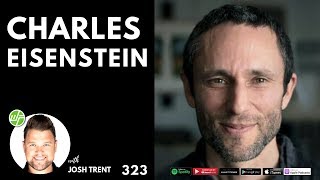
Podcast episode (Wellness Force Radio #323) featuring Charles Eisenstein in conversation with host Josh Trent. They explore ‘sacred economics’ centered on the gift economy, critique modern money (interest-bearing debt) and the ‘‘story of separation,’’ and propose psychological and systemic shifts (abundance mindset, gift-based practices, negative interest/UBI as policy levers). The interview blends theory, personal anecdotes, practical suggestions for individuals, and spiritual perspectives on wellness and interconnectedness.
Chapters
Anyone listening to this, however stuck you feel, I'm not saying you have to do something. Okay, so you have lots of opportunities. So why aren't you doing anything about it? Why aren't you being a carrier of love and forgiveness and generosity and good humor and cheerfulness? Why aren't you? What's wrong with you? That's not the message. The message is simply recognize the part of you that knows that is why you are here. Just recognize that part. Give that part attention. That attention is food for that aspect of yourself.
That's Charles Eisenstein. And this is episode 323 of Wellness Force Radio. Wellness Force Radio, where we discover the.
Physical and emotional intelligence to live life well. You can have the same brain states as someone who's done an hour of.
Meditation every day for 40 years. There's a lot of losses that we go through. So the ability to be able to cope with those losses is very important to build skill in it, because loss will happen. You know, you have to have spiritual.
Courage to really grow spiritually. Because if you really want to take guidance from your soul, you have to be ready to realize that many of the things that you're asking for guidance on your ego has some kind of an addiction to or an investment in.
Total sleep. Breakthrough in 2020. I've been using Cured full spectrum hemp oil. Let me tell you what it's not. It's not for getting high. We know this. It is non psychoactive. It has no THC. It has 100% terpene rich cannabinoid rich full spectrum organically grown hemp oil. What does this actually do to the body? The reason I love this is because it down regulates the sympathetic nervous system. If you look at the research on PubMed and everywhere else, although the FDA does not allow anyone to make bold claims, this I can speak from a personal perspective. I take this organically grown Colorado hemp and in the evenings I hold it under my tongue for 60 seconds. I back this up with my data from the Oura ring. My deep sleep increases, my restlessness goes away and I just sleep better. And we know that whether you're having digestive issues or joint pains or sleep issues, the most important thing for your recovery is your sleep. So if you've been struggling with sleep, give cured full spectrum organically grown hemp a test drive. You get 15% off because you're here with us in the Wellness Force mission. It is wellnessforce.com cured enter code wellnessforce at checkout. You get 15% off your organically Grown hemp. If you've been looking for a hemp product that has been tested and vetted, give Cured a Test drive@wellnessforce.com cured. Use the code Wellnessforce to get 15% off your entire order. What's up, my friend? It's Josh Trent. Welcome to Wellness Force. Or should I say, welcome back to the show. If you're a return listener or if you're brand new, welcome. This episode is a 500 pound block of gold. Literally, you're going to feel the weight of this conversation. Today, we're talking about money. We're talking about money because it's time. It's time to go deep into sacred economics, a new way of transacting with one another. Our guest, Charles Eisenstein is going to be polarizing to so many people that hear this podcast for so many reasons. The first being money is the undercurrent of a lot of why people do what they do. And it's also a big part of the time that we spend in our 3D world is gathering and gathering and gathering. But let's face it, cash flow is oxygen. Without cash flow is. It gets hard to breathe. But what if there was another way? What if we could leverage a social sharing economy? Or instead of giving all our money to large corporations and middlemen and brokers and all the people that kind of parasitically down the food chain, get a piece of your dollar bill? What if we could flip that on its head and totally change the system by changing it at its core? We're exploring this today in detail with the author of Sacred Economics, Charles Eisenstein. He's a public speaker, a gift economy advocate, and the author of several books including the Ascent of Humanity, the More Beautiful World Our Hearts Know Is Possible, Sacred Economics and A New Story. So we're all in this massive phase of consciousness expanding. This has nothing to do with religion or any part of esoteric thinking. This is real. This is happening right now for all of us. Everyone that you know, and you included is waking up. We know there's more abundance now than ever. We know that there's enough food to feed the world. We know there's enough space for all of us. Yet the gap, the divide, the between abject poverty and ostentatiousness, the kind of wealth hoarding that harms humans and harms our planet. It just can't continue anymore without fundamental systems breaking down. And this is what we're talking about today in this podcast with Charles. This is a true master of gathering, applying and embodying intelligence. And I also want you to listen to this episode twice. If what Charles says bothers you, that means there's really good gems in there. Charles is gonna give us some really polarizing viewpoints when it comes to finances and the social sharing economy, the sacred economic model. We'll talk about that in just one second because in this podcast we'll explore the story of separation. How there are many possible futures that coexist in a quantum superposition of states. There is not just one objective reality. We also talk about nature, why nature holds all the keys, how money is just a unit of energy exchange. And the one thing that I could remember ever since I was a little kid is that year over year growth without death does not exist in nature anywhere else. It just doesn't exist. So let's talk about this. Let's talk about the new social sharing economy. It's something that I believe in wholeheartedly. The Internet and social media have completely shifted the way of doing business forever and the economy of our parents generation has been changed forever. One of the things we believe with wellnessforce is that money and financial health are abundant right now. For any woman or man who's willing to rise with the changes of this new social sharing economy, we believe that the power of our word to word referrals and peer to peer sharing and is the future. It's here right now. Think about it. Whenever you like something you just tell your friend. You don't automatically go online and look at it. You talk to your friends first, then you might go online. We're actually removing the payment of advertising agencies and all these middlemen like mad men. Remember back in the day Don Draper? That was not good business. What is good business is the new social sharing economy. If you want to make big changes on this planet while helping more people faster, we need your help. Wellness Force is going to support you in leveraging your additional income stream and increasing your prosperity while decreasing your carbon footprint. We're driven by this mission because of the mental health crisis caused in part by this broken financial system. We partner with a company called Purium. They are an organic non GMO superfood company committed to sustainable agriculture and delivering the purest form of high density whole food plant based nutrition right to your door. If you're interested in radically transforming your own personal health through organic superfoods and earning additional revenue in this social sharing economy, join us. Join the Wellness force community in 2020. Help defeat this mental health crisis and be part of humanity coming together to heal. Just go to wellnessforce.com team. That's wellnessforce.com team. Join us. Join the movement. Become part of this team to help end the mental health crisis. Now let's explore this gift that we all have right now. The most powerful gift we have is who we are and the time that we spend. So let's drop in to learn about sacred economics and the gift we have right now with Charles Eisenstein. Charles, welcome to Wellness Force.
Thanks, Josh. Happy to be here.
You know, this conversation came to me from multiple friends and I'm just going to go right off the bat and share here. I spent some time in nature this morning and I was preparing for this time we're going to spend together. This, this ultimate sharing, this exploration of sacred economics and everything else that you do and be. And I just got this big download. Nature holds all the keys. Nature holds all the keys. And nature does not actually follow the laws of capitalism. Capitalism focuses on year over year growth without extinction. But that does not exist in nature, my friend. Have you explored this in your current realm of everything that you're up to? How do you see the law of nature and sacred economics and capitalism? Can you unpack that a little bit for us? Because people know your work, but let's go deep.
All right. How long a lecturer should I administer to you and your audience? Yeah, really, the foundation of sacred economics is the concept of gift. So applying it to nature, we can understand an ecosystem not as this headlong struggle for survival, but as a circle of gift or a matrix of gift where every species not only acquires the resources it needs to survive and to reproduce, but it also gives something precious to the entire ecosystem. It could be bacteria in the soil that are being fed by the mycelial networks that give them sugars and then they are fixing nitrogen, for example. The nitrogen fixing doesn't directly benefit them. It only benefits them because it benefits the entirety of life in that place of which they are a part. So this idea that basically it comes down to we are here to render a gift to the world. So I ask, in sacred Economics, I asked, what would an economic system be like that embodied that principle rather than embodying the distorted understanding of nature as a headlong struggle for survival, as a giant competition, not that there isn't competition in nature, but it is more of an instrument of wholeness rather than the essence of life. So, and it was natural. You know, when people came up with, when Darwin and the other originators of evolutionary theory came up with these ideas, they were embedded in a society that was pretty much A headlong struggle for survival. It was the days of raw capitalism.
Yeah.
So naturally they saw the world that way. But now we are transitioning in our basic story of not only of life, but of the human being and returning to what the heart has always known, which is, I'm not just here to survive life. I'm here to do something beautiful. I'm here to do something meaningful. And I was just having a conversation with one of my sons about it. He's really talented, programming and all kinds of stuff. I mean, he could make lots of money. But even dipping his toe into that, he hit a brick wall of, why am I doing this? Am I just going to live the life I'm paid to live? And so to take it back to economics and let me know if I'm going on too long.
I love this.
Okay, so basically, the system that we live in bribes us and coerces us into doing things that are not really in service of life on Earth. So there's a disconnect and therefore a need not only to transform our own attitudes about money and career and life, but also to transform the system. And the change in the system goes along with the change in our psychology. Now, I can't wave a magic wand and change the system overnight, but I, and everybody can alter the foundation of the system, which is the psychology. It's the stories that we hold about the world, who we are, why we're here. And this is the level of change. Whether you're talking about money or nutrition, health, medicine, education. This is climate, you know, any issue, war, peace. We're realizing that the revolution has to go all the way to the bottom, all the way to who we think we are, why we think we're here, how the world works, these basic myths.
You have a polarizing view for, I think, the majority of people in America, maybe even in the world, because there are systems. And I love how you mentioned the story. You know, we're writing out this story with unlimited fractals of being, with possibly unlimited times, with unlimited scenes of outcomes. And the way that you describe it in this current reality is really going down to the bottom of why we're here. Why, what is love? What is humanity? And then how do we build a new system on top of that? And, you know, you. You've interviewed with one of my friends and someone I deeply respect, Daniel Schmachtenberger, we had him on the show. And both of you remind me in a way, and I think you're an offshoot of the consciousness of buckminster Fuller, where he had that biotensegrity model where everything may not have been completely in service to everything else, but even when it's living and dying, it is, in a way. In other words, you talked about nature, I talked about nature and this law of nature where things have a beginning, a middle, and an end. And when they have an end, they come back around to this reciprocity of something else giving birth. But yet, when we look at capitalism, and I'm not anti. I'm not anti capitalism. I'm just anti anything that hurts human beings. And I think that's the crux of the kind of existential tension that we're all feeling on planet Earth right now, massively, is every day we're sensing from our brothers and sisters that there's just this underlying tension around money. There's this underlying stretching and pulling of our psyche in our hearts. And this is really the jumping off point for not only you in sacred economics, in this movement, but really who I think you are and what you stand for in this world. How do we address this existential tension, this tension around finance and money, and how do we do it where it's truly of service to humanity?
Well, the first thing is to recognize it as you are doing and to recognize that the tension is built into. You called it capitalism. And I would say built into. You could say built into capitalism or built into the way that money is defined and created in the current situation. Because what capitalism is depends on what capital is. So what's capital? Capital is a set of agreements, mostly unconscious agreements among human beings that to use something as money. I mean, money is one form of capital, and the other form is property, which is also an agreement. Your property, the things that you call yours are not physically attached to your body. It is a social agreement that says, this house is yours, this land is yours, this car is yours. And this agreement is mediated by symbols, pieces of paper, documents, money too, the bank account. I mean, it's nothing but numbers. It's data that, because of a web of agreements, has certain meaning, and it allows you certain privileges and powers because of these agreements. So the question for me is, what exactly are these agreements? What are the larger stories and myths that these agreements fit into? When I examined that question, I identified the deep agreements as a story that's part of the story of separation, which is the foundational story of modern civilization. The story of a separate self in a world of other. In that story, then, because this other is just a bunch of stuff, an objective universe outside of self, human Progress comes through conquering, dominating, controlling and harnessing that which is other. Using the world as our building blocks and stamping our intelligence onto a world that has none. And so our well being, if we can insulate ourselves from the forces of nature and dominate those germs and those weeds and those wild beasts and cultivate the land and tame the wild, we will be better and better off. That's the basic myth. Money fits into that myth as money is today, because it necessitates and drives the endless expansion of the realm of money and property. In other words, the expansion of the owned, the expansion of the human realm and the diminishment of the wild that's built into the structure of money as it is created as interest bearing debt. It's a bit of a long story to really trace that out, but I just wanted to say as far as this tension, this isn't just your imagination. It's not just that you are programmed for scarcity or something like that by society. It's also built into money itself. Which isn't to say that we can't step into a different attitude about it. The different attitude, the attitude of abundance. It's not something that you can just implement by repeating mantras and affirmations.
It's not a light switch we flip.
Yeah. It comes from an understanding of ourselves as born here, as gift bearers. And to recognize that part of yourself that will not settle for anything less, that could not be bribed even by a seven figure income or an eight figure income into accepting a life where you are not contributing to life and its evolution and its healing. No amount is enough.
So, so, so much to unpack there. The first thing is, you know, we're human. We have a meat suit, as Corey Allen says, and we're a spirit inside of it.
That idea is problem number one.
Tell me about this.
Okay. The idea that the sacred essence of a human being is non material or the sacred essence of the world is non material and that the material world and the fleshly world is just the envelope for the spiritual that is part of the mindset that treats the material world as something not sacred as, as something for us to strip mine and destroy. So I think that where we have to go is to understand the body as sacred too. And that to understand that it's not that the body contains the soul or that it's a flesh envelope, it's that this is what a soul looks like right now. This is what a soul is right now. And every spiritual dimension of our being actually is Written into the flesh, which is why somebody you know, a talented person, can analyze your blood and tell you all about your personality. Or I once came across a dentist who could, by talking to you on the phone, know exactly which teeth had cavities because of this map that he had developed of the personality. And the teeth, like every part of you, is a mirror of everything else. Yeah. And all the things that we have exported onto the spiritual world actually inherit in the flesh as well. And so this is about the revolution that I'm talking about, is about integrating those divisions, one of them between matter and spirit. And to say, wow, it's not that, oh, spirit doesn't exist. It's that matter is so much more than we ever knew, and it has all the qualities of spirit. And then maybe when you die, the soul takes another form. That pattern of information and energy metamorphosizes and takes another form. And I'm sorry to, like, have interrupted you there, but I wanted to.
No, it's beautiful. I love it. Because they'll never be another Charles Eisenstein. They'll never be another Josh Trent. So we're this individuated consciousness that just happens to be in this. In this meat suit, in this. In this form. So everything's sacred. This pen, my piece of paper, you and I, the imagination that created this microphone and computer, all of it is sacred. It's in a bowl of sacredness. The entire thing is sacred. Just like economics, I think there is a way that we can move forward as humanity. And I'll tell you what, man, I believe in humanity. There was a time, there was. I had a dark night of the soul in my life before I launched this show. And I thought, man, what are we doing? Are we all going to die? Are we going to blow up Mother Earth? Like, what the hell is going on? I think so many of us feel that way sometimes because we've been in. Enslaved, mentally, to a paradigm that started thousands of years ago where certain people held certain resources, those resources were controlled. And we don't have time to unpack all of economic evolution. However, there is a continued thread that still exists today with all the abundance and all the technology and all the communication that we have. And in my opinion, I'm curious how you feel about this. That thread is, this is the way it is. This is the way it's always been, and this is the way it always will be. It is a mental loop. It is a mental loop of compression and a depression of human expression. And I think that's what we're all looking at right now and waking up to the truth that it's not real. It's not real. It's just something that's been fed to us almost like geese are fed fuel in a farm.
Yeah, yeah, you say it's not real. Or you could say that it is a reality that is disintegrating. Or you could say that it's a story that has been told for a long time and we no longer believe the story. And as that disintegration proceeds, we encounter data points that violate the rules of that game, that violate the rules of the story and that demonstrate that your secret suspicion was correct. That it doesn't have to be this way, that it, like it's always been this way. Well, it hasn't always been this way and it doesn't have to always be this way. Yeah, this is a certain phase of human development, maybe a very dark phase, but that also brought tremendous gifts that are now wanting to be turned toward their real purpose, which is not more killing, more war, more ecocide. What is the true purpose? That's like the first question to even ask. And to even ask that question, you have to believe that there is a purpose that we are. That life has a purpose which in reductionistic science did not exist. Purpose was. There wasn't a purpose. It was just a concatenation of coincidences and accidents, random fluctuations. And any purpose is, you know, in that story is something that we project onto reality which puts us at the center of the universe as the meaning makers. But I think it's. I don't know, I'm going. I can go in many directions here, but I think that it's kind of more the opposite that. That it isn't that we create the stories and the meanings, it's that they create us and that they. So the whole story of humanity from connected, interdependent hunter gatherer times where we were unified with nature, participants in nature going on this journey of separation into all the horrors of civilization and industrialization, and then having gone through that, coming out the other side, like maybe that entire trajectory is itself an inevitable process. And that the story that is part of that trajectory, the story of. I call it the story of separation, is a being also that narrated humans told us who we were and how to be human and is now letting go. And so we have so many people, you know, in our consciousness, we no longer resonate with that. We no longer resonate with the, you know, individual carving out his domain and dominating the rest and conquering nature. You Know, we want to be healers, we want to be in love with the world, we want to help others. This has always been true underneath. But now the. Well, the institutions are still there, like the money institution that holds us still in separation. But I think that our consciousness has really moved on.
What do you think is going to be the new form of money? What are we going to do when money collapses?
Actually, all that has to happen in the near term is for interest rates to go below zero. That would change everything. Second piece is some kind of universal basic income. That is more pieces, but those are the two main ones.
The concept of interspace going below zero, can you expound upon that? I think our listeners would love to know what that really means.
That's like the core. That's like chapter, I think chapter 12. That's absolutely key. In the current system, if you have a lot of money, you can become wealthier and wealthier by holding onto it, by investing it at interest. So unless the economy is growing at a comparable rate, those who have money will have more and more of the money. If money, say we're like bread. Suppose I had 1,000 loaves of bread. I cannot hold onto them and stay wealthy. I have to, because they're going to go stale. The bread goes bad, just like everything else in the universe decays.
Sure.
So what if money were like that? Then I wouldn't. So suppose that money in the bank was at negative 5% interest. If I hold onto it, I'm going to get poorer and poorer. So it's to my advantage to lend it to you at zero interest or even less. So no longer do we have a system where the wealthy get wealthier and wealthier. No longer do we have a system where money right now is worth more than the same amount of money in the future. What would you rather have? A million dollars right now or $20,000 a year for 50 years? You'd want to have the million right now?
I think so. It would give me more power in this current reality.
And you could invest it at more than 2% interest and get more than 20,000 a year. So what would you rather do? Suppose you own a forest. Would you rather cut it down now and make a million dollars or log it sustainably for $20,000 a year? Well, look how we're treating the planet. We're liquidating the whole thing for maximum short term profit. That choice is dictated by the interest based money system.
With the interest based money system being so prevalent, I think I've experienced just personal frustration. That's driven many of my past decisions. And I look back on that self and I'm like, okay, well, I see that it was coming from innocence. You know, you're just doing the best you could. However, it still peaks up in my reality, and it's just a constant awareness of, am I doing this for money or am I doing this for love? You know, what am I actually doing this for? And when I look at Wellness Force, I'm doing it for love. I am doing this for love. Because podcasting is not a, quote, massively profitable endeavor unless one figures out how to do that. And so I'm really treating it more as a game recently. Do you treat your profession like a.
Game or what happens is, like, you start something from love, but then, like, the money forces try to hijack it. It's like, yeah, I can monetize this. You know, I could put ads in it, you know, and like, I'm not saying to never do that, but it's just really. It's tricky. You know, it sneaks up on you, and eventually you realize that you're not choosing what is going to best serve the audience, that you're choosing what's going to monetize better.
That's why I've only ever recommended products that I actually would take myself from that place of integrity. I would never just sell something to sell something. I couldn't live. I couldn't sleep at night.
Yeah.
Like, there's just no way. And there is a way. I've heard many people talk about this like there's. There's a way to market to people where they are, and then once we're connected to them, we give them what we believe they truly need. And if they don't need it, they'll leave on their own accord. What do you feel about that?
I just take it on a case by case basis. Yeah. You know what feels good? Like, we've done a certain amount of Facebook advertising simply because it's like, a few years ago, I didn't have to pay to boost anything on Facebook because not to brag or anything, but, you know, my posts were really good. Yeah, they got reached and they would spread. They got reached, and now if you don't pay, Facebook squelches. So basically you have to pay in order to have the same reach. That used to happen organically. And so, like, do I do that or not? You know, do I basically pay a tax to Mark Zuckerberg of all the money that's coming into my website?
What did you decide?
Well, I keep going Back and forth, you know. Yeah, because like, you know, for a while I was like every dollar I put into advertising my courses, I would get like three or four or five dollars back. So from a financial point of view, it was a good investment, right? Yeah, 500% ROI. But then it just starts feeling like, ah, it doesn't feel good anymore. And where's that feeling coming from? Yeah, you know, and so there's no like cut and dried answer.
I want to go a little bit slower because many of the concepts that you're introducing are probably brand freaking new to people. So you talked about that meaning actually has been creating us. And that potentially could lead to a being or an energy of sort of that is creating us. How do we, how do we recognize that and how do we connect with that?
I think like, practically speaking, it is to recognize its presence within you. To recognize. Maybe it takes the form of discontent, maybe it takes the form of alienation. Yeah, maybe it takes the form of just not feeling at home in the world that we have been thrust into.
Would that also mean that some people don't feel at home in their bodies? Would it be the same type of feeling?
Yes, I think that in a way that is a proxy for not feeling at home in our entire situation. It's not really that you don't feel at home in your body, it's that your body doesn't feel at home in the world. And yeah, it's the same feeling of alienation. Some people refer to it as depersonalization or derealization. I feel like I'm playing a role, but where's the real me? Like this feeling of standing back a little bit, all of this. So practically this is something to pay attention to, to be aware of, not necessarily. Then to panic and say, okay, what do I do about it? Because the what do I do about it is so mysterious that you cannot possibly know it from where you are right now. It's a process. And the process starts with noticing things that you had not noticed before. And when you do that, it sets in motion a transformational process that doesn't depend on you forcing things. This is, I can say a lot about force, like the idea that nothing will change unless you make it change. That is part of the old story also. But if we are in an intelligent, alive, conscious universe and conscious planet, then there are other powers beyond ourselves that we can participate in. There are processes, vast, mysterious processes that we can participate in and we don't have to dominate anymore. And so it can come down to a trust Trust, something is happening to me. And gratitude, something is happening to me. And I don't understand it, but it is changing me into who I want to become. Not that I'm going to sit back passively, but that this process gives birth in me. New energy and choices that I had not even recognized become available. Unconscious choices become conscious. And I have the courage and the energy to do the things that were unthinkable before. And I can trust that this is happening.
The courage aspect, the courage aspect really touched me because I've always felt this way. Whenever I do something courageous and I break through a fear or I break through a limiting belief, the universe always rewards me. Always. And however we want to define this, Charles, universe, higher intelligence, spirit, God, it doesn't really matter to me. The, the nomenclature more like there is something that I feel connected to when I get over myself, when I get over my fears, when I stop listening to the ego, when I stop being in a. In a presence of anger or resentment. And I think this is really what we're waking up to. I mean, you're a father, you have children, you know what it's like to see them grow. And in a way I get a sense that evolution, human evolution, we're becoming young adults now. We're done being the child, we're done being the teenager. We're becoming a young adult as a humanity. And we're really looking at, okay, what are we creating together? Together? What is the love and the connection that we're focused on instead of what is the story of separation? And I think it's so easy for us to fall into that. Because you talk about this a lot, this, this lie of separation. I have a sense that that's the way that the being, the one that we're connected to, designed it. Do you have that same sense that we were designed to have separation so that we knew it's contrast that we're not. That we're actually not separated at all?
Yeah, the whole, the whole journey is happening for a reason. Without this journey of separation, civilization, technology, certain human gifts would have remained dormant. And they are being developed for a reason. Now the time has come, as you were saying, the time of entering adulthood where we don't just play around with them anymore, but we devote them toward their true purpose. Just like a child plays through childhood and then as an adult wants to actually do something with those gifts that he's developed in childhood. It's the same for civilization. Yeah. And it's a long journey collectively and sometimes personally. So many people Reach out to me with the same issue, which is I so want to contribute to a more beautiful world, but I can't do it. Like, I'm not supported. I don't have the money.
I don't have the money.
Yeah, yeah. And there's no shortcut out of that. But there is a process out of that that starts by acknowledging the validity of that desire. You're not crazy for wanting that. You're not crazy for feeling trapped and confined in the system. The money system, the economic system, the educational system, the medical system, the relational system. All of these systems are built on a story that you are wanting to move beyond right now. So in fact, maybe you're. And this is a thousands of years process. Maybe our role is simply to fail, to fail to really establish a lot. I mean, I tried to raise my kids in the way that I believed in, in community. I wanted them, I wanted them to be playing outside with other kids, gangs of kids in the, in the kingdom of childhood with making, you know, I wanted them to make day long, week long, month long imaginary landscapes with each other. Like I had it, you know, and to intimately know nature around them. I had all these ideals and I completely failed to raise them in that way. And even my efforts were so thwarted by, you know, my own hang ups, my own relationship problems. Not only external circumstances, but my internal circumstances too. So I, you know, I tried and I failed. And I believe that our failures, they, for one thing, they become reference points for the future. Here's what didn't work. And also they are kind of a prayer that where the, where God is watching and said and says, okay, here's what you say you want. Show me. Oh, okay, you tried. I guess you're sincere. And then maybe enough of those prayers poke at reality because each failure in service of an ideal is a declaration of the world that you want to create. And in the story that we are moving into, such declarations, when they are backed by action, even failed action, they exert a powerful pull on reality. Because reality is not some objective thing outside of ourselves. It's intimately connected to the inner world, to our choices. And the evolution of the world of reality does not depend on us forcing it to be that way. Gosh, I hope for like people who've never heard me speak before, I hope I'm not like way off the deep end.
No, I mean, this is perfect for our audience because I think the deep end is where we're all playing. We're all playing there because we're sick of the shallow we're sick of being knee deep, feeling like we can't swim anywhere, feeling like we're trying to find whatever the purpose and meaning actually is. And. And for me, I want to go back when you talked about this awareness of people being in that tension of money. They want to serve the world, they want to contribute. I can't tell you, Charles, how many people reach out to me and they're like, how do I start a podcast? How do I influence people? How do I do this? And my first thing is take a deep breath and figure out why. Get really, really crystal clear on why your heart and soul is driving you to do that. And then the things start to unfold from there. But I'm really curious, because your level of intelligence around this starting point of awareness you mentioned, like, it's there for a reason. You're feeling that discontent for a reason, that spirit coming through you. What is the next step after that? You know, we have the awareness. What is. What comes next?
So the next step then, is to begin navigating by a different compass than the one that we've inherited from our culture. So the idea of starting a podcast, that's a good example, because people are like, okay, so if I want to actually change the world, I can't just do something in a small domain. I can't just go take care of my grandma when no one else in the family has the time or willingness to do that.
Grandma still needs love, though. It's still important.
It's still important, but it's not going to change the world. That's the mindset that we've inherited. Then you end up having everybody wanting to start a podcast, build their platform, build their audience, get Facebook followers, Twitter followers, Facebook likes, et cetera, et cetera. And we're replicating the same dynamics that are destroying the Earth. And it comes from a obsolete theory of change that says bigger is better. It's not worth anything if it doesn't scale up. And that way of thinking it, for one thing, invalidates what most human beings on earth are doing. Secondly, it cuts us off from the beat of a different drummer, from the call of the heart, which might be called to do something invisible to the rest of the world without these invisible things. You know, the. I mean, so many mothers out there, for example, taking care of disabled children, autistic children, just doing these acts of these lives, lives of care. You cannot. The rational mind cannot say, how is this changing the world? It's just one person. But what if you're taking care of somebody who's bedridden. What if you're doing hospice work and they're going to die anyway? The rational mind, the mind of separation says, well, okay, that's not a valid expression of my desire to serve. I need to do something public. But when we embrace a different theory of change, like the theory of morphic resonance, morphogenetic fields, then we understand. Oh, actually, because we're not separate from the world, anything we do has cosmic significance. Every choice that we make generates a field. Any act of love, any act of kindness, any act of forgiveness or generosity creates a field of love, kindness, forgiveness and generosity. And that affects the whole world. And maybe someone across the world is now in that field and they become more forgiving, they become more generous, too. And it's not dependent on. They found out about your act of generosity because someone put it on YouTube and it went viral and they found out and got inspired. It can happen that way, but we don't have to make it happen. That way we can be confident that the world does not work as we have been told.
God, this is fascinating to me because on one side, you talked about the call of the heart. On the other side, we live in a 3D world with bills and responsibility and rent. I mean, there's. If you want to talk about Maslow's hierarchy or reference, any kind of evolutionary chart of human. Of human survival versus thrival, there are things that. That must get taken care of. You must feed your children. We must. We must pay our bills. Cash flow has become oxygen in this world in one way, but yet, gosh, on the other side of this pendulum is the call of the heart. How do we balance the two?
I don't think that the call of the heart necessarily conflicts with these things. You know, I mean, for me, taking care of my children is totally the call of my heart, and I would do pretty much whatever it took to accomplish that. Yeah, like this idea that the heart is going to call us into personal martyrdom is an assumption. It's an ideology. And sometimes it does, but usually it doesn't because our heart extends to loving ourselves as well. Loving our families, loving our places. It's the same love that's cultivated. Does not seek to do harm to anyone, including ourselves.
I'm going to ask the question that's on my shoulder. I just feel people wanting this, desiring this answer from you. If we do want to be of service and if we do want to figure out how to have this 3D abundance, knowing that we're connected to all things how have you done this personally? How have you figured out how to, I guess maybe crack the code, exit the matrix so that we can. So that you've satisfied your 3D responsibilities, knowing that you're of much more service than just here in the practical 3D?
Yeah, I mean, practically speaking, I run my business on a gift model. So, you know, online courses and stuff I do. But they are by donation. People pay whatever feels like a good amount to them, could be zero. I do retreats by the same model sometimes, you know, if I'm invited to speak at some fancy conference, like, yeah, I'll take money. It's not like I have like this purist attitude about it.
Yeah.
In fact, I want to be treated with honor, to honor the message that I carry. But my preferred model is that even for public speech, you know, that people pay what feels like the right amount. And it's worked pretty well. Part of it, though, is to recognize when we say 3D abundance, what do we actually mean? Where do our material desires come from? So, because so many people in this world have much more than they objectively need, so where is this craving for more than enough come from? A lot of it in terms of money, it comes from not feeling at home in the world, not feeling secure, not belonging. So we accumulate. We accumulate in order to compensate for the lack of relationships, the lack of community, the lack of that basic security which also comes from the way we see the world and our personal histories. So one of my principles is non accumulation. Like I'm not going to save money and save and make investments in things just in case something happens. I'd much rather that's not actually secure. We could have a financial crash and all of your investments become nothing but bits in computers. They already are that held together by a web of agreements. As I was saying before, they could evaporate overnight. Then what do you have? What you have is your relationships. Those do not disappear because of an economic crash. In fact, they might be all that you have. So I have a kind of a security through my relationships to the world. And I'm like, yeah, if I need money someday, I can ask for money. And my situation is a bit unusual because I'm a public figure and I have this ability to crowdsource my needs. But I guess like a lot of our desires and a lot of the things that pose as needs are actually coming from somewhere else. And the happiest people that you'll ever meet are not going to be in fancy boxes. They're not going to be in McMansions. The. The. They're going to be, you know, in the mountains in Peru, you know, or favela in Brazil or, you know, places like that. People go there. I've heard so many stories like this, like, those people had nothing, but I have never seen such happy people. Yeah. And it wasn't just something went well that day. It was a joy that was radiating from inside. I don't believe in Maslow's hierarchy.
Well, that's the first time I've ever.
Heard that there are people. I mean, there are stories of people in concentration camps. Viktor Frankl wrote about this. There were those in the camps, he said, that would go from hut to hut, comforting others and giving away their last piece of bread. They were not obeying Maslow's hierarchy.
So do you have a sense that because of the current narrative in the media, the people that are out there guiding others, per se, that that's a dark energy? To me, it feels very dark. And the. The complexity around this is immense. You know, we're. We're talking about. For people that are just listening to this for the second time, I'm sure that we're talking about the way that we can actually operate from a place of love, knowing, trusting, having the faith that we're taking care of. And I think so many people, Charles, they're dealing with being hungry, maybe not having a solid roof over the head. Whether you want to reference Maslow's hierarchy or not, the pain that many people feel in America, even especially across the world, is real. It's a real pain that they're feeling. And I think just as if we were drowning, we want to get to the top of the water so we can breathe. And I think that's the reality for so many people. So the challenge is bringing this gift economy, bringing this understanding of sacred economics to them while so many people viscerally, energetically are drowning.
Yeah, I mean, you know, I was. When I was. See about 10, no, 11 now, years ago, I was totally broke and. And didn't know how. I couldn't pay my bills. Bills were getting overdue. I had, like, $2 in my bank account. Like, I've been through times like that. And I was like, okay, am I just gonna, you know, give it up and join the Matrix? And I was like, yes, I will. If my children are actually hungry, they never actually were hungry. You know, there was always something that happened in the nick of time. But I said, if they were actually hungry, I will go get a job at cvs. You know, I will do whatever it takes. And that was. There was no moral or ethical conflict within me to do that. So I'm not telling people, oh, follow your heart. And, you know, don't worry about your family, don't worry about your hunger, don't worry about having a roof over your head. If you follow your heart, you might end up getting a job in cvs, but you won't. What I'm pointing to is, as you do that, attend to your knowledge that you are here to give to the world. That is why you're here. There may be circumstances that thwart your desire to give to the world. In fact, everybody is in that situation. We all are born into a society, into a personality, into a matrix that is almost systematically designed to prevent us from really being in full service. And there's always opportunities. Once you recognize that maybe it's not in your job, maybe that you are being of service to the world or maybe your job. Like, I had a friend who was basically a janitor in an office building, and it wasn't so. He wasn't, you know, teaching permaculture. He wasn't, you know, doing social justice work, et cetera, et cetera. He was working as a janitor in a building full of lawyers. Yeah. And I was like, that is the disguise for your real job, which is that every single day, you're the guy the lawyers can talk to. You can lend a sympathetic ear, you can practice compassionate listening. You can validate their humanity. You can speak to the best within them. There's, There's. We always have an opportunity. So it's not like, Yeah, I mean, we are. Most people on this planet. I mean, they're, you know, driving shuttle buses, they're working behind a fast food counter, they're barely feeding their families. But to. I'm fond of saying that the story, that. The story that we hold about a person is an invitation for them to be that story, to live into that story. Same thing. The story that we hold about ourselves is an invitation for us to live that story. So if we can hold a story of ourselves and each other, of reverence, of knowing that you are a glorious being, doing the best you can in these circumstances to express your true nature, which is to be a gift to the world, then there. Then we will be, like, always bursting with the desire to act on that. And every little opportunity that comes, maybe it's through your profession, maybe it's not. Maybe your destiny is that you're locked into a degrading job for decades. But that doesn't Mean that the orientation to love won't have any opportunity to be expressed. I mean, it was even in concentration camps. If it can happen there, it can happen anywhere. And it's not to condemn people who aren't doing it. It's to speak to that part of them that knows that what I'm saying is true. However, anyone listening to this, however stuck you feel, I'm not saying you have to do something, okay, so you have lots of opportunities. So why aren't you doing anything about it? Why aren't you being a carrier of love and forgiveness and generosity and good humor and cheerfulness? Why aren't you? What's wrong with you? That's not the message. The message is simply recognize the part of you that knows that that is why you are here. Just recognize that part, Give that part attention. That attention is food for that aspect of yourself. And if you just give it attention, appreciate it, there it is. I am here for that. Then it's like watering a plant. It'll grow, and it will, without you having to force yourself or condemn yourself or congratulate yourself when you do it. Just. It will be expressed. And so just. I would just say know that what I am saying is true and feel your gift, nature. And that's an incredible start.
I love this so much. I. Five years ago, six years ago, I was in a cubicle. I felt every day that I was committing spiritual suicide. And I felt a deep calling. Not because I wanted fame, not because I wanted people to know who I was, but just because ever since I was a little kid, I knew that there was a bigger way to love, a better way to be, a deeper way to connect with other people. And that's what drove me to the podcast. And this podcast has become incredible conversations, like with you, where I just get to learn things about myself. We're all learning. We're discovering this intelligence together. What is the intelligence that you connect with? You know, we have this physical body. We're an emotional and spiritual being, and we have these connections. But how does Charles define intelligence? Like, what does intelligence even mean to you? And how do we connect with that intelligence, the higher one?
I would say that I'm not sure if I would try to define.
Might not even be definable.
Right. But I would say that that many people now are connecting to a higher intelligence and that it's kind of contagious. My personal experience is that, okay, here's. Here's a way to connect with it is to sincerely hold a question, a sincere question, and to refuse to accept any fake answers to the question. Like any, any answer to your inquiry that doesn't quite add up, just reject that. That holding of a question may not ever bring an answer, but it will bring something. It might bring something that makes the question irrelevant, but it's that. I guess another. You could say that the intelligence that is guiding our development itself goes through evolution and that it's in a process of change right now. And to access it, we have to unlearn a lot of what we thought we knew. I even made an online course called Unlearning. Because pretty much everything that we think we know about who we are and how the world works is wrong. Like down to the most basic level. Maybe some of you have had experiences that demonstrate that. Experiences that you just don't know what to do with. This incredible synchronicity or this, this encounter with forgiveness or generosity, or this miracle of healing that, that just doesn't fit into the reality picture that you were given. Like what do you do with that? Because to take that in. Or it could be a political data point, you know, something that happened in the world. It's like, whoa, hold on. That happened with a lot of people with like 9, 11, you know, and they're like, okay, that couldn't. This doesn't fit into the story of the world that I've been operating under. So what do we do with these data points? We could. There's two choices. One is we could just kind of ignore it, explain it away. That was just coincidence or whatever. I'm not going to think about that. The other thing is to take that in and reconfigure your entire story of what's real and who you are. Because that one data point, if it doesn't fit, then to make it fit, you have to build an entirely different structure. To do that, you have to let go of the existing structure and all of the attachment to it. It's not just. That's why it's so hard for people to change their beliefs. Yeah. You cannot just will a change in belief because our beliefs are just one layer of a whole state of being that is wrapped up with our identity. So to unlearn requires to undo some of our, of our self construction. It's a profound letting go. But that's what's necessary in order to access higher levels of intelligence that are becoming available to us right now that maybe were not available, but they are becoming available.
I love how every answer you have has so many questions inside of it. There needs to be like unlimited Fractals of podcast conversations with you because there is so much to explore. And I think what some people could feel sometimes is what's the point? You know, why are we here? Is this a cosmic joke? And as parting guidance for people who. Who really want to unlearn, they have that deep knowing, that desire to unlearn. I mean, yes, the course is a great starting point, but right here in this moment with us, can you give us wisdom that you've learned, that you've experienced about the beginning point of the unlearning?
This question, what's the point? Is a proxy for another question. It's the expression of a pain, of an unprocessed pain point, which might be different for different people. So I cannot actually answer that question. But I would say that the desire for that kind of. It's a desire for some kind of reassurance that is only necessary because of a disconnection. And the question no longer is relevant when that disconnection has been rewoven. Sorry to be so enigmatic about it, but. Right.
It's really exploring this, like you've touched about in so much. And we're going to link all these resources in the show notes. It's this illusion. It's. It's actually letting go of the illusion that we're separate. That's what I feel is threaded into your answer. It's. It's coming together, not just around a fire, but. But energetically around the world.
Yeah. And that cannot be a prescription. I cannot tell people, let go of the illusion of separation. That is not something that you can do through an act of will. It's something that happens to you. And so if you want to do something, I would say give attention to your welcome for that to happen. It's about welcome and gratitude.
Well, attention is the currency of our current time here. As we move into 2020 and as we say goodbye, I would love for you to share how you feel, what you recognize as wellness. You know, we. We talk about so many things. We covered a lot of ground. I know people probably listening, this is the second round, because a lot of these concepts were not esoteric, but a lot of these concepts were possibly brand new for people. So as we understand wellness, what's your understanding of this? You know, how do we live our life? Well, what does wellness mean to you? What's the meaning of living life well, and wellness?
I would say that it's the reincorporation of lost parts of ourselves, the recovery of broken relationships to other people, to the world, to our different parts of our bodies coming into wholeness. And what is wholeness? That's the question. It's not the wholeness of a separate self in a world of other. It's the wholeness of a connected self that is so much more than just this body. But it's all of our connections. So, yeah, it could be the connections to other beings that live inside of us. You know, something that. That practical.
Yes.
Yeah. So it's. Yeah, coming into coming, and it's the next step. Like, what is the organic next step that's coming up for you in the recovery of your wholeness? Could be physical, could be social, could be spiritual, could be in any of these realms.
I love this and I love that you've mentioned that we all have gifts and doesn't matter if you're a janitor or you're in a cubicle or you're a president of a company or it's you and I on this podcast. Everyone has unique gifts, and I feel that, and it makes me feel emotional because we have the gift right now. Everybody has a unique gift inside of them right now. So thank you for this mirror and this reminder. Charles, is there anything you can leave people with for a signature of what action they can do? Right. Because a lot of what we. We get confused on is where to go next. You know, is. Is it the course? Is it. Charles eisenstein.org what is the action step that people can do to tap deeper into that gift?
Yeah, I'm not going to give a prescription for that either. But to say that, that, you know, having taken in the information that I've been giving, and maybe some of it is useful, maybe some of it isn't, but that you'll understand, you'll know what to take in. Then maybe an action will be born of that, which, I mean, certainly everyone is welcome to come to my website or my courses or whatever, but that for many of you, that may not be actually a useful action. So I would just say that whatever is your action step that will result naturally from having listened to our conversation.
Charles, thank you for your presence and just this new way of thinking and seeing. I think that. I sense that actually so many people are going to go through this again and get the gems, because the gems are really the ones that resonate with a unique individual. So everybody's going to get something out of this conversation. Deep vow for the work you're doing in the world. I sense that in my lifetime, in your lifetime, we're going to see massive change. I know that you are a big part of that and so am I, because we're just talking about it, we're expressing, we're connecting. That's where everything begins. So. So thank you for coming on the show. Deep appreciation for the new perspective you give to people, man.
Yeah, thanks, Josh. Really enjoyed it. Myself too.
Thank you. Hey, thanks for listening to the show, my friend. Everything you learned on this podcast starts with your morning practices. So from over 300 world class guests, we pulled together six simple yet powerful morning practices down into a 21 minute system guaranteed to increase your vibration and the way that you feel every day. Get this free powerful guide over@wellnessforce.comm and if you love this show, share it with somebody. Share it with somebody that you love or that you care about. You can support the show easily by leaving us a five star review on iTunes. Just go to wellnessforce.com review or if you're on your phone, just tap it. Hit the link in purple that says review this podcast. And the journey does not stop here. We're continuing this discovering process in our private Facebook group over@wellnessforce.com group. You can be a part of it. You're already are. All you have to do is join us@wellnessforce.com group and I will welcome you at the door. Now go out into your life and live your life well. And until I see you again real soon, I'm wishing you love and wellness.
More from Josh






Your child's future start before pregnancy... and even before conception! #podcast

MD Reveals: Your Healing Creates Your Child's Reality (The Souls Coming In Need Strong Bodies)



