325 Dr. Dan Engle & Dr. Josh Flowers: Neuro-Optimization & Healing Brain Injuries
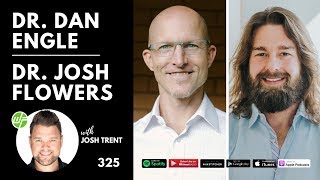
YouTube podcast (Wellness Force Radio, episode 325) featuring host Josh Trent with Dr. Dan Engle and Dr. Josh Flowers. The guests introduce Revive Treatment Centers (Denver) and discuss neuro-optimization and recovery from traumatic brain injury (TBI), post-concussion syndrome (PCS), PTSD and related conditions. Key themes: blended approach combining physiology (imaging, nutrition, IV/NAD, hyperbaric oxygen, stem cells/exosomes), neuromodulation (TMS, photobiomodulation), psychedelic-assisted therapies (ketamine/psychedelics) and psychological/spiritual integration (mindfulness, breathwork, self-love). The episode emphasizes whole-person assessment (genetics, labs, gut, neurocognitive testing), a staged therapeutic hierarchy (foundational functional neurology → accelerants → regenerative therapies), limits of standard insurance-driven care, and practical signals to seek help (symptom checklist: attention, light/noise sensitivity, mood, reading tolerance). Resources mentioned: ReviveCenters.com and wellnessforce.com.
Chapters
We're moving from this allopathic medical arena over the last hundred years now more and more into functional medicine, which is an improvement for sure, but it's still fairly reductionistic. And now we're growing into this launchpad of transformational medicine, which is the combination of hardware technologies and software technologies. So that is neurology and psychology. And if you take the analogy of a computer, once you up level the hardware and the software together, then you have the best option, opportunity to completely accelerate the operating system and the performance of the engagement between like human and computer or between us and our outer.
World, to be able to just really dive into our own mindset and our own psyche and start seeing what comes up. What, what does the brain bring up, what does the mind bring up and why is it bringing it up? And, and looking at that from a non judgmental standpoint, this makes me feel this way, and trying to unpack that and being aware in themselves.
That's Dr. Dan Engel, and this is episode 325 of Wellness Force Radio.
Wellness Force Radio, where we discover the.
Physical and emotional intelligence to live life.
Well, you can have the same brain states as someone who's done an hour of meditation every day for 40 years.
There's a lot of losses that we go through, so the ability to be able to cope with those losses is very important to build skill in it, because loss will happen.
You know, you have to have spiritual courage to really grow spiritually, because if you really want to take guidance from.
Your soul, you have to be ready.
To realize that many of the things that you're asking for guidance on, your ego has some kind of an addiction to or an investment in.
Hey, what's up, podcast world? It's Josh Trent. Welcome back to Wellness Force. Today on the show, we're talking about neuro optimization and healing traumatic brain injury with the one and only Dr. Dan Engel. Dan is returning with a special guest on this podcast, his colleague from Revive Centers, Dr. Josh Flowers. Now, this podcast is for you. If you've ever dealt with any type of concussion or head injury or a traumatic brain injury, this is a deep dive into the biology, psychology, and the neurokinetics behind how to heal these injuries, as well as ptsd, depression, and many other things that happen to our warriors. And for people that have been through severe trauma, this podcast sits on, on the cutting edge of what Dr. Engel and Dr. Flowers call neuro optimization. So if you love science and if you're open to it being combined with spirituality, which I know you are cause you're here with us on Wellness Force. You definitely are. This podcast is gonna be rich with gold for you because Dr. Joshua Flowers is the owner and founder of Revive Treatment Centers in Denver, Colorado. This is a neurological rehabilitation and optimization facility focused on traumatic brain injuries, post concussion syndrome, neurodegeneration, stroke, depression and ptsd. This facility is at the top of the charts. It's acclaimed as the most progressive and science based application spot for neurological recovery in the entire country. And Dr. Dan Engel returns side by side with Dr. Flowers on the show. Now you remember Dr. Engel from episode 241 titled how to Heal a Human. Make sure you listen to that podcast in depth after this one. Dan has a deep background in integrative psychiatry, neurocognitive restoration, peak performance medicine and psychedelic research. Dr. Engel helps individuals shift from illness and trauma to health and happiness. And what I really love about Dr. Engel and flowers is what they're doing with Revive. This is so exciting to me. I wanna share this message with as many people as possible. Share this podcast with somebody to let them know what's going on in Colorado at Revive Treatment Centers of America. This podcast is gonna hit home for them and you if you or them has ever been through TBI brain injury, maybe someone you love or somebody in your community you care about. There is so much misinformation and honestly negativity when it comes to brain injury specifically people get identified with it. They believe that their injury is their identity. But in this podcast we're going to talk about all the tools and ways of being and really the understanding of how the far majority of injuries as well as PTSD and depression can be healed with the types of tools Dr. Engel and flowers are skilled in facilitating. We'll explore consciousness psychedelics with supervision, all the different tools that they have for restoring the brain's function as well as ketamine usage. And we'll explore the why and the how of all things neurorestoration, optimizing brain health and healing from these major injuries. Now by the time you get to the end of this podcast, you'll be inspired to learn more over@wellnessforce.com 325 now let's drop in with Dr. Dan Engel and Dr. Josh Flowers talking about neuro optimization and healing traumatic brain injury. This episode is brought to you by Cured Full Spectrum hemp and the 100% organically farmed in Colorado. By the way, farm Full Spectrum Hemp with a wide variety of terpenes and all the parts of the plant that give digestion joints, brain and muscle tissues the relaxation they deserve, especially after a stressful day. There's a lot of talk about CBD and hemp out there. So I did months of research in 2019, and I ended up partnering with cured to bring you the best of the best in the entire market. With simple, clean ingredients and no preservatives. Just locally sourced, organically farmed full spectrum hemp. The kind of product I'd be happy to give to my girlfriend, my grandma, my mom, and also I'm happy to give it to you. And I know you're gonna like it because I take it every evening. I actually take the mint. The mint is my favorite. It's helpful for sleep. I notice a significant increase in my deep sleep when I measure it on my Oura ring. So whether you're logical or spiritual or maybe you're kind of both, you're here with us on the podcast. You get 15% off of your full spectrum hemp product. Just go to wellnessforce.com cured use the code wellnessforce at checkout to get 15% off on your order. Over at wellnessforce.com cured make sure you use the code wellnessforce to get that 15% off, and share the relaxation with everyone you know. Dr. Dan Engel, Dr. Josh Flowers. Welcome to Wellness Force.
Yeah, Josh, it's great to be with you again, man.
Yeah, man, thanks for having us on.
So, Dan, this is your second time on the show. Dr. Josh, we're going to get to know you very deep. We're talking about not just healing brain injuries, but also how to improve cognition, neuro optimization, and ptsd. You know, this is something that's been big in a lot of our circles where people are suffering out there. And one of the coolest things I've seen that you guys have articulated on your YouTube video is you talk about healing. And I'd like to start our conversation with this quote. You said, for revive centers, it takes more than just medicine for the body to heal. It takes an entire shift in awareness. Let's have one of the doctors take that. Why did you guys choose that as a beacon of truth? Why is that on the YouTube and in your media?
Well, I mean, so many patients struggle to recover, especially from things that are simple, like concussions. Most people should be able to bounce back from a small bump to the head fairly quickly, but the patients who don't, there's multiple layers to why they're not. And a lot of times that may be a metabolic component or a psychological component on Top of the physical issue for our patients, we found that for the best overall long term success, they have to not only heal from the physical damage that's been done and get their body back into a really strong balance of homeostasis, but also they have to come to grips with their traumas psychologically and really help to overcome that to be able to fully heal from, from the traumatic event that may have happened to them.
And a lot of this is for first responders, military, but it's also just for anyone that's had a brain injury. And Dan, I know we talked about this last year when you were on Wellness Force, I believe you were surfing when you had the injury, right?
Well, I've had six. And the one that was most notable was when I dove off a pier, hit a sandbar, broke my neck. And that was two weeks before medical school.
Yes. And that took you on a totally different journey, which is actually probably why, in part, you and Dr. Josh linked up. And this Revive treatment center, do you guys remember when it actually came through? Like, were you both sitting at a coffee shop and you're like, let's call it Revive? I mean, how did that, how did that name even come through for you guys?
You know, I had several marketing people giving us a lot of different names, and there was a lot of re. Reward re kept coming up. But Revive was something that whenever they dropped that name, it was like, that's, that's what it needs to be because we're really wanting to revive people's health, revive their, their livelihood, their quality, quantity, quality of life.
So the neurological rehabilitation and also optimization facility focused on traumatic brain injuries, post concussion syndrome, neurodegeneration, stroke, depression, and ptsd. At the root of all this, are we talking about an actual tissue damage that then gets revived? In other words, are you actually growing new tissue in the brain or is it more psychosomatic than that?
It could be kind of viewed in, in both directions there. Definitely. We have seen on imaging through DTI that we can actually increase the cellular structures, that we can actually see a change in the amount of information traveling down these pathways. So there is physiological change, there is change in the structure. It's not dramatic for our view. We like to look at patients from that point of how do we get the neurons firing, how do we get the fuel for the brain, for the gut, for the physiology? And then how do we get the patient in a mental place where they have hope, they're willing and able to start their healing journey instead of being fearful of what changes May be coming down the line. Oftentimes, if somebody's had a stroke and they've been living with their stroke symptoms for a decade, and every physician that they've seen says, well, after six months, you're never going to get better, or after a year, you're never going to get better. They have this mentality that they're going to be stuck that way. And then whenever they start seeing changes, a lot of fear starts arising because they have a major fear of the unknown. Even though the unknown may be healing and recovering, they don't know that. And they have been instilled for a long period of time by several other practitioners that there really isn't hope. So once we can show them that, yeah, we can start to get their foot moving again or their hand moving again, we start to give them that hope. Then we have this other level of psychology or mindfulness or whatever you want to call it, of being able to actually get the patient to come to grips that, hey, change isn't a bad thing. I can get better, I can recover.
It seems to me like. And I'm curious how you feel, Dr. Dan. When trauma happens, it can become such an identity. People can get so situated where the subconscious mind just establishes memories and framework where, who would I be without my injury? Who would I be without my trauma? I mean, I know that in integrative psychiatry, this is something that you deal with. Can you talk about what happens there? Like, when somebody really gets traumatically injured, there is a mental and even a spiritual component, too, for them to recover?
100%, yeah. It's oftentimes not only the experience of the trauma or the event itself, but how we react to it. What our internal landscape has a relational component to this event. And if there is the support around a person to heal it on all levels, body, mind, spirit, heart, and soul. Right. If there's an emotional component, then that needs to be metabolized and addressed. If there's a neurologic component that needs to be addressed and worked through, if there's a psychic or a mental component to it, then that needs to be fully addressed, nourished, worked through, assimilated, and integrated. So it's not really about overcoming the traumas. It's about integrating them into a more full experience of the whole human. Because the traumatic events oftentimes are things that significantly shape us, at times significantly mature us. Because there are things that are going to quicken consciousness or quicken maturity. A traumatic event is one of those things that can significantly do that. Oftentimes Very quickly. So if we take a more whole person perspective and appreciate the fact that everybody has their own unique constitutional wiring. And that's why if you take 100 people and you put them through this same traumatic event, you're going to have a hundred different outcomes because everybody's constitutional wiring is a little bit different. So if we have a more whole person and full spectrum process of assessment, triage and intervention, then we can work people through and have people work themselves through a process of healing and recovery so that each of us can retain our primary experience of responsibility. Because in our society we tend to pathologize trauma and we tend to make wrong the event versus recognizing that ideally, at the end of the day, we're growing our experience of resilience on each of those levels, body, mind, heart and soul. And those most difficult challenges might be the grist for the mill or the fertilizer for growing me into a more organized, whole, full spectrum, humble, in service, switched on, awake human. And it's that subtle shift from a victim mentality to a primary empowerment mentality. And that's really freaking hard. Especially if you take someone who's just smashed their brain. Because when the brain's off, everything's off. And if now your internal circuitry is having a hard time with planning, executive function, tracking, light, noise sensitivity, you don't want to be around other people, it's really hard to tell what's working and what's not working. It's a really confusing internal experience to go through. So to retain a sense of empowerment through that process is a herculean task. But that's why we have centers and providers and therapists and these kinds of supportive therapeutic structures to be able to work people through a process of recovery that continues to help them retain the most empowered position possible.
I love that you mentioned this phrase constitutional wiring. That to me is really like a foundation for how somebody's going to respond or react to trauma. Can you talk about this constitutional wiring? What does that actually mean? Man?
Yeah, it's a fascinating part of the human condition. We all come into incarnation with our own unique personality construction. There's never going to be another Josh Trent. There never has been, there never will be in the future. Exactly like you, there's never going to be another Josh Flowers. There's never going to be a Dan Ingle. Exactly who we are, and yet we came in with a particular personality construct. And that constitutional wiring that is both nature, that is like what we're born with, but it's also nurture and how we're cultivated and reared into an environmental framework by our primary caregivers and society at large. So if we don't come in necessarily like being the most robust in the resiliency arena, like emotionally, like maybe somebody has a real sensitive emotional landscape and they can get knocked off their center pretty easily, if that's their constitutional wiring, that can still be learned and that can be worked through just like you would work through any other kind of training methodology. You just have to know how to work the system and to gradually increase resistance into the framework that allows them more and more mastery, more and more progress, more and more accelerated resiliency over time. If you push people too fast, too hard, even when people come here to revive and they're healing, post concussive syndrome, if we push them too hard neurologically, we might have a re experiencing of their core symptoms and that might set them back. So we work in this kind of framework of gradually pacing and calibrating to the system's ability to handle more and more resistance. And over time, ideally, we're building more and more whole humans that are connected in all levels. We're connected to our hearts, we're connected to empowerment states of our mind. We're connected into strength and resilience and knowing that our bodies are these self healing machines that are the most sophisticated piece of flesh wiring that we've seen in the entire universe. So it's a system that grows over time. But we don't really teach resiliency in our school system. We don't teach really largely a lot of the most core components that make life successful. We don't really teach those in school. And we just expect people are going to learn them as they go. And most people do. But it's also a challenging situation right now on the planet. It's the most dynamic time in human history. And the younger and younger generations have more and more neurologic assault into their daily routines. Just the speed of technology and the fact that our nervous systems are having a hard time keeping up evolutionarily with the speed at which we live.
I love this neurologic assault because I referenced this quite a bit. But I'm going to say it again because it's so powerful. Alan Watts talks about some people being prickles, some people being goo. You know, there are some people that, that I'm sure both of you guys can relate to this because you see so many patients coming in to revive. There are people that are analytical, there are people that are more logical minded. And then on the other side, there Are people that are touchy feely, more emotional people. And I can only imagine when people come in to revive, the people that have success, are they more prickles or are they more goofy?
Well, it's really interesting. I come from a pediatric background working with child developmental delays. And what we see is the more out of balance the brain becomes, the more symptomatic a patient becomes. So whenever you look at childhood development, children who have a stronger right hemisphere are more socially inclined, they have better social skills, navigate their environment very well, they're usually a little bit more along the lines of adhd. They prefer more on social reward system than academics. Whenever you look at somebody who's more left brain, they're more analytical, they're fine detail type people. And whenever that gets more and more out of balance, then you start having things like dyslexia, which is a left hemisphere deficit. But it's really for most people to have a really well functioning brain, you need to have good balance. And if you have a good balance between your right and left hemisphere, you have people who are able to look at the details but not get hung up in them, or being able to look at the big picture and understand it, but also being able to process the fine details. And what we find is the more that we can analyze where a patient sits when they come in, whether they had developmental delays to begin with, whether their concussion or their stroke or their head injury started causing these symptoms, most of the time it's this imbalancement in the brain. And the more that we can find where the deficits are and specifically treat the deficits versus whenever we look at physical therapy. A lot of times physical therapy works on, oh well, if we're going to work the left side, we're going to work the right side too. Well, if you have a neurological deficit, if you work the left side, it stimulates the right hemisphere. If the right hemisphere is weaker, then that's the appropriate thing to do. But if the right hemisphere is already stronger than the left hemisphere and you stimulate both sides, the deficit's still there. The difference between the two is still there. And the symptoms don't seem to be as affected as if you raise up the side that has a deficit and get it firing more appropriately, the symptoms usually go away.
You mentioned dyslexia is the imbalance in the left side and then the autism is the imbalance in the right. Is that something where you can work with people super young or at revive? Are people coming in once trauma has occurred? Is there proactive care there or is this more like in response to trauma?
Well, I would say that it's probably more of a response to trauma. We do have optimization stuff that we do with patients most of the time in the pediatric realm. There's usually, if we're treating pediatrics, which we've done in the past, and we tend to see less pediatrics now, mostly by choice, because it's very difficult to treat autistic children in the same environment that you're treating a traumatic brain injury. But with early intervention, you can cause major changes because there's so much more neuroplasticity potential neuroplasticity being the growth and the change of the neurons and the structures of the brain. We can get more of that the earlier we intervene, whether that be post trauma or developmental.
Dan, you've been in this field for decades, and I remember we talked last year about really this transformational medicine concept. And I think about so many tools beyond just repairing the brain that actually create the space for the brain to heal itself. I mean, it's like diet and sleep and nad and a lot of IV therapies and whatnot. Can you unpack for our audience, like this transformational medicine concept, like what it really means?
Yeah, it's a awesome time right now to be in the field of medicine because we're seeing this transformation in the way healthcare is practiced and offered. And it's not really a revelational system. In fact, we're remembering that there are core components of traditional healing practices that have lasted for thousands of years that are still relevant today. And those are many of the foundational pillars that you mentioned. When we're taking a whole person perspective and we're optimizing the body and brain's ability to heal itself as the self healing and self governing machine, then you can't overlook the basics. And no matter how much we want to sell the new fancy pharmaceutical or longevity tool or technology, it's still, all of that is still built on solidifying the foundation first. And the foundation is taking care of what serves the biologic mechanisms. So light, nutrition, oxygen, rest, the appropriate amount of resistance training, the appropriate amount of play and joy and the elation and the satisfaction in being able to rest in the privilege and the gratitude that we have for even having a body in the first place.
Yes.
And that's so revolutionary. Certainly revolutionary for me at times in the past, for sure. Especially after I got smashed. It's hard to. It's hard to remember that this being human is still a privilege. Like Rumi said, this being human Is a guest house every morning a new arrival. So we don't know what's going to be coming around the corner. And most of us transition to work and where we live in these one ton speeding missiles going at very high speeds down the highway with a lot of chaos around us. And we tend to see clients here at Revive that have had spontaneous or unknown or challenging to perceive accidents that happen like out of the blue. So these could be contact sports or combat sports, or just your run of the mill MVA or motor vehicle accident or slipping on ice walking down the sidewalk. And so all of these things are still based on the foundations of good rest, good nutrition, good exercise, and that's the things to do as well as the things to not do and to unwind. How do we unwind our nervous systems? What is this growing body of evidence that shows that meditation is healing for just about every ailment? And it might be that not only does it have a mental benefit because it helps us to learn how to relax and self regulate, but it might also have a physiologic benefit because it actually starts to prime the parasympathetic nervous system, which where most people are quite deficient just again because of how we live our lives. So we're moving from this allopathic medical arena over the last hundred years, now more and more into functional medicine, which is an improvement for sure, but it's still fairly reductionistic. And now we're growing into this launchpad of transformational medicine, which is the combination of hardware technologies and software technologies. So that is neurology and psychology. And if you take the analogy of a computer, once you up level the hardware and the software together, then you have the best opportunity to completely accelerate the operating system and the performance of the engagement between human and computer or between us and our outer world. How do we actually start to uplevel the internal landscape, our internal software system, our internal program of how we relate to ourselves, one another and life itself. And once we are able to use these challenges, Josh and I were just speaking about this on the break. Once we're able to use our challenges as opportunities, that one small but magnificent change will completely shift the entire game.
I love the analogy, man.
Stack it in our favor.
I love the analogy of software and hardware because God, you know, we can go and read all the books, hear all the podcast, go to the Tony Robbins, jump up and down, go to therapy even, but if our hardware is broken, if our hardware is functionally deficient, it doesn't really matter what software we Stick in there. And I think this is why so many people that have injury and that have actually concussions, you know, TBIS to the brain, they may be doing all the wrong things. There's a lot of confusion out there, especially when I was researching for the show. You know, we have people that have had major concussions and they're just going to therapy, but they're not actually addressing the root. And that is like the broken hardware. So where do people begin? I mean, do they. Can they come to revive? Is it an insurance based. Is it out of pocket, like for people that are listening, maybe themselves or loved ones that have significant brain injury? Do they start by just going to their provider? Can they get referred to revive? Where do they begin at revive?
We are not an insurance based company. We don't take insurance. One of the main reasons is because the standard of care is a model that we are coming more and more falling out of agreements with. They're just the standard of care. If it was working for our patients, our patients wouldn't be coming here. And so really what we want to do is when we get patients in the doors, we want to assess functionally what is going on, where are the deficits? So we look at their genetic profile. If necessary, we look at a long list of labs looking at all their organ systems, looking at their immune system and how well their immune system's functioning. We look at gut health, we look at, is the gut barrier intact? Are you absorbing your nutrition? Are you getting the fuel that the brain and the body needs? Then we do neurocognitive testing to be able to see where's their memory at, where's the reaction time at, what's their social acuity, what's their depression, their anxiety. Being able to measure all of these things so that we can put specific numbers to the patient's issue and be able to specifically know where are the deficits at.
Why do you think the current system is something that you want to pull away from? Is it because fundamentally they don't believe in your practices?
The problem is most practitioners graduate from medical school. They take the minimum required continuing education, and they don't really strive to stay up on the current research and what is best. And then it takes about a decade before research proves something, and then insurance approves it.
It takes a decade.
Whenever we're looking at modalities, if you're looking at medications, you're probably looking closer, somewhere between five and 10 years. Whenever you're looking at therapeutic modalities, you're looking at about a 10 year curve before these modalities really become mainstream. Transcranial magnetic stimulation is a great example. Transcranial magnetic stimulation is extremely low invasive modality. It's great at stimulating and directly affecting the brain without having to drill any holes or putting the patient through any kind of pain or anything like that. And it took a good five years before it was being utilized mainstream. And it's still only really being utilized for depression and anxiety. It works great for strokes, it works great for post concussion syndrome. It works great for a lot of things that are considered to be off label by insurance companies. But the research shows that it works. But the insurance company will fight you tooth and nail to get it done. I had a prime example is I had a patient with a hypoxic brain injury, lost oxygen to their brain and that was the cause of their tbi. Their insurance company wouldn't cover hyperbaric oxygen because they felt like it was unnecessary. Hypoxic brain injury is like the one clear cut reason to utilize oxygen therapy. And yet insurance companies want to fight with you about these things. So that's something that I've been very passionate about, is I don't want to have somebody telling me how to practice, especially somebody who doesn't have the best interest in the patient in mind. For us, we sit down, we figure out what tools do we have that can affect these areas that are not working appropriately and how can we do it as quick as possible? Because the number one thing is the patient's quality of life. If you can give somebody quality of life, they're going to go and give you referrals and word of mouth and all the wonderful things out there. So that to me is the most important thing thing is giving them back that life.
So there's a lot of different tools out there, it sounds like, because, you know, whether it's the photobiomodulation, like there has to be some type of intake process so that somebody is actually cared for. Because somebody could go out there, Dan, and they could start buying all these tools and doing all these things. But if they're not being appropriately, you know, cared for, if they're not being. If the intake process isn't there, they could be shooting in the dark.
Absolutely. It's like if a person wants to build a house, it's not super complicated, the materials that you need, but you need to know the system of how to build it. You need to build a solid foundation. You have to know when to put in the plumbing, when to put in the wiring, when to put in the exoskeleton, when to dress it up, etc. So there's a system and a protocol that, when you understand the science behind it, it's pretty universal in its applicability to anybody that's going to walk in off the street. Regardless if it's a stroke, a TBI or any other host of neurologic insults, we put them through a diagnostic series using a variety of different technologies, most of which we've mentioned. We haven't talked about all of them. Then once we have a good working internal picture of what's working well in their brain and where the primary deficits are, then we have a whole suite of therapeutics. We have a level one, level two, level three. Level one is the basic functional neurology suite of therapeutics. And then we stack on top of that, accelerant tools. And that's getting into more of the regenerative medicine piece. So stacked IV therapies like NAD that you mentioned before, neuropeptides, ketamine therapy. Ketamine is fascinating because not only does it support the healing of a lot of psychological issues that are associated with tbi, including PTSD or post traumatic stress disorder, including treatment resistant depression, anxiety, insomnia, ocd, any of those can be downstream from a tbi, but it also supports neurologic recovery because it simulates BDNF or brain derived neurotrophic factors. So you get better synaptogenesis, you get better connection and communication between neurons. So we use ketamine a fair bit. And then level three on top of those are the regenerative stem cell therapies. And so that's like placental cell matrix stem cells that are undifferentiated and they can become anything. And when you use them in a particular delivery system, you can get them more effectively into the brain so they can become neural tissue and then stack on top of things on that, like exosomes, which are signal messengers, kind of like the fertilizer of stem cells, or the seeds that accelerate the ability for the stem cells to work better. I am just gonna stack all of those moving through.
I'm sorry to interrupt you, Dan. I am so fascinated with the research about ketamine. I talked about this with Anthony Diclementi from Biohacking Secrets. He had massive healing through his ketamine infusions. I also know in Austin there's centers popping up and even in San Diego too, for the ketamine stage in your healing process. What's actually occurring there? Like what's the biology and the science of ketamine for healing.
Well, they were opening up this awesome pillar of transformational medicine, which is the whole realm of psychedelic assisted psychotherapy. And truth be known, we don't totally know how many of these psychedelics work. We know they work at the receptors, we know that they do these very specific biochemical cascades that we're probably only still understanding a minority of what they're doing phenomenologically at the cellular level. I think probably even larger than that, so to speak, would be what's happening at the level of the psyche and the mental landscape and the emotional landscape, because they're helping us oftentimes re reference our relationship with ourselves, our relationship with life, our relationship with the primary injury event, if there was one, so that we can get a little bit of distance from it and understand it more objectively. So if I understand and appreciate the fact that this experience has shaped my life and it's helped me grow in a variety of different ways, and there's still some challenging emotional or mental material that is associated with that, then as I can heal that and grow from it, then perhaps it's actually accelerating my understanding of who I am as a person. And it's helping me get to these states of both humility and maturity, which ultimately is what accelerates consciousness. And all of the medicines seem to do this to a variety of different ways. Ketamine, like phenomenologically at the cellular level, seems to work on the NMDA receptors and the glutamate receptors, and it has this ability to help reset the default mode network, which is this address of the ego and all of those things. I mean, we can see those things happen both in brain scans, EEGs and chemical cascade pathways. But I think even more than that, we're going to learn more and more about how to recreate these accelerant tools for helping us reshape our psyche around core events that are the cardinal, pivotal experiences that shape who we are.
I'm fascinated by medicines out there that can actually go into realms that we don't understand. Because, let's face it, science and spirituality, as we move forward, we're in the year 2020, guys. Like, this is the year where in cartoons and the Jetsons and in futuristic movies, this was the year that everything was, quote, supposed to be different. And you know what? My sense, my soul, I feel like things are different. I feel like the work you guys are doing with Revive and Dan, with your knowledge of Psychiatry and Dr. Flowers, with what you've studied in Child development and what happens to the brain when we're young. The blending that you guys have at Revive, this is not the typical center. I almost feel like, in a way, you're blending this science and spirituality component. Would you say that's true?
Yes, a hundred percent. I don't know that our marketing reflects that well.
You got to use the language to get people in, and then once you get them in, you can help them.
Yeah, yeah.
And so it's kind of like selling people what they want and giving them what they need.
Yeah.
I think we have had a huge divorce from our experience of a body and a mind and a spirit. We've compartmentalized each of those over a long period of time, over the last several hundred years, if not longer than that. And we're just slowly gaining more and more traction. Mostly that's data driven that people will understand, like, oh, meditation helps. Why does that help? Oh, near death experience is kind of like a psychedelic experience. Oh, why is that? Oh, wow. When people go through a psychedelic experience, it's held well in a good set and setting, then maybe 94% might have one of the top five spiritual experiences they've ever had. That was Hopkins research about psilocybin. Wow. Why is that? So as we start to see this acceleration in the research, much of this is in this triad between what does it mean to be an interconnected, whole, awake person that has a body, mind and spirit that are all woven together? And I have a primary relationship with each of those experiences in my life.
Yeah, yeah. And I think that when we look at the patients as a whole, it's. It's that they're. They're whole human. It is that, you know, not just the neurology, not just the metabolics, not just the psychology, but the spiritual piece as well. And if we don't address all of those together, we. We end up with a patient that it doesn't have success in their treatment, and we end up with like we were talking about with the hardware and software. If your frontal lobes aren't working and your frontal lobes aren't firing, it really doesn't matter what medicines you take. Yeah. Until you get that hardware working appropriately, you can't experience the real true benefit of the medicines or at least be able to truly integrate it as well as you could. If the, if the whole system's working appropriately.
Question for both you guys. You know, people that are walking around with maybe medium or high level TBI or trauma that's actually in the brain, could that be something that they could, quote, partially function in life with and ignore the symptoms for a long time and then those symptoms exacerbate. In other words, how do people walking around with medium to high grade TBI know that it's actually there and that they might want to get help?
People are comfortable with sharing the fact that they have a deficit or that they have a weakness. So we have this mentality of, you know, no pain, no gain, let's just keep going until, oh crap, I can't do this anymore. And what's interesting as we talk about that whole body, that whole person, it can be a virus or it can be a huge stressor, or it can be a traumatic injury. It could be any of these things that cause a shift. For example, if you lose your job and then a loved one dies, you have all this huge stress on your plate. That stress changes your stress hormones cause you to produce more cortisol, that changes your sleep patterns, that changes your sex hormones, that changes your memory, that changes all of these things and exacerbates all these symptoms. So maybe you had several concussions when you were younger and you don't have the best memory. Then all of a sudden you have a huge traumatic event that's a huge stressor and that further perpetuates your memory issues. And then people look at it, they have a hard time associating that shift with the fact that they had several concussions earlier on in life. Or they also. What's really hard for people a lot of times to perceive is that stress in their life is one of the most complicating factors of all disease. And they don't think that it's important to learn how to manage that. And then they don't end up having long term relief or long term change. And that's something that we really emphasize a lot is you've got to learn how to modulate and control your own stress. The more your brain's working, the more your psyche is working, the easier it is to realize that you are ultimately the one that's in control of it.
Yes. How much of the stress reduction do you use through the channel of breathwork is breathwork in the revive circle of.
Healing, There is not a person that goes through our program or our office that doesn't go home with breathing exercises, doesn't start right off the gate with breathing exercises. Breathing and meditation, I think, are the two best at home tools for a patient. If you can teach yourself to control your breath, then you'll realize that not only are you in control of your breath, you're in control of your thoughts as well. And then once you start realizing that you're in control, you start taking that control back then. Life's so much easier than sitting here thinking that the universe has it out for you. Poor, pitiful me, and I can never get any better. You know, that's your own mindset. That's not the universe telling you that. It's yourself.
I love, I love how connected both Dr. Dan, Dr. Josh, you are to the science and the spirituality. And again, I just want to emphasize this. If somebody's listening and they've either had a TBI or maybe they have symptoms of this or they have a loved one, go to the website and I'm sure you have an intake form for them to fill out. It's very easy to go on the website. But I did want to mention this one thing. You know, last year I was hiking at Mount Whitney and I got symptoms of acute altitude sickness where I started hallucinating. I had to go down the mountain. For people that experience altitude issues, is there a time frame for them? And I'm asking selfishly for myself, since I have two doctors on the line, how much time being at high altitude can actually cause permanent damage to the brain?
That's a really good question. It really interests me because when I moved to Colorado, my practice I first opened was at 9,000ft. So dealing with patients from outside of Colorado coming up to 9,000ft, altitude becomes quite the issue.
Yes.
If you have oxygen level, oxygen saturation below 92% or below 90% for an extended period of time, you're going to start causing some sort of damage. Whether that's permanent damage or not is probably not permanent, but you're definitely causing some neurological setback. Now, one of the big things, I'm very passionate about this because I've seen a lot of doctors who practice at sea level, and they start prescribing Dramamine and different medications to help with nausea. From a vertigo standpoint, altitude sickness is a lack of oxygen. And the lack of oxygen causes the nausea and the symptomatology. So if any of your listeners are planning on traveling to somewhere with high altitude, drink lots of water, stay very well hydrated. You can buy portable oxygen cans that you can take with you. Those are nice for added little rescue.
Yeah.
But really staying hydrated and paying attention to your own body, if you start getting headaches and start getting nausea, try to go to a lower altitude. Medications that affect vertigo will not positively affect your altitude sickness. That's something that Hyperbaric oxygen is another really good choice as well. You can utilize hyperbaric oxygen for about 45 minutes to an hour, and it will give three to four days of relief for patients who are not acclimated to altitude. So just a little word to the wise, because I've seen so many patients come in and they're like, oh, I've been taking this and it doesn't seem to be helping. And it's like, well, that's because your doctor doesn't practice at altitude and doesn't understand what altitude sickness really is. And that's not to speak bad about anybody else. You know, if you're not seeing it daily, then, you know, you might not have the best understanding of it. So I just like to help patients and people have a little better education on that.
Well, thank you for saying that because it was a huge wake up call for me and I think it's a mirror of a wake up call for so many other people where, you know, this mentality of like, work hard, play hard. It's like, especially last year I was a. It was a huge window for me. It's like, well, work hard and rest hard. You know, that's really the paradigm that we're looking at here. And we covered a lot of ground in this podcast so far. And, you know, just as parting guidance, let's go to Dr. Dan first. Dan, if somebody is feeling inspired by this, or maybe they're just more curious, what's the first action step for them to do in exploring healing tbi?
Yeah, it's a great question. And it largely falls on the person themselves to get the right education and the right material. So it's a bit of a personal responsibility practice because we don't actually still have in the standard of care as physicians of working understanding of concussion. Many physicians are still walking around saying, if you didn't lose consciousness, then you didn't have a concussion. So secondarily, a lot of people are walking around thinking that they didn't have a concussion if they didn't lose consciousness. Most people who have post concussive syndrome don't even know it because it can be nebulous and confusing. And sometimes the symptoms aren't very specific unless you start looking at the diagnostic criteria and the exact symptoms that can happen. Right. There are social symptoms, meaning that people tend to want to isolate or they get overloaded in social situations. There are neurological symptoms like light noise sensitivity. There are psychological symptoms like depression, anxiety, confusion. There are a lot of symptoms that can look like other things. So first of all, people need to educate themselves and become curious about whether or not they did start to have a decline in, like Dr. Flowers was mentioning their quality of life after a particular injury. And if, and most of the clients that come in, they do come in to see us because they've tried so many other things and they haven't worked. And then once we start coming to this, like more detective refined history taking, then you'll see the lights turn on in their eyes, like, oh, wow, right. It wasn't just the last head injury that I have when everything went south. Maybe it was that one I had 10 years ago when things started kind of like going off the rails, but I could, I could still duct tape it together. And then the one I had last year just smashed me into oblivion. And I haven't recompensated since. Well, if that was building, then over the last 10 years, what else is associated with it? And that's why we look at a lot of things metabolically, hormones, immune system, gut function, et cetera. So education is number one, and number two is to. Once there's a high likelihood of post concussive syndrome or PCs being at play, that's usually stimulated from a mild occasionally to a moderate TBI. Severe TBIs are pretty well known and established, like someone who has a severe TBI typically knows it. So PCs that happens from mild to moderate TBI or that post concussive experience, once there's a high likelihood of expecting that's the case, then they have to find an educated provider. And that provider could be. I've known some health coaches that are neurologically focused be giving clients much better recommendations than some allopathic neurologists who don't believe that the brain can heal and who believe that you can only have a concussion when you've lost consciousness. That's an old style of thinking. I'm an allopath and I did train neurologically, so I can say that. And I'm not like necessarily bashing my own profession, but it's just a recognition that like Dr. Flowers mentioned as well, you have to stay up to speed on the current data. And so once education has found the right streams of accurate information, then find a provider. And then once you find a provider, work a system. Number three is work a system that has had a track record of benefit, and that usually includes some kind of hierarchy or assessment of what are the best interventional technologies and tools and therapeutic approaches to use first and then build from there. And usually the best likelihood for success is building a solid Foundation. Like we mentioned before, breath practice and breath work is a really good one. Breathwork is probably the best and most efficient way for people to organize and reset their nervous system of any other singular practice.
And anyone can do it anywhere and it's free, which is the most beautiful thing. Thank you, man. That was such a great framework. Is there anything else you think we missed when it comes to identifying TBI in those first practical steps?
I think it's really helpful to have a diagnostic criteria of post concussive syndrome, print it out so that people can look at and just study it.
Oh, yeah.
Is my attention off? Is my concentration off or do I have mood fluctuations? Do I not like to be around really stimulating experiences? Does looking at the screen for more than 10 minutes or reading a book for more than 10 minutes give me a headache or dizziness or confusion? Do I forget where I'm at if I'm trying to read a book? I mean, all of those things. When you print it out and you have somebody go through the checklist and they check off more boxes than not, then it's quite likely that they have PCs and at that point, then they have information. And once you have information, you've got ammunition and you've got empowerment. But if you don't have that awareness and people are walking around in a fog oftentimes and not knowing why, it may go for years like that. I certainly went for years like that because when I had my last concussion almost 20 years ago now, the summary statement was, go home, get rest. We hope it gets better. Yeah, it was like I had already done that and it wasn't getting any better. And these are the best doc. These are the best physicians in neurology telling me this. So thankfully, we evolve. Science evolves, and it's the most available time to access virtual information that there's ever been. But we just have to know where to get that information because there's a lot of misinformation out there, too.
Well, I'm glad we got the tip of the iceberg of the info right here on wellness force. And Dr. Flowers, if you look at that quote I mentioned in the very beginning, it takes more than just medicine for the body to heal. It takes an entire shift in awareness. Can you give us guidance on this shift in awareness as we say goodbye here? Specifically when it comes to healing tbi.
Yeah, I think that the big part for the awareness is being self aware. As Dan was talking about these symptoms, you have to start becoming aware of yourself and your own internal landscaping to realize that things are off and stepping into that role and knowing who you are and being comfortable with yourself. A lot of times our society tells us to not pay attention to that background chatter and what's going on. But the more you become in tune with it and in control of it, the more you start to sort things out. And that's where mindfulness and meditation along with the breathing is really the best tool that we have at our availability ourselves is to be able to just really dive into our own mindset and our own psyche and start seeing what comes up. What, what does the brain bring up, what does the mind bring up and why is it bringing it up and looking at that from a non judgmental standpoint. You know, some people have dirty thoughts or whatever and they, because that comes up, they have all this self judgment and concern. Instead of reflecting on and saying, okay, why is this coming up? They just push it away and say that's bad, I'm not going to allow it. Or you know, things that are stressful or different things like that, and they just block it out instead of working through it. And realizing this makes me feel this way. Why is that? And trying to unpack that and being aware in themselves.
Yeah, thank you for that reminder. Because the answer could be really simple if the space is given for it to show up. Right. But if it's being pushed down and it's not being identified or it's being ignored, I mean that could actually exacerbate and the energy could come out sideways into other malfunctions just by not identifying what actually is.
Yeah. And you know, a lot of times this is what's beautiful about a lot of the medicines and stuff that we've talked about is a lot of these psychedelic medicines bring down that barrier so that you can see what's there instead of your own perception of what you think is there. You may be looking at it and saying, oh well the problem is A over here. And then you pull back the curtain and it's D on the other side and you're like, oh, holy crap. What I thought it was had nothing to really do with where I'm at. But whenever you're able to pull back the curtain and really see that underlying issue, you can come to grips with it more. And that's where you know, really being open and honest with yourself and being compassionate with yourself. Most people, what I find is most people struggle with self love. And if you have problems with loving yourself and you don't love your own tissue, then what keeps your immune system from attacking your own tissue. One of my colleagues once told me that all autoimmune disease is rooted in lack of self love. And for me, I find that to be very true. So for all of our patients, it's helping them start that journey back to regaining self love and finding where they're at in that journey. Where were they derailed from that journey and what can they do to start going back to that? No, we can't get everybody to find self love, but you can get everybody to start that journey and at least get. Get going in the right direction.
Well, that is the ultimate mic drop to close this conversation because the more that I'm in this work and the more that I have these epic conversations, the more it just becomes incredibly true that all roads lead to self love. Like all of the roads, no matter if it's injury or if it's psychological or if it's relational or whatever it is. I just, I what you said, I want to echo that and just leave the audience with this knowledge that it really does end in the cul de sac of self love. So thank you, Dan. Thank you, Josh, for coming on the show. Thank you for what you do. ReviveCenters.com is the website and thank you so much for your work in the wellness world.
Thank you.
Yeah, it's good to be with you, Josh. I look forward to the next time.
Hey, thanks for listening to the show, my friend. Everything you learned on this podcast starts with with your morning practices. So from over 300 world class guests, we pulled together six simple yet powerful morning practices down into a 21 minute system guaranteed to increase your vibration and the way that you feel every day. Get this free, powerful guide over@wellnessforce.com M21 and if you love this show, share it with somebody. Share it with somebody that you love or that you care about. You can support the show easily by leaving us a five star review on iTunes. Just go to wellnessforce.com review or if you're on your phone, just tap it. Hit the link in purple that says review this podcast. And the journey does not stop here. We're continuing this discovering process in our private Facebook group over@wellnessforce.com group. You can be a part of it. You already are. All you have to do is join us@wellnessforce.com group and I will welcome you at the door. Now go out into your life and live your life well. And until I see you again real soon, I'm wishing you love and wellness.
More from Josh






Your child's future start before pregnancy... and even before conception! #podcast

MD Reveals: Your Healing Creates Your Child's Reality (The Souls Coming In Need Strong Bodies)



