5 Steps to Stop Being a People Pleaser!
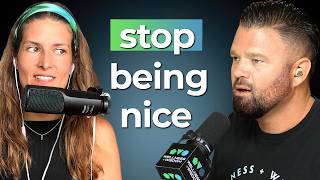
Transcript of a Wellness & Wisdom ‘Liberated Life’ podcast episode (hosts Josh Trent and Mar) exploring the difference between niceness and authentic kindness, how people-pleasing is a somatic/emotional survival response rooted in fear and worthiness wounds, and practical steps to shift from niceness to regulated, value-aligned kindness (body awareness, language, saying no, practicing low-stakes boundaries, identity work). The episode mixes personal anecdotes, references to polyvagal/redox concepts, and invitations to further resources (tribe, past episodes).
Chapters
I'm here to tell you that being nice and being kind are far different things. And we're going to go into that in this episode in depth, how you can transform your niceness to kindness. Right here, right now on Wellness and Wisdom. What's up, y'? All? This is the Liberated Life series on the Wellness and Wisdom podcast. My name is Josh Trent, if you're joining us. For the very first time. This is where we go deep into liberating the self. Doing it not alone. We're doing it together. I'm doing it with my co pilot. Mar. Mar, are you excited to dive into this topic? Have you ever dealt with pleasing people or being a people pleaser?
Yes. I denied it for a very, very long time because I always felt like I was able to say no, but there were certain situations where I didn't realize I was still people pleasing. So it's not always just about saying no. It can show up in many different ways.
Listen, I dealt with this for so long, so long. By the end of this video, I promise you that, yes, you're gonna get five. Five ways that I wholeheartedly believe you can crush this part. But it's not really crush. I just wanted to use the word crush so I can get your attention. I'll be straight up with you. It's not about crushing these parts of yourself. It's about caring for them. That's really what this episode is gonna give you. How do we care for the parts of ourselves that really wants to be fed and nourished and seen and heard? That's really what people pleasing is all about. You're not nice, you're numbing. That's really what's going on. Nice guys finish last, and they finish last for a reason. I'll tell you why Women Mar you being an exquisite woman, a feminine woman, you know that when a guy is nice to you, it kind of comes at a cost. And. And the cost is they're not really showing you the deepest truth of who they are. They're being nice to you because they want something. But when kindness is felt by a woman and when kindness is felt by a man, by the way, this has nothing to do with gender. I'm just using this specific example because I love having an embodied woman on our shows to speak to the women out there that are working on their own embodiment to suss out when a nice guy is really just numbing himself by trying to give you flowers and give you chocolates and buy you things and all this stuff. But it's really because he just so desperately wants you to love him. He so desperately wants you to be his mate or to have sex with him. And it really isn't kindness, it's him numbing.
So how can we actually tell when it's genuine connection compared to just trying to prove that you're worthy of love or you want desperately love from somebody?
It starts with taking a big deep breath and really presencing the other person and really presencing yourself. Because this is a really excitable topic for me. As you can tell, I'm pretty excited about it. I love this topic because everyone deals with people that are nice. It's really hard to figure out when someone's being kind. And I'll tell you why. When niceness or kindness is presented, if we don't have a clear idea in ourselves first what kindness feels like and sounds like and looks like versus what being nice feels like and looks like and sounds like, then it's going to be really hard for us to be able to figure out if this man or woman, in this specific case a man is just a nice guy who's numbing himself. I think it really boils down to one thing. You can watch his or her face. We'll use this example of a man. When you look at his face, is his face tensioned or is his face calm? Is his body language relaxed or is he a bit tense? Can you feel the tension in him? I would say most of the time, like 99 + percent of the time, when a man is being nice to a woman, he's doing it. And you can feel his nervous system just a bit on edge, just a tiny bit out of center or maybe a little bit more out of center. His facial muscles, his shoulders might be high, he might be quick in his breathing, but he won't have this relaxed shoulders down posture. His face won't be calm and he'll be a bit tense. That's really the first part. And then the second part is for a man with a woman. When a woman I believe is. And maybe you can educate me on this one. Actually, when a woman is really being kind and not nice, it's like this nourishing wave of love and energy that we can feel as a man. But when a woman is being just nice, what it feels like in my nervous system is she doesn't necessarily really want to do it. She's doing it at the cost of her own desire. And these are really hard things to put words on. And we'll go deeper into this into the podcast today, But I don't think there's a blanket answer. I wish there was a PDF or, you know, one way I could say it. I think it's just training your eyes and your nervous system so that you first know what kindness feels like and looks like and sounds like. And then secondly, you can recognize that in somebody else.
Yeah, I also feel like once we start recognizing it in ourselves, it might help us recognize it in others, because it always starts with us.
It always seems to go that way, doesn't it? It's. It's always self awareness. Like, look, there was a time when I thought that being nice was my strength, but I was wrong. It was actually fear in disguise. Now, my kindness is always my strength. Kindness comes from a place of my true desire to give love or to give energy to something or someone that I really care about. But I was trapped for a long time in being nice because I thought when I was nice, it would make people do what I want them to do. Being nice is actually a control mechanism. So let's start here. If you've ever struggled with being a nice guy or a nice girl, know that underneath your behavior of being nice is really just a little boy or a little girl that wants love, that wants to feel safe, that wants to feel heard, that wants to feel acknowledged, and all these external behaviors, whether it's like, you know, doing a man's laundry and pressing his underwear. If you really love doing that, great. But I would say most women don't. I know I'm generalizing for a man. If you really want to, like, buy your woman chocolates and flowers and clothes and all this stuff and a new car because you love it, and that's you being kind From a regulated nervous system, detached from a little boy or a little girl that just wants to be loved, then go for it. But really, people pleasing is not a personality trait. People pleasing is an emotional survival response. It's born out of physical fear, Essentially fear of being loved, fear of being alone, fear of not being worthy. Those are the three big ones that I think we all suffer with. So, yeah, we were raised, mar to believe that love is something that we earn rather than love is just who we are. We also were trained that conflict is dangerous. We were trained that being chosen means we have to be good to be chosen. And so there's a lot of underpinnings as to why we show up nice versus kind. I truly believe that when we're nice all the time, we're essentially abandoning a part of ourself because we really don't want to be that nice. What we really want to be is ourselves. And kindness is very authentic. It's like we almost get to remove the word nice from the dictionary because really the word nice is a compliment. It's like, oh, that's a nice looking, that's a nice looking photo. That's a nice looking man. That's a nice looking camera. That's a nice looking tree. I think it shouldn't be for people, actually. I think really when we, we talk about people in human relationships, I think nice should only apply to objects. Like if we're talking about an object and describing that object, it could be nice. But I think we get to remove it from human relationship because kindness is such an incredible virtue. And kindness can only be felt authentically when it's coming from a place of peace and a place of realness. So there's a lot here when it, when it comes to how we grew up and how we are supposed to behave, which turns into niceness, a conditioned response, versus when we're an adult and we're actually just really kind because our, our neural tree is calm and we just want to, we have a desire to be kind. That's, that's what true love, love and true expression really is.
So what would be the first step to actually start healing and transitioning from niceness to kindness?
Well, you cannot heal a pattern that you're still justifying as something that serves you. So if you're being nice and you're getting a response for that, that gives you kind of a pseudo piece, we could break it down really easily like this. When I'm being nice and it's coming from a place of my neural tree being shifted over to a little bit of stress, a little bit of worthiness, little bit of fear, the person can actually feel that. So in one of our episodes we had with Dr. Zach Bush, he talked about this mechanism called the redox system in our enteric nervous system, in our guts. And so the science head in me really likes this. And if you're right brain, you'll love this too. And by the way, a lot of right brain people are people pleasers because they're so in their heads in life, it's really hard for them to be in their body. This redox system exists in the trillions and trillions of cells in that nervous system, the enteric nervous system, which is all the arterioles and the veins that surround our gut lining. And he said that when you're in a six foot perimeter of someone that their enteric nervous system can actually feel yours and you can feel theirs. And the micro muscles in our face, if you look at the Stephen Porges theory, the polyvagal theory, when our micro muscles in our face are relaxed, when our eyes are open, when our breathing is not high, when our enteric nervous systems agree that what is being spoken is actually real, then there's nothing to fake and there's no niceness to be had because you can just feel somebody for who they are. We're getting a reward by ignoring the body is what I'm saying. So for the right brain, people hear me. The more you can get into your body and start practicing what we talked about in the very beginning of this podcast, where it's knowing what niceness feels like, AKA a dysregulated nervous system, versus knowing what calm, confident kindness feels like, AKA a calm, peaceful neural tree with a relaxed face and, and not increased respiration. That's a really great starting place to, to get curious. Get curious about yourself and then ask yourself, huh? I notice when I'm around these three people specifically, I notice my heart rate, I notice my breathing. I notice my own face tensioning. I notice my shoulders tensioning. I notice that they're tensioning too. That's the redox system of which I'm describing. That's the enteric nervous system communication that actually has nothing to do with your mind. The mind. I remember in a podcast that we have coming out, I believe in two weeks with Dr. Judd Brewer, he said that the body, when they put leads on the body, the body can feel a response or an input almost a half a second before the mind can process it. So that means that our somatic intelligence, our somatic nervous system, can actually feel things a half a second before the mind can know that they're real. So what am I saying? Niceness is a somatic response to fear. Niceness is a somatic response to not being worthy or trained and conditioned to think that only when I'm nice and when I'm a good girl, when I'm a good boy, well, I get love. Kindness is way different. Kindness is a loop that we can create, but anxiety is the thing that feeds the niceness. Kindness has nothing to do with anxiety. Niceness and anxiety live hand in hand because niceness seems like a pseudo cover to take away someone's anxiety. And I know this because anxiety ran my life for a super long time. And I dealt with people pleasing like buying girlfriends flowers and buying girlfriends chocolate. I was that guy I just wanted their love. And it wasn't until I am now with my fiance, soon to be married, that I learned there's nothing for me to earn. I don't need to earn someone's love. They either love me or they don't. I don't need to buy things to show my niceness. When I buy something for Kerry Michelle, it's because I just really love that she gets to have it. I don't need anything from her. I don't need to drop to a knee and say, thank you so much for this. I mean, acknowledgement's always nice, but I don't need the niceness to be reciprocated. Kindness is kindness without reciprocation. Of course, it feels amazing to be reciprocated. But if you're really in kindness and you're out of niceness, you're just going to be kind because you just want to be kind. And that's the, that's the core difference.
So how can one build the awareness around it? Because you didn't just go one day to another from that point, like you were buying flowers because you wanted to earn love, but at some point you realized, oh, I can buy it because I love this person and not because I want something from them. So what is the bridge between the awareness that you gained?
I think it's pain. I laugh at it because the only way that we're going to get out of a loop is by having some type of a pattern interrupt that gets us out of it. So with respect, like people say this phrase more. I'm a recovering people pleaser. I'm a recovering perfectionist. But here's what's happening. Every time you say that, all the universe hears is, yes, if I come on this podcast and I say I'm a recovering people pleaser, I'm a recovering nice guy, I'm a recovering perfectionist. All that God hears is yes. So all I'm doing is identifying myself through an NLP perspective of being a nice guy, of being a people pleaser. So it starts there. It starts with awareness of the language that we use. How do we get out of the loop? How do we break the cycle of the little boy or little girl inside of us that uses the nice behavior to get a pseudo love or a pseudo acceptance. We first take a deep breath and just. And just watch. Just. Just almost like you're. You're by a river and you're seeing the river float by. What are the words inside of the river that you're using? Are you Saying, oh, I'm such a people pleaser. You know, like, all that's doing is just training your unconscious mind that you're a people pleaser. If you really want to get out of being a people pleaser, the very first thing that you do is you build a muscle in your brain when it comes to language. So just notice without judgment. Are you calling yourself a recovering people pleaser? Start there, because that's the. That's the first step. And then also, like, don't try to change this pattern overnight. It's not something that I believe can be changed overnight. Because think of how long it took for our neural system to be trained. It took for me, you know, 45 years. So when we're looking at our language, then we can actually look at the way that we feel, which is the guidepost of the emotion and the emotion that's running through us. Most likely, when we're using the phrase, I'm a recovering people pleaser, I'm a recovering perfectionist is most likely we're feeling some kind of tension, we're feeling some kind of shame, we're feeling some kind of anxiety or regret or grief. And on the screen right now, as always, and we talk about this in the Liberated Life tribe. This is a space where we have these conversations at scale. It's on the screen Right now, liberatedlife.com the Hawkins scale. On the screen at the bottom of the scale, you'll notice that it says survival, in the middle it says reason, and at the top it says love. Everybody wants to get to love. We all want to get there as fast as we can. But the learning of how to be at reason and love on the scale only comes from feeling all of our stuff. So it presents as a nice guy or a nice girl. Then we look at the micro muscles in the face like I've discussed. We train our neural tree to recognize niceness versus kindness. Then we move on to the language. I'm noticing my language that I use around how I identify myself. And honestly, I'm giving myself grace that this doesn't happen overnight. Like, before responding, just put a hand on your chest or two and breathe and say, is what I'm about to say or is what I'm about to do aligned with who I am? Like, way deep down, beyond the stories, beyond the wounded little girl, beyond the wounded little boy, like, is what I'm about to say, Authentication. And it's hard. Like, being authentic is not an easy game. Nobody said that being you was going to be super easy all the time. There's a lot of societal conditioning. Did you ever notice this when you hang out with your parents or certain friends from your past mar, where they showed up and they expected you to be the old version of mar?
So the thing is, I don't even know if they expect it. I feel like I'm putting the pressure to be that old version that they know me for. So it's just like to fit in the box that I know they've always known, but I know I already stepped out of the box. So sometimes the pressure is that I'm creating it for myself. It's not even the people.
Yeah, well said. But see that you just literally showed us right there. It's awareness. Awareness of body, awareness of voice, and awareness of environment. So if we can just. They're on the screen right now. Awareness of your body, awareness of your voice, your words, and awareness of your environment. If you can just watch all three of those things, then we get to this real question of, well, how do I just be me? How do I say no in a really low stakes situation? This is a great practice for a recovering person. I'm not going to say the other P word. It's a great practice. If you notice yourself saying, I, I'm a recovering people pleaser. I'm a recovering perfectionist. Well, then do this practice. The next time you have a low stakes situation in your life. It could be as simple as like sitting at a table and all your friends order the breadsticks and you really want to order the salad, but you want to fit in. Use those moments to feel and practice saying your authentic no. Many times a no is the greatest gift we could ever give to anyone. Our no is so powerful. When I receive a no from someone, it just makes me trust them. I just love. I mean, of course I don't love hearing no all the time because I want what I want. But when someone tells me no, I go, oh, okay, that's, that's trustable, you know, that's, that's worthy. Someone's told me no and then I get to honor their no. And it actually when we say no, it, it, it's a flex of our love for ourself. And the more times you can practice saying no in low stakes situations, the more it's going to happen in high stakes situations when there's potential financial or harder consequences. And it's definitely played out for me like that.
Yeah. For me, especially as a woman, I feel like for women it's really hard to say no, especially being direct. We like to go around and say it very indirectly, that it might not even be perceived, because we want to avoid it so much, because we're just so scared of the consequences. Because, especially as women, we were always taught to be the nice girl. And so you gotta please everybody. That's how things are done. That's how you maintain peace, and that's how you're liked by everybody. So if you could speak to the women especially, and I'm sure some men will relate to that as well. But how do we get from the place of walking around the eggshells when we want to say no to the actual direct no? And it doesn't always have to be no. It's just the no in the sense of a negative sentence, in a sense of, I don't want this for me. I don't want to do this. This is not what I've ever wanted to do, or. You know what I mean?
When you were talking, I couldn't help but think of that episode that we put out with John Wang, and he was talking about his time with his now wife. And he said, we have the most boring fights. Josh. He just starts laughing because they practice very precision, nonviolent communication. And, you know, it's beautiful. We could. So we'll link that in the show notes. If you. If you're interested in being a recovering pleaser, I'm just going to say it. Go watch this episode. After you watch this one, we'll make sure it's here. Because the way he practices nonviolent communication with his wife is actually the same way we can practice it with ourselves when we're coming up against a really hard choice. You said it perfectly. You said we were trained to be good girls. Right? We were all trained to be good girls and good boys. I've actually caught myself. I've caught myself a few times with my son where I've said to him this phrase. I said, all right, Nova, I really need you to be a good boy today. And then I caught it. And I was like, no, do not speak to your son like that. That's still my conditioning coming through. But I was aware of it. And I said, you know what? I don't need you to be a good boy. I just need you to be a big boy. Because you're a big boy, and big boys don't hit. Big boys don't kick. Big boys don't shove. That's for babies and little monkeys. You're a big boy. And he said, yeah, I'm a big boy, not a good Boy, right? Because he has an aspiration to be a bigger boy. But I could label him, be a good boy, be a good man for his whole life, and he might never live up to that. And then I would unfortunately cause him harm. So for us that are struggling with being the nice person or recovering people pleaser, I'll just say it, because whatever it's here, the very first thing we get to do is what are the stories that are going on inside of me that create that response in our neural tree, that then create the response in the micro muscles in our face, that then create the language that we use, that then create the environment that we're in so you can just reverse engineer it all the way through and then be honest with yourself. Do you like your environment? Do you like the way you feel? Do you like the results of you being in people pleasing? And if the answer is no, I promise you there's a path out. But you're gonna know what I'm gonna say.
It's uncomfortable.
The only way out is through. The only way out of any of this is right through it. You can't go around it. So when you're going deeper into yourself and you're anchoring into who you are, you first must know, who am I? What are my values? What do I stand for? What do I do in the world and why do I do it? If you can answer these things, you become completely unfuck, withable. You can't be monetized, you can't be manipulated, you can't be controlled. And this is what we talk about in the tribe. It's liberated life dot com. You get clear on that and what I just said, then really, you don't even need to listen to this podcast because you'll just know exactly who you are. And you can always overlay your behavior on your values and you can practice your virtues every single day. And so you know, your values are essentially a compass, but it's your virtues and it's the way you behave in the world that's really going to dictate your recovery process. Or essentially you're letting go of the old version of you, the people pleaser, the nice girl, the nice boy, and having an identity transformation into the solid, trustable, kind man, the calm, collected, feminine, kind woman. There's a difference between the two. Do you feel it more? It's like one feels almost juvenile in a way, right? And then one feels mature and one feels really trustable. And is it possible that we go back and forth between the two of Course, of course. But if you can extend your cycle of recommitment to where maybe when you start, it's multiple times a day that you revert back to the old self. But then maybe you notice after doing the work for six weeks and you've been through the life method training and you understand the system of why we do what we do, and then a month later you're noticing, wow, I actually only have this happen like three or four times a day. And then six months later you realize, wow, it's been a week since I've been in my previous self. And then you just start feeding this higher self, you start feeding this new version of you. And that's what makes it real. Because we all come from a garden. We're plants. The more you feed and water something, the more it grows. I'm not saying that identity transformation is easy. It actually is very simple if you look at it in our training. But it's hard because there's honesty at play, where you get to really look at all the parts of yourself that you've attached so much identity to that aren't serving the person that's going to make this much money a year, or the mother who's going to have a beautiful family, or the man who's going to be able to go on vacation with his kids because they want to spend time with him. And if we don't, what's really sad, what makes me almost want to cry, is like, if we don't do this work, it's so important because then we just pass it on to our kids. And then next thing you know, our daughters and sons are growing up to lead the life that we led. And no one ever heals, no one ever gets better because we didn't have the courage to look within. So that's what this podcast is really about today. Yes, it's. We probably gave more than five ways to crush people. Pleasing more. I'm curious for you, like, as a. As a person on her own journey, you can label yourself however you want, or you can just throw away the old identity. Whatever you want to do. When you notice the people pleaser come up in you, what is a way that you befriend it? It's not really about crushing it. Right. It's about befriending it and learning from it and then moving on.
So the thing is, I already thought I healed that part of me that's pleasing other people. But I recently realized, which is actually related to our work, that I still had parts of me that Wanted to please people because I got into situations that were completely new to me that I've never been in before. And I realized there's still this people pleaser in me in those situations. I'll give a specific example and I'll put myself on the spot here. So as a manager managing our social media manager, I realized I wanted to maintain the peace by being nice. And that just didn't work for the position of a manager. And that was something that I didn't want to accept first. And I couldn't even see it. I wasn't aware of it. I thought I was just being nice and friendly and she'll understand it and she'll see it and she'll appreciate it, but that's not what happened. Because we're in a position in a workplace still, even though we have a special connection as a team, it's still a workplace. And this kind of relationship where I'm trying to please her and be nice to her, even though there's certain things that I'm unhappy with and it's crossing my boundaries as a manager, it's creating this frustration, some resentment. And I realized this is not working. Like, this is not how I should, not should how I approach this situation because it's not doing any good to neither of us. So, yeah, this is something that I'm working on currently. And it's uncomfortable and I'm happy about it, which is the amazing part, because I can feel myself like, I don't want to do this. I know it's uncomfortable. I know it's painful. I know it's painful for both of us sometimes, but I know the other side of it. Once we overcome this situation, it will be so much better.
I just celebrate your awareness because if anybody is dealing with workplace stuff like you just shared, that was really great wisdom to follow. Like, go into it. Feel how you were really just wanting things to be nice so that you didn't have to feel potentially the edge of being kind, but being firm. This is an interesting part of work. It's an interesting part of human relationships. Actually. It's the same thing that happens in intimate relationships. It really is. I can reflect on my own journey with my fiance and sharing earlier that part of me from five years ago that would buy her things to get affection or get love. When now I went through this journey like we've talked about today, I took everybody through a whole process, somatically, visually, verbally, environment. But now, like, you know, six years later, actually, I don't ever buy her anything. That I truly just don't want to buy her. I don't ever get her anything that I want something in return for. I just don't because it doesn't feel good. I don't like the person I am when I do that. And that's an older version. That's a previous identity of Josh. And it's the same thing from work. Right. We are kind but firm. I don't buy a bunch of things for people to get their affection. But when I really want to express something, I will. And when I really want to give something, I will. Or in a workplace, when I really want to deliver a message, I'll have the strength and courage to deliver it from my heart to this person and not be in fear of being not liked and not be in fear of being a bad manager or a bad person. It just won't exist because it's coming from my heart. It's uncomfortable. But we all get better for it because essentially the truth is there, whether we want to look at it or not. So we may as well look at it and deal with it. I hope this was helpful, y'. All. If you enjoyed this, share it with somebody who is struggling with being a people pleaser. And by the way, this isn't just people pleasing. This. This podcast could change someone's life. I swear to God, the strategy of what I put everyone through today that I've actually done and that I do on a regular basis, by the way, that'll change your life if you practice it. If you don't practice it, nothing will change. I. I 100% promise you that. So share this with somebody who you can tell is at war with themsel. They're a perfectionist. They're a people pleaser. They have poor boundaries. They are doing things out of a need for appreciation or a need for love, which paradoxically repels people even more. It's funny how that works, isn't it? More. The more you can feel that someone, like, needs your love or needs you. Yeah, especially I've noticed this for women. The more they're like, ugh, this is gross. I do not even want to touch you right now. We're all learning. We're all growing. We're all getting better. Join us in the tribe, y'. All. This is the place where we're going to have conversations like this, and it's on the screen right now. So until we see you in another Liberated Life series. This series is meant to give you tools and resources that will allow you to live your life liberated it's not just information here. It's real tactical wisdom that you can apply in your life if you just have the courage and build up the courage to do so. But you can't do it alone. That's why we have the tribe. All right, until we see you next week, I'm wishing you love, wellness, but most importantly, peace and power. As we talked about today, you cannot have power to change unless it comes from peace. Peace is the ultimate power source. We'll talk with you soon.
More from Josh






Your child's future start before pregnancy... and even before conception! #podcast

MD Reveals: Your Healing Creates Your Child's Reality (The Souls Coming In Need Strong Bodies)



