A FRESH PERSPECTIVE ON SELF-SABOTAGE | iNLP CENTER | Mike Bundrant
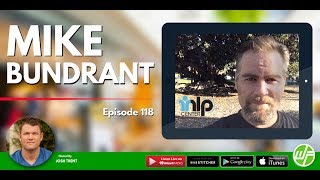
Transcript of Wellness Force Radio episode 118 (YouTube) — an interview between host Josh Trent and NLP trainer Mike Bundrant about self‑sabotage, unconscious motivation, emotional intelligence, and practical strategies for shifting from autopilot negative patterns to conscious choice. The conversation covers origins of self‑sabotage (early attachment, amygdala/survival wiring), examples (procrastination, relationship reactivity, diet), NLP’s meta‑perspective, and actionable steps to notice and own unconscious motives.
Chapters
Wellness Force Radio Feelings are essential, but they can't dictate our actions.
We literally infect each other with our emotions. We came here for a special purpose.
Let the purpose unveil itself.
Knowing without doing is the same thing as not knowing. They're not just trackers.
I'm gonna wear this, and it's gonna.
Help me do the right thing.
Wellness force Radio episode 118 with NLP Master Practitioner and trainer Mike Bundrent.
And we end up on autopilot with these really hard to see perceptual filters that actually are an unconscious bias toward negativity where we literally only see the negative options. We don't even see the positive options. It's pervasive.
What's up, my friend? It's your host, Josh Trent. And welcome back to another episode for your weekly access to global experts in all things wellness as we discover the physical and emotional intelligence we need to live life well. Support for this show was brought to you by Perfect Supplements, a company who's passionate about non gmo, pesticide free and real food supplements that fuel us for the wellness journey. Click over to perfectsupplements.com wellnessforce and be sure to grab a 10% discount by using code Wellnessforce at checkout. Once upon a time, the world was a treacherous place for humans. The we were wimpy creatures. Tigers had bigger, sharper teeth, insects had poisonous stings, gorillas had muscles bodybuilders only dream of. And the sea was filled with seemingly alien creatures. Even 99% of plants would have killed us if we consumed them. In other words, before the invention of fundamental technology like weapons farming, humans were at the mercy of their environment. This constant danger burned a crucial lesson into our DNA. Stay safe. And it's this constant need for being safe that actually stops us from growing at times. I mean, how many times have we felt the nervousness in our stomach, chest or neck and allowed that to freeze us? Deer in the headlights, reptile on the hiking trail to where we did not move forward even though we desperately wanted to. It's because there's something reptilian and primal in our brain that Mike is gonna talk to us about today. That the more we know it's there, the better we can act in the direction we actually want to go. We're learning from one of the most sought after voices in the world of psychology on why we do things like conforming to social norms, why we stay in our comfort zone even though we want to grow, and why we care so much what other people think about Us. Mike will talk to us about self persuasion and self sabotage and how we can start understanding why the brain does what it does so we're not a victim of it. We can become the victor and we can overcome whatever self sabotage has been getting in our way. Let's drop into this thought provoking conversation with Mike Bundrent. Mike Bundrent, the founder of INLP Center, NLP master practitioner, and retired psychotherapist. Mike, welcome to the show.
Great to be here, Josh. Thanks for having me. Really appreciate it.
And I think a lot of people know a little bit about nlp, which I'm really excited to dive into that with you today. We had Tony Rightn on the show last year. He's an NLP practitioner. But you have the INLP center, and I think that's a great correlation to what we're talking about today on the show, and that is self sabotage. You're bringing us this fresh perspective of self sabotage. I did some fun research on you and you actually published something on psych central around self sabotage, this pathway to destruction. I want to get clear, though, on exactly why you're so passionate, Mike. Why do you do what you do?
Man, there's really sort of two parts of it in terms of why I do what I do, in terms of personal development, nlp. I'm a former mental health counselor, so that was all I knew when I was 17 years old in psychology class in high school that this is what I wanted to do. And I'm 49 now. I've had some career detours and business and so forth, but this has been the theme my entire career. Just felt like my calling. Ever since a certain experience I had in high school and in college, I discovered NLP being a little dissatisfied with, I guess, the traditional curriculum around psychology in college. So I learned nlp. And when I became a mental health counselor and got my license and started to practice, I also started to train NLP in the United States and Japan. It's sort of been a lifelong thing that, I don't know, I feel like it chose me rather than I chose it.
No matter where you'd go, it kept pulling you back.
It kept pulling me back into it. And, you know, as an NLP trainer and as someone who trains life coaches and as someone who's always worked on my own personal development and health and so forth, I don't know, maybe five to seven years ago, I began to sort of develop this question of, you know, what happens when you have the greatest techniques and awesome methods and, you know, the right strategy that absolutely will work. And yet you either don't use it or it should work and it fails for whatever reason. I mean, we can have great tools and simply not use them or procrastinate or do things that sort of seem like they deliberately mess things up. And so, you know, why would we ever do something that is not in our own best interest? I really started to ask that question and looking at nlp, which is this awesome set of tools, and go, you know what? The truth is, it doesn't work the way that we think it should a lot of the time and what's going on there. And that's when I started to look at, take a deeper look at the issue of self sabotage and how we get in our own way. And the Aha. Solution program is kind of the outcome of that.
I feel like what you're talking about is this bridge. You know, we have knowing, then we have doing. But there can sometimes be a massive bridge between knowing and doing. So just because someone has the information does not mean, Mike, they're going to take inspired action. So we'll definitely dive into NLP later on. But I want to go back. You said something happened in high school. What happened there to help fuel you to where you are today?
Well, thank you for asking that. I haven't talked about this or even thought about it much in a long time. High school psychology class. And I thought it was a great class. But one day our teacher called in a counselor from the local community to do an exercise with us. And the counselor kind of made a big deal out of it. He came in the class, said, look, we're going to get rid of all the desk and chairs and put them around the walls of the room so that the, the space was clear. And he had to sit in a circle on the floor in the middle of the room and sort of like this, you know, whatever encounter group or whatever was there, guitars involved, no guitar, no Kumbaya, but there might as well have been. But then he said, okay, look guys, I'm going to give you a taste of an exercise that we might do in the field. And I love to do this. And he said, okay, here's the deal. All of you in this class, you're. You're trapped in kind of an underground cave and it's starting to crumble. And only some of you are going to get out. And there are some of you who are going to be near the front of the line. And those of you who are at the back of the line, you're not going to make it out. He said, here's the deal. We're going to go around the circle, and one at a time, I want you to tell me why you should be at the front of the line, which is a really interesting exercise, which basically says, why should I live while other people won't live? And in a way, it's kind of an unfair question, now that I think about it, right? But it put us in a position where we had to say something good about ourselves. And I was sort of three quarters of the way around the circle. He started on the other side of the room. And as I listened to kids respond, without exception, none of them cooperated with the exercise. Every one of them said, I don't know. I would just go to the back of the line. I can't think of any reason I would want other people to live and not me. And I was. So I started thinking about it. It's like, okay, that's understandable. But when it got to me, I just decided to do something. I decided to play along. And I said, look, everybody, I could go either way. And I don't want to say that my life is more valuable than anyone else's here, but since this is the exercise, I'm going to tell you why I should live. And so I remember being there in the moment. I told them why. My girlfriend was sitting next to me and she started to cry. And when I got done, everybody in the class applauded.
Well, you got to tell us what you said, Mike.
Oh, okay. I'll tell you what I remember. I said, well, here's the thing. When I was young, my parents got divorced, my father left, and so essentially, I was raised by a single mother who really had a hard time, and she has had a hard time in her relationships and so forth. And so I want to live not just because I have things I want to do with my life, but I want to let her know that. That she did a good job with me, and I don't want to let her down. And I was 17 years old at the time, and I went through some stuff with my mother, individuated and so forth after that. But that was my answer. I said, I want to live essentially because I want my mom to know that she, in spite of how difficult her life seems to have been, that her efforts and her sacrifice was worth it. So I have good things that I want to do in the world, and that's a big part of my motivation. That's what I remember of the answer that is incredible.
What did you think built you up to have that kind of emotional intelligence at that young of an age? Go back there. What did that mean to you?
I don't know. I can sort of brainstorm on the answer. I don't think this is something that I chose. It's something that came to me. But as I remember, sort of even back to being very young, I've always had sort of what I would call a meta awareness or sort of thoughts in the back of my head. Not just sort of being in the moment, but also sort of having a little bit of a distant perspective about people and what their motivation might be and what they're really up to. I've always kind of had that. I don't know what you call it. I would call it a meta awareness in nlp. Sort of an awareness about the awareness that I'm having. So I've always been curious and sort of always had extra thoughts about what makes people tick. And that was probably the first moment in my life in that psychology class where I realized how that stood out from other people, how it was maybe something a little bit different about me than your average person. And these are not average people in personal development. These are average people. You know, they're high school students who had to take a psychology class. Right. So they weren't necessarily interested in psychology. But that was, that was the first time I was aware that, hey, maybe this is what sets me apart from other people. Maybe it's my gift.
I think so. I mean, at that young of an age, that's not the typical mental framework that someone would have. And it's very impressive because obviously it led you to found the INLP center and do work with psych central and everything you've accomplished. And I've looked at so many people who have been successful like yourself, and there's always been thresholds, Mike, where they could have chosen to have the negative narrative lead them down a path, as you describe, of self sabotage and destruction, or to be the awareness, to be that observer. Like you had mentioned, you're watching yourself. Watch yourself. Can you define sabotage? There's so many definitions out there. How would you define self sabotage?
Well, I would define it on two levels. First, it's when you do something that's against your own best interest or stated goals or your own happiness. So simple examples would be in terms of health and wellness, you've got a great diet and a great diet plan and you want to follow it, but you don't. And you might make excuses not to it's like, well, I had a great day today and I stuck to my diet so I deserve to have a treat in the evening or what have you. We justify it all the time, but it's basically it's acting against your own best interest, getting in your own way. And I would add a second tier to the definition, which is to say consciously or unconsciously. In other words, we may not be aware of the. In fact, most of the time we're not aware of the motivation behind the self sabotage. Sometimes it might be a reaction to that we can't control. So we might sabotage our relationships. My wife comes up to me to complain about something. Clearly the best thing to do for me, her and the relationship is to listen to her complaint, to understand it and then figure out a constructive path forward that serves everybody. However, if she comes up to me to complain, I might just burst out in a reaction that only makes things worse or get defensive. And it could very well be that I'm not consciously in control of that reaction, even though it's still self sabotage and I'm not consciously aware of the motivation behind that reaction. So there's a whole unconscious realm to this of which I'm really interested in because the solution to that realm is to make it conscious. That's the first step. You can't do anything about it until you're aware. You can't make a conscious choice about something that lies outside of your conscious awareness.
The awareness part that you mentioned, that's not always intuitive for everyone. Do you feel like some of us can be born without that awareness or with a stronger sense or essentially the capacity for awareness? Is that something we learn from our parents or some people born with more capacity for awareness than others?
Yeah, I would say that some of us are born with a greater capacity for self awareness than others are for sure. And don't ask me to sort of justify that with scientific research, although that would be an interesting one to research. But I would say yes. However, to me the leverage is my belief that no matter what your current level of self awareness is or your ultimate capacity, you can probably increase it from where you are.
So then once we realize, once we're aware, once we're actually noticing what's happening in our life, what's the narrative shift between this is my fault, this is what I'm known for, Bad things always happen to me versus oh, this is happening for me to learn a lesson. How do we decide which way to go with our awareness?
There's a couple of different factors in it 1 I like the idea of going to a no fault system. This is not about blaming someone else or blaming yourself. Don't get into a situation where you're saying where you're blaming yourself for other people because that's just piling self sabotage on top of self sabotage. Right?
Yeah.
Where I like to go to is it's not your fault, it is your responsibility. So don't go to self blame, go to taking responsibility, which is first of all, let's just find out what happened. Let's just accept the fact. Once we accept that fact, then let's get curious about what the causes, what the underlying motivation might be. And so if I say to myself, look, my wife came to me to complain about something, I immediately burst out in a defensive race reaction which encouraged her to complain more and did everything we, you know, it only served to make the problem worse and me unhappy and her unhappy. So that's a fact, I did that. Now if we start with there, what could my underlying motivation have been? It was not to productively solve a problem. It was not to improve my relationship with her. My motivation was, must have been something different. So start there if you want to solve it, if you want to get to the bottom of it, start with accepting what you just did and the result of what you just did. That's a good place to start.
Whether we're looking at nutrition or exercise or just habitual patterns of thinking. I'm thinking about the connection here that you're mentioning to Byron, Katie's work and the four questions. You know, the very first question is, is it true? And I feel like that's what you're saying, Mike. It's taking that first step in the emotional inv. Because if incessant thoughts are just running our life, we're not in control and then we become more susceptible to negativity from others. I'm thinking about parental examples. If we have negative parents, which by the way, they're doing the best they obviously can based on their upbringing, if we can develop this tolerance for negativity where negativity becomes who we are. Correct.
Well, not only a tolerance, but in many ways if we look at the cold hard facts, a preference for it, kind of a default that drives us straight toward it on autopilot, where it's almost as if we're seeking out the negativity because of the tolerance we develop for it, because it's familiar. Because happiness and positivity in any given area of our life may be unfamiliar. If it's unfamiliar, we must Say then that it's foreign. And what's foreign is in a primal sense, what's foreign to us is scary. It's not safe. And so the negativity, even though we're miserable, right. The negativity can feel safer. It can feel more like home and therefore preferable. And we end up on autopilot with these really hard to see perceptual filters that actually are an unconscious bias toward negativity where we literally only see the negative options. We don't even see the positive options. I give examples of that, but it's pervasive, I guess would be the word.
It is a serious matter. But it's so funny how we are anciently wired. We have this amygdala. You know, once upon a time you wrote about was that the world was really treacherous. We were wimpy creatures, the tigers had sharp teeth. And that world doesn't exist anymore, yet we still operate in that current paradigm. Can you open that up a little bit?
Yeah. So let's say, I mean, a modern baby is born with this, with an amygdala, obviously, Right. Which is basically is a filter for what's safe and for what's not safe. And there are other factors that come into play too, which is when you're born and through a good portion of your childhood, even with good parents, you experience the world in a negative fashion, in a chronic way. And there is absolutely nothing anyone can do about that. It's just the nature of how we're raised. Because when we're born, we don't have any sense of time. We have needs, but. But we have no sense of time. Everything is immediate and therefore our needs must be fulfilled in an immediate way because we have no sense of. Wait five minutes, wait an hour. There is no sense of that. There's no sense of other people. Like, my mother has her own life and her own stuff going on. She's on the phone right now, so she can't feed me, but she's doing the best she can. There's no reasoning ability, there's no boundaries. There's no. There's nothing like that. And so when we don't get what we want or need immediately, we obviously've seen a baby enraged before, right?
A petulant child inside of all of us.
Yeah, exactly. And also no understanding of what might harm us. Boundaries. So I'm one years old. I'm about to stick a car key into a light socket and my father grabs the keys from me and I'm mad, I'm upset I don't get it. He just saved my life. But I am experiencing, I'm reacting in an angry fashion. Like, you know, he just controlled me. So there is no way for children, even with good parents, not to experience being rejected. It's like, you're not feeding me. You're not. You're not tending to my needs. And now I'm angry and hurt and upset. You just took something away from me that I wanted. You're controlling me. You're depriving me. And it's because we have absolutely zero sense of other people, of time, ability to reason and have patience. And then bad parents, neglectful parents, of course, only pile on and make it a lot worse. There are parents who do, in an outright fashion, reject their children, control their children, neglect and deprive their children. And that's going to take the existing control deprivation and rejection that a normal kid with great parents would experience. It's going to take that and amplify it. So this sort of chronic stream of negativity, the only choice we have, and it's not a conscious choice that we make, the only option is to develop a tolerance for it, to adapt to it. And in many ways, we even find ways to utilize it and get pleasure out of it. Let's put it in a context. Let's say you have little Johnny, who's three or four years old, and he's got a really controlling mother. He's got a mother says, no, no, no a lot, or what have you. And there's a really super tight line that he's got to walk in order to behave so mother will calm down. And little Johnny has a hard time with this. But at a certain point in little Johnny's life, he realizes, I can push mom's buttons, right? Little Johnny starts to sort of toy with this and start to do things that set mom off. And if you watch little Johnny, he does it kind of with a devious smile. He does it and he giggles when he gets into trouble. Yes, he's working the system. He's like, there's no escape. And so I'm going to have fun with it. I'm going to find a way to get pleasure out of it. And now if you look at, again, the cold, hard facts, little Johnny is getting pleasure out of mothers controlling nature or mother's rejecting nature. Little Johnny has learned to work the system so that he can have fun with it. And it's an adaptation thing. So, of course, from there, the amount of you just look at the world with open eyes. I mean the amount of pleasure that people can get out of pain or have a tendency to get out of pain. I mean, there are whole communities of people that, you know, they're considered sort of on the fringes of society, but they've kind of embraced taking pleasure and pain. Most of us don't associate with those communities, I presume, but some people experience.
Relief from pain and I'm thinking about athletics too. You know, there's some people that go to a transcendent state when they experience pain and then there's neuro connections that are allowing them to want to have and experience that again. But that's healthy. I mean that's not an escape. That's. That's experiencing pain in a whole different way.
That is.
We're going to take just a quick break and when we come back we're going to talk about how DNA is making us stay safe. If you've been listening to the podcast for a while, you know that energy is something we always can use more of. But how do we do this through natural foods? Unfortunately, it takes about 25,000 calories to get all the energy and micronutrients we need from even eating organic and natural foods. This is why I'm excited today to talk to you about Asahi Revive. One of the many reasons I stand behind this perfect Asahi Revive product is because you are getting four energy boosting blends in organic acai, rhodiola, rosea, organic cordyceps and grape extract. This delivers sustained energy and focus throughout the day without the jitters and the caffeine crash of that third or fourth or fifth cup of coffee. Make sure to pick up your four in one supplement. Make it easier to get some more energy today for your busy day by clicking over to perfectsupplements.com wellnessforce to get grab your Asahi Revive. Enter code wellnessforce to get 10% off your entire order. Okay, we're back. Mike, I wanna learn from your article which we're linking in the show notes about staying safe in our DNA. This is why we do things from a very basal level like conform to social norms, stay in our comfort zone, which is, you know, that's always out there on personal development websites. But I really wanna understand what you mean by that. And then also caring so much about what others think of us. Why does our DNA want us to stay safe?
It's a survival thing in terms of our amygdala, our nervous system and so forth. We want to stay alive, right? And if you, if you ever really want to get in touch with your survival instinct, I recommend that you go skydiving. I did this just as. As an experiment. And I got to tell you, if you go skydiving and take the class where all day long they're teaching you about skydiving, and then you go and jump, right? You get in touch with your survival instinct, and you have to manage that survival instinct all day long. Right. There's absolutely no question about it. Well, in addition to that going all the way back to caveman days, there is survival in numbers. You need a tribe of people around you. Today, we would call it a social support system and so forth, but we live in an interdependent society, and we do need other people. If I were, as a modern human being, an outright reject, if nobody ever wanted anything to do with me, I wouldn't be able to get a job. Nobody would sell me anything. I couldn't buy food. I mean, we cannot do it alone. And so we absolutely, on a survival level, need other people. And then the issue of approval comes into play. I mean, a lot of us like to go around and say, I don't need anyone to approve of me. I don't care what other people think. But the bottom line is, we all do. And, in fact, it's healthy. Of course I care what other people think. If I didn't care what my wife thought, if I didn't care what my students thought, if I didn't care what people in general thought of me, that wouldn't be healthy. Who knows what. What I might do. Of course I care what other people think. And I. I want to learn where to draw the line and say, well, you know what? I get to a certain point, I do the best I can, and it's out of my control. I can't control what other people think, so I'm not gonna obsess about it. But when people think highly of me, that's great. And that goes all the way back to when, you know, you're walking through the woods with, say, their saber tooth tigers about, you need your tribe, and if they. If your tribe rejects you and leaves you on. On your own, you're going to end up dead.
Yes. This is a very old system because we have this ancient wiring, which we've touched on a few times in the show where you've actually wrote about this, where if we're feeling depressed right now and living with the love of our life sounds like a dream, but when we change, the future becomes unknown. And that's what really scares our lizard brain. As far as that's concerned. We'd rather not make the change. That is really what you define as the root of most self sabotage.
Right? And so let's go back to little Johnny for a moment. He was raised by a controlling mother and he learned one. He learned that's how relationships are and he learned to take some unconscious pleasure in it. By the time Johnny's 30 years old, he's sort of a conscious adult. And you ask Johnny, hey, do you take pleasure in people controlling you? He's going to say, what? No. What, are you kidding? Johnny may even consider himself by this point a rebel. Anti authority. Don't tell me what to do. That's the last thing. In fact, if you expect something of me, that's the last thing I'm gonna do, even if I kind of want to do it.
It's really hard to be friends with Johnny sometimes.
It's really hard to be friends with Johnny. Now Johnny's a rebel, right? Johnny's got a job. Put yourself in the perspective of Johnny's supervisor. He, you line up 10 of your employees. Nine of them are basically cooperative and do their job. And one of them is Johnny the rebel who doesn't like to be told what to do. Well, which of these employees are you going to have to micromanage? Are you going to have to monitor? Are you going to have to intervene on? Are you going to have to exercise your authority with of these employees? Right? It's Johnny. So Johnny's now put himself in a position as a rebel to encourage and invite and even demand that other people intervene on him, control him, and give him what he got his entire life growing up. Johnny hates being controlled consciously, unconsciously. He behaves in such a way that he invites people. He's wearing a big sign that says control me. He doesn't know it though. And that's where we bring in this unconscious level. So in order to stay connected to people, and again, to serve that sort of primal instinct, he learned to interact with other people based on them being in charge, them being in control. He even learned to take some pleasure in that. And that's how he's still doing it. And that's why the awareness piece is so important. Because Johnny, people around him might go, you know, you can't have Johnny working for you unless you're micromanaging him because he doesn't cooperate with anything. And so to be around Johnny, to get him to cooperate, you've got to basically control him. People around Johnny might not know that. Johnny absolutely doesn't know it. In his mind, he hates being controlled. That's why he rebels and so which.
Then perpetuates the cycle of more control. And I think the way that you've painted your solution in your work is that you've been quoted as, we must expand our conscious awareness to include our unconscious attraction toward the things we hate and honestly, what our role is in attracting them. So the very thing that someone is doing with a certain personality type where they're resisting something that actually attracts the something to come in. Can you tell us about that?
Johnny's paradigm is don't control me, but he acts in such a way that he's getting controlled way more than other people would. And so as Johnny shows up for coaching, you have, as a coach, you've got this amazing challenge to basically help Johnny to see that the very thing that he complains about the most is the thing that he ends up seeking. And that's what the coach becomes about because Johnny's got to get into a position to say, okay, what am I doing with what are the results of what I'm doing? And then to begin to understand, hopefully, why would I do this in the first place and to be able to take ownership of that. And so it's almost as if Jonny can get to a point where he says, based on my background, my upbringing, based on the way I'm programmed, for lack of a better word, I am unconsciously seeking to be controlled by other people, I'm setting myself up to be controlled again, even though consciously it's the thing I complain about the most. Unconsciously, that's what's familiar to me. That's what feels safe. That's how I stay connected to my tribe. It's just loaded with unconscious motivation.
Yes.
And he's got to. As soon as he realizes that, sort of like you're walking around and you've got a pain in your left buttock and you're going, my left buttock hurts. But I don't know why. It just keeps hurting. And it's like sort of discovering that, you know there's a thumbtack in it. Right. It's like, now I can pull that thumbtack out. Right. Just knowing your left buttock hurts doesn't do a lot of good necessarily. Knowing the cause, the type of cause that you can do something about can lead to relief. And in most cases when we're self sabotaging, it's not just necessarily understanding the behaviors but understanding the absurd underlying motivation.
And I think understanding is what we're doing right now. Because I've heard from you many times in our conversation that it's the consciousness, it's the expansion of this consciousness. But that takes work, and that can be scary, Mike. And rejection sometimes can be something that we're so used to that it becomes actually more attractive than something new, than acceptance of a new possibility, really. And I think about relationships in my own life. You know, I had two years ago, I broke up. And I've taken an honest emotional inventory. And I've realized, wow, I've actually not hung out with potential new dates because I have a fear that it won't work out. And so that's actually what I'm looking at in my life right now. But that's the awareness, the inventory that is so scary to take. For somebody that is hesitating on taking that emotional inventory. What is your words of wisdom about how they can do that? How can they start to acknowledge the truth of they possibly could be sabotaging their health or relationships?
Being scared, being intimidated by it, is absolutely normal, and it does take courage. There is one concern that's usually behind sort of I'm just going to say, admitting something. In other words, let's say that I have a rejection issue. And when I get invited to a party, when I meet new people or what have you, I fear rejection. And when you look at what's going on in that fear of rejection, I am projecting. I am predicting rejection in my mind, right? I'm not predicting acceptance. I'm so used to, based on past experience, being rejected or what have you. I've got key memories or what have you, that when I look into new situations, I am predicting that I'm going to be rejected again. Consciously or unconsciously. Consciously, I may only be aware of the fear. It's like, I don't want to go meet new people. I'm afraid I may not be aware of the movie I'm playing in my head. What I'm saying to myself, that is basically saying, these people are going to think you're a fool. They're going to see right through you. They're going to look at you and know that you don't belong. In other words, I'm predicting rejection. So that's an unconscious autopilot toward rejection. And again, we don't like rejection. That's why we're afraid of it, because we don't like it. We've experienced it before. And it's really hard to get your mind around the fact that unconsciously you're predicting it. Unconsciously you are anticipating it as if it's going to happen. And when you do walk into a room full of people that you could meet, you are actually scanning for rejection and putting that lens over it. So you walk into a room and someone looks at you and you look away and you go, oh, they looked at me. They saw right through me. They want nothing to do with me. Yes, right. You're actually looking for how you are currently being rejected while talking to yourself saying, that person doesn't want that prayer. He makes more money than I do. Oh, he's wearing a nice suit, I'm wearing.
You know, and the metaphor is like, we're gathering evidence. You're literally going out there and you're gathering evidence, even if it's sabotaging. Right. So then the only way to get around this, to circumvent, to overcome the sabotage, is to understand the line between something being a legitimate consequence concern, like, oh, am I in danger? Or just noticing if we're self sabotaging. But this is kind of an indistinguishable line sometimes, Mike, how do we know what the difference is between the legitimate concern and the self sabotage?
That's an absolutely great point. But as long as I'm projecting, predicting, anticipating or seeking the rejection, as long as that motive is there, it's going to be that much harder to figure that out because I have a bias toward rejection unconsciously. I've already decided that that's the case. And so the key would be to walk that back. The hard part is to be able to say is to put yourself in a position where you can say, I have this. I'm seeking rejection consciously, I don't want it unconsciously. I'm seeking to recreate the experience of rejection and that is determining how I look at situations in the first place. That's why when I send a text to a friend and he doesn't reply, within a minute I go, he's so sick of me. He doesn't want anything to do with me. That's why that answer comes to my mind as an emotional reaction first as opposed to, you know, he must, must be busy and I'm sure he'll get back with me when he can.
Right.
The reasonable answer, but the deeper emotional answer is seizing upon that opportunity to re experience the rejection because that's what's safe and familiar. That's what we've adapted to. So to get to a place where we say, even if we use the word unconsciously, I'm unconsciously seeking the opportunity to experience rejection as much as Possible. That's really where we need to be. And people are really afraid to go there. And that's because of what Sigmund Freud happened to call magical thinking. In other words, we think if we go there, if we admit that if we own that one, that we're enabling it, that we're actually going to make it happen. If I say, okay, unconscious, I'm programmed to walk into that party and notice how everybody doesn't like me, thinks I'm a fraud, a fake and whatever, I'm walking into that party and seeking that experience out. We actually think if we admit that, that we're going to validate it and make it happen even more. And so we think we have to avoid those thoughts and turn them off. And it's the avoidance of them, actually that leaves them on autopilot. It's the resistance of them that actually allows it to continue to happen. As soon as we take ownership of it, we start to go, wow, this is a little absurd, right?
I think you just blew everyone's mind because I want to unpack that just so everyone's clear. It's not that we're scared of embracing the feeling, it's that we're scared that if we even go there that it will perpetuate and it's absolutely not true. It's really about changing our motive and exploring why we don't feel that we're worth this new motive. Do you feel like at the end of the day, Mike, a lot of these strategies and techniques which we've explored essentially come down to am I operating from a place of self worth and love? Or am I operating from worthlessness or fear? Or is that too much reductionism?
Thinking I would be on a parallel path and say, am I operating from a place of conscious intention and conscious choice? Or unconscious intention and unconscious choice? So when I walk into the room and thoughts go off in my head, or it's 9 o' clock at night, I've been good on my diet all day and all of a sudden thoughts go out, go ahead, you deserve to, whatever, you deserve a treat, or screw it, or whatever, whatever those thoughts are. Am I operating from a place of conscious intention and choice? Or unconscious intention and unconscious choice? And if it's the latter, if it's just autopilot thoughts that are driving me towards something negative, then I've got to make that unconscious intention and choice conscious. Do I want to have any influence over myself or not? I've got to make it conscious, which means I have to own that I have to Say, okay, right now I want to find an excuse to, to eat this donut. So I feel miserable and like a failure and like I can't do anything right. That's what I want to do right now. And I can see myself, feel myself eating the donut afterwards, beating myself up, feeling like a miserable failure. Because that's an area of familiarity to me. That's the, the rut that I've been stuck in. That's the devil that I know. Whatever you want to say to yourself, you've got to own that drive within you towards self sabotage. Because as soon as you own it, that's when you start to say, what choice do I have? Do I really want to drive my diet off a cliff here? Do I really want to be sitting an hour later on the couch feeling like a total loser and so forth. You can start to have choice. Not if you avoid it. Not if you go, no, no, no, no. Then, ah, then you kind of give in or whatever. No, you got to own it.
What I'm hearing from you is this permission to feel. It's like giving ourselves the permission to explore something and not being scared. I mean, for a long part of my life, I think most of my 20s, I was just scared to feel things. And then as I got into my 30s and I started to understand the power of emotional intelligence on our wellness, on our physical body, everything that we do in our life, that's when I started to become more interested in this field of study. And I think what I'm hearing from you so much is consciously take responsibility for your life, identify the defense mechanism that we all might have, and start changing our motive and feeling that we're worthy of that motive. Mike, this has been such a great conversation. This is the last round of the show. It's seven fast questions. Now, this is a surprise. I didn't tell you these. So are you ready?
I'm ready.
So defining this familiar territory, what is a unfamiliar territory in your life that you stepped into?
Unfamiliar territory in my life that I stepped into was when we developed the AHA Solution program and I was Johnny the Rebel. I stepped into that when I realized that if anybody expects anything of me, I'm automatically motivated to do something else just because I don't want anyone controlling me. And when I realized that the people in my life who are controlling over me, they are controlling over me because I typically don't cooperate. And then they come to hold me accountable. And when I realized that it felt bigger than me, it's like, okay, no, no, no, no, no, I can't do this. I don't even know who I would be without this inner rebel. And so I talked to my wife Hope about it, I explained the whole thing to her and I said, I'm going to make a real effort to acknowledge when I'm rebelling for the sake of rebelling and begin to cooperate with you. And that cooperation was such new territory for me. And it was wonderful. That was the thing, it was wonderful. We were closer. Arguments that were typical dropped away and yet still I found myself weirded out by it. Right. So I had to adapt to that. And I would say over a period of 6 months I adapted to it. And one day I realized, hey, I'm not doing that rebel thing anymore. I kind of don't know where that, where that went.
And the take home on that is it took you six months plus. It's not something where I think we're so wired now if we're not aware for immediate gratification through social and phone and everything else. Good things take time, especially when we're making these new neural connections.
They absolutely do.
Question two, how can NLP help us heal from self sabotage? Really? What has NLP given you in your life?
It's that meta perspective. I mean NLP is filled with all kinds. It's like a giant toolbox. And a lot of life coaches come and mental health counselors, so forth, they come to get the toolbox. And that's what I was interested in in the beginning too. But it's really the meta perspective. It's the ability to look at things structurally, sort of. It's not what we're thinking, it's how we're thinking. It's how the thought is literally structured in her mind. That's where the leverage is. It's to be able to step back and look at yourself or your situation a little bit more objectively so that you can say what really is going on here and take a neutral observer point of view on your life and sort of that ability probably that's sort of infused throughout NLP to me is probably the single most valuable personally.
And we didn't have enough time to go deep into NLP today. I think that's a show of its own. But I'm curious. We talked about stepping into the party, looking for evidence of rejection before we even know it. What's something someone can do tomorrow morning to get clear on a new motive? That trust in themselves that they can get to look for this new evidence.
There's a little formula which Is when you think about your day and you think about what you get out of your day that you don't like. What happens during your day chronically that you don't like. Identify that whether it's rejection or whether it's whatever it is you experience or feel, procrastination, distraction, an argument, you name it. This happens in your day and you don't like it. Do an absurd assumption. Just assume for a moment that even though you don't like this, a part of you is seeking it out. Assume a part of you wants it. Again, this is not, oh, I walked outside and it was raining. You can't control the rain. But think of something that you know, theoretically you could have some influence over or control. And assume a part of you wants the negative outcome. And then ask yourself the question, if a part of me wants the negative outcome, what about this negative outcome is familiar? What about this negative outcome is more desirable to me than the opposite? Then go throughout your day and just assume that you're looking for trouble. Right? You're looking for this problem and catch yourself creating it.
Yes.
Catch the moment of choice by admitting it by consciously stepping into the driver's seat and saying, I understand, I'm looking for this. You're not gonna make it happen more, you're gonna make it happen less. So that's what I would suggest people do.
We look at our weight gain and our obesity epidemic, Mike, in the country, it hasn't stopped. And actually it's exponential in its growth. Why do you feel like the connection between our self sabotage and this obesity epidemic is not more mainstream? Why are people not interested in that exploration compared to just diet and exercise?
Diet and exercise are, of course, extraordinarily important. And they're not threatening. They're tools that you can put to use. And they're very positive and they're very effective and so forth. And again, the big gap is why aren't we using the tools that we need? Everybody with a weight problem probably can list 10 things that they could do today without professional help to begin to make progress, right? So the disconnect is. And applying what we know, it is just one absurd to think that we might or a part of us might be actually seeking out the misery.
Who wants to admit that?
Who wants to admit that? And we're just not trained on how we operate on an unconscious level. I mean, we have the amazing defense mechanisms in place to deny. And the big issue is to come out of denial. And really there's nothing but hope and healing and more Self control and more choice in that. But it's a terrifying, terrifying area to go into for a lot of people.
Well, I think it's something that even though it's terrifying, the good things in life always come when we push through a fear pr. So if you're listening, if you're feeling compelled by what Mike is saying, reach out to Mike specifically, you can reach out to me. Mike, three more questions and really, really big one that I wanted to ask you. Ever since we started talking the future. What are you most excited about for the emotional intelligence, really expanding of consciousness? What do you see on the horizon as a possibility for this? How it's going to impact our country.
As individuals and as a country, as a culture? I mean we need this as much as we need anything, right? That just really expanded self awareness and the ability to recognize our self sabotage. What I personally am excited about since I came out with the AHA solution and wrote your Achilles eel, it has had a really great response. It's led to over three or four, four years, sort of a trend at the INLP center in terms of teaching NLP and adding an element of it. I'm personally excited in terms of over three years I've developed some tools that I've never published before to help people quickly and easily identify these unconscious drives in their life. And so I'm writing a follow up book and I want to publish it in a way that it creates a community around the book and is interactive, broken down into really small chunks so that people can sort of implement the principles in their life and be part of a community where they're getting feedback and so forth. So I'm trying to develop a new way of sharing a book as opposed to just publish a book on Amazon that's actually in a room. And I'm really hoping that the skills will integrate and word will spread, will spread that way.
What's your favorite way, Mike, to change your mental or physical state? In other words, how do you get out of your head and into your body?
What I do to get on my head and into my body is close my eyes and I do a little meditation that is just an awareness meditation where I just do a body scan and notice what. Since sensations are in my body, I don't try to change them. If it's good, it's good. If it's uncomfortable, it's uncomfortable because I find that as soon as I notice an uncomfortable feeling and put my conscious attention on it, that feeling starts to move and process and it's not that Big of a deal. So I just do an is what it is body scan and just be in my body and feel what I feel until I naturally move on from that.
That is a tremendous answer because again, we circled back to this feeling of oh my gosh, it's uncomfortable. I'm either going to give myself the space to explore it or not. And that I think is a huge building block for emotional intelligence. Last question. Mike, what is wellness to you? You've had this incredible career and you do so much work for up leveling this consciousness, this global consciousness. What's wellness to you now in this phase of your life? How would you define wellness?
I'm going to give a different kind of answer here. Wellness for me is learning to tolerate wellness, learning to tolerate happiness, learning to tolerate success. And I use that word intentionally because given the background that I came from, certainly what was more familiar to me would have been unhappiness, poverty, and sort of embattled relationships. And when you come from that kind of background or even you have one area of your life that is kind of embattled and it's more familiar to be unhappy in that area of your life, you develop this huge tolerance for it. And by the same token, you're not so tolerant of happiness or success or freedom or what have you. And literally, people who have been unhappy for a long time, they need to learn to tolerate happiness. Happiness can terrify people. When people get happy or successful, they start to get worried that one, it's going to go away, two, something bad is going to happen, three, I'm going to mess it up, four, everyone's going to expect too much from me. They start, they literally talk themselves out of it because they're not tolerating the happiness well. So for me personally, the more happiness and success and sort of well being that I learn to adapt to and tolerate, the more successful I am. So that's my thing. I want to learn to tolerate as much goodness as I can.
I think that was probably the third time on the show where I took a deep breath and I think people are feeling your message very clear and it's words that we're not used to, Mike. So thank you for introducing us to this new paradigm, this new way of thinking when we understand tolerating happiness. I've never heard that before. Really, really incredible conversation with you. Where can people learn more about what you're up to this year?
Our website is inlpcenter.org that's kind of our main website. I would just refer people to that in general to browse there. You can also find me at blogs.psychcentral.com NLP that's my blog on Psych Central.
Thanks so much Mike. I want to pause for a moment and just acknowledge the work you're doing in our wellness world, both for physical and emotional intelligence. Thanks for what you do man.
You bet. Thanks for having me. Really appreciate being on your show.
Josh hey my friend. Thank you for hanging out and growing with me on today's show. Remember to hit subscribe Share this podcast with somebody you care about that you think gets to hear this message. Support the show by leaving a five star review for the podcast right now simply by tapping on your show artwork. On your iPhone, click that purple link that says Review this podcast. It helps the show reach more conscious and smart people like you and your voice will attract more world class guests that want to come on the show. So let them hear your voice. For all the downloads, videos, links and free resources mentioned on the episode, go to wellnessforce.com radio and while you're at my house on the web, join us in the Wellness Force Community newsletter on that page and I'll send you five, four free guides around staying healthy with your eating, moving and sleeping while you travel. But don't let this conversation stop here. Join a group of people like you over at the Wellness Force Community Facebook page. This is where we talk about the things that really matter. We share our wins, inspirations, struggles and a lot more. So join us. Tap on the show artwork on your phone and hit that purple link that says Join the Facebook group and I will welcome you at the door. Okay, now you get to go out into your world and create impact for the people that you care about. So until I see you again real soon, I'm wishing you love and wellness.
More from Josh






Your child's future start before pregnancy... and even before conception! #podcast

MD Reveals: Your Healing Creates Your Child's Reality (The Souls Coming In Need Strong Bodies)



