ACTIVATING YOUR INNER COACH With SEALFIT's Jeff Grant, Author "FLOW STATE RUNNER"
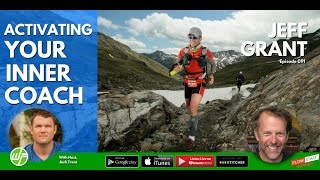
Podcast interview (Wellness Force Radio, episode 91) between host Josh Trent and coach/author Jeff Grant (Flow State Runner). Jeff describes his shift from a corporate career to endurance coaching, recounts extreme events (Kokoro, Marathon des Sables, UTMB), and explains practical mental training: a four-stage flow model (struggle → release → flow → recovery), an "inner coach" framework (five coach-voices: bouncer, teacher, guide, muse, motivator), emotion-focused practice (training with anger, love, jealousy, etc.), visualization/run-simulator and adversity checklists, plus balanced use of tech (Muse headband, Strava, breathing apps). Episode includes sponsorship and giveaway details.
Chapters
Wellness Force Radio.
Feelings are essential, but.
They can't dictate our actions.
We literally inspect each other with our emotions. We came here for a special purpose. Let the purpose unveil itself. Knowing without doing is the same thing as not knowing.
They're not just trackers. I'm gonna wear this and it's gonna.
Help me do the right thing.
Wellness force radio episode 91 with ultra endurance athlete and author of Flow State Runner coach Jeff Grant.
Many people will be pursuing that quantitative goal for a reason that has nothing to do with their body or where they are in their life. Giving yourself permission to not always be pushing yourself toward quantitative goals. You've got to give the coach something to focus on. You've got to direct the mind somewhere or the inner critic will take over. We have tools, we have ways to help cultivate flow in our lives. So it's more likely that we'll get into flow and be able to stay in flow when we want and transfer that flow into other areas of your life.
Welcome back to another episode, my friend. I am your host, Josh Trent. Thank you for spending your time with me here on the podcast. This is where every week I'm bringing you access to global experts in all things wellness, behavior change and new technologies. On this podcast, you'll learn from exceptional people who are dedicating their lives to being a positive force for our physical and emotional wellness. My intention with the show is that together we we'll discover the connections between our emotions and healthy habits to live our best life and enjoy the process. This episode is brought to you by Perfect Supplements, a company I'm stoked to partner with who actually walks the talk with their values of non GMO pesticide free real food supplements that fuel us for the wellness journey. Head on over to perfectsupplements.com wellnessforce Enter code wellnessforce to save 10% off your entire order. What's up my friend? It's your friend, Josh. I'm so glad you're back with me here on the podcast because today this is the second to the last episode for 2016. That's right. It's been an incredible year, hasn't it? What a year of growth. Now, before I get into our guest today, coach Jeff Grant, I wanna thank you so much for your energy and your voice and your reviews and your messages and your social media clicks and posts and all that good stuff because we have grown so much this year at Wellness Force. And to thank you, if you sign up for the newsletter, I'm giving away four guides this week. And if you're already on the list, you know these are great guides that you can use in 2017. How to stay healthy on the road while traveling, what kind of devices can help you beat decision, fatigue and some other things. I've pulled over the past 50 episodes this year for Wellness Force, so sign up for the newsletter@wellnessforce.com news. Let's talk about today's guest, Jeff Grant. Coach Jeff Grant. I actually heard about his work five years ago through SEAL Fit. He had done a Kokoro camp which is, if you don't know this, a 50 hour nonstop no sleep crucible modeled after the US Navy Seals hell Week and designed to teach people mental toughness. And I'll be honest with you, it does. I'm gonna be signing up for my birthday April 29th for the 20x event. Now that is kind of like where they smash the 50 hour Kokor to 12 hours. If you want to join me for that, please reach out to me. Josh wellnessforce.com I'm actually looking for one extra teammate that's looking for a once in a lifetime challenge for both body and mind in 2017. Now today's show is for you if you are an athlete, if you're a runner, or if you're somebody who's just getting back into their health and wellness program. On how to achieve flow state on and off the trail. Jeff is going to break down his mind training tools, the power of visualization, how to break through physical and mental barriers, as well as how to turn down the volume on that inner critic and turn up the volume and awareness for our inner coach. You'll discover the four stages of flow, how we can properly tap into and use those for the most effective practice, whether it's exercise or living life. We'll also talk about a few key chapters of his book the Flow State Runner, which is bringing the best ideas in fitness training, mindset and lifestyle transformation together with passion, technology and a surprisingly creative approach to help people bridge that gap between health, wellness and and their performance goals. Jeff has a 20 year background in endurance and adventure sports. He has finished some of the toughest events on the planet including the Marathon Desables, a week long stage race through the Moroccan Sahara and Altra Trail du Mont Blanc, 166 kilometer extremely mountainous run in the Alps and beyond. Jeff's endurance background with his coaching and as an athlete. He's also a qualified yoga teacher with over 600 hours of education and 20 plus years of practice. Jeff is a motivational speaker, a coach and Now a published author with his new book, Flow State Runner. You're really going to love this conversation as much as I did. Let's jump right in. No further waiting with coach Jeff Grant. Jeff Grant, welcome to the show.
Hey Josh, I'm so happy to be on the show finally.
Me as well. You know you're in Switzerland today. I am in Encinitas. This is so beautiful. Technology. We're going to talk about technology today and Flow State, how that relates to running and showing up powerfully in our life. But just how cool of a moment is it that you can be across the world and we're connected through Skype for free? It's pretty incredible.
It is. I feel like we're in the same room together. It's awesome.
Today's topic so. And I think we haven't really dove in as deep as I want to go, so I'm excited, man. This is Flow State Runner, Jeff, we're going to get into your background man, but tell us about the new book as we go into your story. Why did you even write Flow State Runner? Did you see a need in the industry that wasn't being addressed?
The need I saw was from coaching endurance athletes and hearing their stories when they came back from a race. And I would do the best job I could as a coach to help prepare them for a race and. But then in the race moment, particularly with ultra runners, they would have huge moments of adversity. Maybe a storm comes through, it rains through the night or there's snow or something goes wrong with their body. And they would describe what would be happening to them, what happened to them in the race and how they responded. And as I listened to them, I wanted to be there in the race. I wanted to be on their shoulder whispering in their ear some type of message, some type of coaching message to help them through whatever that adversity, whatever that low moment was. And as I kept listening to these stories and really wanting to be there, I thought I want to find a way to help create a more powerful inner coach's voice in these runners ears and some way that they can tap into some ideas I have or ideas other great coaches they've worked with have and reuse them when they need them the most. And that just got me excited about how I could pull together mental training tips, some of the physical training tips that work the best and just attitude advice, package it in a way that runners could actually remember it six months or six years after they read the book.
And this book I don't think is Just for runners, because flow state is something that Jamie Wheal talks about in the Flow Genome project. And a lot of people that are in the corporate world are focused on flow as they are with mindfulness. But you came from that corporate background, Jeff. I mean, in your mid-20s, like, that was your focus, right? I mean, you were in corporate America. Your health was actually declining. And it reminds me of a previous guest we had on the show, Darrell Edwards, and he talked about the same paradigm where in our 20s, as men and women, we focus so much on our career that our health takes a back seat. You were actually gaining, like, 10 pounds a year, right?
Yes. As I entered my mid-20s, I was completely sedentary, overweight, and just on a dangerous path. And thankfully, I realized that I had good guidance to my family members and listened and decided to change directions. But I was so absorbed in working and also just in bad nutrition habits and lack of exercise. And once I made the to change, it stuck with me all the way into my mid-40s now and made a massive difference just in my happiness in life.
You said that now you're well into your second career. A lot of people listening that can relate to this, Jeff. You know, they might not have the body they want right now. They might be in a career that's not giving them fulfillment or not on alignment with their purpose. How'd you make the jump, man? A lot of people might be interested in that bridge between where they are now and this life that they want to create.
Yeah, really good question. And I worked in IT and management around it, and worked for a global company, traveled a lot. I had a very stressful job for many years, and I chose endurance sports as a balancer. So I thought, okay, I'm working all the time. I'm so stressed. I will create balance by doing Ironman triathlons and ultramarathons. And in some way, it worked for stress, but it also ran me deeper into the ground, and it tore my body and mind up a little bit. So I was riding a very. A very fine edge on what was helping me thrive and what could be tearing me apart. And the whole time I was doing that, I was becoming more and more passionate about how to get more out of the body, get more out of the mind. As I got attracted to larger and larger challenges, physical challenges, I wanted to find a way to help other people do the same thing, because I got great value out of even attempting big races and having that as a big goal to offset the work stress at the same time. So I decided at one point that I just my true self, my authentic self was in coaching. And I had this job that brought me to Europe. I worked in Amsterdam for a while and then it brought me to Switzerland. And it was a good paying job, a very stable job. I wore a suit every day. I felt like I was acting a different character when I was in that job. But my heart was calling for me to do something different. And that call became so loud that I decided I had to do it. And I made the leap. And making the leap was one thing. So I left the company. I finally said no to another relocation and decided I would stay in Switzerland. I would set up a coaching business. And I set it up. Didn't really know what it would look like. I had been doing online coaching for endurance athletes for a few years on the side, but I didn't know what it would look like as a full time thing. And I thought maybe I would open a training center or a CrossFit gym too. And a month into this, with me earning only I think a few hundred dollars for that month, the company called back. And the company offered me a job, a consulting job. Come back as a contractor just for a few months, help us finish a few projects, will pay you really, really well. And I thought, ah, I could earn in the few months what I would earn as a coach maybe in a couple years. And this would give me seed money to buy equipment to start a gym. And I was so tempted. It seemed like it was such an easy option to come back and take the money just. And then I decided no because it felt a bit like a drug. And if I came back for three months, then why not six months, why not a year? And if I was working really hard for that year, then why not get a new car or take a trip somewhere, some expensive trip and use the money that I was working so hard to earn as a reward. And I thought no, I would rather be hungry, I'd rather be hungry and have to figure it out. I thought there's some huge motivation that's there if I don't take the money and I have to figure things out on my own. So I called the company back and said, no, thank you, I'm going to do this on my own. And then I was fired up to.
Make it happen, man. And that was over six years ago now. You've built this incredible business for endurance athletes. I actually met you through the Sealfit community, Mark Devine's community. You opened a CrossFit gym where you live In Switzerland, you've coached so many people for ultra endurance athletic events and you discovered your love for writing. You've done this book. I mean, all that came from that turning point, Jeff, where you decided to say no to the sure thing.
Exactly. And it made me laugh because years later. So a year ago, I was about 80% finished with the book, and I think I had been 80% finished with the book for almost a year, so it was difficult to finish that last bit. And I got another job offer to return to my old industry to help a startup company. And I thought, here it is again. I'm so close to the goal line to be able to focus on the book, to focus on finishing the book. I gave up a lot of work. I stopped teaching as many workshops, I stopped teaching as much at the CrossFit gym. So I scaled back my business in so many other areas that I really did need the income. And here is this great offer and if I took it, I. I would never finish a book. And I thought about it and said, no, Called them back and said, no, I really want to finish a book. And maybe I only sell 10 copies of the book, but once in my life, I want to finish this. I want to finish a book.
How do you think your training in endurance led to your mental state? We're going to talk a lot about the different sections in your book, one of them really being about flow and the technology we can all use to be in flow. But how do you think you're training in physicality directed you towards growing in your mental state? I mean, was there a moment that you knew, wow, all that physical training that I've done has allowed me to execute on the things that I'm really wanting for my life. Or was that more of a cultivation process?
Yeah. One important thing that I want to share with the listeners is I don't consider myself an elite athlete. I've done some very crazy, very long, ultra endurance races, but I've never won races, never been on the podium for races. So it was always a struggle for me. The first Ironman triathlon I did, I signed up for it when I was still overweight. And I watched Ironman Hawaii on TV and they looked so fit, they looked happy. And I decided I wanted to look like them. And if I would do an Ironman triathlon, I would lose weight and look like that, even though I didn't really know what was involved in an Ironman triathlon. So I signed up kind of blind for it and I went into it and losing weight along the way and discovering every runner's injury, every cyclist injury I think I could find along the way. And I suffered through that first finish, finished it. It took almost all the time in the time limit to finish, but finished it. But that taught me what it was like to make a transformation and to suffer and to be thirsty for the knowledge and want to find the kind of knowledge for the body and the mind to help get through a challenge like. So, as I grew and went to different types of races, different. And got into ultramarathons, I. I was always finding myself in some type of struggle, whether it was to finish an extremely long race or to. To. To meet some time goal. And each one of those struggles unlocked lessons. And those lessons are lessons that I later used to coach people.
And a lot of those lessons are in the book. Let's talk about flow, Jeff. It's something that I think everyone's trying to find. Everyone wants to be in that flow state, but there's certain tools, there's certain mindsets and techniques we can do to get there. But before we jump into that, man, I mean, how would you describe flow? What's your definition of being in flow?
Yeah, for me, flow is when time ceases to exist and you merge with the activity that you're doing, such that you forget you're doing it. And it's just this beautiful. This beautiful moment that appears lost in time. And it's in those moments of flow that I found the peak performance. And when you come out of it and you look back and you think, wow, that run was amazing, or I just spent the whole morning doing this work, and I felt smart and I felt confident, and it was a wow. This is the me that I aspire to be when I'm at my best. When you're in that flow state, it's a wonderful thing. And I think most people who have found flow in sport or in music or in other areas of their life, they want more of it.
Yeah.
And it's not. We don't yet have an app, a flow app, where we can just turn flow on and schedule it and turn flow off. I'll be excited once we have that app, but we have tools, we have ways to help cultivate flow in our lives. So it's more likely that we'll get into flow and be able to stay in flow when we want and transfer that flow into other areas of your life. One of the most beautiful things for me is if I can find flow in a run or find flow with music. And I love Music and then transfer that flow into my work or into another area of life. Then I feel like you're. It's being cultivated across the board in different areas. And that just makes you feel more alive and more fulfilled.
And really we're talking about being present in the moment. This is like a full enjoyment of the process of any activity. And there's many ways to get there. I mean, would you say that there's a template that people can use, or is there no such thing as a template for flow?
There's been a lot of research in flow over the years. And you mentioned earlier the flow genome project. The book the Rise of Superman was a huge inspiration for me. I really enjoyed reading the book and it inspired me to read the original research from Professor Csiksikmihalyi. There are stages of flow, and the first stage of flow is struggle. It's very important if you're going to cultivate flow, that you put yourself into situations that take you out of your comfort zone and that put you in a struggle. There is a framework for flow. There are some key stages that the research shows us in flow. Once you have struggle, you have to have release. Think of it this way. You're in a run and there's a hill that you have to run and it's in your path and you have to go up that hill at the beginning of the run. That would be an example of a struggle, an example of a release. Which is the next phase that has to happen is you find something to laugh at and you find something that gets your mind off of what that struggle is. It could be completing the hill. It could be realizing there's a rainbow out or it's a beautiful day, or it's something that actually gets your mind off of focusing on how terrible whatever that struggle is. And flow tends to happen with the struggle, with the release. Flow is the third phase, when you actually are in this moment of flow. And then the fourth phase is the one that a lot of endurance athletes overlook. And it's recovery. There tends to be an expectation for so many athletes that they can just be on at all times and that they should be. That every run they do, every workout they do should be full on in flow or as close to that as possible, and then the same time, the next time. Recovery is extremely important if you want to continue linking your cycles of flow together. So giving yourself permission to have time off, giving yourself permission to not always be pushing yourself toward quantitative goals, which is another big coaching point I like to make to athletes and it's interesting.
Because the same paradigm for flow in athletic performance can be applied to corporate performance, job performance, life performance. Who doesn't want to be in flow with their family or at their work or in their running or in their training for CrossFit and whatnot? You've actually been through, I believe, Jeff, the Seal fit Kokoro, one of the most challenging things that anybody could ever do. I mean, this is 50 hours of exercise. You completed this. How did you drop into flow? Was there the stages of struggle, release, flow, and recovery in Kokoro? Kokoro, or are there some athletic events that you just can't do that?
Yeah, I think Kokoro is a great example. This was one of the most meaningful, transformative experiences of my life. I completed kokoro back in 2010. I fell in love with the approach that Mark Devine has with Seal fit and unbeatable mind. I fell in love with it in the. In the moment. I went through Kokoro, and it absolutely changed my life. And eventually I went back, started interning, and worked my way onto the coaching staff. And I coached at over a dozen kokoros, so I got to see it many, many times from the coaching side and then experience it deep that first time as an athlete. And I can just think of one story. Kokoro in itself is a struggle. The entire thing experience is a massive struggle. But there are some beautiful moments of release that happens that lead into equally beautiful moments of flow. And the one I can think of is being in the ocean middle of the night. And I love the ocean. I love diving, I love swimming. But there's something about being in an ocean that's cold in December, in the middle of the night, when you're just linked arms and laying in the water, and that really brings out the demons. And for me, for all of Kokoro, I love the physical things. I actually had fun with most of the physical challenges. The cold in the ocean really unraveled me. And we're laying in the ocean, the waves are crashing on us. And we had two Canadians in our class. And the Canadians started joking about how this felt, the water temperature, which I felt like there was ice floating by us. It felt so cold. They joked that it felt like Canada in the summer. And then because they made that joke, we all started to sing O Canada. And there was something just being in the Pacific as waves are crashing over us, we're freezing cold and we're singing O Canada. That was very funny. And we all forgot about how cold and miserable we were we were just enjoying life and looking up at the stars and laughing at how crazy this experience was. And then we went on to another evolution and we performed like superheroes. We felt fantastic after that. And that was the closest I had ever had. An extreme low moment with a moment where I felt invincible and I felt so strong. And it took the struggle, it took having something to snap us out of feeling sorry for ourselves. And it made it just a beautiful learning experience.
Man, this absurdity of the moment, that's what I'm hearing in this release phase. You know, someone that finds humor in a really tough situation. And whether it's in Kokoro or a really stressful week, my brother has a full schedule. He has three kids, he's always moving, always doing. And I sometimes see him laughing at the absurdity of a stressful moment. Would you say that this release piece in the flow cycle is the hardest or are there other ones that are harder to achieve? Which one really challenges most people you work with?
Well, as I mentioned, recovery is one that gets overlooked the most, especially from endurance athletes that are just pushing themselves to perform. To perform, perform. Many, many athletes take what they do too seriously. And I'm going to preface this and say if you're a competitive athlete and you're training for specific goals to win races or specific time goals, there is absolutely a moment to be extremely serious about what you're doing. However, many athletes apply that for all of their training and all of their racing. And I've seen burnout over the years and this, this keeps me up at night. If I start coaching an endurance athlete and they're training for five big races in a year and each one of them, they absolutely have to have a personal best or the longest they've ever run or there's some big goal that they need to achieve. I start to worry about them in five years because I could coach them to one goal, to one big goal. If they want to run a sub three hour marathon or sub 2:45 or some big goal like that, that's something that's doable, but at what cost? And I always like to ask them that question because ultimately I'm excited when I can help someone be an athlete for many years and perhaps their whole life and not fry them and burn them out in a one time pursuit. So I'll absolutely support people going for quantitative goals. We'll make big efforts and I call these moonshot races. There's sometimes it's so important to achieve a goal that people will make major sacrifices Even move to different places in the country or leave jobs. But they need to ask the question when is it worth it to do that? And when do they need to take a step back and consider the more qualitative experiences? One of the most beautiful races I ever did was a marathon with my best friend. And it was a slow marathon. It was his first marathon and I ran it as his buddy and I gave him motivational notes as we went. And, and for me that experience was about being with a great friend. It wasn't about what a number is.
When I hear you talk about the people that are running for a specific goal that might crush their body in five years, what about our psychology? If you're an athlete or if you're an A type personality or if you're an achiever, why do people say I'm going to accomplish what I'm accomplished now and I'm not going to care about my body later? Like what piece are they missing? Is it an awareness piece? Do they just not know that if they push that hard it could possibly have deleterious effects on their future? Is it more ego driven? I mean, why do you think people focus so much on goals that are in front of them this year without care about their health in the future?
I think part of it is ego driven and I've gotten this question a lot over the years. I'll have a runner come to me and they'll say will you coach me to a sub 4 hour marathon? And that's all they'll tell me. And my answer is no. I'm going to ask you many questions before I can even answer that question because I don't even know if running is a good thing for you and your life. I don't know if sub 4 makes sense, sub 3 makes sense. I don't know if we even need a time goal. There's so many other things I would want to learn about a runner before I push them down a path that may not be good for them. Many people will be pursuing that quantitative goal for a reason that has nothing to do with their body or where they are in their life. Maybe they're under incredible pressure at work and their brother in law ran a four hour, a sub four hour marathon last year and they want to be seen in the same light and decide that they need to be able to do that. And it could be that trying to get their body ready for that will create downsides in other areas of their life that they're not going to want. They're not going to be interested in, or maybe we need a more ambitious goal for them, or maybe we need to have them in triathlon because that could open up experiences to do things with their sports spouse or their kids or something like that. So I find that a lot of people will come into these athletic goals to create motivation in their life, which is a great thing, but without really weighing what it would mean to have that goal in their life and what they would need to change or reorient in their life to be able to do it.
You talk about in your book so much, this inner coach model, and you actually write hiring the best coach in the business yourself. What do you mean by that? I mean, what is our inner coach versus our inner critic? We've talked so much on the show with different guests about our inner critic, but this inner inner coach piece is new.
We all know the inner critic. We all know the voice that pops up that tells us we cannot do something, that we should quit something. But there's another voice that is in all of us, and it's that voice that tries to coach us to accomplish something or to not quit something, or really just to believe in ourselves. So I call this the inner coach. I teach people, though, to think of that inner coach having different voices. And I'll give you an example of the different voices. And this example will make fun of myself a little bit. In one of my coaching experiments gone wrong the first time, I coached a CrossFit class. So I was trying to take my endurance sports background, learn something about strength and conditioning, and I started doing some CrossFit coaching back in 2009. Very first session, the athlete's doing wall balls. So they're throwing the medicine ball up on the wall, doing squats after it' it. And I'm coaching in one voice, and I'm coaching in the voice that's the most natural for me. And it's a very encouraging voice. So I'm shouting very positive right beside them. Come on, man, you can do this. You got this. You can do this. Come on. One more rep. One more rep. He did about five reps, and he throws the medicine ball down and looks at me and says, everything you're doing right now, everything you're saying and the way you're saying it is making this worse for me. And my heart dropped because I thought I was being a good coach. I thought I was helping. I was doing what I would want someone to do for me. But this is not what this person needed at all. This wasn't the person's style. So I was giving them the motivator, coach's voice. And that's not the voice that person needed. The person needed a different voice. It could have been a simple cue or an instruction. There was a different way to reach this athlete and it was different than what I was doing. So I learned a valuable lesson then. And then when I went on to start coaching at sealfit, I saw the many different coaches voices that were used by the coaching cadre. And the one that we're familiar with, those who have seen videos on YouTube is the kind of aggressive, the very strong, the very demanding coaching voice, the real military style coaching voice that pops on YouTube videos. You can see that. But there are many other subtle voices that are at play that you really only know when you've gone through these experiences. And it's the voice of helping build confidence. It's the voice of giving technique, instruction, or helping guide someone, or helping guide someone to guide the rest of the team. So I got very fascinated with how the different voices can work when you've got a team of coaches working with a group. And then I thought if you can identify those in your own mind and identify when you need a certain voice to help you achieve what it is that you need to achieve, then you've actually, you're building your own best coach in your mind. And I instruct athletes to think, you know, think of the best coaches they've had in their lives and what, what those coaches said or did that helped them. And most people can think of some coach or even some teacher in a certain approach they had. And there's a different voice used for different situations.
A big part of our emotional health comes from how we feel in our body and how satiated we are throughout the day. I mean, it's hard to treat other people well and think good thoughts if you're walking around hangry. One of the best ways to cure satiety and satiation is to add in powdered collagen to your drinks, your waters and into your foods. I use perfect supplements. Collagen. It's sourced from 100% grass fed cows. That means there's no hormones, pesticides or synthetics because these are healthy cows that eat grass while the sick cows eat corn. So beyond these healing powers of collagen for digestion and joint health, it also has 20 grams of protein in two scoops, which helps to curb appetite and increase that satiety. One of the cool things about this collagen is that there's individual packets you can, you can Mix in water and you know what it tastes like water. I mean, all of a sudden my glass has 10 grams, 20 grams of protein and all the health benefits of having this non GMO pasture raised collagen in my bloodstream. So don't walk around hangry, pick up your grass fed collagen. Feel better in your emotional body and your physical body every day. It's part of the Wellness Force radio bundle and it's heavily discounted just for you. Click over to perfectsupplements.com wellnessforce to save 10% off the already discounted package and get more wellness in the process. How do people get in touch with this inner coach though? I mean, everybody's life is different and one voice might not work for one person like it would for the other. But our internal coach, I mean, what does that look like to actually tap into that voice?
Yeah. So one of the exercises that I encourage people to do is think across five different types of coaches. So I call one the bouncer, like the bouncer at a bar that just tells the inner critic to be quiet. And a teacher's another voice, a guide, a muse, and a motivator. So I write about these five voices in the book and I encourage people to think about coaches or teachers they've had or invent them that serve each of these roles. And then with using visualization, using meditation practice, hearing these voices, what would these voices sound like? And for some people I work with, there's a very definite motivator. They think about a specific coach they've had in their life and they actually hear that voice in their mind. Others, they have to create it, they make the voice. And then it's something you can practice as a mental exercise in your mind, hearing the voice, giving you instructions as a bouncer, as a motivator, as a teacher, and you can practice it for real on other people. And people who work professionally as a coach have to do this all the time. And people who work as teachers have to do this all the time. Where you take different angles, you try to bring different perspectives to the students. If it's not your profession as a teacher or a coach, then you can practice the different voices just on friends, on other people that you're practice coaching. It's just important to take the time to actually go there and start to develop the coaches voices and the type of guidance you would give yourself to help different situations and not just expect that voice to pop into your head.
I love the examples you gave with the bouncer, the teacher, the guide, muse, and motivator. What's the muse portion? Because I think we all enjoy being mused by something, right? I mean, that is a construct from parables that we've seen throughout the ages in writing. To be someone's muse or to be a muse for someone else. What do you mean by the muse as part of that inner coaching model?
For me, the muse is the voice that reminds us to play and to be creative. So if I'm running and I want to tap into the muse voice, the muse voice may tell me to leave the trail and run through the water or to take a totally different path, to break away from my structure a little bit, to run backwards or to skip or do something, to take a moment that isn't so serious. There are times you need to go out and you're looking at the heart rate and you're looking at your Strava splits, and you're really focused on something quantitative. But there's a lot of beauty as well in breaking away from that and just playing. There are times I'll be on a run and my muse voice speaks up. And when I run by a playground and tells me to slide down the slide and that little moment of playing on the playground or doing something silly or, you know, giving a kid a high five, that's enough to snap me out of maybe stress I'm feeling in the day or stress I'm feeling with my performance in the run and get me into a flow state experience.
You talk about this in your book where you're delegating to the inner coach. You mentioned the dome of awareness, the net of breath. And one of the things that blocks the coach is that critic. In your book, you talk about. The critic loves it when we worry about what others think. It loves it when we highlight our fears. It has this strong dislike of the flow state. How do you disarm that critic and activate the coach?
You've got to give the coach something to focus on. You've got to direct the mind somewhere or the inner critic will take over by giving attention to the inner coach voice with a specific thing. I call it one cue only. So an example with one cue only. I've mentored coaches over the years and I've seen new coaches, particularly in the CrossFit world, and new coaches who learn some skills want to show all of their skills at one moment. So they'll be watching an athlete squat and they'll give the athlete eight cues at once. And they're showing that they know eight good cues to give. But it completely Overwhelms the athlete. So more seasoned coaches will pick. They'll pick one thing, one thing that's the most important thing to get this athlete to think of. And then they'll build on that instead of trying to showcase everything at once. And I think that's a very important inner coaching skill to have as well. I've taught the pose method for years. I believe it's a great physical technique for running. But I've seen people who are learning pose cue themselves when they're trying to remember what to do. They'll cue themselves with 10 things to think about at once.
What is the pose method?
The pose method was created by Dr. Nikolai Romanov. It's a method that's used for running and other sports skills. A method of taking the best advantage of gravity and using our muscles as minimally as possible just to run with more efficiency. So it's the way of running economy and running efficiency that I like to teach. And I like to teach mental tools that work very well with that.
Jeff, when we look at training the emotional body, I mean, that's an entity of itself. What do you think about tactics and strategies for training the emotional body?
Yeah, you know, I often ask people in workshops who has experienced an emotion running or racing? And it's a funny question because people will look at me and they're thinking, is this a trick question? And I know it's not a trick question. The answer is all of us have experienced emotions. It's a normal thing we experience in life. And of course you're going to experience it when you're running or when you're racing. But it's something that is rarely trained. It's something that just happens. So if I ask someone, how do you run when you're angry and do you ever train angry intentionally to see or do you ever train with doubt or with fear or intentionally giving yourself feelings of joy or confidence? And it's something that people can relate to, experiencing many emotions when they're. When they're running, but never intentionally trying to put themselves in that state to see what positive and negative would come out of them being in that state. And this came out in an experiment. I was coaching a group of runners and I decided to have them run 400 meter repeats. So run once around the track, creating a certain emotional state. So this took a little bit of some work. They needed to put themselves in an emotional state and then fully experience that and create that state as best as they could for the entire 400 meters and just see what happens. So the first state I put them in was anger. So I said, okay, you're going to close your eyes, take 30 seconds, think of whatever you can to make yourself as angry as possible, and then use that anger the entire time you're running the slap. Three, two, one, go. And I watched him take off. Anger is powerful. Anger did some interesting things, and it's not the same for each person. One of the athletes, he ran so fast, halfway through the lap, he pulled his hamstring. I felt terrible. He hurt himself. He had so much anger that he put in to his body that his body broke. And I thought, wow, okay, this is a very powerful emotion for this person. It brought out a lot of speed. So much speed. It actually broke him. And I felt bad about doing that. But we learned something. But I had other athletes who responded very negatively, and there was nothing positive that came out of that anger state. We did one that was jealousy, where I said, I want you to think. Obsess the whole time about how someone out here tonight on the track is better than you. And if you're the fastest runner, then there's someone else who's not here that's better than you. Be incredibly jealous. And we went through these different. I did eight different emotions with this group just to show them how their body responded and how they could tap into emotions and how they could be more aware of what emotion they're experiencing and redirect it to one that would better serve them. And as I'm coaching this session, I had one athlete who couldn't put herself in any of the emotional states. And I'm thinking, as a coach, you want to do something that helps people. And I'm thinking, oh, I failed her. This is not working for her at all. And we get to the eighth one, and the eighth one I did was love. And I said, I want you to just think about someone you love. Just. It could be a family member. It could be a spouse or partner. It could even be your dog. When you think of this being, you just have immense love. And we took the 30 seconds and then we ran. And this was the best performance I saw from her, really, the entire season. And she finishes, she has tears in her eyes. And she had tapped into a memory of someone very special to her, and it brought out this amazing performance in her body. And for her, we found the right thing. For many others, we found the things that didn't work for them and the emotions that they really could tap in to find power. Power. So I write about it in the book I encourage people to recognize the emotional states they could be in when they're trying to perform and then put themselves in those states to train and just see how their body deals with it.
Anger is something that's looked at as like this negative emotion. But anger is way more powerful, we've talked about this before, than despair. I mean, if somebody's on the track and they're running and they're just having this self narrative and this internal dialogue of this is, this run's gonna suck, I'm not going to do well. And they're just in this place of despair. Anger can snap them out of it. But like you said, sometimes love can be the more motivational state. Sometimes anger. How do people learn which tool to use? I mean, it's really interesting seeing this construct of what emotion to tap into. But how does someone know when they should tap into anger, when they should tap into love? Is that situational?
Well, awareness does not happen automatically. Awareness of yourself, of your thoughts, is something that you need to cultivate. And it takes practice. It takes practice being aware, practice paying attention to thought patterns and where your mind goes. People often will have the inner critic become so strong that they don't even recognize it's taken over everything. So I encourage people to do practices such as meditation and visualization. So they're training their powers of awareness. And I call it this dome of awareness because it overlooks everything. It sees the physical, it sees the mental. And if you're cultivating that, then you're going to tune in to what emotional states you are in more quickly. And then you just have to practice being in them and pay attention to how you respond to each. Because for me, anger could be a great fuel. If I need to perform in a high intensity interval, I could tap into anger and get a lot accomplished. But for the next runner, it could be a terrible fuel. It could bring out these feelings and emotions that are tied into other areas of their life that would make them a very weak performer in a given area. So cultivate the awareness and then practice in those emotional states.
Do you have a personal mantra? I'm curious about this. This is something that I have for my life when I'm going through something that's really challenging or stressful. Do you have something you tell yourself when you're on a long run, when you're stressed out in life, that allows you to push through and kind of get out of that moment?
I do. And it's all tied in to one of my first brands I created called Hillseeker. I love the thought of embracing the challenge of going for a hill. And it's so common when people are running and they see a hill in their path that they react with despair or frustration. Oh great, there's a hill. And I always tried to train myself to be happy when I saw the challenge and to embrace that challenge and to seek the hill, to seek the adversity, to seek the really tough part of it, the dirty part of it, the uncomfortable part of it. So my mantra is as simple as just climb, climb, climb. Happy, happy, happy. And I just kind of laugh. So when I laugh and I'm like, like, yeah, but that laugh is the most important thing. That's the release, that's not taking it too seriously. And that allows your body to do what your body's capable of doing, which is way more than you think of in your mind.
In your book, you talk a lot about visualization, you know, different tools for meditation, visualization, how these can help all of us, even if we're runners or if we're just athletes in life. How did you stumble upon the power of this visualization? How does that relate to our lives in running and in life?
Visualization is so powerful and it's, I think best if I introduce my thoughts on it with a, with a quick story. And it's. The setting is in Morocco and the race is called the Marathon de Sable. And this is a week long ultramarathon. It's a stage race. So you're running different distances each day. It's from half marathon one day to a double marathon. So more than 50 miles, more than 80 kilometers on the long day. And you run the whole race carrying all of your fleets, food and your sleeping bag and survival gear. Oh my gosh, incredible adventure. I love that.
It sounds really challenging and it really challenging.
And I was going for a good place in this race. I was trying to get a top 100 finish. I had a coach who was pushing me to do really well. The temperatures are extreme, it's over 120Fahrenheit. A bit of a ridiculous race, but an epic, epic adventure. And, and my coach at the time, Lisa Smith Batchen, a very well known ultra endurance coach, she was really pushing me to make a huge, have a huge performance on the long stage, the double marathon stage. Now this stage has a time limit of 30 something hours. So some people sleep out in the desert in the middle of this stage just to finish it. She wanted me to go very, very hard and it was really, it was worth taking major risk. On this one stage, maybe I wouldn't even finish the overall race, because how hard I was going to push my body on the stage. And I found myself in the group I started with in second place and kind of alone. I couldn't see who was in front of me at all on the stage. And the runner that was in front was. I saw footprints, one set of footprints. And I couldn't see anyone behind me. So I felt very, very alone. And I created this visualization. I needed a team. And I ran the New York Marathon once. And there's nothing like running into Manhattan and having millions of New Yorkers screaming support for you. The opposite of that is being in the Sahara alone, not quite sure if you're even on the right path, and you just need some support. And this was going on for hours where I felt like I needed this. So I created a visualization, not an hallucination, but a visualization where I saw, as I was running on the fly, my closest friends forming a peloton, like in cycling. So they were running in front of me, and all of the heat and all of the wind and all of the elements they were having to endure to protect me, and this image became very, very powerful. And it ended up carrying me through the desert at a pace that was far beyond what I thought I was ever capable of. And I finished, and then they. All the people I put there, my closest friends, they kind of vanished. And there I was, second place at the finish line, and they came up and they wanted to do a gear inspection to make sure I had all the required gear. And I was telling them, oh, I'm not fast enough for you to inspect my gear. I'm not good enough to be here. I'm not good enough to be in this place. And it was one of my most exceptional athletic performances that was, well, well above what I ever thought I was capable of. And so much of that happened because I pushed myself through this visualized experience.
In this power of visualization, there are certain ways that people can get into that state outside of running. I mean, when you're running, you have a clear goal. It's one foot in front of the other. You use the support of friends that you care about to push you and guide you on that way. But in meditation, you and I both use the Muse headband. We've taken talked about this offline multiple times. Are there any other tools or strategies or tactics that you do in your life to visualize goals that you're trying to accomplish? What do you do with visualization off the running path.
Yeah, I used visualization a lot to finish the book. And this was a very simple visualization. And it's a visualization exercise that I think anyone can do when they want to see themselves in a certain performance state. For me, every morning before I wrote the book, I just had a very simple meditation. I would just sit, quietness. I would do some breathing exercises, and then I would see myself sitting at my desk writing. And at the same time, I would see someone reading my book, someone in the future, somewhere in the world. I would see them open the book and smile and find an idea that resonated with them, an idea that helped them. And then I would connect that kind of with a glow, just a good feeling with that person reading the book one day to the activity of me sitting and writing. And I would open my eyes and start writing. Very simple visualization. Just seeing a certain performance state, seeing yourself being productive, doing something that makes you happy, and seeing a sense of whatever it is you're trying to create.
In your book there's a section and it's about Run Simulator. This relates to our life as well. You talk about visualization, this practice of creating a movie in the mind and using contemplation of that image as a simulator to then train and acclimate the mind for actually being there in the physical world at a later time. Really what you just described. And it's interesting, Jeff, because Jesse Itzler was at the Unbeatable Mind retreat this year and I asked him in the hallway, how did you make these decisions that led you from one point to the next and how did you actually create this success for yourself? And he kind of of closed his eyes and shook his head. He's a pretty high energy guy. And he goes, honestly, Josh, I just created a movie in my mind. And with anything came into my experience, I would just. If it matched up with my movie, I would accept it, I would take it. But if it didn't match my movie, then I wouldn't accept it. I mean, would you say that that's led you from where you were in corporate America to now being an endurance coach and an author?
Yeah, I think so. Like all of us, I seek fulfillment and happiness in life. And I have a certain movie I can play in my mind when I feel happy. And it's a certain way to connect with people and a certain way to live. So I like to play that movie in my mind to help drive myself toward it. One thing I've noticed though is people who get into Visualization tend to get that. So they'll visualize themselves in the positive state. They'll visualize themselves the way they would like to reach at one point, but often they don't visualize the challenges that it takes to get there. And I like to use something I call an adversity checklist. And I borrowed this a bit from airline pilots. And so pilots have checklists to deal with things. There's things that could likely happen on a plane, and this has been thought and then tested. And these are in simulators and there's checklists for many, many of these events that could happen. And with running and other things in life, there are things that can happen. We can actually sit down and brainstorm if we're looking at a certain race and say, well, it could rain. I could forget some equipment, I could feel sick that day. There are different adversities that could happen on that day. So I encourage athletes to list the adversities and think about what the best version of them dealing with that adversity is, is how would they overcome snow or rain or really terrible weather on race day, or an equipment problem or an illness. What would be the best way they think they could work through it? And then we have them visualize the adversity happening, visualize themselves reaching that low point, and then visualize themselves solving the problem.
So it's really taking stock of everything that could occur in the future and then visualizing how you'd overcome in the moment you're in right now.
Absolutely. And then when it happens, it's not a surprise. It snowed on race day. It rained on race day. My knee is hurting at this moment. I've seen this before. I've seen this movie before. And I'm just going to follow what.
I visualized before this last section of the show. Jeff, you and I both are very passionate about technology's impact on our health. And in your book there's a quote. Technology's upside is vast. We can leverage technology to become stronger runners, quantitatively and qualitatively, as well as physically and mentally. It holds this powerful flow enabler and quality of life enhancer. But tech is a double edged sword. Its dark side is an age of distraction, disconnectedness with ourselves, superficial connections with others, and non stop overload. How do we balance the two?
That is it. Yeah, great question. And I love tech. I have so many devices. Before the show started, we were talking about some new tech that is out and I got excited. I wanted to order it. So I'm definitely a techie. And as a runner as well, I like to try to incorporate as much tech as I can. At the same time, I've had these moments when technology has ruined the experience and it has ruined the experience I was seeking. And a great example is the Muse meditation headband. I love it. I love the way the whole technology works. And I was trying to. The gamification of it, I like as well. It encourages me to meditate more and to use the device more. And I was trying to do something where I needed to meditate 20 minutes a day for a certain number of days in a row. Five days in a row. I think. Think. And I had almost met that goal, actually. I had. I'd finished the fifth day. And it didn't give me credit. It didn't give me credit because the meditation session started after 10pm at night, or 11. There was some rule embedded in the software that it couldn't start after a certain hour. Wow. And I was upset. I was upset because I didn't get the level. And then that meditation session was wasted. This is what I said. This was the. My. The dialogue in my head was, well, I just wasted that meditation session. And then I laughed at myself because I thought, okay, the point wasn't to get credit for using the app. The point was to have the meditation. The point was to have that quiet time to create that stillness of my mind. The app was fantastic. That it helped me measure that. It encouraged me to do the practice. But I needed to remember what the point was in the first place. I've had this happen with Strava as well, when I've been using Strava to create motivation to perform on a particular time trial hill near where I live. And I had what I thought was my best running experience ever on it. And the Strava app stopped working. And I thought, well, I just wasted that run. No, the run was fantastic. The run was what I needed for my training. It's what I needed for my mind, My body needed it. It just didn't get recorded. So it's having the awareness of why we're doing the activity in the first place and what the tech is encouraging us to do. I think that's. It's. The awareness is the most important thing to have and not get too caught up in using the tech for the sake of the tech.
So powerful man. Because the intention behind the tool, pretty much more powerful than the tool itself. A few key ones besides the Muse. I know you use the Muse a lot, but for people that are runners, that are listening or for people that are just on the wellness path. Jeff, either in the beginning or kind of intermediate people, what do they use? I mean, what do you. As a coach who coaches endurance athletes and people across the world, are there a few key pieces of tech that you use in training for either the body or the mind?
I do love any tech that measures basic activity. Steps, distances, run paces, things like that. And the tech that encourages you to do breathing exercises. There's a couple apps I like. I love the Pranayama app. I love the Spire tool. Any of the anything that encourages you to take some time and do deep breathing and create moments of stillness. I'm all for it as base technology for anyone to use.
And with these apps and devices, it's something that people can use, but it can't be a crutch. I think there's an interesting point. Like someone, they might have a back brace or an ankle brace, but it only makes the joint integrity so that it's stronger for later. It's not like we use the brace for the longevity of our life. And I feel the same way about apps. There's weeks that I go at a time where maybe I don't use the Muse, and then there's months where I'll use it every single day. Do you find that that's the balance for you taking occasional breaks from the tech, or do you find that just using it on a consistent basis without having it be that crush is more successful?
Yeah, there's some tech like the breathing apps that I use on a daily basis. I don't find it as a crutch. I think it's something that encourages me to do practices that I know they're good for my mind. And there's others that I get completely infatuated with and I have to use on every run or every session. And I'll do this for a couple weeks and then I'll cycle off of it. And I think there's nothing wrong with that because during those couple weeks, it's creating motivation, it's teaching me things, it's encouraging me to explore things, and then I take from it what I like, what I want to use on a daily basis, and then maybe I explore something else.
What are you most excited about for 2017? I mean, we're stepping into a new year. The book is out on Amazon. We'll make sure to link that in the show notes. There's tons of tools for organizing the body, harnessing the breath flow state, training the mind. But what are you most excited about, Jeff? For the new year for 2017, you.
Know, without thinking about this more than five seconds drone technology. I love having drones that are flying and recording and I've done some of this for the flow state runner marketing just to create motivation and inspiration for people. But as drones become smaller and as they're able to actually to follow and record what you're doing, I think I have a lot of excitement there.
Very cool. And from a physical standpoint, are you looking at doing anything big for your body this year?
2017, getting back into ultra running. You know, when I did kokoro back in 2010 and then I started focusing all of my energy on coaching and I stopped racing and especially during the two years it took on the to finish the book, I wasn't racing and I was out running for fun in the mountains and being in the mountains, but I wasn't racing. So I decided 2017 was the year I would get back into racing. And I already signed up for for a couple ultramarathons and I'm very excited about that.
Well, we are going to follow your journey, man. You're bringing the best ideas, not only in fitness training, but in mindset. As we close out the show, what do you say to clients and to people? Listening are ways that they can cultivate more fun and more gratitude in their physical and emotional bodies. I mean, what does that look like for this year?
I encourage people to plan some events that are done just for fun or to support someone else. And this can be doing races in the mountains just for the sake of being in the mountains or being in the forest or being in beautiful places in nature. And I think doing a race for a friend. And it can be a simple race, doing an event, walking a 5k or running a 5k or doing something with someone who may not be as experienced as you can bring a lot of of beauty into your experience as a runner.
For people that are listening to this show in 2017, we are going to link Jeff's book in the show notes and Jeff was generous enough to give us five signed copies shipped from Switzerland with his ink on the pages. All you have to do is tag flowstaterunner and elnessforce on Instagram. That's gonna be@wellnessforce.com flowstaterunner Jeff, thanks so much for coming on the show, man. We really appreciate you sharing your energy and your book.
Thanks so much for the invite, Josh. I appreciate it.
Thank you so much for hanging out with Jeff and I on the podcast today. I'm so glad you made it to the end of the episode because you're here. This means you are probably one of those five people who is going to get a copy of Jeff's book Flow State Runner delivered right to your door for 2017. Just hop on over to wellnessforce.com flowstaterunner, learn more about Jeff and get entered to win one of these copies by simply going on the show Notes page. Go to Instagram using the hashtag flowstaterunner of you doing something physically, mentally or spiritually that puts you in a flow state. Now for today's takeaways, I really think there's just one. And I'm saying that because, I mean, I could list out 3, 4, 5, 20, 30 that we went over on the show, but the one thing I want you to really feel takeaway from today is that this week and in 2017, you get to activate your inner coach. Jeff talks a lot about that in his book, how to identify the voice of your inner coach, whether it's the muse, the teacher, the bouncer, the guide, or the motivator. But this week, as you plan your goals and your benchmarks for 2017, take that time that you deserve and do a journaling session or a meditation session about getting clear and turning up the volume on your inner coach. Start thinking about the narrative that you want to create for this year coming up, because you and I both know as soon as January starts, the waterfall of responsibilities and tasks will follow. So let's set up ourselves for success by taking some time in the days ahead to activate that inner coach. Because as many guests on the podcast this year have said, we all have everything we need. Sometimes we just need to get quiet enough to hear the right reminders. There's another special show coming up to close out 2016 on so many pumped for you to hear, and I'm so grateful we've spent some time together today. So until I see you again real soon, I'm wishing you love and wellness.
More from Josh






Your child's future start before pregnancy... and even before conception! #podcast

MD Reveals: Your Healing Creates Your Child's Reality (The Souls Coming In Need Strong Bodies)



