Addicted At 12 Years Old: How I Turned Pain Into Superpower - Michael Chernow
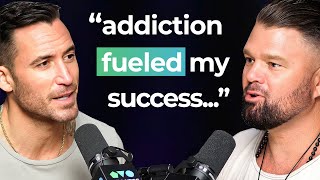
This is a full-length YouTube podcast interview (host Josh Trent) with Michael Chernow, a serial entrepreneur and long-term recovery advocate. Chernow recounts first using drugs at age 12, a mid-2000s overdose and a decision point that led to asking for help; he attributes recovery to mentorship (a man named Marcus and a sponsor-like network), 12-step community, faith/higher power, and a disciplined morning routine (movement, hydration, simple nutrition, prayer). He reframes addiction as a combination of trauma plus a neurochemical predisposition (dopamine hypersensitivity) and argues that the same intense commitment that drives addiction can be redirected into positive habits (fitness, nutrition, entrepreneurship). The conversation also covers fentanyl risks, Chernow’s brand Creatures of Habit (product/CPG origin tied to his oatmeal routine), parenting and inner-child work, and his outreach plans to speak in high schools.
Questions this video answers
12 years old.
August 1, 2004.
"I'm sober 20 years now" (as stated by Chernow in the interview).
Website: creaturesappa.com (Creatures of Habit). Promo code: WISDOM20 ("wisdom 20").
Chapters
I did drugs for the first time when I was 12, immediately loved it, immediately made a decision that this was going to be my life because I found solace in it. So that was propelled by trauma. It was like a faster way into the darkness.
Michael Chernow is a serial entrepreneur, a podcast host and professional athlete. He's also been in recovery for almost two decades after years of active addiction. What is the real truth about addiction? What do people get wrong about addiction?
When you strip away the drugs and the alcohol from someone who has addiction, they have this ability to commit to anything they put their mind to. They've channeled their ability, their superpower down the wrong path. And so you give them a little bit of a course correction and the sky's the limit. Human beings are wired to want to win. Winning feels good. And for years and years, winning for me was getting high. When I found out that I could win by moving my body, by putting healthy food into my body, I got addicted to positive wins.
How did you get to that place? When did the self love come online? What do people get wrong about addiction?
People look at addicts or alcoholics. I kind of bucket them into the same group, right? You're addicted to drugs, you're addicted to alcohol. It's the same thing. You're looking for escape, right front. People chalk them up as when they see an addict or an alcoholic in active addiction, they look at them as waste of space, helpless, useless, dirty, criminal. And what they really don't understand is that, that it is a disease, it's a mental illness, it's a disease. And you self medicate through, you know, these drugs or alcohol, whatever it is. But the interesting thing that people get wrong about addicts is they're unbelievable, incredible, ferocious ability to commit. When you strip away the drugs and the alcohol from someone who has addiction, they have this ability to commit to anything they put their mind to. You're looking at someone who was fully addicted to drugs and alcohol, overdosed and died and came back to life. And then I took away the alcohol and the drugs. But that loyalty, the responsibility to the things that I want, the commitment to the things that I want still reside in my soul. And so I've channeled the commitment to drugs and alcohol to positive things in my life. And you see it happen over and over and over again. There are so many unbelievably successful former drug addicts and alcoholics that are doing unbelievable things. And it's because of this ability to commit. So this, this idea that these people are, are useless is Just incredibly wrong. They've channeled their ability, their superpower down the wrong path. And so you give them a little bit of a course correction and the sky's the limit. I can honestly sit here across the table from you and tell you that if I wanted to be a surgeon, I'm 44 years old. If I wanted to be a surgeon, I don't. But if I, if I wanted to in 15 years, I would be cutting people open on the surgery table, on the operating table, because I just know that if I want that, I have the ability to say, I'm going to do it and then do it. And that is what, what people get wrong about addicts and addiction is that, that their decisions are. It's super easy to change. It's not. There is a chemical imbalance with addicts that when they ingest drugs and alcohol, their dopamine system fires 10x to a normie. And so it's really, really sad when people don't see that. There was an amazing podcast with this guy, Dr. Russell Swarovski, that I listened to and I just had him on my podcast. He's a double board certified neurologist and addiction specialist. Very rare, right? Most doctors don' have a lot of understanding about addiction, but this guy does. And he came on the podcast recently and he explained what I just tried to tell you, that, you know, the dopamine system is running 10x potentially genetically, like a genetic disposition to this than your average Joe. So I guess that was a long winded way of saying, you know, addicts have this ability to be unbelievably ambitious and incredibly committed and loyal. They will do anything, anything.
What fascinates me the most because I struggle with addiction. Not to your degree, but a lot of people that have sat in this studio have. And all of them have a similar story when it comes to how they recapitulated this relationship to themselves. They actually had to know themselves because they disconnected from themselves because of trauma or multiple traumatic events in their life. And the thing that all addicts that have overcome the journey really have in common is that they got to know themselves. They got to actually learn the hard fucking road of loving themselves. And that is like something that never came up in conversation when I was growing up. I mean, we had one call. I'm getting to know you on this podcast live. We had one call, and within 30 minutes we were both talking about our father, Wound. And I thought that was really unique because it's not like in that generation they would have ever sat at a table and talked about their father wounds, in other words, our grandparents. So I think what I'm getting at is, like, there's this piece of knowing ourselves that will take the addiction rates and drop them to the floor. If people can actually tune in to what is being shared today. I'm not saying just hear it, but, like, actually feel it in their heart, let it sink into their unconscious. There's can be. There can be radical change if somebody can just really feel and really embody what you're sharing today. And this is the layers that I want to unpack with you. So I wonder, like, we look at traumatic events and how that can actually be a rupture in the nervous system to where somebody then uses that as if they have a genetic predisposition to become an addict, but they don't have to. It's like God, creator, some kind of mystery force, selects certain people to become addicts. So they can either exercise their free will of choice to heal or to not heal. And it's so sad because I know the addiction rates. I don't know if you know them on the top of your head. How many people go into recovery and how many people actually heal? Is it like 10%? It's less than 10%. There's some magic to the healing. I wonder, like, there's a few ingredients to this. The magic of the healing of addiction. Is it this knowing of the self again? Is it the recapitulation and reconnection with self? Or is it something much more mysterious? Like, how did that unfold for you?
I think it's a culmination of a number of things for me, I would have to say. And this could be. I mean, this podcast, I think, is a perfect place to say it, but my connection to a power greater than myself is very, very strong. I didn't have that before. I needed to hear that from someone who I wanted to impress, from someone who I looked up to. And as soon as I reached my hand out for help, which I just had never done before, you know, I mean, I'm sober 20 years now, and I just. When I was in deep addiction, I just never thought help was a possibility. So it's just like, I just didn't go for it, because I did believe at that point that I was kind of at the end of my road. But when I did, I was introduced to a couple of men that showed up, and I looked at them, and it was really one guy. And I was like, whoa, this is what it could be. This is what it could look like I could listen to that guy. I could hear what he has to say. Unfortunately, it's like an aligning of the stars. When an addict is ready, right, There has to be a number of different things that happen in a short period of time because you don't get very long. And so that's why I feel like my message is powerful, because. And I can only think about my experience, right? So I met Marcus. Marcus. I reached out to a woman named Karen, who was kind of like an older sister to me. When I was really struggling, she would, like, take me in and help me out a lot. I knew that she was sober, and she was one of the only people I knew that was sober. When I was ready, I called her, and. And she immediately introduced me to her boyfriend. I didn't know who her boyfriend was, but he showed up about 10 or 12 years older than me, covered in tattoos, really articulate, but someone that I looked at, and I was like, I can relate to this guy. And he immediately gave me a plan, a plan that introduced me to the life I live today. And he was very, very, like, concise about it. And so I think, you know, the opposite of addiction is connection. If you can immediately connect to someone, not making that one person a higher power, because that's unhealthy, but having the ability to connect with someone and having what they say resonate could very well be the thing. And then once that person's in your life or those. That group of people are in your life, you can start to look inward. But it's very, very difficult to get to that point. Right. It's not like. Like every day an addict reaches out for help, and then they find the person that they want to impress, that they want. That they look up to. I wanted to impress Marcus with. With success in staying sober. I wanted. I looked up to him because I thought what. I thought what he had done and hearing his story was possible for me, and so I needed that. And what I immediately did because of him was he introduced me to this world of fitness and nutrition, and he began putting small wins into my life. Well, let me reframe that. He didn't put small wins into my life. He suggested a few things that I could start my day with every day that I ultimately grabbed a hold of because I wanted to impress him. And I know that that sounds weird, but it's my story and my experience, and so I believe. Well, I know that I've been that person for a bunch of men, and it's been very Successful, the amount of men that I've worked with in sobriety. And so that's why I make myself available. And in, in the, in the, you know, 12 step programs, regardless of what program you're in, you know, in 12 step there is this sort of old school mentality where it's a bit of a secret society. You keep it anonymous. You don't necessarily talk about it or that you are part of it. You kind of lead by action and people are attracted to the. Everybody knows the 12 step. Everybody has heard of Alcoholics Anonymous and Narcotics Anonymous, but you don't necessarily say that you're in it. And I just wholeheartedly disagree. I don't talk about Alcoholics Anonymous a lot, but Alcoholics Anonymous saved my fucking life. And every time I talk about my sobriety, I get a barrage of DMs specifically from people. And I immediately connect because that is what I know to be the solution. And so we're on this podcast. There's a lot of people listening. If you are struggling with addiction, I just want to put a flag in the ground right here, right now that there is an absolute solution. You have no idea what could be a year future. And if you want to learn more DME, Truth Facts 100%, that's generous.
Earlier you said it's weird. You kind of like pre framed your statement. It's weird. And I don't think it's weird at all. I think that a lot of times we're taught that we have to do it alone. But if you look at even the Native American culture, it's like the lone wolf dies. The wolf that tries to do it on their own without being part of the tribe, they always die. But there's such a paradox in our psyche because there's one part of us that wants to be a man who handles his ship. But what do we do when the ship has a fucking hole in it and we're sinking and we're dying? That 90% of people that don't heal, There is some mysticism around that. There is this connection to, I don't want to say a bearded dude in the sky, but like there is a portion of healing, maybe the whole bowl that holds the healing is actually a connection to your creator or your higher power.
Well, I'll kind of break it down this way. Right when you are in active addiction, you have a feel, you have a sense of, of complete control, even though you're totally out of control. And where that sense of control comes from is the ability to change how you feel right. Like you feel like crap. You know that there is a substance that will actually numb that crappy feeling. So you feel bad, you can easily make yourself feel good. You feel good, you can easily make yourself feel great by using a substance. And so in essence, you're kind of playing God.
Yeah.
Right. Like you're kind of controlling how you feel no matter what is going on around you.
Yeah.
And so when you decide to take the path of sobriety or recovery, that control is stripped and you feel completely vulnerable, raw and like, like a raw nerve. Right. Like, like you, you, you don't have that. So what, what's next? You, you turn it over to a power greater than yourself and have hope and faith that that is going to work. And I'm just here to say, like, I don't have a secular belief. Right. I don't overanalyze what God is. I don't try to intellectualize it. I just have a faith that every morning, and I do not miss this ever. Never. I get on my knees and I pray and I don't give a shit who I'm praying to. But I could tell you right now, the one thing I've done very, very consistently, if not the most consistently since I've made the decision to get sober was talk to God every morning. And it could simply be for the layman, me talking to myself and making help the way I start my day, every day. But for me, and we can go down a long list of stories that have been proof enough to me to continue this path. God is real in my life. Period. Done. God is real in my life. And I believe, I don't believe in a thing. I believe in faith. Because 20 years and six months ago I needed heroin to believe in anything. Today, no artificial flavors. Life. I live on the energy that life brings my way on a day to day basis. And I take action every single morning to put myself in a successful position to manage whatever is thrown my way. Not doesn't always win. I have days that like, you know, I wish weren't part of my life. And sometimes those days string together and they can turn into weeks, sometimes even months. It's life, right? It's going to be hills and valleys. It's not always going to be tiptoeing in the tulips. But I can honestly just tell you that without God, higher power, universe, energy, whatever you want to call it, there's no shot that I'm sitting across the table from you today. Period.
Yeah.
You know, and, and, and, and again, though, I just want to clarify. I do really believe, because you started this question with the connection to self, putting yourself in a vulnerable enough position to look inside. And that could be the juju that keeps people on the path. And I. And I think that's true. However, getting to that place, in my opinion, does require connecting to a person or a community.
Yeah.
That you can find support in.
I find it fascinating too, that you said you really wanted to impress this first mentor. And I know that your dad was a hoarder. Like how when we say hoarding or we mean like those TLC shows where there's like rooms filled with baby dolls and bags. Was it that kind of hoarding?
I mean, it was in a sense, that kind of hoarding, but with. Not baby dolls and things. My father was a. An electrician.
Yeah.
And he had like. And a collector. Right. His. He would collect old radios from like the 40s.
This is such a trip.
Old radios from like the 40s. And he would find them at flea markets, like beat up old radios. And he would. He would get as many of them as he could and he would buy them for nothing and he would rebuild them. And he had like all over the house, stacks and stacks of. Of mechanical magazines and, you know, by the end, you know, of his life. And I hadn't lived in that house for a long time at that point, but, you know, there was. There was like little pathways to walk through our little 600 square foot apartment because there were stacks of like this high, you know, like four feet high. And you couldn't really. You couldn't really see much because it was just. And then he would. There was a little corner of our apartment that he had his computer in. And you wouldn't see him because he was in this little pocket that, you know. Yeah, it was rough.
It's crazy. My dad. So this is going back to the first time I ever talked to you. There were similarities around this father wound and actually how we can use the wound as a fuel source of love. My dad collected radios, so it's kind of trippy that you're sitting here sharing that. He literally has I don't know how many radios, like hundreds of them, and they're stacked around his place now. I don't have a relationship with my father, and we've done a lot of content. I've had a lot of conversations about the wound of the father. But I think it's really fascinating because when I look back into your journey, it seems like there was this likability that you had Naturally, like you're pretty likable guy, right? Kind of Greek God mixed with, like tattooed, like, I don't know, skateboarder, like workout, fitness person. There's a lot going for you. And so. And so when you would. When you would go to people outside of your home, there was this likability where you were really shining for people. And you wanted specifically men to older men, parents, parental figures, because yours didn't satisfy that piece of you that was needing to be nourished. I find it fascinating that the wound of the father created this likability that's actually been a massive fuel source for you to connect with your first mentor, first and foremost, but then also in business, because business is like dating, right? Minus the intimacy. If you mix intimacy with business, it usually doesn't work out very well. But I find that fascinating. Have you sat and reflected upon the vacuum or the wound that was created by your father's illness and how that's driven you to not just go into the healing world of addiction, but also to be successful in business? There's some serious threads connected to that.
So I'm going to get a little esoteric here, because why not?
It's a good place for it.
Yeah.
Yeah.
My grandmother was the most influential person in my life. My grandmother was a healer. She was a crystal healer. She had a crystal store in Queens. My father's mother, her name was Chick, little, little Italian woman. And she was the most influential person in my life. And very, very spiritual, like, beyond, you know, she, from the day I was born, told my mother and father, and then as soon as I could comprehend English me, that I was an old soul, I didn't understand what that meant. This is my grandma. She's tattooed on my arm. I had no idea what that meant. Even. Even into my, you know, adult life, I just didn't understand what old soul meant. But on my journey, I've sort of done some diligence on kind of what that could mean. And I believe I chose my parents. I believe I'm here to tell stories. And I know that this is not my first time. So, you know, I think my father was put in my path because it was a challenge I needed to get through. And I've been blessed to have experienced that. I genuinely have gratitude for it. I wouldn't change anything. There's one regret I have in my life, quite frankly, and it's the first two years of my first son's life that I was really, really busy in business to not spend as much time as I Would have liked to. That's the only regret. But the abuse from my father in the. In the home as a kid, the sexual abuse from a sports coach that I experienced, the drug and alcohol addictions, and all the bad things that I did, I don't. I'm grateful for him, man. I'm grateful for him. And so I really do think that we choose. My ability to connect with human beings is my superpower. I'm not a great businessman. I'm not a. You know, I have an ability to. You put me at the White House or you put me in Watts, I am going to make friends fast, you know, And I think that that is. You know, they talk about, like, emotional intelligence is, like, something of the last decade, right? Like, that's what we've been hearing, right? Some people have it, you know, and it's given me the. And I have it. And I'm not, you know, I'm confident in that, right? Like, you put me in front of a spreadsheet and tell me to build a model for the next 12 months, I'm going to look at you sideways and just, you know, I just. That's not me. You know, I'm just not good at that. I find incredible people to work with who are great at that, but it's just not my shtick. And I used to have a lot of guilt around that. Oh, man, I need to be better at this and better at that. And the truth of the matter is, anybody that's listening here that's potentially an entrepreneur, like me, or an aspiring entrepreneur, you kind of walk into the world of entrepreneurship thinking that you need to fucking be great at everything, and you need to understand all aspects of the business. But that's like saying, tom Brady, the unbelievable, naturally talented quarterback, we want you to be a doctor tomorrow. What do you got? And Brady's gonna be like, not much. I'm a quarterback, man. Like, what are you talking about? Like, I'm one of the greatest quarterbacks ever to live. Like, you want me to. Wait? You want me to be a doctor? Like, I'm not a doctor. I don't know. I don't know how to do that. And so we're kind of, as entrepreneurs thrown into that, into that mix. I mean, that's an extreme example. But, like, if you come up as. As, you know, an incredible chef and you want to open up a restaurant, you have to understand how to build a business and how to. How to. How to conduct hospitality in a certain way. And you need to understand operations, and you need to understand marketing. And you need to understand all these things. And so it's just like, you know, the emotional intelligence piece of my life has really put me in positions to excel. And I don't know where that's from. I can't describe, I can't tell you where it's from.
Well, that's why I asked you the question. Because what I can sense the gifts that I've gotten from my father and my mother, because my mother is manic bipolar, still is, and she's on the decline. Like, you know, I love you, mom, and it's hard. It's very hard. I don't know if you've ever dealt with bipolar in your family tree anywhere. My father, okay, so he was manic bipolar. I did not know that. Hence the hoarding though. Makes sense. The wound or Aristotle says that, you know, that the universe, nature hates a vacuum. So when a vacuum is created, something good is going to come from that. Another analogy is like the further back you pull an arrow, the farther it's going to shoot. So I get this sense from you and I wonder how you feel about this, that actually if you are an old soul and you know that it isn't your first time and your grandma with her crystals showed you this and open, unlocked this awareness for you, there has to be just an ocean of gratitude for even the fact that your dad was who he was, which is the opposite fuel source of probably what drove you towards finding the answers in the first place. The paradox is the fuel source that got you to here isn't the fuel source that got you to addiction. Have you ever pondered that and connected the dots of like, wow, thanks dad. Appreciate you for all you were. Because you showed me how not to be.
I think trauma, it's like a six speed engine, you know, it'll very quickly take you to a great place or a really dark place. Right. It's in sixth gear. Trauma expedites emotion, whether good or bad.
What do you mean sixth gear Trauma.
Moves things along a lot quicker.
Yeah.
You know, trauma moves things along a lot quicker. And, and I'm talking about emotions, I'm talking about decision making, right. Like what propels decision making? If you have trauma, you know, typically you're, you're going to make. A lot of people that have traumatic childhoods or traumatic lives are very reactionary. They make quick decisions. They don't take time to slow down and respond, you know? Yeah. So, so, so, you know, you know, I, I really do believe that like my father and the trauma I experienced There propelled me to make these decisions quicker than your average person. Right. I did drugs for the first time when I was 12. Immediately loved it. Immediately made a decision that this was going to be my life for, you know, whatever, because I found solace in it. So that was propelled by trauma, but I was probably predisposed to this addiction gene because of the serotonin, the dopamine stuff. And so I, you know, it was like, Just like a. It was like a faster way into the darkness, you know. And so I am incredibly grateful for that. I'm lucky to be alive if, you know, and unfortunately, right now, with what's going on in the world of drugs, with fentanyl, and it's in everything, you know, like, it's in everything. So many people are dying, so many by the. By the. By the. Hundreds of thousands globally, but certainly in the United States, we are the. We are the main focus of fentanyl. It's made in China, it comes through Mexico, and it comes right into the United States, and we are suffering. They're. It's like. They're like poisoning.
How do you know it's made in China? You looked into that.
Yeah. And then that guy, Dr. Russell Swarovski, told me.
Exactly.
Told me that.
Can you break that down a little bit? So China, is it like a. Yeah. A way to attack us here in.
The U.S. well, I don't. I mean, I don't. I don't know if I should. If I can go down that route, I would. In my. For me, personally, I would say it's a theory, you know, that it's. It's made in China. And this is the way Dr. Strawski explained it. It's made in China, it goes to Mexico, The Chinese manage the port in Mexico that it comes through, and it comes right up through the border. And so if I had to say, like, it could just be a capital thing. Right. A lot of money in it.
Yeah.
But it could also be them poisoning the country thing. Right. And so I don't know, but I do know that people are dying out of fucking ferocious clip and it's in everything. It's in Adderall, it's in Xanax, it's in Valium, it's in oxycontin, it's in heroin, it's in cocaine, it's in Ketamine, it is literally in every single drug that you can buy on the street, including marijuana. And a grain of sand of fentanyl for someone who's never used fentanyl before will kill you immediately done it shuts down the systems in your body and stops you from breathing because your systems are shut down and this country is suffering more than any other country because of it. So think what you want about that, but, you know, I.
That was a very politically correct answer.
Yeah.
Well, the reason I ask you is because look at what a spiritual malady actually is. And I'm no veteran of 12 steps, but I did actually go for six months to sex addiction. And my mentor, who was there because I was struggling with porn for a long time, and he was like, I gotta be honest with you, like, you've been coming to these meetings for six months. He's like, I don't think you're an addict. He's like, I just don't think you love yourself. And that hit very hard because I thought, wow, there really is a difference between someone who is physiologically, neurologically addicted with that predisposition to just someone who's looking for a way out of his own pain. And that was my story, because I didn't know what it was like to feel safe in my body. I've asked ayahuasca many times in ceremonies, like, hey, if there was any sexual abuse, I'm cool to learn about it. I've really gone to the well, and the answer's never been, yes, there's never been any sexual abuse. But I don't think that there has to be sexual abuse or one big rock in the water of trauma to push someone into addiction. I think it's really about the model that our parents set. So, for example, your mom. What was your mom doing when you. When all this was going on?
My mom was diagnosed with something called Abused Wives Syndrome. She made the abnormal normal.
Okay.
She didn't know what to do. She was afraid for her life, for my father. My father had threatened her multiple times that he would kill her if she left or, you know.
Yeah. So this is not exactly a calm proving ground for you to feel safe in yourself. So. So I can reflect upon my own journey with pornograph pornography. And I think about. Really. It wasn't about for you, the drug, or it wasn't about for me, like, the release. It had nothing to do with intimacy or sex, actually. It was that I wanted that little glimpse of, like, ah, I'm safe. Life is a good place. I got you. Everything's okay. It's even. That phrase is an unconscious phrase. Everything's okay. Everything's okay, Josh. Everything's okay, Michael. I never got that message from the people that brought me into the world. And I totally relate with what you're saying about choosing it because that is such an empowering mindset. And I don't think it's esoteric at all. I think that I've been in this world of personal development now for a decade plus, and anybody who's done anything always has the view that it happens for me and I chose it. Otherwise, if you flip it around, it's really self. It's self limiting. It's a place where we get lost in that soup and there's no real way out. So it's a roundabout way of me asking you this question. If you chose and your mom was doing the best she could and your dad was doing the best that he could, and you get to this place where you're like, yeah, I really want to impress my mentor and I really want to go on this healing path. How did you let go of the old fuel source, the one that was, you know, barraged by pain and that was driving you? And how did you replace that fuel source of growth or of success with something more loving, something more nourishing, something more sustainable for the long term? How did you switch the fuel sources?
I learned that I can control my wins a different way, period. I. One thing that I just want to rewind back for a second because I. With your porn addiction, very, very similar to a drug and alcohol addiction. It's a control thing. Control thing, no doubt. Right. And you might not realize it in the moment when you're gearing yourself up to go handle the business. Right. But what you're doing is you're taking control of a moment where you feel like you're in control. You're like, I can just escape this way right now. Boom. It's just going to take me out of self. It's a control thing. And so many men suffer from porn addiction. I don't know the stats on female porn addiction, but I just know so many men suffer from porn addiction. Right. And so it's really a control thing. And it's free, you know, and it's. It's way more. You can rationalize it because you're not walking out into the world upside down.
Nobody knows. Yeah. No one knows.
But the question that you asked, can you just frame it again for me?
Think about the fuel source that got you to even being on your knees. How do you change the fuel source of pain and of gripping the steering wheel with white knuckles to a source that's more sustainable, more loving?
So human beings, no matter who you are and where you're from are wired to want to win. We're wired to want to win. And I don't mean, like, win the race and be the best, but I believe that human beings are wired to want to win. Winning feels good. And for years and years, winning for me was getting high. That was my win. Complete control over it anytime. You know, sometimes I had to do unsavory things to make it happen. But, like, it was a win, right? I was like, okay, I'm chasing this win. I'm chasing this win. I'm chasing this control. When I found out that I could win by moving my body in an exertive way, and when I found out that I can win by putting healthy food into my body, when I found out that I could win from connecting with someone that I related to for the first time and made me feel good about myself. So I was stacking these wins immediately. Right? I'll tell you the story. So I met Marcus. I reached out to Karen. Karen introduced me to Marcus, or Karen called Marcus, said, marcus, go meet my friend Mike. Marcus came that night, the first day I was ready to go. And he sat down with me and asked me to tell him my story. He sat and listened to me for four hours, roughly. And at the end of that story, he looked at me and he said, you're not unique, dude. I hear you went through a lot of shit, but you're not. He's like, I'm going to put a plan together for you that worked and works for me. You can take it or leave it. I'm not going to chase you. But if you take these suggestions, you will, guaranteed live a life beyond anything you can imagine. And I'm, like, looking at this guy, I'm like, this dude's super cool. Like, this guy, tough guy, you know, like. And I'm like, if he has no. There's no skin in the game for him. He's not asking me for money. He's not, like, he doesn't know me. He's not, like, trying to get anything from me. This guy is genuinely just sitting here listening to me for four hours and then giving me a plan of action. In my mind, I think it went very quickly, but that's kind of how I metabolized what was happening. And he said, this is what I want you to do. He said, starting tomorrow, I want you to wake up as early as you can in the morning. I don't know what that means for you, but chances are you're not waking up early in the morning. Chances are you're waking up early in the evening. He was like, I'd like you to wake up early in the morning and as soon as you get up, I want you to stand up, turn around and make your bed. As soon as you make your bed, I want you to walk into the bathroom, wash your face, brush your teeth and put on your contact lenses. Because I told him I wore contact lenses. And that was a big step for me because I would sleep with my contacts for like a month, you know, he's like, I want you to put on your contact lenses. And as soon as you're done putting on your contact lenses, if you have to take a piss, take a piss and then immediately drop on your knees and ask for help. I don't care what you say, I don't care if you believe or not, you need to start asking for help. Your ability to ask for help has led you to this place and so I would imagine you don't know how to do it. So the best thing to do in the beginning of your day is get on your knees and ask for help. And it could be as easy as just saying help, right? When you're done asking for help, do as many push ups as you can. After you're done with your pushups, go put on a pair of sneakers and get out the door. I want you to take a walk. I want you to take a run, whatever you're capable of doing. It could be a block, it could be 10 blocks, it could be 10 miles. I want you to move your body first thing in the morning to get the blood flowing to earn the win. Earn the win in the morning, first thing, move your body. As soon as you get back from that run or walk or whatever it is, I want you to make a bowl of oatmeal. I don't give a shit what you put in it. It's super easy and accessible. You probably haven't put anything positive into your body in a decade. So this is an easy, accessible, super healthy thing that you can put into your body that'll fill you up and make you feel good. After you're done with that oatmeal, I want to get. I want you to get to this sober community meeting. And he told me exactly where to go. And he said, as soon as you get there, I want you to introduce yourself and raise your hand and tell them who you are and why you're there. And I was like, what is that? He's like, just say your name and that you are an alcoholic or an Addict. And I was like, okay. And then he said, once you're done with that meeting, I want you to get on your bike or on the train or walk down to Canal street and meet me at this gym. And I'm going to, I'm going to, I'm going to teach you a martial art and we're going to learn martial arts, but it's going to, it's going to introduce discipline, integrity, commitment, honesty and fight into your life. And I was like, okay, I've always wanted to be a ninja. I'm down. And he said, as soon as we're done training, going to be a two to three hour session. You're going to have chicken and broccoli for lunch and then you're going to go home and take a nap and you're going to go to work. And I worked in a restaurant. And he said, you're going to have chicken and broccoli for dinner as early as you can, ideally by before 8 o' clock at night. You have your second, you know, you have your dinner and then when you're done with work, you're going to go home and you are going to drop down on your knees right before bed and you're going to say thank you. You go to bed as early as you can and that is your life for now. That's the plan that he put in my path. And, oh, he also said, drink as much water as you can. And I'm here to tell you that that is the plan that I live to today. That is exactly what I do. Obviously it's a little bit, you know, elaborated, but he gave me a morning routine that was stacked with wins for me at that point in my life, if I, every time I, I accomplished one of the things that he told me to do, there was this little win. And I was like, I'm doing it. This guy told me to do it, I'm doing it. I've just fucking won. And I got addicted to positive wins. And I believe that to be it. It's really unfortunate that there is a book in Alcoholics Anonymous called the Big Book, this Blue Book. It was written in the 30s, right, by Bill Wilson. And they don't talk about exercise in that book. And that, in my opinion, is the one piece of the puzzle that's missing from the 12 steps. Exercise and nutrition are massive wins. Human beings have been fighting for survival since the beginning of people standing on two feet fighting for survival. The win of your day was that you survived, you went out, you hunted, you gathered, you had to be physical. That's a win. We are wired to want to experience that. And so when you take away all the technology and all the shit, blast us back to those times, that's how we won. Eating well, physically moving our body for hundreds of thousands of years. It's only in the last 150 years that things, material things, has made us feel great. Before that it was, dude, did you eat today? Were you out there on the field like getting the things done that you needed to get done for survival? Did you protect your family when the saber toothed tiger came fucking running down the path? That's the win. You feel me?
I not only feel you, that's what. It's played out in my life as we walk down to the studio. You saw that I have everything in my house, including cold plunge and self care and my room where I have weights and free weights. Like, if I don't do that, then I actually see the demon in the corner doing push ups and getting stronger. And those thoughts come in, hey, you should use porn right now. Hey, you should go eat this chocolate cake at 11 o'. Clock. That's when all this stuff starts clicking in my mind that I've become strong enough through my own maturity process at 44 to just kindly say no to. But sometimes I notice when I'm out of alignment with my habits because I haven't been down, I've been down dark roads. But the road that you've come from is so fucking dark, it's so bleak that I could see how unless you have that structure and that discipline, there's just no way that you'd be sitting here right now. And maybe there's many degrees of that for myself and other people, but do you ever feel like in the corner of the room there's like the heroin or the alcohol or the drug demon doing push ups and you just see him and you go, hey, thanks for being there, but I got me. How does that conversation work for you?
For me at this stage, it's not about the heroin or the coke or the alcohol anymore. Knock on wood for today. For me, it's. I know I have the ability to feel awesome and it's on me and God to make that happen. And if I choose deliberately not to do the things that make me feel great, that is where anxiety shows up in my life. And I think that that's the roadblock for so many people. It's not rocket science if everybody in the United States of America made it their job to walk 7500-10,000 steps A. This whole entire country would be in a vastly different position.
No doubt.
Right. We all have a choice. And sometimes you have to fight to make the right one. And we all know listening to this podcast, what the right ones are. You know what I'm saying?
The ones that make you feel good.
The ones that make you feel good without having to go buy something at a liquor store. And so, you know, my morning routine is. And you know, I get shit for this. Five years ago, everybody was, you know, excited about these crazy morning routines. Now they're like, oh God, you're one of those guys. And I'm like, I am. And I'll tell you why. Because when I'm done with it, I am bulletproof. Straight up on fire. At 7 o' clock in the morning when I walk back into my house and my wife and kids have just gotten up and I've just done all the shit that I do every morning from 5:30 to 7, doesn't matter what the world wants to throw my way. I am showing up my absolute best self. And if I choose not to do that, the demon is in the corner for me and I have grace with it. If there's a day where I feel like I need that, if I go to bed late because I've got an event or like, for instance today I, you know, I got, I didn't get home, I didn't get to the hotel last night until 11 o'. Clock. I went to bed at 12, I slept until 7 this morning. You know, I'm not gonna like sacrifice my, my health.
Yeah.
To like be in the gym by 5:30 in Texas, but I have a non negotiable morning routine that I do no matter what. That's simple. That puts me in a position to be on fire with you today. You know, and like, and I think that morning routine is like, it's what Marcus gave me then. I was like, I was like a sponge. And when I work with another man in the world of sobriety, I'm very, it's like very similar situation to how Marcus gave it to me. But like, you know, I'm like, hey, these are the things that I require. And if you can't do it all, good. There's definitely a million other guys out there that can work with you in the way that they've figured out how to stay sober. I can't. I. Everybody, I'd be lying to you if I told you I knew another way. Now I'm sober a long time, so you could take what you could take, you could, you could extrapolate what you want from that. But if you're not willing to make fitness and nutrition the cornerstone, fitness, nutrition and God, like the cornerstone of your new life on a day to day basis, I'm the wrong guy.
It's simple, but it's not easy. It's like we meet ourselves so much when there's these decisions thrust upon us of should we do it, should we not do it. What I feel from you, what I get from you is there's no decision. Like you said, it's a non negotiable and there's a certain ownership of your life and a love of yourself that even gives you the capacity to say there's no negotiation here. I'm not going to be at war or like, you know, choose a deal with my mind essentially. How did you get to that place?
I saw very quickly, within the first 30 days of doing what I was told to do from Marcus, everything changed.
When did the self love come online?
Almost immediately.
Really?
Yeah, because I began to feel like I have the ability to change. I didn't think that that was possible before then. I hated myself. The last day I used was August 1, 2004. And the story that I remember was I'd been up for 48 hours, probably a little longer. I was with a couple of guys who I ran with and I, at this point I was on a death march. I had made a decision two weeks prior because that's when I overdosed on heroin that like I can't figure out another way to live. So I might as well just like go as hard as I can until I die. Because I overdosed at like 11 or 12 o' clock in the afternoon. This woman who I was with threw me in a, in a shower, put me on my back, turned the cold water on and essentially just left me there like that until I either died or came to. And I came to and I swore to God leaving that apartment three hours later that I would never do this again. Like I was done. That was it. Like this was too scary. I can't believe I just died. You know, like I remember standing up, being white from my forehead to my toes, standing up in fear of like what, what I just saw in the mirror and blacking out. That was it. And, and, and she, you know, was terrified to call the ambulance. So like that was her solution. But I came to, left there, said I would never do it again. And then three hours later I was using, I had no, I couldn't control it, it was the power. The, the, the. The. The power of the drug. And my fear of self and hatred of self was so much stronger than my desire to want to stop. And so I just said, okay, this is it. Like, this is how you're going to go out, dude. Just like, make it quick, you know? And so I literally was. Was on. On a tear for two weeks, but, like, not your normal. Like, I was smoking crack, using heroin, sniffing cocaine, doing anything that came my way to excess. And these guys were like, you know, August 1, 2004, these guys were like, all right, we're out of here, we're done. And I was like, later. You know, I'm not, you know, I still had a pocket full of drugs and a bunch of warm beer. And I walked into my. My bedroom, my apartment, and I had like a wall mirror right behind my door. Walked in, shut the door, and caught a glimpse of myself in the mirror. And for some reason stopped and like, looked at myself in the mirror, and I probably had never looked at myself in the eyes before. It's a very fucking powerful thing to do, you know, like, staring at yourself in the eyes in the mirror. I do that a lot now, but in a very different way than then. And I looked at myself in the mirror and said, I fucking hate you. You should jump out the window. It's not happening as fast as you want it to happen. Like, this is the time. You live on the fifth floor. Just walk over to the window, open the fucking thing, be a fucking man and jump. You hate yourself. You deserve to die. And somehow I blacked out, came to 16 hours later, and the grace of God stepped into my life for that very quick moment, and I was able to ask for help. Dude, you know, lucky. Very, very lucky.
Wow, that's. So I could literally see you in this. Was it like a shabby apartment? Was it kind of like the walls were shabby? I could see it when you were describing it, the rock bottom that you hit. It goes back to when we were first podcasting here about the arrow being pulled back really far. Like, if you would have pulled any more, the string would have broken. In other words, you couldn't go any lower, right? Was that the absolute lowest of the low?
I think that that two week period of time was as low as I'd ever gone.
So then in Aristotle's verbiage, like, you shot out from that. And this is where I think we get to honor the mystery man. Because many people don't. Many people. The string breaks. There's something in your soul, there's some kind of soul contract. And I feel safe enough to say this with you because you already talked about it from your grandma. There's some contract that you made to go through this experience. Have you ever felt that contract or read that contract for yourself about why you were one of the ones where the string didn't break? Some call it Dharma again.
I think I have to bring it back to this idea that intellectualizing it or overanalyzing it is a scary place for me to go. Because when it comes to this part of my life, being anywhere but present is not healthy. Because I could easily talk myself into this. And I trust myself with, like, conviction. But I know that I still have this thing. And if I found a loophole somewhere, I'd be afraid. I know a lot of people in recovery that have taken the plant medicine route and have decided to peel back the onion further with plant medicine. Ayahuasca and iboga and a lot of those things. And I'd be lying to you if I told you that I hadn't thought about it. But I also know who I am, and I have no judgment for people in recovery that choose to do that. I know for me, I would manipulate the fuck out of everybody and become an ayahuasca advocate and tell everybody how it has given me an opportunity to go deeper into my psyche. But I would use that man, and I would just. I just know I played it out. And it's a scary thing that I. That I know this about myself.
Well, my question came not from my mind, but from my heart. Because I feel for so many people that the string breaks. You know, that analogy of the arrow being pulled back. So my question wasn't necessarily an intellectual question. It was more like, in your heart, do you believe that this is part of your dharma unfolding? And of course, the answer is yes. I was just curious how you would articulate it. Right. So it's definitely not something where I'm like, give us the recipe, Michael, for people to go from 90% healing to 80%. I don't think that's your responsibility, nor anyone's. But it is pretty powerful to hear that healing happens when you decide you're ready to heal. And that deciding point, I think, is unique for all people, whether addicts or not. It's that choice point, and it's really crunchy, and it's the hardest place, and everybody has their own words.
It would be so hard for me to distill that I really do attribute it to the stars have to align. I mean, it sucks, you know, because I know my best friend. My best friend of all time, the most talented guy, musician you've ever met. Just genius godfather of Finley. My son has been on skid row for the last five years. I actually, in 2021 and was sober for, you know, not as long as I was, but he got sober a few years after I did. Sober for a full decade. Like, opening up for Bob Dylan around the world. Like, just, dude, the guy is just.
Crushing it, crushing it.
Married to an unbelievable woman. Like, just be, like, just killing it, killing it. Best friend, love him to death. Still love him to death. 2021, he fell off in 2020, right in the beginning of the pandemic. And he had kind of been, you know, in and out on, like, on the. On the low. I didn't know about it, but I ended up finding out anyway. 2021, I was like, all right, I'm going. I'm going to. I'm going to get a car. I'm going to fly to L. A. Get a car, truck. I'm going to find his ass in skid row. I called a friend who introduced me to the shaman from further north in California, and I said, hey, if I drive my buddy, if I find him in skid row and drive him to Ojai, to where my friend has a piece of land, just an empty piece of land, would you come and meet us there in the desert and perform a ceremony on my. On my friend who I think could use. I could convince him to do that. I can't convince him to go to recovery, to go to rehab or, you know, but I could. I could say, hey, hey, like, I gotta, you know, I have a shaman that's going to meet us and perform a ceremony to. To see if this will, you know, shake it out of you. And the shaman was like, yes. And now it was my job to go find this dude. And I did. And I drove into skid row, found him, he agreed, put him in the truck, took him to the desert, performed the ceremony. And as soon as he was done with the ceremony, he pulled out a crack rock and started smoking crack in the car. You cannot make anybody do anything they don't want to do. It doesn't matter what the circumstances are. It's like, if. Are you ready? Kind of thing.
Yeah.
And if you're not, there's nothing anybody can do. You know, it's so hard to distill what that, like the arrow breaking piece, Right? Like, what was it for me? I I really again, I think it was like I was at my, my lowest low. I felt an opportunity from, from I, I, I kind of call it divine to like have the courage to ask for help. The right person showed up and he gave me the right plan. And I mean it's, it's, it's like a movie, dude. Yeah.
Your life is kind of cinematic.
That was, is honestly what I'm trying to do for others. Over the holidays we, we get an, an email from our school, our kids school. And I'm telling you that like our kids school is from kindergarten to 12th grade. There's maybe 200 kids in the school. The most wonderful school you've ever imagined, like in the woods, you know, like it's like a little hobbit. Like our school, the school that our kids go to and a deeply connected community of people there. We get an email. A high schooler overdosed and died over the holidays. Fentanyl overdose had bought ecstasy to use ecstasy and there was fentanyl in it and died. And man, like I can't tell you how deeply impacted I was by that, like how painful that was for me. And, and I have to say it was selfish because I read this email in the morning of I think December 27th. One of my sons was reading and the other one was drawing and I looked over and I, and I looked at my older son who's nine, who was only five years younger than the kid who died and I just exploded in emotion. I was like, this is not going to happen to my son. I can't, I cannot allow. So I immediately called the school and I was like, you have to let me come in and talk to these kids. You must, you must let me come in and talk to these kids. Because what they know of or what they, you know, potentially think of as like the just say no culture is typically men in like a button down shirt with khaki pants talking about, you know, why you shouldn't do drugs. Coming from a guy like me standing in front of the high school talking about all my friends who have died and my best friend who's a zombie and their friend who just died. They'll hear it, they'll hear it. And so I'm trying to be the Marcus for as many people as I can because people with addiction, people that have addiction, this thing are special. They're just special.
You know, it's a special school too. It's a Waldorf school.
It is.
And you know what I find fascinating is that Rudolf Steiner was the really the Heart behind Waldorf. Have you gone into Steiner's work at all?
I haven't.
There's a book called how to Know Higher Worlds. And in that book it reminds me a lot of you actually, because he said, you know, when the student has a pure intention in their heart that they really want divine knowledge or higher knowledge, the teacher has no barriers in between them to not share it. In other words, the teacher is called forth. And that's what Waldorf is based on. Not just the nature education, which I love, but the way that they have all the kids grow up together. In other words, when the student is pure in his or her heart, when they really want to heal, like they've chosen, they're ready to heal. The teacher has to share, much like your mentor shared with you. And that's actually baked in to the curriculum and the underpinnings of Waldorf. I find that really fascinating that you're going to the school and actually living out what Steiner wrote in his book to the people that are in that school.
I gotta do some reading up on Steiner.
Steiner's incredible. I mean, this guy, like he had it mapped way early, like early 1900s. He's written so many books. Like, I've just scratched the surface on Steiner. But I find it really cool because, you know, this, this non negotiable for you, where you put your well being before anything else. That's the most important thing for all of us. Yet that's not taught in schools. The current paradigm of schools, if you really want to get down to the nitty gritty of I think what maybe is the bubble that fuels addiction, is actually that schools are backwards, like Waldorf. Not so. But most public schools, like my children will never fucking touch a public school. I will do whatever, however, whoever. I don't care what it takes. They will go to something like a Waldorf or a hybrid of Waldorf and being homeschooled. How children are raised and what example that they see around them and the environment that they swim in is everything. If we want to lower that healing rate of 90 to 80 and 70 and 60, it starts with kids. It starts with the schools. These are the kind of conversations that I think can change the entire world. Like you said, if people walk 10,000 steps, America would be so different. If we actually treated public school like Waldorf was designed, imagine the ripple that would be felt from that. It would be so incredible. Have you pondered this?
Yeah. I mean, dude, my goal for 2025 is to talk to as many high schools as I can that's my plan. I'm going to get in front of as many kids as I can. I'm not trying to scare them. I'm just trying to tell them the truth. Before this happened, honestly, I said to my wife for a while, you know, we've got this great big barn on our property, like, huge barn plan of mine, when, when Dakota's 10 and Finley's 12 is to start rebuilding that barn from the inside out. It's a big project, Father Sons project, where we're going to just build the whole thing. We're going to insulate it, we're going to, you know, it's an old 300 year old barn, beautiful big barn. And the purpose of that for me was to give them a place on our property. We have a big property far enough away from the house that they were like stoked to have to bring their friends to, to party in. Oh, right. Because in my mind I'm like, much rather have them party at, at the house than on the, the roads, right? Like, much rather like have them in a place where like, if something does happen, there's like, it's close enough to like help them. And I always said to my wife, like, you know, they're going to experiment. I'm all good with that. Like, they want to, you know, like, I'm not going to like, tell them what to, and not to do, but share my story once they get old enough and they'll, they'll, they'll be able to make decisions, you know, based on that. The problem is you can't do that anymore. Kids cannot experiment. If they're getting drugs from the street. There's a 90% chance that there is fentanyl in those drugs. And I'm telling you, it starts, it's, it's from, from weed to heroin, look, the whole spectrum, it's in everything. So if you don't know where you're getting your shit from, and sometimes even if you do, the chances of death are high. I think it's my duty to share that with as many kids as possible because I'm very, very close with the grandfather of the kid who overdosed. And I spent Tuesday morning with him this past Tuesday. And to feel his pain from what happened was guttural for me. And it's crazy, right? Like, you know, you know the beauty of Waldorf, it's, it's, it's a pretty special place, you know, and it's even there. It's even there. You know, I know we've spent a lot of Time talking about addiction and. But I do, I do want to share, like, how incredible life is today.
Life is beautiful. I mean, you are a creature of your own habit. It's amazing. It makes perfect sense to me now why the company has that name, but it's with a K. Why is it with a K?
Funny enough, there's a couple of reasons why. One, I couldn't get a trademark with Creatures with a C. So that was like the first one. And initially, when I was going to launch Creatures of Habit, this is pre pandemic, it was going to be a restaurant and I wanted to open up a restaurant in New York. Funny enough, New York City has everything, right, Restaurant wise. But when it comes to healthy restaurants in New York or health forward restaurants in New York, when you walk into them, they look, feel and smell like health forward restaurants. They're very crunchy tapestries on the wall, hippie, dippy. And you look around and you're like, oh, I'm in a healthy restaurant. You know, and so it's not for everyone because of those reasons, right? You want a healthy lunch, you go to Sweet Greens. You go. You know, people line up by the thousands, right, for like a healthy tossed salad. But those people that line up for a healthy tossed salad kind of blow it at night because they either order something online that, you know, is not super healthy, or they go to a restaurant that they really want to hang out in. And the food is just, you know, overdone with oils and butters and, you know, just to taste good. So my thought was, hey, let me open up a healthy restaurant in New York with a vibe that people just want to hang in. And not only is it going to be healthy, but I'm going to cater to, like, and not be ashamed of it. All the different diet protocols, keto, paleo, vegan, you know, like, I was just gonna have a bunch of different call outs on the menu for different meal plan, like, different sort of meal lifestyles. And keto was a big one for me at that time, right? Like, I was like, really into ketosis. I was like, I loved being in ketosis. And so I wanted to sort of like, give people an option who were eating that way, a place that they can go and just be like, like, it's hard to eat carnivore or ketosis. You know, in keto, it's really hard, right? Like, you have to go out. And so when I was eating that way and I would like dip in and out of it for like four to six weeks. So I'D like. But when I was in it for four to six weeks, and I don't think it's a sustainable way to eat forever, but. But when I was in ketosis for four to six weeks, I was fucking dialed, like, dialed, you know, and so I wanted to be able to give that to people. So I want to say, hey, I'm going to have a restaurant where, like, people that are eating that way could totally come here and just know that, boom, they've got their spot. And also, it's a vibe. Like, you want to hang with your friends, you want to go on a date, you want to go with your wife, your husband, whatever. Like, you can be there and you're going to feel like you're in a dope restaurant, but the food is just better for you. Delicious, but not like, overdone, you know. So that's what I wanted to create with creatures of habit. Initially, it was a restaurant. And what we were going to do with the restaurant, because I knew that I didn't want to scale restaurants anymore was I was going to use the restaurant as an incubator for a line of consumer packaged goods. So we were going to make products in the restaurant, bottle them, you know, oatmeal and sauces and like, you know, I wanted to have a breakfast lunch. Really a breakfast lunch and then like an early dinner. So, like, dinner, like, we stopped serving at 9 because I wanted to sort of highlight this like, hey, like, live your life in the day kind of vibe. Anyway, we're going to make a little retail area in the restaurant and whatever people were grabbing and taking home with them, that's what we were going to invest money into. In traditional cpg, whether retail or direct to consumer, predominantly retail. So that was the business plan. And then the pandemic hit. The whole. The whole entire model fell face first, right?
So you didn't get to open business. One didn't.
And I had all the investors lined up, I had the location secured. Amazing location. 5,000 square foot single standing structure, 20 foot high ceilings, eight skylights. Just like crazy restaurant in Brooklyn. It was like my dream. And that was going to be my home base. And I was like, so stoked on it. And when the pandemic hit, I saw my career as I knew it over. No one's going to restaurants. No one knows how long this thing is gonna last. Like, people are not coming close to each other. Like, what the fuck am I gonna do? Like, I've gotta make a pivot, man. I gotta make a change. And so I knew. So we left Brooklyn. We moved to our house upstate, which is where we live now. We didn't know that that was gonna be a permanent thing, but we just knew that we needed to get the heck outta dodge. Cause my 2 year old and 4 year old were in, you know, virtual school on, in public school. Like it just wasn't gonna work. So we said, all right, let's go. We know. We knew that the Waldorf was less than a mile from our house. We were like, we'll check that out and see what that's like. And by the way, in 2021, when they opened up school again, my kids never missed a single day of school. They built pods in the woods that my kids were required to work on and build platforms and lean tos and fire pits and like they learned all that at that young age. They never missed a day of school. School was outside year round. So, so we moved up there and I, you know, I had sold a bunch of equity at Seymour's, my last restaurant concept, in late 2019. So I got very lucky timing wise there. And I went on a journey to see what my future business was, was about. And, and the way I, I kind of like to go on these sort of creative journeys and it's my process, but I go on runs with a pen and pad. No music, no podcast. I take a pen and a pad and I go for long runs. And when I, when I think of an idea, which I tend to do, especially if I set an intention for the run, I stop, I pull out my pen and pad and I write it down. And so I was on a run about three months into our, our time upstate. And I was, I. It just came to me, I was like, dude, Marcus told me to eat oatmeal in the morning. I've been eating this oatmeal every single day at that point. It was for 16 years. And I'd added a bunch of shit to it over the years and made my own concoction with it, but I was like, this is it, man. Like, I know it sounds crazy, Mike, but like, if you can figure out a way to get your oatmeal that you make every single morning that fuels your body, that's that ultimate win that kicks you off on the right path every single day. Nutritionally, that you love to eat. It's your favorite meal of the day. It's packed with protein, it's got all these things. Like, if you could figure out a way to, to, to, to put it into a pouch with your supplement Stack at that time was probiotic digestive enzymes, vitamin D3, and omega 3 fatty acids. Like, that's sort of what I have every day. I was like, man, if you could figure out how to do all that into a pouch, then, then, then I think you have a business, man. And not only will you have a business that you stand behind wholeheartedly, because this is the. This is the fuel, this is the win that you've started with all those years ago. You could tell your fucking story, because being a restaurateur in New York City, not many people want to hear the sobriety story of that guy, you know?
Yeah, that's not as fun to listen to. Definitely not as inspiring.
Right?
I love that it's connected to your mentor and the oatmeal for yourself, dude.
That's where it's all. It's all about.
You could tell any story from that place that would be authentic because it's actually the life you've lived, which is so different than a lot of products. I remember I was at ces. I used to host these panels at ces, like, people wearing, like, the new wearables, and this is going to give you, like, fat loss, and you breathe into this thing, and it's going to make your body amazing. And they were all super unhealthy, and they had no story of their own life. They couldn't connect to their own brand. Simon Sinek says, you know, people don't care what you say. They care who you are. They care about your intention. I think he had his own words that he described that in. But when you go on a podcast and you share your story, it just clicks for people. Like, take care of yourself first. Fill your own cup first, and then you can actually do anything with your life that you want. But if the basics aren't covered, I mean, I could see an entire community, and I don't know what that looks like. The creatures of habit community, where they're just like, this is my win. I'm just eating oatmeal. And if that's the one win that I get this day, good.
By the way, that's it.
It is, literally. Is that, like, the one win? At least I nourish my body in the morning.
That's the one thing that, for me, was the intention. It's so hard to sell a habit it's so hard to sell Waking up before the sun it's so hard to sell Going to the gym it's so hard to sell Going to bed early it's so hard to sell getting people to want to journal. It's so hard to sell meditation. It's so hard to sell these things. But if I can create a $4 meal that is awesomely delicious, packed with all the shit that you need in the morning, it's a full, satiating thing. If I could create that, I can sell a habit that people will literally propel their day upon. And I was like, man, dude, like, if there's any. There's. There's nothing more authentic to me. I love restaurants. Hospitality is my jam. Like, I love it more connected to creatures of habit by a long shot because it's just so aligned with, like, I know what saved my ass and continues to save my ass and give me a life beyond my wildest dreams, and it's the commitment to myself.
Do you know Khalil Rafati?
I know of him, but I haven't met him.
So he shared something very similar yet different, where he found superfoods and smoothies, and he had a huge addiction where he actually wrote in blood on the wall, help me, God. I mean, his story is insane, you guys. He's here in Austin, so y' all need to meet. Because the way that he actually transformed from his addiction was by nourishing his body. And it's on the screen right now. It's the model that we teach in liberated life. It's everything that I stand for. It's the constant balancing that I'm doing for my life, and it is physical, emotional, spiritual, and financial. These five sides, I'm either nourishing or I'm fucking starving. And I say that with, like, grace for myself and all of us. Because, like you said, it's hard to sell breath work. It's hard to sell meditation. It's hard to sell getting up before the sun or doing all these things that you're just not acclimatized to. If you don't know you feel so good by doing them. It's very challenging to, like, make somebody even open their mind to the fact that you get these beautiful results by doing the thing. So when people look at you, I could assume that part of your body and your presentation of who you are sells it itself, right? They're like, I want to be fit. I want to be a father who's fit. I want to be a healthy person. Like, that's got to weave into the story as well. You are a byproduct or a physical representation of the brand that you sell, but you don't sell it. You just represent it. It doesn't feel like a sale to me.
You're absolutely right. Like, it is. It is me, right? I mean, the brand is not me. The brand has a life of its own. But the motivation for the brand came from, like, could not be more authentic story, right? Like, I'm not like, out there hawking creatures of habit meal one. I'm just not, you know, And. And maybe some people would say you should do it more, but the truth of the matter is, is that, like, I believe it to be more than a wellness brand. It was a. It was a product and a thing that saved my life. And that sounds funny to people. Oh, yeah, like, oatmeal saved your life. That sounds like a great shtick for a business. And I don't know what else to say, but, like, it did. It was a catalyst for me. I needed a win. I needed a win. What we put into our body determines who we are. That is fact. When I was using drugs and drinking alcohol, it was not hard for people to dict to determine who I was. Right. I don't put alcohol and drugs into my body today, and I put healthy shit into my body. Most people, when they see me walk down the street, whether they know me or not, can very quickly determine that that dude is probably a healthy guy, you know, by the way he looks. And so what we consume tends to paint a picture of who we are and the actions that we take. And for me, at that time in my life, as soon as I started putting healthy shit into my body, I began to change. It happened fast, dude. Fast. Like in the first three months, I was a completely different person, Completely different. And I want to be able to help people do that. And not only, you know, it's not only about change. Creatures of habit, you know, Creatures of Habit is definitely a brand that believes that anybody can change at any time, no matter how far gone you think you are. 100%. Like, that is our ethos. But it's also for people who are already changed, who are already living the path of wellness and self love, self care, that just want an extra tool in their arsenal to, like, you know, make life a bit easier.
So as you've grown this brand. Because it's not easy, man. Like you said earlier, there's so many days where you're like, wow, I string all these days together, and I'm like, when is the challenge going to stop? Essentially, I don't know that it ever does. I feel like the bigger your dream, the bigger the crisis, the more it's going to take in your Fortitude to actually surmount it, to actually be successful, and then you stack fatherhood on top of that. So as you've grown, the movement, the business, what have you learned about yourself as a father and how to be there for your children and your wife and your business and your habits, creatures of habit. Doing all of that is like the ultimate. I mean, that's what the Wellness Pentagon is based off of. I'm learning how to do all this stuff in public myself. And there are times where I don't hit the mark perfectly on everything. But there's got to be something that came online when you became a father and growing a business at the same time that would be really valuable for someone to hear.
I think the idea that there's no work life balance for hard charging, ambitious people ever, I call it, I call. Yeah, I know for sure there is balance and it's attainable and it's not going to be easy. But when I first became an entrepreneur, I thought it was absolutely necessary to work a minimum of 12 hours a day. I didn't know any better. I was like, I didn't understand boundaries. I didn't understand burnout. I didn't understand like, hey man, you know, if you can't get it done in eight hours, you're doing something wrong. Like, I didn't know that or understand that or want to believe that because I thought that, boom, I'm gonna wear this patch on my sleeve, that I'm the hardest working entrepreneur you've ever met.
But the restaurant industry is like that. It is, that crushes people.
But I will also say that, you know, I think every entrepreneur has to go through it because in the early days, you do have to work like an animal, you know, and, and, and do those, do those all nighters and things like that. If you're a decade in and you're still working like that, something is wrong and you need to, you need to figure out what's wrong. Because if you can't figure out how to get your shit together and work efficiently in seven to nine hours a day, you're not cut out for it. You're not surrounding yourself with the right people. You're not. And so as a father, you know, I know for me and I, and I've, I've, I used this rise before the sun thing because I care so much about myself. You're looking at a dude who loves himself honestly. And I say that without feeling weird about it. I fucking love myself. And not in a egotistical, cocky way. In a way That I am like, I know what it takes to show up as a father and a business person, as a husband. And what it takes is sacrifice of my own time to get the things done that give me the ammo to walk with that kind of confidence. And so what does that mean for me? That means for me to wake up way before everybody else. If I want to be selfish and self indulgent and self care and self love, it's rude for me to do that when my kids and my wife want my attention. So I fucking do it at 5 o' clock in the morning when they're sleeping, they got nothing to say. I'm in complete control, you know, and so I sacrifice my time there. So that's how I balance, that's how I add the balance into my life. I spent the first probably five to eight years as an entrepreneur stressed out. I was a husband and a dad and it was hard for me to do that. And now I can honestly say, man, I don't work at night, I don't work on the weekends. I put my family before the business. I had someone who I worked with say to me, you know, you don't put the business first. And I looked at him and I said, you're fucking damn right I don't. I have no interest in putting my business first because if I'm not first and my family's not first, that business is going to suffer 100% if I put that business first and then my wife and myself suffer. That business doesn't have a long shelf life, man. I'm just telling you that. You could say what you want. I'll say this to every single one of my shareholders. I don't put my business first. I do not. And if you need someone to put your business first, take your money elsewhere. Because that person is not going to be the guy that's going to sell their company for a long period of time because they're going to burn the fuck out and they're not going to perform. You need somebody who understands this idea that performance is based on how you feel. And if you are sucking and you're stressed out and every little thing is going to tick you off, you're going to make reactionary decisions because you don't. You, you, you, you're, you're, you're, you're, you're performing at a 60 as opposed to a 90 because you're not taking care of yourself. That's how, that's what I believe, you know, and so I've been able to build businesses and exit businesses. Because I think I've figured this like, hey man, I've got to take care of myself thing.
This is the one piece where I feel like hearing your story. I could definitely get up earlier because I get up at like 6, 6:30 and then by 7:30 the kids are already up. And like sometimes I'll have to cut the sauna or the cold plunge or something short. So hearing this, it's like, you know, Ben Franklin talked about this too, is like early to rise, early to bed makes a man healthy, wealthy and wise. And I think you're a living proof of that. Earlier you had said if there was one regret that you would want to have those two years of your child's life where you could be more present. And I'm definitely there now. Like my kids are one and a half and three and a half. You met them at the playground when you came in. And I do work a lot. You know, whether it's eight hours or 10 hours, sometimes there is those 12 hour days. And that's one thing I've been struggling with, is like how to do it all, how to balance it all. But a better question I can ask myself is how can I actually use all of this responsibility that I've poured into myself to make myself stronger? And it's a cool reminder. It's a very, almost like a gut punch reminder, not from shame or blame, but like if I can get up at 5 and have, instead of an hour for myself, have an hour and a half or two hours for myself. That extrapolates the whole day, then the entire day, I've already won three, four, five things. And then the rest of my day I'm already taking care of myself. I'm already nourished. So whatever stressors come, I just get the sense that I probably work a lot less if I got up earlier. That's the vibe that I'm getting.
Imagine this, right? What's the one thing in life that there is no way no one has ever been able to purchase the one thing? Time. Oh yeah, time.
Yeah.
You can pay for fake love to make you feel like there's something there. You could, you could pay, you could pay for fake most things. You cannot buy time. Impossible. We're all given the exact same amount, period. We're all given the exact same amount. You know, every single one like equal thing that, that, that human beings have is that they are given the all the exact same amount of time in a day. And what I've figured out was if I Wake up an hour earlier every day. Right? Now, I'm not saying, I'm not saying, like I'm going to continue to wake up, but if I go to bed an hour earlier, wake up an hour earlier. So anybody listening? You go to bed at 11 o', clock, you go to bed at 10 o'.
Clock.
You go to bed at 11 o' clock and you wake up at 6. You go to bed at 10 o', clock, you wake up at 5. You just earned an hour of highly productive time. I'm not talking about an hour at 10 o' clock at night, because an hour at 10 o' clock at Night or 11 o' clock at Night. Yeah. Like, you could stay up later, but like, if you check yourself, if you think about it, like, what are you doing in that extra hour that you decide to stay up between 10 and 11? Chances are watching Netflix.
You're scrolling.
Yeah, yeah. So it's in productive time. You wake up at 5 o' clock in the morning. Within, like in the morning, 5:00am, you, you're like, dude, your cortisol is through the roof. You are inspired, wired and fucking fired, ready to take shit down. So I figured this out. You wake up an hour early in the morning. You just earned seven hours a week. You just earned 30 hours a month. You just earned 365 hours a year. You can earn time, you can't buy it.
Boom.
Like, I just gave you years of your life in productivity, right? 365 days. 365 hours a year. 15 straight days straight. Unbroken. 15 days. Every year you earn. Dude, you just won big time.
What could you create in two weeks of your life? A lot straight of dedicated time. Straight is so good.
You just like, that's like, so, so that for me is like why I also talk about rise before the sun so much. You know, it's like, and, and also like those hours, man, like, they're just, they're. They're special.
Well, the collective isn't awake yet. So your, your creative power, your ability to put thought to word and creativity to flow is so much better. Honestly, by like 12, I don't do any more creative work. Like, we're doing the podcast in the morning, right? Because I want to be in the dance of creation with you. If I tried to podcast, like, I don't know how these guys do it at like 8 o' clock at night. There's just no way. My brain's not firing, my body's not ready. My body's already secreting melatonin. I'm not honoring the circadian rhythm of the earth. So there is this aspect of like if you get up early and then you're actually honoring your body and honoring these 365 hours, which is so crazy. I love the math that you did on that. What could be created from that place? It's so amazing.
Yeah. But just also think about this piece. We have so little control in our lives. The minute a human, an animal, a light goes on, the minute that happens, you've lost control. You have no idea what that person or animal or baby is going to do to take your attention.
Yeah.
Those hours when everybody else is sleeping, you are in complete control. You don't have to worry about distractions. You don't have to worry about the phone ringing. You don't have to worry about the email coming in. You don't have to worry about your wife or husband or boyfriend or girlfriend asking you why you didn't do something. Right. You don't have to worry about anything outside of you. It's amazing. It's the key. Robert Sharma wrote a book about it, the 5:00am Club.
Yes.
And you know, like he really breaks it down. Well there my way of explaining it is you want to win in life. It requires an hour of self indulgent, self care time. Because when you can dedicate to that, I promise you with all my heart that you are going to show up a better human being, period. Whether you're a drug addict, an alcoholic or not. It's a win for anyone and everyone who commits to it. I don't know a single person that I've suggested that to that actually stuck to it. That said, man, I wish I was just got that extra hour of sleep. And so what I always say to people is fuck your morning alarm. Set a go to bed alarm. Anybody listening right now? Open up your cell phone, set a daily alarm that shows up at 9:30 and that is your it's time to go to bed alarm and just commit. Just go to bed. Just stop what you're doing, go into your bedroom, put on your eye mask, go to bed. The go to bed alarm will change your life.
I have another hack on this one too. There's a company called you blockout. Do you have a black room where you sleep? No. Emf? No. Do you have your phone in your room?
I do have my phone in my room because I do go to sleep listening to a podcast or an audiobook.
Okay. The ultimate hack for this if you're struggling with like going to bed at night is have a Dark room. We have a house that has like, these nine picture frame windows. And I'm gonna do like 10 grand to just cover the room so we can actually sleep in darkness. If it's too light, you're gonna wake up and. And you're gonna have, like, the moon shining in. It's gonna jack up your circadian rhythm. So that is one thing that I'll share. Dude, I. I really love the way you've connected your heart to your business and your story of who you are to your business. I think that's really rare. Like, I don't have a CPG product for sale myself, but I know that the day that I do, it'll be this authentic story of me just learning in public and trying to balance these five sides of myself. So it's really admirable. But I. I can't let you go without asking you, you know, since you are a creature of your own habit, Are there any habits that you struggle with? Is there anything in your life that. That you know is something that you want to do or that you've been struggling to do in the past year or so?
Yes.
Oh, good. So you're human like us.
Yes. I could talk to you all day long about things in business that I could be better at, right? But really what matters to me most is my family. And I had a. A breathwork session. Breath work is a. Is. You know, I haven't done, like, intense breath work in a couple of months, but. But in 2024 was my. My year of breath work. Super intense rebirthing breath work. And in one of my breath work sessions, I found my inner child for the first time. And when I found him, he was frozen. Like, the vision that I had of him was. It was pretty intense moment, but he was basically. It was like almost an animation. And it was kind of like this really chaotic, like. And this. Like, I don't have these. I'm not like a Japanimation guy, but it was like a comic book Japanimation, kind of like dark, super hectic city scene, like, where it was like. Like, if I had to like, paint, it would be like, boom. Like super eye up, like lights coming down. And this kid, super small on the bottom of the page, was frozen with his. His shoulders up into his ears in this position. And if you're not watching this, like, my ear, my shoulders are into my ears. And I'm like, really anxious and scared. And I saw that kid and I was like, who the. What the fuck is this? Like, what is coming up in this session and I got closer and closer to it and it was me. And it was me as like a 7 year old kid frozen solid in fear and anxiety. And like I, like, I exploded in emotion because there was nothing I can do A. I didn't know what to do because I'd never encountered that before. I didn't know. I heard inner child stuff, but I didn't know what I was experiencing. And I wanted to help the kid, but there was nothing I can do to like break that fear that he was in. And so it was super painful because I knew it was me. And I started getting all of these kind of like flashbacks of like moments in my life that, that promoted that kind of fear from those eight from, from that age. And it was just brutal, man. It was, it was, it was, it was soul crushing for me. And I came out of the breath. You know, we were in, in session probably for like 40 minutes. And I came out and I said to Mike Gazo, who's my breath work practitioner, who I work with, who I love, dude, I don't know what to do. Like what, what was that? You know? And he was like, I'm so happy that happened. I was like, what do you mean? He's like, I'm just so happy you saw that kid. Like now we're going to be able to really do some work. That kid is, is what's taking your attention all day. That kid is terrified, wants people to pay attention to him and is dying for attention in a positive way. Wasn't giving it to at that age. That's you. You wanted attention. And the only attention you were getting was through fear and an aggression and anger and abuse. Let's work on healing that kid. And I was like, what the fuck? I'm like, how do I do that? You know? And so we figured out that I've got these two young sons that I love more than anything on the planet. And the way he had suggested healing that kid was, was like do things for myself that that kid would have wanted for himself then to sort of start to unearth and you know, begin to like thaw that frozen fear that you saw in him. And I was like, I know exactly what to do. I need to spend one on one alone time with my sons individually and together as often as possible. And I know that that's the ticket for me to break that kid and make him feel safe, that inner child. And I'm not doing it with my sons selfishly to like get through the trauma. But I've committed to Doing it with my sons and spending one on one alone time with them because I know it's the best father in me to do it. And I haven't done it as much as I'd want as I want to do. You know, it's like I want to do it every weekend where I'm with the boys alone because we are, we. I spend a lot of time with my family. Like we are a unit. We have so much fun together. I've been with my wife 20 years. We're best friends. Were, you know, she's my partner in crime. And so in my mind, I'm like, oh, we're all together. Like, this is family time. And that's true. But there's something very different.
Yeah.
Being with my sons alone. And so, you know, that is something that I want to do more of and have committed to doing more of it. And I have failed and. And I'm not doing it every other week like I. Like I told myself I would be.
Well, thanks for giving permission for every father to connect with what you just said, because I feel that all the time, like chasing down a dream, whether it's CPG or media or doing tours and podcasts, it requires a lot of chi, a lot of time. And so it's like this lady liberty of, like, time with wife and family time with just boys time, also growing my dream and my mission. It's an ultimate continuous balancing act. Sometimes it's perfectly balanced where you might feel like for a month or two, it's a good clip. And then sometimes just challenges come up and I. I find myself. What helps me the most is what you just did. For us, we're actually just talking about it releases any kind of coil of shame, because shame can't exist in vulnerability and curiosity. They can't live together. It's fucking impossible. So. So thank you for sharing that. And I'm. I'm curious, like, when you connect with your kids and. And when I connect with mine too. It's a selfish question. I just want to know as a dad, when you have a big dream and you also want to connect with your kids, what does that look like? I mean, do you take a break in the middle of the day and go hang out with them for a lunch break alone, or do you have specific time in the schedule and the calendar? Give us the practical. Because. Because I get your heart, I feel your heart. But the practicality of your intention is. Is I'm curious about.
So for me now it is like, I kind of like break it down into a. I try not to be, like, super, you know, structural about it.
You throw in the calendar.
I mean, you know, so the commitment that I have is every other weekend, no matter what, I'm going to be with the boys alone, without my wife. And I. And I. And I. I say without my wife, because my wife gets to spend an enormous amount of time with the boys. And so the boys are put in a little bit of a different headspace when they're with me alone. So I coach basketball for my older son, Finn, and my wife doesn't show up there. So I am the coach of the basketball team. I take the boys to karate alone, without my wife, on Thursday nights. And typically on Tuesdays, she'll take them there, and I'll. And I'll take over. But we're really. You know, it started with hunting for me. So I hunt. I love to hunt. It's a passion of mine. And last year, I. When I shot my deer. No, in 20, 23, when I shot my first deer of the year, I said, you know what? This is an opportunity for me to bond with the boys. My wife might not love this, but I'm gonna go home. I mean, I hunt on my property. I'm gonna go home, and I'm gonna take the boys out, and I'm gonna dress the deer with them, and I'm gonna show them exactly what to do. And I don't know how they're gonna respond to it, but, like, I want this to be a special moment with my sons because it's a special thing for me. Harvesting an animal to feed the family is a big deal for me. Yeah. And so I went home, and I. I. The boys were just getting up, and I took them out, and my wife was cool with it. And we went into the back of the woods, and for the first time, my son Dakota was 6 and Finley was 8. And I looked at them in the eyes, and I said, hey, guys, this is a really, really powerful moment that we're gonna have together. And, like, they were so into it, you know, they were, like, looking at me like, oh, my God. What is happening? You know, there's a dead animal in front of them. First time they've ever seen anything like this. Just first, you know, and, you know, I dressed the deer, and I cut the animal open with them, and I. I let them put their hands in there, and I took the heart, and I, like. You know, and I was like, this animal just gave his life to us. And, like, both of those boys, like, Like. Like, Put their arms around me and like, squeezed me. And they were like, they felt so safe in that moment. It was like, weird. And I was like, I've got to spend more time with my sons, you know, like. And so when the breath work thing happened, that was like another hint for me, like, okay, this is it. And so now it's like, I'll take the kids, we'll go hiking together alone. We will. We'll go bowling alone. We'll just take a drive and I'll take the kids skiing alone. But really, like, for dads listening, you know, I've said this, you know, a handful of times, and I believe it. Our children don't care about how much money you have. Our children don't care about how many cars you have. Our children don't care about how cool your fucking business is. Our children don't care about how cool your friends are or what events you're going to, how many hours you've worked or how many hours you haven't worked, how much revenue your company is doing or not. The only thing our kids care about is your attention. That is all they want in life at this age. They want my. My attention. They want me to ask them questions all the time. Whether they answer those questions or not. They care about me asking them questions. How was school today? What's your favorite color? What's your favorite thing to eat? How much? How? Who's your best friend? Do you have a crush? You know, what's your favorite pair of sneakers? Like, what was your favorite thing about skiing on Saturday? That's what they want. They want me to ask them questions. They want to know that I am curious about their lives. They might not think about it that way, but they fucking do. That is what draws me closer to my sons. That is my mission for 2025 with my family is to develop these deeper bond with my sons. Because A, I want it and B, it's going to unravel some of that trauma from my childhood. They want our attention more than anything on the planet that will be with them for the rest of their life. Because I know from experience that I got zero attention from my father outside of negative. And the truth of the matter is, is that it made me the guy I am today. But I had to battle hard, at war, bloody pain, suffering to get to where I'm sitting today because my father didn't give me the love and the attention that most children need and want.
Just two days ago we had a therapy session because we're just going through the Next, evolution and love and intimacy is, you know, being with someone for five years, or in your case, 20 years, like, comes with bumps and bruises. And I just asked this question, like, well, how do we get rid of the resentment and how do we heal as a couple? And she said, well, you do that by being present for your children. Your children are actually your greatest tool for healing in relationship, because everything that you didn't get or everything that you want for your woman or for her, the man, it happens in the way you treat and love your children. And it was such a paradox, because I've made an excuse in my life at some times that the children are so first because they're one in three, that our relationship has taken a bit of a back.
It has.
And so I've been, like, dealing with that on an egoic front and also just noticing that, like, this is just the season in our life, man. This is just the time it is. And so now, like, through this podcast, which I love because it's my learning and therapy through amazing people. Yeah, you heal yourself, actually, by loving your children. And I think that's why we. God gives us children so we can heal. I love that specifically, God gives daughters to men that need to learn about the feminine. And that's my case. I have a son and a daughter. Man, I really love your heart. I really love your vulnerability. I love the way you show up. And thank you for these beautiful reminders. You know, not just the physical reminders, but the emotional, the spiritual, the mental, the emotional. Like, we've hit them all today. You've literally crushed the Pentagon. The one part we didn't talk about is finance, and we'll save that for another podcast. But you're successful, and I think it's a byproduct of the other four sides of yourself that you've been constantly nourishing. So it's inspiring, bro. Thank you for being here. Thank you for being on the podcast, dude.
Thank you for having me. Yeah, a lot of fun, really. And a therapy session for me, too, man.
Let's go. Let's learn in public. If people want to know more about you, what's the website? And honestly, like, from all the speaking platforms and everywhere you go and all your tours, like, what's the one thing you want people to feel? What's the one thing you want to touch someone's heart with? And once they feel that, where do they go?
I mean, I think the one thing that I would love to, you know, if I had to put it on a billboard across the country is that change is possible, Period. That's it. Change is possible and encouraged. Human beings hate change. It's the one thing people say, oh, yeah, moving is like the top three things. It's not moving is change. Change is possible and encouraged. That's how we grow and learn, you know? And I think by telling my story, that is if even one person hears it and says, oh, like, I'm gonna try that. I'm super stoked to be here, man. If people want to follow along, I mean, my, my, my, my, my stuff is typically on social media. Media I'm very active at. Michael Chernow company is at Creatures of Habit with a K. We created a really cool discount code for your audience. If you want to. If you want to participate in the.
Creatures of Habit, it's on the screen right now, y'. All. It's in the show notes. Just tap wherever you're watching or listening, it's there.
Yeah, we created a code wisdom 20 for your crew. If people want to hop in and, you know, get 20 off of. Of meal one or creature sleep. Creaturesappa.com yeah, this has been such a blast. I love coming out here and connecting with human beings like you.
Yeah, I've really enjoyed, as we say goodbye, just the way that you actually can speak to the truth in yourself. And you don't have to hide behind some kind of golden image in public. Especially the. Let's be honest. Like, a lot of people don't talk about their sobriety or addiction. And the fact that you're able to do that and talk about the silver lining is amazing. We can have love and we can have challenge at the same time. They don't have to be hidden. So thanks for shining the light, man. Appreciate you.
Appreciate you.
Until we see you again on another podcast, go to joshtrent.com podcast. Let us know how you feel. Share this episode with somebody who's been struggling. I learned so much personally from this conversation that I know your mother, your father, or somebody on your street. You never know whose lives you can change. We have people right in and say, wow, when I heard this from this guest, I literally saved my life. Or I literally saved my friend's life. That's why I do what I do. So go to joshtrent.com podcast and until we see you again on another one, it's love, wellness, peace, and power. With most importantly, peace. So we'll talk to you soon.
More from Josh






Your child's future start before pregnancy... and even before conception! #podcast

MD Reveals: Your Healing Creates Your Child's Reality (The Souls Coming In Need Strong Bodies)



