ADDICTION IN THE FITNESS INDUSTRY | TECHNOLOGY+WELLNESS?
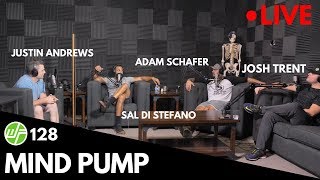
Transcript of a group podcast conversation (hosts: Josh Trent, Sal Di Stefano, Adam Schafer, Justin Andrews) about fitness industry practices, technology and wellness, and societal impacts. Topics include early trainer experimentation and training philosophies; interview preparation; technology’s influence on media authenticity and deepfakes; social media and app addiction likened to drug addiction; mindfulness, sleep, and the role of intuition in diet and exercise; cultural and experiential drivers of health behavior; business models in fitness (studios, wearables, Peloton/OrangeTheory); and tensions between tech-enabled convenience and potential harms. The tone is conversational, reflective, and occasionally humorous; speakers share personal anecdotes, book recommendations (Irresistible, The Inevitable), and practical advice (fix sleep, schedule connection, favor experiences).
Chapters
I look at my first few years as a trainer is like I was experimenting on a bunch of clients and learning. I actually, no joke, this is true. Now I read Arthur Jones. You guys know what Arthur Jones is? So he was inventor of Nautilus equipment, and he had done the Colorado experiment, Casey Viader. And it talked about all you needed to do to signal muscle growth was to go to absolute failure one set, and that was it. So the whole protocol, like Mike Mentzer's Heavy duty and all these different workouts were based on that particular philosophy of you just go to absolute failure one set and then you're done for that body part and then move to the next one. So I had this client that I. David was his name. I won't say his last name. And this little Japanese dude, super nice guy, and he wanted to build muscle. And so our training sessions were 12 minutes. He'd come in and we'd go to fucking failure, like hard on like two or three body parts, and I'd send him off on his way. And if you're listening right now, dude, yeah, I owe you a refund.
How badass of a session was that for him? A 12 minute session where he got to that point powered out.
Yeah, yeah, yeah.
You never told that. You never told that story before.
He progressed for a grand total of three weeks, you know, and then nothing. And we just. I mean, I just bedridden, dude. I put him. I put him on the hack squat because I was like, oh, this is the way to do it. Like I'm. This is groundbreaking. And I'd put them on like a hack squat and I'd load it up with like 5 pound weights so that I could strip one off every time he hit failure. And this poor dude, I mean, I'm surprised he didn't get into rabdo. I'm surprised he didn't die. Like, like, you go to failure. Like, oh, and I'd take another one off. Keep going, you can do it. Oh, dude, you know he's bleeding. It was crazy.
Oh, my God.
Yeah. But anyway, it's intense. Yeah, there you go. So that's my confession.
Such a bad trainer.
That's my confession as a trader.
Man is money.
So you got to step me through. Josh, you actually. So when you interview you, you typically do your homework on your guest and you, you prepare, like, questions. What is that process? Like, because it's something that we're terrible at. We don't know how to do that.
Yeah. What's your name again?
Yeah, Justin and I, we Try to do that. Sal just keeps it up all the time.
What. What is.
What does that look like? Do you actually like.
Yes.
Print it all out. I mean, what is that? How do you do that?
Yeah. Yeah, man. I think in person is a whole different dynamic. So when I do it, I bring an iPad and I actually got. I was watching Lewis Howes when he first started, like 2011, 2012, and I was like, that's such a great idea. Just have an iPad with questions and just scroll. So that's what I do. I pick 10 really good questions. And I mean, like, questions that I've done my homework on. Like, I look back and I see what did their mom's relationship mean to what they do now.
Oh, cool.
You know, I'm saying, like, connecting the emotional dots as to why the hell they get into whatever they're into now.
That's got to take some digging.
Yeah, it does, it does. And also I'll say it depends on the guest. I'm not going to name names. Like, sometimes if I just know someone and I know their work, I probably won't prep for that. Hard.
Right.
I'll do like a two hour prep. But somebody that I like, really respect and I've never met them and I've been following their work. That could be a day. That could be like a day.
Oh, shit. Wow.
What did you find out about Justin?
He's a really romantic guy.
Yeah.
But he's also a warrior. So he's like, he's like half heart, half sword.
Wow.
He got all that.
That's a great compliment, right?
Couldn't be more wrong.
Dude, you just don't know me, Sal. All these years you haven't figured that out?
I think people are.
Josh did his homework.
I think people are hungry for both, though. I think people love, like, what you guys do so well is you just draw out what's naturally there. And I think some people also like the research aspect where it's like, well, you might miss that in this kind of an environment. Not to knock this environment because this environment feeds people too, but I think there is something to be said about that.
Right?
Well, there definitely is. There's been many times where I've interviewed someone. Interview went great.
Right.
And I loved it. People loved it. Great, great feedback from it. But then there was a question that I knew I wanted to get to and I never did. And I'm like, God, that would feel.
Like that after every podcast.
Yeah.
So I definitely can, I can appreciate that side of the prep where you, you, you're looking for these questions that you want to make sure you get out, because there's been more than a handful of times that's happened to us where, yeah, it was a great interview. Yeah. Lots of people enjoyed it. Loved it. Yeah, they had a great experience. But there was that person is the person I want to hear talk about this one thing. And I didn't give them that chance to do that. God damn it.
So I think you just got to know your strength, you know, ours that's not necessarily our strength. Our strength is conversational. And so we kind of play to that a little bit and, you know, play in that zone. We're comfortable with it. We feel we're at our best at it. But the other thing you want to consider with podcasting, a lot of times when guests on podcasts, it's because they've written a book or because they're talking about some research or. And they tend to do the circuit, Right. They tend to go from podcast to podcast.
Yeah.
And everybody answers the same or asks the same questions. It's the same interview, each podcast. And I don't know about you, but I hate that when I see someone that I really respect, I'm like, oh, shit, this person's getting interviewed. I can't wait to listen. And I listen to him, I'm like, fuck, that's everything I've always heard them talk about.
I'd like to hear some different things. Such a great point. Because I actually listen to shows and I pick out questions that I don't hear on purpose because I want to hear some new shit. And act. If they send me questions, have your heads up, PR person, like, send you questions like, would you ask our guests these questions?
Yeah, of course.
No, I won't. You know, and I'm going to read your book. I'm going to highlight parts that I think you were really vulnerable in. This is what people are hungry for, man. People want the truth, right? And they want it as much as possible because our world is filled with lies, right?
So more so than ever now with what we can do with Photoshop now and all this social media. Get an app now that can beautify the fuck out of you. In five minutes, you could be ugly as shit. Five minutes later, you're fine as hell.
You know what they have now? So I just read a news article the other day where they have. There's a couple of developers that are demonstrating that you can use CGI based off of someone's picture and make a video of that person look real. And make them say what you want.
Yeah.
So they did this with Trump, right? Trump and Obama, where they took them and it looks like it's really them and they're saying shit and it looks like they're talking.
Haven't had that the whole time.
That's exactly what I'm thinking, dude. Think about this way.
Heads just right. Meanwhile, they're off on some island golfing together.
Virtual Me's got this.
Imagine if you piss off the wrong people and next thing you know, there's a video of you on camera talking about how you like to do some horrible. Like, I didn't say that, but that's what it looks like. Wow. Crazy, right?
You just uncovered a part of the Onion that I don't think anybody's ever smelled.
Right.
That part, I don't know. I never even thought of that being a reality. But now with technology, that's a reality.
Well.
And think how hard that will be to police that. Like, how do you control that as fast as things go viral? No, I don't think you can. Because that's. I mean, if somebody leaked a video of that looks spot on to Donald Trump, sounds exactly like Donald Trump, and you got him saying something like off the wall, even crazier than anything he's already said before. How quick when you drop that on, maybe that's why he went so crazy. You drop that on Facebook, right? And it all sudden it goes, well, not million.
Not only that, but how do you defend that if that's you that's on TV saying that stuff.
Yeah.
You're going to come out and say, what? That's not me. It's a fake video. That sounds like bullshit. Like, nobody's going to believe that. And the people who have the capability of doing that. Well, it's been released now, but I guarantee you that that's existed for a little while.
Okay, well, it's going to have to be Minority Report style. It's going to have to be thumbprint or, you know, retina on the eye, maybe to author, to authenticate the video.
Maybe even that. I think you can fuck with crazy.
Isn't it funny when.
I don't know.
I know. It's like, what do you do?
It's funny when movies put stuff like that together, right? When you first watch, it's like, this is so crazy. And then as time goes by, you're like, oh, shit, maybe this could happen.
What if there was pre cog for you getting fat? Like, you could see a year down the road and be like, okay, I'M gonna adjust it now. And it was pre cog.
I can do that.
Water.
I can do that. I can do that. Yeah, yeah. Once I meet someone, hang out with them for a second, I already know, right? Like, you're gonna be fat. Yeah, I know right away you're gonna be fat in the future. Yeah, it's pretty easy to predict.
Do you have a jacket pack as well? You can, like, fly in and see.
It's one of his carnival tricks.
Yeah, you're fat. And I tell them that too. Like 10 years now. But you're gonna be fat. I don't actually do that, but yeah, it's very fascinating and very scary. You know, the world that we live in, it's really a world. It's always been that way. Deceit's always been around. I think it's just gonna get much.
See, sounds like my Yang. Is that the. The darker side. Because we were just talking all the positive benefits of technology and then you. You know.
But we're early in the game as far as health and fitness tech.
Yeah.
I think like from a morality place.
Fuck.
Hasn't the media always been controlled with either a good intention or a bad one?
Totally. 100%. 100%. Look up Operation Mockingbird. That's a real CIA, you know, plan to infiltrate the. The media, to use the media to get people, to persuade them to vote particular ways or act particular ways. This is. These are real things. So it's definitely. It sucks when you go down this rabbit hole because then you don't trust anything and you become this weird in the flat earth. Then you say. Exactly. You start wearing a tinfoil hat and all that stuff. But literally. But technology represents. I mean, tech has been around since mankind has been able to put, you know, two rocks together to develop something. It's always been technology. It's power. And power can be used however you want, whether that's good or bad. I know you've always been that battle.
You're a big tech. Have you read the book Irresistible yet?
No.
Put that on your list.
But I have read Inevitable by Kevin Kelly, which is the 12 forces that are going to power technology. That's on the list as well. But I love it, man. You have great book recommendations.
Oh, yeah. I know you'll enjoy that, knowing what you're into. I think you'll dig that. That's a pretty cool book and challenging one. Yeah. Well, just to. To think and it's. It's open my own eyes about like. So there's a test in there. They Tell you to do too, is just. And there's an app. I got to. I'll look it up for the show notes. But that you. That tracks how many times you pick your phone up and then how many times you're surfing. And that's not including phone calls or any of that. So it's like Facebook, Instagram, you know, you know, email stuff. Surfing the web. Yeah. And then track, like, how many minutes a day do you think we spend actually doing that? And it's pretty fucking crazy.
I would think the data would be scary as shit. It is scary, because I'll raise my hand and admit I check my phone all the time, incessantly. Like, if I'm online, I can't just stand in line and breathe. Right. But then sometimes I can. I'm like, well, what's the division between that? Is it my mindfulness? Okay, well, how do I grow my mindfulness? And I know how to do all these things. But I believe that if we put something on the phone or tech that would remind us to just be with ourselves. Like, almost like a block where we give a password to a friend or, I don't know, some service would pay for us to not access the device. That might be powerful, too, for mindfulness.
Well, I think that's. I think the, like, apps like this, you're gonna see more and more of this coming where people are gonna realize that it is getting out of control, and you don't even realize it. Like. And I love talking to guys that are our age, because I feel like we. We've had the. We were before and after.
What do they call us? The. It's not the X Generation or whatever they say that we. We were grew up analog and now we live digital, or we were born analog group digital. So we had both. We were able to experience both worlds.
I think millennial is the most over fucking used term. Like, what does that even mean anymore? Yeah, I'm 1980. So essentially I'm like one foot millennial. One foot not.
No, you're not millennials, bro.
We're not millennial.
We're not. No.
No, we're not.
Am I just hanging on to that?
Yeah, you are. No, you're not millennials. Not till 89. No, it's like later 80s almost. Yeah, millennials.
Later 20s. Kids.
Yeah, yeah, you're. You're 80. If you're low 80s or 70s, you're definitely considered Generation X.
No, no, it's after generation. Generation X and the one afterwards which I can't. I think is Generation Y.
No, Y is the youngest right now. Y is the youngest.
Then you have X us, which we were in between millennial and then Y. Is that what you're saying?
Yeah.
Okay. But yeah, we grew up without any of that stuff. It's what's most fascinating about it is when you look at the quickness by which technology got adapted or adopted by the world. And what I mean by it is Internet, social media, cell phones, and that kind of 24 hour connectiveness. It went from none to everyone so fast. Facebook just hit 2 billion users the other day. That's almost a third of the world population on Facebook. That's one social media platform.
So in the book they get into. What is scary about this is that we only have about 10 years of tracking. We don't know what the long term effects are.
This.
And they do a lot of crazy comparisons to drug addiction. The way that you get this endorphin rush when you get a like or a new person who adds to you or somebody talks about you or tags you. We get the, every time you, you open that and you see that on Facebook or on Instagram, you get this release and this rush and you. And they were engineered so these, these tools, these apps were engineered to do that, to get you addicted to it. And we are definitely seeing that. These, that we are. And when I really, if I, if I have some real true perspective and detach myself from the day to day and think about, okay, what was I doing 10 years ago compared to now and this tool that I now have in my pocket that I'm always attached to, I didn't even have that 10 years ago. And I had, my life was fine, you know, and I'm not somebody who's anti technology because I love tech and I love where we're going. But I am also need to be aware of the dangers of it. Just like, I'm also somebody who's pro drugs too. I'm like, so I think that pro drugs. No, I am, I don't, I don't everybody do drugs. I think, I think that, I think it's silly how we have the DARE program when we were younger and you were scared to death. Like, oh yeah, you know, like, I think, I think there should be more education around drugs. Just like there should be more education around this and that's. It's more like this. Okay, listen, there's lots of cool things about this and you could have a great time with this and it's awesome and there's lots of benefits. But then it also can become very addicting because of that and then become aware of that. So the book dives into it. It draws a lot of parallels to what we know about the behavior, addiction with drugs and what they're seeing with people being addicted to these apps and games and all this stuff that we are now staring into a screen all.
Day long just imagining like a guy in a trench coat. Like, you know, you want your cell phone back or you want some drugs. Right.
I saw a commercial like that, really, where it was like a montage of what would happen if, like, all the apps went away and there was like a black market for you using your phone. Of course, for like a. Yeah, because look at the biology of our limbic brain. It thrives off of novelty, like panic.
Right?
So the limbic brain, we are old software and this is brand fucking new.
Right?
So that's the reality of where we're at.
And now novelty does what?
Right, Colors.
Novelty stimulates dopamine, of course. That's. That's what gets. Drives us to seek more of it out and to get more and more novelty. What is one of the hallmarks of anxiety? Dopamine minus serotonin, minus oxytocin. It's just dopamine. Just constant levels of dopamine does. Is connected to higher rates of anxiety and the fastest growing. And now I believe the number one diagnosed disorder among people is anxiety. It's never been that way before, but anxiety is. It's this epidemic that no one's talking about right now.
And I think I'm talking about it.
Are you? Hell yeah. I think it's 100% connected to the fact that we are never alone like we used to be. Like, it's always something. Even, you know, work. You leave work, your email, your phone, your social media, you're talking to people, you're constantly turned on all the time. And we don't have that. There's no balance. And so we develop these anxious disorders. And I think the future of health is going to rest on being able to manage a lot of that and also manage the psyche that goes along with that. And then things tend to fall. Fall in place.
This is so powerful.
Yeah.
Such a powerful topic.
It. Well, you know, it's funny. They. I actually talked about this on a previous podcast where I. I speculated. I made a comment like, you know, I would love to see a group of people who are told to have a mindfulness practice, whether that's meditation or, you know, whatever, and another group who is given a diet and then a Control group. And I'd be interested to see who actually succeeds in terms of health and fat loss and stuff like that. There actually was a study that they did that with, and the mindfulness group had better fasting glucose and better results in terms of nutrition because they were able to kind of dive into the root of the problem. Because I think we think the root of the problem to poor health is our. The actions that we take. So, like, why do I. Why am I obese? Why am I. Why do. Why does someone have heart disease? Why is someone. They're eating horribly and they're not moving. Yes, those are definitely causing those issues. But what is the root behind the eating poorly, the root behind lack of activity? That's the thing that no one's looking at. And that's probably why we're failing miserably at addressing those issues, man.
This is why it's thought, then feeling, then action, either healthy or unhealthy. But it's the thought and then below, that's the belief, right? So it's like, hey, what is our society enforcing as far as a belief? What do people believe right now? Do people believe that, like things are possible or not? And that's the narrative that this social media feeds all the time. This is what's going on. This is people that are dying. This is people that are being assaulted. This is what you should be scared of. Don't eat coconut oil. Look at this fire. Look what's going on in Tasmania. Ah, it's like constantly, right? So that's sparking that belief constantly.
Are you familiar with the author, Eckhart Tolle?
Yeah.
Okay, so I'm reading one of.
My voice just got deep.
I like reading that sometimes. So I'm reading his book right now, A New Earth, and he talks about pain body. And this is a form of your ego that thrives off of pain and drama and, you know, issues problems, causing problems. And the collective pain body is when you have the, you know, like a, like, you know, the country of America has pain bodies dealing with the issues of slavery and some of the stuff that we've done in our past. And other countries have their own pain bodies. But he talks about how our pain body, all of the forms of our ego, seeks out food. It needs to be fed in order to live. And our pain body loves drama, it loves bad news, it loves hearing bad shit. And if you watch the news, it's 99% bad shit, 1% good stuff. And remember, we're the drivers of media. So if we consume what we Consume is what they'll produce. And when we get angry at the media for feeding that shit, it's on us. We're the ones that are consuming it. And it's all of us that are just. We thrive on all of this bad energy all the time. It's this collective insanity, and it sucks you in.
How addicting is this? Gay Hendricks talks about this. We can become addicted to these stories, like, constantly, right? And they just feed our whole life path. And then, of course, that's reinforced by the media. So now what. What you guys are doing and what good podcasts are doing, great podcasts are doing is talking about a new narrative of what's possible instead of what's dramatic. Can we get addicted to, like, Positive News Network? Is that possible? I think it is.
I believe. I believe we will head that believe. But unfortunately, like, what it takes for us as a society, I feel like we have to kind of hit rock bottom first. So I think where we're heading with tech addiction is we still got a ways to go before we start seeing some really bad. And we have enough data for the over 10, 15, 20 years. We go, oh, this is some lives up right here. Maybe we should do this. Maybe we should do this. And then the pendulum will start to swing back the other way. And then you'll see companies like, I like to believe. And I like to believe that we're ahead of the curve with stuff like that. We, we are planning for the future with where. Where Mind pump is our message. We knew it's not set. We knew it wasn't sexy. We knew that we weren't going to compete with some of the companies right now with the way they market themselves. Like, we can't do that, like, because it's. It's a total different message. So that's one of the greatest challenges that we're in right now is, you know, how do we continue to scale this business knowing that. That we're not ready yet? I know we're. I mean, I think we're ready because I know this message needs to get out. But are we really, though, as a whole, when you look at.
We talk to the collective, is the collective ready?
Right.
Yeah, I think they are. On a subconscious level. I think we all are. Don't we all know when we just like someone. Existential energy, we just know, like, I like that person, that person's truthful. And then we know when someone's full of shit. So I think there are people that know what you're saying is true, and they want It. But there's a fear narrative right now that says, oh, that's not possible. And so good outlets like yours, like, this is why it's such a big deal. And I think this is why. Also, a podcast is growing. People are hungry for this, right? And they want to get it everywhere.
They go, you know, but they don't know. They just find themselves drawn to it, but they're not quite sure why, which I find very fascinating. I'll tell you what, having kids is. It's a blessing in many different ways, but one of the ways it's a blessing is it's so hard to be objective about yourself. Like, it's very difficult for me to observe what happens to me when I'm too connected to social media, when I'm too addicted to it, when I'm on my phone all the time, when I'm, you know, not connecting to other people. It's very hard to do. To be objective about that. Right? It's very easy for me to observe my kids. Very easy for me to see what happens. And I'll tell you what, I have two kids, two young kids, and I can clearly see a change in their personality and behavior when they're on their iPads or on their phones or watching YouTube or whatever for longer than, like, 40 minutes. It is clear as day, I'll take them on a vacation somewhere. We'll have no electronics and they're different children within two or three days. But there's a withdrawal period that they go through.
Well, we had the same thing with tv, and, you know, like, there's been a history of, like, new novel things that, like, kids get, like, super sucked into. And that's totally something that we are gonna. It's gonna be a challenge going forward with, like, removing that. And because they're gonna get it in school, you know, there's no more paper. Everything is on the iPad. Everything is on the phone. So it's, like, to not address it and pull it away from them, it's great. I think, like, my battle with that is to, you know, keep it out of their. It's not a necessity that they need right now, you know, as long as possible, if they don't need it, if it's not something that they're using at school yet. You know, let's. Let's try and get you to play and be a normal kid and. And get outside and be active.
Here's a. Here's a high thought for you.
What if.
All right, what.
What if.
What if. What if we're Wrong. And that's actually the natural progression and evolution of how. How the future us is supposed to be. And we're. Those of us that are trying to be disconnected are the old barnacles. And those, those that are on this, the forward thinkers are like, why we need to be more connected. Because I can multitask and do all these other things and become more of like one. And maybe our brain just isn't.
Maybe we're.
Maybe we're resisting it. Maybe we're the rebellion and we shouldn't be. Maybe we're supposed to be getting more.
Connected and sucked in turn into Darth Vader.
I think about that for a minute.
I think.
Kind of a scary thought though, right?
Think about it for a minute.
Even if that's true, I don't want that to be true because I know what would happen to our morality and to our quality of life, man. It would erode like a cliff. Like, how fun would life be if everything was connected to everything else and there was never any separation.
You say that, but you guys see the new movie that's coming out with Steven Spielberg? No Player One.
I saw that.
Oh, think of that. Think of the, the, the. And you see it. And that just the preview made my wheel starts spinning.
Like that's what, that's the future. That's what you said. It's the evolution that we're resisting. It's the inevitable evolution.
So this is what, this is. What sparked this conversation for me was that I just saw that preview and I thought, man, what if it is like that? And they make it sound so cool. Because the, the virtual reality world, we can do things that we can't do here. We could take risks with our lives inside this connected world. And it's so real. Deteriorates because of where science is. You feel like it's real. But the beauty of it is we, you and I could be race car racing Lamborghinis on sides of cliffs. And you push me and then it just blows up. And then I wake back up. But I felt like the experience, like I was really there doing that. Talk about a fucking rush.
Well now, now we're going down into ultimate wormhole.
Here we go.
Because. Because here we go. What is really good, right? You're my consciousness and in a big way. Mind pump, wellness force. It's consciousness rising up. So is consciousness present when you're in that simulation where you're driving and crashing? I think it's still present. I think consciousness is always present.
I think if we take it to the Next level, what's the ultimate progression of that? Let's say that they. They do come out with technology that lets you plug in and experience games and you're playing things and you're living these things out, and then you can unplug and then what's the next progression of that? When you. That gets boring, when that gets. When you get sick and tired of that, when you want the next thrill, the next progression, the next natural progression is to plug in and forget that you're plugged in, to actually think you're.
In real life, which would. Which would resemble deep. Which would resemble what we're in right now, simulation, which resemble what we have thought to be or thought of what the. And tried to fathom or put together in our minds, right? What, what heaven would be like this. This fantasy of every day I could do whatever I wanted to whatever level to whatever stream with no fear, right? Like that is. Is that the. The most ultimate piece? And are we evolving in that direction? Are we just fighting it, dude?
Isn't that what we're all trying to do?
Digital?
Aren't we all trying to operate every single day from just a place of love? Right, like you're saying, so we're all doing our very best to make this heaven on earth. Some people are really fucking good at it. Yeah, some people not so good. So how do we become more good? How do we become great at it?
I think one of the first things we need to do is become much more aware and not I stop identifying with our thoughts or what we think, because that is, your thoughts can fool you. They can make you believe that you're anxious when you're not. They can make you feel worse when you don't feel bad. You know, I had a conversation with a client the other day, and she was telling me about how she had a real tough day the other day because she was really craving this cookie at a party and she didn't want to eat it, and she stressed over it. I said, why are you stressing over it? She said, well, because I wanted it, but I couldn't have it. And I said, well, you can have it if you want to. And she's like, well, what do you mean? I said, if you want, you can have it. You chose not to have the cookie. The creation in your mind, the illusion that you can't have it is what's giving you that problem. What's giving you that stress. Then we went a step further and she said, well, I have this craving. I said, well, what's A craving. How is it different from hunger? And she tried to explain it to me, and I said, what's wrong with feeling a craving? And why are you running from that? It's really about awareness. I'm using a simple example in fitness, because that's what we work in. But I think when we can start understanding that we are the observer behind the thoughts, then a lot of our issues will go away. But once we become our thoughts and we become what we think and who we think we are, that's when we get a lot of these problems. Because really, if you look around the problems that plague mankind, hey, let's, you know, let's. Let's take. Let's make it simple because we're all in the fitness realm. Let's talk about fitness and health. Okay? You're obese. You know what you need to do? Why aren't you doing it? It's very simple, right? But it's not easy. Why is that? Because we are not understanding that we're the observer behind those thoughts. We're identifying with these thoughts. And you can have all the information in the world telling you how you should eat and what you should do, but if you don't understand that you're the observer behind those thoughts, it ain't gonna happen. It ain't gonna work for you. It's gonna be very short term. And so I think that. And obviously we're very esoteric with my speak now, but I think until humans can get to that point, it's always gonna be a problem. We're gonna kill each other over, you know, artificial fake lines in the sand, and we're gonna fight over resources when we have plenty. We're gonna do a bunch of crazy shit that doesn't make any sense. Could you imagine an alien species coming down and analyzing mankind?
They'd be like, why do these women have salt bags attached to their chest? They dig us up. This woman had him on the backside of her pelvis.
What's that all about, Right? They would. They would look at us. They'd look at us and be like, wow, they're suffering from collective insanity. Yeah. They did not realize that they could all just be cool.
There's levels to this, though. I think there's. There's a lot of levels to this and a lot of layers. It's not. I don't think. I mean, when Sal says it, he says it so eloquently, right? And it rolls off so nice. And it's like, yeah, just fucking ask yourself why. You know what I'm saying, but what I have found is every. You know, you got to get through those layers and just keep asking yourself, why? And that's for everything, right? Why do I want to look this way? Why do I want to feel this way? What is it? Why? Why, why, why? And eventually you'll start to get to the root of it, right? Because it's not what you think it is. Most people think it's like, oh, because I have this wedding in six months. Like, that's why you want to get in shape. No, think. Why does. Why do you care about the way you look going to that wedding?
Well, look at all, like, these motivational speakers, like your Tony Robbins. And, like, how quickly they can cut into a lot of people's, like, issues where they just.
You.
You say something, and then he just asks you why.
Whose love did you want more? Your mom's or your dad's?
Right?
People just paralyzed.
Yeah. And then it keeps going and going and going. And then these people just. They can find that. That. That thing that. That is driving their. All of their thoughts and their. Their focus.
It's.
It's really.
And normally we find out that the. The motives are unhealthy when we really dig deep and we find out why I want to look or feel this certain way. Normally the motives are not right. And that's where you need to get. Where you need to do the work. It's not so much the exercise or the eating piece. It's the relationship with yourself. And so we talk about this all the time, that it's working on the relationship with yourself, then working on the relationship with food, and then you work on the relationship with exercise. And in that order. Like, you have to first work on your relationship with yourself. How do you view yourself and why do you view yourself that way? And then you work your way over to food. Because I think that's the other thing. People look at food and they go, oh, I can't have this. Like Sal was saying, that's gonna make me fat. Like, no, cookies don't make people fat. That's not how that works. But why do you. Why do you identify with cookies make you fat like that? Why is that? You know, and diving into that to get them to help start to look at their relation with food. When you start to connect those dots, then you can start connecting the dots of how you feel when you eat certain ways. Right? So when you. When I eat really healthy, it's amazing. I sleep better, I have more energy, My skin is better. I'm in A better mood. I feel stronger in the gym.
I.
But you can't do that until you break through these layers, right? So that's. We talk a lot about this on the show, but a lot of people, I think, are on the first layer, and you got to kind of get through each one before you get to this point where eventually we're intuitive eating, right? And we're intuitive training. You're. You're doing what's best for your body because you want to do what's best for it.
Along those lines of being intuitive with your food. You know, this kind of dawned on me a while ago, and since then it's now been confirmed by other professionals in the. In the fitness sphere, who I respect greatly. And a long time ago, I examined the. The advice to drink tons of water from the fitness industry. We love to tell people, drink tons of water all the time. That's drink.
Just a really good general statement.
Really what the advice supposed to come from was don't drink anything but water. But then it turned into drink lots of water, and somehow that's magic. And people would ask me how much water I should drink. And I dived into it, and I realized that your body's thirst signals, when they're accurate, when you know how to read them, are very accurate. They're very, very. They will tell you when you need water. This is true for hunger, and this is true for cravings, for the types of foods you should eat. And so when you throw everything off by ignoring signals, by being in an environment that's, you know, tons of electronic light all the time, so you don't understand the circadian rhythm is off by being constantly in these low, moderate levels of stress, by not paying attention to signals that your body's telling you and considering them normal. Like, I'm always bloated. I always have gas. I always have, you know, heartburn. My skin issues are just. That's just the way I am. It's genetic, by the way. Genetics is one of the worst things, best and worst things we've ever discovered. It's great because we've learned so much about ourselves, and it's horrible because it's given people a wonderful excuse for everything, right?
There's always a duality, man. Always.
Right?
So you look at genetics, and it's a science that can transform health through knowledge. But then also, people can use it as an excuse to be just like their parents.
That's right.
Well, so what do you choose?
Well, I just. I just got a message literally an hour ago from Someone on Instagram who she just listened to episode, I think 568, where I talk about how the connection between diet and acne and how I said, you'll be hard pressed to find a dermatologist that will tell you that your food intake has anything to do with acne or skin issues. Most of them will say, no, there's no connection whatsoever. This lady had had eczema since she was 10 years old. And every single dermatologist and doctor she'd been to had said, food has nothing to do with it. Here's these steroid creams, here's these pills, and that's all you can do. She listened to our episode, did some things with her diets for her ketogenic diet was the thing that worked. She went ketogenic eczema gone for the first time since she was 10 years old in her entire life. And again, these are signals that we're not. We're ignoring, but not purposefully, because we never learned how to read them, Unaware, we've never learned how to read them in the first place. Once you understand and learn how to read them, the reason why intuitive eating is so easy is because then you can just listen to your body. And your body evolved these systems to prevent you. Because I think a lot of us are in the. We have the misconception that these signals our body is to drive us to eat as much food as possible, which is false. This is false because eat too much at one sitting and you get sick, you mess up your gut. And if you eat too much, you also get sick over a period of time. We know this, we see it all the time. These are signals that we evolved with. And these signals of our body will tell us when we're eating too little, when we're eating too much, what we need to eat, and when we need to eat, when we need to eat these. That's how. That's literally how accurate your body can be if it's imbalanced because it's out of balance. And these signals are all over the fucking place. You can be as conscious as you want about what you need to eat. Okay, my first meal is this. And these are my macros. And you ain't gonna win. You're gonna be fighting signals that are telling you to do different. And they're all whacked and you can't read them. You don't know what's going on. People will get cravings for. Look, if you have a nutrient deficiency, give yourself a magnesium or calcium deficiency and watch what you Crave, it'll be interesting. You'll crave flavors that correlate to calcium and magnesium. You might not get them because now those flavors correlate to other things. Like for example, sweet doesn't necessarily mean vitamin C anymore, but it used to, it used to mean vitamin C. Used to mean that there's nutrients in this food that's sweet. And so I know when I'm craving these types of things, but it doesn't happen anymore. It's all over the place. And our body doesn't know how to read half the signals that we send it. I can eat a food that's got a mixture of salty sweet and fat and this hyper palatable food that never would have existed in nature.
Chocolate covered pretzels.
Exactly, exactly, exactly. So, right.
Inner fat kid alert. Hello.
Yeah.
So then the reset becomes how do we emotionally and physically reset ourselves? You could do it through a vipassana, you could do it through a training program. Everyone needs a reset from time to time, every human being.
My advice is step one is fix your sleep. If you, if you don't fix your sleep, you're gonna have a tough time handling anything else. Yeah, that's number one. Quality and quantity are both important. And it starts with you got to treat your sleep like you would treat anything else in your life. That's extremely important. You treat it with, you prepare for it, you have a routine, you treat it with respect. You don't just crash. A lot of people also confuse sleeping hard with sleeping well. Sometimes you sleep hard because you're so exhausted that you just pass out. I mean, I could give you, you know, I could give you anesthesia that'll make you pass out, but you're not gonna wake up and have, you know, be rested, you know, same thing with sleeping pills.
This is why people do so much hard sedatives, because they just can't go to sleep. Otherwise why do so many people pound beers to go to bed?
Right?
It's because their life is just completely out of whack. Look, our body's giving us clues all the fucking time, right? So your body's gonna tell you like, hey, you're exhausted today, or you're not having a good relationship today. So the only way it's gonna course correct is by you taking time out. And unfortunately, unless you're self aware, which you've talked a hell of a lot about, you're not going to take the time out. And a lot of parents that might be listening are like, well, yeah, we can't take the Time out. We have kids. I bet you if you looked at your life and you were honest and took a real inventory, you could partition resources if it was meaningful enough for you to do so.
Oh, well, you and I know this for sure. I know you guys don't know because we've all been trainers, so we've all been. Combination of all of us in here. I'm sure it's been thousands, maybe 10,000 people that we've actually touched as far as lives. Always. Everybody that's ever sat in front of me and said, adam, I don't have enough time to work out. I just, I can only got this much time. And once I showed them how to make it a part of their life, they all say the same thing afterwards. Like, oh my God, it's like, I have more time in the day now. It's because you become more productive when you, when you're, when your body is healthy and you're taking care of it.
You want to move.
You become so much more efficient. Like, and it's crazy how much more efficient. It's not like a little bit. This is another thing too. We talk about this. How many people think that they, they feel good? Like, they're, they're, they're, their meter is so off because they don't know what great feels like. Feeling good for them is them continuing to fill their body with always being deprived of certain nutrients. Yeah. Not, not exercising the body. They're, they've gotten to, they know how to feel good with their, their habits that they've been doing for 10 plus years. So in their mind, they're good, but they don't, they've never felt great. And once you, once you show them great and they feel great, it's like, oh shit, I'm getting way more done.
Most people are just, they're just numb. They're just so there's a difference between not being dead and being alive. There's a very, very big difference. One is very active and one is just, I'm not dead. There's a lot of numbing going on with people. A lot of numbing with medications, a lot of distracting because. And they don't know why. That's the thing too, if you ask them, is they don't know why. They don't know why they feel the way they do. I mean, let's be honest. We live in the most plentiful time in all of human history. We have solved the major stresses and killers that we've dealt with, and yet people are unhappy. That's got to be. That's crazy to me. You've got someone coming. I talk to people who are miserable and depressed, who have 10 pairs of shoes and a closet full of clothes and have never known what it's like to not have food for more than a week and have a roof over the head. But why are they so unhappy? And they don't know why. And we need to help people figure that out. And I think that's, that's part of becoming aware in terms of finding the time for these things. I'll tell you what, if you were an investor with money and I told you for every $5 you gave me, I'd give you $10 back, how much of your money would you give me? All of it. Every time you give me five bucks, I'm giving you ten bucks. You can give me all your money because you're going to make okay. That's what being mindful and that's what exercise does for your life. For every hour that you put into it, you will get two hours back. So for however much time you think you don't have, the reality is it will create more time for you in better productivity, better quality of life, more energy. I mean, the list goes on and on. In fact, the most successful people in the world will attribute much of their success to being good at those things, to being good at being mindful, to being good at being consistent with exercise. We're talking about Tony Robbins. That's one of the things he talks about, is his fitness regime. It's a very, very important part of his life.
He has made that a life practice that that like, feels good for him to do. He's become in love with the process. It's a goal on it approach. You have a goal, you have to get to the goal to be happy or you be happy along the way.
Yeah, yeah.
Being happy along the way. Only way actually.
Otherwise you're just punishing yourself, which, I mean, I just feel like a lot of people fall into that trap of, you know, you mentioned these people that like, have certain things, like cookies, like this becomes something that's going to make me fat and, you know, and I'm going to punish myself for devouring this and having that weak moment. And same thing with exercise where, you know, I'm looking at exercises, a way to rid myself of all these evil sins that I did, you know, throughout the day. Or it's just this weird mentality. We want to punish ourselves, we want to be hard on ourselves. And instead of really just charging ourselves up and. And working out in a way where it's really just. It's building this energy, it's building this extra movement throughout the day that is contagious. Like it makes me want to move more.
Here's what we have to do. If we want to make a true impact on total health and wellness in Western societies or in the world is it has to become a part of the culture. If it doesn't become a part of the culture, it's going to be very, very difficult. If you go to China and you wake up at 6 o' clock in the morning and you go out to the parks that are out there and this is in communist China, by the way. Remarkable that the communist regime didn't eliminate this from people's lives. You will see thousands of people doing Tai chi every single morning. It is a part of their culture. Many of them do it because it's part of the culture. Not realizing you learn a lot from that. Oh my God, everybody doing that.
I'm visualizing all the runners. What are the most common facial expressions of runners? They're like grimacing, they're not loving running. It's like, it's like you said, man, it's like punishing themselves. So how do we make exercise fun and enjoyable? Everyone's got their own flavor. It's making that container open so they can step in.
It's. It's got to become a part of the culture. To where. Oh man, I just had a hard day at work. I can't wait to go do yoga instead of. I'm going to go get that, you know, crack open a beer or drink some.
Well, I talk about this on the show all the time, that the wrong people are doing the wrong thing. Right. So it's always the opposite. Some of the. Because I do believe there's a place for beast mode. There's a. There's a place for intensity, there's a place for pushing yourself. You went through Mark Devine's thing. There's a place for that. There's huge psychological benefits that you get from that. But it's funny, the people that gravitate towards those punishing type workouts and punish themselves are the ones that are punishing themselves all day at work, super high stress, super hard on themselves. And then they go to their workout that is reflecting the way they live their life 24 7. Those people don't need. Those need to be meditating. And then you got the meditating guys, you got the yoga guys that all they do is yoga, yoga, smoke weed, and chill and they're, they're never out of that state. Yeah, it's like you need a little bit of intensity. You need to be a little, you need a little beast mode in your life.
You get to go to 20x.
Yeah.
Put down the green juice.
Right, right. This pull up bar, you know, it's, it's funny. We, we wanna, it's something as, as humans we tend to do is we like gravitate to these, these boxes. Everybody, we want to put ourselves in a box and a category and it's like, you know, I identify with this group of people and so I'm going to do these things. And we're not into those things and those aren't. This is against what we believe in and what we say and this is the stuff that we do. And you don't venture out of that. And it's crazy because yeah, there's lots of benefits that you may see for this running or this yoga or whatever it may be. But you know, it's amazing how much the body needs these little stressors all the time and good and bad ones. Right. Sometimes it's completely meditating, floating like we did today. And then other times it's going to like a marked divine thing and stressing that I think we get so comfortable in our boxes, we don't want to venture outside of them.
Yeah. And especially in immediate gratification society, delayed gratification is an art form. It's an art form that not a lot of people practice. And so how do we practice that? You could do the 20x. You could also do a vipassana. You could also be on a podcast. I mean there's many ways to push your edge. Right?
Right.
So how do you guys push your edge right now? Like what's your biggest edge that you're working on in your life? Is it business? Is it? I know for Justin we talked about it was like meditation.
Right.
For me it's finding that balance. Like maybe when I heard you talk about the 20x, I am that guy that kind of punishes himself. Right. I work my ass off, I go to the 20x. I was laughing as you're talking. It's so true, man.
Right.
And so like meditation for me is also big. Yeah. But, but I'm curious about all three of you. Like, what's the edge right now for.
For me right now? So for most of my life I've not enjoyed being in nature. I've never, I've never enjoyed taking adventures where, I don't know necessarily where I'M going and things aren't planned out. I have a bad sense of direction. Always fear getting lost. I was never the guy to take my shoes and socks off out in the forest and feel the ground. And lately that has been the focus of what I have been trying to work on. Because. And I'm gonna be quite honest, the person that I started dating somebody and, like, what happens a lot of times when men fall in love with a girl is they do shit they don't want to do because they like the girl, right? So she takes me on this. On this road trip, and we end up kayaking on Lake Tahoe, and we're supposed to kayak to a camping ground. And we got lost on Lake Tahoe in a kayak with our camping gear and ended up kayaking for something like eight or nine miles. And this is totally out of my comfort zone. Like, I wouldn't be caught dead on. Dead in the water on a kayak in the middle of a lake, let alone trying to find somewhere to go, then camp or whatever. And it was miserable for me. But afterwards, I remember feeling something different. I felt this sense of, like, man, I could really do something. Like, you know, I could really do that. Like, this isn't that big of a deal. It was tough, but I did it. And then I noticed the. Just the rejuvenating effects of being out in a lake and having nothing else but just me, another person in nature. And so now I've started seeking that out. Now I'll take my shoes and socks off and walk barefoot on a trail, or I'll put my feet in a creek, or I'll sit and just. With no one around me and just listen and feel. I would have never done that a million. Never done that. A million years you had asked me that.
Why is that?
Yeah, 10 years ago.
10 years ago.
It's my edge now because it has. It is really taking me to the next level. And the now there's a problem with that is in that is that I don't want to identify with it making me better, because then I'm gonna do it. Like, I treat other things in my life. Like, I'm not gonna go out and be like, I'm gonna go do nature real hard. I'm gonna go nature the fuck out.
Of this shit out of it.
I'm just trying to observe. I'm trying to be aware of the benefits and just be in the moment. It really puts me in the moment. I went hiking the other day, and we were at Castle Rock, which is a great, great spot up in the Santa Cruz Mountains. And there's a couple trails you can get real high and you can sit on the edge of like a cliff and you can see all of Santa Cruz, Santa Cruz Mountains. Now, 10 years ago, I would have never. I wouldn't have stepped 10 foot, 10ft away from a cliff, off of an edge or whatever. I would have been too, like, like, too anxious, but actually sat on the edge of it and let my feet dangle off the edge of it. And I just closed my eyes first for, I don't know, probably 10, 15 minutes. And I'm getting things out of it that I never thought that I never got from pretty much anything else. So right now, that's kind of the. The area that I'm seeking. And I think that's giving me an edge. It's giving me better ideas. It's helping me work more, more productively. Not necessarily harder, but more. More productive. And I feel more connected to my children. So it's. It's been a. It's been a huge boost to pretty much everything.
I think we're all kind of similar with the present message, I think. And I think it's because of our business, right? Like, this is. This is my first business. I turned on my Instagram and my Facebook with the intention to build a business around it. So I was not a social media guy. I wasn't. I didn't care to do that stuff. I've always been a active outdoor nature sports. Like, I've always been that guy, right? I was always playing basketball or football or wakeboarding or snowboarding, like, those. I was into things like that. And I never cared to sit on social media and I never cared about trying to get more friends on Facebook. Like, none of that stuff mattered to me. I had my friends. But when I started this business, I. I started it with the intention of, you know, like, okay, we're gonna build this. This business around. At that time, I didn't know what it was. It ended up pivoting over to these guys in mind pump. But I did start my social media with the intent of turning it into this business. Because I have someone who I'd met at that time who Taylor, who you actually just met. He has a pretty cool story on how we met and how this all happened. And so I've watched myself over the last four years be consumed by the social media, by my phone, by the web. I've never, I was never into it like I am now. And of course, I have justified it because it's my business, my livelihood now. And so it's been really easy to do that. While I've been doing that, I've watched my relationships start to suffer, and it's. It's starting to suffer from people that matter a lot to me. You know, my girl who's been with me for over six years, she's been with me through multiple businesses. So she's seen me do something that's totally not even related to, you know, social media, and then watch me do that and see what a difference. So she'd probably be a great person to talk to and ask what that was, what it's been like. And I've gotten my, obviously, feedback from her. We have. We communicate very well. And I know that I have a hard time being present with. With people that I'm with now. That's part of why I love this podcast, because it forces me to be present and we get to know each other, we're talking, but outside of here. Yeah, it's really easy for me to grab my phone and start answering emails or messages on social media. Excuse me, whatever. So that has been something that I have been working on, and I've actually, I'm doing certain things with certain people in my life. So, like, I have, like, my. My moms, and I say moms because I. I refer to my two best friends moms as like, my mom's too, and my own mom, and then my dad, and then I've got my aunt and uncle, and then I've got my. My girl at home. And all of them, I felt, have suffered. And they all mean a lot to me. And so there's little things that I've started to do to. To create habits, to make sure that I stay connected. And I never thought that I'd have to do that. Like, it was not, like, for me to work on relationship. I'm a very outgoing guy, personable. I'm very. With all my friends, have always been somebody you could reach out, talk to him. I'm always there for everybody. But to see me start to disconnect because of the business, it's forced me to really look at my habits and my patterns and then start to put things in place to counter that. And I'll give you an example with, like, Katrina, something that's really changed the landscape of our relationship since this business has started. You know, we. We read together once a month, we knock a book out, and I started at the beginning of the year, so every month we knock out a new book. We pick it Together and then we listen to it on audible. And that if I knock a book out that requires me to put X amount of hours in. And that's how I figured that out. It's like, okay, let's set a goal that's realistic. Because obviously if I was trying to crank out one a week, I know I would never maintain that pace with everything I have on my plate. But I know I could knock a book out with her. Like, that means we set aside a few hours a week every week to listen to this audiobook together. And, you know, what it's done is been pretty incredible. Not only are we growing and we learning together, but then it also strikes up a great dialogue, you know, so afterwards we have these crazy in depth conversations that remind me of when I first met her six years ago. So that's just one thing that I've started to do. And for me, that's been weighing on me a lot is becoming more present with the people that I love and I care about because it's really easy for us to become consumed by these tools.
That was so powerful because it's exactly how we started this podcast with your core lesson. And I know for me, I'm getting so many mirrors from what you just said, man, because I'm in the thrush of building my business right now. And I actually, my greatest edge is scheduling fun and scheduling connection. That's my greatest edge right now. And it's so important because that's what gives me all the positive biology chemicals that my logical brain knows are important. But it's also like, we go through seasons in life sometimes, you know, and sometimes you need to build a castle.
Right?
Right.
And it is what it is. Right. But then having that, that awareness like you have, that's really where I find myself now. It's like, like, how do I build a business in a strong castle but also not lose my emotional health and presence along the way? Like, what does that look like?
I tell you what, this is where I'm at. I attribute a lot of that for me to Katrina because I've relied on her to be patient with me and to be that person, to give me, to be that mirror, to give me that feedback. Because at the very beginning of this, I remember looking at her and saying, like, I know I'm not going to be the best man I can be right now because I know that I'm going to sacrifice a lot of our. Just a year before we started this, her, and I really didn't work for almost a year and we traveled like, we traveled so fucking incredible. So imagine having a year like that, that, that was like, became the norm like every month we are going somewhere.
In summer to like a hard winter, right?
Exactly. Yeah, winter is coming for sure. That's what happened. And imagine what a shock that was for her, you know, to have to go through that where you know, almost every month my man was taking me somewhere and we were spending days, sometimes weeks together in some other country beach or whatever. And what a, what an awesome life that we had for about a year there. And then, okay, reality came around, said, okay, it's time for both of us to get our together. We've enjoyed, we've enjoyed it. She went, she took a new job where she was going to be busting her ass. I started a new business and we both kind of looked at each other like, hey, we know that we're going to have to schedule time for this relationship because otherwise we'll get really focused. And so we have to, we have these check ins that we have to do. And you know, at the beginning we didn't. And we saw, we caught ourselves where we, we were drifting apart and you know, we had this wake up moment of whoa. We actually, as much as we love each other, as much as we enjoy each other's company because we're so hyper focused on building the castle that you know, we got to schedule this stuff. And that to me is key. That's is starting to do that where I organize those trips, those times to the point where I know that she has a trip scheduled for just her and I to get away for three days next month. And I don't even know where we're going, what it is. I just, she's just made sure it's in the calendar. I can't put anything in it. And so we know that if enough time has gone by that we gotta.
Make sure that has been the most powerful thing I've ever done is like putting things in my phone, putting things in the calendar. Cause if they're there, I'll actually do them. And then I won't be a victim from my circumstance, I'll be the victor. Because I've like taken proactive control over my own schedule. And I think how many people who are listening can relate to this? Like they feel like maybe they're a victim to their schedule and how does that relate to their health and wellness specifically? This is a big one.
It is.
And I know it seems simple, like oh well, duh, but do it.
Yeah, right.
So if it's so simple. Then execute on it. And if you're listening, you're feeling, like, uncomfortable.
Well, there's some truth, probably, because.
Dig into that.
Exactly. The other thing to consider is experiences are so much more valuable than things. So much more valuable than things. And they've actually done studies on this where they've taken people and questioned them and asked them, you know, what they remember the most about what, you know, the last five years and what are the most meaningful things. And almost never is it the new TV they bought or the new car or the wardrobe. It's always that trip I went on or that class that I took or that thing that I learned over here. It's experiences.
First kiss on Tinder.
Sorry?
First kiss on Tinder.
Right? Yeah. That's hilarious. But, I mean, Grinder. I mean, all. I mean, in all honesty, let's be honest. That's. For Justin.
That's where we met.
Where we all met. That's the beginning of my.
That was number four.
That was number four. It's, you know, take all that. Take that money that you invest on, you know, things and. And, you know, that coffee every morning and the new pair of shoes and all that stuff, and maybe the extra bedroom in your. In the place you're renting. Take that money and spend it on experiences and watch the quality of your life improve. It's funny. Every time I meet people who travel a lot, they. And I don't know if it's just me. I don't know if you guys ever see this, but people who tend to travel seem to have, like, this kind of wisdom about them.
Well, there's other things that come into play there. I don't know if it's. That's the direct correlation.
They're getting a lot of novelty when they travel.
Yeah, they're getting a lot of novelty. You're also seeing different cultures and, like.
Oh, that's what I'm saying. That's.
That's totally normal over here. Just because we demonize it over here. Maybe it's not such a bad thing. You know, you learn. You learn a lot on when you travel, not to mention what you. You know, having to communicate to another person, if it's another language. Like, I mean, there's a lot that happens on that. And I think each person is different because I know that's your experience and that's your narrative, that that's how you feel. But I think there can be people that can. There could be tangible things that are very valuable to them, like an extra room that You. I mean, stuff like that, or, you know, coming from a sneaker head, you threw out sneakers right there. So, like, I feel the need to defend them. That if somebody. Somebody likes things, I do. I like things. I come after my error.
Well, you gotta ask, but do you.
Like the thing or do you like the essence of what the thing brings you?
Yeah, it's the essence of the thing.
That is it really about the thing.
It's not.
And also it's.
It what I was, okay, so literally this was yesterday.
I.
It's like half nostalgia. I was just. So when after my shoe boxes start to stack up, I order these clear boxes from Amazon. I organized all of them, right? So I'm going through and I'm organizing all my shoes in my spare room. And I'm looking and I'm going like, what is it about this that I love someone? I was questioning myself. I always do. Especially when I spent a day doing this. I'm good. I must really enjoy this if I'm like, stacking and organizing my shoes by brands and things like that, right? I'm going through and I'm looking at them like. And what it reminded me. I had this moment of being a child, and I remember how I used to sit and collect my baseball cards and I would just look at all of them and I would organize them by team and all these things like that. And it's a similar type of a feeling, right? Like the baseball cards that I bought, like, you know, was it really the baseball cards that were so important to me? Or is it like the essence, like you said, the whole process of opening it, looking at it, reading the stats, the player knowing all that stuff, or.
Buying an old classic car that reminds you of when you built it when you were 16, right? You saved up all your money for two summers.
I had a 1966 Mustang, rad when I was 17 out of 56 jeans. Every time I see a hot rod, my heart's like, oh, but you guys.
You guys realize.
You guys are nostalgia.
You guys are not experience. You're not explaining things right now. What are you guys explaining?
The essence.
Experiences. Yeah, but experiences you're actually. You're actually.
We're replicating. But what. That's what my point of interrupting you on that was that, you know, it can be for tangible things, can be that way for somebody else. So. Because I don't ever want you to come off like, oh, people that buy things. There's something. You're demonizing that. Like, there's something wrong with that. There's nothing wrong with buying things. You can buy things and actually get similar joys. There's nothing wrong with that.
No, no, I don't.
Just because you have found that the traveling and kayak.
No, no, no, no. I think.
And wearing, you know.
No, I said experience.
That don't matter.
I said experiences. Just. Just buying the shoes and having them is not what you enjoy. It's the experience of them. And so. And that's what I said. I literally said experiences. And that's the thing. Like, most of the things that people buy are not experiences. I can make that statement. I can stand right behind it. Most things people buy, it's because they just own shit.
You want to keep up with the Joneses and whatnot.
It's not because of experiences. And it brings so much better quality of life when you understand that and you spend money on. Or you invest your money on experiences rather than things. So, yeah, you can buy shit and you could buy a car, you could buy shoes, or you could buy the experience of those things, which is what you guys are explaining.
But I think getting to that is the key.
We're both. Right.
The key. Right? It's asking yourself. It's the same thing that I did in that room. Like, I question. I'm always doing this to my. I'm always questioning myself, and especially things that I do that are habits or whatever. And I'm looking my. Is this a healthy thing? Like, I'm looking at all these shoes. There's something wrong. Is there something wrong with me? And. And I. There. I come to this point where it's like, you know, I'm not. It's not like I'm living beyond my means. It's not like I'm wasting them. I wear them all, like, and I like them, and I take good care of them. And it reminds. It gives me these. This. This feeling that I had when I was a kid when I collected cars. And I'm like, I'm not gonna. I'm not gonna get rid of that because maybe somebody else thinks that that's a waste of money because they could sell all those shoes and they could travel around the world with that, like that. So that's. You. Maybe you would want to travel around the world and you have that experience. But for me, it provides a. An experience that's very fulfilling.
Right, right.
But it's a tangible thing.
Experiences are very individual. But, I mean, even circling it back to fitness, if we look at the most successful fitness facilities and, you know, centers and programs, the most successful Ones are based off of experience.
Absolutely.
And so it really, it really goes back to that as well. I know there's a lot of big box gyms out there that are really, really cheap. Especially nowadays you can get a membership for 15 bucks a month and have all kinds of equipment accessible to you. And they're. The rate of success with these types of facilities is very low compared to the rate of success to smaller facilities that have that experience.
Well, dude, this is why the four walls of the club are collapsing faster than anybody can realize. Because you know, sources like Peloton with their virtual cycling and rush and all these different studio experiences in your house.
Yeah.
On a massive directly to you competing and gamifying with everybody in different states across the United States. What I mean you can't compete with that if you're a club for 15 bucks. If you're Planet Fitness and you can't make loud noises and you can't like actually be in a gym yet you can get an incredible experience connected across the.
If you're a gamer and you know, like Call of Duty and then all of a sudden now you have online capability where you can talk to your buddies and you're shooting people together. So much better.
But then this ties into falling in love with the process. Like working out should be joy and fun, not like misery and pain. Although sometimes that's kind of fun too. But tying in this like virtual component, it's such a big deal now in this world. Like this is where we are. Okay. It's here whether we like it or not. And so I think these successful clubs that are leveraging tech and that are giving people like an in home experience or look at what Orange Theory is.
Doing or I was just gonna ask you what your. Let's dive into that. I love talking about business like this. What do you think about, you know, businesses like Orange Theory? What Obviously we know they're doing well. They're one of the fastest growing companies right now in fitness. They're up to, I think, I think it was like 700 and something locations I read just showing it something ridiculous. Right. So that I just read an article, I think it was in Forbes talking about them and how fast they're growing so they're exploding. But then I, I wonder, you know, how long will that last when you're seeing other companies like you're talking about that are creating the same experience in your home for probably a lot less.
Well, if you can create the essence, it's so cool. We've talked about the essence, right. If you can create the essence outside the club or outside the group fitness studio, bring that same environment to somebody competing on their own through device shit, maybe even like, VR.
Right.
What about a HUD headset that delivers VR? Somebody's running and they're in the class even though they're physically not in the class. That's the kind of experiences I think are coming. And Vaynerchuk's been talking about this for years already. Okay. The VR component is well on its way. It's already being integrated. Facebook just had.
Or augmented reality.
Or augmented reality. It's all here. It's like, well, when is it gonna be here? It's like, it's already here. So I think that's where we're going. And I think when we look at orangetheory and, like, Peloton and this transfer of power right now, the ivory towers have shown cracks for a long time, dude. In the fitness space, these big box clubs are dying a slow death, and they're frenetically scrambling to try to get.
Oh, God. Can you see them phonetically? Can you see? I love watching.
I not only can see them, I hear them. When I go to Ursa, I understand what they're saying because, like, they're trying to figure it out. Like, what Justin's created and this Axon, like, this is the kind of training tools people need because it actually connects. Why the hell someone would do it in the first place and show them progress on the long term. They can connect with other people about it. That's what it's all about, man. There's no joy in running on a treadmill by yourself and making an X on your calendar at home.
Right.
Right.
It just doesn't exist.
Yeah. So I think that's what they're doing. Well is they've. They did a good job, and I was there for, what, two years. They did a good job of building this community. Right. Like, they do this experience of, like, cheers. When you walk in, you walk in and you feel like it's home, you know? And so they're playing into that really well right now. But I wonder how much longer these brick and mortars can really last.
You know what else the good studios are doing is they're combining the outside club experience, either data, steps, activity, whatever, and they're bringing it into the club they're gamifying. There's a company called Delta Life Fitness. Josh Cherry is their CEO, and they have, like, 50 locations already. So they're up and coming. They just opened up in Temecula and They take outside data sets, they use nudge coach, they pull in data, everybody's life, their steps, they have challenges for steps and activity and sleep. And so when people come into the Delta Life facility, they're competing not only in the facility, but they're competing outside the facility. And then of course they're still doing these crossfit orange theory type workouts, right, that involve like fun things and yelling and music and a guy wearing a headset that's wearing.
You have to read Irresistible because this is the one. This is the. I want you to read it. So I'm gonna read it so we can. Because we have to talk about this. Because what we're talking about right now, here's what you're not going to like about the book. And this is what I had a hard time with.
Are you going to go doom and gloom right now?
Can I, can I, can I, can I, can I rain on your parade a little bit?
Go for it.
So they, they, they believe that the, the connecting this part of it because of humans behaviors, that it's going to feed the addiction and make things worse. And they actually talk about like wearables and things like that. I had a really hard time connecting with that part of the book because this is something I teach and I share with people and I believe that it's the first step of awareness. I believe that these wearable tools are incredible and they've changed all of my clients lives and I've been able to use this as an incredible tool. But then I have to be okay, that's that this is my experience, this is, I have a total confirmation bias with this, right? So if I actually try and detach myself, read this book, absorb this information and look at it and go like, wow, could it be, could this be dangerous? Could it be bad that we're just connecting more and more and more and more? Because it goes circles back around to how we started this whole conversation. And that's kind of where the book takes this is, you know, they, they really kind of demonized the wearable tools.
Well, statistically speaking, people who work out at home or who want to work out at home are far less successful than people that go somewhere else. The people who work out consistently at home also are ranked as highly motivated with fitness. So people who buy gym equipment and do stuff at home are the ones that are already so committed typically to exercise that they just want it in their house. They can do it whenever they want.
Really? You believe that's a true stat?
A lot of treadmills have doilies and fake.
Yeah, I don't know if I would believe that.
That's what I'm saying. People who buy home equipment and use it are very motivated individuals.
It's not the ones that actually use.
Yeah, it's not a convenience factor. And this is where I have a problem with. With tech and wearables saying that they're the answer. I think they're tools. I think they're great tools. I think they're provide us with great information. I don't think that the answer. Because convenience is not a factor. It hasn't been a factor for a long time. People could work out at home. I mean, home workout videos have been, you know, you sell more home workout videos than you sell gym.
This is the argument the book makes.
And here's the thing. I agree, you're right. So is the book, but so is the other things. There's laws of nature. Duality is one of them. So you're right. But which one do we focus on? Because they're right. Each one has its own merit. Like, each one is correct. It just depends on where you apply the energy and if it's the fit for your personality type for you as a human being.
So then on that note, then this is because, I mean, even being a guy who's, you know, was tied with orange theory because of my good buddy who started them, I think actually perpetuates a very bad relationship with exercise. I think people. And I saw this firsthand when I worked there and I. People become so addicted to the game. Part of winning, of beating the other person, scoring more points, getting more, you know, what they call. I forget what they call them over there. Splat points than this person that they're not doing what's best for their body. They're not doing what they need. They're doing what's going to win the game and then what it ends up doing is. And so I actually made a living off of helping people that had this really bad relationship in connection to exercise and food. And these were the type of people. It was like. It was like fish in a barrel there. I mean, everybody that. The people that I found that was.
Going away from quality, right? So like the same thing with the argument I have with CrossFit and sort of making that into a sport as far as, like my workout now is a sport, you know, they. They're going to organize it in a way where I'm going to compete and I'm going to do like, by all means necessary to, you know, Beat somebody else on this whiteboard. And, you know, that's going to be my focus for the day, is to, you know, take on this challenge. But it's always a challenge. Instead of, you know, internalizing what this is doing, you know, to benefit my body. And what kind of patterns can I establish with my movement that are going to make me, you know, move at. It's at my ultimate function and well being and it's going to keep me consistent.
Look, I said it before, I'll say it again. If it becomes a part of the culture, it will succeed. If it doesn't, it won't. If you look at, let's use Europe.
As an example, what does that have to do with Orange theory?
No, no, I'm talking about technology. I'm talking about, you know, these applications of these new wearables. If it becomes a part of the culture, it will become successful. If it doesn't, then it's going to be the next fad. And I'll give you guys some examples. Okay? If you look at Europe.
Oh, it's going to be a fad.
If you look at Europe and you look at their obesity rates, their obesity rates did not climb as quickly as America's. Part of the reason was they have a culture of eating that's older than ours. Now, the country in Europe that did not have obesity until much later and now we're starting to see a lot, is Italy. Italy had some of the best obesity rates, especially among children, for up until now. Their obesity rates now are skyrocketing. And it's because the culture, Italian culture, valued food so much that they would literally boycott a McDonald's when it would open up in a small town because they'd be like, that's garbage food. Now here's the thing with activity. If you go, if you. Childhood obesity used to not exist. It used to not exist in this country. It took longer for kids to become obese than adults because the culture of children was. And of course, their diets change very rapidly as well. But the culture was to be active. If you were a child, you were active always. It wasn't. Your parents could be office workers, super inactive, sit on the couch all day long. This is where, if you were a child, the culture was to move and be active. But that's not the case anymore. The case now is we are in a culture of inactivity and poor eating. That culture has to change. And this isn't fucking.
This isn't fucking Tai chi, bro. You can't compare it to that. This Is this. We're in a new era right now, and you're taking history and you're talking about things.
I'm talking about human behavior.
Okay, you're talking about human behavior, though, and it's about to change, dude.
Right?
It's changing before our eyes.
And that's my point.
We are becoming more tech. Yeah, I know it's your point, but you can't compare what's happened in the past to what we're about to see in the next 10 to 15 years. The wearable tools is not a fad, bro. It's a. It's.
We're becoming ingrained in our.
Well, my point is they're getting.
The culture becomes. To become active. If the culture turns into. Through tech, to eat better, to eat the way that you're. That's better for your body, then you will see a massive positive shift in health.
I think that's obvious. That's an obvious statement.
You're curious if it's already integrated, it's integrated now. I mean, look at Apple watch and the traction they've had. I think it's just the beginning of the beginning, right? I mean, the greatest services and products of the fitness industry so early to speculate, have not even been created yet. I mean, really soak that. Like the greatest products, the greatest services, the most transformational shit you're ever gonna believe hasn't even been invented yet. It's just the tip of the iceberg here.
What has the Internet done for businesses?
Right? Imagine if you were to capitalize on all the things you know now in 2007 for Facebook, okay? You'd be in any place you wanna be from a media perspective, because you would have seen it before it happens. And I believe we're on a ship and we all see the iceberg.
I do. It's a very fascinating topic.
It's a sword. It's. It could damage you or you could use it.
Which one do we choose to wield.
It to your benefit?
Which one do you choose? Anything in the world has a good or an evil potential.
Absolutely.
So that's why I'm saying I don't really know if anybody's right or wrong here. It's more like which one do we choose to go with based on our integrity, based on who we are, how.
Do you manage what goes.
Yeah.
No matter what, I don't think you stop it. Because we're all free market. All of us for sure are free market guys. So none of us think that that should be policed or regulated. So I'M definitely not somebody who thinks it be, should, should be stopped, but I definitely think there should come, I mean people should be thinking, thinking about what they're, they're getting into. Right. And I think even like what I.
Saw to focus on with it, especially.
Even watching what's going on. So back to circling back to Orange Theory because I had an opportunity to work there for two years because I've watched the growth of it when it had 20 something clubs to now 700 over felt like overnight, but within a couple years. And I actually don't think it's a healthy relationship with exercise. I think it does, I actually think it does more harm than good. And I know that's a lot of people that know me, that know I was connected to that are going to.
Be like, oh, there's an Orange Theory.
Trainer right now going like right, that's really pissed off. And it's, and it's because when I. And again, this is anecdotal, right? So I, my only experience is seeing about 2,000 different people over the course of two years in one facility. So that's my experience. And so someone could totally debate this, but in my experience a majority of those people that were walking through that door are where the people that didn't need that because there's a place for that. There are people, there is some people that I think that can be an awesome tool if you know how to use it correctly, you know how to turn it on and off, you know when you should be pushing the body that way. But what it does is it feeds into an addiction that people that don't belong there are doing. It's literally the people that are get.
Into the group mind of it.
Yes.
It's focus on the individual, right.
It's the people that are scared to work out by themselves because they don't know, they don't know any better. It's the people that hammer themselves all day long, high stress, then they go into this high intensity group setting and those people are the ones that need to be by themselves, talked about all their imbalances, address all their aches and pains, fix all of that, fix their relationship with themselves, fix a relationship with exercise. Then maybe they can introduce that intermittently into their life. But those are the people that are signing up for that. That's what's scary. That's what, that's what scares me. And when you see something like that growing so fast and we're praising it because it's doing so, it's so successful financially, see which to me is always a red flag right away. If something's so good, so awesome, what is it about it that is so great? Ask yourself, why am I in so in love and so addicted to this thing? That's because they made it so you would be addicted to it. Because they what I saw and I, I from day one and these guys know because I talked behind the scenes about this stuff. I stepped into it knowing it's not something that I believe in. It was somebody who is a buddy of mine starting it and I said I would help him build a good culture inside his facility. And so I tried to implement all of my beliefs and ideologies with health and fitness into a facility trying to impact them all. And I thought we did a pretty good job. It was the number one, number one facility for the first, the two years that I was there. I don't know what it does.
So what was the difference? How did you make that culture grow in a positive mind frame?
So here's the deal. And this is where I got a lot of pushback because I was doing things in the facility that you weren't supposed to do. That wasn't franchise, it wasn't part of the franchise. So I like. So when everybody else would normally do these like three minute, you know, warming them up on the bike and the, and the rower, I would have them doing dynamic warm ups and I would be teaching them about flexibility. At the end when you're supposed to do like this kind of generic cool down thing, I would be teaching them about nutrition. So I'd three minutes, I'd give them a tip of the day and then I write stuff on the board. So I was doing stuff inside the facility to give these people more because I knew that they weren't getting enough information. All they were doing was coming from the, the experience that they were already addicted to. When I was seeing all these ambassadors, people running got the knee hurts, my ankle hurts here. Adam. They got all this bad posture reinforcing the out, right? And then. And they teach their trainers because it's a fast paced class. They teach their trainers how to correct form. And it's like you can't, you can't correct somebody who has an imbalance that they've had for 30 years by coming over and just fixing their form for a second. Like you got to teach them what's wrong with their, with their body, what exercises they need to do to fix that and then what they need to avoid that's causing that. So if you're not and you can't do that in a fast paced class. Right. So I tried to do my best to implement that in there, and I still was not successful.
And the data doesn't lie. When you look at wellness programs, the reason why corporate wellness is growing is because it's not just myopic thinking of work your ass off in an Orange Theory fitness class. The reason why maybe what you were doing was successful is because you were throwing in extra components of wellness.
Right?
And so. And so whether you use technology or not, like, like this whole person is what needs to be addressed. It's not about just getting somebody fit and kicking their ass in the gym. I mean, occasionally that's important, right? But wellness is so much bigger than just how much you're sweating and how fit you are in your body. Like, there's so many components to it. And I think we've done such an amazing job of like exploring this today, right. After a while now, diving into it, you know, and I'm thinking about in my own life, like with Wellness Force, what's most important to me is just sharing my lessons, sharing my journey, man. Of this intersection of like, what does it mean to be physically intelligent in my body? What does it mean to be intelligent about my emotions? And that's what I'm just so excited to continue to get better on and learn on. I mean, I feel like I'm down the path, right? But it's important for everyone. Listening who's like a trainer? I know a lot of trainers listen to your podcast. You do not have to be a black belt to train a white belt. You can be a green belt. Like, don't feel overwhelmed by all this stuff. It doesn't have to be that way.
Right? Appreciate it.
Yeah.
Awesome, man. Good shit. Good deal. Hey, check this out. Go to mindpump media.com enroll in 30 days of coaching. It's available for free. Tons of great fitness information. Covers the entire gamut of wellness and fitness topics that we talk about on Mind Pump. Also go to YouTube. Check out our channel, Mind Pump TV. Subscribe. There's a new video every single day. Finally, find us on Instagram. Mind Pump Media. My page is Mind Pump Sal. Adam's at Mind Pump Adam and Justin is at Mind Pump Justin.
More from Josh






Your child's future start before pregnancy... and even before conception! #podcast

MD Reveals: Your Healing Creates Your Child's Reality (The Souls Coming In Need Strong Bodies)



