Alison Armstrong: Understanding Men, Women + Self Actualization
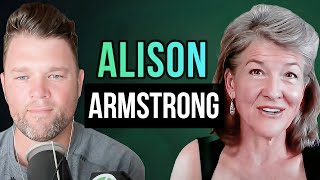
A YouTube interview (Josh Trent with Alison Armstrong, Sept 29, 2020) exploring gender dynamics, embodiment, and personal development. Armstrong explains how hormones and instincts shape perception and behavior (e.g., estrogen creates diffuse awareness; testosterone compartmentalizes), introduces a hierarchy of male instincts (procreate → protect → provide), describes relationship dynamics where unmet needs can trigger attacks, and outlines developmental stages including the 'tunnel' transition between building and having stages. She also recounts personal experiences (teen trauma, healing, spiritual mission), her teaching background (30+ years, courses and online curriculum), and practical tools (imagination to direct will, letting go of non-love).
Chapters
If you won't provide for me what I need and I can't get you to do it, I'm going to attack you. I'm going to attack you, and I'm going to accuse you of things. I'm going to accuse you of not loving me. I'm going to accuse you of not respecting me. I'm going to accuse you of being a misogynist. Well, now your protection has to revert to yourself. You're under attack. You have to protect yourself. And then you get called a narcissist because all your attention is on protecting yourself instead of providing for me. But I'm causing you to have to protect yourself by doing things. And this is where it all started, right? I started studying men because I wanted to know how was I bringing out the worst in them. I found out the answer was by attacking you. Sam.
Hello, everyone, it's Josh Trent. It's been a minute since you've been on Facebook Live. How are you doing out there? We're in lockdown, supposedly. Masks, maybe. We're not sure. There's a lot of confusion out there. We're here to talk about something that is so timeless and also timely with the one and only Alison Armstrong. And that is how do we love one another more? How do we give each other the space, the emotional bandwidth, and really just the special care that all of us deserve as men and women. And how do we understand men and women in this world? Alison, welcome.
Thank you. I'm glad to be here.
You know, there's a part of my heart that was expanding before we even jumped on, and it was this big question of this core fundamental difference between men and women and the way that we lovingly, and sometimes not so lovingly, trigger each other. And there's a quote on your website that is so perfect for us to start with and is until we understand the real differences in what compels our behavior, especially under stress, will keep bringing it out the worst in each other and never really experience the beauty of both men and women. I can't think of a more perfect quote for right now where you talk about bringing out kind of the worst of us sometimes in other works, especially under stress. When did that quote come through for you? Why is that the quote on your homepage, on your website? I mean, that's some pretty prime real estate.
One of the reasons why it's on there is because a lot of people, especially ones with what I would call undescended testicles, otherwise known as ovaries, of the female persuasion, Estrogen soaked brains. For much of our lives, we, we tend to just want to know, how do I handle this? How do I get a man to do this? How many times I've been asked that question in the last 30 years? I could vomit. How do I get him to blank? How do I get him to stop blank? And it's everything. From in the beginning it was how do I get him to put the toilet seat down? All the way from there to how do I get him to marry, how do I get him to commit, how do I get him to be more ambitious? How do I get him to. And I start with that quote, because if you're not curious about why someone does what they do in the first place, like, maybe there's a good reason why men don't put the toilet seat down. Maybe there's good reason why men don't commit when they don't. Maybe there's a good reason reason why women detour and straighten a crooked pillow. Maybe there's a good reason why the reaction to COVID 19 is so different between men and women. Where women tend to be really threatened by the disease, where men are threatened by the impact it's having on their ability to protect and collide. If we're not even curious about, about the good reasons we do what we do, someone should just not go any further. On my website. If you just want technique, if you just want to know how to get someone to do something, you're already in the wrong ballpark, you're at the wrong website. Google that and go someplace else.
I love that you talk about curiosity too, because I just finished up a men's group and men and women. I'm curious to talk about this with you as we unfold this conversation. Masculine and feminine, the polarity that exists in both genders, but yet how genders are specifically different, we get to celebrate that. And in this men's group, there was a lot of conversations that came up around conflict and the way that we interrelate to one another. And it brought me to this understanding of the ego. And the ego is a layer on top of us being a biological man and a biological woman. How much does the conversation of the ego come up in your work? Before we go into the differences between men and women, we all share an ego, whether it's universal or. Or whether it's conscious or not, it's running the show. If we're not aware of it.
Well, first I'd have to say that ego isn't my area. By ego, do you mean the same thing as identity.
I think that's one way to say it. Or really just an amalgam of the beliefs that we've either taken from our parents or society. Kind of the subconscious framework that also operates in our gender.
Well, so identity I can talk about, right? Identity. What we identify with, what we are that we are, what we think that we are, what we're going to protect about ourselves, that we are. Identity comes from the same word that identical comes from. So the job of identity is to keep things identical, to keep things the same. Right. And it's one of the things I have to deal with a lot. And it's why, you know, Yakov Smirnoff wanted to train me to do stand up comedy. Because in the few moments after someone really laughs, their brain has the elasticity of a five year old. And identity altering information can sneak past the guards. Like it just sneaks past and gets in there. And so like our understanding women course online, it, I mean, it's hilarious. I watch it and I crack up. And I don't know where that Alice Armstrong got her timing because, I mean, it's so funny in the physical humor. You know, my whole body's involved in communicating. You asked if I was Italian, right. And so we do. We all have identity that's associated with our gender, but we also have identity that's associated with our ethnicity. Right, sure. You asked if I was Italian and I knew the answer, right? No, Irish and Scottish. I'm Armstrong. I have a lot to prove. Right. Those guns, you know, I came by those.
That's a serious gun show, by the way.
Side note, side note, and I don't work out. I ride horses and I drive a tractor. Right. So a lot of yard work out here in the country. But yes, we have what we think it means to be a woman. And it's layered. Right. So much of what we do is ancient. I mean, instincts that are installed in every cell of our bodies. Which is also why it says that on our website and you and I were talking about this before we came on the air. If you think about embodiment, which is one of the first words, the first sentence you said to me, right, had embodiment.
That's what we're all looking for. Embodiment.
Yeah. So think about embodiment. What is already embodied are human instincts. They're already in there, they're already embodied. And then what's embodied in each of us are hormones. And hormones literally shape perception. Literally shape perception. And so, but. And those are embodied, right. And then you've got the beliefs and the considerations and the concerns and the fears and the wounds that we have, which can show up in various forms of embodiment, like actual physical pain. But if we don't embody our highest values, if we don't embody love, for example, someone can talk about love till they're blue in the face. If they're not being love, if they're not being compassion. We were talking about empathy earlier. If you're not being generosity, if you're not being kindness, you're not being is the international language. Being is the language we all speak. We sometimes don't want to listen to it. If, if someone's being and someone's words aren't congruent, if we like the words, we'll ignore all the alarms the being is setting up. Right? And, and so the embodiment is actually, can you take the qualities of what we call human spirit and install them in your physical body so that when you're under stress and your choice is your version of fight, flight or freeze or something else, who you say that you are, if you don't feel it in your body, it won't be a valid choice in that moment, there's the.
Gravity there because we are all either aware of what's in there in the body or not aware. And so there's quite the polarizing conversation with men and women that we're still under some kind of war. And I'm here to tell you from my perspective, I waved the white flag a long time ago. I don't feel like there's a war. I feel like what's happening is. And Teal Swan talked about this. I just saw a video of hers today. For so long, women were owned like property, they were treated poorly, they were passed for land and title. There's a massive pain body that even Eckhart Tolle talks about that women, I believe, have counter corrected. And the movement around women's empowerment, although very necessary, I think it had some repercussions, some unintended consequences that are potentially unraveling and unfolding now. Can you speak to that? Can you speak to what's happened in the past hundred years with women's empowerment? Obviously it's an hour long podcast, so we can't go too deep into that. But in the past hundred years, we have experienced a consciousness among men, especially in my community, where we want to rise to the demand of the new woman, but we also want to be treated with love. Can you share what's happened in the Past hundred years that really can speak to that.
Well, I'm almost 60, so before that it would be hearsay the last hundred years. But I do know some things. Like in the early 1900s, women were not considered intelligent enough to learn to tightly only, only men were taught to type. Women weren't supposed to be smart enough to do that. And. But I also know from my own study of men since 1991 that. Women think that men are doing everything from a position of power and from that they believe they have a position of power and they're abusing their power. Women assume that of men. Women don't know how much men experience being at the effect of women. Right. How much a man will do to make a woman happy and that he's miserable if he can't make her happy. If she's not happy, he's not good enough. How personally he takes that, that he failed to make her happy. That's a successful man can make a woman happy. I mean I've had to taught I don't even know how many men. That 95% of a woman being happy is up to her. It's not up to you. It's up to her. And what we don't know is how much that men do for us. Right. And we also there's this assumption that everything that men do is this conscious, intentional choice to keep us down. Right. Really have a different view of history. Look at how many female managers and executives and CEOs exist just in first world corporations. Who gave them those jobs? People who care more about results than whether you got an innie or an outie. Didn't care about gender. Who's going to get the job done? She is, he is. That's what matters. So there's such a misunderstanding of what we would call the hunting. The hunting operating mode is about that hunting comes from a state of commitment. It's intentional. It has specific results and destinations. The brain literally screens out everything it considers irrelevant to that result and it begins the moment you commit to that result. And so like this accusation, you're ignoring me, Josh, you've never ignored a woman in your entire life unless that was the only thing you were focused on. Ignore her, ignore her, ignore her. Right. No single focus screens it out. So there's so many things that we take personal personally and were hurt and upset and disrespected and they were not a choice on your part. They were just an instinct. And can I give you one of the most recent examples that's in my face so I'VE lived through eras, right? 30 years. There's eras and there was the era of. Or era of emotionally unavailable. Right. Are you a typical emotionally unavailable man? I saw Oprah ask a man that on tv. I wanted to barf. Right. And now we're in the era of narcissists. So in. In between emotionally unavailable. A narcissist is unhealthy. You're unhealthy. You're an unhealthy man. Well, hella so. Narcissist is what you get accused of when you have all your attention on yourself and you don't care about providing for me. Well, that also can be explained by a hierarchy of instincts, which is procreate, then protect, then provide. And a man and a woman can't either. Nobody can provide when they experience being under attack. Right. And no one can provide when they think they have to protect you. So men are having trouble providing for women. Now, women want this tenderness and connection and communication. Most men are not in provide mode, they're in protect mode. Protect us from this threat to our economy, our lifestyle, our well being. My ability, my ability to provide is under threat. I need to protect that before I can provide. And so if a man is not providing, I tell women, just look around, what is he protecting you from? What's the threat he perceives and what is he protecting you from? And then you add to that, Josh, that if you won't provide for me what I need and I can't get you to do it, I'm going to attack you. I'm going to attack you and I'm going to accuse you of things. I'm going to accuse you of not loving me. I'm going to accuse you of not respecting me. I'm going to accuse you of being a misogynist. Well, now your protection has to revert to yourself. You're under attack, you have to protect yourself. And then you get called a narcissist because all your attention is on protecting yourself instead of providing for me. But I'm causing you to have to protect yourself by doing things. And this is where it all started. Right? I started studying men because I wanted to know how was I bringing out the worst in them. I found out the answer was by attacking you. And I didn't. Half the ways I was attacking you, I did on purpose because you scared the crap out of me. And half the ways I was attacking you I didn't even know would be perceived as attack because I didn't know what you cared about. So can I? You Tell. I get a little wound up.
Yeah. I'm just flashing back to. I think it was the early 90s when you really began this work. Did you. Did it come from your own experience of loss or pain? Obviously, for most healers, most teachers, it comes from them kind of meeting themselves in the dark light.
Yeah, Well, I had an experience when I was a teenager that at the time, I would have sworn that I was date raped. At the time, I would have said that. And I said that for 14 years. And it wasn't until. So that was the beginning. That was the beginning of, men are bigger and stronger and they'll hurt you, so hand over your testicles, and then we'll talk. And that was the beginning of me using literally everything to keep men off balance, because we can sense when you're not powerful. So a man off balance can't attack. So I did everything to keep men constant off balance, whether it was with my intellect or my sense of humor or my sexuality or anything. I mean, Josh, I was the person that, at a party would say, here, would you hold this for me? And so here's a guy with his drink in one hand and my drink in the other hand, and this will date me back in the 1980s. And then what I would do was rip open his cowboy snapshot. I just rip it open in front of everybody. And here's these big jocks who I thought, you know, were full of themselves. Jerks. Not, you know, jocks. They're jerks. They would just. Right. They were mortified. I thought that was just, like, one of my best acts.
That's a heck of a way to get somebody off balance. And you trace it back to the event that occurred. There must have been incredible healing that you've done to reframe that, to see that in a different way. What was that?
Well, I learned a lot of things. So first of all, I learned that men. I mean, there are truly unhealthy men and women who intend to do harm and intend to destroy innocence. It's a very small percentage. They just happen to get around. But I. First of all, I had to learn that there's no harm intended by men through sex. That there's an. There's an. It's gonna sound terrible to people, but it's true. There's an innocence. There's a true innocence about sex. Like, it's a good thing, right? Because it's a wonderful thing. Look at all the effects that it has. It's wonderful.
It brought you and I to the world. We're here because of it.
Like, you know, we hooked up, what's happening, the harm, right? So men don't intend harm, but women think that men know what happens to women when we have sex, which biologically, we're completely different creatures. You know, a pregnancy can end a woman's life. Pregnancies do not end men's lives, right? So every act of sex for a man is an act of creation. Every act of sex for a woman is. Might die from that. Hello, Talk about opposites, right? And that's, that's deep. Talk about, you know, unconscious and ancient. That is deep. It's threatening to us. But we also, we trade. We. Sex is one of the ways that women feel that they can overpower a man. And, you know, one of the exercises and if, if nobody does anything else, right. On our front page under that quote is a sample of our understanding women course. And it's a section I pulled out to show the difference in how men and women experience safety. And this is at the heart of women attacking men. And this is at the heart of men bringing out the worst in women without knowing it and without intending to. And I wish we were in person, Josh, because I would do this exercise with you. You know, I'd have you take your dominant hand and squeeze your non dominant hand hard enough to hurt, but don't break anything. And you'll see this in the video on their site. And then I would have you give me your hand, and I would squeeze your hand with everything I had. And you would be waiting, waiting and waiting for something like, so when are you gonna give me everything you got until it finally dawns on you, that's everything I got. And the difference in the strength between men and women, even when a woman is physically bigger than a man, the difference is astonishing. And it's something that men don't know, that women are constantly, we're literally constantly monitoring our safety. And we have the brain for it. Estrogen creates diffuse awareness. Estrogen is. And diffuse awareness is why you think we have eyes in the back of our head, right? My mom has eyes in the back of her head. I mean, how many people have said that, right? And it's as if we do, because we're constantly scanning for threats. Scanning for threats. Scanning, scanning, scanning. Am I safe? Am I safe? Am I safe? Am I safe? Am I safe? And you get a look on your face, Josh, like you're displeased with me. That's going to trigger, I'm not safe. And I've told women, what if it was just gas. But we think everything's about us and we watch you very carefully. How about now? How about now? How about now? And until we understand as women how much we're compelled by safety and will flight fight or freeze? Sometimes many of us, our reaction to feeling unsafe is to fight, is to attack.
How did you get to a point where you transcended the trauma and were able to teach other people? Because like you had said for so long, there was like, oh my gosh, I think I was date raped. But I could imagine that the way that you train people. For 20 years now, you've been working with couples and people across the world, Singles, everyone, men and women.
Yeah. What is 30 years?
What did you do to. To use that as fuel to allow you to heal other people?
Well, wherever it came from, I. Well, let me put it, Let me put my. Like this. Okay. I'm spirit centered. I experience that. I have a mission, I have a job I'm supposed to do. I felt that way since I was 6 years old. And to accomplish what I'm committed to accomplishing, I don't get to suffer. I don't get to entertain suffering, suffering disempowers. So I don't get to indulge it. I don't get to have personal pity parties. I don't get to nurse wounds. I don't get to. I don't get to get on the anger train or the, you know, the commitment to punishment that disempowers me. So because of that, I've unwound. First of all, what is the mechanism in a human being that causes us to feel hurt, causes us to experience being disrespected, causes us to make all these conclusions about ourselves and others from. It causes us to maintain the desire to punish or even nurture a sense of belonging that we have because we have a shared injury. Right. I get to belong to that club. Right. Because we are all wounded the same way and we find each other and even we have hurt instincts that happen within a. Within that kind of club.
Like some people want to graduate, some want to stay in forever.
Well, yeah. And have highest status by having the worst pain. Right, Right. And I, years and years ago, I was watching dolphins and the. And I was talking to the trainer about something I observed about these dolphins. And I was identifying them by the marks on their bodies, the scratches and scrapes on their bodies. And he said, just so you know, that doesn't work. You have to recognize them in another way because they shed their skin 12 times every 24 hours. And so within a few days, those marks will be gone. And my response to that was, I want to be a dolphin. I want to be someone who's unrecognizable by my wounds because they're not there. And I really took on the point of view, what if you can't damage a human being? What if they can think they're damaged and they'll act like they're damaged, but what if you can't actually damage who a human being really is? And it led me to, in some cases, develop, in other cases, frankly, to channel ways of healing and releasing and restoring our dignity, our integrity. Restoring. Restoring ourselves. We have a program called Extreme Freedom. And freedom means the power to choose. And Extreme Freedom is about you choosing. How much power do you want to choose? Like, do you want absolute power to choose anything and everything and you're just keeping what you want? But if you do enough healing work, after a while you realize, everything I've got, it's because I'm keeping it on purpose. I get something out of it, I'm using it, I benefit by it. And so, like, when I. Men talk to me a lot about sex from the very beginning. I mean, that's mostly how I've studied men. It's just listening, listening, listening and learning things. Like from Luanne Brizendine of the female brain and the male brain that estrogen and testosterone affect our ability to interpret and even hear tone of voice. So, like, if a woman said to another woman, okay, every woman who just heard that knows, I said no. I said, no, please, no, please don't make me do that. Okay, well, so when I was a teenager and I thought I was saying no to this young man, to him, I was not saying anything, right? My body going into freeze. Any woman would detect that as a no. They have to do classes at Birmingham to teach the men. These are all the ways a woman says no without ever saying no. You need to start interpreting it to be responsible about being here. So that was the beginning of. Wait a second. Maybe he didn't do to me what I thought he did to me. And to start unwinding my point of view versus his point of view. And what had me latch onto mine and have such a. Like a dog in that fight that that has to be what happened. And it was all about my identity and who I couldn't be that person. Right.
Is it because you had committed so early to being a light, to being of service in the world. You said you were six years old you'd felt it?
Yeah. I was six years old when my neighbor was getting baptized. And I asked my mom, what's that? And I have no idea what had her say this to a 6 year old. She said, that's when you're consecrated to God. And I don't know why I knew what that meant, but I did. Like, okay, we have to do that. And we didn't go to church except for somebody's wedding. And so I pestered them until they joined a church, put us through Sunday school. My two brothers were baptized at the same time. My little brother remembers all of this. I wouldn't stop until that was done, because I had to be. I belong to God. We have to make this official. And when I was a teenager, I thought of myself as God's picture straightener. Everything that was crooked in the world was my job to fix. Whether it was racism or isolation of the elderly or the way we treat children like they're not whole people. You know, like hunger, homelessness, everything that's not heaven on earth occurred like my job. And fortunately, it's not like that so much anymore. My job is pretty clear.
Yes.
But where I got to it was in as long as men and women are disempowering themselves and each other, we're never going to have the energy to effectively address everything else that needs to be fixed. We have to fix this, to have the energy to fix anything else.
There's so much there. There's so much there to unpack and, you know, immediately. I'll just share with you, like, so many people are probably listening or watching and they're thinking, how does she just do that? Isn't that, quote, spiritually bypassing? And I'm going to intuitively say no, because I don't. I can't understand. And none of us can understand in one hour of a podcast, the road that you walked in consciousness and awareness and training and all the things that you've done to really be Alison Armstrong now, the person who. The human being who is here to really dilute the toxicity on the planet, that's really what I heard from you. But if there was a couple things that you had done just so that someone listening can really understand, maybe if they're on a similar path. Was there a couple turning points for you in becoming more aware that suffering is optional? I'm here to be a light. I knew it when I was a kid and here I am now. Like, were there a few turning points along that path?
Oh, gosh, yes.
I'm sure there's more than a few, but please share.
Well, I was 19 years old when I first participated in actualizations, which was created by Stuart Emery, who was an S trainer. I went from actualizations to S to when I was 20 years old. And yes, there's the curriculum, which is now the landmark curriculum. But what was extraordinary is I volunteered there umpteen hours a week. I was a 20 year old hippie. 20 year old hippie, like literally hairy legs, the whole deal.
Did you wear deodorant or no deodorant?
I did.
You weren't like hardcore hippie then?
I wasn't hardcore. And I was too late to be a hippie. Right. This is 1981. I missed the boat, so I was late hippie. But the thing about it was I was never interacted with as if I was only 20 years old, as if I was, I don't know, female, as if I was a college dropout, as if I. I was never interacted with that way. There were only two times in the history of me being at that company that I was interacted with as other than my potential, other than my ability, other than. I mean, I was managing a team of 80 people producing three courses a month at 21 years old, right? It was always according to my ability. Always, always, always opportunity after opportunity after opportunity. And so one of the things that did to me, Josh, was I from, from early adulthood, I was never stuck with. I'm a type of person, right? I lived in growth and transformation. So there's nothing that couldn't be transformed. There's nothing that communication couldn't resolve. There's nothing was ever stuck with. I lived in a culture of that. I was immersed in a culture of that. And then when I was 28, I did a course there called the Creation of Freedom. And. In the interview for the Creation of Freedom, they establish, they call it your goose is cooked, meaning that your life is about serving humanity. You know, your life is about serving humanity and you're not arguing with your life being a serving surrender. Yeah, yeah. And they. And what we had to do is we articulated something called an impossible promise. And I recommend this to anybody. If you want to have an extraordinary life. It's going to sound very strange, Josh, if you want to have an extraordinary, miraculous, magical, beyond your wildest dreams life, become a failure now. Because that's what I did when I was 28 years old. I made a promise for my lifetime that was impossible to fulfill, impossible that every man, woman and child would be fed, clothed, housed, loved, and Respected in my lifetime. Impossible. Half the world's population was homeless at that time. So I became a failure at 28 years old. Well, avoiding failure is one of the most potent and destructive human instincts there is. Failure equals death in the human psyche. So to avoid failure is to avoid death. This is why there's so much terror right around public speaking or getting rejected, getting a no, I'm going to die. Well, I just created a life where it was just, how many points can I get on the board while I lose the game? Because I've already lost the game. But what it did, Josh, is it made it so that there is no right action. Like, if everything I do is going to fail, I don't have to sit around and figure out the right thing to do. Just do, try this, try that. How about this? How about that? Go left, go right. Like the whole. The whole mechanism of a human being that we have to make the right conclusion so that we can form a good strategy so that we can avoid failure and ensure success. Gone. It's gone. And when you talk about creation of freedom, I am a failure. And I've been a failure for a really long time. Over 30 years, I've been a failure. And so it makes me willing to fail every time. Like, I might fail in this moment or this moment or this moment, but it's not going to keep me down. I mean, the ways I failed in the last 30 years, the, the bad moves, false moves, the, like, what? You know, that was stupid, right? So keep going, keep going.
I just had this visual when you were speaking. By the way, that's one of the most Zen explanations about life that I've ever heard. Like, this is why I love podcasting. I mean, I'm blown away over 400 plus conversations, and then I receive that. And to me, that just felt like love, like your ability to transmit love. And obviously it came from that training, but obviously it comes from the reminder of you being dedicated to your mission and working with all these men and women across the world. In the Queen's Code, you talked about a person's will being enabled and strengthened by love. And the greater their ability to dwell in love, the more potent their will. And I love that word, potency, because people can only have potency if they have will, life force, chi, prana, energy, however you want to describe it. What is it about men specifically and women specifically that allow them to have that potency? And then I believe you have a phrase called lead in the pencil. I don't know if that's Related to it or not, but the ability to dwell in love. The ability to dwell in love for both men and women. Can you contrast the differences and celebrate the unique similarities for us?
You asked, like, 10 big questions there. Okay. But given what you said at the very beginning, before we even went live, I need to tie something in because it will help you with the thing that you're fundamentally working on here. Okay, so the potency of one's will is determined by the degree in which you dwell in love. That was told to me by my mentor about maybe, I don't know, 20 years ago. And from that, I committed to letting go of everything that isn't love. And it was on my birthday, and I recommitted every year since then to letting go of everything that isn't love. And it's one of the most horrible commitments I've ever made. Because every year, something else that's not love is in my face like an alien. And forget seven deadly sins. There's so many more than that. It started with arrogance, and it lasts a whole year that I'm dealing with this, pressing into it, trying to unwind it. Everything from arrogance to greed to despair to anger, fear. This last year was a year of jealousy, which I was completely protected by while my husband was alive. Like, protected from. And I mean, just one thing after another after another that's integral to being human and unwinding what that is about. But the rest of the sentence is what I figured out and that, yes, the potency of your will is determined by the degree in which you dwell in love and by the way you can dwell in living. You can dwell in the love that you have for other people. You can also dwell in the love that other people have for you. So I took on the dwelling in the love I have for the people. And it took a long time for me to notice that my mentor spent most of his time dwelling in the love that people had for him and receiving it and receiving it. And it took a long time for me to start receiving how much I'm loved. How many, literally, how many people have me in their prayers every morning, like, what the heck, right? And if you go further, interacting with will, and I love the term free will, like, think of free will. What if mostly what happens to our will is that we set it out by the mailbox with a sign on it that says freak. And what comes along and pick it up, picks it up is human instinct. That human instinct grasps our will and uses our will to fulfill itself, which is never Going to produce happiness, never going to produce fulfillment, never going to produce all the juicy, yummy things. And it mostly happens through the amygdala, which is the part of the brain that's the worry center for the brain. And it throws up pictures of threats. What if this and what if that and what if this and those pictures grab our will and we become intent upon preventing that from happening? Right. Well, we contrast hallucination from imagination, right. When you're hallucinating, you're seeing things that aren't real. When you're imagining, you're seeing things that aren't real. Well, what if hallucination is what the mind does, right? Scanning for threats and opportunities? And what if imagination is what we do creatively? What if that's a victory of human spirit, is imagination? And so before we were started, you talked about the difference between what we know and what we implement, right? Between knowing the information and being able to utilize it. So like, you know, Stephen Gundry's plant paradox. It's a pain in the ass. The things I go through to have food are crazy. I get stopped at the airport every time because the amount of organic matter lunch pail me. Yeah, well, and now I just, I, you know, and I make my own backpacking food so I dehydrate and I. And now I travel with backpacking food because it's so much better than anything I can buy. But what has me able to do that with very little effort, and this is what's really cool and key is if you use your imagination to, to picture and picture ever more clearly how you will feel after you eat that, how you will feel after that workout, how you will feel after that meditation, after you will feel after apologizing that person for having been a jerk. How you will feel after expressing appreciation for somebody instead of criticizing. So if you, whatever it is that you're maybe afraid of doing or seems hard to do if you picture it clearly enough, that picture literally picks up your will, that picture directs your will. That picture is the sight on your will. And you will find your will carrying it out. You don't have to will yourself. Your will was just captured by your imagination and then you flow with it, right? I don't ever want to leave my house. COVID 19 has been fine for me. I even got the virus. And after 26 days of isolation, I didn't want to change anything, but. But my, well being mentally, physically, emotionally, spiritually so profoundly affected by going out the door and walking up that hill with my dog and his ball I live at 6,800ft elevation, right? So by the time I'm done, I'm at 7,000ft elevation. What it does to all of me, the integrity of me is astonishing. And so when I don't want to do it, I just. My only discipline, honestly, is to start picturing how I will feel once I'm out there, how much fun I'll have with my border collie, how enlivened I'll be by the time I get back, what it's going to do for me for days. I just imagine. I just imagine. And getting up and out and tying my shoes becomes effortless.
Wow. How do you take that imagination? This is so fascinating. And I had no idea we're going to talk about this. This is why it's so cool. How do you take that imagination and put it into inspired action? And is that different between men and women, or is it just a human thing?
It's so. So there's something you said that I just have to fix. How do you take it and put it into inspired action? That's the best part. You don't have to.
That's a man question. How do I do the thing?
But. But the how you do the thing is your imagination generates inspired action, so you just don't have to take it into it. You'd have to fight it. You'd have to stop yourself from it. You imagine something clearly enough. It was actually Christopher, I forget his last name, Australian, who taught this. If you imagine eating a chocolate cake long enough, you're going to eat the chocolate cake. So imagine the walk, imagine the workout. Imagine how you're going to feel. Imagine the effect it's going to have on you. And your will is captured and directed by imagination, hallucination. And that's why this is the thing we have to keep distinguishing. And in answer to your question about men and women, the amygdala in women, the worry center in a woman's brain is larger than a man's and it's twice as active.
Wow.
Yeah. So, yeah. So our fear center, which goes with being so much smaller and weaker than you guys, our fear center is much busier than yours. And our brain is built such that it's always scanning for threats and it doesn't exclude anything. We don't. We don't filter. Our brain is designed to not filter. So we don't miss something. Right. And. But we're quick to ask why, Right? Like you do something. Why? Well, because you did that. Because you don't love me. But you know, Josh, you're the one that's self centered, but everything is about me. But you're self centered. I have to put flannel, guys, so. And then the testosterone brain, which I'm so much more testosterone now because I take bioidentical hormones, which is part of my big guns, right? But testosterone gives us an enormous sense of well being. And our lifestyles don't support building it like they used to. Because what builds testosterone is rest. And for millennia, the sun goes down, you do one of three things. You tell stories, you make love, or you go to sleep. That's all you really can do when the sun goes down for so long now, the sun doesn't ever have to go down. We just turn on the lights and so we're not resting enough, we're not sleeping enough, or we're on the phone.
Or the iPad or the computer or.
Whatever, not building testosterone. So our natural self, well being, we don't nurture. It's not in a, in a good cycle. But testosterone compartmentalizes the brain, which, by the way, when you get older, these, these walls will fall down and it'll freak you out. So you know it's gonna happen to you. And which is why it's so important to understand men at different stages. Stages, because you're not all the same. Your brains are not all the same and they literally reconfigure when you're near 50s, 60s, years old. It depends on the man. Your brain is rewiring. And what's happening is the verbal center of your brain is getting hooked up to all the other places. And now all of a sudden you have words. You have words for emotion, you have poetry, you have wisdom to share everything that you've experienced in your lifetime, all of a sudden it just starts flowing out. And it's because your brain rewired, because the testosterone levels come down. But it freaks men out because testosterone and ambition go together. So when your testosterone levels go down, you're less ambitious, you're less driven. And talk about identity. One's identity is, is tied up in your ambition. I mean, I've had to go through that for the last five years or so and finally just owned it in the last few weeks. I don't have any ambition. I don't. If I died, there's nothing I would regret not having done. And it's been that way for about five. Well, as soon as we got our curriculum online, it's just been done. So, I mean, I can talk about the differences between men and women. All day long. And something that may help to what you're asking that women don't. That's a big difference between men and women. And that is what makes something worth it. So women are compelled to do things with a much lower worth it line than men have.
How so? What do you mean worth it line?
Well, so one of the things that we all do, human beings all do, is calculate. And it is a calculation. Is this worth doing? Is this worth doing? Is this worth doing? And there's a bunch of things that go into that calculation. We teach this in our understanding men course. So what's going to be the benefit? What's going to be the impact? What's going to be the effect? What's the difference that's going to be made? What's the change that's going to be caused versus how much time, how much energy, how many of my resources, which could be money, it could be reputation, connections, favors. Those are all resources. How much of that will it take? And then what will I have to say sacrifice? What will I have to not be doing with the energy and time and resources? Right. And when you calculate that, if it's a negative, it's not worth doing. Easy. What women don't understand is if it's an even, it's not worth doing, why come out even? That's stupid. If it's a little bit of benefit, it's still not worth doing. I should just sit and rest and build testosterone until a better opportunity comes along where the calculation is going to come out. Oh, 100. I'm going to be 100 ahead. That's worth doing. And this is all happening, by the way, in your imagination or in your hallucination. You're either looking for why this is worth doing, or your brain is just generating its own picture once or in. And it often pictures things. Things are much harder than they actually are. Right. So this keeps us from doing a lot of things. So if in your imagination you change the question, like, is it worth it? If you change it to what would make it worth it? What would make it worth it? What would make it worth it? If we had that impact, that would make it worth it. Well, let's design that in. Right. If our vacation produced that result, that would be worth it. So let's make sure to do it that way. So just switching that question, which is literally how the brain thinks, from is it worth it? To what would make it worth it? Yeah, I'm always teaching women instead of, does he love me? How does he love me? Does he support me. How does he support me? You live a completely different life. If you're looking for how the thing you want is happening, instead of yes.
No, and plus, whatever, you're taking in inventory, it's either going to be there or not. So if you're asking, how does he love me? Or if the man, how does she love me? You're eventually going to take stock. And if it's full, then great, you can focus on that. But if it's empty, that's something to be reckoned with.
Yes. And if we're looking for how, then we can see it in a rainbow of expressions. Instead of does Z or doesn't, we have just a few ways that you qualify? And if you don't do it my way, you don't do it. That's why. How Questions are important in that way. But it also allows us to build on something, because people go from win to win. People go from success to success. We only try harder with failure when we need to please somebody to survive. Otherwise, failure doesn't have us try harder. Failure has us do something else. So if, for example, how does he love me? One of the ways that he loves me is that he puts the kids to bed at night so that I can zone out and get what I need to be able to fall asleep. That's one of the ways that he loves me. Oh, well, then if you go to your man and say, honey, first of all, I want to appreciate you that one of the ways that you love me, like a verb, is you do this. And that makes the hugest difference. This is what it causes. This is what it causes. This is what it causes. Thank you for doing that for me. I'm wondering if you would be willing to love me in another way. How? Right, so you just have told him, we're in a ballpark where you win. Would you like another way to win?
That's brilliant. Yes, I would.
Yes, because that's how your brain works. How do I win? How do I win? How do I win? Right. We tell women, like, if you think a man's not trying to win, you're not looking close enough. Men are always trying to win. Just have misidentified the game, look closer, and if he's trying to win, it don't upset you, you're in deep trouble.
You know, this is. There's a lot of nuance here, too, because in your work, you talk about the tunnel, which is really fascinating to me. One of the things I love about podcasting is that I get to Ask questions that I'm learning, and then I just share it with my friends across the world. And for me, I'm curious, like, how does a man know if he's in the tunnel? Truly? And then how can a woman in his life support him in going through the tunnel and essentially expanding into more love, more service, more contribution.
You just like small questions, right, that don't require any background, that don't require any context. I don't have to talk about pages, knights, princes and kings so people can understand. There's a tunnel between a prince and a king. And so you got to know what a prince is and a king. I mean, you don't do anything like that, do you?
We can go there. We can totally go there.
The stages of development, which is what we call it. We teach it in the book Keys of the Kingdom, which is our only audiobook. I'll read it to you. It's fiction, the prequel to the Queen's Code. Also, we have a. It's called the Amazing Development of Men. It's a nonfiction recording, a teaching about the stages of development. So people want to know more. But the tunnel is a transition between the building stage of life and, you could say, having stage of life. So building is when princes, we call them, is what drives women crazy. They accuse their princely husbands and boyfriends of being workaholics, and they have no idea. Women have no idea, the drive and the compulsion. And my choices between doing what I need to do or upsetting her. Well, if I don't do what I need to do in order to not upset her, I'm going to be so much more upset with myself. So I'll deal with her being upset later. I got to do what I got to do. And we interpret that as, you don't love me, you don't care about me. No, you have a saying. A man's got to do what a man's got to do. And to not do that in order to not upset someone would be considered cowardly and dishonorable by most men. Like, that's. That's terrible. To not do the right thing because of how I feel or somebody else feels. That's dishonorable. So building, building, building, building, building. It lasts for about a dozen years after a man figures out where he intends to build. And by the way, ladies, this will apply to you as well, to the degree that you consider yourself a career oriented being a failure. I never considered myself career or.
I love that you keep calling yourself a failure. That's such an interesting viewpoint. I Love it.
Hey, how many tens of thousands of children died today from starvation and poverty? I'm a failure season. So the, the building, building, building, building, building. I was doing it, I just was mission driven, right Instead of career driven. And so. But I didn't know I was in the tunnel until I came out of the tunnel. I just thought it was the hardest time of my life. I was lost and dark and upset and off center. Nothing I did worked. And. Very dear friend of mine, madly in love with him, he's in the tunnel and he literally doesn't know who he is. And the place that we go to, I call the truth place. Imagine the place that you go to to know it's true one day just disappears. There's no place you can't find it, it's gone. And a friend of mine, the way that she said it was, I'm an angry woman stumbling around in the dark. And it's an existential time where you're questioning everything. And it takes courage to put the stake in the ground and say this is who I am. But the courage comes after there's some lightning. A new truth place shows up is what we're surmising right now. I used to study the tunnel a lot and then I didn't for a long time and then I went through it and then my friend went through it and now I'm interacting with more women who are going through the tunnel and then I'm in love with someone in the tunnel. So now I'm, I'm back in studying the tunnel. But how you know that you're in it is that it feels like everything that you got clear about and accomplished and established, you don't even know if it matters. You can't tell if it matters. You question everything in Keys of the Kingdom. You get to be inside of Mike's head, the character who's in the tunnel and you get to see like just the quandary that he's in. And you don't even know if you're asking the right questions. And. To me it's something we have to go through to become self authorized, to become the leaders in our own lives. That what happens to men especially. But I noticed it in myself on the other side of the tunnel. You care way less about pleasing people, not upsetting people does not factor into the worth calculation the way it used to. There are a lot of things that just aren't worth your energy. You're not interested in that and there's nothing that anybody can do to get you Interested in that. I say it in a girl way. Somebody tries to get me to do something, I'm like, I'm sorry. I don't even have an egg for that. You can't knock me out.
The egg.
I don't have an egg for that.
The tunnel. The tunnel, Allison, is like, really? It seems like the dark night of the soul or the hero's journey just reworded, re personified in such a beautiful way. And the book is so powerful. I haven't gotten a chance to read through the whole book, but in preparing for this interview, I understood just the profoundity of the tunnel, because I'm in the tunnel right now. You know, I haven't spoken about this, but it's been five years on the podcast, and we've gotten to this certain point, and now I'm like, okay, where do I go when. Like you said before, the truth that I thought when I started this show has completely been washed away. It feels like the tide has been pulled out, the rug has been pulled out from my feet, and everything that I stood on before has been completely and totally. It's, like, vanished. And so now I'm in this place of spiritual understanding, spiritual courage, and me being at 40 in the tunnel. I want family and children in the future. I want all these things. And what would you say to someone in my situation where my mission is clear, clear, and my purpose is clear, yet it doesn't give me the same feeling like it used to anymore. It doesn't give me that same reward. And it almost feels, in a way like you had described, where there's some things that have been washed away in the. In the home of truth that I used to go to. It just feels different now. It just feels different.
But is there a place or is there no place?
There's a place, but it's a place where I'm not exactly sure how to stay, stand on it anymore like I used to.
If you really are clear about your purpose, like clear clear about your purpose and unshaken in that, then you're not in the tunnel, I can tell you that much. Or you're at the beginning of it and it hasn't gotten really dark yet.
Oh, well, thanks for that. That sounds more clear.
Just that there's still a place, but there's still a place instead of no effing place.
Okay.
You're in the beginning of it. You haven't actually entirely lost yourself in the dark. Sorry. People wonder how long the time will last. Six months to three years. To people who seem to never come out. What I notice is it takes a willingness to be there. And as human beings, we want to change everything. We don't want to be where we're at. I didn't want to grieve when I was grieving, right? I don't want to be sad when I'm sad. I don't want to be lonely when I'm lonely. I don't want to miss Greg when I miss Greg, right? I don't want to feel despair when I feel despair. Like, we're always fighting when we have experiences that we don't like. And one of my practices, God bless Hale Dwaskin, are the Sedona methods. And. Which is actually welcoming that which you want to push away. And it transforms it. It's amazing what happens when you actually embrace what you'd like to reject, and it loses all its power. And so to let yourself be there, to let yourself feel what you're feeling and welcome it. Okay, if this is the dark night of the soul, then this is existential process. And on the other side, I get to see and experience and honor who I really am. I just got to sit on my butt in this place for a while and not try to change it. And it's hard. It's so hard to do. And I mean, I wrote Keys of the Kingdom and published the amazing development of Men because women freak out when their men are in the tunnel. And I met Greg after he was already a king. So I only went through the tunnel with friends, right? Like guy friends, like the man who I quoted, you know, undwelling in love. But so being involved with somebody who's in the tunnel, in many ways, I'm grateful for it because of what I'm learning about love, about being able to love somebody just to love them when I have no idea if we have any future. Because the future comes from committing. And committing comes from who you know you are. And it's all hallucination anyway, as I discovered when Greg was alive and then not alive one moment to the next, like a surprise 14 months ago. So it's just being with him is just this exercising in one of the releases that Hale does is can you let go of wanting to identify with what was or what might be? And so if I don't look to what was to know who I am and I don't look to what might be to know who I am, like, which puts a lot of pressure on him, I'm just left with now, right? Which is the only thing that's actually Real. So we're getting Zen again. But it was the. It was the gift from Greg. Greg's passing woke me up to the. I thought we had 23 more years together. Why? Because I decided. You think decision. It actually affects reality, you know? And I spent the whole day that he died just wandering around going, I was supposed to be 81. I was supposed to be 81. I was supposed to be 81. And it just had me realize how much I just lived in this hallucination about this future that we were going to have 50 years together. No, we didn't. We're 28. And I just. It just woke me up, really. This is it. And how we interact with each other right now, that's the honest to goodness extent of our relationship. Who you're being with that person in that moment, that's all you have as a relationship. Your history doesn't actually exist. Your future doesn't actually exist. Who are you gonna be in that moment? And, Josh, if you cared for yourself, gone and done the things that allow you to embody your highest values, then who you be in that moment is the being that you're proud of, the being that you cause yourself to be.
Do you feel like Spirit chose you to go through this experience publicly because of what you committed to when you were six?
I. I don't know about that. I did have a wild experience. I did Date with Destiny with Tony Robbins in December, and. Which is where I met the man I'm in love with. And there's an exercise in Date with Destiny where you look at something that happened to you through the eyes of God. It's a really cool exercise. And I was looking at great dying from the point of view of God. And in that exercise, the way that it played out was God saying in 1991, which was six months after I started studying men, it's time. It's time for these two people to be brought together to serve each other, serving me. And then In June of 2019, God's saying, It's time. It's time for these two people to be separated, to discover new ways to serve each other and serve me. And he went on to say, allison needs. Allison has forgotten what it is that everyone yearns for. She's. She's taken for granted being accepted and admired and desired, Accepted, adored, and desired by someone she admires. She's taken that for granted. She doesn't know how much other people long for that. That's the essence of it. She needs to relearn that. And Greg needs To go on to the realms that have called to him. Greg channeled music like heavenly music. We always kept the piano open and the bench back, so whenever it hit him, he could just slide in and start playing. And always chills would go up. You know, my back. And he always, you know, was called to other ways of being is extraordinary. Extraordinary. He's just saves from another planet. And so I. Do I experience the truth of that. When that message came through, it was, oh, my gosh, it's true. I don't have compassion. I lost compassion for single men and women. I lost compassion for people looking to be seen and heard and received and accepted and celebrated and adored for who they really are. And I forgot. I forgot what it was like to long for that. I'd had it for so long, I became arrogant about it, and I couldn't serve people as well because I'm just like, well, you just do this. I had to get it in my bones how brutal it is to be seen in other ways by someone that you're attracted to, for them to not get you, to not see the best in you, not have respect and admiration for you. And. It was six months from the time he died till I was at date with destiny and got that message. And I had experienced it in space and how brutal that was. And then I met my friend there, and it. Like, I experienced it. It made me sick. I groked the whole thing, and within two weeks, it was back in my life. Okay, thank you. Fast then. You don't have to spend a lot of time there, Alison.
Just your. Your ability to articulate the truth in your heart is so profound, and it's so. I think it's why people across the world trust you. Trust is something that cannot be faked. You either feel it or you don't. And so I just want to honor you for the way that you've navigated this, the way that we've explored so many concepts on the show. We didn't even get into the real differences between men and women. But I feel like people got to see the real heart of a woman who's been through so much with men, and it was so special. I got multiple chills during our conversation, and I just feel so grateful that people are able. I know people are going to get so much from this. As you look at the road ahead, which, knowing that the moment is all we have, I mean, that's been a constant theme in this conversation, is you've reminded us so eloquently, like, this is it. This is it the moment, how are you balancing the moment? And then also how you're serving with your online programs and everything else in the future. And then when people are feeling what I'm feeling, how do they get involved?
Well, if you go to understandmen.com that's where we have our E courses, our intensives. If you, I'm intense, you want to interact with me intensely, it's where for once, we were ahead of the curve. Josh, we have been over 100 hours of online curriculum. Before COVID starts, we took all our live workshops and translated it into this multimedia thing that we do online. I interact with the people in our online curriculum. I interact with them every week. I'm talking to the participants, answering questions. It's also where there's a bunch of free stuff. It's where the video. I said, just everybody go watch that clip from Understanding Women so you can understand the foundation. Really, what creates the oppositeness besides estrogen and testosterone? This relationship to safety creates the oppositeness. So that's all there. There's also, you know, on YouTube, you could spend a couple weeks on YouTube with all the videos and interviews and Dennis Prager stuff. And now Kate Dally, done some terrific interviews since COVID started. And, you know, I'm mission driven, so I appreciate the opportunity to give it away.
Mission driven. But you had said no ambition, which is so beautiful. Mission driven without ambition. I mean, I'm like, it's a paradox, which is life itself. And as we say goodbye, can you please share with us how you see wellness? You know this phrase that it's a multi trillion dollar industry in the world. And my definition of wellness has changed so much, Alison, since 2015 when I started this. But I'm curious for you, you know, like, with what you've been through in, you know, helping literally probably millions at this point, either directly or indirectly, of humans across the world. How do you define wellness? I mean, what's, what's your definition of wellness? To live a life? Well, how do you define that?
I usually don't separate well from being, you know. Well being. Yeah, about. Well, being. And. But I, you know, we could put it together. To me, it's. It's being congruent, right, that who you say you are and your actions and your expression, even your conscious sacrifice, not unconscious, that's something else. Your word, your integrity, the releasing what's not you, right? So huge on letting go of everything that isn't me. And because, you know, we have a lot of foxtails and dog hairs that get stuck to Us over the years. Foxtails will dig in right to your heart. Right?
Especially if you're out there in the country running around doing stuff.
I mean, seriously, if you saw where I landed, it's so country. I mean, I could, like, just point it.
Oh, yeah, there's some trees out there.
There's some trees. That's a road. The car has not come down that road since we started. But, yeah, to me, well being is the alignment of the physical, the mental, the emotional, the spiritual, even, you know, where most people don't know the etherical. Right. You're the energetic field between the physical and the spiritual and clean living, you know, in every way, whether it's truth and honesty or the tough choices that. I hate having to make that choice. But it's the right choice. Restoring our honor when we've done something where we've betrayed our own values, harm somebody and was shamed, cleaning that up. And then there's what other people contribute, right? So there's loving ourselves, and then there's allowing ourselves to receive the love that other people have for us. And so many. I mean, I was dealing with this yesterday. Human beings have such a conversation about deserving. We don't ever want to be indebted. So if we don't think we deserve to be loved, we won't let it in. And then if we think we deserve to be loved, then we demand it. Either way, we're screwed, right? So I approach a lot of life as, what if deserving has nothing to do with it? What if it's not about earning? What if it's about receiving the gift of it? Would you just. Would you let every day just be your birthday or be Christmas or Hanukkah or whatever you celebrate? Would you just let everything that's given you be a gift instead of worrying about did you earn it or not? If earning it just wasn't an issue, like, not even a factor. I mean, I so far just. I left in the dust and every, like, what I thought I deserved so long ago I called a pinch me life. Right? Are you willing to have a pinch me life that you completely don't deserve?
As long as you're open to being a failure? Then you can have it. Then you can have it. Alison, thank you for your presence. Just sharing your heart, your gifts. I mean, truly, that phrase gets thrown around, but this is such a. Such a gift, the way that you've shared today. And thank you for sharing about the tunnel. I got some clarity on my tunnel and I know men listening and maybe women listening did as well. Now that I really think about it, if there is some truth at home, then maybe my tunnel is going to be very short coming up here because I think there's just some changes that I get to make and those I felt in my soul when you were talking to me. So I think the tunnel will be shorter. I'll keep you in the loop when this podcast comes out on itunes. Maybe I'll write in the blog post about my tunnel and how I can already see the light. So just thank you for reminding us what's most important understand men is the website, and until Allison and I both see you again very soon, we are both wishing you love and wellness. We'll see you down the road. Thank you.
Sam.
More from Josh






Your child's future start before pregnancy... and even before conception! #podcast

MD Reveals: Your Healing Creates Your Child's Reality (The Souls Coming In Need Strong Bodies)



