Amir Reuveny | Sleep Technology: The Secret To Quality vs Quantity | Wellness Force #Podcast
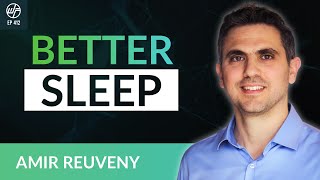
This is a Wellness Force podcast interview (Sep 7, 2021) where Josh Trent interviews Amir Reuveny (founder/CEO of Wesper) about sleep technology and the Wesper sleep-health platform. Reuveny describes his technical background (PhD, flexible electronics; Cornell Tech), a personal catalyst (his father's positional moderate sleep apnea found during a pilot), and frames sleep apnea as a widespread, underdiagnosed health problem (about 30 million in the US; ~80% undiagnosed). Wesper is presented as a home, wireless patch + coaching platform with three components—assess (home sleep test + consult), therapy (focus on behavioral/non-medical options like positional therapy), and monitor (follow-up testing). The patch captures respiratory signals (breathing quality), sleep position, snoring, and heart rate; Reuveny cites validation vs. in-lab polysomnography with ~95% correlation (conference abstract, Sleep 2020) and a more recent unpublished study reporting ~98% correlation; a single night (≥~4 hours) can provide a diagnostic-quality report. Cash polysomnography costs are stated in the thousands (one hospital cited ~$6,000), motivating Wesper’s lower-cost/accessible offering (90-day unlimited plan). The interview emphasizes coaching, iterative testing, and behavior change (e.g., positional therapy belts) as core to improving sleep health.
Questions this video answers
About 30 million people (US) with ~80% undiagnosed/untreated.
About 10–15% are central sleep apnea.
Approximately 83% are respiratory-related (sleep disorder breathing).
Breathing quality (respiratory signals), sleep position, snoring, and heart rate.
About 95% correlation between Wesper respiratory signals and sleep-lab respiratory signals (Sleep 2020 conference abstract).
Chapters
If you look at the numbers, about 30 million people only in the US suffer from sleep apnea. 80% of them are undiagnosed and untreated. So they carry this disease for many, many years. We all know today that lack of sleep affects every aspect of your life. We can make sleep medicine or sleep health accessible to everyone. So you don't need to go to a sleep lab, you don't need to wait months, you don't need to spend like thousands of dollars. You can work with us and we can help you walk through this process.
Amir, welcome to Wellness Force.
Thank you so much, Josh. Really happy to be here.
This is a timeless topic. Sleeping. We all sleep. Most of us don't sleep that well. Let's be real. And your work, this company called Wesper, which we're going to talk about this difference between polysomnography, which is a big word. If people don't know that it's a sleep ward study versus people that actually can get quality sleep data from home. I think it's interesting because so many people read books about sleep. I mean sleep, the industry. It's a multibillion dollar industry. Amir, how did you even get into the sleep industry? Because your time at Cornell you were doing commercial applications for flexible electronics. So how did you even get into the sleep world? What's the passion there for you?
I see that you did some research about our background, so appreciate it. Yeah. So I actually came to Cornell Tech right after my PhD in Tokyo University where I specialize in flexible electronics. And this is where I got really interested in application where you can collect valuable information from the human body without interfering your daily routine. So the notion of flexible electronics are very kind of seamless and imperceptible devices really caught me. And in Cornell Tech I actually took this technology that they developed there, the ideas and inspiration from flexible electronics and bring it to something really impactful in health. And sleep is obviously one of them.
Your dad suffered with sleep a lot. It's in the about section on your website. How did that help you walk your path in research and in sc? How is your dad doing? Did he get rid of the sleep issues? What's that look like?
That's actually very interesting in hindsight to look at this process because when I lived at home with my parents, I was part of this situation. I knew that my father didn't sleep well. He was falling asleep very early, waking up in weird hours during the night. He's like a very, he's a hard working person. So we always attributed it to this like he's being very tired from work. But something about the routine didn't make sense. But we never really, you know, he never really like took care of it. And we didn't think it's, it's too serious. I think it's, it's part of the awareness piece that now we understand that people really lacking these days and, and only when I started here in other people problem actually about, you know, sleep apnea and how they suffer from sleep and how sleep is so, or even the lack of sleep is detrimental to your health and to your wellness. This is, you know, where it kind of is kind of connected to my home and my youth where I, you know, used to see this a lot. And actually after I started working on. Back then it was thatched. Now it's Westburg. We actually brought my father to one of the pilots as a participant to do a sleep study and we found that he has a moderate sleep apnea, which is also positional. And I think that this is the place where both kind of all both worlds came together. My passion and technical knowledge trying to solve a health issue and my background from my family. And this is where we really started to work towards solving this problem from end to end. And what I mean by that, I saw that even after we told my father that he has sleep apnea, I was really anxious about, okay, what does it mean? Do I need to wear a cpap? And how, you know, what are the next steps? This is where we started to move from like focusing on the patch and the technology, you know, the sensing technology alone, to more of a platform. So not only that you get the results in a very easy and seamless way. You can also get like an action plan and start implementing it with us with our support. Because I think the support specifically in sleep is something that is really, really lacking in the industry today. Sleep medicine, it's very, you know, through the normal route of sleep medicine is very, very hard.
Two, two questions. Number one, did, did the research and your tools and did having your dad in the, the study, did that help him in some way? And then second question, what even causes sleep apnea?
Two separate questions. But yeah, so first of all, I think he become much more aware. I mean we're not living in, I mean he's, he lives in Israel. I have less control. But he become much more aware of his sleep and his wellness afterwards. Shortly after, I think six months after he stopped smoking, he was like a very heavy smoker for many, many years.
Congratulations, dad. That's awesome.
He completely stopped smoking within one day. It was really amazing to see. I think, you know, things kind of settled there and he's more careful about his sleep. He actually reported his sleeps better right now. But I think, you know, now when we start having this platform, we have some language barriers, you know, between the US and Israel, so it's really hard to support. But I try to help him as much as I can from here with the tools that we have. We're sending him some patches from time to time to retest his sleep. So we're trying our best, but I think stop smoking, become more aware, and now he's sleeping better. I think this is.
Do you think. I'm sorry to interrupt you. Do you think that your father stopped smoking because he saw the actual data, like an exterior locus of control? Do you think that motivated him to stop smoking because of. Because of the actual data?
That's interesting. I mean, I think this is part of, you know, it's never, like, one thing that helps you completely change, you know, things that you. That you're in. Right? So I think it was one of the most important steps. Like, towards the end, we were talking a lot about, like, stop smoking and taking more, taking care of themselves more. And I think once seeing the data, you know, learning about what we do, being in a sleep lab with our device, I think really, really, really accelerated this process. So I think, excellent. Very important piece.
It was a portion of the, the quitting mechanism. It was a portion of it, but it maybe wasn't the whole thing.
And then I think so, because, like, two years ago, like before the test, he tried stop smoking, but he didn't, he didn't succeed. And I think, like, this, this was part of the, the test. And, you know, just our discussions about this made him much more aware. And I think eventually it's like, you know, push him to do this.
Sometimes it just takes seeing yourself in a photo to notice that you've gained weight, or looking at data to see how bad your sleep is, or looking at your biometrics and your blood test to see where your cholesterol or your lipids are. Sometimes we just have to get that message, that exterior locus of control to go, hey, a change has to be made. So go back to the beginning when you first learned about sleep apnea and sleep, you know, as a science. What did you learn in the beginning of your studies? About what? Sleep apnea, the cause of sleep apnea. And what do you understand now about sleep apnea?
So first of all, sleep apnea is One of the most common sleep disorders that exist and one of the most underdiagnosed generally in health. If you look at the numbers, about 30 million people only in the US suffer from sleep apnea. 80% of them are undiagnosed and untreated. So they carry this disease for many, many years. And we all know today that lack of sleep affects almost every aspect of your life. Lack of quality sleep.
I know this because I'm a new parent. I have a month old newborn and I know exactly.
Congratulations.
Thank you. I'm like, wow, I had no idea what sleep deprivation felt like before becoming a father. So I digress, but please continue.
Exactly. I actually remember like the first month of my kid. It was like, I felt like the first month was like a very long day.
One day, all the days bleed into one another.
Exactly. So yes, I think that. So sorry. Talking about, like looking at the number 30 million people in the US suffer from sleep apnea. 80% of them are undiagnosed and carry this disorder for many, many years. And so this strikes me as like, you know, wow, there is a big problem here that people kind of overlooked and is super important. I know for myself that sleep is without proper sleep, the next day is terrible. So think about people that every day, every night, don't have good night's sleep. It's devastating, right? And this leads to cardiovascular, heart attacks, diabetes, you name it. Really, really bad to your health. So I think this fact itself kind of, we call it like the silent killer in a way, if you want to be. This is really striking me as something that we need to solve. And I think combining this with our abilities to solve it. When I looked at the process that exist today in order to diagnose, to treat sleep, I realized something. You know, we can do it, we have to do it better. And this is where you kind of whisper was born. With our belief that there is a better way to do it and we can make sleep medicine or sleep health accessible to everyone. So you don't need to go to a sleep lab, you don't need to wait months, you don't need to spend like thousands of dollars. You can work with us and we can help you walk through this process and through this journey. We found that people feel very lonely improving their sleep. You know, it's something that you don't really control. So sometimes you're embarrassed to talk about it. Many times you get, you know, nudges from your spouse or maybe even, you know, it's kind of a joke sometime. And I Know it from. Know for my. For my case as well. So I think our ability to. I think you described it well before to kind of reflect to you, okay, this is you. This is the data in a very accessible, very simplified way. So then you are now connected to your problem and you are much more motivated to solve it, and we help you do this.
This is not a supplement. This is actually a patch that you wear. And it's a really sensitive device. So it checks multiple things. And in a moment, just share with us what are the things that it actually checks from a biometric, like a bio signature level. But I want to go back because I just need a little bit of clarity. And I know the people listening just need a little bit of clarity. The cause of sleep apnea, is it the narrowing of the throat? Is it a sinus issue? Is it a properly formed jawbone? Is it lifestyle factors? Is it a combination of everything? You know, if you had to narrow down maybe the top three causes of sleep apnea that are preventable and changeable, what are those?
Okay, so that I think it's good to explain the audience about it. So first of all, sleep apnea is a broad term. Within sleep apnea, you have two main types of One is central sleep apnea and the other is obstructive sleep apnea. Central is something that your brain basically controls and stop providing commands to your lungs to breathe during the night. This is less common. Actually, about 10 to 15% of the sleep apnea cases are central. But it does exist and there are some treatments for that. The more common sleep apnea, this is probably what you're referring to and many people know, is the obstructive sleep apnea. An obstructive sleep apnea is caused by obstruction of your airways, basically while you're asleep. Some causes can be the tongue muscles relax during the night and then block your airways. Typically, it happens when you're on your back. So this is something that you need to make sure that you can treat. Narrowing of the airways, sometimes when you gain weight, so your neck circumference increases and then it narrows your airways. So you are much more prone to sleep apnea. So sleep apnea actually correlates to obesity to gain weight, et cetera. So all these factors can contribute to obstructing your airways during your sleep. And the important thing is one, to realize that you have the disorder and to identify which type, what type of sleep apnea, so you can treat it specifically. So treatment for central or obstructive are very different for Obstructive and positional sleep apnea can also be very different.
How many people do you think are suffering with this that don't even know it? Like, maybe they've never used any kind of data for sleep. They wake up for years, 10 years, they'll wake up exhausted and they just think it's normal. If you had to guess based on the data sets, like what would that number be? Just in America alone.
In the millions, I think 10, 15.
Okay, so a significant number of people are suffering and they don't even know it. So if you guys are listening here, if you're watching us on YouTube, post somewhere in the comments what you're dealing with with your sleep. Because this device that we're gonna talk about, this Wesper, this device can help you. So how does it help us? What are the key things that it tracks from a biosignature standpoint that point towards behavior modification?
I think it's important to understand that Whisper is basically a sleep health platform and the device is a big important part of it. And I will explain about the biosensors, but there are three main components here that we're helping our users and customers. The first one is to assess what do you have? So this is by, we are doing this by test, the sleep test and the consult with the sleep specialist. So this is the first step. After you assess and understand what you have, then there is a therapy option. So there are a few therapy options that we can offer through the platform, connecting you to other platforms or connecting you to professionals, or things that you can purchase yourselves immediately after. And we are currently focused on non medical, more lifestyle behavioral therapies. These are typically easier to conduct and are also cheaper. And the last piece is to monitor. So now you know what you have, you treated it, now we can see that you are in a steady state, you're maintaining your sleep health or over time. I think these are three very important components of the platform that can bring you, that can bring you to a better sleep health and overall better wellness. In terms of the device itself or the tests and evaluation, we're collecting breadth of information about your breathing quality, about your sleep position, about your snoring heart rate. And we combine this into a very easy to understand report that reflects your night's sleep and point out what are the things that you might need to improve. So I think this is a very important piece of our platform, basically enabling us to give you the right personalized treatment.
And this is a test portion. So how long do people actually wear by the way there's no wires here. So a lot of these polysomnography tests, they'll have people go into a sleep ward. I remember when we did our episode with Dr. Kirk Parsley, he's a sleep specialist for Navy Special Warfare and he said that for true polysomnography, I believe it takes a weekend where people have to go in and be observed. How does the data stack up to polysomnography lab testing, to Wesper? Is it the best that the industry has right now to get the same kind of accurate data from polysomnography? Talk about that a little bit.
Okay, so a little bit about the platform you mentioned. No wires, so. Yeah, absolutely no wires. This is like the patch, wireless, completely battery powered, connects with your phone. So it's very, very easy to set up in terms of data quality. We've done, and we are still doing many studies about the accuracy of the platform. It is very important for us to provide easy access for people, but also medical grade data. So we compare ourselves to the highest standard, to the gold standard. Sonography Sleep Lab. One of our recent studies were actually published in the conference abstract in 2020. In sleep 2020, we showed about 95% correlation between the respiratory signals that we measured to the one that are measured in, in a sleep lab, in a sleep study, actually.
So you've had, you've had the Wesper and the polysomnography leading attached at the same time. Got it. And it was 95% accurate?
Yes, actually a recent study that we haven't published yet, but showed about 98%. So we actually could improve it over time. And we compared it in a clinical manner, meaning we looked at the ahi, the apnea hypopnea index, and compared the two and this is where we saw the very high correlation. And I think this is very important to understand, understand that we provide both easy access, sometimes we talk with customers. Hey, I almost, you know, I didn't understand how this can give me, you know, the same data or how, how does it even work that it provides me all this information. But we are doing a lot of rigorous work behind the scenes to make sure it's, it's, you know, the highest standard.
I'm so amazed by technology. I don't know if people know this. If you're just, if you've just joined the Wellness first podcast in the past couple years, maybe you don't know this, but in 2015, 2016, Amir, I spoke 2017, actually I spoke at CES and I was on the stage with some different Wellness technology providers. And the thing that I love the most is the companies like yours that are actually doing it from a heart centered place. You're not just trying to make a bunch of money, you're actually trying to help people. And I think about the way that a spaceship, the very first spaceship, was like massive, massive. And it had, we have in our phones right now more technology, more processing power than there was in the very first spaceship. So it's pretty cool. I'm super grateful that a device like this even exists and that you can pack an entire polysomnography sleep ward into a patch that you wear on your skin and you use from your phone. I mean, isn't it amazing? Like, isn't it amazing that we live in the time that we live? It's pretty wonderful.
Yeah. Yeah. Just to be accurate, we don't cover yet the entire placement review, but everything related to respiratory, sleep apnea, things like that are being covered with patch. We are not measuring yet, you know, EEG signals and things that are being measured in sleep lab. But yeah, I think this is still a huge improvement, like more than an order of magnitude improvement of what exists today. Yeah, it gives the same clinical outcome, which is the most important.
So a really basic question that people might be like, well, duh, I already know what that is. But I'm curious, you know, from, from your experience, how many years have you been studying sleep in total? And how would you define sleep, both from your academic background and also anecdotally, you know, working with so many people now? How would you actually define sleep? What does it mean to sleep?
Yeah, so first of all, yeah, I've been researching, working with sleep professional, with customers, with users for almost five years right now on sleep specifically and to me, and also what I hear and what I share with people. To me like, sleep is my safe place, the place where I go to rest and to recharge basically. I think without good sleep, my days are really, really bad. And this is one of the most important aspects of our well being, if not the most important one. And with better sleep you get to live like healthier, calmer, which I think is very, very important, calmer and just better life overall. So for me it's, it's again one of the most important pieces of my well being.
I had heard our previous guest a couple years ago, he described it, Dr. Parsley, he said, sleep is a barrier from your nervous system to the outside world. And I thought that was really cool because later on in this conversation we're going to talk about sleep hygiene, what are the key factors in us really sleeping? Well, that we can do from a behavior standpoint, but from a science lens. If you had to look at sleep from a lens of purely science, how would you define sleep scientifically?
So without getting too much into details, but sleep is a very specific process. Many people think that you close your eyes and you're asleep and that's okay, I can just close my eyes for 30 minutes. But it's not the case. Sleep is a very specific process. Typically you define it between two stages or it can be more granular about REM and non rem. And during this process of sleep, your brain basically cleans itself. A lot of activity happens in the brain to clean the memory, refresh cells, your muscles relax during this time and preparing for the next day. And I think these both physiological, physiological preparation and also the brain preparation for the next day is super, super important for our well being. So I think many people underestimate the importance of sleep today, but this is a critical part of their health.
And just a quick review for people that don't know before we talk about a little bit more of the device they wear, the stages of sleep and the brain waves. This is really fascinating to me because if we're looking at brainwaves, this device doesn't track brainwaves. Do we even need to track brainwaves or is that just something that is a byproduct of quality sleep? How important is it to track brain waves versus respiration and heart rate and snoring?
Brainwaves are related to the specific sleep stages that you are experiencing during sleep. So it is important to, to know them. Again, the specific differentiation between REM and non REM might be the most important one. Where rem you basically your body is almost like paralyzed and you don't move. So this is where people relate potentially like dreams to be in this stage. But from a clinical perspective, from a therapeutic perspective, 83% of the diagnosis that are being, or the cases that are being diagnosed in a sleep lab today are actually respiratory related. They're related to sleep disorder breathing. So this is why we are focusing on the respiration piece and we can get to. First of all, we can discover those cases with our platform right now. So EEG can come secondary to this once when you want to get into a deeper and more specific areas of sleep. But again from a clinical outcome perspective, from sleep improvement, breathing is one of the key metrics.
So you wear the device, the patch and you get sleeping position, snoring, breathing and Restfulness. And from that you actually meet with a specialist. I love this. We had a company on, I don't know if it's in your industry, but not in sleep. And it was called Nutrisense. And they have a device that you wear and it checks your glucose. And so it's another piece of technology that's just giving people a window into their blood sugar. But they have a really great coaching platform. You have something really similar. You have sleep experts, sleep specialists that are trained that can work with people to figure out lifestyle modifications. I know you're not giving people a prescription right now, but what are some of the things that they can pull directly from a client's data to change their sleep behaviors or their sleep hygiene?
Yeah, I totally agree with you. I think this personal aspect of an expert walking through the results with you and explaining what you see is a critical part. You see with the rise of different wearables that track your sleep and give you a lot of data. It's very interesting, very important to see and to tweak some of your behaviors. But if you really want to solve deeper problems, you need an expert, you need someone that walk you through. You don't want to guess when it comes to those types of issues. And this is where whisper uniqueness also lies. One of them, the fact that we can both provide granular data, as you mentioned, on breathing snoring position, but also talk with someone and tells you, okay, I see that this is your, your problem. Let's try this intervention and let's retest your sleep afterwards to see that this actually helps. So this is one of the key elements that we are providing with the platform. Some specific examples that we see a lot of success with. About 50% of obstructive sleep apnea cases are positional, meaning that you experience more severe symptoms of breathing or lower breathing quality when you're on your back. Sometimes also snoring is the same exactly because of the reason when your tongue might collapse and block your airways or partially block your airways and this creates lower breathing quality or even snoring. So in this case, the sleep specialist can see this in your results. You say, okay, when you lied on your back, your breathing quality was much poorer when you relied on your left side. For example, let's try this positional therapy device. These are things that you either can do yourself at home, some very low tech options, or on the other hand, like high tech options that can actually train you at not sleeping on your back.
What are some of those? What are some of those High tech. Is it like special pillows where you can sleep on your side or what is that?
No, this is some types of belts that you wear around with an electronic device that vibrates when you lie on your back.
So it trains you how to positionally sleep.
Exactly, exactly. Over time. And this is one of the things that people can actually use to train themselves. Not sleeping on your back and then as a result have less or a better breathing quality and a better sleep quality. And this is an important example and many people suffer from this and they.
Don'T know do you also when the client gets the report so they wear the device, how many nights in a row do they wear the device?
So currently we provide a report after each night basically. So after the first night, if we have enough time of recording, typically it's more than four hours, we can already produce a report and you can get consult with the sleep specialist. And I think that's a great benefit for user because after one night you get the data that you need and you can talk with a sleep specialist. There are many people that wants like more data to kind of make sure that you know, their baseline is, you know, is correct and was it like an aberration or something specific. And we are soon going to offer a rechargeable version that you can basically use as many, as many times as you want and get like a better baseline and also see the improvement in a much more granular way.
So one night is all people need. Like why does that seem too good to be true? So they literally just wear it for one night?
Yeah, I mean if you think about it, the gold standard today in a sleep lab is one night, basically one night. And this is because once you get this at least four or five hours of sleep we can detect if there was any breathing issues in this time. This is something that you can typically see.
That is awesome. I mean think about how much money you're saving people and time too. How much does it cost? I know you're not going to be specific here. These are general speaking terms. How much would it cost to do a polysomnography sleepworth test? Let's say it was cash pay.
So it's in the thousands of dollars.
In the thousands of dollars to get this data.
Yeah. I just talked with the hospital the other day. One of them, it's about $6,000 if I want to.
Oh my gosh. So literally you guys, you can go to Wesper Co and you can get the Wesper sleep plan. This is 90 Day Unlimited and you can get it for less than taking you and your spouse and your family out for dinner, which is pretty amazing. So as we round out the conversation because we could probably talk forever about sleep. I mean there's. How many books are written on sleep? There's like thousands of books written on sleep. I feel like every year. But the sleep specialist program and the accountability piece where people can use their phone, get the data. Data without action is really no data at all. It doesn't even matter if you have data if you don't take inspired action. So what is continuing motivate you about Wesper and what is continuing to fuel you, you know, both from a spiritual perspective and also a career perspective about the results you're seeing with clients. Are there any cases, I know you can't give names, but are there any cases that have really inspired you?
Yeah, definitely. I mean especially after we, you know, we got out and become live we and I have personally also spoke with a few customers really like touching stories and people that for years suffer from sleep issues that you know, what happened and after what's, what's going on with their sleep, why they're not sleeping well, but they never had the time or to, to go to the, to their physician to, to ask for sleep study to schedule. Sometimes it's like a month of wait and after one night with that with whisper, they, they talk with the sleep specialist. They recommended them like positional therapy or another type of treatment and they could see the improvement after like two days. So think about it like years of years of people that are didn't sleep well. They're you know, probably hurt their health over time. They were less productive at work, less maybe nice to other people because they are not less patient. But then within a few days a week you get treatment and you actually see the improvement. They report it was, I don't nod after lunch, I feel much productive and we actually send them another test and we could see that their improvement objectively we could actually see that now their breathing quality is better. So these are this type of example when we speak with clients like that this is really fuel the team towards like working harder and making sure that we provide the best value to people. And we keep updating the platform every day, introducing new algorithm, new things based on the feedback that we get from clients. People want to see more data, want to look at specific elements. So really attentive to what people need because we think we're making a big difference in the field. The current solutions to improve your sleep health are really not good.
Yeah And I want to point out this is so radically different than the Oura ring. So this is a completely different class of device. It's no knock on the Oura ring. I'm not saying it's a bad platform, but this is. If you look at what Amir has told us today, the direction of our body, the sleep positioning, the respiratory rate, I just don't see how a ring on your finger could check it compared to a patch directly on your skin. It seems like this is a more specific test. So there's a tool for everything. And I think if somebody is suffering with, you know, maybe symptoms of sleep apnea that they don't even know about, this would be a good test to see if this can be something that'll change your behavior. Because at the end of the day, if we're not doing anything, Amir, from the data, it really doesn't matter. We covered so much ground today. Is there anything you think we missed when it comes to sleep health? Using these wearable devices to actually see where we are and then go to the place we want to be? What did we miss?
I think so. First of all, you mentioned Aura and our Trekkers. I think they're doing an amazing job in raising awareness for sleep and sleep quality. And people are changing their behavior, which is great. But as you mentioned, if you want to go deeper and not only scratch the surface, but really look deep into your issues, understand if there is any positional aspect, anything in your breathing that is not working, anything related to your snoring that you can improve, you can come to Westburn, we can walk you through the process, and this is basically a shortcut for you and for everyone that is listening to us right now to better sleep. We can help you assess. If you have an issue, write an action plan for you, a personalized action plan for you based on the results, and then help you monitor this. And I think this cycle is very, very important in health in general, and it's time that it will be also relevant in sleep.
I think this is going to revolutionize the sleep world because there's so many books, there's so many sleep hygiene pieces, and for people that don't know, a dark room, a nice cool temperature, no screen time before bed, try to limit your food, you know, less than three hours before you go to sleep. These are all things that I think we know. We all know the basics in sleep hygiene, but what do we do when sleep hygiene doesn't give us the quality sleep we want? It's something deeper. So if you're watching, you're listening, you're feeling this. You're doing all the things. You're doing all the hygiene things and you're still not getting the quality sleep. Westburg Co this 90 Day Unlimited is about really people improving their sleep. It's tested clinically. So this is the sleep analyzer where you can get talk Through Solutions and Access24. 7. Amir, thank you for coming on the show. And as we look at the road ahead and everything from your academic background to helping your father to leading your company to just being a man, being a human being, how do you see wellness? What does it mean to live your life?
Well, it's a big topic. I think wellness is a lot about the lack of stress or being calm. I think that this is something that is really, really important. People overlook it sometime, but understanding that things are temporary and you don't need to worry about things that are not in your control, I think this really helps my wellness specifically because when I'm calmer, when I accept what, you know, what I can't control, I think this is very, very important. That's really an important piece for me, like being calm, being, acknowledging the good that I see in the universe. I think this is an important piece for me.
That's a beautiful reminder. Wellness, from what I heard from you, is the place where we're calm. Because in that calm space, we're not trying to change the things we can't control. I mean, wonderful. So give people a starting place. Tell them one more time where they can begin. Remember, this is for a specific condition, you guys. So if sleep is something that you have been suffering with, give this a shot. Give this a try. You never know until you try it. Otherwise you'll just get the same result as you did yesterday.
So, yeah, you can go to Wesper Co we S P E R co. You know, sign, sign up for the program. We'll help you assess your sleep, see if you have any issues that we can help with, then walk you through the process to improve your sleep. You're not alone in this process. I think that this is something that many people experience. The loneliness of improving your sleep is something that can be devastating in this journey. And we can help you with sleep expert and with the data that we have to provide actionable insights.
Amir, thanks for coming on the show. And until Amir and I both see you again in the future, we're both wishing you love and wellness. We'll talk to you soon.
It.
More from Josh






Your child's future start before pregnancy... and even before conception! #podcast

MD Reveals: Your Healing Creates Your Child's Reality (The Souls Coming In Need Strong Bodies)



