April: How To Navigate Mental Maps of Anxiety | Wellness Force #Podcast
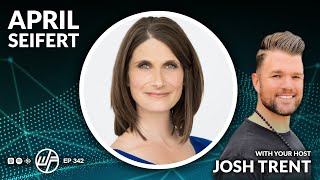
Podcast interview (May 12, 2020) with psychologist April Seifert about anxiety, psychological strength, and resilience. April shares personal adversity (loss of her father; multiple sclerosis with episodes of blindness and paralysis) as context for her work at Peak Mind Psychology. She explains anxiety as a normal brain response to uncertainty, threat, and rapid change; contrasts fast/habitual (amygdala-driven) reactions with a deliberative, skillful mind; and offers concrete practices: self-compassion, hitting a pause, observing thoughts ("I'm noticing..."), creating psychological distance (diffusion), anchoring to values/strengths, and choosing small, momentum-building actions. She discusses gendered patterns (over-functioning in women), psychological flexibility as adaptive resilience, gratitude anchored to what one misses, and offers free psych‑strength workshops and resources via PeakMindPsychology.com and @AprilSeifert on Instagram.
Chapters
One April. We are in an interesting time. The understanding of anxiety right now is probably the most challenging for many people as it's ever been. One thing that I love about you when you interviewed me on your show, is we talked about tools. You know, we talked about real ways of thinking, real ways of being. And this is what I know, that you're a specialist in the mission that you have with peak mind psychology. Most people might hear that, and they might be like, that's just for athletes. That's just for high performers. But look, y', all, we all need peak minds, all of us, especially right now. So thank you for coming on the show.
I'm absolutely thrilled to be here. I loved our conversation when you were speaking with me, and I'm excited to bring some good stuff to your audience as well.
How did you get into this world? I mean, it's not like somebody wakes up and says, I want to help other people work in their mindset. Like, they have to actually go through thresholds on their own. That's definitely your story.
Yeah, absolutely. Well, I mean, it's a number of things that come together to form the passion that I have for the work that I'm doing today. I've always loved psychology. I have my PhD in Social Cognitive psychology. So I studied it for a long time. It was because I had a deep love for how people's minds work and how that influences their behavior, but more than that, the experience of life that they have. So that was one aspect of. It was just the training and learning the tools of a field that is so powerful. But a couple of personal things that I've shared pretty openly that it can be easy to look at somebody who's in this field and think, well, sure, but have you ever actually gone through anything really difficult? But that doesn't apply when life is really hard. It really does. I lost my dad to colon cancer when I was 11 years old. We faced a lot of hardship. All the things you would expect after that happened. And very shortly after that, I started having very strange neurological symptoms that after a very long diagnostic period, landed me with the diagnosis of multiple sclerosis. I've been blind twice. I've been paralyzed multiple times. I know what it's like to face adversity. And those things, when I started to think about them, those life experiences in the context of what I know about psychology, it. It made this work even more important for me to share with other people, because it's the reason why I was able to thrive through that.
I can't Even imagine I was just feeling into the fact that you said, I've been blind twice. Yeah, like to take away someone's sight, one of their five senses. We had Mark Wallen on the show and Mark Wolin described his work in past life therapy, past life aggression. He, he actually had a challenge of his own where he lost his sight and then he regained it through his emotional intelligence work. How did you regain your sight?
You know, I've been extremely fortunate with the case of Ms. That I've had in that it has been very relapsing, remitting. But to be honest, one of the biggest tools that I had the entire time when, when you lose something like that with ms, you don't know if it's going to come back. Uncertainty is the biggest, one of the biggest things that people struggle with, with multiple sclerosis. And for me, I just decided, you know, what if it's going to be uncertain anyway and it could go any number of ways. I'm just, right now, the most helpful thing for me is going to be to choose to believe that it is going to be better in the end. And the rest of it is up to how things play out. But ultimately I get to choose what I believe in in an uncertain situation. And that's just what I ultimately decided and it really helped me get through both of those times.
Well, how long was the span? Because so many things that we explore in this show is around intelligence, and intelligence is more of a slow process of applying and gathering and embodying. Right. There's the long stream when it comes to intelligence. But I think if somebody took my sight away, I wouldn't care about my intelligence. I'd just be in reaction mode. So there was something about your psyche, there was something about your heart, your soul that allowed you to work through that, like losing someone's sight. What was that like? What was it about the fabric of you that allowed you to get through that?
I still wanted, I mean, now, now put this into context of where this happened in my life, right? My dad had passed away just a handful of years before I went blind the first time. And I still wanted, I wanted to live life. I didn't want to get by. I knew what it meant to have life be taken away. I watched it happen firsthand and I wanted to live. And so I spent more time and more effort than I can describe learning to adapt, adaptation. At times it's something that just happens, but for me, it was a very intentional process to say, no, I'm going to school I'm going to graduate on time. I'm going to show up for all of my stuff. I'm still going to do all the things that I said I was going to do. How do I do that? Then it became a question of how, not a question of whether. And that just drive and dedication to no, this will not be the end of it. I'm going to live. Life was such a huge driver and it still is today, frankly.
So the living of the life right now, our lives have been shooken up hard. Like you shared with me before we jumped on what you were most grateful for and that was that your husband is actually in the medical establishment that is serving people right now and your family is directly impacted by that. This framework for the show that I created today, today was this map. I felt like you're a navigator. You really are a navigator for people's thoughts and their beliefs and their feelings and you help them go through the ocean that sometimes gets pretty crazy out there. And one of the things I thought was really powerful and I'd love for you to share is this understanding of anxiety itself. Where does it come from? How do we navigate it, especially in times like these. So can you, can you walk us through a map that, that you can describe of what anxiety actually is in your experience?
Yeah, I would love to. So when you think about it, the fastest thing that I can give somebody by describing the way that our minds work and describing the experiences we have. So much around psychology involves practice. It's exactly as you mentioned around intelligence. It involves constant practice. It's a slow adaptation. But what's faster than that? What I can give somebody relatively quickly is self compassion. And the easiest way I've found to give people self compassion is to help them understand that in times like these, if you are feeling anxious. So this is the first thing I want people to know. If you're feeling anxious, if you're feeling worried, if you're finding yourself having racing thoughts that are dragging you emotionally down with them. If you're having a harder time focusing, concentrating, showing up in the way that you want to show up. The immediate first thing I want you to understand is that there is nothing wrong with you. You are not deficient or weak in any way. You're not handling this worse than anybody else. It is just that you are a human who has a brain, who is that brain is reacting in the way that brains do given the circumstances that we're in. So be compassionate with yourself that at most the fault that you have, the mistake you Made is being born as a human with a brain. And that is nothing to be ashamed of. Right? It just sounds ridiculous when you say it that way. So if we can all just agree, we are all humans with brains. Brains tend to respond to times of uncertainty, massive, fast, unpredictable change, and real threat. Brains tend to respond to those three things in very predictable ways, which is anxiety and worry and fear. Immediately we can be compassionate with ourselves because it just means that we're human. And every single person who's going through this situation, they're human and they're experiencing that experience of what it means to be human, which is we react to our surroundings in these predictable ways.
I love that explanation. It brings me back to an episode we had with Gretchen Rubin, and she talked about anxiety is just fear wearing a jacket. It was something like that, yeah. And I thought to myself, oh, okay, so if I really trace the root of anxiety and I feel into it, actually, first of all, give myself permission to feel it and not go into a shame spiral and just do what you said, which is like, I'm a human. I'm a human that's going through an experience. What I find in my own life, and I'm curious how you feel about this, is I'm really just excited about something. Yes, there are times where anxiety is coming from a real place of rational fear. But most of the time for me, and when I trace it down there, it's just fear connected to irrational things like, oh my gosh, people aren't going to like me, it's not going to work out, how do I look, blah, blah, blah. Can you describe this in your practice and what you do to help people navigate the rational and the irrational?
Yeah, absolutely. There's a couple of pieces to tease out here. One of them is that we have. You've probably heard this. Your audience, if they're into this type of stuff, they've probably heard this in a few ways. But let's just make it known so that we're all operating on the same baseline. Our minds have two main systems. Some people call them system one, system two. Some people call them heuristic versus deliberative. But there is a very fast, habitual, heuristical, involuntary, automatic version of our mind that is typically first to act. It happens outside of our awareness, and all it's doing is responding to cues. This is that sort of irrational side of our mind, or it can be, because what it's doing is it's. It's just running on habit. It's saying, okay, I have Seen this type of threat before. So what I've done in the past and what seems like is the right thing to do is to flip the panic switch. Great. I've done my job. And that switch is really an on, off switch. So it could be I'm nervous about speaking in front of, you know, a group of people. So public speaking. It could be there's a pandemic that is really scary. It could be I was diagnosed with something really uncertain. Any of those things, the same switch gets flipped and our minds freak out. This is that midbrain, amygdala side of our mind that just. The only job it knows how to do is to just panic. And so it does that. There's another side of our mind, though, that is this deliberative side. This is where the aspect of what I love to teach people about psychological strength. This is the side of your mind that we're trying to build up. This is the side of your mind that you have to be intentional. You have to stop. There needs to be a little bit of distance, right? We need to pause. We need to get back in our body. We need to be back and mindful with the experience we're having and turn on that new, that deliberative, that smart, rational side of our mind and ask it some very intentional questions so that it can sort of balance out the way that that irrational, older part of our mind is reacting. It's a balancing act, but it takes effort and it takes intentionality, and that's where psych strength comes in.
I know that we're all the same because we all breathe the same air. We all have universal emotions and problems that we. That we work through. But I know that you also work specifically with women and women, like, leadership positions, women that are handling a lot, that are holding a lot. How have you seen anxiety in this map of anxiety work out differently with women versus men? Is it a. Is it a vast difference? Is it fundamentally the same? What's your take on that?
You know, there is a unique experience that for a lot of different factors that women experience in our, just say, society and culture, we tend to juggle a lot of things. Whether it is, you know, I'm a parent, so I have two young children. I'm also an entrepreneur with a couple of companies. That's a lot to juggle. I'm also a key player in my household within this marriage. That has a lot on it right now. That's a lot to juggle. And what we find is women tend to go down this track of what we have kind of been toying around with calling over functioning, so taking on more than what is theirs to handle. I'll give you a specific example. If your kids are not. So we're in a situation right now that's very uncertain and is different for people and people are handling it very differently emotionally. If your kids are having a difficult time emotionally or your spouse is having a difficult time emotionally, their emotions, you can be there for support, but their emotions are not yours to fix or yours to manage. And sometimes we as women take that on as though it's ours to fix. And it adds to the burden of what we're already trying to do for ourselves as human beings. And we're trying to almost fix something that's unfixable because it isn't ours to fix, if that makes sense. So this over functioning and really trying to scope creep of what is really ours to handle is something I really commonly see.
So then what kind of an inventory do they take to recognize it's not theirs? Is it just practicing imperfectly perfect awareness, situational awareness? I mean, could it be that simple?
I mean, it can be as simple as this isn't me. I can be there for support, I can be there to offer suggestions. But ultimately, and this is where at Peakmind, we combine two fields. We combine the field of psychology. It is two of us who are PhD trained psychologists who have founded the company. We combine a ton of psychology, but we also combine the field of life design and using the human centered design approach to help people within their lives so that they can live better. One of the central tenets of life design is that you are at the center of your life. Other people are at the center of their own lives. So when you're designing your life, you're designing for you primarily. That's not to say you don't play an important role in other people, but primarily you are at the center of your life. You need to be, and this is where radical responsibility comes in. 100% responsible for 100% of the situations you find yourself in. Not at fault, not to blame. There's no, you know, blame to be thrown around here, shoulds, whatever, none of that. It's more like here you are, here you are in this situation. It's your responsibility to decide how to move forward. And it is your spouse's responsibility to decide how he or she would move forward. It is your kid's responsibility to decide how he or she will move forward. You can model and a good responsible approach, but ultimately it is theirs to decide.
So then when you get into the doldrums, when you get into a groove where you're like, okay, I realize I've taken on someone else's responsibility. I mean, this is like the true definition of codependency, right? Like, I'm only okay when my partner's okay. And I've talked about this on the show. Like, that's something that I'm aware of. It's a tendency, because I was raised in an environment, in a situation where, unless as a young child I made everything okay, things really weren't okay. And that was real. It's kind of like the pandemic that we're in right now. Like, there's some things that we get to understand that are real. The real. The real map of this, for me, the map of anxiety that I find solace in and comfort in, is taking a massive deep breath and literally just hitting a pause button. Like, a pause button. Because if I do anything at all from a place of not breathing or not pausing or reaction, that's when all the strategies and all the beautiful intelligence you're describing, it doesn't matter in that moment because my conduit is so dirty that nothing can really get in. That intelligence can't get in. Have you found that to be true with some of the people that you work with? And have you ever explored your own attachment styles in that way?
Oh, hugely, Without a doubt. That pause button is, number one, the most important thing that you can do. And it's difficult that in and of itself, recognizing that you can. Recognizing that you should in that moment and then doing it is the first foundational piece of psych strength that you need to learn, because it's. In order to do that, you need to be able to be aware enough to be mindful enough to be present enough to recognize that a pause needs to happen. That's not easy. Most people go through life very. I don't want to say asleep, but unaware and unintentionally sort of in a reactive mode, allowing things to happen. And that's when we feel like we just blaze through an opportunity when we could have hit that pause button and we don't, and we could have had a completely different experience, but we didn't because we didn't recognize. So that's one really big piece of this, that it's so easy for people to hear that and be like, oh, yeah, yeah, yeah. Oh, yeah, sure. That's, like, really easy. Sure, yeah, yeah, yeah. But recognizing how often you can actually do that the moment you start to recognize it in your life. You'll see it in hundreds of situations on a daily basis. It is nearly limitless. Your ability to hit that pause button and make a more intentional choice, a more thoughtful choice, a cleaner choice to, you know, to use a similar anecdote to what you were just saying, like a way to be more deliberative.
Yeah. Gosh, this is so. I love. I love exploring things like this because I enjoy the science. I like to understand why we do what we do. You know, it's. It's really at the edge of emotional intelligence. But I find that myself and most people, actually, we can have a tendency to get stuck in the gathering phase, where we're like, okay, I'm gonna listen to all of April's podcasts. I'm gonna read her stuff. I'm gonna get her book. I'm gonna. I'm gonna look at all the podcasts out there. But then there's this gap between, like, all the gathering that we've done and actually doing it, you know, and actually having the courage, the faith, the breath, however you want to describe it. And I'm curious what that is. There is something to be said about, even in this last 20 minutes, if people were to just actually pause and listen and let what you said integrate, it can change their life. Like, it can actually change their life. But what do you think it is with people that allows them to cross that bridge between gathering and knowing and then actually being and doing. What's the middle of that look like?
I mean, this is another one of those times when it sounds so simplistic, but it isn't. There's incredible power in making a decision. Decide. Decide that you're going to do it, decide that you will. Decide when, and decide how. Pick one small area where you're going to start. I don't care if it is the easiest place possible. That's okay. I don't believe in. You know, people always talk about, you have to have motivation. I'll wait until I have motivation. No way, man. I will take momentum over anything.
Exactly.
Get momentum by starting in a place that's easy. You're new with this. You don't begin riding a bike on, like, a giant bike with no training wheels. You start on a tricycle, like, let's start a tricycle level. And one place people can start that is very actionable that they can do that will help them in, like, I can't even describe the number of ways. There's this principle in a lot of different types of therapy. And a lot of different areas of psychology that it's given a number of names, diffusion and other names like that. But it boils down to putting some psychological distance between you. And when I say you, I don't mean I'm a mom and I'm a psychologist, and I own this company, and I. Whatever. Those are all beliefs and labels that we put on ourselves. By you, I mean you. The. I'm gonna get a little Eastern Buddhisty a bit here, but I know, like, you're into that, so that's cool. The you that is consciousness and awareness. The you that is aware. And I hope all of you go there with me right now. The you that is now aware of the fact that you're looking out of your eyes. Like you can feel yourself behind your eyes when you say that. Right? The you who is listening to your own thoughts right now, who can hear yourself saying sometimes not so nice things about yourself, sometimes not so helpful things, sometimes going down that emotional spiral. The you that's listening to those thoughts, that's key because if you can sort of ease into, like, sit back into that version of you, like the real self. You talk about what it means to be human. It is consciousness and awareness. If you can sit there, figure out where that is in your body, what does it feel like, get comfortable so you can find that place quickly and become more of an observer of your thoughts. There's a very easy way to do this that starts to help people wade into this pool, and that's using sentences like, I'm noticing. So by saying I'm noticing, you're saying I. The consciousness, the awareness, the real human in there.
The self looking through the eyes.
Yep, the one looking through the eyes. I'm noticing that I'm having a thought. So now you're saying, like, I'm in the seat of an observer, and I see a thought which is separate from me. It is now an object that I'm looking at. I'm noticing that I'm having a thought that I'm not going to do that very well. Like, I have a big presentation coming up. I'm noticing that I'm having a thought that I'm not going to perform really well in that meeting. Isn't that interesting? I wonder what that means. And what am I making it mean? If that thought is true, how likely is that thought to actually be true? If you can put. And so by saying I'm noticing that I'm having a thought, you're putting psychological distance between you and your thoughts. And that's what we mean when we say you are not them. You are also not your emotions. You are also not your bodily sensations of fear. So we began this conversation around what does fear and anxiety and all of that mean? It is a bodily, emotional and thought process that's happening in your body and in your mind, but it is not you. And you can be an observer of that. And the more distance you put between you and that process, the more you'll be able to move through it, feel it, and say, okay, great, that's a thing that's happening. That has nothing to do with my next step that I'm going to take.
Okay, let that pause for a moment. Rewind the tape. If you're watching this on the replay, if you're listening to this rewind, that lasts five minutes. Because that right there was the ultimate gold. That was the ultimate gold because so many of us, myself included, we can feel or we can think that whatever we're experiencing, whatever the observer is experiencing, that it's us, that it's actually us, that it's like a shackle around our ankle or something. That's what it feels like sometimes. And the real work, and I'm really, really curious how you feel about this, the real work is to practice being aware and identifying that those aren't you, that it's not actually you. I have thoughts all the time that aren't me. I have feelings all the time that aren't me. It's funny, I was just talking with my partner Kerry Michelle, about this last night. Like, we are not always the thoughts and the feelings that we have. Yet. My question for you, and I'm curious about this, what kind of guideposts are they then if they're not us, if thoughts and feelings aren't us, what is the guidepost and why are they there in the first place?
They're one input. We tend to think about our thoughts and feelings as the answer. What they are is just one bit of information for you to weigh among other bits of information. So think about what your thoughts are. Right? Lots of times your thoughts are either ruminating about the past and either criticizing you, typically, or ruminating about someone else and what happened, or they're attempting to predict the future. None of those things are happening right now, right? So maybe you did mess up in the past. Okay, great. Take that as one bit of information. The rest of the info. And maybe you are feeling fear. Take that as one piece of information. The rest of the information, though, that people neglect to take in is what's happening Right now, maybe you messed up last time, but are you preparing this time? Great. Take that into account. Like, take into account the information that most of us don't even see, because we're going down those rabbit holes of thought with our minds, and we're living in the past or the future. We're not living here. And 100%. And this is where, again, I get a little bit. I'm a little bit like Buddhism and psychology had a baby is how I love to approach this work. But 100% of your life, Eckhart Tolle talks about this all the time. 100% of your life is happening right now. And the majority of the time, we're not living in the right now. So how much of your life are you actually living? So if you can take that information into account as additional information, along with your thoughts and feelings as only one piece, you can make a lot more balanced decisions and your behavior can be less, I would say less completely influenced by the thoughts and feelings that you're having.
Yeah, because the tip of the iceberg is our actions. It's our results. But the iceberg that lives below is filled with thoughts and feelings that either ours or not, but this is the devil's advocacy that I love to play, just because first of all, it's. It's engaging, it's fun, it's intriguing. But secondly, I'm always just trying to get to the truth, you know, I just want to know the truth all the time. And right now, I think what is bothering most people is that no one actually knows the real truth, the deep down truth. And so that produces whatever dark rabbit holes we want to go down, you know, and those, those rabbit holes, April, can be so intoxicating because at least it gives us an answer. At least it gives us certainty. You know, as we talked about in your. Your podcast, one of the human needs is certainty. The other one is uncertainty. So it's like they're. They're both present for us. So I don't know if there's a PDF template for this answer. I don't know if there's a specific thing that you could give us, but if there was a practical map or a practical way we could look at this, understanding that we do crave an answer, but that sometimes the biggest piece can be found in just the acceptance that there's no answer.
What do you feel about that word? Acceptance is so huge. There's sort of a deliberate way that we talk about, you know, asking people to go through situations that they're in like this, where it is very natural to think about the future. I just mentioned, like, your thoughts either ruminate on the past or try to predict the future.
Yeah.
How many times do you turn on the TV right now and they're trying to project out how many cases, where's the next hotspot? What's the next, you know, issue? Where's the next shortage?
It's designed to create fear.
Flashing, flashing, flashing on the screen. And our minds, naturally, they sort of do that on its own. And so to have that additional catalyst, it's really not helping us out, but it's very natural. Again, if you're doing this, you are not to blame, at fault, weak in any way. You're a human with a brain, and our brains do that naturally. Something that we ask people that helps with acceptance is, is this actually a problem? And that answer might be yes, like this pandemic is happening. That answer is yes. Is it something that is impacting me right now, and is it something that I can do anything about? And that last one gets difficult because sometimes that answer is no. And when that answer is no, it is a problem and it is impacting me, but there's not a whole lot that I can do about it to fix the core problem. That's when practicing acceptance. That's when going back to some of the things that we like to call in psychology, anchors, Anchors, like, what are our values? Anchors, like, what are our strengths? Anchors, like, what is meaningful to us right now? You see people, when things get uncertain, I love to use this analogy. I'm a licensed skydiver. And when people learn to skydive, when you get in free fall for the first time by yourself, meaning you're not tandem with anyone and no one's holding you, most people do the same thing or where they realize, oh, my God, there's nothing to grab onto. And they're not really good at controlling the wind yet. And so they start to flail and start to grab at things, and that just makes you spin and tumble, and it, like, makes a bad situation worse. That's kind of what's happening right now, because it's our natural tendency when we start to feel uncertain and we start to wobble, we start to, like, irrationally grab at anything we can, like toilet paper and all of these other random things. When in reality, what we. The cornerstone that is always rock solid to us is values, strengths, beliefs, what is meaningful to you. That is something you can always go back to and lean on that. But what we find people do, you know, when you don't take this more thoughtful approach that happens after the pause button that you talked about, hit that pause button and go back to some of those anchor points that are always solid and will always be there. It doesn't matter the circumstances you're under.
I love the analogy of somebody spinning like this because Alan Watts spoke about this. When you're in the water and you're swimming, by the way, if there was one person that we could learn from, it would be Alan Watts, who's passed. I don't know if you know of his work.
I haven't seen it.
Okay, so we'll link this in the show notes today because one of the things he said was when you're in the water, if you try to grasp it, it'll just go through your fingers. But if you relax and let the water take you and you just literally accept and surrender where you actually are, even if it means you're scared, that's cool too. It's okay to accept. Like, you know what? I'm scared right now and that's okay. I feel like in my own life. And I'm curious how you see this. When we're in the water of fear, when we're in the river and it's taking us in a certain direction, like maybe as a collective country right now, what is your go to? What is your mantra? What is your navigator? What is your star that you allow to guide you when you feel like possibly you're going to sink?
I mean, I go back to do I do I fundamentally have a belief that I can figure it out. So let's say it doesn't go well. I've had things not go well in the past. I mentioned a couple of them at the start of the show. Do I believe in myself that ultimately, no matter what happens, I can figure this out? So if someone in my family were to contract this virus and have a bad outcome, do I think I can navigate the grief process and figure this out? I'm just going to the worst case scenario right now because that is the worst case one that's playing out in my mind. Do I think I can navigate the grief process? Is it going to be fun? Super no. Like, no. There's no denying that I am not a rose colored glasses person. That would not be fun. But I do trust in myself that I have the resilience and the tools and the resolve to go through the grief process and that zest for life that caused that blind junior high kid to work so hard to show up every day. Even though she couldn't see. That's the same zest for life that I'm like, yeah, I want to keep living. And there was a moment that was life changing for me. I spoke about this in my TEDx talk. There was a moment that was life changing for me in graduate school because I was sitting there and I had all these things that I wanted to do and there were all of these goals I wanted to chase after, but I was afraid I would do them imperfectly. I was afraid that other people might judge me, all of these things. And I was sitting there at one point and I thought, think about your dad and think about you when you were both blind and paralyzed. Like, that's pretty rough. What would those people, you, who's blind and paralyzed and your dad who's not here, what would they give for the chance that you're wasting right now? Like, would they care if someone did it imperfectly? Would they care that you had to work hard or didn't that someone else judged you? No, they would not zest for life. If you can really muster it up and come to terms with the fact that this, it's a finite resource. Time is the most non renewable resource that we have that will open up so much courage and so many doors for you because you realize that you almost live life with a little bit more of like this vibrant sense of urgency. And that is a piece that has followed me my entire life. Like the zest for life. That, yes, to go back to my example, I would grieve. It would be incredibly difficult. But I trust myself that I could go through that grief process and I trust my desire to live a full life, that I could come out of it different, changed, but still with that same passion to keep living. I don't know if that answered your question.
No, I, I mean it. I was just sitting, being fully present, breathing through my nose, just really taking in the knowledge that you just dropped. And the vibrant sense of urgency is a big one because I look at the word urgency, urgent care, emergency, you know, even that word urgent, it has to happen right now. What if we could reframe the word urgent to mean it gets to happen right now because I say so from a place of calm confidence. Like, what if we could flip urgency around and say, hey guys, we're being reminded by this coronavirus because of how we've treated Mother Earth and ourselves and our brothers and sisters that we have become a virus to this planet. So the way that we are mashing the gas pedal down in all ways isn't working anymore. So with that said in that context, why don't we all lovingly remind ourselves in the same way that Mother Earth is reminding us that life is finite and that if you have a dream, if you have a passion, if you want to lead anything, if you want to live a life that's rich and meaningful, now's the time. It's right now. Like you described with your father. Like, if so many people that we love and care for that aren't here anymore would literally do anything and we would do anything to reconnect with them, well, that same kind of emotional urgency and spiritual urgency exists within us right now because we feel it in our connection with them.
It absolutely should. It goes back to the word decide. Decide. Like, what is it that you would do if you didn't have to worry about what other people think? In the position that we're in right now where so much of our mobility. You know, we talked a bit about gratitude at the beginning of this. Gratitude practices are something that people struggle with. You want to know the easiest way to get one coming out of this? Write down right now what you missed. What do you miss? I miss little things. I miss the way the lotion at my office smelled. I miss being able to lift weights in a public gym. I miss being able to take my kids to this awesome indoor play place where they are so happy and creative and it's amazing. I miss all those things. Write those down right now, not for the sake of wallowing in them, but for fuel when this is over. Because it will be. When you're struggling in your gratitude practice of what to write down, pull that list back out. Because that's what you're grateful for. You're grateful for the stuff that you miss right now. We talk about in psychology how, like your anxiety and some of these negative emotions. A guy named Steve Hayes, he's one of the most well cited scientists in the world right now. He's also the creator of acceptance and commitment therapy. He talks a lot about those, like, difficult emotions, the ones that make you want to curl up and just like cover your midsection to just protect yourself. Yes. Like you just. You want to like, like protect yourself so much from even feeling them.
Yeah.
Lean into them and then flip them over. What's on the other side of that? What's that telling you that you really value and that you really miss or need or want or desire in your life? If you're feeling abandoned or lonely or any of those words, that's telling you that you crave deep human connection. There's an action on the other side of those emotions if we allow ourselves to be brave enough to experience them and then learn from what they can teach us. We talked about them being one bit of information. They're a bit of information to tell us what our real, deep down desires and values are. And then that gives you a guidepost for where to go next.
It's so great because I feel that in this map of anxiety we've been exploring today, there is this quotient of resilience. And a lot of times when people hear the word resilience, they'll think, I'm strong, I'm solid, I won't break. But in a way, I think resilience isn't even the right meaning for some people because really, resilience means you can bend the reed, but it won't break. It doesn't mean that you're always the rock and that you'll never bend. And can you explore this concept with us of resilience? Because it's on your site. You know, you mentioned that psychological strength helps you endure or even grow through adversities, pains and setbacks. But you also describe this mental resilience and this emotional resilience. So how have you seen that word? I love words, by the way. They're so fun. They're so great to just explore, you know. But how have you seen that word resilience change for you? Is it the same at the beginning of your training than it is now, or is that word really opened for you in any way? Resilience?
I think it is easy to look at that as being rock solid and being the unmoving and the one, you know, in a storm, the one thing that's not being blown around. But there's a flip side of it that really we're coming to understand much more in the field. And this is where my thinking has really changed, is there's a lot of research and a lot of writing around the term psychological flexibility. And this is the. There are pieces that are anchors. We talked about them. Values and strengths and our desires as people. Like those are sort of anchor points in the same way that like a tree would have roots. But as it's sort of swaying, it's that flexibility that allows it to not break. That's where its resilience is. It's both that it's anchored to something that is real and stable, which is our values. A lot of times as people. That is a necessary point. But that ability to sort of remain connected to those and allow us to move with what life is showing us. You know, we talk about this is allowing you. Psych. Strength allows you to thrive through life's ups and downs. That's when life is blowing you around and it's not always in your favor. You can thrive through all of it, but just stay anchored to the things that are true to you no matter what, and use them as a place. Like, that's what you grab onto. It's not toilet paper. And the open air and the water is, in the analogy that you use, it's the stuff that's actually stable for us.
Ooh, you just brought up something in me. The truth is not a story. The truth is just the truth. So in a way, I feel like what you do is you ground people. You help them grow their roots so that they can be emotionally resilient. But those roots are fed into truth. So the deeper the roots of truth go, it doesn't even matter if the tree outside doesn't have perfect branches and all this fruit and everything else. What matters most is, like, what's below the dirt, like, what's down in there? What's the deep down truth? And I think that's always been, like, that's my life's quest with this mission of wellness Force. You know, how do we actually live our life well? How do we do it? How do we understand physical and emotional and also spiritual intelligence, so at the end of the day, we can every day live our life well. And I feel like that's really what you're doing for people with this understanding of resilience and strength. Because the old adage, April, is like, if you're strong, that means that you're super. You're. You're not brittle and, like, you can hold firm. And those are important things. But what I'm getting from you more and more is that real strength and resilience is our ability to bend and sway and flex and adjust. And here's the kicker. Not get attached to a story, especially if that story doesn't serve our truth.
Agreed. If it's not accurate, if it's not helpful, you don't. You don't have to buy into it. You are not that story. You are not your belief systems. You're not your thoughts, you're not your feelings. You are that centered consciousness awareness that is deeply rooted in the things that don't change, no matter what situation or circumstances you're in. That stuff is the core.
And at the core, there's other things that we can trust, too. And that is our unique soul having an expression. Right. So you talked about your Eastern studies before. I'm curious. Your soul's expression now compared to when you started this peak Mind. Because in rigor of academia, there's not always a way for people to express themselves. They're forced to be within a box and learn about beliefs and thoughts and feelings and actions in a box. And maybe you explored some of this systematic desensitization and all these things, but. But the science doesn't really make sense to the heart. A lot of times what makes sense to the heart is a fundamental connection between the head and the heart itself. How has that changed for you since you started peak Mind?
You know, what I've noticed is one of our biggest goals was to take all of these tools and techniques and information from fields where, I mean really the easiest way for you to get them traditionally has been to go to therapy or go to graduate school. And I am not dogging on therapy because I've been. And it is such a transformational, wonderful experience. If you need, you need, if you think you need to go, go, go yesterday. It's awesome. But the tool therapy is fundamentally incomplete because it typically takes people from the point when they're really not doing well, when their life is completely impacted and gets them to the point where they can live again. And I want to take people from that point to the point where they're really thriving. So what? To answer your actual question with that basis in mind, that was why we formed peak Mind. You shouldn't have to go to graduate school or go to therapy to get this information to help you thrive. And the easiest way I've found to convey this information and where my big quest and passion lies is in helping people understand it in a way that I can give an example or I can use a word that maybe isn't peer reviewed and sterile and perfect, but it's a word that hits people in their humanity and it finally clicks for them. Like, oh, I am the person that I can feel looking out of my eyes. Like I can. I can feel that person that is separate from my mind. I can see that. Or I know what it would feel like to be falling and grasping at anything. I get it. Like those analogies. I'm constantly experimenting and playing with them to figure out what resonates. Because that's my big drive right now. Get this stuff to land with people in a way where they. I love the way you describe intelligence. Not just they can recite it, not just somebody can tell me you are not your thoughts and recite that sentence. But where at a deep level, they can begin to embody it as you speak about in their life. When they have unhelpful thoughts, they can begin to question and say, you know what? I'm not those thoughts and I don't have to listen to them. And that's when like this. Making that connection for people on a deep human level is just something I'm so passionate about.
Yeah. And it's obvious because it radiates from you like you're doing and you're being. You're living. You're embodying your purpose. You know, you're embodying, like, the peak mind, the resilience, the strength. Like, these are things that you've actually had the gifts of going through yourself. And I think that's what separates you from so many people out there is a lot of people that talk and coach and guide other people through hardships. Maybe, and not always maybe they haven't been through anything close to those hardships themselves. It reminds me of when I was a trainer. I was in fitness, the fitness industry for 10 years, and at one point in my life, I weighed 280 pounds. So when I would get somebody that would come to me, I would actually know how their heart was feeling. I would know what kind of mental challenges they were going through because I had gone through them myself. And my question for you is this. Do you think that we have to be a black belt to teach a white belt?
I don't think that you have to be a black belt necessarily.
Like a purple belt, baby.
Yeah. I mean, I feel like you're. There's a lot of. There's a lot of skills that come with it. The ability to convey information definitely is one. But being a little bit further ahead of somebody in a journey and then turning around and extending your hand and helping them take those last couple of steps that you just took, that should be enough. I mean, you don't have to be a PhD or have some perfect level of expertise. If the intent is there to help people, go help people. But bring them along a journey that if it. If it's a journey that you understand, for whatever reason, you can help people who you might just be a little bit ahead of.
Yeah. Because we're all on the journey and there's real things in the field right now. So there's real fear, there's rational fear, and there's irrational fear. And we. We've covered so much ground in this conversation. Like, if you're here with us, then you know you're gonna listen to it again because there's just sometimes the first pass, you can't grab it all. But here we are in the journey together. Like it's the 27th of March in the year 2020. So whether you're listening to this live or whether you're hearing it on the replay, this will be a time that we never forget. Like this is similar to how our great grandparents or our grandparents had in wartime. Like we're in a bit of a war. And I'm curious how you find the positive angle of this. I mentioned before that I think we have become the virus and I think the Earth is making herself well and we're learning how we can be in harmony with her. But how do you see this from a positive lens, you know, especially with your family structure and what you do for a living. How do you actually describe this, what you're going through?
Personally, I think about it in a. On a macro, micro level. On a micro level. Actually, let's go macro first because we're talking about this on a global level. Like so much about the world. You know, you're seeing pollution decrease in so many places. Just with us staying home and not driving as much and all of that. You see the Earth healing herself at that macro level. I believe the positive thing about this is that whether or not we take it, we're being given the opportunity to fundamentally live differently when this is over. The people who we miss right now as a whole, as a, as a global society, we miss connection with people, we can connect via technology. It's not the same as shaking someone's hand and hugging it isn't the same. I believe that it's the opportunity to live differently. So that's kind of the macro level on the micro level, day to day. You know, I mentioned your gratitude practice after this should be fueled by all the stuff that you miss right now. And it's made me look around. A beautiful friend of mine once said, what if tomorrow you woke up and you only had the stuff that you were grateful for today? Like what could be taken away today that I would miss just as much as the stuff that I miss today, if not more. And I can name hundreds of those things. And that's my gratitude practice right now. It's not rose colored glasses. We're in a difficult situation, it is uncertain, it is scary. We don't know what the ultimate fallout of all of this is going to be. But in the moment you get to decide what you focus on and that's how I'm making that decision. What do I have today that I would really miss if I didn't have it? And I can look around and see people and things and all of it that I'm so. Opportunities, my podcast, the work I'm doing. I'm so grateful for all of it that if it were taken away, I would be. I would really miss it and I would be grieving. And so on a micro level, that's something I'm doing day to day.
Oh, I just love this conversation and I really appreciate and I really enjoy our connection because I felt it when I was on your podcast, which will obviously link your podcast in these show notes, because if you're enjoying this conversation, there is a absolute cacophony of conversations like that on your channel. So as parting guidance here, one thing that I always love to ask and that I'm really curious about how you'll answer is the definition of being. Well, you know, well, being wellness, the. The physical, the emotional and spiritual. Yeah, there's a nexus, and I believe we operate in there. But the way that we see. I loved how you put this earlier. The way that we see out of our eyes is so unique for all of us. So how do you see. How does your observer see out of your eyes? As what wellness actually is, you know? What is your definition of wellness?
It's that I read something recently that I was like, yes. That just. It resonated. It was one of those analogies that really resonated at an individual level, unique to each of us. There is that balance point where we are being neither artificially pulled or artificially pushed in one direction or the other. We can sort of calmly be in that centered balance point. I think that is what we're all striving for. If you think about that physically, that means that you're getting just enough, but not too much of the things that we know feed our body and keep our body healthy. Mentally, it means you're getting just enough, but not too much of the things that keep our mind strong, spiritually, all of it. Like, we're getting the right amount of what we're looking for and we're seeking that balance point. Can we get there? Who knows? Maybe the most enlightened people in the world have reached that sort of dao like balance point. But that's really this definition of wellness where you're striking that balance where there's no artificial pull or push anymore. You just feel comfortable existing in that balance that you've got. That's what I'm striving for.
I can feel that because it's embodied in you. And that's why it's so great to have this conversation. April, thank you for coming on the show. Thanks for doing your work in the world. And when I say work, I mean it also feels like a sacred calling for you. You know, can you also share with us as we say goodbye your connection to higher intelligence? You know, what does that actually even mean to you? Higher intelligence, the creator of all things.
I think about it, my spirituality comes from an incredible sense of awe. Like drop me to my knees sense of awe at how connected we all are, how connected we are to generations that existed before us, how we will be connected to generations that will come after us. When you really boil it down and you come back to this is on a biological level, right? Biologically, there are pieces in us that existed in the universe during the Big Bang. That's amazing to me. And I could just cry. It gives me so much awe. But also boil it down to that level of self, that consciousness, that awareness that we talked about earlier. Every single one of us, inside every single one of us is that consciousness, is that awareness we all share that. That is stripped away of beliefs, stripped away of thoughts, stripped away of any indoctrination that we've had throughout our lives. There is something pure inside each one of us. And that connection is where real compassion for 100% of human beings, I don't care who they are, can stem from. And that I also have an incredible sense of awe about.
Let's honor the mystery together with one deep breath. Just honoring the mystery because we don't have all the answers right now, but you've definitely given us a map how to understand our feelings and our anxieties. So Peak Mind psychology.com is your website, but where can people actually connect with you? You know, where's the connection point where you serve?
I love hanging out on Instagram. You can find me at April Seifert on Instagram also, I mean, shoot us a message through the Peak website. We absolutely love connecting with people. We have a starter pack right now that it's absolutely free resources, so you'll find it on the Peak website. It's easy to get to something that we're doing depending upon when this airs, we may or may not still be doing. But right now we're doing free bi weekly. So two times per week. Psych strength building workshops. So we're hopping on Zoom both as a way to form a community in this time when people need social connection, but also to teach on some basic principles that help you develop the things that we talked about today. We're giving that away right now just because I feel like these are the times that we made this company to serve people in times like these.
Oh, that's so powerful and so generous. So thanks for doing that. And the analogy is the seeds that the most conscious servants plant right now, they're going to grow into so much abundance in the future. Because I think, at least in unconscious capitalism, which I know you practice conscious capitalism, in unconscious capitalism, there's a fear that if I give too much away, then there won't be enough for me, which is a fundamental illusion anyways, if you look at the law of reciprocity. So what I feel from you and how I see this is the more that we give when our giving is most needed, the more that what we need will be given to. And I just want to leave us with that. April, thank you for being on the show. Thank you for your work. And I just want to say this, I always hear this at the end of yoga and everything else, but truly, like the same kind of love and energy that honors life, honors that in you. So namaste. And I am not a huge yoga person, but I feel like it was really present for me to tell you that. So thanks for coming on the show.
Thank you so much for the opportunity. I love the work that you're doing and I'm so supportive of the message you're putting out in the world.
You guys will learn more about April2 in the group. So go over right now to wellnessforce.com group and until we see you again, we are wishing you so much love and wellness. We'll talk to you soon.
More from Josh






Your child's future start before pregnancy... and even before conception! #podcast

MD Reveals: Your Healing Creates Your Child's Reality (The Souls Coming In Need Strong Bodies)



