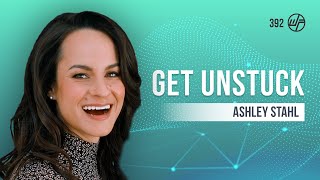
Ashley Stahl | You Turn: How To Get Unstuck, Discover Your Direction & Dream Career | Wellness Force
Interview (Wellness Force) with career coach and author Ashley Stahl (recorded Apr 12, 2021). Ashley recounts a family phone-scam/kidnapping incident she used as the opening story for a widely viewed TEDx talk (noting ~3M views) and describes the journaling moment when she wrote “I’m my own kidnapper.” The conversation traces her pivot from national security work (Pentagon) to career coaching and authorship of the book U Turn: Get Unstuck, Discover Your Direction, Design Your Dream Career (an 11-step roadmap). Core themes: cultivating clarity through engagement, distinguishing fear-of-unknown vs. misery-threshold, sharpening intuition (body/gut signals), worthiness and burnout, networking with values, core skill sets and career “how” vs “what,” inner-child and self-coaching practices, and a radiant-health view of wellness.
Questions this video answers
April 12, 2021
U Turn: Get Unstuck, Discover Your Direction, Design Your Dream Career
11-step roadmap
~3 million views
Chapters
I wrote all the ways in my journal that I have kidnapped myself in my life. Like, all of the jobs that I've taken. Like, I can't tell you how many people have said, like, I need to stay in this job so that I have another year on my LinkedIn profile. Like, all of the little things I've done to just hold myself hostage in versions of my life that don't work for me, so that I can look like I'm surviving, so that I can feel like I'm surviving and getting by. And, you know, I get it. I get why people do that. It's like sometimes we forget, like, living in and of itself is such an achievement. Like, you've got to get out of bed. You've got to, like, go to school. If you go to country, that you need to get educated. You know, sometimes we don't feel well. You've got to make money, put food on your table. It's an achievement to exist. Like, it requires a lot. And so to me, just realizing, like, having compassion for those versions of myself and for other people who are out there kind of holding themselves hostage is so important, but also raising that awareness. So I wrote down all of the different life events that I had chosen to just hold myself hostage in my life. And I made that decision after writing my journal. Like, I need to set myself free. And I think you always are, really. A decision away from a completely different reality. It doesn't have to be so dramatic or. Or big to make a big decision. Sam.
Ashley, welcome to the show.
Thank you. Welcome to me. Thank you. Thank you.
Welcome to this moment. This is the only one we have. If you're with us, watching on YouTube or wherever you are. Thank you. Thank you for being here. This is a wonderful person I've gotten to know through her media, which we're gonna talk about. This is the one and only Ashley Stahl. I pronounced your last name correct.
Yeah.
All right.
So the thing about this conversation that I've been looking forward to is we all like driving cars all the time. And typically, people are really stressed out and they're driving in a car and they're in a thought loop and they're going the same direction. Some people, though. Some people in their lives, they decide, you know what? I'm tired of driving in this one direction. I'm gonna make a U turn. We know what a U turn feels like. Cause we drive our car around. But your book, U turn. Get unstuck. Discover your direction. Design your dream career. This is a massive topic I Mean, it's very nuanced and it's very personal for so many people. You yourself are from national security to a career coach, which is like, whoa, there's a story to unpack there.
Obvious career pivot right there.
But for people that don't know you, your TEDx, which we're gonna talk about, we're gonna unpack so many things about the psychology of change, the behavior change science, and also the emotional intelligence aspect of the A to Z of what you do. But if people don't know you, Ashley, and they're seeing you in an elevator, and maybe they're just at Starbucks with you, what would you say to them if they said, Ashley, what do you do? What's a casual sentence or two that you might tell them?
You know, I definitely want to talk about counterterrorism because I feel like that was my early 20s and it's like a red herring, even though it's such a huge part of my life and a huge part of the book I wrote. But I would probably say I'm a career expert. So I help people figure out who they really are and how to bring it into their career path and make decisions that feel exciting for them, who.
We really are, which is like, I feel like it's always this amalgam of like our life experience, our level of consciousness, all the things that we've been through. You yourself right now are going through a health journey, right? So wellness is a full time job for you right now. And so it's perfect, you're on wellness force. Because we're here at this bridge, actually. We have this physical and emotional intelligence and then we have this doing so we know the knowledge, but then how do we actually do. There's this bridge in the middle and it's our breath and it's our heart and it's our intention. In your TEDx talk, get unstuck, Discover your direction, Design your dream careers, your book. But in your TEDx talk, you really pivoted yourself huge. And you pivoted from this story where you actually, like, technically were not kidnapped, but through a story. You were kidnapped. It was a kidnapped phone call. And I was, I was so blown away. I was so emotionally moved by this TEDx video. 3 million people across the world have seen it. Now. It's a great jumping off point for us to talk about changing the direction of your life and what happens when we all can get that phone call or that pivotal point for us. Do you remember exactly what you were doing when that phone call happened? When that all went down. You said you were in your Beverly Hills office just kind of going about your life. It's a massive story. Could you take us to that point and just unpack that?
Yeah.
So my dad got a phone call. I was in my office. I think I was recording a podcast at that time for my show. And so I was completely. My phone was off, and. Well, it wasn't off. It was just like, do not disturb. But I kept noticing calls come in somehow nonetheless. And my dad was in the kitchen with my mom. He got a phone call from an unknown number, and basically there was a woman screaming on the other line of the phone. And in front of her was the voice of a man saying, we have your daughter, and we're going to kill her if you don't do what we say to you right now. And it's like they hijacked his amygdala and his brain, and obviously he wasn't able to make focused decisions. And looking back, I'm really impressed with how he handled this because he really stayed as collected as somebody could. Yeah, I have a big sister who passed away, and so I'm his only daughter now. And so he's, you know, gonna do anything when he gets a phone call like that. And he didn't realize that this was just kind of a scam. And this happens all the time in different countries. It happens in our country, in the U.S. but he didn't know that at the time. So he ended up listening to this guy. He waved over to my mom. He became totally paranoid that maybe somebody was outside the house watching him. He wrote on a napkin for her, you know, like, letting her know, like, somebody's kidnapped me, according to what he thought he knew. And he said to be quiet because he had this paranoia that if they knew she was there, too, maybe they could hurt my mom, too, or something like that. He was just not thinking clearly. And eventually, how it evolved was they asked him to go to the bank and wire money, and meanwhile, my mom was calling me, but they threatened him. They said, if you contact her, we're.
Going to hurt her.
And so I don't know how. I mean, it sounds like such a blur, but basically a policeman ended up texting me. And I saw it right as my podcast guest had ended. And I called this police officer, and there was all this commotion where he was screaming at my dad and what ended up being a bank. Like, he kept himself on the phone with these scam artists all the way to the bank. And I heard the police officer Run, you know, yell across the bank. Like, don't wire any money. Like, hang up the phone. And it's crazy because my dad's 77, and he played such a huge role in my. Like, not just my life being my dad, but in my career. Like, some of the experiences I had watching him in his career have hugely impacted me and my own career. And so, you know, just seeing him so shaken up at 77 years old, like, it literally feels like it took five years off of his life. And to this day, he can't watch this TED Talk with me talking about it. But the reason I bring this up in the TED Talk was because that evening I had a lot of reflection on what happened. I came to see him immediately. He was so shaken when he got me on the phone. I drove to their house, and he was just this fragile man, you know, and my sister had only died, you know, months prior to this. So he was in a lot of grief, having lost a daughter in real life. And I just spent a lot of time with him and found this weird feeling inside of me of. It feels confusing to say compassion for the people who kidnap or who allegedly kidnap people on the phone and fake it and. But I just realized, like, you've got to be in pretty dire circumstances in.
Your life to be in such massive pain, to be massive and hurt other human beings like that.
Yeah. And the fact that they're just spending their day cold calling and scaring the shit out of people and threatening people that they love's lives, you know, it's insane. So I just felt like this, wow, this reminds me of so many people in some way or another who feel kind of like fear and limitation has kidnapped them from really having the life that they want. And that's why I started the TED Talk off with this story. And the question that I love to ask, which is, what do you know that you wish you didn't know? Because at any given moment, we know something and we don't like that we know it. It's inconvenient to know something. And we spend all day and we organize our lives around pretending that thing doesn't exist. And so I just love asking people, especially when they work with me in any capacity, whether it's a course or anything, to figure out, like, what. What are they hiding from themselves with? Because you can't have any change in your life until you face the truth. It's kind of like Transformation 101. But we all forget it, including me sometimes. So, yeah, that's the TED Talk.
And it's so profound. You guys must watch it. It's a must. I typically don't watch TED talks, as I was sharing with you before we recorded, but this one, like, I almost cried. And it's very touching. And you have a unique speaking ability. You're very articulate. You understand how to use voice and pitch to reach people. And I'm curious to pull the E brake even further to talk about your U turn. You know, in that talk you mentioned, you wrote on the journal that night, I think you said ways that I am my own kidnapper. How do I kidnap myself? And I thought that was so profound because how many people really, realistically take any kind of emotional inventory in their life? With my clients, I have an emotional inventory process where we split the things that are causing us pain and driving pleasure, and what are we grateful for? But there's something really profound and really unique that came up for you when you began this process, which I think propelled you into even more ways that you do what you do now. Did you. Do you remember that night? I mean, you must have been going through so much emotion and just so much when you got home. How did that come through where you wrote that on the top? I have it right here, actually. You said, I'm my own kidnapper.
Yeah.
I wrote all the ways in my journal that I have kidnapped myself in my life. Like, all of the jobs that I've taken. Like, I can't tell you how many people have said, like, I need to stay in this job so that I have another year on my LinkedIn profile. Like, all of the little things I've done to just hold myself hostage in versions of my life that don't work for me, so that I can look like I'm surviving, so that I can feel like I'm surviving and getting by. And, you know, I get it. I get why people do that. It's like sometimes we forget, like, living in and of itself is such an achievement. Like, you've got to get out of bed. You've got to, like, go to school. If you go to country, that you need to get educated. You know, sometimes we don't feel well. You've got to make money, put food on your table. It's an achievement to exist. Like, it requires a lot. And so to me, just realizing, like, having compassion for those versions of myself and for other people who are out there kind of holding themselves hostage is so important, but also raising that awareness. So I wrote down all of the different life events that I had chosen to just hold myself hostage in my life. And I made that decision after writing my journal. Like, I need to set myself free. And I think you always are, really. A decision away from a completely different reality. It doesn't have to be so dramatic or. Or big to make a big decision.
What do you think holds people back the most? It's a big question. I don't know if there's one answer, but holds people back the most from actually in their body and in their heart, not just in their mind. Because people think like, freedom is a mental thing. We can intellectualize being free, we can intellectualize being healed. But to embody, it's way different. So what is it like? Is there a few ingredients that you've seen over this time that makes people truly free?
Yeah, I love that. I think one thing is clarity. Like, if you don't really know yourself, you're gonna just turn your career and your life into this graveyard of trial and error. And sometimes there's some great things about that. But I think the world makes way for people who have clarity. And it's not to say that we always are going to have clarity. We're constantly in transition. That's who we are. We are transitioning. And so my biggest thing for anyone who really wants something is for them to make the decision to go on the path to get that clarity. Because in order, like the quotes say, in order to get somewhere new, you need to do something new. And clarity comes from engagement. It's never going to come just from thought. That's like sitting in a rocking chair and hoping you're somewhere else by the end, an hour later. So I would say that's one huge ingredient for people holding themselves back. The second thing is this dynamic between fear of the unknown and our misery in our current situation. I think these two dynamics really are always at play in our lives, our careers, our decisions. So the fear of the unknown usually will paralyze somebody, but they usually won't launch in and override their fear of the unknown until their misery in their current state is so much that they no longer care about the unknown because they're too miserable. And so my thing is, what can we do for anybody listening? What can I do for anybody in my life for them to lower that threshold so that they don't have to get to misery? They can start asking questions when they're lukewarm. Too many days in a row.
You just hit my heart so strongly. I have in the past two weeks, I've been doing a lot of deep work because I Have a son on the way. And so his middle name is my grandfather's name. And so I've mentioned this. Maybe this is the second or third time I've mentioned it. So my audience is probably like, we know Josh, but I gotta tell you again, because it's exactly what Ashley's talking about. His middle name's Morrow. Because my commitment is to heal all my generational wounding, all the things that have happened to my father, my grandfather, and everyone that I potentially will pass on to my son. And so it's this beautiful reminder for us to not necessarily choose Ashley to repeat the same things that we've learned that are harmful. Do you, in your work and with your clients, specifically with the person you're talking about that was on LinkedIn, and they're like, I need to be on LinkedIn for one more year, even though I hate my job.
These.
These beliefs are passed on. They're passed on and on and on. How do you address this in your work with your clients and your programs, where you're actually guiding people through generational pain, making them aware of it? Like, hey, you're repeating your parental patterns here. Is there a process you take people through for that?
Yeah, I mean, that's what's so fun about me having a book and a message that's around job hunting is that I kind of have a message for the masses. And so I don't open the door with the concept of healing. But your career is really about healing and confidence. And your mindset, like your bank account, is a direct reflection a lot of the time of where your mind's at. And so it's like, I have to know how to do this work. And so there's so many different modalities that I've learned, but one of my favorite ones is, number one, just starting kind of light and asking people, like, what was the conversation like in your house about your career, about failure, about success? What did you witness in your family? Like, I watched my dad, hugely successful, with millions and millions of dollars, lose it all. And we lost our home and we moved to the suburbs when I was like seven, which is a very formative time in the child, in a person's brain. That's right. When all of your beliefs and your patterns are being programmed into your mind and solidified. So I really believed a lot about loss and about how you can't keep success and how money is what brings you fun, and when you lose it, it's gone. So I like to just have a lighter conversation with people out of Curiosity about, did people talk about money or career or success in your house? What was the vibe? And from there, usually people have their own pain, their own limitations. And so I always ask people, like, what are you believing about your career right now that's keeping you stuck? And so I'll have them fill in the blank. I'm not where I want to be in my career, because. And I'll just put, like, a line, what? And usually it's a limiting belief. It's not something that's actual. Sometimes I will hear somebody that says, you know, in order for me to get this promotion, they told me I need to finish this certification. So it's, like, logistical. And then I could argue with them and say, well, you could do it somewhere else. You don't need that there. You know, so. But I will usually hear something like, well, I need another year of experience of this thing, or, I don't have enough experience with that thing, or, I'm not as good at this. It's all limitations. It's all bullshit. And so usually from there, I'll ask them for a moment in their life where they felt that very present for them in their career, and they'll take me into a conversation at work or something where their piece was totally disturbed and they felt that belief so strong. And then I'll ask them to go back into a memory in time. Like, when was the first time you ever felt that in your life? And I'll figure out, like, what was the aspect of them that was present? So was it sadness? Was it anger? And I'll ask them to give that aspect of voice so, you know, maybe back. You know, maybe John Doe, he doesn't believe he can get anywhere because he's not good at math, and he keeps messing up with math. I don't know. And then I'm like, where'd you get that from? Well, in grade school, my teacher, like, totally freaked out when I failed my test. My parents punished me, and da, da. Okay, well, when's the time at work where you, you know, felt that? We'll go through that. We'll go into that moment in his memory, and I'll say, what was the aspect of you that was present? How did you feel? And he'll say, I felt like a failure. And then I'll want to have him maybe journal for seven days from the voice inside of him that feels like a failure. Freeform writing. I'll teach him how to forgive himself for those beliefs and to come up with new, empowered beliefs. I mean, the truth is we're making up everything, so we might as well make ourselves win in the thoughts that we think, because life just is more friendly that way.
It's so funny. We literally met each other and I said, welcome to the game or something like that, because I really believe that it's been a shift that's happened for me as I've coached more people recently. And also this whole phrase of, like, what's my purpose? How do I find my dream? People just get so addicted, actually. And I'm curious how you feel about this to the stress of being in constant fight or flight. Kelly Brogan talked about this on the podcast. Dispenza talks about this in his work. What is it about people that in their psyche that is that they're afraid to look at when it comes to being addicted, to being in stress, to being addicted, to being in that seesaw that life is so hard. Life is so hard. Now, look, I have compassion. It could be capital T trauma, lowercase T trauma. I get it. But what do you think that is in the human psyche that allows us to become addicted to the struggle instead of just receiving and organically living?
Well, the good news is that we, according to research, we do need some stress to activate, and it's very productive. And it's important for a life that you live on the edge, because there's a limit. But there's a limit, and we're all kind of living in the limit. I just read a new study by Asana that 89% of workers right now are working later than they did in 2019, and nine out of 10 workers admitted to being burned out on their job. And so our poor little adrenals are just turning into a blob of nothingness. And we are all so exhausted. And I think that it really comes back to worthiness. And it's interesting because busyness has just become this culturally acceptable insanity that we all seem to, I don't know, have as like, this badge of honor. And I think Covid has really disrupted that and forced us to not be so busy. And I think a lot of people, I don't know if it's a case of use it or lose it, but they're feeling more introverted than ever. And then some people are feeling more extroverted than ever, like, get me out of the house. I need people. And so I think it would be just important for anybody who's feeling that exhaustion or stress to ask themselves, like, why don't I feel worthy of wellness? Why don't I feel worthy of feeling like I can have that conversation with my boss and keep my job. Why do I feel scared to set boundaries? What am I making it mean about me, about the world around me, about what's possible for me? For a long time, I actually had a fear of canceling things because I would get a lot of big opportunities as an entrepreneur and I would think, like, I can't cancel that thing or reschedule it, like, no matter how sick I feel today or no matter how much my thing needs me and my mom needs me today or whatever. And I formed such a better relationship with like, reschedules and canceling. And it's not that I'm flaky at all, but I've. It's a reflection, I think, of the permission I've given myself to be worthy of spaciousness when my body needs it and my soul needs it. And so anybody listening who's burnt out right now, it's like, that's a worthiness issue. And that's my message on that.
Let that land for a moment. Can we just take a big breath on that? Yeah. Whoa. Everybody can feel that. Everybody can feel that right now. Everyone. I don't care if you're full time entrepreneur or you're working in a company. One of the things that you talk about in your book, and by the way we're talking about the book u turn about getting unstuck, discovering your direction. I love that. Discovering your direction. Not trying to force your direction, actually discovering it.
And we're all forcing our direction enough.
We're being forced enough. Right.
With.
With exactly the paradigm that you're talking about. So when we look at designing the dream career, I'm curious for you. You know when you wrote on the top of that, of that paper that night after the ordeal, you said, I'm my own kidnapper, just so people can be clear on the road you've walked. What was one or two really big beliefs that you were like, I'm done. I'm gonna cut the rope on the kidnapper. You know, what was that for you?
The biggest belief I had was that the light, the default life I have ahead of me if I don't make a change is so much worse than the rejection, vulnerability, and misery that I might feel putting myself out there, that the long term misery was so much worse. So I wasn't necessarily motivated by inspiration originally. I was motivated a lot more by like fear of what my life could be. It's a powerful motivator.
That's honest.
Yeah.
But I did shift into I think one of my core beliefs is, like, life is rigged in your favor. And as long as you're living, like, it's not. It's not going to work with you. You know, like, if you're forcing your life, like, that's just a choice and a way of living. So I know Rumi's quote, live life as if it's rigged in your favor. And I really do believe that. So I started to ask myself, if life is rigged in my favor, what do I want to happen? Who do I want to be? What do I want to do? And I've really started to then ask myself, who do I need to connect with? Who do I need to be around? And it's funny, a lot of friends tell me that I'm good at networking, which is, like, super weird for me because. And I have a whole course on how to get a job, so I get it. But I don't identify as, like, a networker because when I think of networking, I think of, like, stale cheese cubes and, like, wine and, like, a networking event.
Conversations where people look around the room. It's. Who else is there?
Yeah, well, because I think why I've succeeded at it is because I won't network with anybody, no matter how big they are. It could be God himself, which, I mean, or like, Oprah. But if they're not kind or like, they make me feel tired, you know, I'm not gonna. I just won't do it because that there are so many people in the world that can make an impact for you that you can make an impact for. And so I think the reason I love networking is because I've done it sustainably where I've committed to only connecting with people that I resonate with. And I haven't taken things personally. So I have a pretty good relationship with rejection. Like, I see it as a necessary piece on the block towards success. So for me, I'm like, okay, I'm going to send 100 emails out about this one thing, and if 10 people write me back, those are the 10 people I'm supposed to connect with. And that's awesome. And that's it. And then I connect deeply with those people. I pay attention, I stay in touch, and I don't need anything from them. I try to give. And then as a result, all of this stuff comes to me anyway, which is super cool.
But you have sharpened your sort of intuition. The only reason you know how to find the breadcrumbs is because you've trained yourself to do so. What Is it in your work where? Especially for millennials, Like, I mean, look, I'm one foot millennial. I'm 1980, so I'm like, one millennial foot one whatever. My generation is. Right. And so I, like, I understand both. I really do. I feel like in, you know, my. The mother of my child and my partner Carrie, like, she's a millennial, so I get it. Like, there is a different mindset in being a millennial because you're very technology focused. And for a lot of millennials, specifically the ones that I've coached, they're so disconnected from their somatic and from their head to heart connection because they've been trained on devices and productivity and blind video games and, like, look, there's a place for those. My question to you is, how do you approach conversations with people that are specifically millennials that might not have done the I'm a kidnapper worksheet yet, and they don't know too much about your work? Like, what's the opening dialogue for somebody? It's like, God, Ashley, I really want to follow my passion. I want to find my purpose, but I don't exactly know where to begin. I know it might not be a template, but is there a beginning dialogue you have with them for people in that specific niche?
Yeah.
I mean, first, there's a quote in my book, and it says, intuition is knowing what you know without knowing why you know it. And I think we've kind of gotten cut off from that source because of so much noise around us. I mean, even as a kid, when it comes to my career, I was told about, like, being a veterinarian or being a doctor or teacher or maybe an astronaut if I was feeling pretty extra as a kid. Like, those were the careers I was told about. So there's a lot of noise. There's a lot of guidance that comes. And we all kind of come into the world with, like, an inner thermostat set by ourselves and our parents and of what we know is available. And so it makes sense that people aren't really connecting to anything beyond what they know because they're told what to know. And so when we set ourselves free of that and we give ourselves permission to know things without any reason why of knowing them. Like, for example, with COVID I don't know if it's that I used to work for the government and national security, but, like, I know a government problem when I see one coming. And I message all my friends, I'm like this. And I messaged them late February when It was still pretty much in China. Well, it was probably here, but. And I said, this is going to, like, change the world and we're all going to be stuck in our houses for, like, a very long time, so prepare. And everybody thought I was insane. And I was one of the first ones to go out and get groceries and, like, toilet paper before, like, the shelves were cleared out.
And did you invest in Bitcoin, too?
No.
I'm not very financially savvy with stuff like that. Like, I don't really, but I should.
Be if I can go back and plant one seed.
Right. Well, if you think about animals, like, they know on an island when a tsunami is coming, before the tsunami comes, they start running. So there's something intuitive inside of all of us as people and as mammals. And for me, the work is really in the body, like, starting to notice when you feel a nudge, starting to notice when you feel pulled towards something, starting to notice. I mean, like I said in the TED talk, there's 200 million neurons in our brain, in our gut, which is a cat or dog's brain size. So there's a lot of intelligence in our gut. There's a lot of intelligence in when our stomach sinks or when we feel butterflies. Like, that's all intelligence from our body. That's all intuitive. Another thing is really important. I think around intuition is understanding how it works. To me, and this is my own.
Approach, it's pretty absolute.
It's not that emotional.
So my intuition isn't like, going on and on if you're hearing long sentences and all sorts of stuff that's like fear or emotions or something else. To me, intuition is absolute. It sounds like this is good for you, this is not good for you. Check this out. You're interested in this. Like, that's it. And I think it's really about answering that call of when that part of you is speaking with you. And I think the longer you build a relationship with that part of you, the longer you listen to that part of you, the easier, obviously, it becomes to start living from that place.
It's really powerful. It brings up a conversation I had with Busy Gold where we talked about instinct and intuition. And I'm super curious with your work. You know, instinct is like. We all know that when a wolf is out there making decisions on what a wolf's going to eat, it's very instinctual. It's like a primal, deep, kind of ancient brain system that activates the nervous system. But like, you're saying there's this, like, Soft whisper. When it comes to intuition, it's not just like a paralyzing jolt to the system. How would you paint that picture of the two? How do you split the two? Intuition and then instinct.
Yeah, Well, I mean, I love Elizabeth Gilbert's TED Talk about, like, genius and how genius by ancient tribes was something known to actually visit you and leave you. And so nobody is a genius. They're just visited by the genius. And I think that's kind of instinct as well. So I think that. Or not. Sorry, that's more intuition as well. So instinct for me is in the body and the cells. It's something that we are naturally programmed to do from a survival standpoint, from an existence standpoint. I think instinct is what kick in. Kicks in when you're a new mother and you have a baby and you suddenly know how to do a bunch of stuff that nobody ever really taught you because it's your instinct, it's in your cells. And how we're programmed to survive. But I think intuition is like that genius that visits you, and I think it's a divine voice and something that is so much deeper than we might all realize at this moment in time.
When people go through your programs, is there a sharpening of that intuition that you provide to them? Obviously it's not a five hour podcast, so we can't go into the total A to Z, but the beginning stages of that to spark curiosity for people. Really, that's what this is. We're just having a curious conversation about what's really driving us here. Are we driving ourselves or is programs and stories and beliefs and paradigms driving us?
That's.
That's where my question comes from. So how do you. How do you begin that conversation when it comes to sharpening one's intuition that. That visiting that Gilbert talked about?
Yeah, I mean, honestly, I think sharpening it comes back to yourself and coming home to yourself, which is really the concept of making a U turn in my book title. And it's Yo U turn, which is so different than a U turn. Like when you're driving in traffic with just the letter U going back from where you came versus back to yourself, which is what a U turn is really about. So for me, if you're feeling off, I think the first step is stop making decisions and start getting back to yourself. And what that looks like is maybe coming up with a list of people or places or things that make you feel yourself. So in my case, like, the ocean always makes me feel myself. I live by the beach in Los Angeles. So I know that when I feel kind of off kilter that putting my feet in the sand, taking a walk, bringing my journal over there, it's always going to do something for me. There's also a few friends that I have that particularly I have a lot of friends, but there's a few in particular that I've noticed after this person is with me, I'm me again. And it's not about them, it's about who I am with them and who I like who I am with them. And I think at any given moment. It's funny, like, even with romantic relationships, we're all kind of creating a cocktail with people. And it's not just like, if your romantic relationships don't work out, like, it's all on you and you need to look at what you did. A lot of the times it's like, yes, process your things, learn how to be a better person. But there's something to be said about the cocktail that is created with someone else and what version of you it brings out and whether you like that version of you or not. So I try to get really aware of who brings out this version of me that feels like who I really am. And then another thing is hobbies. I love hip hop dance. I used to love cupcakes until I found out I can't have gluten or dairy, which has been really a buzzkill. So I'm trying to every recipe under the cupcakes that are healthy. And, you know, these little things kind of bring me back into my essence. And when I'm from that space, I'm much more equipped to be creative in my work, face work, handle my job. And sometimes that means I need to take some time away or take some time off.
It's wonderful because in my question, was the answer in your work, you talk about you don't get the clarity by having the clarity. You get the clarity by engagement. And of course, in your answer about sharpening intuition, it's the same thing. You actually sharpen your intuition by practicing the sharpening.
Exactly.
To me, it's not a shock, but I think a lot of people when they. I know for myself, I had a moment way before I launched the podcast and I was like crying, asking God for support, trying to understand, like, why all these things had happened and really having that moment. Whereas on my knees. Have you had a moment where your intuition was very, very tested?
Yeah.
Maybe you made not necessarily the wrong U turn because I hate using that term right or wrong, but maybe you made a turn that necessarily didn't necessarily give you the success you wanted, but it gave you like some really dark contrast that was also a gift. Has that happened in your life for you? Was that specifically your time in government?
Yeah, it was definitely my time in government. Like I think at this point I'm pretty like dialed in with myself and yet I'm human. My missteps aren't going to be as much as like the universe hitting me with a two by four as it would have, you know, when I was younger and I really didn't know myself.
Yes.
So that's why even with my book, like I open up on my first day at the Pentagon, because working in national security, it's like I think about all the celebrities that kind of get to the top of where they think they want to be and then they're like Britney Spears and they shave their head or have a drug addiction or just kind of like lose their mind. And I wonder to myself, like, what happened to those people? Like, and I realized I kind of got what they got in a different way. They got to the top of the ladder of their dream at a young age and found out that it wasn't for them. That's what I did. Getting to the Pentagon. I thought that I wanted to be a spy, make a huge impact, protect people. When I got to the Pentagon at a young age, when I got in a high level job at a young age, I was gifted with the opportunity to see that the dream wasn't a fit for me without all the years that most people spend buying into this belief that that dream is for them. And I think that's what happens when you hold on too tightly to a vis vision. It's like set your vision but don't hold on too tightly because you are going to be met on the periphery when you're following what feels right in your life. So many different opportunities and you're really constantly calibrating with the universe. So for me, coming into the Pentagon was a huge rock bottom. I had a colleague who I found out was getting paid almost 20k more than me for the same job and I had an extra degree than he had and I spoke more languages than he did and he wouldn't give me a desk. And I was, I was on a, on the Afghanistan station. So I was working on Afghanistan and he made a joke like, you don't get a desk until you prove yourself, just like women in Afghanistan have to. And so there. And I will say, by the way, that most people I worked with at the Pentagon were awesome, and there was none of that. But this guy had all sorts of that. And it really was a rock bottom for me to realize, like, there's two things in all of our careers that we have to be mindful of. The first thing is what you're doing. Like, the responsibilities you're taking on the core skillset you're using. My core skill set is words, and in my book, I write about 10 different core skill sets. I misunderstood it when I went to the Pentagon because I didn't know myself well enough. So I thought, oh, working on intelligence reports, writing. That's all words. No, that's a different skill set that I write about. My book called Analysis, I was in the analysis skill set. And so I was totally depleted. I was working out of my zone of genius, which is the what of my career, my skillset. And then the how of my career wasn't working for me either. And the how has to do with how your career looks. And given that we know that 50% of people leave their jobs because they don't like their boss, how your job looks matters. And so for me, that looked like working with people I didn't like. It worked looked like I wasn't always working inside the Pentagon since I was a defense contractor, but there's no windows in there. Like, there was a lot about the setup that I was like, oh, this isn't gonna work for me. I had to go to military bases, you know, every few weeks, and I found them to be very depressing. One of them was in Indiana, looking like a sunken village on purpose for military exercises, like, to make it more real. So it's kind of a depressing, like, the hills have eyes kind of place. And it even was a psych ward in the 80s, so turned into a military base.
So energy might have still been there too.
Totally.
And I was. I'm a very sensitive person. So the how of my career wasn't working for me either. Which comes back, I think, to your core values and the principles by which you really live your life.
Do people come to you to learn how to be a coach themselves?
They do. I'm really picky with coaches that I coach. Usually the new ones will take a course for me, but I like to take people on who have done something in their career and it's not coaching, and now they want to do coaching, or they have, like, they're an influencer with an email list. Like, something like that feels fun. But I actually own another company, and we do speech writing and ghostwriting and I don't do anything for that company except write the speeches. Especially a lot of TEDxS I've written, which are really, really fun.
You have this way with words. It's very powerful. The way that you opened your TEDx and did you. Did you always have that? Have you cultivated that? Did someone gift that to you? Is your dad good at that? Is your mom good at that? Where does that come from? This ability to, like, let it rip, but make sense at the same time?
Thank you. You know, I think. I think a lot, and I think I felt a lot as a kid, and I think there's a combination.
That's awesome. You're like, I think. I think a lot.
Yeah, see, I'm not that great. I. I really think a lot. And as a kid, I felt a lot, and I think words were my medicine. Because if you think about somebody who is sick and they're like going, all the doctors trying to get the answers. I'm sure you've heard of so many people like that. They have something chronic, autoimmune, whatever, and then they finally find the doctor that can put words to what's happening for them. Even if it's the worst diagnosis, there's, like, a relief for them. And I think that's what we do as healers and in personal development is when you're good at words, you have an opportunity to put words to something that people don't know how to voice, and it helps them process their life and make sense of things and make decisions from it and get to know themselves. And so for me, having had a lot of pain at a young age, like, I had a sister who was a drug addict who eventually passed away. I had a brother who he was in resources and was a slower learner. Now he's super sharp and he. I think he's probably, like, mild autism. I don't know. But he's very sharp and very successful and married and all of this stuff. But as a kid, it really. I felt a lot of pain, like, seeing him struggle to learn when I was a quick learner. My dad definitely has a way with words. Spoken words, but written words. There's a lot of typos. And he writes in all caps lock, which is a whole nother thing.
It's like shouting at you the whole time.
Yeah. He wrote a whole memoir of himself.
Can you pick up some bread?
Yeah.
Totally gluten free. Okay. The reason I asked you about coaching is because it's one of the pillars, the core skill set, the money blueprint, which I'd love to talk about the thermostat you mentioned earlier too, the core interest and also becoming your own coach. So this is like real tools to be your best self in times of like, oh my God, I'm leaving my body. I'm so angry at this person, I can't even feel myself. Intuition's out the window. I'm hijacked by my biology. So my friend Christine Hassler, she has this beautiful way to describe it. She says, are you an inner critic or are you an inner coach? And I'm like, ah, that's beautiful. And that's why I asked you about coaching, because I don't think people need to be coaches for other people, but they really get to learn how to be a coach for themselves and parent themselves and love themselves in that way. So how does that conversation start in your book? And then obviously people are going to read the chapter and go into the book itself. But can you give us just a teaser of that in your book?
Yeah, that was one of my biggest intentions. Writing the book was like, there's nothing inspiring about a coach wanting groupies and clients that come back forever because the idea is to coach them, them into like their own self sustaining patterns and habits and ways of being.
So nine months or less, we're done?
Yeah, yeah.
I don't want you for any longer than nine months.
Exactly. So for me, that was huge in the book. The book is an 11 step roadmap. There's 12 chapters. I didn't make it a 12 step roadmap because I thought it would be weird to have a 12 step program book that's not AA. So it's an 11 step roadmap on how to get clarity. Every single chapter is really geared towards bringing you into my world so that you and I could go into our career together. You can see my stories with yourself. Maybe you didn't work in counterterrorism like I did, but I'm sure you can relate to the first chapter. Walking into an opportunity you thought would be great and realizing it's not a fit for you. And so what I really do as a coach is I answer all of the thoughts that I know you're probably having throughout those moments. And I give you advice on what to do with yourself in those moments. And I end every chapter with exercises so that you can learn how to ask yourself questions and be there for yourself. Another thing that I really focus on for myself is inner child work. Like I really try to speak kindly to myself and that's taken years like that's a process. And the thing about self love is that you don't really know how much you have until everything is ripped away from you and you don't have anybody, especially if you're going through a breakup, like you don't have that partner anymore. Validating you and you're by yourself. That's when it counts. That's when the blankets ripped off of you and you get to be there for yourself and you get to see how you're doing with that in real life because you don't get to hide behind anybody giving you those words, giving you that praise. And so for me, I just speak really kindly to myself. I try to notice where I don't like myself so that I can improve that. And I'm not a perfectionist. I think the personal development space is actually a little bit infected by people who are always trying to be better. When sometimes the real work is to accept yourself and not be better, but to be okay with where you are, are. I think that sometimes in self help, it's like, you know, let me, let me just fix, fix, fix versus I need to accept, accept, accept and work on. And so my book is really a game of helping people understand their core nature, the energy they bring to the room, their core skill set, which one of the 10 that they really lead with in their career. Their core motivators, like, what motivates them at work, their core values. So you can hear the word core throughout. And that's really what I show up with. And every single chapter is a different U turn for that.
I'm blown away with just how able you are to truly get to the heart of the matter. Because the heart of the matter is either you're either living with breath and with purpose and intention and moving in a direction that your soul is guiding you to, or you're falling into someone else's dream. And I don't want to shame. This is not me shaming anyone. It's okay to kind of veer off the path as long as you're moving forward.
Yeah.
When you were counterterrorism and you were in that career, it sounds like there was a bit of like misogyny. You were dealing with comfortableness.
Yeah.
What did you learn from. What was the gift? What was the gift that helped realign you to your purpose? Like, and how do you even use some of the stuff from counterterrorism to apply to the current day?
Well, I mean, definitely when you go into the intelligence field, you learn some people skills that are taught like Little strategies like mirroring or. I don't really use those on people, though. It's not like I'm, like, getting to know people, thinking like, oh, let me use that tactic that I learned on the military base to get people to trust me. But I do think the reason I was drawn to that path in the first place was because I'm warm and I like people. And so I thought that I could use those skills to help the government. That being said, I think honestly, what that did for me was it shook me up and disappointed me so badly that I really had to, like, listen to it. And there's a blessing in that as far as the people go. It gave me a huge reference point of what it can look like in the workforce when things are working, when they're not. I stayed in the workforce for quite some time before I started my business, and I'm really grateful for being able to relate to people. What I will say that you kind of touched on is there's this really interesting time with purpose where you're kind of in between, where whatever you're doing isn't working for you anymore and whoever you want to be isn't really clear yet. I think that little sweet, sweet spot of time is where people can create a lot of damage for their career if they don't manage themselves. Because if you force an answer, that's like walking up to a flower and forcing the petals open when it's like trying to bloom. It's just a horrible look, you know.
So there's a divine timing.
It's divine timing. It's doing the things I talked about on the list of that make you feel yourself giving yourself that gift so that you are able to, I don't know, reconnect to yourself and allow those answers. Like, there's nothing fulfilling about forcing your career. You're going to be exhausted and you can't even keep it up. And it usually isn't aligned with who you truly are anyway. And the thing about who you truly are is it always wins. It's always going to shine through. So, you know, and that's the case in relationships, too. Like, if you're in the wrong thing, your personality, your needs, they're going to get loud at some point and they're going to break the whole thing down at some point. So the question often becomes like, do you want to rip the band aid off this week and cry? Or do you want to cry next year and do it then? Like, it's all indefinite. And so trusting that portal of time Trusting who you are to shine through and just doing things that nurture your sense of self are really key in that little sweet spot.
How's your training and self awareness worked out for you in your own personal relationships Romantically?
Yeah.
Such a good question. It's really powerful in my friendships. Like, I can see a lot of my personal development in my friendships. Like I went to hang out with a bunch of girls that I really love and at any given moment there's probably five women who like deeply have me on their mind and they're holding like big appointments I have in their awareness or big opportunities that I'm doing and they'll message me right before, good luck with that thing. I feel very loved and I have a lot of love to give my friendship. So a lot of the personnel development I've done have shown up with my women in my life and the relationships I have. It's shown up with my family. I used to have a lot of resentments with, with my dad, like losing everything and how I ended up repeating his pattern, losing a lot of money as well. And I talk about that in my book.
The generational hooks that I was talking about earlier.
Exactly. And I had half million dollars of debt that I paid off myself. I don't know why I was too stubborn to claim bankruptcy and pay all that corporate debt off. But it's like I've learned to not be in blame with my parents. And that's the thing. Whether they did that thing or not. If you're doing that thing, it's you now that's doing that thing. It's not them anymore, it's you. And you have to work with it. So I've. I've forgiven my family. I think in my romantic relationships with my partner. Like we've. We've had a very deep relationship with a lot of dimension. But with the depth comes a lot more to work on. Like, oh my God, like where you.
Dig, the more is there.
Yeah. And I definitely am actually open to. I'm selectively spiritual. So I have the tools, I have the awareness. I also am okay with me having judgment sometimes. I'm okay with people judging things sometimes I'm okay with not working on that issue sometimes. So I think that's what also brings me into being a human as well.
Human experience shows us deep contrast between decision or indecision or in this certain case, just making the choice to not deal with something because your capacity is either working on something else or being fed to something else. There's a lot of things You've mentioned today that have been so profound. One of them is that you talked about people who. And you use different words, but I'll say it in my way, bypass things. They either go for it or they bypass it. And one thing that I've seen a lot in personal development, specifically, I guess you could say, in the spirituality world, because we delve into that on the show quite a bit. Spiritual bypassing. You know, there is such a massive abuse of people masquerading as light or masquerading as good energy or masquerading as something they're not. It goes back to my initial question for you of sharpening the intuition. But are there telltale signs that you personally, as an influencer, as a speaker, as a coach, yourself, look for in other people that you want to receive information from?
Yeah.
Are there certain ways of being that you throw a red flag towards?
Yeah, I. I'm the person, actually. It's so sharp of you to be asking me this question, because this is the thing that all my girlfriends say, like, this is your superpower. And they ask me when they're about to do a business deal if I meet the person. Not from, like, a judgmental standpoint where I'm judging the person, but, like, oh, how do you feel about that person? And we have a really sacred group, and it's not in the kind of way where it's like, you can't sit with us. It's in a way of, like, the water, and I don't want any mud in the water that we've all kind of filtered with each other. And so every now and again, somebody will come in, and everybody is so generous, so generous. And so I can pick up on somebody with an agenda, for sure. I think that comes from my counterterrorism training, like, feeling people's thoughts and feeling them with an agenda. And one sign that I don't like is fast friendship, where the person is saying, like, we're best friends. Maybe after a month or two or.
Somebody, that's like, after two weeks, I love you, brother. I'm like, you've known me for two weeks. What are you talking about? You love me?
Yeah.
What is going on there?
And they might mean it, but it's like there's. I think there's an element of wounding, to not allowing time to mature something and prove itself. And, you know, I'm a big proponent of that. And I know I wasn't before, because as an intuitive person, I used to say, if it feels right, the connection is beyond time. But now I'm both. I'm like, if it feels right, the connections beyond time. And I value time and what will unfold in this connection through time. So especially with my business friends where they all have large platforms, anyone that's coming in and saying like, we're best friends and they're posting them on Instagram and tagging them and wanting them to be re tagged, I can feel the agenda. They want to do business partnerships with them. And it's actually quite a painful thing because sometimes it's really not my place to say anything and I can't even share everything I want to share when people ask me because it's not about me being appropriate. I just also want to be respectful and let people have their own thoughts about their lives too. So I just share what I'm. And I'm a straight shooter, so I'll share what I see within reason.
I love our conversation. I have to have you back on the show at some point to go a little bit deeper in your next project. We scratched the surface of U Turn, so it's on Amazon right now. Ashley Stahl, U turn. Get unstuck. Discovery keyword discover, not force discover. Take the time on a graduated process where she leads you through it and then lastly, design your dream career. We covered a lot of ground. We went to some cool places. I didn't get to ask you all the questions I wanted, but we'll do it on the next round. Is there anything that you really want to leave people with? Energetically, emotionally, spiritually, maybe somatically when it comes to this U Turn?
Yeah.
I think the message of the book that we kind of talked about, that I want to just reiterate is who you are always wins. Like, really face who you are now. Because the pain of not doing that is what caused so much anxiety. And the sooner that you face the truth, it might be sad. The truth sometimes is sad. The truth is sometimes inconvenient. But there's not a lot of anxiety in it usually. And so I just want to remind people who you are always wins. Be who you are.
Beautiful. And if you could give a parting advice to this definition, this understanding of wellness, like, this is a signature question that I ask everyone. And for me, it's changed so much. You know, how you even see wellness? You're in a wellness journey right now. It's how we got on the phone together right when we started this, this call. I'm like, I'm blown away with how people answer this question. I'm really curious what this means to you. How do you define wellness?
I would say for me, I'm well, when I'm radiantly healthy. So my mind is healthy, my body is healthy, my relationships are healthy, and I'm constantly, usually working on one. Right now, it's my body, my physical being. Last year it was my relationship. Sometimes it's my career. But radiant health on all levels.
Ashleystahl.com is where people can find out more about you. But where do you play? Like, where can people really connect with you deeply?
Where.
What's the start of the journey for.
People that want to work with you? Well, I hope anybody who feels like something's missing at work gets my book. It's like the most proud thing I have out there because I know how good it is and how much it makes a difference for people. So you can check that out anywhere books are sold. But I would say my podcast, which I'm going to have you on. U turn podcast. Y o U turn. Just like everything else, I do little solo conversations when I'm having all sorts of thoughts. I did one the other day when I was walking my dog. I had a, a, a big rush of thoughts, and so I did a voice note to my audience. But I really love connecting with people through that, too.
All right, everything's in the show. Notes, you guys. Thank you, Ashley, for coming on the show. Deep bow to the really sharpening of the intuition that you're giving people so that they can make better choices. Until we see you again soon, Ashley and I are both wishing you love and wellness. We'll talk to you then.
Sam.
More from Josh


Your child's future start before pregnancy... and even before conception! #podcast

MD Reveals: Your Healing Creates Your Child's Reality (The Souls Coming In Need Strong Bodies)