(Audio Only) 302 Mark Groves: Create The Love
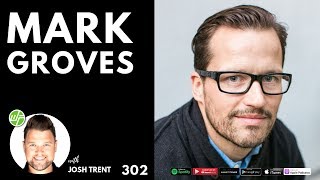
Episode 302 of Wellness Force Radio (host Josh Trent) features Mark Groves (human connection specialist, creator of Create the Love). The interview traces Groves’s transition from pharmaceutical sales to relationship coaching after an engagement breakup, and outlines his core premise that relationships are a skill we intentionally create. Key themes: inherited family systems and how childhood unmet needs shape adult attraction patterns; the value of choosing a partner (the privilege of being chosen) and prioritizing individuation over codependency; how addictions and distractions (alcohol, pornography, overconsumption) function as survival strategies that block intimacy; practical self-inquiry questions (e.g., “If she left you tomorrow, would you be okay?”, “Could someone else love her better?”) used in Groves’s own process; the distinction between longevity of relationships and depth of relational work; and a multidimensional view of wellness as balance between body, emotion, and spirit. The episode references specific authors/teachers (Viktor Frankl, Carolyn Myss, Stephanie Coontz, Mark Wolin, Pema Chödrön, Alan Watts) and offers actionable guidance: examine family patterns, name what you wanted as a child and didn’t get, prioritize your own integrity, and seek coaching/therapy when needed.
Chapters
You know, I think when we can connect to the truth that our partner can leave us in any moment, then it makes the power of choosing them so much more powerful. You know, marriage, I've heard many people say, well, we got married. We can't get divorced, or we, you know, we can't end this. And that's because a lot of ways, marriage has been a contract. It has been, okay, well, now I'm married. I don't have to do this anymore, or I can start to take my partner for granted. And I'm like, no, you can't. That's exactly why you should do the work. Because the privilege of being chosen is not one to be washed away, to be dismissed. And recognizing the value that my partner can choose anybody and she chooses me. Like, what a gift that is.
That's Mark Groves, and this is episode 302 of Wellness Force Radio. Wellness Force Radio, where we discover the physical and emotional intelligence to live life.
Well, you can have the same brain states as someone who's done an hour of meditation every day for 40 years.
There's a lot of losses that we go through, so the ability to be able to cope with those losses is very important to build skill in it, because loss will happen.
You know, you have to have spiritual courage, to really grow spiritually, because if you really want to take guidance from your soul, you have to be ready to realize that many of the things that you're asking for guidance on your ego has some kind of an addiction to or an investment in.
Hello, podcast world. Welcome to Wellness Force. It's Josh Trent. I'm ecstatic. Ecstatic you're here. I say ecstatic because today's guest is the one and only Mark Groves. Now, let's just start with this. Mark is a badass human. He calls himself a human connection specialist, but he's so much more than that. I got to know Mark through a couple conversations before we even jumped on this podcast. And this is a man who is truly living on purpose. He walks his talk. He recently went through a breakup that was three and a half years. And the way that he did it was so honorable, so powerful, so incredible, that I am just in awe of this man and the way that he navigates the dating world. You know, he's got over a decade of experience with coaching people and speaking about love and relationships with his channel on Instagram, create the love and his channel on Facebook and YouTube and everything else. He really helps men and women and also companies step into their most authentic, effective, and loving selves. And he does this through no bullshit relationship guidance. Mark was one of these lightning bolts of truth in the area of dating and relationships that I've ever come across. Essentially, at the bottom of it all is self love. This is what he preaches for all of us. The work, the work of self love is not linear. We're going to sometimes take two steps back before we go forward. This is the reality of life. You know, Alan Watts talks about this duality a lot. And we share this same care, the same really love and affinity for Alan Watts, Mark and I. And there's a quote that we did not just get to discuss in the podcast, but I wanted to tell you right now. And it says, people who exude love are apt to give things away. They are in every way, like rivers they stream. And so when they collect possessions and things they like, they are apt to give them to other people. Because have you ever noticed that when you start giving things away, you keep getting more. This is one of my favorite Alan Watts quotes. This is true, right? Have you ever noticed that when you give things with expectation that the way that you receive it back just feels kind of weird? It doesn't feel like the most connected, the most authentic. And then when you give something to someone because you just authentically without expectation, and you really just want to give it to them, that's unconditional giving. That's unconditional love. We're gonna talk about this with Mark as well as so many other things on the show. And before we get into what we're gonna cover, I wanna thank my favorite sponsor on the planet, Organifi. I love organifi. Straight up. I'll just be honest. There's. I have a love affair with organifi. Since we're talking about creating the love, the way that I create the love for my body is by drinking green juice in the morning before I do my breath work. I've been talking about this a lot. The reason I love organifi is because when I start my mornings, I don't like to have food in my stomach when I do my breath work, but I do like to have energy. So there is ashwagandha, spirulina, chlorella. There's all these beautiful arrays of adaptogens inside the organifi. This is what goes down into our cells to start moving, our digestive process, to start hydrating and nourishing ourselves. It is the shit. It is the best possible drink you could ever have in the morning. And I say the shit because it gets things moving. It Gets things moving in the right direction, if you know what I mean. If you have been looking for more energy or if you've been a drink, a specific health drink to add to your morning routine, this is it. Go to Organifi.com WellnessForce Enter code WellnessForce. You get 20% off your order. 20%. This is like 20% is a lot. You can use that as many times as you want. Just use the code wellnessforce@organifi.com wellnessforce get the green drink. Start your morning practice with the green juice before you do your breath work. I promise you your day will turn out 25, maybe even 50% better. And when I say better, you'll have more energy. You have more energy. You can create more love. We're going to talk about this with Mark on the podcast today. Mark was a sales executive in the pharmaceutical industry and he had this come to Jesus moment where he shifted careers. He didn't know what he was going to do. He was in really this space that David Dita calls the space in between purposes. He's going to talk about this. We're going to explore conscious relationships, unconscious relationships, identity loss in relationships, subconscious stories. We'll talk about love styles. We'll talk about dating. We'll also talk about our relationship education beginning at home. And we'll talk about why Mark believes that great relationships happen by choice. We create them. This is his whole brand. Create the love. This is one of the most powerful speakers and most heart centered conscious men that I've ever had on the show. I'm so excited for you to really just explore this man's work. I mean, your life is going to be changed forever. I don't say this lightly. I don't talk like this all the time. This is a powerhouse podcast. You can watch the video on YouTube. You can also go to Create the Love on Instagram. He's got over 400,000 men and women that trust him for authentic guidance in their own relating within themselves and with men and women that they date and that they're in partnership with. Head over to the show Notes. Do not miss this wellnessforce.com 302 and if you loved this podcast with Mark, share it with a friend. We depend on your shares and your support by leaving us a five star review on itunes. It really helps us out. If you enjoy the podcast, let us know. How are we doing? How can we serve more? How can we get better? Let's drop in right now with the one and only Mark Groves. Dude, I reposted one of your Instagrams recently, and it was about, we all have words. I'm not even going to look it up because I remember what it is. It was about us. We all have words. It's not that we don't have the words to say it. We have lots of words. It's, do we have the courage to speak them out there? And that's just a testament to how fucking inspired I've been by the content that you push out. Like, I don't know what it is about you. I'm excited to explore this today. There's something about Mark Groves and your path and just the understanding of what love actually is instead of what Disney and everybody projects onto us. And you have this phrase, man, it's about creating the love. I don't know when that happened for you, but I'd love to start there. What does that really mean, creating the love? Besides the obvious. Right.
Well, I think for me, a lot of it was that we just expect a relationship to fall in our lap, that we think that people who have great relationships are lucky. And I wanted to dispel that, that it's really about becoming someone who's a good communicator, someone who. Because relationships are a skill, you know, they're a skill set. And some of us are born into families where that skill is highly developed. And. And. But you know what? Even in saying that, there's always dysfunction or opportunity to be different or to be better. And then some of us are born into families where there's a lot of inherited trauma, a lot of chaos, a lot of. And so we sort of ask the questions, you know, where do I come from? Why do I love the way I love? Why do I get the results I get in my life? Not just reserved for romance. You start. You'll just keep repeating patterns and call it fate. And for me, that was. I think that the reason that's true for me is because it was true for me. You know, I didn't know why I wasn't good at relationship when I was a really great communicator, otherwise.
Yeah.
And so that disconnection that, like, misunderstanding or like, I guess the dissonance between those two things, it didn't make sense to me. And I'm like, there's more going on here. There's so much more going on here. And I actually started. My page was originally called how to Create the Love or something like that.
It's like the Facebook. And then Mark was like, no, just make it Facebook. Get rid of the fluff.
I couldn't believe that Create the Love was still available when I grabbed it. Cause I grabbed it like probably like two or three years after Instagram started. So I was kind of shocked. But yeah, that's where it came from is this idea of like, stop waiting for it to meet you and become it.
Yeah. And this is what I love on even like blasted on your homepage. It's great. Relationships happen by choice. We create them. And I, and I think about this power of choice. God, it's so easy, Mark, for people to get stuck in the loop of the monkey mind where they forget about the choice. The choice becomes not even a figment of the imagination because they're just such a hostile prisoner of their family stuff, maybe even past life stuff. Do you, do you have a sense in the clients that you work with and even in your own experience, man. Which I'm excited to get into your story because I. It's a story of courage, really. It's a story of speaking your damn truth. But do you have a sense that a lot of these things aren't even ours, in other words, past life and maybe even ancestors, that is, we're here to learn through them from their unprocessed lessons?
Yeah, I mean, I, I, I wish I had that shamanic, like, here's the way it actually, the universe is telling me the answer for me.
Hold on, I'm getting it down.
Yeah, I think it's all of it. A lot of what we're struggling with in relationship is inherited in that it's the systems that we've inherited. So if you look at the evolution of relationship, even the evolution of marriage, I mean, marriage was not originally founded in a place of love. It was a system. It was to. You know, there's a great marriage historian named Stephanie Koons who wrote a book called Marriage A History of. And that was the first book I read after I got out of a relationship, the one where I went, what the fuck? Why am I not good at this? And in the book she talks about how like, essentially the role of marriage was to get more in laws. And I think that we're in this space now where we want more from relationship, where we've, than we've ever wanted, which is fair. We used to seek love in affairs and now we seek love within our relationship, which, I mean, as soon as you bring love into something, it causes a bit of a destabilization till we figure it out, you know, until we sort of discover what love really is. Which I have to say is something that just Keeps unfolding for me. I. I don't know that maybe you don't ever have it fucking figured out. And that's the truth.
But yeah, you're definitely committed to the process though. Because I feel like, gosh, the way that I loved even 30 days ago is different than how I love now a week ago.
Yeah, I mean, I look at some of the original posts that I posted five, four and a half years ago and I was single at the time. I was freshly out of a relationship actually when I started my Instagram and I mean, I don't think there's a better place to create than from heartbreak in a lot of ways. And I look back at those posts now and a lot of them were like, if it's not there, it's not there. And I think that's true sometimes. But I think I'm not going to delete those posts because I think they're important. But at the same time, I really think till you recognize why you're choosing what you're choosing and actually connect to the truth of who you are, personally, I think that's actually the work. I think that relationship is the most common rock bottom for us. All of us will experience relational rock bottoms. We might not experience financial rock bottoms or rock bottoms with our body, but all of those are invitations to truth to deal with. What is the coping mechanism that you use to avoid yourself. And breakups are where that comes from.
Yeah, man, I have a sense and I know that this is a big part of your work is like the conduit of a conscious relationship. It's going to bring up more mirrors, more triggers, more learnings, more lessons than anything in this world. Because it's not just about us. It's our consciousness individuated, getting to learn how to love best way that we can. Another individuated consciousness. And to me, I can't think of a more complex relationship.
It's hard enough to be one human, you know?
Right.
And then you throw in another one in there. Especially when the relationship that's been modeled for you, for us, has been one of not talking about how we feel, taking on roles of provider and caretaker and those. I mean, ultimately the patriarchy is codependence, you know, so when we actually start to look at the relationships that are modeled for us on media, on religion, they're not healthy, they're not celebrating individuation. I mean, it's not like men won in the patriarchy, like we were prisoners in our own bodies without any connection to our emotion. Using alcohol and being sent to war. For me, I don't know why that's not a more common conversation, which is, you know, divorce is going up in people who are 60, 70, 80. You know, so you have these really wonderful, brilliant women who are waking up to the truth of their own experience. And then you have men who I don't really know are in general, you know, they're being asked to be emotionally connective for the first time in their life, which you have to think like a man. Learning emotional fluency is a rebellion, and it's one that's scary.
You know, oh, my gosh.
Finally say, I care or I love or I'm hurting or I'm gonna do this differently and not be angry. I'm gonna actually use connective behaviors. I mean, you're doing something that goes against everything you've been socialized to do.
Mark, you have walked this line from, like, traditional sales perspective, you know, enrolling people on a phone to then going through, really, a heartbreak. You speak from a place of embodiment. And this is what we talk about on the show so much is like, you know, the true pendulum of intelligence at the intersection of the physical and the emotional is our ability to gather information, our ability to then apply the information. But then lastly, what I think we're all working towards, man, is we all want to embody this knowledge and embody this information, and it doesn't come from a lack of experience. Like, I can think about how raw you've shared in your show. I think you were 27 when you had a conversation with your dad, and you were like, I really want to marry this girl, but it doesn't feel right. And your dad, and you even asked him for contrast because he had been through two marriages, I believe. And there was this moment where there was such a vulnerability to you. And you shared this on your podcast, which we'll link in the show notes. I'd love to go there, because this is really, I think, a culmination point where you began to really embody this. Creating the love brand, this creating the love energy.
Man, that moment that makes me, like, emotional now. That moment was probably the first time that what I was going through was acknowledged. And so that was hard. But it was also, like, I was finally seen by someone I really cared about, his opinion, and I'm blessed. I mean, my dad's emotionally intelligent, and I don't know if he was before his first divorce, before he met my mom, maybe not.
Your mom helped in that regard?
Yeah, I think so. I Think he had no choice as a divorced single dad in the 70s. Yeah. I mean, that was a moment where really, where create the love or the idea of teaching relationship came from is when I was engaged, I was in sales. I was a pharmaceutical rep, actually, which is crazy to think about now. I was for a long time. And I was really good at it. I mean, I was good at changing people's behavior. I was good at, I want to say, making people do something.
Yeah.
Which sounds highly manipulative, because in a lot of ways it was. I just didn't know I was doing that. And then when my engagement ended to a really wonderful woman, it really felt like it was the first time I chose myself despite someone else's feelings, despite what someone else would think. I think I talked about this in the podcast, but there's a great quote from Carolyn Mace where she says that we will all betray. We will all be great betrayers and be greatly betrayed. And for me, that was very true. It felt like we're all just one giant rebellion away from rejoining who we truly are. And that's because there's beautiful things we're taught as kids. You know, there's beautiful things that our religion teaches, that our cultures teach. Um, but there's also a lot of bullshit. You know, there's a lot of systems. There's a lot of, you got to do this because this is just how we do stuff. There's nothing I hate more than that line. This is just what you're supposed to do.
This is how it's always been done.
Yeah. And I'm like, well, then we should change it. It sounds like a fucking invitation to me. Right? Yeah. So really, it came from this place of I wanted to do this deep dive in the science of relationships personally. And then because I was very, like, research based at the time, as a rep, I was selling based on, you know, clinical papers and shit like that. And then I started to just see myself for the first time. Like, I read Man's Search for Meaning by Viktor Frankl. And it's the first time I ever thought about, like, oh, fuck, I'm not just this human who's supposed to become a provider and buy a fucking house and take care of, Like, I actually might have a fucking purpose on this planet. And I never thought of that. That connected to me, to something greater. That's the first time I ever learned about existentialism and a greater cause. A greater why? A greater what? There's a line from Viktor Frankl's book that says, a Man can get through any circumstances if he has a why. He said it much more elegantly than I did. So the birth of the work came from. I studied positive psychology. I started to study relationships, and then I was like, why is no one telling the truth? That's how it felt for me at the time. I was sort of pissed that I'd been miseducated by society and by. I grew up going to Catholic school.
Oh, wow. So that's a whole different learning curve that you really had to let go of. And then you got to learn this new thing, which was part of the unlearning of the old stuff. And I'm feeling this too, just from your share. It's like there's a big part of you that had to look at the deep down darkest things to figure out if they were actually connected to your heart or not. And when I say deep down dark things, I mean maybe the narrative from Disneyland where, you know, the princess has the slipper and the knight in the shining armor and like the provider. The provider and the archetype that you talked about. In that moment, though, how did you cultivate the courage to pierce the decision? Because, you know, I'm sure you love this woman and I'm sure that anyone that's struggling with, like, maybe knowing in their heart that this isn't for them, a current relationship they're in. Did you have a tool set or was it just like the only way out was through in that moment for you to do it?
You know, I didn't have a choice at the end. At the end, I couldn't. Not pay attention. I was going to get sick. I could tell. I was, like, not sleeping well at night. I was drinking more. I was, you know, I was finding a lot of solace at the bottom of a pint glass. And I could feel that happening. I could feel myself not, you know, not being as gracious with my words with her, you know, where really, she's starting to pay the price for my own disconnection. And I remember I posted my story on this. This forum, which is now gone, unfortunately. I'd love to read what I actually wrote, you know, because our memories, I think, can sometimes be skewed. Yes, but. But I remember writing about how lost I was, and it was called the Runaway Bride. And it was for people who'd been married, divorced, cheated on all those things, engaged and not sure. And so many people replied to me with just the kindness of their hearts. You know, it was the first time because I think when you're seeking advice, we often go to people around us. Right. You know, like me going to my dad.
Sure.
But we have to remember that it's really hard for someone to separate giving you advice that's best for you from how it will affect them. And I found that most people I spoke to, I was close to. Not all my guy friends were really wonderful. But I had a lot of people say things like, you're just afraid to grow up, you're Peter Pan syndrome. And I was like, you know, we want men to have feelings, but then when we actually have a feeling and we share it, I've just been totally invalidated and told that's not actually how I feel.
Yes.
So that I was pissed about. But when I posted my story on this, you know, these strangers didn't give a fuck what I did. They didn't care what I chose. It didn't affect them. So they gave me good advice. And I remember this lady asked me three questions. She said, if she left you tomorrow, would you be okay? And I said, yeah, I would. Which I think in some ways can be healthy. Right. If you're individuated in relationship. But this was like, it wouldn't have fazed me at all. It would have been a relief.
Yeah.
And then the second question was, can you imagine what it would be like waiting for her at the altar, whatever your altar is. And I remember thinking like, no, that made me anxious, made my stomach hurt. And then the last question was, could someone else love her better? And I was like, that one hit me because it was the first time I ever thought about my story outside of my own selfish, myopic lens of like, how's this going to affect me? What are people going to think of me? Am I a failure? You know, which are all real and important things to consider. But it was the first time I ever thought about the impact I was having on her and what she was worthy of. And that was a, that was a kick right to the old gonads. And so I ended the relationship after that. Because of course the follow up question to that is, do you want to? Because I think we can be in relationship and ask ourselves, could someone else love them better? And the answer could be yes. But then of course the follow up question is, why are you leaving that gap and do you want to fill it? Humans are complex though. So there's so many different. You know, it's like someone might want to leave a relationship, but it might be because they're close to afraid of intimacy.
Ah, this is so Good man. And I want to pause you right there, because first of all, the way that you shared this, and we're going to link this again because it was such. It was the first piece of content that I consumed from. From your work. I saw it and I was like, okay, I want to check this out. And it just hit me so hard because I haven't heard someone speak about the nuances of love from a male perspective. You know, you're in a masculine body. So I know that there's feminine and masculine circulating with us, within us, at all times, but the way that you articulated it was like, ah. Any man who's ever dealt with this could understand by the way that you verbalized it. And the powerful thing that came up for me was, don't. We also have patterns, core patterns that could potentially be an ego's lie that would get in front of answering those three questions, like, oh, could I see her at the altar? I don't know. I just. I'm kind of afraid of any commitment at all because it didn't work out for my parents. And my mom and dad fought and they got married three times. And, like, maybe that shit's not for me. Instead of, like, pausing and recognizing, like, who is the soul within me that's making decisions.
Yeah, I mean, that's exactly. You know, I. My journey was uncovering those things. Since then has been uncovering, like, how do you get to a place where you're so, you know, that was the first question I asked myself. Like, how did I get to a place where I'm so disconnected from who I am and I'm so far down the road that isn't mine, but is mine? Because, you know, because you're on the road.
Yeah. You're walking.
And I sort of looked back and I thought, like, I don't even remember not choosing these things or choosing these things. You know, it's ironic because when you wake up to whatever that means for anyone, for me, it meant, like, waking up to the fact that I'm in charge of my life and responsible for everything in it. And that sucks because I haven't been very responsible and I've hurt people and I've used people as band aids. And I mean, even saying that makes me, you know, experience emotion because you start to see that we don't. When I look at the fear of connection and the fear of being loved, that's ultimately was what it was, is I ran from everybody who could love me for 14 years and called it fate, called it, called it not A connection. Called it. And. And I think the. The simple definition or explanation of this is that that was true at the time. So that is true, because that was the level of awareness that I had. And so what felt like a lack of connection to another person can be true. I mean, don't get me wrong. I don't want anyone being like, sure, I'm going to stay in this relationship with someone where there's no heartfelt connection, but instead, I think it's like asking ourselves, do I run from people who can care about me? I mean, when I got on this call with Kelly Merceau, who's a relationship writer, and she's Fucking. First five minutes of the call, she's like, well, you know a lot about relationships, Groves. I was like, I don't. We don't have the rapport for you to call me Groves. I love her because she. That's what she.
Guys play soccer together or what she calls your last name. Get out there, Groves.
That's what it felt like. And then she said to me, you know. You know, a lot, but have you ever actually let a woman love you? And I was like, you know, on the call, I was like, yeah, of course I have. Okay, cool. But inside, I was like, holy shit, I just got hit by a truck. And I looked. I got off the call. I remember exactly where I was sitting, and I remember thinking, like, I could feel the pain of that truth, of, like, it was like a Rolodex of all the times I'd ran from love. And I looked, and I was like, when was the last time I actually let someone in? And it was when I was 19, when I went through a really devastating breakup. And, man, I was 34 when I had this conversation. So you can imagine then it's like, the awareness of not letting someone in and thinking I was doing it all correctly or, you know, whatever. And then the pain of, like, letting people go who really wanted to and hurting people who really wanted to where their intention was, you know, I also have to look at the other out of the pattern, which they were attracted to me, and I was unavailable. So they're part of the dance, too, not just on me. But I think when you take responsibility for your life and your choices, you're going to feel a lot of shame and a lot of pain. But that's healthy. That's healthy to feel. There's healthy shame.
Oh, I love this, man. There's so much to unpack here, like, going to the point of truth, and this is what I love to do, and I say this to all my friends and all my guests is like, how do we get to the truth as quickly as possible? You posted something on social media, and it's perfect. There was a quote you actually said, if you've never seen two people navigate a conflict and build deeper intimacy, how would you know how. How would you know how to build this if it hasn't been modeled for you? And I think I speak to this and say, hell yes, because my parents did the best they could. I love my parents. I've done an incredible amount of work to meet my parents where they are and, you know, where I meet them. I meet them at the level of love that they can bring to me, and I meet them there. And so my question to you is this really. It's an archetype, you know, it's an archetype of the wounded masculine who's then teaching another son or a daughter to be wounded themselves. How do we even recognize that we're in that pattern with the parents to begin with? Because I could see how if that's not addressed, it could lead to an incredible amount of heartbreak in life.
Well, I mean, if you're not looking at your family systems and your family tree for knowledge and patterns, then you're probably doing relationship wrong, you know, in general, I don't mean that as, like an insult. Sure. I just mean, like, you can't know you're in a pattern until you know that patterns exist, you know, and. And like I said before, a lot of people will be in a pattern and call it fate. And. And I personally believe that fate works with us if we work with it, in that, you know, if you're, like, looking for a relationship and you want a serious one, where someone cares about you and prioritizes you and you're dating men or women or anyone, any human who is not available, using you for sex, you're participating in that. You're choosing that. And you're also not in alignment with what you say you want. So it means that you don't keep your word to yourself. It means that your word doesn't mean shit. And it means that likely there's a belief that you don't believe you're worthy of getting that thing and being loved. So then I would just look at. If you want to find generally what could be a really inherited pattern. And Mark Wolin's book, it's called, it didn't start with Inherited Family Trauma and How to Heal It.
That's a really great book, the Power of This is that I'm holding it in my hand. This is how Mark and I are connecting here. And this is what I felt from you the whole time is like understanding, like. This is called how Inherited Family Trauma Shapes who We Are and How to end the Cycle. It's linked here in the video that we're talking about. I haven't even gotten into it yet. Hey, this is good. I haven't even gotten into the book yet, Mark. But it stems to exactly the laser question I'm asking you. And that is, like you said, if we're being cognizant of how our mother and how our father interrelated and honestly how they saw the creation of love process, damn, that's a great place for us to start, is just actually taking an honest look, a subjective look and an objective look at how they've been and how they were modeled for us in our lives. It's how we're going to create our love.
Yeah, you know, it's nice. I like that. Well done. There's a simple way to really figure out why you choose what you choose. And that's answering the question, what I wanted most as a child and didn't get was because usually you'll be attracted to people who rewound you in the same way. So if you have someone who like, let's say what's common of the last generation, your dad wasn't around because he was working where he left or whatever. So we might then be attracted to people who are unavailable. Long distance work a lot, shift work, you know, all the different things, fresh out of a relationship, unavailable in some way. Because what I always wanted from my dad, for example, what I always wanted a child and didn't get, was to be a priority, to feel important. And if you look at the answer, no matter what your answer is, because common answers are like to feel understood, to feel loved, to feel unconditionally loved, to feel safe, to feel chosen, they're all going to be some iteration of those. And then if you look at the core belief that's created because the child mind, and I say this with love, but the child mind is very narcissistic in that everything that happens around a child till they're around 7 or 8, they make about themselves. You see this a lot with people who, you know, their parents divorce when they're five and then they think their parents divorced because of them, their fault. Also their child, their parent might have told them that. So, you know, that's the other fucked up thing. But what happens is Then let's say dad wasn't around. I wanted to be a priority. I might choose people where I don't feel like a priority. Or I'll swing to the opposite end of the spectrum and I'll be attracted to and pick people who are smothering, controlling, overwhelming. So the balance isn't found in it.
Why would we go to the other side? That seems counterintuitive.
Because we want anything but. So I never want to feel like I'm not chosen again. So I'll go to this person who is probably in their feminine. Probably like a doormat. If this. We're talking in the context of heteronormativity. Actually, we don't even have to. But let's just say in the context of sure, if you're afraid that you'll never be chosen and you're attracted to people who are smothering and overwhelming, you're going to keep getting wounded because you don't have space to be yourself. So there's. It just keeps perpetuating the cycle. You've probably taken on the other parents wound rather than the father's, if that makes sense.
Total sense.
So that's one way. In Mark Wolin's book, he talks about that we have a core complaint. So you just imagine what is the worst thing that you could ever imagine happening in your life. And you know, for a lot of.
People would be like, probably cheating or something.
Yeah. Being cheated on, being abandoned, not being chosen. You know, there's people, though, in his book, he talks about how there's people who are like being burned at a stake or being, you know, like crazy shit. Which I don't mean to judge it. I just mean, like stuff being burned.
At a stake is fairly crazy shit, right?
Yeah, yeah, yeah, good point. So I don't need to minimize that shit. Yeah, that is fucked up. But what happens is if you look back in your family tree, you'll see what I always wanted as a child and didn't get. You'll see a parent who had that same. You'll also see a parent who has that core complaint. Like, for me, mine is, you won't choose me. Like, I don't. No one chooses me or I won't be chosen. And then if I look at my family tree, God, I can see that everywhere. You know, I could see that in my mom. I can see that in her childhood where her dad died when she was really young. And then her experience, you know, being seven and being the older sister and just like seeing. It's amazing because when you start to see your parents as the children of parents, you humanize them. And then when you stop making them responsible for everything and you start taking responsibility for what you were handed, you know, because I, you know, it's like a lot of our wounds are not our fault, obviously, but there are responsibility. And that. That's that shift of, like, I might not get dealt the best hand.
Yeah.
But I'm gonna fucking play these cards well, and I'm gonna do it well in. And I think when we step into that space, then we're empowered. Then, you know. Carolyn Mays has another line. I love a lot of her work because she's fucking like Judge Judy meets Eckhart Tolle.
She's incredible, man.
She's a straight shooter.
I love her work.
Yeah. And she says, like, it's more important that I tell you the truth than you like me. And I'm like, that's amazing. I love that. But she says one of the greatest pains anyone will ever experience is the belief that they deserved a different childhood than the one they had. And she says, like, a lot of people will ask, why me? And she says, why not you? Like, why not you? Why do you deserve this other childhood that never even existed that is causing you pain? Because you're comparing it to something that is a fantasy. And I think that's a powerful thing to experience, which is when you imagine your life should be different than it is, then you're not connected to the truth. Then you're not connected to reality. Then you'll start to feel like you're going crazy because you're not connected to the truth. So you live in a world where the truth isn't acknowledged. And I see this all the time in dating, where someone's like, you know, this guy, you know, the guy or the girl is caught cheating and there's like, fucking picture. And they're like, yeah, but, you know, that's from my old relationship. And it, you know, got sent to you. Like, there's all these fucking excuses. And as soon as you sell out your own intuition and your own truth, there's. You have now lived in a world where lies are the truth. And you're going to go anxious, you're going to get depressed, you're going to get sick. I mean, you were talking earlier about just that connection to truth.
Yeah.
Well, if you were actually acknowledging who you really are and how you really show up, would you be that happy with yourself? You know, like, that's the types of questions I ask myself all the time.
I got a chill when you mentioned Carolyn Mace because I just posted something about her 10 days ago and it was from her book. She said, when I look at why people don't heat, they can't get their spirit back from the illusion that people in their lives have come into their lives for destructive reasons. They can't shake that illusion. And you know what's killing them? It's the illusion, not the truth. It's the illusion. Mic drop. Because Carolyn Mace, like she is. What did you say? She's Eckhart Tolle and someone else combined.
Judge Judy. Judge Judy. She has that Judge Judy like she.
Is truly, like she might be in the Matrix for bacon chocolate chip cookies. Meeting Neo again because this woman could potentially be an oracle. And I, and I love to bring this up because there is a resentment piece that I think many of us feel. And I know I felt it. I'll raise my hand and be like, why did my mom have bipolar? Why was my dad gone? Why did they both remarry? Why did these things happen to me? Why was I 280 pounds, blah, blah, blah, blah. And then when I get to the end of it, you know what's at the end of the road, Mark, is just an acceptance of what it actually gave to me to be of service. Isn't that really what this is?
Yeah. God.
And it's like, it's not spiritual bypassing. I had to go through, I got to go through all this shit first.
Spiritual bypassing would be not even feeling it, you know?
Exactly.
So my just choose love. I'm like, anger's love, man.
And then we have people in the space, especially in personal development, and they'll say, you know, the power of choice is yours. Simply choose love. And it doesn't work like that. If we could all just flick a light switch and choose love and create whatever we want to create, the world would be a lot different place. I guess what this long tailed question for you is when we look at what Carolyn made said, where it's the illusion, how do people work through that illusion? Because it's an illusion that the ego says, well, if I can be angry and I can be right, then I can hold on to these things and I can at least have that solace of, of knowing what's coming. It's in the unknowing, it's in letting go of the illusion that we actually open up to what love possibly could be for us. How powerful that could really be.
Well, I think when you acknowledge what is true and you connect to it in that I would ask someone, like, what's the benefit you get of believing that story? Like, how does it serve you? And they're like, it doesn't serve me. I'm like, oh, fuck, yes, it does. Because you wouldn't be doing it if it didn't give you a benefit.
Yeah.
And when people start to see that, you know, like, I teach a lot on self sabotage because usually it shows up right before the breakthrough is about to happen, you know, right before life's about to change, then it's like, oh, I don't have time to do that this week. Or, yeah. I'm like, you make fucking time for anything that's distraction from paying attention. So make time for expansion. Make time. You know, and in that prioritizing of self is the shifting of the beliefs that I'm worthy of being prioritized and worthy of being chosen. Like, we subcontract all our healing to our partners till we take responsibility for it. And in a lot of ways, that's like, well, you're not making me happy. Or, this relationship's not making me happy. It's like, it's not its job to make you happy. It's your job to make you happy. Then bring that version of you to the relationship, you know, and that's. That shifts it generally pretty easily. Or you're inviting your partner to rise with you, and if they can't, you can let them go, you know, And I. But when we shrink and collapse for these. For a relationship, we're saying, like, I need to play small to keep people. Fuck that. Fuck that. And that's why a lot of my work can be triggering and challenging, because we're in a relationship revolution, which is we have people. You see these memes all the time that say shit like, oh, yeah, it has, like, a couple old senior citizens that look like they're about 180, and they're holding hands and they're like, Happy 75th anniversary. How did you do it? It's like, well, when we made a commitments back then, we took them seriously. And I'm like, fuck you for your shaming bullshit.
That's a pretty hardcore shame right there, right?
And I hear that kind of stuff all the time from people. Like, people don't take commitments seriously these days. People don't. And I'm like, some people don't.
Yeah.
But some people didn't take it seriously or they had side dishes back in the day. And if we say that people leave relationships too early now, I would like to put on the table that people stayed far too long before. And we make relationship length the predictor of relationship success. Where I'm saying, like, sure, being together is one marker of relationship success, but as soon as you know anyone who hates each other, who's together, it's kind of eroded that value of that number. But now we're in this revolution where we seek relationship depth. Well, if you haven't done your work and you're seeking relationship depth, you're going to keep meeting teachers till you learn.
We could potentially reframe the anniversary happy anniversary card. What if you went to a store and there was a card that said, happy Depth Level 5 anniversary, where it was like, you only got rewarded on how deep and how much bullshit you shed from the relationship that wasn't serving? That would be a much better way for me to establish what love actually means.
Yeah, that's what I was thinking of. Like, instead of celebrating anniversaries, let's celebrate the depth of love. Let's celebrate that we made it through a conflict and got closer. Like, that's fucking relationship to me.
Yeah.
It's like, is your partner making you a better human being? And if they're not, there's a real good question. Are they making you a worse human being? Are they actually. Do their values relate to your values? Are they in integrity? Do they keep their word? Do you? You know, because that's always the question. I come back to someone when they're complaining about their partner is like, have you told them? You know, have you told them? And maybe you have. And they're not accepting the invitation. And that's where that great betrayal comes in, in my opinion, is a lot of the times. Rejoining self is choosing yourself for the first time.
Mark there. I'm going to speak to the men. Obviously, this could be catered to women as well, but I think for men, a lot of the conversations that we've had, and we just had an episode with Greg Woodhill about pornography and the way that we use these things to hide. It's a mask that we hide behind. One of the most powerful things that he said is when men use pornography and women can use it, too. It's a screen that'll never give you judgment. It's a screen that'll never give you real feedback, real vulnerability, real intimacy. It's, quote, safe sex. And I think about porn or alcohol or all these, like, gay and Katie Hendricks call them weapons of mass distraction. Right. We all of us have fallen prey. I think they're pretty. They're pretty Sad.
I'm an over consumer by design. Right.
This is.
This is how gummy bears I love.
It's a coping strategy.
Gummy bears are my coping strategy.
How do we. How do we acknowledge that this is going on in our lives from a masculine perspective? Let's. Let's speak to a man who maybe is dealing with a pornography issue right now, and maybe he has a sense that it's a problem. It controlled my life for a long time, and it was only really when I got to turn towards the pornography and love it for the solace that it gave to me to actually say thank you for keeping me from going to heroin. Thank you for keeping me from going to hardcore. Things that could have taken my life and giving it the love that it deserved. Can you speak to a man who's aware that pornography is an issue? And have you ever worked with a client like that?
Yeah, I've worked with a couple clients who used to be porn addicts. Male. Both male clients, which is probably not shocking. Yeah, I mean, I love what you said. That there's. There's no feedback to the truth of who we are from that there. I heard another thing, that if you look at the type of pornography that someone loves and you remove the sex, what's the story? And usually that's sort of what we're eroticizing, is there's like a wound that's within the story. I thought that was fascinating. I mean, with the men that I've worked with who have had that, there's usually a deep level of shame. And there's often a religious background. Not always, but there's often like an extreme religion, Mormon, extreme Christian, a lot of sexual shaming. I think all. I mean, all addiction is sourced from a distraction, from a feeling. You know, we get something from the thing that we're using, and that replaces a feeling that we don't like. You can usually tell what feelings you're afraid of because you'll try to save other people from them. And if you're a parent, you'll not want your kid to sit in it. So how do you move through it? One recognizing, calling out the truth that you have a dysfunctional or challenging. Or you could call it a loving relationship with a substance. Like, for me, I don't drink anymore. And I think no one would say, like, oh, Mark's an alcoholic, or Mark has a dysfunctional relationship with alcohol. I sure have in my lifetime, but I haven't in the last probably decade of my life. But I chose to stop drinking because I realized that it was. I used to use it to numb social anxiety, to talk to girls when I was young. And the drinking.
Most of my friends and I have done that as well. That's a pretty common thing.
Totally.
Oh, my gosh.
Well, and it's so normalized, right? It's so normalized. And then I would use it to deal with heartbreak. I would use it to get rid of my values. And when I actually. I had an intuitive feeling seven years ago that I should stop, I just didn't like it. So I was like. But I could have scotch, right? Like, I could have an odd drink at a wedding or. So I was trying to find all these caveats to my intuition, which doesn't work. Eventually, the universe gives you a nice dump truck on the head. So I didn't want to wait for the dump truck. I realized that it was time. And. And I read Pima Chaudhryn's book When Things Fall Apart recently. Such a beautiful book. And in it, she talks about the Buddhist doctrine, which sounds similar to the Hendrix about weapons of mass distraction. She talks about this Buddhist principle of the refrain that we have some sort of mechanism to cope. And when we refrain from reaching for whatever it is, we experience the feeling, and then we can explore the feeling. I personally probably think it's most effective to explore this with a coach or a therapist, because you're being one, you're being modeled, ideally, a secure relationship with someone. Ideally, the coach or person that you're using. Your therapist has already done that inner work within themselves. So that's one thing that I think is really important, because they will not be able to guide you through something that they haven't done. And they're human. So there's a lot of people in that work who haven't gone, you know, like anything, it becomes helping others becomes a distraction from doing our own inner work.
I've seen this with therapists and coaches where existentially, my barometer goes off and I'm like, I don't know if that person's actually done the work they're talking about.
Yeah. And I think, just trust that, you know, and reach out to someone who models and lives the life you want, because there's no faster way to become that than being around someone. So I think, you know, looking at pornography in that sense. I'm also really fascinated by the idea of eroticizing our pain, that we are attracted to the things that hurt us. And I think in a lot of ways, that's true, because, one, we're being invited to Heal it. So we're attracted to things that rewound us in a way. So unavailable people is a classic one that I hear all the time. Like, I date unavailable people. I date and you know that there's something more going on. The wounding is pretty significant. It's painful. You keep having severings attachment. You keep opening up and trusting people who aren't trustworthy. So that tells you that there's probably something from childhood in there. But I think what's fascinating, I was just thinking about this the other day, is that if you think about it like a masochist gets aroused from their own pain. Right. And a sadist gets aroused from someone else's pain. And I was starting to think about like, okay, well, if we're aroused by pain by the people that we're attracted to, then essentially the sexual arousal is. Can. Is a defense mechanism. It's another way of not feeling the pain. So where some people might use alcohol or drugs or porn, the having sex with the pain is actually a way of dealing with the pain of the truth. And I thought, wow, that's fucked up. That's a different way of thinking of like eroticization of pain. Because I thought that's for sure. Because most of my exploration, if not all of it, is within my own self. And then I just share what I'm learning about myself. And that's why you were saying earlier that, you know, you sort of go through the mess and then the mess becomes your message. You know, I think anyone can be a teacher who's worked through something. And that's what I love about where we're at today, which is not some agent gets to decide who gets to teach. People get to decide who they find value in as a teacher. And no longer is academia only a gateway to anything. Your own truth and your own worth and your own words and your own integrity and your own authenticity are all probably the greatest messengers. Because there's lots of people who have many letters behind their name. Yeah. Who don't live. They teach from an academic space, which I'm not insulting anyone. I just mean like, that's true.
It's so powerful. Mark, I read Dawkins book Letting Go, and he talks about the space between our head and our heart sometimes being the longest space that anyone could ever imagine. And I think what I'm feeling from you, and what I think a lot of people are starting to really sense in their heart is we cannot heal matters of the heart with the logical mind. In other words, people with all these letters after Their names. If they're just preaching academia, dogma, no one can feel it. We can't feel what they're actually trying to say.
Yeah. And I think in a lot of ways, because I could intellectualize so much, and I had a. I was building a lot of knowledge, I could also share, like, false or misrepresented vulnerability. Like, this is what they want to hear. This is the right thing to say. And I think in a lot of ways, I just know that I likely use that for manipulation back in the day. Like, I look back and I'm like, wow, if you're smart enough, which I think everybody is, and you use manipulation as a coping strategy, which most people do.
Yeah.
Then we can build knowledge and pretend to be, you know, vulnerable or open or conscious or whatever.
I'm in a new relationship. It's been four months now, and this has been the most beautiful and the Most revealing. I'm 39, and I'm really understanding in my heart this concept of what vulnerability actually is. Which before I will admit, I would be on a podcast and I'd be like, it's so important for us to be vulnerable. I wasn't being fucking vulnerable at all. I was just reading stuff from a book or regurgitating it from a guest or whatever it is. And it's been over 300 plus of these conversations now. And I feel like, wow, all of those set me up for the precipice of where I am.
And I just.
I just have this understanding that it's about giving it away, man. For me, I'll. I'll share. It's like, the more that I give away and that just give the love without having something expected in return. That's my work right now. I'm curious what your work is right now in relationship, man.
I think that really resonates for me. Like, one thing that my partner Kylie and I have really been working on is, I mean, recognizing that, you know, choosing myself and choosing what I want in life might be in conflict with her choosing herself and choosing what she wants in life. And, you know, you have two humans who have their own stories and their own desires, and then somehow you try to mash those together and create a story that makes sense for both people. And what I keep learning about myself is that if I deviate from my story, I'm abandoning me to keep somebody. And so it's really like, I think the work is about recognizing how do I hold onto me and be in love. Especially when the motto of relationship was to abandon self to get someone else. And that's really codependency. And that has been really cool work to, like, watch both our stories, both our histories come together, sometimes mesh, sometimes not come together well. And I remember we were having this conversation on the couch not long ago, maybe five months ago, three months ago. And I remember saying, like, the last thing I ever want is our relationship to be a prison. Like, you know, I think when we can connect to the truth that our partner can leave us in any moment, then it makes the power of choosing them so much more powerful. And the acknowledgement of that, you know, marriage, I've heard many people say, well, we got married. We can't get divorced. Or we were. We have Facebook relationship. You know, we can't end this. And that's because a lot of ways, marriage has been a contract. It has been, okay, well, now I'm married. I don't have to do this anymore, or I can start to take my partner for granted. And I'm like, no, you can't. That's exactly why you should do the work. Because the privilege of being chosen is not one to be washed away, to be dismissed. And recognizing the value that my partner can choose anybody, and she chooses me. Like, what a gift that is, and she can just as easily not choose me. And knowing that someone can come and go for me has been a beautiful truth that is both painful. Because what I realize is that you can only ever love someone as much as you're willing to be hurt by them, because every time you open up to someone, you're opening up further to pain. And a lot of times that pain will lead our lives in that. You know, when I ask someone, like. Like, when I let people love me, they. And when they finish that, it'll often be, leave me, hurt me, lie to me, cheat on me, whatever. And usually that's sort of a hidden, unconscious upper limit that steers our life. And for me, that certainly had lives in the ether. And I have to constantly acknowledge it, like, you know, acknowledge what my shadow is capable of doing to not get hurt, but also standing true. It's been really interesting, too. As a male, I can only speak to my experience, but the more I stand in the truth of who I am and what I want and claim it, the more she trusts me. And that's been really cool, too, because it has been terrifying at times for me to, like, claim shit at the cost of losing something.
Like, almost feeling like you're in the ocean and you're not sure if the boat can handle the squall it's like, is this really happening?
Right?
God. Like, what's going on here, Spirit, Dude, I felt what you were sharing because just this morning I was doing a FaceTime with Kerry Michelle, and I was like, as long as we always talk about everything, whatever the will of spirit or whatever is supposed to happen will just happen. But it's our courage to just continue to talk about it. And she was like, I'm in. You know? Cause this is what I've always wanted is like, God, can we just agree that sometimes shit's gonna suck? Can we just go. Can we just go there together?
Well, and that's the truth. And I mean, if you expect your fucking relationship to be puppy dogs and ice cream all the time, you're doing it wrong.
I mean, sometimes it's nice, but definitely not all the time. That's not realistic. I want to take her to ice cream sometimes, man. You said something really powerful. You were like, when I. When I let people love me, they what? Can you go back to that again? Because I think this is something people can really attach to right now. Like a. Like a real thing they can go out into their day with. When I love. When I let people love me, they blank. Yeah.
And then the other side of that is when I love, people die. So if you're afraid of receiving love, the first one, or you choose unavailable people, the first one is likely the upper limit story that is running your life. If you're afraid to step towards people, then when I love people, they. Because then you start to see what is the wound. You're afraid of what's the wound that's steering your life. Because you need to look at it and you need to honor it. You know, most of us don't recognize that our defense mechanisms and the things we do, like porn, like alcohol, like dating, people who are unavailable, like being reactive, like being defensive, like being critical, like being angry. All of these things are ways of protecting ourselves from hurt. And when we can acknowledge that this survival strategy has actually served us well, you know, we're like, I shouldn't be angry right now. And I'm like, but you are. Oh, I should be over this by now. But you're not. So let's look at it. Let's turn towards it. Because if you can't turn towards the darkest parts of yourself, they'll run your life. You know, like, that's. That's true. Like, if you can't say, like, I'm capable of being an asshole, okay? Like, I'm capable of being Righteous for sure. Righteous and condescending and like claiming that my spot is the right spot. I don't like being wrong. I like winning at sports. You know, like I have all of these shadow sides that are great when you want to win in a sport, but not great when you want to be connected. You know, would you rather be right or connected? I would rather be both, but that's not always true. And so when I can just recognize that that is happening and then at the same time call it out when it shows up, because it does. It shows up when I'm feeling hurt. It shows up when I shut down a lot. When I'm feeling like I'm being rejected or abandoned and I have to sit within it and say, like, right now I'm hurting and I'm shutting down and I just want to sit here for a moment. That way it doesn't steer me. It's like an acknowledgement of the six year old in me that that was developed from. And then the six year old gets to sit and I get to acknowledge that six year old and say, you're safe, I'm here. And that's adulting. I mean, adulting is showing up.
Anyways, this just came through for me from a mentor of mine, Paul Check. And I was beating him in his house and he said, you know, when you can effectively lovingly parent the angry teenager or the hurt 6 year old inside of yourself, that's when you become the parent to yourself, to your being. And if you do want children, that's when the universe puts one in your arms, when you can effectively parent the child inside of you. So for the people that are wanting children or they see that, it's so powerful, man. And when he said it, it kind of choked me up a little bit because I was like, yeah, I do want children. I want to create life. And I'm still in that space of understanding. What does young Josh need? What does the teenager need? And it's been an epic three months of understanding this with its own undulations of pain and learning and frustration, but also, shit, I wouldn't have it any other way. And I'm curious.
Sounds like a great teacher.
He's an amazing teacher. I'm curious for you, man. Like, who's someone that you receive guidance from, either living or dead? I know you and I both love Alan Watts.
Oh my God, I love Alan Watts.
Who are some of your, your guides in this world, in this 3D, man?
So who are some of mine? Well, one, as you said, Alan Watts, my God, I could listen to his voice all day and his wisdom. So definitely Alan. Who else? Man, I consume. I'm a voracious consumer of random shit. I mean, I love books. Like, I love the book attached for people. I love the book Codependent no more Loving bravely by Alexandra Salman's beautiful. I mean, I've read so many books on relationship. Man's Search for Meaning by Viktor Frankl is one of the books that changed my life. But who are my main teachers? Carolyn Mace. For a long time I consumed a lot of her stuff because I really like the direct nature of her. I mean, I've loved Tony Robbins stuff. I have a mentor named Aaron Sky Kelly who's really been phenomenal relationally. I mean, I love John Wineland. I think he's a brilliant teacher. I love his heart. He's just shoots straight from the hip.
Have you gone to any of his workshops at all or.
I've seen him speak a couple times. And let me think, who else do I really consume on? I love Abraham Hicks too. Yeah, Yeah. I feel like there's something so simple to Abraham Hicks work. I remember telling my brother who I feel is like the ultimate test of will this land with a cynic. And I remember being like, yeah, this video is really great. Just so you know, she's channeling a guy named Abraham and he's like, that's fucking weird, you know, And I'm like, yeah, that's hard to consume. I get it.
Yeah, yeah.
But man dialed, I mean, I love her work. I remember I was talking to Sherry Salata who used to be the executive producer of Oprah. I just happened to have the blessing of sitting beside her at Wanderlust. And. And I remember saying to her, like, you've met everybody. Like you have freaking Deepak on speed dial and Eckhart and all these people. And I've consumed all their work. I've found books from all of them that I've loved that have changed my life. You know, like the Seven Spiritual Laws of Success I think is Deepak's book. I've read all of Eckhart's books. I love Russell Brand, actually. He's one of my favorite teachers. And I remember her saying, I asked like, out of all the teachers who sort of like, what's the common message that you see from all of them? And she said, you know, you don't need any of them. And I was like, huh? And she's like, let me correct that. Every single one of them reminds you of who you are. So that you don't need them. Like, that's all their work is to remind you of who you are. And I was like, wow, that's so true. Like, you can just. All the great teachers teach the same thing, just in different containers, you know, different ways. You know, you can find yourself through a bankruptcy just as easily as you can find yourself through a breakup.
Yeah.
Or through your body.
That's so. It's so big because I think about how we even started this conversation with, you know, we all have the words and the thoughts. It's not that we don't have the things. It's all in us anyway. So it's like the first question I asked you, it's, do we have the courage to listen? Do we have the courage to follow it? Do we have the courage to speak it out? Man, this has been a total joy to connect with you, dude.
It's been such a pleasure.
I'd love to have you back on the show to do a deep dive into the dating world. We didn't even touch on the dating world at all. But as parting guidance, if you were to just speak to someone right now who's maybe at the start of their journey, they're purchasing. It didn't start with you. They're downloading Abraham Hicks on YouTube, and they're just kind of like, why do these patterns continue to repeat for me, can you speak to them right now to give them a little bit of a starting place?
Well, I think anywhere you're starting is the perfect place. You know, a lot of people talk about, like, well, if I make a mistake, then I'm back at square one. And I'm like, no, you're not. You have valuable information in all your mistakes. Just don't repeat the same ones, because then they're choices, you know? And a big part of my own transformation came and continues to come from my commitment to my own integrity. So I think, find something that you value. Find out what you value. A good way to find out what you value is to look at what you admire in someone else. A lot of people don't know what they value because they didn't have parents who acknowledged their needs as kids. So find out what you value, and then make sure that all your choices are in alignment with those values. I think the scary thing about being a human, I mean, there's so many. But the thing about most scary is choosing your own story at the cost of another story you've been told to live. And, man, that is scary as shit, because you're forging a path that you don't know the outcome of. You can watch other people's lives and see provider, you know, caretaker. You can watch like, oh, get this job. Do this thing. Go try, you know, whatever it is. But, like, allow your story to unfold. It's a really weird thing, but I remember when I started, people be like, just, you know, just trust. Just trust in the unknown. Trust in. I remember Kyle Cease. He was my first coach. He's a funny guy. And he said to me, he said a couple things that really shook me. One was, you're afraid to start because you're afraid people won't like your message. And he said, but how arrogant of you to believe your message is for you. It's not for you. You're the conduit. You've been gifted with this. And I was like, fuck, that sucks. Now I gotta go start.
I remember getting that energy from him at the Live Out Loud event in LA three years ago. And I was like, oh, God, it felt. I was like. I had to, like, settle myself for a moment. Like, I'm being so selfish right now, you know?
Well, yeah. And like, this fear will run your life till it doesn't. And look, man, everything. It's like that weird thing where you go, like, everything works out as it. As it does. And he has that great line where he says, like, we're so afraid to begin because we think about choosing something. We can think about all the things we're going to lose because they're measurable, they're in our lives right now, but we can't see the things we're going to gain. We can't see the possibility. I mean, I went from starting to write, go back to school, took positive psychology, started to write about relationships, told that I couldn't because I didn't have a psychology degree, that I didn't have all the. And I remember my sister saying to me, like, if you look at all the people who have the greatest impact in the world, they created their own credibility. And that was like, permission. Yep. So I think wherever anyone is, as you're listening to this, it's the perfect place to start. It's the perfect place to continue. And, man, if there's one thing I know to be true, is that when you learn to trust yourself again, it's scary because, I mean, for the most part, everybody has taught you that they know better for you than you know for yourself. And reclaiming that you know better for you is scary because you're going to lose some people who still live by the old system. And that's okay because you're going to gain so much more.
Wow. There's been, like, I don't know, 20 or 30 quotes that we could make memes out of on this show. But, you know, I always. I love to ask every guest that comes on this specific question, man. And it's. It's at the intersection of everything you and I have explored. It's like we have this emotional part of ourselves. We have this physical part of ourselves that we get to care for. We also have this spiritual part of ourselves in the middle. I deem that as wellness, you know, and I'm. I'm curious for you from Mark Groves, you know, with. With all the things that have served you, how. How could you define and share what you believe wellness to actually be? You know, what is wellness to you?
Oh, man. Well, I would think it would be. This is a good one. This is a tough one. I mean, I love that it's the intersection of those things. For me, I think it's about exploring all those different avenues, like your relationship to your body, your relationship to your spirituality, your relationship to yourself, your relationship to other people. You know, that saying, how we do one thing is how we do everything. I feel like in a lot of ways, my journey has been playing whack a mole with my distractions, you know, where I like, heal. Relationship to self. Oh, wait, they're showing up with alcohol there. It's showing up with my food consumption. They're showing up with exercise. And I think that wellness is really just balance, balance and grace, because one being able to not be overtly obsessed about any specific thing, because then it becomes an addiction. And the other side is that grace to make mistakes, the grace to be human, the compassion to make, you know, I think grace is really growth. When you expand and you grow, you're showing grace to your experiences. And I think wellness is that it's like creating a space of inner peace. Because if you look at what wellness is not, wellness is general. And a lack of wellness shows up as inflammation in the body. Yeah, Inflammation is caused by any dysregulation within your body. So, you know, high conflict relationships are shown to create more leaky gut. So that shows you that our bodies are. You're just so intelligent. And at the exact same time, we have to learn how to dispel old stuck emotions that are in our body with body work, things like that. Breath work. Oh, my God. Breath work. Blow you wide open.
Oh, yeah.
So I think wellness is that I Guess that that space between grace and expansion. I don't know.
It sounds like you have a pretty firm grasp, my friend. The podcast is called making your heart make sense. The website is markgroves tv. Just a deep bow for you, brother. It's really cool to know you. I would love to attend one of your workshops and we're gonna be talking about you a lot more in the wellness force community. So thank you for coming on the show today, man.
Thanks for having me, man. I'm super pumped to be here. Very grateful to have this opportunity to share with people. So thank you.
You're welcome. Hey, thanks for listening to the show, my friend. Everything you learned on this podcast starts with your morning practices. So from over 300 world class guests, we pulled together six simple yet powerful morning practices down into a 21 minute system guaranteed to increase your vibration and that you feel every day. Get this free powerful guide over@wellnessforce.com M21 and if you love this show, share it with somebody. Share it with somebody that you love or that you care about. You can support the show easily by leaving us a five star review on iTunes. Just go to wellnessforce.com review or if you're on your phone, just tap it. Hit the link in purple that says review this podcast. And the journey does not stop here. We're continuing this discovering process in our private Facebook group over@wellnessforce.com group. You can be a part of it. You already are. All you have to do is join us@wellnessforce.com group and I will welcome you at the door. Now go out into your life and live your life well. And until I see you again real soon, I'm wishing you love and wellness.
More from Josh






Your child's future start before pregnancy... and even before conception! #podcast

MD Reveals: Your Healing Creates Your Child's Reality (The Souls Coming In Need Strong Bodies)



