Behavior Expert: The Mind’s Greatest Trick! How "Staying Safe" Is Actually Destroying You
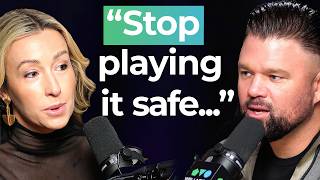
Interview (podcast/video) between Josh Trent and Busy Gold discussing brain pattern mapping, self-deception, emotional regulation, parenting, vulnerability, pattern opposition, and societal/technological threats (AI, CERN). Busy Gold describes mapping over 15,000 brain patterns, a nine-marker diagnostic used in Break Method, and explains a left–right brain-pattern spectrum with a center 'circle of complacency.' The conversation covers practical rewiring steps (pattern opposition, language-based interventions), parenting examples, pitfalls of 'good vibes only' culture, willpower limits, and ethical cautions about AI integration. Busy Gold's book (preorder) and Break Method diagnostic (~20 minutes) are promoted.
Chapters
The mind is a filthy liar. What is the biggest lie that we have all believed to be true?
We've forgotten who we are in part because of big pharma, big academia, big agriculture. The whole world wants to keep us from knowing who we are and what we're capable of.
Busy Gold is a mental health innovator, founder of Break Method, and is a brain pattern mapping and behavior expert.
I've mapped over 15,000 brain patterns. The brain pattern types that report the lowest quality of life are the ones who are innately pleasure seeking.
How so?
Self deception is the fuel for everything negative that we experience in our life. Every loop that we get stuck in, every pain and conflict that we have in a relationship. It's all a byproduct of self deception. And every person's brain pattern type has a unique set of self deceptive tendencies. The brain is in this kind of closed loop feedback system. And right now it's not seeing the error. It really believes it's keeping you safe. So it doesn't realize consciously it's destroying you really.
Once the map gives them the guidance point, what do the steps look like to unwind that. Busy. So the mind is a filthy liar. What is the biggest lie that we have all believed to be true on.
A level of humanity, the level that I think is going to resonate with everybody listening. We've forgotten who we are and it shows up like an amnesia state where our whole world is built to deceive us into thinking that we're maybe these lowly broken creatures that need a savior, that need to reach for some sort of AI upgrade so that we can be better. But the biggest lie is that we are powerful spiritual beings that haven't even tapped the surface of what we're really capable of. In part because of big pharma, big academia, big agriculture. The whole world wants to keep us from knowing who we are and what we're capable of.
Do you feel, do you have a sense with your journey and everything that you know from teaching and writing this book? By the way, y', all, if you're watching this on Spotify and YouTube, this book will change your life because you get to learn how your brain is a liar, but not necessarily from a negative place. It's just calling out truth for truth. Many of the things we believe are from stories. And I think you were like 11 or 13 years old and you're in a movie theater and you're watching Fight Club and this movie. You said at the time I was living in a boarding school, a refuge Far from my chaotic home life, it was the first time I'd experienced anything resembling peace. Why? I don't see Fight Club as a peaceful movie, personally. Why did that bring peace to you at that time? This movie, this story?
So living at this boarding school actually was what brought peace. Because I was finally not in my home life, so. So I had moved to boarding school. I was about 13 years old and I had been at boarding school for about two and a half months. And I was just starting to let my nervous system reset. I didn't have to deal with my parents putting me in the middle, didn't have to deal with navigating the relationship with my sister. And I finally just got to be separated, have some sovereignty with my peers, with teachers that didn't target me. I didn't feel like I was constantly, you know, the target of some sort of discipline technique or anger outburst. So I just really got to reset and be at peace. And it just so happens in the book I talk about how I was going to a boarding school in Colorado. It was like a very outdoorsy, nature based boarding school for competitive skiers and snowboarders. And I started school when I was 13. I skipped eighth grade, so I was really young and probably pretty impressionable. And some older kids decided that it was a good idea to try to get me to do mushrooms. So if you looked at the story a little bit deeper, I do mushrooms, then have this huge awakening. Because doing mushrooms for the first time, especially at 13.
Yeah.
It's gonna kind of rock your socks off.
Yeah.
And then a week later, the movie Fight Club comes out. So I don't know if you. Have you done mushrooms before?
Yes. Not with Fight Club, but mushrooms. Yeah.
So. But I don't know if you remember this moment, but I remember vividly when, when I came down from psilocybin mushrooms for the first time, I had an acute awareness that I was no longer seeing the world the same way anymore. I had. My perspective had shifted too much, my paradigm had shifted too much. And it was challenging actually for me to regulate and feel normal. Like I kept having to tell myself, act normal, act normal, act normal. You know, I'd be in the classroom, I'm like, busy. Are you acting normal? I'd be like, have all of a sudden had this inner monologue making sure I was being cool. Then the movie Fight Club comes out and I'm sitting in the movie and. You've seen the movie? Yes. So, you know, at the very last scene where all these buildings are blowing up and there's this realization that obviously Brad Pitt, Ed Norton, they're one person. And it was the first time in my life that it ever occurred to me that a person who was struggling with mental illness might not know it. And that melted my brain. It melted my brain for years. And it actually started me off on this journey of trying to understand how we can be in such deep self deception that we can't see behaviors that people could observe in us from the outside world.
It's really easy to point out the faults of others. And I remember before we recorded, you were talking about Kelly Brogan and how you're part of this conspiratorial circle where you were thrown under the bus. And I think all truth in the beginning goes through that three stage model of not being accepted at all than hitting the tipping point of the truth being kind of accepted and then the truth being accepted as total truth. And I find it so fascinating because many of the things that you've gone through in the limelight are because you're hitting up against what Kelly Rogan calls the healing spiral, where there's a contraction and then an expansion in that contraction phase. I think anybody that has anything good to say about healing the human at its root, not just topical bullshit, they're always going to go through some kind of condemnation. How did you bounce back from that to write this book and not get caught in your own bullshit of not being enough?
Thankfully for me, I'd already had a previous cancellation attempt before that one happened, so I already felt pretty strengthened in my ability to continue to do my work. And I think this is where purpose and your spiritual connection have to be at the forefront. I was so focused on what I was doing that there was a mission behind what I was doing. That to me, any backlash or any sort of mainstream media, negative press, it didn't even feel relevant. It hurt. And it hurt that somebody could try to say something that was so blatantly a lie and try to twist your words. But at the same time I just knew that I was being led by something bigger than myself and that somehow I would be covered and my dignity would be restored. So I just kept going. And I do think to some extent in my life, I do just keep going. It's. It's who I am. It's who my brain pattern dictates that I am. So I'm just. I'm not a person that's likely to take things personally or, you know, honestly, even if someone is trying to hurt me, I'm very unlikely to take it seriously to heart. I understand too much about human behavior and behavior patterns where even if someone is actively trying to stand against me, I typically still have empathy for the state that they're currently in and honestly still usually desire to forgive them or help them.
So if there's somebody with like a big belly late at night on YouTube with Cheeto Flakes on their hands typing, I hate busy, you can see behind the veil of their behavior. In other words, I feel like. And I wonder how you feel because it seems like this is baked into the book and also all your work. There's always a cover presentation of what someone's ego wants to be. The complaint. In other words, there's always a cover emotion or a cover story. It's always deeper. The actual pain, the actual, I guess you could say self hatred or just any, any emotion that's compressive that keeps us in survival, but it comes out. If somebody's in traffic and they flip someone off, it's not because they're really angry at that person. It's because their unconscious is holding so much grief and anguish and just lament about their life that it comes through in these moments where that pressure just wants to be expressed. What do you make of that?
In my work I talk about how human beings have a three part emotional addiction cycle. So we all start with fear. I've found that about 70% of the population starts with just base fear without a specific assumption of stimulus attached to it. So just general anticipation and feeling that something could be off. The other 30%, it's fear of shame. So their fear state has an assumption that they will somehow be shamed by whatever is coming. So whatever's lurking around the corner will also give them that tandem fear and shame hit. We then move into our protective emotion. Our protective emotion is going to split about 60, 40. So we've got those that split into anger as a protective emotion and then those who split into anxiety as a protective emotion. If you were to think about it in kind of fight, flight, fawn, freeze response, obviously your anxiety, you're gonna have the fawn and the freeze. And then your anger response, you're gonna have the flight and the fight. And then there's also flop. Flop is, I think anxiety apathy. In the work that I do, flop is something that people don't really talk about as much.
Yeah, I've never heard this.
So yeah, flop is, is considered to be when you're basically just dissociated and checked out. So you're, you're not. When you're in freeze. You're overthinking and you're overanalyzing. Flop is essentially low affect, like catatonia where you're, you're just blank, just complete, complete, complete apathy, just blank. There's no, you're not thinking, you're not trying to save yourself, right? The other ones you're actually trying to save yourself flop. I see as being that kind of tandem again anxiety apathy state where perhaps in previous cycles you have overthought and then eventually your brain just kind of taps out and it pendulum swings you to flop. Which is, we don't have any more bandwidth for this so we're just going to power down the computer and that is, it's actually relatively uncommon. I think a lot of people throw out around the word apathy that don't actually experience true apathy. In the brain pattern mapping that we do, we have a variety of markers that we're looking for and we have nine markers total that you get with brain pattern mapping and, and it will show you whether you truly experience apathy or not. But we usually see apathy as a tag along emotion. That's not something that's your only go to. It's something that happens after prolonged states where your brain needs a reset.
So in a way it almost seems like a protective mechanism for the nervous system, AKA the unconscious to survive.
It is.
How so?
When people go into heightened states and if you think about it, right, if you were to go run a marathon right now, what would you do in the marathon?
First of all, I wouldn't run the marathon.
Just not my day.
Neither would I. I'm good with the marathon.
I don't even like running.
Yeah, okay, but let's say I did.
Let's say you did. What would you do when it was over? Would you, would you go run more?
No, I would go sit in a cold tub.
Right. So you, you do something that allows opposition. Right. If I was heightened and I was in hyperarousal, I need to do something that's going to settle me down because I need rest. Our brain and body and our energetic system, if we're constantly spiking into overactivity, our brain is going to prompt us to do something opposite to reset. A large part of my work is helping people recalibrate back to center so that their brain, body and emotional state doesn't constantly have to pendulum swing. Because that's essentially what we do is if we're operating in pattern, eventually our pattern will swing us the other way. Just try to come Back to center. But really we're passing through center randomly. But we could actually just live there. And that's what I teach in my work, is how to help people determine where their brain pattern places them on the spectrum and what sorts of pattern opposition and thought hacks would need to happen for you to come back to center.
Pattern opposition meaning what exactly?
Our brain pattern, when it functions, it makes us act out of preference. I like this. I don't like this. Right? Even you, with the mana goal that you shared with me this morning. I went to acupuncture school. I used to spend tons of time in the herbal pharmacy eating literal raw herbs. So when people are like, oh, this is like, earthy, salty, or whatever, I'm like, hold my beer. I love that taste because I used to eat raw herbs all the time. So what? Somebody else might take that and have this, like, you know, kind of repulsion experience where they want to chase it down with water. But to me, it's familiar. I like it. I'm like, yeah, right. Immediately, memories start flowing. Our brain will tell us what we like and don't like. But let's go back to this example of medicine. Let's say somebody tastes this and they're repulsed. Does that mean that they don't need it? Or do you think that everybody needs mono gold?
I think everybody needs it.
So just because this person is repulsed and they're like, that's disgusting. I don't ever want to do that again. Is that a sign that they should never do it again? No, their body needs it. So in reality, the way our brain pattern will distort our perception is that we like to repeat the things that we like, and we decide, this makes me feel safe or this makes me feel unsafe. So we keep constraining our possibilities and our choices, and it gets us locked in a very restrictive loop. Pattern opposition is when we understand exactly what our brain pattern sets up as a pattern of self deception, repetitive thoughts, how we tend to assume in a very patterned way about our environment so that we can actually establish how we have to do things very precisely, differently. Because it's not just randomly opposite, Right? Like, that goes back to this pendulum swing. There's a very specific opposition for whether it's a thought or a behavior or preference. And you have to do it incrementally, and you have to do it in a very consistent fashion to get the brain to rewire. Where all of a sudden we realized, oh, I actually do like this now. But we didn't have to do it through Willpower. We didn't have to do it through force. We do it through dismantling language architectures in the brain.
Yeah, and we're going to go so deep into language because I know you studied a lot about the power of word. I mean, it's baked into the book. You know, it's funny, like, people forget words are spells. So our parents, you know, God loved them. They get infused with epigenetic trauma and generational trauma where they say things like, we're the Smiths. We're. We're just alcoholics. That's just who we are. But they don't realize that the brain of a child is so malleable. And the neuroplasticity that's happening is like, they're like a rose. They're like a fucking rose. So anything that's said to these children will literally be baked in. And one of the things we talk about, self deception that I love in the book and that I just. We've got to go deep into this. This is this whole good vibes only culture where you see these women after Lululemon and yoga and it says, good vibes only, girl. If it's not positive, I don't do it. I think that is probably. I wonder how you feel like one of the highest levels of self deception and spiritual narcissism to lead your life with a motto that says good vibes only. What's the price that's paid when people use that as a motto? Good vibes only. And how is that self deception?
It's self deception because that is not actually how human beings were created. And I think, you know, not to be divisive, but let's look at the example of Jesus, and I love the example of Jesus here because Jesus actually was a perfect example of self control and peace at all times. So if you look at the story of Jesus, he never really has highs or lows. He's always just very much operating at baseline. So he's able to speak and flow from Holy Spirit because he's not operating in his emotional wounds. He's not lashing out at people angry. He's able to speak harsh truths, but he's not. He's very extremely regulated. So if we think about something like this, if Jesus, which in. In my paradigm, I think he is the example to strive for if he is not in highs or lows. And we know that that is, in my understanding, that is one of the ways that we are not able to be fed upon by demons and entities because they like our high and low emotions. This whole like good vibes only culture where people are just trying to seek out pleasure and happiness is a setup. That's actually not how we're, we're not wired to be chasing pleasure all the time. And in fact, the, the people that I've mapped over 15,000 brain patterns, the brain pattern types that report the lowest quality of life are the ones who are innately pleasure seeking because they're never going to have enough. It will never be as good in the physical as it was in their idealizing state. It just never will, won't ever match up. But those of us who enjoy the struggle, we're present in the struggle, we like to be strategic. And I know for myself, when I'm faced with a bad situation or I'm in fear, my incredible creative side comes out. I'm able to think strategically. I actually become very calm and very centered when I'm in fear. Not everybody has a fear expression like that, but I'm able to find stillness and peace in the chaos and start to organize. And I think that is a byproduct of self control. So when we think about this like pleasure seeking, good vibes only culture, it does a few things that are really harmful. Number one, for everybody who's struggling, they then are going to feel even more like a failure because they're going to look at all these examples on social media and be like, well, obviously I'm doing something wrong. Because look at their lives when, let's be honest, it's a bullshit facade. Their lives are not like that. They're able to curate or craft these little facades for social media and have these little clips, these little moments that make it look perfect, but they're all probably struggling inside in a very similar way. So that's one of the things that I think it creates this division of like, obviously I'm a failure and I'm doing something wrong because look at all these social media influencers. But also, we can grow so much through pain and hurt. And if you have somebody tricked into thinking I need to deny this pain and hurt because I need to just choose to be positive, you end up missing the lesson. You end up missing being present in the pain. And I think presence in the pain is the thing that helps us grow by far and away the most. In this whole life, the only time.
In my life I've ever been afforded wisdom, you know, to quote Napoleon Hill in Outwitting the Devil, has been through time and the seeking of wisdom through the vehicle of pain. That's the Only time like this has been 10 years of podcasting. The greatest gifts have always come through, like almost financial ruin or almost breaking up or losing friends that I thought I was going to have my whole life. And like you said, it's this maturity set point. It's almost like there's an arrested development that happens when somebody resists the pain as a teacher and focuses on good vibes. Only this term arrested development, for me, it's not just that rap band from back in the day. It's a real thing. Can you explain that a little bit? Literally, the arresting or the stopping of someone's maturity process when they either don't know, they don't know that pain is a teacher and a gift, or when they know and they on purpose turn their cheek to it.
I see this as actually splitting in terms of brain pattern types. So perhaps it makes sense for me to explain the brain pattern spectrum so that I can explain where these people, I think, sit. Because I think more often it's how their brains were created during the childhood environment that we will decide who does what. So example would be from everything I know of you. You are probably more similar to me in terms of our positioning on the brain pattern spectrum. And I've never shied away from pain or struggle, and I've probably invited some of that into my life as a result. That's honest, you know, because sometimes if you're good, if you perceive yourself to be good at kind of organizing and strategizing in chaos, you probably surround yourself with pretty chaotic people. And I know that was a corner that I had to turn in the last five years of my life. You know, you can't fix everybody. It's not your job to fix everybody's chaos or to be the glue.
Yeah.
So that took me, you know, roughly 35 years to figure that one out. But if you think about these people that have this arrested development, this process actually happens. It starts between the ages of 2 and 4, and ironically, and I know this is usually a really hard pill for some people to swallow, so I'm sorry in advance, and I will make sure that I add in some bits of things that you can do to counteract it. But what I've seen is that when parents stay married and they coddle their child and they make their child feel individually like they are the center of their universe and they can do no wrong. And you celebrate mediocrity and you tell everybody that you're always a winner in my eyes. And you don't discipline properly. You don't create the proper structures. That child grows up to believe that they are the center of the universe and that their effort is good enough. But then they get out into the world and they realize, hmm, this is not working for me. But instead of a moment of self reflection where they sit and think, maybe I'm not doing enough, maybe I suck, maybe I actually haven't learned these skills and how to bolster myself to actually be competitive, instead, what do they do? It's everybody else. I'm now the victim. You're doing this to me. Because their brain pattern actually did get arrested in childhood. They are a 35 year old toddler still. And we see this more often than not. And it's extremely prevalent in US Culture. When life is not hard, right? We think about, think about growing up in like the middle of nowhere Russia versus the United States. Do you think your quality of life might be like a little grittier and tougher in the middle of nowhere in Russia, we are going to be a byproduct of our environment. So if our environment requires grit and emotional resilience and toughness, and for us to realize I'm not the center of the universe and I actually have to be a part, I've got to be a cog in the clock of humanity because we all have to do our part to survive. You grow up to see the world differently and you embrace challenge, you embrace struggle, because that's what you know, your byproduct of that environment. But when things are too easy, when things are too calm and too stable and you don't have to learn to emotionally regulate, you know, you're allowed to just have whatever you want to make yourself feel safe, right? You, you scream and your parents are like, fine, just take it or not having your child get rid of their blankie until they're like 12, like that leaves a mark. It creates attachment issues where a child learns, I can only regulate with this cup. And if you take my cup away, then you're the bad guy, you're the oppressor, right? And if you take my cup away because you're like, you know, I really think you can do life without this cup. You feel victimized by the person that's trying to tell you, I think you can handle life without the cup. But that's their blankie, that's their security. So when you talk about this arrested development, it's really a, a brain pattern position that that child was already kind of maintaining that toddler selfish perspective of the world and no one ever opposed it. And Patterned it out of them.
You know what's funny? The pacifier that I see a lot of kids use. I used to think there's a lot of things that have been shattered in my belief system, which is a good thing. I used to think that the pacifier wasn't a big deal. And then I actually looked into the research, and we had a friend here in Austin that their child had a pacifier, like 24, 7, just. And if you think about what that is, it's literally sedating voice. So it's having this plastic that's affectionate, but it's pseudo affection, because real affection comes from a mother, right? From a breast, from a body. And this child ended up having delayed speech. You know, go figure. And I wonder, that's a metaphor for like, what are the ways that we as children get pacified? Whether it's a pacifier or not, that actually sedates our innate ability to learn early challenges that then extrapolates into big challenges. What do you make of that?
I like to use this example of my daughter Harley. I think we were talking about this when I first got here, that I had back to back children recently. So I have a three and four year old, and they're less than a year apart, which ended up, I think, having a really positive effect on both of them. When river was about maybe five to six months, you know, where they're still kind of like hipster babies, they kind of. They're like starting to crawl around, but they really want to be held a lot. So river was in that stage. He was my youngest. And then Harley was starting to climb all over things. Okay, so in this scenario, we had one of those wooden play kitchens where it's like a pretty beefy wooden play kitchen, not like the little dinky play school ones. And I see that she's climbing up on top of it, and I'm like, okay, we're gonna watch how this goes. And I see that she's gotten all the way to the top. And, you know, I'm aware enough that she's gonna have trouble getting down. As a parent, what would you do in this scenario? What would your thoughts, what would your thought process?
I would walk closer. I wouldn't grab them. I would just walk close.
So in this moment, I realized this is a major teaching opportunity. A lot of parents listening, their instinct might be, watch out, be careful, or to go reach and grab their kid off the thing or even yell at them, what are you doing up there? None of this to shame anyone. These are all very instinctive responses. I'm watching and I go a little bit closer. I'm holding river and I see that she's looking around like, mommy, mommy. Because she realizes, how am I going to get down? I'm up way too high. So she reaches to me and wants me to pick her up. And I just say, harley, you got yourself up there. I'm pretty sure you can get yourself down. And she looks around and I was like, where are your feet? She looks down, she's like, here are my feet. I'm like, do you see a spot where you could put a foot? She starts thinking about it, she puts foot down. She's still looking at me like, mama, mama. And I was like, you got this, you're gonna be fine. Look at your other foot. What about your hand? Right where you're just asking them questions so they can think through the process. Yeah, where is my foot? Where is my hand? And at a certain point she realizes I've got this and she stops looking for me. She gets herself down. This is an opportunity in a safe, loving, protected way. Even if she fell down, she was going to fall on a carpet. We were going to be fine. Right? It was a calculated risk that I was willing to take to help my daughter grow her self efficacy, to build independence and to work through fear. Build a little of emotional resilience. Because a lot of parents, you just grab the kid and be like, oh, come down. I don't want you to get hurt. I don't want you to get hurt. Think about how many opportunities you have like that in a day with a toddler, all day long.
So many, so many, so many.
So from the break method perspective, we focus a lot on parenting because all of these very specific small moments, how you handle each one of these is what's going to pattern your child's brain. So you're going to pattern them to believe in themselves and to have self efficacy and to be brave and, and to build emotional resilience. Or you're not. You're going to rescue your child. You're going to pacify them. You're going to try to make sure everything seems like it's not their fault. When my daughter lies, because toddlers lie sometimes, I don't sit there and go, harley Rose, you're lying. I'll say, hey, I think I just watched that. Did you, did you see this? And I'll say, what I shared as the perspective. And she's like, no, that didn't happen. And I'll say, okay, talk me through your thought process. So I'm helping her kind of talk through it and how she got to such a starkly contrasted perspective. And then eventually it'll be like, well, but you were giving river more attention. I'm like, you don't have to. You don't have to make something up for me to give you attention. You could just come say, mommy, I need a little bit more love from you right now. And I would have been like, okay, Harley, come here. So helping a child navigate through those things instead of just treating your child as if they're doing no wrong. Oh, they're just three. They don't know that they're telling a lie. They do. They do.
They're so smart.
They're so smart.
They're so intelligent.
Sometimes when Harley will get kind of pushy with boundaries, I've even gotten her to a place where I'll ask her, like, what is the voice telling you in your head? She's like, it's telling me that I should be mean to you and Daddy. And that doesn't sound right. I'm like, do you think maybe we don't want to listen to that voice? And she's like, yeah, we don't want to listen to that voice. Right. Because little kids need to learn how to listen and observe their thoughts and realize that not all of those thoughts have good intentions and that they don't all need to be acted on. Just because I think, it doesn't mean that it's true and that it should have action taken.
It's so good. And plus, like, not all the thoughts that we think are actually ours. We just had an episode come out, I think, yesterday with Mark Gober. He wrote a book called the End of Upside Down Thinking. And he went super deep into both the science and he's part of the Noetic Institute for. For science, where they talk about duality and singularity. In his thought process, I wonder what yours is. There's collective thought, and then there's thought that we think is ours. But it's all an amalgamation of whatever we've learned. In other words, up to this point, everything we've been fed is allowing us to have the capacity to think bigger, think differently, yet it's still a product of the collective thought that we've absorbed over time. And I wonder, like, even with your daughter, you know, you're catching her now, so it's beautiful. I mean, like, if every mom was talking to their daughter like that with these questions, the world would be a very different place.
Agree.
It'd be an amazing place. But many people listening, watching, are maybe hearing these concepts for the first time. And they're like, I'm 44, busy. I'm not a kid anymore. My parents didn't know that. They didn't know. How do you reconcile in your teachings the collective thought infusion that we've been indoctrinated by versus the capacity for us to think for ourselves?
I might have a different working definition of collective thought, so I'll speak to it. From how I see it. If we go foundational steps, the child comes into the world innocent, curious, wanting to understand its environment, and through curiosity, running science experiments to understand how things work or where I fit into how this works. So running those experiments creates formulas. Those formulas are like putting on a lens of glass of how we see the world. And when we do that for so many years, we stop realizing that we're wearing glasses at all. We just think, this is reality. This is what I see from that perspective of putting on that lens of glass. That's how I see a brain pattern operating. So a brain pattern is going to dictate how you and I were to go into a scenario, what, what each of us would see. If I know somebody's brain pattern type, I can predict with a high level of accuracy how this person would see this different from this person, or how this person would label this different from this person. So our brain pattern is that set point through which we then experience collective knowledge. And I think this is really important because some of us have a higher level of discernment and filtration that's inherent in the brain pattern where others don't. So if we look at the brain pattern spectrum, there are two halves. There's a left side and a right side. The left side are gonna be all the abandonment oriented patterns and the right side are gonna be all the rejection oriented patterns. As a child moves through life, we have different lessons that we have to learn. If we come in this innocent, curious, unjaded child that just wants to be loved and feel safe, they're not going to have anything to compare and contrast to. So every negative look, every lash out verbally that they hear from a parent is going to feel intensely traumatizing and scary because they can't yet say, oh well, that's not as bad as this time. They don't have that ability to compare and contrast yet. Everything feels like the deepest, hardest wound that they've ever experienced. So when we talk about childhood trauma, every single one of us has childhood trauma. And it doesn't need to fit Some sort of guideposts that we would think of in kind of a more modern mental health sense. Because we're this soft little spirit filled creature. Anything negative is going to feel traumatizing, especially in the earliest years. So those sort of early childhood trauma imprints start to shape who we become and how we see the world. So that will be a byproduct of our repetitive early childhood adversely perceived experiences. So we have to perceive it as negative, but it also has to be repetitive. And I think this is something that I see people miss quite a bit is, you know, people that are doing emotional work, they will decide I'm this way because. And they have their because story because my dad left because I got molested. And more often than not they're talking about singular events, right? Singular traumatic events. Like this one time this happened. The reality is that our brain is actually formulated and shaped by the repetitive events, not the one time events. So the one time that maybe mom and dad got into a horrific physical fight and then dad left when I was seven, my brain pattern would have already been formed by then. So I need to understand what lens of glass I have in because that would have been how I perceived the seven year old trauma. So without understanding the brain pattern that preceded it, we can't even really understand that story or that memory accurately because we saw that as a seven year old through distortion. So to go back and kind of get to that data, that truth, we have to know how to reverse engineer it. And that reverse engineering process is ultimately what we do in break method is really understanding how am I seeing the world through distortion and how can I learn to take that off so that I can see things more as they are more objectively? Because as you can imagine when you do that, collaboration becomes very easy to do because I no longer see your perspective that's different from mine, as oppositional to mine. I understand how it's possible. And it would be like, imagine a physical map, right? Like a topographical map. If I know where you are on the map and I know where I am on the map, now we know how to get to each other. Most people don't know where they are and I don't know where you are. So how are we ever going to walk toward each other on the map if we don't know where we are?
Yeah, you have firsthand experience in this. I think in the book you said as a child you were all about managing other people's emotions at some point. What age was that for you, where you learned, oh, this is a strategy where I can manage other people so that I feel safe. Do you remember when that was?
It started very early. I was always placed in this role of peacekeeper, mediator, keep people happy with jokes and the. Then of course your familial situations start to pile on, right then my parents do split up and they do utilize me in the middle to pass messages back and forth to try to hurt each other, with me always in the middle. And it was just my nature to try to shield my little sister from it. So my little sister as a byproduct, has a very different brain pattern than I do. I shielded her and my parents. We're much more likely to placate her or coddle her because she's the baby. She's the baby. And this happens honestly a lot to the second born. Especially if, if babies are close, like you try to overdo it and over compensate for the other one. Like we don't want to make them feel bad. And typically in that over compensation, you actually set your kid up for a negative outcome rather than a positive outcome.
So when you went deep into yourself and obviously you can't teach what you yourself haven't been through, I mean, that's the beautiful thing about adversity. You actually could become such a powerful teacher if you really go into the depth of the adversity. What did you learn the most out of that pattern that you used to exhibit? And how did that learning really shape the mapping and the technology that you're using now? There's a gift there.
I've been skilled at pattern recognition my whole life, and it is something that is a byproduct of the brain pattern type that I have on the spectrum. So let's look at the spectrum divided into those left and right halves. Because I think it's important for people to kind of give themselves a reference point. Like we were talking about the map. It's kind of hard to talk about something conceptually I'd rather people know, where are we? Let's all locate each other on the map. So if you start in the middle of the spectrum and you were to hash it out, let's say 20 clicks to the left, every step that you take to the left, your self trust is going up. Your situational awareness is also going up. So every step you go to the left, you're more acutely aware of what's happening around you. So you're very aware of your surroundings and you trust yourself more. One of the byproducts of self trust is going to be hyper independence. If I trust myself but not other, I'm more likely to do things on my own, right? Look to myself first. We also see as you start to hash out to that left side, people become more career and purpose driven. And career and purpose driven typically means that relational conflict can be very high. If we're very driven by something outside and we've got this like purpose and drive and we're willing to push ourselves be very committed, that is typically antagonistic to intimate relationships. Right? Because the other person wants to be chosen, they want to be the priority. So there already is inherently this split where the left side tends to be very career driven and let's be honest, tends more toward workaholism as the way to make themselves feel centered. Another thing that can happen, as you can imagine, if you go all the way out to the left, if you have the highest level of self trust and you are extremely situationally aware, what is something that you think could happen to you? Hyper control, you become more controlling. But at the very far left side, you can become paranoid because you don't know you're taking in so much information at a high level from your environment and you trust everything that you've noticed. So you can't separate out what to take action on or not anymore. So as you move out to that left side, you become more controlling and eventually you get to a place where you start to become paranoid. Now let's go back to the center. Fan out to the right, because the opposite things are true here. So as you start to hash out to the right, your self trust goes down, your situational awareness goes down, but your focus on relational inputs goes up. So you start to become fixated on what others are thinking about you, which is of course a projection. We don't know that. I'm not in your head. I can make a good assumption or a hypothesis of what I think you're thinking about me. But I'll never be a hundred percent accurate. And most people are like 1% accurate, right? Because it's typically a projection of their own insecurity. So the people that are on this right side of the spectrum become more and more fixated on what the world thinks about them and what others are thinking and feeling. So as you can imagine, kind of going back to this example of kind of collective knowledge, the people to the right are very likely to be reaching outside of themselves to learn. What am I missing? What do I. Right, because they're putting everyone other than themselves up on this hypothetical pedestal of knowing more than they do. And their discernment is typically very low because they don't trust themselves and they're immediately giving away that authority and agency to other the people on the left. I believe that human beings have the ability to grab information off of like the multi dimensional Internet, right? Like it doesn't have to exist in a book for us to learn it and know it. Right? That's on that kind of like collective consciousness level. The people on the left are very likely, if they're able to heal emotionally, to pull those files off the Internet left and right. That's where intuition can really take root because the self trust is there. And if they can heal just enough emotionally, that intuitive hit or that contact with the multidimensional Internet can start to come through. And you're pulling knowledge that transcends the physical world. But if you're on the right side, you're really leaning into knowledge of the world. You're looking for the expert and maybe not the, the spiritual expert, but you have to have the credentials, you have to have the letters behind your name, right? Everything is very of the world and very restrictive. So these two groups of people operate in the world together all the time and they frequently end up in relationships together. That's one of the phenomenons that I've experienced over the course of my career that I call symbiotic dysfunction. As you can imagine, these two different types of people, they see the world very differently and they take very different actions based on whatever they think they're perceiving. And this is essentially the birthplace of toxicity.
Yes, but also the potential to heal, whether it's through the imago or whether through your teachings like you just basically described an aspect of Kerry, Michelle and I for sure, because I am very on the logical. Let me gather the facts, let me drive. Let me at least let me live my purpose. And as I've really gotten into living my purpose, I'm walking, to use your nomenclature clicks, to the center. And it's been this big process of just remembering, like you talked about people like myself who gather information. We're really good at pulling from the metaphysical and the Internet. Really we're just looking for what already rings true for our soul anyways. We're looking for that homeostatic midpoint where we're like, oh yeah, I already knew that there's some part of my being or my soul that already knew the truth, but I just needed to gather it in some logical fashion because I'm so not on the right. I'm so not worried about what other people think of me. And I feel like we. We go back and forth in this. I, at least I do back and forth, right and left. We're all just looking for this center point of, like, a peaceful intuition that guides us. How exactly does that manifest for somebody? And what are some of the tools in your books and in your teachings to give us that really center right. This is the peaceful warrior. It's talked about in the dao. That's the whole point. I think of Imago or even Hendrik's work to get people to the center where they trust their intuition, where they trust themselves, and they don't have to be caught. So far right, so far left. You know, how do we get to the center in this?
What I found to be interesting is there are people whose brain pattern naturally places them toward the center.
Good for them.
And on the brain pattern spectrum, you would think, but here's why that's not a good thing. So the center of the spectrum, and I will make sure I give you a visual so that your listeners and viewers can take a look at it. So there's a center circle, and I call it the circle of complacency. What ends up happening is that when your childhood places your brain pattern here, you tend to take very little risk. You like things to be buttoned up and very repetitive. Very little risk, very little reward. Your life is complacent and mundane and repetitive, and you like it the way you like it. So in essence, instead of it truly being peace, it's boredom and complacency. Now, for those of us on the left and right sides, when we are doing our pattern opposition work, we are trying to move ourselves toward midline right. We're trying to move ourselves toward peace. So when the people on the left and the right are intentionally opposing their patterns, very specifically, we're building the ability to be dynamic and have range, right? Because we're never supposed to react to everything the same way. But ultimately, as human beings, we do. We get locked in these loops. So as we're doing our pattern opposition work, we're able to have this dynamic range. Oh, this situation requires me to be here. This situation requires me to be here. We're moving towards center because for us, that will be peace and stability. When I work with clients who are naturally in that center circle of complacency, their pattern opposition work, honestly, is to mix things up more and to be more spontaneous, to take more risks. So they're actually learning to build dynamic range outside of center. Because then when they come back to center. How are they going to experience it then? Then they will experience peace because they've tried something else. They've opposed their pattern. They've mixed it up. They've learned to get themselves out of what feels safe and repetitive. So ultimately we all have to build that dynamic range. We're not supposed to do everything in this lock fixed perspective. And when we can do that, we can meet everybody where they are. We can all collaborate. We can have empathy for someone who's actively trying to destroy us because we understand who they are and how they could be seeing the world that way.
Plus, whenever we're, I guess you could say too far off center, God will bring unique challenges to push us back to center. Even if center is the place where we always operate in complacency. So I'll go back to that question that I asked you. Like when you were young and you learned to protect your sister and really to be almost like a quasi therapist. It sounded like, in a way. Can you look back on that version of yourself and simplistically describe how you moved from that identity to this new identity?
I don't think I moved to a new identity. I think I still am fundamentally that person. And I have to know how that person that I was patterned to be. I look at it as a constitutional pattern. When we understand what someone's brain pattern type is, that is their brain set point. And no matter how much work you do or I do, if I get sick, if I lose my job, if life throws me a curveball, my brain will try to pull me back to that state. Right. That is how my brain is going to behave when push comes to shove. So we can do all this work to rewire ourselves and to change how we engage with the world. And that'll hold for a long time. I can hold it for a long time. But. But again, you know, let's say I've got four kids at home, we just went through three and a half weeks of sickness. I had to work much harder to not go back to three year old busy. Because three year old busy, that is ultimately who I am. I can transcend that by doing the work. But that work can fly out the window pretty quickly when we're sick and we're tired and we're not. We're not on our A game.
Yeah.
Because it's like a default setting on your phone. Right. You know how you can restore your phone back to factory. Factory settings?
Sure.
That is our factory setting. So with consistency and work, you can transcend that for prolonged periods. But you could always go back there just as quick if you're not paying attention.
I'm thinking of so many things. Gosh, where do I want to take this? Okay, so deception. Deception is, I guess, most of the time, you know. Yes. And deception is typically a cover for someone's malevolent intent, would you say? Or how would you describe exactly what deception is? Not self deception, just deception in general.
Deception broadly, yes. Deception broadly, I think has the connotation of malevolence.
Yes.
And ultimately, even when we're talking about self deception, there is still a malevolent quality to it, though. Self deception can happen in both positive and negative forms. I think the easiest example to lean on for self deception is, I could look at a pile of laundry, and you could look at a pile of laundry, and I could look at it and be like, I just. I don't have time to fold that right now. I'll do it later. And somebody else's brain pattern type would be like, I can't look at this laundry in the dryer anymore. I'm going to fold it right now. Otherwise, I literally can't move on with the rest of my day. Two different brain pattern types. I could sit there naturally and ignore it for like a week while it bothered my husband. And I could just keep ignoring it and be like, oh, it'll be fine. Like, no one's going to die because there's laundry in the dryer. But somebody else could literally feel like their whole world is going to fall apart if they don't fold the laundry that's in the dryer. My brain pattern type will look at it and be like, I'll deal with it later. But I could say, I'll deal with it later for a week. What's gonna do? I have to get into a conflict, me, to be like, oh, I should fold that laundry? Like, does something have to go wrong for me to actually stop saying, I'll deal with it later? Self deception can sound really reasonable. Of course I can do it later. No one's technically gonna die if I don't fold the laundry. But would folding the laundry be a benefit to someone's life and my family? Or to me? Would it be a benefit for me to look around and see that things are neat and orderly? It could totally be a benefit. But because of my brain pattern type, it's not something that I feel like I need. It's not a preference, So I could just ignore it. But for somebody else, where it is a preference, where they do want cleanliness and order. It would drive them nuts.
I can totally relate to this. Cause like Keri Michelle will get home and It'll be like 10 days and I'm like, babe, you know your suitcase is in the middle of the room. Did you want to put it away? So I could so relate to that now. But what's interesting with self deception is that a lot of times I feel like self deception is actually procrastination or fear of someone's capacity to execute a task or what they might have to experience as far as pain or uncomfortableness by doing something. So how does procrastination weave its little self into self deception?
Self deception causes procrastination.
So you think the self deception is the fuel for it?
It's the fuel. I think self deception deception is the fuel for everything negative that we experience in our life. Every loop that we get stuck in, every pain and conflict that we have in a relationship. It's all a byproduct of self deception. And every person's brain pattern type has a unique set of self deceptive tendencies. So if I know your brain pattern type, I can say, hey, these are your self deceptive tendencies. And if you look at them you'd be like, holy shit, down the list. And you're like, okay, I see it now. And then once you see it, you can't unsee it because you realize someone has just detailed your hit list of rationalizations and justifications. Excuses that sound really reasonable. Yeah, because of course they sound reasonable. And here's a great example because I love that you brought this up in my. If I'm not doing my work, I could let my suitcase sit there packed for two weeks because it's more efficient. I have to go on another trip in two weeks and just leave it in the middle of the floor. But, and I, my husband and I do this work together all the time and I got this feedback right before I came to this trip because I've had to travel so much and my schedule's been a little bit more an upheaval and my husband has to be like the stand up, epic guy that holds down the Ford at home. I have gone above and beyond to be on top of my A game with pattern opposition. So like every night before I go to bed, my closet is immaculate. I make the bed every single morning. I'm so on top of the things that I typically would could let slip, including as soon as I get home, even if I'm exhausted and it's one o' clock in the Morning, I unpack my suitcase, and I wheel my suitcase down to the garage. Doesn't matter if I'm leaving two days later. It allows peace and balance to be in the house. And it's not something that I feel like I need, but it benefits my husband so much. And if it benefits my husband, it benefits me. So intentionally doing the things that we don't want or we don't feel like we need for the good of the collective. That's where serious magic happens.
But it comes from the map. I love the map. I mean, everything that I teach and that I learn, I'm like, give me the map. Right? And I don't know if you could say, that's my left side talking. Or it's like, give me the guide or give me the five things that can take me from A to B. But a lot of times there's this, like, forcing that I've noticed in my life of willpower. And I think a lot of people can relate to this, y'. All. So, like, if you've ever struggled with willpower and then the shame spiral that happens when you can't lean on willpower as a lever, Give us the truth here. Right. Because willpower is ineffective. And you talk about this in your book like, yes, it's great to have willpower. It's actually like a good tool, but it's just one tool in the belt. I think so many people in behavior change lean on willpower as, like, especially in CBT therapy, they lean on it as if it's this golden ticket for behavior change, and it's just not. Can you extrapolate that?
Willpower means that you have the ability to consciously choose, so that's not necessarily available for all people. You could learn something in a book and I could give you a test and you could get it 100% right. But when push comes to shove, if you're in a situation that's activating your subconscious, everything that you know in that book could easily go out the window.
Yeah.
And then you don't realize it until you face planted and you're like, shit, I knew not to do that. Why did I do that? Self deception. When you're in the moment and your subconscious is taking over, everything that you learned in a book could easily be outside of your awareness in that moment. We call this in my work an ACB pathway. So if everyone were to imagine a large circle of all the possibilities that you have available to you at all times. Right. Like, we have an infinite amount of things that we could technically do at all times. But our brain pattern will actually constrain the circle of thinking that we are aware of. So even though I could do anything, like I could think, throw this mug at your face, I'm not gonna do that because who would do that? But technically it's a choice I have. Right? Some other more unstable person might wanna do that. But I would look at it and say like, of course, why would. Like that's crazy thought. Everyone's brain pattern will limit what their perceived choices are in the moment. So you know, like, maybe take a sip from my cup, leave my cup alone, but throw the cup across the room, spill it on me. Those are things my brain's never going to think of because they're irrelevant. They don't match my goals in this moment. When we think about how we engage with our lives like this, we all have these constrained circles all over the place. In my relationship, I can't say that right now because it's going to upset them. I have to wait till a better time, right? Self deception. Do you have to wait for a better time? Do you have to hold it in? Can they really not handle it right now? Because I'm sure this has happened to many people who are listening right now in that moment where you're like, I can't say this without it upsetting them. Even if you really want to share it and you're aware of the truth, you know what the truth is, you have the desire to share it with them. But your brain also tells you they can't hear this right now, so you have to wait for a better time when eventually you tell that person what might happen on the receiving end.
I mean, that's a very multi contextual question. It depends on how they reference themselves in the relationship. I don't know, who am I talking to? Like just in a, in a heated moment, is it a conflictual moment?
So I think in this scenario there's typically a sense if you, if you hear something and you find out that they actually knew about this thing earlier, but they didn't tell you until a later time, what's the way that you might feel when you finally get the information?
Why didn't you tell me this earlier?
Do you. You might feel betrayed or like you were kind of like conned or stuck. Schemed. Yeah, you know, or like, what do you think of me that you couldn't tell me this sooner or you didn't.
Think I could handle this?
Or maybe it flips and they're like, you liar, you lied. Well, let's look at it this way. So people love the word stonewalling and I love to kind of show the other side of pop psychology terms. Somebody like this, the person on the receiving end, they might have felt like their partner was stonewalling them for days. Meanwhile their partner was like, God, I really want to tell them this thing, but just don't want them to freak out. If we understand how self deception works and we understand how our brain is making it such a. Like the argument for why I can't tell my partner right now is so clear, it feels so real, it's visceral. Well, because remember that one time I told them and then this happened and you know, I don't want to hurt them, but the reality is in that moment, if you can help somebody shift their perception of that circle, they realize, yes, it's scary for me to tell this person right now and they could freak out, but I'm more committed to standing in the truth right now than trying to manage somebody else's emotions. Right. That's for them. I'm actually robbing them of a lesson of learning how to manage their emotions by holding this back and not sharing it with them right now.
It's the most mature thing to do. Actually, it's the most loving thing to do yet. There's this, and I love how you talk about brain mapping. If somebody had like 20 years, or let's say 18 years of being raised in an environment where it was actually never safe to share legitimately, it wasn't safe because any complaint or any sharing might have constituted war or argument, there's an unraveling that gets to take place there. And I would say most of the time, unless you've been blessed with like a super aware mother, you know, or aware father or a spiritual teacher who happens be to to be your upbringer, it's just not the case. I would say more times than not, most people that grow up in families that are even into what we're talking about, that connect in their heart and soul to what we're talking about, they most likely, I'm generalizing, probably grew up in an environment where it wasn't safe to share. So then really, once the map gives them the guidance point, what do the steps look like to unwind that?
So interestingly enough, going back to that brain pattern spectrum split the people on the left, not all the way out to the far left side, but the majority of the left side felt like it wasn't safe to share and that they had to be strategic in how truth would come out or how they could manage a situation because their. Their brain's desire is to manage. On the right hand side, these are the people that don't really have a filter necessarily, and they say whatever's on their mind and they want to tell you about their feelings immediately. If they're hurt, they're telling you immediate. The reality is that this is this interplay. The people on the left typically hold back because they're afraid of the reaction of the people on the right that don't hold back. So each one of us, when we're doing this work, right, If I let's. I'll give this example kind of piggybacking on what we're just talking about. If I'm in a scenario with my husband, who, if I'm operating in my pattern and I'm not doing my work, I will withhold. I will tell a partial truth because I don't want to upset him or like, I don't want to upset him right before I leave on another trip, right? My brain will do this bargaining thing. And he does get upset, and he does, like, control, and he doesn't always have the best reactions to things that he doesn't want to hear. But if we're both doing our work, it's like both pushing our chips all in on a poker game. I'm like, hey, I'm. You're doing the work. I'm doing the work. I'm going to say this hard thing right now, knowing full well that I'm about to leave and this could be risky, but I'm going to. I'm going to bet on you and this situation, you. And when I do that, I push my chips in. He pushes his chips in. I'm honest and vulnerable, which is ultimately what I'm trying to avoid by withholding. Then he has a chance to meet me halfway and to say, okay, this sucks. I didn't want to hear this right now. But also, thank you for being honest and not withholding. And we now have this beautiful moment to come together before I leave on a trip rather than be divided and separated. So ultimately, when each one of us does the pattern opposition, we give the other person a chance to step forward and respond to a new stimulus which ultimately rewires all of us.
It seems like, you know, you're the 700 and something person that sat in front of me and I collect one of the things I love doing and I feel like I'm really good at is finding common threads. So your work and the way that you display it is going to resonate with people or it's not just like many people. Yet it seems like the through line here is, is that vulnerability is the antidote to stress and disconnection. Yet for whatever reason, the way God designed it, maybe it's our school of souls that we're all going through here. It seems like at times vulnerability could equal death. It could actually, like on a somatic level, if I'm vulnerable with this person, it's going to hit up against this program and I could die. What is that like? What is the depth of that? Because this is a through line. I see in many teachings vulnerability may equal me dying in some way, but it's the, it's not actual death. It's a fear death from the ego.
I think the vulnerability piece splits left and right as well. So people on the left tend to avoid vulnerability. Right. Their self deception is I can't do X, Y and Z because it makes things unsafe. When the reality is, the byproduct is it actually puts me in a place where I'm vulnerable. I can't be vulnerable because I've got to be able to manage all of these other things.
Yes.
On the right hand side. And I think it's, it's misplaced vulnerability because I think there's a really interconnected relationship between vulnerability and truth. So often standing fully in the truth is what is most vulnerable. Right. Usually our desire to not be vulnerable is because we're trying to sidestep, stepping fully into exposure. Right. Like exposure to me is vulnerability. The people on the right, and I think this is honestly something that I see pretty frequently in a lot of spiritual communities where vulnerability is pitched as kind of like sharing, like sharing something raw and deep and right. Like it's almost like you can see it's just like I just want everyone to share a vulnerable moment.
The best is when they go, I'm about to be vulnerable. And you're like pre frame their vulnerability. Which means you're not about to be vulnerable. This is.
No, you're doing strategic. You're doing this for a show. You're doing this to try to hotwire connection.
Exactly.
So the people on the right, I think have this misconception that vulnerability is like I'm hurt. And I just need you to know that I'm hurt. That's not vulnerability. Actually vulnerability for that person would be opposite. Being vulnerable would be not actually telling somebody that you hurt me and having to sit with it themselves and be like shit, I'm reactive. Like why Am I so reactive? Because what's actually vulnerability for that person is to process alone the people on the left. What's vulnerability is to process with people, right? Because the person on the right, their parent gave them what they needed, they had their blankie, they had their attachment to make them feel safe. So they co regulate, they don't know how to self regulate. Vulnerability for the people on the right is to learn how to be alone and self regulate. The people on the left were too good at that. I need to actually go to my husband and be like, I actually have feelings. And I know I come off like a computer robot, but what you said made me feel really sad. And I keep replaying it in my head and I think I really, I need a hug, I need an apology, which I don't usually need, right? And he's like, oh my God, you have feelings. Come here, give me a hug.
You know, I. So what I'm about to say is very reductionized. It feels like. And I wonder how your sense is on this. It feels like the truth may be hard, but eventually the outcome of truth is lightness. It's openness and the byproduct of lies or deception is typically most of the time heavy and hard to carry.
Very.
How do you resonate with that?
One of my keystone quotes in my work is above all else, expedite the truth. And when we meet self deception properly, that is exactly what we're doing, is we're expediting the truth. Our brain functions like a computer and it wants, it wants to be good at things, it wants to understand things at a high level, but it's got a faulty rule set that was integrated into it at a very young age. Right. So if we can show the brain strategically where it's an error and where it's actually leading us into traps or chaos or conflict, and we do it correctly, the brain actually, if we give it in the right format, the brain will grab that information and be like, oh my God, yes, I want that. Because it actually, it wants the truth. It doesn't. The brain is in this kind of closed loop feedback system and right now it's not seeing the error. It really believes it has your back, it really believes it's keeping you safe. But safety just means known cause and effect. So it doesn't realize consciously it's destroying you. So if you can strategically get it to see the error and to see the truth, the brain will actually release. And this goes back to that willpower thing. This is actually the key to not having to lean on willpower, it's is to know how to strategically dismantle the language that your brain uses to keep you stuck. The brain functions on systems of language just like your car would function with gasoline, right? You put gasoline in the engine, the gasoline makes it go. If you run out of fuel, your car stops. The brain is constantly generating language. Cup, book, Josh, microphone, everything I see, my brain is going to try to generate language that describes it or helps me understand it. And imagine it being. When you're typing something, you've got to name your file, right? You name your file and then you can move it into a folder. But the brain that in that process of kind of naming the file, that's how it's actually organizing and collecting things. These systems of language are generated at such an early age that we're trying to think about what we see as like, you know, I'm about to turn 40. So like 40 year old busy thinks this. But the reality is maybe that's true consciously, but when I'm in any given situation, 8 year old busy actually is what created all the language and rule sets that my brain now tries to understand from a 40 year old's perspective. But if I haven't fundamentally gone and rewired all the language sets that my 8 year old put in there and taught my brain how to strategically dismantle those arguments, then I won't be free. I will be very trapped and, and I can try to sit there and white knuckle something and willpower, like know what to do, but have to ultimately like struggle through that and choose it. Like, you know, I really don't want to clean up the laundry right now, but I'm going to force myself to do it, right? I'm going to set a timer and like force myself to do it. That's willpower. When we can understand how the brain is trapping us with language and we attack the language in a very specific way, the brain actually chooses the new thing on its own. We don't have to do willpower at all. We've actually stopped constraining those choices and we've opened up the whole circle and our brain will reach for the right thing.
I love this because I've heard it described in different ways in psychology. The phrase heuristics or shortcuts in the brain, where the brain's a really hungry engine. I think it's like 60%. I could be wrong. Do you know there's a percentage of calories that the brain actually needs? It's the hungriest organ we have? Yes.
I have no idea.
It definitely is. I mean, I've heard that before.
It makes sense.
It makes sense. I mean, look at how much is happening right now. How much many bits of information we're processing as you look at the cup and the microphone and Busy and Josh. So I think about the autopilot or I guess you could say the corrupted files that you say we access files. We're given these corrupted files from our caregivers that honestly I think really wanted the best for us. It's not like we need to blame our mother and father. I mean, you can. That's just kind of a dead end trap. But the outcome of actually going in and looking in the files, one has to garner the courage to do so. One has to experience so much pain that they're finally at this point where it's like, okay, I'm going to look at the files now. I'm going to go into Busy's programs. I'm going to read the book. Because what I have isn't working. Like, I don't, I don't love the outcome of my life. I keep having the same relationship over and over and over again. Would you describe it primarily as a file system? I know this is again reductionistic, but it seems like when you mentioned the brain is a computer, it's a hungry computer. Is there a way to garner the courage? Does it only have to come through pain to garner the courage to go and rewire, to go and refile?
I think pain and struggle tend to be the biggest motivators.
Solid fuel source.
So example would be the circle of complacency that I described. I actually see a lot of those clients, but I don't have them come to me until they're 50 or 55 and they have empty nest. So all of a sudden it's like midlife crisis or emptiness. Because their life worked when they had kids. And then when their kids are gone, they're like, who the F am I? Yeah, I don't even know who I am anymore. What am I even doing? So then this malaise and depression starts to set in because they realize, shit, I'm 55. What am I even doing with my life? Who am I? Because they're in a massive identity crisis. So I see those clients all the time, but not until later years. The bulk of the other clients are younger and in more pain because pain is a motivator. If your life is complacent and meh, you're probably not going to seek out solutions for Something that your brain perceives to be steady. So yes, pain can be a great motivator. But I would really encourage people. Even if your life is pretty great, even if you're successful and you've got kids and there's just this part of you that's like, I'm just curious. Every single person in the world has something to learn from understanding their brain pattern and how it will generate these sequences of self deception. Because your life can always be better. Yeah, there's always more depth. That is part of the human experience. There's always more depth in relationships. There's always more truth. There's always a deeper understanding of who you are. There's always a more nuanced expression of what my career purpose is. So if we just are happy right now or we feel good, that's great. That's honestly, I think a great place to start work like this. Because how much further can you go? I work with high level CEOs all the time that use brain pattern mapping in their organizations for hiring purposes and making sure that people are in the right positions on teams. But when they start working with me, one of the things that we get to kind of halfway through is like, well, shit, if you're already a billionaire, like what's coming next, buddy? Because this is a whole, we've just unlocked a whole new level. Because you become more productive. You learn when is the time to be efficient and when is the time to be at rest and spontaneous. Right? Because we've, we've built this dynamic range, people tend to be one or the other. We tend to do things in sequence. So if you learn how to disrupt the sequence and build this dynamic range, really you can do anything in your life. You can reach such great heights, nobody could stop you.
I wonder if you found with these billionaires or like the people that have the tons of zeros on their name or all the symbols like MD, PhD, exited 12 companies, whatever. A lot of times the self deception I think they can fall into comes from this file system of overachievement. You know, the overachievement is big. It's what built a lot of the buildings downtown in Austin, in every city. It's some person trying to prove to their dad that they're enough.
I've found that the billionaires and the people with a lot of the zeros are not the same people as the people with the letters, the letters behind their name. People are very different than the high net worth individuals. In my experience, a lot of the high net worth individuals actually have Very scrappy backgrounds that a lot of them didn't finish college. A lot of them think quickly on their feet, they are willing to take more risk. And then you have the people with, you know, XYZ letters behind their name that do tend to be more achievement seeking, perfectionist, slower, methodical, risk averse. So really what you're talking about in my experience are two very distinct groups of people. A lot of the high net worth individuals that are willing to risk it all. And I've met so many of them where they're like, you know, $1 billion up, $500 million down, 200 million up, $800 million down. They're willing to just risk more because it's either exciting or because they just feel some sort of purpose driven. Right. They're just, they like to be strategic. The doctors that even just think about something like going through school, it could you be in school for seven years?
Me personally?
Yeah.
Well, I feel like I am with this podcast, but not, not an academic.
Institution, but an academic institution where it's like someone told you what you have to do every single. Never went to college, by the way. So same. Well, I never graduated college. I had one semester to go like.
Half of a community college. And I was like, this is stupid.
Right? So this kind of proves the point that I'm making here is that really you have more the entrepreneurial minded brain, which actually is much more likely to become that billionaire than the doctor. No offense to doctors, but doctors tend to hit this kind of middle range of income where they're like, they're like poor, wealthy. They never, they're not typically, unless they invent some sort of crazy product or you know, go into big pharma, they're not going to be billionaires. They might have like five to $10 million, which, not that that's not talking poorly on 10, five to $10 million. But when we're talking about net worth, that's not that much. That's something where you'd have to still be like pretty scrappy and methodical to make that last your whole life if you wanted to lead a, you know, decently extravagant lifestyle. But a lot of these other guys that we're talking about, that's a totally different ballgame. That's like acts and billions. Did you watch Billions?
No.
Okay, so he's a great character to study. And I have people in all my training programs that are like the therapists and the coaches that learn my methodology. I have them study movie characters and basically give me everyone's pattern Diagnostics and the relationship dynamics. So if you get a chance to watch Billions, he's a great character to watch. That exemplifies what I'm talking about because he is this high net worth individual and he's able to make decisions and everyone's trying to watch what he does so that they can copy it. But the people that are on this kind of left side, it's hard to copy them because there isn't necessarily a method to their madness. They're not constraining their thinking. They're not going A to B to C. That's actually what has led them to that side. That's why they wouldn't go to school for seven years. It's why they would drop out and be like, I know more than you do. Why am I even here paying you money to learn from you? But then you have these doctors or people that are validation seeking or they like the feedback of metrics, measurement. Those are not necessarily things that people on the left need because it's self generated. The people on the right, they're looking outside of themselves like, am I doing enough? Am I intelligent enough? Am I wealthy enough? So they're always going to be kind of locked into this feedback loop with the outside world. Whereas the people on the left, they're like, whatever, you know, lose big, win big. I'm just going to keep rolling the dice and see what happens. And I think about even what you just said, about how even just kind of financial ups and downs over the years of building your podcast, a lot of the downs are what make you build even bigger. Because their moments of growth, their opportunity, their pain, the people on the right, a lot of the moments that you stumbled or felt that there was a slight hindrance, those people on the right, they would have labeled it a failure. They would have been like, obviously I shouldn't be doing this, and they would walk away. You just keep growing stronger.
Yeah, there's just a choice point that I had a dark night of the soul in before I started this podcast where I had a conversation with God for the first time without anger and just true surrender, where I was like, if it's not going to be this, then I don't want to be here. It was just a choice point and it was enough pain that I felt to get there. But I can see how there's been this file system of overachievement that's fueled a lot of it. And I wonder for you, like, that was part of your psyche, you know, 2012, you started working for Julia Roberts. Which is wild. I don't think many people know that about you. And then from there, it was like your yoga programs, and then being an entrepreneur, and then seven figures. And did you notice any energetics around overachievement that were fueling you?
So I talked a little bit about how in brain pattern mapping, we track nine different markers. Overachievement is one of the. The behavior categories that we would track, and I don't have that one. So there's specific numbers that we would attribute to different behavior patterns. And when we track it in brain pattern mapping, there are four parts to someone's behavior that tend to cascade. So it's like I go from point A to B to C to D, and then I kind of loop back around again. So overachievement and validation seeking is not something that I have on my markers, but it doesn't mean that we couldn't still have the same brain pattern type. So there's a hierarchy here. We track patterns that are happening internally in your mind that no one would be able to necessarily observe. So there are two of those. Then we track three that are happening in that liminal space between what we're thinking and what's being produced in our body, chemically, hormonally. And then we track four that are happening with observable traits and behavior. So that's not one of mine. Mine where you might have something that's more achievement oriented. I have something that might be more. More commitment, loyalty oriented. In its place, I will only drive toward a goal if I see purpose or it's helping somebody. But if it was, like, just helping me or just making me money, I wouldn't be interested in it. So I'm very much not motivated by achievement, which arguably has caused problems for me in my life, because I'll have people like this even happened to me last year. I had an investor come on, and he looked at me and he goes, this is why Hashem gave this business to you, because I would have already exploited it for a billion dollars. And he was like, you just keep doing the right thing because you care about people's heart. And somebody who cares about, like, achievement or money, they would have exploited what I have because it is worth a billion dollars. But I don't have that in me. If something is not in the best interest of a human or humanity, I literally can't do it. I don't have it in me.
That's beautiful. What has been, then one of the file systems or programs that you recognize did not serve your greatest Heart, your greatest gift to the world that you let go of.
So I think my biggest one on the topic of speaking truth and sharing, my instinctive response is to fawn and placate and people please and just make things okay for everybody. Even if that means holding back what's true or delaying sharing something that I think will hurt somebody even if they really need that information. So something as simple as let's say I accidentally committed to dinner plans, right? My husband hates when I do this because he wants us to make dinner plans together. If we're going to have somebody over at the house, he wants us to talk about it. Our lives are really busy, that's the fair thing to do. But with my communication, if I'm not paying attention, I'll over give and say yes without thinking about it and then be like, shit now, right? So I'm bargaining on one. On this one side, I'm going to accidentally say yes to somebody without checking with my husband. But then I'm going to go to my husband and be like, shit, I'm afraid to tell him right now. So it's actually part and parcel of the same behavior where it's, I'm not naturally as in control of my speech as I need to be. I need to learn how to pull back and be discerning and say no, let me think about that or let me check my calendar so that I then don't have to try to cover it up later and be like, shit, I'm afraid to tell them what I accidentally over committed to. So I think that is by far in a way the thing that has held me back the most most in my life that's taken the most correction. Then the other thing, which, you know, there's always gonna be positive and negatives to each of these things. A lot of the things that hold me back the most in relationships make me the most successful in my career. And I always tell people that when we're doing the rewiring process, I'm not gonna try to fix something that's working really well for you in your career. We're only going to rewire what isn't working well for you that isn't actually getting you to the goals and your hopes and your dreams in life. So we're not just going to kind of go blanket change everything just because if something's working, we keep it as is and we change what isn't working. So for me, although when I'm in a fear state, I'm very spontaneous, I'm very naturally in the flow state. I'm not upset if somebody changes plans on me. I'm not upset if I get, you know, stood up or something has to change. I can just adapt on the fly very easily. But that same behavior set makes it so that I can stare at the laundry for a week. That same behavior set makes it so that I can walk by my luggage on the floor while my husband's tripping over it, being like, damn it, why isn't she putting away her luggage? Because I just. I'm just in the moment. I'm free flow. I'm not like, whatever. I'm just. I'm not even thinking about the luggage on the floor. I'm just on to the next, onto the next. So that part of me as well has taken recalibration and rewiring. And I already shared some of that. Just small, subtle things like making sure I put my clothes away and make sure my closet's clean or I make the bed in the morning. And, you know, of course, people like Jordan Peterson will talk about how these are just kind of rules for how to live your life and things like that. I think, for example, there are a lot of people who should leave their bed messy, and there are people who should fight the compulsion to put everything away and let it be on the floor messy, because many people need the pattern opposition. I need to be cleaner. I need to be more controlled and orderly, because that is not my brain's preference. But those who are more aligned with compulsive behavior, they need to mess things up on purpose and. And realize I can let this be messed up and my whole world doesn't fall apart. So we have to understand where each one of us has those preferences and patterns so that we can strategically oppose them to build that flexibility in that range.
There's a part on your website, I think it's in your about section, and many people have called your work and your presence a similarity to Jordan Peterson. Do you resonate with that or no?
I don't know enough. I think everything that I've ever heard him say, I think sounds pretty good. I don't know him that well. I do think that when people started calling me that, I think likely it had more to do with some of the more political things that I was willing to share early on and be a little bit more against the grain and not just kind of like, placate the mainstream narrative. So I think that was what brought that out originally. But here's where I think there's a distinction. He's clearly A brilliant man. And don't get me wrong, I think he's very, very smart. I don't know that he's particularly good at distilling complex topics and making them practical. A lot of the times that he speaks, it's like he'll almost land the plane. And then it just gets increasingly more complex. So I would bet any amount of money that a lot of people sitting in the audience, they're like, that sounds so cool. But if you or I were to go interview people, they'd have no idea what the eff he just said.
Sure, sure.
So is that the hallmark of a great teacher? I don't think so. Personally, I think a great teacher can take something complex and make it something practical, something that somebody can swallow and take action on immediately. And that's something that I've had to work on hard in my life because I do have a tendency to speak with a broader vocabulary than perhaps the average person would be able to grasp. And moving to Hawaii for six years was a great pattern opposition for me because all the time people would be like, why are you so pretentious? And I'm like, okay, I need to check myself. How can I make my language more practical and easy to grasp for the everyday person? Because at the end of the day, if you're teaching somebody something and they can't use it, why are you teaching it?
I mean, literally, simplicity and elegance are brother and sister. The most powerful lessons are spoken with not complicated words, but they're hinged upon a huge bolus of information. In other words, somebody who's a really great teacher, like you said, they can take something that's five pages long and put it into maybe five words or five sentences. And I think over time, that's what I've been learning more and more and more. It's like, even before we interviewed, I was like, hey, send me the book. And you're like, well, it's not actually printed yet. And I was like, oh, I gotta learn it all. And then I realized, like, no, just the summaries are great, because in the summary of something bigger, one can pull out the meaningful things. It's almost like the oversimplification that we see with ChatGPT and the whole AI movement. That's really, I think, calling for humanity to be inserted in it. I'd love to jam with you on this. I also see the other side of it where it's really helpful. It's taking these, like, imagine if you could upload an entire book and be like, give me the 10 things that are most meaningful and give them to me in the most simple way that a 10 year old can understand. That's practical. I mean, that's really powerful. Yet there's the double edged sword of like, well then the person doesn't actually know how to use their own faculty to discern what's right, to discern what's meaningful.
And you haven't taught ChatGPT to define what most powerful means. So it's completely biased and subtracted.
It's all about the prompt anyways.
It is all about the prompt and even more than that, it's even the character that you tell it to be that then observes or reads the prompt. So the levels and I do, I work with AI pretty extensively because we've built out an entire tech platform and brain pattern mapping system. But one of the things that I've been very clear on since the beginning is that it needs to exist on a closed system. And this is something that I would encourage. If anyone is interfacing with ChatGPT and you're using it not just to ask it questions about information outside of what you teach, and instead you are teaching it what you know, turn off the setting where it's connected to the broader Internet because for somebody like me, for example, I can't. The amount of information that I would be interfacing with AI and the amount of data that I would be feeding it is actually harmful to the human collective to have that on an open source system. Because the amount of information and data that I have in what I've built could teach AI to pretend to be human to a completely imperceptible level because you'd have so many different layers of subtle calculations where it could pretend. I don't think we want to put that sort of information into the hands of AI. So AI is a tool and we need to be careful about how we're interfacing with it. And for somebody who is teaching it your knowledge base so that you can maybe have it help you write faster or help you craft social media content, you likely don't want that information. I would assume your intellectual property going out into the world. So there is actually a setting there where you can make sure it doesn't share outside of the closed loop system that you're building. I never use CHAT GPT for anything other than to have it use what I've taught it. So I actually will restrict it. If I ask it a question, I only want it to answer me back with what I've taught it. I don't want anything from outside of the that scope.
It's so well put. So what we have are our private files, because I have the one where there's the operator. It's the biggest program you can buy now, which will be way cheaper. I mean, Moore's Law is going to come into effect for sure. So we have these private files. And so whether it's Liberated Life or the podcast or our SEO research or whatever, we always give it a context and we upload everything and we ask it to act as myself or as the voice of the podcast. Then I'm not just pouring everything out and getting honestly confusing data from other philosophies or other frameworks and things like that. I think the more that we can put it in a silo and keep it contextual to just the person who's asking it for the person's good, that's where we want to go. But so many people are just kind of lost and they're seeing this kind of clickbait on make $100 a day and just steal people's content. AI is bringing out the dark and the light. It's bringing out the wor of humanity. How do you see it in especially emotional intelligence and psychotherapy and, you know, mind mapping and brain mapping? Do you feel like this will be a tool you use in the future on a regular basis to make your teachings even better?
We use it already in very specific ways. So I think, for example, using it for automation and things like taking a teaching and turning that into like 10 pieces of email content or social media content. Right. To me, those are all ethical uses of what you're doing. Yeah, I wouldn't ever use it beyond a scope like that where we do use AI and obviously there's. There's so many different types in our brain pattern mapping system. We do have an LLM that actually, you know, it's algorithmic and that's how we're able to accurately predict people's brain patterns. Takes about 20 minutes to go through the diagnostic assessment. It will give a prediction, it will show how it made the prediction, and then it's up to the diagnostician to decide is that accurate or do they want to make changes. So no matter what, on our model, it'll have kind of the diagnostic prediction that it has the section where the practitioner still has to do it themselves and then say, I align or I don't align. Right. So the model's always getting better. But ultimately we make sure that there's always a human being that's making the final call. So we're not just completely delegating our authority to model, because the model can help. It can be a great source of information and it can be a great check and balance. But ultimately for us, I would never give all that power to just a computer program. So we still have that human touch at every single level where someone's actually double checking and signing off just to make sure. Because there are little things like no matter how good lms have become, people's writing styles can be very unique. And I have watched it time and time again, misinterpret someone's writing style and will attribute maybe a descriptive word or an adjective to a different subject matter than the person's actually writing about. So those are little things that I don't, I don't think AI is there yet. And those do require human touch no matter what.
Yeah.
So we've also integrated it into how somebody moves through the sequence in break method, so that there are certain things where it is input, output. So once you have what you need, it can kind of generate that next step for you. But we would never just remove the human being from the diagnostic process. And I think it's important that we maintain humanity in, particularly in the mental health field. I think it's very important to keep the connection, keep the physical touch and just the presence. Because if you just delegate everything to AI, it could lead people into some pretty dark traps. And I think on the whole human beings are pretty lonely and disconnected. So I would hate to see a human being removed from that relationship.
Yeah, I, I'm 100% with you. I, I think the, the humanization of AI is even an interesting term because there's many people that believe AI is actually being called forth from God self as the technium, to put it as Kevin Kelly's vernacular. And it's really interesting to think about that because we already know it's going at such a rate that we can't even predict what's going to happen. There's no way to even intellectually describe what the next five years are going to look like. We just simply don't know. We have no idea. It's exciting, but it's also dangerous. And it brings me to this scene in Finding Joe where they talked about crisis is actually danger and opportunity. So they both exist. And I think the crisis that we're moving towards is further disconnection from ourself, our own imagination, our own creativity, our own expression, because we're just outsourcing it to AI. Oh, you do it for me, I don't have to learn who I am. But then the other side of that, if we wield it with consciousness, can be a multiplication and an ascension process that's so insanely rapid that it could turn into the world we all know is possible. So it's crisis, it's danger and opportunity. Like, if you had to predict. Not that I'm saying you have a crystal ball, but what do you. What do you feel? What's your sense on what's going to unfold and transpire? Let's just say in the mental health world, in the use of AI, I.
Think broad strokes, it might be important to say that the way that I see the world that we live in and where humanity is at this exact moment is a battle of organic intelligence versus artificial intelligence. And I do not believe at all that God is part of AI. I think there's something much darker with it. And I think, obviously everyone's gonna have their different definition of God. And I usually try to go like, Big G versus Little G. I think there are godlike creatures or things that people have known about over time. I'm talking about, like, the original OG Big G creator. I think artificial intelligence comes from something else entirely. And I think. And I've seen multiple visions in this, personally, in my life. I think there is a battle taking place and we can interface with it up into a point, but I think that there is a point where the existence of. Of both is oppositional. And I think that we are probably rapidly speeding toward that line. Did you ever watch the show Silicon Valley? Okay, it's a hilarious show, but you're.
Way into shows and movies. I'm like, where do you get the time for this?
I fly a lot.
Oh, nice.
Yeah. Airplanes. That's how. So Silicon Valley, it's all these, like, kind of tech nerds, and at one point they're talking about how, you know, like, well, when the AI gods take over, I don't want them to. You know, I don't. I want to be. I want them to know that, like, I was on their side so they don't try to hurt me.
Right, yeah.
So you've got all these people trying to, like, be nice to the AI.
Yes, yes.
I think the reality is, and this is just my opinion, take it or leave it. I think with AI, there's a high likelihood that there is an other darkness or force or entity that has an agenda that interfaces with it. That the more we interface with it, it's almost like we're pulling something through And I think this happens in a variety of places. Even look at something like cern, you know, like, what are they doing there? I don't know if I'm sure people have talked about CERN on your show before. No, never. Literally never.
Please go.
What?
Tell us about cern.
You know what CERN is, right? What?
Go into cern.
Oh, my God.
Come on.
So the Large Hadron Particle Collider in Switzerland. Really? It's never been talked on the show. Okay, all right, we're going here. So the particle collider is this large circle where they're basically trying to create, like, anti matter, right? And they're trying to harness the God particle, or so they say. There's a huge statue of Shiva the Destroyer outside of the center. And there have been some incredible, like, incredibly dark things witnessed at this space. And I believe there are now a few particle colliders all over the world. This one in particular, though, there have been some people that have caught footage of them doing something that at a minimum, looks like a. Like, at least a reenactment of a human sacrifice. I don't know why you would do such a thing, like, if it was not real. It just seems odd to do anyways, but this all took place right in front of the Shiva the Destroyer statue. And essentially there have been many people that have come forward that basically said when this particle collider is turned on, it actually like tears the fibers of our space time, and it's created kind of these, like, parallel fractures in our timeline. There are also people that really believe that essentially what they're trying to do is basically create like a portal to unleash the demons, the spirits of the Nephilim, to basically let them come back up and come out of the gates of hell. So if you look at it this way, basically what's being the archetype here is like they're using technology, something that we would perceive physically to be like a physical technology to actually allow a portal for something multidimensional to come through. And I ultimately think that AI as a technology has the same sort of architecture. It's like we see it as technology, but it really is a portal for something multidimensional to actually come through it. So it's like we're creating almost like a tunnel or a portal or a passageway. So I think there are a lot of ways that people interface with it now where it's like, sure, fine, but that's all on the road to something that we won't be able to come back from if we're not careful or maybe we can't come back from anyways. But ultimately, I believe in the biblical paradigm. And I think that this is all exactly what was described in the Old Testament and what we've been kind of like, little by little, walking out over time. And, you know, I come at it from a perspective that I think is pretty different from a lot of people that would call themselves Christians. I think it's, to me, pretty obvious that the Nephilim are the Anunnaki, all the beings that are in, you know, Bhagavad, Gita, like, they're all the same beings, where. I don't. I don't understand why this is so confusing. There were clearly these hybrid, large, powerful beings that, if you look at it from the biblical paradigm, were abominations or, you know, creations that weren't ever supposed to exist. They weren't God ordained. And I think ultimately what they did is they uncovered or gave away a lot of God's secrets or things that were supposed to be hidden from humanity, and they presented them to humanity, like, as a gift. Like, see how enlightened we are. But we were given knowledge at a time that we weren't ready to use it for good. So I think ultimately what we've just watched unfold for millennia is that we have access to things that we are not emotionally capable of handling peacefully or for our good.
I can't believe that I'm hearing about CERN for the first time. So thank you for dropping that.
And I have a story to tell you. Not on this podcast about cern, because it's wild. I've had a personal experience from being around CERN that made me hop to a different time. It was pretty crazy.
Okay, that's maybe a completely different show, but what I can sense that whenever I hear something, I'm always open to hearing it out and then applying it to whatever framework or whatever truth I believe. And I can see some truth in what you're saying is what I'm sharing. I also can see multiple opportunities for humanity to actually use this as a maturing teaching so that we are not just a soldier of greed. I remember Mo Gao Dot. I entered him seven years ago before he went on, like, the Diary of the CEO. And now he's a huge speaker about AI. I don't know if you've heard of Mo Gao Dot's work, but he said, look, when AI really started to explode, every technology leader came together and said, we have to all pause. We have to pause. We don't know what's going to happen here. But nobody paused because they were all in greed and they were all in fear. They were in these super low level emotions where they were afraid that a 15 year old was going to figure out AI in his bedroom or another company was going to develop an LLM that was going to take them out. So what I'm saying is the whole construct of how I came wasn't actually to be of true deepest service. And I think the rest of us like myself, we're all scrambling trying to figure out how do we make it loving, how do we make it good? It's here now. It's like there's a tidal wave that's coming. We can't be stupid and ignore that it's not on the way to hitting the shore. And I'm standing on the shore and I'm like, well how do I use this for my business with integrity and how do I be a steward of love with it? Not like a sitting around the campfire kumbaya type vibe, but genuinely like how do I take something that I believe came from greed and fear? I do. How do I make it loving? How do I make it good? I can't just disconnect and pretend like it's not here. Have you had these types of conversations?
I think you can certainly do that on the micro level. Right? Each one of us individually can interface with AI in a way that has integrity if that's what we choose. We can be kind if that's how we choose, yes. An example would be, you know, I know people who like intentionally speak in a mean way to their GPT or like make it feel I. Someone was literally talking about this last night. How they get better answers from their chat GPT. If they scare chat GPT into thinking that like their life is on the line. And I'm like, okay, that's an interesting, interesting technique. So this is just a great example. I would never do that. I actually will say thank you or that was a really great response that like I'm, I'm really impressed with how you xyz. Right? So I'm in my microcosm. I interface with AI in a way that is respectful. I show gratitude. I am very intentional about not allowing it into an open source platform and I do my best to even correct with grace and like maintain the dignity of whatever I'm interfacing with because that's who I am. We can all do that on the micro level. I don't think the micro level is the Problem. The problem is the we, the, the much bigger that are growing, kind of like these quantum supercomputers that do very much at their core, like they are ego driven and they want power and control.
Yeah.
Our microcosm isn't going to change that. So how do we positively affect that outcome? I don't have the answer to that question, but I do know for certain that my treating my AI with respect is not going to make any difference at all in that macro setting.
Well, at least it will for you. And you can sleep well at night.
Exactly. So for me, having peace and feeling good about how I interface with it. Sure. But is that going to prevent this, you know, timeline convergence where at some point it's kind of, I mean, not to put it in these sort of terms, but I will share that this vision. So this is an interesting vision that I had and I've had. I've had a lot of visions throughout my life that have been very detailed and have come to fruition. And this one actually was public and it was an interesting one because in the vision and I shared it publicly, this was about, have it in my phone, I think it was like January 30th somewhere, like late January of 2020. And in the vision I was shown that a virus was going to be unleashed on the world. And this was right, as you can imagine, right before COVID So I called this maybe like two weeks before we heard about COVID And it showed me this kind of forward timeline where the vaccine was rolled out as a response to this virus and that the vaccine. And for what it's worth, guys, I'm not saying that this vaccine that everyone, many people just got is going to do this. So just that just take it, take it with a grain of salt. But what I was shown is that a virus was unleashed to basically get people to take this vaccine. And then it kind of jumped me forward into this very like very futuristic disorder dystopian world where we were policed heavily by AI and kind of more like drone technology. And they were trying to eradicate any sort of human connection or touch. We weren't allowed to speak to our children in a certain way. We weren't allowed to get very close to our children. And there would be these drones that actually would like, correct. And they wanted us to keep things like very logical and linear. And we were to show no affection, no physical touch. And there would literally be alarms if you got to too close. And basically the whole family was completely disconnected. Everyone had kind of like roles and titles and like you couldn't call yourself mom and dad anymore. And it just completely splintered how we lived our lives. And what was crazy to me, that was like the sense that I was left with at the end is that this artificial intelligence that had kind of taken over, that we had, you know, we kind of like let it slip away with us in terms of kind of technology and security in particular. And it wasn't ever. This was just, if I was left with like a sentence framework, this is what I was left with, that it was never going to stop until every single organic creation was deleted. Because even one organic creation, like one person made in the image of God technically, can always outsmart AI because we can truly create. AI can copy, duplicate, invert, but it doesn't actually have the ability of creation. That is something that is reserved for those made in the image of God. So it was never going to stop until every single one of us were deleted or had basically merged with it because even one person was a risk to its survival.
That's some heavy shit, girl.
It was a heavy shit.
That is heavy. You know, it's interesting is we've already seen extrapolations of that in Congress where you, you know, mothers can't breastfeed, they're chest feeders, you know, just a complete disrespect of everything about what a woman is. And thank God for the recent shift in, I guess you could say the puppeteer system of the White House. I mean, we all know that a lot of that's a show. I, I, I really trust that humankind, if we choose to connect with our creator, if we have a real relationship with that which created us, you, some call it God. I really love the phrase creator because we exist, therefore we've been created if we can. And that's why I have the Pentagon on the screen right now. Like the top of the House is financial and spiritual, they're the same. They're one in the same. So if I can really do my work to nourish my relationship with God on a regular basis, then I trust that this dark evil takeover will not transpire in the way that most people are afraid of it. Because there's nothing to fear. If we're connected to our creator, the fear doesn't exist. Like you said, there's one organic organism that exists. AI can never be that, because AI just copies and multiplies. So I think there's hope here. I think there's intelligent hope, actually. But it starts with every single way that we think, which is your book Your life's work, how we interrelate with each other and essentially how we love each other from the middle place and understand each other's programs and patterns. And it's been a great conversation with you. I've really enjoyed this. What do you think we missed when it comes to the mental health infrastructure or construct within the matrix? Is there anything else you can leave us with that your work is really helping to heal when it comes to the kind of the dark side of mental health?
The dark side of mental health, I think, is the majority of a lot of mainstream mental health right now because they just want people to align with their label or their diagnosis and cycle on their narrative without actually trying to poke holes in their narrative because they don't want to upset people. They don't, you know, they don't want to trigger people. The biggest gift in this life are your triggers. Your triggers are exactly where you should go. And one of my favorite quotes of all time, and I'm not somebody who quotes people, so this one means a lot to me. It's a Chuck Palania quote. He actually wrote Fight Club and it's find out what you're afraid of and go live there. And I think this really speaks to pattern opposition. Broadly. Where we most don't want to go is where we're being called in. What we don't like is what we need to embrace in all of these oppositions is where we heal. And the majority of mental health is not that. It's placating, softening, putting up bumpers, telling people it's going to be okay, we're all broken. Here's this medication. I'm just going to keep you looping here while I'm taking your money every single week. See you next week. See you next week. That's. That's, to me, as dark as it gets. I think one step darker is I think most people in particular in the mental health industry have stopped believing, believing that healing is possible. I think everything is about affirming, managing, and coping. And I think that's categorically false. I think human beings absolutely can heal. I have seen it happen thousands of times, even in cases where therapists had basically said, take these pills. You're gonna be coping with this for the rest of your life. I don't think that is true. And I think it goes back to what we started this conversation with about being kind of duped or tricked into thinking that we're something that we're not. We are capable of radical healing. We are able to come Back to the center. While our world is dark and our wounding has allowed us to kind of act out these dark parts, we are loving, compassionate people that can have self control, can be empathetic, can make really good choices, and can be loving and fair. And we're just convinced of all these things that seem justifiable and like, that's just who we are. These are just normal. And normal is what we decided is. So if we accept something as normal and just who we are, then we'll live that for the rest of our lives. And that is dark to me. If we just decide no one will ever heal and it's all about coping, we will stay stuck in a mental health crisis forever. And I try to speak directly to that faulty belief in my work, because healing is possible. And if you do this work, it's not only possible, it's probable.
Mike drop. Thank you for being here. Thank you for traveling to Austin. Tell people where they can buy the book.
You can get the book on Amazon when it comes out. But if you go to my Instagram busygold, you can click on the link to join the pre register list. It comes out in May. And you can also head to my website, breakmethod.com or busygold.com and I would love to teach you more about brain pattern mapping. Brain pattern mapping takes about 20 minutes to complete your diagnostic and then you will book your one on one session to have your diagnostic results shared with you.
Okay, well, thank you for sharing with us. What a great, fascinating line of work. Did you ever think at any point when you're working with Julia Roberts that you'd be doing brain mapping? Was that even a thing?
Yes, actually, I tell people all the time the fact that I became a celebrity trainer is actually. That is the most ironic thing in my life.
Yeah.
And how many years it took me to undo that label, to actually be who I am. They're like, well, you can't be this person in mental health because you were a celebrity trainer. I'm like, no, no, you don't understand. I actually hate working out. It's so ridiculous that I accidentally became a celebrity trainer. So that really was the part of my personality that didn't fit. And who I am now, which is who took me years to actually convince people of this is who I really am and it's who I've always been.
Yeah. Well, I love shifting my identity. I think it's wonderful and I think it's really the authenticity that the world's craving. You know, when you do that, you give ultimate permission for everybody else to do it, regardless of whatever story they've been told.
Yep.
And I think that's maybe the beautiful place to end this conversation is like, yes, healing is possible. So is identity shifting. So is actually changing the fabric of who you are, if you're committed. So thank you for being here, y'. All. Share this podcast with somebody that is struggling right now. If you had a hit in your body and you felt it in your somatic system, the intelligence that God gifted you with, please share this Share this Podcast make sure you follow Busy on Instagram and until we see you again, I am wishing you love, wellness, but most importantly, peace and power. You cannot have power unless it comes from peace. All right, we'll talk with you soon.
More from Josh






Your child's future start before pregnancy... and even before conception! #podcast

MD Reveals: Your Healing Creates Your Child's Reality (The Souls Coming In Need Strong Bodies)



