BEST ADAPTOGENS | NATURAL ENERGY | WELLNESS w/ Evan Brand
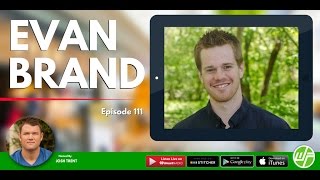
Podcast episode (Wellness Force Radio Episode 111) featuring Josh Trent interviewing Evan Brand about adaptogens, ancestral health practices, stress management, and lifestyle medicine. The conversation covers adaptogen types and uses (Rhodiola, Ashwagandha, Reishi, Schizandra, Holy basil, licorice, Panax ginseng, etc.), HPA-axis regulation, forest bathing/shinrin-yoku, lifestyle foundations (sleep, diet, grounding, reduced EMF), and the role of emotional connection and community in healing. Practical guidance includes testing (saliva adrenal panels, stool, organic acids), starting an autoimmune paleo reset, dosing cautions, and sourcing professional-grade supplements.
Chapters
Wellness Force Radio Feelings are essential, but they can't dictate our actions.
We literally infect each other with our emotions. We came here for a special purpose. Let the purpose unveil itself. Knowing without doing is the same thing as not knowing. They're not just trackers. I'm gonna wear this and it's gonna help me do the right thing.
Wellness Force Radio Episode 111 with certified holistic nutritionist and functional medicine practitioner Evan Brand from Not Just Paleo.
Where adaptogens come in is they help to enhance your memory, they help your mental and physical stamina, they help improve your mood, they help calm inflammation, they help regulate the immune system, which is important for treating autoimmune disease, and then they also normalize this adrenal function. So whether you're in some type of SOS mode and you're burned out, you've got low energy, or you're on the other end of the spectrum, you're anxious, you're wired, but tired, so the doctor is prescribing you say Xanax, for example, which is just not addressing the root cause. Adaptogens can come in and they can normalize you. So they're not gonna stimulate you like coffee, but they're not going to sedate you like a benzodiazepine either. They're just going to help regulate you.
What's up, my friend? It's Josh Trent and welcome back to another episode. This is your weekly access to global experts in all things wellness, behavior change and new technologies. In this podcast, together, we'll discover the connections between our emotions and healthy habits to live life well and enjoy the process. This podcast is brought to you by Perfect Supplements, a company who walks the talk with their values of pesticide free, non GMO real food supplements that fuel us for the wellness journey, save money, support the show, get more wellness in the process. Head over to perfectsupplements.com wellnessforce Enter code wellnessforce to save 10% off your entire order With a vast ocean of an industry that exceeds $122 billion of supplements, pills, powders and elixirs in this wellness world, just exactly how do we all decipher the things that really work for us in the path we're walking for the wellness journ? An even better question is how do we know which supplements to trust and what natural plant based adaptogens will give us more sustained energy throughout the day? It comes as no shock to anyone that the weight of all of our responsibilities in this modern world are growing more and more every day. But combined with this fact that social media, electronics and technology distractions are also pulling us away from living our life of optimal wellness, how do we hit a reset button without leaving for the Himalayas for five days to wear a bathrobe and chant while sitting in lotus pose? Today on the podcast I we're talking about natural ways we can modulate stress and help normalize our body. To find more balance, we're opening up a fun and educational conversation with my good friend nutritional therapist and certified functional medicine practitioner Evan Brand about using Adaptogens, these natural and phytotherapeutic uses of plants to help us heal and give us more energy. If you've been listening to the podcast for some time, you know I've been a huge fan of Rhodiola Rosea as well as Maca for Energy, which I put in my smoothies. Well, today on the show, if you're curious about using these adaptogens or if you haven't explored using adaptogens for energy, this is going to be an awesome show. I think you're also going to love just as much as I did Evan's Down Home Grounded, an authentic personality where we dive into topics like functional medicine through an ancestral lens, how to get back in touch with your inner dialogue, letting go of paralysis by analysis, and what adaptogens and supplements are best to take with you while traveling. And one of my favorite seven for seven rounds we've had on the podcast yet. So be sure to stick around to the end of the show and hear Evan's take on the emotional quotient in letting go of old weight and how these plants can give the type of healing that could never be produced in a lab. Let's step in with Evan right here, right now. Evan Brand is a certified holistic nutritionist, certified functional medicine practitioner and nutritional therapist who is globally recognized in the fields of ancestral health, paleo nutrition and functional medicine. He is the creator of NotJustPaleo.com, one of the top 25 natural health podcasts on iTunes, and the author of three books including REM Rehab Stress Solutions and the Everything Guide to Nootropics. Evan's been studying and practicing and teaching natural health lifestyle for more than nine years and works with clients from a functional medicine perspective. With his work deeply rooted in a lifelong struggle with depression, IBS and skin issues, which he later recovered from through his own research and experimentation. Evan, welcome to the show.
Josh, thanks so much man. It's been a long time coming.
So excited for today's conversation. I Feel like we could have recorded our last one. We had this pre show chat that ended up being about an hour and a half. So I think we're gonna have a rich and deep conversation. And the topic that I'm fascinated with lately is adaptogens is something that you work with in your practice and really with your background, which we'll talk about forest bathing, being in the forest and using these things that grow out of our earth to amplify our wellness, man. So really, really excited to talk with you on the show. Now before we dig in, man, there's a lot about you online, There's a lot of information from videos to blog posts, and 6 million plus people have heard your voice on the podcast. But what's something, Evan, that we don't know about you?
Oh, well, I'm not wearing any socks right now or shoes and typically I'm never wearing shoes unless I have to go into town for some reason.
Are you using an earthing as well or just barefoot?
No, I do have an earthing mat, but I haven't used it in a while because I like to just earth in the dirt. We've got plenty of green grass here where I live and so I put my feet in my glyphosate free grass and I feel really good about it now.
You talk about functional medicine through an ancestral lens. I love that. I mean, beyond just the obvious statement, the contrast of functional medicine, which we've talked about many times on the show, through an ancestral lens, can you unpack that a little bit for us? What does that mean to you?
So many people that come to me and when I say come to me, that means via phone or Skyp consultations, they have been through five or 10 or 15 or 20 different practitioners. So it could be integrative doctors, it could be holistic practitioners, naturopaths, so called functional doctors. A lot of the times they get this type of diagnosis where the treatment is either homeopathic remedies or 20 different supplements. But there's really no ancestral lens to that. So what I do differently is yes, I'm going to depend on diagnostic data, right? I'm going to run three lab tests on every new client that comes in. So I'm going to run salivary adrenal hormone pain, which is a six point test. Anybody who's using a four point test is outdated and they should be ignored. Number two, I'm going to run a comprehensive stool panel. And then number three, I'm going to run an organic acids test which looks at about 75 different markers. It's a urine test that's going to look for candida, bacterial overgrowth, detox problems, mitochondrial issues. If we're trying to fix fatigue, for example. Where I go above and beyond the diagnostic solutions is I'm saying things like, well, you need to go, get grounded, go outside, go for a barefoot walk. I've got a lot of clients in California, so for them the prescription is the beach. As much time as they can. Get your bare feet on the soil, take your darn shoes off and get grounded back to the earth. Because this is how we've evolved for hundreds of thousands of years. And we say, remove WI Fi from the home. So I've gone completely hardwired, except for this interview, because my hardwire connection failed today. I'm using my phone as a WI FI hotspot. But where I live, I live out in the country where there are no other WI fi's around. So mitigating your own WI fi in your house, getting rid of that, going hardwired is another step reducing blue light, which I know last time we did video, you had your glasses on during the day, which I was impressed with, installing softwares like the new Iris software, which is far superior to F lux. F Lux. Dr. Mercola, who I interviewed on my podcast, he used a spectrometer which measures the light spectrum. And he said that the F Lux actually did not remove as much blue as you think, even though it looked like it. When you actually measure it with an advanced device, it still had tons of blue, whereas this new software called Iris actually has no blue. So I run it during the day just to help to regulate my cortisol rhythm, because as people probably have heard a million times on your podcast, cortisol is a light driven hormone. And so we're very in tune with the planet, or at least we're supposed to be, by waking up with the sun and going to bed with the sun, or at least a few hours after bedtime. And so these are more the philosophies that I pile on top of functional medicine labs. And then of course, I still use herbs and supplements and botanicals and extracts and things like that, because I'm working with a lot of sick people, whether it's Hashimoto's disease or parasitic infections or bacterial overgrowth, like SIBO cases or yeast infections. Whatever it is, I'm still using herbs and natural medicines to fix it. But the success rate is so much better. When I tell people, hey, I want you to hug your spouse or your boyfriend or your Girlfriend five times a day. And make sure you engage in eye contact with them and you kiss them. Make sure that you do a gratitude exercise, preferably in the morning and the evening. Make sure you do heart focused breathing, which is something that the Heartmath Institute promotes. This idea of quick coherence method, which is increasing your heart rate variability, which pulls you out of that fight or flight sympathetic mode into a parasympathetic rest and digest.
These are such great tools as well. Man. Everything you've been talking about is a great contrast between, you know, we're half beast and half spirit. We have a physical body, but we also have an emotional body. And so contrasting this functional medicine, the lab test, the things we can do from a scientific perspective through the ancestral lens. You know, how we actually should be moving, eating and sleeping in this world. And this goes back to when you were actually, I believe, a forest ranger or you worked in a park. Right. That was kind of one of your first gigs before you were at a car dealership, which is a fun fact. A lot of people don't know this about me. I was a Mercedes Benz technician at the 2122 year old point in my life. So I think, Evan, there's a little bit of similarity to our path. Although I have not worked for the National Park Service. Can you take us back there? Because I think this is when you really started to fall in love or maybe you always loved nature. Walk us back though, to when you were in the forest and how you discovered the forest bathing thing.
Sure, yeah. So I was working for a private company called 21st Century Parks. It wasn't the National Park Service, but it was a privately owned company where they basically raised $120 million to convert old farmland and other unused space into public park space. As everyone knows, urban sprawl is a huge deal. Right. Look at LA from a satellite image. Look at any of our major cities. Chicago, New York, San Francisco, we've got massive urban sprawl. And so where I live in Louisville, Kentucky, the city's growing very rapidly, like everywhere else across the country. And so this company said, hey, we need to create urban parks. So right now we're going to build this park on the outskirts of town where not many people live. But in 20 years, due to urban growth and urban sprawl, the city public park is going to be in the middle of the urban jungle. And so, long story short, I was out in the woods for 40 hours a week for several years on end, and I was removing invasive species, restoring wetlands, helping to identify invasive trees. For example, removing dead trees. We've got the emerald ash borer here, which is killing a lot of the ash trees. So getting rid of those, restoring the canopy, so removing honeysuckle, for example, which is super invasive. What I noticed is my stress response was amazing. Now, I didn't know this at the time, right? I only figured this out after I quit the park job and eventually moved to Austin, Texas to go work for a supplement company. I worked for the CEO and I was in product development and research. And so once I moved to the city and I was working a big fancy desk job, I realized my stress response was broken. I thought, man, why did I never notice these symptoms or why did I never notice these heart palpitations or this anxiety or this midday fatigue? Because I was sitting under fluorescent lighting in the forest. I had none of that. I started to really reminisce and look back on my experience. And I did recall every time I would drive in and I knew I'd be in the woods that day for a project. My heart was content, my soul felt great. I didn't make any money doing it. It was almost a passion project. But how do we extrapolate that into to clinical takeaways? Well, Japanese researchers and other type of scientists that have done studies on this, they call it shinrin yoku or forest bathing. What they'll do is they'll take a control group and they'll have them walk in an urban area, say down sidewalk, and they'll have the study group walk through the forest for two to three hours. And then they'll measure both groups, their salivary hormone levels of cortisol. And what you'll find is that the cortisol in the urban area goes up. Cortisol in the forest group either goes down or normal. So you could consider the forest kind of an adaptogen. And people may say, well, how does that happen? I believe it's multifactorial. We're never really gonna know. I mean, people always like to make things scientific, right? They like to boil it down to numbers.
Yeah, everything needs to be quantified, right?
Yeah. So we do know that there's aromatic compounds called phytoncides that you're breathing in when you're in the woods, and that can contribute to part of it. But how about you existed in the forest or your ancestors did for the last couple hundred thousand years, and all you're doing is you're pleasing your DNA, Right. This is like an epigenetic thing to do is spend time in Nature. So people may say, oh Evan, that's great, but I live out west in Arizona where it's a desert, that's fine. That's still nature. Right. So you can still immerse yourself in whatever form of nature you have available.
And I believe like we're in this environment in so many big cities. So I'm here in San Diego, we do have some great parks and we have the ocean, but New York is one of these super densely populated areas. Can you imagine how many different signals that the nervous system is taking in from an auditory and visual perspective? I mean, does this inundate our psyche and does that cause rise in the sympathetic nervous system just being in these environments where we're just completely flooded with stimuli.
Great question. Absolutely. I just had a client actually in New York City. She's a new client. On my intake form. I have a question. Go to antennaserts.com and look up your address. How many cell phone towers and antennas are within a four mile radius of your residence? Her answer was the most I've ever seen in a thousand plus clients, which was 1600 towers and antennas within a four mile radius. Now there was a study that a guy named Dr. Cherry did back in, I believe it was 2000, 2001, and he found that electromagnet radiation, which could be wired or wireless sources, suppresses melatonin levels. Now when we look at night nurses, for example, we find that anybody who works third shift, but the piece of research was on night nurses. There was a significant increase in breast cancer during night shift. Now part of that's blue light, part of that circadian rhythm issues. But part of that to me is going to be the radiation being exposed to hundreds if not thousands of medical pumps and devices and computers and massive WI fi signals. Take a look at your local hospital. I guarantee there's a massive cell phone tower right outside the hospital so the doctors can have good cell phone service. Now we know that these type of electrical pollutions and interferences do raise blood glucose as well. And so am I saying that a cell phone tower or a wifi router is going to give you type 2 diabetes? Not necessarily. But if we do see elevations in blood glucose when we're exposed to that stuff, for me that's enough for me to move out of the city, which is exactly what I did. And my wife and I have a nine month old little girl. There's links between magnetic fields and increased risk of leukemia. So that was another reason for me to move away from the home where we previously Existed where we were near a high power line. Not just your average power line, but some of the big ones that come straight from the generation stations. We were way too close to that. And you can measure these fields. The level we were at was actually 7 milligauss. For anybody that's savvy with this, even the world health organization says anything above 3 milligauss, which is a measurement of magnetic fields, is dangerous. And we were at a seven. So for me, as soon as I got my device, it's called a 10 mars unit. As soon as I used that and I saw that seven, I told my wife, I said, babe, we've got to get out of. And so we immediately just started looking for properties in the country, and we packed everything up, and with a snap of a finger, we were out of there.
Evan, that's such an awesome story, man. And some of these terms I'm actually gonna have to research myself, But I know someone's listening, and they're like, okay, Evan, that's cool you went out to the country. I can't do that. I mean, my whole life is based around being in the city. And I think there's a lot of different healing pathways that people can do. So we're not saying. I don't think, Evan, what we're getting from you is, hey, you guys have to move out of the city immediately. No, because people need to live in the city. So. So when we look at the different tools and the different healing modes, for us, you know, functional medicine, there's a barrage of tests that you do as a practitioner, but there's also different modalities like ubiome and wellness effects elimination, dieting. There's modes of healing for wellness optimization. I mean, Evan, don't you think we're all born with a bank account, right? Like, we all have a certain capacity for wellness, and all the different stressors pile up, Whether it's environmental or emf or stress or whatever it might be. Let's dive into adaptogens, because these. These really help people at a basal human need for stress response. For people that have not heard of adaptogens at all, man, what exactly is an adaptogen?
Absolutely. I'm gonna comment on what you said first, and then I'll go into adaptogens. I like to use the analogy of, like, a stress bucket. And so I'm not saying that a wifi signal, especially if you're an apartment in New York and you've got 50 wifi signals that pull up. I'm not saying that that's necessarily going to make you sick. Now, I have had very sick clients, young and old, that they have had to move or try to mitigate that by using shielding technologies, bed canopies, et cetera, to protect themselves from those signals if they were unable to move. Now, the stress bucket analogy is if you've got a great diet. So let's say you've pulled out gluten, you've pulled out dairy, you've pulled out peanuts and soy and legumes, and you've gone towards, like an autoimmune paleo diet, which is what I start most clients out with for the first 30 days, including removing nightshades like your peppers, your tomatoes, your potatoes.
Why do you go that deep?
Well, because I like to hit the reset button. These people, they may have removed eggs or they may have removed chocolate or coffee or done some type of elimination diet, but probably not gone all the way as strict as an AIP Paleo approach for 30 days. And so if there's something like a chocolate or egg or dairy or some other type of sensitivity that's still in the diet, then we're not fully letting off of that inflammatory gas pedal, right? So I like to pull all the way off the gas pedal. That way we're starting with a clean slate. We're focusing on good healing foods, our good animals, or organic veggies, maybe a little bit of organic fruits like your blueberries, maybe some avocado, if they can tolerate it. We're doing ghee, bone broth, your coconut oils, et cetera. Once that foundation is put in place, people are going to be less sensitive to these things. Your stress bucket is going to be less full. And so once you start managing stress. I had a woman last week. She's got two kids. She lives in Simi Valley, California. And I asked her, I said, when's the last time you took a bath? And she started laughing. She said, it was before my last kid, when I was having labor pains. And I said, well, how old's your youngest? And she said, three years. I said, so you're telling me you haven't had a bath in three years minimum? And she goes, oh, yeah, probably longer than that. I'm like, wow. So this is just a simple thing that we can implement. But someone can feel so much better. Put a couple of pounds of Epsom salt in there, a couple drops of some lavender essential oil, and that could even be some type of basic adaptogen, right? So I went on a tangent there, but adaptogens are basically a category of herbal medicines that are Used to restore balance to the HPA axis, which stands for hypothalamus, pituitary, adrenal axis. Basically what this means is you've got this signal going from the brain, through your nervous system down to the adrenal glands. In the adrenal glands. People have probably heard about adrenal fatigue, which is a buzzword. That's not actually what's happening. These little small glands, if you break down the word adrenal means renal, or on top of kidney gland. They're only doing what they're told to do. So if they're told that they need to be in a hypersensitive fight or flight state all the time, because we're running from a bear, even though that bear is just a cell phone notification or an email ding.
Or financial stress, whatever it might be.
Yeah, exactly. So the nervous system is just doing what it thinks it needs to do, which is to protect you. Right. And so this is why we see so much thyroid problems, because you've got a hormone called reverse T3 that's a protective mechanism. Now, during times of famine, famine reverts, T3 would naturally go up, which is going to preserve the amount of body fat that you have on your body. Because if there's a famine, we're running from a bear. Who knows when we're gonna eat. However, everything that's in this stress bucket, financial stress, marriage stress, running the kids to school, picking them up, rushing through your meals, having low stomach acid levels, having H. Pylori infections, having parasites. Right. These all trigger that fight or flight response. And so where adaptogens come in is they help to enhance your memory, they help your mental and physical stamina, they help improve your mood, they help calm inflammation, they help regulate the immune system, which is important for treating autoimmune disease. And then they also normalize this adrenal function. So whether you're in some type of SOS mode and you're burned out, you've got low energy, or you're on the other end of the spectrum, you're anxious, you're wired, but tired. So the doctor is prescribing. You say Xanax, for example, which is just not addressing the root cause. Yeah, adaptogens can come in and they can normalize you. So they're not gonna stimulate you like coffee, but they're not going to sedate you like a benzodiazepine either. They're just going to help regulate you. My first exposure to adaptogens was actually when I was working in the forest. I began to notice that at the end of 40 hours of hauling around a chainsaw and lugging trees around through the woods, that I was fatigued makes sense. But I wanted to feel like a warrior. And so I began researching adaptogenic herbs. And I came across a famous one called the golden root root, or more commonly known as Rhodiola rosea. This is an adaptogen that is incredible for energy. It's a great antidepressant. It's great if you've got inflammation. It's great if you're irritable or you're burned out, if you've got fibromyalgia or if you've got headaches or you've got low libido or fertility. Rhodiola is awesome for all of that. And now the caveat for those listening, if you have manic depressive disorder or you've got bipolar, you've likely got to stay away from rhodiola. So I will make that disclaimer. But, however, with the right practitioner, you could have those mental issues and still potentially use it. You would just have to start at a lower dose.
There was a feature on Dr. Oz, I think, like three or four years ago about rhodiola, and I think a ton of brands just jumped on the bandwagon. So, you know, rhodiola rosea, really, I think its origin, I believe, is Russia, like Siberia area. And there's a different form of it that's actually more bioavailable. They freeze dry it versus like, you know, hang drying it. What have you seen be a really quality source of Rhodiola rosea? How do you get yours?
I alternate. Sometimes I'm going to do tincture, sometimes I'm going to do powders. It really just depends. But you just want to look for products that are going to be labeled as having a particular rosavin or saladrose side content. Like 2 to 3% Rosavins is going to be good. 1% Saladro sides. What is that people are asking? Well, those are just specific plant alkaloids that have been known to give the beneficial effect. So when you take a plant like rhodiola, mainstream medicine, what they do is they take one piece of a plant, right, like white willow bark, for example, they take one part of that plant and they create, say, adventure Advil. Nutritional Medicine World does the same thing. They'll take something like rhodiola and they'll say, okay, we found these two alkaloids. Rosavins and salidrocides give therapeutic benefit. But the problem Is if you're just extracting these plants and herbs to just have those two compounds, what else are you missing out on? Because sometimes these herbs can have hundreds of different active components. Just like cannabis, for example, we've seen the huge rise of CBD oils and THC tinctures. But what about CBN and all of these other type of compounds that are in these than these plants? So I prefer people use extracts for the things that we know are important, but also you want to get the whole herb extract as well.
Evan, there's so much power in plants. I think this is something that many people overlook. You know, these plants have so much wisdom. And whether you're talking about cannabidiol or ashwagandha or even ayahuasca, there's a lot of different things that people can use to have spiritual, emotional, and really physical healing. And ashwagandha is a big one. It's on my fridge right now. I put it in my smoothies and I just take it for good sleep. That's what I know about it. But can you break down ashwagandha for us? I mean, do you prescribe this to people that you work with from time to time?
I never can use the word prescribe, but yeah, I'll definitely recommend ashwagandha all the time. So this is for people that are tired and wired, nervous or anxious, Actually, cheers to you, sir. I drank some ashwagandha earlier. What I do is I take about 2 to 3 grams of. Of vitamin C and then I mix that with just a little splash of kombucha, some of the ginger or the trilogy kombucha. And then I'll put a couple of doses of some tincture ashwagandha, and then that's mixed with reishi mushroom and motherwort. And I feel great. It helps me to stay focused throughout the day without being exhausted, you know, because what I do is, like, very mentally intensive. And ashwagandha is great for people that can't do stimulating herbs. So some people may hop on rhodiola and it's a bit too stimulating, so we may have to start that person out with ashwagandha instead. And you can use it in the morning for energy and you can use it in the evening for sleep. So it's really cool. And what I tell people if they've got insomnia, instead of hopping on something like melatonin, if you have a tincture around, tinctures are gonna act a bit quicker than a capsule or a powder. If you wake up in the middle of the night, you can go take a dropper full of some ashwagandha tincture. You're likely gonna be able to lay down and go back to sleep without much problem.
Now, why do you mix that with the C. Is there some kind of binding element where there's reabsorption or more absorption?
I don't know, maybe there is some type of synergistic effect like that. But I just think it tastes delicious. Doctor.
Ah, it's for the taste. Yeah.
I've got a formula. It's called vitamin C tonic. So I do have stevia in it, but it's already a little bit sweet. It's almost a little bit too sweet. And so instead of reformulating the thing, I said, well, why don't I just add something a bit bitter to it, which is the herb, the ashwagandha. And so it's like this really nice bitter slash sweet tasting. We'll call it a tonic, if you will.
Yes. And this brings up something that I heard from Edward Wallace. I think he's really one of the early, you know, naturopaths in the world. And I think it was in the early 1900s that he talked about these adaptogens, these unique classes of plants that can heal. And it's really around the balancing for people that are super stressed out, which I think that can be all of us from time to time for protection and actually helping to support adrenal glands. Do rhodiola or ashwagandha help in the support of our adrenal cortex? Or is that something totally different?
Yes, all adaptogens can help with this whole HPA axis connection. So we're helping the limbic system, we're helping the brain come out of that fight or flight, which is therefore reducing the signal of, oh my God, the world's falling apart. We're reducing that signal by using these herbs. Absolutely. And there's a spectrum of herbs. So you can go from the least stimulating or the least stimulating of adaptogen. So reishi mushroom, believe it or not, is an adaptogen, the mushroom of immortality. Yeah, I think the Chinese name that. They call it the mushroom of immortality for sure. And so I do take Reishi as well. There's a spectrum. So you've got like Reish, Reishi and motherwort and things like that on the left side, which is least stimulating, most calming. Now you've got to have a bit of finesse. You can't just go straight to the far end of the spectrum, which is your licorice. And your Panax ginsengs and things like that. But there are different levels of stimulation that you can get from these herbs. Now, if you're wired and tired, though, a lot of people counterintuitively think, well, I'm just gonna go straight to the licorice or the Panax ginseng. I just want to rev my energy levels up. But I chatted with a medical doctor who's a master herbalist, too. Her name's Aviva Ra. And she really blew my mind. And I had this revelation on the podcast with her, and I had to kind of back up my protocols and say, you know what, Aviva? I was wrong. You were right. I was starting people with more stimulating herbs. And while I got great clinical success, now I'm still using the stimulating herbs, but I'm bringing in some of the calming ones with it, and people are just feeling much better faster. So instead of 5 to 10% improvement each month, they're getting 15 or 20% improvement each month just by adding in some of the more calming herbs. Herbs with the more stimulating one. I really took what she said to heart and applied it, and she was spot on.
I'm so interested in this. I've never dove this deep, but I want to go back because you overcame a lot as we talked about in your intro, Evan, you know, depression, skin issues. You had a parasite. And I think when we talked on the show, you also had a family member. I believe your dad had a gut burst, a diverticulitis issue. Can you take us there? I mean, how did you overcome that? That's obviously some of the fire behind why you do what you do.
Yeah, I mean, like, most of us, right, we're wounded warriors. I ended up in this because of necessity, really. It wasn't really something I intended to make a living from, but I ended up that way because once I healed myself, which I can, you know, give the spark notes of, I had this passion for others. Now, back in. Let's see, it was about 2009 was probably the peak of my symptoms. I was in business school at the time. I had IBS. I had skin issues, depression issues. I was working third shift shift, which was probably 50% of the equation now that I've studied a bit more about cortisol, melatonin rhythms. But, yeah, adaptogens were helpful then. I was still using some type of supplements. Whether it was rhodiola or whether it was tribulus or some other type of herbs, I was still using supplements. But I just wasn't as knowledgeable about them at that time. Mainly for me it was diet, it was lifestyle, it was getting up with the sun, going to bed with the sun, some of the easy low hanging fruit that really gave me the best bang for my buck. Now regarding my dad. Yeah, so he had diverticulitis and eventually his large intestine burst and he was going septic. So he had about four hours to live and had to go into emergency surgery so that he would not die from this burst. I looked at some other family members and they had some of the same issues. For example, my grandmother, his mom, she had part of her colon removed as well. And I did not want to end up in the surgical unit potentially picking up some type of life threatening bacterial infection that you get from the hospital. You know, a lot of times people go in for routine scans like endoscopies for example, to, to go look for inflammation in the gut and they go home and they've got some type of antibiotic resistant bug. So I thought, you know what, I don't want to go down that route. And so that really, really put a fire under me to start taking action and stop reading. And I think one message that I would leave for people today is that if you are stuck in this research cycle, well, I'm going to do something. If I just hear one more podcast or if I read one more blog article or if I watch one more webinar or one more summit, I promise you, you've probably got, especially if they're listening to your show because I've listened to of them and looking at your list, it's like good lord, how could people not be educated enough to take action? More problems come from over researching and information overload because then that creates the whole analysis paralysis. People don't know what to do next that they just avoid doing anything. So go for the low hanging fruit and then yeah, maybe you do try some of these adaptogens. You've got Eleuthero, you've got Holy basil, you've got Maca, you've got Schizandra berry which is delicious. They call it the five flavor berry. I add that to my tonic sometimes and it's just so good. I use that for people that have anxiety or if they've got like a physical exertion problem. Like for example, let's say a woman is trying to do a yoga class and she's so exhausted after the yoga class, we may use like a Schajandra berry extract and she may be able to get through that yoga class without just feeling terrible. Now, obviously this is not addressing the root cause. Potentially there is some hormonal issues or gut issues or other problems. But this is a good quick fix that's natural and there's no side effects or dangerous downsides or negative interactions with pharmaceuticals. And we could get somebody feeling better while we're waiting to dig deeper.
Evan, thanks so much for telling us about the fireman. Because you're right, like whether you're a wounded warrior or a healer, I think all people that heal others first heal themselves. I mean, that's the whole ethos behind Paleo FX and many of the conferences that I'm sure you and I know about. And people that are listening, if you're listening, like Evan said, you probably already know what to do. It's just giving yourself the grace and the permission to step into the power of keeping that promise to yourself and actually doing it. So thanks so much Evan for mentioning that. You know, we had a question about adaptogens and its from a mutual friend. This is from Lisa Perkins. She asked what are the best adaptogens for anxiety? With the understanding that lifestyle, purpose, joy, sleep and relationships have to be addressed as well. What does Evan believe is the best adaptogen for helping to manage anxiety?
Hey Lisa. Well, thanks for the question. The answer is definitely going to be Ashwagandha. That's going to be my go to one for you. Brodiola could potentially help too. You know, you definitely want to figure out exactly where you're at in this whole stress site. Are you feeling burned out? If you're more in kind of the burnout stage of anxiety, where you have anxiety but you're also burned out, then you may benefit from rhodiola. Now remember, you can also combine these too. So maybe what you would do is you would start out with something like a 200 milligram dose of rhodiola, which is typically thetherapeutic dose level where there was a study where they took about 1200 people, they put them all on Rhodiola and within three days, I believe like 82% or some massive number number of people experienced quote, unquote less life stress. So you could take something like 200 milligrams of Rhodiola and you can mix that with say 1 or 200 milligrams of Ashwagandha. That way if the rhodiola is too stimulating, the qualities of the Ashwagandha are going to prevent you from getting into like a anxiety or more panicky feeling.
And it's A big deal to talk about the dose levels and working with a practitioner. I mean, this is a science. There are people that do the different types of dosage amounts and working with clients like yourself, yourself, this is an art form. It's good to try, but I think always trying with a lesser dose is probably the best. Especially when we look at, you know, maca or things that can really start amping up the nervous system. Is there a big three that you always take with you?
Oh, totally, yeah. So it's going to be ash condo, which I feel like people are going to think we're a broken record, but it's such a great, great herb.
Yeah.
Rhodiola is going to be number two and number three, honestly, it's going to be a toss up. It's going to depend on what I'm doing. So let's say I going on vacation and I'm gonna wanna be hiking and doing a lot of activities. I'm typically gonna bring Shashandra along, which is gonna help more with physical exertion. But if it's more like a speaking gig or like I've been invited to some health retreats where I've spoken. It's, you know how it is. It's three days of hotels and like artificial lighting and you're not getting the.
Fresh air bars and shakes and the food's not that perfect. Right.
Living on protein bars and all of that typically then I'm going to bring holy basil along because holy basil is going to be a really good. I consider it like a warrior herb. I remember for me, when I first started getting into holy basil, I took so much I can't remember the exact dosage, maybe a gram or more. And I literally felt invincible. So much that I told my wife that it was dangerous. I said, babe, I feel so good right now that if you threw me out of a plane, I feel like I might be able to fly.
Wow.
She just laughed and she's like, babe, you're nuts.
So coffee is great, but what do you do do if you've hit a daily limit for your caffeine and you still require more energy to meet the demands and responsibilities in front of you. Over the past two years, I've personally been doing an N1 experiment while studying what supplements work to yield energy and balance in my wellness without a bunch of stimulants. That's why I'm excited to talk to you about perfect acai revive this energy boosting blend of acai berry, cordyceps, rhodiola, rosea and grape extract, which work together synergistically to increase endurance, athletic performance and boost cognitive function. This perfect Asahi revive is a 4 in 1 upgrade in one perfect blend of organic, pesticide free, real food supplementation that delivers sustained energy and focus throughout the day. Without those jitters and the caffeine crash, pick up your four in one supplement. Make it easier to get the energy you need for your busy day by clicking over to perfectsupplements.com wellnessforce. Grab your Asahi Revive. Make sure to enter Code Wellness force to get 10% off your entire order. We're going to link all these different adaptogens that Evan has so graciously been talking in depth about. But I have a question too, about cacao. You know, speaking of the power of the plants, cacao is obviously the seed, right? It's the seed that they make chocolate out of. But this has over 300 different compounds. It's got really high levels of antioxidants, 20 times more than blueberries. But when we look at cacao, I don't actually know if a cacao is in the family of adaptogens or not, but we know that it's from a plant. So what are the benefits that you've seen from cacao and possibly mixing that with an adaptogen?
Yeah, I mean, in terms of therapeutic benefit, I mean, I'm not really supplementing cacao with people, to be honest. If people are getting cacao in their diet, it's typically going to be like, what is it, the Nutiva brand where they make like the, the organic cacao powder, they could add a bit to a smoothie. Let's say they're doing like an 88 or 85% dark chocolate. That's going to be pretty low in sugar. That's where I'm going to get the cacao into someone's protocol. But am I like creating a protocol and on top of these herbs we've mentioned, am I adding a dose of cacao? Typically not. I just assume that most men and women are going to be eating dark chocolate and they're likely going to be dosing themselves.
You bring up an awesome point. Rob Wolf did his seven day carb test. One of the foods that he talked about from a nutrient comparison perspective was milk chocolate to lighter milk chocolate to like a nice quality dark chocolate. And you had to eat three bars of dark chocolate to equal one bar of milk chocolate. And so looking at the nutrient load versus, you know, the benefits from a mobile micronutrient perspective, would you say that dark chocolate could possibly be considered a superfood?
I absolutely believe so. You know, here's another thing I wanted to mention too, about dark chocolate is for some people, they get hooked on it because of the theobromine as well. So you are gonna get a little bit of kind of like a stimulating boost from it. But yeah, I would consider it a superfood, even though I'm not a huge fan of that word. I think it's a little bit played out and over marketed. But yes, let's say you did a tincture of some of these herbs and then you ate, let's say a little handful of some organic blueberries and then you took a square of dark chocolate. Man, you're off to a good start.
Yes. Especially if it's Trader Joe's. We have the Trader Joe's out here. I don't know if you have those in Kentucky.
Yes, we do. They're there. You talking about their organic dark chocolate bar? That thing is amazing.
The organic dark chocolate from Trader Joe's is the best. You guys, if I could partner with them and be an affiliate, I would. Evan, I want to talk to you about a building block that you focus on with your clients. We've dove so deep into adaptogens, but the power of nutrition. Earlier, a question I asked you is why you started people on an autoimmune paleo approach. Why do you do that in depth? And is it really just about the master reset? When should someone actually start doing a reset? When they're experiencing a certain barrage of symptoms?
Good question. So there was a few questions in there. The first that I'll answer is about when should somebody do it? Honestly now, if you've got symptoms, I would say if someone is listening to this show, they're probably on the never ending health journey like myself, where there's not a finish line, but it's just this goal where you just constantly want to elevate the way you feel and think. And for me, if you've not done any type of a 30 day protocol like that where you've really dialed in the diet, then go for it. You've got nothing to lose. Especially if you intend to work with a practitioner in the future and get some labs run, especially if someone were to work with me, I would say, well, we've got to do AIP anyway for 30 days, so you might as well get it taken care of. And that way we're finding out what your new baseline is. Really. That's what this deeper reasoning is about. If we come in and we get labs Run. And the diet's terrible. Well, I'm not going to be surprised when I see a marker called calprotectin, which is an intestinal inflammation marker. I'm not going to be surprised if that marker is elevated. Right. And so if I knew they were already on a really, really solid diet, then I would think, okay, well, this calprotectin level is elevated. The inflammation's probably not coming from the diet. Where is it coming from? If you remember that game, I think it's called Guess who, where you flip down the little men, you keep asking questions until you're left with one guy and then you figure out who it. That's basically the game that I play where there's 500 different possible scenarios of what's going on and why something's happening. But if we dial in diet, lifestyle, we have meditation, we've got good sleep, we've got stress response, we've got all these other things, we're just knocking down all of those other men. So all that's left standing is a far less, far smaller number of possibilities of things that are going wrong that we need to address.
Yeah, I love that you mentioned that because it is at some point kind of a guessing game based on common knowledge of what are the most healthy factors for people to just step into. And that is quality sleep, quality movement, and real foods. It's interesting, Evan, because I'll say that in a sentence and people listening might nod their head and you and I are nodding our heads. But it can be that simple. It doesn't have to be so complicated. And I think I'll say this with a little bit of fire behind it. For so many years, I just got lost down 40 different rabbit holes. And I don't know if you can relate to this. You know, in 2008, 2009, I was still in gyms, I was on my feet, I was experiencing massive adrenal fatigue and I was taking tinctures and I was reading and I was almost like a self fulfilling prophecy of having almost like every disease under the bucket. But it wasn't true. If I really looked at my life and I took an honest emotional inventory of how I was showing up, I wasn't getting quality sleep, I wasn't eating real foods 100% of the time. I wasn't getting quality interaction with people that I loved and cared about. And on a lot of it had to do with me just driving the gas pedal to the floor, you know, 28 years old, 29 years old, just how much can I put out how many parties can I go to? Can I train 12 people a day and then go hang out with my friends at night? And at some point in my life here in my 30s, I just took a massive deep breath and I started to learn what really worked for me. And a lot of it has to do with what you mentioned, the power of community.
Yep.
You know, you talked about on a different episode, I think it was with aspr, you mentioned that your grandparents were your best friends. And learning from our elders, I spend time with as many elder people as I can. This weekend I hung out with a few of them. Why is this human connection piece just as powerful as the adaptogens, the food and everything else?
Yeah, probably even more. And in some cases, some people might not take any supplements and eat like crap, but yet they go and they play checkers every, Every Wednesday. Right. And so if we've got some of the, the geeks listening and they, they want to hear data. Well, there is data. You know, there's comparisons now that social isolation is equivalent to smoking cigarettes. I believe it. I mean, honestly, I really do because I talk with so many people that whether they work from home or they're retired and they're at home all the time, they say, evan, I'll drive into town and go to the grocery just to have a three minute conversation with somebody. And it's like, wow, listen to what that human just said. They are traveling into town just to go have a couple minutes of like small talk with someone. What does that say about vitamin S, vitamin social, whatever you want to call it. And I believe it's profound. And so for me, if people can't find a family member or friend that's going to support their journey, because I've been there, done that, there's a lot of haters when you try to take care of your health. People are going to say you're crazy or you're weird or do like they did to me, which is stop inviting me out to restaurants because they said I'm not going to eat anything. Now they figured out there's a couple grass fed burger joints and people can invite me there and I'll go, I won't turn those down. But if you don't have somebody that's super supportive of you, then you've got to seek them out. So if it's on a Facebook group and that's all you can settle for, okay, that's fine, you know, go for that. But obviously the in person communication is going to be the best. You're Feeling the vibe of that person. You're tuning into their spirit. I mean, if you and I were having this conversation in person, it might have gone a different route, you know, but we are slightly removed from each other, and so that does make a difference. And also, you can do other things too, like drumming. Drumming is a very social, tribal activity. So if you've got a djembe or some other type of African drum or whatever musical instrument of choice, you know, play that and maybe that's your friend, you know, it doesn't have to be something that's so difficult. Difficult that it's so out of reach that you just don't do it. And it's not sexy to say that. I feel so boring saying, have a good friend that supports you. Have a good family member. Hug someone. Make sure that when you hang out with someone, you feel better after you leave and not worse. You know, there was a time in my life where I was hanging around people that were toxic for me, and I said, you know what? I've got to remove them. And so I actually did a YouTube video on this, and it was about energy vampires. And I've got more emails and comments on that video. Video more than any other video ever. Even some of the geekiest health talks. Yeah, the energy vampire. I never thought it was going to be such a hit. And everybody said, evan, oh my God, it's my boss or my co worker.
Could be a family member as well.
My spouse. Yes, it's my husband, it's my wife.
That's the challenge, Evan. I mean, you know, the people that were born into. From a genetic perspective, we have a lineage that doesn't always serve our good right now. And so sometimes the people in our lives who we love, love and that love us subconsciously or consciously can sabotage us. You know, many clients that I've worked with, they talk about how their spouse might make fun of them when they're eating different foods. And meanwhile, it's because that spouse is, you know, used to the wife or the husband having a certain weight or eating a certain way. Whoever you were when you met your spouse, they kind of get adapted and addicted to who that person is. They don't want you to change, but a real powerful friend, somebody that's going to stand for your great greatness. They love the changes you want to see for yourself because they love you.
I agree.
And so if you're listening and you find people that are trying to sabotage you, either with their words or their actions, just give them the gift of goodbye and Evan, you talked about this in the video. We'll link that in the show notes. Man, I'm so glad we're talking about the power of human connection, because without community, as digital technology rises. We just had Dr. Anna Akbari on the show, and we talked about how to actually cultivate happiness and wellness in this digital world. We have to be very, very aware and very conscious of our actions. Actions. What would you say is your consciousness about your actions in this digital space, this digital landscape where technology could possibly take over if we're not mindful?
My immediate answer to that is so simple. So I'm sitting looking out of a window right now, and I'm looking at these trees that are blowing very hard because we're supposed to get a crazy storm. But today it's like 75 degrees Fahrenheit and sunny. And so for me, it's my connection to nature, my nature connectedness. I started out in that space. That's where my whole health journey began, because I noticed that my depression was lifted when I was out into the woods. So that's really where this little egg started to grow and hatch. And I always go back to nature, no matter how or where or how long. I can't tell you how important and how much of a difference it makes in my mental attitude, my ability to be loving and have gratitude. If I just, like in between calls, take the dog, take the baby and go outside and go walk around the pasture for five minutes, just five minutes, and then I come back inside, I'm like, I am so glad I did that. It is a profound change. It's like someone almost flipped a switch. But if I just go, go, go, go, go all day, because I'm just as liable to do that as someone else. At the end of the day, I'm going to be mentally and physically tired. My soul is going to be drained. So what I do is I regularly go outside. If it's morning or evening and I can gaze in the direction of the sun, I'll do that. If I can walk barefoot in the dirt, in the soil, if I can play in the organic garden, which I haven't started back up this year just yet, then I'm going to do that. And so for me, it's always connecting back to the planet and remembering that no matter how much AI and virtual reality and computer technology and social media takes over our lives, we still have a beating heart, we still have flesh, we still have blood. We're made muscle tissue and organs and a heart and a brain, and these are things that, that cannot be forgotten. Because I feel like if you lose the human touch element, you lose the ability to look down at your hands and be grateful. Wow, look at my hands. What an amazing creation. A hand with an opposable thumb. Oh, my Lord. What would I do without this thumb? Like, just simple exercises like that can really just make you, for me, make you less anxious about the technological takeover that we're in the middle of.
Evan, I really like what you have to say, man. You have such great things to say about technology and health. And today I feel like we really touched on Adaptogens fairly deeply. But for one parting guidance piece. Before I ask you our last rounds questions of the show, what would you offer to people that want to start using Adaptogens? Do they need to work with a practitioner or can they start to experiment on their own?
You can experiment on your own. I would say you want to go for professional grade. So if you are working or you have access to a practitioner and you can get professional grade products, you are going to get better quality. You know, too many times I've had people say, oh, Evan, I heard you on this webinar talking about, about xyz. And I went out to Walmart or Target and bought XYZ supplement and it didn't work. And I said, well, give me the brand or take a picture of the ingredient list, let's see it. And it's full of fillers, it's full of preservatives, potentially has gluten in it, it's got magnesium stearate, it's got other type of binders, and it's just low quality. So if you can get professional grade, then go for that. If you can't, then just do your best. Go to a health food store, Whole Foods. They get pretty good. I actually am aware of who Whole Foods use uses for their supplement line and I'm pretty impressed with who they're using. So their quality control is pretty darn good and the potency is pretty darn good too. So if you are doing like the 365 brand, that's a good source as well. And just start low with the dose. I mean, some people, if they've got issues with an overburdened liver due to pharmaceuticals or other causes, they may be the type of people that react where, let's say someone's supposed to take 500 milligrams, you could give some people 100 and they have a bad reaction where they get anxious, anxious or irritable, sleepy or something. And so Always start low and then just work your way up as you feel comfortable.
Thanks so much for that. It's about trusting too. We've had the show sponsor Perfect supplements for almost two years now and I take rhodiola as part of my stack along with collagen. I just kind of do my supplements in the morning, so that is a brand you can trust. We'll link that in the show notes as well. Evan, this is the last round of the show, man. You have already told us so much about yourself. This is where we get a little bit deeper. It's seven fast questions for three, seven of Evan's answers. Are you ready, Evan?
I'm so ready.
When you travel, Evan, what do you pack in your carry on for sleep, nutrition and health? What foods and products do you use when you travel?
That's a great question. It's gonna be some type of jerky, whether homemade or store bought. I've got a dehydrator. There's a bison farm about 15 minutes down the road. So I do make my own bison jerky. That is just my key. Also I'm typically gonna have say, organic macadamia nuts or some other type of good nut that I can handle and potentially maybe some freeze dried fruits. I've done some dehydrated fruit too, like some dehydrated apple slices, something like that with some cinnamon on there to support blood sugar just a bit. What other type of gear supplements? Potentially a battery charger. Those come in handy for the phones. I hit on the herbs so I'm not going to repeat that and be boring. Digestive enzymes are going to be huge. I'm going to bring extra hydrochloric acid and enzymes because if you read the work of Dr. Jonathan Wright, the book why Stomach Acid is Good for for you, once you're over age 20, you start making less and less stomach acid and therefore you're more susceptible to pick up bacterial parasitic infections. So when I'm going out and I'm potentially eating at a place where I don't know the source or quality of the food as much, I'm going to take extra HCl and extra enzymes to kill off any potential bugs that I might pick up.
If you want a Grant from the NIH for $10 million, they've selected Evan Brand to lead an initiative. What initiative would you lead if you were gifted 10 million by the national, National Institute of Health, what would you do for a country?
It's going to go all into cannabis research and to re legalize the plant because up Until William Randolph Hearst and the whole issue with him being scared of competition with the paper mills and banning hemp, therefore banning cannabis is just a massive issue. And I just read a book excerpt or an article about a book of a woman who her seven year old child got diagnosed with a rare form of leukemia. She was desperate. She lived in United Kingdom. I'm gonna have to get her on my podcast and maybe you will too if I can find out who she was. Long story short, her young boy kept getting more sick and more sick. And so she ended up just going to, you know, a drug dealer and finding a recipe how to make cannabis oil. And she made it and she started secretly dosing it to her child, who they were about to pull the plug on. And he miraculously recovered and all the cancer is gone and now he's like 14 years old, healthier than ever. He's got a girlfriend, he's in school, et cetera. And so for me, we've really got to get the legal red tape away. I know a lot of states are doing great, Oregon, Washington, Colorado. I'm so proud of you all. But we've got to make this thing nationwide because we've got people dying every single day. Kentucky is one of the worst states for opioids and heroin overdose and death. And if those people had a healthy, non toxic alternative, they would be able to go get that medicine even if they're not smoking it, they're using it topically or, or in oil format and they could potentially heal themselves in a much greater way. And we're not going to have to bury so many bodies each year.
Well, I'm going to vote for you for this position at the NH if it ever comes up, I promise. Man, that's awesome. We need to step it up from a federal level as well, because CBD, I believe, was just reclassified as Schedule 1, which is just ridiculous. Yeah, talk about that on another show. What has been a powerful piece of advice that you've received at some point in your life when it comes to balancing responsibilities, living life?
Well, yeah, it's going to be my friend Nora. Good gouda. She told me this. We were on a panel together at Paleo FX back in like 2013 and she said, evan, remember, because I was stressed out, I don't remember what I was stressed out about, but I was stressed out. She said, evan, remember, it's not what happens to you, it's how you respond to it. And it was just such a simple thing that I'll just repeat it here. It's not what happens to you in life, but it's how you respond to it. You can take two people, they're both in traffic, they're both stuck on the 405. They just want to get home and see their family and eat. One guy's listening to classical music, another guy's listening to country music and singing, and then somebody else, they're on their phone, they're beating their horn, they're road raging, they're speeding and weaving, even though they're not gonna get home any faster than anyone else. If you pulled a salivary cortisol test, you'd see two completely different hormone levels of the crazy person versus the person who's realizing, you know what? I'm in this traffic, there's nothing I can do. I'm just gonna soak it up and maybe even listen to a podcast like yours.
How much of a role does emotional intelligence play? Your practice, in other words, have you ever worked with a client where initially they came to you for physical changes, but you started to talk to them more about their emotions and then you saw weight loss be a result?
That is a great freaking question, man. I've probably done maybe 200 interviews and I honestly have never been asked that question. I'm so grateful that you think deeply. I got a client that comes to mind. Obviously, we'll keep her name private, but she was dealing with so many issues that I did not know about until I probed her. So let me walk you through it a bit. She had probably 40, 50 pounds to lose. Lose. We ran the labs. There were some adrenal problems, There were some gut issues, there were some candida overgrowth, et cetera. And we fixed all of that. We retested, everything was clear. And she didn't drop a pound, maybe two pounds through all of that work. And I thought, well, what in the world? The diet's dialed in. She's on aip. I mean, how much more restrictive can I get with this lady? There's nothing else I can pull out that's causing these issues. And I just went up to her one day. Actually, this was a woman who I got to meet when I went to a health retreat. She was at the retreat and I got to kind of do a follow up consult with her.
Was a there.
It was so fun. And I looked at her and I said, what else is going on? What are you not telling me? And she just starts crying and comes up to me and gives me a hug. And we get into this long conversation about how her and her Husband have been arguing incessantly for the last several years. And she didn't want to tell me about it because she thought that was something that her therapist should be hearing and I wasn't her therapist, et cetera, et cetera. And all she did was get that emotion off her chest. And I told her it was okay. We worked through it, we did a little bit of stuff, some emotional freedom technique, and within the next six weeks she lost 20 pounds without trying.
Wow.
I was mind blown. I was like, are you kidding me? I said, promise me you did not change the diet, you did not change supplements. No, Evan, I didn't do anything. All I did is tell you about what was going on and I started losing weight. I was mind blown. I honestly couldn't believe it. I thought she was lying to me. And I still today am shocked at what mechanism must have took place inside her body for that to happen.
Man, your answer just completely, completely floored me right now. I had no idea you were going to talk about that really quickly. My story is that last year I worked with the exercise physiology department here in san Diego at UCSD. I did my VO2 max, we did a DEXA scan, I tracked all my calories, and on paper, he looked at me and said, josh, you should be at about 202 pounds right now. Scientifically, it makes no sense from all your energy out versus energy in that you're not at 202. And I was about 200. And I realized over the next year it was my emotions, Evan. It was my not letting go of fear, it was my not processing my anger towards my past. And so I was able to process that through some different ceremonies and some different plant medicines. And that's what really made the difference. So thank you so much for talking about that. This is the message that's equally as powerful our emotional health as it is with adaptogens and nutrition, man. Next question is, what changed the most in your wellness since you became ad dad? You know, when you're single, wellness looks one way, but as a dad, it's much different. What was that change for you?
Oh, that's a good question. My body likes that because I got goosebumps immediately. That's pretty interesting little gut feeling there. My reptilian brain's working for me. It's my survival, right. I want to be here for my daughter. I want her to experience what it's like to be healthy. I want her to experience trees and the way that I love them. I want her to experience birds and the grass and and the purple flowers growing in the front yard. I want to be there to see her experience that and see the world through her eyes. For me to think that I possibly could not be here, it doesn't give me fear. To be honest. I wouldn't say that I'm fearful of something happening or I'm fearful of death or not being here, but I'm so motivated and so grateful to really soak up every single day. And my wife and I were talking about that the other day. We said, babe, there's really not many people, people like us, that want to soak up every day. You know, we just go out, whether it's at Whole Foods or to the park or wherever. And you see a lot of people that just are not really fully living, let's say their kids playing on the playground and they're texting on their phone, sitting on the bench instead. Or let's say somebody's in the middle of the woods. This is the one that kind of bugs me. And I understand, maybe it motivates you. But you'll find somebody in the middle of the woods and they've got noise canceling headphones on, or they're playing music.
Music from a backpack.
Dude, that's the worst.
Playing loud music. I'm like, you're missing the point.
Yeah. It's like you just walked past a creek that was a little bit, you know, behind these bushes. I guarantee you didn't even see or even hear or experience that creek. And so for me to answer the question fully, how has things changed since being a dad? I want to live to 100% every single day. And before being a dad, I'll admit I was not living to 100%. I would get in this rut where I would work, work, work. Didn't take a break for sure. I would take a break, but I still don't feel like I was fully living where now I take the opportunity to appreciate the smallest things. Like if my wife comes in and she brings me, say, a hot matcha tea in the morning, that just makes my entire day. And it's so tiny. It's like all it is was a half teaspoon of powder in a cup with warm water. And I'm so grateful, and it makes my whole day. So I really think it's just made me more. I don't know. I feel like grateful is, like, too easy of a word, But I feel like, yeah, grateful is always. I got.
Grateful is powerful. We did an entire show on gratitude, so I think that's really Profoundly stated. And you know, you're bringing up something to me. I'm ready for a wife. So if anyone's listening, I am single. Okay, next question. What makes you laugh the most? We're almost to the end of the round, but in life, what cracks you up, Evan?
My daughter. She's hilarious. Between her and my grandpa, I really don't know who is funnier. My wife and I, we went to a Japanese restaurant two weeks ago. Sometimes, sometimes my daughter, her name's Summer. Sometimes Summer gets in these moods where she just wants to be so silly. Sometimes she'll sit in her high chair, we'll bring like some organic sweet potatoes or something like that for her to munch on. And she was in this mood where everything was funny. And so she would look over at the lady next to us and she would just go and make this sound. Or she would turn to the bar and she would look at a guy there and go, haha. And just start laughing. And then we'd put the spoon in her mouth with the sweet potatoes, and while her mouth is still halfway open, she would just start laughing and, you know, projectile spitting out the sweet potatoes. Maybe 1% embarrassing, but 99% hilarious. My wife and I were so red in the face, we were crying. I don't know why. I mean, maybe that's something that just happens. Maybe that's a biological trick for me to think my daughter's funny, so I'll take care of her and feed her, but either way, she's funny. And my grandfather, why he's so funny? He's one of those like, nature versus nurture guys. I mean, his diet's terrible. I'm still trying to get him off of chocolate milk. He's got this attitude where everything is okay and everything's fine. I mean, he could be telling a story about going to a funeral and somehow he'll inject something that causes him to laugh, which then causes me to laugh. And it's like, how do you turn the worst situation ever into something that's funny? Like, I'm envious. I not that lighthearted as he is, and I'm really striving to be more like him.
Evan, last question. What is wellness to you? How do you define wellness?
Wellness is bliss. I don't care if you eat organic and you've got Lululemon yoga pants and you drive a Mercedes SUV and you've got a Louis Vuitton purse and the Apple watch and the brand new iPhone 7. You've got your hair done, your nails done, you Smell good, you look good, you've got white teeth and you're miserable. I don't care if you have all of that in your miserable. Bliss to me is wellness. What is bliss for me? Well, for example, like I told you before we got on the call, you said, what have you been up to today? I said, well, I just got in. My wife and I and the baby were hanging out in the yard. We were laying in the grass and we laid out there for maybe 10 or 15 minutes. We soaked up the sun, I dug my toes into the grass. That was it. And I came inside and I just felt blissful. I was satiated still from lunch. I wasn't fatigued. I was energized. I had had that feeling of getting sun exposure, but not too much. My mood felt good. I was optimistic to get on the podcast with you. It's just those little tiny, fleeting moments. That's what wellness is to me. And sometimes, yeah, you've got to do all this deep work before you can experience that bliss. But as many moments like that, that I can really just be like, I'm on top of the world.
Evan Brand, I so enjoyed our conversation, man, and I knew it was going to be great. But we went some directions today that I'm going to be really proud to share with the audience. Where can people learn more about you? Before our call, you actually talked about if people are interested in actually speaking to you on A1 on one basis, they're going to be able to do that. You're offering that to our audience. Can you tell us about that?
Sure. So I block out a few hours each month for 15 minute free consults for people. So around the world, I've got clients in New Zealand, Australia, South Africa, South America, Europe, et cetera, and good old usa. And I block out a few hours where people can chat with me for 15 minutes. Basically. Basically, the purpose of that call is to listen to what's going on with your health symptoms. I want to hear about all the failed attempts with your naturopaths or your integratives or your other functional practitioners. I'm usually the end of the rope. And so I'm used to dealing with very complex or sometimes depressing situations where people are almost giving up, they're at the end of the rope. And so I hear people out. We see if you're a good fit for care, if you're motivated, if you're ready to get better, and then if you're a good, good fit, then perfect. Then I take people under my Wing. And then we just start this relationship. It's not that typical doctor patient relationship, which I'm not a doctor, but just because people are familiar with that relationship, it's not something where you bow down and you do everything I tell you and you're going to get better. Of course there's protocols that I implement. However, this is a relationship. This is a two way conversation. You tell me what's going on, I give you feedback. How does that sound? How does that feel? Are you you comfortable with this? That's kind of how I structure things. And, you know, my success rates through the roof. Was I trained on how to be a good listener or anything like that? No, I really wasn't. I believe that just growing up, spending so much time around my grandparents, I became a good listener and I became very empathetic and I believe that's enabled me to do a lot. Now, you can get yourself into trouble with that because if you're so empathetic and you just take on everyone's stuff. Yeah, you can make yourself sick. Right?
Right.
I've developed some strategies to mitigate any of the very heavy situations that I approach.
Well, it's pretty obvious to me that you're skilled and you care, so. Evan Brand, thanks so much for coming on the show, man. I want to pause for a breath and thank you for the impact you're making in wellness and we appreciate what you do well.
Thank you. Yeah, people could just google my name, Evan Brand if they want to go to the main hub. It's the website you mentioned, not just Paleo.com. why is it called not just Paleo? Well, because I saw everybody promoting food and food's going to cure everything. Just drink more bone broth and you'll be okay. And I thought that was wrong. And so I called it not just Paleo for that and the itunes podcast, which you're going to be a guest on. I cannot wait.
Yes. Yes.
Got like 230 episodes. So if people like what they heard, you got a lot of catching up to do.
Evan Brand, thanks so much for coming on the show.
Thanks, Josh.
Hey, my friend. Thank you for hanging out and growing with me on today's show. Remember to hit subscribe and share this podcast with someone you care about that gets to hear this message. And if today's guest sparks something in you, leave us a five star review on itunes for the podcast by just quickly tapping on your show artwork on your iPhone, hit the link in purple that says review this podcast. It helps the show reach more conscious people. Like yourself and attracts world class guests. So let them hear your voice. For all the downloads, videos, links, giveaways and free resources mentioned on the episode that support you to live life well, go to wellnessforce.com radio and while you're at my house on the web, join the free Wellness Force newsletter on that page because I want to send you four free guides around staying healthy with your training and your travel. And if you're ready to take inspired action, don't let this conversation stop here. Join a group of people who care about what you do over at the Wellness Force Community Facebook page. Just search Wellness Force Community on Facebook. This is where we talk about the things that really matter. We share our wins, inspiration and our struggles and so much more. Tap the show artwork on your iPhone, hit the purple link that says Join the Facebook group and I will welcome you at the door. Okay, now you get to go out into your world and create impact for the people you care about and be a positive force of wellness in their lives. So until I see you again real soon next week, I'm wishing you love and wellness.
Sa.
More from Josh






Your child's future start before pregnancy... and even before conception! #podcast

MD Reveals: Your Healing Creates Your Child's Reality (The Souls Coming In Need Strong Bodies)



