BEYOND ANXIETY | LETTING GO of DEPRESSION w/ Justin Stenstrom:
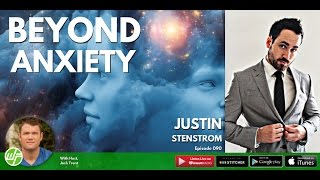
Podcast episode (Wellness Force Radio, Ep. 90) featuring host Josh Trent interviewing Justin Stenstrom about overcoming anxiety, panic attacks and depression. Justin recounts his adolescence of loneliness and frequent panic attacks (3–4/week), describes a counterintuitive three-step method he learned from the ebook "Panic Away" (observe/do nothing, welcome the panic, ask for more sensations) that stopped his attacks, and reviews complementary practices he used: self-hypnosis/hypnosis CDs (Dr. Andrew Dobson, Paul McKenna, Richard Bandler), meditation/mindfulness, gradual exposure (e.g., taking a dance class as the sole male), breathwork/yoga, nutrition and supplements (B vitamins, magnesium, vitamin D, omega‑3s, ashwagandha, valerian). Episode emphasizes small wins, journaling/victory boards, Six Human Needs framework (certainty, variety, significance, connection, growth, contribution), and building confidence by transferring familiar-domain behaviors into new social contexts.
Chapters
Wellness Force Radio Feelings are essential, but they can't dictate our actions. We literally inspect each other with our emotions.
We came here for a special purpose. Let the purpose unveil itself. Knowing without doing is the same thing as not knowing. They're not just trackers.
I'm gonna wear this and it's gonna.
Help me do the right thing.
Wellness force Radio episode 90 with author and speaker speaker Justin Stenstrom.
Give me more of this pounding chest, these butterflies in my stomach, these sweaty palms, these shaky legs, this feeling of complete dread. And you literally go through every single sensation that's causing you worry and call it out and ask for more of it. And what happens is that within a few moments, the panic attack, the fears that you're getting, they completely subside.
Welcome back to another episode, my friend. I am your host, Josh Trant. Thank you spending your time with me here on the podcast. This is where every week I'm bringing you access to global experts in all things wellness, behavior change and new technologies. On this podcast, you'll learn from exceptional people who are dedicating their lives to being a positive force for our physical and emotional wellness. My intention with the show is that together we'll discover the connections between our emotions and healthy habits to live our best life and enjoy the process. This episode is brought to you by Perfect Supplements, a company I'm stoked to partner with who actually walks the talk with their values of non GMO, pesticide free, real food supplements that fuel us for the wellness journey. Head on over to perfectsupplements.com wellnessforce Enter code wellnessforce to save 10% off your entire order. What's up, my friend? It's your friend Josh. I am so pumped that you're here this week. Today's show is about something that I've dealt with a lot in my life and that is a anxiety. You know, that little voice in your brain that you can't get to be quiet until one day you realize it's best just to surrender and welcome it in. Well, Justin Stentrum is coming on the podcast today to talk about how he has gone beyond anxiety. What tools, strategies and resources he's used to do that and how he's created Elite man magazine, Elite man podcast. He's been an author, multiple published selling author and a contributing writer to a lot of publications. Justin actually used to deal with depression, anxiety and panic attacks specifically in his life until he finally talked himself how to deal with the problem through self development. He continued on to grow outside the comfort zone. And challenged himself in ways that were previously unthinkable to him, like dancing in a room with 30 women. Just he's the only guy. And acting to becoming a nationally recognized dating coach. Today's show is for you. If you've suffered with anxiety or depression, you've had panic attacks, and you're looking for some real resources that you can trust, we'll talk about how to trust those resources, what you should look for in different coaches and publications around dealing with anxiety, how to build self esteem and confidence, and what true confidence looks like when you're not afraid to mess up and be okay with being that perfectly imperfect human that we all are. We'll talk about Justin's experience using self hypnosis and how to replace negativity with positive emotions. We'll dive into the Six Human Needs, linking back to a 2015 episode with a Tony Robbins performance coach on the Six Human Needs we all have to have in order to thrive in this life and how to harness the power of our small wins. You're really going to enjoy this show with Justin as much as I did, because this is a guy who, in his short 26 years on the planet has created and overcome so much. We can all connect with that because most human problems, especially anxiety, are all felt universally. Let's jump into this uplifting and empowering conversation with Justin Stenstrom. Justin, welcome to the show.
Hey, Josh, thanks so much for having me, man. I'm excited.
Me too. You know, you interviewed me for your show, the Elite man podcast. Now the tables are flipped. And today we're talking about how you've brought broken through a threshold of anxiety at a really young age and built some confidence to create huge impact for other people. And anxiety is something that I've struggled with a lot, especially in my 20s. And we've had a lot of emails written to me about our episode with Gretchen Rubin, how anxiety comes up based on our tendency type. But Justin, you're the founder of Elite magazine, the Elite man podcast. You have a new podcast coming out. You are a author. What is something fun, man, that we don't know about you? There's a ton about you online. But tell us something unique that might not be printed out there in the digital world.
Yeah, something unique. I mean, there's a couple things that pop to mind. A big ping pong fanatic. Like, I could play this all day long. I love it. Really good at. Also, I love playing pool and like pool, like pool shark kind of thing. Like, you know, I play with my friends and I've been playing pool and actually beating my dad because we used to have a pool table back when I was a kid. I've been beating him since I was like, 7 years old. So I'm kind of like, you know, like a prodigy in pool. But it was just a couple things. I also like to ride motorcycles and do fun stuff like that. So there's a couple of things.
You know, I was a kid and I was at the YMCA and we played ping pong. And I remember it's a physical sport. I mean, are you like those people from Asia where they're flying across the boardroom?
I'm not that good, actually. I went into a ping pong place one day and there was this, like, Olympian in there who was like one of those guys, and he just totally destroyed me. But I'm pretty good as far as just like, walking in, you know, off.
The street, playing, you know, sports, exercise, mindset. All these things contribute to getting rid of anxiety, transcending anxiety. And at a really early age, man, you dealt with this. You had panic attacks. I want to talk about one of the panic attacks I had. And then we'll kind of lead into what you experienced when you were, I believe, at the end of your teenage years and in your early 20s, right?
Yeah, that's right, man.
So something that happened to me is I was in the wrong relationship in my 20s, and I knew that it wasn't the right one. And I don't know if anyone listening can relate to this. Have you ever been in a relationship where you're like, ah, I just know this isn't the right fit, but you don't have the strength to get out? Well, sometimes these panic attacks and anxiety can be a gift. And what happened to me was I was driving to the gym in the morning. I was training clients at the time, and I had to pull over and I had to breathe. Kind of like one of those scenes from a movie where you have to breathe into a paper bag? That was me. I mean, I was on the side of the road in La Jolla here in California, and I just processed it. It took about 10 minutes, and it was a big shock to my system. Months later, I went home and made the change, had that difficult conversation that I wanted to have. But, Justin, panic attacks and an people deal with this. The numbers are staggering. The prescription drugs, the NSAIDs that are prescribed in our country, this impacts our wellness. And you had a firsthand account of this with your anxiety and panic attacks. What was going on with you at that Time.
Yeah, man, I was. So flash forward about eight, nine years ago is back when, like you mentioned, I was about 17, 18 years old, had no friends, no dating life, no social life. You know, this is a time when. When kids are teenagers, are going home and, you know, on the weekends and they're going out with their friends and partying and enjoy life and driving around, having a great time. I was going home every single day, and I was alone and had no one to talk to. And I was just literally sitting around watching tv, bored out of my mind and also really lonely and depressed. These things kind of crept up. It took a while, but over the course of a few years of doing this, throughout my high school years, it just kind of culminated in having this incredible anxiety about having no idea where I was going to go with my future, no idea how to make friends, no idea how to get myself out of this big rut I'd been in. And I started getting these panic attacks. And these panic attacks, for anyone who's ever had one, like you just mentioned Josh, they can be incredibly. Just like crippling, like they take over your body. It's all these sensations at once. It's racing thoughts that you can't control, obsessive thoughts about the future, about failing, about whatever it is. Pounding chest, like your heart's pounding out of your chest. Sweaty palms, shaky legs. You get this feeling of just dread that sweeps over your body. And these are typically the sensations of panic attack. And I was getting these three to four times a week. Wow. Yeah, it was crazy, man. And I literally. I mean, when you. When you start to have these things all the time, you think like, you're going crazy. And that's one of the things I thought. I thought I'd end up in, like a mental institution, you know, I'd be put away. And, you know, I was losing my mind like one of those crazy people on TV you see, and I was just, you know, scared out of my mind that that was going to happen. And the funny thing is, or the kind of ironic thing, is that the more I worried about it and the more I thought I was going crazy, the more panic I was getting, the more I was like, literally getting. Getting panic attack, giving panic attacks to myself. So, yeah, it took a while. It took about six months of, like, really, really bad panic attacks of three to four times a week. But I put my foot one day, I mean, kind of before the six months, but I put my foot and decided. Put my foot down and decided that I was going to figure out what was wrong with me. I had to figure out a solution to this. I had to figure out how to stop this before it really did take over my life. And I want to mention, too, that I was even suicidal because of these things, because of these panic attacks and because all the other depression in my life. But it was like having suicidal thoughts all the time because it was just so bad. Wow.
Let me jump in here because we've had a few guests recently on the show. One of them, Bonnie Kelly, she wrote true to your core. This is a book that unpacks subconscious beliefs. A lot of what you're experiencing and a lot of what people in this world experience is irrational thoughts versus rational thoughts. Right. So at that age, I mean, what were some of the irrational thoughts you were having?
It was definitely, you know, worrying about things like, you know, being a loser because I didn't have any friends, being one of those people who just kind of didn't fit in with everybody else. Then I started getting these kind of this anxiousness, this anxiety, these panic attacks. And then I started worrying about getting more. And then I started really worrying. And, like, this put me over the edge. Like, I said that I was gonna go crazy, and I. I literally had no idea what was happening to me. And this is kind of like just takes over your mind. You can't control it. That was like the scariest thing was that I had lost my mind and I was going crazy, and this just made things worse. Wow.
Man. And so, you know, Esther Hicks, Abraham Hicks talks about the vortex. And I'm not sure if you're familiar with that kind of physiology or any kind of that metaphor. Do you study anything around? I know you've dipped into Tony Robbins and a lot of personal development, but what about energy work? And we'll tie this in with anxiety.
You know, some of my teaching, some of my learnings over the years have definitely been Tony Robbins, ECKHART Tolle, Paul McKenna and Richard Bandler. Guys like that centered around some of the, you know, work they do with their subconscious minds and self talk and stuff like that.
So definitely with this law of attraction and being in the moment, you know, Eckhart Tolle talks about the power of now. His voice, by the way, Justin, I don't know if it put you to sleep. Did you read the book or did you actually listen to the audio?
I actually listen to the audio. And it's funny you say that because a lot of people hate the voice.
I just can't do it.
It's half and half man, some of the people hate the voice. And then I'm on the other half that just kind of finds it. It's so dull and, like monotone, but it actually, to me, it's like, soothing. I like it.
Well, tying it back in, you were dealing with anxiety, and there's this vortex of positivity. There's also a vortex of negativity when we're in that spiral. Some people have come on the show and talked about a shame spiral. Maybe it's a panic attack that's created by an emotional spiral. What did you find that really transitioned you and transce out of that piece where you're feeling the panic attacks three to four times a week? I mean, what made the difference?
The biggest thing, the best thing I found to help me get over this panic was a complete shift in my mindset. And it's something that I would have never done before. And it's incredibly counterintuitive. And if you think about it, it's kind of scary as hell to do it. But let me just go over it really quick. So it's like a three step little process that I stumbled across. I stumbled across this ebook way back when. And, you know, I kind of. I found it early on, but I put it on the back, sort of like the back shelf, you know, and left it there, so to speak, because it was like, like I said, so counterintuitive, so out of the realm of what you think would work, that I ended up stumbling upon it again later on. And then I tried it out, you know, kind of on a whim, just to end a panic attack. And it actually worked. And from that point forward, I didn't have any more panic attacks because that's how powerful it was. So really quickly, it's. It's three steps. The book, by the way, was called Panic Away, if I mentioned that or not. But it's three quick steps. So normally when you're getting panic attack, you want to run from the panic, you want to hide, suppress it, ignore it, et cetera, because it's a scary thing to deal with. Obviously, a lot of people don't want to face it in this little process. Josh, the first step is to actually do nothing. Just sit back and observe sort of your sensations, what's happening. So you just do nothing, don't react, sit back, observe. And that's step number one. Step number two is to actually welcome the panic in, like, have this dialogue in your head, in your brain, and literally just say, you know, welcome back panic, welcome back anxiety. It's great to have you. Welcome back. Thoughts of messing up or thoughts of going crazy, and you just kind of go through and just start welcoming all the panic, of the fears that you're getting of whatever it is you're kind of obsessing about, whatever thoughts are going through your head.
So you're literally saying, hey, welcome back. It's nice to see you again.
Exactly, exactly. Have this dialogue in your head and just start welcoming all the sort of sensations that you're getting. I know this is kind of where it gets a little crazy here. And the third step, which is even more crazy, is that you want to call out the anxiety, the panic, and actually ask for more of it. And this is sort of the most empowering and counterintuitive step of all. So literally go through every single sensation that you're getting. You know, the thoughts of going crazy, the thoughts of losing your mind, the, you know, say, you know, give me more panic, give me more thoughts of messing up, give me more thoughts of going crazy. Give me more of this pounding chest, these butterflies in my stomach, these sweaty palms, these shaky legs, this feeling of complete dread. And you literally go through every single sensation that's causing you worry and call it out and ask for more of it. And what happens is that within a few moments, the panic attack, the fears that you're getting, they completely subside. And like FDR said it best himself, there's nothing to fear but fear itself. What you're doing here is you're calling out your fears for what it is. Just a concoction, a fabrication in your mind and basically exposing it to the light. When you do that, it actually goes away.
Justin. For building self esteem. I mean, we've talked about these three steps. The observance, the welcoming back, the asking for more of it, which is really unique. But what about welcoming in feelings of self esteem and confidence? You actually took a dance class with 30 other women. @ one point, you were the only guy in class. Why did you do.
This? That was basically after I sort of figured out the anxiety problems, the depression, I realized that there was still another sort of piece missing in my life. Like, I'd kind of been back to baseline, but I wanted to overcome that. I wanted to really step out of my comfort zone, really get some confidence and just kind of start experian experiencing life. And so the first thing I did was decide, you know what? I'm gonna do something that I'm incredibly scared of. You know, it scares the hell out of me. I'm a horrible dancer. I'M not really great around women at this time, so that's kind of another thing too. So I just signed up for it. I mean, I was like, you know what? As hard as this is, as much anxiety and fear as this gives me, I'm gonna try it out. And I did. And before every single class, I was completely scared, like, out of my mind, you know, just so worried about being in such a social, high pressure, social environment. But at the end of every class, I felt like a new man. I felt completely rejuvenated, reinvigorated, just full of life and energy and confidence, and I thought I could take on the world. And that's how empowering doing something like this can be. Like putting yourself out of your comfort zone, doing something that scares the hell out of you, and then figuring out, realizing that you can do these things and they're not really as bad as you thought they.
Were. And I think for anyone who's on the path to letting go of tension, letting go of anxiety, it's those first stages, Justin. It's like the one, two, three step. You know, if you've done a bunch of things like speaking on stage or yourself dancing in a class with 30 women, maybe you're the only woman, and you're hanging out with 30 men taking a workout class, it's those first steps that are the most challenging, man. Would you.
Agree? Yeah, absolutely, man. Just putting yourself into that position in the first place is always the most challenging part. And that's the scariest thing. And I, you know, I kind of joke around, say I was scared every single class before, but, I mean, that was only for like a, you know, a couple seconds or a couple minutes. But in the beginning, it's like a real fear that, like, you're walking around with, like, you know, for hours on end, you know, thinking about, you know, if this is the right decision, should I bail now, should I drop out of the class? But once you start doing it, that fear really goes away.
Man. And this dialogue, the internal narrative, let's shift here, because this internal narrative doesn't happen when we're only at home alone. It also happens when we're out in public. You had a recent interview with coach Gina Ryan on overcoming anxiety. She talked about agoraphobia and how people can transcend that. You know, some people have a lot of tension, Justin, when they go into public gatherings. I've known a few people in my life, they can't even go to a stadium because they just get so much anxiety. What did you guys talk about on that show and unpack what agoraphobia.
Is. Yeah, I mean, Gina is an excellent practitioner, teacher of overcoming anxiety and panic and stuff. And yeah, you're right. Agoraphobia is a particular condition where people are just, for the most part, scared to even go out of their house. Like, they're scared to interact with the world. They're scared to leave what they know is comfortable, and what they know is comfortable is just being around their house, their property, their family, the things they know. And as soon as you take those things away from them, they're like, completely lost. Gina and I talked about the different strategies to really overcome that. But one of the biggest things, one of the easiest ways we've kind of come up with or have learned over the years is, is self hypnosis and self hypnosis, for anyone who doesn't know, it's basically tapping into the subconscious mind and having you sort of override the subconscious mind and give it positive affirmations, things that you want to better yourself in. So, for instance, the subconscious mind is the part of the mind that controls, you know, your feelings, your emotions, the body, bodily rhythms, your heartbeat, etc. Things. Things that you can't consciously control. That's all controlled by the conscious mind, the subconscious mind. For instance, if you want to say you want to be happy or have energy or snap into a, you know, snap out of your depressive, depressive mood, you can't just consciously say, you know, I want to be happy. I want to, you know, get out of this depression. It doesn't work like that. But if you can mean because that's controlled by a subconscious mind. On the other hand, if you can, if you tap into the subconscious mind and sort of override the inputs in the subconscious mind, you can then over time, train yourself to be happy, to be confident, to get over your depression, to get over your agoraphobia. Like any sort of process or feeling or mood or condition where it's controlled by your subconscious mind, there's a really, really high chance that you can tap into that and fix it with something like self hypnosis or just hypnosis in.
General. Yeah. So it sounds like in your kind of 30 years almost here on the planet, you have discovered self hypnosis as a powerful tool to replace some negative emotions with positive emotions. But, Justin, there's a lot of kind of gurus out there that even in my community here in Encinitas, where there's people that say, I'm a hypnotherapist or there's programs we can buy online. What did you take in? What have you done with self hypnosis? That really made a.
Difference. Three or four big sort of hypnotherapists out there that I always recommend. And, you know, I have no affiliation with them all, but they're just incredible, incredible teachers. Is Paul McKenna, Dr. Andrew Dobson, Dr. Dave Hill, Richard Bandler. Those are like, the best. And Dr. Andrew Dobson in particular is the guy I listened to. Like, I bought his hypnosis CDs back in the day. This is how long we're going back, because, you know, no one has a CD anymore. But I actually bought his physical CDs and listened to them to help me overcome my depression. And I did it every day. Took about a month, 30 minutes a day for about a month. And at the end of the month, I was a new man. I completely had gotten over my suicidal thoughts, my feelings of unhappiness, unworthiness. I'd gotten hope back in my life, which is something I hadn't had in years, like a new hope for the future. And that's pretty much what humans need. They need hope. And in any situation, you look at, like, the worst conditions of anything or something that anyone's going through, if they have hope, there's always a chance to improve themselves. And when people are really, really depressed, that hope sort of goes away and it disappears. Doing this hypnosis brought that hope back into my life again, and it helped me overcome depression. So that's in particular what I've used it for. But, yeah, like, these are some of the top guys out there. Check their stuff out. They're legitimate. If you see someone selling something like grow taller hypnosis or grow your hair back, they're prob. Not credible. And I wouldn't go with them. But, you know, typically someone who has a good background, like these guys do, are legit, and they'll help you.
Out. There is, like I said, so many people out there. So we will link all of those people who've created these programs in the show. Notes Justin. The replacing, though, of the emotion, it sometimes can be easy in theory, but hard in application. We've all had those moments where, you know, for example, this week, actually, I wanted something to work out with a different episode that I was having. And we couldn't book the guest at the right time. And so now we have to push it to 2017. And I'm in that moment and I'm feeling, God, how do I get rid of these thoughts? And I'm Pushing against the thoughts. Going back to what you said, though, with anxiety and what you read in Panic Away. How do we do that one thing? How do we get rid of the pushing and how do we actually pull it in? What's the mechanism behind accepting the negative emotion so that it sticks around for less.
Time? I think the best way to do that is to live in the present moment. And, you know, you accept what's happening right now. You don't accept your past like you accept your past, but you don't worry about your past. You don't think about your past for too long. And you also don't project yourself into the future like you may be doing. And like a lot of us do from time to time, you know, when something doesn't go our way or, you know, we're messing up, or, you know, we lose a guest that we wanted. I mean, that happens all the time to me too. And I got to kind of stop myself and stop projecting myself into the future because all we have is this moment right now and right now and, you know, et cetera. You can go on forever. All you have is what's in front of you right now, what's happening right now. Worrying about the future, projecting yourself into the future, that's only going to cause anxiety. It's only going to bring up fears. It's only going to cause you to live in a time that's not present, a time that hasn't even happened yet. I mean, you control your future. You control anything that happens tomorrow because you have today to do it. And worrying about what's going to happen tomorrow is just going against sort of the natural way we're supposed to live. And worrying about the past, worrying about some of the things you messed up on or the things you missed out on, that only leads to things like depression. It leads to things like unhappiness, unresolved worries or problems, regrets, etc. Having this moment right now, to live in the present and not worry about anything but just be in the now is the best way to face any of those.
Things. So beyond, if somebody's going to go get Eckhart Tolle's book, how do they do that, though? How do they sit in the moment? Is there breathing techniques? I mean, we've talked about box breathing before. Do you have any new insights about how people can stick and just be in that.
Moment? Yeah, it's definitely a mindfulness thing and practicing meditation. And I had this guest on the other day just talking specifically about this. Hundreds or even thousands of different ways to meditate, but it's really a simple as. Like you said, following your breathing, slowing things down, and just consciously living in the present moment, like living in what you're doing now. And the best way to do that is just focusing on your breathing. If you can focus on your breathing, there's the in and outs of it. Slow down, slow your breathing down, focus on breathing in and breathing out and just concentrate on nothing else but that for a couple minutes. You know, you kind of start with baby steps, you know, try it for a minute, then you maybe in the next day you try it for a few minutes. Then the next day it's five minutes and ten minutes a week later. Start with sort of baby steps of this. But just try focusing on your breathing and thinking about nothing else but your breathing. And that's kind of the best way to ground yourself and keep yourself into, into the present moment is to just concentrate on one thing at a time. And like he said, the guest I had on, there's, there's hundreds, thousands of ways to meditate that you can meditate on on, you know, what you want to do for your podcast or what you want to do for your business. Like you can meditate on a specific thought and that's kind of all you're thinking about. And then, you know, you're meditating on what the right decision is. So there's different ways to do it. There's so many different ways to do it. But the easiest way is to really focus first, I think on getting your breathing down and trying to keep your concentration with just.
That. So my favorite way is this box breathing technique. We're going to have Mark Devine from sealfit on the show. He actually formulated from doing training in the, I believe it was the Marine Corps and the SEAL Fit community. They both do this where they do a four second inhale, a four second hold, and then they exhale for four and at the bottom they hold for four. Have you done any kind of box breathing or any specific breathing techniques? You know, Wim Hof, the Iceman, We've all heard about the power of breath, but what about in your life, man? I mean, you've worked with clients, you've done this work for 10 plus years. What does that look like for breathing for you to be in the.
Moment? Believe it or not, I haven't done that. That box breathing technique sounds really cool, but I haven't done any specific breathing exercises like this. I am big on sort of meditating about what I want to do as Far as like, you know, for the day, like, so, for instance, each day I'll think about sort of what I want to do for that day and just meditate for about 10 minutes on what it is I want to get done. Like, like I said, like, you can concentrate on any specific thought, any kind of topic, whether it's your breathing or something you want to do with. Business wise, I'm good at meditating on what I want to do for each day and then sticking to that pretty much for that day. As far as, you know, breathing techniques, I'm not really too familiar with that. I've done things like yoga, though, which is great, and, you know, I kind of regularly do that also. Working out in and of itself is a good way to sort of stay mindful and kind of take out a lot of stress. So. So when I'm working out, I don't think of it as just like, you know, getting to the gym and that's it. I think of it more as like an overall sort of training for my mind. Like, I'm training my body, obviously going through the motions and everything, but I'm also training my mind to be more mindful, aware, conscious, and sort of just release all this stress throughout the day. And I think it's a great way for anybody to do it, whether that's yoga, working out or even just meditation. It's a good stress relief and it kind of keeps you.
Grounded. I love that so much, man. And I actually go to yoga myself. I like the heated yoga. It not only allows me, like Justin's talking about, to be in my body, but Justin, have you ever felt this in a yoga session where the thoughts come up and you find yourself spinning and then all of a sudden you realize, oh, yeah, I forgot to breathe. And then you get into your breath and then you're there in class and it literally takes you out of your head and puts you back in your.
Body. Yeah, dude, I love heated yoga too, man. I hadn't done it in about a year or so, but, man, I used to do it all the time. It was incredible. It's so. It's like a sauna plus yoga. And, you know, I'm a big sauna guy, I'm a big yoga guy, so it's. It's pretty cool to do those things at the same time. And you're right, man. It just keeps you grounded. And, you know, when you start to lose your train of thought, you start to kind of worry about, you know, things after the class. It's like you Breathe. And then that just goes away. And then you focus on your next movement and that goes away and you, it just, it's incredible, man. Like anyone who hasn't tried heated yoga, I definitely recommend trying it.
Out. Absolutely a powerful tool. Let's shift. Because along with this type of self esteem comes confidence. And with confidence, a lot of people, it blocks them and I've dealt with this a lot in my life, is not wanting to be fully seen, you know, being afraid of messing up and being filmed, or just like not being okay with being a perfectly imperfect human being. How do we cultivate this, Justin? You know, how do we be seen even if we're perfectly.
Imperfect? Yeah, man. I mean that's a, that's a great way to put it. And the sort of best way to start to gain confidence, like the foundation for anyone learning or thinking about learning how to get confidence is to realize that you already have confidence within you right now. And I teach guys this all the time. A lot of my clients actually are like sort of the video game geeks or self proclaimed video gamers. And they spend all day playing video games, whether it's Call of Duty, whatever they're playing now, eight, ten hours a day, this is primarily what they do. And that's it. And it's like they don't realize what they're missing out on for one, but they also don't realize that they have confidence in that environment. So you take this guy, you take this video game geek, or whatever you want to call him, gamer, he's sitting around playing video games for eight hours. He has incredible confidence in that environment. You take another guy just like him, put him in the, put those two guys in the same room, these guys are going to be talking strategy, they're going to be talking about the game, how great it is, techniques for it. They're probably going to be trash talking each other, you know, joking around, laughing, etc. They have confidence in that environment because that's their element, that's what they're familiar with. You take these guys, either one of these guys, you put them in a bar, a nightclub, a networking event, a business conference, whatever it is, they're probably going to lose that confidence because they're not familiar with it. So the first thing I tell guys to realize, and women, is to know that you already have confidence within you. If you take these guys and bring up their body language, their tone of voice, the way they carry themselves, the way they're joking and have that playful attitude with each other, you take all those things and put that into a social event. They're going to have incredible confidence. They just don't realize that they can do all those things in another element, in another.
Environment. A big part of our emotional health comes from how we feel in our body and how satiated we are throughout the day. I mean, it's hard to treat other people well and think good thoughts if you're walking around hangry. One of the best ways to cure satiety and satiation is to add in powdered collagen to your drinks, your waters and into your foods. I use perfect supplements collagen. It's sourced from 100% grass fed cows. That means there's no hormones, pesticides or synthetics because these are healthy cows that eat grass while the sick cows eat corn. So beyond these healing powers of collagen for digestion and joint health, it also has 20 grams of protein in two scoops which helps to curb appetite and increase that satiety. One of the cool things about this collagen is that there's individual packets you can mix in water and you know what it tastes like water. I mean, all of a sudden my glass has 10 grams, 20 grams of protein. And all the health benefits of having this non GMO pasture raised collagen in my bloodstream. So don't walk around hangry. Pick up your grass fed collagen. Feel better in your emotional body and your physical body every day. It's part of the Wellness Force radio bundle and it's heavily discounted just for you. Click over to perfectsupplements.com wellnessforce to save 10% off the already discounted package and get more wellness in the process. Do you feel like what blocks people really is not the fact that maybe they don't have the confidence, but that they're afraid of what their life would be like if they had.
It? Yeah, I think that holds a lot of people back. Like they're, they're not familiar with it. It's kind of unknown.
Territory. Yeah, it's like an unknown for the mind.
Right? Yeah. And we all, as you know, fear change and kind of fear the unknown. And I think it's an, it's easier for them to just sort of not do it or, you know, kind of suppress it than it is to put themselves out there and, you know, potentially look like a fool in front of a bunch of people they don't know. I mean, it's just a scary thing as human.
Beings. Well, I can relate to this, you know, I mean, Even now I'm 36 years old. There is times now where even I've interviewed people that are world class. And I still get nervous before I interview these people. And I go through my box breathing. I go through my mission statement, what I'm doing, and I make it not about me. Do you think that these people. And by the way, it could be men or women, you know, it's guys playing video games for 10 hours, maybe it's women who are just playing it safe and playing small. Why do they stick there? What holds them back from being seen, from letting that light get shined on.
Them? I think it's like you said. I mean, people are scared of the unknown. They don't know, you know, how they're going to be in that situation. They don't want to look like a fool. They don't want to put themselves out there. And also they're just content with what they have. Like, a lot of people settle, and it's kind of the big problem. It's sort of the big problem of the 21st century is like, a lot of people are content and they settle for baseline. You know, what's okay. You know, what's gonna. As far as jobs go, what's gonna get them a decent paycheck, what's gonna get them good health benefits, what's gonna get them a pretty good life where, you know, they're not depressed, they're not in jail, they're not living on the street. You know, they're surviving. So they're okay, but they're not really happy. They're not, like, excited about their life. They don't wake up and jump out of bed and say, you know, this is awesome. I can't wait to do, etc. They're just kind of like, you know, lazily getting out of bed and saying, you know, oh, here's another day. And, you know, there's nothing innately wrong with that except for the fact that we only live once. You know, we only have this life once. And settling for mediocrity, to me, is terrible. But a lot of these people that their mindset is not that. It's just, you know, mediocrity is okay, and, you know, my life's okay, and, you know, it is what it.
Is. Early last year, we had an episode with Nate Hoxtra. He was a Tony Robbins performance coach. And we touched on these six human needs. Justin, I want to list them real quick because I know you know them in your studies, but for the audience, they are certainty, variety, significance, connection and love, growth and Contribution. Which one of those do you feel like you see the most in people? What do they want the most out of those.
Six? As far as people that I come across, people I work with, it's definitely growth. But I'd say for the majority of people who kind of aren't in this, it would definitely be one of the others. But someone that's coming to me for advice, someone that I'm working with, someone that's coming to one of my events, they're all looking for growth. And this is the type of person I love to work with most. I mean, these are the motivated people. Like for instance, not everybody can be helped. And that's kind of the sad reality of the situation. I have friends who are great guys, you know, just incredible people, but they don't have it in them to want to be self motivated, to want to get to the next level, to want to fix some of their problems with like dating or confidence. You know, they're great guys, like I said, and I love them, but they're not in this sort of mindset of, you know, I have to improve myself, I have to become the best person I can be, I have to grow to the next level. And it's kind of a sad reality where you can't help people who don't want to be helped. And I think a lot of, maybe the majority of people have this mentality where they don't really necessarily care about this whole self help world that we're in. Josh. They don't care about growth and, you know, they're probably one of the other ones. But as far as the people I'm around, the people I love to work with, those are the self motivated ones, Those are the people who are looking for growth and those are the people who are who, who get growth because they don't stop until they have.
It. The power of what you're saying is that it's personal. Not only have you transcended anxiety and these panic attacks, but you've also had a tandem hunger for growth. You know, always wanting to devour and read and become this better version of yourself. Do you feel like people are born with that or do you feel like it's environmental? In other words, do you feel like a childhood experience? Maybe for me it was using food to numb out. Maybe for you it was dealing with anxiety. People like you and I that have had struggle, people that are listening, that are either experiencing struggle now or they had struggle when they were a kid, does that increase their hunger for.
Growth? Yeah, I definitely think it's probably more environmental than it is, you know, DNA, you know, the way you're, what you have in you. I think it, it's definitely, it has something to do with it because if, you know, if I wasn't doing this kind of self help stuff that I'm doing now, I'd probably still have this motivation to, you know, be the best I can be in, you know, business or whatever. Whatever I'd be in, I'd still have some sort of motivation. But I also know for a fact that if I didn't experience the things like anxiety, the panic attacks, the depression, the, the horrible efforts I used to have with my dating life, if I didn't have any of those happen to me, I would not be what I'm doing, what I'm doing now, and I would not be helping other people overcome these issues. And yeah, like you mentioned, it could be something from your childhood that motivates you, something a little later on, like, for me, that motivated me. So I definitely think environment plays an incredible role in this. But I also think, like, being self motivated is something that I think a lot of people are sort of born with or they're.
Not. Everyone knows we're in an ocean of information, Justin. There's so much out there about how we should eat well and get good sleep. You know, we have a mutual friend, Ted Rice, from Legendary Life Podcast, and he's a big sleep proponent of sleep hygiene. So we all know that there's these pillars of health that are important to us. But for you, I mean, if there was one that really made the most impact for you, would it be the nutrition and hydration? Would it be the sleep? Would it be the exercise and movement? Or would it be the mindset piece? Like, which one of those makes the biggest difference for.
You? Oh, man, that's a tough question too. They're all so.
Important. I know. They're all really.
Good. Yeah, they're. They're all really good. If I had to narrow it down to one, it would probably be the nutrition, though, the diet. And this includes supplementation too, because I'm a big fan of supplementation. I take things like magnesium, B vitamins, B complex, vitamin D, you know, your fish oil, your protein shakes. Like, I'm a big supplementation guy, but as far as, like, my Diet, I'm not 100%, you know, strict crazy with, I have to eat this every single day and that the next day and, and, you know, like, I'm not incredibly strict with what I eat, but I do eat pretty Healthy overall. Like, I won't put a bunch of snacks in my body. I'll have protein with every meal. I'll have a healthy protein with every meal. I'll have pretty good carbs throughout the day and I always have good fats and, you know, taking coconut oil, et cetera, cooking with that stuff. So diet, I mean, to me, if I eat crappy for a day, I feel like crap the next two days. If I eat, you know, a cheat meal, you know, that's okay, but I feel like crap the next couple hours after it. So it kind of motivates me to not eat like crap all the time and try to stay pretty healthy overall. And I think if I didn't have that, you know, I'd have a lot more things like anxiety. I'd feel bad about myself. You know, I'd sleep less in. The quality of sleep would go down. I wouldn't look as good, I think, as, you know, physically and feel as good about myself. So I think diet is probably the most important thing and it doesn't have to be anything crazy, like I said, but just, just eating fairly healthy throughout the week is really.
Important. I think that's awesome you mentioned that as your number one, because the food we put in our body becomes our cells, then our cells become us. So I can't think of something that's more important, man. You know, Dr. William Cole wrote an article on Mindbody Green, I think it was last year, and it was 13 foods to help ease anxiety. We'll link that in today's show notes. A surprising food that I saw actually help people to fight and kind of overcome daily anxiety was oysters. Do you eat oysters? And what are some foods that you might take in to when you're having a stressful day? Calm you down a little.
Bit? Yeah, that, that's great, man. I didn't know, actually. I had no idea that oysters were good for that. But it makes sense. I'm sure they're high in dha, epa, the things in fish oil, and those are just great overall health. Health sort of supplements. But yeah, I mean, I eat fish pretty regularly. I eat tuna probably three, four times a week. I eat apples, bananas, broccoli, etc. Things like that, where it's just gonna help me overall with my well being. There's not a particular food that I'll run to say if I'm getting a little anxious. There's nothing I can, can pinpoint into saying, you know, I need to have that to calm down. But if that does happen, and that's very rare where I get even a little anxious like that. If that does happen, I'd actually be more inclined to take something like a supplement like magnesium or a B complex or a niacin. Niacinamide. Abraham Hoffer, the doctor has great work on the effects of niacin and how powerful it can be for things like anxiety, you know, depression and actually even things. It's so powerful in the brain, the B vitamins, especially niacin. It's so powerful in the brain that it's actually been studied to help get over or completely stop the effects of stuff like Alzheimer's disease, Parkinson's, like, I mean, this groundwork, sort of groundbreaking new work on that stuff and how. And I think it needs to be studied a lot more, but how effective it can be for your brain. Andand niacin is the big one there, even B6, B12. So I'd be more inclined to take a supplement like that if I was getting, you know, anxious about something. But obviously having foods, fish, chicken, lean steak, just eating healthy overall and then combining that with, you know, complex carbs, you know, your kale, your broccoli, you know, things like that is definitely just gonna help you overall sort of with your overall well being and.
Health. On the show we've had many people, some naturopaths, some medical doctors that have talked about different ways that we can eat. But what I'm hearing you say is that there's some key supplements out there. Have you done any Ashwagandha or Rhodiola Rosea or holy basil, has that ever been something that you've put in or maybe with.
Clients? Yeah, Ashwagandha is something I've dabbled with in the past. It's a natural adaptogen that's. And the other ones too are very similar as well. I believe they're adaptogens. I haven't personally used them, but I believe their effects are very similar to Ashwagandha. So, yeah, thatthat is another one. I don't use that as regularly. I try to use things that are found sort of more naturally in our foods just because personally, I think it's a little safer, a little healthier in the long run. But Ashwagandha, I mean, the efficacy of just how powerful that is. And safe too, by the way, because that is a very safe herb. Natural, natural, natural herb. But Ashwagandha is incredible for stress relief, for relaxing, for anxiety relief. I think it even works for depression as well. And it's a good Sort of energy boost as well for people who kinda want a little, you know, something, something when they get up in the morning and they're kinda feeling, you know, a little, a little drained. Uhm. But yeah, ashwagandha something II'veI've messed around with a little bit in the past and it's really good. The other thing too, I don't think I mentioned is valerian, which is something I haven't personally used either. But students, clients, a lot of people I've worked with, colleagues have talked about this and it's literally like nature's antianxiety medication, like natural anxiety reliever. And this is probably the most powerful on the list of all for removing anxiety in your life. And I haven't had to use these because the other things have worked for me, me. But if all else fails, I would recommend trying valerian root out, taking the right doses of it, obviously, maybe consulting with your doctor first. It's incredibly safe though. It's incredibly effective. And the proof is in the pudding. It's out there. Look it up, do your own due diligence. But valerian is another really good natural herb to try.
Out. So we've gone to some cool places, man. My favorite one was when you talked about your three ways from the panic attack from Barry's work. We also talked about self esteem. We went into the six human needs and now we're at this place where I think somebody's listening and they're like, okay, what do I do now? How do I take action, Justin? What do I do? What's one thing that I can do as a listener, as a human being to create a small win for.
Myself? If you're looking to sort of, I mean, we talked, like you said, man, about a ton of stuff. We talked about anxiety, we talked about depression, talked about gaining confidence in your life if you have the anxiety down. If you have depression down, you don't really have those problems in your life. You're looking to gain some confidence because you're sort of at baseline already, which probably the majority of your listeners are. The easiest way to start right now to gain confidence in your life? Well, there's a few things, but the easiest way, I think is to have small wins. So build yourself up over time. Talk to, for instance, you're walking down the street. Talk to an old couple and say hi to them. Go to the cashier, say hi to the cashier, strike up a little conversation with her. Then talk to someone who's a little more intimidating. Talk to a really Attractive woman or an attractive man, have a conversation with them. If you're looking to build yourself up over time, this is obviously for a social conditioning thing. If you're looking to have more confidence in something, build yourself up over time, have small wins, and gradually get better at this. When you start to do these things, you start with something small, like just saying hi to an old couple on the street. You build yourself up to the point where you can talk to anybody. You can talk to the opposite sex that you're attracted to and have great, exciting conversation with them. Your confidence goes through the roof because it slowly builds itself, and it slowly sort of leaps off the back of what you've done previously. And over time, these things add up, and these small wins become a huge win over time. So if. I mean, this is just one example of socially doing this, but you can apply this to anything. You can apply this to business, to relationships, to dating. Having these small wins over time gradually build yourself up. So start small, but stick to it. And over the course of, say, a couple months, that conditioning of training yourself is gonna be.
Huge. I love this so much because I'm thinking about vision boards, and we had a guest on the show. I already mentioned her, Bonnie. She had a victory wall where, when things would happen, she would actually put them up there. She published her book. She put it up there, there. She ate well for an entire week. She got her workouts in for a month. What do you think about people as a challenge, maybe for small wins, having a victory board where they're writing down all their wins for the entire week or the month? Have you ever advised someone to do that? I mean, does that make sense for these small wins and tracking the small.
Wins? I love that idea. I think it's a great idea. I typically advise people to journal this. So it's very similar to that, where you're just keeping track of everything. You do, like, have a goal for, say, the week of what you want to do, and then, you know, just fill it in. Like, if you did those things, fill it in, pat yourself on the back. Like, you literally pat yourself on the back. After you do it, write it down. Write down that you completed your goal, and then, you know, next week, it's like your. Your goal is progressively a little more challenging, but then you do that as well. And it's like, wow, I'm really kind of banging this out. I'm getting through these things that I didn't think I can do before. Then you look back, you know, a couple months later, you're looking back at square one, and it's like, wow, that was so easy. Now you're like, back, you know, months later, and it's like square 20. And it's like, wow, I'm doing all this crazy stuff that I never even imagined I could do.
Before. Right, so.
Right. That's a great way to do it.
Man. That is so. That is such a great point, man. It's tracking the successes because we all, we all are gonna get to this end of the finish line eventually, right? But before we get there, let's set some nice positive benchmarks along the way. Justin, this is the last part of the show, man. This is seven fast questions for seven unscripted answers. This is where we get to know you. Are you.
Ready? I'm ready.
Man. What surprised you most about getting into the space you're in now? What people or events have most surprised.
You? I guess the, the thing that surprises me most is the mindset that a lot of these people have. And we touched on this briefly earlier, but it's just the, the, the self help field. I mean, they're full of obviously a lot of kind of marketing people and bad people that want to just, you know, sell you whatever they want and, you know, kind of people like that, like a bad stigma with those people. But the majority of the people I've met are incredible people. And the sort of overwhelming theme is they're all looking to help each other out. Like, I go to a conference and everybody there is having a great time because we're all into this stuff. We're all loving this stuff. We're all encouraging each other, patting each other on the back and, you know, just encouraging and helping each other grow together. And I think it's, it's such a cool, cool thing when you can meet people like you who want to help you out, want to help other people out, and, you know, who you want to help out because they're such great.
People. How has your relationship with your grandma guided you in life on some of these tough decisions you've had to.
Make? Oh, man. It's funny, you must have pulled that out of one of the interviews I did a long time ago or.
Something. I got you.
Man. No, my grandma is literally the closest person to me in the world. It's funny, she was an immigrant from a country called Peru in South America, and they live basically in little huts and basically didn't have floors, they had dirt. It's just a really different life from what she had. And she didn't have all the advantages I had. She didn't have someone taken care of. She was basically living on her own when she was 13 years old. And then she had younger brothers and sisters and had to take care of them. And, you know, as I grew up, she was taking care of me. She actually took care of my mother as my mother was in adolescence and as a teenager. And so she's basically like the caregiver of our family. She took care of generations of people and just instilled, like, this love in me. And just. I mean, she's basically like a living angel, and it's kind of what I think of her. And we always have our differences. From time to time, we get in arguments and everything. She's not perfect, nor is anybody, but she's just, like, incredible and has always been a guiding sort of role model in my life of the love out there and how great the world can.
Be. I hear you on that, man. I had such a deep connection with my grandpa. And I think we can learn a lot from people that have been on the planet three, four decades more than we have, right? Maybe 50, 60 years more than we have. So, next question. You're at rock bottom. What was that source of energy or motivation that helped you rise.
Up? That's a great question. The energy I had was just someplace inside that was saying, don't give up. I don't know what it was. I don't know if it was God. I don't know if it was my soul, my other half, speaking to me. Whatever it was, it was basically just something that came from deep inside me that I hadn't seen in years. That was basically just telling me, like, you can do this. Don't give up. There's a solution. We'll figure it out. And it wasn't like it was saying all these things to me, but it was just something that, in the back of my mind, sort of spoke to me, you know, very faintly, very softly, but. But something that. That gave me that motivation and drive to not give.
In. Do you think there's a.
God? I do. I don't know particularly what it's like or, you know, I don't have incredible thoughts on afterlife, et cetera. But I do think there's some sort of greater force, you know, controlling the destiny of mankind and what.
Happens. Who's been your greatest mentor in business or in.
Life? Personal mentor, I'd have to say this guy named Adam La Dolce. I don't know if you're familiar with him at all. He was. He was a Dating coach back in.
Boston. He sounds.
Italian. Yeah, I think he actually is. La Dolce is definitely an Italian last name. Okay. But yeah, he was just a great guy. You know, he helped me sort of start my first blog, guided me, sort of showed me the ropes with this online business world. And, you know, he gave me that initial push and from there I just kind of took it and ran with it. And without him, I think I'd be a couple years behind from where I am today. So, I mean, he was definitely a big sort of inspiration in the.
Beginning. What's the thing if you were in politics, if you were maybe a state leader, a government leader, what was one thing that possibly you'd spark change for in health and wellness, particularly if you were leading being either a state or a government.
Institution? That's a fantastic question too, man. I think the biggest thing I would have to do would have to be to teach children the self help stuff that we have and that kind of entails. That entails everything. But people don't learn about this stuff in school. I mean, it's only until after you graduate that you even realize there's a whole other world of all this incredible stuff. The Richard Bandlers, the Tony Robbins, the Paul McKenna's, the self hypnosis. We talked about the living in the present moment, the eating right, eating healthy, good foods and taking good supplements that are just naturally healthy for you. All this stuff is just shunned away from education and society that I think I'd put it right into the light and help as many people sort of see the other side as.
Possible. So good, man. I'm Visualizing Personal Development 101 in high school for kids. Right. I mean, it's so true. So what is this one thing tomorrow morning, then somebody gets up, they've heard the show, they're stoked, they have it on repeat. What do they do tomorrow morning to get in their body and out of their.
Head? Maybe the first thing they do is some meditation and just concentrate on what they want to do for the day, focus on what they want to accomplish that day and then listen to some of the things we talked about. Man, we talked about a lot of great topics. Just implement some of these things into your life each day and you're going to see be a lot of.
Improvement. We've had so many guests that have talked about meditation. I know that it's challenging in the beginning, but you guys, there's tons of information on wellness force about meditation. This is our last question, Justin, before we say goodbye and Give people an informational source where they can get a hold of you. You've achieved a lot in your 26 years. So in that time, what have you learned about wellness? I mean, if you were to define wellness in a sentence, that's a great.
Question. And thanks, man, for the compliments. The wellness to me is. Is basically being at your best mentally, physically, socially. Those are the main aspects of what it means to be healthy. So I guess just taking care of your mind, taking care of your body, and then taking care of your interactions with people, because that is something often overlooked and is such an integral part of. Of being human and, you know, getting those connections and relationships that we need. So taking care of all three of those things and having those down, you're going to be a healthy person and you're going to be very.
Well. Justin Stentrom is our guest. Elite man magazine is the website for him. But Justin, your new show coming out on iTunes, 2017, the Justin Stentstrom Show. Tell us about.
That. December 5th, it's the Justin Stenstrom Show. This is sort of an offshoot of the Elite man podcast, but more of, like the backstory of things. So some of the times we have a topic and we kind of stick to the topic on the Elite man podcast and, you know, it's great, but we sometimes miss out on the rest of the story. You know, the daily habits, the way that our guests were brought up and some of the conditioning they've had, the experiences, the backstory of what made them who they are. So this kind of fills in those gaps, fills in the pieces. And it's the Justin Stenstrom Show. It's J U S T I N S T E N S T R O M. And you guys can subscribe right on itunes. It's an awesome.
Show. Thank you so much for coming on today. I want to pause for a second and honor the work you've done, man, 26 years old, creating change for hundreds of thousands of people online in conferences with your podcast. Amazing job. You inspire me. Thanks for sharing your gifts with the Wellness Force Radio.
Audience. Josh, thanks so much for having me on, brother. I really appreciate.
It. That is a wrap for episode 90. Thank you for sticking around till the end of this podcast, my friend. I really appreciate your time. Everything that we talked about today, all the links and the show notes and the resources can be found at the blog wellnessforce.com beyond anxiety. Make sure to check out Justin's new podcast, the Justin Stenstrom Show. I'll also link the podcast podcast episode he had with coach Gina Ryan on overcoming anxiety and agoraphobia. How to rise above that. I'd love to know what you took away from the show. Was it about harnessing the small wins? Was it self hypnosis? Was it about building that esteem and confidence? Or replacing the negative with the positive? What's been successful in your life? Did any part of this show help you Tweet me elnessforce or email me josh wellnessforce.com I would love to to learn about how this made a positive impact in your life. And I'd also like to know what kind of guests you'd like to see on the podcast in 2017. We're wrapping up the 2016 year. It's been an incredible year of growth and lessons and learning. And I gotta say from this show, what I heard from Justin and what I've been experiencing in my own life in 2016, it's that we're all these imperfectly perfect humans. And true confidence is not about having the absolute absence of fear. True confidence is about feeling that fear and then just going through the threshold, just doing it anyways. It's about being okay with this perfectly imperfect human state that we all live in. One of the things that I really pulled from this episode with Justin was being in the moment and observing the sensations our body is having. And one of the things we went over in my 10 day meditation that I had this year in Joshua Tree was feeling the sensation. Our body is the ultimate beacon of truth. If we can sit still for long enough on a cultivated daily basis, those sensations we're feeling are going to teach us exactly what we need. He talks about welcoming back the feelings, having this narrative where instead of pushing and being angry at the feelings that we're having around anxiety, welcome them in. Ask for more of those feelings. Have that self narrative where you can handle whatever life is giving you. Easier said than done, which goes into creating the community around you that wants to enforce and fortify that new mindset that you're having. Make sure your community is a mirror for the way in which you're trying to grow. Because if not, that's the first step, in my opinion. Make sure your community is a mirror of exactly the life that you want. You know that phrase, you are the closest of the five friends and the habits they have. I could not agree more. And that's why it's time for some possible house cleaning in 2017 or some gratitude practices around the friendships you have now. All you have to do is go out there and create an amazing day by making the people around you that you care about feel your gratitude and feel your joy in taking care of the body that you live in. So until I see you again real soon, I'm wishing you love and.
More from Josh






Your child's future start before pregnancy... and even before conception! #podcast

MD Reveals: Your Healing Creates Your Child's Reality (The Souls Coming In Need Strong Bodies)



