Brain Expert: Why You Fail Quitting Bad Habits (and How to Finally Break Free)
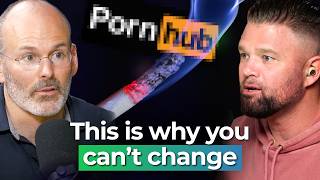
Interview (YouTube) of Dr. Jud Brewer by Josh Trent (recorded July 15, 2025). Main themes: habits and addiction are driven by embodied feeling rather than willpower; awareness and curiosity are the primary levers for change. Brewer explains habit loops (cue → behavior → result), describes substituting curiosity for craving or worry, and links mindfulness/meditation and app-based interventions to improved outcomes (claims include large effect sizes versus usual care). He discusses generative models (top-down predictions vs bottom-up sensory input), the role of the insula and interoception, the overlap between meditation and psychedelics in deactivating self-referential networks, and practical programs (Mind Shift Recovery free app) to help people with addictions (including pornography). He emphasizes kindness alongside curiosity, grieving and distress tolerance, and reframing addiction as continued use despite adverse consequences. Clinical and anecdotal examples (smoking, anxiety, porn) illustrate methods: mindful attention to the embodied experience, becoming 'disenchanted' with the behavior, and comparing short-term relief versus sustained connection.
Questions this video answers
July 15, 2025
Mind Shift Recovery (free app).
Reported 'five times' higher quit/remission rates in studies; example remission rates given: 63% (app-based mindfulness + clinical care) vs 3% (usual care) in one study.
Chapters
If you want to change a habit, it's not about willpower. We don't really have willpower. What we do have is awareness. We can't think our way out of a habit because that's not how they form. We have to feel our way out.
Dr. Jud Brewer is a New York Times best selling author and thought leader in the field of habit change. How does this relate to addiction?
It's really about just seeing, oh, these are habits. And the behavior that I have is driven because I feel unpleasant. I want to make that go away because often we get this brief relief, but we have to see that that's perpetuating the cycle and it's just feeding a want, which is I want to feel better instead of meeting a need, which is I need connection. And then we get addicted to that because we're just putting band aids upon band aids upon band aids because we don't know how our brains work. Because if we don't know how our brain works, how can we possibly put our brain to work for us? And the only way to change it is to.
So people are doom scrolling at a rate maybe we've never seen before. And you said something recently in an interview that just rocked my world. You said shame is a habit loop. Self flagellation feels better than doing nothing. How does that relate to our addiction with phones right now?
Oh, it's, it's everything. You know, shame feels bad. Doom scrolling numbs us out. And so it's feels better than beating ourselves up. So we do it. So you can see that shame feels better than doing nothing. Doom scrolling feels better than feeling ashamed of ourselves. So you know, one can spin into the other.
Yeah, that seems like a snake eating its tail. The, the shame spiral begins when someone says I'm doing this thing and I hate it, yet I can't stop doing it. And now on top of that, I'm going to give my nervous system this excitatory response that makes it feel alive. But it's a pseudo aliveness what's going on there from both a neurological and also an emotional intelligence perspective.
Well, it all comes from trying to be alive and keep ourselves alive. These are our most basic learning mechanisms. And they're so good at what they do that our brains co op them for things that they're, they don't know how to deal with because they weren't, they haven't evolved to, to deal with them. And so in modern day, you know, everything is, it's, it's not just hyper palatable food. It's not just the refinement of coca leaves into cocaine or, you know, the development of fentanyl and you know, these extremely addictive drugs. But now everything is in is being engineered to be a hyper palatable experience, including in that social media has kind of paved the way for the world for that because these companies have enough users that they can be doing a b testing on. They can test every tiny little tweak that by itself wouldn't make a big difference, but when you add 10,000 tweaks together, it makes a big difference.
And we're really no match. Our, our brains are very ancient, which we're going to get into the science of the brain, which you're such a master of. Man, your TEDx talk. I don't know how many views it has now. I think in 2021 it had millions. People are drawn to you because this is your life's work. This is why it's so exciting because I really love learning from people like yourself who can blend academia and clinical experience with their own life. And I remember you were talking last time when it came to your own habits around food. This is a callback to 2021. We first podcasted. You were an athlete. You had no real idea of nutrition and your mom gave you a healthy piece of food and that. Do you feel like that when your mom gave you the peanut butter and honey sandwich when you're an athlete, that that started your awakening about the you might step into or did you just have no idea what that was?
All I knew, I was in seventh grade or something. All I knew was that it helped me win BMX bike races. So, you know, it was rewarding enough to do it. But I wasn't thinking like, oh, wait a minute, you know, maybe I'll become a neuroscientist. Maybe I'll start meditating when I'm in medical school. It was just like I'm, you know, I'm bonking from eating junk food and I need, I need a solution. And my mom gave me a good solution that worked.
I always learn from people who have embodied whatever it is that I'm desiring to achieve myself or whatever I'm looking to embody myself. When you look back from that experience of your mom giving you the sandwich to then helping so many people, literally millions and millions and millions of people have absorbed your work, the application, the three books, probably more on the way. Do you ever look back at a defining moment where you thought, huh, I really get to take a look at my own habits. If I'M going to teach others how to change theirs.
There were probably several moments. There wasn't one crazy aha moment. I think a lot of these things grow gradually, but one was that I was really stressed out at the beginning of medical school and I. When I started, I started meditating my first day of medical school. And when I meditated for a little while, well, to be honest, the first six months, I basically would listen to the instruction and fall asleep, you know, but after a while I stayed awake and started realizing, oh, this is helpful, and then started realizing how little I actually knew about my own mind. And that maturation process had to happen because otherwise I wouldn't be able to look to see where I was making progress, because I didn't even know what progress looked like. And that started with just understanding the basic mechanics of my own mind, which was that it's all over the place, that it gets pushed and pulled by things that I have no control over it. You know, I used to think that the grit your teeth, that was the method for everything from, you know, winning sports competitions to getting into medical school. It turns out it's not that. It's. That's a story we tell ourselves. Certainly one that I believe for a long time.
Yeah, the stories we tell ourselves. I love that we're already going into expanded consciousness conversation. This is, See, this is what I love about our interview in 21. This is what I'm looking forward to now. Your ability to blend the, the metaphysical and the spiritual with the cognition and cognitive sciences. I just feel like it's very rare. There's a lot of people that specialize in one lane, per se. Right. There might be a world famous neuroscientist or a neurosurgeon, and that's all that they do. Or there might be Jon Kabat Zinn. Right. Or Eckhart Tolle or someone that goes very deep in their lane. What is it about your own curiosity that that makes you want to so in a fun way, blend both of these worlds? Because at first glance, if somebody's not aware or conscious, they might think they're different, but I believe they're the same.
I agree with you on that. You know, I think it's you actually named the word that probably helps blend all of this together, which is curiosity. I've always remember being a curious kid. I would take all my toys apart to see how they worked harder to put them back together, by the way, but at least I could see their innards. But that curiosity really helped me start to ask Questions about my own mind to begin with, like, how does this thing work? You know, who, you know, the question is like, who am I? What you know, what is consciousness? All that stuff. But also to start to, when I was stressed out in medical school, to be curious, like, okay, what can I do about this? Which ended up paradoxically being not doing something in the Western sense, but really just kind of resting in and observing my own mind. That curiosity also helped me, you know, get my PhD in, you know, in my graduate training, so I could learn to ask better and more pronounced scientific questions and then apply that methodology to studying habit change, which also was born from my curiosity and failure. You know, really, it was really humbling to start my clinical practice as a psychiatrist and watch all the stuff that I learned in medical school and residency just not work very well. You know, there aren't good medications for addiction. There, you know, there are a few things that can help some people. It's not that none of them ever work for anybody. But for example, with anxiety, it's the official terms number needed to treat, which is just a fancy term that gives you a sense for how well a medication works. And for anxiety, it's only one in five people that show significant benefit from anxiety medications. So I was basically playing the medication lottery. Didn't know which one of the next five patients I saw was going to benefit and what to do with the other four. So bringing that curiosity back in to ask, okay, what are we missing as a field? And being able to then start to bridge, oh, well, there's some commonalities with, you know, how habits around anxiety are formed and those blend with some of these commonalities that I was learning in my own meditation practice. And these were blending with what my patients were talking about in terms of how they were suffering. And so I was just curious to see, you know, do these things really fit together and then had the training scientifically to actually answer those questions to some degree, you know, would do these clinical trials and, you know, for example, we started employing these mindfulness trainings for smoking. We got five times the quit rates of gold standard treatment. Doing randomized controlled trials with anxiety, we're getting, you know, five times, literally five times better remission rates and anxiety in people with generalized anxiety disorder than clinical treatment. When we add this on to the general clinical care, like the remission rates in our first study were 63% that in the people, we just use an app based mindfulness training program that we developed. And then with the people that just had usual clinical care was only 3%. So it was probably more than five times. But you get the idea. It was pretty powerful. So all of that comes back together from just kind of following, you know, following the curiosity, like, oh, can this work for people? Oh, how does it work? Oh, does this fit with my own experience? Oh, you know, just that. Oh, there's plenty. Plenty to keep learning. You know, I'll never gonna. Never gonna run out of things to explore and be curious about.
Yeah, especially in your field, because the landscape of the world and behaviors in the world, especially with teens and children. I can't even imagine the onslaught of, like you said, a B testing a thousand times in social media, specifically tick tock. I see as the juggernaut. And it really boils down to, I think the Greeks had it right, Judd, when they said at the temple, the Apollo in inscription, know thyself. I mean, really, that's the Greeks telling us, be curious. Know yourself. Know who you are first and then know why you do things. What comes up for you when you hear that? Know thyself first, then work on the behaviors. How does that align with your framework?
It lines perfectly. Because if we don't know how our brain works, how can we possibly begin to work with our brain or even get our. Put our brain to work for us?
So.
And that's actually where I start clinically, so I'm glad you bring that up. That's where I start with all my patients, is just teaching them in how basic habit formation works. And it's, you know, it's relatively straightforward. Three key elements that trigger a behavior and result. And this is how 90%, probably of our behavior in just everyday life works. So most habits are helpful. You know, imagine having to relearn how to walk every day. You know, how to relearn everything. It's just not pragmatic. We'd be exhausted by breakfast. So here. Habits are helpful until they're not. But knowing how habits form is always helpful because it helps us step back and then see those patterns in our lives and then be able to ask the question, is this helping me? Is this serving me? And most habits are helpful. I don't want to unlearn how to walk, but I do want to be able to see more clearly the habits that are getting in my way and getting, you know, getting in the way of me, you know, me helping people, me interacting with people, having relationships, all of those things. And when I can see that clearly, that's the critical change step, which is seeing how unhelpful they are. So I can unlearn them. And the paradox there is that takes no willpower. If you look at the neuroscience equations, they don't include willpower, but they do include awareness. So we've got to see clearly what's working and what's not. And once we can see what's working, what's not, then we can link that back into this habit loop piece, and then it kind of unwinds itself. I'll give a concrete example, because I think stories help illustrate, you know, these concepts. My patients that want to quit smoking, I tell them to smoke, you know, and I tell them to pay attention as they smoke, and they start to see pretty clearly that cigarettes don't taste very good. And so that's the first step in helping them step out of those habit loops. Because they become disenchanted with the smoking, right? Not because they tell themselves they should quit smoking or know that smoking is bad for them. That's all up in their head. This is the embodied experience that drives all behavior change. I think of it as, you know, our feeling body is much stronger than our thinking brain. Much stronger.
I want to stop you that this is so good. So a lot of the work I've been doing since we podcasted almost five years ago has been around somatic experiencing or embodiment work, whether it's sacred, feminine, sacred, masculine. If you don't like those terms, cool. How to be a better man, how to be a better woman, they all mean the same. And what I found time and time again, and Dr. David Hawkins talked about this too, in Power vs Force. He said that for many of us, especially for men, because we tend to have. I know, I'm making a reductionistic statement. We to tend. We tend to feel a little bit differently about life than women. Would you say that's fair?
Generally, yes.
Generally. Well, he said that for men, the biggest space is the space between the head and the heart. And I really love that you said it has to be embodied, because if we're just intellectually trying to heal, then we're trying to use the same logical framework and actually the same hardware software to heal. That really won't get us to the pathway of healing, because the healing lives in our body, AKA the unconscious mind. What do you make of that? Have you referenced Dr. Hawkins work in. In your studies at all?
I have not. But there's this guy named Albert Einstein and a quote attributed to him which is, you can't solve a problem from the same level of consciousness that created it. Now, he probably didn't Say that, but it's a great quote nonetheless. You know, it's an attention getter. You can't solve a problem from the same level of consciousness. They created it. And the idea there is you can't think your way out of a, of a problem. You can't think your way. Well, let's, let's be clear. A logical problem. Yes, that's what thinking is for, and it's very helpful. But for habits, we can't think our way out of a habit because that's not how they form. We have to feel our way out. And that feeling comes from awareness, from curiosity.
And that feeling resides where is it the neural tree? Is it the vagus nerve? Is it connected to the amygdala? I mean, there is some hardware here. Yes, the, the feeling body, as you mentioned.
So there are certainly brain regions and networks involved in what's called interoceptive awareness. And I think this is where somatic experiencing can be really helpful because it kind of helps to strengthen those pathways. One of the key brain regions, these are always overly rejectionist, but just in case people have heard of this one, it's called the insula, you know, literally the island. And the, the insula has been shown to be activated when people are sensing their embodied experience. You know, whether it's their heartbeat, whether it's other things. And that's also where we feel emotion. Right. Is in our body. We don't feel it in our brain. Our brain doesn't even have sensory neurons. That's why you can do brain surgery without anesthesia once you cut the skull.
Fun fact, I did not know that. That makes sense. How could you operate on a brain if it could feel you operating on it? That makes perfect sense. Wow. So these receptors don't live in the brain. So the brain is literally wired to give and receive information.
Yep.
Is that its core function?
Well, it's. It's got a lot of functions. That's one of them. And if we want to get into some really interesting stuff, I mean, it's all interesting, but there's. I love it. There's some newer work around what's called generative models. And this comes from this interesting anatomical anomaly, which is, and I actually learned in medical school that, you know, our brain processes information that comes up from the sensory, you know, the peripheral nervous system, you know, and so it's okay, it's bottom up, but it turns out when they were able to look at the anatomy, the connections are actually, there are 10 times more connections going down then up. So fundamentally People started asking, you know, wondering and started starting to question whether it was simply about incoming sensory information. And then I don't remember where this came from, but the, you know, some people started asking, well wait a minute, can we actually process all the sensory information that's available in any one moment with the apparatus that we have? And the answer is no way. Too much information available at any one time. Our brain would crash. So what our brain does, and it's evolved to do this is it actually makes up stories. It hallucinates in a, in a literal sense where we are, we, you and I, everyone, we're all hallucinating our world. We're generating our world. We're creating a story of the world every moment that is based on our past experience and that store what our sensory information helps with is basically we're expecting certain things to, to look and behave the way that our story says that they should. So for example, this microphone in front of me, I expect that it's not going to move unless I move it. It's, I expect it to be an inanimate object because in the past that's how microphones have worked and that's how I understand physics. So if this microphone suddenly, you know, jumped on the top of my head, I would pay attention. I would pay a real attention because my brain says there's a mismatch. This is called the, you know, error signal. Right. So the, the error is I was expecting that thing to be the way it is. And with the expectation I can basically only take in very minimal sensory information. Like if it's, it's, if it's behaving the way I expect it to, I'm basically ignoring it. That's a microphone. But I don't, I see it in my stories mind's eye. It looks very rich in detail, but it's, my brain can't actually process sensory information in as rich D in 4K for example. It makes that up. What my brain is seeing is edges, colors, shadows, shapes. Right? That's about it. And to give an example of that, you know, there so that these top down sense, these, these top down neurons are making up the story and the sensory information is coming in from the bottom, giving it like is this you giving it error mismatch signals? And so it's basically not firing unless there's an error that says hey, pay attention. And that's how we function because it's very efficient. It's an efficient way to go about the world. There are caveats there because it's not A perfect system. One caveat is that we're going to expect things to be a certain way, so we're going to actually see them and feel them and hear them, and we're going to bias them to be the way we expect them to be. It's in psychology they call this expectancy bias. And it makes it harder for us to see the world accurately because we're not really seeing the world carefully. We can't. So if something goes way off, we're going to pay attention, because our sensory systems forces us to pay attention, because it's a moment, a matter of survival. It's like, what's going wrong here? Is my world literally turning upside down, or figuratively. So there. It helps us really say, okay, what's going on here? We pay attention, and then we stop paying attention as soon as we've told ourselves a story that's consistent enough with our previous story to say, okay, I get it. The world's not falling apart. My world is not falling apart, because everybody has their own world they're living in. Literally living in their own world. So I know that was a lot, but I'll pause there. Does that make sense?
It's. It's beautiful. You know what? I was. I had a picture in my mind, a story, as you were describing that. And what I remembered was when Christopher Columbus arrived at the shore, the indigenous, literally, so is written, could not see the ship because they had that bias of which you speak. They couldn't see it as real because it matched no story that they'd ever seen before. And that's a beautiful way to describe the science that you're describing. But, you know, what else came through was you said, top down, bottom up. So we have. Obviously, you're very steeped in this. The enteric nervous system, the gut brain axis, and how that feeds up to the central nervous system and the autonomic nervous system. There's all these beautiful systems. There's. There's. The body is such a. Do you ever just wonder, like, wow, who created this body? This is such a magical thing, the body and the brain.
Yeah.
Does that come through for you still in your work?
Oh, still. Every time I think about, you know, the. The bones in the skull, they're so intricate. It's like, how did this ever happen if you look at the eye or just look at the whole thing? Yeah, it's. Every time I'm amazed.
It's a miracle. Yeah, it's a miracle. So. So my second question was if we have this feeling body to use that term and it could be an amalgamation of the enteric nervous system or other things you could describe. But that bottom up seems to be where most people are disconnected because we live in a very top down society. How do you make sense of this for people that might be hearing this for the first time?
Well, there are some really pragmatic aspects to that. And it also reminds me there was this James Joyce short story from over a hundred years ago, just highlighting how this is relevant. This has always been relevant and we're just pointing it out more now. And so there was a short story about a guy named Mr. Duffy and the line went, Mr. Duffy lived a short distance from his body, right? We're walking around these disembodied beings, right? How often are we just divorcing ourselves from our feeling body? So this relates to this, the story. Because if we one, if we don't know that we are living a story that we're telling ourselves, right? Again, it's not that there's something wrong with that. We just need to know that that's how our brain works. So if we don't know that, we're just going to assume the world is the way that we think it is. And then when somebody says no, it's not that way, we're going to say, you're wrong because this is the way I see it and I can literally see it. But thing is, we can't literally see anything. You know, as an example, when somebody takes a psychedelic, they often will see these, you know, geometric patterns and things like that. One of the hypotheses is that that's actually shutting down the story system and preferencing the bottom up sensory information. And we're actually seeing more clearly even though it looks less clear. But the more clear aspect is that that's the level of pixelation that our eyes can detect. That's, that's accurate. We're just not used to seeing, literally seeing accurately. Pragmatically, it's really helpful to know, hey, this is my story. So that we can even step back a little bit and ask, hey, wait a minute, this doesn't fit with something that's happening or this doesn't fit with somebody else's story. So let's open up our sense gates, let's open up, let's be curious and see where our story might be wrong. You know, instead of just double down and say nope, this is the way it is. That's problematic.
So is the sense gate the birthplace or the origin of curiosity itself?
Well, it certainly is A mechanism, you know, it's a, it's a doorway that's needed for curiosity. It's interesting. Where does curiosity come from? I, you know, people haven't really studied it that much. In fact, how many did you know? There are two types of curiosity in one, you know, one lexicon.
No, not yet.
Please share. What's it feel like not to know? Describe your embodied experience.
It depends on the level of what's at risk. Right. So if there's a high risk, it would cause anxiety potentially, or sympathetic driven nervous system. If it's not a lot of risk, I would probably just be in calm curiosity and just see what's around the corner.
So you have pretty much described the two types of curiosity. According to Jordan, Lippman is one of the first ones to kind of use this dichotomy. He calls these two deprivation, curiosity and interest. Curiosity. If we start with deprivation, and this one's been more studied where, you know, it's been shown, for example, in non human primates that they will forego food and water for information because, face it, information is important for survival. You know, if we hear a rustling in the bushes, we can't just ignore it. We got to see if that's, you know, the lion or whatever coming to eat us. So that itchy urge to, to look is literally a survival mechanism. And the way you can kind of really summarize deprivation curiosity is it's a deficit, you know, it's, it's nicely described. We're deprived of information. It's a deficit of information. And let's be really clear about this. It's information that our brain is looking for that drives the dopamine system, which is a motivation system to go do something. So we go and get that piece of information. So if we don't know that there are two types of curiosity, it's really bugging us. We're going to go look it up, right? When we look it up, we are no longer deprived. We've gotten that information and we're now set. So we're back to baseline. The way I think of this is it's like a journey. When we get to the destination, we're all set, you know, there's nothing else to do. So it tends to be episodic. We don't know a piece of information. We get that piece of information, you know, and we're back to baseline. Before we go on to interest curiosity, any thoughts about that or any questions?
Well, I could see how this is completely wired to our ancestors because that was how they survived. Literally. It had to be baked in over millennia, otherwise we wouldn't exist. So it makes sense in, in one realm. But I'm curious with the next one too. I'm kind of on the edge of my seat here and everybody else is because. Because I feel like curiosity is the birthplace of just love and life and all the good things in the world. You've been quoted as saying curiosity is a superpower, right? I believe that. I believe, I believe that people, people that don't have curiosity have, have either chosen to be so beat down or beat up by life that they lose this second phase of curiosity that you're talking about. And it makes me, it makes me experience sadness. It doesn't make me sad. I experience sadness. When I think about that. How many souls have just given up and just said, hey, there's no point to being curious anymore. I already know what's going to happen. That's a death sentence, man. So hopefully you can weave that into your next definition. Explanation.
Yeah. So interest, curiosity. In contrast to deprivation, curiosity is really about the joy of discovery, the joy of learning. And this is something I think that is really exemplified by three year olds. You know, when they're out in the grass just staring at bugs and blades of grass and tree bark and, you know, they could do that all day and just be endlessly fascinated.
So you're speaking about my son and my daughter. That's, that's them all day. They're 2 and 4 this year.
We have a lot to learn.
I learned from them just by watching them like, oh, that's how you do it.
Yeah. It kind of gets beaten out of us as adults because society preferences and privileges the appearance of being in control and of knowledge. Oh, I know what's going on when we really don't, you know, how many people don't stop to ask for directions when they're lost? I mean, it's, that's more of a moot point now when everybody's got a smartphone. But how many people stop and have the humility to say, you know, I don't know what's happening right now as compared to just forging ahead, you know, it's a lot of people just, they're just going to barrel forward until something terrible happens or they scrape through somehow, you know, and so they, they don't see the, the power of stopping, being humble and being curious, like, oh, what's going on here? So this interest, curiosity is a superpower because it helps us one, get out of our own heads, get out of our own stories so that we can open to learning. 2. It really helps us with things that are challenging. We can get into that later. But I call it a superpower because it is the most effective way to help with certain habit loops like anxiety. You know, we've, that's where we're seeing these great results in these studies where, you know, I've had people time and time, it can come back to me, the full blown panic attacks, you know, and panic disorder. And they've, they learn to substitute curiosity for panic. You know, and the way that to, to embody that is, you know, there's this. When they feel anxious, they're like, oh no. Right. And they feel closed down, they feel contracted because that's their survival mechanism kicking in, protecting them, what, from whatever the, the proverbial danger is. And I say proverbial because with anxiety, it's fear of the future. And when the future is not happening, we can't be in danger because it hasn't happened yet. So it's a total evolutionary bottleneck to get all tight and contracted when we're anxious because it doesn't, it actually makes things worse. It's anti survival. So flipping from that, oh no, we can bring in curiosity and go, oh, what does that feel like? And that's what we have people do who are working with severe anxiety is to learn to see which one feels better. Right. So worrying feels worse than being curious because curiosity is more rewarding. Their brain is going to prefer that. And so they can learn to turn to the habit of being curious when they're anxious instead of worrying. Right. So that's kind of, that's the process in a nutshell, that helps people step out of those things. And that's what interest, curiosity is all about. That's why it's a superpower, because it helps us not only step out of these things, but also just feel how wonderful it feels. But on top of that, it opens us to learning. So when we're curious, we can actually learn things when we're anxious or worried. We're not in a, we're not in a learning mode. We're not in our growth mindset.
I just went through this. Exactly. But before I tell my story, I'm curious with your wife. How does this second form of curiosity, how has it allowed you to, to bond and to grow your relationship? Because this is what all, whether it's the Gottmans or Mark Groves or anyone, Alison Armstrong, all the people I've interviewed, they say that curiosity is actually the bridge between connecting Two people without curiosity, nothing lives, nothing breathes. How has this second form of curiosity helped you and your wife grow together?
Great question. I'm going to add to that. Let's also add in kindness, but it's a close cousin, so let's start with curiosity.
Kindness needs to be there as well. Gets to be there. Yeah. Yes.
They go hand in hand. So let's start with the curiosity. So let's say that my wife says something that goes against my world view. Whatever that worldview is. It doesn't even matter what it is. My. If my first reaction is, oh, no, because my ego says, or my story that I'm telling myself says, no, that's not the way it is. I could get defensive because the ego says, I know how it is, or, you know, I'm gonna. I'm gonna set her straight, or whatever.
That's pretty much how the ego sounds right there. That was a great description about the ego. Kind of sounds like a little monster. It is a monster breathing on your neck. Yeah.
Okay.
Okay.
So we get all tight. And what happens when we get tight? We're defensive. We get in a fight. Oh, that's not good for relationships.
Right.
So you can see the direct result of getting defensive, of going on the offensive, because that's often what happens when we get on. Get defensive. We're going to just, you know, start lashing out. We're not listening. We're not communicating. Let's see what else is terrible about that. Our blood pressure is going up. You know, our physical. We get exhausted. We can't sleep well. People turn to comfort. Things like scrolling on their social media or eating junk food. You can just see how that spirals, you know, all of that from a lack of curiosity. So if we look there, we can see, oh, wow, okay. Not helpful for relationships. So now we instead, let's. Let's take the other end. So in somebody says something, my wife says something that I don't agree with, I can go, oh, well, that doesn't fit with my worldview. Let me try to understand her worldview and not just say it for the sake of saying it and acting like I'm paying attention. I truly have to be curious. You can't fake that. So it's really about seeing how helpful it is to actually try to understand where somebody's coming from. One, you learn from it. It's like, oh, that's why they're doing that thing and understanding the world. Very rewarding, you know, because our brains are naturally wired to want to, like, be like okay, now A lines up with B, you know, my, my, the story I'm telling myself now makes sense. Whereas like, I don't know why they're doing that thing. And instead of defensively going to, well, they must be stupid or whatever, you know, whatever our ego says, you know, they're wrong, I'm right, we can go, oh, well, that doesn't fit what is real. And it might not be that their story is accurate, but it might be that neither of our stories are accurate. And now we're open to co discovery of what is actually accurate or helpful. So what happens then? Well, we're open as compared to closed down. We're in a growth mindset so we can learn. But what else happens? We're connected because we're doing this together. What else? We're learning about each other. What else? You know, it's like a, it's like an embrace of the mind, you know, so that's, there's nothing. That's why it's a superpower, you know, superpower for connection in a relationship and a superpower for helping break cycles of fighting or, you know, oh, I know exactly what's going to happen when they say this, I'm going to say this. Then they're going to, you know, and like they've already played out the rest of their life in their minds in their stories because they've seen that play out so many times before. Guess what? You can change the script. And the one word you need to change the script is curiosity.
Mic drop. I'm thinking about how many times that has applied to my relationship and actually I'll just share. I wasn't going to share. I'm going to share. Just a week ago, my lovely lady and I, who I describe her as the hot cheerleader that I didn't think I was going to get. That's how much I love her. She's a beautiful woman. She's a beautiful mother. I see her now in a different light than I've never seen her before. And it's because, like you mentioned, the gates that receive and give information, you know, bottom up those gates. In an IFS ceremony with mdma, we were able to see each other in a way recently that is profound. I can't even put it into words, nor am I saying that anybody should run out and do drugs.
Right?
That's not what I'm saying. What I am saying is it's taken me 15 years of doing many different experiences that allowed me and her to come to this space with our egos. With our lack of curiosity because of hard wiring that, let's be honest, was passed down through the parental examples that we saw. The question I'm getting at for you is when we look at the way that behaviors and emotions and obviously science will never argue that physiological predeterminism, like, you know, type 1 diabetes or sickle cell anemia, these things happen through the epigenetic model. Right. They're passed down. But I find it so fascinating. And what happened with us is, like you said, the gates opened. We were able, in that very clinical experience with a very trained person with a very small dose, not a large dose, not for fun, not for partying, but for real heart connection. And we got to this place where now I can see her as someone that I've never seen her in before. I have never seen this. I'm like, I love you so much now. I know I've always loved you. But that loved was covered with all of these learned behaviors and really coping strategies that my nervous system thought it needed to portray so that I could be safe, so that I wouldn't die, so that I wouldn't be abandoned so I could be loved. And it was all just a story. And I'm just, you know, my mind is popping here with you because I'm like, have you ever had an experience like that? Have you, in a very clinical setting, ever used psychedelics with your wife? Or have you seen this play out with clients? Like, the power of this is sublime. It's truly foundationally life changing because it opens the gates that you mentioned in a way that cannot be experienced through talk therapy. It just doesn't exist.
Yeah, well, again, you can't solve a problem from the same level of consciousness.
That created Einstein was real. He knew it. Yeah.
Especially if you don't know how your mind works. So these, you know, whether it's psychedelics, you know, there's a reason that these things are called mind expanding drugs because they help us get out of our stories and experience what's really real, so to speak, as compared to the, you know, our worldview, the way that we're. We're projecting onto the world. So we haven't done that, but I've seen that. I've certainly had a lot of patients talk about the transformative experiences they've had when they've been so entrenched in their habits of the way they are, the stories of them, the stories of their partners, the stories of the world that just get in the way. The stories get in the way. Again, a certain amount for is helpful for survival. But when we start to. Well, the problem is we often don't see that our stories are getting in the way. And then somebody says, hey, you're being a jerk. And we're like, no, I'm not. Well there just prove the point that the story's getting in the way so much that we can't even see it when we're defensive. What I like about. Well, there's actually a lot of overlap between even psychedelics and what we're talking about, like curiosity. I remember when we published our first big study on. I shouldn't say big. It was a small, relatively small sample, but we had done it well enough that it got published in a, in a relatively well Known Journal, 2011. So it was a long time ago, like 15 years ago. We found that this self referential brain network was deactivated. Maybe we talked about this five years ago, but it's worth repeating. And two months later, in the very same journal, Robin Carhart Harris published his first studies of psilocybin, which is magic mushroom, the key ingredient in magic mushrooms for psychedelic experiences. Same network. So I called him immediately. I said, dude, this can't be a coincidence. And he said, yeah. So whether it's meditation or mind expanding drugs, both share that common experience of expansion beyond this limited worldview of self and this limited experience of self that literally feels contracted because when somebody says you're wrong or you're a jerk or I hate you, we feel that contraction that helps if we could have the right frame, helps us see, oh, this is me. This is literally me is that experience of contraction and the not me. The more we expand, the more we connect, the more we lose that sense of self, the more we lose those boundaries. So I'm curious if you, if you can recall back to your experience with your wife. What did those, what did that contraction versus expansion actually feel like? I don't know if you were specifically looking for that, so it might be hard to notice, but anything come up from, from your experience?
Yes, I just dove deep into my posterior cingulate cortex. I'm just playing. I'm just playing. No, what it really was, was I had noticed, I had become aware that the results of my life and the way I was treating her and the way I was receiving her treatment was just not a game I was interested in playing anymore, full stop. And that led me on a journey of discovery which I believe a higher power had a call into it and we'll talk about that. Maybe the neurology of faith later on, I would love to explore that with you.
Sure.
Because we're beast and spirit. We need science and we need spirituality. They actually are a twine that wraps around each other. But I just got tired of playing the old game, and I said, okay, what. What is it that I get to do? Key language. What is it that I get to do? Not that I have to do, not that I should do. What do I get to do to love myself and this woman more? And I. I just went to Curiosity. What can I find? What research? I mean, it's the whole reason I've been podcasting for 10 years.
Judd.
This is why I'm here. Right. Because this is my mess. This is my message. And so we found, through the process of divine intervention and also intelligent selection, we found a very clinical facilitator. And my experience was I watched myself in the journey itself. I watched myself literally shed old ways of thinking, old stories, because I realized they were connected to a part of myself that I wasn't fully in ownership of. I was rejecting this part. You know, Schwartz from IFS calls it putting it in exile. So I was putting a part of myself at 11 in exile, and I was unwilling to feel what he wanted me to feel. And when I finally went to it, I'm not going to tell the whole story, but it was profound in a way that I can't even tell you. My body feels lighter. I'm able to speak to you in a way that I've always wanted to speak on my show. I show up to her with love. And, of course, will the learnings continue? Absolutely. Will I potentially fall into old patterns and things? Of course. But I have a tool set. I have an awareness. I have an increased awareness of a part of myself that was an exile that I refused to let speak to me. And now that I've spoken to that part and I've learned from that part, then I can bring a whole herself to her. And that's what it's all about. That's what this journey of emotional epigenetics and your work, and obviously the science in your work is so profound. Like, it really draws people, I think, because they want to know, why? Why? Why am I doing this? But then once we know why, what do we do with it? And so that was. That was my journey that I had.
That's beautiful. And the. The. What do we do with it? You know, the. The beauty of curiosity. Well, first off, it doesn't show up on a drug test. Two, you don't have to. Right. You don't. You don't have to have a facilitated curiosity session because this is something that we all have and it's a matter of tapping into it and seeing its power. Right. So we all can spend every day being curious. And importantly, if we can see how helpful it is, it will drive itself. It will become a default habit because our brain's like, well, when I'm curious, when my wife says something, it's more helpful than when I'm not. You know, just as an example, you.
Hit the nail on the head. You know, we. Tony Robbins says we either learn through pain or through pleasure. What's the scientific description from neurology that applies to Tony Robbins? Well, I noticed you chuckled. Are you a fan of Tony Robbins or.
No, I don't know that much about him, so I can't really speak from even an uneducated perspective. So.
Okay. I was just curious.
Yeah, yeah. I don't know. I mean the pain and pleasure thing, I mean that's approachable. That's been known for a long time scientifically. So I think he's on pretty solid ground there.
Yeah, yeah.
But that, you know, so that's non controversial. But if you look at the pain and pleasure piece, that's positive and negative reinforcement. You know, Air Condell got the Nobel prize showing that that's evolutionarily conserved all the way back to the sea slug. If you look at single celled organisms, they will approach nutrient and avoid toxin. So you know that it doesn't get. It's this, it's a, it's a beautifully simple methodology for doing a bunch of things. And it all the way from movement to learning. So makes a lot of sense.
How does this relate to addiction? Addiction is a huge part of your work. I haven't interviewed him yet, but. But Gabor Mate is very famously quoted as saying the opposite of addiction is connection either to self or others. How do you see addiction when you described it from the single cell organism up to us now we're operating on similar software.
Yeah.
What do you think is really the addiction conversation in 2025 and beyond that's worth having both when it comes to the brain and also the gates.
It's starts with really being clear on our definitions. And I think those have evolved over time, but stabilized actually over the last 20 years. So the simple definition of addiction that I learned in residency was continued use despite adverse consequences. Okay. So continued use despite adverse consequences. And what it how it had evolved to then this is like the mid aughts was that people had typically Siloed addiction to chemical things. Cocaine, heroin, cigarettes, alcohol, whatever. But people started to realize that when you could create hyper palatable experience. So this started with the rapid iteration of these things with the Internet and then accelerated, you know, exponentially, probably with the smartphones, because you could just test so much more quickly. The, you know, you can. People realize that they can make hyper palatable experience. You know, every. Every bit of a. Of a good social media app is. Is engineered to be addictive.
It's also a whole society. Freeways, towns, Times Square, food. Everything is hyper palatable.
Yes. I mean, to some degree. You can only design a freeway so much. You know, it's like to point you in a good direction and not get in a crash.
Oh, I just meant the signs, like the billboards.
Yes, yes. The messaging. Absolutely. Advertising is all about, you know, iterating to be most addictive. Right. So continue just despite adverse consequences. I learned that in residency. It is still the American, I never remember acronyms, but basically the American Addiction Society still uses it basically version of that. And I really appreciate that one because it's simple. My patients get it right away. Oh yeah, whatever. The thing I'm doing that's causing problems, okay, I get it, it's addiction. But the nice thing is it, it doesn't limit it to. It doesn't exclude people who are addicted to porn, people who are addicted to texting while they're driving, which is more dangerous than drunk driving. You know, you get the idea. Shopping. You know, we could go on and on. So this is really about, you know, you could even expand it to what we could call everyday addictions because they're socially acceptable. Somebody's online shopping, you know, at their kiosk or their desk cubicle at work. You know, maybe they shouldn't be doing that. But it's not like they're smoking crack at work. You know, somebody's gonna be like, dude, smoking crack as compared to, oh, they're buying shoes. You know, they must need some shoes as compared to them, like compulsively clicking and, you know, like buying shoes when they don't need them. So it really helps to expand our understanding of what truly is addictive, which is, you know, a lot of things can be made to be addictive. The more we refine them, it also normalizes it so people can be comfortable with the discomfort of the, you know, addiction sucks. And guess what? It sucks even more to be ostracized and be told that you're a bad person and that you just need more willpower. Which is one of the most common things that my patients unfortunately hear. And then they internalize and tell themselves, oh, there must be something wrong with me. Why can't I change? Where's my willpower? Look back to the 1960s with the advent of Weight Watchers. You know, same year the lay's potato chips came up with their famous slogan that they still use. Bet you can't eat just one, right? So that was all about, you stand on the scale in front of everybody, you feel ashamed, and then if you have the willpower to lose weight, you're a good person, you get applauded. Terrible model for. For the whole human. Terrible. Guess what? It's a great model for selling it. Because people have to keep coming back because they. They're not fixed, quote, unquote. You know, they have. Oh, they do better. They come back because they've gained weight. Yo yo dieting. That's why it's called yo yo dieting, because it's not about willpower. If it were, my job would be easier. I just tell people to stop doing whatever it is and they'd stop. Right? Because it's not like there are people that have more willpower than others. There's a lot of research, unfortunately, that I think is flawed. And, you know, it's. It's turned out to be like 50 of the studies have shown things like ego depletion, you know, have had positive results and 50 have had negative results. And there are enough studies out there that they're basically equivocal. Meaning this is chance. Meaning this is not a phenomenon. There are no studies. They would have. If there was a phenomenon, even a small one that would have come out, even despite the. A lot of noise. So, you know, there's this story we tell ourselves right back to these generative models. Oh, willpower is the way to change a habit. I don't have willpower, therefore I'm a flawed person. Well, guess what? I'll just say it. We don't really have willpower. What we do have is awareness. So back to the addiction conversation. We can start to see where we are actually getting caught up in these stories of, like, whatever it is that I'm struggling with, there's something wrong with me. And so I'm just going to feel bad about that and struggle more. This goes back to the learning piece. Well, when we feel bad, we do something to make ourselves feel less bad. Well, this is where addiction comes from. So we might scroll on social media to distract ourselves, which numbs us out, and then we get addicted to that because we're just putting band Aids upon band aids upon Band Aids because we don't know how our brains work. So that's, you know, that's where addiction is, which is it's kind of infusing itself into everyday, everything. And it's only going to get worse until people learn to see how their brains work. Right. It's, it's not rocket science. It, it's, it's neuroscience, but it's not even that complex because it's really about just seeing, oh, these are habits. And the behavior that I have is driven because I feel unpleasant, I want to make that go away, or I feel pleasant, I want to make that continue. It's that simple. We don't have to learn anything more than that. And then importantly, we have to see this is the result of the behavior because often we get this brief relief, we get this temporary, you know, oh, it feels a little bit better for now. But we have to see that that's actually perpetuating the cycle and it's just feeding a want, which is I want to feel better instead of meeting a need, which is I need connection or I need this or that. So back to Mate's quote about the opposite of addiction is connection. It's, it's, it's not that simple. But that is a component. When people aren't feeling connected, they're gonna. That doesn't feel good. So they're gonna do something to make themselves feel better. And that's often where people turn to drinking or use. Using drugs or whatever because it temporarily feels better.
Oh, yeah, I've been there. I mean, pornography ran my life for decades. Decades. And it was because a lot of things that I wasn't being curious about. And then when I learned how to be curious through many different practices, and I'd love to learn, you know, the gold standard ones before we leave today. There. I know there's some gold. And by the way, are you working on a new book? Are you allowed to talk about that?
I'm not working on a new book and I'd probably be allowed to talk about it if I were, but I'm not. The reason that I'm not is that I'm putting a ton of energy into, actually into a nonprofit to help people with addiction. And I'm even thinking of somebody that. One of our case studies around pornography, this was a young person, mid-20s, who lived lives in Europe and came to me because, you know, sex workers, porn, terrible, no connection in relationships. Was, Was ruining his job. And he's like, I've tried everything. Nothing works. Help. And so we. So we have this nonprofit called Mind Shift Recovery. Free app. Anybody can download it. Free, free, free. Everything's free. Where we can give people the basics. Our brain works. And a lot of this is based on. I have a graduate student named Bill Nardi, soon to be Dr. Nardi, as he graduates in a few weeks. But he did all this work with our other apps to figure out what are the basic elements that really, we can strip this down to help people with any addiction so that we can make those very simple. And we can also make it free. It's really important because a lot of people with addiction get taken advantage of and, you know, often don't have the means to pay, et cetera, et cetera. So there's. It's a lot of predatory behavior on addiction. So we've been working on this to basically help people learn how their brain works and learn how to work with them. So, long story short, seven months in, this guy, no more porn, no more sex workers. And he's like. He's dating, and he's finding why I call this the bigger, better offer, right? So you've got that itch of disconnection. You turn to porn. You know, you. You hit this biological mechanism that's very pleasurable for a moment, and then you're back at stuck in the cycle, you know, roller coaster, up, down, up, down, up, down. Well, we learn to have authentic connection, and, boy, does that feel better and last longer. I don't know. How's it feel to have connection with your wife?
Well, I mean, gosh, my journey is probably a bit longer and arduous than using the app, but the reward is love. The reward is peace. The reward is fulfillment. The reward is connection. I'm really curious. This gentleman. I know you can't say his name, but, you know, in the seven months, what were some of the moving parts that he started to learn about his brain, be curious about his experience that allowed him to transcend the band aid. How did he do that?
You ready for this? It's no different than any of the other addictions that we work with, which is, okay, you're using porn every day, multiple times a day. Just pay attention as you do. Take some notes, Let us know what it's like. And he's like, well, I scratched the itch, but now it itches more. It's like poison ivy. Oh, it doesn't feel that great. Okay, so that was the first step in becoming disenchanted with the behavior, you know, negotiating with sex workers at three in the morning for prices, you know, like depleting, not good for working the next day. Let's just put it that way. Right. Oh, what's it like to get a good night's sleep and so to start to be able to differentiate. Well, see how unrewarding the current behavior is, but also being able to step out of those loops a couple of times. So to not look at porn, to not, you know, go to the sex worker and give people tools to work with that, that's all in the Mind Shift recovery app. So it's, it's giving people the difference so they can compare the two. This is what our brains are good at doing, is comparing things. So what feels better looking at porn or having a date? You know, like a real. Even if nothing, nothing sexual happens on the date, like just having a good conversation with somebody, there's connection feels pretty good. So he starts to see, oh, this is much better. And it's easier to let go of, of the other because it just doesn't feel as good. It's not like I should, I shouldn't watch porn. It's that it's not doing it for me compared to having connection. That's what.
So that's seems like. And, and of course, because you've been studying in this now for decades, you can explain it to somebody. Let's say somebody's with us right now and they're in the dark of it. They're literally in throws. And they don't have your education, they don't have your insight. They're not a specialist like you. Maybe some of the information you're sharing with them, they might throw it away and not take it seriously. Could you speak to them and, and let them know, you know, connecting the heart and the head, the science and the spirit. Can you speak to them where they are in their addiction process, about why it's so life changing and why it's so important to have this comparison inventory?
Mm. Honestly, I can't convince anybody of anything, no matter how I say it. But I can be curious and I can form a connection and show them that I care because I do. And when they see that I care, I mean, it's not hard to care. It feels good. So when I'm there caring, I can be curious about their experience and I can ask questions like, oh, what do you get from porn? I'm not judging them. I'm truly curious. Like what? Because it's different strokes for different spokes. So I can get curious and collect information and invite them just through my own curiosity, to get curious themselves. I'm like, huh, what do I get from this? And that's the beginning. There's no education there. You can't educate somebody out of a habit. You can help them understand how their brain works, but it doesn't often even start with the education. It just starts with the curiosity and the connection.
I really love this because there's a half of I'm going to push back because I want to know.
I love it.
The somatic experience of addiction is fundamentally different or the same as the mental loops of addiction. And if not, how so what's the differentiation?
Why would you differentiate the two?
Well, but because you said you can operate on a brain and it doesn't feel it, right?
But the brain is a processor. It's what the brain, the brain is doing all this processing. The fact that it doesn't have sensory neurons is, I would say it's not that critical to know. It's, it's really about, you know, So I, I would say I, I don't separate the two because it's hard to. Well, one, it's an artificial dichotomy because, you know, it's, it's, it's this feeling brain, body, it's not this disembodied head. And the two, I, they're just, you can't separate them in terms of how they work. Without the brain, your body doesn't work. Without your body, your brain doesn't work. So it's just hard. It doesn't even compute in my brain to be like, how do you separate that? Because I got it. I can't.
This is good. This is good. Here's a better question. If the app is, you know, a visual and maybe sound, and it's a sensory experience that they hold in their hand, right? So would you say that's a top down, but also bottom informed experience? In other words, how does the app or how does just that, visual training or audio training translate into the body opening the gates and the mind following?
Great question. So it starts with tiny bits of educational components that get people to be curious about how their mind works? I've not met anyone that doesn't know that doesn't want to know how their brain works or in, in particular, when they're struggling with an addiction, they want to know how their brain works so that they can work with it. So they're already coming in motivated to learn something. So we give them a tiny bit of learning. Like, here's A habit loop. Here's how it works now let's experience it and we get them to be curious. So that's, I think of it as concepts in the service of wisdom. That bridge comes through experience. So we immediately get people into their own embodied experience. And just like the example that I gave with the guy addicted to porn. Oh, what's it feel like? What do you get from it? So we put the concept into practice and then somebody develops wisdom through their own experience. Oh, when I do this, I get this. Okay, I see how this is a habit loop. Does that, does that get at your question?
It's beautiful. And then of course, the follow up, here's the home run. Take us home right here. If you have followed, or maybe you haven't the book the Body Keeps the Score. Bessel Van der Kolk or Peter Levine and his trauma work.
Sure.
They actually talk about different affair and efferent messages that are physically, physiologically placed in the tissues. Bruce Lipton talks about this as well. The issues are in the tissues. What would be the interplay or what would be the embodied experience of healing addiction? When someone, through the application you've designed for them is getting this education, that's priming curiosity, that's getting them to have a more gate opened experience. Do you see and do you find that with certain patients they might have a rupture and past trauma that was stored in the body will come out or memories that had been repressed, suppressed, consciously and consciously will come out that were driving the addiction in the first place?
Yes. And I'm going to say something. So this might sound controversial for folks. So don't, you know, don't stop listening right now because there's a, you know, this is not taken out of context. This might not make sense. So the and is what caused it doesn't matter. So I'm deliberately stating it controversially. Okay. What I mean by that is if you want to change a habit, it's not about. It's about basically. So there are three variables in the equation. One of them is how rewarding the behavior was at the most previous time that we did it. They're actually just two variables on one side of the equation. So then what's going to happen next is based on what, how rewarding something is now and an error term. And that error term basically says if you pay attention and something is more rewarding than you expect it to be, you're going to learn to do it more. If it's less rewarding than you expect it to be, you're going to do it less. It's called a positive prediction or a negative prediction error. To put this in a concrete example or concrete terms with an example, let's say that I have a certain reward value. I have a certain, let's say, reward value for chocolate cake. I like chocolate cake this much. And so if I go into a bakery and I eat chocolate cake and it's a new bakery and it's the best chocolate cake I've ever had, I get a positive prediction error that says, hey, remember this bakery? They make good cake, right? If I go in, it tastes like cardboard. Negative prediction. Or I'm like, don't go back here. So I've learned something because I paid attention. So how this fits is that previous. So trauma, previous experience, whatever it is, it's important, it's meaningful in somebody's life story. It can also be an anchor though, because whatever created it has set a reward value. I think if this is set and forget. But it doesn't. It's not perpetuating the reward value. The reward value is set. And the only way to change it is to ask, what am I getting from this now? So what am I getting from this story? I'm telling myself who I am now. And if we see that, telling ourselves this story, that, you know, I'm the victim or whatever, even if we were a victim of something terrible that happened, it doesn't mean that we weren't. But if we hold on to that story and say, I am a victim, we perpetuate the story and we reinforce and keep that habit going. If we ask the question, hey, is this story accurate now? Then we can change. So I'll give an example. There's a guy in one of our programs, he was in his 60s, he'd been sexually abused or some trauma as a kid. And the only thing he learned that he could do because he was a kid, he was powerless over this predator. He learned to worry. He would worry about the future. And he ingrained this as a habit, as a. He thought he was protective as a kid because it. He was doing something which felt better than doing nothing. Fifty years later, he's still doing the thing. And so we explore it and he realizes, oh, worrying is not keeping me safe. And I've been carrying this baggage for 50 years. And he likened it to a pair of shoes that fit once upon a time and they don't fit anymore. But he's been stuffing his feet in them for 50 years and hurting himself when he realized that he could take the shoes Off. So it, it didn't even matter what the thing was 50 years ago. It mattered that he saw that his coping mechanism was not helping.
It's powerful. It's powerful because I think there's two schools of thought here that are weaving around each other. Man, I really love this. This has been so good. And thank you for letting me push back on you because look, this curiosity is driving this show. Right. Like so everything you said makes perfect sense intellectually and also somatically. But the real question for me is in the stages of grief, if you're a grief therapist or on the emotional Hawkins frequency scale, where shame is the lowest emotion on an energetic level, you can feel, and then you go up to apathy and pride and anger and all these things, eventually you get to have the courage to be willing to accept that something happened. But there's a process. So where in your model does it exist and live that people have time to grieve and process their emotions? I understand full hearted that it doesn't actually matter because it doesn't, it doesn't matter exactly what happened. Yet that has been an anchor, like you said, for these people, for this man who took off the shoes after 50 years. Where does the grieving process, where does the emotional ladder climbing process and letting go apply to your model?
Yeah, great question. I don't know the ladder climbing specifically and I would guess that the details probably aren't as important as the process itself. So when we.
Basically allowing yourself to feel things.
Yeah, that's what I was going to say. So grieving, if we haven't been trained to be able to feel unpleasant sensations. Right. If we've. This is called distress tolerance. Right. If we've constantly gone to our phones and distracted ourselves as a mechanism to quote, unquote, cope because it's not a coping mechanism, it's a distraction mechanism. But if all we know to do is to distract ourselves from uncomfortable sensations, when grief comes up and it feels bad, a thought of, you know, whatever the loss is, we're going to turn to the things that help us avoid feeling. So we're not going to process grief. When we can learn to open to it, then we can let the grief process happen on its own. It's going to happen on its own, at its own pace, and it will happen more fluidly, more deeply and even, dare I say, more efficiently. I'm not sure that's the right word, but we're not going to linger when we can let it fully process. And our, our body is much better at doing It. Than our thinking brain is, right, it's going to do it as long as we get out of the way, right? So it's. It's tremendously important to learn to be able to hold and be with and open to difficult sensations and thoughts and emotions. I love that there's a phrase, was it the only way out is through, or, you know, the Marcus Aurelius thing. What stands in the way becomes the way, right? So if we. Instead of something unpleasant, instead of here, it goes back to curiosity. We go, oh, no, this is unpleasant. We turn away from it. Whether it's the grieving process or whatever, we're not gonna. We're not gonna actually be able to live our life in that moment. But if we learn the only way out is through, what stands in the way becomes the way. We go, oh, here's this unpleasant thing. Where do I feel in my body? What does it feel like? Where is it? And we get curious, we turn toward it. We can let it do what it needs to do energetically and move on. And it's going to move on. If we get out of the way, it's only going to get stuck. You know, this. This emotional constipation happens when we clog ourselves up by trying to stop it or run away from it.
One of my favorite conversations. This is actually one of those times where the sequel to the movie was better than the first one. I've. I've enjoyed this one so much. You know, I'll throw one more thing as we say goodbye, Rumi. And actually, it's not just Rumi, it's all the great poets, all the great mystics, and even all the great scientists. They're all taking these massively complex bodies of work and knowledge and they're distilling it down to something that you can eat bite by bite. You've really done an incredible job of that. I just want to acknowledge that.
Thank you.
You've taken massively complex things and you've boiled it down so people can use them. So thank you. But I will end by saying a quote, and I would love to hear what you feel from this quote before we say goodbye. And for everyone listening, let this quote sink into you, too. I was on the beach in Hawaii last year, and my therapist was there and she showed me a page in Roomie's book. And she said, you know, Josh, read this quote, and it said, the cure for the pain is the pain. And it was so simple. It's so simple. What comes up for you there? What do you think about That a.
Mic drop moment for Rumi. He's had many, for the record, but man, the cure for the pain is pain. That's, that's being able to open to our experience. You know, there's another roomy poem where it ends with like, live in ever widening rings of being. And I think earlier in that poem he talks about why do you stay in prison when the door is so wide open, right? Why do we create our own prisons? It's because we don't know how our brains work. And when we can see that the cure for the pain is pain, right, we, we move, we lean in through, we learn that curiosity is that superpower where we can lean in. And then we learn from it and then we heal.
So good. Judd, thank you for being my guest again. What an incredible journey you've been on. I know, I've been on one too. I shared some of my journey, which I wasn't planning on doing, but I felt like it was helpful. What do you think we missed when we look at this conversation of habits, addiction, neurology, brain. Is there anything that hasn't been said that you feel like really needs to be said?
The one thing I'll say is we had talked about kindness being this close cousin to curiosity and yes, I would just add it's the same thing. So when we're judging ourselves, we can see that that doesn't feel very good. When we're kind to ourselves, it feels good. That's really it. And so often when we're stuck in these judgment related habit loops as compared to the craving one. So when there's craving, curiosity is the starting point. When there's judgment, kindness tends to be a good place to start. But the two will quickly bring the other one in because when we're curious, we're going to naturally be more kind. They both open us up. When we're kind to ourselves, then we can be curious. So I just want to bring that in as well.
Thank you for showing up the way you do in the world on this podcast. So appreciate the energy and the curiosity of your work.
My pleasure. Great to be here with you, y'. All.
Share this podcast, please, with somebody that is struggling. Part of Judd's mission, actually to read it right from his site, is to reduce the suffering in the world at large. If you know someone who's suffering, share this podcast. This podcast is very worthy of sharing. And until we see you again, I'm wishing you love, wellness, but most importantly, peace and power. You cannot have power unless it comes from peace. We'll talk with you soon.
More from Josh






Your child's future start before pregnancy... and even before conception! #podcast

MD Reveals: Your Healing Creates Your Child's Reality (The Souls Coming In Need Strong Bodies)



