CES 2018 | Game Changers | FitnessTech Summit
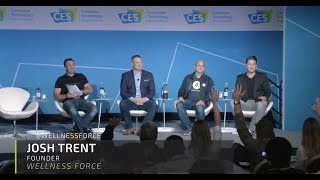
Transcript of a CES 2018 FitnessTech Summit panel (moderated by Josh Trent) featuring Jonathan Perrelli (LifeFuels), Brent Hickson (Levl) and Artem (Hilby/GoBe). LifeFuels described a smart bottle with fractional dispensing using FuelPods (5–15 servings per pod, up to ~45 beverages per pod set), ultrasonic level sensing, gyro/accelerometer to detect consumption/dumping, a complementary app that syncs with Apple/ Fitbit/Garmin, current beta testing and plans to ship later in the year and announce partnerships in Q1. Levl is presented as a Class 1 medical device that measures breath acetone (parts-per-million) to indicate ketosis and fat-burning; development involved ~9 years R&D and a nanosensor the size of a grain of sand (cracking that code took multiple years). Hilby/GoBe described a wrist-worn bioimpedance-based device that estimates calorie intake and macronutrient composition by detecting fluid shifts across cells; reported baseline accuracy ~85% with personalized procedures potentially raising accuracy to ~90–95%; multiple years of development (company product ~6 years; core tech lineage ~20 years). Panel covers privacy/data-sharing concerns, APIs and coaching/clinical integration, and common device challenges (form factor, battery, sensor contact, comfort).
Questions this video answers
12 people.
$5 million (seed round, angels).
Pods have 5–15 servings per pod; up to 45 beverages (per collection/configuration described).
Class 1 medical device.
Almost nine years to develop (R&D/product development timeline).
Chapters
So we have a jam packed day today and obviously I'm not talking that well, so I'm going to introduce the first part that'll take us right through to break. Sensors are becoming increasingly invisible, but the data collected is analysis is more precise than ever. Whether for maximizing performance, staying fit, or preventing injuries, these new devices and technology go far beyond counting steps. First we have a panel of game changers moderated by Josh Trent. And then Dave Marver from VCs. A company that made the Time magazine top Innovator list this year is going to talk about solutions for cte. And then. Maybe I'll introduce Molly later. Josh, when I come on stage, I'm about to give up.
Do I call them up? Okay, come on up. We have Brent from the company level. Let's give him a hand. I feel like we need some energy this morning. Everybody just stand up and take one deep breath. Everybody stand up and take one deep breath from your belly and then breathe it out. You can sit back down when you're ready. And we also have Artem and we have Jonathan from Life Fuels. Artem is from a company called gobe who makes Heel Beam.
Whoa, those lights are bright.
Yeah, those lights are really bright. How are we doing? Welcome to the Fitness Tech Summit. Welcome to the Game Changers panel. If you're feeling good, raise your hand. Okay, that's like half the room. That's pretty good. So we are talking about game changers today. And obviously sensors are a big deal for tracking motion, but also is hydration, sweat and breath. So I'm going to go down the panel and we'll just have each gentleman describe his company and what that company is all about for us. We'll start with Jonathan.
Good morning, everyone. Jonathan Perrelli with LifeFuels. It's a pleasure to be here today. LifeFuels is a platform with three components. We have a smart bottle and then we insert fuel pods into the base of the bottle which have multiple servings, so five to 15 pods or servings per pod. So up to 45 beverages. And then we have a complimentary app that syncs with wearables, so Apple's watch Fitbit, Garmin so that we can help people achieve their best selves throughout the day. We are currently beta testing bottles, which is really exciting after three years. And we'll be coming to market later this year and really excited about some partnerships we'll be announcing later in the first quarter.
Thank you, Jonathan and Brent from the company level.
Great. Brent Hickson, CEO of Levl. Levl is a Class 1 medical device that can measure ketosis with one simple breath. And the question is, why would you measure ketosis and what's the application? Ketosis occurs in the body when an individual transitions to utilizing stored fat for fuel. So there's many applications for that. The most obvious one is weight management or weight loss.
Right.
So if you're trying to eat right, you're trying to change those behaviors, what's the impact of those? And we can demonstrate within hours the impact of foods or exercise, the impact that's having on your body and if it's effective or not, and how much fat you're actually burning.
Thank you, Brent. And then we have Artem from gobee, the makers of Hilbee device.
Hello, my name is Artem. I am CEO of Hilby. Our company designed device for weight loss market. We can automatically measure intake calories. So you just have this device on your hand and don't put something manually. Also, we can automatically track hydration, stress level and some parameters like heart rate, sleep, step distance. So we have anything to help our person to lose weight. We have device application and the web part which can be used for nutrition specialists, for coaches, if they have access to the data for their clients.
Thank you so much. And also while the speakers are talking, make sure you write down any questions you might have. We'll definitely space out some time for Q and A. If you have a really burning question, raise your hand and we'll have a moderator bring you a mic. Jonathan. So looking at hydration, we're going to talk about the integration of this, how this really works with the whole human. But tell us about this dispensing technology. I see you brought the water bottle on stage. I wouldn't expect anything less from the CEO of Life Fuels.
Right, so. So we have a fractional dispensing capability. It's actually a unique part of our intellectual property portfolio. And what we do is we allow some magic to happen inside the bottle. When we know more about each individual, we can actually help better help that individual to have the right drink at the right time throughout the day. So in the morning I wake up and have daily wellness, which is similar to a multivitamin. I drink that for a couple of hours when that is fully consumed. We've actually the app knows because we have level sensing technology. So we're also tracking hydration throughout the day, which is one of the goals in the app. Similar to a 10,000 steps, which I hope we're moving a little bit beyond. At lunchtime, I may get A little tired after I eat, so I'll have an energy which picks me up. It's full of all natural, complex B vitamins, some caffeine and other things that we drink in energy drinks that will definitely do the job. And then at nighttime, I actually have a melatonin chamomile Rubios tea.
That sounds so relaxing.
That just.
So BBC reporter at Unveiled took a sip and he did another take. He took another sip and I was like, if you're going to be busy the next couple of hours, you don't want to drink too much more of that because it will relax you. So that's the goal. The goal is that we can help people throughout the day further enhance their lives by drinking beverages that help at the right time.
Thank you. And, you know, thinking about hydration is one thing, but then breath, a lot of people don't know you can measure fat loss through the breath. So, Brent, I'd love for you to talk about, you know, ketosis. It's a hot topic. Who knows about ketosis in the room. Try it yourself. Right, so tell us about ketosis and how level plugs into this acetone measurement, please.
Yeah, so I provided a brief overview with the product. So that's a common question we get, Josh, is what is ketosis and what's the value in measuring it? And, you know, I think that, as I mentioned, the primary thing is that most people, when you're working out, you're trying to improve your wellness, you're trying to get healthier, you're trying to eat. Right. The challenge is typically use a scale to kind of measure that effectiveness. Right. And the challenge with the scale is those decisions, those behaviors typically don't show impact for days or even weeks. And so behavior change is key. And we feel that level is a great tool to provide encouragement because the body changes, it's very dynamic. Right. When you eat things, it's changing. It's using certain things for fuels. And if you're trying to burn fat, get lean, which you have to be in a state of ketosis to do so, level demonstrates the impact of those choices real time on you as an individual.
Tell us a little bit more about the acetone. So there's the beta hydroxy, butyrate, but the acetone measurement through the level device is very unique. I mean, this is a signature. We'll talk later on the panel about how this is going to be used in other efficacies for different care. But tell us specifically the acetone measurement about that.
Yeah, we'll try not get too clinical, but you touched on this, that when you go into ketosis, you can measure ketones in the blood. Currently you can also measure them in urine. But a byproduct of ketosis is the molecule of acetone in your breath. And I get the question of why is this product never existed before? Right. Because breath certainly is a lot easier to provide a sample than pricking your finger, taking a blood sample or urinating on a strip. And the answer is that that molecule of acetone is how we're measuring. It's correlated to ketone, bodies and ketosis. And the trick is we're measuring parts per million. That molecule. We can actually measure it down to ambient air, acetone and ambient air. And that's where the product is unique and where it's fascinating that you can see a body transition from very low levels, which if you look at the standard American diet where people are consuming a lot of carbs and sugars, you're going to have a very low level reading. And as you improve your behaviors, as you improve your decisions, you're going to see that change and improve within hours. Right? Which is very encouraging. Hey, I did the right things today. Wow. I'm seeing positive movement. I'm going to continue them tomorrow.
I have a ton more questions for you there. But basically the scale is a liar. So this is something more accurate. Artem, tell us about this calorie measurement. Because it's fascinating to me how a device on your wrist can actually measure how many calories that you've consumed. Your proteins, your carbs, your fat. Tell us about this.
Okay, Just a full. I would like that they'll to ask my colleagues. We need to integrate with both systems. If you talk about our technology in simple words, if this glass will be full of water, is the same which we have in our body in our cells, when we eat something, sugar need to come to the cell, the cell water coming out. Because we have not enough space for both substances. So it's the same. Our technology work, we detect how fluids moving outside cells and inside the cells. We use bioimpedance. It's a full resistance part of tissue under the sensors here. And we have algorithm which can calculate these movements to the caloric intake and make evaluation of fat, carbohydrates and protein. So initially it's not a direct measurement, it's a secondary effect of our meal. But most important part, and I totally agree with my colleagues, we can detect the process inside our body. So it's not something like we try to recalculate our movements of hand to the burnt calories. It's not the same process. It's more closer to real process in our body. It is very important to the next generation of wearables because it's something which can be personalized to each person because we did not the same.
And it's a true measurement right through the skin. So what is the error rate? What's the accuracy rate for the device? Now, I know you've had some improvements recently.
Normally we have 85% of accuracy. But also right now we have a special procedure which we can make right now by the request of our consumers. Right now, it's not automatically we can personalize our algorithm and increase accuracy up to 90, 95% of accuracy. It depends of specific, specific, particular qualities of the person. Of course, we have in our sample, we have some person which we can, which we can't increase the accuracy. But the general numbers is the following.
I think back when the Apple watch, if you had a lot of hair, if you had tattoos, there was some issues getting a sensor measurement. Does it have to be snug or what's the fitting like for the actual device? I see you have it like two fingers from the right wrist for the actual measurement. The location. Is that the right location?
Yep.
You know, can you repeat the question? Is you.
So thinking about the, the way it's placed on the skin, it has to be fairly snug on the skin.
Yep.
In order to get a correct reading, Right?
Yeah, exactly.
You found that even with people have tattoos or hair, it'll still read properly.
Hairs is not a big issue, honestly.
Okay.
We have a, we have to have a tough contact between our sensors and skin. And it's a main issue and the main challenge to us because it looks like very simple, but because we need to have our device 24 hours per day, it is not so easy. And it's a question of comfort also. It's a big, big challenge in technical aspect. But absolutely, yes, you have to have a contact.
Well, three segments that are all in different lanes, but on the same road. And really that's why we're all here is to think about how does technology uplift the human? And we're talking about hydration and sweat and movement. So let's dive into hydration. Because how many people know they need to drink more water? I mean, I raised my hand. I think I've drank like four, four sips already. So the dispensing technology, what's unique about this, the way it actually dispenses in the bottle.
Sure. So really, it's the fractional dispensing that's unique. I mentioned earlier, Keurig, Nespresso, and others are a single pod serving. And what we have that is pretty fascinating to our audience that we're already working with in beta test group is that they don't have to do anything but press one button. It's simple. I mean, we're here for. The first word of the show is consumers. We're all here to enlighten their lives, to provide them with products that they want to use, that they love and enjoy using. And so the fractional dispensing to us is key. There are some other products on the market. Gatorade has a GX product. Pepsi has a drinkfinity product that are single pod serving that they're testing. Ours is the first ever that actually really disrupts the market for beverage because we're providing quite a bit more in one bottle and in one pod. We're saving a lot on transportation, so it's environmentally friendly. Our pods are recyclable, and each pod has a unique id. So everyone is like a snowflake. I could take a podcast pod out of my bottle, hand it to you, and if I've used half the servings, it would, you know, say, hey, Josh, there's. There's seven servings left. But Jonathan wants you to have this pod. Your app will remind you of that and allow you to gift me a pod.
How does it sync to the app? I think we're all curious because, you know, there's a measurement through and, you know, you might be having different teas that are given to your body and whatnot. But how does the app actually know? Does it have a measurement technology inside of the device?
Yes. So we use ultrasonic level sensing to sense the. The amount of liquid that's in and then consumed if you dump it out. We have a gyro and accelerometer that will notify the app that it was dumped instead of consumed. So there's a lot of technology and a lot of engineering that's gone in. That's why hundreds of prototypes. We were here at CES in 2016 with another innovation award back then with a prototype that really told the story of fractional dispensing and a portable beverage maker. But what we've done now is taken it to a level, I think, that's more premium and a product that you could see, you know, someone that buys an iPhone or an advanced technology and is in line first. Those early early adopters will want this because it not only helps you feel better and it helps you stay hydrated. It's also taking data that you may not be utilizing from Apple Health or from your Fitbit or Garmin and actually making sense of it. So we take output data, we manage input data, and we close the loop on that data so we provide a better picture for the user.
Yes. And this is, again, we're talking about the whole human here. So hydration, I can't think of something more important. And then, you know, if you're not hydrated enough and we look at breath, what's been some of the case studies? You know, I'm sure you get a multitude of people that are just loving actually measuring their breath through the level device. What's a story or two you could share with us that you're really proud of or one that just comes top of mind?
Yeah, I, I've got a couple that I think were pretty impactful. I mentioned that you can. Ketosis is used for not just weight loss, but treating certain disease states. And for example, we have a customer that we're close to that was diagnosed with brain cancer and he was given 10 months to live and he had learned that you can treat reverse brain cancer with a ketogenic diet. In other words, maintain a state of ketosis. And so for him, being able to use level to ensure he was maintaining a state of ketosis based on what he was, he was consuming for food was life or death. And I met with him and his wife and he took a reading and they were looking at me like, you know, is he in ketosis? I said, well, absolutely, he's in ketosis. And they broke down. Crazy, right? And it just demonstrated the impact that a product like this can have on someone's life. And the wife said, you know, I think about this every meal of every day for my husband Jeff. So that's probably the best story that made an impact on us.
And I can see the market for, you know, health and fitness enthusiasts, but also special care as well. Artem privacy comes up a lot. So we have these game changing devices. Our data, you know, may be in silos, it may not be. I think we've all done research on, you know, the TNC. When we scroll down and there's 15 pages, we don't, we don't always read that. Talk to us about privacy and these game changing devices. What does privacy look like and how do you think we can keep it safe as we move forward?
Thank you, Josh. First of all, I Think it's a very important maybe crucial things in the nearest future. Because for example it's just. For example we have a bottle which can measure how many water I drink. Sorry. And the same time I have device it doesn't matter hours or something which can measure hydration. And we need to share data because in this case our consumer have a complete solution because our person can check status on the existing time about the hydration and understand clear how many water consumpted and have to be consumpted especially if you have some special physical activities or maybe some restrictions regarding any disease. So we have to share data with everybody everything devices at the market. And if we look to the existing situation it looks like every time we need to confirm everything. I guess in the nearest future we will have something like aggregator of data. So as some. I think it's possible of two ways. First of all at some stage of processing the data this data can be cleared from the personal information. It's just a set of data. And another one way which can be possible right now. Cryptography is like very, very high level of demand and like a hot spot right now in the market that maybe it will be some solutions regarding the split personal data set of data. So you don't have something in one place so it could be very secure. I think it's both ways possible. But of course it's a crucial thing because nobody can develop a device like Tricoder from the Star Trek which can be measure everything.
Are you watching crypto with Hilby an ico? I'm teasing.
Yeah. It's not crypto, it's not cryptocurrency.
It could go there though we think about it. But right now no, we just allude into the possibility which this technology can give us. And honestly right now I don't understand why it's not something new. It's an old fashioned idea. I guess maybe 30 years ago it's the first time when splitted calculation was used. And right now it's just a new marketing for this technology. We'll look into this but I don't.
Understand clear how we'll just have a few POD Marketplace. No Crypto. Yes.
It's interesting. Fascinating to me really to think about how I see and I think we've all kind of felt all these records going into the electronic medical record system and just understanding how does this plug into the healthcare, the sustainable healthcare. So that is a fascinating topic but there's challenges along the way. So a lot of people in the room are, you know, Heads of a company, we create devices. Share with us, we'll go down the line. Share with us something challenging and how you overcame it. Because running a company, having a device with micro technology, it's not an easy thing. What's a struggle that you've had or maybe a challenge and how did you overcome it?
Jonathan, the list is long. So really when we started out, we had a huge ambitious goal. It's not just, let's create a new form of beverage concentrate and how that will change the market. We also decided that we'd craft a bottle to have the same power of an espresso times three. That's a strong espresso, but compacted. So power in terms of dispensing and.
Okay, thank you for the clarification.
Although there's a fair amount of caffeine, we don't allow you to dispense too much simultaneously or after you've consumed some. But the challenges really were the bottle of the FuelPods and the app all coming together at once. And we have a pretty small team. We're 12 people. So we actually met at. This is a plug for CTA and CES in 2016. We had this prototype I mentioned and. And two Brits, an Irishman and a Scot walked into our booth. Not a bar, not a bar. It was like the first hour of ces. And my co founder, Rob is British, properly raised and very formal. And they went through this exchange for a couple of minutes of can we really shit on your bottle or can we tell you the truth or can we tell you how we really feel? And then I finally just said, look, lay it on us. And they gave us some great feedback. Well, they became, became our design partner. So we have an industrial design relationship with DCA. They're based in the UK, 50 year old firm and they have done a lot of work with dispensing of chemicals, like, I mean, medicines, aerosols, flonase, for example. So perfectly crafted amounts every time. That was one of the challenges. And we thought, look, this is not something we've done. We really need a partner that can help us there. So this is my seventh startup. I've made a lot of mistakes, I've sold five companies, but. But this is without question the most challenging one of all because we're solving so many problems simultaneously. But one of the things that we should all be doing, as you already mentioned, and we should definitely talk, is working together. Because at the end of the day, the best experience for a consumer cannot happen just through our product alone. We Actually need the data from where it is. We would love to have the data that your company provides. So the challenges continue. Funding raising is always a challenge. We've raised $5 million. All a seed round with angels that, you know, again, no crypto, not launching an ico, but we are. We're always in pursuit of the right partners there strategically because we want to bring hundreds of thousands of bottles to market this year and next.
So, Brent, the sensor, it's medical grade inside of this drive. So tell us about the challenges for the sensor accuracy and what's been a challenge in bringing your product to market and having it be successful.
Yeah, I think I would agree with the other gentleman up here that plenty of challenges and developing hardware is really hard. You know, in developing a nanosensor that is the size of a grain of sand, that can isolate a molecule and measure it down 2 parts per million is also a challenge. I would say a challenge that sticks out in my mind was we spent, and it's taken us almost nine years to develop this through R and D and product development. But one of our greatest challenges we spent a lot of time on was trying to get a form factor that was portable. Right. We assumed that the market would want portability and it was fascinating. We did a focus group and, you know, we were talking about portability and we're showing a number of form factors. And the feedback came back from this focus group that why is this portable? I don't want another portable device. I want something that has a home, that. And it's a piece of hardware and it's about the size of a small Kleenex box. But I want to be able to have a place in my home where I can use it on a regular basis and make it part of my routine. And I'd really prefer multiple users for my family versus portability. Well, that was an aha moment for us.
Right.
We, we were too close to it within our own walls. And by seeking outside feedback, that changed our game because now we had the ability to take the components and what we were trying to design and put it in a form factor where we had a lot more room versus something that was small and portable. So a challenge, but also something that we learned.
And it sounds being the size of a grain of sand, how many years did that take? I'm just curious. I don't know if anyone else is curious about this. Understanding that technology the size of a grain of sand, was that a two year process, a three year process? It's about five year process, five Year process.
Yeah, so yeah, that, that was really cracking that code was, was the key. And then once we cracked that, then we had to figure out how to manage that grain of sand, if that makes sense.
Yeah, very much so. And I'm thinking about Artem with your device. The intricacies of having something on the skin, measuring the proteins, the carbs, the fat. You've had a couple iterations of this device. Can you tell us about that?
Yes. First of all, I think we have to go to Kai together because we have a common pain in all our projects regarding our device. Yes, we six years of development. If you talk about Golbi 2, the core technology which we are using right now initially was developed for the non invasive glucose metal. And the total amount of years of developing is something like 20 years, I guess.
20 years.
20 years, yes. It's a very, very long road. This is usual for the technology business because sometimes you don't know what you can build. It's something like, okay, maybe it's something good, maybe not. And regarding the big challenge, I guess it's common for all wearables, of course is the size, size and battery. Because right now we at the peak of the existing technology of the battery, all issues with smartphones and so on. It's just a criteria of these screeches.
Is the Bluetooth challenging as well? Who in the room is lost device signal from Bluetooth this morning? Yesterday, this week? I definitely have.
You know, is Bluetooth a challenge? The crucial thing, if we talk about the available devices, you have to calculate many, many transactions at your device. And the microprocessor is the most big consumption of energy. Not a Bluetooth, Bluetooth. You just turn on and turn off several times a time. Of course it's issue but not the biggest issue. Biggest issue is calculation. Especially, especially if you are talking about something which can be calculated ongoing process. Like for example, in our device, I guess you have the same issue. So you need to turn on and turn off microprocessor every time. So your battery is decreasing very fast. Size of battery, size of device. It's a direct correlation. And also another one, another one issue. Biggest issue for wearables at all. We conducted national survey at the end of the previous year and we asked many questions. Doesn't matter right now, what is it? But the crucial to this discussion, why you stop using your device. And you know, 90% of answers is not about this device. Don't calculate something is about. It's so ugly. So the most biggest issue to wearables right now Is to be like, nice, nice item. Like, you know, like. I don't know, can I tell you, like Dolce Gabana or something. Something. But something from the luxury, which can be comfort to wear. Especially if you talk about female audience.
Yes.
Because you can measure, I don't know, everything, but woman looks at this. It's like.
I think the challenge too that comes up is, you know, Moore's Law. We look at the processing speed, doubling, the cost coming down, being cut in half. All the technology fitting into a device. Do you have plans in the future to make that device smaller?
In the future? Yes, exactly. To us is a question of life or die. Because right now, of course, is not so comfort because also we have to wear 24 hours. So in this year, we are hoping to launch next generation.
We're all talking about being in different lanes, but on the same road. And these APIs where one company can talk to another. Let's get some real talk here about this. What's been the block with APIs and sharing each other's data? Jonathan, I'd love your take on this.
So we haven't had really an issue. Lot of companies that have wearable activity data want to share the data. Apple health data is available. We actually have kind of a reverse situation where our users, based on a number of criteria, may not want to share their data. And eventually we'd like to see more than just vitamins, nutrients and electrolytes dispensed through the bottle. So think future when as our marketplace broadens, you'll be able to customize recipes with multiple pods. And I'd love to see medicine dispensed through this bottle. And that's always been the vision to help people live happier, healthier lives. That's data that cannot be shared and it shouldn't be shared unless it's HIPAA approved. So I think we'll see that continue to evolve. Right now, we'd be happy to share data with partners where we're both evolving products and really working in a joint relationship. We were headed down the path with Jawbone. I love Jawbone. I wore it. And when a company dies off, you've spent a serious investment that you've lost. So we have to also be careful who we decide to partner with. But I think sharing data needs to continue to be open and we'll have standards at some point, but we don't quite yet.
Brent, looking at a lot of fitness professionals, trainers are now morphing into more coaches, wellness coaches. So the breath device, how does this play into the Trainer's evolution. What does that look like now? What are you seeing in the market?
Yeah, I think, you know, I think it's going to transition hopefully to more personal, to a more personalized approach versus one size fits all. You know, as individuals, we're all different. I mean, we're all very different.
Right?
We're different sizes, we process foods differently, Exercise impacts us differently. And so in the past, I think it's been a one size fits all. If you go to a gym or whatever and you observe a trainer over a day, typically they're doing the same things for each client. Right. I mean it doesn't change. So being able to have that knowledge, to know all right, this person's different, I'm going to take a different approach because their body's responding differently to these things would be a great thing to achieve.
And I think about I was a trainer for quite some time time. And you're right, there is kind of this monotony that can happen. So a device like this can really give some insights. How do you see this artem transitioning? When we look at the evolution of healthcare fitness training professionals, how do you see GOBE giving actionable advice for sustainable behavior change?
It is a big question. I can speak about it several days I tried to reply in this short version. First of all, all if you talk about the devices around the fitness usual person, all of us, we don't want to see the numbers because okay, I ate today 2000,000, something calories. Is it good or not?
It's not that inspiring to just receive numbers.
Okay. It's a magic during the first week after you thinking oh the. So if you look to the statistics, two months is usual life period for every device. Two months, two months. So during this time everything is very boring. So we have to learn how we can give recommendations. Two crucial barriers for this. First IPI because we can't make recommendations based only one parameter. For example, I have intake. It's a big, big holy grail. Like but you honestly if you go to the make recommendations, I need very, very many things. For example, ketosis is crucial for me, if I know this data, I can give recommendations based on real. Yes, yes, it's first another one is okay, better if somebody looks at your data. But the cost of this if with every account we have a human specialist who looks to your data, gives you recommendations. Right now is the most right way. We try to change situation using artificial intelligence. But it is just a nice words. You have to learn it. So you have to have a Combined tool like artificial intelligence coach. So it's not a fast way and I guess in the next few years we just make some maybe 1, 2 steps closer to the recommendations. Most of these recommendations in the nearest time will be just okay, make some steps, burn some additional calories or eat less or eat protein more. So it will be very general. But of course the key issue to make these recommendations in reality very personalized. I totally agree.
This brings up something fascinating too. Either it's hydration or breath or activity and sweat. How do you gentlemen feel about the systemization and making these platforms really scalable versus having a live human at the other end? Let's talk a little bit about that because the device is fantastic. At some point though, we will need the insert of a human right of some sort.
So we sought the advice of dietitians, nurses, doctors, trainers when we created our platform. There's no doubt that a trainer involved in the process is going to provide another level of expertise. We do provide recommendations based on what we see from activity trackers and wearables and sleep patterns. And then the analysis that's done says, look, you had your best run ever last week. You should probably do the same thing next time. Hydrate in advance, take vitamins, go with the energy and then rehydrate with a post workout product after. That's something a very good trainer or a coach will actually tell you to do. So I think the more people care about the data, we're talking about quantified self folks that are achievers, that are early adopters, the more they'll set sort of pave the path for others to say, look, I love this product. I work in conjunction with a few other products. What I really do after that though is I go to the gym and I tell my trainer this is what happened. What do you think? Well, now we're talking about diet, what I should eat, which proteins I should consume. So it's always going to be helpful, I hope to have humans in the mix and I think we probably all.
Agree, I would hope, yeah, I think we talk about, don't view the technologies as a threat, but a compliment. Josh, we spoke about how we have better diagnostics on our cars than we do on our bodies.
Right. We need a dashboard for the human.
And you know, if you're looking at race cars, right, you've got humans involved and they've got a ton of complex diagnostics that they use to make that race car run at an optimum level. And I think this applies to the same that whether you're a nutritionist, a dietitian, a trainer, whatever. Utilize the tools that are there to optimize your clients outcomes.
Do you feel, Artem, that this applies as well? Does your device and your company have any plans for that extra layer of the coach being involved with the data right now?
We already launch it. We have a special web system for the coach. They can give access to the data of their clients. And we have a plan to make to in this lab. We also would like to use artificial intelligence because we would like to make cost of the consultancy cheaper. Cheaper because we have some parameters and we have some smart algorithms which can prepare preliminary recommendations. And our human personality coach just check how it looks like. So at the same time this coach can work with more clients. They pay less, our person get more.
Yes.
So it's this idea.
There's probably some long term cost savings in there too. You know, we've been talking about so deeply. We've already been talking for half an hour. Does anyone have any questions? You know, a wellness professional, a fitness professional, someone that's passionate about health or technology. Feel free to raise your hand. Somebody can bring you a microphone. We do have someone raising their hand in the back there as we wait for the microphone to be delivered. Let's talk about partnerships. A lot of us are here to meet people and do a lot of networking. What are you excited about? When we look at partnerships, you know, companies that you want to share data with that you think are a nice blend and a compliment to what you're creating. Jonathan, do you have anything you're looking forward to in the next year or so?
Yes. So the ones that have the largest audience that are the most passionate about their products, so certainly Apple, Google, Fitbit, we believe that consumers will decide based on their purchasing power what, what lives and what dies. And so we have to stay on top of the trends to understand more from our partners, what they're bringing to market and then make some calls that you know that that might be the best watch next year. But we're already in bed, we're a small company. So partnerships are really important. They're critical. I mentioned earlier our ID partner, but at the same time we can only spread ourselves across so many. So larger audiences for us are really critical at this point.
Yeah, and I would say we're in the process. We'll be partnering with a few select folks here in the next coming months where we're sharing API. And the reason we're being selective is we have a unique biomarker that doesn't exist in the market right now. And we think there's some great groups that are, you know, everybody's trying to crack that code in terms of artificial intelligence. You know, I take all this data and I produce really powerful tools to help the individual. And so we're selecting those that have the right data points where we can close the loop. Right. I did all these things and is achieving a state of fat burning or ketosis, depending on what the application is. So we're looking forward to using other people's applications with our biomarker to close the loop, if that makes sense.
Someone that gives you the right dashboard. Right, A right piece of that dashboard.
Exactly. They've got the dashboard. They just don't. You know, what our, what our measurement will do is measure effectiveness of that dashboard.
Artem, when you look at the ecosystem you have, do you feel like you're in process of seeking out complementary ecosystems, other devices?
Of course. Every time we are looking for two different types of partnership. First of all, you absolutely right to build ecosystem with our colleagues, we can create a complete solution for different audience inside our big audience of the weight loss market, for example. It's one part, it doesn't matter, hydration, ketosis to us is. All of this is very important and very crucial. And another one, we are looking to integrate with companies like big guys, like Weight Watchers or something, because they have audience, they have a coach, and we can help them to track their movements. Because clients came to them, they give them recommendations and products. But before the next meeting, they don't have any information what happened. It looks like, okay, I take my products and go to the McDonald's.
That would not be a good use. We do have a question in the back. If we can get a mic delivered to the back of the room. We'll go ahead and wait for the mic to.
I think they got it.
You got it? Okay. Yep, go ahead. What's your question?
Hi, my name is Hiro Nakano.
I'm actually personal trainer and I'm also.
Ambassador for Reebok Japan. And from your product, I think it's great.
But as a professional, if we recommend.
A product to a client, we have.
A responsibility to use the data.
Right. So I'm just wondering, how do you educate the trainers and coaches?
Yeah, it's a great question. Thank you, I'll take that. So it's key, right? So we spend time with them, obviously. We actually offer a product called Level Pro and that's catered to the trainers. Right. So. So what we provide is a Dashboard where when your clients use our device and they take measurements, whether it be at their home or place of work, wherever it is, you can actually real time see those measurements on your dashboard. So when that client comes in for your training session or whatever it is, you're talking about real behaviors that occurred, things are doing well, things they can improve on and it's really pretty straightforward. But we offer plenty of tools to educate someone like yourself and then the hope is that you're using those tools to provide better outcomes for your clients.
Do you gentlemen have anything around coaching? His question?
Yes, I can add just a little comment regarding our experience. We usually use 3D different ways. First of all is of course the white papers with description. It's okay. Also we have coach to us as a also audience. We have a help desk online help desk which every time you can ask the question and we will reply. And also we have a here in us. It's just a very latest update to us. We have a person who work with educational program for coach. So it's three different tools which we use. Honestly we don't have a big experience so we don't have like 10 of 10,000 of course working with us. But what we have right now we use these three tools.
And I also think to this gentleman's question, it's really important to have the fitness and wellness professionals input on a regular basis so they can help the device manufacturer create the actionable data that's really going to make a difference. This has been a great conversation. We're getting to the end. If you have a question, please raise your hand. Okay, we one mic there here. We just have two more minutes left.
I was just wondering what factors influence whether or not your company's products will.
Go beyond the consumer product space and will go into the medical device market. And I was wondering if it's like funding or demand and whether you faced any hurdles. Brent, I know your company's already there.
But Jonathan, you mentioned potentially your product being a medical like a pharmaceutical delivery system.
So just if you could comment on that.
And my name is Nas.
I work at the fda.
Great, wonderful. Yes. So thank you for the question. We are not there yet. Our hope and our vision is to get there. And the way that we're getting there is through partners. Speaking of funding, actually our largest investor sold a medical technology company to the advisory board company and he's on our board and a key influencer for the direction of the company. We are already working to the previous question and kind of tying the two together. With trainers that are brand ambassadors. Because it's a closed beta right now at LifeFuels, we'll expand that significantly. And the hope is to have at least one medical partnership within the next 18 months so that we're actually working with doctors who at minimum, similar to already mentioned on stage, we don't want to have six months go by and there's no data with the doctor. So we want to be able to incorporate our information so that a doctor can keep closer track on a patient who may have hydration issues or a vitamin D deficiency. Things that are fairly basic. But our goal, again, not all pharmaceuticals can be be dispensed in liquid. Some can, and we're early there. In fact, if there are any experts in the room, we'll be hiring you in the next year because it's still a vision we've set out for, but it's definitely something we're shooting for. Funding will also be a key part of that. A lot of people don't realize how bootstrapped startups are. I mean, 16 of us are staying at an Airbnb. We're sharing meals every night.
How many rooms is that Airbnb have?
Well, you know, there's a girls floor, there's a guy's floor and limited showers. It's interesting, but it's what we have to do. We're very committed and our investors know this, as my team knows. This product gets to market or I die trying. And hopefully they'll continue on, which I think they will. We're that committed to it. It's something that I've really had a vision for, for a long time. But we can't do it alone. And so we need partners like yourself.
And we did have time for one last question, but we only have 10 seconds, so please, if you have questions for our moderators or for our panelists here, please ask them after the panel. And let's give them a big round of applause for showing everything about their companies today.
More from Josh






Your child's future start before pregnancy... and even before conception! #podcast

MD Reveals: Your Healing Creates Your Child's Reality (The Souls Coming In Need Strong Bodies)



