Changing Old Habits With New Technology
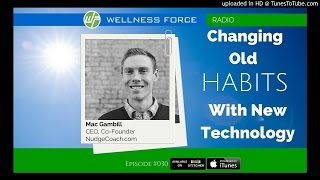
This is a podcast episode (Wellness Force Radio, episode 30) hosted by Josh Trent featuring Mac Gamble, co-founder and CEO of Nudge Coach. They describe Nudge Coach as a digital coaching platform that aggregates wearable/app data for health professionals to monitor clients, increase accountability, and provide targeted feedback. The conversation covers the founders' origin story, current wearable trends, gamification (the "nudge score"), coach experiences (clients losing significant weight, some >100 lb), and near-term visions for tighter integration between consumer devices and care teams.
Questions this video answers
Episode 30
December 3, 2015
Mac Gamble — co-founder and CEO of Nudge Coach (nudgecoach.com).
Josh Trent (Wellness Force Radio).
Nudge coaching webinar on December 8th at 2:00 PM Eastern / 5:00 PM Pacific.
Chapters
Wellness force radio episode 30.
I think it's really starting to put off a lot of professionals in terms of saying, okay, well how am I supposed to change your lifestyle if I'm only with you 1% of the time? And so incorporating these platforms is really natural to try to gain insight into how is a person doing when I'm not with them.
Wellness Force Radio welcome back for another episode here on the podcast. I am your host and digital health coach Josh Trent and I want to thank you for sharing a small slice of of your day here with me on the show. If you're here for the very first time, Wellness Force Radio is where I bring you the most inspiring and passionate experts in behavior change and wellness technology. These are thought leaders. They dedicate their lives to empowering us with knowledge and tools that drive real transformation in our physical and emotional wellness. Today's show is brought to you by wellnessforce.com we are putting some amazing content on the front page. Wellness technology devices that can help you lose weight, tips for boosting your immune system, mindset shifts to turbocharge your health and fitness goals, all by some talented bloggers, Jessica Campbell, Lisa Perkins and Aaron Knight. Check that out on the homepage of WellnessForce.com this week as well as the coaching tab. There's 25% off digital health coaching programs this month at WellnessForce.com and you can learn about that at WellnessForce.com coaching now, quick question. Are you using the podcast app on your iPhone? Open it up, tap the screen where you see the show logo. You'll discover all the links and show notes from today's interview with Mac pop up easily on your screen. Hit that review link in purple and take just 60 quick seconds to leave an honest review to be published live on itunes. Your amazing review allows me to keep the lights on for this show and to keep serving this community by bringing on world class people who are making a difference and changing lives. Today's show is going to be an absolute knockout on the Summit. So excited for the show. Today's episode is with Mac Gamble, the co founder and CEO of nudgecoach.com we're going to talk all about Nudge Coach and how powerful this groundbreaking technology can be for wellness coaches, nutritionists, fitness trainers and wellness professionals as well as equally as powerful for clients and people who are just starting out in their wellness journey that finally want something that can keep them connected to their goals and increased accountability and how to use technology to empower greater wellness in your life. This platform is something that I think will revolutionize the entire digital health and wellness industry, period. And I'm super comfortable saying that here before we get on the show with Mac, because I searched for almost a year and a half, you guys, trying to find a platform that would actually help me scale my business and reach people at the right time with the right message. So without any further waiting, let's jump into this exciting conversation with Mac. Mac, welcome to the show.
Hey, thank you so much, Josh. I appreciate it.
This is going to be a fantastic show, something I'm really passionate about, and it's making people's wellness greater through technology. It's a shared passion that we have. And as I talked about in the pre show interview, Mac is the CEO of Nudge Coach, and that's nudgecoach.com Mac, you have a really interesting road, though, before launching this company. Before we even dive into your story, what is something fun that people might not know about you?
Well, usually when people ask me that question, I usually jump right to the fact that Phil, who's one of the other co founders, he and I played college soccer and actually played semi pro soccer together. So that's kind of a fun fact you don't encounter too often. So I think that's kind of a little bit neat and different about us.
What position were you?
So I was playing outside back. I was playing left back for a team in Chattanooga called Chattanooga fc.
Did you ever do one of those kicks where you do a flip and then you'd kick it behind yourself like Pele.
Oh, the bicycle kick. No, I'm trying to think. I've probably tried it. Probably just not very successful with it. You know, I'm 6:2. I'm not like the, you know, nimble, little quick guy. So that's probably not my position.
You know, you have an athletic background. You wear a lot of hats at this company. And really the offering of Nudge Coach is something special. Special. The industry has never seen this before. And we'll talk about this on the show today when we discuss digital health coaching, what it is. We've had device manufacturers on the show. We've had fitness professionals, wellness professionals on the show, and they're essentially using either their education or a set of tools to make people's lives better, to impact people's lives in a positive way. Before we get into what Nudge Coach is though, I want to learn a little bit about your road to launching Nudge Coach. What was that like kind of coming out of college? What led you to actually launch this with Phil?
Yeah, I Think to really understand it, you kind of have to take a step back and go even earlier. So, you know, like I said, soccer was really my life since I was about five and ended up breaking my femur in eighth grade, which, if anyone's never broken a femur, I don't recommend it. It's generally pretty hard to kind of come back from it. And so a game that used to be pretty straightforward to me because I played it all the time overnight turned into this massive challenge. Basically lost all athleticism. So obviously it's tough to be. No matter how good you are with the ball of your feet, if you're not quick, if you're not agile, if you can't move around very well, you're not going to get very far. In high school, like I said, a game that used to come pretty straightforward to me growing up. Ended up having to spend a ton of time with speed trainers, strength coaches. I was always having to work that much harder because all my friends weren't going through those same issues I had to go through through injury. So for me, kind of focusing on athletic performance came a lot earlier to me than it probably came to a lot of my friends until in high school and in college you have lifting coaches and things like that. But I was having to work with coaches a lot earlier. And so for me, I was always very intrigued with kind of personal fitness, but more importantly, just how the body moves in general and how just focusing on those kind of little minute movements and little enhancements can really mean a world of difference. You get to the ball quicker, beat the last defender, things like that. So that was kind of the world I came from. And so after graduating from Wofford, which is a school down in South Carolina, the most obvious thing for me is I really wanted to kind of pass that on and I wanted to kind of start working with athletes, high school athletes, college athletes, pro athletes, and more of the athletic performance side. Started working at a place called D1, which is sports Drink Facility. I think they're around the country at this point. There's one in Chattanooga and then Phil Bean is one of the other founders, was working at Maxim, which is a healthcare services company. We were actually introduced to this whole idea. This was like 2010, 2011. Wearables were starting to come around.
Yeah, this is early in the game, right?
Yeah. I think everyone at that point really was familiar with the Fitbit 1.0, which I call it. That little doodad that clipped your belt.
Oh, yeah. Basically the fancy pedophile.
Yeah, yeah. The Fancy pedometer that everyone lost after three weeks. That was kind of like how they were known. I think people were like, what the heck is this Fitbit company? What's that really going to turn into? Which now they're one of the larger companies. But yeah, at that point, you were seeing more and more of these platforms coming up, but you were also seeing this huge push in terms of technology with respect to corporate wellness. That's our first point into the space was really coming at it more from even a corporate wellness side, trying to bring together these technologies. You were even seeing things like Fitbit was around, but you're also starting to see Jawbone. Runkeeper probably wasn't as saturated of a market as you see now, but at the end of the day, there were just a lot of platforms starting to come up. People were starting to really adopt these as phones became smartphones really starting to take off. At that point, I think the App Store wasn't quite what it is today, but you were starting to see more of these apps, more of these wearables, then companies like Moves coming up that were able to even use the smartphone as a pedometer. So it got to the point data was starting to become collected all around us at that point, and that's where a lot of interesting things were happening. That's when we first had that idea for Nudge. Really starting to bring all that data together and present it in a way that could make living healthier a lot easier to the average person.
I'd been searching for something like nudge for almost 16 months. And we're going to talk about in just one second what Nudge Coach is. But I'm curious what happened that sparked you actually jumping into full feet into the pool with Nudge, you and Phil launching. What did that look like? Was it like you guys at a bar and it scribbled on a napkin, or how did. How did it come about? Because it's one of the most powerful platforms I've ever seen for a personal trainer or coach.
I think it's one you really have to have whenever you start a business. Like an incredibly compelling or just compelling. Why is generally the way I put it. And Phil and I actually had a really interesting. The way we came about it and the way that defining moment where we sort of jump in. We were actually. My college roommate actually passed away and we were on the way to his funeral. We were driving through the mountains and we were kind of kicking around ideas. He and I always have different business ideas. And this was something we'd been really intrigued with, and because of kind of the circumstances, I think it kind of came out of one of our mouths, just this idea for a concept for a company. We both kind of just looked at each other and was like, oh, my God, this is it. And I think because it was such a defining moment and such a really memorable day in general, that it just kind of really stuck with us as kind of a little bit more of a oomph behind our why. And I think that's really critical. Anyone who's listening, just, if you're thinking about starting a company, you know you're going to go through some high times and you go through some low times, and you really have to make sure that you have something that's really keeping you, you know, getting out of bed in the morning and working on your project.
If you had to put your why into a sentence or two, what would that sound like?
So our why came down to a lot of frustrations. We were just seeing, like I said, we had the concept on this memorable day, this incident with our friend, but I think the why in terms of the company and why we keep doing this is very much the frustration that came with seeing just how much of the wearable space and the app space and mobile health in general is just such a wild west. What you're seeing right now, it's starting to come together a little bit, but there's so much frustration we had in terms of how fragmented the space was. It was such a personal experience, something like Fitbit, and the fact that that information couldn't get to me as the trainer. If I'm working with you, Josh, and you're my client and you're using Fitbit, the fact that I couldn't get access to that information was infuriating. And then it got to the point, well, shoot, what if my other client's using Jawbone or maybe someone's not been using anything? How am I supposed to manage all these people, manage all these touch points? And we just. Me coming from the training space, it was kind of ludicrous. And the fact that at that point, it was 2011, 2012, when things really started coming around, where we really had the idea of putting together Nudge Coach. And so I think that frustrations of kind of the fact that nothing was really streamlined in the mobile health space, I think was really something that kind of kept us up at night.
Wow. Man, we had two Olympians on the show. It's episode five and it was with two Olympians, one of them being sky and the other one being Tamara Christofferson. And they really inspired me. Mac, almost two years ago when I saw their film about quantified self and about digital health technology. It was called Personal Gold. And it was a phenomenal story. You have to see it. Have you ever heard of it or seen the movie?
I think I've heard of it, but no, I definitely want to check that out.
And it really sparked me into honestly having the road where I met you and I met Phil. But it was about what actions that every human being can take with quantified self and with digital health to make their lives improve. And the ways in which this Olympic team eventually won a silver medal was through the use of technology, through the use of the digital health devices. And I thought at that moment, oh, my God, this is a way for the average human being to get the same, if not more of a daily benefit from using these technology pieces and whatnot in their own lives. And it was kind of like the spark that led me to launching the podcast, why you and I are here, even talking. So it's really cool, man. I think we share that same sentiment for the tech.
Oh, absolutely. It kills me the fact that kind of my soccer career is behind me because there's so many neat things happening right now in terms of higher end sports with wearables. You're seeing a lot of pro teams. For instance, the German national team, which recently won the World Cup a few years ago, there was a big story about them after the World cup because they had actually embraced mobile health. And all the players were wearing kind of tracking devices that the coaches were able to monitor through iPads. So I think there's just so many interesting things that mobile health can help alleviate pain points, it can help provide better insights into an individual, into a group of people. And it's just such an exciting time, kind of helping us benchmark where we are personally in terms of our journey of living healthier.
So exciting. Okay, now I'm sure people, you know, it's been like eight minutes, they're probably wondering, what is nudge coach? So tell us what nudge coach is for sure.
Well, we kind of alluded to it at the beginning, but in terms of.
The frustration, we teased him a little bit.
We teased him a little bit. Yeah. So it's really like a digital coaching platform. It's probably the easiest way to put in. And so what we're trying to do is help health and wellness professionals better understand who they need to spend time with in their client base and incorporate wearable technologies. So probably best way to really articulate the pain point comes with Steve, who works with us, a health coach in a private practice. He was trying to manage 150 patients in their practice using mobile health platforms like Fitbit. And when we met him, he was actually manually signing into each and every one of the patient's Fitbit accounts to get access to the information. And so it just shows that where more and more people are starting to try to use this information, getting access to it is just such a huge pain in the butt. And so what we were able to do is kind of bring together all the information and help you as the health and wellness professional, really understand who in your population leveraging these tools needs maybe an extra nudge, so to speak, or just needs some actionable feedback. And so we're just trying to help streamline that whole coaching process a little bit.
It's really simplified too, because I use the app myself. I've been using it for, I want to say, two, three months now. And whenever I do any kind of context with a client, I always try it myself. That was the year of research and development that I did in my own life. Using Fitbit, using Garmin, using the Muse meditation headband, using all this different tech so that I could figure out, you know, what actually worked in my life that helped me move the needle for my own wellness and then give that to someone else as a tool they can use. And I have to say, the simplicity of the way that I found this app, this application that is HIPAA compliant, it's a way that I can communicate with the clients that I have right now in a beta testing group. I'm actually launching a really exciting digital health coaching product in January of next year. It's exciting because this tool has never existed before. One the things that used to be such a fire in my stomach when I was a trainer, Mac, is that there was 140 plus hours where I never really got to see what my clients were doing. And it was the number one reason why I think they didn't get success. It actually is what kind of frustrated me and made me eventually move on from being in the gym and being a personal trainer is because I so desperately wanted my clients to succeed. I really wanted them to feel what I felt when I lost all my weight. You know, I was almost £280 at one point. And everyone has that ability. But between the knowledge and the execution, there's a bridge. And that bridge, I think, is Nudge Coach, I think, is this digital health Technology, because it does two things. The first one being that it creates accountability, accountability like we've never seen. Now, you have this amazing ability to reach people at the right moment based on the data their bodies create, and it's never really existed before. And the second thing is community. We cannot make these choices and changes for better health on our own. I mean, we're wired for a tribe, we're wired for community. So all that put into a nice bubble. It's just this beautiful way for me to talk to people when they need to hear my voice the most. And I'm curious, the feedback you've gotten from the coaches and trainers and different practitioners that are using it, what are some of the things that have come up? Has there been any stories where someone's life has been changed or there's been someone that's had a dramatic weight loss? Can you talk a little bit about that?
Yeah, yeah, for sure. And I think there's some interesting. And first off, let me say, I mean, you are absolutely ahead of your time. So the fact that you were seeing these issues kind of when you did, in terms of the amount of time you're not face to face or knee to knee with clients, as you may say, I think it's really starting to put off a lot of professionals in terms of saying, okay, well, how am I supposed to change your lifestyle if I'm only with you 1% of the time? And so incorporating these platforms is really natural to try to gain insight into how is a person doing when I'm not with them.
I think it's the evolution of training.
Right, right. For sure. And people pay for that. And that's what we're seeing. I think when you talk about feedback from our coaches, a lot of the coaches we work with or trainers that are on our system have started raising their prices because what's happening is they are able to provide a whole new level of coaching or care, whatever you want to call it. And I think this information allows a professional to provide this more premium accountability or monitoring, whatever you want to call it. But I think there's just huge potential here in terms of the coaches we've worked with. I know of some who have had clients lose upwards of £100 and it's neat. I think what we do is great. And where the technology. I think at the end of the day, though, it really is the combination of what we do. On the technology side, we're working as hard as we can to make sure the tool is useful, user friendly, but also it comes down to the coach on the other end or you, Josh is the trainer on the other end. No matter how great our software is, if you were a terrible trainer, you wouldn't get the results you wanted. But I think like we've talked about before is that combination of bringing together the technology, the mobile health platforms and the human component that really can achieve long term outcomes. What we're really trying to foster here.
What do you think as far as gamifying or gamification? This is like a buzzword right now in the fitness industry. Gamification is taking something like a class, a group class and you see it a lot with like Les Mills or just different things in 24 hour fitnesses and tons of like boutique studios that are popping up. This gamification piece where we're taking fitness and we're quantifying the reps, the heart rate, the calories that are put out and we're kind of positioning and partitioning people against each other in a fun and friendly way. That's how I've seen gamification scale in gyms. What are your thoughts on gamification? Like how do you define gamification and how do you think nudge might plug into gamification in the future?
We definitely had people kind of mention gamification to us because our system is, if you're not familiar with it, nudge, which is the client facing side of things. We launched it originally in the kind of the app store a couple years ago and it's gained some pretty decent success. And we incorporate all the apps and wearables data that we can collect on a person and we aggregate it into a simple healthy living score which at the end of the day we want to make living healthy something that was a little less intimidating to the average person. For instance, if I'm someone who maybe has some type of wearable. And I understand that, okay, I took several thousand steps today. I think a lot of people have a question on what does that really mean? I think through this, what you would call almost a gamification mechanism, what we call the nudge score, the nudge factor, it is a way to kind of simply engage somebody in a really non threatening way where they can just kind of see that score go up or go down. And it's not necessarily saying, hey, you're a terrible person for not running 20 minutes. It's just kind of really general idea of okay, am I living healthier than I was yesterday? I think that's something that's really overlooked with a lot of it's great. We have data on all these people through different apps and wearables. And I'm using the Fitbit app, which runs in the background of my phone right now. But I think the biggest thing missing is, and this is kind of where nudge, coach and working with professionals like yourself comes into play, is that I think when you start bringing the human component back into here, that's when the interesting things really occur. I think we're just getting to a point with the ecosystem where you're starting to see all these pieces kind of align. You're starting to see the mobile health, the consumer, the professional, all kind of come together in a way that they can collaborate and communicate.
Let me just distill the most important points. Whether you're a tech person or not, we all use an iPhone or we all use an Android, we all use a smartphone. I would say for the most part, if you're listening to the show, unless you're, you know, under a rock or out camping, you don't need a phone. Your phone's typically going to be in your backpack or in your pocket. What's unique, though, about a wearable device is that you're wearing it on your wrist, it's clipped to your clothing or whatever it is, it's tracking what you do, and it's doing it in a passive state. We know that this is like the busiest time for moms and dads and human beings in general, because the fact that people need to log manually their food and log manually all their workouts and take the time to just be almost, you know, tracking every single thing they do, I don't see that as an ease of entry. And I think it becomes a barrier. And I feel like that's what's happening in the fitness and wearable technology industry right now, is we need to make these devices way more seamless. So you have this ecosystem where this data can live, where coaches can use the data to, like, really, truly help their clients at the right times, that they need the help. But I'm curious what you see in the industry itself, you know, in the fitness industry, in the digital health devices. What do you think is holding people back from using these devices? What do you think there needs to be more of in the industry like.
We see in even any other types of technology, even like smartphones? Everyone's different. Everyone wants something different. Whether, you know, some people want something that's more aesthetically pleasing, so something that's maybe sleeker or nicer looking. You know, some people want something a little bit More functional. So something that's maybe more durable and can really put up with the stress and the strain of maybe more intense exercise. I always wanted one when I was younger playing soccer still that I could play in a soccer game. And unfortunately none of them seem that durable quite yet. I think one of the biggest issues right now is that there's just such a variety of Personas out there using these wearables for different things, that it's constantly going to be a fragmented ecosystem which is making it, I think, a lot tougher to streamline everything. Like we were talking about bringing it together because there are just so many devices.
What do you think will change in the next three to five years? Do you see because you're so close to the pulse, being an application provider, what do you guys see From a tech side, we know that the top three are kind of like Jawbone, Fitbit and Garmin Misfits in there as well. Out of those companies, do you see something that they're going to release soon or have you heard about things that are coming out that'll be so easy for people to use that they essentially just strap it on and then they get the notifications when they need them and it's seamless?
Well, I think we're naturally starting to see kind of the convergence of the wearable and the phone were two different things. And I think what we're starting to see is that those are coming closer and closer together. I think where I get the most excited about it still blows my mind that I need my phone and I need a different wearable. I think at some point I want it to be kind of like Star Trek where I have something wrapped around my wrist and it just does everything. I think that's kind of where we're heading. And you're even starting to see some of the larger players in the smartphone space starting to create wearables. I think that's generally where you're going to start seeing them. Going with that comes new, more interesting data sets. If anyone has one of the newer Fitbits, for instance, they track heart rate. Now the Apple Watch tracks heart rate. That's kind of become a kind of no brainer addition into the wearables, what I would call Wearables 2.0.
What are you tracking in your own life with the Fitbit? What are the three or four variables that you're most passionate about tracking right now?
It's actually a really interesting question. Nobody asked me that. Thank you for asking me that, Josh.
Hey, my pleasure.
Yeah, yeah, no That's a really interesting, really good point. For me, I think it's. I look at wellness in a very holistic view. When I just look at my lifestyle, it's making sure that I'm generally eating a fair amount of fruits and vegetables and drinking plenty of water. And I want to make sure I'm not sitting on my butt too long. I'm one of those people that I get cranky if I don't have seven or eight hours of sleep anyway. So that's kind of something I don't really push on too much. But the. For me, making sure I don't go multiple days of just sitting at my computer is kind of one of the big things. So a little bit more than steps. I'm looking more at, like, how many days has it been since I got my heart rate up? It's probably a little bit more important.
Okay, so definitely like the training volume for you. We've had a few guests on the show that have talked about heart rate variability. So that initial morning measurement where we're looking at the duration of time between the differentiation and heart rate and heartbeats. I'm wondering if in the future you see nudge kind of moving into more of an athletic performance, or do you feel like the focus of nudge is really helping the people who are taking those first steps and who want to have something sustainable, this accountable framework for sustainable health behavior.
So in a way, it's kind of both, because the things you touched on are kind of a little bit separate in a way. So on the data side, like with Nudge, which is the platform the clients are on, there are so many new data sets we can be incorporating in that really are getting easier and easier to incorporate. So like I said, all the new fitbits of heart rate in them, that's kind of a new data set we can start bringing in, but kind of on the professional side and on the coaching side, making it easier for the person providing accountability to provide accountability to more people. So devices are making it easier for us to start getting into more of a performance focus naturally, just because it's easier for us to pull that in. But at the end of the day, that's a new data set for the professional. But we also just want to make sure that person can understand, manage just their touch points. When was the last time I talked to Josh, for instance, if I was coaching you and make sure that element of coaching isn't lost. It's not just about data. It's about the relationships and making sure people aren't falling through the crack.
I think we've painted a really crystal clear picture of the fact that Nudge Coach is really a thought leader in the whole digital health space. Because I've been to conferences, I've seen a lot of different applications and devices. This is the first one I've seen that actually makes sense of the data. Some of the things that I hear from clients, when they start, they'll say, well, you know, does it really matter how many steps I take and why do I need to track the numbers? And it's just identifying that the numbers are just a mirror of your behavior. It's not about the actual data itself, it's the meaning behind the data. And you know, any, any tool that we have in our lives is powerful, but the intention behind the tool is more powerful than the tool itself. So I love what you guys have created. I want to shift to ask you a few more contextual questions about health and wellness and we can really tie in how this technology makes an impact for coaches and trainers. And the first question I want to ask you is if you could change just one thing about this world in regards to health and wellness with no limits, there's no ceiling, you know, it could be anything. What would you change? What's that one thing that you'd change and why?
I think I touched on this a little bit earlier, but like I said, there was just so much frustration, especially when I was a trainer and I think even over the past few years that, that the fact that all this great information is being collected in the mobile health space, it's fantastic for the individual consumer. But the fact that it's been so siloed and hasn't made its way into the hands of me as the trainer or the health coach or the nutritionist or even the doctor in a way that's meaningful really blows my mind. I say meaningful because I know, for instance, I think what Apple's doing with health kit information is. Can be pretty incredible in general, but there's a lot of raw data that's just being kicked over to health professionals. And like you said, how valuable is really just steps information. I think that's kind of the problem there is people are just kicking raw data over to health and wellness professionals and expecting them to digest it all. So really what we're. And this was really the pain point, I think that sat in my mind when we were putting all this together and the rest of the team was just like, okay, how do we make better sense of this to make managing a population that much easier. So how do we remove the idea and the need for this coach or nutritionist to have to sort through all this data themselves and do it for them? So I think that's kind of the pain point I saw. And that was the one thing I really. And I think our team really wanted.
To solve in a world where everyone's. We already talked about this busier than ever. I feel like technology can take people away from one another. But I'm interested in your take on what do you feel are the few ways or maybe more that technology can actually bring people closer together.
I think you are spot on. I think naturally what happens is you start using a lot of different systems. It's kind of a very. Most of them are very either social networks, but a lot of them have a lot of very personal experiences. So I think there is risk of isolation in a way. I think when you look at the mobile health space in general, it has been very. It started in a very isolated manner. So I'm using a system. I see my steps. It's all about me, me, me. And then what naturally happened. People are like, okay, how can we make it more of a group and a social environment? And so then you could start friending people. And I think the next kind of frontier and this is kind of really what we're focused on in terms of bringing us together is, okay, how can you kind of allow access to others around you in a more intimate way? If you think about. Here's kind of an analogy. If you think about what Facebook was and then what happened. Path's focus. Do you remember path to social network?
I think it came out and then it was gone in like six months, right?
Yeah, yeah. I think in general, that concept that was kind of interesting, where they were kind of the anti Facebook in a way, where they were more about the small, intimate network. And I think that in a way is kind of what we're shifting to now is that it's okay, can I start. I'm using this. I have all this mobile health data. How can I start sharing it with very, very specific individuals? So whether it's nutritionist or whether it's your doctor. And I think over time, what we'll start seeing is this really interesting ecosystem where I sit in the middle as a patient or as a client and all of those I work with around me. So my nutritionist, my trainer, my doctor can all kind of see that information around me. So that's what I get really excited about. And I think that's how it can bring us closer in kind of a more focused way, if that makes sense.
Perfect sense. And in the next five years, I mean, if you could project five years out, what do you think might be out there so that people can kind of ready themselves as a coach, as a trainer, as a nutritionist, we know that EHR and EMR and health kit and all these things are going to be synced. Dr. Eric Topol has talked about this all over the media with his book the Deconstruction of Medicine. But what do you think, Mac, about in five years from now, what do you think we'll see in wellness and fitness as far as how technology really extrapolates meaning and value for the client, but also for the practitioner and the coach?
That's a great question. I mean, it's getting to a point. Everything is being measured. To some, it may kind of sound scary and big brotherish, but I think there's also a lot of opportunity here to reflect on different actions we have. So being able to better understand, I think at the end of the day, all of us, everyone wants to feel great, right? I mean, I think we all want to wake up every morning and feel awesome and be at our prime and never get sick or feel bad. I think with the access to all this new data that's going to be available, especially if you think about the change we've had in the past year, three to five years, someone's going to crack the passive nutrition code. So whether it's a wearable, an implant somewhere in our bodies, that information will be captured. And so we'll be able to kind of get better understanding and insights on the correlations of our lifestyle, how we're treating our bodies to how we feel. And I think there's just so many interesting things that can come from this. Whether it's just from simple wellness of me working with you, the trainer, or it's something on more of the athletic side. So it's pro sports teams, players getting bigger, faster, stronger, because everything can be measured. I mean, it's such an exciting time and where we are, and it all kind of dovetails and ties into, I think, healthcare as well. So I think we are in kind of this. Think about how Internet of things, everything in your house is going to be connected. I think there's gonna be a better connection between us as the individual or the consumer, the patient, with those in our support network around us.
Well, Mac, I could talk to you for hours. I feel like we need to kick our feet up at a coffee shop and just talk about this for three more hours. I want to respect your time and let you get back to Nudge Coach. But before you go, I want to give people some really valuable resource links. The first one is we've talked about Nudge today. If you're a coach or a trainer or a nutritionist and you're interested in learning more about this, just go to wellnessforce.com nudge we're also doing a nudge coaching webinar December 8th. It's going to be at 2pm Eastern time. I'll make sure to link everything about Mac and Nudge Coach into the show notes. But Mac, before we go, I want to ask you a question. It's something unique. Every guest has a beautiful outlook and a beautiful insight as to what the answer might be. And I'm curious what you think. What is wellness to you and your personal definition of wellness?
Oh man, that's maybe the toughest question I've had in a while. I think wellness in general though, is it's the practice of trying to make healthier decisions each day. It's kind of the self awareness maybe is maybe the best term for it. Take action of your lifestyle and kind of look at the actions you're taking day in and day out.
What hit me is when you said it's the practice of making better health choices every day. I mean, you could just basically step back from the microphone after that one sentence. I think that you touched on something that's key for everyone. It's a practice. Wellness is a practice. It's not something that you just attain. I think we're always kind of seeking for greater wellness and we can't do it alone. We need a community. We need tools, schools. Technology has taken away from us for years and now technology is giving back. So Matt Gamble, thank you so much for coming on the show and I just want to take a second to honor what contribution you're giving to the fitness industry, to the wellness industry, what you have created with Nudge Coach. Because I see nothing but massive change that this will elicit in lives all across the country. So thanks again.
Well, thank you so much. I think it all comes down to the great feedback we get from, from people like yourself and no one else that's in our network. So love to work with more and more people. So thank you so much.
So appreciate you checking out today's episode with Matt Gamble from Nudge Coach. If you are a coach, trainer, nutritionist, fitness professional, maybe you own your own CrossFit box or you just have a practice that thrives off of reaching your clients in a way that you've never been able to before. I have a huge treat for you. We are having a free webinar@wellnessforce.com nudge this coming Tuesday, December 8th at 2pm Eastern, 5pm Pacific. If you're a coach and this sounds like it might be a fit for you, go ahead and check out wellnessforce.com nudge and you can join that free webinar. It's coming up next Tuesday, December 8th. Now you get to go and have an amazing day with all the tools, resources and inspiration from Mac and the rest of the guests that have been on the show before. So until I see you again real soon, I'm wishing you love and wellness.
More from Josh






Your child's future start before pregnancy... and even before conception! #podcast

MD Reveals: Your Healing Creates Your Child's Reality (The Souls Coming In Need Strong Bodies)



