Community Helps You Thrive: You Were Never Meant to Heal Alone
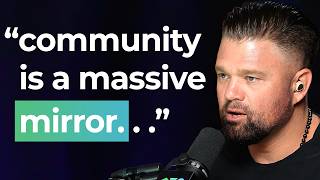
A podcast-style YouTube conversation (hosts Josh Trent and Mar) about the necessity of authentic community for healing, growth, and wellbeing. They define community as mutual, nonjudgmental support (a trusted inner circle), describe a three-ring model of friendship (inner trusted tribe, friends, acquaintances), discuss the biological basis for connection and the gut–brain intuition, contrast online scaffolding communities with deeper in-person village-style gatherings, and debate paid vs. free community models. The episode closes with practical prompts (take inventory of your circles, try communities for 30 days) and a call-to-action to join the free Liberated Life Tribe.
Chapters
Hey, what's up, everybody? It's Josh, Trent and Mar. We are back for another co hosted lls. This is a Liberated Life series. What is this? Why is it so important for us to be liberated? It's because we are slaves to so many things, including our ideas about community, and we just don't even know it. Y', all, what if I told you that loneliness does not always look like being alone, like being isolated. Sometimes it looks like surrounded by people that don't actually care about you. They're your friends. When you go drinking, they're your friends with context, but it's not really unconditional love. We're talking about this today and so much more on this Liberated Life series. All right, Mar. So this is a big one, the community aspect. This is why we made the Liberated Life Tribe. Right? It's on the screen right now. Liberatedlife.com it's free. Y' all, come join us. We're going to have amazing conversations there. Just like this one. Mar, when you think about community, how would you define what real community, real tribe actually is? Like, what is that for you?
For me, what I've been searching for is people who I can fully trust and who I can get support from and provide support for as well. Mutual support. And also where I don't feel judged when I share what's on my mind or my heart, and where we can challenge each other, but with compassion and with love. I think that's what I've been searching for in a community.
That's a great definition. Yeah, I'm with you. It's a space that is safe, where you're able to be your authentic self. That's really what I feel community actually is. You know, a lot of online friends that we have, like, y' all might have your phone out and be like, I have 10,000 Instagram followers. There's a big difference between followers and real friends. And I actually, it's on the screen right now. There's the circle of friendship. There's three big rings in the circle, there are your loved, trusted tribe. In the next circle, there are people that are your friends, but maybe they wouldn't go and get up at three in the morning and help you if your car broke down. Then there's the third ring, and that's acquaintances. These three rings are really the window of how we see friendship and community in our lives. And so I'm going to challenge everybody right up front here before we get into this. What are the number of people you have in the center? What are the number of people you have in the second ring and what are the number of people you have in the third. So just sit with that for a second. If you notice that your center circle is empty, this is the conversation for you. Because modern society has replaced tribe with transaction. You can join our community, but only if you pay. You can get the value, but only if you pay. That's why we made the community free. Yes, of course there's ways to get deeper into your work that are paid because money is energy and we trade energy. But everyone has to have a starting place with where they are. And what's really challenging in our modern society is that cultivating intentional, really values aligned connection and community, both online and in person. I don't think it's ever been more important like our ancestors practiced being in tribe and community because they actually had to. They had to, they had to depend on each other to trade corn and go hunting and gather berries like it was actually life or death. And we're still wired like that. We still have an amygdala, we still have a prefrontal cortex. We still have this old structure that's very ancient in our brain and also in our, in our neural tree and in our heart that actually still requires us, life or death, to be in community. But it's perceived that we don't have to have community because we have online community. And I say that in air quotes for y' all that are listening. So it really begs this question of what is authentic connection? What does it mean to be really authentically connected to community? Well, newsflash, it starts with yourself. Authentic connection to yourself doesn't mean that you're perfect. It doesn't mean you have it all figured out. It doesn't mean that you are polished and buttoned up and you have all your shit together. Authenticity means you just simply have the power and the capacity to share where you are in your journey of spiritual development, of, of feeling like a person exactly where you are. That's how you can be authentic. It doesn't mean you're perfect. It doesn't mean that you have this beautiful vanity on the outside. So what do you feel about authenticity, Mar you yourself? Like what? What is authenticity when it relates to being your true self and also giving and being part of a community that gives and receives?
I think that's a big piece because if we're not authentic, we're not gonna call in the community that we're actually craving for so much. So as you said, it starts with us. So we first get to look at how we want to show up in the world and who we really are, to be able to define who is it that we want to surround ourselves with. And there's a beautiful quote from Brene Brown. She said, true belonging doesn't require you to change who you are. It requires you to be who you are. And I feel like that sums up everything. It's basically authenticity is who you are. That's who you are, how you want to show up, who you want to be in the world. And when you find the courage and find who you are, you actually attract the people that you're seeking for. That's what it's been for me. Because whenever let fear take over me or there's limiting beliefs or something, that's in the way, I don't act from a place of love. I usually block myself from surrounding myself with the people that I actually want in my life.
Mm. Yeah. What you're talking about is timeless. So, as I mentioned in the beginning of our podcast series today, the aspect of community was actually built upon true survival. You know, we are wired. I remember Jason Silva talked about this in Brain Games. It was a National Geographic show. Super interesting. And when they went into the research and they actually started looking at the neurology of the brain, they found there was a certain section of the brain that was actually wired for connection, wired for tribe. And it was built upon thousands and thousands of years of us actually having to depend on our neighbor, having to depend on our tribe so that we didn't starve. And that, like I said in the beginning, it's still within us. It's just that our modern lifestyle is an illusion, that we don't need each other. Like, community is not optional. It's biology. Right? I wonder how you feel about this.
I haven't really thought about the biology as much. I don't often go into the science of it, but it makes sense when I think about it logically. Of course, we need help from other people and we depend on each other. And I feel like where the biggest issue has been in the society in the modern time is raising children. And for me, just the idea of raising children on my own, just with my partner, my partner and I, it feels so heavy. It feels so difficult to do. When I imagine having a community of people where we could help each other prepare meals every week or help each other take our children together, I feel like there's, like, so much more lightness, and that's what I would like to have in the future. So, Josh, I'VE been thinking because we both, and many of our listeners too, been on a journey of self development. And especially when we're changing so much, we're growing as people, sometimes we need to, not need to, we abandon the community that we used to have for a new community that matches our new vibration or our new lifestyle. So was there a time in your life when you realized that you actually needed people to thrive in your life?
Yes. And what I'm gonna share is probably gonna be confronting to someone who may be exactly where I've been. So just bear with me. It might sting a little bit, but it's good. I remember in my late 20s, I was still caught up in womanizing and pornography and drinking. And I was a health professional, I was a personal trainer, and I was living in Pacific beach, and I was living with a roommate to save money. And we would go drinking, and my soul just was yelling at me like, this is not your path. This is not your path. And as I started to go deeper into my own spiritual awareness, my own growth, I noticed that the conversations I was genuinely interested in did not resonate with my roommates or my friends anymore. Because they would say things like this, well, yeah, that's cool, Whatever, I guess, yeah, it's good to be a good person. Let's go drinking, let's go surfing, let's go do these things. I had a moment where I realized, in my early 30s, actually, that I was no longer satisfied with the interests of my friends, with the conversation of my friends. And naturally, as a human being develops, there comes a point where you actually get to let go of these friendships. And it can be really sad, it can be really painful. But from a hierarchy perspective, my higher self was calling me forward, and so is theirs. But we each have our own different timelines. So it looked like letting go of every single friendship from high school, letting go of all the drinking buddies, letting go of all the people that tacitly approved womanizing and pornography, letting them all go. Not because I didn't love them anymore or because I didn't want to be their friend. It was just time to go. And so this is a choice point for, for all of us. Take an inventory right now. So if you're driving in your car, if you're walking around, just take a deep breath and just be honest with yourself. Do I actually enjoy, truly enjoy the conversations I'm having with my friends? Or do I feel like I've matured and am I in this struggle right now of letting go of a 10 year friendship of letting go of a man or a woman who I say that I love, who I know intuitively is holding me back from my own growth, who they are not willing to grow with me. And just feel the weight of that for a second. It's only through the vehicle of acceptance, and we can burst through pride on the Hawkins ladder that gives us the willingness to change. And so your willingness to sit here with us and be on this conversation flow and in this podcast is really because you care about wellness. You care about your own wisdom, you care about your own growth. You care about yourself. And so let that care be the courage that you can infuse into your being as you gently let these friends go. Because if you choose to hold on to them and you choose to get stuck in grief or sadness or rejection, you're doing them a disservice. And you're doing yourself a disservice. Because actually, here's the real kicker. By you growing and by you becoming this incredible, more actualized, more seeking being, you give them the permission to do the same. It's not because you're better. It's not like, oh, I'm right here and this person's there. No, we're all the same in the eyes of God. We're all the same. We all come from the same place. It's just that your soul and your trajectory is on a different timeline. It's on a different pathway right now. So I'm going to challenge you to really look within and take an inventory of the people that are in that tight circle I mentioned in the beginning. Are some of those people ready to move to the second ring? Are they ready to move to the third ring? And what kind of support do you need as you go through this process of maturity and maturation to let these people go? Because, yes, it's biology, but it's also your spirit. It's your soul. And so that was my journey, letting go of those people. And then it opened me up to more people. And I have found. I wonder how you feel about this. I have found that every five to seven years, my core group of friends dramatically shifts. Have you found this?
I traveled a lot in the past 10 years or so, so I don't even have these kind of cycles because I was always changing locations. So for me, cultivating friendships was quite a challenge in cultivating community.
So, yes, in community, we thrive. We're not built to do this alone. We've talked about the biology, we've talked about the friendship rings. Here's the most Important part, it's not necessarily where you are that allows you to grow. It's your way of being and what you do. We've talked about the be do have on a different podcast, and we'll link that on the screen and in the show notes. Right now, this concept of be do have is really what we're talking about, because you could do breath work, you could do somatic training, you could do all this stuff on your own. But guess what? I'm here to ring the bell. You can't maximize it on your own. It doesn't fucking work. You must. You are required. You get to do these practices in community because here's why. When you're in a space with other people, you're going to learn so much from their process and their experience and their sharing that you would have never learned on your own. It's almost like if you've never looked in a mirror, how have you ever seen yourself? Community is a massive mirror for us and for everybody in the community because it allows us to be mindful about other people's experiences applying to our own life. And that's really the beauty of. That's the most fun part of community, right? It's like we get to see how we show up, how we give feedback, how we receive feedback. This is like the most powerful thing in community. So, yes, these practices are important, obviously. Mar, we did breath work at our retreat last year. Like, it's powerful. It's amazing. We did nonviolent communication together. We practiced the tools, but we did them in community. And then we're all crying, we're having releases, then we're having joy. So we do the work because the work in community affords us the capacity for joy, both in ourselves and with other people. That's what this is really about. So healing doesn't happen in a vacuum. Healing happens in tribe. This is what it's really about. That's why we have the free community, the liberated life tribe that's on the screen right now. These are the conversations worth having and worth sharing. So what did community used to look like? We talked about that a little bit. Community used to look like something that I think we're honestly grieving. I think we're grieving it. There's a deep grief in all of us. Mar. We. We had the village at one point. It's amazing. My. My love, Carrie Michelle just did a experience with her mentor, sister Morningstar, with 10 women. And it was. It was called Rebuilding the Village. And they're going back to these sacred Ways of tuning into what your body already knows. Your body already remembers perfectly how to be in community. It's perfect. But we have these devices, y'. All, I'm holding up a phone to the screen. We have these phones and these phones give us pseudo community. They give us pseudo community, but that's not real community. I think it's a great starting place. I think that meeting each other where we are, which is mostly online, is beautiful. But eventually online text turns into online, video turns into in person experience. That's the trajectory that we're all on. Community is created one brave connection at a time.
So with all the promotion of communities and tribes online, how can we discern whether it's just a buzzword and it's like this new age style, pay me 20 bucks a month and I'll provide you with a community. How can we discern that if it's the real deal or if it's something just fake or inauthentic?
You know, when I had us do that practice where we took a deep breath and maybe we closed our eyes if we're not driving and we just did an honest inventory of like, okay, who's in my inner circle, who's in my second circle and who's in my third? That same awareness in your heart, your mind and your body, that is the exact awareness and the decision making faculty you have. It's called intuition. That allows you to trust if a community is real or not. And we know it, right? People, people that have 2 million followers, 10 million followers, they get called out all the time because they're out of integrity. And people know that they're just doing it for the money. And so if you ever feel that somebody is doing something just for the money, look the other way, walk the other way. If you know that they're. If your intuition is talking to you, it's the same intuition that knows exactly what community is. Because that same community is what allowed you to be born. It's what allowed us to be brought into the world. Community is two or more communion or unity or union with a man and a woman that births a child is the beginning of how the child has the enteric nervous system interface to what community is. I think our intuition resides in our body, in our unconscious mind. But really there's this gut brain axis that's pretty beautiful. And science is learning about this more and more. Our enteric nervous system is all the, the axons and the dendrites and the, the afferent efferent nerve endings in our gut microbiome and this is really amazing. There's more connections in our enteric nervous system than there is stars in the sky. I mean, that's just wild to even think about. So if we have this robust, really ancient, powerful way to sense and to intuit if something's real or not, cleaning up your gut microbiome is essential. Eating healthy foods that are organic is essential. And making sure your gut brain axis is really working properly. Because with an improper gut brain access, your intuition can be blunted. You might be in fight or flight or hypervigilance from your dietary choices, or over caffeine or spending time with the wrong people and your intuition gets blunted. But I believe in the human spirit, Mar, and I think the intuition can always be refreshed. It can always be awakened, it can always be sharpened. But it's through the practice of actually trying things on. My mentor, my friend Rob Wolf said something that was perfect. He said, when it comes to anything, try on the sweater and see if it itches. Try it on like give it a 30 day process, whether it's liberated life, tribe or any other community. And what kind of value do you receive? What are you actually getting from the community that you're showing up for? And how much can you learn about yourself as to how you can show up more you, because that's the greatest gift we can give to anybody, right? Like when you and I show up as each other on this podcast with no masks, no filters, no fakeness, it's nourishing because we can just get real about things. And this is really what the value of community is in so many ways. So yeah, I think, I think it comes from training ourselves to tune into the wisdom that exists in our unconscious mind, which is our body. I think that's really what it's all about.
So I think we can both agree that online communities cannot truly replace the depth of in person communities. So what is the role of the online communities in our lives right now?
When a building is built, it's actually dug deep, deep, deep in the ground. And the tallest skyscrapers in the world have the same, almost the same length below them as a foundation as they do as a structure. But when you ever see city people and construction workers build a building, they build this beautiful scaffolding around the building as they're building the building itself. And that's what an online community is like. For liberation to be real for all of us, it requires an incredible amount of scaffolding to build the building of liberation. It requires foundation and concrete and Scaffolding online community is a, is a space where the scaffolding is strong enough to build the building itself. And the building is something that we can all be proud of because we're doing it together. And yes, in person, Chef's kiss, it's the best, right? But not everybody has the financial means to afford in person experiences. They're quite expensive at times for most people. So a beautiful scaffolding, which by the way, the more you spend time in the online community and you get to experience the strength of the scaffolding, the more you're going to start aligning yourself with the wellness pentagon, which is physical, emotional, mental, spiritual and financial. Financial being one of the roofs of the Pentagon. The more you start nourishing all five sides of your Pentagon, the more naturally financial abundance comes. Now, this is not woo woo. This is like science and also lived experience. When you spend time in that scaffolding, which is the online community, it eventually, over time and through your honest heart and your honest giving and your honest receiving in online experience, they inspire you, they motivate you to actually have the courage to come and do in person and to have the financial means. That's really the value of online community. People try to sell online communities as it's the only thing you'll ever need, but they're lying. They're totally lying. It is one scaffolding that you require in order to develop the courage and the capacity to spend time in person. And then of course, once you arrive in person, you, you've already grown into this person that can really be there, that can really be present there. And then you get so much more value by the time you're there. And let's be honest, y', all, the drinking on the weekends and the spending money on stuff you don't have, typically it wouldn't take most people in at least America with an average salary to save up for a few months for an in person experience. It's really not that expensive if you put your heart and soul into it. So that's what I think.
One last thing before we end this podcast. You said that it's financially a little too expensive for people, but the way I think about communities, it's that it's free, that it's people coming together to share an experience and support each other. I don't think about it as a paid experience and that's what I would like to build for myself and the people around me. Just, yes, I really would like to offer the space once I have the space, but I don't want to charge anybody. I just want it to be mutual connection and exchange, but not including money in it because that's not the benefit or something that I want to get from it.
This is so good. And I love that you're bringing this up as we end, because what is the two objections to anyone investing their energy in anything? Because money is energy, right? We've been taught and we have many podcasts we've done on money. Money is the same thing as this cup. It's the same thing as a phone. Money is a vehicle for energy transmission. That's all it is. You can think of it as woo woo or not. Money is spiritual because spirituality is infused in everything. So when you say, I'm gonna push back on you with respect, right? Lovingly. When you say, I wanna have community, but I don't wanna charge for it, well, who's gonna pay for your food? Who's gonna pay for your rent? Who's gonna pay for your facilitation? Who's gonna pay for the energy that you're pouring in? That, by the way, there's only so much energy you have in a moment, in a day, in a week, in a month. Who's going to compensate you through the vehicle of energy reciprocity in order to facilitate and give the most beautiful, dynamic, healing, transformational experience that you possibly could? Your intention is pure. I love your intention. And I think if we lived in a world where money didn't exist, your thinking would be perfection. But we live in a 3D world where money exists and we can't get away from it. Maybe one day our children's children's children will. Maybe bitcoin will replace it. I don't know. But we're here now. And like I said in the beginning, the honesty of where we are both in society and individual experiences, is the best place to start. It's the most real place to start. We live in a world where money is transmitted as a vehicle of energy. If someone trusts that they're going to receive way more than they give and they can feel it and they know it, then 1,000 to 5,000, even $10,000 is nothing compared to the growth it's going to give them and the value they're going to receive. It's not a money problem. It's a different way of thinking. It's a value problem. And we all have problems, right? Everybody's got problems, right? Stop hiding. If you want to live your life liberated, allow yourself to ask questions that are different and then question your own Questions about what money really is. So I could ask you, what would be your motivation for pouring your heart and soul, your resources, your land, your food, your time, your energy, your most precious asset, which is time, and saying, I don't need any money for this. I just want to do it. What would be your motivation to do so?
Genuine connection with people. I think I have a different vision of a community than the modern community, how we've been taught to approach it. And so for me, it's just friendship. It's creating a new family outside of the close family that we grew up with. So that's what it is for me. And it's not just me pouring my energy or my resources into it, but it's everybody putting their share into it. And it doesn't have to be equal. It's just everybody gives and everybody receives.
It's beautiful. There's the. There's a story of a man. Have you heard of the stone pot soup story?
I don't think so.
So there was a man walking into a village, and he was completely poor, and all he had was a pot and a stone. And so he went into this place, this home, this. This large community, said, I'm going to make stone pot soup. And he was excited about just boiling water with a stone in it. And a person came by and they said, oh, can I add some peas to that? And he said, sure. Another person came by, can I add some carrots? Another person had a chicken, and they all poured into the soup. So the whole was greater than the single. And in that type of unselfish giving, everyone gets to eat the soup. It's beautiful. That metaphor only applies when we have the time and capacity and spaciousness to do so. And so if your life is not an energy exchange where you've poured yourself into transformation and you've poured yourself into promising yourself and the people you're in service to that you are going to give them the most highest level transformation experience with your skills, your talents that you've worked so hard on developing. That has really no limit to how much you could charge for it. It's different than the stone pot soup because the stone pot soup is about everyone giving equally. I'll give chicken, I'll give peas. But anybody that's a master at what they've become, whether it's, let's say, an auto mechanic or a nanny or a transformation architect or a leader of any kind, they carry with them a value that can't be quantified and what people are paying for when they come into an experience where they're being led from one identity to another is they're paying for that. Unique leaders 10, 20 years plus of blood, sweat, tears to save the people that want the identity shift, the pain and the time to do so. Like, if I could give somebody five years of their life back, or if I could save someone $100,000 in coaching and charge them five to $10,000, well, that's a massive value for them. So it's just tweaking the mindset to apply to modernity, but doing it in a heartfelt integrity way. Does that make sense? What comes up for you when I give you this dichotomy? Now, it doesn't need to be a dichotomy that feels true for you. It could be a false dichotomy. We've done shows on this, right? I'm presenting you two options. There's also a third option. There's always a third option. You could do a hybrid of sorts. You could have a transformational program where there's a scholarship where people could come for free, and you could give some. Some part of your gifts to the world that are truly, you know, a scholarship form. It doesn't always have to be one or two, but out of those three, can you see how they all can coexist without competition?
For sure. Yes. Yeah. It's just a little bit different objective of each of them. I think that's it. That's what distinguishes them.
Yeah. All right, y' all go choose to be in community, of course. Do your inner work. You know, podcast is great, but what are you doing with it? So put this to use. Put it to practice. It's not what you think transformation will be. It's not what you think it's going to be. The end result of what you're desiring is probably going to be completely different than what actually transpires. But it's the journey. It's the old platitude. Like, it's not the destination, it's the journey. If people could really let that sink in, that your transformation of going from one identity to another is not really, truly about just the end result. It's about the joy and the fulfillment and the, you know, chrysalis with the caterpillar becoming a butterfly that you become, going through the pain and the struggle and the joy of becoming this awesome version of you. That's what this is all about. So do it in community, y'. All. Join us for this conversation and many more. Liberatedlife.com and until we see you again, we're both wishing you love, wellness, but most importantly, peace and power. You cannot have power unless it comes from peace. All right, we'll talk to you soon.
More from Josh






Your child's future start before pregnancy... and even before conception! #podcast

MD Reveals: Your Healing Creates Your Child's Reality (The Souls Coming In Need Strong Bodies)



