Creating The UNBEATABLE MIND With Commander Mark Divine
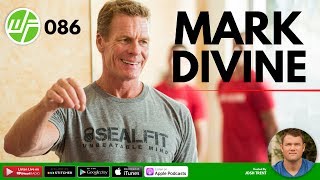
Podcast/video interview (Wellness Force Radio, episode 86) hosted by Josh Trent with guest Commander Mark Divine (founder of SEALfit and the Unbeatable Mind Academy). Recorded/published Nov 28, 2016. Major themes: self-mastery and service as a warrior ethos; the five "mountains" of personal mastery (physical, mental, emotional, intuitional, spiritual) and how the physical domain catalyzes the others; training formats (50-hour Kokoro camp modeled on Hell Week, 12-hour 20x crucible) and the Unbeatable Mind 12-month program; daily practices including box-breathing, gratitude and morning/evening rituals; team leadership lessons (Olympic velodrome example); and a philanthropic partnership with the Christopher & Dana Reeve Foundation (Reeve Wad fundraiser/workout). Practical takeaways emphasized: commit to physical training, practice daily box breathing/meditation, clarify personal ethos (passion, purpose, principles), and practice generosity/service.
Chapters
Wellness Force Radio Feelings are essential, but they can't dictate our actions. We literally infect each other with our emotions.
We came here for a special purpose. Let the purpose unveil itself. Knowing without doing is the same thing as not knowing. They're not just trackers.
I'm gonna wear this and it's gonna.
Help me do the right thing.
Wellness force radio episode 86 with New York Times best selling author and founder of Sealfit and Unbeata, Mark Devine.
The warrior is committed to two things. One is self mastery and the other is service. Right. They're both important. They're like two sides of the coin or hand in the glove. We can't go serve if we don't work on ourselves every day toward mastery. As soon as you begin to develop yourself physically, your mind and your heart begin to strengthen. Physical training will refine your mind. If you don't have a strong mind, it's hard to develop a strong emotional life now because emotions are feelings. When our emotions aren't in control, they're running rampant and they mask the subtle intuitive signals that your intuitive intelligence sends you.
Welcome back to another episode, my friend. I am your host and wellness coach, Josh Trent. Thank you for spending your time with me here on the podcast. This is where every week I bring you access to global experts in wellness, technology and behavior change. On this podcast, you'll learn from exceptional people who are dedicating their lives to driving real transformations in physical and emotional wellness. My intention with the show is that together we'll discover the connections between your emotions and healthy habits to live your best life and enjoy the process. Excited is an understatement. Honored is more like it. To share this week's new guest with you. This is a truly special episode of Wellness Force Radio. Today we're we're learning and growing from the founder of Seal Fit and the Unbeatable Mind Academy, Mark Devine. This is an extra special show talking about how to create the unbeatable mind that we all deserve. Whether you're in the process of letting go of old weight or getting better energy, we all know that every health pattern starts in the mind. I first came across Mark's work in 2013, actually before I even launched the podcast at the UCSD campus at the Cali II Technology Center. It was an early screening of of this quantified self and digital health technology film, Personal Gold, which eventually inspired me to launch this podcast where we explore this powerful intersection between behavior change and wellness and technology. So in this film, Mark was A key advisor to one of the first guests we had back on the show in 2015, Olympians Sky Kristofferson and Tamara Jenkins. I will definitely link that episode in the show notes for today get ready to be inspired and enlightened from this legendary man who just happens to run his business right in my hometown here in Encinitas. Mark is going to empower us all on how to live life with our heart and our sword, how to change our self narrative and quiet down this monkey mind. How to create a personal ethos including what your passion, purpose and principles show about the direction and targets that are ahead as well as learning about his five mountains to personal mastery including physical, mental, emotional, intuitional and spiritual. Be sure to stick around to the end of the show where Mark and I discuss how you can be a part of our of the expanding community and also be a part of the team effort involved in supporting the Christopher and Dana Reeve Foundation. Coming up this week, join from anywhere in the world to support spinal cord research and outreach programs for individuals living with paralysis. Mark is an incredibly seasoned professional not only in the armed forces but also as an entrepreneur. He is a highly sought after coach, speaker and multiple published author of many selling books including Eight Weeks to Seal fit, the Way of the Seal Warrior Yoga and Unbeatable Minds which is soon to have its fourth edition and we are going deep into the chapters of Unbeatable Mind today. He's also the creator and developer of cutting edge training programs for warriors, athletes and professionals. These innovative programs include the integrated functional fitness program SeaFit, the life acceleration program Unbeatable Mind and the integrated yoga system Warrior Yoga. Mark has helped thousands transform their lives both online in his academies and on site in Encinitas, California. This is one of my all time favorites Favorite interviews. No further waiting. Let's get into this exciting conversation with Commander Mark Devine. Mark, welcome to the show.
Hey Josh, thanks for having me on. It's real honor.
I am so excited. You know some of the concepts we're going to talk about today we have not touched on for Wellness Force and for some of them it's going to be a powerful reminder. You know we talked a little bit before we recorded and in 2013 is when I came across your work with my friends Sky Kristofferson and Tamara Jenkins. It was UCSD and you were involved in this film. Personal gold. These Olympic athletes that use the power of mindfulness, the power of technology to really just have the best possible experience. Ending up winning a silver medal in the 2012 Olympic Games. Tell us briefly, like, what was your involvement there? And then we'll get right into your story. And the unbeatable mind.
Yeah, so that was the women's velodrome, you know, the cyclists. And I had known sky, who you met, obviously Sky Kristofferson, because he came and trained at our training center in Encinitas for a little while and then he went off and got involved with the Olympians. Now sky, you know, his role was more as the quantified self guy, right? So he brought a real deep discipline around, quantifying sleep and nutrition and training patterns and rhythms to the girls. And they, and they were going down this road. But what he realized is that because of the way it came together and the different disciplines that these girls came from and the timeline, that they were not gelling at all as a team. They had a kind of a distorted relationship with their training coach. And the whole structure and leadership of that particular sport in the Olympics was not well funded and it was broken. And so sky, knowing that I was a SEAL and that I was passionate about developing leadership and teams and mental toughness and resiliency, thought I could help. What was fascinating to me, Josh, is I actually never, I didn't meet these girls until after the Olympics. All I did was had some phone calls and some Skype calls with them and kind of got into the soft underbelly, what was going on with them as a team. And I was able to kind of guide them to organize themselves like an elite SEAL team would organize, even though it's four, like a squad, and to kind of select, you know, to self select a leader and then to develop a battle rhythm around the way they looked at their teamwork. And so I was essentially helping them move from four different individuals into a single we or a single team that could really synchronize emotionally, think with one mind, be clear about their mission, be clear about each role, you know, in the, in the greater good toward this, this mission. And, you know, it seemed simple to me, but it's one of those things, you know, they don't, they don't know what you don't know. You don't see what you see when you're inside the bottle. You can't read the label. And these simple but profound truths help them win a gold medal or a silver medal.
You are a 20 year veteran of the Navy Seals. Your commander graduated in 2011, multiple best selling author entrepreneurs. So for the past 10 years, you've been training special ops and Navy SEAL candidates, civilians, executives, on how to get better mental toughness and resiliency. And we're going to hit on your origin story and your road to becoming a seal. But Mark, you know, there's so much about you online. I'm curious, is there something fun or unique that most of us don't know about you?
Fun or unique? Well, unique, probably. Yeah. There's a lot of unique things about me. I don't know. I think I have a great sense of humor. You know, people are surprised by that. You know, I hope it shows through in my podcast. And I just, you know, don't take things too seriously. And people think are surprised with that because, you know, Navy SEALs commander, you.
Know, yeah, I'm surprised by that.
I'm pretty much badass. But what I've learned is that, you know, the more I grow as a human, the less seriously I take things that, you know, otherwise seemed really serious. And I realized that life, you know, life is a lot more fun when you can be playful and have a good sense of humor. But of course, you know, I don't mean blow off the important things. What I mean is really know what's important and then relax, you know, and take everything else with a grain of salt, you know, if it doesn't kill you, it's going to make you stronger.
Well, I was fortunate enough to read your book Unbeatable Mind. And it's obvious that you're a world class thought leader in both mental and physical training, but you grew up in a house that had no road access. You actually wrote in your book at a young age, you experienced this healing and meditative power about nature which gave you peace and connection to the silence. And I can connect the dots in reading your book, how those early years really shaped how you serve your unbeatable mind community. Now, can you tell us about these early years where as a child and as a youth, what you experienced, how that grew your empathy and your compassion to the community you serve now?
Absolutely. So there were a couple parts about it that were, that were interesting. So, you know, most people think, okay, successful people, like, you know, if they think I'm successful, that maybe I came from a really perfect family or had some advantage. And I wouldn't, I would say I had some advantage in that I had challenges. Right. My family was chaotic and my father, you know, I love him to death and you know, I always hope he's not listening when I say this stuff, but he was a rager and, you know, he was a, he was a challenge for all of us. I love him. Dearly and he's gotten a lot better. And, you know, he's a great guy and all, but, you know, it was a chaotic. It was a chaotic household that caused a lot of confusion, especially for young, young kids. You know, I had three siblings and myself, at any rate, so I found solace outside, away from that as much as I could, and I became kind of very quiet and introspective. I was an athlete, so it wasn't like a. You know, I wasn't, you know, a nerd or anything like that. I was. I was an athlete, but I gravitated toward endurance sports, so I was a competitive swimmer, and then I got into triathlons, and a lot of that came from the house you referred to as our summer house. So I spent my summers in Lake Placid, and this is, you know, like my savior, because Lake Placid was this beautiful lake in upstate New York, and the Ediron, 6 million acres of protected wilderness, over 5,000 freshwater lakes. It's just awesome.
Most people don't think of that when they think of New York, right? They're just like the 1%. In New York City.
Yeah, in New York city, you know, 99% of the population and 1% of the geography of New York. And upstate New York is just gorgeous. And the Adirondacks are stunning, and there's very, very few people up there. So we had a summer home on the west shore of the lake. There was no road access, like you mentioned, so we take a boat over to our property, and our backyard was a mountain range. And, you know, I used to go out and run these trails and run these mountains all the time. And, you know, so I considered nature to be my friend, you know, and sometimes I would have a teammate go with me or friend, but there weren't a whole lot of them up there who like to do what I like to do. So, you know, I would spend literally days on end rucking these trails and running up these mountains and sitting on the mountaintop alone, just contemplating life and nature and beauty. And so, Josh, what happened is kind of unbeknownst to me, I just got really comfortable being silent. You know, I got comfortable not having to talk, not having to be the one with all the answers. Now, this served me well later on, but when I went into college, that was actually a liability because I really had no ability to communicate, you know, at all very well with women or with my teachers or, you know, and I kind of muddled my way through Colgate. I ended up doing okay, like, a Solid B, B plus student. But, you know, relationships were hard for me because I came from a kind of a chaotic family. And then I remember just, you know, going to. On a date with a girl and, like, being able to utter one word, you know.
How many. How many people were in that town that you. That you grew up in?
Well, the town Lake Placid had a like 2500, but the town that I spent the rest of the year had. I thought I had 500, but I was wrong. It's about 375. Wow. People. Not 375,375 people. Yep. And we lived in a big house right in the middle of town with all four roads going around our house. It was weird. And so we weren't like poppers or peasants up there. Most people were farmers and, you know, it was a dairy farm area and, you know, pretty poor. But we had a family business that ran in the family for over 100 years. And so we were considered to be like the kings of the town, you know, and there was a resentment toward us for that. And so it's weird. I didn't have a lot of friends because they all kind of thought I was this rich kid. Even though we didn't never seem to have any money because we lived in the big house, which is now it's a national historic landmark. It's a beautiful house called Mapa hall in the middle of Barneveld, New York, population 375, which is a suburb of Utica, New York. And there's not a whole lot going on in Utica either. At any rate, it was an interesting upbringing. My parents. My mom mostly sent all my siblings away to boarding school, but she kept me home. Right. She wouldn't let me go to boarding school. She said I was smart enough to get into a good college without it. The reality is she just wanted me home, you know, as a buffer to, you know, to my dad. So I was kind of stuck in this little place.
And did you feel like when you were going through these learning lessons, I know that you view any kind of lessons in life as growth pieces. The growth mindset we've mentioned on the show, Carol Dweck's work, you know, the growth mindset versus anything else that exists. Did you feel like there was any gems that you pulled? I mean, it's easy to connect the dots looking back, you know, and say, hey, in those first couple decades of my life, I really am grateful for one or two lessons that I got from that experience. Even though in the time it was challenging.
Yeah. Well, I think even at the time, I had a great respect for nature and other people. Right. Because I really, you know, it's small. You grew up in a small town. Everybody's important. Right. And so I had. I respected other people. I also developed a great respect and a love for training, which has been a thread that's lasted throughout my life and certainly propelled me into the SEAL teams. I just really, you know, if there was a day that went by where I wasn't training, you know, going out for a long run or getting in the pool or, you know, doing some physical training, then, you know, I was missing out. So I developed a great respect for training. You know, those are things that I think threaded through. And what I also look back is I realized that the endurance training, especially the swimming, the long mountain runs, had a really unique effect on my mind. The ability to train me to focus on my internal dialogue and to control what was going on in my mind, which was an early form of what I teach now, an unbeatable mind. I noticed that a lot of endurance athletes and people who grow up in really challenging situations, if you feed the fear wolf, you know, you literally really hurt yourself. It's very challenging. And so you tend to need to, through necessity, develop internal control and an internal dialogue, which is going to keep you maintaining some semblance of a positive mindset or positive attitude, which, you know, essentially is the. Is the trigger for this growth mindset that Carol Dweck talks about. Right? Because negativity destroys performance and will keep you from growing. Whereas developing a positive mindset and positive internal dialogue will propel you forward and allow you to grow, because you're not going to shy from challenge and you're going to lean into it. And challenge is where your lessons are and where the growth is going to come from.
When we look at this unbeatable mind, I mean, how would you describe that? I read your book. 200 pages of just radical wisdom. And I told you before we recorded, I feel like I have 20 assignments to do tomorrow, but I won't let that bother me. Why did you write this book, Mark? And what is the unbeatable mind?
So let me back up a little bit. When I. When I left the seals, or even actually when I left active duty, because I was. Half of my SEAL career was as a reserve officer, and as a reserve officer, I wasn't full time unless I was mobilized for a year. And that happened a few times. But for the rest of the time, I would work maybe 40 to 60 days a year. And so I was able to have somewhat of a normal life, quote, unquote, after that or the rest of the time. So I got into entrepreneurship. My first business was a Coronado Brewing company, which is a microbrewery in San Diego, which you might.
I've been there. Yeah, it's a great place.
And then I launched navyseal.com and then I started training seal candidates. Through navyseal.com I launched for the Navy. I launched a nationwide mentor program for SEAL candidates as a government contract. And then when that contract went away, I decided to take it even further and up my game and begin a training program which I called SEAL fit, which we just talked about a little while ago. So SEAL Fit is essentially a way to train people physically and mentally using methods from the Navy Seals. And our training is world renowned, especially our 50 hour Kokoro camp, which is modeled after Hell Week. And then, and through SEAL Fit, I started something called the Academy. So the Academy is kind of like our warrior monk training. And I based it off of some training that I had done while I was a seal, where most of our training was deeply immersive. Like if we were going to go shooting, we would go out to Nyland in the desert and for four weeks straight or five weeks straight, we would do nothing but train in that domain of running and gunning and small unit tactics from 5 in the morning until 10 at night. And we would develop mastery very quickly over these skills. Yeah, and we do this every year. And then one that was particularly intriguing to me was I did a 30 day hand to hand combat training as an instructor, and we fought for 10 hours a day, for 30 days straight, 300 hours of fighting. And we became extraordinarily effective at it because it was the only thing we focused on right for 10 hours a day. So at Seal Fit, I wanted to recreate that experience for SEAL candidates to say, not just the fighting, even though we did fight, but it was around the whole essence of what it meant to be, to physically and mentally be a special operator. Now, I wasn't teaching guys how to jump out of airplanes and dive and shoot. That was tactical training. I knew the seals were going to take care of that. But what I wanted to do is teach people how to be durable, mentally tough, resilient, focused, knowing how to concentrate on the right thing at the right time, how to stay stay calm under pressure, like in a firefight, how to be a great teammate, how to make good decisions as a leader, all those soft skills and some Hard ones. I wanted to teach people. And so for 30 days straight, my first several of these, you know, two years of these academies, I did 30 day academies. You know, we would train for 10 hours a day. Well, as you can imagine, Josh, you know, the physical part of that training was, was easy for me to figure out because I had a lot of experience and everything. Sure. But the mental part, there was no guideline. Like, the seals didn't have classes on mental toughness and emotional resiliency. And they didn't teach us how to do concentration training and focusing. All that, you know, either had it or you didn't, or kind of came as a result of the other training you did. And so that wasn't good enough for me. So what I did is I went back to my roots as a martial artist and as a yoga, you know, practitioner, because I really gotten into yoga, which is the original warrior science, actually, science of mental development. And I drew from all that and also a lot of the training techniques that I did in the seals. And you know that sometimes they didn't even know they were teaching. They were just happening. And I developed a training regimen for what I call the inner domain so that all the physical stuff was the outer domain. I created the training regimen for the inner domain and I started testing it on these SEAL candidates. And it was really effective. Right. So the SEAL trainees who came through these programs had 90% success rate getting through the basic underwater demolition SEAL training. And pretty quickly I had other people who were not interested in the SEALs or other special ops, you know, like yourself, you know, professionals, entrepreneurs, executives who said, hey, I want to come to this training. Can I do that? And I said, sure.
I want what they have.
I want what they have. Yeah. And I said, well, all I have is this really hardcore physical stuff. And so some would do it, but a lot of them said, okay, I can't really do that. And so what I did was I said, okay, it's not fair, you know what I mean? I know I can train them too, but maybe their body isn't ready for that kind of ardor. So I developed the principles into what first was an ebook. And then I put together the online training program called Unbeatable mind. It's a 12 month long program. I literally built it one month at a time and I sold it, you know, so that the people who are coming in at least were getting the latest month. Since then I've had like maybe, I don't know, 15,000 people come to that training. And it's been extraordinarily effective. Major breakthroughs in all areas of life. And so I turned, you know, I knew the book that if I took the ebook and turned it into a real book that it would, you know, put it up on Amazon, that it would, I'd be able to impact more people and draw, you know, draw more people into the, into the lifestyle. Yeah, so that's what I did, you know. So the book Unbelievable Mind is my self published book. I have three others that I've done with publishers and they're all like bestsellers and stuff. But my favorite book is this one Unbeatable Mind because I get to play with it. In fact, I'm working on the fourth revision right now. The training keeps evolving and I get amazing feedback. And now I'm starting to go into how do we really use the principles for teams and for corporations? And so, so I'm going to include some of that stuff in my book.
I think this is the power about. What's so compelling about you and your work, Mark, is that you're a seal fit background. You have this mental toughness, but you also lead with your sword and your heart at the same time. I mean, you remind me so much of the work that I've learned through David Dita, the way of the superior man. One of the things that you talk about is this resilience and mental toughness. I'm curious though, how did you maintain this openness of the heart from training in one of the most dangerous environments for decades? How did you maintain your openness and your softness, but also your ability to hold the sword and strike when needed? I mean, how is that possible?
You know what, it's a simple concept, but it's not easy. Right? Just like a lot of things that are valuable or worthy in life. What I learned, and not all warriors are able to do this. You know, the PTSD essentially is a shutdown of the nervous system in the heart. And so, you know, you can't open up to the majesty anymore. And so people get really, you know, their souls basically get snuffed and they're dying and it's a horrible, horrible thing. And you know, 22 veterans a day are committing suicide. And you know, we've got to help these people because they're warriors. But what they, what I learned is that the warrior is committed to two things. One is self mastery and the other is service. Right? They're both important. They're like two sides of the coin or hand and a glove. We can't go serve if we don't work on ourselves every day toward mastery. So what I think has happened in the military is you get a lot of people who do it for a job or they want to serve, but they didn't have the training and the methodology to work toward mastery because it's a very specific thing. And so what I've done and what I learned because I was a martial artist before I went in the seals, and I was very fortunate to have a grand master as a teacher. He taught me about mastery. He taught me that it was incumbent upon ourselves to elevate the training of our being, our human being, to the same level of importance as eating and sleeping. Now, this is critical, right? So the martial artist or the warrior wakes up every day and, you know, he's not like, doesn't flip on the TV and check email. He first thinks, what's my training plan? What am I going to do to train to develop myself and make sure that that's going to get in, because that's a primary thing. And then the next thing is, what am I going to do to meet my mission? And that's the service part, right? They're both important, they're both critical, and so we don't do without them as a warrior. Now, I'm going back to your original question. The warrior's training toward mastery. By the way, it's a journey, not a destination. Like, there is no there there.
Yeah, there's no finish line.
There's no finish line. So I'm going to say, Mark Devine, you know, you. You develop this program, you must be a master. I'm like, no. The further along I get, the less I seem to know and the more urgent it is for me to continue my training. It's like every day I just empty the cup and see what can I fill it with. There is no there there. It's a journey. Because the closer you get, the further it seems away. It's a unique aspect of this, but the point is that you're working toward it. So in working toward mastery, what I learned through, also through Nakamura and then the Navy seals was that it's not one dimensional, it's multidimensional, and that multidimensional includes the physical body. This is why our physical training as a warrior is so important. But the physical is just a means to cultivate and refine our mind and our emotions and tap into our intuition, and then to get to the secret sauce, which is our warrior spirit or our heart center. That heart that you talked about. In fact, the word Kokoro, which is the word I use for my SEAL fit training. The hardcore training means heart in Japanese. Not the physical heart, but the spiritual heart, the spiritual center. So my training with unveiled mind is to develop ourselves, take responsibility for developing ourselves physically, mentally, emotionally, intuitionally and spiritually. When we do this, we basically like a Russian Rorschach nesting doll, we kind of go through the physical to the mental. We develop the mental, that allows us to get to the emotional. Once we refine the emotional lives, our emotional self, then our intuition starts to come alive and we'll be able to make more instinctual and have the insights that are going to drive us forward. And then we can get into that soft center where our heart is. Once we tap that heart, it'll never close down again. It can only close down if you close it down from the outside in. But once you get in and open it up, then it's open, right? It's open and it'll be there for you and you realize that nothing can hurt you, right? And so the ultimate warrior, the warrior master, is someone who's extremely humble, extremely emotionally grounded, and has cultivated a love, you know, for his teammates that is uncommon and also has a love for his enemies because he realized that everyone has, you know, the same essence. It's just, you know, what's layered on top that makes us different.
How do we have love for our enemies? How is that? What kind of construct do we pull from?
Well, if you research and if you do this type of training, you realize that you can't not because they're humans, unless they're, you know, even, I don't know, maybe at the highest level, you know, if we were like a fight, an alien race, that might be a difficult thing to like have love and race. But let's just say humans, we know what humans are. Yeah, right. We all have the same raw material, right? And I know that ISIS is contorted in their thinking and everything, but they think that we're contorted in our thinking. And so, you know, ultimately underneath all that, right, we all have a physical, mental, emotional intuition, spiritual being, and we can at least respect that. And so respect is a form of love, right? And part of that respect and love is understanding. And so if I understand my enemy, I'm going to be better able to navigate them and to anticipate their moves and to fight them. And so what? I'm not suggesting that, you know, because the world centric warrior has a love for their enemy, that they're not going to fight their Enemy. That's not what I'm saying. Because the warrior has a duty to protect. Right. And to serve. And so that means to fight the enemy. If the enemy that's intent on killing you or your family or destroying your way of life, it just means that you, you respect and honor that. You know, there by the grace of God, go I. You know what I mean? I could have, you know, we could have been born in Syria and be dealing with that. You know what I mean? Yeah. So respect it and honor it. And then, you know, it's going to make you a wiser warrior, a wiser person, and you'll make, you'll make better decisions for yourself and for humanity.
The narrative that we have, myself as an entrepreneur, everyone out there who has a busy schedule, moms, dads, parents. I don't think calendars have ever been less full than they are now. Everybody's stuffed with activities they're doing all the time. So the brain is under this constant onslaught of. Gay and Katie Hendricks were on the show. They called it weapons of mass distraction. You know, television advertisements, media coming in, calendar appointments, all these different pieces. What are the things that make people successful in buffering these weapons of mass distraction?
I love that. So you're right. One of the warrior way is to simplify the battlefield, declutter your environment so you can focus on the mission and you can extract the valuable information from the distraction, the chaos. In order to do this, we need to develop great discipline. Right. And discipline means to be a disciple to something greater than yourself. And so the discipline of the warrior is to say no to everything that's going to get in the way of mission success. And so like in the, in the SEAL teams, for us, that meant, you know what, we didn't have a lot of possessions. Right. I had a truck, I had a house I was willing to walk away from in a moment. I had a couple kit bags full of my gear. And, you know, when the phone rang or the pager went off, you know, he grabbed the kit, kit bag with the gear and you go, and you don't give a shit about any of the stuff that you have back home. It's all irrelevant. Right. So it's just clutter. Yeah. And so we didn't have a lot of clutter. But, you know, we were, even if we, whatever we had, we weren't attached to when it came to personal relationships, right. We, you know, we have our primary spousal or love relationship. We have our kids and our families, and we had our teammates. And then you know, there wasn't a whole lot of room for much else. Right. And so we were. We were clear that we were, you know, we wanted to focus on the right people as well. And then when it came to commitments, you know what I mean, there was not a lot of time. You know, some people dabbled in trying to do side businesses, and usually they didn't succeed. And because they were really not meant to distract themselves with those types of things. I remember one guy bought a gym, you know, and so he would actually sometimes skip out to go check in on his gym and let his chief run training evolutions. And this guy, you know, he really didn't succeed as an officer very well because the guys said, hey, you know, you need to be leading from the front, right? You can't walk away and go check in your gym when we're going to go get on a hilo and do a parachute jump. You know what I mean? Even though he wasn't, like, required to get on the helo to do the parachute jump, that's something that I did because I knew, A, I knew the training, B, my guys needed to see that I was willing to risk right alongside of them and to lead from the front. And so we really focused on not taking on commitments that were going to get in the way. Now, all of this is relevant to today. We have all these distractions because we allow them in. Right now, I haven't had a TV in my house in over 15 years.
Now.
I now have a device that looks like a tv, but I use it to stream, you know, a movie now and again. But I don't. I don't ever turn on the tv. You know what I mean?
What is your view about television? I mean, do you feel like there's a healthy limit, or are you in the camp that it's just good to not have one at all?
I think that your mind is much better applied toward reading, thinking, contemplating, meditating, and also developing deep relationships with those people that you love and you care about.
Me, too.
And, you know, the average person watches TV for four hours a day, and then they wonder why they're not achieving outstanding success in life. It's because their mind is being tuned with all that negativity and it's a complete waste of time.
Yeah.
Now, if there was a national crisis, I would watch tv. I watched the election for about an hour, you know, because I just thought it was fascinating that Trump was racking up those electoral points. I don't ever watch news. Maybe the only time I ever Catch it is when I'm traveling in an airport, right. A while back, a couple weeks ago, I remember, you know, hearing some people shouting and they're all hovering on the tv. And I was like, what's going on? They're like, oh, the Cubs just won the World Series. And I didn't even know it was the World Series was on.
Me neither.
Yeah, it may sound make me sound kind of ignorant, but the reality was I'm just focused on more important things. For me, my important things. My important things are building my business, my family, thinking, writing, you know, and I don't have time for tv. So anyways, I'm not saying everyone needs to be like me. I'm just saying that pay attention to where you're putting your focus. And if TV is one of your focuses, then I'm going to say that's a suboptimal thing to do with your brain. You're weakening your brain. Anytime you spend, you put your mind on things that are surface chop. Then you're reducing your ability to think deeply, to contemplate, to really ask good questions, to journal, to think about what it is you're supposed to be thinking about. Right? So I prefer to see people, the decluttering and de stressing from being overburdened with mass distraction really comes from just starting to make better choices through being disciplined and making choices around narrowing the range of things that you pay attention to, narrowing the obligations. So start saying no in service to the bigger yes. The bigger yes is for you to be radically focused on your main mission in life, your purpose. And then lining up projects, tasks, and whatnot that are going to get you toward that. And then, of course, the people in your life that you love, it's not going to be found through sitting on five boards of directors and nonprofits and taking on every single fundraising opportunity that comes along. You know, being involved in three different businesses at once, you know, it's. It's going to be done by. It's going to be, you know, come through laser focusing on the right things at the right time, done for the right reasons.
And one of the things that's so powerful in your book, Unbeatable Mind, is you have very specific and very strong exercises people do to get very clear in their why and very clear on their purpose. So I'll make sure to link your book as well as a few podcast episodes that I listen to in the show notes for today. It's going to be@wellnessforce.com unbeatablemind. But Mark, the narrative that we have. We already talked about the distractions. There's so many distractions. Right. And getting clear on the why, which will link up. But what about this narrative piece? There's actually a quote from your book that I loved and you said we find meaning by constantly thinking of our body beliefs, successes, failures, rules and roles in life. We have few mechanisms to shut off these lines except for deep sleep. As we age and further empower the rational mind, the humble witness weakens and its shadow. We are rarely, if ever, encouraged to spend time in silence or get to know the depth of our character. All the while, our soul cries out for attention. How do we get in touch with that?
Well, we already talked about one. Nature is a fantastic way. So go schedule time to go into nature and leave your cell phone behind unless you just need it for emergency, but don't turn it on. And within 24 to 48 hours, your mind will settle down, your heart will start to open. You know, you're going to start to feel really good and you. And you'll open up to some of the lessons that nature has for you. That's a terrific way. Second is time in silence. Now, there's a lot of buzz about meditation. You know, meditation is a catch word for a lot of different practices. For me, it starts with breath control training. So the practice of box breathing, which you're aware of, that's the beginning, a beginning practice of what we would put in the catch all of meditation, even though meditation also means something very specific. So spending time every day doing a breathing practice. And for us, in unbiel mind, the best times are in the morning, in the evening, in our morning ritual and our evening ritual, and also before and after our physical training session.
Right.
To prepare for the training session and then to calm down from it and to get our nervous system back in order. We don't have time to go into all the nuances of box breathing, but there's a lot of information in the book on it, and it's a. It's a profound practice in and of itself. Yeah, Great place to start and then to begin a practice of contemplation on your ethos. Right. And so we've already alluded to this a little bit. Your ethos is essentially the sum total of how you define yourself as a human. And so it includes what you perceive to be your overarching purpose in life, what you're passionate about, and what are the principles that guide your behavior. And so when you get clear on those and you're able to articulate Them and even write them down and reflect upon them and evolve them every day. Then the intersection of passion and purpose gives you kind of the arrow where you're pointing toward in life. And so from then, you can start to establish a mission and then the targets that you need to knock down on your way to fulfilling that mission, because you know what direction you're heading, you got a clear vision for where you're going to be in 20 or 30 years, what your legacy is going to be, because you know, A, what your purpose is, and B, you're going to fulfill that purpose in a way that you're really passionate about, right? And so you think about what that is, and then the principles are like your boundaries, right? Your. Your guardrails that are going to guide you along the way. And, you know, anytime you bump up against them, you get this little bit of a, you know, a sound or a bump or a feeling, and you realize, okay, I'm bumping up against principle. And so that helps you understand where you stand in life. That's what I talk about, is your stand. And, you know, there's a saying that one of my commanders used to say, if you don't stand for something, you'll fall for anything that's powerful. And I think it's actual quote he was kind of drawing from, and I don't know whoever said that, but so you got to know where you stand on things, right? Like, where do you. If you don't know where you stand, like I said, then how do you know what ground you're standing on? And so the stand provides a firm foundation for you to push off of as you drive toward, you know, the vision for your future, which is defined by your passion and purpose. All of that said, I call your personal ethos. And so taking time. So a good practice would be in the morning to wake up. And of course, you know, I'm sure you've talked about this before, but establishing a foundation in positive mental attitude will start with gratitude. So being, you know, we say, have a glass of water and be grateful for the water. Be grateful that you're alive, Be grateful for the mother earth that gave us this water, and just go down the list and start your day with gratitude because it's a really nice way to. To kind of neuroplasticity wise, wire your brain to be positive, to have nice internal, positive, powerful internal dialogue. And it eradicates any kind of negative energy that might have come in from, let's say, a bad dream or a bad night's sleep. At any rate. So then after that we'll begin our box breathing practice. And so your box breathes for five minutes, up to 20 minutes. When you're done with your box breathing, you'll do a brief visualization to connect with your passion and purpose. And what does that look like in the future? And then dirt dive your day and then do a little contemplation. Like, you know, who am I, how am I going to, how am I going to fulfill that today? What is the one thing I need to do today that's the most important thing that's really going to drive me forward and you know, how am I going to improve myself today? So there's back to the training and the service or the self mastery and service. How am I going to improve myself today? How am I going to be a better person and how am I going to move closer to my mission, which is connected to my vision for my life?
A lot of things you talk about involve self mastery. And you have these five mountains. They're physical, mental, emotional. The men have kind of the tendency to not climb the emotional mountain. There's the intuitional, there's the spiritual. These mountains, mark, the first one is the physical. Why do you feel so strongly that this physical piece is the catalyst for all the transformation that someone can have? Why is the physical so important compared to the other mountains?
It's critical because it's our vessel, right? So what I mean by that is like we are integrated human beings. It's impossible to separate the mental, emotional, intuition, spiritual from the physical because those all reside in this physical vehicle, this physical body that we have. As soon as you begin to develop yourself physically, your mind and your heart begin to strengthen. Physical training will refine your mind, right? It'll lead to mental clarity, mental toughness. And now research is finally kind of validating this. There's a great book that came out last year called Spark and it talks about neuroplastic effect of physical exercise and training and how physical training will make you smarter, will develop more synaptical responses, will make you healthier. Well, that's like a big duh to me because you're getting positive energy. You have to focus, right? You have to concentrate. You're getting more blood flow to your brain, you're getting more energy or prana in through your breath because you have to breathe more deeply and more powerfully as an athlete or when you're training. All of that is going to stimulate your brain and it's going to lead to growth, not content, but the quality of how you think. Right? Not what you think now. What you think is a whole different avenue. That's when we get into mental development and we start to curate the quality, the quantity and the directionality of our thoughts and feed the courage wolf and learn to focus on the right things at the right time for the right reasons. Like we said, along the lines of your ethos. And so physical is a place to start because it's what allows us to then get into the mental development, which then allows us to get into the emotional development. Like you said accurately, most men in particular avoid that. But it really is where a lot of their power is left on the table. Because when I went through SEAL training, most of athlete warriors failed on the emotional part. We might have called it mental toughness, but the reality was it was emotional resiliency. The day in and day out grind wore them down and the instructors were able to get under their skin. It was really an emotional lack of awareness or lack of emotional control that led to their failure. If you don't have a strong mind, it's hard to develop a strong emotional life now because emotions are feelings. When our emotions aren't in control, they're running rampant and they mask the subtle intuitive signals that your intuitive intelligence sends you. Like for instance, when I was at SEAL training, I went, I was on a, a shooting range one morning and as I'm walking toward the range and it's like 6am bitter cold, I felt stop, right? I didn't hear stop, I felt stop. And I stopped on my track. And as soon as I stopped in my track, a bullet was cracked off behind me, a 9 mil round. And the bullet came and literally grazed my ear.
Wow.
Had I taken one more step, that bullet would have gone right in the back of my head. It was my intuitive self now because it was early in the morning, my mind was very, you know, kind of clear, still in an alpha state from this nice sleep. I didn't have a lot emotionally going on because I was deeply immersed in my training then, you know, and this happens with a lot of warriors, whether it's in training or combat. Like, your intuitive intelligence is like alive. And largely because of the risk and the silence and, you know, everything. There's a lot of reasons for that. So what I've found since is that that's a skill, right? And it's a very valuable skill for leaders to have that right, to help avoid danger with your company or to make better decisions when it comes to your teammates.
What was going on with the bullet?
A Guy behind me had accidental discharge because his fingers were frozen and he pulled his gun out of his. I mean, he was obviously not thinking clearly and he pulled his weapon, literally fired at the same time. Fortunately, it didn't cause any damage and we just carried on our day. And I didn't even say anything to anybody because he would have gotten thrown out of the seals anyways. Yeah. So where I'm going with this. And then once you get clear, once the intuitive life starts to spark and come alive, that's when you can really then get even more refined and get into the heart center. Because intuition, I feel, comes in like three major forms. It's the gut instinctual feel that we get in our belly. The insights that we experience in our mind beyond conscious thought, does that make sense? Like we just suddenly know something or we have a flash of inspiration and if your mind is racing with too many thoughts or, you know, the spinning around in the stories, then we don't open ourselves up to those insights. And then the third is the raw emotive intuition of our heart. Right. And so. And then deep in our heart, it's said that our spiritual center, our kokoro center, lies. And so that's where we're kind of trying to get through to. Right. So we got to go through the physical to the mental, through the mental to the emotional, through the emotional to the intuitional, and then we can access that kind of spiritual heart center. And when we do that, that kind of like metaphorically, the light shines out of that heart center and then it infuses the intuitive, emotional intuit, mental and, and physical, and we just show up as different people.
I love the way that you've designed this. It's fully in the book. Everyone's going to go out and pick up this book. I'm going to be talking about this book for years to come. You know, a friend of mine that we both know, she had an experience speaking of the physical being transformation to all the other mountains. She had the experience at your kokoro camp. And I wanted to read this. This is from Danielle. She wrote. The grueling intensity of this event brought me a peace. It gave me a place to go within myself that I can be calm. This was unexpected. There are no obstacles that could ever stand in my way again. Physical, mental, emotional, intuitional. I'm able to handle anything and forever changed and grateful. Huya 32, Commander Divine. Thank you for being my mentor, my coach, my leader, and my friend. When I got that, I got chills because I'm going to be signing up for the 20X, which is actually on my birthday, April 29th in 2017. We will link that in the show notes. So if anybody from the Wellness Force community wants to come take 20x with me, they can. But Mark, how profound. I mean, that's just one of hundreds of people that have graduated these Kokoro camps. What kind of transformation do you see? Do you have a story that you really love from these? Accessing the physical transformation that leads to the other four? Is there a favorite story that comes up for you?
There are so many, I can't possibly have a favorite on this one.
Josh, I know that's kind of called you out there.
I'm sorry about that.
Yeah.
But I will say that the general theme that I hear is that there's life before Kokoro and life after. Now this could be 20x too. Now, the difference between the two 20x is a 12 hour crucible challenge. Kokoro is the 50 hour. So we'd like to see you do the 12 hour one before the 50 because there's some risk factors involved in jumping into the 50. Right. We don't want to get injured or to have challenges and people need to know their limitations. So. But what happens here is that. And let me back up so that the reason for this model is that you learn this lesson. Let's say you're inspired by the principles of 20x and you begin to do some of this training that we've talked about here. And you begin to cultivate the mental toughness and resiliency and working on those five mountains. And we are, excuse me, our seal fit Academy and the unbeatable mind retreat, which you're coming to December two to four. These are ways to like take the training and begin to implement it. And so the discipline model of the training is what I do every day to show up and forge self mastery in service in a way that's appropriate for me to humanity. But we also know, and I knew as a seal, that if we don't challenge ourselves, then we don't. We tend to stagnate and we also don't have a good sense of our evolution. Right. The inner domain, the work of the inner domain is not like. It's not like strength training where you can mark your progress yourself. You know, putting more weights on the bar.
Yeah.
The inner domain training is very, you know, it. It's ebb and flow of consciousness. And what you want to see is that your consciousness is evolving, kind of an upward spiral in a hollow you know, like what we call a holarchic growth. Every. Every key inflection point, like insight or new perspective, transcends and includes the you that existed prior to that. Right. And so as we evolve, we tend to see ourselves from almost like a higher plateau. And I talk about those five plateaus in the book, but they include the previous plateaus. Right. And so we're able to now traverse this landscape more fully and we're becoming more integrated. So we want to test ourselves to see kind of where we're at, how we're doing. It's like what Daniel was talking about. That test taught her that she was in control and that she could find peace no matter what the world threw at you. So I had this saying that if you bring the challenge to you, the world won't have to throw another challenge at you or something. I can't remember how I say it in the book, but we want to go to the challenge. And so crucible training, like 20x or Kokoro Camp is a challenge that you can go to to test yourself and to grow. And when you do that, you learn these lessons so that you avoid challenges that other people typically face in life. You know, like disasters and disease and, you know, and largely because you begin to take control and to direct your. To navigate your life in ways that avoid some of these things. It's really hard for me to describe. It's almost like the unknowable. Right. What happens? So there is life before Kokoro camp and life before 20x, and there's life after. And largely it's because you've evolved to a whole new perspective, or your consciousness is now shifted to what I would. What the Toltec warriors used to call an assemblage point. So your consciousness will assemble itself kind of in a certain location around your body. And. And when you go through training like this, it shifts. And so your consciousness shifts. And so now you all suddenly see yourself and your role in the world very differently, and it's much more grounded and real, meaning you're much less distracted by those. By the clutter. You're much less impacted by other people and their opinions and their needs, and you're much more, like, clear about what are the right things to do, and you become more authentic. You know what I mean?
And this is not just for athletes. I mean, you have people in their 50s and 60s that have done 20x and even Kokoro.
Absolutely, yeah. Kokoro. If you're. If you're in, you know, if you're over 45. It requires serious training. You know what I mean? Physical training. But anybody could do it. If you do the training, you know, it's accessible to you. The 20x is accessible to anybody. Right? We've been, and I think we've had like one person not complete a 20x and it's because they. They got. They came in with an injury. So it's still hard training, don't get me wrong. But it's not meant to be something that people quit. It's meant for, you know, to be a place for you to learn.
Well, I will be there for sure. Thank you for having this type of a program for me, especially since you picked my birthday. Thanks a lot for doing that. There is a chapter that was so powerful and it really relates to what's coming up here, not only with unbeatable mind, but with this Christopher Reeve and Dana Reeve foundation for spinal cord injuries. And there was a chapter you had on the power of service. And you have compassion, abundance and generosity all being parts of service. But generosity transcends mindset. You write, it flows from your heart with a genuine desire for others to have what you have to experience the same abundance in the world that you experience. This is the second annual Reeve wad. It's coming up since this episode will be published on Monday the 28th. It's coming up right this weekend. But people can could still be involved in this. How can the wellness force community support. And what is this program, the support of this Reeve Foundation?
Well, we partnered with the Christopher Dana Reeve foundation last year for the first time. And Matt Reeves came out to our unbilled mind retreat and what a neat guy. And it turns out that Matt's seal fitter, he's read unbiel mine. He's a big fan of what we're talking about here. And he's also, you know, carrying the legacy of his father, Chris Ruiz, who was Superman. Most people are aware that he, you know, he was his spinal cord injury victim. He got thrown off his horse and he had a neck spinal break or cord spinal cord break. And, you know, he was in a wheelchair for life. But very optimistic, very positive that he would walk again and working relentlessly toward that. And so he was a great inspiration for anyone with a spinal cord injury. Well, it just so happens that one of my best friends has had two spinal cord injuries in his neck. So 20 years ago, he was paralyzed. He fought his way back to where he was functional again and walking. And then just three years ago, he fell off his roof in Durango, Colorado and broke his neck in the same place. And so John, we brought John on to help me out of seal fit and then he's now launched my Courage foundation or the Courage foundation that I, I put together. Of course, you know, I don't own it. It's not, it's a 501C3. And the courage foundation is what, you know, we're partnering with the REWAD or Christopher Reeve foundation this year again. And we'll probably do it every year. And so anyways, the whole point is to raise awareness and develop courage amongst those people involved in spinal cord injuries. Not, and I'm not talking about just the injured, but the people who are around them, their families and the support mechanism. They need to be courageous too. So we're supporting Reeve and we're supporting spinal cord injury by raising money and raising awareness for those people who are affected. And a lot of, as you know, a lot of my warrior teammates are affected by spinal cord injuries. I've had a lot of friends, you know, either paralyzed or seriously injured that way. So the rewad is a way for you or your gym or CrossFit box or team or whatever to participate and raise money and to do a workout. The body, the workout is body weight workout. It's a lot of fun. Everyone can do it. It's not like you can do it anywhere. Yeah, you can do it anywhere. We made it really simple. It can, you know, it can be a little bit of a challenge. You know, it's basically push ups and squats and sit ups and there's a protocol like a CrossFit protocol, but it's, it's not, you know, crazy like a CrossFit Games open wide that, you know, only a few elite athletes can enjoy. Everyone's meant to be able to do this. Even, even, you know, disadvantaged athletes missing limbs and stuff like that should are participating in this. And I think you can learn more about it@unbeatablemind.com has the information about our retreat, about the unbuild mind training and about the Rewad which we'll be doing during our annual retreat which is coming up December 2nd to 4th.
5.4. Over 5.4 million Americans suffer from this. And you said the ripple effect goes on. So how incredible would it be for all of us to practice generosity and donate whatever we possibly can to help out these people that are suffering? Because I found in my own life, and I know I get this from you so much, that when we help other people, we not only get out of our head but we get back into our heart, right? And I think that's a really big deal, especially with all the tumultuous activities that are going on in our country right now. What a better way to get back in touch with your heart and your body than by being generous to other people. So, incredible event. And we're at the end of the show. This is where I get to know you even more. Mark, seven fast questions for seven authentic answers. Are you ready?
Fire away.
How has your personal meditation practice changed as your business and life responsibilities have grown?
It's required more commitment and more discipline because as we talked about earlier, the, you know, the distractions and the commitments can pile up. And so what I found is that I have to keep elevating it to, you know, to the level of extreme importance and get it in every day. And I do that through my box breathing practice, and box breathing practice becomes my meditation practice.
What cracks you up? I mean, what makes you laugh the most in life right now?
Well, I would say, you know, just hanging out with my son, Devin, and he's just got an unbelievable sense of humor. And so the stuff that comes out of his mouth in those spontaneous moments is awesome. And it just cracks me up and it brings me great joy.
Why do you think more coaches and trainers and practitioners of health are not using emotional intelligence or mental training in their practices?
Because they don't know how.
So they need the training. They need the unbeatable mind training, how.
To do the training.
You interviewed a guy here that I respect in Encinitas, Daniel Schmachkenberger, on your show from Neurohacker, and I'm curious what you think Americans shouldn't be looking forward to as we step into this insane age of exponential growth for technology. I mean, what are the things that you see coming down the pipe?
Oh, it's so much. Okay, so in the realm of newer tropics, like what Daniel's working on, you know, there's a lot of incredible stuff that can really stimulate our, you know, our synaptic health and brain health. I'm excited about that. I'm not a big hacker kind of guy, but I am someone who's willing to enable, if it's healthy, you know, some of the. Our physical functioning. I think that virtual reality, augmented reality is going to stimulate our mental, our ability to cognize and to. It'll help us develop our brain. So everything we talked about in unbuild mind, rather than avoiding technology, I'm really bullish on it because I think it's going to like, if you can imagine the holodeck, right, or the Matrix construct where we can go in and train ourselves in artificial or virtual environments. It will accelerate our development as human beings. So I'm very excited. I think what Daniel is up to is great and I love what my friend Peter Diamandis is up to with abundance. And I think that we're going to have an extraordinary ability to evolve ourselves to as technology becomes more of an enabler.
You have decades of training and mental toughness. And I'm curious, like from Mark Devine, you know, are there any existential issues or do you experience fear in your life? How do you dance with fear now?
You know, to me, fear is just about the unknown. What I spend a lot of time on in my meditation is to visualize my future and to, you know, eliminate the gap between the known and unknown. So I don't experience a lot of fear. I guess if I had a fear, it would be. And I wouldn't even call it a fear. It would be just an unfortunate thing. It would be that I. That I wouldn't be able to finish my work. Right. Like, I feel like I'm just getting warmed up and so I've become a little bit more cautious these days. I don't parachute jump anymore. You know, sometimes I can drive a little recklessly when I'm on the country roads and all that. But, you know, I try to be pretty safe. So I'm there for my family, I'm there for my son and that I can finish this work that I've just barely started. When I become obsolete, then I'll be, you know, that anxiety will go away.
What do you feel like wellness is to you? This is the question I ask every guest. What's your definition of wellness?
To me, it's total integration of mind, body and spirit along those five mountains. To me, we're well when we're physically well, mentally well, emotionally well, intuitionally well, and spiritually well or spiritually strong. So wellness is a total integration. And when we become integrated, we unlock vast potential. I call that 20x potential. That's what you're going to experience at the 20x. And when we unlock that potential, we can perform at our peak as a human being.
Someone's feeling inspired right now. What's just one thing they can do tomorrow morning to get in alignment with this unbeatable mind?
Wake up with an attitude of gratitude. And then to begin your day with a breathing practice. And if you can, you know, you can describe what that is on your website. But if, if everyone listening would just do that, those two things, it'll have a profound impact on everything else. And everything that we talked about today will start to flow from there.
Thank you so much for your service to the country. You know, my grandpa was a four star brigadier, Marine Corps general and I really have a lot of respect for men in the service, women in the service, but also what you've done, taking your branch of service and your time there, creating the unbeatable mind Academy, the online programs, seal fit there in Encinitas. Thank you so much for being this powerful force of wellness in our community and in the world, man.
Yeah, Josh, thank you very much. It's been an honor to be here with you today. Look forward to seeing that training.
Yes, absolutely. Thanks so much, Mark.
Awesome, Josh. Really appreciate it, buddy. Thanks.
That wraps episode 86 with Commander Mark Divine. This was one of my all time favorite episodes. There's so many takeaways that it was actually really hard for me to pick my top three. But if you were going to do three things just from this episode, they are in order of importance and in order of significance. First thing is go out and purchase unbeatable mind. We're going to have it linked in the show notes. It, it is seriously 200 pages of the most quality written work. I had no idea that Mark was this incredible of an author. So that is step number one, takeaway number two from all the things that Mark said. These mountains of mastery, these five mountains, physical, mental, emotional, intuitional and spiritual. The way that he talked about how each layer is transitioned to by completing the one before it blew my mind. I've always found, felt intuitively that the physical kind of unlocks everything else. So much of what I've done this year in my own personal work has been around the mental and the emotional. The physical has always been there. But I've been so focused on physical in my life. Can you relate to this that all I did was the physical? Well, the physical still gets to have attention because that is what leads to the mental, emotional, intuition, and then finally spiritual. It's what quiets that monkey mind. As Mark said when he talked about that example of the bullet whizzing by his ear on the shooting range is because he had done all the mountains before. Starting with the physical. The last thing is practicing generosity. How many episodes this year and on the show have we had guests that have focused on generosity and gratitude? One that comes to mind is David Zapposzowdi earlier this year. But with generosity this is what truly transcends mindset. It flows from our heart with that genuine desire for others to have what we have and to experience the same abundance in the world that we experience. I think the best way we can all contribute to this is by doing something out of our comfort zone. Well, that is what I'm doing by contributing to this second annual Reeve Wad. If you're in the Wellness Force community, if you've been here for a while or if you're new, this is an incredible opportunity to get outside of your comfort zone. Doing the these bodyweight exercises this week and contributing to an incredible cause. For this Christopher and Dana Reeve foundation this week you can join from anywhere to help support spinal cord research and outreach programs. By heading over to wellnessforce.com unbeatablemind you can learn about the online training programs, the Unbeatable Mind Academy, the Unbeatable Mind Retreats. I'm going to be going to one this weekend December 2nd through 4th in San Diego. The 20x event I choose challenge you to join me. Join me on my birthday April 29, 2017. I will be completing this 20x. I would love to have you with me. Are you feeling the call? Let me know. Email me josh wellnessforce.com that you're joining me on my birthday for the 20x. Now it's time for you to go out there and create the Unbeatable mind with all the tools, energy and resources you got from Mark and every guest who's been on the show show. So until I see you again real soon, I'm wishing you love and wellness.
More from Josh






Your child's future start before pregnancy... and even before conception! #podcast

MD Reveals: Your Healing Creates Your Child's Reality (The Souls Coming In Need Strong Bodies)



