Dave Asprey | Fast This Way: Burn Fat, Heal Inflammation & Become A High Performer | Wellness Force
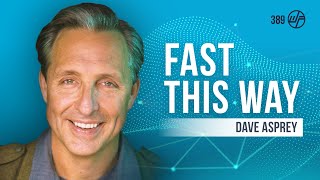
Interview with Dave Asprey (hosted by Josh Trent) about the book Fast This Way. The conversation contrasts "working" (performance-oriented) fasting with longer spiritual fasts, explains physiological mechanisms (ketosis, mitochondria as a driver of willpower, autophagy, gut→mitochondria signals), and offers practical, evidence‑referenced hacks (coffee, MCT/C8, grass‑fed butter, prebiotic fiber, activated charcoal) and safety/adaptation guidance (progressive intermittent fasting, group retreats, monitoring). The guest also situates fasting within global spiritual traditions (vision quests, cave meditation) and discusses trauma, fear responses, and how metabolic preparation reduces suffering during fasts.
Chapters
They'll try to use the spiritual practice of fasting, even intermittent fasting, but they'll do it in the middle of a workday. So there's such a thing as a working fast, which is something you do for more energy, high performance, and anti aging. And then there's something that's a spiritual fast, which is something you do for personal development, and they're just fundamentally different. But until you do a longer fast with rest, relaxation, meditation, journaling, and introspection, you're not going to see it. So I see a lot of people trying fasting, and then it doesn't work. And they say, I couldn't do this regularly because it sucks when you do intermittent fasting. Right? It doesn't have to suck.
Dave. Welcome back to Wellness Force. How you doing?
I'm doing really well. Thanks for having me back on, Josh.
We were talking before we switched on the record button, and I'm very impressed with your camera. Like, you're actually teaching me how to become a better podcaster. So thank you for that. And then on top of that, I'm just so excited to explore this topic that many people approach from, like, a biological or a physiological lens, which you do in the book. But today we're talking about fasting this way, which I believe, after reviewing the book, is the right way, but it's way more spiritual than people recognize. And this is what I love about your work. And the last time we had you on the show, you talked about how mitochondria make so many of our decisions. And I have to say, like, fasting is no different. So I want to start with you in the cave, because a lot of times people, they approach this fasting from like, I want to lose weight. I want to shed love handles. You did this in 2008. You hired this shaman that took you to a cave. You were dealing with a lot of health problems, sinusitis being one of them. I've talked about my chronic sinusitis that I had for the majority of my life as well. So we share that. But outside of Sedona, which is a magical, wonderful place. Take us there to the cave. You were afraid of loneliness. You were afraid of starvation. You were really not well. Like, you weren't doing well at the time, which is, I think, why most people try to go to alternative practices like fasting and spiritual development. So what was the genesis of you even getting to the cave to learn about fasting from a shaman?
Well, I had realized that I lost a ton of the £300. I had to Lose. But I. I learned early on, if you don't eat every two or three hours, your body will go into starvation mode, and then you'll get fat. So I didn't want to be fat. I'd been fat my whole life. I'm done with that. And I also had this other program running that said I know that whenever I don't eat often I get hypoglybitschy. I act like a jerk, and I don't want to act like a jerk anymore. So I was afraid of going a little bit hungry because I would be less in charge of myself and because it would somehow make me die. And I also knew that I was afraid of being alone, and when I was lonely, I'd eat. So I'm like, all right, I think I'll just take this on. So I will ask the shaman to leave me in a cave for four days with no people and no food, and then I can be as hypoglybishy as I want, and I'll just have to deal with it. And that's definitely. You know, you can call that a vision quest. In fact, that was how I found the connection to do that. And it was a pretty intense experience. And I used the book to write. Excuse me. I use the book to write about the spiritual side of fasting as well as the physical side of it. But what a lot of people have messed up in their head is they'll try to use the spiritual practice of fasting, even intermittent fasting, but they'll do it in the middle of a workday. So there's such a thing as a working fast, which is something you do for more energy, high performance, and anti aging. And then there's something that's a spiritual fast, which is something you do for personal development. And they're just fundamentally different. But until you do a longer fast with rest, relaxation, meditation, journaling, and introspection, you're not going to see it. So I see a lot of people trying fasting, and then it doesn't work. And they say, I couldn't do this regularly because it sucks when you do intermittent fasting. Right. It doesn't have to suck. I have the benefit. Bulletproof Diet was one of the early books talking about intermittent fasting. People lost a million pounds on the Bulletproof diet, which uses intermittent fasting. Shocking replacement.
I would assume it's more by now than a million pounds. Yeah.
Oh, it probably is, yes. Yeah. I don't have the total book count for that book, but it's probably several million pounds. But a million is very conservative. And it's one of those things where I know intermittent fasting works, but I also see this trap that I've been in several times. And there's a fasting trap, there's a vegan trap, there's a keto trap, and there's an exercise job. And they're all from the same basic human behavior, which is, you know what? If something's good, more is better. Now, if you go into keto and you stay in keto all the time, you will hate your life. Eventually you'll feel great for a while, and then when it stops working, you'll say it's because I'm not keto enough. And you'll go from 15 grams of carbs down to 12 and wonder why it's still not working. And you'll be stuck there. And fasting's the same way. So I'm seeing fasting grow kind of the same way that keto did. And I go back to 2011 when I was like, keto is a high performance thing you do. And if you look at Google trends, keto started trending up. And it's been trending up for a decade. But it's starting to level out because people are realizing, especially women, if I do this, the way people are talking about, it's actually not working. I get some benefits, but I get a lot of downside. Fasting is gonna go down the same path. And I think I can write the book that'll stop that, that says, fasting the same way every day is not a good thing. Men are not little women. And sorry, other way around, women are not little men. But same difference. The whole state of fasting, it's a tool like exercise. And you and I both know if you go and you lift heavy every day, you're going to get injured, you're going to be over trained, your sleep will go down, your cortisol will go up. If you fast heavy every day, which a lot of people do, I felt so good, I just thought I would do one meal a day forever. Like, maybe that's not a good idea. So teaching moderation and teaching what to do when you want to have less stress and more energy during a fast, because there is no hard and fast rule that says, oh, you can only have water during a fast. In fact, that flies in the face of most fasting throughout history.
I'm excited to talk about all the details of fasting because most people, they think if I eat any calories or if anything goes in my mouth, Whatsoever, then I'm somehow breaking my fast. You go into the nuances in the book. And I find it utterly fascinating, Dave, that, like, you had to go to the extreme going back to the cave in 2008. Like, you were essentially at that time, less conscious, less aware than you are now. Of course, it's like 13 years later. So at that time, there was something in you that I think most people seeking the truth or seeking the answers, really want. And that is peace, harmony within themselves, really like being their best self. But it's funny, like human beings, we go to these extremes where we'll fast for 10 days and then we'll do these crazy diet programs. They're not crazy. I feel like. And I'm curious how you feel going to the extreme somehow brings us back to the middle. So what was it about your exploration in 2008 with the Shaman in the cave? You know, since we're having this amazing conversation about fasting, what was inside of you that was seeking peace, seeking wellness, seeking wholeness in the cave with a shaman? Because that's a pretty big extreme.
Well, compared to a lot of the rest of my life, it maybe isn't that extreme. I mean, I went to Tibet and Nepal for three months to learn meditation from the masters. You know, went to Mount Kailash where I had yak butter tea that was the genesis of bulletproof coffee. And I've gone down to South America. I've done shamanic training. I did ayahuasca in 1999. In fact, I went down there and I was at a guest house. I said, I want to try ayahuasca. And they looked at me, they're like, you're white. I said, yeah, I noticed. And they said, it's for locals. You'll throw up. You won't like it. Like, no, they're almost embarrassed that, like what you know about that. And since, since then, it's really changed. You go down, there's people at the airport, you know, waving ayahuasca signs at you. And, you know, maybe not spirit, spiritually pure experience. So I've been willing to look at traditions around the world. And my algorithm is, look, I'm going to try what's supposed to work. And what's supposed to work is a low fat, low calorie diet, exercising all the time and thinking your way out of everything. And, Well, I made $6 million when I was 26, lost it when I was 28, but I was miserable the whole time and I was fat. And so I said, okay, now I'm going to test whether what I'm doing works. And that means you look for ancient sources of knowledge. Because every lineage that I just talked about there, including the fasting and a CA vision quest, which is in a lot of cultures, but is certainly something you see in North America. Indigenous people, it's it. Each of these has their knowledge that came from looking at thousands of years of what worked and what doesn't work. And there's a name for that. It's called science. They just didn't have the same measurement tools that we do now. And one of the reasons that I started biohacking was that in the back of my mind, I'm like, this is awesome, because we're going to get all the data, and the data shows you what works. And now you can look at your aura ring, your readiness score based on heart rate variability, and say, did my meditation do something? And you go back 20 years. They say, meditation doesn't do anything. Only stupid people meditate. That was a very common thing you'd hear. Or crazy people. And now like, well, gee, if it doesn't do anything, why does my heart beat differently? And why do I show greater parasympathetic nervous system activation from these practices? Hmm. It looks like the ancient stuff was right. So that's why I make it a point to study those things as well as look at cutting edge neuroscience. And what you find is they almost always line up. One of my favorite stories I've come across was from a woman named Candace Pert. I didn't get to interview her before she passed, but she discovered the opiate receptor, which was a major breakthrough in understanding how our brains work.
What was her main book? I'm blanking on the name.
Her main book was Molecules of Emotion, I guess. Yeah. Molecules of Emotion. Yeah.
I did not read that. And this is just to. I'm sorry to interrupt you. The juxtaposition is this is science and spirituality. This is not just heady stuff.
It's not heady at all. And she starts out as, like, a hardcore, you know, as nih Western medicine. And over the course of her biography, which is what that book is, she becomes more and more like, wait, there's more going on here. And she finally talks about how she goes down and meets a group of shamans somewhere in South America. And she's describing how all these receptors and ligands work inside our brains. And the shamans all start laughing and laughing and like, what's so funny? And. And the shaman says to her, well, what's funny is that you think all those things exist, but they were talking the same language, they knew the same effects, but the shamanic view was so different. They both thought the other one was, it doesn't really exist. They're both views of, there's something going on here. And it's something that you can look at from radically different lenses. And when you look at fasting, I was looking at it from a spiritual lens and just wanting some quiet time and to face some stuff that I knew my body didn't want me to face and put myself in a position where I wasn't going to say, oh, I'll just break my fast by just eating a donut, because there's no donuts anywhere. And, oh, how else do you get four days of no input from anything to speak of other than going off in a cave somewhere? And there's also thousands of years of people meditating in caves. In fact, was it. Daniel Brown from Harvard has been on my show, a professor there has been 40 years. Kind of the father of attachment theory. He also translates 13th century Sanskrit texts about. Here's the exact instructions for meditating in caves. Like, hmm, that's interesting. Why do we have all this knowledge about caves? I'm like, all right, I'm just going to go try it. Because the worst that'll happen is I'll waste four days. Best that'll happen is I'll have some interesting experiences. And I tell the story in the book as well as, like, here's the stuff to do so that fasting doesn't have to suck during the week. And here's how to do the spiritual fast. And what's cool is I have now I've decided I'm teaching the book. So if you go to fast this way, you don't have to buy the book, but you can sign up for the fasting training there. And then I teach people how to fast, but the last two days of it are a spiritual fast. And there's some special breathing and some awareness exercises you can do when you're hungry. And the magic thing that happens during fasting, longer fasting, or if you're using a hack during a shorter fast, it'll also turn on, but during a longer fast. The reason spiritual traditions everywhere do fasting is after about two days, you go into a state of ketosis. And when you're in a state of ketosis, there's magic happening. Step one is all the energy that would have gone into digesting food is no longer digesting food. It's available for thinking, for Feeling and for repairing tissues, doing stuff in the body. So that's an upgrade. Then you have another interesting thing going on because you're in ketosis and ketones have more energy per basically per revolution of the Krebs cycle. So you get more electrons that way. So, okay, less power wasted on digestion. So more power available. And more power available because you're burning ketones, so you're in an elevated energy state. But a third thing happens that isn't really written about in mouse studies of water, only fasting or something. And that is that when you're hungry, your sensors open. And this is so you can find food. But if you wanted to be in a place of awareness, you'd want to have a ton of energy, no distractions, and have your sensors open. And the sensors are the same things that drive intuition, subtle awareness of nature, of the environment around you and things like that. Which is why it's pretty powerful. For me, I'm fasting in a cave in the middle of the desert and it was really an amazing experience. But in fastest way, I talk about my friend Chris, who was trained as a long range patrol military, spend a couple of weeks in the middle of the jungle kind of guy. Couldn't talk about half of what he did. But he said during training they give him an 80 pound backpack and say, all right, your destination is three days away. You have no food. Here's a canteen and here's a compass. Go find it. And he and his guys would go traipse around and figure out how to do this, but they'd hang a hamburger in the tree near the destination and he's like, Dave, we could smell it three miles away. We knew exactly where it was. And it's that opening up, connecting to the environment. The same thing that they teach you in tracker school and things like that. So you want to become more one with the world around you. Fasting is a way to do that because of that little thing. So there's a spiritual side to it. But it's when you're saying, okay, I'm going to do something that is spiritual in the middle of two kids jumping up and down, you're staring at Zoom, your boss is yelling at you. It's not the time. And most people who aren't metabolically fit already, if you say skip breakfast, like their eyes roll up in their head and it's a hard no for the same reasons I did. Well, I'll starve and then I'll get hangry and it's just not going to Be okay, so what if that first day you do it, you were very successful because you actually had tools, things you could do during a fast that let you have energy and then all of a sudden fasting is painless, it's better than what you did before. And then you'll keep doing it and then your metabolism gets stronger. And then one day if you wake up and say, I'm not going to use a fasting act, I'm just going to have water, you just won't care. And it's not even a burden.
It's just the biggest piece for people is willpower. But what's fascinating in the book is mitochondria is what really dictates willpower. People shame themselves. People go into these loops of fill in the blank, I'm a pussy, I suck, I can't do this, blah, blah. It's crazy, the shame spirals that happen. And I'm like, you, I was £280 at one point. Like, I know what it's like to have self hatred and spirals come in. I think for some people, if they don't have. And that's why I'm stoked to get into the different tools and practices and really preparation to kind of onboard people into fasting. But can you talk about the willpower aspect? Because I think right out the gate, most people are like, I can't do that. I can't do that because I don't have willpower. But really, in the same way that you talked about on our last episode, mitochondria, spiritually, energetically, physiologically, they run the ship. Like they really run the ship. So how does mitochondria impact our willpower?
Mitochondria is the source of willpower. And there's actually a study that shows that now. And I think I cited that in my book before Fast this Way. I don't remember the name of the study off the top of my head, but what happens is willpower is a thought. Thoughts come from energy, which is measured in electrons. And the guys who make the electrons are the willpower are the mitochondria and they make the electrons that make the willpower. So what happens then is when you're fasting and your mitochondria are untrained to go even a little while without food, they've allowed weak mitochondria to persist. These are basically dim bulbs or batteries that don't hold a charge very well. And there's no reason to get rid of those because they work well enough. And then you start fasting and the body says, oh man, I'm going to have to get rid of those and go to the trouble of building young, fresh, healthy ones. So of course it's going to turn up a little bit of physiological stress. And when it turns up that stress, it turns down your electron flow. So all of a sudden your willpower drops. You want to take away someone's willpower, just give them hypoglycemia. They have no willpower. So there's no nobleness in that cycle whatsoever. Like what would happen if you could fast and you didn't have a drop in electrons, but your insulin stayed stable and your body was still doing autophagy and cleaning up your cells? Well, you can do it. And this comes down to just an absolute rejection of the calories in, calories out model, which is old. It's mean spirited and it doesn't work.
Why is it mean spirited?
It's mean spirited because if you tell people that all calories are the same thing, it's denying reality. And if you were to say, okay, I'm going to eat the corn syrup diet and I'm going to eat at midnight, you're going to have radically different results than if you ate the butter diet at noon. I mean, completely different results, even if it's calorie equivalents. So calories are a terrible way to do this. And one of my favorite things to cite in agricultural research, they take cows and they take a concentrated mold toxin called zearolanol and they buy these little waxy pellets that have this and they're called xeronal. They put it in the cow's ear and then it, it melts and it enters the cow's fatty acid membranes and fatty membranes throughout the body. And this is awesome. The cow gets fat on 30% less calories, if that is possible, if that even can exist. And believe me, it does, because that's one of the reasons meat is so cheap and why industrial meat is bad for you. One of the many reasons. Well, then calories are not the thing. They're a small variable. But when you tell people it's the variable, you end up telling people to be low energy and low willpower all the time. And then to apply their willpower to not eating, even though their body will win, the mitochondria will make you eat. And some of those people who are breatharians, their willpower is so strong, like, I'm only going to have air, but then they wake up in the morning and there's a Hershey bar wrapper next to them. Well, who ate the Hershey bar? Their mitochondria ate the Hershey bar. And they don't even know they did it because they had to. Right? And that's how deep it goes. So no, it's not about calories. And since now we've shown calories that are different, do different things, different proteins do different things. You want a plant based protein, Sarin, the nerve gas, is a plant based protein. I don't think you want to eat that. So plant based protein doesn't mean anything. Which protein, from what source and what else is with it? Same thing with animal protein, spider venom. I'm not going to eat that. It's an animal protein. So we can throw out even calories and we can throw out the next thing down Omega 6 oils for a decade until people don't eat those. It's a core part of the bulletproof diet. Now you've got a lot of our carnivore friends are saying Omega 6s are bad. I'm like, go team, right? Replace them with butter, you'll be better off. And okay, so omega 6 fats versus other fats, they're different, they do different things. So when we're fasting because mice in a cage only had water, because that's what was given to them, it doesn't mean that it's what's better. So what you do is you say what do different calories do during a fast and what are the hallmarks of fasting? And the hallmarks are insulin doesn't rise and you maintain autophagy by keeping mtor levels low. That means if you don't eat protein and you don't eat almost any carbs, there's a few carbs you can eat that aren't digestible. And if you eat fat, your body stays in a state that is either fasting, mimicking or the same as fasting. And what you get there is incredibly different experiences of fasting. And just the feedback from the 30,000 people doing the fasting training with me right now. By the way, guys, you can fast this way dot com. You can join in. What happens is I didn't think I could ever go 24 hours without food. But by the end of two weeks, they're doing it without even noticing food. So the willpower is out of the equation. The whole reason the bulletproof diet has worked so well is the food is designed to remove willpower because willpower is a terrible thing to rely on. You shouldn't do that.
So the foods, people, it prepares people on a cellular level to on ramp to do fasting or intermittent fasting, because, like, you don't want to treat your body like it's some kind of vessel for radical experiments all the time. I don't think fasting needs to be radical. How do you make fasting less radical? Because I think for a lot of people, Dave, it brings up fear, right? It's like, oh, I fear my willpower. I fear not eating. How do you soothe the fear and use like a nutrient conversation to prepare somebody to fast?
Probably the best thing to do is to talk about that mitochondrial algorithm. And this is a core part of fast this way. And if you pretend you're God and you're playing with a little video games, you're going to get to make a new life form. And it's small and dumb, so it can only do a few simple rules. So you get four or five rules, and you have to do those, but you have to live forever. And the first thing you'd have it do is don't get eaten. So it's run away from kill or hide from scary things.
Yeah, right.
Things that might kill you. Now, all life does this. Whether you're a cactus, you know, a bunny, or, you know, a slime mold. It just doesn't matter. This is the first thing you do. You protect yourself. There's different mechanisms of protection, but. So fear gets 10 times more focused than anything else, because if something eats you, is game over and you don't get to be alive anymore. And then the second F word is food, because famine has killed just about every kind of thing that's alive at multiple times throughout evolution. So there's a deep thing there. And we put five times more emphasis into eating everything than it's actually warranted. And then there's a third F word that you have to put in place for all life forms to stay around forever. You know what that one would be fun.
Fornication.
Man. I was thinking fertility, but you can go for the dirty if you want.
To, or unlawful carnal knowledge.
You'd be amazed how many people have gotten to just drop an F bomb on their own show with that. That's awes fertility or fornication, whatever you want to call it. So you put about three times more energy into that than it is necessarily warranted. Now, if you are in an environment where you're constantly feeling unsafe, say you watch the news every day, or lots of other things, or capital T or.
Lowercase T, trauma from parents, or generational pain, past unhealed wounding, I Mean, massive.
Research on that trauma is a huge, huge thing there. So then your fear buttons are getting pushed for no reason except there is a reason. The reason is ancient bacteria are trying to have this network of a quadrillion bacteria trying to figure out if something is traumatic, if it's a pattern matching, oh, great, that might be fearful. It doesn't matter if they're wrong. If you're a deer and you hear something in the forest, you run away. It doesn't matter if it wasn't a tiger, you run away just in case. We spend a lot of our energy running away just in case. Or hiding or getting all riled up and wanting to fight. And when you look at fasting and you have those three things, those three things are not you. They are an ancient meat operating system common to all life. And everything you've ever done that you're ashamed of comes from those things. So that's how important it is. And when we talk about fasting, okay, you just told me that the second most important survival thing I do, you told me not to eat. And then the immediate thing is I'll die. I'll starve. In fact, how many times have you said, oh, it's almost lunchtime, I'm starving. Sure, it takes you three months to starve. You're not starving. You just have a craving. Because if you were hungry, you'd say, oh, it's lunchtime. I could eat or not eat. But yeah, I'm hungry. But hunger is a mild thing, and it's a thing that can wait. It can wait a long time, and no one's going to die. But for most people, hunger triggers fear. And then we have that programming, if I don't eat all the time, I am going to die because I'll go in starvation mode and all of those other things. So that's why fasting is probably the worst thing to write a book about. It's very easy to write a fasting book. You're like, step one, step one is don't eat. Step two, it's good for you. Here's a bunch of science that's easy, but that's not what I wrote.
That's the lazy man's fast.
Yeah, but it's like, how do you actually do it so you'll. So you'll do it so that you won't end up in this bizarre situation where I told myself I was going to do it and I just couldn't do it. And that's where most people are. It's where I would have Been when I was £300. I mean, if someone had told me. In fact, someone did tell me to try fasting when I was in my mid-20s. And I was so offended, I'm like, how could you do that? Don't you know? Starvation, blah, blah, blah, blah. And it's all just bad programming. But that's why it's that ancient thing. From the perspective of those bacteria, you're just a mobile petri dish. And they want to make sure that there's more mobile petri dishes around, and they don't really care what you want. And willpower is basically you asserting your dominance over that system. And there's always a dance between your willpower and your consciousness and then your unconscious behaviors.
Huge question that I'm feeling for you. For so many people watching and listening that have had trauma, capital T or lowercase T, Right. And trauma you've talked about before you received healing, about the cord being wrapped around your neck at birth. I remember you mentioned that on multiple shows. So trauma can happen in this lifetime or others for people that are in the awareness that they've dealt with or are currently dealing with some type of trauma, which is to be human. What is the emotional and also the physical intelligence that you can provide us to begin the fasting journey specifically for people that have dealt with trauma?
Well, anyone alive has dealt with trauma of some sort. And I. My company, 40 years is then the neuroscience company. People come and spend five days doing intense neurofeedback with personal development. And you always run into trauma when you do that. And what's funny is, in fast this way, I found a study that says 15% of the average person's thoughts are about food every single day. So if you turn off your hunger, wow, you get 15% more of your thoughts back.
If you're Italian, it's a lot more.
Fair point. That's an average person. But we're talking about above average for Italians, right? Yeah, there you go. But if that's for food, the fear F word is much stronger than food. Is it half your thoughts? Is it 2/3 of your thoughts are about fear. The running thoughts, the angry voices in your head, the inner critic, all that kind of stuff, that's all fear, nothing but fear. And when you're dealing with willpower, well, if most of your thoughts are hunger and fear, and what's left is. Those are nice legs over there, there's a little bit left for personal development, self improvement. And the other F word, which is friend, which is our lowest priority one. But you need to be an active, giving member of your community if you want to be fully satisfied. And mitochondria are wired to work together. That's why we have cheese and yogurt and kombucha and herds of deer and forests and all these things, because we are wired to do that. But you're not going to do that if you're afraid and hungry. And that's just the basic condition of all life, not just humans. So when we're dealing with trauma, for a lot of people, there's food trauma. So your parents said, oh, my God, you didn't eat. Ah, it's a big deal. In fact, a lot of kids control their parents with food because we have mirror neurons. If someone else is hungry, we feel hungry. And then hunger equals death. And so this is why a lot of parents force their kids to eat breakfast when they don't want to. Right. And our house is a little bit different. My kids eat a very healthy diet. They eat the bulletproof diet, and they don't eat bad fats, et cetera. But one time, my son, when he was, I don't know, maybe six or seven, he was like, daddy, I'm just not going to eat this broccoli. And my kids actually like broccoli. But this is a power play kids go through. And I was like, oh, that's awesome. You want to join me in an intermittent fast? You won't die without food for at least 60 days. So I'll fast with you. This is great. Let's just put our food away and let's go do something else. And he just looked at me like. And he just eats his broccoli. Never had a problem.
Give him two choices, leaning towards the one you want. That's great.
But either choice was okay. But there is no trauma around hunger in the house. And like, oh, did you forget your lunch? And you left it at home? Enjoy your fast, because next time you won't forget your lunch. But we're not going to drive it there because you're not going to starve if you don't have food. And the teacher's like, are you serious? Like, yeah, like, our kids don't forget their lunches anymore. It's great. But that just. It's just okay. It's normal and it's safe to have an empty stomach and that it's not a problem.
Is there a way you walk people through that understanding both somatically, mentally, I guess you could even say mitochondrially, if that's a thing.
A lot of it is cognitive Understanding of just look. There's a mismatch between a feeling and a thought. So if you know you won't die for 60 days at least without food, but you feel like you're going to die if you don't, if you skip breakfast, clearly the feeling is wrong. So what's happening here is if you believe that all of your feelings are a reflection of reality, or more accurately, if you tell yourself a story to justify all of your feelings, then you realize I'm gonna have to work on the story. And when I'm dealing with the deeper stuff from a neuroscience perspective, that's one thing we have a whole reset process people go through. But from a somatic perspective, understand there's two different states that most people have mixed up around hunger. One of them is cravings. And most people only have cravings. They never even get to feel hunger. I didn't know there was a difference. And then there's actual hunger. And a craving is if I don't eat soon, I'm going to die. Like I have to have it. It's intense now. They can be caused biologically. You can eat foods that cause cravings. In fact, many if not most cravings are caused by eating the wrong stuff. And then you have hunger, which is that mild. Yeah, it's probably about time to eat, but it'll be okay if I do or don't.
Some of these foods are interesting too. I mark this page 41 of the book Inflammatory foods that cause cravings and make Fasting Harder. This was a crazy one. I didn't necessarily know that charred meat because when I grill, I usually char on the outside. Phytic acids like a no brainer oxalates, things like that. Lectins we all know at this point if you've been with us for a while, like lectins aren't exactly super healthy. But what was the science on that with the charred meat that was interesting?
Well, in the original bulletproof diet, when I put it up in 2011, I wrote the big book in 2014. I talked about that charred meat. I talked about lectins and intermittent fasting oxalates. All these. In fact, it was like the first chapter. These are the things to watch out for. So when you char meat, you get advanced glycation end products which are basically damaged in natured proteins. It's the same sort of thing that happens if you take onions and you brown them. It's cross linked. There's some carbohydrates and polysaccharides that are cross linked in There, and they directly cause inflammation in mitochondrial membranes. And you also get something called PAH and some other aromatic things that. All of which are messing with your fatty acids, and you put them into your mitochondrial membrane, and then you get hungry. There's also a direct effect on your gut bacteria that oftentimes can create lipopolysaccharides, which also drive hunger and cravings. So the difference between a piece of meat that is blackened and a piece of meat that is lightly cooked, maybe a little bit caramelized, but not a heavy, crusty sort of thing, you look at your hunger an hour or two later, you look at your desire for wine and for dessert, it'll be radically different between burned meat and not burned meat. Wow.
That's fascinating to me because I think about, like, the sear of olive oil on a chicken breast, or, you know, not a cafo chicken breast, by the way, like a real organically farmed chicken breast. We've gone very deep with multiple people, you being one of them a year and a half ago. When you're on the show, we all know that controlled animal feeding operations, whether it's cow or poultry or even the fish that are eating soy, even though they're, quote, in the ocean. But there's something really fascinating about this, the way that it signals the driving of hunger is the relationship between the microbiome and the mitochondria, or are they exclusive? Like, they obviously talk together because all these systems talk to each other. So do the two drive the hunger together?
They definitely drive it together. The microbiome talks to the. To the mitochondria. We know it actually communicates with light. There's little pulses of light that go both ways, but much more from your gut bacteria to the mitochondria. There's probably an electrical, there's probably a vibrational, and there's most definitely a chemical communication that's going on. So these are all happening at the same time. And it's a fascinating system, but we're really a little bit more like a collection of little nanobots all working together as a complex system than we like to think. There's a lot of consciousness and behavior and decision points made inside each cel in the body that we're never going to see from the point of view of the captain of the ship. There's a lot of little tiny things happening, and these things cause greater perturbations in your hunger. So when you eat something that stresses out your gut bacteria, they make a compound called LPS or lipopolysaccharide. That crosses the gut barrier, that lowers mitochondrial function and increases inflammation and drives cravings. And there are other things that are on this list where even if your gut bacteria don't make lipopolysaccharide, when your body metabolizes them, it gets in and either causes damage to certain parts of the body that create physiological stress, that creates a sugar craving, or it lowers mitochondrial function when your cells do a poor job of turning air and food into electrons. That is the definition of inflammation. And it's also what insulin resistance looks like. And when that happens, your willpower is lower as well. So all of a sudden I got less power, I got less willpower, and the body says, I got to fix this or I have a toxin, I need to oxidize it and excrete it. Could you have dessert? So if you eat something and you're hungry a half hour, an hour later, it means you ate the wrong thing, period. I just categorize the things that are almost certainly the cause. The question is, which one or which of the several of those are you doing? And since most of us do at least one or two of those in every meal, we don't ever experience hunger, we just experience cravings.
This is fascinating because I've gone two days total and this year, before the birth of my son, I'm gonna do a five day vision quest. So I was like, excited to get the book, like, excited from a spiritual perspective too, to learn about, like, what does my physiology drive my connection to higher power When I'm, quote, not eating food, I'm really curious to see how I'll react to that. Now, granted, I'm going with a group and I'm curious with your group that you have at fastest way. Like, there is an element of empathy and our empathetic wiring that is activated when we're in groups. I would not recommend, and I'm curious how you feel about this, doing fasting alone in your house for like three, four days during a pandemic when you're already stressed out? Like, what's the recipe for both doing fasting if you've never done it? And do you always recommend that people do it with groups?
I don't recommend. You always do it with a group, especially intermittent fasting. The studies are pretty clear in women doing three days, not three days of fasting, but Monday, Wednesday, Friday. Going 16 hours without food has profound health improvements and health benefits. It is such a simple and cheap and safe thing to do by yourself. And if you do that for a while, you Go, you know, maybe I'll try 18 hours. Okay. And then one day say, I'm feeling really good today. I think I'll skip breakfast and lunch and whoa. I went from dinner to dinner. Wait, did I just fast 24 hours? And the comments in the private Facebook group for the Fastest way challenge, it's amazing because people, I never thought I could do this. It's like I ran a marathon. I went 24 whole hours without food. But the amazement that people are sharing is. But it didn't bother me. And it's because they're using the fasting hacks from the book. Whereas for most people in the middle of the week, if you were to say you're going to go 24 hours without food, they'd be unable to work, like, oh, I'm dizzy, I'm tired and you'd just be wrecked. And that's not a good way to start fasting. Now if someone's done that for a few months and they've read the book, they're well acquainted with their biology, they understand the difference between hunger and cravings and say, you know, I want to do a three day fast. It's totally safe to do that. Beyond three days. It's probably safe, but if you're really healthy and your metabolism works, you have any health problems, I wouldn't worry about doing a five or six day thing. But if you have some health problems and all, you probably don't need to do that going beyond really 48, maybe another day, four days, maybe five days. There are slight improved benefits from that. But I would say if you want to do that, go to a fasting retreat and do a medically supervised water fast. And anytime you're doing a multi day fast, it's not heavy workouts, it's not high stress, it's a time of rest and reflection.
How does one know if they're even a candidate for doing. It's interesting because in the book you talk about intermittent fasting and the single day fasting, like you said, the two day. But how does one know from like a health perspective? You know, what's the self inventory, self assessment they can take to know if they're a candidate for the longer fast.
We'll do a two day fast. And if you're wrecked for a week afterwards, you probably weren't ready.
Okay, so there's no ultimate checklist. Let's just try it on and see.
How it works first. And don't set this crazy goal of doing this really long fast for your first fast. No, learn Intermittent fasting. Practice intermittent fasting. Build healthy mitochondria and then do a 24 hour fast. I got this. Then wait a week and the next weekend do 48 hours ago. I got this. And then you do a 56. So at a certain point you're like, oh, this isn't a big deal. So during the book launch for Fast this Way, I fasted for 72 hours and I think I did something like 14 podcast interviews while I was fasted. Mostly because I was just working really intensely and like I wanted to fast and I can do that. I didn't go exercise at the same time though.
Yeah, right.
I made sure I got sleep and I did the other things like that. But I can do that because my body has been taught to fast and it's been taught to burn my onboard energy. And I just wanted the focus for those.
For a vision quest. Specifically though, Dave, like I'm tackling something I've never done. Would that benefit me personally to do once or twice a month a two day fast leading up to a five day?
I would absolutely. I would start intermittent fasting at least five days a week. Look for an 18 hour fasting window, maybe once or twice a week, do an omad and then do a couple fasts like that before you go do a long fast. You'll just have a much better experience when you go to your vision quest.
Because there's the keto flu that we all know, and that's to the degree you've prepared for it. Is there a fasting flu? Is there a similarity between keto flu.
It's the same as the keto flu fasting through zincatosis. And most people don't get it when they follow what's in the book. The whole keto flu thing is just from people who don't know how to do ketosis. Yeah, it really is. And I know I used to get it when I first started, but what's going on with that is a lot of its gut bacteria and its inflammatory stuff coming in and it's also eating the wrong fats if you have problems with it. Activated charcoal, which I write about in the book, you can take it while you fast. It'll attach to the lipopolysaccharide in the gut from stress gut bacteria, and then they can't get in. So sometimes that alone is enough. And then the other times you get the keto flu is your body's burning off other toxins. And most of those are things that you can attack either with glutathione or with activated charcoal. By the way, were those both in the bulletproof diet in 2011 telling people to do that when they go into ketosis? Yeah.
You're claiming original G status on that?
Yes. Those are the hacks, man. They work for fasting, they work for keto. Keto flu is not necessary. And then a lot of people get it. It's because they didn't use MCT oil. And certainly I might have had a thing or two to do with MCT oil being a thing. And that is the other thing. So get your ketones up a little bit. And it's okay to do that during a fast. And the three big fasting hacks that are in the book are. It's going to sound crazy. Black coffee during a fast doubles ketone production. So have coffee during the morning. Oh, by the way, the mice in the water only study didn't have coffee. Mice don't have coffee makers. It's okay, it works better. We have.
I could just see a little mouse drinking coffee right now.
He's got a little espresso machine. The second fasting hack is bulletproof coffee. I'm not trying to sell more bulletproof coffee. Bulletproof is a sizable company. It's doing well. But the point is, if you have a little bit of grass fed butter in your coffee, you don't have to have a lot. It changes the water chemistry in the coffee so that your body can use the water right away to make more ATP.
And that doesn't break the fast.
When you do, it doesn't break the fast. Why not?
Because most people think it's calories that break a fast. Is that not true?
Well, what calories? Right. So it's all about what the calories are. So when you're putting that little bit of butter and the MTT oil in, it does not affect mtor, which affects autophagy and it doesn't affect insulin. So from the body's perspective, all of my protein digestion mechanisms, they're still working on the body and my insulin still same as it was before. So it's getting energy in, but it's not breaking the fast. And I've asked several experts on metaf metabolic autophagy on my show exactly that question. And they're like, no, you maintain autophagy. In fact, one of the other types of fast that I write about in fast this way is called the bulletproof protein fast. And yes, I first introduced that in 2011 as well. And what that does is if you eat less than 15 grams of protein in a day. You can also stay in autophagy. So this means you can eat a thousand calories. You just have to be careful what the calories are and you can maintain autophagy. So I teach people to do that in the fasting challenge. And most people realize, you know what, it's easier just to eat nothing than it is to eat some white rice and some extra coconut milk and to try and find low protein veggies that it was easier to not eat than it was to eat. But you can eat. And do we not have, let's see, the godfather of fasting, Valter Longo, does he not make the fasting mimicking diet that does the same thing as fasting, but you're eating. So the people who say that, oh, you can't have any calories during a fast, I call them the hair shirt fasters. Do you know what a hair shirt is?
No. Is it something with, like, Buddhist training or.
No, it's actually Catholic. Very, very old. Like 14th century, there was a sect of monks and they would weave shirts out of human hair because it was the itchiest thing they could get. And they would wear these shirts to be extra uncomfortable because suffering is a virtue.
Wow.
Now, I don't think suffering is a virtue. You're already suffering enough. You have a job, you have life brings enough at home with you running around. We have work to do, and the work isn't to cause extra suffering. So I want the benefits of fasting with the least possible hunger and pain at this point. Hundreds of thousands of people have done bulletproof coffee only for breakfast, in the morning during intermittent fast and lost countless pounds. This works and it does maintain autophagy. And then you get the peers come along. Well, shame on Dave. There's a calorie in there. I'm like, f your calories, you tell me what that calorie is and what that calorie did to the body. Otherwise you don't know what you're talking talking about. And I know what these calories are and I know what they do to the body because I designed it that way, looking at the research, and it just makes life easier. I don't think people should suffer. There's no virtue in that.
We talked about the charcoal, we talked about the coffee, and also the protein. There's so much. It's a rich book. I mean, thank you. This book, really. I've studied some of Mike Mutzl's work. I've studied Jason Fung's work. What blew you away in creating this was there a fun fact or did you go, huh? I really didn't know that. That's awesome. What stoked your fire when you got to the completion of the book that you didn't know before?
Well, probably it's the third fasting hack. No one has ever written about this in the context of fasting. And it just comes from looking at what is the metabolic expression, that the body's in a fasted state. What does it do? And the third fasting hack that I tested out extensively for this is prebiotic fiber. And this is awesome. This is a kind of fiber that I'd written about in Superhuman, my anti aging book, because it's really important. Most people don't get enough of it, especially if they're in keto. And it is associated with anti aging. All the carnivore people are like, fiber is bad for you. What they're really learning now is that the stuff that is attached to fiber is bad for you. And what they will realize is that fiber is necessary. The soluble fiber that feeds good bacteria in the gut. And of course, I just pissed off half the carnivores listening. Sorry, guys. You'll get there eventually. I'm already seeing the leaders going, maybe you can have some low toxin veggies. I'm like, yeah, there's a name for that diet.
Yeah, we just had Dr. Saladino. Now he's eating certain carbohydrates. He's just branched off. He wrote a book called the Carnivore Code. He's changed his meat.
He's been on my show too. Love him. But that idea that, yeah, grass fed meat is a central facet of the diet. Lots of saturated fat, no omega 6 oils, and low toxin veggies. Yes, that totally worked. It's helped people lose a lot of weight. And I really like Paul, even though I called him James a few times accidentally, every time I see him, I say, hey, James. And it's an ongoing joke. He and I are so much in alignment, he just posts he's eating some honey. So the idea is, yes, if it's not grass fed, don't eat it. You got to do that. But when you look at soluble fiber, what you find is even if you look at what the very ancient cultures eat, they're getting a source of soluble fiber along with all their meat and fat. Right. Whether it's from the bao bao tree in Africa, I probably said its name wrong. But there's various cultures, they all do it. So during an intermittent fast, you can get prebiotic fiber that cannot be digested by your body, does not raise insulin and actually raises ketones. And you can take that now. What that stuff does it in studies, radically reduces hunger. It makes you feel full, and it increases the number of species of good bacteria and the quantity of good bacteria. I quadrupled the number of species in my gut with this fiber. You can do it during a fast. So now you're like, okay, I made a bulletproof coffee, light on the butter. I got my MCTs, which were quadrupled. Sorry, the ketones were quadrupled by the bulletproof MCT, the C8, not the regular MCTs. And I changed the water structure using the butter. And I used the caffeine in the coffee to double my ketones. And then I added the soluble fiber, the prebiotic stuff. And there's no one on earth who can drink that and then want to eat a donut because you're actually full. But from the body's perspective, I'm in ketosis right now, and I didn't have any protein, I didn't have any carbs. I still need to eat. So it's awesome. And then all worries, all pain, all suffering just goes away. And when you do that, the body says, I'm going to have to step up my game. So it starts the process of autophagy, and you get metabolically stronger and stronger and stronger. And maybe someone is like, I just don't need it, and I'll just have black coffee because it's all I want, but no one's going to start there and feel good.
It's fascinating to me. I didn't think about the prebiotic fiber. And does that do something to the mechanism of satiety through leptin? Because we know there's a stretch reflex, right? There's leptin from a stretch reflex. But also on a cellular level, when we eat enough food and we're getting all these signals that we're full, our hormones increase from leptin. So does that prebiotic fiber directly impact leptin, or is it satisfying some kind of mitochondrial element?
Element. I don't have a study in my mind about it affecting leptin, although there may be something. Actually, here's the pathway. The reason that I believe it works is that when your gut bacteria eat it, they turn it into butyric acid, which is a short chain fatty acid that is very ketogenic. It's at least as ketogenic as the brain octane oil, which is about four times more ketogenic than coconut oil. So. So when that happens and you have more ketones present. As ketones rise, there's two hormones that really matter, and this is when ketones rise a little bit. You don't have to be in full ketosis for this to matter. One of them is called CCK cholecystokinin. This is your fullness hormone. And the other one is called ghrelin, which is your hunger hormone. And ghrelin drives leptin. So when you get your ketones up to 0.5, which is a relatively low number, you've just turned on fullness and you've turned off hunger. And by virtue of changing your ghrelin, you're going to change your leptin. Now change leptin levels, whether it's going to change leptin sensitivity, no. But will fasting in general improve leptin and ghrelin sensitivity? Yes, it will, over time.
Okay, we covered so much ground from the science aspect. Now I want to circle back, as we end the show, the spiritual component of this and what you went through. You know, we started the show with you in the cave in 2008. What I'm about to go do with my five day vision quest in Idaho in the middle of nowhere. Why do people do this? Like, what is the driver really? It's in biblical times. It's written in the Vedic tradition. I mean, this is not new. Fasting is not new. It's actually one of the most powerful ancient practices. You can put it in the same stock as breath work. So what is it really about the human being, our psyche, from an emotional and spiritual perspective, that makes us even want to do this? What's it all about?
Well, Scott, Barry Kaufman is a guy who's been on my show and he's a professor of psychiatry or psychology, I forget which one, at Columbia. He studied Abraham Maslow's work. Like the hierarchy of needs, you know, we have to have food and shelter, et cetera, et cetera. Well, Maslow died when he was 62. And Scott studied every unpublished thing that Maslow ever did, all of his papers, everything, and said it was very clear he was about to publish the final step in the hierarchy of needs. It was for transcendence.
Yes.
It is a fundamental human drive to evolve ourselves and to become better and to transcend. So we do these things because for the same reason that we take care of our elders and our young people and we form communities. That's the fourth F word is friend. I don't know an F word for the fifth thing. But the improvement of Yourself is fundamentally wired into you. And when you're not afraid and traumatized, when you're not hungry, when you have love in your life and you're in service to your community, that's the next step. That's what we do.
So fasting brings us closer to that because we're not just repeating Groundhog Day. We're giving ourselves like a physical, emotional, spiritual lens to look at life in a new way. So this is what I want everyone to take home. This is so much more than just a biological experiment like this for me. I'll be honest, I'm nervous. A five day in the middle of nowhere fast. Any words of wisdom for me as I'm out there in the middle of nowhere? And for anyone that wants to do a vision quest.
There'S a word called trust. And you just got to understand things are going to happen the way they're going to happen. You probably have less control than you think you do. By the way, those words apply in your life the rest of the time too. It just becomes more apparent during the fast. You got to roll with it. If we could get a few more people rolling with things, we have a lot less fear and a lot less shredded companies and a lot less other things going on in society right now that aren't that necessary.
Well, from 2008 in the cave and all the things you've gone through and even a year and a half ago when you answered this question on the show before, with all the books you've written, this is your fourth book, New York Times bestselling book.
This is my fourth bestseller, I think. My seventh book.
Yeah, seventh book, fourth bestseller. What grounds you in this world now? What makes you really connect to wellness? How do you define wellness now? What does wellness even mean to you at this stage in the game? 2021?
Pretty much just. Just coffee. That's all it is. No, I actually don't wake up thinking about wellness. I don't think anybody does. The only people wake up going today I wish I was well are people who are really sick. That's it. Everyone else, it's like wellness and health is number 12 on your list of things that are important to you. That's just an honest and honest assessment of people. And there's nothing wrong with that either. We want it, but we don't want it enough for it to be at the top of our list. So I don't actually care about wellness. I care about energy.
Interesting. That is the most paradoxical answer I've ever received. Dave, thank you for coming on the show. Thanks for sharing your wisdom and thanks for all you do for the world. I mean, there's so many people out there that are creating things, but. But I don't know where you pull from, man. It's just curiosity and love. You keep putting out these amazing books. So thank you for what you do and have a beautiful day. And thank you for coming on the show.
Thanks, Josh. My pleasure. And, guys, fast this way.com, let me teach you how to do this. I'll spend two weeks with you, and it's free. Love to see you there.
Okay, guys, until we see you again, Dave and I are both wishing you love and wellness. We'll talk to you soon. Bye.
Bye. Sam.
More from Josh






Your child's future start before pregnancy... and even before conception! #podcast

MD Reveals: Your Healing Creates Your Child's Reality (The Souls Coming In Need Strong Bodies)



