Discomfort Zone: Cold Therapy For Mental Health + Emotional Resilience
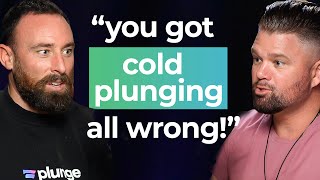
A 2025 YouTube interview between Josh Trent and Ryan Dewey (co‑founder & CEO of Plunge). Dewey frames cold plunging as an emotional‑regulation and emotional‑intelligence tool that initially attracts users for physical recovery but rapidly becomes a mental‑health practice. He reports major company growth (Plunge presence worldwide) and estimates Plunge‑facilitated sessions at ~40–45 million. The conversation emphasizes community, habit stacking, purpose, and making wellness practices accessible (schools, families). Business topics include values, culture checks, and the challenge of scaling while staying grounded. The interview mixes lived anecdotes, programmatic ideas (cold plunge in schools, Acton alternative education), and high‑level biological claims (neurochemical “cocktail”, norepinephrine/endorphin effects).
Chapters
Nicole is one of the greatest surrendering tools that are out there. It will get you to surrender or you'll just stop doing it. How do you get your heart rate down? How do you calm yourself into this experience? There's no other option there because it'll ruin your immune system. It'll ruin your nervous system. Ryan Dewey is the co founder and CEO of Plunge, generating over $100 million in revenue, featured on Shark Tank and used by Andrew Huberman and others.
When we look at mental health, how does plunge fit into the broader context?
This is an emotional intelligence tool, an emotional regulation tool. There's just a neuro cocktail that you get every single time. When you get into a cold plunge, people get the product. They think they're getting into muscle recovery, they're going to work out longer, they're going to run their marathon, recover quicker. Yeah, you're going to get all that. But within a week, it all changes to, oh, I'm doing this for my mental health.
How do we get a cold plunge in every high school in America and have that be an emotional intelligence course and a somatic course? What are your thoughts on this? What's the biggest change that's happened since we chatted three years ago when the podcast was something totally different? Back in the day, you came on when it was Wellness Force. Correct. And I was telling you outside the studio, before we hit record, I changed Force to wisdom. Hopefully you bring the wisdom today.
Well, that's a lot of pressure. We'll see now. You're good. We'll see what comes.
What's one big domino that fell where you can look back in past three years in the whole world of cold therapy and be like, wow, I'm really.
Proud of that, man. There's. I could point to. So there's like internal stuff of like team growing and culture and like us internally as an organization. That's changed, which I could, you know, is equally as important. There's, I think, like we were doing the math. We've probably. We've facilitated somewhere between 40 to 45 million coal plunges in the company, like through coal plunges that have been done in our coal plunges, like, you know, and that number was probably sub 1 million at the time. So you just look at that. I look at the number of people that have gotten into cold water. We've expanded into the sauna space and what that's doing for people.
Yeah, yeah.
So, man, I could put. There's like business culture, internal business. They're all different things.
But when you founded Capital floats. There's no way this was online for you. You had no freaking idea that this was gonna blow. It wasn't like you were trying to hop on a trend and be not at all. Right. And we'll link our last episode so you guys can get the full sphere on his life. But you're a very deeply spiritual man. Like you weren't trying to capitalize on something yet you did see a trend coming and you wanted to wield it in an integrity based way which not everybody's like is now cold plunging. Like everybody's got a cold plunge business.
It's definitely out there all over the place. I, I give a lot to Mike, my co founder. He was the one that I think saw trend or scale beyond what I saw. It was happening with my friends. We were all cold plunging. We were into it. You know, I started, had the separate business. Mike was the one. When Covet hit, our businesses were shut down in California, which I think we've talked on the last episode, that gave some time where Mike started developing the first plunge and he was like, there is something here. I know. Which is so crazy. It's only four years ago. Four and a half year, whatever. Four and a half years ago. It's so obvious now that this was going to be a category. But then it was like even the term cold plunge wasn't the term. It was ice bath. Yeah. Like ice Bath was a 10x search on Google at the time.
Yeah.
And cold plunge, we just believe that that was first terminology that's going to be used. This is a cold plunge. It doesn't have ice in it. Anyways, he saw it, he, you know, and kind of brought me in and like hey, this is, we're this going somewhere. Did I think we were going to do 45 million facilitate 45 million coal plunges over the next four years? No, like that was beyond what you know, I was able.
How do you shoot that many cold plunges out in the world? So is it just America or is it other places as well?
We're all over the world and that's like a number we have like our active users on our app. We see how often people are plunging. We know how many commercial plunges are out there and what they're facilitating today. So it's. Is it a perfect number? Are we off by. You know, even if you're close, that's.
A hell of a lot of people.
It's, I think it's even conservative.
So across the world, so like literally every continent, people are plunging.
Yeah. I mean there's. Yeah, and that's, I'm talking our physical cold plunges, like the ones that we've produced that have come out of our factory, our warehouse. Yeah, the number outside of that. If you were to like have me take a step back onto my like whole excitement outside of us as a company, I mean it's, it's tens of millions, you know, of people that have cold plunged that weren't doing this four to five years ago, which is, that's a, that's a movement. That's a, you know, and I think there's a lot of factors we could dissect into, you know, why that is. There's obviously the Internet. People are talking about it more. I think Covid and people wanting to be healthy and looking to our alternative way. Health became at the forefront. Backyard build out was a thing. Now people were actually investing in their homes. That was a Covid, you know, moved that trend forward big time. People now are willing to spend for their home.
Right.
As opposed to go to a gym.
Yeah.
And usually these trends start with the gym. The product gets into a gym, people are like, oh, this is there. I can get it. And then some consumer product starts and builds it for the home. This was kind of the opposite. The home version was built first and now we're seeing the gym trend, like really, that's going to explode over the next, you know, 12 to 24 months.
You know what I feel like is the real trend that y' all are hitting on is mental health.
It's the top one.
Because if you really think about the fact that technology, I mean, look what it allows us to do right now. We get to reach like tens of thousands of people through one conversation. It's pretty amazing. And there's a dark side to it. It can disconnect us in a pretty severe way. I don't think that was the intention of Zuck and Meta and all these people. I don't think at the jump that evil is apparent. I think that people get co opted along the way. I think that most movements start out really pure and really awesome. I don't think people are inherently evil. Maybe a fraction of a fraction of a fraction of a percentage. But then when I think about technology giving people the tools, it also takes away their capacity of choice because their prefrontal cortex gets shut down and they're just trying to escape a marriage or a life they hate. So therefore they sit online and consume social media. And there's a whole dark side to that. But in the middle of it. I think the trend, quote, quote, that we're all seeing is that people are wanting to be more connected physically with their bodies, in person, with other people. More now, dude, than any other time I think in human history. Back in the day, for our grandparents, that was just normal. Remember when you were a kid, you just ride a bike to somebody else's house and you'd hang out and it was just fun. It was just. You'd be in community.
It was a part of life we had already. The system was there.
Yeah.
To have that happen.
So now, now we're in this space where it's like getting together with people is a luxury. And it's like, I wonder when we look at mental health, like, how does plunge fit into the broader context and what are the other synergistic things that get people back together because of plunging, because of being in the cold, because it's just one piece of the wheel.
Totally. I mean, I think you're kind of talking on it's all connected, like mental health. There's probably you could correlate something to us not being connected with each other and our mental health and us being separate. But on the mental health side, for plunging like it is, there's just a neuro cocktail that you get every single time when you get into a cold plunge. Like, that's just happening within your body. And that's so on the mental health side, that is by far the number one. People get the product. They think they're getting into muscle recovery, they're gonna be workout longer, they're gonna run their marathon, recover quicker. Yeah, you're gonna get all that. But within a week, it all changes to, oh, I'm doing this for my mental health. And you know, I saw big bodybuilder, I even forget his name. He was just on Twitter, bought our product. Just normal person went, bought product and kind of. I'm gonna talk about it. And he's like kind of engaging his community and they're all talking about muscle recovery. And there's a lot of like, opinions about muscle recovery and cold plunging all when you should do it, should you do it before you work out? Should you do it two hours after? Whatever. It's kind of to me getting. We're getting lost in the sauce there. I am so excited for him because I will guarantee it that within two weeks of him having the plunge. A week, Give it a week. He's like, oh, I didn't get this for my workout recovery. I got this for my mental health. Like, that is bar none gonna be the number one. I mean, we talked about it today. I'll bring it up.
The.
I had a. You were at. We were talking on, like, kind of preliminary, like, some mental health stuff around this.
Yeah, Yeah.
I literally posted on my social media today. I was cracking up. It's. The guy writes. Just wrote a review. Literally life saving. As someone who struggles with depression, this product has literally saved my life. My mental, emotional, and physical health have never been better since I started using the Plunge seven months ago. Michael and Ryan, you're literally saving lives with this product. Keep up the excellent work.
Well, we'll put that on the screen. What's his name?
Jack.
Jack H. All right, Jack H. Thanks for dropping that bomb that opens up this podcast. Because when I force myself to do something that my mind is telling me I shouldn't do or it's going to be too uncomfortable, I. I get this really cool internal locus of control win. I get, like, one win for the day. And sometimes people can go an entire day without getting one win at all.
Totally. It's definitely a momentous thing, and it doesn't ever change. I'm sure that voice you can swallow.
When I was the same.
When I was in high school.
Yeah. Says, like, same thing.
Kind of makes you. At least for me, when I get up, I do my first thing in the morning for similar. I'll spend. Like, I kind of. Every excuse starts to pop up. Like, I could just see it. Like, things that I. Oh, I should have claimed that I should have done this. Like, I start to kind of. And it's like, no weed through. Once I do it, then my morning just accelerates. Like, the fastest thing. I'd be curious. I am curious. Obviously. Cold plunge is a big one. What are other things that you stack your day?
Right. Yeah. Okay, well, we're going to ping pong this one, man, because this is fun. Like, when I. So from what I know of you, you have a connection to God. Right. And it may not be a bearded guy in the sky. It's not like it's a different version of Ryan up there with a beard. Like, you have a connection to a higher power. Yes, of some sort, definitely.
Okay.
And that's a strong force for you. Like, that's. That's fuel for why you do what you do in many ways. So for me, every single time. And I learned this from a friend, Dr. Craig Conover, who was just on Huberman a while ago, and he does some great work with me as a. As an MD And a functional medicine practitioner. And he was like, every single time I work out, I want to increase my respiration so I can get closer to God. And I feel like every single time I do something that my egoic mind or my lazy mind or my reptilian mind doesn't want me to do, I love myself just a little bit more in that moment and that connects me to God. It's a spiritual practice. Cold plunging, I believe, is a spiritual practice. Much like meditating, much like going for a run or conscious connection with your woman or man. Like, it's just one of these things that we put in the wheel of, for lack of a better term, wellness or well being practice that allows us to love ourselves just a little bit. It's only three minutes or even 60 seconds. Maybe we'll get into the times that are beneficial later. But just doing that one thing, it gives me a win. It primes my brain and my body to love myself more the rest of the day. And men can get very uncomfortable with this word, self love, especially if they were raised in an environment where their dad was gone or they didn't want to be seen as weak. We know now through the research of Brene Brown that vulnerability is actually the most powerful strength. But to your question, it's like I get up, I actually do the sauna. The sauna space first. And then after that when I'm like drenched in sweat, I got all the blood to my skin. Then I go on the cold plunge because that's giving me all that lymphatic drainage. It's just pushing, it's shunting all that blood to my internal organs. And when I'm in the plunge, I can actually feel my breath cooling as I breathe it out. It's such a trip, you guys. If you've never cold plunged before, like this is your invitation because it's not just a biohacking thing, then what I do is sometimes my children will come out and they'll be like, daddy, I wanna see it. My daughter will put her hand in the cold plunge. As I'm in there, I want my kids to see me doing hard shit and I want them to see me doing it with a smile so that they know daddy's in integrity. And daddy's actually leading a life that he loves totally by doing the hard things or like, you know, pull ups in the gym or whatever it is, right? Going on a hike. I want to train my children to have something in their life they do that isn't easy, that gives them a little bit of adversity or A lot when they're mature enough to hold it. And then I think once we. Once we stick in contrast therapy, that hot and cold therapy, then it invites other ways in which we get curious about doing more stuff that makes us feel good. You know, you start cold plunging and then, well, maybe I should eat a different breakfast today. Maybe I should call my mom today. It's that one inflection point. I know people cold plunge all throughout the day. Especially here in Texas when it's like 120. Dude, we cold plunge a lot. So much so that I'm changing the water and the filters more like twice a month. But, yeah, that's. That's my.
Your point is the momentum, like the feeling of you're. You're just creating this, like, momentous.
Yes.
Two to three minute experience. And how that ripples is pretty. And you.
It.
It is something you do consistently. It is like a fir. You know, it's triumphant to do it your first time, but having that two to three minute practice that creates that momentum, it's very rare. There's not a ton of things that are a two to three minute kind of action that creates what that momentum is. First, how you feel.
Yeah.
Second, like, mostly how you feel. And then what you do afterward is going to be like, you're going to smile, you're going to laugh, you're going to be more focused, you're going to have energy. It puts into the forefront what is the most important thing? Like when I get out of a cold plunge, things that I went in.
With.
I'm being resentful. I'm frustrated, I'm. I'm annoyed. Like, all these things that are there.
Yeah.
Like those apps just get turned off. I was a little to Raya before. Immediately get out. Hey, babe, I'm. I'm sorry I said that. You know, it's like, it's literally just like a shift. And, you know, I think it's. Yeah, it's. It's a special. It's a special thing you can get in two to three minutes.
You have put cold plunging. We're not done with the mental health part of it. I'm just taking a quick segue. You've put cold plunging in such a spotlight. I really think you guys now are you the biggest in the world when it comes to the production of cold plunges. You've got to be at the top.
Yeah, we are. I believe we are.
You are, right. I don't say that because it's like, look how cool Ryan is. Although, look how cool Ryan Is, you know, coming from Sacramento, having a float center and now pushing out 45 million sessions on cold plunges. It's pretty awesome, dude. Is that hard for you to receive? Can you hold that and feel the genuine excitement and just weight of how much lives you're impacting? Is that a thing for you?
Sometimes. Sometimes.
Is it hard to hold?
I wouldn't say it's hard to hold. It's more of is, do I actually receive what that means? Sometimes I do. Sometimes I'm so focused on the business and it just like it's a number, you know, and it's just like, oh, that's what we do. We should do like onto the next thing. It's like a P L number.
Yeah.
And then there's other times, you know, I'll walk the floor. I like to like see a name on a unit who is, you know, Mark from Georgia is getting his unit and I like, I'll go out and I'll visualize like, oh, Mark's going to get a cold plunge and then, you know, it's like you describing your morning. I will go create that into. Oh, Mark's going to do his men's groups now and he's going to have the cold plunge there.
Yeah.
And he's going to have some guy. Then that third degree ripple of Mark's friend that was struggling with his. Like that's when I can go there. Like that's a fun. Obviously I'm not in that space all the time, but there are times that I try and make an effort to go out and really feel that and acknowledge, not get, not ever lose sight of what truly we're doing. I think it's important.
Is that hard to hold the two worlds of production and personal at the same time? Like you said, sometimes you get caught up in spreadsheets and I think it's just human nature to challenge ourselves and hold two worlds at the same time. Is that ever difficult to feel a connection to every single user and run the business at the same time? Totally. Is it a challenge?
I don't think it's. I don't know if it's actually, I don't. I can't do it perfectly. Like there are times we have to make macro decisions.
Yeah.
That are, you know, if I were to just think about one user, it wouldn't be the right decision for plunch, but it could serve that one individual. You know, same with internally. And there's times that that one individual needs. We need to make a decision for that one individual. So it's. To me, it's a paradox. It's a part of. It's what business like. I think business to me has been partnership is its own thing. There's growth there. Business is one of the greatest growth tools that exist in this world. You have to wear every type of lens possible. You have to be savage, you have to be a good person, you have to be kind, you have to be consistent. You have to be honest with yourself. Like the. Like there's no better. That's why I love capitalism. The market is so brutally honest. And there are very few things in this world that are that brutally honest. And the scoreboard shows that into how you do as a company, what the world says about you. Have we done it perfect? Absolutely not. We've improved. Had to get honest feedback, critical feedback, had to make adjustments. But I think business for your business itself and then me personally, it's like the greatest growth. Growth mechanism.
Yeah. I think relationship and entrepreneurship or even intrapreneurship, you can have an entrepreneur's mind working in a company. It's not like just because you work for someone, that's a jail sentence. There's millions of people that have jobs they love totally. That work for companies and they're critical.
Those people. I think that's like, I love these people. These people, this entrepreneur world that it's like, oh, you have to start your own company. It's like done a disservice to a lot of people.
Yeah.
That are so far beyond that are great as like high level. A part of an organization.
Yes.
Joining. Joining a great ship.
Well, that's why back in the day, it's funny, we started the podcast and I was saying, you know, us being together in community and being in our physical bodies with each other has become a luxury. We can create a new version where it doesn't feel like a luxury, where it's just a part of being with one another. And it's the same thing that happens when you get people around a fire or you have some guys or gals cold plunging or you go for a run. It's like these things that bring us back into our physical bodies are the ones that matter the most. And then what happens? And it's the same thing you were talking about with business is that you meet yourself. It's like wherever you're not free, wherever you have a limiting belief, wherever you think you're not good enough, wherever you get overwhelmed or stressed out, it happens in business or in community or in intimate relationships. The same way don't you think, what are your thoughts on this? Business community, intimate relationships. How you do one of them truly is hands down how you're going to do them all. You're going to meet yourself in all of them.
Totally. And I think they each one will show its own. Maybe a different lens for you to look at it through. That can be the right way for me to receive it. Like, sometimes my partner might be giving me this feedback, but I'm not willing to receive it from her. Yeah, but business, like you said, it shows up in it. It's the same thing. But I'm not. Oh, I'm willing to be like. Which in turn will relate back there. Or vice versa. My partner will say something and I'm not receiving it from an employee, but I can now receive it from Raya. So I think that. I totally agree. I think it shows up differently. It might sound a little different, but it's still the underlying core.
Yes.
Show it's the same thing.
It's harder to receive feedback from your woman. That's what I've experienced than from my team. I'm all about, like, my. We had a retreat here and we did cold plunging and sauna and we did wake. It was so fun, man. But every single day I did the cold plunge. And then I think three out of the five days they did the cold plunge. And it was like this integral part of us coming together. I mean, we were crying. We were getting more done in a week in business than we would have ever got done six months, virtually, like getting people together in business is amazing. I'm sure you've done this quite a bit. You have team retreats.
Yeah, our team, we're more in house, so we're around each other a lot more. But yeah, making that time to get together, even get outside the business, like, as opposed to just working on it daily. It's like gotta, like you said, set these things up.
So then, all right, if. If you believe it's true and everyone with us believes that there's some truth to what we're sharing, that your business, your relationship with yourself and significant others, your spiritual practices, if they all come from the same place, and that is like a resolve in our soul, a resolve in our psyche to love ourselves, to be the best person we can be, then maybe we go back and forth on this, the ping pong. What's another thing that you add in for synergy on cold therapy, you know, or just therapy, hot cold in general. What else would you plug into that? When we look at mental health and really moving the needle, not just like, hearsay or what you think might happen. Like 45 million people is a big database. That's a lot of people plunging. What else? What's one more thing you'd put into that?
I mean, this one's a lot more complicated to get to, and it takes a deeper dive. But I've really. Especially over the last. Probably year. Yeah, two years. I've always operated from here. But I am seeing it as an essential piece to this. It's just purpose and what you do every day. And that's not a simple answer, because that takes a deep dive, and that can be a lot of different things. But if there is not purpose behind what. Speak for myself what I am working on, and that can fade, you know, even through this journey with plunge, that's. That's over index to high, high purpose, to days where I feel lack of purpose. And it can float, but there's. There's always something there. So I think that to me is like, if you want to go on a journey and you want to solve, to me, the biggest. The biggest piece that can change it all is that piece there.
How did you get that clarity of purpose? Because you started with floating, which is super amazing, by the way. So if y' all don't know about floating, it's where you're suspended in this weightless bath. Super high salt content. It's Epsom salt, right?
Yeah, Epsom salt.
Do you still play in that world of. Of.
Yeah, I own those businesses.
You do, okay.
But have a great business partner that she kind of manages and has taken that to the next level.
Yeah.
So, yeah, I think for me, this was a. I'm grateful I've lucked out on it. That is something. Whether whatever my parents did to me when I was little and put. I don't know, but I have, like, purpose has been a natural piece to me. Even before floating, I. I loved soccer, and that became my. I wanted to. I thought soccer was this uniting sport that was so incredible. And I worked. I lived in Spain. I moved back to the US and got involved in Major League Soccer because I thought that was my purpose. And that's what it was. It got me out of bed every day, and I wanted to go create this sport that I thought was a startup in the United States of bringing people together of all backgrounds and celebrating and cheering and hugging. Like, that was at that point in my life. That was the thing. Then floating became, oh, this is deeper. A new, deeper purpose for me than plunge. So all that Said, I get how a listener could be like, well, it's pretty easy for evolve. He's kind of just. But it has, like, that has been a thing and I don't know why that is. And I asked that a lot. I really am curious, like, what. And I would stem to, I think my parents. Yeah, I think my parents put something. Said something to me at the right time or obviously loved. I never questioned loved there. Was there with me. I've never questioned if I'm loved, which I think is if I. I'm not a parent yet on the verge, but that it's all. I think that's my only duty is will my child know that they're loved.
When you say on the verge, what do you mean?
Nothing to report yet. Okay.
But yeah, I like that little tease right there. Yeah, I fully relate to that. I feel like there's three types of parents. There's the parents that innately just bless their son or daughter with, like, drive and support of their purpose. They're super holding their children accountable. Sometimes that can go into, like dads screaming a football game. But, like, in its healthy version, it's a good thing.
Yeah.
And then there's the lane where the parents say, oh, just get a safe job. Just work for a company for 40 years and get safety, which is in our age, kind of bullshit. The majority of the time, maybe it exists. And then there's the third lane of parent where the parent's so caught up in their own emotional dysregulation that they don't even care. The capacity for the two isn't even there. Do you feel like the people that really succeed in life come from either one? Actually all three, but there's some kind of mysterious. We're going to go deep, man. Because I like to go deep. There's some kind of mysterious God element or karmic element or even dharmic element that make people like yourself or anybody else in those other two lanes. Whether you have a parent that supports you, that wants you to get a safe job, or that doesn't care because they're so caught up in their own bullshit, people succeed regardless of where they come from. And this is a question I don't have an answer to. I truly wonder what makes someone stay on purpose, not quit. Like, for me, it came through pain. It came through the resolve that I did not want to be a cog in the wheel of someone else's dream anymore. And I knew that I had something greater in me. And the pain of that knowing was so Vast that if I were to just go the safe route, I think I would have committed spiritual suicide. Like, I just, I literally couldn't do it. I just couldn't not have my own vision, my own business, my own lane. And I came from parents that were loving. They wanted me to have a safe job. But when I look on both sides of my tree, there's no like entrepreneurial narrative. There was no, like, you should run your own business. It wasn't like that. Nobody on paternal and maternal was like that. I wonder what makes people stick to it and actually live their purpose and not quit. What do you make of that?
I think there are some percentage we can. Whatever that number is of like there's just some behind the veil that none of us are in control of that, you know, someone's going to turn out the way they are. Whether that's fate, faith, like that's there. Like, why did someone go from, you know, have the, like J.D. vance terrible life, you know, from what he grew up in to where he is now. Like, it's a truly remarkable where there's. And then there's 10 other people that went through the same thing and are completely different places.
Yeah.
Like why? Why is that a thing? I don't know. I don't think. Well, I do think feeling a belonging towards something and love, like truly like I am loved, like I am. My parents love me. The end of the day, the world comes down. My. My parents love me. Like to me that's the rock. Like, if I were you were to infuse those things, like that's the rocket fuel where it becomes, I think is still so much to be like, life is messy, life is unknown, life is complicated. It could be a lot of different things. I just think if you were to set. You're playing a game and you got drawn those cards early, you have a much higher probability of. Of playing the game at a higher level than everyone else that's playing on it.
Yeah.
And yeah, I think it's why we.
Love the good stories of the underdog.
Right.
Like people want the underdog to win because they've experienced being the underdog in their life at many times. Have you ever felt like an underdog in any situation?
Not really. You know, I've been in situations where I'm on a team and I'm not where I want to be and feeling like the, you know, underdog ish there. Like, I've definitely had micro my life. No, I feel like I've got the lottery. I got two loving parents. I got, you know, grew up with security. I have gotten to live so much of like what I've wanted to live and, you know, feel that life can be so many different things like it. And so that to me is like, I don't know, got the lottery card. So I'll take that. Have I had certain moments like an underdog, I think. Yeah. Had to go through some things to, you know, get to the other side.
Were you nervous when you went on Shark Tank?
I was very nervous.
How'd you get through that?
Let me feel back into what year.
Was that when you actually went to. What do they call it, like the, the Shark's Den or what's the name of the place?
Yeah, Shark. I think we had gone on two, two months before we filmed last time in 21. Yes, 2020. Because I don't think we really talked about it.
I don't think we were able to.
Yeah, I was under like an NDA at that point and it hadn't aired yet because it aired later in spring of 22. I mean I was very nervous. I also prepared, I felt put on a lot of preparation for it. I also felt again goes back to some confidence that I had. Like you, you've put in the work to get here. Like, yeah, plunge is what's on the main stage. But like you've done other businesses, you've grinded, you've. You felt like you've been an entrepreneur. Like you've, you know, I was still, still early. I am still early in this journey. Yeah, but that was like in my background of like, dude, go like any athlete, they've prepared for the big game, go out and play the big game. Like, let it rip. Like that's where I was coming from. I knew to me what I was nervous about because you go out and you get two to three minutes, it's like a two minute shtick. Like, I'm Ryan, I'm from Sacramento, California. That's like the only scripted part of the whole show. And I knew if I could get through that, I'm golden. I know my business. I've worked my butt off to get here. I am. I can go play, you know, I can go toe to toe with Mark and Robert and Lori. That's like, what a privilege. You know what I mean?
Yeah.
But I was so nervous of like, dude, if you forget your lines. And what was hilarious is Mike, my co founder, forgot his lines right before we walked out. We're right at the gate. Anyways, it's a funny moment. He was dancing He's a six' six guy, and he was just arms in the air, dancing. Right before the big doors roll out. We're on sets, dead quiet. There's one production man, like, head guy right there. And Mike's just in full ecstatic dance, like, just, like, grooving. And I'm just looking over. I'm like, what is this guy doing? They're about to, like, go live. And I guess he had forgot all his lines. And the only thing he thought was, like, change your state. Like, so he just started moving.
Yeah.
And he got out of his mind and he, you know, nailed his lines anyways. That was so he had a different process of going through his nervousness.
Wow, that's cool. So did he learn that from Tony Robbins?
I think he was a Tony Robbins move. Yeah. Yeah.
Unleash the power. I've yet to go to one of those. I love all these conferences because they're doing exactly what you and I are saying, man. They're bringing people physically together.
Totally.
And see, this is the part to circle back to mental health. This is the part about mental health that really gets to be known. Depression and anxiety cannot be healed in solitude. They can't. They have to be healed in community. There's no way around it.
I had a health mentor that was like, cancer comes from isolated cells.
Yes.
That just. That statement really shook me at my core of like, oh, there's a fundamental, universal, like, truth around this of you bring that cell back into unity. Healing can take place. Same as, like, we are no different than that. Obviously, we went through this experiment over the last four years of isolating and what, you know, as a runaway train of the direction, which we knew, but it was just. You can never replicate that again.
Yeah.
And I think.
Yeah.
Ways that you can, you know, you need your tools daily to do for yourself, to keep you in a good state. But getting around people, there's like, there's no replacement for that.
And then when we're in the communities, we see by their behavior who's been doing the practices and who hasn't. Not to, like, shame anyone. But, you know, when somebody's never done a cold plunge, never done sauna, they can't even run a mile. That. That's so obvious that that's their work. Right. Because. Because everything on the screen right now is the Pentagon that we talk about physical at the bottom being the floor.
Totally.
And then the walls are mental, emotional. The ceiling is spiritual and financial. So those are the five sides of the cell phone.
Yeah. Take that moment if you are the one that. That's the newbie there, like, what a. You better step up and be there for that person because they are in the right environment. This isn't like the. Like, they are showing up whether they wanted to consciously be there or not. Like, if you can actually start to. Because, you know, I've come. I've entered community and been the newbie and been very uncomfortable and. And if people weren't kind to me, I probably would have left. And so it's like just us, you know, probably a lot of healthy, spiritually fit people here. Like your community. When you see a newbie there, it's like you're. It's your responsibility to shepherd them in and at least let them feel comfortable enough to stay there. This is great.
I don't know if you saw that clip. I tagged you in. It was myself and Mark Groves talking about cold plunging. And it was like these big buff dudes with tattoos in the cold plunge, going raw. Look how cool I am. And Mark was essentially saying that cold plunge is this phenomenal training for your emotional intelligence. Because when you first get into the cold plunge, kind of feels like you're going to die. Right. Your body's screaming at you like, get out, get out, get out. And it's the same way when we're fighting with our significant other. The mind is saying, get out, get out.
They're wrong.
Screw them. It's not me. It's totally. It's totally my woman's problem. I know that's never happened to you.
Of course not.
But I think it's so profound because there's this narrative with cold plunging that is, oh, look how cool I am. And then there's the real meaning of cold plunging, which is, look how much I love myself and love being in community to grow. Do you see these dichotomies? It's a false dichotomy. Do you see this?
Yeah. I mean, I think there is some truth into look how cool I am, because it is a signal that I'm doing something hard and I'm doing it, and there's underlying. I want to tell the world about it, whatever. Like, that's a different piece of baggage.
Yes.
But there is some signal. Like, some. It is cool to do hard things. Like that is. I'm glad we have a culture that is highlighting that. Is it. Can it go down a place, like we said, with social and that become your identity? Of course.
Yeah.
To the other side of, like, just doing a cold plunge. Yeah. I mean, it matters. Yeah. Forefront I think it. I think it is a good signal if you are sharing it. The end of the day, it's like what you do behind closed doors. It's. It's a great tool for. I think for men. Like, we're talking about men cold plunging. It's like men, we haven't developed how to surrender very well in our life. That's more of a woman. Like, women have developed that over time in a better way than we have. And cold plunging, like you said, these tough guys that want to. The tough guy video of like, I'm gonna suffer through it. You're doing. You're hurting yourself. You're not. There's a net negative there. Sure. You did it once. You're gonna feel good. Your, your, your norepinephrine is going to fire off. You're gonna feel. But overall, your nervous system, you're not regulating. And it's a net negative. And the whole point is, how do you surrender? How do you get your heart rate down? How do you calm yourself into this experience? You want to heighten. Like Mark says, I'm gonna die. I'm gonna die. How do you tell your. And bring that whole system, you're fine. Breathe into this. Surrender. And the cold is one of the greatest surrendering tools that are out there. It's just a lot of. And it will. It will beat you. And when I say it will get you to surrender or you'll just stop doing it. Like, you have to. There's no other option there because you'll start to. It'll ruin your immune system. It'll ruin your nervous system. Like, you need to learn how to surrender inside the water.
I really love that. I don't think I've ever heard you say that. Have you described this before or did that just come through right now?
I've always looked at it as like a surrender tool. I've probably maybe said it in different ways.
Yeah.
But I, I see it. I, you know, witnessing men and women have their experience. And this is a generalization on the. On the sex. But just in general for people. Like, it's more of a personality. Like people that cling on to it and like, I'm gonna get through it. 30 more seconds. It's like you've lost the plot. Like, and sure, it. Maybe I don't want to discredit that. There are just a hard. Like, maybe that was so hard and you just got through that. And that's a big win for you. There's a win there. But if we're talking consistently you have this at your house. You're doing this every single day. You. Anyone that does it consistently, you want to know how I know they do it consistently? They don't tell you how long or what their temperature is, because that's not important anymore. Because it's their own personal journey. It's when someone that's just did it. You go 10 minutes for 38 degrees. Oh, oh, got it. It's your first. Got it. It's a new practice for you. Someone that has a relationship to it and consistent to it doesn't matter, the temp, doesn't matter, the time, they just drop in, they can get there. They have their own practice. There's nothing to overcompensate for it. And they've learned how to kind of surrender into their own experience.
It's the same thing with psychedelics, 100%. When someone's integrated wisdom from any kind of entheogen, they don't have to have a megaphone to preach it out. They just are. They've embodied it. I love how you said that. Because anytime we're learning something that's giving us this new stimulus where there's perceived growth, we have a tendency as human beings to get out of the lesson and pretend like we've already learned it or be so stoked about the new thing that we want to share it with everyone else. But I think we can all feel in our stomach, like in our enteric nervous system, that so and so hasn't quite yet embodied the lesson there. And so when this person you're describing is like 38 degrees for 15 minutes, I think the reason we feel repelled by that is because it feels like a flexibility in the same way where, like, you know the joke. How do you know if somebody's vegan or CrossFit? Don't worry, they'll tell you. I think what this is a call for is deep spiritual growth. And I look at everything through a lens of spirituality because it's one of the five sides of the Pentagon on the mic flag. If one of those are leaking, then they're going to pull from another one. And it's this coherence of the five sides of us, or at least the five sides of self being nourished on a regular basis that allows us to show up and actually be inspiring to someone else. Like, I. I talked to you. I was asking you about your relationship. Like, I like to go deep, whatever. That's who I am. I don't shy away from it because I want to feel somebody's Essence. And how are they managing all the five sides of themselves? Because then I can really trust the advice they give.
Yeah.
And so when I talk to you and I ask you questions, okay, here's a fit man. He's in a great relationship. He's leading a company. He's on purpose. He has a connection to God. Like, the five sides are built and they're feeding one another, but in its total learning. Have you ever been completely lopsided where, like, one of those was really full and it was sucking from another one? Because that's what I felt. And I think all of us feel that way at certain times. That's why life is a continuum. Was there ever a time in your life where one side of the Pentagon was pulling from another?
I think they've all been fed in their own ways. Like, I like, I just think there, life has seasons. And in your framework that you just said there, those five sides, some will overcompensate at other times. And it's just like. And then it's like, oh, I need to, like, right now. I would say probably the side that is neglected the most is my spirituality. Just where relationship. A lot of effort, time put in there.
Yeah.
Business. A lot of effort and time put in there. Physical health. A lot of effort and time put into there. How I engage with spirituality, there's like, there's just more intentional effort that needs to be put there right now. And I'm like, aware of it. And it's like, okay, cool. And I'll go, you know, whatever the next window of time will look like, I'll go down those steps. And I. Then it might get overinflated there. And so I think for me, again, it's been for sure, man. I remember when I opened Capital Floats, you talked about the physical side. I was a. I was a wreck. I had completely lost touch of. I couldn't wake up in the morning. My neck and body were so bad, like, just from stress and not doing the tools. You know, I'm opening this holistic health spiritual wellness center, and I'm not doing anything that goes a part of it. I was giving off smells of my body that my family was like, dude. And I'm like, I am wearing deodorant. And it was just like stress mechanism beyond belief. So that was a time that was like, you know, once that business opened, I went full back in. How do I get my. And my spiritual side? I like, I was. Both of those were fully neglected. Business got open. I was so focused there. Then I went and focused on that. So, you know, I think to me it's more the framework. How do we check in with ourselves to know if like what. And be honest that there is like a neglected or. Or I actually want to improve this a little bit right now.
What's that check in process for you? Like, is it. Is it a notepad? Is it an app? Is it family and friends? Like, because you know, in business we have. I love how you said, like, the marketplace is the ultimate barometer for truth. For me, the ultimate barometer for truth is do my family and friends and team like being around me? In other words, can I tell that they're enjoying my presence? And I'm pretty keen to that too. I think it was being raised by a bipolar mom and being bullied in school. I'm just like very situationally aware. But that's my barometer is can I tell that the people around me are having a good time with me and if not, not that I need to please them, but what can I change about my way of being or what's lacking in me that gets to be filled so that somebody enjoys my presence even more? That's been a continuous.
I really like that.
It's a bit ambiguous, but I know it in my heart. Do you have one for you, like a barometer check of how you're doing?
I think through to. It's more of like, I attach it to like real senses of gratitude. Like, is that coming up consistently? Am I in awe of some random. For me, it's as. It's like, did I like, did the wind stop me in my tracks? You know, something like that where it's like, oh, like, do I have enough of those signals showing up? Have I cried recently? Like, those are kind of things that. And again, maybe I'm over indexing, laughing or something, you know, but like, am I checking in with those. Am I feeling like that stuff? That's I guess my barometer. Is it like a true framework, like journaled out? Absolutely not. Yeah, it's definitely like kind of felt through.
Have you ever explored some of James Clear's work Atomic habits? I In that world at all?
I know kind of the. The premise. I have not read his book, like, stacking the Habits and like, yes, bringing things into areas that you're already going on a good path. How do you stack that on top of it? And I absolutely. That is something that's been a framework. And I think again, like, I'll bring it back to Coldplay. It's like, that is just a Tool. It's like these guard. It's like we're all playing bowling and the more like bumpers you have, the better your score is going to be. Yeah. And how do you like actually work in bumpers to life? And sometimes those bumpers are. You gotta build momentum. You gotta actually go make that happen. And that's when it's really hard. But those are the ones that become the most fortified. And you know, cold plunging is that thing like having your physical workout. What's that look like? Your routines become big bumpers. They can also become chains, you know, and to be in. So there's like a fluidity and a flexibility to all this. So yeah.
It's like you can get up in the morning and have a coffee and a donut and check your phone in the first 10 minutes. That's a habit. That's a routine.
Totally.
Is it going to produce long term peace? Nope. But it's a habit.
And then the flip is like sometimes my, like I could, I could have the perfect two hour morning routine but my, you know, your partner needs you that day. Your business needs you. Two hours. Like are you going to, are you going to make the bigger upside decision and not let your routine get in the way? And I think there's like a, it's just like an honesty to what the moment's calling for.
Yes. And that this, this feels like maturity. It feels like maturity. And it can only be lived through life experience. Like no knock to young 20 year olds. I was one once. Remember those days, man. Your early 20s. I look at a lot of that generation and there's some really cool markers of improvement. Like I don't know if you've seen the research about young men, especially not drinking as much or not going to clubs as much and doing things like cold plunge or workouts or hiking groups. Like we're seeing a big shift in awareness, which I love. And there's still these hooks that modernity has. Just almost like a Venus fly trap, man. Instagram, junk food, caffeine porn, Venus fly traps. Just waiting there for a fly to come in.
It's hard.
It's hard. And so the way that I believe, and I wonder what you believe. The way I believe that we don't even have any fear or any worry about the Venus fly trap being there is by just leading such a good life and loving ourselves and doing the work that actually fills us up and connects us with other people. Then if we fall into the Venus fly trap, we just reach out our arm and somebody from our Team pulls us out. Right. But I think we've, we've lost the mark here. And this is what a lot of BJ Fogg's work and Charles Duhig and atomic habits and James Clear. They all talk about small wins and how those small wins compound, much like Buffett talks about with finance. It's like these. They just compound and compound. You look back one day and you're like so unconsciously competent, you don't even know why you're competent. You just are because you've trained it so much. I wonder how cold goes into that specifically, because I look at, you know, I mentioned the donut and the coffee to replace that can be a bit abrupt from a behavior change standpoint. It can be. In other words, it can be really hard to take a habit like alcohol or porn or these things that are giving a pseudo piece, like temporary piece that's not really meaningful and replace it with something so loving like a cold plunge or a walk. I wonder if you've had these conversations in your circles. There's, I mean you're in a lot of events. You have 45 million people that have done Coldplay. This conversation has to have come up for you. The habit change from something that hurts to something that heals.
Yeah, I think cold plunging, first you got to make the commitment. Like there's a lot to even get to the spot of a cold plunge. Like you gotta, you know, have the resources, have the, like the space, the. There's a lot that goes in before that decision even makes place takes place. Yeah, I would say that's where like once people get the cold plunge, then it's kind of momentum and these habit stacking is like really easy. Like people. I've spent the money, I'm going to make this happen. My water's cold and clean. For me, like we take all the hard part out of it.
Yeah.
To me it's the work of like actually getting to a place to hit checkout and say I'm, I am doing this. And that's a lot of other stacks that have to, you know, those are other habits that have to take place in life. Cold plunging is like, you know, it could be the one thing you go all in on. Like that's what I'm going to put on. And it's a stack. Usually it's a later stack to a lot of other good stacks that are there. What we see in general, you know, in nor normally, you know, to me, I go back to. You talked about 20 year olds like what a unique Point in time. Like you go from at least how I grew up kind of in this. You're on this like set path. You go to school. You're just doing this thing. And then it's like you're an adult now by the law standards. I've never actually figured out truly what I want. I've kind of just been fed at least you know how the system was 20 plus years ago.
Yeah.
And then it's like cool, you're an adult. Go figure this out. And you have like no tools whatsoever to which is kind of the messy part of it. And so if like as a 20 year old I would just say like if I were talking back to myself. Get in the environments that you think you just where you want to be. Don't think you deserve to be there. Don't like that is it the only goal is just being can you get in that environment and be of some value to that environment. It will all take care of itself. We are creatures of habit. We rise up to the level or sink down to the level that we are around. That's just how it works. Like none of us. You can be a very unique person in some kind of get out of it and can be in a shitty environment and get out of it more. Don't. And it's just. So anyways getting back to that 20 year old. That's the environment that I would. How do you stack? How do you get around those people? Cold plunging is the tool that you get later on in life that is just kind of kind of another exponential growth that you're going to get from it.
Not everybody maybe can afford it. Although payment plans exist. And to be honest if you have a job and you're going out and drinking on the weekend you most likely have the money for a plunge. Let's be real.
At this point you have it with financing options. We have price points that we've gotten. That is absolutely there. You just have to make that a priority. I get it. And everyone's priorities are different. I'm not here to tell someone what their priority should or shouldn't be. It is definitely an option. But it's getting to that spot where that is the priority and that is. And it just has to be cold plunging or sauna. There's other commitments we make.
Yeah.
But there's a lot of work to get to that to be the commitment. And to me that's the signal. Can you get to a spot where those commitments are. They're not stressful commitments. They are clear like you Know what? This is something we're committing to. That's something I love with like families that get our plunges and they're like, we've decided as a family, this is what we've decided that we are spending on, you know, and they're like, this is like as a unit, this is what we're, we don't know where this is going. We are just so clear that this is coming into our household. And, and then with, you know, the check in later, six months, 12 months later, of like Sunday nights, this is like our ritual. We do hard things. We have a saying in the fa, like, that's the shit that fires me up and just gets like, you know. But to see those families, they're clear that, that we are, we're making. And they did a lot of work, those families, to get to a spot where they're ready to make that type of commitment.
Well, I want to talk to the other side of the coin because everything you're saying to me makes perfect sense. I mean, look, I came from welfare, which means government. Cheese, kick, cereal, like, no, really health markers. I had Section 8 housing. I stood in a lunch line. I remember in elementary school there was the special free lunch line and I used to feel like so much shame that I was getting free lunch. And the kids, the kids knew who was poor essentially. So I want to speak to these young men and young women. When you become an adult, that's actually part of maturity coming online, that you make decisions that are either empowering and self loving or just learned behaviors from parents and your peer groups. And this is like the one piece of wisdom that I wish I would have learned earlier. I wish like you'd said, if I would have planted a seed way back, like 20 years ago to a young 20 year old, I would have, I would have just asked myself a question. How are you feeling? Do you love your life? Just start with that question. It's like, how many parents don't even have the capacity to just check in with their child? One, they may not even know how to do it, or two, they're scared because then they'd have to check into their own life.
Of course.
And I'm not saying this from a place of shame or judgment. It's like I wish somebody would have put their arm around me in my 21, 22, when I was 80 pounds overweight, working a job that I hated totally out of purpose, and just put their arm around me and said, hey, how are you feeling? It's such a simple question, isn't it? It's so simple. But that's the dialogue that would start to unravel the unhealthy patterns. Because through that just authentic conversation, one would share. I would like if. If you were my peer group and you were elevated, you might be able to, as a friend, ask me at that age. Hey, man, how you feeling? What's going on with you? How are you? How's your heart? How's your body? Then in my trusted space, to share with you how I'm feeling. Oh, my God. How many different life changes could come from just that one question, yet we're so scared to ask it. It's so simple. How you feeling?
Yep.
It's so simple, yet we shy away from it. Because to ask the question means we would have to ask it to ourselves.
You have to ask it to ourselves. We have to be comfortable with whatever that person comes forward with. Because that could be a whole gauntlet of emotions, I think.
Yeah.
To get that question. And there's like a tone. Because you could say, how you doing? You know, or you could be like, how you feeling, man? Like, there's a totally.
Yeah.
Words were pretty much the same. It's a totally different invite into what I was asking and you know, opening up for, you know, for you to receive. And I think that right there of like. And you said, like earlier you said how people are around me. I think of, like, presence. Like, that's really. And so it's like how we're speaking to people. Like, that question, it allows, I think a young person or just me, even now, like someone. We don't get that tone all the time. Like, I don't even want to put this on young people. It's like a friend asking me that.
Sure.
Like, I need that consistently all the time. And it's like, oh, I can get real honest. You're actually asking me to be honest. And that's like a, you know, you're. You're asking that. Most aren't asking us to be honest. Most are. We're going through. I'm, you know, hey, how you doing, man? Like, you know, you're just kind of moving through it. And there's like cordial nature of life.
Yeah.
And to ask that, like, deep, deep, like emotional, spiritual invite in of like, how you doing? I think as a young person, what I think it does. I think it allows someone to not. We can just accept what's normal, especially at a young age. Like, the younger we are, the less experience we have. So normal is just what default is. But that doesn't exist. And as you get, you know, I think as experience comes you, oh, this can be so many different things. But if you're just on, like, kind of grew up in like a default normal boredom, anger, like, these are just your. That's a normal thing. That's how, like, that's what it is when someone you can accept, like, oh, this is. I don't have to feel this way. Like, that's just a. That. That's what I'm feeling as opposed to. This is how it has to be. And I think as a young person, that's like one of the biggest. You talk about people taking different tracks of like, this can go this. How where you're going doesn't have to be where you're. Like, how it is. Like, you can make the shift and some make it and some don't. Some make it 40 years later. Like. And it doesn't have to just be at the 20s. It just. The 20s is a very. I think we all kind of go through that moment and there is this kind of nexus point that I think is critical. And I think it's, you know, if I were to get excited, I sometimes think, like, what's. What I'd do next? Like, that age group is very interesting to me. Like, what are. It's. It's one that we've. It's so critical for us as like a country and a world. But we don't really put a lot of effort towards that group right now because it's like a. It's a later payoff.
Yeah.
You know, it's not a group that immediately comes in. It's like, they don't have money, like, as a business, they don't have a ton of money. They don't have this. They're kind of off their parents dime, but yet it's like the foundation of like, what we're actually going to build from. And I just think there's a huge opportunity if, like, we were going to invest in an age group. Like, that's a huge age group that probably feels lost, probably feels confused. World's happening very quickly right now, and I don't think we. I definitely wasn't given, like, the clear tools into how to navigate that age.
I love that we're talking about this because we're posing a question that's maybe timeless. Where I think most people later on in life say, well, if I would have given myself something younger, it would have been abc. That's. I think people always feel that way, whether they're born in 1900 or 2030. It's this question, like you said, of truth. And I love it because when the real truth comes, it can be hard to feel and hard to hear. But the way that traditional K through 12 happens is that you spend your entire day doing stuff disconnecting you from how you feel. You just do it because you need to get an A plus because you have to go to this Ivy League school so that your mom and dad are happy, so that one day you'll be a lawyer or a doctor. That is what is being purged right now in our world. I think the gig is up, dude. The gig's totally up. I think that kind of narrative that drove the disconnection somatically from the body in younger children, like maybe it did for me, or in younger adults, like in their 20 year olds. I think what's most exciting about this is we're seeing this complete democratization of education. Like a lot of the schools are struggling with tuition because people are homeschooling. People aren't going to college as much. There's been this ripping and it needed to happen. Like the roots need to be pulled out. Definitely at the perfect time now, if not earlier.
Feels like it's happening quick.
Feels like it's happening really quick.
Yeah.
Especially if you look at some of the data around homeschooling. Homeschooling just keeps going up and up and up and up and up because of woke narratives. Especially in California. Shout out to the state that I lived for 40 years and I know you have pride in where you live. It's not to say a whole state of people is wrong because that would be a stupid comment. But what I am saying is like this narrative that fed education needs to look this way. You need to do it no matter what because that's how you'll guarantee you'll have a good life. All of that is being washed away with like this brand new tide. And then we just get to see what's on the shore and what's left is the truth of we have a bunch of kids that are disconnected from themselves and pseudo connected to their phones. Where do we go from here? I think we bring them in community. I think we put them in these pods, either in school or out where they're doing cold plunge and hiking and being with each other and being led by an emotionally intelligent facilitator or teacher. That's what's most exciting for me. Of course, cold plunge is a piece of that. Do you see this happening? What I'm Creating right here. I mean, this is the world. This is the world that I would want.
So my partner, she is a. It's a guide at an alternative school. It's called Actin. It's actually launched outta Austin here. And they're one of the, I think hundreds of locations around the country now. So we're very like life, we don't have kids. But, you know, this is this alternative pathway in education and, you know, you're.
Going to be a dad soon.
What's up?
I think you're going to be a dad soon.
Cool.
I can tell.
Thank you.
Go ahead.
Yeah, that would be a special day. Yeah, but you know, it's like watching that community get built basically. You know, it's like first kids are all. There's so many ways to educate and teach kids and not all kids are the same. I was definitely. It worked for me to go through a public school system. It worked for me. I figured it out.
Lucky you.
Lucky me? Yeah, lucky me. Another. Chalk it up to the lucky ones that I got a lot of others. It wasn't, it was really hard for my sister. It was a structure that did not work for her. It probably held her back and it, you know, lot of stuff and that anyways, that was like you kind of lottery ticket if you do well there, if you don't, most don't. But I think like you said, there's an exciting kind of breaking of the paradigm of what is. First, we gotta be honest with the child itself. What is the best. Who is this child? What's the best learning structure for this? Yeah, some might be. Oh, you should be in like a STEM program and very focused to go to, you know, some high academic school to do. Matt. Like that might be the, that might be the route or it's like, oh, this is a true entrepreneur that should be, you know, in a totally different structure and system, learning in a totally different way around different kids. That's. And that's the first time, at least, you know, in most history that this is like unfolding right now. Yeah, that's exciting. Like, where are we going to be at 100 years from now? Like looking at first the structures and, you know, new operation systems that come, but also what is the fruit of this, you know, like what is these brand new humans that are going through a whole new way of developing as a younger human. Like what we, you know, what's the human potential that's the greatest asset we have. What, what do we build as a world from there? Pretty exciting.
So how long has she been doing that?
She has been in Acton for.
A.
Facilitator herself for four years. It's very interesting structure. So she's not a teacher. They're called guides and it's all Socratic methods. So she doesn't input any of her thoughts or beliefs into anything. It's all question based. Kids come forward, they have a question on something. It's all self. They create their structures internally that they guide themselves. They create their own systems. They get freedom levels as they earn more freedom. They get obviously more responsibility, but they get to do more and they get more say. But she all is at question based, so she responds with that question. So kids come up with a question, she is kind of guiding them back to like, okay, how can you go find this answer on your own? So it's not, hey, what was the year this was founded? Like, they go through modules to learn history and things like that. But it's much more of how to operate as a human and work in groups. It's definitely a program for self starter kids because they have to kind of the family needs to be heavily involved. That's where it really works. It doesn't work if the parents are a little abstract or the school's going to take care of it. It has to be this kind of cohesive process. The student's always involved in the decision making. So there's no parent teacher conferences without the student there. The student's there and they are the leader and they are the true guide of their own process. All my nieces have gone through it, so my sisters an admin at this type of school. Anyways, that's one program. Then there's so many other schools that are, you know, parallels like just different, you know, in their own way that I see parents taking on this. Like, okay, there's a, there's a process. It's the exciting thing in entrepreneurship. There's a process broken in education right now. We're all pretty clear on that. The greatest stuff gets invented during those moments when people and especially if you take something like a child and a parent investing in their child, like there's no bigger energy that comes from it. It's like, what is education going to become? The system's clearly kind of breaking down right now. So I'm pretty excited and bullish into what structures, you know, I just hope that we, speaking for the country, like the country can get behind this and allow this to take place. And will it be a perfect process? I don't think so, but I think it's a very exciting opportunity for what could set us up 50 to 100 years from now.
Well, like him or not, I'm not a huge fan of Trump as a person, but the message is pretty amazing because rfk, Trump and a few other people want to actually get rid of the Department of Education. Have you heard this? I have want to get rid of it. Which I think would be incredibly smart.
Totally. I think I reserve a. I'm amazed that that's only been around like 40 plus years. I thought the department education was something we've had for hundreds of years in a system that's.
We needed good workers, so there had to be a governing system that made good cogs and wheels.
Totally. I think I'm. I reserve a little judgment because I'm not fully versed on it that definitely. I don't know what the byproduct would be of fully getting rid of that and what that. What that would do, you know, where certain programs go, where certain, you know, marginalized groups are or um.
Well, we'd have to spend money on the marginalized groups instead of being totally.
Exactly. And it's like I. Those things are like do. Are we willing to go because it will be painful. Like some of these changes are going to be painful.
Yeah.
And it's like, are we willing collectively to go endure some of this pain? To break down something that's clearly not working well?
Like you said, these are the moments where the coolest stuff happens. Coolest stuff right in the most crunchy, uncomfortable. What the do we do next?
Totally. It's going to take a lot of responsibility. You know, you're going to have to. The way that we were. Thought it was going to be or how the world we thought was going to look a certain way. Like that's evolving and changing and this is like the moments like, you know, it's where to be adaptable, where to be opportunistic also, you know, be resilient. This is like something I do believe good stuff will come, but there's gonna be times you've gotta be nimble. You gotta be responsible for your family, responsible for your community around you. And you know, it's gonna be. There could be a little pain from it.
It's like the same way that we are not forced. I actually don't like that word. I changed the podcast from forced. The way that we are presented situations where we can become more adaptable, like cold plunging or Department of Education going away or. Or what was the name of the school that you're acton or acton, like these, these byproducts of people. Just checking into the question that we asked. How you feeling if we floated above you? Imagine if the President of the United States or the voice of God, I don't know, somebody in a position of highest power in our country just asked everyone on tv, how are y' all feeling? Can you imagine the response? There'd be a lot of room for improvement. And so the way that we do everything is actually broken back into the way that we do anything for the most part. Maybe there's outlier decisions that that doesn't relate to. I don't like to be too reductionistic because sometimes when I'm just painting black and white, there's no room for mystery, there's no room for gray. But I do believe that most of the time, how you do one thing is how you do almost everything. So I think it's a really cool opportunity for us to be like, okay, and how do we get cold plunges in schools? Has anybody ever in your company been like, how do we get a cold plunge in every elementary school? Let's start with high school. How do we get a cold plunge in every high school in America and have that be an emotional intelligence course and a somatic course. The reason that you probably haven't been able to do that is because the Department of Education, in my opinion and the systems that are here want people to be order takers and cogs and wheels. We. Once you start getting people in their bodies, young kids in their bodies, the narrative shifts completely and the system implodes on itself.
Obviously, we would love a cold plunge with all the youth that are out there, high schools, there's a lot of cool. There is actually a law in Florida, I think it's called Zach Martin's law. And it's basically mandating unit a cold plunge on campus now. And it's not for what you think. It's not for this.
It's not for.
It's for cooling bodies down of kids that overheating in sports. So that's a great. That wasn't intended for what all this that we're talking about. It's on the ballot here in Texas, it's on the ballot in Arizona. Same thing. So that could be a great route where it's. It was brought into tip of the iceberg, you know. Oh, it's about the physical side and it's going to become a tool for mental resilience for all the kids. One guy that I absolutely love, I don't know if you follow Jason Wilson on the Internet. Jason. He's been on Joe Rogan. Jason's a. How would I describe a community leader? He's out of Detroit. Mixed martial artist, basically. His big thing has been working with young boys, probably around the ages of. If I were to guess, like 8 to 16. And he has done. And we got him a cold plunge. And he is using the plunge exactly in this way of emotional and basically emotional management. Getting in the. You're an angry kid. How do you work through this? Get in there. And he's a great follow. I would go check him out. Like, he is doing, like, him as a person is like, one of the things that gives me the most inspiration and hope. Love what he's up to, but that's like a model that we're building. He actually saw it from the forefront of, like, oh, I'm not here to, like, get my kids to recover better so they can train more. It was literally no. This is an emotional intelligence tool, an emotional regulation tool. That's a huge front. You talk about, like, rfk. Of course, RFK has our plunge. You know, he's plunging it. He uses it all the time.
He tagged you guys.
He. He hasn't tagged.
Seen him using it.
Oh, we facilitate. It was like a. Through, you know.
You gifted it to him?
Yeah, yeah, we gifted it to him. It was like a very. He loves it. He's like, very. It's great for plunge, but it's great for, like, he's like, we're bringing this. The White House, you know, that's like his. You know, so it's like all the great things that are already being discussed.
I'd love to see Trump in the cold plunge with his little hair waft. He's like, hey, I'm the greatest cold plunger.
Exactly. SWAT is super cold, you know, but, like, there's. There's big momentum there. It's just like, to be even in that conversation that, like, the cold is a tool that, you know, the Kennedys have it back at the Massachusetts home family. It's super. Like, I get excited, where is this going to go? And it also. Schools 1. I'd love to get it in schools we've done. We do have a number of schools that have the program, but it's like, really, it's. It's also at home, you know, building. This is the greatest. It's one of the greatest things you can build. We've seen with, like, you know, parents and children like, Bill, like, you talked about your morning.
Oh, yeah.
That is Become routine. Like that we talk about what's normal. Imagine your kids now that's normal. Like a cold plunge became a phenomenon kind of four to five years ago in this. Or maybe you want to go eight years ago and Wim Hof started talking about it. Kids that don't have any like 2 year old kid that's just going to grow up with that, that is their new normal, do something very hard every single day. First thing in the morning I see my dad do it. Eventually they're probably going to start joining you at some point. And you know, it's like that is you talk about that's how you can get in front of habit stacking where it's like you don't have to go break the chains. It's just like oh, this is put in from day one. That, that's, that's another one of those exciting ones of like that neural wiring of whatever that looks like. And what that you know who your kids are going to be in 20 years where they look back and I get, you know what? They don't even, probably won't even think about it, right. It'll just be normal. It's not like they'll go through life be like well my dad cold plunge. And this is why I do it. It's like no, you're just doing, you're going to be in awe of them doing stuff and being like. And they're not going to know why. And it's be like maybe in some deep psychedelics they're gonna be like oh, I remember my dad cold plunging every morning. And it like feeds up through that. But those are the ripples that are like so exciting.
Wow. So much there. So when I think about a cold plunge in the White House is pretty amazing. Did you ever even conceptualize that that never was a thought in your mind a cold plunge in the White House or was.
Was a few years ago. We, we always just do these moonshots. What are the thing. What are the thing we want to go after. And I remember we were like got to get Biden coal plunging. So we put that out there like doing it three years ago. We're like how cool. Like let's wonder what this would do for him. Like that was our thought like. And so it just, you know life doesn't always show up exactly how you think but you put your energy there and you know, here we are making, making inroads.
I want to go back because there was one part that I just want to close the loop on before we get to the really, really amazing science part of this, because we haven't talked much about science. And that's really, really, really important for the people that might be logical and linear and wanted the research and data that's, that's a good thing. When I talked about being in that line and feeling that financial shame that, you know, I was getting my lunch paid for and my family was poor, I really want to make not just cold plunging, but all aspects of wellness affordable and practical for young kids and families that are financially strapped. And the way I think we do this is by taking all the subsidization that's happening. Like, I don't know if you're aware of this, but lunchables craf Heinz just got pulled from schools. Did you hear about this?
I, I didn't hear that specifically. No.
Listen, so people, y' all are hearing this in 2025. But last year, in 2024, Kraft Heinz realized that because of consumer Reports research where they found lead, cadmium and something else crazy in the lunchables, that the parents in schools voted and they were like, no, thanks, we're good. So that money that was subsidizing something that was knowingly harming children, by the way, I can't imagine if you're a food scientist and you know these chemicals are in your product and you give them to children. Like, how do you sleep at night? I'm not coming from a place of shame. I'm coming from a place of truth. How do you sleep at night knowingly harming people? So can we take the subsidies from things like lunchables and really unhealthy things? In other words, the money's already there, is what I'm saying. The money's already being spent on the things that are harming young kids and teenagers and young adults. Can we just take a collective deep breath and hopefully RFK and just the leadership that we're all wanting this to be, we don't know what's going to happen that they can take the deep breath and go, cool. If we're going to get rid of Department of Education and we're going to create a structure and a framework much like the school system that your partner facilitates for kids. Can we take care of the financially disempowered? Can we take care of the people that can't afford, you know, thousands of dollars for a cold plunge or even payments per month? And can we introduce them into these types of things where there's hiking groups and there's cold plunge in public schools? Because that's where the majority of kids are right. They're not in the Acton schools, They're not in the private schools. They're in the public school system. I think once we do that, we'll see a massive shift ripple out in ways that we cannot even imagine. We cannot even imagine. Once you start getting really healthy things for children that the money's already being spent on for deleterious things, we literally just shift the money. It's so simple in my mind. Right.
Well, it's so simple if I do think there is that opportunity from the. Because the dollars are. Like you said, the dollars are there. They're there. They're being spent. It's like you talked about, let's use Acton. There is a private school. Parents you have to pay to be in it. But every. We pay tax dollars for our kids to go to public. Like there are dollars that associated per kid.
I pay taxes for kids to go to school here that my kids didn't even go to.
I think there's the opportunity of how do we get those dollars to have choice that your dollars can go to the program or the schooling that you want? To me, that's how you. Of course, you know, the, the church of Education doesn't want that. They don't want you tithing to other places. Like, we want your money here. We have. Yeah, that's a. That's going to fight to, like any entity, it's going to fight to stay there as it, as it is very normal. But if we start to allow, like, oh, you can take your dollars and open it up almost. I don't want to say government and the open market aren't the same thing. So I don't like to say they are the same thing, but letting people start talking with their dollars a bit more because there is, like you said, they're right there. What is the right program. If I had $10,000 a year to go spend on my kid in the, in some program, in some school that I want to put them in, like right now, that's. We don't have that. Like, that's not a choice. That's really out there. You basically have to leave those more or less, whatever, 8, $10,000 per taxpayer. Kid.
Yeah.
On the table. Yeah. And I think that's it. That's a process that we could change pretty quickly to allow families to make decision.
Earlier you said that you are. I think you said you love capitalism. Right. And capitalism isn't perfect, but I don't know any other system in the world that allows people to grow, if they choose to grow. And I wonder how capitalism would apply to this situation. Because conscious capitalism, you know, to quote John Mackey, is where everybody is a stakeholder. Everybody has a stake in what we're all holding onto. And say what you want about Mackie and Amazon and Whole Foods. That's not the conversation I'm wanting to have. What I'm saying is to piggyback on your comment earlier about how you're a proponent of capitalism. I think people have been so wounded because capitalism has been used in a way that really was just a. A winner take all type thing. What I'm talking about is meritocracy. And that's what Vaynerchuk talks about a lot. Again, I'm not claiming that the messenger is perfect. I'm just talking about the message. The message of meritocracy is pretty exciting because it means that no matter how financially strapped you are or what hardship you're in, the opportunity exists. Am I going to say as a white guy who even grew up on welfare, that had some guidance and some mentorship in his life that at least got me to hear that I'm privileged. Yeah, I'm privileged. Like if I grew up in South Central LA and I was surrounded by gangs and guys with tattoos of rain on their face that were telling me I should go kill somebody so that I can join a group, that's a much harder path. I don't know. I'm not gonna sit here and pretend to you that I know anything about that. Cause I don't. But those are the people and the kids that need the most help. It's like we've got to have a moment where we all just say the truth of this system isn't working. And the unwinding of this system and making capitalism really egalitarian and really meritocracy based is so exciting. It's so good. Yet I feel like where we are now and the world that you and I know is possible. There's a lot of steps in the middle of that.
Totally.
There's a lot of steps.
Yeah, I think, Cap, I mean, I, to me, capitalism, free market, I've. We're not really operating from that. And I don't. I don't think I've ever even operated it with, you know, governments and been involved in regulatory and like, you could go full libertarian there. I think what I do love about capitalism is more of you could look at it as either the, the least worst or the best. I don't know. Like, I haven't seen the better option yet.
Yeah.
That takes in human nature and lets that go play. It's also brutal.
Is brutal.
The free market is brutal. Like there it's like nature. That's what it, that's what attracts me to it. Like the lion don't care if as us sitting there. That's a cute creature and it rips the head off of the gazelle. Like there's no emotion attached to that. Like that is the market. Is that to its own degree. And so I think there's something I really respect and I think is beautiful about that. It's very, it's very universal to me. Like that that makes sense. I. Yeah. I think there's also with all of that there's a lot of bad. That's. That's just. You talked about black and white earlier. There's no black and white like this. It is a. We are in a gray area that there is no right or wrong. There is just trade off and right and wrong is just some human projection that comes into something. It's at the core of this. It doesn't exist. Like we talked about getting rid of the Department of Education. I think we could go down that list and there's going to be a lot of trade offs. How much is the populace willing to be deal with those trade offs? And what do we don't. Some we don't even know. Is it worth it? Is it worth the path we're going down? These are all. And I'm not saying we. I have these answers or wait, you're not a politician. Yeah, no, I just think these are the questions we need to be. Yeah. Honest about right now. And it's, you know, I think there's a lot of excitement for what's going to come. And it's also like there's going to be impact. You know, there's going to be trade off and we need to be. And it's going to show. It's going to show up in ways that I don't think we expect which at my core I get excited on that as a society. It's like, oh, there's going to be. It's going to be hard.
So in starting capital and in launching plunge and in really planting a new tree, you didn't necessarily rip a tree out and plant it somewhere else which would essentially be. If you dissolve the Department of Education that would be like pulling a tree out and planting it somewhere else. There's going to be roots ripped holes in the ground. You didn't necessarily walk that path. But still Coming from floating, going into plunge and scaling and growing. There had to have been so many opportunities where you could have said, we'll cut some corners here, I'll sacrifice my integrity there. Nobody's going to know except for me when I put my head on the pillow. You know, those moments of solitude and truth that only we have in silence.
Totally.
How do you stay true in scaling plunge, especially with all the other plunge movements and companies coming through?
I mean, all I got is myself at the end of the day. I got to look in the mirror. I got to go home. My partner, my family knows who I am. Like, I got to be that. You know, I have a good system around me to keep me in check. Have I also learned over the years things that I was steadfast? Like, that is just, you know, some might call it rationalization, some might call it growth. Like, and it's like, oh, I've adjusted how I view that thing and life. I'd like to think I'm always making the better, the most thoughtful and the right. The right choice. And sometimes, I mean, man, it's hard because there's days that it's like, I thought I made the right choice and I reflect three months later and it's like, shouldn't have done that. We need to make a change, you know, and like, what that is, we have a core value. It's all boats rise at the company. And it's really the. The underlying meaning of it is, is do the right thing, create good karma and build win win relationships. So it's like that core value helps us. Like, I tend to. I tend to, like, in business, it's very helpful to have that core value because there's a. There could be a lot of people at the table with different opinions, different values, different life experiences that, you know, to me, it's a hu. It's a huge cutting of corner to someone. It's like, we're not cutting a corner, but when we, like, have that core value that we can, like, put in the middle of the table and we all can be very honest to it, and there's different levels of how that comes to us. But if we could all say we're doing the right thing right now, this is a win win. This is a win win for everyone that's involved. You know, it makes. Makes the decision making a lot easier.
Yeah. So it's really what I heard from you was that you make your decisions based on your values.
Yeah. And then it's like being like, sometimes it's like, well, what Are my values, you know, and those values, I think I more of the side of like, values can adjust. But be honest, when they're adjusting, when they're changing, you know, I think about like, again, the business. We have five core values in our business that we spend a lot of time working on. And they all obviously stem from really Mike and I, and they're essential to us, but they're also now, like, that's what plunges is its own entity. You know, like, I have core values in my life. Like, we have now created this entity that's like a living and breathing thing that lives by these five core values. And like any core value do. Are we perfect? No. Other times where it's like, man, we got to put some work in here. We're not living to our core value. Or, man, we are crushing it right now. And let's keep leaning in on it. Let's double down. Like, and that has been, you know, you ask on again, cutting corners. It's like putting that again, guardrails in place is just another way that I don't really have. Like, I sleep fine. Like, I know it's also like, I'm here right now in Austin. We're donating, we donate to a number of charities, but I'm out here for a benefit dinner that has been a big win for me because it's like, we just have a process that money goes towards these organizations. I don't have to think about it. We thought intentionally who we want our money to go to, what matters to us, where we want to see people at Cold Plunge, where their dollars go back to. That was all thought through. But again, we just have a process that can take out of. Because sometimes business, you gotta make some hard, badass decisions that that voice can show up and be like, dude, just cut this little corner right here.
Yeah, that's exactly what I'm asking.
And. And to me, it's again, I'm human. Anything that we've seen another human do, I am fully capable of doing that. I'm not above that. No one is. And I don't care what any we what we've seen the worst on the planet deep in our side of us, we are capable of those things. So create a system and a structure that becomes so strong, you can't. Whenever that loudest thing shows up, it you have a guardrail, you have a protection. So I think it starts. And I would just say, like, from a business perspective, start it sooner than later. Because when it's later, there's actually some Significance of it makes a lot, you could justify it a lot more to not do that decision. But if you don't have that protection in place, you'll make the bad decision. Say like, yeah, so find what core values are to this entity beforehand. Create the systems and structures that you know you're going to, you're going to sleep good at night. Check in on it consistently. Make sure everyone's, you know, are we doing this? Like what is our process? And I think that's, you know, if I were to, I think that's a, in the business world, a huge opportunity for companies to differentiate and do do that.
Look, this conversation's fractal for, for what I'm about to present Stan Tatkin. He's a really massive influencer on relationships, intimate relationships. Dr. Stan Tatkin. And he was saying that when your values are aligned as a couple and you actually have written down those values and you check in on those values and you live your life according to those values. Those are the couples that are successful. Right? Longevity, health, freedom to express themselves, love, accept all the good stuff. But it's the same thing in business. Yet I think if there's not a check in process, it can be really easy to have values that are like 15 years old. You're a totally different person. You're a completely different guy than you were five minutes ago. Definitely 15 years ago. You were a different guy for sure.
Totally.
So the way in which we can check in on this is actually really beneficial. And I think God universe brings us challenges to make us check in. What's been the biggest challenge in growing plunge where you really had to check in and go, huh, we're going to change and here's why and here's the new value. What's one of those moments for you?
Well, I do remember Mike and I had created values when we first started the company. It was important to us and they were kind of, they weren't bullshit. They matter to us. But we didn't, we didn't do go deep enough. It was like authenticity and these things.
And it's like single word values.
Yeah, just like. Exactly. And then we had some meaning behind them that we created. But they were very. Yeah. And I remember they were just very, I want to say surface. They just. There was a deeper place we could have gone. And we had a business coach who worked with us for a number of years. He came in the first day and we had written these on the wall in our small first office. And he was like, those, those are bullshit. You know, those are, like. Those are cute. Like, those look like something you just write on a wall. And I was, like, offended. You know, I'm like, no, you don't. I'm a. I'm a. I am a. Like, this is important to me. Like, we spent time on this and, you know, it was just his way of, like, challenge, like, and there was like. It was a new way that I hadn't experienced yet of how to go deeper into, like, no, you need to, like, get to the core of what this is to you. And, you know, we spent six months on that journey, and so we. That was like a call out where we shifted all of what our values were to this new front of, like, what our five core values are. That was like, a big one. One thing we do, we do, we treat our culture like our P and L. And we have every month, we have these anonymous scoring that everyone participates in. It's not mandatory, but we really encourage everyone to do it. Get in. And you kind of rank all these questions around the organization. It's a chance to be anonymous, give feedback, and we get our scoring. And then I go through with our head of HR and people and culture. I do monthly department head meetings on everyone's scores, where your department stacked up the good, the bad, the ugly. It's. No one's in trouble. We're just trying to understand, like, how do we get better. But I do this with our pnl. I sit down with every department head to go over your budget. You see where we landed, what. You know, what the month looked like. So we treat that on the emotional score as well, and the culture score. And it's. Those meetings are hard because they're. Sometimes they're great. You get. You know, it's great when people are like, I love it. Yes, my favorite place. And then it's hard when it's like, man, this is some. You know, sometimes it's. It's like, okay, I could. I could kind of not dismiss that. But it's. That's more of a personal thing that's going on here. But sometimes it's like, very good, huge, honest feedback for us. And that is. That has been how we navigate that. And being honest to, like, man, we're coming up short year or, you know, the team. Some of our team's not happy here. Like, that hits me harder than seeing a. The bottom line not doing well to me personally, and it's. We just really spent a lot of time there. And so I don't know what that was a rant about but it was, we just put a lot of effort into that which again it's another way that I me our team are held accountable. We can't cut corners because we're actually asking like the rest of our team to acknowledge if like if they see it, they're going to call it out. We've set core values and so now it's like they've all entered into the company under these core values. So there's a lot of accountability that can go on across the board. And I think it's again playing a long game into the health of the organization trusting that that is going to just win on the long scale.
It's awesome because you're describing this check in process that in relationship is so freaking powerful as well. I'm curious if like some of the things you run a business have transferred to you and your lady.
Yeah, in certain ways it has. I think we're, we're like really? It's funny, we've spent like a year, we haven't got them down yet. We're really trying to develop our values and we have like this list but we haven't gotten our core values as a, as a family yet. So it's a process we're in right now kind of doing the deeper dive, you know, spent have obviously our core things that we're in connection on and we've like why we fell for each other and why we're in partnership and we discuss it. But we're in this midst of like so funny. I did it, you know, day one with the business but haven't done it. It's taken, you know, six years now for Ryan and I to get to the spot where we're going to, you know, put our values down.
Why do you think it took six years?
Well, I think the personal, like the business, it was always like I knew what I wanted from the business day one. I don't think I always knew what I want in a relationship from day one and that's evolved and I've. Maybe it's maturity, maybe it's life. Both of us like that just like started out, we were just dating. Then it's like, oh, okay, we're going to date. Oh, we're in a committed relationship, you know. And then it's like, oh, do you want a family? I don't know if I want a family. Like we go like these things that's like our paths have gotten more narrow of okay, this is where we're going and we're more clear on it where the business was pretty clear. I didn't know we would go to 45 million facilitate 45 million plunges. But it was like, I want to be the biggest cold plunge company in the world. Like, that was like a thing. So it was set that where the relationship, it's kind of had to take time to unfold of like, maybe it was immaturity on me starting out in a relationship, but now as we've gotten older, it's like, oh, no, we're building a life together. And that's like more clearance. Just taking time to get that clarity.
So like when someone eats your yogurt, there's a conversation and you're like, hey, let's create a relationship where we have enough for everyone. Or, you know, just living with another human being is so interesting. Right. In roommate situations or definitely in intimacy, because you really get to know somebody by, you know, Seth Godin, one of my favorite quotes, he goes, you don't know if you can work with somebody until you work with them.
Yep. Yep.
And it's so true. It's like really slow to hire and then very quick to fire.
Yep.
Because people are always showing you through their behavior who they are. Yep. And I find that in intimate relationship, all of my stuff that I don't want to look at just pours right out. Because she's like holding up a mirror going, do you see this? And I do it for her too. But there's this almost, you know, when you develop a wood statue, you start with this big block of wood, and then you refine it down, you refine it down. And then six years down the road, there's this clarity moment. And I think that's what all of us are wanting before we have the purpose. Clarity is like the clarity of the end result. And dude, If I've learned 10,000 times this one lesson, I have an exact picture of what I want to do. And then God universe brings me all this mystery that knocks me on my ass. And then I get in victim mentality, and then I see something even more exciting than the thing that I set out to create in the first place. Has that been a journey for you with plunge? Like, you said you wanted to be the biggest cold plunge company in the world. That was your initial goal.
It's so funny. I say that, and as I said, I was like, no, I actually didn't say that. I. Deep in my nature, that's what I want to go do. Like, I want to go do things great. Like, that's just.
I won't start I'm not saying it's bad.
Yeah but as, as I'm more cleaning that up. Like as I said I was like that wasn't at the tip of your tongue when I started. Like I wasn't saying that it was, it was more, you know, how do I go to A to B? Like going to the biggest cold plunge. It's like dude, you got to figure out how to build these things and actually like you know, show up to someone's house and put it in their home. Like let's focus on that. So it's, there's that I think from Plunge has been. I am, I am more that like I like to get things started and kind of build and then am I the best at going to Z? I, I haven't seen that in my life yet. Yeah, I'm, I'm good at A to B. Couple steps into the, into the journey. But then there's people that can like we. That are way better operators than me that can, you know, take something even bigger. Plunge has been enough of a space that I can go scratch my itch on all the things that has kept me in the game of working on this still with a focused and tenacity. You know, whether it's scale on the business side growing all their building. I've always wanted like a team. The thing I couldn't get from capital Floats. I remember building that and then you know, it's a place where you have one worker, they work the front desk. You scale that by facilities. But it's not a, it's not a culture that's built. You know, you get a number of 10 workers there. They're awesome but they're part time. They're not. This isn't their end game. They're. They're working on something else.
Yeah.
And you have your core team anyways. Plunge was like I want to. How do I create an environment that we show up every day to work and this is our full time gig and this is like something we're growing in our career around with a mission that we're around. Like that was, that was the dream that I, I wanted. Plunging became the like the tool that was allowed us to go facilitate that. But so long answer of plunge has allowed me to. It keeps getting. Letting me scratch my itch before I'm like okay, what's the next thing? And I'm gonna ride that until. Until that itch isn't being. I gotta go scratch it some other way. And then that'll be an honest conversation of what that Looks like you know how to. What's the transition? Who is the right person? What's that look like? Until then, it's like we have this unique opportunity to, you know, be at the forefront of the preventive health conversation that's taking off in our country. Like unique timings, like, how do we. Yeah, it's great for plunge, it's great for cold plunge, but it's like, like that's the bigger thing we're trying to solve. We go be a part of that conversation, I can guarantee you the company will be successful. We go be value in that conversation. It will all work out. So I get focused there, I get focused around, you know, product development and what we get a release there and change and becoming the biggest contrast company in the world and focusing on these kind of ancient rituals with modern technology and how do we bring that to the forefront of conversation. Creating, you know, healthy family unit structures and reading these reviews that people. It's changing that like that's getting fed to me. Like I could keep doing this.
Yeah, scratches your itch.
That scratches my itch 100%.
So what's the clear vision today of plunge and how did that change since you started it?
So the original vision, I mean, it started, I would say let's dissect that one. That was. We launched out of a garage. It's kind of out of necessity. Businesses were shut down. I kind of had to figure out this plan B and that was just kind of. There was also a self interested side to it of like, I have this like innate thing that I like to be interesting. Like it's, it's. It's a gift and a curse, you know what I mean? Like, I want, it's. It sets me out to go do amazing cool things because I want to go become interesting to be. And that's like what I think is valuable to be perceived by others is interesting. Exactly. That's like perceived by. Exactly. So it's like kind of a. Call it an insecurity maybe like that's. But it's also got me to do some incredible. So yeah, plunging was. It was like. And it wasn't a universal thing because it was also like, this is changing my life. Just like floating. How do I bring this at scale? That's kind of been my life. Soccer changed my life. How do I bring soccer at scale? Like, that's kind of the premise of how everything goes. So there was truly honest in there and also like, ooh, this would be interesting. There's no cold plunge companies out there. You Would be interesting. You started a cold punch. Like, whether this works or this doesn't, in 10 years you're going to have this on your interesting experience life resume. You started a cold plunge company.
Yeah.
So those were the starting spots. Like very quickly that becomes life gets real. Business is growing businesses. Things are coming at you quick. Customers, you got a service, employees you need to hire, systems you need to build growth. I've got to speed up my growth process to keep this on the rails. You know that. That was all through this journey to now. What is the. Yeah, I think we want to be a leader in preventative health and be the largest contrast therapy company in the world and be a part of that conversation and like how we get to go tell that story and do and all that, that's the fun part to go figure out. Those are the, those are the things of, you know, that that's, that's the company vision.
Well, I feel like I can ask you one of my last questions because we have this cool relationship and we've shared some pretty solid wisdom at the table. You have this huge vision, like being the number one contrast company and being a solution to preventative health. It's pretty big, dude. It's a pretty big ass. It's a big vision. So I've always felt the bigger the vision, the bigger the game, the more the challenge. It's like Aristotle says, nature hates a vacuum. The further back you pull arrow, the farther it's going to shoot. On the road to your vision, what has been the ultimate challenge, personally, professionally, in you fulfilling that vision, and what do you see as the greatest challenge in fulfilling that?
It happened so fluidly, but the time that I quit my job in MLS to go start Capital Floats was like nothing lined up. Like, I was happy in life at a job that I felt purposeful with. I like all things were pointing in like a really good space. And something inside of me was just like, you have to go rip all this up and go, you know, I had no money. I had to go find people to give me money. Like, it wasn't like, it was just like that was the greatest challenge because there was no momentum in my life to go be an entrepreneur and, you know, plunge of what we've solved and the challenges we faced or probably anyone would look on paper that they were so much more than what it was to get Capital Floats open. But for who I was at that point in my life, that was the hardest challenge I have personally faced. I had to. There was so much there personally telling my Family, they always. They got behind me. But again, I had a great job, like, as a parent, like, you talk about. Not that they wanted the safe thing for me. They always supported Ryan to kind of go do my thing, but they. I had to go confront that and give that talk of, like, guys, I'm leaving this, and I'm. I don't know how I'm gonna figure this out. Like, I'm just going. And they, you know, so that was, like, one thing to confront that front, to ask for money and ask for support from people. Like, I'd never gone through that. It's very uncomfortable for me, like, to go there to, like, build a business plan. And anyways, all the things that came from that, like, I. That took me to my brink of, like, you think of, you know, suicidal thoughts and things like that. Of like, dude, I can't do this anymore. And that was the. You know, in my professional career, by far, the. The greatest challenge that I. Getting that. Getting that business open. So naive to what I was getting into. With just enough confidence to kind of keep moving, which I think is a very lethal. It's a strong. It's a good. It's a good mix. Yeah, I. I put that back on, and I think on paper it might not look, but to me, I know that that was like, I was. I was on my last leg getting that thing open.
So it's. The starting of the snowball is the hardest. It's starting momentum. Like, I think it's Stephen Covey. He has the flywheel effect. Starting the flywheel is the hardest part, but once it's in momentum, it becomes easier. And people look at you and go, oh, well, he's spinning that flywheel so easily. He's 45 million people doing plunges. Like, that's so easy. But they don't know the capital floats. They don't know the suicidal thoughts.
That's the piece is. Yeah. Like, to go build the script always in hindsight's like, oh, of course that was going to happen. And there was. There's a moment that we all come through where it's like, no, the only. You got to pick up that pen and that. Like, someone's got to start writing that. And that is not a. It's not a foregone collusion conclusion. You're going to get there. And so I think that's like the piece of, like, I went from kind of an interest, like, living an interesting life to, like, no, I'm going to go, I want to be an entrepreneur. Okay. What did that act like to go do that. And that's. And I'm always fascinated with like the biggest people that are out there that have built empires. They had that moment where there was some moment where nothing was, like the script wasn't written and we look back and like, of course they would have figured it out. And of course, maybe, I don't know, maybe it's all predetermined, I don't know. But they in their journey had to make this flag in the ground, like, I'm gonna go do this and make some shift in the momentum to go become and go do what they did.
Man. You know what I love about our podcast? Round two compared to round one. Round one, we went way into the science, which is good. And I guess I have a. Both science, science and spiritual question for you to end. And that is what continues to fascinate you about this world of, I guess you could say preventative care through cold therapy, hot therapy, what continues to fascinate you and or what has surprised you the most about this entire journey when it comes to hot and cold therapy?
So your first question, what, like, biologically, what surprised you?
Like, whether it's the aspects of brown fat or metabolism, what scientifically, biologically has fascinated you the most? And then also, just as a soul, as a spiritual being, what's fascinated you the most about this entire preventative care, hot cold therapy world?
Like, there's just fundamental truths that I think are out there of, like how the body has an innate ability to heal. It has. It wants to be in homeostasis. Like, I think there is. That's like a natural. It's just how things. That's how the universe wants to be.
Yeah.
And like when I was discovering that as a young, young man, that was a rare thought that wasn't out there discussed. So I get excited in my lifetime, like, how much can that become just a bigger, more mainstream conversation? And playing a small part in that, whatever that looks like, like, that is fun to me. That is. Where does this go? Is it like, what does it look like if, like that is kind of a national, you worldly conversation that's all out there. That's interesting to me. Hot and cold. I think what has fascinated me the most is the connection. Like, super. Like most of us sauna and cold plunge, probably have our own personal practice. Maybe we sauna with our partners at night, but that's like there. But when you supercharge and I don't, there's science behind this, but I won't be able to Articulate it. When you supercharge what's happening in your body and you're doing it with other people, like what the magic that becomes from that is. It's what you're looking for at a Vegas pool party. When people do cocaine and they're around a pool like they're. They're trying at the underlying to try and get there. Yeah, it's missing, obviously. It's not getting what that. Getting in a cold plunge in a sauna, in community, while also getting that neuro cocktail and that energy lift. Like, it's one of my best feeling. I didn't foresee that going to our events when we're bringing people together and we're cold, plunging sonic. Like it's one of my favorite things in the world. Like it's. There's very few things that I felt like this is what it's all about. And so you know what the science is there. I'm sure Huberman can let us know of what that means on a connection level and all the things that are happening. But when you give that, you know, the norepinephrine endorphin rush mixed with doing it with other people, it's pretty magical.
Well, I love magic. It's all spiritual and magic anyways, whether we want to see it or not. And maybe that would be our third or round three in a year or our next check in the magic that's created when all the things that we've discussed in this round have come to fruition or not.
Totally.
Like the real magic is in the intention. Like, I think it was Buddha. You know, all dreams start with the tip of a wish. Something like that. And I probably butchered that quote, but you get what I'm saying. It's like someone has the inspiration and the thought and then you turn around and five years later they've served 45 million people because they had a thought.
Isn't that fucking wild, that stuff? You want to talk about magic? Yeah.
All the stuff that you're doing came from the inspiration of thought. And then you attached your emotion to it and put it in progress. I mean, just. It's. We're magical beings, y'. All. That's what I'm saying.
That's a special trying to say. And the fact that we can even reflect on that and like feel that and like. Oh. Because that just, you know, it was a wisp that went off and it happened at some point anyways. Like, I just think it's like to even think about. That's incredible, man.
I'VE enjoyed this podcast.
Me too, man.
Thank you. Thanks for coming out to the land, being in Austin. Plunge.com plunge.com it's on the screen right now, y'. All. And Ryan gave us a great discount. It's right there. It's code WellnessForce. And y' all get to Cold Plunge, because this is not about looking cool. Maybe it is, and that's fine, too, but it's really about taking care of yourself, loving yourself. That's at the core of everything we've talked about today. How do we love ourselves more? What are the practices and things that we can do to actually be that loving person and lovable? And how do we do it in a way where it's fun?
That's fun.
That's what lights you up. That's what lights us up is being in community, around the fire, doing stuff together. That's why my team and I had such an amazing time in our retreat, which the Cold Plunge was a huge part of.
That doing that with doing that, feeling great and doing it with your team, that's what's up. That's what you remember from your retreat.
That's what's up. And then that led to healings and crying and up leveling, and so much so that one of our team members called in a new relationship from our time together. It's just crazy, the magic that can happen. So thanks for participating and playing with me in the magic, man.
Appreciate you, dude. Great coming on. Always a good time.
Yeah. All right, y'.
All.
Until we see you again, we're both wishing you love, wellness, and curiosity about the magic that's going on here. Love that you get the right energy in the room, man. Really, magic things can happen. Okay. Until we see you again, we're both wishing you love and wellness. We'll talk to you soon.
Sam.
More from Josh






Your child's future start before pregnancy... and even before conception! #podcast

MD Reveals: Your Healing Creates Your Child's Reality (The Souls Coming In Need Strong Bodies)



