Dr. David Perlmutter | Brain Wash: How To Create Mental Clarity | Wellness Force #Podcast
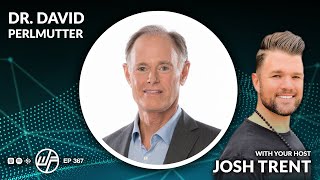
Interview (Wellness Force podcast) with Dr. David Perlmutter about his book Brainwash (co-written with his son). The conversation explains why people fail to act on health advice (a 50–80% implementation gap), and argues modern life (social media, screens, inflammatory diets, poor sleep) locks the brain into amygdala-driven impulsivity. Perlmutter links reconnection to the prefrontal cortex — via sleep, meditation, nature, social connection, diet and exercise — to improved decision-making, reduced inflammation, stronger immunity (noting ~72% of ICU COVID-19 patients have underlying conditions), and better long-term brain health. The interview covers trauma/engrams, neuroplasticity vs inflammation, the glymphatic system (brain “shampoo” during deep sleep), and practical on-ramps (a 10-day program) for behavioral change.
Questions this video answers
Between 50% and 80%.
About 72%.
The glymphatic system.
As much as a 60% increase in amygdala activity.
Chapters
Whatever it is that we know isn't necessarily in our best interest, but we do it because we don't have the ability many times to access the other part of the brain, the prefrontal cortex, that allows us to basically let the adult come back into the room and help us with our decision making. That would say, you know, as a matter of fact, you need to eat less refined carbohydrates. And guess what, maybe getting out for a 15 minute walk would be a good thing for us to do.
Foreign. So we have a total treat today. Dr. David Perlmutter coming back on the show to talk about his new book that he wrote with his son, actually Brainwash. And it couldn't have come at a better time. I think right now, people need a brainwash. Thank you for coming on the show.
I am always delighted. Good to see after two and a.
Half years, it's been quite a while. Grain brain. We had almost 100,000 views on our YouTube video that you and I did, which was the best one we've ever done. I think this topic of brain health is so top of mind, no pun intended, right now because so many people are suffering with mental health. And in this book, you explore so many concepts about clearing the mind, enhancing your brain, enhancing human connection. This, this book came for you and your son together. Were you guys having coffee? Like, where did this book even come from? Was it something where you were just sitting around the living room? How did you two come to formulate this?
We were in this, the very room where I'm sitting right now. Actually, there happens to be a couch in here. I was on the couch. Austin was in this position. And we were talking about what is the biggest challenge that we face as doctors. And we realized that it's about patients not carrying out the lifestyle choices that we think are really important. We realize there are three elements in that. The first is for us as healthcare providers to do our very best to learn as much as we possibly can. Read the journals, go to the conferences, talk to our colleagues. Number two, take that information and give it to people as best we can. Package it, deliver it, either face to face with people, write books, write articles, you name it. But it was step three, where the breakdown, we identified the breakdown was occurring. And that was the implementation on the part of the patient doing the things that we thought, you know, we all think are the right things. Exercise, getting enough sleep, eating the right food. We realized that that's where the breakdown occurs. And that between 50 and 80%, the information that healthcare providers provide to patients doesn't get translated into action. And you know, as a healthcare provider, it's frustrating that the patient comes back time and time again. Blood sugar keeps going up, weight goes up, you name it, Whatever parameter you're following and you ask the patient, well, are you doing what we talked about? Well, not really, you know, I just really couldn't get my arms around going on a lower carb diet or getting out for 15 minutes and exercise, whatever it may be. And I think that the next thing we identified, which I think was really groundbreaking, was that we had accused patients, we pointed fingers at patients and they in turn would accuse themselves and blame themselves for not having enough, whatever willpower, if you will, to actually do the things that even they knew were good for themselves. And it was about the blame that we would point fingers, they would point fingers at themselves. And we realized that the ability to make the good decisions, the ability that apparatus, the wiring of the brain has been sabotaged. So our brains tend to get locked into acting impulsively using an area of the brain called the amygdala. And there is so much about our modern world that is locking us into making poor decisions, short sighted decisions to based on impulsivity. I want the jelly donut right now. I wanna stay up and binge watch whatever it is, whatever program is on Tiger King, you name it, whatever it is that we know isn't necessarily in our best interest, but we do it because we don't have the ability many times to access the other part of the brain, the prefrontal cortex from that allows us to basically let the adult come back into the room and help us with our decision making. That would say, you know, as a matter of fact, you need to eat less refined carbohydrates. And guess what, maybe getting out for a 15 minute walk would be a good thing for us to do Instead.
Of the 12th episode of Tiger King. Yes, I think a lot of people don't even realize that these structures exist in the brain. And this is what I found so deeply fascinating about your book.
Absolutely. It's a balance. The awareness, impulsivity and fear based activity, self centered activity, narcissism and us versus them versus on the other hand, the prefrontal cortex which is making decisions, thinking about the future, consequences, empathy, compassion, and you know, that really embodies the notion of thinking beyond yourself. We can then, as we talk about in brainwash, actively take steps to change our wiring to regain access to a better decision maker and then be able to make the better decisions when we get information from our healthcare providers, from our financial advisors, from any place that requires us then moving forward to make a decision that has a bearing on our future.
Yeah, I think the decision making process right now is hindered for a lot of people because people are in a fear response. You know, they're being flooded. There's a hormone cascade of fear. And this brain, it doesn't like to be in pain. Right. So the novelty aspect, we crave novelty as human beings. Right now people are in their homes, you know, there's the country's on lockdown. And so we look at novelty, you know, where maybe it's consuming media. A lot of the concepts you cover in the book are around this disconnection where it seems on the outside, Dr. Paramatra, that we're connected. You know, we have all these followers on Facebook. You were just telling me before we came on, you have a couple hundred thousand people that are watching your Facebook Live. Yet my question to you is, in this world of perceived connection, do you really have a sense that we are connected?
Josh, I will say that it's very, very important right now to just think about what that term is all about and how valuable it is. Being socially distant from somebody, being socially, you know, immunologically socially separated from other people doesn't mean that we have to be socially isolated. In fact, now is we as human beings tend to gravitate to a situation where we're more interrelated during times of stress. And unfortunately, that is not necessarily as easily available to us during this time of social isolation imparted by the social distancing idea. But they are very disparate terms. You can socially distance, but you don't have to be socially isolated. You can pick up the phone and call a family member. You can FaceTime. You can have people visit you in the front yard, staying in their lawn chairs eight feet away. You can see people on the street and chat with them. This is the time that we need to reconnect. And what we talk about in Brainwash is something called disconnection syndrome. And that means that the more we lock into this part of the brain, the amygdala, the more isolated and lonely we become. And that has dire health consequences. There is direct relationship between sense of loneliness and dramatic increased risk for all manner of. Of chronic disease, including diabetes, heart disease and cancer, and even cognitive decline. So, you know, man is a social animal. We thrive based upon our ability to socially interact.
One of the things that you, that you talk about in the book is the amygdala and we've covered it on the show with different experts. But, you know, I consider you to be the neurologist expert globally. I think if you look at the types of people we've had on Wellness Force, with your background and also with your story, you know, losing your father to Alzheimer's and the deep emotional and spiritual connection you have to your work, what is it about this book right now that you think is really, truly serving, especially considering where we are as a society?
Well, I would say that everything we talk about in the book, incredibly, while it is focusing on reconnecting to the prefrontal cortex and away from the amygdala, is also directly related to enhancing immune function. Who knew whether it's a better night's sleep, eating a better diet, lower sugar, lower refined carbohydrates, re exposure to nature, keeping a gratitude journal, meditating, all of these things directly relate back to enhancing immune function. We therefore need to do everything we possibly can to shore up our defenses, to make sure that our immune system is robust and to make sure that our inflammation response is tempered if we should get this infection. Because that's where this really gets out of hand and ultimately proves fatal. So everything we talk about in the book is immune enhancing, which is so desperately needed today, because it is quite clear that those individuals who are suffering from underlying inflammatory disorders like heart disease, diabetes, cancer, etc. Have a profoundly greater risk of a bad outcome. In fact, those individuals who are in the intensive care unit, some 72% of these people have an underlying condition. And I think it's been very instructive for those of us who are following the epidemiology of COVID 19 to respond to this unusual observation challenge, if you will, that young people were not involved with COVID 19 until America got the virus. Suddenly, when this virus spread to the United States, we began seeing younger people ending up in the hospital, younger people dying, younger people in the intensive care units. And people puzzled over that, saying, gee, these are young and healthy people. What's going on? Therein lies the answer. While they may be young, we know that our young people are not necessarily healthy. Being young doesn't mean healthy. So the idea of young and healthy is a bit of a contradiction in terms. At least in America, our young people have extremely high rates of obesity and overweight and extremely high rates of type 2 diabetes as it relates to Covid. That's very important. Why? Because one of the most powerful predictors of a bad outcome is elevated blood sugar. So when we looked over the Past couple of decades at the increase in average weight of our younger people. You know, diabetes in teenagers. We used to call it adult onset diabetes. We can't get away with that language anymore because we're seeing it in adolescents, for crying out loud. So that paves the way for these bad outcomes. And. And it's not a mystery. These are inflammatory disorders that are related to lifestyle choices. And now we're back to making good.
Decisions when the storm comes. How much have we taken care of the house? You know, what's our foundation? What's our health foundation? And you talk about in the book us being literally accosted by Facebook and Instagram and social media. These things are flooding our body with chemicals that we've normally never been able to access from just the smartphone in our hand. Yet we're so wired for love. You know, we're wired for connection. We're wired for this. How are these companies taking advantage of this part of our brain? Because I think this is really important for people to understand.
That's a great question. And this is a powerful hack. We are, as mentioned, social beings. You know, we've. We've thrived in an environment of division of labor, of having each other's backs, of having people specialize in certain things for the tribe, certain activities. So this has been very beneficial for us to have this deep interrelationship with our brethren in order to thrive and to confront adversity. That's been a powerful hack for this thing called social media, which has pretty much turned out to be anything but social. It is extremely, as we see it play out today, antisocial because it breeds isolation. Those individuals who spend a lot of time on social media really end up visiting, staying only in those areas that cater to their frame of reference, their points of view, and it continues to fan the flames of them being right and others being wrong. And really works very much against our being able to engage in what's called cognitive empathy. What is cognitive empathy? It's the ability of one person to experience the viewpoint of another person, to try it on, to feel what it's like to be look at the world through a Republican perspective. If you're a Democrat or vice versa, how dare you. Or see things, you know, maybe. Maybe the world is flat. I don't know. Yeah, but, you know, it's been said, don't judge another person till you walk a mile in their shoes. You know why people say that? They say that because then when you do judge that person, you're already a mile away. And you have their shoes.
So, okay, I was going to answer something differently. I was thinking about, like, the fact that, like, you don't know what it's like because sometimes people's shoes are uncomfortable, people are in pain. And I think a lot of times with this echo chamber effect on social media, the people that are in pain just get to constantly be in that pain body. You know, Eckhart Tolle calls it the pain body. So people are saturating themselves in complaint, and they're in this right. This continuous cycle of being right. And that is actually what I believe social media plays to. Do you find that in your research as well, is it's nice to feel right and social media tends to make people feel right over and over and over again.
Absolutely. This, it really just locks people into a single frame of reference. We've lost the agora, the marketplace where ideas would be traded and shared, explored and vetted. And ultimately that leads to better outcome, because I don't have all the answers and you don't have all the answers. But if we come together, we'll create something different and unique. And that's what sharing ideas is all about. The polarization in our modern world doesn't permit that to happen, and it is fostered by our online experiences because you can lose yourself in. In social media sites of similar mentality, similar perspectives, and to the exclusion of being able to be okay or at least explore other ideas. That's how our socialization has always been, and it's always led to our advancement. So, you know, we really call for this idea of rekindling cognitive empathy, and that is a function of the prefrontal cortex. The more we lock into the amygdala by being on social media that only looks at one perspective, the more we don't get a good night's sleep, the more we eat inflammatory foods, the less we exercise, the less we engage nature, the less we meditate. We continue to lock into the amygdala to the exclusion of this prefrontal cortex, so that all of our decision making is nothing but serving ourselves right now, the rest of the world be damned. What the prefrontal cortex is all about is really bringing the adult back into the room to say, stop, calm down. Let's think it through. Let's make good decisions that are going to be beneficial for you and, by the way, may well be beneficial. Or at least consider how our decisions impact our neighbors, our communities, and even the planet on which we live.
I feel like you're a Trojan horse. I totally get it now. This book is about waking people up to have higher consciousness. Yes, you're doing it through a medical lens. You're doing it through an academic and research lens. But the way that people are using this tool to wake up is having the parent be in charge. Many of us have capital T trauma, lower T trauma. If you look at the work of Bessel van der Kolk, the body keeps the score. The body always holds trauma, and that trauma can actually fuel the child to be more in control, the adult. What do people with trauma, either big trauma or little trauma. What can they garner from this book in the way they can help manage that?
Well, individuals with trauma are very closely in touch at an unconscious level, but it influences conscious decisions very closely in touch at an unconscious level with those traumatic imprints or engrams in their brains. So those events are constantly influencing the decisions and the response of an individual day in and day out. What we understand through the beautiful science of neuroplasticity is that the more we do other things, the more that we can engage other parts of the brain, the stronger will those pathways become. The less we engage those traumatic pathways, they will wither on the vine. That is the beauty of neuroplasticity. So when we take action to actively engage the prefrontal cortex, the things that I've talked about so far, and utilize this neuroplasticity, it will help us distance ourselves from those traumatic engrams. And another thing that happens very interestingly is that with time, we can slowly become actually aware of those engrams. They will float to consciousness during.
What's an engram?
Pardon?
What is an engram?
An engram is a collection of influences that become stored in a certain area. It's basically a tape that we cue up. Okay, and let me give you an example. It's a great example. If you scratch a dog's belly, what does it do?
It shakes its leg.
The leg starts going. Because the dog has this connection between scratching and that leg movement. Watch somebody walk down the street on. On their cell phone and watch what they do. They're not just talking on the cell phone, but they're doing this. Now, the person on the cell phone doesn't see them going, but there was three people that came and. Oh, my God, all of a sudden, whatever. But because we're used to. Through activating these engrams that are part of language with gesticulations, we're used to having those things, those engrams, hand activity to be activated during conversation. So that's how we activate and those can influence our mood and even influence our decision making.
Well, I think about this pathway where there's the signals coming from our tissues back and forth to our brain. For people that have had physical trauma, you know, how do they do they have a rougher time with neuroplasticity because it's so baked in from the severe trauma.
They have a rougher time not with neuroplasticity in general, but they do have a rougher time in terms of undoing these influences. But as many have reported, they can be undone. Now that said, what works directly against neuroplasticity and neurogenesis, the growth of new brain cells, is inflammation. So we have a teeter totter then between neuroplasticity and inflammation. So whatever we do that increases inflammation will tend to make it more difficult for us to engage neuroplasticity and vice versa. So we really want to do our best in order to allow our brains to rewire, to do everything we can to offset inflammation. What enhances inflammation we need to be aware of. Well, we know that there are plenty of foods that are pro inflammatory, hyper processed, ultra processed, simple carbs, bad fats, omega 6s, et cetera, bad diet as it relates to our gut bacteria, plenty of influences in food and certainly medications, antibiotics, acid blocking drugs, non steroid anti inflammatory drugs. The list contains more than 1,000. But other lifestyle things tend to fan the flames. Interestingly, flame inflamation of inflammation and that would be certainly not getting a good night's sleep. Even one night of non restorative not getting enough restorative sleep is associated with a dramatic uptick in inflammation markers in our bodies and as much as a 60% increased activity in the amygdala. So maybe it sounds like I've been talking about sleep quite a bit. You know what good reason it's so underrated and it's such a powerful on ramp. In brainwash we talk about it as perhaps being the most important on ramp these days towards reducing inflammation, reducing cortisol, regaining connection to the prefrontal cortex and really rebalancing the immune system. Underrated.
We need to get more. I think that people forget. It's funny, you know, the book is brainwash. When we're sleeping there is a chemical release that washes our brain. And I think people forget that. Do you remember the name of the chemical that's released? I forget the name of it. Dr. Parsley talked about it.
Yes. So actually there are several involved. But what you're bringing up is something called the Glymphatic system.
Yes.
And this is recently discovered by researchers at, I think, University of Pittsburgh in collaboration with others. And that is that during deep sleep, which occurs later in the evening, we activate a system that really basically shampoos the brain, if you will, that helps the brain rid itself of toxic accumulations that occur during waking hours, during brain activity, and also things like misfolded proteins. And that turns out to be very thematic as it relates to neurodegenerative conditions like Alzheimer's and Parkinson's. As Dr. Walker, in his book why We Sleep, talks about even one night of not getting enough restorative sleep, when you look at the spinal fluid of volunteers, the next day shows higher levels of this amyloid protein that has been associated with Alzheimer's disease. So, yeah, I mean, that's when our brains clear out the debris. So we. You know who valued sleep, right? Nobody. We consider it downtime. If you want to be productive, you need to stay up late, work on your project, get up early. Yes, because sleep is wasted time.
You're changing the narrative. You're changing the narrative. It's not about work hard, play hard. It's about resting hard, too. And I remember I was talking with Rob Wolfe on the show, and he was telling me he guards his sleep, his sleep at knife point. He's like, nobody gets in the way of my sleep. And I feel like right now, that needs to be something that we're all aware of, like, really guarding one's sleep. What do you recommend for people to guard their sleep? Like, what are the tools? What are the ways of being.
Well, I think the first thing you do before you even implement, implement the tools, is you recognize how darn important it is. Look, you don't spend eight hours a day exercising or eight hours a day eating. And yet exercise and diet are really all that people talk about on the Internet. For example, eat this diet, lose weight, exercise like this, get some great abs. But you should spend seven to eight hours, in other words, close to a third of your life doing this thing that all animals do, and that is sleep. That's how valuable it is. Our ancestors, when the sun would go down, they would go to sleep, and the sun would come up, they would wake up. So that's hard baked into our genome. So then where do we get to the dynamics of that and more importantly, the hygiene part of that? And that is first recognize how important it is. And now we look at. So why am I not getting a good night's sleep? Well, it could be having caffeine after 2pm it could be spending time on your computer exposing your eyeballs to blue light, which then goes through an area called the suprachiasmatic nucleus that then degrades your ability to make melatonin in your pineal gland. Guess what? You're not going to sleep as well. It might be you didn't get enough exercise, you're not really as tired. So there are a lot of things to look at that are simple modifications that may well help anybody get a better night's sleep. And I will tell you, there's probably nothing better for decision making than a good night's sleep. You know, we're now are creating a program for medical doctors for helping their patients in their decision making. So we've taken the brainwash book and we're using the guts of that program and with doctor training to help them be better healthcare providers towards their patients. Because, you know, again, it's, it's not that doctors don't know a lot of stuff, they do. And it's not that they don't try to give that information to their patients, they do, but it's step three where the breakdown occurs, that is the implementation of that information on the part of the patient. They don't carry it out. 50 to 80% of the information we give to our patients doesn't get acted upon. That's where the breakdown occurs. So it is as a scenario. You're a healthcare provider and you're dealing first time with a patient who is overweight and diabetic. Patient's in your office and you say this week I'm not going to give you a diet. I'm not going to even talk to you about exercise. What we're going to work on this week is see you next week is sleep. And you know, the eyebrows go up. Wait a minute, I'm here to lose weight. I want to get my blood sugar under control. Stop. What we're going to really work on, our goal is to get you to a place of better decision making. We're going to rebuild the decision making apparatus so that when we do get to the exercise, we do get to the diet. You will then have the brain hardware to make the those things work for you. Because truthfully, you, Mr. Or Mrs. Patient, have been to countless doctors, you've read countless books, you've been online, you got all the information. But how did it help you? It didn't because you didn't decide to do it. I'm not pointing a finger at you. What we're going to do Moving forward is give you the tools, rewire your brain so you can be more in a position to make better decisions. And guess what? We're going to start with sleep.
There's some trusted tools in the book, but we're at this nexus too, where we've been running this society at such a fervent pace. I mean, the gas pedal has been mashed to the floor. No wonder people aren't sleeping. Like there is many concepts that get to be unraveled and unpacked when we look at why people aren't actually sleeping in the first place. Yes, I agree with you, Dr. Perlmutter. People need to get to sleep and they can take the information that's actionable in the book and they can actually do it. But there is this choice point between knowing and doing. And knowing is not any real value at all if you're not going to do anything with it. So what do you see the factors in our society that get to be changed so that people can have less decision fatigue and follow through on trusted information?
Great question. And I would say that, you know, we published this book in January of 2020 and what else happened in January of 2020? That's history. @ this point. We published a book that made it clear that the deck is stacked against us for reasons that you just described. That our world is making incredible demands upon us and that we are bombarded day and night by information that really doesn't have our self interest in mind. It's really about profitability and harvesting our attention for profitability. The pop ups, the clickbait, you name.
It.
Yes. You know, when we understand that the metrics we used, the data we used indicated that prior to this current situation with COVID 19, that Americans were spending north of six hours a day in front of one screen or another. So plenty of opportunity for your attention to be hijacked. And it's been said that, you know, when you're doing one thing, you're not doing something else. So not preparing your meals, not outside, not exercising, not meditating, not interacting with other people. Now it's time to double down on everything we've talked about, because now those influences are far more aggressive. People are glued to screens these days. We know that to be true. And by and large, it's all very much involved in dramatically captivating us with one single word, and that is fear. Is this a dreadful situation? Yes. Is it a fearful situation? You bet. But it's not a situation that requires 18 hours of our attention each day. Is it good to know what's going on? Of course it.
Is. Yes, you can.
Take. We get good information about hand washing and social distancing and where we stand on the development of immunizations, etc. Of course, but that doesn't require 18 hours of attention each day. This is the time to realize that if you're going to be fanning the flames of fear, you are fanning the flames of two other things, inflammation and down regulation of your immune system. And you can't afford either of those. Those are the most important things that we have going for us right now if we want to survive this.
Infection. The paradox we live in. Don't we just live in this ultimate paradox of there's so much, we're so connected, we're in an ocean of articles and podcasts and everything else. There is a North Star that's unique to everyone. I love yours. I love the way you explained it. Like, is this information that I'm about to take in, is it going to allow me to help people? Is it going to allow me to have the adult in the room? And I like that metaphor a lot because we've had and I've done personally, I'll just share with you. I've done a lot of work on healing my inner child and I talk about it on the show. All of us get to do this inner work. How does the inner work. How does the emotional intelligence quotient of healing our inner child relate to some of the strategies and takeaways in your.
Book? Well, it's actually an interesting question because we have many, many people do have right now, by virtue of what's going on, the time to address exactly what you're talking.
About. Yes, we.
Do. And you know, when it's all said and done, I think you could ask yourself, well, what did I accomplish? How did I use that time? You know, we're all saying, gee, if I only had more time, I would do whatever. X. Well, you do have the time right now and you hear about people going stir crazy because they, you know, they have too much time on their hands and they're having to stay home. This is a really good time to do the work that you are absolutely describing. And that is to involve yourself in the process of undoing the inflow, first recognizing and then undoing the effects of those traumas. We learn about those traumas. They come to the surface more and more when we get involved in things like meditation, when we do the things that we talk about in our book about, you know, creating the fertile environment to letting Those things finally become evident, and then confronting them in a loving way, recognizing that those individuals that transgressed us, that we felt transgressed us years ago, or perhaps more recently, that, you know, they were at the mercy of their own engrams, their own early life.
Influences.
Yes. And that each of us is basically a manifestation of what came before. We know that's true with our genetics. We know that's true with our epigenetics, which is a very empowering realization. Not only do we inherit the genes of our forebears, but we inherit the influences of their trauma on their gene expression. That gets transferred to us and is transferred to our progeny, our children coming from our parents. So we inherit the gene expression from our grandparents in terms of how that gene expression has been modified by their traumatic experiences. Good news is that we can work on that and we can first see it. Once you see it, it's very much like Plato's allegory of the cave. We're no longer facing backwards in the cave, only seeing our shadows. We've now turned around and are actually seeing the light. And once you see the light, you're seeing the truth, and you can deal with it. You can work with it. It's not simply a manifestation of something that happened.
Earlier. Your son, Austin, specialized in studying depression and chronic disease. And some of the things in the book that I read were around how to deal with burnout. You know, how to actually deal with that. Looking at your relationship with him and maybe even looking back, like you said to your grandfather, is there something that you've healed or that Austin has healed in the Perlmutter.
Lineage? I think that the answer is yes. I mean, I can't imagine. I guess it's possible, but I didn't have this relationship with my father. And many people, you know, can say that they wish it would have been different. And I, you know. But my dad did his own thing. He was married to my mother, but his mistress was brain surgery. And he was an incredibly gifted and accomplished neurosurgeon. As such, the rest of the family didn't get to really share in his life as perhaps we would have wanted. When I embraced that and really embraced how powerful an influence that was on my life, it made it. I was able to let it go. And the engram of wanting to impress and wanting to be with him tended to fade, and I began to be able to go on my own and just develop my life in the absence of that influence. I think I carried that into my own fatherhood with respect to dealing with my children in a positive way that I wanted to be available, I wanted to share, I wanted to be transparent about areas that I was having difficulty with and my failings as well as things that I have learned that I could pass on. So I am so thrilled by the relationship that I have with my children and I suspect that when they have children, if they have children, that that will even be a better circumstance because of what they've learned about relationship with both me and my.
Wife. This is what I felt from you two and a half years ago. There's such a heart based spiritual element behind your academic pursuits and in your media pursuits. So, and this is why I was excited to talk with you because when I look at some of the things that you mentioned in the book around deeper relationships and creating long term happiness, because you know, Dr. Perlmutter, happiness is fleeting. We can't have an expectation that every day we're going to be perfectly happy. It's just nonsense. That's the child in the room, as you had mentioned. So as the adult in the room, what are a few of the tools, what are a few of the ways of being that we can do and be that'll actually promote this long lasting happiness for us in our relationships with ourselves, with our.
Spouses? Let me first say.
That let's.
Look at the lineation between happiness and being content. Because oftentimes we think those are synonymous and they are not. Into each life some rain must fall. And right now there's a lot going on that is detracting from people being able to feel happy all the time, as if that were ever possible. Nonetheless, we can get away from feeling discontent. Content means you have enough, you don't need anymore. And it gets back to the influences of our modern lives really trying to foster this notion that we don't have enough, we don't have enough things, we don't have enough stuff, we don't have enough good looks, thinness, money, we don't have enough ads, whatever it may be. And our experiences with digital media fans, that flame of continuing to make us feel that we do not have enough. And here is the quick fix. Whatever you can buy or do that, whatever is being sold. So in a very real sense, our modern lives are keeping us in a state of discontent. Discontent needing more is an amygdala based kind of response to the world around us. When we can distance ourselves from that amygdala, which serves something very important, we'll get to that in a minute and lock more into the Prefrontal cortex, we suddenly let it go. We suddenly look around and realize that the glass is not half full, the glass is overflowing. And I understand and oh, my God, there's a.
Glass. We're.
Here. Yeah, I understand that plenty of people right now are very, very challenged by what is going on. And I am not trying to discount that because it's huge. There are plenty of people having a rough go. But I think universally, people are beginning to appreciate some of the things around them that they were not able to appreciate before and recognize that, you know, there are things around us that have great value that we took for granted. Now we realize how important they were, and they are. In other words, we're beginning to regain a sense of contentment with what we have, as opposed to living our lives constantly being bombarded by messaging indicating we just don't have enough, we need more. So that really is a very important goal. Apart from this notion happiness. Sadness is a part of the human experience and can be embraced and experienced with as much participation as happiness. Why not? You know, when something happens, you can step out of it and ask yourself, what does this feel like to be sad over an event and participate in that feeling? Be all in with the sadness as you want to be all in with the happiness. It's part of the human experience. It's part of our lives right.
Now. We're in this space where so many people are just wishing they could connect. And it makes me wonder, you know, absence makes the heart grow fonder. It's something we've heard for probably hundreds of years. And in the absence of connection, what we're all craving is more connection. So when it does come around and we are connected again and we're able to meet and hang out with one another and. And hug and have some food, it's going to be so much sweeter. And my hope, my intelligent hope, is that when we do come back together, that is going to be such a point of reference for us to remember how special it is to be with one another. And you had talked about this in the book the Power of Social Connection. Right now, as we look at the road ahead and we see all the different things that are coming at us, it's quite frank that there's a lot of uncertainty. You've mentioned the amygdala quite a bit. How do we transcend that amygdala as parting guidance? You know, what do we do to. You've under. We've understood it through your guidance, but how do we transcend it? How do we help to transcend the control of the.
Amygdala? Well, let me just get. I'll answer that question just a moment. But you brought up something I think was really very valuable. And I just want to make sure that everyone understands there's a big difference between social distancing and the concept of social isolation. And while we may distance ourselves in terms of proximity to another person for immunological reasons, we don't need to distance ourselves from people in the outright. We still very much need to be connected now more than ever. Humans have always faced adversity by reconnecting and enhancing their connections socially. Now, is it digital? We talked about this before, is it verbal? Is it in close proximity, but not violating the six or ten foot rule, whatever it may be. And we're seeing that happen. We're seeing a lot of evidence of that, that people are gaining connection now in ways that were not predicted, that's for sure. So I think that's really very valuable and I think that. Is there a neuroanatomical substrate for this? Yes, there is. The social interaction part of the brain is this prefrontal cortex. It's what allows us and encourages us to connect to other people. So the more we can do to engage this prefrontal cortex, the better it will be for our ability to interact with us and the better that will be for our ability to make progress moving forward. It's never failed yet. This is a challenge because of the social distancing requirements, but it is not insurmountable. So anything we can do to engage the prefrontal cortex more will help us engage in our ability to connect and offset what we talk about in brainwash, and that is disconnection syndrome. So how do we reconnect to the prefrontal cortex? We get a good night's sleep. Who knew? We meditate. You know, when you look at functional MRIs of people who meditate, the prefrontal cortex is absolutely lit up and the amygdala is quiescent. We engage nature, nature engages the prefrontal cortex and calms down the amygdala. It means get outside, means take a walk in the park, or if not, it means buying a potted plant and putting it in your kitchen. Or even a nice photograph of a natural environment is enough to bring about better connection. Prefrontal cortex, improved immune function and decreased inflammation. Who wouldn't want that? So we have a 10 day program in the end of the book talking about how to change your diet, keep a gratitude journal, better sleep More exercising, getting outside, social reconnection, etc. But you know what? For each individual, as I mentioned earlier, there may be a different on ramp that then facilitates all of the rest of the better.
Decisions. Powerful. The book is brainwashed. Dr. Perlmutter is on the show the second time, talking about not just the health of the brain, but the health of our hearts. And there's such a deep connection between the mirror neurons in the heart and what goes on in the gut and everything being so connected. How has this definition changed? I asked you this two and a half years ago. How you see wellness? What's your definition of wellness? But today, with everything you've learned and even what you've mentioned about healing past trauma and all your academic pursuits that have brought you to being a leader in our world, you know, being a leader about brain health, how do you see wellness now? What's your definition of wellness? To live life?
Well, I'm not sure what my definition was two and a half years ago. So if it changed, then so be it. I think that wellness is the manifestation of being, of utilizing what defines us as being a human being to the fullest. And we really have two very important attributes. Yes, we have the opposable thumb. I'm not going to argue that's a cool thing to have. But we also have this size of our prefrontal cortex is unlike, you know, it's a third of the brain's cortex is prefrontal cortex. That that utilization allows us to make plans for the future and allows us to become more empathetic towards our future selves and importantly, more empathetic in the lives of others and in the life of our planet.
Itself. Wise words from a wise man. Thank you for coming on the show. Thank you, Dr. Perlmutter, for what you do in the world. And we're talking about Dr. Perlmutter's work and brainwash more. We're giving away two copies of the book, so go to wellnessforce.com group you can enter to win. And Brainwash is the book. Thank you again for coming on the.
Show. Thanks for having me. Good to see.
You. You.
More from Josh






Your child's future start before pregnancy... and even before conception! #podcast

MD Reveals: Your Healing Creates Your Child's Reality (The Souls Coming In Need Strong Bodies)



