Dr. David Rabin | How To Be Emotionally Resilient: Exploring Chronic Stress | Wellness Force
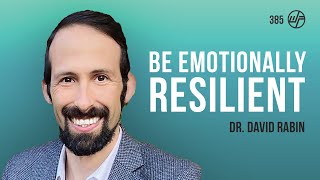
This is a transcript of a Wellness Force interview with Dr. David Rabin, a psychiatrist/neuroscientist and inventor of the Apollo Neuro device. The conversation covers his clinical work with chronic stress and PTSD (including veterans), the physiological role of vagal tone and heart-rate variability in stress and recovery, and how breathwork, gratitude, soothing touch and the Apollo device (low-frequency vibration patterns applied to the skin) can help restore parasympathetic balance and emotional resilience. Dr. Rabin frames the Apollo device as a training/bridging tool that helps people learn to activate their body's natural calming systems and complements psychotherapeutic and psychedelic-assisted therapies.
Chapters
Even if you're a young child, an adult who doesn't know, or an elderly person who doesn't know how to activate naturally your body's natural calming systems, this can show you what it feels like to activate those systems. And then once you feel it, it's easier to learn how to do it on your own. And the device kind of serves, Apollo kind of serves like a training tool. Over time, people have told us from thousands of reports, they continue to feel better over time, cumulative with cumulative consistent use, and that it's, it's a growth curve.
This is Josh, this is Wellness Force. We're here with Dr. David Rabin. He is a board certified psychiatrist, He's a neuroscientist, he's an inventor who made a device that I've actually been trying for the past couple weeks. It's called Apollo Neuro. We're going to talk about this and stress and this impact of chronic stress and how we can be emotionally resilient. Dr. David Raven, welcome to wellness for us.
Thanks so much for having me, Josh. It's a pleasure.
We were talking about the winds that are blowing in California. The winds of change are blowing for all of us. I mean, I can't think of a more challenging time, David, than right now with lockdowns and Covid and everything. It seems like the world needs a massive deep breath and a reminder that we can come back home to ourselves as we talk about this stress component and chronic stress, really the perfect jumping off point is the work of chronic stress and the data that reflects it. The way you got into the world of managing people with chronic stress. As a physician, as an inventor, did you ever, like, look back at your life when you were a kid, maybe tinkering with stuff or growing up with your parents where you thought, okay, I'm gonna help people, I'm gonna help people with this. Did that click in at some point when you were a child or did it come more in your adult?
Yeah, it definitely did start when I was a kid. I think I had a somewhat unique upbringing because both my parents were physicians or are physicians still. They're now semi retired, but they kind of. You know, I grew up with this understanding that it was really, really important to give back to the world, to leave the world a better place than it was when we got here and to really focus on prioritizing, caring for people. And so we, I think from a very young age, that was just something that I was taught to value, which was really important. But I also had some really interesting experiences From a young age where I noticed, you know, my parents are western trained physicians. They're not psychiatrists or psychologists. They don't work in mental health. And I think that, you know, looking back at the way they got mental health, trained in mental health, when they were doing their medical training, it was very different than the way we teach it today. It was much worse education overall, but very stigmatizing. Very, very much. What's the word? Just stigmatizing of mental health in general. Right. It was still firmly accepted that physical health and mental health were separate and not equal.
Ah, well, this is perfect, Perfect timing. Because on Wellness Force, we explore physical and emotional intelligence. That's the bridge, David, that we're always talking about here is like, how do we gather the information, how do we use the devices? Lastly, how do we embody? How do we improve? Actually, walking the bridge between knowing and doing this is something that for most people, unfortunately, when they go down the path of behavior change, they tend to focus on the external locus of control. Now, there's an internal locus of control as well. If you look at BJ Fogg's work or Charles Duhigg, your work specifically, though, what I love about it is that you're not just saying that the device is the gold ticket, although it's incredibly powerful. And we're going to get into that. You're talking about this as a complimentary, a synergistic approach towards other modalities as well, like unique psychotherapy that you do. We'll talk about PTSD today as well, for people that are suffering with that, but also breath work, which is an art and science of itself. So share with us, like, how do these worlds converge for you? You know, the breath work, your clinical experience, and also this device. How do they form in a nexus of healing?
Yeah, that's a great question. And. And I think, you know, going back to when I was a kid, I think the thing that always really interested me was that Western medicine just didn't explain everything. Right. There was a lot of things left to be explained, particularly chronic illness. Why do some of us face stress and then overcome it and become stronger and better and faster as we grow with stress? And then others of us face stress or what we call trauma, and then become sick from it. Right. And there was. And dementia is a perfect example of this. Not everybody gets it. A lot of people get it when they get older, a lot of people don't. And why are some of us more resistant to it than others? Why are some of us more resistant to ptsd? We don't yet know exactly why that is. So this was something that always fascinated me because we just didn't have the answers. And I always was interested in studying consciousness because I had very vivid dreams as a kid. And so understanding the interaction between our perception, our mind and our mind's experience and then our body's experience and our emotional and spiritual experience was really fascinating because they're all clearly tied together. They're not. They don't exist in a vacuum. When the mind is sick over time, it can make the body sick. When the body's sick over time, it can make the mind sick. And the same with our emotions and the same with our spirit. So one of the things, I mean, you went straight to the core of this, which is the locus of control, right? And ultimately practicing psychiatry for many years, studying chronic stress. One of the things that became very clear, not only from the literature, but also from working with my patients, is that anxiety itself, you know, these feelings that we call anxiety, which are, you know, overwhelming discomfort, restlessness, mental, emotional, physical restlessness, worry, et cetera, all of these things stem from spending more time of our precious limited conscious attention time every day just focusing on things we don't have control over in our lives. Right. Which now we're surrounded by more than ever. I think that's what the current times are different than previous times because we have the Internet, we have 24.7news, we have global pandemic. We have these crazy, tumultuous elections and political situations going on. We have division in our communities where neighbors are being divided based on perceived beliefs, even though we actually have much more in common than we realize.
Yes.
And that is creating a perceived sense of threat that we tend to spend more time focusing on, but we don't actually have control over any of those other factors. Only thing we have control over is what we pay attention to. Right. What we allow into our consciousness. So breathwork comes into play because breathwork is the most fundamental way or one of the most fundamental skills that we have to restore a sense of control to ourselves. So if you think about attention and attention and consciousness is just however much time we have during our waking day that we choose to focus on certain things that we allow into our perception, into our window of consciousness, then there's a whole bunch of billion trillion things that are going on that we're not paying attention to and not letting in. They're still happening. Right? But we're not letting them into our awareness. They're staying beneath awareness. So with respect to breathing One of the core techniques, and gratitude, which you mentioned earlier as well. These two techniques work hand in hand because when we find ourselves in a situation where we're feeling overwhelmed, restless, out of control, worried, racing thoughts, racing heart, racing breath, whatever it is, we always have the ability to express gratitude for being here right now, to start, and then gratitude for being able to take a breath and then just paying attention to that feeling in that moment of the air coming into our nose, mouth, lungs, et cetera, instantly sends a signal to our amygdala, that reptilian fear center that's ancient in the center of our brains. It says, if I have the time to pay attention to this feeling of the air coming into my lungs right now, or the feeling of somebody gently touching my body and giving me a hug or holding my hand, or the feeling of Apollo gently vibrating on my arm or leg, I can't possibly be running from a lion right now. Yes, right. The locus of control is almost instantly restored to center, and that is where all these things kind of meet in the middle.
This is powerful because I think a lot of people just forget. Honestly, David, they just forget to breathe. Just like we forget to tell somebody we love that we love them, or we forget to give gratitude to the people we work with. And this isn't us sitting around a fire, but it is what makes us human. And what makes us human is connection. I mean, the world's leading addiction specialist, Dr. Gabor Mate, says that, you know, addiction is really the opposite of human connection. It is its polar opposite. And I know that that's something that you go very deeply into. And I'd like to. To unpack, with your expertise is post traumatic stress disorder, specifically around veterans or trauma victims. And by the way, there's capital T trauma, there's lowercase T trauma. Just because you weren't physically abused, sexually abused, emotionally abused, doesn't mean that you weren't neglected. There's lowercase T traumas that can stack up to be just as severe or more severe than a capital T trauma. So please share with us your background in ptsd. I think this is incredibly powerful because plant medicine is not for everyone. It's actually quite dangerous if you're not in a safe space for it. So this device, your work, can you connect the bridge between how you even found this device and how it relates to PTSD and also your background with PTSD and that work?
Sure. So I have been working with veterans for a number of years, and I've been studying chronic stress and resilience and the way we cope with chronic stress on a cellular and molecular level as well as on a whole person level for about 15 years now. And I think what's really fascinating is that when people, what we've seen, not just in the clinic, but also in, that's now well described in the literature, is that people who have treatment, who have ptsd, especially the people who tend to not get better from the recommended western treatments, as well as the people who have depression, anxiety, chronic pain, insomnia, who don't get better with the recommended treatments, these people tend to have something called low heart rate variability, which is the rate of change of our heartbeat over time. And it's just a biomarker, it's not a causal thing, it's a metric that we can use to track the effects of stress on our bodies and how well we've recovered. The more recovered we are, the better our body adapts to stress. Meaning that when stress comes, our heart rate jumps up quickly, blood pressure jumps up quickly, breath rate jumps up quickly to get out of that situation and tackle that situation, to get to survival. And then when we reach safety, all of that stuff should come back down to turn on the recovery system, recognizing that we're in a safe environment.
Yes.
People who have ptsd, particularly those or depression or any of these other conditions I mentioned, particularly those who do not respond to the western treatments, which is anywhere from 30 to 50% of people, which is a surprisingly large number.
That is incredibly large and shocking. Right.
And that's why psychedelic medicines and technological approaches have been taking such a big focus right now. Because we need desperately other alternatives that are less side effect ridden and less risky than prescription medicines.
Are you trying to say that not everyone should sit in the jungle and drink ayahuasca with a shaman?
Well, definitely not. It's definitely not for everyone. But also medication in general is not for everyone. Right. Prescription medicines have their purpose, they are not for everyone. And they do come with risk. Many of them come with risk. And a big part of our medical training is educating our patients on the risk of prescription medications. So we really focus on, we're basically, ultimately, in my practice we saw that these patients, and in the clinical trials before, we saw patients have, these patients with ptsd, they have low heart rate variability, they're always stressed out and they were telling us they never feel safe and they're body's biomarkers were showing that they're not feeling safe. However, when they came into the office with me, they felt safe. We made great progress when they left Everything came back right. They didn't have the skills mastered yet to be able to maintain their safety out of the office. So we thought, okay, we know from traditional psychotherapy training that the safe, trusting relationship with a therapist, or your psychiatrist or your doctor, your caregiver is the most important thing. I'm also trained in ketamine assisted psychotherapy and MDMA assisted psychotherapy for treatment resistant depression, PTSD respectively. Those are also founded in the tenets of safety first. Right. If you do use these medicines in the context of a not safe set mindset or physical setting, then people tend to have much worse experiences that are not healing. And so understanding that and having gone through those trainings, seeing the incredible results that this safe set and setting, safe mindset and physical setting really created these transformative healing experiences for people or facilitated transformative healing experiences for people that were really life changing and long lasting benefits, like years of benefit from just two to three doses of medicine, which is incredible. And so we started to see that and safety became the target for us. So we started to figure out what can we create to give people when they leave the office, right. That gives them a feeling of being still connected, gives them a feeling of being connected to something beyond themselves, that gives them a feeling of connectedness that, that helps them not feel like they need to self medicate with medicine, with drugs and that they can feel safe enough to be able to recognize that perhaps the old way of thinking about the world, the patterns that were induced by what we call what we refer to as like big T and little T, trauma, I think is more correctly thought of as just one or multiple negative meaningful experiences over time. Right. It's not about how anyone else sees them, it's about how we perceive them to be negative meaningful experiences over time. And they can be multiple small experiences. Small. Right. Or even one large experience. And that can be enough to cause again, long lasting change on the negative side if we don't process it. So again, going back to what you said about Gabor Mate, which is an amazing, amazing addiction and clinical provider who has a vast amount of knowledge and I hugely respect his work, I think he's exactly right. Because when you look at the patterns of what people self medicate with when they have treatment resistant mental illnesses that they're not getting results from when they have addiction disorders or they're feeling like they seek substances to soothe themselves, the substances that people most commonly use are activating the serotonin system, the dopamine system, the endocannabinoid system, the endorphin system, the opioid system. Right. And guess what activates all these systems naturally? Soothing touch.
Right.
So when we looked at why people self medicate, when we looked at what they self medicate with and the most common patterns of behavior, it was clear that we had to evaluate the touch response system more carefully. And that's where Apollo came from. And at the University of Pittsburgh, starting in from, I Guess it was 2014 to 2018, we conducted an enormous amount of research on this and really mapped out the entire pathway from the skin to the brain and effectively figured out a very specific formula of vibration patterns that are now in the current Apollo device that actually are recognized consciously. We may not identify it as the feeling of somebody holding your hand, but our fear center of our brain typically will feel that feeling and recognize it as something very similar to someone you like holding your hand or giving you a hug on a bad day.
This is so powerful. I have to pause you right there because you unpacked literally years and years and years of work. I want to go back just really quickly before we talk about the device and how it actually works on a physiological level, on an emotional intelligence level. One thing you said that was profound was you talked about how we're all just wanting this touch response. And when people are feeling depressed or they're having treatment, resisted type of conditions, they'll go to the drink or they'll go to the smoke or maybe porn or shopping or all these things that disconnect us from the self, essentially. And I'm curious how you feel about this. People don't feel safe where they live, which is in their human body. There's a lack of safety. Somatically, you're absolutely right. The head to heart connection is not there. Maybe they're not breathing. I mean, there is a myriad. And I'm not going to try to be reductionistic here. There is so many things that can happen for people that'll put them in states of trauma or in states of maybe overactive sympathetic nervous system. So going forward now with this device, what I'm hearing from you, and tell me if I'm wrong, is that this is actually mirroring on a physiological level all the deleterious health behaviors. It's flipping the coin so that this can actually give us something that's healthy for us, give us that same dopamine and serotonin response.
Right. And it gives us, it gives you kind of. It helps you realize that you can feel safe in a situation that was perceived as threatening before. Right. So. And Again, this perceived threatening, the perceived threat is really important to think about because our bodies evolved to get to survive. Right? Our bodies evolved to survive. Threat. Our bodies do not know the difference between a lion chasing us in the jungle or running out of water, food, or air as we do. Emails. Too many emails. Right? Too many responsibilities. Once our brain determines that something is threatening, the body reacts the same, no matter what. Heart rate goes up, blood pressure goes up, respiratory rate goes up and becomes more shallow, and we start sweating and we start turning down our reproductive system, our creativity system, our immune system, our ability to get sleep. Because why? And meditate and enter relaxation states. Because why would you ever design a system that allowed you to relax when there was a threat around? Right? It doesn't work that way. For a reason. To keep us alive, to help us procreate and continue our lives. And this is not just humans. This is almost every animal, every mammal, and almost every animal, for dating back like 300 million years, has the same system built into us. So by Understand and Eric Kandel, who won the Nobel Prize in 2002 for discovering the mechanisms of learning and memory, actually figured this out, going back to these ancient sea snails that only have 12,000 neurons. They form memories around these safety patterns and fearful patterns the same way that we do, which is pretty incredible because we have, like 100 billion neurons. And we think we're unique, but we're really not that special. So especially at the core.
Yeah, we're in harmony with nature or we're not. And I think the powers that be. And this isn't a conspiracy show, but there is a dark energy in the world right now that I think all of us can feel, whether it's mainstream media or different political parties. Our attention. You talked about this earlier. Our attention is currency. Our attention where we choose to put our eyes. Like when I look at the phone, when I'm here with David on the podcast, like, what are we feeding ourselves? Are we nourishing our nervous system? Are we nourishing our brain? Or are we literally watching content, choosing to watch content. It gives us a hit of dopamine because it's exciting, but it's really just toxic viewing, right?
It's a distraction from how we feel, right? So going back to what you said earlier about fearing ourselves, right? Not feeling safe in our own skin, this is fundamentally the core trauma of humanity. Forget about sexual abuse, forget about physical abuse, forget about emotional abuse and neglect. Those things still happen, and there's still problems. But let's take it a step back further to what literally traumatizes pretty much every single one of us on the face of this earth. And it is a role model that we respect when we grow up, that we come to when we're feeling sad, angry, confused, upset, anxious, whatever, worried, whatever you want to call it, and we tell that person how we're feeling, and they say, you shouldn't feel that way. You shouldn't express yourself that way. Right? Anger is not appropriate. Right? Those kinds of responses, what most people, it's not, you know, it's nobody's fault. People don't realize what they're saying. But those kind people do what they're taught, right? But those kinds of responses teach us to suppress our emotions. They teach us to ignore our emotions and to bury them down because they're negative or unwanted. And that is the single biggest mistake that teaches us to fear parts of our own selves, right? To repress parts of our own selves. And ultimately, if you think about what happens when you ignore somebody who's trying to get your attention, what happens is they talk louder, right? That's right. They try to get more attention from you. And these are parts of you, the angry parts, the sad parts of all of us, the confused parts, the vulnerable parts. These parts of us are always parts of us, and they're parts of all of us. They're not going away. And they are critical to coexist with all the other parts of us, the stronger parts that we consider valuable because they create this dynamic balance that makes life rich and exciting and dynamic. Right? Otherwise we'd just be bored and happy all the time.
Oh, man. There's so much there. There's so much there. I'm sorry. You have an incredible amount of wisdom. I love this conversation. I think about. I believe it was Albert Einstein. You might know better. Someone at a very high scientific level said, energy cannot be created nor destroyed. It can only be transmuted. This is exactly what you're talking about. So if I'm feeling angry, sad, whatever it is, that's a charge in my body, emotion, energy in motion. And I'm feeling that this is what we talk about in our programs, in the Breathe, Breath and Wellness program, when I'm working one on one with my clients, either in business or life is like, you can't change how you feel. You have been taught, like you said, to not feel your feelings. We've all been taught to, like, mash it down. But guess what happens to that energy? It comes out sideways. It goes somewhere. And that sideways energy is what feeds addiction. And disconnection from self, so bringing it back around to the device.
Wow.
Who would have thought that in our lifetimes we would have technology harnessed to bring us back home, to bring us back to ourselves. Like, I mean, it's mind boggling.
The body's always in the here and now, right? Our minds can be in the past, they could be in the future. That's often where they usually hang out. But the body is always here, it never leaves. So that's why breath work works. That's why soothing touch works, soothing music, it grounds us back into our bodies, right? So as soon as you do any of these exercises, which all work the same on the same basic mechanism of boosting parasympathetic recovery, vagal nervous system activity, then you bring, you center the mind back into the body. And that's the critical importance of breath work and the importance of Apollo and the importance of all the psychotherapeutic work we do. Whether you're doing it from a tribal medicine perspective, a Chinese or Hindu yogic Ayurvedic perspective, or a Western perspective, it's about learning to feel your own emotions without judgment, right? To not be attached to the outcome as much as we are just present with ourselves and allowing ourselves to feel the feeling. Because what's really fascinating, a lot of people, again, don't realize this because we've never been taught, it's not our fault, we weren't taught it. But when we sit with our emotions, when we feel angry and we sit with that anger and we acknowledge that we feel angry and that it's okay to feel angry without judgment. Because anger is a signal that something's amiss in our environment. Frustration is a signal something's off in our environment, right? If we acknowledge that emotion. And then even, and this might sound crazy, but even take a moment to express gratitude for the signal that's coming in that's trying to alert us to something going on internally or externally that needs to be addressed, all of a sudden we figure out how to address it, and we address it and it goes away, right? And if we don't do those things, we don't follow that, accept how we feel, sit with how we feel without judgment first, and we judge it first and then try to process it, it becomes much harder because we've already set a standard that this is not something I'm supposed to be experiencing, right? So it's. So again, this is about teaching people to not judge, teaching us, teaching our children, don't judge yourself for how you feel. Just Feel. It's okay to just feel. It's actually critical to our mental health to just feel without judgment. Reserve judgment for later after you've taken the time to think about what you're and to experience what you're experiencing.
I was at an event once and it was pro surfers, pro athletes, and you brought it right up for me, full center. Dr. Michael Gervais talked about what is mindfulness. He said, mindfulness is being in the present moment without judgment. Now we can intellectualize that and we can say, oh yeah, that makes sense on an intellectual level. But a somatic experience like in my body, in my nervous system, for me to actually live that phrase to be true requires some support in this modern day world. I think we need the odds stacked in our favor here. And I'm curious with this device because I've gone to sound healing ceremonies. I've done actually. It's funny what made me start this show. I was six years ago, I'd gotten fired from a job that I didn't love at all. I actually hated it. And I had sound bowls on my body and those sound bowls, all of a sudden I'm crying. I'm laying on the floor, I'm crying and I'm like, why am I crying? What is this? The sound was unlocking my tears. And it's interesting because with your device like this is a sound wave device, people don't realize this. Most people are used to like transcranial stimulation, things like that. This is way different than electricity. This is like a healing sound wave. How did you come across that scientifically and how is that shown to prove results for people? The actual sound waves in this tiny device, you can wear it on your wrist or your ankle. Share with us that story in the science.
Sure. So it is sound waves. Indeed. It's actually the best way to think about what Apollo is, is that it's music that's composed for the touch receptors of our skin rather than for our ears. So the music, if anybody who's listened to music, we were all, we all in our original research team at the University of Pittsburgh, we all had music backgrounds of some degree. So music was hugely influential for all of us. And we never really understood it. We never really got other than intuitively, we never really understood why different kinds of music have different effects on us.
Was yours a guitar or bass or what was your instrument of choice?
My wife and I actually both grew up playing piano and trumpet.
Trumpet's challenging for some.
It was very challenging. And we actually both had to quit Trumpet in high school, because we got braces, which is not compatible with a brass instrument.
Yeah, yeah.
But we had some string instrument players, we had some DJ folks. We had people of all different backgrounds, instruments and music, musicality. And so intuitively we knew that, and the literature had documented this to some extent, that certain kinds of music make us more energized and certain kinds of music make us more calm. And we know this, right, because anyone who listens to music when they meditate or when they're calming down the other day or when they're falling asleep, does not listen to the same kind of music when they're working out or going out with your friends. Right. You never, you would never generally mix the music you work out with the music that when you use when you're.
Sleeping, you're not going to listen to death metal when you're trying to be romantic with your partner.
Exactly. So the vibrations of the music actually shift our energy and our mood, and they do it through our ears. But there's another component of music that's in the lower frequency range that's somewhere between like 1 or 10, I would say like 10 and 200 hertz, which is about what comes out of your subwoofer that is more easily felt through our skin than through our ears and heard through our ears. And what we wanted to do was to say, is it possible? And again, this was like 2016, after we mapped out the touch response system, was to say, is it possible that we can provide just the tactile component of music, just the bass part that you feel without the auditory part? And can you still get the same effect as with the auditory part? Right. With the whole concerto, can you just pull out one instrument, for instance, and have that be providing the benefits, or at least most of the benefits, without the whole song. And ultimately that's what we proved in the lab. And so by lots of testing and lots of research from what other people had done for 70 plus years, we were able to figure out that there are specific patterns of sound that when delivered to the skin, actually anywhere on the skin, not just the wrist or the ankle, but that's the most convenient place to wear it. You can relatively reliably nudge the body and the mind into sync, into flow, and into goal states more effectively.
I'm visualizing like the axon and the dendrite and the different communication systems in the body that like how we're actually fed. Like we're fed visual cues, we're fed, like you said, touch cues, auditory cues. But there's also something else.
It's all frequency.
It's all frequency. There's also something else that this device really does, and that is it brings people back to a center. Right? And whether you're like, scientific or spiritual, what is that center that I'm talking about from a clinical perspective and also just you personally, what do you believe center to be?
So. So I think the best way that I would define health, and particularly working in the psychedelic medicine space, the way we tend to define health the most effectively is not as subdivided into mental health and physical health. It's just health. Yes, it's just health because they're all interconnected. And it's about achieving balance, right? It's not about achieving one extreme or another. We're constantly bouncing back and forth between extremes. It's about finding balance in the middle. So balance is resilience. Balance is homeostasis. It's the ability to not just mentally and emotionally and spiritually bounce back from stress quickly, but it's the ability to physically have our bodies recover and bounce back quickly from stress over and over and over again and maintain and sustain an incredibly high level of peak performance, which is actually achievable. There's lots of examples of that in humanity. One example is Michael Jordan, right? Look at that guy. I mean, a lot of people think that he is not human, but he is very human. And he's shown us that humans are capable of things we never knew we were capable of. Right? When we take that box off of us of what we believe ourselves to be capable of, all of a sudden our capabilities become potentially unknown and potentially infinite. We just don't know what we're capable of. And it's about stepping out of that box of. Of fear and control that Apollo helps us to do by restoring us to center or balance is restoring the locus of control back to us. So when we feel the most out of balance is typically. And we may not recognize this right away, but typically when we feel most out of balance, it's because we're spending more of our time every day spending our attention focusing our attention on things we don't have control over. So the more we want to feel in control, the more we just have to simply practice, because practice makes perfect. Practice retrains our neurons. We just have to practice restoring our locus of control back to our center. As soon as we practice over time, showing ourselves that we have control over the way we think, where our attention goes, the speed of our breath, the depth of our breath, the speed and depth of our. The speed of our heart rate. All of these things are within our control. Then all of a sudden, we feel a hell of a lot better, and our balance and resilience is restored and then optimized.
It makes perfect sense. This is why I love podcasting, because I have breakthroughs with people like yourself. Just by doing the show, you made me remember something that I'd forgotten. And I think we all can feel this. We learn programs from our parents, how to be, how to feel, feel this way, don't feel that way. Our brain is plastic. It can change based on whatever behavior that we're consciously or unconsciously doing. And then really, like, human potential. So it's like programs, plastic and potential. Our human potential can only come from center, without the presence of fear. And I just connected all three of those because it makes sense on a visceral level. Like, I can feel what you're saying, and also my mind can understand what you're saying. And I think that's. If you look at Hawkins work like he talks about, in letting go, like bringing the head closer to the heart. But for most people, the greatest distance ever is between their head and their heart. And this device brings people to shorten that curve, to shorten the connection between what's going on in their mind to what's actually present in this moment, like you said, in their body. And that's fantastic. I mean, that's fascinating.
Yeah. Yeah, you said it. I mean, and I will say, you know, it's incredibly humbling to work on this technology because I don't need to be the first scientist. I'm sure I'm not the first scientist to tell you this, but most research fails, right? You know, we spend hundreds of millions and billions of dollars on scientific research every year. Most of it is not successful.
That's so honest that you say that.
And even the most successful stuff takes many, many, many years to actually make it into practice, into the clinic, into a product that people can use. And then only then do, like, 50% of people actually use the products as recommended. Right. So when you think about that path that we've traditionally gone down in the development of new technology and research, it is so humbling to be able to work on something that actually works. And it's because we really took the time in the design phase of things to do the research, just to see what everybody else had done. Right? There's no journal, the journals. There's only one journal of negative results. There are hundreds and thousands of journals about positive results. There's Only one journal that reliably publishes negative results. But so you have to go and seek out what people have done, what hasn't worked, what has worked in the beginning, when you're building your foundation. Understand? Okay, where's my jumping off point for a new innovation? Right. What can I do that's not a direct repetition of what's come before, but builds on everything that's come before.
What is the difference between toning and activating the vagus nerve through the left earth versus activation of the vagus nerve with the Apollo? There's a key differentiation there.
I mean, so there isn't that much of a difference. I mean, so vagal toning, or what people often people call like autonomic toning, Parasympathetic toning, the restoring of balance in the autonomic nervous system between stress and recovery. Yes, like we've been talking about that. Almost all the activities that we do to induce that balance are the same. I mean, they have the same basic result. So rubbing the inside of the outside of ears you mentioned will induce a vagal tone. Increase in vagal tone. Because there's a vagal terminal on the inside of the outside of the ear. Putting pressure on our chest like this with both hands can do the same thing. Gently rubbing the side of our neck has a vagal terminal where you can do the same thing. Taking a deep breath and holding it and like pushing down that will do the same thing. It's called a Valsalva maneuver. There are lots of techniques that will induce this. Deep breathing will do it. Soothing touch will do it. Right. So the difference is with Apollo is that Apollo doesn't require you to actively do any of those things. Right. All of those activities work. But if you've never been trained to use those techniques under stress or at all, then they are incredibly challenging to master. And particularly challenging to master if you've never, if you haven't practiced them. Sometimes they can take hundreds or thousands of hours for people to master them well enough to be able to use under stress. Even deep breathing is one of these types of things. So we designed this for those of us, even like myself, who never learned breathwork as a kid, who never learned to meditate, who never learned any of these self soothing techniques. So that even if you're a young child, an adult who doesn't know, or an elderly person who doesn't know how to activate naturally your body's natural calming systems, this can show you what it feels like to activate those systems. And then once you feel it, it's easier to learn how to do it on your own. And the device kind of serves. Apollo kind of serves like a training tool. Over time. People have told us from thousands of reports they continue to feel better over time with cumulative, consistent use and that it's a growth curve. So the more they use it, the more benefits they get. And those benefits are longer lasting. And they feel more autonomically toned. They're not as reactive to stress. They are better at appraising what is actual threat versus perceived threat that I don't actually need to worry about. And they are becoming less. They're using the Apollo more intentionally and less frequently over time. They still use it, they just don't use it 24 7. After a few months of use, they start to gradually taper off because they feel stronger on their own.
That's a great, it's a great example you made. It reminds me of when I first started using the Muse headband to teach me how to meditate. And I was going to Vipassana and I thought I knew how to meditate, but it wasn't true. Like I used just like when we have a broken bone, when our nervous system has been compromised or when our heart has been broken because we're hearing the human experience like it's going to happen. You know, sometimes we go through trauma, we go through stress. It's part of being human.
It's unavoidable.
It's unavoidable. So why not use the complementary side of technology, the loving side of technology, as Kevin Kelly calls it, the technium. Right? Like the technium is consciousness expressing itself. So just like in this duality, there's dark and light, there's going to be dark and light in technology. So you have my word, this is a product you can trust. Thank you so much for first of all creating this product. Four years of research plus to create it. It's not just a product, it's a tool. It's a mindfulness tool. And thank you for your discount. So go right now to wellnessforce.com Apollo you get 10% off. You just have to use the code wellnessforce over on the website. So thank you for that. It's 10% off your device. It's actually a generous discount. The product is something that if you went out a couple times with your spouse or if you went on vacation, you'd spend it in a day. It's definitely worth it. You made the price point very affordable. So as we close this really, it felt like it was five minutes, but we spent Almost an hour together as we close this. Can you explain what wellness means to you? In other words? We talked about trauma, we talked about ptsd. We talked a lot about the science of touch and of how our body perceives if it's safe or not. We explored a lot of ground. But with your background, with your medical expertise and just who you are as a person, how do you define wellness? What does wellness even mean to you to live your life? Well.
That'S a good question. I think that's something good to end on. And I'll actually give. I think this actually comes from a good friend of mine who is not a doctor, but who's a staunch love advocate, self love advocate.
Sounds like somebody I need to meet.
Oh, yeah, yeah, he's wonderful. His name is Nick Adkins. He's the founder of Pink Socks, which gives out lots of different pink socks and pink masks and things to people in need as a continuation of the gifting inspired by Burning Man. And what he told me one time that I thought was really, really hit home is that in every moment of our lives, fear and love coexist. Good and bad coexist here and there coexist. Self and other coexist in every moment. We have a choice to choose between what we choose, what we allow into our awareness. It's not about the past. We can't change the past. It's not about the future. We are notoriously terrible at predicting the future. What we have control of in our lives is only in the now. If we spend all of our precious attention focused on the past and the future, we literally cede that control. We give it up. So if we remember always that in every moment fear and love both coexist, because without one, there wouldn't be the other. Then as you said, duality is existing around us all the time, right? Then by recognizing that which Apollo helps us to do, which Breathwork helps us to do, which all of the many of the techniques we talked about here help us to do the vagal boosting activities. They help us to recognize the opportunity to make a choice, right? Which could not be more empowering. And that to me is really what wellness is. Wellness is recognizing our true free will, which also includes free won't. It's the opportunity to make a decision in any moment of what we choose to allow in here. If we choose love, our lives will be filled with love in those moments we choose love. And if we choose fear, our lives will be filled with fear in the moments we choose fear. And it's literally that simple. So wellness and I think the simplest, most actionable form is just recognizing that we have this choice and making the choice, the conscious choice that we all have the power to make, to choose love in every moment that we can.
Super inspired by you, your work, this device, wellnessforce.com Apollo 10% off this device using the code Wellnessforce. Dr. David Rabin, thank you for your gifts. Thank you for coming on the show. Deep bow to you as a man, as a brother, as an inventor, as somebody who helps people across the world. And until we see you both again soon, I'm sure we'll have you back on the show at some point because we just scratched the surface on your mind and your work. We're both wishing you love and wellness. We'll talk to you guys soon.
Thank you so much for having me. Josh, it's a pleasure. Sam.
More from Josh






Your child's future start before pregnancy... and even before conception! #podcast

MD Reveals: Your Healing Creates Your Child's Reality (The Souls Coming In Need Strong Bodies)



