Dr. John Lieurance | Melatonin Miracle: Supra-Physiologic Dosing & Sinus Health | Wellness Force
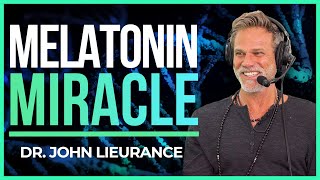
Interview (YouTube) of Dr. John Lieurance by Josh Trent discussing melatonin (broader roles beyond sleep), supra-physiologic melatonin dosing, mitochondrial/metabolic medicine, nasal/sinus health (Glutastat, meditation mist/Zen), delivery routes (nasal sprays, suppositories, nebulizers), methylene blue, NAD and mitochondrial support, breathwork/vagal tone, clinic Advanced Rejuvenation (Sarasota, FL), and products (Mitozen/Sandman, Glutastat, Glutamax, NADmax, Lumital Blue). The speaker mixes clinical anecdotes, patient protocols (30-day sinus protocol), and spiritual/philosophical reflections. Key claims: melatonin is produced in mitochondria and gut (much higher in gut), oral melatonin has low bioavailability (~2.5%), clinicians sometimes use very high melatonin doses (hundreds of mg; referenced studies with extremely high doses and low toxicity), nasal (Zen/meditation mist) and suppository/liposomal routes are used to improve delivery; glutathione and NAD suppositories used for slow-release/IV-like effect; methylene blue (Lumital Blue) as mitochondrial support/antiviral and historical antimalarial; sinus hygiene (neti pot, glutastat sprays, nebulizing) and screening for MARCoNS recommended. The content blends medical claims, clinical practice, product promotion, and spiritual commentary.
Chapters
All diseases are really rooted in one core issue, which is an energetic metabolic. It's the ability of the cell to derive energy from sugar and oxygen, basically air and sugar. And so this is either efficient or not efficient. And so when it's not efficient, there's a lot of pollution that starts to accumulate into the body. Melatonin, it's an absolute miracle molecule, for sure. We would not be able to enjoy life without this molecule. Every cell in the body, and it's there within a structure called a mitochondria. And the mitochondria is where rubber meets the road as far as making energy in the body.
Doctor John, welcome to the podcast.
Yeah, pleasure to be here.
It's been a minute. We've been looking forward to this for months. Yeah, you've become an Austin a lot lately. I have just friends, podcast business. What is it?
Just chilling, you know, hanging with Luke and you and. And Khalil and all the different people I've been meeting meet new people every time I come here. Amazing people.
You seem like you're a very social man. Would you consider yourself to be an extrovert or are you ambivert? Are you more of like an intro?
Yeah, you know, very rooted in an introverted past and kind of feeling like a flower kind of blossoming as I get older and kind of shedding some of those. I guess it's like you think about people that are shy, right? Is it really shyness, or is it more that there's some fears that we have that are holding us back from really just being ourselves? I think it's maybe the latter, and that's what's true for me anyway.
Yeah, I can relate to that. We were eating dinner last night with some amazing people, and I was telling them I'm in an identity crisis. We're name of the podcast, and the audience is going to shift and we're going to get new people and some people are going to go away, and it's like, well, isn't that the human condition, that we're always evolving, that we're constantly learning about who we really are and then hopefully authentically sharing that with people and not being full of shit. And one of the things I love about you is ever since I met you, I just felt this friendship. Very first time we met, you didn't have to be nice. You gave me some of your product today, which we're going to talk about. It's the meditation mist. It's change my relationship with Carrie, with the mother of my child, which is so beautiful. Anyways, you gave me all these products. I'm like, he doesn't even really know me. He's just being so kind. So I really appreciate you, man. I appreciate our friendship and the way that you've been for Wellness Force and for me. So it's really, really cool. Thank you.
You're very welcome. It's my pleasure.
So I've done many things in my life, and they've all brought me closer to myself, closer to God, but nothing quite as powerful as doing the meditation, mist, and breath work together. We just did some breath work before we recorded the podcast. We're gonna talk about breath and meditation and physiology and melatonin, which, by the way, is not just the thing that makes you sleepy. It has so many powerful things. You wrote a book, and that book is the melatonin Miracle Molecule. And it was so cool. Right. In the beginning of your book, you said, I dedicate this book to my mother, Pamela, for always supporting and believing in me. What's that relationship with Pamela like? How did that fuel your. Your book?
Yeah, it's bringing up some emotions, as you say that. Yeah, it was a bit of a troubled childhood in the sense that both my parents were really struggling with their own issues, right. And they were trying to navigate life the best they could, and troubled marriage, you know, a lot of arguing at home and just a lot of hostility, you know, and so they withdrew themselves quite a bit. And so we were kind of. Both my sister and I were kind of left, you know, kind of. I felt very alone, you know, a lot during my childhood. You know, my sister was usually in her room, locked the door, you know, and then my parents were, you know, as I mentioned, kind of dealing with their stuff. And so I kind of started to have a lot of, you know, issues with hyperactivity, dyslexia, learning disabilities, and I wound up into some special education classes. And so I became very alienated from not really the world. I mean, it was a very challenging time. But my mom was always there, really believing in me, and she stood by me even through some very, very difficult times that I went through as a child. And then as I got older and I started to kind of grow out of that phase, she was always there for me and supporting me, whether it's financial ways, helping me through school, so I didn't have to take as many student loans out, even though she didn't have a lot of money, just emotionally supporting me. And she's grown a lot. Right. So, I mean, from the days of me being a young Child where she didn't have the resources to really be there for me. She really came out of her own shell and she's been just an amazing woman.
Was dad part of the equation when you were growing up, too?
Yeah, yeah. My dad was a Marine, so he was. He was gone a lot. Right. So he was on floats or, you know, he was, you know, doing different activities, you know, in the Marine Corps. And, you know, he was, you know, kind of withdrawn a bit, you know, to some degree. He still is, you know, he's. He's a unique snowflake in his right. And I love him. We have a beautiful relationship. You know, it's never been the relationship I wanted with a father, you know, but it's been a very supportive relationship. And, you know, I think we get what we need, not always what we want.
Yeah, ain't that the truth. I can relate on so many front. My grandpa was a brigadier general of Marine Corps, so I understand that lifestyle of there's some rigidity to it, but in the world you operate in, there's both science and spirit. So, like, I'm sure that rigidity, that upbringing served you in some way, maybe from like a work ethic perspective.
Does your dad help you be the.
Great naturopath, chiropract, formulator that you are in some way?
Yeah, yeah, yeah. It's almost like I was a hippie growing up as a Marine, right? And so there's like, I've got this hippie and I've got this Marine in me. And I do think it's a bit of a rare, you know, a rare thing, you know, kind of balancing the art and the science. And that's always come really easy for me, kind of bridging the gap between, you know, those two. Those two, I think is. Can be very powerful in medicine.
You're really like a. I know you're not a shaman, but you have aspects of yourself that is almost medicinal. You're a medicine man, right? You're naturopathic training. You're a trained chiropractor. Advanced Rejuvenation is the clinic that you work at also. It's 15,000ft, right? The square footage of your facility, this is in Sarasota, Florida?
Yeah, we just moved into a very large facility. It's got enough room where we're going to create like an event center, and we're going to have apartments that people can stay at. A lot of our patients fly in and we do protocols that could be a week or multiple week protocols. The clinic side's finished. We finished that and moved into that literally just a couple of weeks ago. And now we're starting to kind of direct our efforts to start to build out this big warehouse, this 10,000 square foot warehouse into this amazing facility where we're going to be hosting some pretty amazing events.
The stuff you do there, maybe people haven't even heard of some of these things before. Rejuven, OxOne, IV Protocol, Loom Blue Protocol, CVAC, stem wave regenerative medicine, ultra guided stem cells, PRP and Prolozone. I mean, like, some of those concepts I honestly haven't even heard of. I mean, everybody's heard of stem cells. For people that don't know, like, what advanced rejuvenation truly is, how did that come through you? Like, was it a cumulative process? Were you like laying on the beach in Sarasota one day and you're like, let's name it advanced rejuvenation, let's do this. Like, how did the dream come.
Life.
How did the dream come to fruition?
Well, you know, I've gone through a lot of phases as a healer and as a physician. And you know, there's been times where I was completely focused on like, structural aspects of the body. You know, there was years where I was just completely just all about cranial work. Right. And then there's been times where there's been many, many years where it was just on functional neurology and understanding the function of the brain and then nutrition. And so there's just been these evolutions. And then it seems like over the last, I would say the last five to 10 years, it's all just come together into being able to put it all together into one center that is able to have unique. I mean, there's some fundamental things that we like to do with patients that are addressing some deep core aspects of all diseases, which I'd love to delve into a little bit. I call metabolic medicine. And then there's customization that we do with various patients to customize those, because some people need unique aspects of the care. Right? You're not going to treat a thyroid case the same as you might treat a gut case. And so we customize it, but we have this underlying understanding and philosophy that all diseases are really rooted in one core issue, which is an energetic, you know, metabolic. It's the ability of the cell to derive energy from sugar and oxygen, basically air and sugar. Right. And so this is either efficient or not efficient. And so when it's not efficient, there's a lot of pollution that starts to accumulate into the body. And when there's a lot of inflammation in the body, which all stresses are going to basically relate into some sort of inflammation. Right. And those that inflammation, there's a. There's a fingerprint of every type of stress and how it inflames the body. And those are a set of cytokines. Right. So like, a sunburn is going to have a different set of Cytokines than say, COVID 19 or say, like a parasite infection of your gut.
Right. This is the cytokine storm, but it's really just a release of unique cytokines.
Right? So the cytokine storm from COVID is like a very unique set of different cytokines, interleukin 6 and TNF alpha. So there's specific sets of cytokines in certain amounts that are going to be a specific blueprint of a certain stressor. So all of these stressors relate in the body and stress the body where there's cytokines that are released. And when those cytokines hit a cell, they can shift the energetics of the cell so that they make literally 90% less energy than it would otherwise make. And so this is how stress affects our cells universally.
Okay.
And this is going to tie into melatonin that we're going to talk about later. So definitely hang in there because this is going to blow.
Stick around, you guys. We're going to cover some ground today.
We're going to get into it.
So the advanced rejuvenation, obviously, it's like, duh, rejuvenate yourself, but advanced rejuvenation, Was that your idea? Was that your dream? Did you partner with someone else? Or this came through your own heart?
Yeah, this is. This is. This is my center. Yeah, so we have some amazing practitioners, you know, in the center as well. And recently I brought on a plastic surgeon who also has a long history with regenerative medicine. And, you know, he's, you know, he's doing some amazing spiritual work as well. So he's a. He's a good mix for us. And so we're kind of in the. In the very beginning of a bit of a partnership with this new. Because the center is so big, Josh. I mean, 15,000 square feet.
That's a big fucking place.
Yeah, yeah. We got some work to do, and.
People come and stay for one week, two week. What's the three weeks? I mean, what's the average range of time that a patient comes to you for each of these unique. I guess you could say energetic maladies. Right. That create the cytokine storms. And it probably shows up as all kinds of things. TMJ or tinnitus that we were talking about last night or some kind of structural misalignment or digestive issues. I mean, what are maybe the top three things that people come to you in advanced rejuvenation for, and how long do they typically stay?
Well, you know, so I believe that all diseases are rooted in either a chronic infection or toxicity. You know, so we have a lot of people that come into us. You know, we treat a lot of degenerative neurologic disorders. You know, a lot of vestibular disorders, dizziness. Meniere's inner ear conditions are a big thing.
Vertigo conditions as well.
Yeah. Tinnitus, hearing loss. We actually have this German therapy called lumamed that we do, and we utilize the lumamed, but we add a lot to it at our center. So it's not like what you would get in Germany. It's what you'd get in Germany. Plus, you know, some of the other things that we do, like the endonasal cranial releases that really help enhance a lot of circulation and drainage from the head and the ear. Because you're either a swamp or a river, right? So things are either draining nicely and you're getting good fuel delivery to the tissues, or they're not. Right. So you're either a swamp or river. You know, I like to use that term because I think a lot of people connect with that and realize that if things are swampy, they're going to grow a lot of bacteria. I mean, I'm in Florida, so we have the Everglades, right? It's not the cleanest water out there, but then you go to, like, say, a river in Colorado, and you have this beautiful, clean water. You know, this is going to be more of how you want your tissues to be, because there's more movement, there's more, you know, fluidity. And so a lot of healing modalities really revolve around improving circulation, you know, improving drainage, you know, acupuncture, massage, chiropractic, hyperbaric oxygen treatments, you know, rebounding, breath work, you know. You know, think about, like, we just did breath work, right? We're moving our diaphragm. We're, like, pumping lymphatics, like, big time. That's one of the reasons you feel so good with breath work is the lymph. The lymph flow. So. So, yeah, a lot.
A lot going on at advanced rejuvenation, and I can't wait to go there. Too. Because you seem to me like there's been a lot that's happened for you spiritually in the past few years from conversations we've had, and it's definitely impacted your business. And a good jumping off point, because we could probably go into a lot of different capacities of advanced rejuvenation. But I really want to cover this nasal delivery spray, and it's the meditation mist. So I've probably given it to, like, 20 friends now. Everybody's like, where'd you get that? And I'm sending them the link. So how did you come across this? You had an experience with plant medicine yourself, and you came home and something hit you. You're like, I want to give people this happy. And oxytocin. And you can talk about the formulations, sure. But what was the whole heart's intention? To bring this to the mainland and to have this be what it is now, which, honestly, I have to tell you, like, it is every single night. Carrie and I, for the past month, maybe even two months, we have a new altar in the room. We sit next to the altar, we do the meditation mist together, and we do our breath work, Actually, we breathe first, then we do the meditation mist, and we just put our foreheads on each other, you know, just like the Hawaiians do, and we just connect and we just talk where the baby's sleeping. And I'll tell you, it is the most beautiful experience that doesn't have any kind of addictive properties. First of all, how did you formulate it? And then second of all, tell us what it's doing from a biological perspective, because it's been so beautiful for us. It's been literally a nightly thing we do every single night.
Yeah, well, you shared that with me last night, and I feel really, really happy. And it warms my heart to hear that it's being used in such a beautiful manner. So hape is a Amazonian nasal snuff. Okay? So basically, it's a very special form of tobacco that grows in the Amazon. And there's different herbal mixtures that can be mixed with the hape. And so each one of our. We have three versions, right? So they're all a little bit different. We've got just kind of like your regular. We call it extra strength. And then we have an essential oil version, and we have one that's a CBD version. And so, you know, my first experience with hape, which is traditionally blown up your nose with, like, a straw, like, device in a powder, my first experience was it was absolutely horrible.
Yeah, it's pretty rough. I despise it. I can't do it personally. Yeah. I can't do it.
Well, I did it once. And like, that. That, literally, I've only done it once. Like, I haven't done it since.
I don't know how people keep doing that.
Yeah.
Anyways, so.
So, so it was awful. And I just. I vowed I would never do that ever again. Right. But then I was. I was doing a ceremony as a participant, you know, a few years ago, and. And one of the other. One of the facilitators had mentioned how much she loves Hoppe. She does it every morning. And I'm thinking, man, what am I missing there? You know? Because I thought it was absolutely awful. I didn't get the afterglow. I didn't get any benefit. It was just a terrible experience.
Yeah.
And so, you know, I was. I was actually on my way out to Hawaii, which, you know, that's. I grew up there. My sister's out there, my dad's out there. So I'm making my. My. My trip out to Hawaii for my. My Christmas vacation, Right. And so I stopped in, I did this ceremony, and then I go out to Hawaii, and she gave me some. And so when I went out there, I had. You know, I'm kind of hanging out at the house and just kind of getting stuff ready for the day. And I take this little vial out, and I put a little bit on the table. It was almost like I'm chopping it up. Like I'm, like, doing cocaine or something. I just do, like, a little bit, right? And inhale it through a straw. And it was just a tiny bit. And it was like, wow, okay, it burned, but it wasn't too overwhelming. And then I got the afterglow, and I really understood the power of this because, yes, it burned, but it wasn't too much that I couldn't handle. And I felt this centered. Like, I felt grounded and centered, and I felt really clear. And so we had already been formulating glutathione nasal sprays and some antimicrobial nasal sprays, one of which is called Glutastat, which we were selling online. And so, you know, already being in the business of making nasal sprays, I'm like, I can make this into a nasal spray. And I think this is going to be amazing. Yeah. And so that's how Zen was born.
And I've taken the Glutastat as well. I've shared with you, and my audience knows I've had tons of Sinus issues in my life. You guys don't know this, but Dr. John actually gave me a balloon sinus adjustment. I don't know the exact scientific term for that adjustment.
Endonasal balloon adjustment.
Endonasal balloon adjustment. And it was like all these little micro bones in your face that crack and quite an uncomfortable experience. But the way that I breathed for like a month afterwards and then I was doing the glutastat and it was like, it was tremendous. I mean, I can't, I don't know how else to describe it other than like, if you haven't, if you have issues with your nose and if you have issues breathing, you're the man. You really are. You have a lot of specificity and a lot of training when it comes to the bones in the skull and the way the nose functions and the sinuses. So before we get into that though, like, there's, there's something physiologically going on. The tissues in the sinuses are very open, right? And so when you spray the oxytocin and the really essentially plant medicine, right, the hot based plant medicine, what's actually going on? What is really happening?
So two things. One, it's the, the medicine itself, you know, is absorbed and you know, it has an effect in the body. And the other effect is through the actual burn. The actual burn actually does something, it matters. And so your trigeminal nucleus, I'm going to get a little technical here. We're going to kind of do some science. So your face, your sinuses, your tongue, the inside of your mouth, it's all innervated by something called the trigeminal nucleus, right? And so it's sensory. And so the trigeminal nucleus, if you look at the brainstem, it's the largest nucleus. I mean, it's this massive nucleus that's sits there in your brain stem. And your brain stem is where all the autonomics are. So your autonomic nervous system, which is consistent of the sympathetic and the parasympathetic nervous system. So we certainly don't need more sympathetic nervous system. We've got enough stress. So this is the fight or flight part of our nervous system. What we really want and what we really need is more of the parasympathetic nervous system. And so this is the resting and digesting, but this is also the part of the nervous system that we, that when we feel like grounded and we feel like more connected to source and we feel good, you know, and you're relaxed and happy and joyful and bliss Right. This is the parasympathetic nervous system. And so we want to support that. And so when we do the Zen nasal spray, it's a powerful activator to the autonomics and to the vagus nerve. And so the vagus nerve is the primary nerve that carries the sympathetic. The parasympathetic nervous system.
Yeah.
And this is also part of what makes breath work so amazing, because you had mentioned it before, it's a window into actual having some control over the autonomic. So autonomic is meaning it's automatic. We don't have volition, voluntary control over it. So this is something that we just rely on it just to work. Right. And behind the scenes. So it's beating our heart, it's allowing us to breathe, digest our food. You know, vasodilation or contraction, I mean, blood flow, all these things are happening. We don't have to think about it, but we can do breath work voluntarily and actually get an impact into our autonomics where we can strengthen our parasympathetic nervous system and reduce stress. And this is huge. You know, you think about stress as such a big cause of a lot of diseases. I mean, some stress is good, but when you talk about, like, the, you know, most people think mental, emotional stress, when you start wrapping your head around stress. Right. So we. We're kind of go, go, go. You know, that's kind of our thing. Right.
I mean, I would say we're the most go, go, go ever. And. And the rewards of that are actually like a decaying of humanity in certain ways. Yeah.
It's. Well, it's a movement away from the parasympathetic. Yes, it is. And this is where we feel connected with people. You know, like, you're not like, sympathetic is more like you're gonna fight somebody. That's not. That's not like, something that really supports, like, friendship and connection and bonding.
Maybe occasionally it's needed. Occasionally, but, like, fractionally it's needed. But we never want to live in that state.
No.
And in your work, you talk about the seat. You said the seat of the parasympathetic nervous system is actually vagal tone. It's strengthening this connection of the vagus nerve.
Yeah.
So breath work. I know when we created the Breathe program, there's four diaphragms, so we're pumping cerebral spinal fluid. We're pumping from our perineum. Like, there's a lot going on when we're doing breath work. So when we're pushing our diaphragm and those nerves, the nerve bundles that go up through the back of the spine into the head, I'm actually pushing on those nerves and that's what's connected to the amygdala. So talk to people about the seat that we're really talking about. The seat of the parasympathetic nervous system is vagal tone. But is it actually like toning a muscle or is it more like creating a efferent, afferent connection with the nerves?
So the way nerves work is it's that whole Chinese proverb, you know, the unused gate gets the rust. And so nerves require activation. It's like food for them. Right? So Neuro101 is fuel and activation. That's what nerves really need. They need a supply of oxygen and glucose and they need to be activated, otherwise you're going to lose them. The process of a nerve firing and it becoming activated actually stimulates proteins to maintain the structure of that nerve. And when you don't fire those nerves, you're going to lose them. So that if you don't use it, you're going to lose. It really does apply to nerves. So that, and so the autonomic nervous system and, and the vagus and the parasympathetics are no exception.
And the only way we can actually strengthen that. Is it physically like I'm so curious how you feel about this is because when we train in the gym, like when I go and do pull ups or when I'm doing the heat shock proteins from the sauna or when I'm doing, you know, the brown fat activation from the cold, those are things that I feel, but they don't feel like when I'm strength training or when I'm going for a run. Can we tone the vagus nerve in the same way that we would tone our muscles or is it a completely different category? It's really a different thing.
Well, so the strength of the nerve is going to be related to how often it's being used because it's going to be stronger and then it's also going to be building plastic changes, right? So in neurology we talk about plastic changes because you can take a piece of plastic and you can change the shape of it, right? And so in that same sense the nervous system can be strengthened by having more connections with other nerves. So it, so you think about like a young kid versus like someone like, you know, like older like us, right? So you know, they're, we're not that old yet. We're not, we're not. But you can compare, like, a baby to us. Like, so a baby has all these nerves, like, way more than we do because we lose them as we get older. But. But how much more functional are we? Like, we can get around and navigate things so much better. It's all because we have the ability to create new connections with the other nerves. So this is what starts to happen with the breath work and with the cold and all these different modalities that are strengthening the nervous system. It all has to do with these extra highways.
The inputs coming in are the most important thing. It's not the cause. I know there's eustress, there's distress, and then there's hormesis. So there's certain things that we get to experience as human beings that are really good for us, but they might be super uncomfortable, you know, like the meditation mist. It ain't that pretty for the first 10 seconds.
Yeah.
But it's so good.
Novel experience.
It's a unique novel experience.
Most important thing to create plastic changes in the brain is the more unique, the more novel, the better it's going to be. So the same type of stimuli may not be the best to do each and every day, because that's the familiar zone, right? So you have the familiar zone, then you have the hormetic zone, and then you have what I call like the, you know, the danger zone, Right? So you have this. This zone where it's like you're doing the same thing all the time. It's like you're not going to grow with that. And you can apply this to a lot of different, you know, situations, right? And then hormesis is like this, this sweet spot where it's like mama's porridge, right? It's just enough stress.
The Goldilocks zone.
Yeah. We get this net gain in health, right? But then there's a ceiling to the hormetic zone. So everybody has a ceiling. There's a certain amount of stress that once you exceed that, then it starts to become a breakdown to our body, and we don't want to get to that point, but it can be changed. So if you have a metabolic ceiling, like, let's say that you can only exercise a certain amount before it starts to become destructive, right? Well, you could probably do some conditioning where you can raise that ceiling. The same thing with the brain. You know, your brain has a certain metabolic ceiling where you can drive and learn and get all these great benefits that you want to improve your brain function. But there's a ceiling to the amount that it can handle at any given time that can actually be changed, like using things like methylene blue or ozone therapy or melatonin, you know, or some of these other types of, you know, nootropic substances. You can actually change that metabolic ceiling so that you can actually drive more hormetic changes in the body.
I feel with the meditation mist, something so much more powerful. And honestly, because of how sensitive my sinuses are, I can't do the hap. Anyways. I love that it's liquid, but the oxytocin is really cool. I don't know exactly why you put that in there. I mean, obviously we know that oxytocin is a feel good hormone. It's a beautiful way for us to bond. We get it with a six second hug. We've all heard this before and we've talked about it on the show.
Inflammatory.
I did not know it was anti inflammatory.
Yeah, it's great for the brain.
So did you put the oxy. What. What inspired you to match the oxytocin with the hop a and put it into the spray? Like, what, what was that?
You just make it. To me, it just made a lot of sense, you know, it was an intuition. Well, it's like, you know, when you're cooking in the kitchen, I think when people are good cooks, it's like they're preparing a meal and it's like you can think of something that would taste good in that and you know that it's gonna work before you even put it in there, right?
Yes.
It's like, you know, some lemon on that chicken is gonna be good, right?
Olive oil, salt and pepper.
Yeah. But then there might be something exotic where you've never tried that before, but you're like, yeah, that'll work. Cinnamon on that would be good, right?
Yes.
And, and it, and it does work, right. And some people have an ability to think in those terms and taste it before they taste it, you know, and, and I do art as well. Like I paint. In fact, at one point I completely walked away from my medical practice and, and did. Did art full time. Right.
How long ago was that?
That was after my second year practicing. Wow. I dropped out for almost two years.
Did you just like double clutch and flinch on. On how much work it would be to be a naturopath? Is that why you.
So there's this, there's this, this belief in my lineage that every fourth generation there's a famous artist. Right. And so, I mean, this is coming from the French side. And, and I bought into that thinking that that was me. And I. I had been working for another clinic in Paris, Texas. So I went to Paris to become an artist.
Wow.
So, you know, I love to say that, but they're like, oh, wow, Paris. That sounds really amazing. But it was Paris, Texas, not so not impressive.
Maybe the food's different. Yeah. Okay. So when you got back in and that path took you to now, looking back, could you have ever seen that you would go and do different plant medicines, bring spirituality into being a naturopathic physician? Did you ever even think that. That you would be who you are now?
No, no. No, I did not. You know, I. I was. I had breakfast with some close friends this morning, and I was talking about some of the spiritual things that we're up to, putting some things together. And one of the. One of the friends that was there, an ex NFL player, right. He just starts sobbing. And, you know, I could sense that it was tears of joy, you know, and we just had a moment of connection because I have been having moments on a daily basis where I'm just. I just start crying tears of gratitude, you know, because it. To some degree, I'm trying to get away from that feeling of like, I'm lucky, right. Or like, I can't believe all this is happening to me type of feeling, because then that's kind of pulling you away from, like, owning it, you know? And, you know, I think, you know, some pretty special things are happening in and around me, and it's been a lot of hard work. And there's also an aspect of how it's serving my community and other communities, and it's serving mankind. And it's. There's a selfless aspect of it that I think is driving it to become a lot more successful than it would be if it was more of, like, a selfish, selfish type of endeavor.
I feel that from you, and it's no surprise. I feel like this is common for a lot of people in wellness, in coaching, in service, even in spiritual and personal development. They've had to go through their own dark cave. They've had to go through their own.
Shit Face the Dragon.
They've had to go into the cave and get the treasure they've been seeking, you know, Joseph Campbell. So we might not have enough time for you to focus totally on it, but just so people know, not even with your academic credentials, but also on an energetic level, what you've been through personally, you had a mold exposure and toxicity. You also were dealing with. I believe it was when you get bit by the tick.
Yeah, Lyme.
The Lyme disease. So this is like. And it's not just from ticks. I mean, you can get Lyme from other sources as well.
Right.
But wow. I mean, for you to be able to heal those things.
Well, Josh, I didn't know what was wrong with me. I just woke up every morning. I had much so. So much pain. The inflammation was just ridiculous. And I was going. I'd go to the rheumatologist. Oh, you have ankylosing spondylitis. This, like, autoimmune disease. I go to this person, I go to that person. Everybody had a different story. I had nothing concrete to say, like, what's really going on? Yeah. And this. This went on for over 10 years, and. And I literally lost. I had to shut down my practice because I was just in so much pain. And, you know, my good friend Dan Pompa, you know, he always talks about his pain to purpose, and this was my pain to purpose story, you know, And I wouldn't change a thing. You know, it was perfect. And I'm sure there's a lot of people listening to this right now that might be in the middle of their own pain to purpose story, you know, And I might suggest thinking about, like, you're washing clothes, right? And you throw clothes, and it's in the middle of the cycle. You open the door and you see all this dirty water. Oh, it's not working, you know? No, it's in the middle of cleaning those clothes. Don't judge it in the middle of it. Yeah. You know, and that's what happens, I think, with a lot of people. So, you know, if you're in the middle of your own pain to purpose story and you're listening to this, you know, just realize that you're probably exactly where you need to be right now.
And to do your best to just be with it. Like, actually be in the water swirling instead of trying to clamor for the sides.
Right.
I remember Alan Watts, one of my favorite mentors. If there was ever one dude I would love to interview who's passed, it's Alan Watts. Are you familiar with his work at all?
A little bit.
And he was like, you know, life is about going with the flow of the water. No one floats by trying to hold on to the water. If you try to hold onto the water, it just slips through your fingers. But if you just allow yourself to float, even if you're in a crazy storm, you'll eventually be on the right shore.
Well, this is the work that my dear friend Michael Rice teaches He studied the Aramaic Bible and he came up with this amazing technology that he felt that Jesus came to give us, which is this forgiveness process. And he by incidentally was doing breath work 40 years ago. He calls it still point breathing. And he would facilitate this breath work with people and take them through this process of deeply forgiving, what I call a filter. So we have filters how we filter our reality based on these unconscious belief systems. Right? And so these belief systems are basically driven by goals. So we have goals for all these different things in our life, which is what you're talking about, Right. So if we were to be flowing with life, we would drop our goals, would cancel our goals. And he talks about this. He says, you know, if you're, if you're, if you're not in balance, like let's say you're in an argument with your wife, you know, she disrespected you. Whatever, whatever. You have a goal for her to respect you, right? You cancel that goal. Right? You cancel that goal and you drop into what's real for you, because it's not about her. If you're angry and hostility is coming up for you, that's inside of you, instead of projecting it and saying, she made me angry, you're going to actually go inside and you're going to cancel the goal you had for her and go inside and find out like, where's that actually coming from that's bringing up that negative emotion and forgiving that, not letting it off the hook, which is someone else, you know, like that. That the idea of forgiveness for most people look at is they think they're going to let somebody off the hook. Yeah, but it's an internal job, you know, you let somebody off the hook, it does nothing. Right.
I used to think of forgiveness as like, if I forgive, then the other person wins. That was like the, the less evolved version of me.
Exactly.
If I forgive somebody, then that means they win.
Right.
But who gives a shit? Like, we're not supposed to be at war. You know, our natural state is, like you said, being in the seat, the parasympathetic. I think that's how we were born to be. But we catch ourselves being in the sympathetic, which is that fight or flight because of we're all trying to hold 20 pounds of water in a little paper cup at all times. And it just. We wonder why we have all that stress spill over and it creates dysfunction and disease. I mean, me personally, where I'm at in my journey is I'm carrying extra weight right now and I'm doing all the emotional work and I have my sauna and my cold tank and we're by nature and I'm doing all the things, but I'm actually like to sit here with you. I'm really excited about whatever it is because whatever it is, it is what it is anyways, so bring it. Like I'm ready for it.
Right.
I don't know if I'm going to find the answers to what I'm seeking in a ceremony or with a friend. Sometimes I find the answer is just through being a father to my son. Nova. But whatever it is, like I'm in that washing machine too, that you talked about. And for those of us in the washing machine, and I think there's some times where we go out of the washing machine and we feel good for a while and then spirit puts us in another washing machine. Right. Whether it's like we just get continually washed. So to support us while we're there.
Yeah, you're being cleaned, we're being cleaned. Just relax and go with it.
Even though it feels like you're on a spin cycle sometimes. But when we're. When we're in these places, like, for me, like, supplementation lifestyle, it's not just huge for me right now, it's actually how I make it, it's actually how I function. And so for people that don't know anything about melatonin and how it can support somebody in the washing machine, specifically somebody who's dealing with, let's say, chronic stress, that constant drip of stress, or maybe they have a chronic disease which is then elevating their cortisol and keeping them in the sympathetic. For. For people that know melatonin as just the sleep aid. Tell us, tell us what the myths are about melatonin. First, like, what are people getting wrong about melatonin? And then we can start diving into the different layers of melatonin.
Yeah.
What do people get wrong about it?
Everything. Everything. All right.
You're all wrong.
Yeah. So we need to, like, take and just go clear the slate and just forget everything you thought you knew about melatonin and let's start fresh. So melatonin, you know, it's an absolute miracle molecule, for sure. We would not be able to enjoy life without this molecule. Every cell in the body makes it, and it's there within a structure called a mitochondria. And the mitochondria is where rubber meets the road as far as making energy in the body. You know, this is where oxygen and glucose are converted into something called ATP, and this process of making this energy is a chemical reaction. And it has four complexes, right? So there's four complexes. And that's going to make sense later when we start to kind of like, add in some information about methylene blue, which I hope we have time to kind of get into. But the mitochondria's job is to move electrons, and in the process of moving electrons, it produces heat, right? And so if you think about, like, burning coal to burn to make heat, right, you're going to have a lot of soot, right? So the same thing happens in the body is when we make energy, there's soot in the form of oxidation. And we need to either minimize the amount of oxidation that we make or quench the oxidation that we do create. So what the melatonin does is it actually works on both sides. And when we overheat, melatonin's there to calm things down. And melatonin is the primary antioxidant in there that quenches the oxidation. So it's basically soaking up all of that soot for you in every mitochondria, in every cell in your body. And it's also one of the most important things for your gut. And for a healthy gut, there's 400 times more melatonin that's secret created through your gut than there is through your brain. But you asked me, like, what are some myths? I know what a lot of people are thinking is like, okay, is it dangerous? Right, so we'll get back to the gut in a second. But is it dangerous? Absolutely not. They did studies where they were giving what would be equivalent to 150,000 milligrams.
This is the physiological dose.
Yeah.
What's the term of that? When they go super high with the doses?
Super physiological dose, we're talking about super, super, super, super duper.
Got it.
150,000 milligrams. And they basically stopped the study. And they said, we just don't see that melatonin has any toxicity at all.
Typical range is 2-10mg for most people, typically.
So wrap your head around that 2 to 10. And then what we're promoting is for people to take much, much more than that, because we're talking about using melatonin as a support for more than just sleep. And so what if melatonin was indeed the ultimate stress resilience molecule? What if it allowed you to buffer stresses better? And maybe we have more stresses in today's world than we were adapted to deal with? Right. I would offer that we do, I.
Would think unequivocally, we all would say yes to that. Right. Even if you looked at our ancestors and the way that they had to work, maybe longer hours, but then they had more access to clean air and sunshine and work. So we all have our own struggles. But I would say just on a. On a macro level, if you go really high in the sky, we are fundamentally health, wealth, relationships, mental, physical, emotional, spiritual. We're all challenged in those buckets more than we've ever been, for sure, because of what's happening with the awakening and what we're experiencing. So I would say yes.
And then we got the graph. We talked about that before we started recording. Right. I mean, you look at the melatonin graph, what happens to melatonin secretion as we get older? It drops dramatically. And although you can do a lot of hacks, okay, you can go and change the light and we can get into all those things, you know, changing the light in your house so you don't have as much green and blue that's going to inhibit your melatonin. You know, I think all of that is going to be really important for the circadian rhythm because you. You want a nice, strong circadian rhythm to be really healthy and robust. But as far as melatonin secretion, if you are just going to rely on your body's own secretion of it, you're probably not going to be able to navigate this world as robustly as you could otherwise.
How so? Can you go into that a little bit? Because that's a big statement. Most people think of tiny 2 to 10 milligram doses as enough, but this isn't about just sleep. This is about the other. The immune properties. Yeah, the healing properties, cleaning out the soot.
Right.
All that stuff. This is the things that people don't know. They just don't know. They don't know. I didn't know it before I read your book.
Yeah, Right. So let's circle back. So in the beginning, when we started talking, we talked about how stress produces cytokines. And the cytokines, it's basically, it is inflammation. Okay. And so that inflammation causes a shift in the way that the mitochondria makes energy from the electron transport chain, moving electrons to. It shuffles into the cytosol, which is outside of the mitochondria, into anaerobic glycolysis, which is also called the Warburg effect. And this is how cancer makes energy. And Otto Warburg actually won the Nobel Prize for discovering how, in essence, how Cancer shifts its metabolic way of making energy. But this happens with all cells when they're under enough stress from cytokines. This is how people die from COVID 19. This is how people will die of pneumonia from any viral infection. I mean, this is just how it works. So when you exceed the amount of inflammation that the cell can tolerate, it shifts to this primitive form of making energy, which is only about 10% of the amount of energy that you would otherwise make. And so if you're fighting a battle of infection, you're going to lose because all of a sudden you lose 90% of your troops overnight. You're done. Right, so this is why if you supplement with melatonin, a lot of the hospitals had started using melatonin, high, high doses, I mean, even up to 400 milligrams for Covid. And so you start to look at some of the research that was done on like Ebola and some encephalomyocarditis viruses and a lot of very, very dangerous infections, and the survival rate going just dramatically higher with the group that was given melatonin. This is because when you give exogenous melatonin, you're able to switch that back to the way that it makes energy, because normally the melatonin's in that mitochondria to prevent this shift. Right. But then you only have so much melatonin, but then if you give it exogenously, meaning if you take a supplement, you can actually go and quench this whole system and reboot it and the receptors.
I don't know if this is even the same conversation, but what I've learned about like different hormones and receptors is that there's a lock and a key for all of them. So if you supplement high dose melatonin, you're not going to become dependent on this. Yes. How do you eventually get back to homeostasis?
This is what's fascinated me is almost all hormones in the body have this negative feedback loop where if you take it, you down regulate receptor sites or the body decreases the amount of, of the hormone that it's secreting. Right. So that's the negative feedback loop. Testosterone, estrogen, progesterone, all of these hormones have it. Cortisol, but not melatonin. Not at all. In fact, you can take thousands of milligrams of melatonin if you want.
Don't drive a car.
Listen, we are not giving medical advice here. We're just having conversation.
Yes.
And so if you are seeking wisdom.
Here, we would just like wisdom.
Yeah. If you are looking at starting a melatonin regime, I would recommend that you see your healthcare provider and let them guide you. Okay. With that said, it is theoretically possible to take thousands of milligrams of melatonin for multiple days or weeks or months and stop abruptly and secrete the same amount of melatonin the very following day as you would otherwise secrete. Because there's just, there's just absolutely no negative feedback loop there.
It's so powerful. And one of the things that I see when I look at my Oura ring score is my deep sleep. And it was interesting because in some of your literature for Sandman, which is the product that we're talking about with the high dose melatonin, there's some other things that you can share too. But a scientific deep sleep study showed that the glymphatic system was most efficient during deep sleep. Getting too little deep sleep prevents glymphatic clearance, which can cause neurological diseases. Basically, your neurons will be swimming in their own excrement without adequate deep sleep.
Yeah, when I read that stuck in the, in the, in the machine, I.
Was like, oh my God. No wonder when I don't get enough deep sleep, I literally feel dirty in my brain. My brain feels dirty. It's because these neurons are swimming in their own excrement.
Right?
I mean, that's potent. Can you share about that?
Well, so, you know, it's like they're caught up in the, in the, in the, in the, in the clothes. Right, the clean cycles. Yeah, the dirty water. But so, yeah, you're either a swamp or river. So there is a detox mechanism that the brain has, which is called the glymphatic system. And the primary activation of the glymphatic system is deep sleep. And so it's really important. And they've started to realize that poor sleep and the glymphatic issue is one of the primary reasons that a lot of patients with degenerative neurologic disorder start to accumulate a lot of these proteins. You know, like Parkinson's, you've got alpha synuclein, you know, Alzheimer's, you've got beta amyloid plaques. Right. Traumatic brain injuries and tbis, you've got that tau protein that builds up. So all of these proteins are really normal proteins. So you start to look at them as like, okay, that's the enemy. And that's what the thrust of a lot of science has been up until, I think more recently is like, you know, how can we clear these proteins out and prevent them from being produced but they're actually reacting to more commonly toxins or infections. And so then you have the aspect of, of an individual that might have an infection or have toxic exposure that doesn't get sick. Right. Maybe it's because they're sleeping normal. Right. So you start to get these different variables and it's important to start looking at these things for each individual because you know, some people could have the ability to weather, you know, a toxic exposure or an infection in their central nervous system if they're sleeping properly, but if they're not, all of a sudden you have someone that's got like a real recipe for disaster.
It's like completely logical for me that if you, if we're a river and our river is clogged, then there's absolutely no way that these processes that are naturally about clearing could ever function. We can't ever clean ourselves if we have a dirty brain.
Yeah.
So when I read that, I was like, oh my God, how do I get as much deep sleep as I can? And by the way, how much is optimal and how does melatonin play a role in that deep sleep and actually it occurring?
Yeah, you know, seven to eight hours I think is optimal with overall sleep. And then, you know, an hour to two hours of deep sleep is optimal. The high dose melatonin is not the end all, be all answer to sleep. Right. So you'd think that when you start getting. So we, we, we manufacture a, a few different melatonin suppositories and also in a liposomal and they're, they're, they're under the brand of Sandman. And so it's a good song too.
Mr. Sandman. Is that why you, that's why you did it? Okay.
Yeah, yeah.
Bring me.
Go ahead. Uh huh. So, so melatonin for sure really helps in sleep onset, you know, latency, there's no doubt about that. But it's not necessarily the end all be all to keep you asleep, you know, throughout the night. Although it can help in some individuals more so than others. It's one of those things that you really should be tracking your sleep and you try it. You know, you want to basically experiment with different things that are going to work for you because we're all a unique snowflake and like we're going to respond differently. But I think it's a good, if you're having some sleep issues, you know, I wouldn't be afraid of going above that 10 milligram mark. We're in our clinic, we're using, you know, 200 and more milligrams. And so oral melatonin, also, as a side Note, is only 2 1/2% absorbed.
Wow.
And that's what the. That's what the research shows. So very little of it even gets. So you're talking about taking, you know, two, three, four, up to 10 milligrams. But in Ann, you're only getting two and a half percent of that. It's a very little amount.
Where's the other 98% going?
Well, the liver breaks it down and then it tries to put it back together on the other side, but it only puts so much of it back together, or the gastric juices basically just destroy it. So some nutrients are more fragile than others. And so, like polyphenols, like resveratrol and turmeric, and some of the other polyphenols that we're using in our fasting protocols to accentuate the autophagy and the senolytics and so forth, like fisetin and sterile stilbene. And, you know, these things are not very well absorbed orally because the gut breaks it down and the first pass through the liver. And so that's where we start to get into a suppository route of delivery where you bypass all of that. And so besides bypassing the gut and the first pass to the liver, you have the concept of peak plasma, which is really important for people to understand, because ultimately, what do we want? We want that nutrient in the cell where it can do good for us. Right. So otherwise it's going to be in your toilet bowl.
Yeah. It's just a way. It feels like a big waste of money, actually. And it is to just do so. I'm never going to take it like that again then. I mean, really? I've heard the same thing about CBD as well. When you take sublingual cbd, you lose half of it or more.
Oh, yeah, yeah, yeah. So when you take a substance oral, think about peak plasma is basically, it's in the blood, and the cells have a certain amount of time to pull it in. Right. So it's in the system. It's kind of like flowing through that area that's outside of all your cells. Right. The plasma. And so if I take, like, say a CoQ10, and I take a CoQ10 and I look at the blood levels, every five minutes, I'm going to see a curve and it's going to go up and it's going to stay probably for maybe an hour. And so we digest this pill orally. We have peak plasma that lasts an hour. Our cells have an hour to try to pull as much of that CoQ10 in as possible, and then it's gone. And that's it. Where if we were to take the same amount of CoQ10 in, like, say, a product like Stemzen, we have a amazing product called Stemzen, which really supports stem cell survivability. We use it in regenerative medicine and post fasting because you release all those stem cells and you want as many of them to survive as possible. And so Coq 10 and something called fucoidin, which is a brown seaweed extract, is really, really powerful for that. So this suppository stem Zen, it has a high amount of CoQ10, but it's released over five to seven hours. Right. So you can imagine the cells have all that time to pull it in. Like, if you were to soak black beans for an hour, how much water are you gonna get in those beans compared to 5 hours or 7 hours?
Most people soak them overnight, right?
Yeah, yeah. I mean, it's almost gonna do you no good, right? Yeah, yeah. So this is the whole idea of using a suppository. When I was sick with Lyme disease early on, it was these glutathione suppositories were just game changers for me. I actually felt so much better. And so we do have a line of glutathione suppositories as well, called Glutamax, which are phenomenal.
Why would someone use those specifically? Because right now we've been talking about the melatonin suppositories for the long release, for the rapid absorption, for the healing properties, for the immune, for all the deep sleep propagation. But why would somebody do nad and also the other. Why would they do those in a suppository fashion?
Well, because glutathione has, like, very little, if any, absorption orally, because of the reasons we talked about before. And NAD for sure doesn't. So there's this whole idea of, like, the precursors, but how much of the precursors are actually getting through, you know, and that's why we formulated, like, the NAD max, you know, which is both a suppository and a liposomal. But we, you know, I was looking to create something that would take and supplement the IVs that we're doing. So we do IVs in my clinic for NAD, and when we started doing that, we were one of the first clinics to start doing these NAD IVs, but they're uncomfortable. And they last for many, many hours. And so people have to sit there for quite some time, take time out of their life. Where if you do a suppository, you have almost the same amount of dosage in that suppository. And you know, it's so easy to put it in. It's like, you know, you don't even know it's there. And you're cruising around for the rest of the day and it's like you've got an IV to go. And so that's what a lot of these, these products are really designed to have a much higher absorption rate and a slow release over time. And, you know, if people haven't tried a suppository before, it's really no big deal. Like, it takes two seconds.
Some people are weird about the butt. And I'm like, come on, we're human beings, people.
Yeah.
Like, let's be mature here.
Yeah. Right.
It's all good.
Yeah.
Just put, Would you have coconut oil you put on it or how do you, how do you do it?
Well, they're, they're, they're, they're kind of self lubricated because they're made of palm oil.
Great.
But, you know, I, I would say, like, there's, there's two types of people that are going to be like, listening to this and just be like, absolutely, I'm ready. Let me, let me, you know, I don't, you know, I'm fine. Is either the people that are really suffering from like some serious chronic issues.
Yeah.
And they're desperate. Right. Or there's going to be some people that are like, you know, you know, they're just more open. Right. And they're, they're looking to maximize their health and vitality in this world. Right. And be more of service to others and you could get over it, you know?
Yeah. It's literally just our butt, like where we all. Everybody poops.
There's a book.
Right. So I love this because you could have only, you could have only come across this delivery medium because of what you do. Because you work in a clinic. If you didn't do what you do, you would have never come up with, I'm guessing, oh, I can give them an IV to go. That would have never occurred to you.
Right? Right.
No, this is over thousands of hours of working with thousands of patients where you're like, how do I give people what they need in a way where the medium serves their lifestyle to where they don't just have to sit with a catheter. In basically.
Well, there. There's also. There's also the aspect of like, you know, trying to fix myself too. Right. So it's like I'm like thinking, oh, this would be really great to do personally. Right. And so that's driven me to, you know, because the Zen, like I wanted something for myself, you know, so if it was something that I found a lot of utility with, certainly a lot of other people are as well. Yeah. And then, yes, that clinical application is really, I think, been a big game changer because it's like, it's like it's one thing to have a certain nutrient and a certain delivery method, but then it's like it's a whole nother thing on, like, how do you use it? Like, what are ways that you can use it? Like the travel Hacker Kit, you know, it's like using some of these products to like hack the salt and solve problems with traveling, like the circadian rhythm issue. Arriving fresh and feeling good with like super high doses of NAD while you're flying, or cbd. And a mutual friend of our, Cal Callahan, he just flew to Africa and he messaged me when he got out there and he's just like, I can't believe how good I feel. And he was using the sandman every night while he was out there as well. But I came up with that again, selfishly, because I was going to. From Florida to Hawaii, you know, all the time. I was going three, four times a year, incidentally. I really haven't been out there just because it's getting a little weird with COVID out there.
It's kind of weird.
Yeah.
Yeah. It's an uncomfortable time. We're still swimming in an uncomfortable water as we go through our own washing machine of uncomfortability. Like we're. There's a collective washing machine and then there's like a personal washing machine that we're going through. And, you know, all these tools and all the things we're talking about, like all these things directly relate to our physical health. But the conduit of emotional, spiritual and mental is physical. If my conduit is misaligned or I don't have homeostasis in my conduit, well, how can I give and receive messages that are loving? How can I live in a way where I can be fully expressed with my partner or show up to my family or my work or my purpose, like it's a big deal. And yeah, food is really important and so is movement. But for people that, like you said, are dealing with something chronic And I would say, as a society, we're dealing with chronic disillusionment. Really, I feel like we're disillusioned chronically. We've been that way for a couple hundred years now. And that reflects personally to us because then we show up disillusioned in our relationships, that we're separate, that you and I are the same, that we're not built from the same source, and it's all just a bullshit lie. And so the more clean we are in our body, the more we can have loving connection and conversations. But because our conduit's clean, when the conduit's dirty, it's like, good luck. Good luck trying to connect with people and connect with yourself. So going back to the physiology of the melatonin, I used to think the pineal gland was right here, but it's not. It's actually in the center, right? So it was funny. Speaking of the COVID bullshit, I would go to restaurants and they would be like, let me take your temperature. And they would try to put the gun right here. And I was like, hell, no, I don't want that in my pineal gland. But I was wrong. That's cool. Tell people the structure of the pineal gland and what it actually does for melatonin, what the feedback system looks like, and really how to, like, protect and nourish the. The pineal gland. How do we do that? What's melatonin's role in that? What's our role in that pineal gland?
What an important gland, right? So Russell Ryder, he's an MD and a PhD in the 1960s. He's actually a good colleague of mine. You know, I'd like to call him my friend. He, he. He was the first one to actually discover the pineal wasn't just a worthless gland, right? And then it secreted melatonin and it had a lot to do with our circadian rhythm, blah, blah, blah. And so he, he went on to become one of the most authored researchers in melatonin. He's a big resource and has been for me for a while. So the pineal gland, there's so many different things we could talk about with that. There's a conversion of tryptamine and tryptophan through the pineal to melatonin, and then it can be converted into something else called DMT as well, and they call that the spirit molecule. So there's some consciousness applications to looking at the pineal, whereas the way I understand it is that there's the cerebral spinal fluid that circulates around our brain and spinal cord, basically carrying nutrients and keeping all of those structures healthy. It terminates in what's called the third ventricle. And right behind the third ventricle, you have the Pineal. And so the pineal, if you look at it, has all these crystals in it. Right. And so it can become calcified as well. So we have to be careful. Like, fluoride's the biggest culprit. So you want to make sure you get a filter for your house, and you don't want to be drinking municipal water, and we don't want to be using fluoridated toothpaste and all those types of things.
Right, yeah.
And, you know, and for those really that want to dive into this, you know, the book has a lot of great solutions on how to take care of your pineal and different supplements you can take. And so.
And that book is@the wellnessforce.com store, or you can just go to melatoninbook.com but there's a discount code in the store if you guys want to dive in, because we're going to be able to scratch the surface of what you're talking about, but we're not going to be able to go to the bottom of the ocean here. So if people want more resources, just.
Go to the store.
And. And the book is there. The Melatonin, the Miracle Molecule.
Yeah. So those crystals in the Pineal, they mean something, right? So, like, you know, a lot of people don't realize this, but a lot of our watches, the way that they're powered, is that there's a crystal in the watch and there's pressure on the crystal. And the pressure on the crystal causes electrons to start bouncing around.
Is it the pzo. Piezoelectric.
Pziolectric.
Piezoelectric.
Yeah, yeah, yeah. And so the same thing happens with the Pineal, and that's what's happening with some of our breath work, is that we're putting pressures on that pineal through.
The cerebral spinal fluid.
Spinal fluid. Yeah.
I always wondered about that. So breath work is literally making our pineal gland healthy.
It's turning it on as if there.
Wasn'T another reason to do breath work.
It is making it healthier, and it's also creating a piezoelectric effect, which is basically energizing the pineal, turning it into a radio receiver so that we can actually pick up on things outside of our sensory system. Right. So, like, if you're sitting in meditation and you start to feel like one with everything, you start to feel love and just gratitude, you know, those are senses. But it's not through your sensory organization organs. It's not your sight, sound, feel, touch, smell, you know, it's a sensory experience outside of that. And so the pineal is like this other sensory organ. And so you're able to pick up. And that's where some of the aspects of this conversion and dmt, I think are opening up gateways for us to perceive a different reality, right? A reality where we are connected in that vertical, that other vertical dimension versus this horizontal dimension where time is on a linear, right? So it's like we have all of the events that are happening over time is basically like in a horizontal plane, right? Where, you know, and this is starting to get kind of more into the deep spiritual, you know, discussion. So we look at these experiences that people come back from in medicine, journeys or deep meditations where they're like, oh wow, I just felt like everything was like so vast. And they just had these experiences of just one with everything. And so what that is is it's this vertical moment where everything is happening in one now moment versus things happening linear in a horizontal moment, which gives us the illusion of time.
And also speaking of disillusionment, like sometimes when I am looking for the next greatest thing or like what should I be doing next? All the answers exist right here when I just sit in my studio and meditate in front of the joov light, right? The red light. Therapy.
Did you ever hear. Sorry to interrupt. Did you ever hear like the Heart Math and Institute? Of course they did these studies and they found that the heart knew the future. Like the heart literally, they, so they would take images on a computer completely randomized, right? And, and so they would have like a picture, they could have a picture of like a murder scene, right? Or they could have a picture of like flowers, right? And so they would have a certain effect to the autonomic. So now that we've talked about the autonomics, people are going to basically really pick up on this. So if there's a sympathetic response based on like a gnarly picture like, of.
Like a, like a murder or violent.
Versus like a parasympathetic effect, like a beautiful landscape or something like that, they can pick that up with being able to sense the reaction of the heart versus the brain because they had them hooked up, right? And so that they found that up to 20, I think it was 20 seconds before the image came up, the heart knew. And so they, they, they concluded that the heart seems to be the real brain and that it transcends time and space. And this is real science.
We're going to search that study and if Lauren can't find it, we're going to get you to put it in the show notes because that's potent.
Yeah, I love good stuff.
And I've heard of the mirror neurons in the brain and the heart. I've also done the heart math protocol many times. I've worn the ear device and I've breathed and watched the response right there on the screen. And so I'm aware of that like, coherence breathing that they talk about, but the way you just described it, where the heart could literally see what was coming, I've never heard of that. And that's absolutely fucking inspiring.
Yeah.
And beautiful.
Yeah, it's really cool. It's total truth. Yeah. They believe that it's much longer than 20 seconds too. Like they think it might be up to a day or more. So follow your heart. That's the message your heart knows. Get out of your head, drop into your heart.
But we get stuck in our heads, Dr. John. When our conduit's dirty, we do, we get stuck in the head.
If you have too many goals, you.
Have too many goals. We have too many goals. And then also what hit me is I was like, I was thinking of the book Letting Go. And he talks about the greatest space in all of time is the space between our head and our heart. It's the largest space for us, but it's actually only like a foot. Some people even less. And I really think about how silly we can all be, myself included. When we choose. I choose to get stressed out over things that I can't control. And I think about how that puts me. I feel how that puts me into my sympathetic. And so sometimes it takes some kind of exogenous piece or some kind of supplementation to get us back to center, to get us back to homeostasis, to get us rooted again. And so when you look at the NAD and the melatonin and all the different things that you provide to people, what's the through line? What are the 1, 2, 3 things that most people that are out of homeostasis would really benefit from?
Well, on the top of the list would be melatonin. And going, like we said, we talked about super physiological dosing not being a medical concern. Right. Again, talk to your healthcare practitioner before you try anything new after that. I would. You know, I start all my patients out on a 30 day sinus protocol. You know, I find especially now, like, I mean, if you're really wanting to, you know, think about the internal mask, right. Where everybody's talking about the mask. Right. And the external mask, but the internal mask. Right. So if we want to have a situation where we're less susceptible to things that are in the air, then we don't want to have a sticky biofilm in our sinuses that's going to attract it. Right. So it's going to be like flypaper grabbing everything that's in the air. And so by taking care of your nasal passages and your sinuses through sinus hygiene, then you're going to have less likelihood that you're going to get sick. You know, there's. They've done studies on this. Right. And so, you know, Glutastat's a great product for. As an antimicrobial and to cut down on biofilm. And so using it for 30 days makes a lot of sense.
Is that like after a sinus rinse or before a sinus. After a sinus rinse.
So the way I like to do it is I'll do a neti pot in the morning and. And I'll even put, like, a little bit of iodine in. In with the water in the neti pot. Or sometimes I'll put a little bit of colloidal silver, and you can even. You can even pour a little bit of glutastat in there, too, which is like, if I'm sick, like, I'll. I'll actually pour a little glutastat. I'll put all of it in there.
I heard a few biohackers talking about xylitol. Putting xylitol in the water as well. Have you experimented with that for science?
That. That's. Xylitol has antimicrobial effects as well.
You could do like, some xylitol.
Yeah.
Some really clean water that's been.
Yeah.
Really boiled.
You do put xylitol in your water at your house and you do it in a nasal wash, you're violating some patents. Just. Just keep.
I don't know.
A lot of people care, but.
Right, right, right.
But, yeah, it is patented, but, yeah, you could. You could do all of that. Absolutely.
Well, that's close to my heart because, knock on wood, I've had really great sinuses. Yes. I think the adjustment you gave me with the balloon and also using the Glutastat has been great, but out here in Texas, people get this, like, cedar fever and all these respiratory issues. I haven't had it since I've been out here. So I really believe in sinus care. There's an entire module in our Breathe program that this is going to be a great educational piece. We'll take some of this interview and put it into the program. Because people that can't breathe through their nose, they can't really do proper box breathing.
Right, Right.
Inhale, inhale, nose, exhale, mouth. And also, if you look at James Nestor's work with breath, or even Dr. Belisa Vranich, she wrote Breathing for Warriors, or just anybody that does breath work or that teaches breath work, we have to have the nose to breathe properly. If people have a nose that clogged, then I think you're right on the money. Dr. John 30 days of sinus care.
The other thing is a lot of people are carrying, like, infections in their sinuses, and there's some really nasty ones. Like, there's one called Marcons, which is really what got my attention with, you know, I had Marcons and How did.
You know you had it?
I tested it. It's a nasal swab.
Nasal swab.
And anybody dealing with any, like, significant health issues should definitely go to their doctor and request to test that it's a nasal swab. I think it's like 150 bucks to the patient. And if they have a hard time finding a doctor that'll test them, then they can reach out to me because we do work with people distance anyway. So you test it, and it's very difficult to get rid of. Typically, they do what's called a bag spray, which what I really don't like about the Beg spray spray is that it has gentamicin in it, which is ototoxic. And it's just you do not ever want to put gentamicin in your body, you know, because it's just so toxic to your inner ear. I don't even know why that's still on the market, to be honest with you.
Well, I am just, like, having a surreal moment. I had chronic sinusitis as a child and as a teenager, and they gave me amoxicillin or amoxicillin and gentamicin. And I have ringing in my right ear.
That's what it is.
I have severe tinnitus.
Yeah, that's it. That's it.
That's interesting.
Yeah.
See, these are the things that people don't talk about. And the pharmaceutical company has even tried to patent melatonin, which you talk about in your book, and they weren't able to. So the ways that that sinus Impact our body, our health, our life. It's tremendous. It is absolutely tremendous. And I feel like I really have to lean more into the education of the sinuses and sinus care and sinus health, honestly, because I was Even talking to Dr. Ben lynch about this and he had a friend that had mold and he had fungus, severe fungus infection in the sinuses.
And think about, you talk to a cocaine user and you ask them what's the quickest route to the brain? It's through the nose. So if you have stuff growing in your sinuses, you can just imagine how neurologically that's going to show up. So you want to talk about, you know, issues with the physical body and dealing with consciousness and happiness and all of that. You know, that that really makes a great argument for people to really start paying more attention to their sinuses. For sure.
So when you get in there and you work with patients for the first 30 days, what do you typically hear from as far as feedback when they're going through the 30 day period of sinus care? And what does it look like? Because you started and I kind of pulled you away from it. Yeah, but you started with the actual wash and then giving them the glutastat. Where else do they go in that first 30 days as far as sinus care?
Yeah, so, well, the neti pot or any irrigation. And then you would put the glutastat in there because you want to leave that medicine. It's basically all essential oils. It's got some glutathione, nac and some various terpenes. But so, and I'll usually have people dose that four times a day, you know, and you can just take it with you, throw it in your pocket, you know, couple sprays each side, you know, three, four times a day for, for a month. It's that simple.
Great. And that's the care protocol really for the sinuses.
Now if people have more of a challenge with like lung or if it's deeper in the sinuses. So your nasal passage and your sinus are separate. Right. So the nasal passages, you know, from the nose to the throat, but then your sinuses are off branches up into the bones of the skull, and so they're harder to get to. And so nebulizing, nebulizing is where a machine puts a liquid into a fine mist and then you can breathe that in. And so glutastat comes in a, like a dropper bottle that can, you know, a lot of healthcare practitioners will have their patients put that in a nebulizer and that accesses the lungs a lot better and you can get into the sinuses better. So on more difficult cases, you know, we'll see patients do both daily.
How do you, how do you operate in the world? And for people that don't know the rules and regulations when it comes to like western medicine, insurance companies, big pharma, I mean the connection is pretty, pretty entangled. Pretty, pretty severe, actually.
Unholy.
Pretty unholy too. How do you, how do you operate as a, as a naturopath in Florida to where you're covered, essentially nobody's going to come after you. How do you operate in a safe way as a physician like that?
Well, you know, I don't know if it's possible to be completely safe.
Right.
I mean they're pretty.
Safety is kind of an illusion anyways.
Right.
But how do you cover your bases the best you can and give people the healing? I mean it breaks my heart that like the ways that you serve are so pushed against by the mainstream medical industry. It's just like it doesn't have to be this way.
Well, it's a. So it's business. If anybody has been in business, they realize that a consumable item is going to be a lot better to sell than something that you buy one of. You know, if you buy like a garbage disposal, you know, I mean if you're in the business and you're selling garbage disposal, as soon as the houses all have a garbage disposal, you don't have any business going on. Right. Versus toilet paper. You know, you've got a consumable people keep coming back for. Yeah. So when it takes a billion dollars to take a molecule for one indication. Right, for one indication, one molecule to market, companies really think hard about what types of indications they're going to be looking at and what that medicine is doing. So a medicine that's a cure is not as attractive. And the ones that are curative, you know, there's some gene modifying drugs that are like hundreds of thousands of dollars. There's one that I think is like one point something million.
Is that the crispr technology, the gene editing technology?
Yeah, yeah, yeah, some of those, yeah.
So it's so powerful because like I feel, I don't know if you consider yourself to be a futurist, but I feel like I'm on the fence where I don't think I'm ever going to get the neuralace. I'm never going to be like the transhumanism with the wires in my body or anything else. But I'm totally open to being Matt Damon in that movie where they healed his leg. Like, I'm completely open to that existing in the future. Do you see when you look ahead, what stokes you the most? What gets you most excited about rejuvenation, alternative medicine, naturopathic care? Like, what are you really excited about? But yet it hasn't come online just yet. Like, what's the future looking like for your industry?
Well, I can tell you, like, a lot of people are like, really on this gene bandwagon. Like, I don't know, you noticed that. But people like, they're testing your genes and they come up with a whole plan. You know, I'm kind of wanting to go a little further upstream than that. To me, that's more of a downstream kind of branches and leaves type of thing. Where metabolic medicine, I think is the future. Like, our ability to be more resilient at a mitochondrial level, you know, more efficient at making energy, I think is really at the, at the core because the body's a self healing, self regulating machine. I mean, it has the wisdom to heal itself. It just needs the, it runs out of gas. It just needs the energy to do so. Right. And so, you know, as a chiropractor, you know, we were, we were really taught very vigorously that, you know, the innate intelligence of the body has that wisdom. Right. And if we removed what's called subluxations in the vertebral column, that the nerves could then have their, their connection with all the cells. And that connection with the brain and the nervous, through the nervous system, being the master system, allowed for innate intelligence to flow to those cells. Right. And it's, it's not that I don't see that as a really valid argument and a valid way of looking at healthcare, but I think it's also a very kind of limited way of looking at health. Right.
See, a lot of chiropractors I've met and it's no diss to chiropractic because I think it has radical efficacy. But sometimes when I talk to chiropractors, it's really myopic. It's like chiropractic is all you need.
Well, so, but take that, take that same argument and think about the innate intelligence within the cell and the ability to make energy. Right? And it's that energy that is going to fuel the intelligence, right? So if the intelligence doesn't have the fuel, it can't express itself.
Right?
So you could have that same chiropractic philosophy, which is the same philosophy acupuncture has. It's the same philosophy that osteopathic medicine, which would be a lot, used to be a lot like chiropractic used to have. And so a lot of these very holistic practices, you know, they have that same philosophy that the body is self healing, self regulating. And so I think that you can really boil this down to a more core concept of, you know, cellular energy. And so structure absolutely matters. You know, structure matters, chemistry matters. It all matters. You got to look at it all and. But there's going to be some lower lying fruit for people because people are busy, right. You're not going to ask them to be basically dropped, quit their job and they got to do all these things, make their healthy.
That's sometimes people write in, they're like, I literally don't have time to do a four hour morning protocol and then go through all this supplementation regime. Like, I have a life, I have kids, I have things to do. So we have to meet people where they actually are and give them something practical to give them some traction.
And that's where. So we didn't really get into methylene blue yet, but I think it's time.
Let's go methylene blue. And I don't know if I showed you the. You've got a lozenges.
Yeah.
Well, I don't know if you guys know this, but I have a blue tongue. I don't know if you can see.
It the other way. Go the other way. Yeah, there it is.
Okay, it's there. And I, and I don't know too much of the science. I'm just test piloting something. But you also engage in this with, with advanced rejuvenation in your business. And by the way, I just want to get clear. Mitozen is the supplementation company, Right. And that's underneath your parent company or is that the company? Oh, it's a completely separate, completely separate company. Okay, so with Mitozan and with this, with the blue, why is the blue so magic? Like, what exactly is it?
So it's a salt and it was discovered in the late 1800s as an industrial dye. Right. And so people thinking like, my gosh, why would I want to put an industrial dye in my body? Right? Because it's this brilliant blue color, right?
Yes.
But you know, it's, it's simply a molecule, right. That was brilliantly blue and it happens to be a good dye. So they were starting to look at the need to dye different microbes to look at, to like, so there was a parasite that would Carry the. Malaria. Right. So this parasite, they dyed it and they wanted to experiment to see, like, ways that they could kill this parasite. But then they gave the methylene blue and they found that it stained the parasite, but it killed the parasite. And so that was. So the first FDA drug ever approved ever was methylene blue.
What year was that?
19 something.
Wow.
Like 1910 or something like that. And it was for malaria.
That's wild.
And so today, methylene blue is still the best anti malarial drug on the market. However, a lot of people, because it turns your urine blue. So they started to give methylene blue orally to all the soldiers and World War II around the, you know, the, the Pacific Coast. Right. Because they were, it was high risk for malaria. And so they knew these soldiers were taking the methylene blue because their urine would be blue. And they used to say, you know, you're so patriotic, like, I even pee blue. Right. But, but a lot of the soldiers, they didn't like it. And a lot of people that took it didn't like that. And so there was a big thrust to try and find out how they can, like, change the molecule so that you didn't pee blue. And so hydroxychloroquine was an offshoot of that research. So it's actually methylene blue is the parent drug of hydroxychloroquine. And that's one of the reasons that hydroxychloroquine actually can have some nice antiviral efficacy. But methylene blue is much better. Some of the studies on antiviral capacities of methylene blue, particularly when it's combined with certain wavelengths of laser, are among the best I've seen.
Does the dosage matter? In other words, just like we talk about 5 to 10 milligrams of melatonin, you said 98% doesn't get absorbed with, with methylene blue suppository. Seems like another path if you're dealing with a chronic disease.
Well, methylene blue is very well absorbed orally. It is, yeah. However you want it to absorb slow. So you still have the benefit of a methylene blue suppository. If you don't mind your toilet turning blue, of course. But there's ways that we figured out around that. But yes, we did launch the lumital blue, which is a 60 milligram methylene blue suppository. And we're seeing that really have some great effects at raising the methylene blue effects. So you don't want, you don't want to spike the methylene Blue. So it's safe to be at about 10 milligrams per kilogram of body weight over a 24 hour period of time. No problem. However, you wouldn't want to give all of that at once because there can be some complications. And the other thing that people want to consider about methylene blue is that it can have some interactions with SSRIs. So if you're on antidepressants, MAO1 inhibitors or so forth, you want to make sure you definitely talk to your doctor and really look at safety aspects of using methylene blue. But for the most part, it's extremely safe and well tolerated.
It seems like the nad, the methylene blue, the melatonin, these are all things that people can do on the regular. And the affordability of these versus going to, like your insurance company. People pay thousands of dollars a month. Month for just medical insurance.
Oh yeah.
As if it's some get out of jail free card. Yeah, it's wild.
Well, and it doesn't cover what you probably want or need. Like, I know for me, like I'm.
They're probably not gonna.
My world, my world in the average person's world, as far as like what I would be willing to subject my body to.
Yeah.
Is radically different. Like a lot of people, like, I look at like most medical procedures as pretty barbaric. Like, I, I just wouldn't. You wouldn't find me going to a general practitioner and going through the regular, you know, emergency medicine's a whole different deal. I get a heart attack, I want to go to the hospital. But if I have a chronic disease, I'm certainly not signing up for going on x, y, z, 10, 12 different medications for the next rest of my life because it's not treating the problem. You're just basically keeping the body in a chronic state of disease. Which kind of circles us back to the whole business aspect of. If companies are driven to come up with solutions for you that keep you in a chronic state of disease, they're not motivated to find solutions that are curative because they lose the patient. They make a sale or a few sales and then there's no more sales to do. So they have to recoup that billion dollars. So there's a lot of amazing drugs that are being shelved. I mean, I can talk to you about like lauronlimab. Right. I mean, this drug proved that they could pull people off ventilators. 86% of the people given this monoclonal antibody that has virtually no side effects that was given thousands of doses to HIV patients saved Charlie Sheen's life. They did studies on severe to critical Covid. 86% of the people were coming off the ventilators and the FDA basically just shut. It's just a crime. There's some criminal going on.
Absolutely. And I have no qualms about talking about it or publishing it. Like, we've had a few strikes on different social media platforms already. But I will say, like, if you guys are really interested in just the potent science of what you're talking about, go to wellnessforce.com forward/345. It was our original interview in. In 2020 actually with Dr. Zach Bush.
Yeah.
And he broke down hydroxychloroquine. Different viral antiviral properties. So if you could wave a magic wand, like just for a moment. Let's just play. If you could wave a wand and you could literally give people the kind of health that they deserve, what are the building blocks of how you do that?
Well, it would be multifactorial. You know, there would be some really important bullet points that I think would be important to pay attention to. You know, breathing, you know, nasal breathing, sleeping. Right. Supporting your parasympathetic nervous system, proper nutrition, you know, exercise. You know, these are some basic things, you know, that I think are important. Sinus hygiene. We covered a lot of these things. And then if you really want to dive in and really take care of.
Yourself, this is what we want.
Yeah. Then you want to start looking at things that are going to really hack that mitochondria. And that's where you start getting into melatonin, you start getting into methylene blue, you start getting into nad. We really didn't have a lot of time to get to dive into that.
But we can cover NAD a little bit. I think we've had some people mention it on the show and like I've heard from you and others, taking NAD in a capsule form really doesn't do much because you're pretty much wasting it.
Yeah.
So the nad, it's like the precursor to the mitochondria. Right. It's a.
Well, it's a rate limiting substance that we lose with stress disease, lack of sleep, alcohol really depletes it. So there's a lot a number of stressors that really deplete it. And just having birthdays getting older depletes NAD naturally.
That's a cool way to say it. Just having birthdays. Do you have birthdays? You need nad.
You need nad.
Yeah, if you have birthdays.
So they found by supplementing with nad or various precursors like nicotinamide riboside. Yeah, Nicotine riboside or nicotinamide mononucleotide. So nr, nmn. And then, of course, NAD stands for nicotinamide adenine dinucleotide.
All right, you've said that a few times.
Yeah. So these are all ways that you can boost this nad. So they found that if you have high NAD levels and you maintain them and you supplement with it, that they've been able to extend the life of various laboratory animals. So there's a lot of excitement behind it. And it seems to also assist in mitochondrial function. Pretty. Pretty important aspect of it. So it's like, rate limiting. So your mitochondria needs nadia to make ATP to. For the. For it to move electrons. So it's rate limiting. So if you don't have enough, you just can't do that. You can't function unless you take methylene blue. Methylene blue, like, bypasses all that, and it turns your mitochondria into like, some superconductor. Tesla coil.
Wow. Okay. Methylene blue. NAD plus. Or is it just nad? What's the difference?
Is there a difference?
NAD plus. What is the plus? What does that mean?
It's the charge. That's a good question.
The charge of the nad, one of.
The molecules, is like the hydrogen charge.
Okay. And then obviously the melatonin, which. Okay, I'm totally gonna do this. By the time this show comes out, I will do the suppository. I will let everybody know how it is. I think I was feeling like maybe I'll just cut to this for anybody that's feeling something similar. I feel a little groggy when I take the 5 milligram melatonin. I'm really interested to see how I'll feel when I do the suppository, because I am definitely in a place where I need lots and lots of glymphatic clearing and lots of deep sleep.
I have worked with a lot of people that had that same effect with a very low amount of melatonin. Now, it's possible because you think about homeopathy, Right. It's like, such a small amount. Like, there could be, like, a homeopathic aspect to that. Right. It's not even the amount of melatonin getting into the brain that it's even making a difference. Right. It's kind of hard for us to know for sure. But my experience has been that there's patients that take. Some of my patients that take. They switch to the really high dose and they find that that it works really well for them. They wake up feeling really refreshed, and they're able to, again, tolerate a lot more stress without having the negative effects.
Okay, well, we're going to build, like, the ultimate pack on this page that has the melatonin, the nad, the methylene blue. Because it's so important for us that are stressed, including me. I have a son, and I'm not sleeping that well right now. And then I'm interested to get my partner Carrie to have the same thing. We covered a lot of ground, man. And I know you've done a lot of podcasts in the past year or so. Specifically, I feel like you've been on a really great educational tour. You've been teaching people about these things that really aren't talked about that much. We've talked about your book, and people can find that at the store page. But out of all the interviews you've done and just conversations you've had with friends lately, what's something that bubbles up in your heart about what you do that you really want to express? In other words, what keeps you going? What fuels you to keep doing this? And what are you excited about when you kind of peer over the horizon?
Wow. Good question. Deep. Deep. Yeah. So the depth of this human experience, you know, and just. And just getting deeper into just knowing myself, which is all of us. Right. And just that spiritual journey, which it's really taking that direction for me personally, you know, there's, of course, you know, there's Dr. John the Healer, and blah, blah, blah. But then there's this. This internal journey that is really much more rich and it really matters more than anything else. And I feel like the. The Dr. John journey has allowed me to meet amazing, amazing people like you and other amazing beings and opened a lot of doors that wouldn't otherwise be there. And so I'd like to continue that journey and just keep on opening those doors and exploring what those have to offer.
To see what's out there.
Yeah.
Because when we see what's out there, we see what's in here.
Yeah, we see what's out there. See what's in there. It goes both ways, right?
And somebody that is experiencing this conversation, it's for them, too, you know, no matter if they're an intrapreneur, an entrepreneur, a mom, a dad, like whoever we are, don't you feel like all of this is just bringing us back home, which is to death?
Right.
And I've had to meet death multiple times, and we were sitting at dinner, and we were talking to. I was talking to Luke about this, and he was like, you know, if you go to Bufo and you actually meet God and you have a conversation with God, you'll know that you actually are made. And you are God yourself. You're not the creator of all things, but you were made by the creator of all things. And so therefore, and I'm not advocating that people run out and do bufo, I think it's much more beneficial that people take care of the conduit first with all the tools from Mitozen and from advanced rejuvenation. Like, let's do that first, then do your breath work, then do the vipassana meditations, then do your vision quests, then go to a plant medicine ceremony. I'm not saying that people should sprint to a plant medicine ceremony, but when you've gone to these ceremonies and when you've met yourself and when you've met God, like, what have you actually found?
You yourself a piece, Just a quiet stillness. The gap, I call it. There's a gap where the ego is no longer. And that's really. I've had a. An experience with Bufo as well. And that's just such a dramatic effect in that setting, right? Where literally you do not exist anymore. It's just your awareness. And it's a little frightening going into that experience, like when the ego really just drops. But the more you circle back on this without medicine. So medicine for me is just a signpost, right? It's like this is what's the reality of everything. This is what's behind the curtains. And then from there you start to explore it and cultivate it naturally on your own. And so expanding that gap and getting into those states where there's no self, right? The emptiness that the Buddhists talk about, that's what keeps going, expanding and growing for me.
Have you ever gone too far in a journey or have you ever gone beyond your edge?
Well, it never turned out to be that way. But of course there's times where you feel like that's happening, right? And whenever that type of experience has happened for me, I just try to make it bigger. You know, something scary comes up, you feel like you're too far, you're going to. You're going to lose yourself. I think that's the biggest, is that you are going to be annihilated, right? And this is one of the things that I've come to terms with, with my own self is that the ultimate fear that I've been holding on to is the Fear of annihilation, that I would no longer be right. And that is almost driving every aspect of, you know, a lot of the mental, emotional challenges that I've had.
Wow.
My whole life.
You and all the buildings that are in downtown Austin and in major cities across the world. All those buildings I feel like were built because of a father wound or a fear of death.
Yeah.
If you really break it down to the bottom of everything.
Yeah.
Do you find that's the case when you get a multi million dollar CEO in your office and he or she is like, yeah, I have all this money, but like, I'm broken, you know? Do you direct them to the medicine path sometimes?
Oh, yeah. Well, we do ketamine in our clinic, so.
But ketamine is different. Like ketamine. I did ketamine at Field Trip Health in Houston, and it was like so different than the earth essence that I feel from like an ayahuasca or a psilocybin. It was very different. It's very powerful. I spent most of my session crying and thanking God and being grateful for just being alive. That was my ketamine session.
Yeah. So it's a medicine. Is it the best psychedelic medicine? No, but it is legal and it's something that we can do in the clinic and we can address the mental, emotional, spiritual aspect of health and healing.
That is driving the disease in the first place.
And you know what? Psilocybin and MDMA are not far away, and we're ready to integrate those into our protocols once they're available.
When do you feel. Feel intuitively that those will come online?
Your guess would be as good as mine.
Okay.
Yeah.
Yeah. There's no way to really tell.
No. A year or two.
Okay. Maybe one of the things that I. We have a lot of people that have done journeys or that have come on the show that are involved in the esoteric arts, or they've gone to different realms and they've been to different dimensions. Like even our three part series with Paul.
Check.
I'm like, it was just like five, six hours of just the most insane wisdom I've ever experienced. And even just in talking with you, I'm reminded that we're all still figuring this out. You know, we're all. We're doing our best to figure it out. Nobody's got it down perfect yet. But we do need mentors. We need mentors, we need guides, we need people that are truly wise that can help us along the way. And I consider you to be one of those people. So it's Been a total honor to chat with you today. And I know this is one of many. This is just one podcast that we're doing. It was exciting because I've never had so many conversations with someone and touch the essence of what they're doing for the world. Consuming their products, doing their thing. This was really unique. And so it makes me a better person. It makes me connect with my woman in a better way through the meditation mist. So, dude, thank you. Really appreciate you tremendously.
Thank you. It's been a pleasure.
It's been incredible. And as we say goodbye, you know, this mental, physical, spiritual, emotional, and even financial. I used to think wellness was a cube, and now I think wellness is a pentagon because we need to add in financial intelligence. But in that pentagon or in that Cube, how does Dr. John Laurence actually define wellness? Like, if you had to. To be on a stage and tell a stadium of 50,000 people, you know, hey, I. This is what's really important for you to know about being well, about. About having well being.
Yeah.
How would you define wellness to them?
Well, you know, I think it would be different with a lot of different situations. You know, you've got people starving in, you know, Africa. That wellness might be a lot different than an executive in Manhattan that is looking at wellness. Right. So balance, you know, one word, you know, it all comes down to balance, you know, and when you start to think, throw things out of balance, whether it's the chemistry, the structure, the. The sympathetics, the parasympathetics, you know, the stress in your life versus the resting and, like enjoying and laughing and, you know, all of these things really matter.
And I feel like it's the balancing too, because when I'm balanced, it's not like another day goes by where I remind myself to get balanced again. I really love that too, because that is the ultimate goal, isn't it, for us to not feel burdened so much and out of balance.
Yeah.
But it feels like, to me, at least, I don't know how you feel. It feels like a moving target.
Oh, well, yeah, because we're in a. In a world that's moving, you know, and. Yeah, a life that's moving, it's changing, and it's going to be different moment to moment.
Yeah. We've had some great moments today. Tell people where they can learn about you. Where do they get involved?
Yeah. So mitozen.com that's where you can find Sandman and Glutastat and all the different supplements. And then our clinic is advancedrejuvenation. Us, and we're in Sarasota, Florida. And then I have an educational website, ultimatecellularreset.com and we have a YouTube channel named the same.
Excellent. And where do you put out, like, I. In preparation for our interview, I noticed that you're every, like, you're doing a lot of interviews, but you yourself, do you ever put out education for the public or are you more about educating practitioners and health and health teachers yourself?
Yeah, so we did a training here in Austin yesterday, you know, for a bunch of practitioners, and it went really, really well. You know, we had a lot of medical doctors and DOs and, you know, holistic practitioners that were in attendance. And the response was just overwhelming. And so I see there's just a huge desire to learn, you know, these metabolic medicine ideas. And so we're going to, we're going to start, you know, if you're a healthcare practitioner, you know, definitely reach out to us. We'd like to help you integrate some of these concepts into. Into your practice.
The code is Wellness Force. And I would actually recommend everybody start with the meditation mist. So do the meditation mist first. And it's wellnessforce.commitozen. the code is wellnessforce. Thank you for the discount code and thank you for being a trusted friend and somebody that, you know, I really can see walks his talk and embodies his teaching. So it's been a pleasure to have you on the show.
Yeah, brother.
Dr. John. All right, we'll do it again. Until we do, John and I are both wishing everyone love and wellness. We'll talk to you soon.
It.
More from Josh






Your child's future start before pregnancy... and even before conception! #podcast

MD Reveals: Your Healing Creates Your Child's Reality (The Souls Coming In Need Strong Bodies)



