Dr. Jud Brewer | Unwinding Anxiety: How to Break the Cycles of Worry and Fear #Podcast
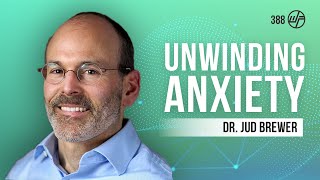
A long-form podcast interview (Wellness Force) with psychiatrist/researcher Dr. Jud Brewer discussing the theory and practice behind Unwinding Anxiety. Major themes: anxiety as a learned/habitual behavior maintained by reinforcement learning; mindfulness and curiosity as tools to ‘disenchant’ worry; clinical evidence from randomized trials of the Unwinding Anxiety app; and practical strategies (breath, grounding, kindness) to manage anxiety during large-scale uncertainty (e.g., the pandemic).
Chapters
Separate out the worry from the thinking.
Right.
So remember, fear plus uncertainty equals anxiety. Well, uncertainty also can move us into a growth mindset. So when there's a lot of uncertainty and we're really feeling down on our luck or really stressed out because of our finances, in those moments when we're really worrying, worrying, worrying about the finances, if folks can just take a deep breath, like you talked about earlier, step back and ask themselves, is this worrying helping? I'm going to repeat that. Is this worrying helping me right now?
Okay.
Because worry makes our thinking brain go offline. What do we need to go and find the next thing? If we, you know, if we're unemployed or underemployed or whatever, we need our thinking brain. Sam.
Jud Brewer, welcome back to Wellness Force.
Thanks for having me.
I was telling you and I was telling myself, actually, my dream last night. I sometimes dream about how shows are going to go, and I thought about this title, unwinding Anxiety. It's like even on the COVID of your new book. And I think for myself and many of us, we feel in our lives, our brain literally gets tied in knots. It feels like no matter how hard we tug, no matter how hard, quote, we try to change, the knot doesn't get untied unless we have the intelligence and honestly, the connection to something outside of ourselves. A divine power, divine force. So just so excited to bring you on the show again for the second time. We had literally tens of thousands of people comment and watch our last episode. So this is the new science, Judd. The new science shows how to break the cycles of worry and fear to heal your mind. Is it really new or is it just science that you've now refound? Is that the truth, that it's brand new, or is it. Has it always been there kind of waiting in the wings for you to discover?
Yeah, I'd like to say I'm the genius that came up with something new, but the more I do research, the more I realize we're just uncovering stuff that's been around for a long time. So this. Actually, there's some good. There was a nugget of this work that came from the 1980s where somebody had suggested that worry could be reinforced similarly to other negatively reinforced behaviors, kind of like habits. And I'd been doing a lot of research on mindfulness, which helps people specifically target that aspect of work. So I just kind of brought the threads together where in medical school I'd learned to give people medications for anxiety. Hadn't really learned anything about. And there are Some things, like cognitive therapy, that hadn't worked particularly well for me, even though I got formal training in that to help my patients with that, because it's more about thinking yourself out of anxiety. And the thinking part of our brain tends to go off on when we're stressed. This was having this aha moment, actually, where I realized that the work I was doing with my patients with addictions could actually relate and apply to the work I was doing with my patients with anxiety. And in fact, some of the folks using our Eat, we have this Eat Right now app that helps people with overeating, for example. And they were saying, hey, I feel like anxiety drives my eating. Can you actually develop an app to help me with my anxiety? And I was like, well, I'm a psychiatrist, but I haven't really studied this. And that's when I looked into the literature, and I said, whoa, there's some really good theory here. But we had to do the research to prove that it was actually true. And, you know, we can get into this later, but we got some whopping results with our clinical trials. Blew my mind away. Whopping.
What was one of the biggest things that blew your mind? Cause I think, you know, with how many people have had their minds blown by you, you've been in the research, both academic and also clinical, for quite some time now. I think almost two decades. Yes. Yeah.
It's been a long time, and it's been a great journey, I'd have to say, you know, just people help. What blew my mind was that people don't see anxiety as a habit. I kind of walk around the world with, like, you know, we all have all these habits, you know, glasses on. Those are my subjective bias glasses.
But.
And so I'd been kind of approaching some of the work with my patients that way. You just kind of seeing that. But I hadn't really explicitly said, hey, did you think about this as being negatively reinforced? So, for example, you know, I wrote a. About a patient in my book who came in, was diagnosed, he was referred to me for anxiety. And the first thing I did with him was map out how his panic disorder could be driven basically by habitual avoidance. He was avoiding driving on the highway, and for him and a bunch of my other patients, just helping them see anxiety and worry in particular as a habit, that was a big aha for them. And when it works in my clinic in five minutes, then I know that's something to research. You know, like, let's look into this. So that's when we developed a whole program to study it. And you know, long story short, we did a study with anxious physicians. We got a 57% reduction in clinically validated anxiety scores. So that was the other big aha for me was like, these are major numbers here just to give you a leveling for medications. So when I prescribe a medication, the gold standard medication for anxiety, there's this number called number needed to treat, meaning you need to treat x number of people before one person benefits. So the number needed to treat for anxiety is 5.15. You know, you've got to treat about five people for one person to benefit. We did a randomized controlled trial of this unwinding anxiety app, which is basically, you know, this, delivering this, this treatment in a helping people understand their habit loops and get through them. And we can get into that into detail. But we got a 67% reduction in anxiety in these clinically validated anxiety scores. And the number needed to treat in that study was 1.6.
Wow.
So that was, you know, like, what lottery do you want to play?
I want to pause you right there because it was fascinating. You said it was a clinically validated anxiety score. So it's not like anecdotal, because I think sometimes if you look at the epigenetics or the generational trauma, the learned behaviors, sometimes these things people put on a sweater and they think it's actually theirs when it comes to anxiety or depression. But you're talking about a clinically validated score which seems to be much, much different than something that might be, quote, anecdotally perceived to be there. So what does that actually mean when something's clinically validated to be an anxiety based thing?
Yeah. So my lab at Brown University, you know, we get NIH funded grants to actually do careful clinical randomized controlled trials where we can bring people in who have anxiety, who want to get better. We don't tell them what treatment they're getting, so they're not biased. We can bl entire research staff so they're not biased. I stay far away from actual performing of the study, so I don't add any bias to it. And we can deliver treatment through an app. So there's a standard delivery of what everybody's getting. So everybody, we know what everybody got if we see a result that's either positive or negative. So when we randomize people, we can, we randomize. In this study, we randomize them to get their usual, you know, clinical care, which is typically what happens. You know, you go to your doctor and they say, Try this. So it's usual clinical care or the usual clinical care plus this unwinding anxiety app. And then we can study them over months using clinically validated tools and blind ourselves to the results, to not even know. When we analyze the results, we don't know what group A versus group B is. And then we do this unblinding process, and then we can see, oh, it was the active group or, oh, that group didn't do anything. So when I mean clinically validated, we do everything from using the clinically validated tools to the diagnoses. You know, we diagnose people at the beginning. We do all the. And we blind ourselves. We do all of this stuff to try to be as unbiased as possible. Because even though I'm biased, I think that mindfulness is helpful. I only think that it's helpful because I see the evidence behind it anecdotally, I see it in my clinic. But even more substantially, and this isn't to discount any one of my clinic patients, experiences like this is their experience. They're seeing results. But seeing this on a population level where it isn't just one or two of my patients, it's people that are randomly assigned to this group that are doing so much better. That's. That's what I mean by clinical validation.
It's fascinating. I'm curious, what even ties the knot in the first place? The COVID of the book, we're talking about unwinding anxiety. So what. What. What really is the source, Judd? Like, what ties the knot? What is the creation source of the anxiety? We've heard depression is a focus on the past. Anxiety is a focus on the future. But the actual knot itself, like, where does that come from for a knot to be even tied?
A great, probably very existential question that we could get into a deep dive there.
Well, that was one of my questions, was the metaphysical and physiological connections of addiction.
So, yeah, yeah, so we. We can link that back into what. What's actually the cause of this? So the cause is actually a survival, our brains, which is to help us remember where food is and how to avoid danger.
Okay.
So we learn how to. And this. All addictions are also formed this way. So imagine our ancient ancestors out on the savannah, and when they are foraging for food, their brains have to have this mechanism to know when to take a memory snapshot, you know, lay down a memory, right? So it's not like I'm taking. I'm taking pictures of a bunch of bland savannah. That's not a very Good photo album for your brain. You go out on the savannah and suddenly you find some food. There's the trigger, you eat the food, there's the behavior. And then your stomach sends this dopamine signal to your brain. That's the reward that says, okay, take a picture. As in remember what you ate and where you found it. Okay, so our brains are set up because our brains have basically a limited capacity memory stick for their computers or for their photography, so to speak, for their cameras. Same thing for danger. You go out in the savannah, you, you see the saber toothed tiger, you lay down that memory that says, oh, saber toothed tigers in that part of the savanna. Don't go there. Okay, so this is where anxiety gets set up. That mechanism evolutionarily conserved all the way back to the sea slug. So very, very well documented, well researched, well conserved process in humans. It's still at play in modern day. And fear based learning is still a survival mechanism. So if we step out into the street, there's the trigger. We see a bus coming at us and jump back onto the safety of the sidewalk, there's the behavior. Then this dopamine signal goes to our brain in a fear response that says, hey, look both ways before crossing the street next time. So we learn, we learn from that. Okay, so that's still at play especially. And everybody needs to remember these weapons of mass distraction, you know, our phones are actually anti survival mechanisms in that way, you know, because we're not looking both ways before crossing the street anymore.
Especially Instagram. Instagram, I would say is the most powerful harvester of human attention.
Yeah, yeah, so absolutely, I'm totally with you there. So there fear based learning, that negative reinforcement, as in, you know, look both ways so you don't get killed, is still at play. But our brains have evolved on top of this. This thinking and planning part of the brain, the prefrontal cortex, okay. And that prefrontal cortex helps us take past experiences and extrapolate into the future and say, well, this happened, you know, 100 times last time, it's likely to happen the same way next time. Okay, when we don't. Well, and we, the more times it's happened, the more certainty we have that it's going to happen that way in the future. When we don't have certainty, when there is uncertainty in the situation, our brain is still trying to project into the future, but it starts spinning out all of these different scenarios. What if this, what if that, what if this, what if that? And so you can think of fear plus uncertainty Equaling anxiety.
Sounds like the pandemic.
Yeah, well, the pandemic's really brought it out in all of us.
It sounds like the knot has been tied even tighter. Or maybe even new knots have been created. I love this so much. In prep for our interview, I was looking at specifically chapter six, which why your previous anti anxiety or anti habit strategies failed.
This is key.
Remember, our old brain is set up to help us survive. In addition to reward based learning, it has another trick up its sleeve. It takes what it learns and moves the learning into, quote, muscle memory as soon as it can. In other words, our brains are set up to form habits so we can free up brain space to learn new things. Do we have limited random access memory? Is that what this is about? Is it a heuristic? Is it a shortcut? Is it, is it the brain being lazy? Is it survival based? There's a lot there.
Yeah, it's not the brain being lazy. I've never seen a brain. We might think in our consciousness that we are lazy. People are being lazy in a moment. But our brain is never lazy. It's always doing stuff. And one thing that this goes back to habits and addictions. One thing our brain has set up is basically using that same process to learn a bunch of different ways to do things. And part of that process is it lays down habits so that we don't have to relearn those behaviors every day. So imagine waking up in the morning not knowing how to stand up, put on your clothes, walk, talk, make breakfast, whatever. We'd be exhausted before we even knew how to make breakfast if we had to relearn everything every day. So there's a learning that gets set up in habit memory. And our brain basically sets up this hierarchy of reward values as part of that. So we can say, you know, if we're given a choice between two things, let's say for breakfast, you know, we're looking at. Or let's say at dinner. Here's a good example. Because a lot of folks, you know, they try to hold off on dessert until after dinner, right? So if we present, if we presented our kids with broccoli and cake at dinner, what would they eat? Probably the cake. They'd eat the cake because they've associated, you know, fun presents, ice cream, parties. All the times they've gone to a birthday party, they've learned to associate cake with a certain reward value. So it gets a higher reward value than broccoli. Because broccoli is typically not served at birthday parties. You know, imagine serving broccoli with candles.
Unless it's like a hardcore Paleo family or maybe you're raised by Tony Robbins or something.
So those habits get set down so that we don't have to relearn things. It's an efficiency mechanism in our brain. The only problem is that those habits get set up. And if we don't actually keep checking to see if that same behavior is still rewarding, we're going to keep doing it without paying attention.
And when you say rewarding, you just mean dopamine, serotonin reward, or something else.
It's probably more complex than that. So the dopamine is there certainly to help us establish a change in reward value. So, for example, the dopamine fires until, you know, until it we. It knows that our brain knows that, okay, we remember where the food is or how rewarding it is. But then. And sometimes, yeah, I guess there can still be a little bit of a dopamine hit when. With sugar, for example, and refined carbohydrates. So that still can happen, but it tends to happen more when there's a deviation from what we expect. So if we're expecting the cake to taste really good, let's say it's a chocolate cake that looks exactly like one that we've had before, but whoever made it actually put a ton of salt in instead of sugar. And we eat that cake and we go, you know, there's a technical term for that called negative prediction error. Okay. And that negative prediction error means our brain is predicting that the cake is going to taste, you know, yummy, and then we actually taste it and it tastes not yummy. There's that negative prediction where it's predicted this and it's got a negative. It's not getting what it predicted. That negative prediction actually updates the reward value of the cake. And so next time we are a little more skeptical. We're like, is this really good cake or not?
In question, if someone experiences so many of those situations like you're talking about, either because they're projecting maybe an addictive lifestyle onto it, or they've never practiced delayed gratification, how important is it? You know, we talk about breath work and cold therapy and biohacking on the show quite a bit. You know, in our previous episode with Dave Asprey, it's like, we all know the benefits of the hormesis and the eustress. We understand it's clinical. It's physiological benefits. But from your perspective, and even in writing this book, how does that play out in helping people unwind anxiety when we look at specific delayed gratification, Yes.
I think it's really hard to delay gratification. If you look at anybody that's tried to follow a calorie based diet program, they will probably agree with that and say that's pretty hard to think. Two years into the future that I have lost, I project that I will have lost £100. So, and I think the key here is really helping us find what is driving those behaviors and helping us pay attention to those behaviors so we can update the reward value now so that we don't have to practice delayed gratification. We can practice instant gratification in two ways. One is letting go of the old habits and one is leaning into the new ones. I'll give you a concrete example. So this, that I mentioned who was referred to my clinic for anxiety when I sent him home to map out his habit loops around panic. Okay? So he'd drive on the highway. He'd get this thought, oh no, I'm in a speeding bullet, I'm going to get in a crash. His avoidance behavior was to not drive on the highway. And then the reward was he could avoid those negative thoughts. Okay, So I sent him home and oh, and by the way, this guy was 180 pounds overweight.
Wow.
I sent him home to map out his habit loops. He comes back two weeks later for his follow up and the first thing he says to me is, doc, I lost 14 pounds. And I said, okay, because we hadn't even talked about weight loss at that point. We were going to focus on his anxiety. And he said, I started mapping out my anxiety habit loops and I realized that anxiety was triggering me to stress eat and that that stress eating wasn't actually making me feel less anxious, but it was making me feel guilty for eating because I know I need to lose weight and, and I didn't actually get much out of it, so I just stopped doing it. So that moves from his delayed gratification of I need to go on a diet to lose weight to instant gratification of, wow, this eating isn't getting me anything. There's that negative prediction error for his brain. He went on over the course of the next year to lose over £100. I actually just followed up with him yesterday in my clinic and he's working on his second hundred pounds. He wants to lose a full 200 pounds. But what he said to me yesterday, he reminded me, he said, you know, that first hundred pounds was effortless. It didn't take me any work at all because I Wasn't focusing on trying to just make it through and starve myself for the day. I was just asking myself, what am I getting from this when I'm eating as a way to work with my anxiety. And that nothing response in his body where he's like, why would I do this? He got him completely disenchanted so he could do that effortlessly. So here I would say, instead of trying to kind of force ourselves to delay gratification, we can actually tap into the very strong learning mechanisms in our brain around reinforcement learning and find the joy in letting go, you know, letting go of the old habit, but also the joy in, you know, for him, it felt good not to overeat. And this for if somebody wants to start exercising, remembering what it was like the last time they exercised to kind of bring that reward value into their working memory helps them be able to get motivated to get out the door. This is what my wife does in Massachusetts in the winter when she's going out for a run. You know, it's cold. You know, it could be really, you know, really cold or icy on the roads. It was like, why would I want to go outside? And then she remembers last time she went for a run. Oh, it actually felt very good out the door.
Wow. I mean, the. There's so much here. What's utterly fascinating to me about this is a two part question, one you talked about. It's not about delaying the gratification. It's about asking yourself the question in the moment and saying, what am I actually getting from this? So that's super clear. I definitely understand that. The part that's mysterious for me is then why would we practice delayed gratification, in other words, creating a reward volume, or however you had determined it, the payoff that's in the future, the excitement, the longing, the natural, I guess you could say, emotional and brain based rewards that we're getting from delaying the gratification. When in an addiction cycle or when in an anxiety based human being, would it be profound or would it be powerful to introduce some type of delayed gratification?
It's a good question. I'm not sure I know the answer to that because most of the research out there, you know, if you look at cognitive neuroscience, there's no real evidence for willpower. For example, most of our, what we attribute to willpower is probably coming from tapping into reward based mechanisms. So for example, people who, you know, don't stock their house with ice cream, you know, makes sense, that could be a delayed gratification thing. If they're trying not to eat ice cream yet. Those tend to be the folks that have good habits in the first place. It's easy for them to set good habits. So there may be more of a genetic predisposition for them to be able to do that more than others. And I think that's absolutely true. There are some people who have, you know, Spock, like brains.
Yes.
Where they can. Yeah. They're just like, oh, stop being anxious. But this is like the 1%, you know, in terms of cognitive, you know.
Think of it as cognitive privilege. This is the Gretchen Rubens. They're just. They just uphold no matter what.
Yeah. No, duh. And why can't anybody else do that? So for, you know, it's great for that very small group of people, but for the rest of us, it's just not how our brains work.
Okay, it's clear because there's so much of a metaphysical aspect to this, and this is really the exciting part of the conversation for me, this metaphysical. The physiological connection to addiction and anxiety. That's fine. That's one of your specialties. And there's so much information we're going to link in the show notes right here below this video. But metaphysically, Judd, what is your metaphysical stance on addiction and anxiety? How do you make sense of that both in clinical setting and in just your own personal life?
Yeah, this is where I think the reinforcement learning piece has kind of hit true, both in terms of what I've been researching, but also in terms of what I see with my clinic patients and also in my personal life. This reinforcement learning model was put forward by the Buddhist psychologists 2,500 years ago. So it's not a new model. It was kind of rediscovered in modern day. You know, Erica and all gets the Nobel Prize showing that it's conserved back to the sea slug. So I think that's the most consistent model that really fits with addiction. You know, you need three elements to trigger a behavior and a reward from it from a brain perspective. So I'm not sure that there's anything that's had more explanatory power than that. And honestly, you know, this is also where Occam's razor comes in. You know, parsimony, where the simplest answer is usually the right one. And our brains, if you look at our brains, they're set up for simplicity in the sense of how can I be efficient at doing a bunch of different things using the same type of thing? And that's where this reinforcement learning has been shown over and over to be pretty Consistent.
The. The universal truth versus like a subjective truth. You know, we. A lot of work in mindfulness they talk about, and I'm sure you have too, is there's an objective view of what's occurring and then there's a subjective view. So subjective is like, hey, I'm Josh in a body talking to Judd in a body. But also there's a hell of a lot more going on than just you and I in meat suits talking to each other, having auditory cues processed through our brain and then go down into our efferent and afferent nerves. So from that angle, how do you define that in your life? How do you connect with that? Maybe it's a higher power. Maybe it's God. I don't know. I'm not, I'm not sure. I'm genuinely curious how you see that.
Yeah, I think there are two layers to this. And I'm also married to a religious studies professor who's, you know, she and I started dating on this before. Yeah, our argument was, you know, God versus awareness. So this is something that I think is a really interesting question. And in that sense, I think there are two layers. So one is this subjective bias, let's put it in scientific terms. So subjective bias just. And you know, this, but just for your audience just means we, we walk through the world wearing certain glasses. You know, this is where the rosy colored versus the dark colored glasses comes in. Somebody who's depressed is, you know, stereotyped is, you know, seeing the world through dark. You've got your orange, right?
I have my blue blocking glasses.
Yes. Yeah, there you go. So we walk every that we learn introduces some type of subjective bias. Right. So it's, you know, that reward mechanism where if we learn that cake tastes better than broccoli unknowing. And as an efficiency mechanism, we wear those cake glasses, or it's like dark chocolate glasses and I have all sorts of glasses. You know, it's like 70% versus 85 versus cayenne or sea salt or whatever. Right. So we're all wearing those glasses. That's the subjective bias. That's that, you know, person centered view here in terms of this larger view or absolute reality or whatever you want to call it. That's when we take those glasses off and we start to see through our own illusions of this permanent, stable self, this is Judd. And start seeing it as, oh, this is Judd meat suit, you know, and not taking, not taking Judd so personally. Does that make sense?
It makes beautiful sense. But there's a lot of. There's a lot of confrontation that one must go through in order to get to that place. Because to deny that we are a soul in a body or however you might put it, I'm curious how you might put it, is really triggering to the ego. Because if we're going to grow, if we're going to transcend addiction, if we're going to really not allow anxiety or depression to rule us anymore, there has to be a self love mechanism that's activated. And I don't always know. I don't always know if it's purely scientific.
Well, I can add a little science and you can keep it. I think this is something to be expected. I will certainly be exploring my whole life and you and I can explore this together our whole lives. There is a little. So my lab ran a study with several hundred people looking to see what mind states are more rewarding. And this might sound like a no brainer, but we ran the study to see if it was actually true across a large population. So basically we gave people 14 different options and said, tell me how basically line them up and how what you'd prefer to have. So setting up their reward hierarchy, things like anxiety, anger, frustration and then joy, curiosity, connection, things like that. And of course, and I've already laid them out for you in terms of the reward hierarchy. You know, the like anxiety, anger, things like that are universally reported as less rewarding than these other ones. And we also asked a question about how contracted or closed down people felt with each one versus how opened up or expanded they felt with each one. Okay, universally, except for one of our mind states, people reported closed versus open. And so the contracted, closed down, wound up feeling of anxiety, restlessness, worry, things like that, universal, you know, closed down versus joy, curiosity, connection, all open craving. In our, in our standard sample, in, you know, just whatever normal individuals are, was bimodal. Meaning literally half the people said that it felt closed and half the people said it felt open. And from that our hypothesis was that, well, the people that said it was felt open was that they're focusing on getting the object of their craving. So we did a second study with expert meditators and we asked them the same questions. And then with craving it collapsed into a single single answer. What would you guess? Close or opened?
Closed.
Yeah, absolutely across the board. Because the feeling of craving, that contracted restless drive is actually there as a survival mechanism to motivate us to go get something. Right? And in fact we can even see it in our own eyes when we're craving something. Our eyes are narrowed. When we're angry, our eyes are narrowed. You probably know the somatic memory, right? We associate these narrowed eyes with, like, going and getting something. And there was a study at University of Toronto where they actually looked at this. They hypothesized that when people open their eyes really wide, they're in information gathering mode. And that happens with curiosity. It also happens with fear. But curiosity, we're opening our eyes really wide. Whereas with anger, we already know what we want to do. We want to go after the object of our anger, or when we're craving, we're like, oh, I got to go get that. Go get to go get that cake or the chocolate right now. And so we even can see this readout in our everyday experience with our eyes, or just the feeling of closed down or the contraction that comes with it.
I'm interested in this because there's so much, I guess you could say contraction and expansion depending on whatever people are viewing. Like, we talked about earlier, the use of Instagram, and I've even noticed this myself. Sometimes I'll get off of Instagram and I'm like, what the hell did I just do? You know, I just spent 15 minutes scrolling, looking at the feed post. There's got to be a way to block that little search. You know, the little magnifying glass where you just scroll through stuff. And then I'm like, well, sometimes I want to give myself a treat. But one thing that came up for me, and I'm really curious how you feel about this, is it was actually from the holistic psychologist who's someone I'm going to have on the show. And she said adults addicted to their own stress hormones were once children who lived in unpredictable environments of overreaction, rage, spirals, and fear. And I'm just like, okay, I'm a recovering addict to stress. Like, even still being an entrepreneur and navigating my life with a new baby on the way, and all the things that we're creating here in Austin. What kind of guidance? Initial guidance, not total clinical guidance. What kind of initial guidance could you give to someone who is first, aware that they're addicted to their own stress, and then secondly, how do they even begin to unwind that? Because really, it's an anxiety, right? Is that what we're talking about?
Yeah, I think stress and anxiety are very much overlapping. Stress tends to have clear precipitants that you can then alleviate, and then the stress goes away, Whereas anxiety tends to just pop up and stick around, Especially for folks with generalized anxiety disorder. Here I Think of this as what I would say is that awareness is the first step. And the second step is we learn to habituate, to become familiar with, not necessarily comfortable with, but familiar with stress and anxiety. So if we're not anxious, that might feel unfamiliar. And actually you're hitting on all these things that my patient. So I'm going to bring this patient back in because in one of our clinic visits, so his anxiety dropped tremendously. He basically says, I have very little anxiety now. When he was first getting into that place where he didn't have anxiety, it was really strange to him. And he got, literally. He described this as, I'm anxious, that I'm not anxious because he was feeling peace and calm. And he came into my office and he said, this is so weird. And it felt so weird to me that I got anxious. I thought there was something wrong. And so he had actually grown up in a house where his dad had, you know, would hit him occasionally, you know, like randomly, basically. So he started getting anxious at the age of 10 and over the next 30 years, had basically lived that anxiety his whole life. So he didn't know what it was like not to be anxious. When he started getting less anxious and then having. Being anxiety free, he actually had to get used to that until that became his new habit. So that's the first thing I would say is, you know, this. And this goes back to Carol Dweck's work around fix versus growth mindset. You know, when we're comfortable even in an. In a not healthy place. This is where abusive relationships often, you know, people stay there because it's comfortable. When you move out of that, you can either move into your panic zone where like, oh, this is too scary, this is too different, or you can move into your growth zone where you can move from oh, no to oh, this is different. What is this? And not automatically assume that it's a danger. Obviously we want to check for danger to make sure there's no bus bearing down on us or whatever. But as soon as we can keep our awareness open and see, oh, this is just different. That's why my brain is on high alert. Then we become familiar with the unfamiliar, and that growth zone becomes our new comfort zone. And we can become comfortable with that. And the extreme of that is just being comfortable or being comfortable with the discomfort or even knowing that certainty, the only certainty there is is uncertainty and being comfortable with that leaning into that.
Judd, just huge, huge mic drop moment. This is why I love podcasting, to have organic breakthroughs for myself with People like you on the show and, you know, you're in the high echelon ranks of people in this, I guess you could say addiction and clinical psychology world. Yet you, this is what I love most about you. You have this way to meet people where they are. And in your industry, that is not always the thing. A lot of people, they're very academic minded and they. I think one of the beautiful ways that a psychiatrist or a psychologist can really connect with their patient in a clinical setting is by just being a human. What you just said when you talked about the unfamiliar, where usually the stress is the familiar. And when somebody who's been wired for stress gets into that space where there's no stress and it's peace, and that actually triggers peace, triggers someone's anxiety. Wow. How many people can relate to this? Please message us on Instagram right now. Also, we're talking about this book, this very powerful book, and it's Unwinding Anxiety. We have to learn how to untie the knot. You know, if you take a knot, you just try to pull it, it's just going to tie tighter. So, so profound. And I'm really feeling this for my own life, honestly. Kind of a vulnerable moment. But I'll just say that, like, yeah, things have been really, really good. Business and money and my partner Carrie and our child, and everything's good. And there's a part of my mind that's like, well, wait for the, wait for the shoe to drop. Something bad's gonna happen, whatever it is. Where does that come from? I know my story is a fragment of millions of people's story out there listening and watching.
Yeah, absolutely. And I can't imagine anybody not being able to relate to. It's like, well, it's going well now, but there's gotta be something bad.
What else is gonna happen? Yeah, what is that? What's the mechanism of that?
Yeah, I don't know the exact mechanism, but I can give you some bs, some baseless speculation, okay?
Bullshit. It's real. It's real.
So here's my baseless speculation on that. If we wait long enough and we think things are going well, things are going well, things are going well. If we just wait long enough, something's going to go less well than it's going right now. And so we can always prove our hypothesis that eventually something's going to go wrong. So here I would say it's how we look at our life. So in these moments where we're just waiting for that shoe to drop, you know, I think of inevitably life changes.
Right.
Things are constantly changing. We have no control over the future. And so that. That feeling of shoe's gonna drop may just. Sometimes worry is just described as a way to help us feel like we're in control because at least we're doing something by worrying. You know, it's like things are going well. Yeah. So I'm going to worry about this. And maybe that worry will help, which it doesn't. It actually makes our brain work less well. But here, and I do this with my patients and also with the folks in our programs, is I try to help them see anything that is different than like, perfect, you know, or going really well as a learning experience. Can you bow to this experience as your teacher? So, for example, folks in our Unwinding anxiety program, they say, well, my anxiety is going, you know, it's dropped a lot, and then suddenly it came back, so there must be something wrong because they're expecting it to be gone forever. And so they come in and I say, well, what can you learn from that? Like, when that anxiety came back up, did you start worrying again? Did you whatever. Or my patients who struggle with drinking and they're sober for a while and then they drink again. I say, well, what can you learn from that? Can you bow to that? As a teacher and honestly, for me, I'd love to hear what your experience is. I learned more from falling my face than I do from things going well. And so if I, if I lean into those quote unquote hardships and say, oh, here's a learning experience, it actually becomes rewarding in the sense that, like, I just learned something. I just grew from this. I became more resilient, stronger. And then in that sense, there's no such thing as two steps backwards, one step forward, or whatever that saying is. Every step leads us forward as long as we can learn from it.
You are breaking the mold on so many of kind of the woo woo teachings out there where we see these. Michael Pollan calls them platitudes. We see these platitudes in social media. It's like, love is all there is. Well, it's true. Love is all there is, but it's not a light switch that you flick. It's not that simple. And so when it comes to, like, the real science of this, because I love your emotional intelligence perspective, because, yeah, like, if we can just literally change the lens and say, hmm, how is this actually in a moment of awareness, how is this actually serving me? Or what can I learn from this? Obviously, through the breath which is what we talk about in our Breathe Breath and Wellness program. You know, thousands of people have been doing our program this year. And so I think about the power of just taking a simple breath just to tune in with your system. You know, it's so simple, yet it can be so challenging for us in that moment because we're in a sea, we're in a cascade of hormones that are driving our behavioral programs. But from a scientific perspective, I'd love to dig in a little bit on the stressful components in the brain, the default mode network, the reticular activating system. Can you just give us a high level overview of when we are experiencing stress, what is actually occurring? And I think that'll help everybody with their awareness and their mindfulness.
Yes. And so, for example, when there's stress, that fight or flight response happens. And then we get, and you probably described this on your show before, but just as a refresher for folks, we get the sympathetic response where our blood vessels contract and our heart pumps faster so we can get blood to our muscles as compared to pulling blood from our stomach. And all that that's a large part has to do with hormones because those hormones can get across our entire body to set things into starts in the brain with the hypothalamic pituitary adrenal axis, right? So starts in the hypothalamus pituitary, sends all these hormones like the ACTH coming down into the adrenals, that then sets off cortisol and things like that. Okay? So from that we get this physiologic response. It's really important, I think, for folks to realize that that physiologic response is not. It's a physiologic stress response, but we actually get stress on top of the stress response. So the stress response happens faster than our thinking brain can process. Which is good because, you know, if I step out into the street and I look at the bus, I'm like, hmm, is that a bus? Is that driving really fast? Is that going to hit me splat? You know, I'm dead. That's it. So it's about me stepping out on the street, jumping back, and then afterwards realizing, oh crap, I didn't look both ways, I was stuck on Instagram again or whatever. And so we learn from that when that stress response comes in and helps us learn. Now, my brain studies the default mode network, as you mentioned, and that network is described as a self referential network. And one of the hypothesis is a hypotheses out there Is that this network helps us kind of sync up us with action, me doing something. And we could get into philosophical arguments about the absence of self.
Sure, sure.
But there are some pretty interesting experiments, decades old now, suggesting the conscious awareness comes sometimes a full half a second after our motor action to do something. Okay, so our brain needs something to sync up a sense of self with doing something so that it's not just some meat suit walking around. As an automaton, we rock around and say, I'm the person doing stuff. So that default mode network seems to be involved there. And in particular, there's a part of the default mode network called the posterior cingulate cortex, which my lab has done a bunch of work with. We first discovered that this network gets really quiet in experienced meditators. And then we started doing some neurophenomenologic work where we could link up their subjective experience with their brain activity. We found that the thing that correlated most with the posterior cingulate was contraction in that felt experience of contraction that you and I talked about before, that correlates with increased activity in the posterior cingulate. And that feeling of expansion corresponds or correlates with a decreased activity. And this is very consistent with a lot of the work that's been done, like at the University College London, Robin Carhart Harris and others with psychedelics, where they injected the psilocybin, which is the active ingredient of magic mushrooms, into people, study their brain activity. Their default mode network gets really quiet. And literally these are called mind expanding drugs. Because there's this feeling of expansion to the point where this sense of self, that boundary between self and other, it dissolves. So you think you can think of that contraction as giving us a sense of, here I am, I'm the one being anxious. But it's that contraction that lets us know that us being contracted. Whereas when we expand that. And this can happen from love, for example, when we feel loved, feels expanding, doesn't it? My lab's done studies with loving kindness meditation showing just that the default mode network gets quiet when people are practicing kindness. Same thing with connection. We literally, we start to merge with the other. For truly, in a deep conversation with somebody right when we're. And Mihaly Csikszentmy talks about flow, that loss of sense of self when we're just merged. You know, action and outcome are merged, Meaning, you know, there is no self in the environment. There's just everything happening and awareness of it happening. So that was a lot. But does that get at what you're.
Asking, it gets at it. And I'm sure we could do literally, Judd, an entire podcast on just the Default Mode network and our frontal cortex and our amygdala and our. In our PFC and all these things. I just feel like so many people out there have been getting, like, these bursts of AHAs watching us and listening for just guidance to where we really are. And here we are in 2021. So many people. I think the math is now almost 100 million Americans, they're either bankrupt or they've lost all their savings. Like, financial stressor is a big one. It is a big one. And honestly, I think it's one of the biggest wounds in our collective society that's in the process of being healed by cryptocurrency and things like this. That's why they're coming up. But the practical strategies for people to use in this climate, this literally fire and brimstone, is what it feels like. I mean, we're in like a. It almost feels like a biblical time in some way. Do you feel this? And can you go through at least some of the practical strategies for people to navigate this rough ocean?
Yeah, I absolutely relate to what you're talking about, and I think this feeling of uncertainty. And I'm glad you talk about the financial stress, because the people that are doing fine, they point to the stock market and they say, what financial stress? And then everybody else points to the fact that they don't have a job or that they're underemployed or that they're working three different jobs to try to just make it.
Forced to close their business.
Yeah, yeah. All these business, like these. These restaurateurs who didn't know that this thing was going to go on, so they just poured their life savings and they're like, if I can make it one more month, one more month, they're done. Now they're all going bankrupt. You know, so all of this. So here I would say one pragmatic aspect is to separate out the worry from the thinking. Right. So remember, fear plus uncertainty equals anxiety. Well, uncertainty also can move us into a growth mindset. So when there's a lot of uncertainty and we're really feeling down on our luck or really stressed out because of our finances, in those moments when we're really worrying, worrying, worrying about the finances, if folks can just take a deep breath, like you talked about earlier, step back and ask themselves, is this worrying helping? I'm going to repeat that. Is this worrying helping me right now? Okay. Because worry makes our thinking Brain go offline. What do we need to go and find the next thing? If we're unemployed or underemployed or whatever, we need our thinking brain. What do we need to do in today's age? We need to be able to think beyond our narrow sense of what we used to do, because the world has changed a lot. It has had this seismic shift that's never going to go back, and we don't even know what that's going to look like. So here we can ask ourselves, what am I getting from worrying? See if we can step out of the worry and lean into that challenge. I'm not saying this is easy, but I'm saying this is what we can do, right? Lean into this and say, okay, how can I move into my growth mindset and say, okay, what is available? What's possible for me here now?
And it's a simple question, but the answer may not be easy because there's so many people that are experiencing all of our stuff. I mean, let's be honest, all of our shit's coming up right now, okay? Anytime we are squeezed, all of our broken pieces, stuff we haven't dealt with, maybe familial patterns, generational trauma, capital T, lowercase T, trauma, everything that we've been kind of not looking at, for lack of a better term, is going to surface when we are squeezed. And so I think it's really beautiful. I know it sounds crazy, and people might be watching or listening, being like, what do you mean it's beautiful? Like, I'm losing my home or I'm losing this. I feel you. I understand. I've been there. I've cried on a golf course at 2 in the morning before I started this podcast six years ago. I get it. But what I'm trying to say is, and what I'm curious how you feel is how do we look at this as a collective gift? Yes, there's pain. Yes, there's torment. There's a lot of things that are just completely out of our control. But for the everyday human being that maybe doesn't have their financial future planned and they're in that space, how do they turn, take a breath and look. Look at it and say, all right, I'm going to pick out the things that I actually can control, and I'm going to do something in my life that's meaningful to myself and my family, regardless of the trauma and the circumstance.
So I think there are two things there. One is to maybe three. One is to start by grounding ourselves right. You know, so that we can actually think if we're freaked out. We can't force ourselves to look at.
This as a gift.
It might feel like we're failing even more. Like I can't even think of this as a gift, Josh, to do this and I can't do this, you know, so, so it's not about forcing ourselves to see things in a certain way. You know, this is, I think sometimes positive psychology gets a bad rap because it's, you know, they think of it as just think positive thoughts, you know, and there's the, there's the one liner on positive psychology. You can't just think positive thoughts. It doesn't work that way. Our reward systems don't work that way because they don't land, they don't, they're not felt. You can think of it as our thinking brain doesn't hold a candle to our feeling body. It's really that if we can bring up that feeling, that's what's going to drive the change in behavior. So first thing is grounding ourselves. The second thing is really kind of rubbing our gently, kindly, compassionately rubbing our faces in our, you know, our worry. For example, if we're worrying all the time, asking that question, what am I getting from this? So that we become disenchanted with the worry, so that we see, well, that's not helping me. And it helps us not spend time there. The third thing is, and I talk about this a little bit in my book, is finding that bigger, better offer. So finding small moments throughout the day where there is something where we're a little more open, we're a little more connected, somebody has been kind to us, we've been kind to somebody else. And just remembering those things. This is where there's a lot of research on gratitude practice. You know, remembering those things helps us move in the open direction. And so here I would say anything that helps us open. So kindness and curiosity are my two favorites, right? Anything that helps us open helps us see what we have right in front of us as a gift. You know, this, this amazing thing of being human, you know, it's, it's mind blowing just to contemplate it when we're in the right mindset. So this is about being open to that piece and helping ourselves open by fostering curiosity, fostering kindness. And I actually put a short, I think my favorite two minute animation out on YouTube is about spreading, you know, kindness. Kindness can be spread as more of a contagion than a physical virus, you know, because you don't have to be near somebody you can spread through social contagion, where it could be a tweet, it could be a text, it could be on Instagram, it could be whatever. And when we tap into that power of kindness, what it feels like when somebody's kind to us. This is the pay it forward piece. We're inspired to help others, but we have to see that cause and effect relationship. We have to see how good it feels to receive the kindness of others and also to be kind to others genuinely. Not like in a. In a, you know, a way where we're expecting something in return.
Yeah. The big breath and the big lesson that I've gotten, and I know so many people have gotten in, in witnessing this amazing dialogue is peacefulness is a skill. Being peaceful, practicing kindness, having the spacious awareness to even be curious about something or practice kindness takes a radical skill set and really an unwavering commitment to being your best loving self. And people could say that we're sitting around a fire singing Kumbaya. No, I'm talking about, like, real, practical, everyday living that is going to allow us to live our lives well. And I think you've done an incredible job with your work. I loved our last show. This one was just the same. Unwinding Anxiety is the book. We covered a lot of ground. Judd, what did we miss? You know, what can you leave people with with this book and everything that you're creating here for us in 2021?
I guess the one thing I would say is don't discount the power of curiosity. You know, I think of curiosity as a superpower. And so, you know, and I love this quote. I think it's James Stevens who said, curiosity will conquer fear even more than bravery will. So I would say find your inner child for everyone. Everyone watching and listening.
Oh, man. And as we say goodbye, you know, this nexus that we all operate from, as we talked about before, you're Judd, the soul, the ego inside of a physical meat suit with a meat radio brain. So am I. I'm Josh, with my own unique aspects. But in the middle of all this, like our mental, our physical, our emotional, our spiritual, they all connect. And there's wellness in the middle. You know, we have to be. There's no other way around it. We have to be connected to all these aspects of self in order to truly navigate sometimes the craziness of this world and keep being a curious human. How would you define this now? You know, with all your work that you've done, and especially with unwinding anxiety, how does Judd see wellness. What is your definition of wellness and living your life well? Wow.
What a great question. You know, honestly, I would say wellness is being constantly curious and kind because I'm not sure what else we need. I'm just trying to think what else is needed. I mean, besides the food and water and whatever. But from a psychological perspective, curiosity and kindness. Full stop mic.
Drop the book again. Unwinding Anxiety. Judd, thank you for coming on the show. Deep bow to you and your work and just how you're serving continuously. You obviously have a deep connection to your curiosity, otherwise these books would not be coming. So thank you again for coming on the show and just super appreciate you.
Oh, thanks for having me. This has been really fun.
Okay, you guys, we're talking about this in the group wellnessforce.com group, his book Unwinding Anxiety and also everything else that we're all going through here on planet Earth. So until Judd and I see you again, we're both wishing you love and wellness. We'll talk to you soon.
Sam.
More from Josh






Your child's future start before pregnancy... and even before conception! #podcast

MD Reveals: Your Healing Creates Your Child's Reality (The Souls Coming In Need Strong Bodies)



