Dumbing Down Dad? Why Media Demonstrates Fathers As Useless | Jon Vroman
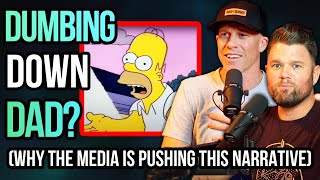
Transcript of a long-form interview (YouTube/podcast) between Josh Trent and Jon Vroman about redefining fatherhood. They discuss cultural narratives that portray fathers as ineffectual, Vroman’s personal evolution (ego work, storytelling, healing), the origin and mission of Front Row Dads/Front Row Foundation, practical practices for men (space, community, 'five whys', lead domino, rising tide), integration work including plant-assisted therapy, and an invitation to a live Front Row Dads event.
Chapters
What story is the world telling us about fatherhood that simply isn't true?
I thought in my own life, I'm part of a society where if I put on an article of clothing that said dad on it, I would all of a sudden lose my cool status. But I imagined a community of men who were driven hard, charging high performing men with sovereignty, and that they put on a shirt that said something about fatherhood and this body that was conditioned because they created exercise and were in community and carried themselves with an energy and a presence. And then I started to think, that's the community I want to be a part of, and that's the world that I would love to be a part of. Shaping into the future. We say in our community all the time that it's not about always learning something new. It's about remembering something true, Remembering a truth that you've had in your life and that you've known for a while and have a chance to practice that there's always time to become a better dad. And your best impact is still right now, in this moment can be made with your kids, no matter how old they are.
John, we made it. We're here. We are here, man. Welcome to the new studio. Welcome back to the podcast.
Are we here?
We are. Is it.
Is this real?
Unless it's a projection of a hologram of us in another dimension, that could also be true. But dude, it's just so cool to have you in the studio. 2015. We were chatting 2015 about mindset. You came on the old show, which was Wellness Force Radio. As you know, the new show is Wellness and Wisdom. So today, man, just tell people what you've been up to in the past seven years. I know that's a really big conversation, but tell, tell people just, you know, in a. In an encapsulation. How have you grown since you. Since we interviewed last seven years ago, which is crazy to even think.
You know what popped in as soon as you said, what have you been up to? It's like making mistakes. Yeah, that was my. Yeah, that was what showed up was making mistakes and then also learning to accept myself for those, forgive myself for those, learn from those, and just one foot in front of the other. There's been so many moments over the last number of years where I was so disappointed in myself for my behavior or my reactions. And a lot of the work has been figuring out how to accept the humanity, you know, of John Vroman and like, hey, there's the. All these different versions of myself that live within this Body. And I think when I was in my 20s, I got good at trying to craft the. The one that I think the world needed and the one that I was proud of. And I got good at muting the voices of the ones that I was like, oh, that's not. That's not really what I want to bring to the table. And so the last number of years has been an. A commitment to consciousness. It's been a commitment to figuring out how to express myself in with respect to those around me as well. Because I don't want to just carelessly. Every thought I have, you know, every impulse I have. I don't want to, you know, live under the banner of authentically being myself without any care of those around me. And as a dad of two and married, there are people that are in my close proximity that are part of my journey. So learning how to co. Create, co regulate with those people has been a mission.
You know, it's interesting, when I hear you speak, you use terms that maybe if somebody hasn't heard them before, they might deem them esoteric in a way, but when you say them, there's a different gravity, there's a different weight when you say them. And it's because I got to connect with you seven years ago. And even today you feel more balanced, more. I don't want to say the word whole, but more evolved. You feel more evolved. There's like always been a calmness to you, which is why I think people hire you for speaking gigs and you really know how to hold a room. But I'm curious what you think has really come online for you in these past seven years when you look at fatherhood. A lot of what I want to unpack with you today is what's the difference between a dad and a father? Because I think there is one. And I'm curious what you might say about that. But what has come online from like a heart, soul, mission level for you in the past seven years that maybe you didn't even know was going to come online, but you definitely have felt it. In other words, what qualities have you felt have really integrated inside of you as a man, as a father, as a businessman?
That's okay. I don't think you're going to be able to talk again for the rest of the show because to try to unpack that.
Let's go. Yeah.
Yes. It's a lot. One thought, one feeling that comes up is there have been many rock bottom moments, and I've reframed what rock bottom is in my world. And rock bottom is also a foundation. Rock bottom is like the strongest foundation for growth.
Yeah.
And so what that means for me has been learning about my ego. And I remember Tatiana, my wife of 16 years, coming to me years ago, talking about ego. And I remember my internal response, like, I've done the work, I've read the books. It's not ego. And I realized how much ego was wrapped up in that statement for me. And I. I believe that the real learning, the real. The part of my growth that I'm most proud of is understanding that I have an ego that I'm not trying to get rid of the ego. And let's. If we. If we talk about or agree to a term of like, well, what is the ego? This created self. Right. My buddy in front row dad, great speaker, author, psychologist, Kelly Flanagan, talks about the ego castle. Have you and I ever talked about this?
No, but I. I think I know where you're going. Go ahead.
And so I think this is an important piece of it, because this was part of my evolution, I feel, and that is that when you're in grade school, you start to develop your ego castle walls. And the way I think about that is like clothing. And when I was growing up in Virginia beach, if you wore billabong, quicksilver, or any of these cool surf brands, people thought of you differently because you learned how to create a wall, that this was to protect yourself from other people. Hurting you, not accepting you, wanting to love you. This was your protection in junior and I saw this and felt this. This is where people build cannons on their castle. This is the best. You know, defense is a good offense. And you go after people. This is why junior high can be so cruel, because you learn how to attack to protect yourself. And then in high school, you develop your throne. And your throne is your throne of righteousness. All of a sudden, you figure out that you're really good at something, whether it's sports or academics, and you can sit on that throne of righteousness and. And protect yourself there. But all this ego castle is built throughout your life. We all have one. You're never gonna get rid of it. You're not gonna destroy the castle. Cause the castle's built for war, and it's ready for that. But eventually in our lives, we learn to let the drawbridge down and walk out and be ourselves. I think the ego serves a purpose in our lives. I think seeing the ego be developed in my children serves a purpose in their lives. I don't expect somebody to let go of all of Their ego in a conversation, I learn to dance with it.
If we let go of our ego, it'd be like, l dry white toast in water. There'd be no. There'd be no spice to life. There'd be no John Vroman. There'd be no Josh Trent.
So I'm part of.
I'm with you so far.
I'm with you part of the experience. So what my. Where the evolution for me came from was understanding that the ego is there. And then when the lights are on, I get to dance with that a little better. I get to understand Tatiana's ego and my children's ego, and that becomes part of the conversation.
I don't know if you should be talking about your wife's ego.
That's right.
That's all I'm saying.
Dangerous water.
That's. I've never heard that metaphor. That is potent. Yeah, I love that because the best. And you're a storyteller, dude. You've been telling stories since you were in the back of the car. And like a little kid used to entertain your parents, guests when they come over to the house. Like, what is it inside of you that loves this storytelling element? What is it for you? Like, you're. You're a born storyteller.
Thank you. Yeah, I received that.
You're welcome.
It's both helped me and hurt me in my life. I got so many funny stories about using. Using stories to try to get love and attention. Right. And. And exaggerating stories, which I. I'm sure I do to this day, mostly unconsciously, but I attempt not to. All my stories that I tell today are meant to be rooted in as much truth as possible. And that subject to your interpretation of what is truth. Right. Yes.
There's the objective and subjective.
Yeah, My. My biggest need has been to fit in. I value community so high, and I. As a kid, I wanted to be loved and connected with other people so much that I realized that storytelling was a way for me to learn about them and a way for them to learn about me. And also I have a short attention span when it comes to, like, factual, transactional type information exchange. I just. My nature is not one that hangs in on that, but when somebody's telling a story, I'm riveted. I remember early on in my 20s, finding Tony Robbins and being blown away by how he taught through stories. And I just found myself leaning in and truly transforming and then wanting to be able to communicate the stories of my life, the stories of other people's lives, which is why I enjoy these types of conversations. We get to learn together. And that's really. It's all about connection for me.
I remember a mentor of mine, Paul Check. And my audience is probably like, dude, we've heard you talk about Paul enough.
I've heard you talk about it.
You haven't, though. You got to hear this. One of the things in the old world, when the shamans would get someone who was sick in the tribe, they would come up and they would ask the shaman, hey, what's wrong with me? And the shaman would have four questions. When did you stop singing? When did you stop dancing? When did you stop spending time with yourself? And when did you stop learning and telling stories? Isn't it interesting that in the old world of medicine, storytelling was a medicine itself? Yeah, because kids get it, adults get it. We all learn through the art of story. And I wonder, this is perfect. What story is the world telling us about fatherhood right now that you would actually like to change?
Yeah.
What do you feel around you? That's story about fatherhood that simply isn't true.
So I felt for a long time that whenever you added dad to something, you made it uncool. There's actually an author that I really like his work. I followed his, you know, I loved his books.
Yeah.
And I saw a message from him one time on Social that said, can we all just agree that if we add the word dad to something, it immediately becomes uncool? Oh, because it was. He was referencing that he was getting a haircut. And the woman said something like, do you want a dad haircut? And he was like, that's going to become immediately uncool.
Or even the phrase dad bod.
Dad bod, all of that. And then I started looking around, feeling into the societal norm, looking at the TV shows, the commercials, the way we represented fathers, the way we thought of fathers. And it was not complimentary, it was not encouraging or empowering or uplifting. Everything was a joke. And then I typed in one day to Google dad space to see what was. What were people searching for, what would populate dad joke, dad bod. All everything was, was, was missing the empowerment of what would, what would a world look like if people were searching for dad wisdom, dad strategies, dad legends, whatever that might be. And I, I thought, in my own life, I'm part of a society where if I put on an article of clothing that said dad on it, I would all of a sudden lose my cool status. But I imagined a community of men who were driven hard charging, high performing, entrepreneurial Spirited owners of their lives, perhaps, owners of their businesses, owners of their world, Men with sovereignty. And that they put on a shirt that said something about fatherhood in this body that was. That was conditioned because they cared for it, because they exercise and were in community and played sports, and they carried themselves with an energy and a presence that was palpable in the room. And they just had this essence where somebody's like, I don't know what it is that that guy has, but it's something special that when he walks into a room, when he sits around a table, when he addresses people in his world, there is certainty, there is just a vibe with that person. And then I started to think, that's the community I want to be a part of. That's the group I want to be a part of, and that's the world that I would love to be a part of. Shaping into the future.
Yeah. And that's where front row dads came from. But maybe people don't know what that is. And also what even came before that, which is inspiring. You know, the way that you brought kids with special needs and even kids that are at the end of their lives to the front row of concerts. This is 2005, I think.
Yeah.
You started the Front Row Foundation.
Do your homework, man.
And so in 2005, like, you had been out of Cutco for seven years. How long had you been out?
No, that was actually.
That was during Cutco.
During Cutco.
Oh, you left Cutco in 2008.
Yes.
So, okay, so looking back on that, this. This seed that you planted about telling a new story for fathers, it needed some specific fuel to germinate.
Yeah.
What. What was that fuel? And by the way, it seems like a lot of people come from Cut, by the way, I don't know. It's like you Rob Dial, there's a bunch of other people Cutco must teach some really unique. John Rulin, like, that's a whole nother podcast. But. But tell us about the way in which that seed you planted to tell a new story about, like, fit body, fit mind, attached to a positive outcome with my family, my business. Like, when did that really start to grow? And how did you feed it? How did you feed that seed in you while you're in corporate America, no less.
Yeah. So the timeline is that I reach my dream job in the Cutco community. Amazing company.
By the way, what was the dream job?
My title is national sales Promotion Manager. So listen to this. My job is to create the incentives that motivate the reps and the managers to hit their goals. So I would create contests, and I would put up a contest and say, if you achieve this sales goal, I'll take you to Italy for seven days. And I would take groups of 400 people to Italy for a week, and we would play and have fun and adventure together. And this was my world. So. And I had to go check out all these places, so my friends would laugh me, like, wait a minute. So your job pays you to go Spain, south of France, Argentina, all these places to check out locations so that you can take hundreds of people there to reward them for their job. And I'm like, that's my role. And it was the best. I love the company, I love the people. And I have it in my heart to want to be a moment maker for people. So this is part of the story, right? My whole identity is in making moments. And if you trace this back to when I was a little kid, I would wake up early and clean the house and make menus for my mom and dad. Like, I was doing this at a very young age where I wanted to work. Wow. People. Right? I wanted to be a host. And so I was in my corporate job making great money. I was a host. But what happened was I started to look at my world, and there's only so many fancy dinners and great places that you can go and how much you can achieve for yourself before you start to ask the question, at least I believe, what can I do to help other people? And that's what led me to Front row Foundation. So we started Front row Foundation, and I ran that just as a passion project while I'm doing the corporate gig. But then I wanted to put more of my attention to the charity. But I felt divided. Do I serve the Cutco community or do I serve this charity? And when I asked the question, I remember my buddy John Berghoff talking to me about this. And the question was, could there be a role where you would make money and it would serve the charity? At the same time, could you create more harmony in your. In your attention and your focus? So then I launched Front row Global, which was my speaking and coaching company. And I was speaking about living life in the front row. So there's a lot you can learn about living life from people fighting for it. Yeah. So I wrote the book. I did the thing. I did the speaking. And then this is where Front Row Dads comes in. I'm at the height of my speaking career. I'm achieving all the goals, traveling all over. This is 50 paid presentations a year. I just got paid $35,000 for a one hour speech. I'm literally flying as high as I can imagine being in this world. And my wife says to me, you're more of a moment maker for the rest of the world than you are for your own family. And she said it in a way that called me up as a man. And I needed to hear this because I was so worried about standing on stages, getting the ovation, making the impact, showing my kids how to pursue your passions and providing financially and all these things that I real that I would put hours and hours and hours into creating a front row event for somebody through my charity and go out of my way and then just mail it in for my kid's birthday and just show up.
Wasn't it coming from a place of being of service to your family though, or was it not?
It was. I did. And both of these things can exist. I conditioned myself to want to serve and give to my family. But what ended up happening was that I hid at work because family was hard, marriage is hard, raising kids was hard, dealing with screaming children and work was easy in a sense. And what I found was that I was under the banner of pursuing my passions, showing my kids how to live a great life and so on. I was actually. There's a part of me that was hiding, so a lot of that was. Was present.
And then when dads hide, going back to the new narrative, when dads hide, they're more susceptible to isolation. They're more susceptible to being the Homer Simpson. They're more susceptible to being an archetype of laziness or really of a victim. And I think for me, I get, I do get triggered. And it's my work. I get triggered when I see the majority of movies out there that depict the father as an overweight, unintelligent doofus. And I brought this up to Carrie and she was like, I don't know. And. But then I showed her one specific example and it was, I think it was the guy who's a bus driver. There was a clip of a guy being a bus driver. I forget the name of it because I don't watch a lot of TV shows. And he was literally going to his wife, asking his wife for advice. And the wife was like demeaning him. And everybody in the crowd was laughing. And I was like, how could you watch this clip and not see the subconscious programming that's happening right now? This is not something we need to focus on. Obviously, whatever we focus on gross. But we do have to be aware of the issue and the problem. And so the story that I see around fatherhood right now really is about shaming dads to be more subservient and actually lose their masculine power. And I'm curious how you'd expand this.
Oof. Yeah. Gosh. This has been so much of my growth over the past year of understanding masculine and feminine energy and how it plays into my life. And the punchline, the realization for me lately has been range. So it has been expanding my range of possibility, like really, truly tapping into this openness, if you call that feminine energy, this receiving energy, you know what's possible. Arms out and just letting the world give to you and fully receiving curiosity. That's a great energy for me. And I also thrive in the masculine, what I would call this driving energy, where I want to be in my car, going somewhere focused with a direction, achieving all of that is present for me. And how fast can I move back and forth between those energies? How can I accept those energies and play with them? And the big lesson has been about dancing for me. So I want to tie in a story here real quick that ties to this energy. So we went to Burning man for the first time this year, my wife and I and our, you know, some friends. And it was an incredible experience. The highest of highs, some very foundational rock bottom moments. It was all. We could do a three hour show just on this. But there's, there's a piece of this that I, I think is really important and that is that I've never enjoyed dancing in my whole life, ever. I've never enjoyed it. I'm sure it goes back to some childhood trauma of being in junior high and like having this like at the dance and you're not doing. You're not the best dancer. I have a lot of, I have a lot of memories around shame with how I move my body and confidently moving my body and never enjoyed it, ever. There's been a source of tension in my marriage because my wife loves to dance and I don't. I love watching her dance, right? But this is so that dance has been a hard thing for me at Burning Man. And again, we could go real deep into this. But I danced for the first time and enjoyed myself. And even somebody walked up to me and said, john, I've seen you on the dance floor before, at least attempting to be. Something just shifted in you. There's a looseness to your body, there's a freedom that I feel coming from you. And I'm like, I feel it, too, man. I'm doing it. For the first time in my life, I feel the rhythm of the music. I'm in sync with the music. I'm not worried about how I look or what I'm supposed to be, but I'm truly dialed into the beat, to the rhythm, and I'm letting my body express through that. And I spent a lot of time in my head thinking through logically how things are supposed to work. And I feel that my expansion as a human has a lot to do with how I feel into my body and whether or not I give myself permission to do that. There's one other piece of this story, which is that Sam, my buddy Sam Morris, walked up to Tatiana in this moment where she's having a lot of stress getting to a part of the festival, getting to a dance that we're supposed to be going to. And she says, I'm going to be late for the dance. And Sam puts his arm on Tatiana's hand, on Tatiana's arm, and says, tatiana, this is the dance. And in that moment, I'm observing this. This is the dance. I'm like, that's it. Part of my energy in the past has been about. It's like I'm trying to win a game, right? I do this. I do the. Am I doing it right? Am I playing the game right? Am I playing by the rules? And so much of the energy has been in that space. Am I doing fatherhood right? Am I doing marriage right? Am I doing business right? And something shifted inside of me where I realized that what I really want to be doing more of is learning how to dance with Tatiana in our energies. I want to be doing more of a dance with my business. I want to be doing more of a dance with all my brothers and their energy and seeing this dance as this push and pull polarity and where the music's changing and the beat is changing and who's leading and who's following. And what dance are we doing? And can I fully express myself and be accepted by the community?
It's in our dance, in our imperfect dance, where I can actually see you and you can see me. Because I'm not thinking about how I should be. I'm just being. Yeah, I'm just being like, I got, like, some hair on my arm standing up right now, because that's it, man. Like, that's the trick. If there is a trick, that's the ticket. It's like, whenever in my life, I'm like, I have questions today, and we'll probably get to some. Maybe we won't get to any of them. Maybe there'll be something totally new that comes in like it already has. But that's because I'm not trying to control it. And I'm totally with you. I'm totally with you. Because the reason we got rid of Wellness Force is because the etymology of force is about constriction. It's about, you know, unbridled amounts of energy that really don't have any path unless you have the power or the peace to put them into motion. And so that's why we changed the show name, because I felt like I was out of integrity. I felt like I was out of integrity. I wasn't enjoying what I was doing anymore. Now I'm here with you, and we're dancing.
That's it.
We're actually dancing. And. And I think this is infectious to men right now because men have been taught for a long time. My dad's generation was like, suck it up, put some dirt on it, get back out there, make as much money as you can, and to hell with everything else. There was no conversations about emotional intelligence or how are you feeling? Or even honestly with. With gratitude for my father and for all my generations. They just didn't know, man. They didn't know how. They didn't have the tools. They didn't have the awareness. So as we continue to unwrap this new story of fatherhood, what are some other ways that you're already doing it? By the way, with Front Row dads and Live event, we'll talk about what are some other ways that we can, as men, as fathers, paint this new story and get away from the fat, overweight, stressed out imbecile that a lot of unfortunately, is being focused on in the media. Like, what's the new story? What's the ingredients there?
Well, I think part of it is men have to know themselves. This all begins with somebody being willing to take a look at who's really present. And can you see all these parts of yourself and accept that? Like, even the part this just came up at our retreat, so 50 men days ago in Austin, talking about things that most men will never talk about, most dads will never explore. And one of the topics that came up, which I didn't see coming, it just.
Right.
It just came up in the room, was how much we want to. And I'm sure. Hold on. I'm sure it came up because somebody vulnerably shared this was their reality, how much we want to control our spouses, our Environment, our kids, so that we feel safe.
That's it.
That we. That we feel loved and accepted and that we are safe. Even in the questions that I ask my kids, I want to control. I'm. Do. I'm. I'm. I'm attempting to be curious. I'm like, I'm just being curious. And I do this with Tatiana sometimes. I'm just being curious, but in reality, I'm trying to control her. So a great example of this is I'm sitting on the couch with Tatiana.
And I say, so true.
I say, hey, baby. And I try to. I try to be very transparent with my asks now, hey, baby Matt, would you rub my shoulders? She goes, I want to walk the dog. And then I'll come back and I'll rub your shoulders. And I know my wife is not great with time. She'll tell you she's not great with time. It's not why I fell in love with her. She just operates on Tatiana time. And so I. I have fear immediately she's not going to remember this, and she's going to get lost in the moment. She's super present, and she's just going to enjoy herself, and it's not going to be mean or vicious. But I said to her, I said, what time will you rub my shoulders? Now, I'm doing this because I want to control her, and I also want to be right. But I realized in asking that, I'm already trying to manipulate the situation so I can get my needs met. I could give you a thousand other examples of how I do this, how I ask questions and share stories, because I'm trying desperately to control other people, to control my children, to control my wife. And so much of this, like that level of awareness, I think, is where all of this begins. So the ingredients that I believe is, first of all, a man needs to say there are blind spots that I'm sure I have and that I'm unaware of them. That's why there are blind spots. It's not like, hey, I realize this sucks in my life. And that's why I need to go join this group or listen to this podcast or go to this event or whatever, it's recognizing that, actually, you might not even know what you don't know right now. But if you have faith in community, if you have faith that by putting yourselves around other people that have honorable intentions, like we say, be a family man with a business, not a businessman with a family, that is a filter for what type of person we're looking.
To surround ourselves which is on John's hat, by the way.
I just.
I literally just connected that.
That's right.
If you're watching on YouTube, FMWB is greater than BWF.
Yeah. Family men with businesses is greater than businessmen with families.
I like that hat.
And this is what happened back in 2016, when we started Front Row Dads, was that I realized I was a businessman who happened to have a family. And what I really wanted to be was a family man with a business. I heard this great story from. About David Packard from Hewlett Packard, so wildly successful individual. And at his funeral, there was just a very simple picture of him on a tractor, and it said rancher, etc. Now imagine how big that bio could have been from David Packard, this brilliant, you know, wealthy beyond belief, massive impact, rancher, comma, et cetera. And I thought, what would I want mine to read? And it would be family man, et cetera. And then I started thinking about all the bios that people have, and you look at their bios, and it's like, accomplish this, did this, grew this business, scaled it. And by the way, they happen to be married and have some kids and lives.
That's true.
That's the afterthought of it all.
That's it.
And I wondered what it would. What it be like to live in a society where somebody's like, hey, they're. They're a family man. They're married, they have children, and when they're not doing that, they happen to be climbing Kilimanjaro and building this business and doing these things.
What I hear from you is that there gets to be a gravitas on sacredness around being a father. Because, look, I don't know your exact situation. I'm sure your dad wasn't perfect. I'm sure he did the best he could.
Not perfect.
Yeah, just like mine. And guess what? We probably will do that to our children as well. But the key is that we're here talking about it and we're exploring it with curiosity. And I wonder if really that's the only missing component of the past that you and I get to embody now. In other words, in order for sacredness to be present, there absolutely has to be curiosity. Otherwise, the sacredness is lost without. Without curiosity about what it even means to be a father or how do we be great dads? How do we be a businessman and a family? How does it integrate without curiosity? What's the whole point of it anyways? And then the sacredness is lost.
So three values of front row Dads. The first one is we call five whys, right? And this is just massive curiosity. And why is that? And why is that? And can we keep digging right, this five whys philosophy. The second one is lead domino. It's what is the most intentional action that we can create that makes the biggest, most positive impact for our families, for ourselves, for our businesses, for the world. And the last one is Rising Tide. So it's understanding the value of community. Communal drive, we call that. So that's really how we are reshaping. We see fatherhood and being a real man is through these core values as a group. And also something that we call three Rs, which is first relationships, then come the resources, then the results. But first it's relationship. If we get into a relationship with somebody and have trust and we have respect, and you're committed to growing, and I'm committed to growing, and we're both committed to asking each other great questions and holding space for each other, we will then get targeted resources because, look, you can go Google how to be a better dad and be buried with concepts and ideas. So we're not a content company. We are a community of men who want to have real conversations and get targeted resources. Because nothing's better than when I know your soul, when I know the depths of you as a man, and I can then ask the question that's targeted. I can give a resource an introduction, build a bridge, whatever it might be, so that then you get the result that you're ultimately after.
I think the power in that too is if you can actually customize something which that word's thrown around, dude. Customization. If you can truly customize some kind of soul lesson or deep gift in community to a man, that man's life could be changed. And probably you've seen has been changed forever because they got the right thing at the right time. But there's a certain way that that has to unfold. And you've done so many events now. How does that actually unfold? For a man who comes into like a frd live, he is vulnerable, he's open, he's curious. He wants to be a sacred father. But how does that actually work when he's there?
So the way that our events have always been structured is that we want something to spark conversation. So it's a question, it's a teaching, it's a framework, it's an idea, and that's shared so that somebody has something to then talk about. And I think that our evolution is always taking a look within First. So you always need ingredients of time to reflect, time to think. Men need space, and most men are not getting that space. They're just go, go, go, go, go. Right. They're in routines, they're in patterns. Some of them are serving them, some of them are not.
But when you say space, can you expand that? Because space means a lot of things. Doesn't mean going to the bar.
Bar, yeah.
And drinking.
Well, we were talking about this prior to hitting record of, like, the sacredness of space for my relationship with my girl. All right, everybody will enjoy this part, because I'll talk about sex for a second.
We like sex.
There's always a fun part of the conversation. So the first part was that when we would create space in our bedroom, that was a very positive step forward for our sex life. I put a lock on the door. She felt safer, and she would open up more because we were able to lock ourselves away from the kids. That was like step one. But then I learned that when we went away, when we went to a hotel, even if it was five miles away, that distance that we would create would create even more safety for her, even more comfortability for her to be just in her massive, feminine, beautiful self, and that I would be able to, like, enjoy that part of her. And then I figured that if we went out of state, it got better and better the further that we went. And Tatiana said something really brilliant about our relationship or actually about the five love languages relating to our relationship, which is the sixth love language is space. That one of the pieces for her is not just, you know, physical touch or gifts or affirmations or it's actually space. And if I go full circle back to my family being gone right now, I feel so much love for them the further that they get from me. And then if you go back to the create, I'm on a little bit of a tangent, but I'll bring it all back and tie this together. Is like creation of life. The thing that we want, both for a man and a woman right after the pinnacle of life being created of the sexual act of an orgasm, is distance. That's what we want immediately following it.
Yeah, well.
Well, if you start to look at that as ingredients for creating anything in your life. So sexual energy is creative energy. And if we look to the creation of man, the creation of life, and we take a beat from that, we take a lesson from that. When we create space, all that means is distance. Which is why men benefit when they retreat, when they go somewhere else to learn, when they get Away from their families, get away from their homes. And the further you can fly, sometimes the better. Right? Creates this emotional distance, this physical distance. And then in the event itself, we tried to create space in the room where we're not just talking at men constantly. Listen to this. A lot of events that you go to, and I'm not attacking them, it's just not our style. It's like, hear this, hear this, write this down, take this note. But at our events, we try to create space to say, all right, you heard something, now process that. Here's some, some silence, here's some time. Yeah. And then also here's some conversation with another guy who's going through something maybe similar or maybe something totally different, which is what you really need to hear. So now have a conversation amongst yourselves as a group. And that's really the ingredients for growth for these men. They'll tell you that the highest value is not learning from me, not learning from our experts, but actually talking to each other.
Last night I, I lead a men's group here in Austin and last night we sat and I was like, okay, what can I do to actually take us away from all the stressors and all the stuff that occupies the majority of our time? It's space. I didn't think of it until you mentioned it, but it was space. We did a 30 minute breath work, like a theta breathwork Theta. Obviously accessing creativity and dream state and spirituality and the shares and the connectivity and like the depth in which these men shared. Like it makes me emotional right now, just talking to you about like it was so real, it was so just honest.
Yes.
That God, we all got served medicine, no psychedelics needed and, and there's so much power and beauty in that when we afford, when we create the spaciousness in our lives. That's why, you know, the man cave thing exists, which I don't know. Your thoughts on a man cave. Maybe you like it, maybe you don't. What are your thoughts on man caves?
I think it depends on whether or not you're. You're hiding there or you're going there to retire.
So the intentionality behind is the most important thing. I'm not anti man cave. I just think it's. Sometimes I see man cave and I, and I, and I am aware that it's probably not the healthiest use of time or resources, although it could be just the majority of time. So I'm wondering, in your own life, have you had to create multiple times space for yourself either in your own created man cave or what were the learnings? What was the wisdom that came from you taking a break from the family, from your wife, from your business, but only because you chose to give yourself that space.
Yeah. Oh, there's so many angles. Let me talk about one that we haven't addressed yet, which is the business piece. Because a lot of our audience in our world, in the front row dad world, they're high performing entrepreneurs, they're business owners, they got a lot on their plate. So I realized that my work week was Monday through Friday, and I was packing Monday and packing Friday, and I was trying to get going as early as I could on Monday and stay as late as I could on Friday in a sense of like maximizing the week. And I would find myself on Sundays mentally checking out from the family because I had to prepare for Monday.
I've been there.
And then I find myself like so exhausted by Friday, work so hard, right up until the last moment I had, I showed up to my family without anything to give for the weekend. And so the best decision I ever made for my business was to schedule nothing on Mondays and Fridays, literally. So for me, Mondays be what I called it, map it out Monday, it was like my time to think. It was my time to map out the week and set up the dominoes as I would want them to be. It was totally open, and then Fridays totally open. And I called that follow up Friday. It was like everything that I needed to button up from the week. Having the space in my calendar, on my work calendar is actually one of the best things I ever did to be more present at home. See, I was busy trying to figure out all the breathing techniques and the focus techniques and how do I be fully present with my family. It wasn't a how do I be present with my family problem. It was actually a work problem. It was a work schedule problem that was causing me to be very disconnected at home. Right. And not showing up with the right vibration for my family.
How did that manifest? Like, what was an example of how that showed up at home?
Well, I would be. I would have such a difficult time checking out mentally. There's actually, there's something I don't remember who's wrote that, wrote this. Maybe Chip and Dan Heath. I don't know if you're familiar with their work, made the switch stick. They have so many great books. Decisive. Two of my favorite authors, they call this the Tetris effect. So if you play Tetris long enough, you'll then go out into the world and you're trying to like put this building next to that building and you can take this car and put it in between that car. You can't turn it off. If you're a lawyer as an example. And all day long, all week long, you're looking for like, what's wrong. You carry that into your family. And so I was carrying into my family all these tasks, all these activities, all these problems. And I would be trying to play army men with ocean or right it just have. Have a walk and talk with tiger. And I was solving problems in my mind. So I needed to figure out how to give myself space for the bell to stop ringing. Literally, like if you ring a bell and it's just, you know, slowly, you know, just quieting. I needed space for that. So where it would show up is I was at home with my kids, but not really. And where it was resolved is I gave myself more space.
I just felt this yesterday I was watching Nova. He's got a cough now and he was crying about something and he's been crying a lot. So I like checked my phone and then I looked and he was looking at me check my phone. And he's 16 months old and he's already, already. His brain is neuroplastic. More now than ever actually, because he's in theta the majority of the time. His hemispheres are connecting. I mean he's basically on a drug all day long. Most kids are 0 through 7. So I'm like, okay, how do I want to program my son about me? And I put the phone down and actually like moved it away from myself so that I wouldn't touch the phone anymore. And then I was present with him and then I had more patience. I wonder, I wonder in you and in men, what is that inside of us? That is this call to balance our open heartedness and maybe our feminine to our family, our energy and also our get it done slice through the crap masculine that makes us check a phone when our son is crying.
What is that?
How do we balance that?
Yeah. And you, you'll hear. I have enjoyed the way that people approach this over the years, whether they're literally. A show dropped today with guy named Matt Sharp on our podcast who started Kidstrong. Do you know this? It's a franchise.
Aren't they here? It's a gymnastics and strength for kids.
They've now got 50 locations. They're doing really great.
Good for him.
Yeah, it's gonna be awesome.
Yeah.
But he talked about work life blending. It was a term that he used. I've heard people Talk about work life integration or work life balance. Yeah. So a lot of it is work life harmony. It's figuring out how do these things work together. And what I have found as my kids have gotten older, now they're 8 and 13, I get to talk with them about it. I get to literally tell them I struggle with this between being driven achiever and then switching back and forth very quickly to being open and present and receiving that is constantly a dance. And I'm always trying to figure out is this dance working for me and working for others. And most of the time it's just a matter of being aware of the impact of that dance. So it's talking about it, it's bringing it to light, it's acknowledging that it's there and recognizing that it's a struggle for everybody. I've never met anybody who doesn't struggle with that particular piece of turning it on and off and switching gears and moving from. And by the way, with even within children of like, I have to treat my 3 year old differently than I treat my 8 year old differently than I treat my 16 year old old, who I treat differently than I do my spouse. And I'm constantly bouncing back and forth.
You talked about earlier when you mentioned the switchability. Yeah, like the capacity. You talked about the space, like creating, creating a range. Feminine. And I, and I was, I, I was on a podcast once and somebody asked me something like that and I was like, well, really, as men we just have to have like an adaptable shoreline because the water is going to do what it does. Like the feminine is going to do what they do. And this is, this is an honoring of the feminine. I'm not dissing the feminine. I love the feminine. Like, that's why it's in our new logo, the upside down triangle, the water symbol. Because I'm trying to master the feminine in me.
Totally.
I'm trying to understand what that actually is and, and be honest about it. But, but I wonder, like for you, what is the biggest way that you've had to adapt your shoreline with your wife? How has she become your greatest teacher when it comes to understanding? Not judging, but like truly understanding how you can dance with her shoreline with her fellow femininity.
Oh, what is the biggest way that I've needed to adapt to my shoreline? One would be truly accepting her. All right, so I've got a, I've got a great story for you on this one. So we're in Florida, we're, we're with friends. Supposed to be like this Is a couple's trip. There's couple, you know, there's other couples with us. Private home on the beach, fun, joy. That's the intent. Just hanging out. And Tatiana and I are starting to have, like, tension. I don't even remember about what. And it probably doesn't matter. But the point is that I wanted to resolve it now. This is actually our dynamic. I want to fix something. If it's a problem, I'm like, let's talk about it. Let's talk about it right now. And I'm like a seeker in that sense. Well, she is an avoidant to personality, where she's like, I just want time and space to think about this. I don't want to talk about it.
It.
The more she pulls away from me, the more I go after her. Like, don't pull away from me. We got to fix this. Because I can't handle my emotions unless we fix this. And I don't want to feel bad anymore. So I'm starting to panic that if we don't fix this, then we've got a problem.
Yeah.
So that's our dynamic. And I've learned about that dynamic over the years. The harder I charge at her, we got to fix this. The more serious I get, the less interested she's in.
I am right there. You are literally describing Carrie and I to a T. Yeah. This is it. I resonate.
So listen to this.
This.
This is so good. So I say to her, can we go for a walk on the beach? Can we go for a walk and talk? And she says, yes. In hindsight, she should have said no. She'll tell you that. She'll say her work was. She should have looking back, said, I'm not ready for the walk. But she actually did it because she wanted to try to just get it over with. So she walks out on the beach with resentment already. We start walking, and I'm like, I have to. I have to get this off my chest. I have to talk to you about something. And as I'm talking to her, sharing this really serious. So I think thought she bends down and she picks up a shell. And I feel offended by this because I'm like, I'm opening up my heart. I'm being vulnerable. This is what I'm supposed to do, Right? You want the truth? Here it is. And she bends over and she picks up a shell. And I'm like, she's not paying attention to a thing I'm saying. I let it go. I can feel it. But I don't say anything. We start walking. I'm telling her this really deep thought that I'm having. It doesn't even matter what the thought is. I couldn't even tell you what the thought is. It was just felt deep and serious. She bends over, she picks up another shell. And then I say something. I'm like, babe. And I do what I think I'm supposed to do, what therapists would train you to do. You just, hey, sweetie. It feels really bad when you pick up shells, right? So I'm doing the right thing. I'm doing marriage, right? Because I'm supposed to do this, right? Feels really bad when you pick up shells. Feels like you're not paying attention to me. Would you please just give me your undivided attention? If you give me five minutes, I'll be done. Two minutes later, she bends over, she picks up another shell, and I just fucking lose it. And I'm just like, are you fucking kidding me? You know, just like, really?
Seriously.
What? You can't like a couple of minutes. I literally asked you just for your. I freak. My nervous system is totally dysregulated, and I'm like, I just leave her on the beach. I'm like, I'm done. I don't want to talk. I leave her. I leave her on the beach. By the way, that's also not a good thing in our relationship. Her father left when she was very young. A lot of pain and trauma around men leaving in her life. I leave her on the beach. I go back. Thankfully, I have a coaching call with my coach at the time. Nathaniel Chalkin is his name, by the way. I don't know if you know Nathaniel, but. Amazing, dude. So powerful. This was the perfect timing because we start talking and I am convinced by the way that I'm right. I'm convinced. I asked for the walk. I was very calm. I expressed myself. I told her. This bothered me. At the end of the day, there's a lot of ways you can look at something. She was wrong. She was picking up shells. And I specifically asked her not to. That is disrespect in a relationship. I can't deal with this. And I'm expressing this all to Nathaniel. Nathaniel says, so, John, she didn't tell you with her words that she didn't want to listen and participate in this conversation. But was she telling you with her body and everything just lit up for me in that moment that I had made my world of words more important than her world of being in her body and expressing all of herself through her body and If I would have been more aware, if I would have understood my wife more, if I would have understood all the various ways people can communicate, not just with your words, but with your body, I would have been able to say, I can tell she's not into this conversation right now. Her body is telling me. And because I know my woman so well, I will just hug her and love her and give her space until she's ready for this conversation. And that is an approach. I'm not saying even that's the right approach. It's one other approach. And so where I've had to adapt to my shoreline and where I've had to learn how to evolve as a person is in situations like that. That rarely is the biggest evolution in our relationship where I'm like, she needs to change and then she does, or we need to change almost every time. I can go back and trace all the stories to I changed and had a massive transformation and brought that to.
The relationship every single time I've experienced. And that story hit me so hard right now. I actually just need to take a breath. I mean, that was like.
Yeah.
That story hit me because the avoidant anxious trap is something that we've talked about in depth on this pod. And I remember John Gray telling me, the best possible thing you can do isn't to in any way complain or be negative or tell your woman what you want or make demands. It's actually to look at yourself. And if you were dating you, if you were with you, how would you want to be? That would elicit or that would motivate, that would inspire naturally, without you forcing it your partner to want to give you what you're calling for. And like, that's it, man. That is 100% it. Carrie and I just went to this four day training. It's rewire training. And then we actually. Two people from the audience joined us, which was amazing. So I love this element of community because I'm the same way with you on that. I love that, like, without community, what are we even doing? Anyways? One of the biggest things that came from that is she shared about her brother, her father, and specific men that had really wounded her in the past. And I say that with respect, right? So I got to see all the ways in which in our relationship that I paid the price for that. But it's because I love her. And so we do this work so that she sees my stuff, I see her stuff, and then I can be, this is the key, mindful of it. I can be mindful that when she's acting in a certain way, almost like Tatiana picking up the shells and her body's uncomfortable, it's not because she doesn't love you. It's not because Carrie doesn't love me. It's because those are subconscious programs that are still wanting to be released. They're still wanting to be let go of. And I think if the conversation continues. And I wonder how this conversation continues at your events. How deep do men go at your event when you talk about unconscious programs and the ways in which we treat our women or we get triggered by our women that we honestly don't even know? It's unconscious incompetence. We literally don't even know. We don't know. So can you expand that a little bit?
Yeah, I've enjoyed. I've enjoyed having feedback from members where they would say, you know, in the first three hours of being at this retreat or this event or whatever it would be, I've gone deeper and had more meaningful conversation than I've had with my three best friends over the last 10 years. That, to me, is the best compliment to our community. This morning I was with Justin, Donald and Hal Elrod for our band meetup. So we every. For years now, we get together for two hours every month, and we go deep in deep conversations around parenting and marriage and all the things. And this morning, one of Justin was telling me about a guy that he brought to the last retreat and that he said how blown away that guy was. Now, this is a guy, by the way, with, you know, massive business success. I'm talking, you know, massive business success.
Okay.
And he was like, he's dialed in. In that world. He's a hero, right? He's a. He's a legend. And he was like. There were things that came up at that event that were revealed to me about who I am, how I show up to my marriage, how I'm showing up as a dad, or not showing up as a dad that literally have changed my life. He immediately signed up for the next event. Here's a guy who's surrounded constantly by other epic human beings, as our society would say. But it's just not the focus of conversation for most men. So what they'll say is, this just isn't something I get to talk about a lot. And it's not, you know, here's what it's not. It's not men getting together and bashing their wives. In fact, I'll take you behind the scenes for a moment. We did have a hour and a half Long group conversation about marriage at our last event, because many of the men would tell you that in order to be a great dad, you've got to have your marriage dialed in.
Yeah.
And one of the guys said, oh, it was Kelly Flanagan. That's who it was. Author of lovable new book called the Unhiding of Elijah Campbell. Amazing book. But Kelly, who's a respected psychologist, who came to an event, by the way, as a speaker and then joined our group. That's how he felt about, that's what's.
Going to happen for me.
He said. He said, john, I wish that there were video cameras right now in the room just so that our wives could see how we're talking right now. Because every part of that conversation was about the men accepting how they needed to change and how so much of their past paradigm was, I need to get my wife to change. And I lived in this world of I'm in this personal growth space and my wife isn't. So a common question that we get is, how do you. Well, you're growing so much as a man, right? How does. How do you help your wife to step more into this personal growth space? And it's always about having her change. How do I get her to listen better, how do I get her to behave differently? Her to evolve her to. Right? And this conversation was 99.9% focused around how do we evolve as men so that we can show up differently to our marriage. Where's our responsibility? And not that we're responsible for them. We're not trying to take responsibility for their part. Both people have to accept or can accept 100% responsibility for themselves. But our conversation is not how do we change our wives? It's how do we change ourselves stuff. It's not even how do we change our kids so much, is not like, how do you get your kid to do blank blank blankets. How do we show up differently that might influence the chemistry of our homes. That's what's so fascinating, man.
You are in. You are, through the art of story telling, exactly what Hawkins tried to explain of power versus force. You're doing it through story. Because I think about how many times in my life experience, and even now, I catch myself doing it where I try to force a situation. Like, like you had asked her, like, hey, babe, I'm curious exact what time you would massage my shoulders, right? Like, there's little subtle ways that that force comes in, but real power only comes from peace.
Yeah.
That's why, you know, like Joe Biden with, like, the Red lights behind him. There's nobody behind him. Leaders that are afraid, tyrants that are afraid of any kind, they have to have their back against the wall because they don't trust their back. They have to have all their. Their. Their servants and their subjects in front of them. And. And I look at my life and I'm like, okay, where am I afraid to have my back not touching a wall? Me, myself. And it's definitely in ways where I want Carrie to show up in a certain way, and she's not. And I've caught myself going into the mind frame of, well, if she would just change A, B, and C, then I would be okay. Which is an absolute false narrative. It's complete bullshit. It. But in the moment, my ego, that's not integrated, that's asking for integration, it comes up and it says, how do we get her to change? Well, the biggest thing that I could ever do in my life is ask this question. Can I be at cause. Can I be at cause for her being a certain way? Because if I'm at cause, then I'm empowered to change it through my own behavior without expectation or forcefulness of her changing her behavior. And there's fucking magic in that. There is like, dude, there is so much power. Power in that. Because that. That way of being comes from my peacefulness. It doesn't come from me trying to dominate her or even with my son. So I'm. I'm curious how that displays in your own life.
Oh, so Tatiana said to me something recently that was so great. So, okay, we come back from Burning man connecting all these dots, right? And I have this. This personal. What would I call this? The whole vibration of my body changes when I come back. And here's why. I realized that I'm in this dance and I start playing with energy. I remember saying to myself, oh, the whole thing right now for me is just an energy play. It's an energy dance. I'm going to dance with that energy. And I'm also not going to. I'm not going to make all these things about me. I'm going to totally just focus on my energy and see how that interacts with other people's energy. Just going to play with that. And so Tatiana was having a couple of moments where she was getting triggered. And I just stayed so centered, so playful, so at peace. I didn't take anything personally. I remember just. I was like, john, just feel into your own being and allow that to just be present in the room. But not as a manipulation, not as a right I'm going to win this.
Exactly.
But, like, I'm just going to stay there and see what happens, happens. And dude, every time I would try to, like, in the past, tell her, here's how to handle the situation here, right? Like, I would try to logic my way through it, it would almost make it worse. And there was a couple of times after, you know, in the last couple months, she came to me and she goes, she goes, you know how I know, John, that you are really stepping into your king? She calls this version of me this king. And she's also super blunt. So she's like, I don't like the whiny version of John Vroman, but when you're in your king, she goes, you're not affected by my little, you know, sporadic, unhinged Tatiana. You are. She goes. And I find myself immediately being attracted to that calming down, because you're just so rooted in who you are. And that's what it became for me was how do I root in my energy? How do I become sovereign in my being and then allow for that to be present for other people, but not to control it and not be attached that if she didn't regulate that, something's wrong. You're like, oh, I guess I wasn't rooted enough, you know, and go back into judgment. And like, that shit didn't work. John said that would work. And I was, you know, and she's still blah, blah, blah, but literally try to be committed to myself and unattached from what other people are doing in their journey.
Well, what you're talking about is advanced ninja tactics. That is like the man on the mountain with the long beard and the white cape. I mean, that is truly spiritual enlightenment. Now, you hit the mark on that a lot, but you're not perfect on that mark, right?
No, man, I still fall. And I've been triggered a dozen times in the last two months, too.
Great. Well, with a big event coming up, I'm sure that happens, right? You have contractors and scheduling and all this stuff. By the way, the event is@frontrow dads.com forward/live, and the code is. Josh, can you just tell the men and even the women for the men listening. What are. They're getting a hookup, man. So thank you.
Yes.
And I'm going to be there speaking. We're going to be doing some breath work. It's going to be incredible. I can't wait for this. This is going to be my first event for just dads or fathers. Yeah, so. So tell people what they're gonna get.
Yeah, you're gonna get. Community is really the show up for the community. Show up for the men. That's the greatest value of the people that are going to be there. I mean, I could start name dropping. Yeah, you'll see some of the names when you go to the website of, like, who's present. But there's a bunch of names that are, by the way, people, and not necessarily celebrity names, although there will be some notable people in the room. But it's just, just. I know the people that are coming. I know many of the people that are coming. They're some of the best humans walking the face of the earth. In my mind and in my heart, I'm so grateful to spend time with them. So that's why somebody should go.
Yeah.
I had this moment, by the way, years ago when I was in my 20s and I saw Tony Robbins on TV and I. First of all, I was like, I was distrusting. I was like, ah, what is this shit, right? It was this distrust. And I would get that. I think everybody should have, like, healthy skepticism.
Me too.
Whoever, whatever. Like, if you're skeptical, skeptical about Front Row Dad Live, then great. I think you should be. You should, you know, and you should maybe be listening. If you trust Josh and whatnot. You should be listening to that too. Because I remember going, should I spend the money on the CDs for Tony? CDs for Tony Rouse?
Dating yourself.
Dating myself. But then this is what hit me, Josh, was, do I. It's not about whether or not the CDs are worth it. It's whether or not I'm worth finding out. Like, am I worth $200 to go find out? Am I worth the money, the investment to find out? And my invitation for men is to consider that we invest in so many things to serve our families. And you could just run through the list of material things to things we provide. The home, the food, the education.
They don't bring the investment. We think they will.
Right. There's so many things that are questionable in that sense. And. And when you talk about investing in yourself, giving yourself the space to work on yourself so you can work better in your family. Similar concepts apply to our business. But most men will invest thousands of dollars into their business to learn how to be a better leader. For the books, the coaches, the whatever. Many people will do that, the personality tests, et cetera. They'll do that for their teams. But we haven't created a cultural norm where we do this. As a dad, we think that all we're supposed to do is like show up at the dinner table and everything's gonna be okay. Right. Or if we just show up and it's like, well, if I just love my kids, you go, that's a great, that's a great foundation. And let's not mail it in at that. Like, let's let that be the base. So what men are gonna get from this event is a chance to express themselves and a chance to hear other people express themselves, both with the highest of highs, the biggest wins. You walk away with all these new strategies, but also people that are asking big questions and you're able to ask big questions and get big answers. That's what's going to happen there.
That's my favorite thing to do in the world. Hence why we're here at this table.
Exactly.
The biggest questions hold the biggest learning. Yeah, but sometimes the, the wisdom can be fleeting because people don't integrate what they've received. So I'm sure there's a way that the men can integrate what they've received.
Yes, of course there's. Yeah, I mean it's baked into the event. We want people integrating before they leave. But the other part of that is that the community element is what goes with you. So the friendships go with you. The follow up conversations. I always say you're not going to learn everything you need to know about fatherhood or marriage or any of these topics in two days. It's just impossible. It's not going to happen. But if you can spark something, if there can be something that's born there, and the other piece of it is we say in our community all the time that it's not about always learning something new, it's about remembering something true. And so many times we go to these events and we think we're going to learn something new. But often it's about remembering a truth that you've had in your life and that you've known for a while and have a chance to practice.
That. That alliteration is awesome. It's not about learning something new. It's about remembering what is true. Like let that land. Because I can't even imagine if our fathers or our grandfathers would have had this. Like, can you imagine? Just wrap. Just try this on for a sec. What if your father, on both sides, your father in law, father, what if all the fathers and all the grandparents, grandfathers could go to an event that just asked big questions around sacredness and fatherhood, how different things would be and would you and I even be Here, doing what we do, it's kind of a paradoxical question, but what do you think about that?
I think it's wonderful that every. That you. What I find is that most generations build on the other. You know, my dad would say that his dad never even told him that he loved him. Right.
Sure.
Never gave him a hug. My dad will hug me, but it's kind of an awkward hug. And we. And I had this conversation, by the way. It's like the ass out a couple months ago. Yeah. There's a lot of space in between. I literally. If my dad's listening to this, he'll appreciate this. I was in a lake house in Wisconsin where we've been fishing since I was a kid, and I stopped in the kitchen. My dad's given me permission. Props to my dad for this. He said, is there anything we need to clear up? Anything you want to say?
What a powerful question from a dad.
Before. Before it's too late, is there anything we need to talk about? I thought that was so good. And I, And I. Initially, my response was, I don't think so, man. We're pretty open, right? We talk.
Yeah.
And I was standing in the kitchen and I was like, you know what, dad? There is something I want to teach you how to hug me. Here's the type of hug I want to receive. I don't want this butt out space in between. Like, I want you to bear hug me and I want you, you know, and he. It was like, thank you for telling me. And I grew up where this was not. This is not normal for me. I'm gonna have to work on that.
Yeah.
And not because I don't love you, but because it's just not how I was brought up.
The willingness, the desire, the opportunity for him to even entertain. Learning how to give you a proper hug.
Yeah.
Is awesome.
So great.
It's so beautiful. Just the fact that he'd even do that. Where do you think that even came from in him? Like, in other words, where did he learn that?
Yeah, that's a, That's a great question. I think we've helped each other over the years. He's taught me a lot and, and he's. He's learned to learn from me as well. My dad, by the way, is in mid-70s, got his black belt in his 70s. Like, still very much wanting to make the most of his life and has known about front row dad since the beginning. But this year he reached out to me and said, I want to officially join front row dads because I'VE heard you say that there's always time to become a better dad. And your best impact is still right now, in this moment can be made with your kids, no matter how old they are. So this is not for men who have kids in diapers. This is not for men who just have unruly teenagers. This is an event. We've got guys in our community that have grown kids. We have men in our community that have grandkids. And I think that's awesome because you start to see the generations and the wisdom of a few years being passed down to some of the newer dads and the newer dads keeping the older dads inspired and youthful and with purpose. It is a wonderful community of many different types of men, with some single dads that are there some men who are, who have many children, some with one child, some with children just on the way, you know, in the womb. So lots of different people.
Well, that's really beautiful timing for me because Carrie is pregnant with our second child, which is amazing.
Yes, man. So.
And we're doing it old fashioned this time where we don't know the gender.
Oh, that's cool.
I mean, it's true.
Surprise.
Of course the man in me is like, well, how can I manipulate her to tell me the gender? You know, like, how can I find it out? But I'm just rolling with it. And the reason I say that is because when you pitched the idea to me, I was like, yeah, like there was no ambiguity around whether or not I should go. And then when you asked me to contribute, it was even more of a stoke because I thought about like all the events that I've done, things at or that I've spoken at. There was always some type of a. Not always, but I have to use my language carefully. A lot of the times there was like an agenda that I felt from the person. And with you, it's just like you're an embodiment of your work. It's tattooed on your arm. And I really appreciate that about you. Like, you own it. You really own your business, your fatherhood, your contribution. And that's not the case for everyone. So I just wanted to acknowledge you for that. And that's why I'm excited to go, to speak, to participate, the breath work, to have all of us from the community come and join me. Like, you know, frontrow dads.com forward/live. The code is Josh. Like, thank you, man. So just wanted to lay that on the table.
Yeah. And I want to, I want to reflect something to you. Too, That I would say off camera, but that on camera feels right too, because I want your community to hear this. I've been able to witness you over the years. And you know, again, you started this by talking about our first recording was 2015. And so I, I think sometimes it's easy to not listen to your friends shows because you're like, I know him, right? Like I. Right, I know that guy. What am I? Somehow we've identified that because we know that guy. We know everything. He's going to like, there's no more wisdom to come from that person. So, you know, and, and by the way, it does get a little difficult when you've got a lot of friends who have podcasts and you're not in Austin, you're not going to catch all the shows of all your friends with podcasts. But I'll tell you that I have listened to enough of your episodes, more than a handful of your episodes over the years to be able to confidently say that my reaction internally when I'm listening to you, when nobody is with me and I'm in the car by myself listening to your show, I'm like, my reflection is dang. He has done work. Josh has really done the work yourself, the way you speak, the level of curiosity and the level of wisdom that you bring to the conversations. That's what kept coming up for me. Josh has done the work. He's doing the work. Not that it's over, but you have truly, truly explored from your vision quests and like, tough work, big work, courageous work. It was really inspiring to me to see you step into this version of Josh and to reveal and to shed perhaps a little bit, to dance with your many archetypes and to understand your ego and like, the confidence that you bring and the value that you see in yourself and your conversation that you're bringing to the world. Like, and I see it. I see the attraction to you. From the thought leaders in the space to those who are learning in the space, brand new, I see the attraction and I'm like, oh, it's so fun to watch somebody, like, own their life in the way that you do. So from somebody who's had a front row seat to your world for a number of years, I wanted to tell.
You that that, man, that makes me emotional. Thank you, dude. I'm just flashing back to when we recorded. I was on a rickety plastic stand and like a one Benjamin, like, broke in credit card debt and just. Yeah, it's really special to receive that from you, so thanks.
Yeah, Here we are. I kept I.
Now we start the studio.
Because I was, like, drooling over all the equipment. I'm like, does this thing work when it's wet? Because I think I have to wet the drool off of all. Oh, it's so beautiful, man.
Okay, thank you very much. Thank you. And answer this question for me. It's at the core of, like, what I was feeling when you were coming over here. I'm. I'm a dad. I'm a father, I'm a provider, I'm a protector. I'm a lot of things. And etymology is important because words can be spells, right? You came back from burning Man. You're like, I'm just going to play with energy. Well, words are from our voice box. Our body's 90% water. So if we're. We're emitting words, we're casting spells. When you hear the word dad, with all of your work in the world, when you hear the word father, what's the core difference between being a dad and being a father? What does that actually mean?
Well, I can't help but to reflect what's. What I've heard people say, which is that, you know, everybody could be. Anybody could be a father, but not everybody could be a dad. And I think that there's something to consider about that of, like, you can perhaps make a child and be called the father of that child. Right. Even the DNA would prove that to be the case. But to truly be a dad, and I don't necessarily subscribe to that, Like, I think that we're playing with definitions and words, but if it gets us to think, if it. If it helps us to explore in ourselves and in other people, what does fully present look like? What does showing up look like? That is, for me, when I take now hundreds of conversations or thousands of people that have contributed to this dialogue, being fully present is really at the core of all this showing up. And when you think of one person actually asked me at a retreat two or three retreats ago, John, I don't even know why front row dads. Why did you literally. Why did you name this front row dads? And I said, well, because being in the front row is like. Like stepping up to the people, places, thoughts, and things that make you come alive, that you want to help them come alive. It is a proximity topic. It is. It is stepping into their space and their world and also lifting them up because we put, as a society a lot of attention in. Don't be on the sidelines. Be in the game. And that's actually part of the challenge, if that's your only angle of being in the game. Because look, I love to be in the game, I love to play the game. I want to be on the field. But I also want the time in my life to let somebody else be on the field. And for me to put them in the spotlight and for me to just be cheering them on, that's part of who I am as a human. That doesn't mean I'm afraid to be on the field. It means I'm not going to just hog the field all the time. And as a dad, part of what you learn to do is that you might have spent your time, earlier years as a man, like really trying to achieve. Like it was very selfish. And you should, because you needed to grow, you needed to put all your energy into this thing to be able to achieve whatever, maybe provide, put food on the table. But at some point you need to then put your kids in the game and you need to be a front row dad, shining the light, giving them the microphone, giving them the stage, not always providing everything, but to witness their life, to hold space, to put them in safe environments where they can grow. So that is the essence of what a front row dad is, is somebody who powerfully holds space, who consciously helps shape an environment and allows other coaches to coach your children and other teammates to influence their behavior and give them the chance to share their voice and not always be like, let me give you the dad wisdom. Let's them the wisdom emerge from within and they'll likely teach you as much as you teach them.
I could see the potency for maybe a father who or dad who's, who's bringing life into the world and life isn't here yet. Like if your wife is pregnant or your girlfriend is pregnant or you've never been shown how to be a father because maybe your father just didn't have the skills. Like this seems like a beautiful capsule, like a container. People throw around that word, like, oh, it's a safe container. A container is only dependent on the intention and the person that created the container. Otherwise it's just like a leaky sieve. It's like when you drain pasta in a sink or something. We need examples, we need modeling. Yeah, we need a true model.
One of the things that I love about all the different types of people and I had this experience recently where I realized that every person is just a possible expression of who I am in my core. Every piece of them is an expression of what's Potentially existing within me. The things that make me angry about people. That's because there's an unresolved issue within myself, a part of me that I'm unsettled with, which is why I see them, and it bothers me. Yeah, right. And all I want are examples. You know, I want examples, and I want for those people that I see, that I witness to help me earn the right to learn about those things, because I was privileged enough to see it. And I think that whatever you see in this world, if you listen to this podcast, you're listening for a reason. If you watch something in the world and it bothers you, that might mean something needs to be changed. If it inspires you, that means something needs to evolve and change. But, you know, to that, this event and being around people like you and all the other men that will be. There are. Are infinite examples of possibility, and that is the fun thing to play with. And not all of it will work for you.
Sure.
But some of it will.
Ever since I was a little kid, I always. When I found out something was possible, I just fucking chased it.
Yeah.
I didn't care what it was like. I remember when I started, when I learned from John lee Dumas in 2014 about podcasting, and I sat on it for a while, and I was like, well, he doesn't seem that much smarter than me. And. And then I started to stoke my own fire about what was possible. And I wonder, in your own life, have you ever butted up against a moment where you knew something was possible? Maybe it was even the creation of the Front Row foundation of Front Row dads. I don't know. Probably. And you. And you had to call forth something way deeper inside of you.
Yeah.
What. What was that moment? And how did you do that?
Oh, man. And so, yeah, go back to the start of Front Row foundation that actually started when one of my very good friends at the time, Jamie. I remember where I was standing, I was in his neighbor's backyard by the pool. And Jamie, I said to Jamie, dude, we should run a marathon sometime. Like, almost just like something you would just say. Because somebody said something about running. Who knows why you say it? Just. Just. Was literally just a statement. We should run a marathon sometime. And then Jamie goes, dude, we should run a double marathon. And I said, I'd never even heard anybody talk about this. And then he explained to me that there are people that run ultra marathons that are longer than 26.2 miles.
Nope, I'm good.
And he goes on to tell me about this. And he tells me about a guy named Dean Carnassus who is a tough. Was running these crazy marathons.
He's got. He is. He's got. He looks like a runner. He. I mean, he's like a robot.
He is a.
He's a freaking born to running robot.
Born to run. Yeah.
Yeah.
Well, needless to say, here's what happened. I committed to doing a 52.3 mile marathon right in 16 weeks from that moment and never having run more than three miles in my whole life. And that was the first time that I remember not only looking at Dean, because I read his book then and started to study people who had run these great distances, but to realize that there was something within me that was being born in just the possibility of this. And then we did it, and that was. We used that to raise money to start Front Row Foundation. So we called it the Run for the Front. We sent out a letter to our closest family and friends, and we raised a couple. Couple thousand dollars, and we created our first event for Effie Habucky. Sent her to Brooks, and done. And this was in 2006. The first event actually happened, and that was it. And we ran the race. And my life was never the same after that.
I find it, like, so deeply inspiring that you were in Cutco and there was a part of you that was coming online that probably wanted to be an entrepreneur, I assume, for quite some time. Yes.
Yeah.
And you were using that as fuel. But the way you did, it wasn't like, I'm going to find a widget. I'm going to sell TVs, I'm going to be in the CPG industry. You're like, I'm going to take kids that are on their last leg of life, and I'm going to give them an experience that moves them and that gives them grace and that gives them meaning and that gives them happiness. That is such a rare choice. What a selfless choice you made to. To start your entrepreneurship. Maybe in that way.
Maybe. So let me tell you something. Let me tell you something. This is a realization that I had recently was that starting Front Row foundation for me felt like in that moment, like I was. I felt taken care of and I wanted to help take care of other people. It also addressed my greatest fear and my greatest love. My greatest fear was having my life end early and not being able to do all the things I wanted to do. And my greatest love was, like, moments where we could tell stories forever. So Front Row foundation was fueled by my greatest fear. And my greatest love. But something that hit me much later was that I was doing this type of work because I was almost trying to earn the right to be a good person. So I was doing it in a way that was like I was chasing significance and importance. And I wanted so badly for my life to matter that I felt the only way that my life would matter in that way is if I was really sacrificing myself. Even my health and my, like, hey, look at me, how good of a person I am because I won't even sleep. I care so much about this event. Look at me, I'm sacrificing, earning money so that I can do the charity work for free and I can barely even pay my bills. As an example. Example. Look how good of a person I am. Right? That's. I was. I would realize now, looking back that so much of it was driven out of this need to just want to again feel loved. And I don't. I'm not angry at myself for that. I'm not mad at myself. I don't think I'm a bad person. But I can definitely see how that played a role much more now, because even in this place, I stepped down from the board of directors of the charity. Now the charity is still running, still raising money, still doing great work. But I'm no longer the director. I'm no longer on the board. It's being run by other people. And I made that decision because I realized that I really wanted to be a moment maker for my family at this stage of life.
I believe that the truest definition, I think if you look in the dictionary, that the definition of being an entrepreneur is a business owner who takes risk, who takes all risk. But I think that the real sole definition of an entrepreneur is a person that chooses a conduit for their own transformation. By becoming an entrepreneur, you will transform parts of yourself that you didn't need. You had no idea were even there, or maybe that your soul was. Was pushing you towards that, was seeking that transformation. Anyways, has anybody ever looked back and been like, oh, yeah, now it's clear why I made those choices, or it's clear why I did what I did. But it was because I had the level of consciousness and the level of awareness at that time that really was driving me the whole time. I just didn't know it. I didn't know it. So that part of you was seeking healing. It feels like that part of you that wanted love, that wanted acceptance, was seeking healing. And that's what actually made you Found the Front row foundation.
Dude, can we talk about this for a second? Because healing was big for me this year, and so much of my Life. So I'm 47 now, and so much of my life has been about. Can I.
Great for 47.
Thank you, brother.
I mean, come on, y'.
All.
He looks good.
Can I acquire the skill to do the thing? So much of my life has been about that. Can I acquire the skill, the strength, the focus, whatever it might be to do the thing that I want to do? Can I learn how to set a goal and reverse engineer and Right. Be in relationship with people along the way and make moments for myself and other people? This year, a concept came up in Front Row Dads about healing. And this is perfectly all being brought back together with the dance. So, so much of my life, Tatiana wanted to bring me out on the dance floor with her. Come on the dance floor with me. Right? She wanted to go dance and bring me, and I could not be that person for her in that moment. Authentically, there's. Everything was just. No. And what I realized was that she wanted to teach me the dance and even, like, like, structured dancing. Like, let's learn this type of dance. Can we take dance lessons together? Can we? Right? All you have to do is do this. Let's go to ecstatic dance and gym. Just. It was all about teaching me or enticing me to get on the dance floor. What was really happening was I had a broken leg. Not literally. I'm talking in my soul. Yeah, I had a broken leg. So this is what happens where we try to get people to do things. All the. Like our kids, our spouses, whatever. We're like, come do this thing. If I give you enough incentive, enough motivation, if I give you enough pain to move you, you'll do this, and you can do this, and you. And we're focused on, like, getting them in the environment.
If you just.
You're gonna have so much fun. The people that are there that we.
All.
The sales pitch that we could possibly give. Shaming them if they don't. Right.
Whatever.
I needed to heal my leg again, not literally, but in my soul. I realized there this year was not about learning another framework that would help me achieve more. It was about understanding the healing that needed to happen. In my heart that came up this year for me was like, I. I realized I'm a burden. Like, one of my beliefs is I'm a burden. This. This came. This was new for me. At 47 years old, I realized how much this has directed My life, how it affects how I deal with people is I'm a burden. Oh, I never want to be like the, the one to be like John, so unconscious. He didn't even realize he was the last one here. We didn't even want him here. Like, I would always leave parties early because I'm like, I don't want to be a burden. You know, I don't. I don't want to be a burden for that person. That came up when I started dealing with. I'm not doing it right. I'm a burden. All these pain, these pain that exists in my life, that healing started to happen and then I could dance. So I encourage you to think sometimes for yourself and for your kids and your wife that you might be like, they're not doing the thing. How do I get them to do the thing? Where might they need some healing and where might you need some healing? And then maybe doing that thing will become natural.
What did you do in order to access that awareness where you knew that you had these subconscious beliefs?
I don't know if you're going to like part of the answer. I mean, part of my work this year and only because I've listened to recent episodes of yours, so I realized this opens up a whole topic and conversation is part of my work has been plant medicine. Part of my work has been. So that's part of the work. I don't want to say it's not the silver bullet, sure. But I have done therapy involving plant medicine and therapy that doesn't involve plant medicine.
What kind of therapy did you do with the plant medicine?
I've. I've experimented with MDMA, LSD, psilocybin 5, MeO, like ketamine. I went all in over the last two years and I can say from my experience this has been a very positive thing.
Yeah.
I also believe that your guides, your advisors, your community are very important. I also believe in the integration work that is so important. And all I believe is that what this helped me do in these particular moments was to put aside my ego, to step aside from my ego and see something. It didn't fix anything. It allowed me to see something with so much clarity that I was in then able to integrate on that thing. Some of the messages that I received were so clear on letting go and holding on and that, that people are in my life to show me a possible part of my soul. These things were so clear that now I get to integrate in day to day. I don't think there's actually a need for Me to consistently and constantly do it as some type of rhythm. But I believe that you do need to be called to it. I believe you shouldn't be sold into it. I believe you shouldn't be pushed into it. But for me, there was no stopping me. I was going to do this. No, nobody was. I had. I sought it. I was seeking it out to the point to where, you know, I was making this happen in my world. So I give credit to, like my work with Nathaniel. Totally. This is sober, you know, conversations. My work with my counselor, Laura, my. All the reading, all the conversations. We've never done plant medicine in any front row dad. Eventually, these were all things that I was experimenting with, but with the goal of what is it that I don't know? And I remember at the end of one of these experiences looking at my guide and saying, I understand now why you do this work. And there is nothing I've ever experienced in my 47 years on this planet that somebody could articulate what I just. What just happened to me.
That's so powerful, man. When I have gone into ceremonies and it could be plant or breath, I have always asked one thing and actually, like, it's really. It's a strong one. And it is. You know, I prayed to God and God has many forms. So I'm. I'm saying this to whatever God you believe in, or however you define God. And I ask God, what do I most need to learn and how can I be most humble to learn it? That's it.
So good.
Like, that's my. That's my ask. Because in. In that there, there's again space, right? Yeah, there's like. Like Tatiana says, the six language is space.
Yeah.
Of love. And there is so much that can be fruitful and so beautiful in psychedelic ceremonies. And just like any tool, right, there's a. There's a handle you hold. And with psychedelics, it's actually sharp on both sides. It's not a. It's not just a katana, right? Or maybe a katana does have a blade on both sides. Psychedelics is a tool, but a hammer, you know, can build a home or it could kill somebody. But psychedelics are very, very tricky because if you don't know how to hold it correctly or if someone's holding it for you with the wrong intentions, they can cut themselves as they cut you, and that can be really harmful. Now, your experience is beautiful. So I say that with a word of caution, and I say that with a word of love. Because, man, and there's lots of Resources that we'll link in the show for this as well, because it's been a topic of conversation that's come up with like Ben Greenfield and myself and Aubrey Marcus and myself and lots of. And even, even with my mentor Paul. Like, we share a similar mindset around this. Like, it is so important. The, the hand that is holding the sword is. It's actually more important than the sword itself because the sword can cut through subconscious beliefs and bring out. Out I'm not worthy, I'm a burden, I'm not loved. And those things are just wanting to be let go of. I mean, they, they are asking every day. My subconscious mind is praying to me and saying, can you please let this out? Can you please let this out of me? And, and it gets let out in many different ways. So I'm not here to judge your experience. I'm actually here to celebrate your experience. I think it's wonderful.
Yeah.
And a word of caution, because there is a blade on both sides, so we all have to be very aware of that.
Yeah.
And, and even, even the archetype of the protector that are. We're protectors. How do you protect your heart and how do you protect your family? That's very different than how your father or your grandfather protected theirs.
I don't know my grandfather, so my grandfather on my dad's side died very young. I don't know him, but my dad always said I would enjoy him. And my grandfather on my mom's side was just such a kind soul. And I was very young when I knew him. And as I became more conscious and aware of myself, he was approaching the end of his life. I just remember him being such a nice person. Like, that's, you know, so my. But my dad and my relationship and how he saw protecting. He's told me many times it's like he viewed being disciplined, going to work, being noble in that space, and putting food on the table was his mission. That is his singular focus. He wanted to be excellent at that. And he has spent most of his latter years now apologizing for not being more emotionally present and telling me how much of a better job he feels I'm doing than he ever did. And I don't find a lot of judgment in that. I really felt that my dad did the best he could, but that's how he saw providing, protecting, loving the family was through integrity, through stability. He's very risk adverse. You know, he just wants to make good, solid, stable decisions. So that's, that's how he showed up and for me, I think I'm providing for my family, and I'm actually trying to protect them from the challenges of being too conservative. Right. So I'm protecting them from that by putting them in places that might seem a little riskier. But I think it's risky to just stay home. I think it's risky to not step out.
Yeah. Wow. Dude. Okay, we've got to stop the podcast. You have a call that you get to be on. So as we say goodbye, answer this question that you answered seven years ago. And that is at the center of all of what we've discussed today. Fatherhood, being a dad, which I'm actually gonna, like, meditate on that. Like, it's transforming what it means for me, me to be a dad. Just having this conversation with you, which was. Which was my intention before we recorded, that was my intention. Like, how do I learn how to be a better dad and share that? And I know we've all gotten a ton from this man, so thank you. But at the center of all this, there's you, there's the soul. There's also this pentagon that I've been teaching, which is the mental, physical, emotional, spiritual, and financial ways that we nourish ourselves. How do you define wellness in the center of all that? Like, what is your life now, and how would you define, well, being or wellness?
I think that, for me, wellness is the fullest expression of my most authentic self. That, to me is when somebody is well, is that their core being is able to be expressed like the seed of whatever it might be that's growing into the thing it's supposed to be. Can it receive the nourishment, the light, the water, the. The space, whatever it is, to become fully expressed? So the quest for me now is just, can I do that for myself? And can I provide a space for my kids to do that? Can I allow the safety to occur within my family for them to become the most. The fullest expression of their best being, their most authentic being. That, to me, is wellness.
Well, it feels well when I hear it, so there's definitely some wisdom in there. Thank you, man, for being here. It only took us seven years, but until John and I see you again, we're both wishing you love and wellness. And if you're a mother or a girlfriend and you're supporting a man, or if you're a man here with us, just head over to the site and join me. It's going to be incredible. It's frontrowdads.com forward/live, and the code is Josh. So thank you for that. I don't know what the discount is, but we'll link it in there. We'll take care of it. You've really taken care of us today, man. So appreciate you so much. Josh, John Vroman, for coming on the show.
Thank you, brother.
Hey, thanks for watching the podcast. I appreciate you being here. If you haven't done so already, click the subscribe button and the little notification bell so you never miss any of this free weekly content delivered from my heart with care right to yours. If you love this video, you'll love any of the videos on this page. Just click the one you want to watch next.
More from Josh






Your child's future start before pregnancy... and even before conception! #podcast

MD Reveals: Your Healing Creates Your Child's Reality (The Souls Coming In Need Strong Bodies)



