Ed Harrold | Life With Breath: The Biology of Conscious Breathing
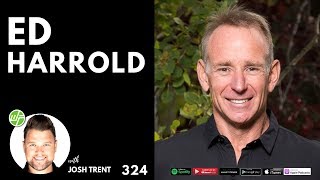
Transcript of a Wellness Force Radio interview (2020) with Ed Harrold about his book Life With Breath. Harrold describes breathwork practices (pranayama, nasal diaphragmatic breathing, slowing inhale/exhale), links breath to emotional resilience, body-centered psychotherapy, vagal tone, posture/diaphragm function, and spiritual/psychological growth. The episode mixes personal narrative (marathon swim, upbringing), practical exercises (connected breaths, 3–3–3 counts, 10→5→ breaths per minute goal), and high-level claims about physiological and emotional benefits.
Chapters
Well, I think we need to expand the platforms mentally of how we interplay the body's movement and the emotions that are deeply tied into that movement and how that interplays with how we feel about ourselves between our ears. I want folks to, number one, focus on their breath. Number two, mindful movement. In other words, there's a story behind the movement. When you can tune your brain into the patterns of movement and the emotions and thoughts that come up from the movement, you become very, very powerful in activating what I like to call body centered psychotherapy. And no one knows you better than you. So when you do exercise, my invitation would be, number one, get control of your breast so you turn on the higher part of your brain and you can control your heart rate. Number two, when you move your body, there's a story being told. It's a beautiful story. It's a five star movie. Not only are you the star of this movie, but you're the director of this movie, but you're also in the best seat in the audience watching the play unfold.
That's Ed Har.
And this is episode 324 of Wellness Force Radio.
Wellness Force Radio, where we discover the.
Physical and emotional intelligence to rely for.
You can have the same brain states as someone who's done an hour of meditation every day for 40 years.
There's a lot of losses that we.
Go through, so the ability to be able to cope with those losses is.
Very important to build skill in it.
Because loss will happen.
You know, you have to have spiritual courage to really grow spiritually. Because if you really want to take guidance from your soul, you have to be ready to realize that mentally of the things that you're asking for guidance on, your ego has some kind of an addiction to or an investment in.
What's up, everybody?
How are you? It's Josh Trent. Welcome back to Wellness Force and welcome to the show. This is 2020, by the way. It's crazy, isn't it, how fast things have flown by already? Let me know how are you doing? Shoot me a message on Instagram or Facebook. We are all connected. It's not just through this device. It's actually through my heart to yours. Here's an invitation. Reach out to me and let me know what, what you're working on, what you're struggling with in your wellness in 2020. You can go to the Instagram channel or on our Facebook page. Now in this podcast, I have got a inspirational and powerful guest for you today.
In this episode, we're exploring one of.
The most remarkable healing tools on the planet. And this specific tool happens 24, 7 in the background at all times. It's the power of our breath. It's easy to forget to take deep breaths, these deep diaphragmatic breaths throughout the day that are so healing because let's face it, the last thing that we remember to do is to take a deep breath when we're triggered or stressed. This is why we're talking to one of the highest level experts when it comes to breath work and using breath for stress reduction in the world on today's podcast. And this podcast episode is brought to you by my homies, my friends, the trusted friends over at Organifi, the creators of Organifi Gold. Now this gold, it's a turmeric lemon balm superfood adaptogen bombshell that, trust me, will make you sleep like a baby. I know this cause I use it on the regular, I put it on my almond milk and I make golden milk at night. It's one of my top sleep supplements that I use personally. But it also helps my nervous system and stomach calm down in the evenings, especially if I've had a super stressful day. I know you've had those too, right? You're a human like me. And because we're human, the best thing to do is take loving care of our human body. Starting with quality sleep, not just quantity. This turmeric infused lemon balm superfood actually allows you to have the highest quality of sleep and life. So if you've been struggling with sleep, give this adaptogen powder a test drive. It's no risk. You get a special deal over@organifi.com wellnessforce you can get a 30 day supply and get 20% off. This is the biggest discount online, by the way. I scoured the Internet in December at Christmas time, no one has more than 20%. We got grandfathered in to these early savings. We're passing them straight to you. Go to organifi.com wellnessforce Use the code wellness. You get 20% off to share that code with your friends or as many people as possible that need and deserve better sleep. Organifi.com wellnessforce and use code wellnessforce for 20% off. So right now, take a deep breath. Take another big one. I'm going to introduce our guest today. Take three more. Maybe this is the first time in your entire day that you've been reminded to breathe. Our guest blends these fields of breathwork and neuroscience and the wisdom of contemplative traditions into effective strategies to improve health and performance and essentially overall wellbeing. He's fluent in mindfulness and he combines all of his decades of research and work with the belief that human potential gives him the depth and understanding to meet individuals and groups exactly where they are. And this is everyone you could imagine. High performing CEOs, athletes and regular everyday people. Now, his book, Life with Breath that we're talking about on the show today. It is a journey in discovering the mind, body relationship that's linked through breath and how this serves as a basis for reducing stress, improving well being and really building resilience. This is a big one we're going to talk about today. Building emotional resilience through breathwork. Our guest today is the one and only Mr. Ed Harold. By the end of this podcast, you are going to have a deep and practical understanding about conscious breathing techniques that Ed has developed over decades of working with these top athletes and CEOs. You'll know why breath work actually helps people lose weight. The physiology behind and you'll explore with us the fear and resistance that comes up during breath work. That's right. Breath work actually releases stored emotions deep in the cellular tissue. And the science is now showing us that this ancient form of healing and stress reduction literally clears stress from our body. And we'll also dig into so much more around breath work. This is a deep dive, my friends. If you've been curious about using your breathing to have a better life and be able to meet stress at a higher level, this is gonna be your podcast. Take one more deep breath. Now let's tune in with the one. Ed Harold.
Ed Harold, welcome to the show.
Hey Josh, it's great to be with you and your audience today.
You know what, breathing, we all do it, it's free. But many of us are doing it incorrectly. Ed, your book, life with breath IQ + EQ equals new you. This was one of my favorite books on breathing. I'm going to link a lot of things for our audience here, but when I look at your work and I see what even brought you into breathing, you strike me as a very heart centered and spiritual man. Now, but that was not always case. Can you take us to where you were when you were swimming? This is an athletic event that really changed your life forever and really was the culmination of Life with breath.
Yeah, about 25 years ago I was a professional marathon swimmer and I was involved in a 22 and a half mile swim around the island of Atlantic City and I was a rambunctious young kid and I had a Lot of energy. And I spent a lot of time in the beach in the ocean, and I thought I had this race down and my ego was in charge. And gosh, about halfway through that race, I was in the most pain I ever felt for my life. I was so separate from my heart and all my mind was doing was revolting from the instructions that my brain was giving to my body. And I really literally thought about dropping out about a million times. It was just so debilitating. I wasn't going to make it. I hurt so bad and I just wanted the pain to go away. And then about halfway through it, or three quarters of the way through it, all of a sudden I tapped into this source of energy that I've never felt before in my life as an athlete. And the source of it was well down into my pelvic basin. And I felt this, what I can describe as a golden white light coming up and warming my body and promoting rhythm and mindsets that were unfamiliar to me but felt completely natural. And when my ego died, there's another part of me that turned on. And instead of me moving my arms and body through the water, the molecules of the water became one with my body and I began to swim like I've never swam before in my life. And I was on the ride of my life as I tapped into this energy source in my pelvis. And it's something that was the most beautiful human experience I've ever experienced in my life. And words really don't do it justice. But the good news is everyone has this in us. Everyone is involved in their own marathon swim, endurance event in this lifetime. And we all can tap into it.
This power of breathing too. It's something that was a part of your life. And maybe you didn't even know it because you were always a waterman. You know, you grew up 100ft, I think, 100 yards from the shore. And the ocean was always this big part of your life. And I love in your book you say that life is an endurance sport. You know, like every part of a human being is connected to this long term marathon. And I can, I really begs the question, when I look at your relationship to the ocean and water. You know, we are born and we come through our mother's womb and we're in saltwater. We spend nine months in a saltwater basin in our mother's belly. What was your relationship to your mom? Was she an athlete? Did she help and promote you in the ways that you did athletics as a youth?
Yes, she was an unbelievable Athlete herself, she grew up on the water in this small little beach town below Atlantic City, just like me. But her greatest gift was she could see the best in whatever was going on in life and found ways to overcome the adversity. And that was the greatest thing that my mom taught me about really being the best possible human being you can be, even though you might not be getting what your ego wants at any given moment of your life.
Yeah, our parents shape us, don't they? I mean, I can't think of a bigger piece that imprints us from a mental and physical and emotional perspective than our parents. If our parents aren't breathing, we're essentially going to model them as children, don't you think?
Yeah. You know, whether you've had a rough go of it as a child or whether you were born into one of the best households on the planet, either way, you know, you've got to grow and carry your own bucket of water. And that's really where we see the rubber hit the road.
Yeah, the rubber hits the road for all of us. I think probably for men, at least. I'll speak for myself. When we're looking at having a family or in our 30s. You talked about in your book, there was a phase of life where you were like, yeah, I did all the things on paper. You know, I had the job, I had my children, I was married. But something was missing. It was almost like there was an existential crisis of some sort that I got from reading your book. Is that what spurred you to go on the ocean swim, or had that been brewing for many years before the ocean swim?
Yeah, the swim was already complete at that time. This was after the swim when, you know, my ego was huge and, you know, I looked good in the mirror, but inside, you know, I was emotionally and mentally crippled to the same behaviors that I had been doing since my teenage years. And I was basically a stuck, stuck man.
What do you mean you were a stuck man?
It means that I kept repeating behaviors that were destructive to the wisdom of what my heart was trying to bring to myself, my family, and my business.
Yeah. Those behaviors, did those come through when you went to the yogic world, the Eastern arts world? I think many people can relate to doing yoga and feeling, oh, my God, I actually know what it feels like to breathe. And then, of course, after the breath comes the real work, the emotional inventory, like looking in the mirror and seeing what was I not doing that wasn't connected to my heart.
Yeah, it was amazing when you were able to create the type of Hormone secretions in your body, and the type of neurochemistry that slows the brainwave pattern down, where you can be with any emotional or any thoughtful memory and begin to turn fear into strength or turn negativity into positivity when we lose the emotional baggage of the memory's imprint.
You were at this center, I think it was called Kripalu, or how do you pronounce that? The yoga center.
It's called Kripalu.
Kripalu.
Kripalu was the foundation of the Indian saint who taught me the pranayama, taught me how to breathe. And this great saint, Swami Kripalu, practiced pranayama for 10 hours a day, every single day, for 30 years straight, and didn't miss one day.
This guy's a dedicated master.
Yeah, he kind of was the real deal. And he wasn't very public. You were kind of drawn to him serendipitously. And I knew that when I. There was something to softening where I was too sharp. There was something to feeling the strength and vulnerability without feeling scared. That really turned me on to a deeper version of myself.
You talked about the. One of the things that you learned when you're at Kripalu is that the brain fundamentally works by repeating yesterday, today. You know, in other words, like every day we have, I think it's 80,000 thoughts, plus or minus, but a lot of them are the exact same as yesterday. So we repeat these same types of questions, and we get to the same place forever. Unless there's this conscious choice to change the pattern. You call it re patterning, which I love in the book. How do we actually make that choice? And what is the role of breath in giving us the power to choose?
Yeah, so the breath. You know, one of the hardest things to do in our life is to take a full breath in and out. I don't even care if. If you're in a good space trying to complete an inhale and trying to complete an exhale when we're in a state of repetitive motion perceptions and behaviors. When, in other words, when you're mentally living in your subconscious, not learning from your subconscious. Yeah, it's very, very challenging. And we have a lot of scientific tools today that can affect the nervous system and two nerves that are really, really important for personal growth. And transforming our subconscious mind consciously is, number one, the phrenic nerve. And the phrenic nerve is the motor nerve of the diaphragm. And that gives us the energy that we require to go in and wrestle between that conscious subconscious mind. And then the second nerve is the vagus nerve, which creates that calm, which creates that openness, where we can have questions form psychologically around the old answers that we've been giving ourselves about life.
What is the vagus nerve's innervation of the diaphragm? Because what I've been doing in my research recently, we have had a lot of people request specific breathwork exercises. And the more I look into the vagal nerve and being in vagal tone, I There is a lot of innovations deep within the diaphragm to the vagal nerve. Right?
Yeah. You know, this vagus nerve is just the master of what we really all individually and collectively need in the culture today. The vagus nerve holds us true north with the heart's intention of what is the truth, what is the self? What do we really want to do with this moment? It's initiated predominantly right above the hypothalamus and it's the tenth cranial nerve. And when we think about the cranial nerve, cranial nerves and breathing, we want to get that breath moving through the nostrils, coming in as that fresh energy sweeps across the cranial nerves. The cranial nerves play a major role in our perception, in feeding the brain in what is going to occur in this moment. And we play a huge role in that perception and keeping wind or breath moving across these cranial nerves, keeping the facial features soft, keeping the throat unrestricted, having the chest cage in a position where there's great spinal alignment and the lungs and heart and work in rhythm. And how the diaphragm and the vagus nerve play a huge role in the health of the internal organs of the abdomen or our energy source. All of our source energy comes from the gastrointestinal fire. And when we can strengthen vagal tone, we're removing mucus, phlegm and fat from the internal walls of these organs so they can perform what they're designed to do with their neighbor organs, using less energy to achieve it.
This is so fascinating. So with this vagal strengthening, or is it really just a vagal awareness? Is it somatic awareness process or is it actual muscle strengthening process for that vagal?
Well, the main muscle that's going to amplify this vagal tone is predominantly the flexibility and strength of range of motion of your abdominal area. Your six pack abs, your rectus abdominis.
The one that everybody tries to brace and get all tight when they're taking photos.
Yeah. And you know what you want to do with that? You know, there's three layers to the abdomen. And when you those skeletal abdominal muscles, that ones that hold the organs onto the front of the spine, those are the ones that you want to have super strong. That's the intermediate layer and the superficial layer. You want to have, you know, you want to have some tone there, but you don't want to have the abdominal muscles so tight that the abduct that the diaphragm muscle can't enter the abdomen during the inhale, which is going to create an energy drainage because you're not going to be able to fill the lungs till their full 5 liter capacity. So having a responsible abdominal area, get that tighter layer up against the organs, that's where we need that strength. So it's close to the bone. But the two outer layers of the abdomen are really designed to help the brain read the environment that we're in.
I love where we're at in this podcast because one thing we always explore in the show, Ed, is this connection. And really there is no separation between physical, emotional and in my mind now, especially over the past couple years, spiritual. You know, there's this nexus in the middle. And the way that you describe this is so powerful. It's in the 30 day breath as medicine program. In the book you said fear and.
Resistance are powerful opportunities for growth if you consciously choose to stay with these emotions longer, allowing them time to deliver their message, to acknowledge what part of yourself is in conflict with your choices.
Let's take a breath there because there's a lot to unpack there.
This staying with the emotion.
When people are holding their breath, they're leaving their body. When people aren't in their conscious breathing or connected breathing, they're not even capable of taking an emotional inventory. Can you unpack this a little bit for us so that we can connect our emotions to our breath so that we can actually feel what's true.
Well, I think we need to expand the platforms mentally of how we interplay the body's movement and the emotions that are deeply tied into that movement, the intelligence of our kinesiology and how that interplays with how we feel about ourselves between our ears. So anytime we go in an exercise routine, you know, I want folks to, number one, focus on their breath. Number two, mindful movement. In other words, there's a story behind the movement. When you can tune your brain into the patterns of movement and the emotions and thoughts that come up from the movement, you become very, very powerful in activating what I like to call body centered psychotherapy. And no one knows you Better than you. The great thing about the body is it just responds to the environment. It doesn't have an ego. It's a total slave to what your brain wants it to do. Energy will follow awareness. So when you do exercise, my invitation would be, number one, get control of your breast so you turn on the higher part of your brain and you can control your heart rate. Number two, when you move your body, there's a story being told. It's a beautiful story. It's a five star movie. Not only are you the star of this movie, but you're the director of this movie, but you're also in the best seat in the audience watching the play unfold.
So fear and resistance are part of that story. I mean, you talked about it in your book too. I think all of us can relate to this, Ed. Like we have something in life that we're working on. We feel that tension in our belly, we forget to breathe essentially, you know, and we know that if we can breathe, we can choose anything. But we have to actually remember and train over time. We have to train our system to breathe. Can you take us to a moment in your own personal life though, where that fear and resistance were so powerful that breath was the only way you could get out?
Well, you know, the thing for me is to notice the fear and how the fear is encoded in the human experience. So one of the gateways to fear is I might have a level of self doubt about what I'm trying to do. And what I'm trying to do is push the awareness of the human species beyond where it was yesterday, today. So we're trying on new things and anytime we're trying on new things, there has always been resistance in humanity. So I mean, you go back to ancient times, you know, when they would say, you know, you can't sail that ship out to the horizon because you're going to fall off the edge. Or you, or you can't use this wheel on a carriage because you're going to go too far away from the village and you'll never find your way back home. So anytime we're introducing new psychological and emotional platforms for us to interact with in our mind and body, there's going to be resistance. And what we want to have is a healthy resistance in the fact that we're going to learn something new. And the goal every day for me is to try to learn one thing new, evolve it, while at the same time forgetting an old platform as something that occurred 30 years ago. It has no bearing on the man who I am today.
Yeah. Well, what was one of those parts of the old ed? Because the new ED is the one that works with corporations, speaks, inspires people, writes books. But before all these things happened, when you were in those early years ed of breath, where a lot of our listeners are, maybe they're just starting breath work, maybe they're just learning what it is to take a deep breath. What was one of the things about your life that was fear and resistance based? That breath help you let go of?
Well, let's just go right into the meat of the whole thing. I wasn't trusting life. I didn't think that I had a happy gene. I thought that everybody else in the world was happy but me. And somehow I had a sucky happy gene and I needed to manipulate situations so that I could get attention from people to expand my brand. And all of this was just a bunch of mind gobbledygooked. I didn't trust life. And there was a. Every time I'd have a new idea, there'd be a thought there. It says, oh, it's not going to work out, or, you know, it's a great idea, but somebody else is going to do it. You know, just sit back and play it safe. Stay on the sidelines, because you can't get hurt when you're on the bench. You know, when the whole time, you know, in life, you got to get in the game to make the changes that are required and all of us are game worthy.
Yep. Yeah. There was definitely a moment, I think you talked about where you said this phrase, gotta feel it to heal it. When you were young, there was a ton of competition and you learned that winners were the best. So not only you wrote, did you not show the fear, but you did everything you could to avoid even feeling it. And the reason I bring this up is because so many people that are working on emotional intelligence, our audience and everyone that's here with us in the community, they're willing to do the work. They just want to know that they're not alone. And so this phrase, you have got to feel it to heal it. How did that work for you? Where were you when that really came through in life?
Well, it kind of snuck up on me through the back window. When you start to control your breath, you're giving the mind and body the opportunity to embody your thinking. And you're allowing the body and the wisdom of the body, whether it be the upper abdomen or whether it be the neurons in the heart, the opportunity to interact with the film that you're watching in your mind. So when you have the ability to pause with your breath and feel your intention, you're taking your intelligence to a whole other level that's well above the normal dialogue of folks who are disconnected from their breath.
Yeah. And in this phase though, feeling it. I think for me, there's been times where maybe when I'm in argument with a spouse, well, I don't have a spouse yet. I just have a really cool girlfriend. But I've been in an argument with somebody that I care about and I'll feel fear. And that fear is based on some subconscious file from when I was a kid. For you, it was about competition. Like if you were competing and you win, then you were loved, then you could quote, trust life. But for so many people out there that are taking those initial deep breaths in their breathwork program, why do you think that they are not breathing deeply? Is it because the physiological part is missing or is it because they're starting to feel emotions and that's what makes them stop breathing?
I think it's a combination of both. And I think everybody's a little different. Everybody's going to come to this a little bit differently. And what we're trying to do is create a framework for folks where we're producing safety around emotions and thoughts that weren't being felt or when they were felt the last time they were scary and threatening to our sense of being as a person. So what we're trying to do is promote psychological safety so that we can explore the feeling part of the somatic nervous system and the memories that are held in our DNA.
There's a really cool exercise in the book where you have people lay on the ground and they're just doing 10 conscious connected breaths and you actually have them whisper to themselves, I love you several times. I found this very profound for me just laying on the floor doing this soft belly whisper. Breathing, breathing in, inhaling for a count of three, holding for three, and then exhaling for three. Just doing this circular breathing. It really reminded me of how children breathe. You know, if you look at babies, babies breathe through their nose. If you cover a baby's nose, they'll start to choke. I think we lose this at some point. Like what happens to us as adults to where we just start breathing through our mouth. And how does that relate to self love and self care?
Well, I think we begin to outsmart ourselves in this constant need for stimulation and the social modeling that life is competitive. We need a lot of energy. So the brain begins to see that it can manipulate the autonomic nervous system and the cardiovascular system by taking us away from the calming breaths through the nose, which are so beautiful for the body and the brain. And it switches into this mouth breathing as if we are in a life threatening situation. And it stimulates an arousal center that is temporary and cannot be sustained. But it feels really, really good. So it's like a drug, it's like an addiction. And we begin to move away from the natural genius of the DNA and the human body. And we begin to start to create artificial personalities to interact with social modeling that begin to lead us away from our heart.
What do you mean artificial personalities? Tell us about that. That's fascinating.
Well, I think that like when I tune my awareness to my heart, so in other words, I can just relax my face, I can slow my breath, I can soften my belly and then take my mind, which my mind can be anywhere I place it and I just focus it in my heart. And my heart will communicate with me, number one, in very short little bumper stickers, it'll communicate with me exactly what is needed in the present moment to get to the next moment without any baggage on it. And a lot of times I'll just hear my heart say what I hear it says me all the time, which is I love you, I love you, I love you. Now you can go leave me and go out and do what your ego wants to do. But when you've tried it your way, then eventually you'll come back with your tail between your legs saying, heart, I'm sorry I left you. And he'll say, I love you, I love you, I love you. And it's this constant, you know, growth of like going outside of the walls of the heart to try to find fulfillment in the external world. And I'm forgetting that everything that I require in my life is actually inside of me and needs to be nurtured.
How did you get that awakening of the heart to know that the heart is always there for you? Like when did that come online for you, that understanding?
Well, I think I was the last to know. It was, you know, there's an old spiritual saying, you know, you can't fix the head with the head. And when you think about that in the most simplistic forms, well, what do you have left? Well, you got everything below your head. And if you look at some of the eastern arts and some of the ancient cultures, you know, they're a very bottom up society. In other words, it's an awareness first that comes from the abdomen There's a feeling that comes in the present moment before we apply a thought or an action or some cognition. So when you're thinking about getting down into the body, you're getting into this system that is so intelligent, we can't even imagine. It's almost scary.
It's unbelievable.
It's so complicated, yet so simple, all in the same moment. And learning how to trust the body, there's so much energy there. Everything we would ever require in our life is down here in the body. And our goal is to feel safe enough to go down there and explore what is there for you right now. And just because it's dark there today doesn't mean it's going to be dark there tomorrow.
Let's let that land for a minute. Ed, can we everybody take a deep.
Breath on that one?
What was dark Yesterday is not 100% guaranteed. It's going to be dark today. And I think that right there is some intelligence that's coming from the heart, from the body. Yet you're right. We do live in a society that's. We live in a world of distractions. You know, whether it's phone or social media or news. And just the conversation we're even having, Ed, is so powerful. And people feel this because it activates that intelligence that somatically is present. It's activating intelligence that's already there. Do you believe that intelligence is connected to a higher intelligence? In other words, our body's intelligence, is that connected to something in the universe?
Yeah, I believe that our ego is just a small sliver of what our potential is and is actually our teacher. There's definitely something inside me that's trying to swim to the surface of my mind. It's coming from my unconscious to my subconscious, up to my conscious. And, you know, the body is extremely patient. And, you know, we live at a time where patience really seems to be missing. And, you know, folks leave the house and, you know, they are offended very, very easily that everyone is different than they are or somehow they don't get it or whatever. You know, the body doesn't play these. The body is simply this wisdom of this temple, this. This place of compassion around all the competitive stuff that we play between our ears. And learning how to turn that body's patience on is maybe one of the greatest intelligent gifts that we have as a species.
How do we flick that patience lever to high? How do we cultivate more patience in our bodies?
Well, the first thing I think we need to do is get control of the length, depth, and pace of our inhale. I think it takes a tremendous amount of energy to sell patients to us, where the external world around us is always instant gratification. Everything's Uber this Lyft that, you know, everything seems to be, you know, if you don't get it right away, there's no value in it for you. We forget about the journey. And when we can slow the breath down and amplify that parasympathetic response around the sympathetic qualities of the brain, which is, you know, just get to the finish line, it doesn't matter how you know you've gotten there. You know, you really begin to remember how special you are when you can start to override some of the sensors that are there artificially from our youth.
What's going on from a biological level as we pay attention to the inhale?
Well, there's a lot of different theories on this, but when I start with folks, the main thing I want them to understand is that when you're slowing down the inhale, you're satiating the cranial nerves, which are indicating to the remainder parts of the brain that you're okay, that everything is okay. You're not being chased by a lion, you're not going to go over the handlebars on your bike, and you're stabilizing the parts of the brain to provide you the highest quality choice at this second of your life and knowing it could evolve even further on the next breath. So that slow inhale and getting that vertical downward movement of the diaphragm, feeling the rib cage expand like gills, and getting that air into the lungs from the lower lobes to the upper lobes, and steadying the mental processes of the human brain, which is very challenging to do. But if you want to control your psychology, the gateway for most of us is to control your physiology. And it begins with the mental command of slowing down your inhale and noticing the details of the muscles of inhale and how that interacts with the muscles.
Of our brain, this diaphragmatic contraction and expansion. So many people have kyphosis, right, where they're sloped forward, they have a forward head. I was a personal trainer for 10 years, and everybody had the same conditions that everybody had kyphosis. Everybody had tight hips, weak glutes, and forward flexion, because we're in a forward flex society. You know, whether it's phone or computers, like, everybody's kind of leaning forward. What do you do with people when you first work with them from a stretching perspective and from a body perspective so that they can actually Take in that full inhale.
Well, let's just back it up for just a second. You know, when you think about the body's posture and the body's posture is extremely intelligent. When we see folks leaning forward slightly, the first cue that we want to take as trainers or professionalists, notice how the being is leaning forward into the next moment and they're not fully present in this moment because the spine's falling forward. That's wonderful. So everything is out of kilter before you even come into them. There's no patience. We're not comfortable in the present moment. We're not trusting our life, our skill sets, our ability to love and be loved. So what are we doing? We're escaping the present moment. We're leaning into tomorrow, today, now, when we're talking about the diaphragm. The diaphragm isn't just a muscle, it is an organ. It interacts with all 12 energy systems of the body to provide efficiency. If the diaphragm is anything, it is about efficiency. And efficiency of the human being comes with the heart rate and keeping that shoulder girdle open. Strengthening the diaphragm. The only way that you can strengthen the diaphragm is controlled breathing. Due to its location in the body, you could do a million sit ups. You're going to impair the diaphragm, not help it. You can't really palpitate it in massage. You can't get at it. The only way to make the fibers of the diaphragm become stronger is to work on that inhale. So if you're sitting in a chair right now and you begin to breathe through your mouth and you're not getting the full diaphragm vertically pressing down, you'll feel your upper torso collapsing down in the L4, L5, which is impairing digestion, elimination and assimilation. If you close your mouth and you begin to breathe through your nose slowly, the first thing you'll feel is you'll feel support and stability in the low back, which is going to allow the body to release and burn the inflammation, mucus, phlegm and fat in our gastrointestinal organs and give you a straight spine. So in the fundamental basis of getting the spine straight, that's the diaphragm spot. Primary role is respiration on the inhale and posture in the spine.
I love this too because it works hand in hand with the transverse abdominis and like you said, the other 12 systems in the body. What's going on though, when we take in A half breath. In other words, if we're. If we're impinged, we're leaning forward. And I love the way you said that, too. Like, if we're leaning forward, we're actually not in the present moment. We're leaning into the next moment. This is why I love podcasting, man, because we hear all these little gems that we never really think about. Let's go back to this, though, because if we're taking a half breath in through our mouth instead of through the nose, what are we causing in the body by breathing in through our mouth and not through our nose?
Well, we're spiking up the RPMs of the body, and we're accelerating chronic disease, inflammation production, and heart disease. So the diaphragm will work when we're breathing through our mouth, but it will not work optimally when the air is coming in cold and unfiltered in the mouth. It's not going up into the nostrils, through the sinuses, and it's not stabilizing the brain. When you're breathing through the mouth, you're only getting air into the top sleeve of the lungs. Now, the top sleeve of the lungs are imbued with only sympathetic nerve endings, fight or flight. Nerve endings that are imbued with cortisol and adrenaline, which are designed to get a life or not become someone else's food. Yeah, it's not. It's not designed with strengthening your immune system. It's not designed for neuroplasticity and raising awareness. It's not designed for patients. It's designed to kick ass or not become someone's. You know, so I mean, it's a whole different type of physiology. So this half inhale or mouth breathing, it's almost impossible to create the suction and pressure that's required for the diaphragm to vertically press down. When you breathe through the mouth, the diaphragm flattens, but it only moves east and west. You're not getting support in the low back. And if you have low back issues, that's kind of the fulcrum of everything else that's connected. Everything's connected somehow to something behind and below our navel. It's the still point of all movement. The diaphragm is the primary driver of core connection. So getting the mouth closed and taking a half a breath through your nose is much more efficient than having the mouth open and taking a half a breath in through the mouth.
In my mind, one thing I love about nostril breathing is increased nitric oxide and we had Dan Burleigh in the show, and he talked about within the nose, there's actually spiral vortex and these vortex or passageways that spin the air. Our nose was designed for us to take long, kind of beautiful, rich, deep inhales. Yet so many people out there have sleep apnea or they have chronic sinusitis.
Ed.
I had chronic sinusitis from antibiotics for the first 15 years of my life. I got sinus surgery. Then I had to get balloon sinuplasty. And all of this was because I wasn't honoring the laws of nature. Naturally. There's laws, right? We pick up a rock, we drop it, there's gravity. When we look at the nose and how it's designed, we look at babies. There's clues in nature for all of us. Yet so many of us are ignoring the laws of nature. What's your take on this? The laws of nature versus how we operate and function as human beings?
Well, as far as I'm aware, human beings are the only species on the planet that can break nature. Every other animal on Earth is genetically predisposed to do what the last generation of their particular animal did, whether it was a lion, whether it was a mosquito. You know, everything in nature is tied into nature. Now. Our body is completely nature, our brain is nature, but our mind, we can break nature anytime we want. And we can see that there's a part of us that thinks it knows better than nature. And we spend the rest of our life trying to get back to nature. Once we become aware that what we're doing isn't nearly as efficient of what this planet planet is hosting for us.
That's a great way to explain it. I mean, we're the only species on Earth that I think have ever, at least in recorded history, hurt Earth so much. And there is a way that we can start loving the Earth by loving the world that's inside of us first.
Like this.
Breath work. What you're doing with life with breath, you're giving people a token, almost like a permission slip, to go back inside and feel what's true. And this is a little esoteric, but I'm gonna go for it. It because how we feed ourselves, how we breathe ourselves, and the thoughts that we allow ourselves to think, that is a direct mirror and representation of how we treat Mother Gaia, how we treat the Earth. Would you agree with this, or do you have any thoughts on that?
I completely agree with you. You know, we're the only species on Earth that has trouble sleeping. And we're protected inside our Homes, everybody. All the other animals are sleeping outside in the wild and sleeping like babies. So there's something that we're doing during our conscious waking hours that is in direct confrontation with what nature wants us to give us, wants to gift us with. And I think people need just to remember that, you know, your past is a plus. It might not have been exactly the way, you know, it was supposed to play out in all the movies and stuff that we watched when we were kids, but at the end of the day, you know, we're all really poor judges of ourselves. We're extremely hard on ourselves, and how do we use this in a positive way? In other words, we'll let people in our life outside of us slide for all sorts of missteps. When it comes to us, we have to be, you know, the greatest thing that ever walked the planet.
Yeah.
And we don't cut ourselves that slack. And we don't understand that every moment of our life, we are the most aware we've ever been in our life. We are consistently, on a daily basis, becoming more aware of our likes, our dislikes, and that space in between our positive forms, our negative forms, and the space in between every moment of our life, we are the most aware any human being has ever been and giving ourselves permission to connect with this Mother Nature or whatever you want to call it. When you look out the window and you see that ocean or you see that mountain that's been there for billions of years, and it doesn't look scared. So get out. So get out there on your hikes, get out there on your bikes, get control of your breasts so you can control your psychology. And when you can do that, you can control your physiology.
On the COVID of the book, it's IQ plus EQ equals the new you you talk about. When we combine our knowledge and experience with the conscious breathing, I think this is big. Information and knowledge does not always equal intelligence. I've found this in the five years of this podcast. You know, we explore physical and emotional intelligence. Intelligence, Ed, is not how smart you are. Intelligence is our ability to gather, apply, and mostly embody. Literally embody the lessons. This mind, body, relationship. You're a Trojan horse, man. I mean, yes, this is why breath work is so powerful and why what you're doing with life as breath is growing in popularity. But behind this is something deeper. Like, if you had a magic wand, what would you want to do with your mission, your life, your legacy when you're gone?
Well, I think I'm no different than anybody else out there. You know, we are all humans. We're all, we're all farmers and we haven't changed at all. We're all sprinkling seeds behind every step we take for the next generation. And what I like to do is leave as many seeds as possible for personal self awareness for the kids behind me so that they don't have to suffer through the bouts of self doubt and fear and self sabotage that I went through. It's just, it's a part of a dream that we all have to go through, but it's not real. The bottom line is you are amazing. You are awesome. You have the ability to do whatever you want to do through progressions and removing what doesn't work, work for you. Thought by thought, step by step, breath by breath, with a smile on your face.
And sometimes that smile is like the hardest thing to do when we're believing a story that we're fat, we're ugly, we're not good enough, all these different things. What is it about that deep conscious, connected breathing, that powerful somatic experience that melts away the bullshit stories like what's really going on there?
Well, I like the way the breathing really gets you down the brass tacks. You know, at the end of the day, if you don't want to be angry, if you don't want to be at war with the world, you know, it's very simple. Just love what you hate about yourself. And as soon as you can smile at everything that makes you frown, it just flips out your brain. And those neurons that were firing into that negativity immediately begin to question that old mindset. And the brain will begin to re pattern that in the positivity and personal growth and strength and communication and compassion and gratitude and all the things that sometimes feel separate from us.
One thing that I want to touch on before we let you go is breathing rates. Because this is fascinating, your book. You talk about hyper vigilance, fight or flight. We've mentioned the axis of sympathetic parasympathetic on the show many, many times. But we've become this culture, ed of being really dominant in this hyper vigilance.
Because we're just taking short little breaths.
All throughout the day, but we're never actually doing slow rhythmic breathing. And the goal is actually what you talk about. 10 breaths per minute, going down to five breaths per minute. But most people are at 15 to 20 breaths per minute. Can you share how you found this information and how do we get down to five?
Well, first of all, you have to find interest in taking less Breaths per minute. You know, where there is interest, there will be attention, and where there's attention, there will be energy. As you begin your journey to taking less breaths per minute, you'll notice that how you feel about any particular subject of thought is paramount in regard to whether it's positive into your transformation or you're not quite ready to shift out of that old awareness. Now, if you can, learn to breathe through your nose, but take the air in and out through the epiglottis of the trachea, so you're contracting the epiglottis in the throat so that you first become aware of the breath moving in and out when it hits the throat rather than your nostrils. This is going to keep the nasal channels dilated. It's going to keep them open. And when you contract the epiglottis and the muscles around the trachea, you're creating heat around the throat. And the throat is an area that creates communication between the heart and the lower brain. And when the heart can get beyond the lower brain and talk into the hippocampus and the higher brain, you become fearless, you become curious, you become poking around in old neighborhoods of the mind. You start to clean stuff up for yourself. So the goal would be, number one, every spare moment you have for the rest of your life at a red light, on your bike, on a hike, at the computer screen is. Is to remind yourself to take the slowest complete inhale you possibly can and the slowest complete exhale you possibly can and start to sell that to the respiratory centers of the brain, that this is how I want to respire my life for the rest of my life.
How long do people go through this process of going from 20 breaths a minute to five? Like in all the corporations, corporate work, and even personal sessions, is there a timeline for people? Is it three months, is it six months before they're actually on their own breathing less per minute and feeling better in their body?
I'd say it's about two weeks.
Two weeks.
That's pretty quick.
Yeah, well, the part of us that wants to be healthy is huge compared to the part of us that wants to be unhealthy. The unhealthy part's got great marketing. You know, the really powerful part of us just whispers. It's never going to scream to get your attention. It's never going to shame you or blame you to put you down to build it up. The part of us that's the real part of us just whispers advice. And it waits patiently for us to calm down and Try all sorts of our schemes and whatever we're doing. And then when they don't work and we have a moment of exhaustion, you tune in, you hear this little word or this couple words, and you're like, oh, that's what I'm supposed to be doing today.
Intuition becomes a whisper when we're breathing consciously.
Yeah, your internal antenna goes way up and you. And it's like you put in a new alarm system, too, inside, when intruders are trying to break in and steal your goodness, you become more aware of that intruder further out from your fence. So you. So it's not like right up on your front door, it's like a hundred yards away. And you have the ability to get around that a lot easier than. It's like, oh, my God, he's ringing my doorbell.
Ed, what have you combined with breathing, with breath work as a life practice that is complementary? You know, we know that you're massively involved in yoga because that's really where most of the pranayama came from. But what else do you do to stack your breath work with other lifestyle practices?
Well, everything I do in my life revolves around how I breathe. And everything is first focused on, you know, how can I breathe the most efficiently for the stress demands that I'm under in this, how can I keep my heart rate down and keep my psychology open? And that all comes back to how I'm breathing. So there's so many different ways to breathe. We could have a breathing class every day and we wouldn't be able to repeat the same technique twice for the rest of our lives. That's how many different ways there are for this thing called inhale, hold in, exhale, hold out. There's millions of different ways to sequence it, which once you start to get into this breathing world, there's something inside you that's going to guide you into this excellence, this ability to cut down input and increase output.
I love the passion that you have for breathing because it's like you're here with us now. And this is a life training process, Ed, to actually be here in this present moment, not leaning forward, being uncomfortable with the one we're in, not trying to think about the past. I mean, be here now. It's a book that was written by Ram Dass, you know, and I'm curious, as we say goodbye, do you have guidance for us when people are struggling to be in the now?
I'm just going to go back to what I said a few moments ago. Every spare moment you have for the rest of Your life. I want you to come slow your in breath down, and I want you to consciously slow your out breath down. And I want you to psychologically go somewhere inside yourself that's been trying to get your attention for years now. And I want you just to simply move into beginner's mind. Simply meaning that right now, in this moment, it's okay to be a beginner. I'm not a know it all, I'm not an expert, I'm not a dad, I'm not a son, I'm not a grandfather. I'm a beginner. And tune into that. And if you don't get off on that, you will tomorrow. Just keep practicing that.
The beginner's mind, the child heart, the warrior that we operate as men and women, if we're not connected to that inner child, if we're not actually feeling what's down in there in the deepest parts of our knowing, it's really hard to operate from a place of love in this world. And, you know, thinking about intelligence, how would you define this? How would you define wellness? And what does wellness actually mean to you?
Well, the inner child is the foundation of the healthy part of our subconscious. And that inner child will always be there, whether we accept it or not. So coming to peace with this inner child and allowing him or her to help you as an adult or a seasoned ripened veteran is key. There's a reason why that child's awareness is there. He is free, he is happy, he is playing, he is flowing through the day. He is completely well. There is nothing wrong with this inner child. And any part of our minds that don't want the inner child to be at the seat of the table of where we're making choices is a space that we need to soften.
Can you share with us about that real quick? That is so profound, this inner child sitting at the table. What has been the relationship that you've seen with people that are disconnected from their inner child? How do we actually go towards that? We don't have. That's a whole podcast of its own. But. But what are the beginning steps? Actually? Just let that child sit at the table.
Just lighten up. Lighten up on yourself. That doesn't mean become lazy, you know, and doggle. You know, life's about, you know, taking action and getting moving. But at the end of the day, you know, the inner child, he was always moving. He was moving his body in all sorts of different shapes and angles and patterns and movements, and he was always completely in the present moment. He was Never in tomorrow or yesterday. He could get scolded and he would be down for 30 seconds and he'd be right back into what he was doing, totally engulfed in the object in front of him. And that mindset is completely available to us as adults.
That's powerful, man. And everybody can go to edherald.com Life with breath is the book. Ed, we scratched the surface on breathing. We covered a lot of ground as well. Is there anything that we missed that you'd really like, like to communicate to people that are listening?
I would just say slow your breath down, trust your life, fulfill your dreams. Remove what's not part of that positive part of the dream a little bit every day until it just eviscerates and burns away like a. Like a dream.
On my arm is a phrase in Italian and I've talked about it a few times. It's a posto resperare poso segue. And what that means is if I can breathe, I can choose. And I know that all of you got something really powerful from this Life with Breath with Ed today. But that is my North Star. And Ed, it's been an honor to share this space with you around breath being a choice, a choice that can unlock so many beautiful things and really just bring us back to that kid sitting at the table so that we can feel peace and happiness in life. Ed, Harold, thank you for coming on the show.
It was great to be with you. Josh, you're an amazing guy and thank you so much for what you're doing. For you yourself first and your audience second.
All right, you guys, we're talking about Ed's work. Wellnessforce.com group, until we see you soon.
I'm wishing you love and wellness.
Hey, thanks for listening to the show, my friend.
Everything you learned on this podcast starts.
With your morning practices. So from over 300 world class guests.
We pulled together six simple, simple yet.
Powerful morning practices down into a 21 minute system guaranteed to increase your vibration.
And the way that you feel every day.
Get this free powerful guide over@wellnessforce.com M21 and if you love this show, share it with somebody.
Share it with somebody that you love.
Or that you care about. You can support the show easily by leaving us a five star review on iTunes. Just go to wellnessforce.com review or if.
You'Re on your phone, just tap it. Hit the link in purple that says review this podcast. And the journey does not stop here.
We're continuing this discovering process in our private Facebook group over@wellnessforce.com group you can.
Be a part of it. You already are. All you have to do is join us@wellnessforce.com group and I will welcome you at the door. Now go out into your life and live your life well.
And until I see you again real soon, I'm wishing you love and wellness.
Sam.
More from Josh






Your child's future start before pregnancy... and even before conception! #podcast

MD Reveals: Your Healing Creates Your Child's Reality (The Souls Coming In Need Strong Bodies)



