Evolve or EVAPORATE? How Creativity FEEDS Your Soul | Nick Onken @WellnessAndWisdom
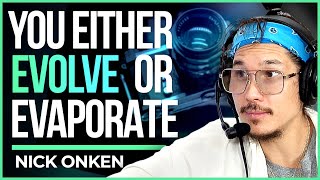
A long-form interview with photographer and creative educator Nick Onken about his personal and professional evolution: growing up in a conservative Christian household, transitioning from graphic design to international commercial photography (clients include Nike, Coca-Cola), experiencing financial scarcity ('ramen days'), and later shifting toward personal-brand work and creative coaching. The conversation covers changes in the photography industry due to social media, the tension between ego-driven and service-driven creativity, practical tools for resilience (breathwork, meditation, plant medicine), and Nick’s Identity Alchemy framework and free Creative Identity quiz as pathways for creatives/entrepreneurs to build aligned visual brands.
Chapters
I think we're in a creative renaissance right now. You know, it's like the artists are being rebirthed and reinspired and reinvigored and, you know, I think it's taking action on that and as a collective, as we all start to step into a more creative flow, a more creative mindset, because you're not just creating art, we're creating our world, we're creating our reality. As we all step into a space of creating our own reality, that's going to raise the collective consciousness.
Nick, welcome to my house.
Thank you.
Thanks for being on the show.
Love it. Thanks for having me.
People know you well. I know you as like one of the world's best photographers, but you have a lot more to give than that, man. If people don't know you, if they're like just seeing you or hearing you on the show for the first time. Nick Onkin, professional photographer. Some of the best people in the world, Usher and Lewis Howes and some of the big boys and big and big girls. But share with us, man, share for the audience. Like, who are you, man? What do you do today? I know that changes all the time.
You know, it's funny, I came to this kind of brand identity as a creative alchemist and I, because I've been figuring like this and this kind of came to me through the pandemic, being hauled up in New York in my apartment by myself for four months, which is actually fine.
Okay.
Because I love, I mean, it was just like how I normally am when I'm home now I'm like in my creative lab. I have a whole, I have a two floor apartment in New York and downstairs is my, my lab, I call it my creative lab now because I like, I'm doing, I make hats, I do photography. I'm, I've been learning to DJ and play house music and stuff like that. Now I'm kind of trekking into learning how to produce my own stuff. That's going to be, that's a long journey. But I just kind of started getting interested in that. So the idea of being a creative, creative alchemist and bringing all these things together and how does that under one umbrella. But also it's like the spiritual journey behind that because that's been a huge piece of my life for like especially the last two or three or four years.
I think if you're alive on planet Earth right now, you're in a spiritual journey. Whether you believe it or not or.
Whether you realize it or not, you're there, you're there. It's become more into my conscious awareness over the last few years and yeah, and it's been a beautiful journey. So the whole idea is to integrate that into all the art. So I would say like my north star is to help to create art that inspires and empowers people to find their true selves and to connect with source and the greater, the greater space that is out there. Whatever you want to call it, the universe, God, you know, I believe in it all and, and I think the more especially as a creative, it's really God is creativity. We are birthing, you know, we are the midwives of creativity. So we give birth to, to sources, ideas in this planet.
Birth is powerful. I have a six month old son, so I got to be there for the birthing process.
Whoa.
I mean birth is not smooth. Birth is radical. And sometimes creativity can be radical too, like the creation of it. It's funny, when I was looking at your past, your mom and dad, like they were very conservative. They were, I believe, Christian faith.
Yeah, yeah, yeah.
So that was a pretty big vacuum, to quote Alan Watts, that you were created in nature abhors a vacuum. Right. So share with the audience like the vacuum that was created for you by having the conservative mom, the conservative dad. How did that in kind of a cool way fuel your creativity? Like what was that like?
Yeah, I mean they were very. I mean I grew up in a Christian bubble, suburbs of Seattle and I was cultured to believe this specific dogmatic practice or like set of rules. And it's so interesting to. My parents were always very supportive of my creative endeavors. My dad, you know, I think my dad, he's like, he's an artist as well and not as practicing, but he always used to paint and, and he did underwater photography randomly enough.
Cool.
So I think as I as in my formative years, they were. My parents were always very supportive of the art that I was creating and my love for drawing and painting and whatever that was. So I'm blessed to have had parents who've always encouraged me in that direction because I know a lot of people don't. So I think they also helped me pursue my natural identity and didn't really, you know, their, their, their push of adopted identity for me was living in a Christian world, you know. And for me, my, I didn't know any better. I didn't know what the world outside of that was. And so as I got older, I started to explore the world outside of that and feel more philosophical way and explore like, oh wait, I'm so Curious. But the Christian dogma was so rooted in my DNA and rooted into my subconscious belief system that it was. It took me a good seven years to step out of the fear of going to hell or whatever. You know, it was like, that was what was preached to me my whole life was like, oh, if you're not a Christian, you're going to hell. And that is a big fear tactic. And it's a big thing that's ingrained. That was ingrained into my, into my head, into my subconscious, my way of being. And so to like, to really deconstruct that and shed that identity took a good seven years. That started when I was 21 and, you know, around when I was 28 was when I was like, I felt more free of that. And there's still a lot of lingering things that I was brought up with that still I'm working through breaking the, Breaking those constructs.
One of the things I'm stoked to talk with you about is money, because everybody but artists, you know that old adage, oh, the starving art artist, which I think is really just a mental construct. It doesn't have to be that way. But you had, I think you called it the ramen days, where you were like literally eating ramen because. Because it's easy for people that are aspiring entrepreneurs or that are just aspiring in general to potentially cast judgment and not know one story because they just see the fruits that you've yielded through, like being a high level photographer now. But that is not the case. That's not the case for you. Like, you literally had to eat ramen because you were, quote, quote, the starving artist for a while.
Yeah.
What was like.
And when you're starting out as an artist, you don't have the credentials and the work to be able to command higher prices and higher, you know, actual real money, if that's what you want to call it, like livable money, like enough money to create a live, like have a house and have all these things, just a normal space of living. And that's still a dance with me right now. You know, it's been many different ups and downs. And being an artist, I'm more in the right brain, so left brain business stuff is, it's a, it's a tricky, you know, it's like more work. So it's definitely the balance of both. But the ramen days, and I call them the ramen days because it's like a little bit more. It makes a little bit more sense. But for me, that was like, oh, I'd Cook a pot of pasta and make it last like five days.
Yeah.
Kind of thing.
Actually, I've seen memes on Instagram where people have like the dry ramen and they're putting the salt on it and eating it. Were you doing that?
I did that a little bit. Like. Yeah, like, you know, it wasn't my favorite thing. And pasta was a little, you know, still cheap. Right. Like you cook, Cook up some noodles, make some pasta sauce, and then put it in the fridge and like eat it every day.
Yeah.
And I guess it was a four. It was Italian ramen.
So when you were eating ramen, there was, there was some scarcity. And, and I, I was raised on welfare. My audience knows my story in depth. And if you haven't, then we'll link in the show notes some of my story. If you're just coming to the show. If you're just coming because you heard Nick. But like, wow, eating ramen, coming from scarcity. Like your dad, I think you said, made 50k a year. 55k a year.
Yeah.
Your mom also was in a kind of a humble job too, or.
Yeah, but my mom, when growing up, that was the great thing is my mom was. Stayed at home with us. Cool. Yeah. Until we got a little bit older. Then she got a job at the school as like the secretary. Okay. So, you know, I mean, she wasn't really making that much. Yeah. In general either.
She wasn't a ball and entrepreneur. So you don't have like entrepreneurism in your DNA?
No, not at all. Like, I am like straight up black sheep in my family. Like, my sister married her somebody from high school. They have three kids. They live. My parents live with them. Well, yeah, and you know, they, my mom had the grand or my sister had the grandkids from my parents. And I'm the one that's like, you know, I'm 43, traveling the world, living in New York. I've been to seven continents, over 60 countries, and I've, you know, made a living doing art. And I think my parents have always kind of, especially my dad has always admired that because I know that that's probably something in him that he never really got to do.
Yeah. But it wasn't until you came across Tim Ferriss's work, the Four Hour Workweek, where you were like, whoa, I can, I could. That's a possibility. I can do that. And I think, honestly, Tim Ferriss, you know, I've never met him, but in his early days, he was really inspiring. I'm sure he's Very inspiring. Now for people. I don't follow him that much, but he really put you on a different path. Right. You came across his work and that was what made you go super deep into like having a business of your own. Not being like the hamster in the wheel that you had talked about. Yeah, we all feel like that at times. I think. I know I'm 41. There was a time where I was starting out as a personal trainer and I'm like, is life really supposed to be this fucking hard? Like, do I have to get up every day and run on this treadmill? So looking back, like, what was the shift? Was it Tim's work or was it just pressure and time? Like, what were the ingredients that made you shift?
Yeah, I mean, I think it was the desire to want to do art as a career, but not knowing how to do it and then reading the four hour work week just gave me like a structure or like it was more mindset. Right. Because the book is really talks about how do you work out of a full time job, create something online that funds the life that you want to have. Whereas created, being a creative is a little bit different of a dance because you're still trading time for money. It's just a different way of doing it. But you can also that. I had flexibility as a. I was a graphic designer for five years. That was my first career and that's what I went to school for. So I had the flexibility as a freelancer to do whatever, create my own schedule. And after reading that book, I was like, oh yeah, I can just create my own schedule. I can do what I want and I can make money in pockets here and there. And that was really. But it still gave me the idea of like, oh, I get to design my life how I want to. I get to like travel the world. I get to, you know. Then when photography came into the space, I was like, oh, I can travel and make money. This is amazing. Yeah. So I'm not even mad.
It almost feels like, correct me if I'm wrong, like your, your desire, your dream was like this 7, 10 year process and you're even still in the process of building that dream now. It wasn't like it happened because you met the right person and your career exploded overnight. It's been a long process.
Yeah. And it's been an up and down process. And it's not like building a business where it kind of scales and grows and then eventually you don't have to do much of it. I'm. I'm Always still having to trade time for money. So that's been the up and down of it. I've had months where I'm, like, balling and doing well, and then, like, you know, business just. I'm not getting the calls. And, you know, that's a whole. I mean, go into that part of the journey, too. But in the beginning, it was really figuring out a way of doing that to be able to also create my life. So I was utilizing the tools of creating a business around art to be able to craft the craft the lifestyle that I wanted to live.
I find it fascinating that people. I was at a networking event last night here in Austin, and someone came up to me, and I've been on his podcast, and he was like, dude, you're doing so amazing. Like, what does it feel like to be at the top? And I'm like, I'm nowhere near the top. But online, there's a perception that all my ducks are in a row, all my shit's together. And, like, I'm very honest. Like, we're still growing. I talked to you about changing the name of the podcast, right? Where when this comes out, I don't know, we may change the name of the podcast, because creativity is just like love. It flows, it comes, it can go. It's very fluid with creativity, and same thing with business. I don't think there's ever making it. I don't think there's a position of they're there, or like, oh, I've made it. I think that when we get to the top of one mountain, it's at the foot of another one.
That's what it feels like all the time.
All the time, right? How. How has that played out in your life where you reach the top and you're like, oh, I see the other mountain I want to climb.
Yeah. I mean, so when I started to become a photographer, so I had. I was doing graphic design, and then I had taken a couple classes in high school and college for photography because it was part of the design program. A few years into it, I was freelancing and digital photography. Digital cameras got good enough to be able to use the files on as, like, on the computer, Right. This is like very, very early digital days. And I convinced a nonprofit design client of mine to split the expenses on a trip to Africa to build them a photo library. I had no idea what I was doing. This is like one of those, like, hey, yeah, I'll do it. And then you weave the parachute on the way down, and you figure it out, and I think that is also a big thing or trait in entrepreneurship is you figure it out. It's problem solving. And if I don't know how to do it, I'm gonna do what it takes to figure it out and learn. And that trip was life changing in two different aspects. That opened my eyes to the developing world, which shifted the way that I see the world, and also how I approach my business and giving back and all of that. But then it was also this space of, like, oh, wow, I can travel and take pictures and, like, people pay me to travel. Like, at least, like, pay for my travel expenses to travel around the world. This is amazing.
Yeah.
And so from there, I started to start to pursue photography as a career. I connected with a photographer in Seattle, and he taught me. He kind of opened my eyes to the business of photography, that it was actually a career, it was actually a business. I literally didn't even know that that was the case at this point. And then from there, I started kind of assisting with him and shooting my own work. And then I saw was like, oh, commercial photography. I want to be a commercial photographer. And, like, that's shooting, like, print ad, like, ads on billboards and magazines.
And this is the stuff you've done for Nike and these other huge brands.
Yeah, yeah, yeah. So Nike was one of my first clients, oddly enough. And I had gotten this call from this producer out in New York, and I was still living in Seattle at this time, and he was like, hey, we got your name from your friend Brian, who's our art director. And we have this job next week. We want you to shoot, like, Mariano Rivera and Albert Pujols and all these. I was, like, writing these names down because I have no clue who they are. Biggest names in, like, football and baseball.
I don't follow sports anymore, too. Don't judge me, y'.
All.
I don't follow sports.
I have no idea.
I don't. Yeah.
And so I had no idea who these people were. I wrote them down, looked him up later, and I was like, oh, okay, this is. This is my. This is. I was like, I'm. This is my. This is it. I'm in. And, like, you know, so I did this job. We traveled. It was like the Amazing Race. We tried. Went to San Diego, and then we went to Pittsburgh and then St. Louis and then LA. And that was a whole. That's a whole nother story. But long story short, that was, like, the kickoff. And I thought I was in, right? I was like, I'm a commercial photographer now, and Then I moved to Paris. It was the most money I've ever. I had ever made.
How much was it? Do you mind me asking?
I was like 30 grand. Yeah.
That's good.
Yeah.
In like one shot. Just boom.
It was like six, five days, four days or something like that of shooting.
That's good money.
Yeah, it was good money at the time. And I, you know, it was amazing. I was like, this is so dope. But then I didn't see a job like that for another two years. So I was like, you know, again, it was like, back down. I was like, what am I going to do? Like, I thought that I was in like, what's going on? And, you know, mentor was just like, hey, you know, be patient. You gotta keep working hard, you gotta keep grinding, you gotta keep shooting. And the whole thing is like, build a portfolio that's gonna sell what you want to do. So I'm just shooting my own portfolio work and eventually got another job for Nike. And then a couple years later, I got an agent. And then when I got an agent, that was like my catapult into doing these high level commercial print work. So I was like, you know, my first big gig was shooting secret deodorant. A campaign for secret deodorant. And this was my first time. Like, I had, we shot in Miami. I had three assistants, a digital tech. We had hair and makeup. They all had a. Assistance. We had motorhomes on set. We had, you know, it was just like we had extras in the background of this shot. And there was like, you know, there was like probably 40 people on this set. It was my first time running a full set. And it was, it was a learning experience. And then from there I just started shooting everything from like Coca Cola, Nike, Reebok, Adidas. I started shooting in Brazil, I started shooting in China. I was like all over the place.
You've shot with Peter Krohn. He's been on the podcast.
Love Peter.
I love his work. And you have this really, really beautiful way of capturing someone's actual essence, like who they are. It's interesting because I had a photographer reach out to me here and he was like, hey, I'm building my portfolio. Can I just do some shots of you and I'll put it on my site. He's like an up and coming photographer and he had this huge process. And I'm sure you have something the same where you actually get into the psyche of this human. It's not like you're just showing up with some props and shooting them at their house. It's a process.
Yeah.
To really capture someone's essence. How do you do that? How do you capture someone's essence to. To where what's showing up on the photos is actually truly them.
Yeah. I mean, there's. There's definitely a sensibility that I've developed as a photographer, and the way that I see and the way that I, like, move. And also it's like, how do you direct and how do you vibe with somebody and how do you pull what that person needs to come out? Right. And that's different for everyone. So as a photographer, that's the other piece of it. Right. Is, oh, I got to kind of like, drop in with this person, assess, get them moving, see what, like what the angles are, see how they move, how, what. What they'll give me, but that's also dependent on what I give them. And this is kind of translated now because I'm working on the personal brand stuff more now than I do the commercial work, because the commercial world is just a whole different ball game. It's just not what it was and not what it used to be.
Yeah. What' changed?
Social media.
Okay.
I mean, back in the day, it was like there was less photographers. There was no digital. And, you know, we were all. All of us were. We had to put actual physical portfolios together and we'd ship them to, you know, if a client wanted to use a photographer for. For a print ad campaign, they would call the agents and the agents would send the book, like, physical. The books are like, you know, 14, 11 by 14.
They would mail it.
Yeah, we'd FedEx them overnight the book. You know, $50 just to FedEx the book. And then they'd like. The art directors would, like, open up all the books and go through it. And then they would choose. They would bid. Bid out three different photographers and then make the decision, make their first decision, and then they pitch that to the client. The whole big thing. Right. These are for, like, you know, I would say these productions are probably like 100, 150 grand a day, you know, between fees and like, all the. All the whole production. So they want to make sure that they can trust the photographer, that they're going to pull all this together if they give them all this money. And so your work has to really shine for that. Your work has to show that, yes, I can manage $150,000 production or a $500,000 production. So you have to build a portfolio that says that and going, I guess we're kind of Popping back and forth. But now, you know, since Instagram came out, since it became more about the channel and now people have to crank out more imagery, so the art directions, you know, it's like people. It's gotten diluted, and there's way more photographers in the game, you know, because you can pick up a digital camera for thousand bucks.
Totally.
And if you know, and you learn, you know what you're doing, take some classes online, look at some YouTube videos, practice, you can get pretty good. And these kids are getting pretty good, right?
Even with the iPhone, the 13 Pro Max. I'm like, oh, my God, this thing's incredible.
Oh, it's insane.
What technology is doing the same or better than a DSLR camera.
Yeah.
I'm, like, amazed at this. So how do you. How do you actually rise above all the noise and be, like, a true signal? Like, how do you signal. How do you be a beacon in this world?
I mean, I think the first part of it is, and this goes throughout the whole. My whole career is like, you got to build a signature style that people know you for. Right. Like, if you look at all my work, you know, there's a. There's a signature. Signature style that is like, oh, I want that. Right? Yeah. And so that's the first piece, and you got to keep that going. And it's like, not just. There's this sensibility of light. There's a, like, the story that you're telling, you know, what's. What's the content that you're putting into the photographs. There's so many pieces of that pie, and that's like. It becomes more of a calling card. And that's harder to do these days because there's so many photographers out there and so much looks the same and all of that. But for me, you know, moving into the personal brand space, I have. I have the experience of working on these huge productions, doing, Creating, like, lifestyle photography for every brand, like Coca Cola and all these, you know, brands that I don't even know if I believe in anymore. But that's all.
Are you. Are you allowed to talk smack about brands you've worked with before? Like, would you ever work with Coca Cola or Pepsi again?
I mean, that's just a moral dilemma, right?
It's really. How do you. How do you balance the two? Like, would you do an ad for Pfizer?
No. Yeah. I mean, that's the. That's the other thing, too now is like, oh, I'm in a different space. And, Yeah, I just don't. I Don't necessarily want to support certain brands, especially being in the wellness space and like taking care of myself and like learning all the things that I need to take care of myself. I don't. Wouldn't want to promote that for other people.
What's that been like, being in New York? We were chatting before we hit record and like, you're like, hey, I'm checking out Austin. You know, I'm looking around, I'll see where I live. I feel like everybody with us right now is feeling just this massive shift. Like, like, you know, ever seen those almond trees where they bring the truck up to the tree and they shake the tree and all the almonds fall to the ground? Yeah, that's what it feels like we're going through. I know you feel this. Like, do you feel like your world is being rocked right now, like your tree is being shook? I do. On a certain level.
180%.
And so everything's moving at this like, speed of light with creativity and Instagram and TikTok and everybody's a, quote, content creator. What's the North Star like? What's the thing that makes you not compromise? Know your direction, know yourself and be able to give people this identity. Alchemy process.
Yeah. I mean, I guess I would say this starts back to my own personal journey of, you know, when I hit this high point in my career and I was shooting campaigns. Like, literally I'd shoot in New York and then I'd fly to LA and shoot another campaign, and then I'd fly back to New York, shoot another campaign, and I'd fly to Brazil. And I was like. And then I almost kind of got burnt out a little bit and I think my energy reflected that. And then the industry kind of like started to shift with social media and like, my business, my commercial business just started to like slowly decline and decline and I went to an emotional spiral.
What year? When was this?
That was probably 2013. 12.13ish. And I just didn't know what to do. I was like, I was broken. I didn't even know that my self worth was coming through it from my photography and who I was shooting and what I was shooting and all these different things. Because there's this whole external validation piece that comes with being an artist. Right. And I was talking to East Forest about this and we were talking about how like, it's just like a snake eating its own head, right? Because, like, the better work you do, the more validation you get. But then you got to go back into the cave and Create for yourself and stop, you know, don't create for other people. And it's just like this circular thing. So unless you're aware of that, you know, I wasn't aware of this. I was like in my own. I was just in ego space doing my thing. And then my business started, like, dropping off, and I was like, ah, what's wrong with me? Like, what is this? And I went downhill. And then Lewis actually got me into this emotional intelligence and leadership training.
Which one was it?
Mitt?
I did Mitt as well.
Oh, did you? Funny. Too funny. Yeah, yeah.
And it was powerful. I got what I needed. And then I thanked them and I said goodbye.
Yeah, same here. Yeah, same here. And it was. It was an amazing.
Because it can be a tricky world if you get stuck. I guess you could say I'm not here to bash any program, but, like, you guys, like, even in Vipassana, you know, the. The creator of Vipassana, the ten day silent meditation, Goinka, he said in the video, on my 10th day, he goes just like, everything, take what serves you and leave the rest. And it's like, yeah, that's. That's so what we all need to do. Because it's easy to get involved in groupthink mentality and associate your identity, you know, talking about alchemizing identity.
Yeah.
It's easy to alchemize your identity with someone else's identity, but it's not really yours.
Totally.
You're just doing it because it's kind of the path of least resistance. Do you. Do you see this in your work?
Yeah, absolutely. I mean, you got to think of this. You got to take things as your tools. As tools. Right. They don't be. Otherwise they become a cult.
Yes.
And for some people, MIT became a cult. For me, it was no tool to, like, actualize my. My own self. And then that goes into my work. Right. Like, the. The better, especially as an artist, the. The more work I do on myself, the. That shifts the art that I created. And that actually, like, was a huge shift in the art that I was creating. And I started my podcast from there. And, you know, that's where I started to kind of start to come. Come back up a little bit. And I don't remember where we. Where we were going with it, but it's perfect.
We're in a cul de sac of emotion right now. We're just hanging out, playing tennis with each other.
Yeah.
And I feel like, really?
What.
This is something you talked about on one of your podcasts. It was like your 2021 wrap up and you talked about ego driven versus service driven. And that hit me because I'm like, man, there was this dream book that I was reading in 2014 and it told me that I'm like this Leo Aquarius path and I'm not too big into astrology. My partner Kerry Michelle is, she's like an expert in astrology. But from what I know, like some of these things can be fairly true. Do you follow astrology much or not really.
I'm not. Yeah, it's a whole other rabbit hole that's like pretty difficult to. It's not difficult, it's just I haven't really gotten into it.
Somebody watching right now is like, I believe in astrology and that's cool because I do believe that when there's a full moon I feel kind of different. I mean I can't deny that like full moons kind of fucked me up in a beautiful way and in a weird way. So one thing I know about this Aquarius 3 to Leo thing that I was reading in the dream book in 2014 is it said that for my path specifically, and I'm curious how you feel about this. I have to do things that are number one, rooted in the common greatest good. And if I'm doing any kind of things from my ego or from self serving or wanting the limelight or wanting to be popular or wanting to be seen, I'll never be successful and I'll actually have a really painful life. In other words, the only way to do this is not to be ego driven, it's to truly be the embodiment of being service driven.
Yeah.
How do you, how does that feel for you? That entire idea of ego and service? Which one drives you?
Well that's, that's kind of what I was. You know, it goes back to the snake eating its head, right. Because it's. Once you start getting an external validation, then the ego comes in is like, oh yeah. But then you gotta like kill, like shed that and go back into a service state. And I've, it's been a challenge for me, you know, because like even now and like even up to this date, it's like, it is this constant like balance of coming at it from a service perspective and a service intention versus like, oh, I need to be like acknowledged and honored for this work. And like that's what fills me up. So it is this like, ah, okay, I'm back. Okay, ground. And that's why I've like had so many, I've got so many Practices in my daily practice now of grounding every day and state changing every day in the mornings and it is to get back to that more service oriented state.
You hang out with a lot of super high level like people that are multi eight, nine figure people that have all the money in the world. Do they still deal with this? The service versus ego driver?
Yeah, you know and I think yeah people do and people struggle with. Because it is, it's hard right? Because you know, yeah, I am about all about helping people in service. But then that money comes and it's.
Like feels good to be told you're amazing 247 with 500 DMs. Yeah, sure.
And I see this with celebrities too. Like because the ego external validation is so high that it's hard for them to drop back in even if they're doing plant, plant medicine and personal development stuff. Like there's still that struggle because a lot. And especially if their, their surroundings are. That's what I love about Russell Brand. Right. Like he's kind of almost stepped away from the ego stuff and is just doing his thing now. And he's doing a really good job at. He's very intellectual. Right. And he's creating his. Who dive into the world of what's happening right now but from a very like kind of balanced yet still, you know, he's got his own biases and everything. But he was one of the first.
I would say mega influencers to actually be honest about what he sees in the world when it comes to the, the shenanigans. Which is CV19. Right. He was one of the first people that really was like here's the papers, here's Wuhan coronavirus, here's Fauci, you guys want to do the research? And he would like link it in his stuff. Like I was so happy with that and I think that needs to be applauded that kind of like leadership. Because he probably lost a lot of followers. He probably even lost deals, speaking engagements, money, who knows. But he's doing something from his heart. Like he's actually doing something that is truly service driven. And have you ever had a moment in your life where you had to make a decision like that, like maybe coke hit you up and they're like hey, we're going to pay you 175 GS for this photo shoot. And you said no? And you said no?
Yeah, I mean I've, I haven't had anything like that big come and hit me, but I've definitely kind of veered away from doing that stuff. And I think almost even just energetically, it hasn't come across my table because I've like, shifted that. Shifted the direction of things. But yeah, I mean, I think there's definitely spaces where I'm like, yeah, I don't think I need to do that.
Because the money part, to circle back to our first five minutes, the money part is like clear and present for.
All.
I would say right now from most of my friends and most people that, like, write in or just are a part of the podcast, their number one thing is money. It's like the number one contraction constriction in their nervous system. And as an artist, the reason I asked you that question about what if Coke came to you and offered you money again? Is because I know that being service driven, it has its temptations. It's like Odysseus and the muse in the sea. You know, she's singing her siren. He has to literally plug his ears and be tied to the mast because the lucrative energy of her voice is so strong. And I feel like in any creative endeavor, Jeff from Commune, once in a conversation was telling me this. He's like, you have to be careful because as you grow and as you're more successful or Nick, as you get bigger and bigger clients, the temptations to do things that are not in alignment are very strong. Yeah, they're very strong.
Yeah. Well, and it's. That's what's cool about the personal brand stuff now is I'm. I'm working with people who have a big mission for the world, and that's what's amazing. Like, I worked with this guy, James Victoria yesterday who's like, his work was in 10 different huge museums around the world. And he loves. He coaches creatives or coaches anyone. You know, he's got. He's got clients where he's helping them find their inner creative and helping them bring that forth. Right. You know, Lewis, like, like greatness. It's like all these people that I get to, like, work with and hang out with have a big mission in service to the world. And it's almost like that's my part of my service is to help support them in that, which has been really great, versus, like, going in and working for, like, and especially the commercial photography world. It's so negative. Like, everybody's bitching and moaning and complaining and it's just a darker space. And I don't necessarily really miss that either.
Yeah, but we all vote for it every time we buy their products. Like, if we buy Coke and we buy M&M's and we buy all this shit like we're, we're voting for it. So in a way we're fueling it.
Yeah.
When you were speaking and actually the whole time I've had you at my house, like I've been feeling this big bomb drop question. And that is when you create, a lot of your work is like stoking that creative energy and being authentic. This all over your marketing is authenticity. So to really alchemize and to really be authentic, you have to be willing to do whatever it takes. When the distractions and the difficulties and the tragedies and all this stuff come in, when you move forward, when, when, when someone watching or listening right now is moving forward on their creative path and they get hit, what do they pull from? In other words, how do they keep going?
So get. It gets hit as in, like in a.
Financially, personally, I think it comes down.
To your, your inner practices. Right. And you know, I went through a huge dark night of the soul a few years ago. And between like a breakup and my like struggling business and this is like through this whole transition of shifting from commercial to the personal brand space, I was trying to figure out how to like, keep making the money that I need to make to live in New York City. And after this breakup, I just went into this dark, questioning, deep night of the soul. Dark, dark night of the soul. And I was just like, everything's made up. What's the point of any, any of this? All of it, you know, it was like, this lasted for like a year. However, I'm very grateful for it because it also. I developed the tools to move through this stuff. Right. So the first I started doing plant medicine, dabbling in it a little bit. I did, I did 5Ameo DMT for the first time, which sent me to the mood, to the edges of the universe. And I came back and I was like, whoa. That actually put almost. Because I was in this space, I was like, if this is out there. I was even more depressed now because I was like, what are we doing here? What's the point? So then I started to do. I was reading all kinds of books. You know, I think reading and educating and learning and understanding the ego and understanding all these different spiritual or self principles, I think is such a great space. So read, read books, you know, get educated, put one step forward. Every moment. When I was going through this super dark time, I was like, fuck. Like I just got to keep moving forward. Whatever it takes to feel better. It's like, get out of this. And eventually I picked up breathwork, which was a huge tool. So I've utilized that. If I'm in a dark space or I'm not feeling, you know, like, the. The chatter is there. I'm not feeling, you know, inspired, or I'm just not in a good space, I'll bring up breath work. Meditation has been huge. I do that every day. And especially even more committed to it through the pandemic, because we have this whole extra layer of fear. And, you know, I didn't. When the pandemic hit, I wasn't able to work for four months living in New York City. What am I supposed to do? And my. My landlords were like, yeah, you can't get a break on rent. Like, we'll give you a. We'll waive your late fee.
Couldn't you, though? Couldn't you get a break on it?
Not my landmark. Not my landlords. They were like, no. I asked. And they're like, no. Like, well, what am I supposed to do? You know? And so, like, that set in another level of, like, okay, the scarcity thoughts start coming in. What can I do? Meditation, gratitude. Like, creating these state changes was a huge, huge piece of it. So I have this, like, arsenal of tools. I was talking to my friend Grace. Like, having your arsenal of joy snacks. You know what's. What's in your arsenal that can help bring you back to ground, to center, to a space where you can keep moving forward.
Somebody hearing that's like, well, I already know that, Nick. But here's the big thing. Are you doing it?
It's the practice.
That's the magic. That's the wisdom. The embodiment is actually, like, doing the things you're talking about.
Yeah.
So if somebody literally right now was like, I'm just gonna commit no matter what, for, like, two weeks, for 14 days, to just sit with myself for 20 minutes. And if that's too hard, I'm gonna do the breathe program. I'm gonna go to Breathwork IO. I'm gonna learn about binaural beats. I'm gonna understand how to breathe in seven minutes. Do that. Because that's what we've helped thousands of students across the world do. And I say that from service, not from my ego. Like, it's from service. Because breath is the only thing that allowed me to be an anchor in my own fucking storm.
Absolutely.
Like, it was the only thing that actually helped me plant. Medicines are great, but they ain't for everyone.
Totally.
As you know.
Right.
How do you integrate that? How do you integrate the wisdom from plants into your life?
And what access. You know, you have access to meditation and breath anywhere you go. It doesn't cost any money. Money.
It's free. It's free. Once you learn how to do it correctly, it's free.
Exactly.
It's free.
Exactly.
Yeah.
I would say another thing too is, you know, this just came to mind because I have another photographer buddy who, you know, it's the same thing. Living in New York City, you're like, you know, he, he's on this roll getting a few jobs and then a few weeks go, no jobs. And he's like, oh my God, I'm freaking out. Like, you know, it's just a thing. I'm like, okay, great. What are you doing in the meantime? Like, can you build up some marketing? Can you take on another creative project or experiment, play, you know, get yourself into a flow space, a state of flow, and maybe sometimes that's playing with another medium. Like I created all these other mediums because I was in that space like a few years back. I was like, the work, the photography work started slowing down. So I'm like, you know, I'd go a month without a job and I was like, well, what am I doing? Oh, I can take up like, I started this hundred day project of like doing 100 days of hand drawn type. I would take a quote and like hand draw it and experiment with different pens and different papers and you know, post it on Instagram as a way of accountability of actually doing it. And by the end, by the time I, after that hundred days, I developed out this handwriting style that then I turned into painting murals with. So everything, you know, pick up another creative medium, try something new. You know, you gotta like, like it's, you know, it's the art of start, right? You got to put the pen to the paper. It doesn't have to go anywhere. But as long as you're, you're getting that creative flow moving, the creative energy moving through and not stagnant. I think that's also a good piece to play with.
Also. I was feeling too. We cannot create from compression. It's really hard. I've heard this quote before and it's like, you know, the mother of invention is necessity. And I think that's true sometimes. But like real creativity and some of the most beautiful things that happen, they don't always come from a space of freneticism and like, oh my God, rent's due. So I gotta create this new piece of art. It's like, ah, there's another way, I think, you know, so how do you see and what can you share with people about creating from a space that is open and spacious itself? Because that's where I believe my best creativity comes from. I just took a month off and I had profound revelations about my business, my life, my brand, my everything. But it was because I, like, literally said, no, no matter what, I'm taking time off. I'm literally going to live in this little bubble, much like you did in New York when the pandemic hit or the plandemic. And then in that bubble, I created so many cool things and I wrote down so many things, and I have a new direction for my life. But it's because I. I slowed down for a minute.
It. Yeah.
And I wasn't frenetic. So how do you. How do you see that unfolding in your own life? What can you share with people that might be feeling that? Compression. How do we create from compression? Or even. Can we.
Yeah, I mean, I think part of it is just creating your sandbox. Right. The sandbox being the. The financial space to create. Okay.
I was wondering what you mean by sandbox. Okay.
Yeah. And I. I look back in my life and I've always, constantly done. This is like, you know, building to a space where I'm making more money for less time so that I can put that other time into my other creative projects.
And how do people do that?
Make more money? Well, I mean, it's, It's. It's about building a name for yourself, you know, consistently doing work that lets you elevate your prices and also, like, jumping out and charging, charging more. And that's also kind of like a. It's an interesting subject as a creative because it's really hard to kind of navigate that. And it's almost like you have to, like, you know, work with clients to see, like, okay, what. And like, how good is your work for people to trust you. Right. If you're not getting the jobs, then maybe you need to do better work.
Exactly.
And then people will be like, oh, yeah. And you also have to have, like, other, you know, brands or people that also build that credibility that you've worked for. It's.
The other piece sounds like it's an amalgam. It's not just one thing. It's like knowing people, having talent, cultivating the skill set, working on your craft, knowing how to market. I mean, all these things need to come together over time.
Yeah. And it's all the dance. Right. Because you can have. You can be A total salesman and be a talker and be out building relationships. But if you don't have the work that backs up your talk, that's gonna come through, and then you'll fail a job or you won't have what it takes to, like, actually pull off what this job would be.
So it's the ultimate challenge of, like, you know, being in the flow state versus white knuckling and, quote, getting done.
Yeah.
There are two narratives that sometimes oppose each other. Flow state, if we learn anything from Jamie, Wheel and stealing fire is like the Alpha 2 brainwave, where we're just in flow. Maybe it's you painting or making hats or it's you doing your thing. It doesn't require you to be like, oh, I gotta get this done. But then on the other side of the coin, in true duality, bills need to be paid and my son needs food, and, you know, I. Paying contractors for the business and, like, all these things unfold. How do you personally do that? I mean, I know how I do it, but I'm interested in you. Like, how do you manage the duality of those two things?
Yeah, I mean, I think it's a. It's taking a look. And, you know, everybody has a different situation. So family, kids. I'm single, you know, so I have lesser, you know, probably less expenses. But I think it's taking a look at your overall overhead, you know, seeing where you can. What's necessary and where you can cut down in overhead. And then, like, how do you create enough work to make more than that? Right. So you have that extra buffer. That's your sandbox. Right. And then that means that sandbox allows you to not need to work. Say, like, you. Let's, for instance, say you're. You have. You make your rent for the month. How long. How many days does that take you to make. Do that work? And then you have the rest of the month off. But you also have to be very disciplined to be able to, like, play in the sandbox, not just sit around and watch movies or go out drinking. You know, I think that.
Or have a 17 smoothie every day.
Right.
Right from after your yoga session. You know, like, don't spend $25 on green juice every day.
Yeah. So you gotta, like, really look at your finances and assess. Like, okay, how do I want to do. I really want to create a sandbox to. To. To play?
Yes.
If that's your intention, then align all the other elements, budget elements, to be able to give you that. And you can do that. You know, I I always tell people that, like, want to quit their job. You know, give yourself like a six month buffer Runway sandbox of pay your save up six months of overhead. Give yourself six months to just play and like, really work on your craft. Because the more time that you spend on your craft, that's what's going to help you make more money with your craft down the road. But if you're not spending that time, you know, then you're not going to be able to do that, you know, you're not going to be able to command those higher prices.
You're saying something so powerful. And this has happened to me three times in my life, what you're describing, because when I was in my early 20s, I took six months off and I moved to Hawaii. Before I became a trainer, like, that was my. I was in automotive, working on Mercedes Benz. Like, not doing this, not talking to people, not using my gift. Yeah. And. And I took time off. I didn't know it was a sandbox at that time. I love your analogy. It's an awesome analogy. But I was out there playing and then, and then when I was done with fitness, I took another six months off and I went into debt. I went into massive debt because I knew there was something in my soul that was like, like, you just need space. You literally just need space to create from. Because if you don't give yourself space, this was my soul speaking, then you're not gonna create anything. And tomorrow is gonna be Groundhog Day again. And I guarantee you right now, I can feel it, the energy of the people with us. Because there are so many people watching and listening right now that are like, seeking this shift of, like, their identity, their work, their job. Especially with the lockdowns and all the insanity. People are literally having to look in the mirror and be like, do I love my life?
Yeah.
Am I with the right person? How's my health? Like, what's going on here? And you have something amazing. This is the creative identity quiz. So you guys, the link is oncon Co. And on there you can get a quiz. It's to figure out what type of creative you are. And you get a customized guide to help you figure out where to go next. It's free. I don't know the software of how you did that. It seems pretty complex, but this quiz is like, dude, dude. It's a great place to start. It's a great place to, like, begin the journey of like. What even is my sandbox?
Yeah.
What does that even look like? How did you come about this for people. Just why did you create the quiz? Essentially?
Yeah, it was kind of just to see where people are at in their creative journey. Whether, you know, they just like enjoy creating on the side. Do they want to be a full time creative and then do they want.
To get out of the cubicle? Yeah. Are you sick of going to the job you hate? That's essentially maybe why the quiz was created.
Yeah. And then to kind of help people where they are in that journey. So there's a few different archetypes or you know, like spaces where people kind of fall into. Because it's a different. You're speaking to different, you know, it's different kind of advice for different people. And so, you know, it helps. It was for me to help offer more advice to, specifically to where people are at in their creative journey.
Is it pretty robust or is it something where, like, what do they get from the actual quiz and the beginning of the journey? Because a lot of people come to me and they're like, I want to start a podcast. I want to do this, I want to do that. And maybe at some point in the near future I will create something that helps people do that. But right now, like, I'm focused on other things, other, other projects. But I get people all the time, and I'm sure you do too. They're like, hey, dude, where do I begin? You know, I'm not happy with my life. I don't really love my job. I'm not, I'm not feeling creatively fulfilled. What do they get from the actual quiz?
Yeah, I mean, there's different. There's a PDF for each, for the different kind of archetypes. And each one has different kind of like book recommendations and quotes and different things that will help where you're at right there. So that's kind of like the first thing. And then it kind of brings people into the ecosystem. And I like talk a lot about this stuff in my podcast and creativity and personal. Just the personal journey and all of that stuff. So kind of of to help funnel people to the resources that I'm putting out there.
So it's like where they get their feet wet essentially, and then they can. It's a good place to start. And then is there a way that they can. Can people work with you individually if they're not a photographer, like on their own business, like branding their own business?
Yeah, I'm developing a program called Identity Alchemy, which is, you know, really more oriented towards building a personal visual brand that's aligned with who you are, you know, because we all go through this identity alchemy process throughout the years. And I mean, I've gone through it many, many times and I always continue. Right. It's just like this process of. It's a three step process of deconstruct, curate and become. Right. So deconstructing, you know, first of all is like your adopted identity. What people around you have told you who you have to be in the world, which typically isn't who you are. And then there's your deconstructing your natural identity of like, oh, okay, what did it? Who am I? Like, what's my art? What's my creativity? What's my North Star? Who do I want to be? Who do I want to be in this world? What's natural for me? And then the next step is like curating kind of who that is that you want to become. Like, what values do you want to have? What priorities do you want to have? Do you want to take care of your body, mind and soul? Or do you want to be creative? Whatever that looks like. And I do this a lot with entrepreneurs throughout my photo shoots and things like that, because the third part of it is becoming so. So being stepping into that identity and becoming that and then creating visual assets around that. That's kind of like the whole point of this course. This is kind of for starting entry level entrepreneurs who are trying to figure out where to start, how to build a brand, that kind of thing. And then there's like the identity alchemy photo shoots that I do and walk with people through that process.
So if somebody is like, like wanting to put their foot into entrepreneurship, is the quiz the best place to start?
The quiz is a little bit more, you know, it's been a. And this is also kind of a shift, you know, from over my last few years. For me, the crew, like the quiz was a lot more oriented towards creatives and entrepreneurs as well. Like people awakening their own creativity. The identity alchemy piece is a little bit more geared towards entrepreneurs building, building their own brand. Authors, speakers, thought leaders, pretty much anybody who's like selling themselves to the brand. Some people are artists too, you know, artists. Like I like this James guy that I shot yesterday. He's an artist, but he's also doing online stuff. So there is an alchemy to that. And that's what this is for.
What's one of the biggest, boldest, like most badass moments you've ever gone through where you really felt true fulfillment moments?
I think these moments come through A lot when I'm traveling and, you know, capturing photographs when I'm out in the world. And I think there is this rush of being out of my comfort zone exploring something new, exploring a piece of the world that I've never seen before, and then also capturing that. That in a photograph.
What's like, one where you're like, yep, I remember that one. Which one comes up right now?
There's so many finished. Lapland was amazing. Capturing reindeer. Never seen reindeer. You know, going to Antarctica and capturing penguins, like, out in the Arctic. Antarctic ice. Icebergs. Like, that was like, geez, like, what was that?
Like, what'd you have to wear to go on the ice with penguins?
You know, like, down there. It's actually during them. It's their summertime, so it's only, like, 32 degrees. Okay. It's not actually that cold. It was colder in New York during the winter than it was down. So, you know, we wear, like, just kind of jumpsuits. I bought, like, this Canadian goose, like, jacket, and I didn't even use it because it was too warm.
I remember that movie, the. The Secret Life of Walter Mitty, where, like, the photographer was going out and he was filming, like, I think it was like, the ocelot or the snow cat or something. And when he was done, he, like, got rid of the photo because the moment was more important to him. Yeah, the moment of capturing it and being there and just the joy of creation was actually way more fulfilling than publishing the negative as a photo and being like, this is the one. Look at me. Look how amazing I am. And I think that's a bomb metaphor for exactly what we've been talking about today, which is, like, you're doing something because you love to do it. Are you doing something, like, literally just for the money? Do you have any wisdom on that? That as we kind of wind down here, like, wisdom on money versus creation?
Yeah.
I mean, and how do we make them the same? You know, how do we combine the both?
I'm still working on combining everything all together, but I would say, like, in. In the artist journey, doing your own personal work is always gonna. Is always gonna result in getting the clients, because people want to see who you are as an artist. And that's why I say create the sandbox so you can play and do what it is that you want to do do. And always, always create the time to create the art that you want to create without any other influence, because you love it. And that's. I mean, you have to love the. The Craft. If you're going to make it through this whole journey, because it's up and down, a lot of downs, you got to make it through the downs. And doing it because you love it is what's going to carry you through that.
And to find what you love, you actually have to do. Because you can't just sit at home and watch YouTube videos. Like, you got to get out there and, like, actually fall down and get bloody and.
Yeah.
Figure out.
So if you keep the pen to the paper, you got to put the.
Pen into the paper. You have to literally start. What did you say? The art of the start?
Yeah. There's actually a book called the Art of Start. But.
Okay.
I mean, this. I. It's like I read a long time.
Ago because we're in a capsule right now, and I'm not painting a doomsday, but, like, whatever the collective consciousness decides of what we're going through, you know, you and I, all of us are a part of that decision making. So if we are doing. We hate. Stop it.
Yeah.
Literally. Stop it. And I get it. Like, you have bills, you have family. So do I. We all do. But you owe it to yourself. I'm not shaming you. Like, you owe it to yourself to do something that you actually love. To do something you actually enjoy.
Yeah.
And so for people that are wavering on that, if you had a mantra or something that you could speak right to their subconscious mind, they're on the fence. They're like, should I do it? Should I not do it? Maybe they feel defeated, maybe they feel depressed, or maybe they feel anxiety. Just anything other than being pulled towards something they love, what's something you could share with them?
I would just say, because why not, you know, like, try it out? Doesn't work. Doesn't work. But trying it out, it's gonna put the pen to the paper. And that's the biggest piece. I mean, I go through this even on a shoot, I'm like, it's just getting that first. Pushing the button for the first time and getting that first shot. Then it goes into a flow. Right. I think so much anxiety is built up of, like, what if it fails? What if this? What if that? But that keeps you from actually starting. That keeps you from actually putting the pen to the paper. So why not not. Why not try it?
That's a bomb drop right there. I felt that two, three years ago when I got to moderate at Paleo fx, the biohacking panel. And it was like, Dave Asprey and all these people that I respect. And I was so nervous. I'm like, why am I so nervous? What is this? I went in the bathroom, I did my breathwork practice, and I just started loving the feeling of anxiety. I just started loving it. I'm like, what, are you here to teach me? Hey, anxiety. I get it. Like, you're. You're. You want to look your best, you want to speak your best, you want to do all these things, your best. And now, as a father, I'll tell you, man, it's like I can look back and I can see that all of us are either choosing to hold the young man or the young woman inside of us when we're scared, when we're anxious, when we're. Whatever, anything other than peace, or we're not. We're either choosing to love ourselves in those moments or we're not. And it's not a shame thing, but like, you had said this. These tools that we have, like, the breath, I would say, out of all of them, that has been the North Star. And as you look at the road ahead, how do you see things unfolding? I'm not asking you to cast from a crystal ball or anything, but with all the tools you have and with the work you're doing in the world and just kind of what you see from your space, what do you think we're stepping into here as a creative, collective space?
Yeah.
What are we creating?
I think we're in a creative renaissance right now. You know, it's like the artists are being rebirthed and reinspired and reinvigored. And, you know, I think it's taking action on that. And as a collective, as we all start to step into a more creative flow, a more creative mindset, more creative. Let's create. You know, because you're not just creating art. We're creating our world, we're creating our reality. And once as. As we all step into a space of creating our own reality, that's going to raise. Raise the collective consciousness. And, I mean, I'm excited to just be in, like, practice even more creativity with the people around me creating, you know, more group community type of stuff and diving into whatever it is, whatever creative medium that I'm interested in diving into.
I feel like before we say goodbye, I can't leave without asking you this big question, and that is this word trust. You spoke about it on your podcast, which we'll link in the show notes, and you talked about, like, the universe has bigger plans. The universe has bigger plans. But in the moment of feeling the. The misalignment or the lack of trust. That wisdom of the universe having our back or the wisdom has other plans. The universe has other plans for us. The wisdom of that can get skewed. It can get skewed because of our own wounding and ourselves. So what wounding have you let go of in order to trust the wisdom of the universe?
Yeah, I mean, it's all attachment. Right. I think the wounding for me is judgment, criticism. That's been a big through line throughout my life, and I found a lot of that in the mitt. And then going through the gene keys, realizing, like, oh, I have judgment in a lot of my keys, a lot of the spaces.
And isn't it, and I say respectfully, isn't it all also in, in your culture, in your heritage, there's a lot of judgment in that culture?
Yeah, yeah.
Like, it's very. Like, even women are not supposed to show their teeth when they laugh. And I watch the Joy Luck Club, and I don't know much about your culture, so I'm not, I'm not coming at this from an educated space. I don't really know too much about your culture, but in the background of that culture, there's a lot of judgment. There's a lot of, like, stoic, like, posturing.
Yeah. I think Asian culture in general, I mean, I grew up in American culture, so I'm not as tight into that, tightly woven into that space. But yeah, in Asian culture, it's so much about face saving face and like, looking great, looking great, looking perfect.
You can say that about any culture, but I really feel it at times. From the Asian culture.
Yeah. And then you throw Christianity on top of that, it's another ball of judgment wax.
So it's like, how did you, like, un, unravel and unwind? That was, Was it Mitt? Was it other things, the unwinding of that?
Yeah, I'm still unwinding it. Right. It's, it's, it's about stepping back and creating awareness and, like, not taking things personally. Like, and that is an everyday practice. Right. Of. Okay, I'm, I'm aware of these judgmental thoughts of either myself or other people, but those are just thoughts. And I think the moment, the moment we latch onto that. So judgment, it's. I was reading this in the gene keys is like, judgment isn't a bad thing. It's the attachment to the judgment. So. And that's with anything. Right? Like, how, how attached are we to everything? Our thoughts, the construct, what. You know, and as we deconstruct and Shed those constructs and those. The attachment to the constructs and those thoughts, the more free we become. And that's, you know, what I'm working on now is like, how can I detach from those judgmental thoughts as much as I can?
You make it sound so easy, Nick. It's not easy. It's not easy.
But.
But, damn, it is simple, right? And if anybody got something from this podcast today, and I know they got a lot about creativity, when we create, it comes from that space of being light. It comes from that space of not attaching to something. When I'm a child playing in a sandbox, what am I doing? I'm just having fun. I'm literally exploring in my own sandbox. I'm sliding down the slide. It's in the process of play and creating that we actually find our gift, that we actually find what we're supposed to do. Yeah, but it's so counterintuitive because, like, the rent's due and responsibilities and all this stuff. So huge amount of wisdom you dropped on the show today. Thank you for coming on, man.
Thanks for having me.
It's been a joy to have you in my house. It's the first time we've actually met in person, but we've had so many conversations and I'm just really feeling great about what we. What we dove into and what you shared today. So to say goodbye at the intersection of where you sit, which is really a creator, you're an ultimate creator. To create is to, I believe, one of the most powerful ingredients to live your life well. How do you live your life well? What does wellness mean to you? How do you define wellness?
Wellness is taking care of the body, mind and soul, that you can become an even greater vessel of creativity, you know, and it's paying attention to the spiritual practice, what you're putting into your body, you know, how are you. How are you taking care of the vessel? Because, like, how you feel physically also has an impact on how you show up in the world and how you. What you get to create in the world and, you know, taking care of the whole spectrum and the whole thing is going to make you an active, more activated human being.
I love that word, activated, too, because so many of us just need, like a shake up right now. Like, like the almond tree we were talking about.
Right.
So it's Nick on kin. It's actually just onken o n k e n.co but tell them where else they can connect with you and. Yeah, how else they can get involved.
I would say like Nick on. @. Nick Onkin on Instagram is probably the. That's, like, kind of the hub of everything. I feel like. I feel like Instagram is just like the new business card, isn't it? Yeah. Because you get a whole vibe of who somebody is by what they post and.
Curate. You really do like social media. Like, you're either gonna love me or hate me.
Y'.
All. You're either gonna vibe with what I'm doing or you're not. And that's okay, too, you know, I'm not attached to people. I can't please.
Everybody.
Exactly. I used to try to please everybody, and I'm like, that's a sure way to disaster. So, Nick, thank you for coming on the show. Really appreciate you, brother. You guys, we're talking about nick moore@wellnessforce.com community. It's where you can learn more about his creative process and take the quiz. And until Nick and I see you again, from my heart to yours, we're wishing you love and wellness. We'll talk to you.
Soon. Sa.
More from Josh






Your child's future start before pregnancy... and even before conception! #podcast

MD Reveals: Your Healing Creates Your Child's Reality (The Souls Coming In Need Strong Bodies)



