Exit The Matrix: How to Stop Feeding The Health Insurance Parasite
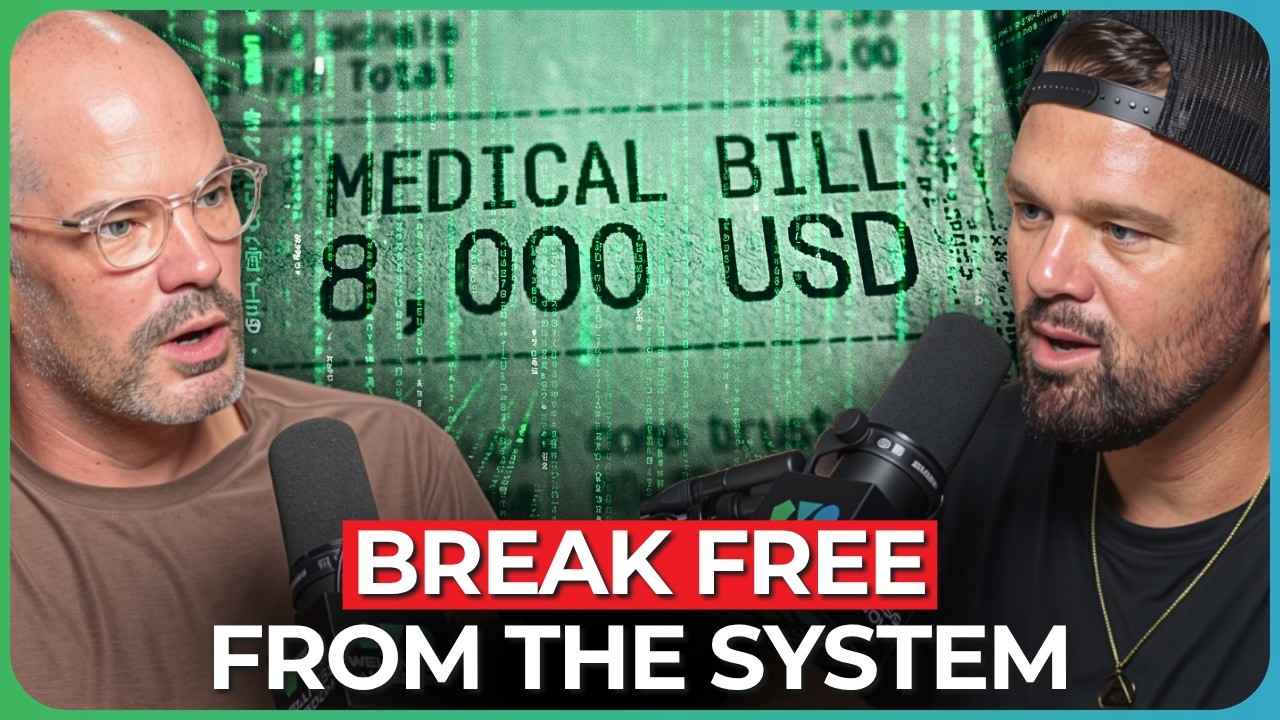
In this long‑form interview, host Josh Trent talks with Andy Schoonover, founder and CEO of CrowdHealth, about the fundamental flaws of the U.S. health‑insurance system and how a community‑based cost‑sharing model can give people health‑sovereignty. Andy explains why insurance premiums can’t be tied to personal health (legally deemed discrimination) and contrasts this with car‑insurance, where good driving is rewarded. He proposes a new incentive structure that rewards metabolic health, using three measurable proxies – visceral fat, fasting insulin, and high‑sensitivity C‑reactive protein – and offers a 20 % discount on CrowdHealth membership for members who meet the targets. The conversation covers how the platform funds these tests, the weight‑limit eligibility rule, and real‑world transformation stories (e.g., an obese member who later completed a triathlon). They discuss the demographic makeup of the community (average age 34, core 26‑40, many new parents) and specific enrollment rules for pregnant members. Andy expands the discussion to broader concepts of personal sovereignty, describing “parasites” such as insurance companies, luxury assets, or any expense that drains joy, and urges listeners to unhook from them. He emphasizes generosity, family, and spiritual grounding as sources of joy, and shares a powerful case study of a stage‑4 cancer patient (Travis) who, by paying directly and bypassing insurance, accessed life‑saving care and is now cancer‑free. The interview ends with a call to action, inviting listeners to join CrowdHealth via a simple online form and to spread the model to others burdened by medical bills.
Chapters
These systems are not for us. They are against us. It's this fear-based society that we ultimately live in that keeps us feeding that parasite. This parasite might be an insurance company.
Andy Schoonover is the founder and CEO of CrowdHealth, the community-funded alternative to health insurance. So the person being sick actually feeds the system. It truly is a sick care system.
This is a $5.5 trillion industry. They've They've decided on the profit as opposed to the healthcare. There is a darkness here that is real, and we are in a war. My daughter was having recurring ear infections, so we went to the ear, nose, and throat doctor. We got the bill and it was $8,000. I was just like, health insurance will pay for this. And they were like, nope, we're not paying for it. And it took that for me to be like, I'm ready to revolt against this system. Take the food away from the parasite, the parasite will die. That's the best way to wage war on parasites. way of doing this, and you don't have to go into medical debt and you don't have to pay an insurance company.
What is that all about? You guys, more than 90% of Americans have health insurance, yet 2/3 of every bankruptcy in the USA tied to a medical bill. Almost all these people have insurance. You get sick, the bill arrives, the bill makes your body sicker, your sleep collapses. Then another bill arrives, your relationships strain. The stress drives the next diagnosis. So the system is broken. We all know this. Andy, what's going on in our body when we get a medical bill spiritually, physically, emotionally for something we thought we paid for that was going to keep us well?
Yeah, we all know the stress and anxiety, right, like lead to bigger health events. We were kind of joking beforehand, I'd love to see the cortisol levels of people before they get the explanation of benefits in the mail versus after they get these explanation of benefits in the mail.
I had a mentor tell me once, Paul Chackey, he was like, The whole reason a parasite can exist is because it sucks just enough blood from the host so that the host doesn't know it's there.
Yeah.
What do you think of that in parallel to the medical mafia, the Western system?
For sure. I mean, if you were to get a bill in the mail from Apple, right, like the leader of design in our modern world probably, or one of the leaders, you would know exactly what you're paying for and why it costs that much.
Yeah.
But if you open up a bill from an insurance company, you have no idea. They make it opaque. And I'm giving them the benefit of the doubt on that word opaque.
Yeah.
I mean, it's clear, it's almost, you know, looking through this curtain. Like, you can't have— you have no idea what's on the other side. And they do this on purpose. The confusion leads to their ability to basically charge whatever they want. And, you know, funny story is I was talking to— this is firsthand knowledge— I was talking to somebody who's working for a consulting firm that was doing a project for these insurance companies. And basically what they were doing is, you know, these— this medical jargon that they have on your explanation of benefits?
Yeah.
The consulting company was brought in to take that medical jargon And put it into a language in which you and I could understand. So they went, they, they rolled it out, and the insurance company called them back and said, you know what, we're gonna roll this back. And the, the, the consulting company's like, what?
What?
And well, well, people were finding too many errors on the bill. You know, the example she gave me was this woman called in who had a baby girl, and on her bill was a circumcision. How does that work? And so as they converted the medical jargon to normal everyday jargon, what they were finding is there were so many errors in these bills that they, instead of correcting the errors, they pulled back the everyday jargon, went back and replaced it with the medical jargon to keep this, I don't know, this, this, this cover over it so that people don't fully understand, you know, what is actually being— Mm-hmm.
We talk a lot on the show about somatic experience. In other words, like, your gut knows a half second, if you look at neuroscience, before your mind can process something as true or false. We all know when you even mention the phrase medical system or health insurance, our gut knows that something is off. And I've known it since I was a little kid.
Yeah.
What do you think is really going on as to why we have this gut feeling collectively in America? We know it's wrong. We know it's broken. Yet it's like we're afraid to change it.
Yeah, I mean, I think there's a couple things. One, you know, as an entrepreneur, you have your like little elevator pitch. Like literally as you walk into the elevator, somebody says like, what do you do?
Yeah.
I say, oh, I've created an alternative to health insurance. And immediately their response is like, hell yeah, like let's do this.
We all know.
Let's do this.
Yeah.
Because I think everybody in our gut knows that we're being taken to the cleaners. Everybody knows that they get the bill in the mail, you know, every month to pay their premiums. And they are paying for something that they never use. And even if they use it, then they have to pay a bunch more money to actually get the benefit of it. And so people, I think, understand that they're getting screwed, but we've been conditioned as children, probably.
Yeah.
Since our childhood is like, well, you have to have insurance, you have to have insurance, you have to have insurance. And so it's this fear-based society that we ultimately live in that keeps us feeding that parasite, as you, you said in your, your opening. Yeah. Um, and, you know, I don't know if it's Stockholm syndrome or what, but we, we continue to, to go there and people are just afraid of the worst-case scenario, you know, the 0.0001%. What if I get cancer? What if I get in a car accident? And all these things could, you know, have a dramatic impact on your life. And ultimately what we've said is like, look, you know, there's a different way of doing this. You know, there's a different way of doing this and you don't have to go into medical debt and you don't have to pay an insurance There's a, there's a different way. And so anytime you have a different way, right, it just takes some education and takes some time, and, and we're getting there. Um, but I think we're, we're ripping people out of this mentality, this fear-based mentality of you have to have health insurance.
That, that fear-based mentality of which you speak is not just financial, it's also physical, mental, emotional, and spiritual. I think it's all the same. The Pentagon's on the screen, y'all. You already know this if you've been on the subscriber list for a while. So if you're watching on Spotify and YouTube, We know that we have 5 ways in which we nourish ourselves. So those 5 that I just mentioned, financial, when it's removed, it stresses the other 4 more than almost anything else. And you know this because you have a background in finance. You understand numbers. How has your understanding and your training in, I guess you could say, the financial world impacted what you're doing with CrowdHealth? And what, what are you really relieving for people when it comes to financial load? That financial load, in my opinion, can be so severe that it can drive people to depression or anxiety itself.
Absolutely. I mean, I think that we know in marriages, what are the top 2 things that marriages get in trouble with?
Yeah.
One is financial and 2 is kids. And often those 2 things are very much tied, right? And if you're financial, you know, in financial distress, you're in marriage distress, you're in parenting distress, you're in spiritual distress. And look, the good word says that for the love of money is the root of all evil, right? And so, I think money, and I come from a spiritual place of thinking that there is a darkness side of the equation who uses money to impact us spiritually, emotionally, physically. And money, as we know, is the root, is the root of all of this evil that we're seeing. I think that personally, it has such a stronghold on our lives.
Yeah.
I mean, even when you go to a buddy and you can say, hey, How awkward would this be? It was like, hey man, let's talk about our financial standing and how I'm spending money. I'm gonna give you my financial statement. You gimme your financial statement. How awkward would that be?
For, I, I'd love it, but for most, 99.9% would hate it.
For 99.9% would hate it. It's, it's awkward.
Yeah.
And so people, we can talk about, we can sit here and talk about our marriages and where we struggle and where we do well.
Yeah.
But for some reason, that dark component of our universe, I call him the devil. wants to use money to completely destroy us. And so I think it hits all 5 of your categories where money is that root that erodes financial, spiritual, emotional. I think it's at the root.
You just made the hair on my arm stand up. Uh, the reason I feel that so deeply, and I know all of us can feel that deeply, is because I don't know any human being, Andy, that hasn't ever felt financial stress. chronic financial stress or acute financial stress, the way that the devil or, you know, in, in many different metaphysical texts, it's written as the devil or the anti-life or certain, certain deities that'll take away life.
Yeah.
So whatever that energy is, I'm not going to wax poetic like I know the exact definition of it. It's just an anti-life energy. If money is a vehicle for trade and money is an energetic system for— becomes a car for you and I to trade value, essentially money is inherently neutral. But you can kill somebody with a hammer or you can build a house.
Yes.
What is it about our current paradigm and the way that the medical system is run with the insurance companies, with the doctors, that is inherently using that hammer to harm people instead of to heal people? What is that all about?
Yeah, I mean, I think that a lot of people think of the healthcare industry as very, very complex. Like, they're like, I just don't understand it, you know, and they don't want to do the work to understand it. And so I think I can easily explain it where people, 99% of the people who hear this can understand it. You've got the sellers of healthcare. These are these big hospital systems, okay? They want the price to go up. They want to make as much money as possible. Hey, God bless them. It's a free market economy. Go try to make as much money as possible. The problem is the buyers of healthcare, the health insurance companies, they actually also want the price to go up. And so we are supposed to have a principal-agent relationship with our health insurance plan. We are the principals, they are the agent. They are supposed to go out and find us the best deal that they can get. They can— UnitedHealthcare is one of the top 10 largest companies on the planet in terms of revenue. They should be able to use that power to drive down prices. However, what our government has done is said, no, no, no, no, no. What you— if your premium, your $1,000, let's just say $1,000 a month for easy math. you can only make $150 on that premium. So what happens? They're a publicly traded company. They want to grow their, their profit.
Yeah.
So if I go from $150 to $165, if I want to grow my profit 10%, guess what? My premium has to go from $1,000 to $1,100. If you look at that on the flip side, what happens if UnitedHealthcare actually drops the price from $1,000 to $900? Well, their $150 of profit just goes to $135 of profit. Do you think they're incentivized to reduce premiums, reduce healthcare costs, or increase premiums? It's pretty obvious that the incentive system— I think incentives drive everything.
Yeah.
The incentive system is, you know, to, to see prices go up. So you have the buyer and the seller wanting the price to go up. You don't need a PhD in economics to understand if the buyer and the seller of a product wants the price to go up, the price is going up. And so our entire system is built around this profit motive, even in the nonprofit space. Don't tweet me. It is. We've seen it. They're trying to drive profit too. So when you're trying to drive profit, if profit is first and the health of your constituents is second, there's going to be a trade-off. And ultimately what we've seen in the healthcare system, I call it the sick care system, is they've decided on the profit as opposed to the healthcare of their constituents. And this is what we're left with, unfortunately.
And then on top of that, the part of my research that drove me insane was that 1 in 5 claims automatically get denied for no real reason other than for profit sharing.
Yeah.
Can you expand that? This might be the very first time somebody's hearing this ever.
Yeah. So if you think about the income statement, I'll keep it simple, of a health insurance plan is, Money in, that's your premiums, minus money out, which are the medical claims.
People that are sick.
People that are sick. And so what are the incentives to drive the difference? Premiums up, medical claims down in the year, down to that 85% because they have that 15% profit. And so ultimately what happens is they deny the bills to get down to that maximum or get up to the maximum profit levels. And again, firsthand knowledge, I was talking to a guy who the first first job outta college was to build a model that allowed health insurance plans to dial up or dial back how difficult it is for you to get your bill paid. Okay? And they did that based upon market conditions. So if the market, if, if they thought that the money that they withheld from you was going to give them a good return by investing it in all the things they invest in, Mm-hmm. they make it harder for you to get your claim bill paid. If the market conditions aren't that good and they figure it's better to pay out the bill, they'll dial it back. They also do this on what they call pre-authorizations. And so most of the time when you have any kind of significant surgery, they dial up the difficulty to get it pre-authorized, which means your bill's going to get denied or it takes forever to get pre-authorized. And that's what Luigi Mangione, who was the guy who killed the UnitedHealthcare president. Oh yeah, that was his big beef. Yeah, it was like, it was taking forever for you guys to actually approve what I needed to be done for my healthcare. And he was so pissed off about it, he ended up killing the UnitedHealthcare CEO.
Yeah, which I don't condone, but which we don't condone at all. I can understand the insanity is what drove him, but I don't condone the act. But yes, I mean, how severe of an example do we need before things change?
Exactly, exactly. Um, and so funny enough, you know, I don't want to get too much into CrowdHealth yet, but like Our business took off when that happened.
Really?
Yeah.
What do you think that was?
I think I think it was, and again, I'm not condoning it. I'm not saying but anything. It's like yeah, this kid was insane. Shouldn't have happened. Do not condone it. I want to make sure people understand that.
Yeah.
So I'm not you know tweeted at.
Yeah.
Um, but I think people like saw that and they're like, I'm pissed too. I'm so pissed that. What this system is doing to us.
Mm-hmm.
Diabetes has gone from 1% of the population in 1971 to now 10% of the population with another 40% of the population being pre-diabetic. If our healthcare system was working well, that wouldn't be the case. And people need to take personal responsibility for a lot of that for sure, but our healthcare system is not helping. It is hurting in a very significant way. And as you said, Physically, it's impacting us, which spiritually and emotionally and financially, all those things have happened over the last, say, since 2009, since the ACA. But this started in the 1970s with the HMO Act.
To me, Andy, it's like quicksand. Once you get into the system, it's really, really hard to get out.
Nearly impossible.
And I wonder what you think of this. So we get into the system. For me, it was chronic sinus issues my whole life. which were fed by antibiotics that were thrown against the wall to see what sticks. So I probably went through every single antibiotic before I—
Which crushed your gut, probably.
Which crushed my gut, made me have massive weight gain. Then it was like a cascade of dominoes that pushed me further into the quicksand. And if somebody out there right now is in the quicksand, is there a plan for them to get out of the traditional sick care system and go over to something like a cost-sharing model where they're actually sovereign? What does the beginning of that even look like if they're stuck in the quicksand?
Yeah, let me— I want to— I do want to address something that you said because I think it's really important. Your doctor stuck you on antibiotics probably because it was just the easy thing.
To me, it just seemed like it was a guess.
It was an easy thing. Yeah, it's like, you know, doctors nowadays have, depending upon what study you look at, 8 to 12 minutes with their, their patient. Yeah, on average. And so, you know, if I were to look at your chronic sinus issue, I'd really want to get into like Okay, tell me about your lifestyle. Like, what are you eating? Where do you live? What kind of, you know, those types of things.
Yeah.
Are you working out? Are you, you know, all those things. You don't have time to do that in 10 minutes, right? Like, and so what does that force the doctors to do? Because I don't think the doctors are the enemies here. It forces them to do a pharma-first, you know, solution because they don't have the time to, to do all the other stuff. And unfortunately, we live In kind of a, you know, a high time preference society, which means I want it cured now.
Yeah.
Like cure it for me now.
Yeah.
As opposed to putting the work in over the next 6 to 12 months to do— let your body do what it's, it's capable of doing, which is to overcome it in the vast majority of situations. And people will just— in the United States, you know, we're in this quick, quick hit, high dopamine, fix it now type of society, and people aren't willing to do the work to, to, to do it naturally. So they rely upon, you know, pharmaceuticals. To answer your real question, sorry for the diversion.
No, I mean, that's a good predicate, really, because that's where they are.
I think unfortunately people say, well, healthcare, nothing's going to happen to me. I'm healthy, I'm good. And they don't understand it's a shit show until it becomes a shit show. Right? It's one of those things where you don't You don't realize how bad it is until it gets bad quickly.
Mm-hmm.
Right? And so, and I will, I'll be honest, I've been in healthcare for 20 years, but it was only in the past 7 years that I've realized that how bad this system is set up. You know, my daughter was having recurring ear infections, so we went to the ear, nose, and throat doctor who's like, yeah, she's got a hole in her ear. In essence, the fluid was building up in her eardrums. It was popping her eardrum. And she was 1 at the time and she was screaming bloody murder, you know, day and night. And so we were like, man, what, what do we do? The ENT's like, no problem, you know, put tubes in her ears. It's a 15-minute procedure. And we're like, great, like, let's do it. Went and did it, 15 minutes. I think we were in the hospital for a total of 45 minutes.
Yeah.
We got the bill and it was $8,000. And I'm like, hold on a second, this was 15 minutes and you're saying this is $8,000? Like, that makes no sense to me. But I was just like, like most people, like, health insurance will pay for this, you know?
Yeah.
And then I got a bill for, or a note from my health insurance plan that says it was not medically necessary. And so they weren't gonna pay it. I'm like, what the hell are you talking about? Like, my, my child is sleeping. And by the way, ear, nose, and throat doctor said she, he started to see some, you know, things around her ears that could impact her long-term hearing. And so he is like, we gotta do it now. Yeah. He actually delayed his vacation by a day to do it. 'Cause you're so concerned. And so my ear, nose, and throat doctor's telling me one thing and then this insurance plan is telling me another thing. Who do you think is right? Right? I mean, it's just like—
Yeah.
And I went through 2 rounds of appeals and they were like, nope, we're not paying for it. So I had to stroke an $8,000 check. And the vast majority of people don't have $8,000 sitting in their bank account to pay for something like this that, you know, happens fairly often. And so it wasn't until that time I was like, this is not right. Like something is screwed up here. And it was, and it took that for me to be like, I'm done with this system. So I called my health insurance plans. I'm like, I'm done. I, I'm not paying your bills anymore. You're not paying my bills. I'm not paying your bills. You know, screw you. And so I looked at my wife and I was like, we're uninsured. And she looked at me like I was a crazy person, you know? And she was like, all right, like you, you, I, I trust you. Like, let's figure this out. And that was kind of like, it took something even for me who's the, you know, the founder of this company who's trying to pull people away from that system. Yeah, to understand that this system is totally and completely busted.
Yeah, it's been that way from the jump, actually. Uh, you ran a program, uh, in one of your previous companies. 75% of diabetics reversed their diabetes in a year, but then the insurer shut it down. Yeah, like, what, what in that moment did you understand who this system is really built for?
Yeah, so my previous company, we were helping people with chronic conditions try to get off of their chronic conditions. And one part of that was, it was kind of funny. I think it was 2007 or 2008 where the fiber wasn't there. It was still dial-up internet. And so we actually had—
Oh yeah.
We had dial-up videophones in which we would talk to these people in the Rio Grande Valley of Texas. We're in Texas, we know that, where diabetes is prevalent. Something like 40% of the people down there have diabetes. And so we, we were talking through 'em and we were like, hey, you know, like, let's, let me, let me help you with your diabetes. And, you know, ultimately what they were doing is, you know, they were having 3 or 4 tortillas with every meal, you know, which they didn't understand was, you know, the carbs were turned, their body turned 'em into sugar. It raised your blood sugars and your A1Cs, which is a, a way to understand like how, how, how much sugar basically is being in your blood, is in your blood. And, uh, you know, they didn't understand that. So we were like, all right, we'll take 3 tortillas with every meal this, this week, and then let's test your blood sugars. 2 next week, 1 the following week. And what they saw is their blood sugar started declining and they're like, oh, okay. And so we took that and we, you know, did that over a, uh, we, we did it for a year and, you know, it took about 6 months before the vast majority of those people, something like 75% of those people were no longer diabe— diabetics cuz they saw what they were eating.
Yeah.
Was impacting their bodies. So we went back to the health plan and my, my head of sales was in this meeting and he's like, Here's all the great results. And we were imagining like, hey, we're gonna turn this thing into a huge, you know, a huge deal. Because I think our pilot was 100 or 200 people or something like that. And they're like, oh, sorry, we can't, we're actually gonna shut it down. And I'm like, like what? Well, this was around the time, so it must have been 2007, 2008. It was right before the Affordable Care Act took place.
Mm-hmm.
And this 15% deal was in place. And what they saw is that the amount of premiums that they were gonna get because their diabetics was going down was gonna go down, and therefore their profit was gonna go down. And so they ditched the whole system cuz they were afraid that was gonna impact their profit too much.
Yo, that brings up initial rage for me.
Oh, I was, did you, I was so enraged in that moment.
Like, how did you deal with that? You'd worked so hard on this and then they're saying, hey, great job, but you're done. It doesn't make any sense. Like, how did you, how did you hold those 2 worlds?
I, I held those 2 worlds for about 5 years before I could be like, I was like, I just can't, I can't participate anymore. And so I ended up selling the company and, and I was like, I can't, I can't do what you guys want me to do, which is basically just, you know, check a box for them internally. Um, and so it was, you know, and I, I should have been wise enough at that point to realize how busted the system was. Um, I thought it was, you know, one or two plans that I had talked to that would, would do this. And I was like, oh, this is the exception and not the rule. And I, and I realize now after doing a lot of primary research that a lot, if not most, if not all, you know, plans operate in a similar way.
How many people— I remember I had Abel James on the show who's a huge multi-million dollar bestselling author, and he hosted stuff on primetime TV. He, the Fat Burning Man, he was working for the government. Right out of college, and they developed this plan that would actually make people healthier. And the government came in one day and said, "Hey, we're going to take all your books, and we're just going to put them in a closet, and your conversation about healing and health is done." Same thing happened to him is what happened to you. So I start to piece the puzzles together. It's like, what is the picture of health that we're actually building here? I actually think it's disease. The the model runs on people keeping. the model to be necessary. So the only way the model is going to perpetuate or expand, and when I say the model, I mean like the mafia system, the hospital that gets paid from the exorbitant bills that they send to the insurance company, and then the insurance company, I believe, is subsidized in some way if they don't hit their profit marks by the government. Is that true?
Yeah, in the Affordable Care Act, yeah.
In certain ways. And then we have this other arm where the person is sick. So the person being sick actually feeds the system. It truly is a sick care system. And it's funny, we've all heard this forever, Yeah, like, especially myself being in this space, I want to go back to that person in the quicksand. They're in the quicksand. They can heal. They can get out of it, right? Barring if they have some kind of astronomical— if they have cancer, if they have something else, which those can be healed too. Um, how do they start to pull themselves out and be able to pay out of their own pocket for something like a cost share, like a community that holds them? How do they get out of that quicksand?
I mean, I think it's a mental, a mental thing somewhere that I think it starts with the mind. I think it starts with the mind. I mean, you've got to disconnect the heart of fear. Your heart is probably just feeling this fear to taking a leap and saying, I'm tired of this. I'm ready to revolt against this system.
Yeah.
And so, I think that, look, we've got 30,000 people in CrowdHealth, and I think the vast majority of them are ready to revolt. I mean, and the best way they can do that is exiting what they're revolting against, which ultimately will lead to its demise, I think.
Mm-hmm.
And that's the best way to fight back against the system is to exit. And so there's got to be a disconnect of the fear with the logic to say, why am I actually doing this? Is it a fear-based thing or is it a logical-based thing? And once you get to a logic place, I think you can get to a really good conclusion. It's just a lot of people are owned by fear and that's what's keeping them in the system. And we've seen so many systems throughout history where people are owned by fear and they participate in things that they know are evil, yet they continue to do it. And so I'm not a psychologist. I don't know what that's all about, but fear is a very powerful, powerful emotion. It may be one of the most powerful.
Well, I mean, MLK said it right. Evil perpetuates when good men do nothing.
Yeah. Amen.
When we do nothing, it's actually a heinous act. When we don't change things that are Applicable to change.
Yeah.
And so the reason that I full transparency, y'all, like my family and I are now with Crowd Health.
We what a month right? A month ago?
About a month ago.
Yeah.
And I'm saving literally thousands and thousands of dollars a year. This is my personal story here. But there's just a different air. Like when you came into the studio, I was like excited to share with you. Like it feels so good to save money. But but more than that, it feels good to be in a community. Imagine Crowd Health the way I see it. How I was learning about your company and talking with you. It's like we're all sitting around a fire. It's just a really big fire.
Yeah, it's a really big fire.
Thousands and thousands of people are on the fire. And so when somebody falls down, when somebody gets hurt, we do what we used to do in sacred times back in the villages. We would all come together and compile our resources and we would help out the grandmother. We would help out the broken leg person. We would just do it. You're returning us back to this around the fire sacredness with CrowdHealth. Can you describe the model and how this is so different than all the kind of gunk and crap and evil that we've been talking about.
Yeah, I mean, it's back to the agrarian societies too, right? Like, if somebody got sick and couldn't plow the field or sow the seed or whatever, their community would gather around them and be like, this is a—
Take care of each other.
This is a good thing. A lot of people on X or wherever, they're like, oh, this is socialism. This is like— no, I was like, no, no, no, this is the opposite of socialism. Socialism is when you have a tyrannical government telling you that you have to give up all that you have for the benefit of others. What What we're saying is we're in a community of people and we will voluntarily give to somebody else in our community when they are hurt. And it's like, man, that feels great. And so once a month you and I get an email that says, hey, there's a guy in Austin, Texas who broke his arm or is pregnant or has cancer, or his wife is pregnant or whatever.
Yeah.
Cancer. And this person needs help. Are you willing to give to them? And you can say yes or no. It's a specific amount. you can automate it if you want. But if you say yes, that money goes directly to that person in Austin who's dealing with that health condition. And if you say— you can say no too, but remember, you're a part of a community. So if you say no, then when you go and ask the community for something, the community will know that you said no to other people in the community. And so any community that you're in, I don't care if it's a 30,000-person community or it's a life group or it's a bunch of your buddies. Yeah. If you're If you're a taker, taker, taker and not a giver, you're not a part of that community for very long. So this is just, you know, community dynamics that we're, that we're working with here, and it works incredibly well. I love the fact that I can send money to Trent or Andy or Chris or Debbie or whoever because my money's going directly to them. I know where my money is going. It's cool. I'm like, I feel good about it.
Yeah.
I felt like crap when I had to send it to, you know, big health plan, not knowing where the hell it was going to go, and knowing that if I do have a health event, I'm not sure they're there for me. It's like I'm sending it to somebody else who I know they're going to be there for me when I have a problem, right?
Mm-hmm.
And that, to me, spiritually feels really, really good. It's a love your neighbor type of situation with some accountability, and that makes it all work. And so, we've done this 50,000 times over the last 5 years, and all but 32 of them have gotten funded. And you know the 32 who didn't get funded? They're the people who said no to other people in the community. So, you know, it's working incredibly well. And if you compare that to the stat that you said at the opening, which is like 1 out of every 5, yeah, 20% are denied with health insurance plans. You know, we've got to educate people that it's actually more risky to go with health insurance than it is, from my perspective, than to go with—
Oh yeah.
With CrowdHealth. And I've got stories and stories and stories to tell of like We have people alive today because of CrowdHealth that probably would have been dead with health insurance.
I want to get into like the story that comes up for you right now, whatever the best one is. And when I say best, I mean like the most life-giving. Yeah, the most inspiring. But before we get there, for me, I just want to go back to this. Like, I've known ever since I was a boy that existentially something is just off with our world. Like, for me, it's always been— that's the 11 years of podcasting has taught me, like, it's the same question that I had when I was a child.
Yeah.
And that question is, how do I live my life well and why are these adults treating each other so poorly? And why aren't people taking care of each other? That was the, that was the questions.
Sure.
For as far back as I can remember, Andy, I was like asking these deep questions. And here I am, 46, you know, being a father and shepherding people and a team and overhead and all these things that I care about, these people and these energies that I care about. Yet I'm still faced with the question, okay, what parts of my life am I feeding something that I really don't love? What parts of me am I giving to something That's actually just taking from me and not giving reciprocity. And for a long time, it was insurance. I was in fear of my sinuses. Come to find out, there was a metaphysical reason for that. It's grief. Grief is what I healed, which allowed my sinuses to heal. I haven't had sinus issues for a long time now. I'm giving you all this backstory because I am one of your perfect candidates to be in the community. And many of us are, honestly. People like you and I that are healthy, that eat great food, that believe in connection, that like to breathe and move and sweat and be with each other. Like, we're the kind of people that would sit around the fire in the first place. If you're the kind of person that doesn't want community, that doesn't want to give and receive, that doesn't really want to be there and support other people, then, you know, more power to you if that's, if that's going to make you happy. I don't think it will. I'm sharing all this because, gosh, I am literally one of the community members And in that community, there's something really special. And before you get to that story that you were going to share, what is so special about people coming together like we used to in a way that modernity is applicable to? In other words, we're sharing costs, we're sitting around the fire. What's the clear connection between cost sharing and community that no other model can touch?
Yeah, I mean, I think ultimately what has happened, especially over the last, say, 30 years is that community in our country has fallen apart. I think that the technological advances, while you have a big community of people online, there's a lot less of this going on.
Yeah.
And I think we see it in men a lot. A lot of men are lonely because they can't go and engage in a face-to-face conversation and they become keyboard warriors on social media. And so I think that community has been lost. I think a part of that is because every time the community, somebody needs the community to help them, the government ultimately has stepped in to say, no, no, no, we got that. We got that. I'll tell, say my sin is I live in Austin. Ultimately there's panhandlers or whatever in Austin. I'm driving down the street, I see a panhandler, and what's the first thing that goes through your mind or my mind? Let me just say that is like, Man, why isn't the government taking care of him? Isn't there government assistance for these people? In reality, it's like, no, that person's on the end of my street. He's a part of my community. Why am I not helping him? Why am I not taking responsibility? And so we've shirked personal responsibility for government intervention, and this has eroded, I believe, community over the last 30 years. My kids, we had somebody new in the neighborhood. My kids brought them cookies. And they looked at us like we were crazy people. Like, what are you doing? I was like, we're just bringing you cookies.
Yes.
You're a part of our community.
Yeah.
You know, and it was like 30 or 40 years ago when I was growing up, like, that's just the normal thing to do. Like, you welcome them to the community.
Right.
You know, the guy across the street is painting his house. He's new. He just bought it. And I walk over there and I say hey to him. I was like, hey, I'm your neighbor. You know, what's your name?
Yeah.
You know, it's like, man, we've lost that in our nation, I feel like. And, you know, and so I think, This, there's been an erosion of community that I feel like bringing people back and connecting them directly, like my payment is going directly to you to help you.
Yeah.
And so we've had these examples of like, you know, our number one cost in the community right now is pregnancies. We just have a lot of people getting pregnant. I was like, dude, I love helping people with pregnancies. That's like bringing life into this world. That's great. It's amazing.
Yeah.
Unfortunately with pregnancies, we also have, you know, the hard parts of that too, which are miscarriages. And so we send out these requests for miscarriages and regularly we have women reaching back out to us being like, man, instead of $100 this month, can I give them $200? Because I've been through that, I felt that pain. I know what they're going through. And it's like—
Yeah.
Man, when's the last time you called United or Cigna or Aetna and said, hey, can I pay you more this month? Never in the history of man has that happened, right?
Yeah.
And so, but if you connect people directly as opposed to having a bunch of intermediaries like an insurance plan, like the government, like your employer or whoever it is, I think there's like a really strong— can be a strong connection there. And that's what we're trying to like, you know, generate or be the catalyst for is that direct connection between human beings to help another person with what they're going through. I feel great when I get to help somebody else. And so I love it. And so that's ultimately how we're trying to build that community. Let me also say, we've got a lot of people with very similar worldviews in our 30,000 people. These are people who have an affection for each other because they have revolted against a system. We've got an incredible amount of people who are homeschoolers, They're revolting against the education system. We have an incredible amount of people who are keto carnivore, you know, they're revolting against the food system. We have a lot of, you know, Bitcoiners who are revolting against the financial system. And we're all trying, basically coming together and saying, we do not like these systems that were kind of conditioned into us to think that they were for us.
Yeah.
And in reality, what we have found, especially the last 5 or 6 years, right? It's like these systems are not for us.
Mm-hmm.
They are against us typically with a profit motive of some kind or a money motive of some kind. Like even in education systems and these teacher labor unions and things like that, you can't even fire a teacher for being a crappy teacher now because of money. It's a money deal, right? So that was a long-winded answer and I apologize, but it was like one of those things where it's like, I mean, this community is like such a cool part of what we're about.
You have a lot of wind because you have a lot of passion.
I get it. I get it.
I know, I'm sorry. No, no, I mean, my wife is always telling me like, Can you let me talk? So I, so I get it. I, I was researching and I wrote this down this morning. 1.6 of, uh, 1.6% of babies, uh, are born at home. Yeah. In America, which is just astronomically terrible. I cannot imagine that less than 2% of babies are born at home. Like, my daughter was born in Golden, Colorado. We did the best we could with Nova. We had to transfer. That's a whole nother story. Yeah. That's part of why I am so upset and disillusioned with the medical system, because we actually had to sign a form to take our son home. And then the next day, this huge 6-foot-3 African American dude comes to the door, tattoos, Child Protective Services.
Yeah, geez.
So once you enter the system that we talked about before, it's like quicksand. The reason I celebrate this is because CrowdHealth has a 50% at-home birth rate. Yeah. If y'all wanna have a baby at home, come sit around the fire with us.
Yeah.
Can you share why that is from 1.6 to 50?
Yeah.
What's up with that?
That was, that was, uh, that was the last stat I had looked at. I actually got that updated and it's actually closer to 40, but still, it's like, still 40. You know, it's, it's a massive group of people who, again, who are like, I'm not buying into what the system is telling me. I'm gonna do it a different way.
Yeah.
I'm gonna think for myself. I'm gonna use my brain as opposed to emotion. I think a lot of people don't have babies at home because it's, again, back to that emotion of fear.
They're afraid.
They're afraid. And so they're afraid. And so we have a lot of people who aren't afraid, who've taken that fear and said, not now, Satan. I'm not doing that fear and I'm going to live life the way I want to live life without fear. I mean, what would happen if we removed fear as the primary driver of most of our decisions? I believe that people will live a more thriving life.
Yeah.
I think that fear, as you were talking about earlier, has a physical impact on us even through the physiological hormones that are pumping through our blood when you are fearful. Ultimately is to run away from lions and bears and stuff like that. Now we're running away from a financial distress ultimately is what we're running away from. But yeah, fear, man, it's a tiger.
I heard, I think it was Bruce Lipton, Biology of Belief, that we're in this constant low-grade fear, low-grade stress catecholamine response, where we're, if this is perfect homeostasis, we're just slightly kicked over to sympathetic, which is fight or flight.
Yeah.
Most people are. But then you add this like looming financial stress of medical bills on the regular, every month, every week, then you start kicking a little bit more into sympathetic. Now you can't digest food properly. Now you get stomach ulcers.
Yeah.
Oh, there's a pill for that. Now that you're taking that, it upsets other regulatory systems. And so you have this really vicious parasitic feedback loop that's happening physiologically in the body. But then that turns into something that you mentioned that I want to go a little bit deeper on. Okay. And that is the spiritual attack that you called it the devil. I mentioned the deities. There's a spiritual attack that happens when the body has been dysregulated and we are essentially the lamb with the broken leg, we're more susceptible to denser, darker energies coming in and manipulating us mentally and controlling us. How have you seen this play out with crowd health being not the beacon of liberation and salvation? That's a different conversation. But how have you seen that dark side of what I'm saying play out? And how have you seen the light side play out with cost sharing and community and crowd health?
Well, man, I've seen the dark side vividly. And I'm not a person who lives in fear. I kind of like, I truly, on the spiritual side, I believe there is a being that's in ultimate control. And I believe in that. I believe this, I call him God, whatever God that is will take care of me. And so my anxiety level is very low typically because I was like, look, if a bad thing happens, then I can deal with it. And ultimately, I think this was codified in a— I'm going to go off here a little bit, but I think it's important to be on subject.
Please.
My wife and I got married and she got pregnant right away. And on our 12-week ultrasound, we found out our daughter had a fatal condition, would not survive. And so we decided just because of our personal beliefs that we were going to let this life play out in whatever way that God intended this life to play out. And so Our daughter Grace lived, was born, lived for 10 and a half hours before she passed away. So I saw my daughter take her last breath, which, if you can imagine the darkness from that, magnify it by 10, 'cause it was the most dark moment of my life, as you can probably imagine. So I've lived that dark moment and I've seen such incredible blessing come outta that dark moment. Like, I would not replay that. I wouldn't make any different decisions. I love that Grace is in heaven, and I might get emotional on this, so I apologize. But my wife, a few days after Grace passed away, had a dream. And the dream was that Grace— there was that two-way mirror, and Grace, our daughter, was on the reflective side, and she was perfect, beautiful, in the most beautiful field of flowers that you'd ever imagine. And my wife was on the other side looking at her. And we have come to a place spiritually of saying, Grace is in a better place. She doesn't have to deal with the evil of this world. She is good. She's great. We're the ones that have to deal with this brokenness of this world on a day-to-day basis. And so I take that and be like, man, my wife and I went through 2 years of hell. which is like divorce was talked about often. Male and female grieve differently. Didn't really realize that until we went through this. We made it through that. We saw all the incredible blessings that came from that. Our marriage is stronger than ever. And so I kind of come to this place like, if something bad happens, I believe we have a creator that loves us and is going to make it for good. Romans 8:28 says, I'll do all things good for those who love me. And so I truly believe that. Fast forward to CrowdHealth. We had a guy stop outside our house half a dozen times in a blackout, blacked-out SUV. My wife kept seeing him and was like, what's going on here? And then we got a message. We don't know if it was from him or not, but it was a message that said, I'm going to effing kill you all. That was directed at me. So we had police surrounding our house our house to make sure that my girls who are 9 and 7, or I guess they were 8 and 6 at the time, freaked out because we had police all over the place. There is a darkness here that is real and we are in a war. I mean, if you can imagine, this is a $5.5 trillion industry. If CrowdHealth does well, we think we can rip $2 trillion out of that probably. And what happens? The pharmaceutical companies don't get paid. The insurance companies don't get paid. We're approaching $100 million ripped out of the system already from our existing members. That's money going from the medical industrial complex directly into our members. Now imagine if that's $1 billion or $10 billion or $100 billion. Like, it is a war. Like, we are in a war. And I don't have fear. Like, it's weird. It's a weird thing. You know, I think that can only come from our creator. Like, I don't have fear.
Yeah.
If something happens, something's going to happen. My girls are going to be okay. I'm going to be great because hopefully I'm in heaven. But I do believe you've just got to overcome that fear of what's going to happen because it just paralyzes you. And as you said earlier, it's like, man, great things don't happen unless you take action and can subdue that fear and go and do it.
Yeah.
And that's where I just decided, I was like, my wife and I had this conversation. It's like, we're going to go do it. You know, because 30,000 people have benefited from it. And I think what we're seeing now, and this is anecdotal, but I hear it from people all over the place, from our members being like, man, I can sleep well at night. We know how sleep is important, right? Yeah. Yeah. I can sleep well at night.
Yeah.
I don't, I, I don't have to walk into the hospital worrying about my $15,000 deductible. I can worry about my kid who's sitting there who's sick. For CrowdHealth, you have to pay the first $500. Everybody can come up with $500, but $15,000?
Yeah.
That puts you in a spiritual, emotional, physical place where you can't focus on what's really important at that time, which is taking care of your kid or taking care of yourself or whoever it is that's sitting there in the hospital. And you don't want to face down the bill at the end of the day. We can now have a community of 30,000 people that can face that bill for you at the end of the day. And so I think it, it's having a physical, spiritual, emotional benefit. And I'm, again, it's anecdotal, but I see these every single day, literally every day, people writing into us being like, thank you for putting this together. 'Cause I'm in an emotional, financial, and some people even say spiritual, better place than I was under this system in which I felt enslaved.
I wrote down 2 words. I wrote down war and I wrote down money, and then I put a line between the 2. The reason is, is that yes, we're in a war, but money is the ultimate tool. So if like the tip of the spear would be money, that's the thing that draws all the blood. But the power of this is quite paradoxical, and I wonder what you think of this. If we're in a war and we're fighting the war by trying to fight against the thing that's fighting us, then essentially we're just perpetuating the war. That's why Alan Watts says, you know, whatever you pour into, you shall receive. And I'm sure that's been stated in biblical times as well. So I think about, okay, well, if I actually want to exit the war and I want— I have a desire for the war to end, then why don't I just take away the money from the part that's eating it? Just take away the money.
Yeah.
From the people that we're at war with, and then the war will fall flat on its face. To me, it's a very simple equation. Now, will that take away war across the world, and will that get rid of all demonic energy and darkness in the world? I don't know. I'm not God. Yeah, I don't know the answer to that. But what I'm, what I'm getting at here is like, wow, it's not necessarily a war where we're using our fists. We're using our money.
Yeah.
And so if we can literally just, you know, the reason that we buy organic food and healthy water and spend money on fitness and health and not drinking and partying is a war against the bars. It's a war against the hooks of modernity. It's a war against that dark energy. But I'm not fighting the war, Andy. I'm just exiting the war. Yeah, we can exit the war of the whole healthcare system and sick care system by just simply stopping to pay it and putting money in our pockets the other way. What comes up for you when I share that?
It's the best way to fight a war.
Just by exiting.
Is exiting. That's the best way of doing this. This war is not a war of swords or guns.
That's right.
It's a war of money. Remove your money from something that is being parasitic. I'm using your word, and I think it's the right one.
It's true.
I'm just gonna keep using it. Um, and the parasite will die.
Yeah.
Take the food away from the parasite, the parasite will die. That's the best way to wage war on parasites.
Mmhmm.
And so, I'm not saying we're gonna go out and battle. I mean, in terms of, like, you know, guns.
Yeah.
But I'm not— no, I'm not saying— that's the opposite of what I'm saying. I'm saying, like, take your money away from the things that you're fighting against and divert them to other human beings that you're fighting for. That's the way to win this battle. Yeah. Yeah.
So what's really interesting is that I feel like in my younger years, I was full of piss and vinegar. It's like that phrase, youth is wasted on the young. Yeah. You relate to this? Like, how old are you now?
I'm 47.
All right. So you're 47. I'll be 47 next year. Like in my 46th year, I can look back on my 36th and my 26th and kind of like lovingly shake my head at how dumb I used to be. Do you relate to this in your life? What was one of the mistakes when it came to your mentality of health and sovereignty and wellbeing that you might have made 1, 2 decades ago that now you're standing in a different way for?
Yeah, I mean, I think that I was a mess 10 years ago, maybe 15 years ago. My wife helped me get out of the mess, but I was 30 pounds heavier than I was. I am now.
Wow.
I was probably 215. You know, I'm, I'm 6'2, so 215's not terrible, but I was, you know, I was overweight. You know, I, I didn't care about my health. You know, I thought I was invincible. I was running, I was the CEO of a company. You know, I'm the man. A lot of piss and vinegar.
Mm-hmm.
A lot of it was money, money driven. Let's, let's create as much wealth as, as possible in this, in this moment. I think getting married, one, will take a lot of that selfish ambition out of you because now you are one, you are in unity with another human being.
Yeah.
And so selfishness will take you down pretty darn fast. And I think during that grief period after losing Grace, that selfishness in me, I felt it. I felt it in my gut that Andy was being selfish with the way that grief, it's really easy to focus inward. Hey, I just went through something hard. Feel bad for me. Yeah, like I'm number one here, you know? And that, that selfishness I felt being ripped out. Then you have kids, you know this, right? Like selfishness continues to get ripped out.
Oh, every day.
And so I think, man, I think married and having kids is like the best thing to rip that selfishness out of you.
Every part of my conversation with you today has in some way or another fed the centralization theme of how do we be sovereign? That's the question that I'm sitting in with you.
Yeah.
How do we be sovereign in a world that is trying to hook our sovereignty and extract it from us? I think we do it just like Neo in The Matrix did it, where we put our hand up and the bullets fall, or we actually exit the system by not playing the game that the system wants us to play anymore. Then we become literally player one. We can be the player in the video game that we want. Y'all, it's on the screen right now. The link is joshtrant.com/crowdhealth. You get 3 months at just $99 per member, which is amazing. The code is Josh Trent. I'll say that a few more times before we end the conversation, but I want you to join me around the fire if this is something that resonates with you and feels real. If parts of the conversation have attached to your soul and you're like, I think like that, I feel like that, I know this is possible. I know this desire I have for real freedom. It's possible I've just never heard of it. The truth is, Andy, that no one knows about this.
I know. That's the other part that's getting out of the, the, this, that's quicksand is people just don't know that there is an alternative. They just thought that the only, you know, this is the only option that I have. What are the other options? And so we're trying to get the, the word out there that you have a choice now.
It's like, what if you're in quicksand and somebody literally is trying to hand you a stick and you're like, no, I'm waiting for the helicopter.
Yeah, exactly.
I mean, like, that's The traditional Western model versus the cost-sharing model. It's like it's all here for us now. I want to see—
It's more like this. It's a helicopter comes over, you drops you a line. Yeah. You said, no, no, I can't hold on to it because what happens if the helicopter crashes on the way out of here? You're like, it's so wild. Like, come on.
All right, let's speak to this. So you talked about males and their really illusion of like their worth being tied to zeros. If there's a man listening right now who hasn't been to the doctor in like 3 to 4 years because he can't afford it or because he doesn't want to enter the system. How do you weave in proactive care for males specifically? I know you do it for females because you've already talked about the birth rate being 40% versus the almost 2%. Like, that's there. How do you bring us around the fire and celebrate the conversation for males getting checkups and preventative care? Yeah.
I, I, I think that, um, you know, one of the crazy things with, with health insurance, well, let me, let me, let me, let me tell you, you know, car insurance, if you're a good driver, you get a better rate.
Oh yeah.
If you're a bad driver, you get a crappy rate. Yeah. Right. Like it incentivizes you to not drive, you know, 100 miles per hour down 290, right?
Yep.
Um, and so it, it incentivizes you to be a better driver. In health insurance, you can't do that. It is illegal to base somebody's rate premium on how healthy they are.
Why is that illegal?
Discrimination.
Discrimination of what?
Talk to the legislators.
Okay.
It's discrimination. You're discriminating against people. And ultimately what they're saying is the people who are sick, it is not their fault, and so they shouldn't have to pay more. And in some cases that is the case.
Yeah.
But in many cases, It is not the case. So let me— diabetes, we talked about diabetes. 25 cents of every dollar of our healthcare spend is going to somebody who has diabetes. Di— and most of those are— 90% of those are type 2. Type 2 diabetes is a lifestyle issue. If you start eating better, per our example on the Rio Grande, uh, border, um, yeah, Rio Grande Valley, if you start eating better, you can reverse diabetes, right? So it is not— it is, it is a personal choice in many of these cases to get better.
Yeah.
And so, you know, ultimately what we've done is say, hey, I wanna incentivize you, Josh, not you because you're healthy, but like, you know, somebody who's not healthy to become healthier and to reward people who are healthy with a better rate. And so what we've done is we've said, look, we think there are really 3 really good proxies for metabolic health. One is visceral fat, which is the, not the fat around your waist.
Mm-hmm.
It's the fat sitting on your organs. It's limiting their ability to function properly. So that's one, um, fasting insulin, which is how much insulin is in your blood, you know, when you're fasting. And that's a very good indicator of how you're doing metabolically. And then, um, high sensitivity C-reactive protein, which is how much inflammation that you have going on in your body. So what we ask our members to do is like, hey, take these 3 tests, and if you can show us that you're metabolically healthy based upon these 3 metrics, you get 20% off of CrowdHealth. You save 20% off.
So 20% off of already the major difference between Western and—
Exactly.
And, and cost share.
Yeah. So you get 20% by just being a good driver basically of your own, of your own health.
Let's go.
And so we've had people—
Can I take those tests too?
You can take those tests. We, we're starting them back up. It's every fall you get to take the test for the following year. Oh, I'm taking that when it's fall.
Yeah.
And all those tests are eligible for funding by the community. So we're not asking you to pay, you know, pay for 'em. You can submit it all to the community.
Great.
And so what we have seen is people who— they take the test. You know, I think it was Peter Drucker who said something like, you know, whatever you don't measure won't change. Yeah. And so it's like, let's measure the things that matter. You know, I'm not asking you for a function, you know, 200 different tests. I'm asking you for 3. I'm not saying function is bad. I'm just saying like these 3 are the best proxies. Take these 3 tests. At least you get to— even if you don't come back metabolically healthy, you at least have a starting point.
Oh yeah.
And so what we're finding is people are being like, oh yeah, I've, I've taken my fasting insulin a couple more times just to see how I'm doing, how I'm progressing. I'm making lifestyle changes so I can get that benefit, you know, next, next year. Um, we've seen people— we also have a weight limit. Um, so if you're obese, you can't enter the community. We had people who were over the limit who were obese, and I, you know, 2 years later this guy reached out to me and he said, hey, 2 years ago I wasn't eligible for CrowdHealth. He sent me a picture of him and his wife at the end of a triathlon and he said, we're your newest CrowdHealth members. And I'm like, So cool. Dude, like you just massively changed your life, incentivized to save a bunch of money to go and do this. And so we think incentives are everything, you know, and these stupid little, you know, Walk 2,000, you know, feet a day or whatever steps a day, that some of these health insurance plans, they'll give you like $10 or something like that for the month. I'm like, screw that. I don't, I don't wanna reward the activity. I wanna reward the results. And so ultimately the 3 things that we ask you to do are the results, like of a lot of activity.
Mm-hmm.
Um, and we help you through that and we give you education on how you can get better and all those kinds of things. And so we think that's the best way for people to get metabolically healthy. And we think the metabolic health is kind of the core of what leads to chronic conditions in your 60s, 70s, and 80s.
Yeah.
What I always say is the way you live in your 30s, 40s, and 50s dictate how you're going to live in your 60s, 70s, 80s. And I tell my people, I was like, look, I want a bunch of members who are 90 years old playing wiffle ball, which is what I grew up on, wiffle ball or soccer or whatever, with their grandkids in the backyard. That's thriving to me.
Yeah.
Dying slowly is not thriving to me. Man, dying in a nursing home is not thriving to me. No, I want to live hard and die fast.
You know that question I asked you earlier, like, hey man, if you were to go back 1 to 2 decades, what would you— yeah, what would you see about yourself that shifted? In my 20s and even in my 30s, um, alcohol, drugs, partying, like just a lot of things that aren't good for my physical body. And I've seen this play out time and time again. My, my grandpa was a brigadier general in the Marine Corps. His picture's actually over there on the shelf. And he smoked. And I wonder if he didn't smoke, how much longer would he have lived? And how much longer would our family members that we love, how much longer would they live if they weren't doing these things that they and all of us know make their life shorter? And not just make their life shorter, make the end of their life harder. Like, really hard.
Really hard.
And so I don't see it as discrimination. That's why I asked you that question. I'm like, what do you mean discrimination? Discrimination of what? To me, it's just about a standard. It's about a standard that we take care of ourselves, that we treat our body like a temple. And if you're not in that space, maybe you're obese, this is a resounding gong to listen to the Buddha. I think there's really great, really great wisdom in all texts. The Bible has great wisdom. Lao Tzu has great wisdom. But the Buddhism faith, and when he was sitting under the Bodhi tree, the Buddha said, the trouble is you think you have time.
Yeah.
And I think that really is understood when we're in our 40s and 50s and 60s. It's hard to understand that when you're in your 20s. Do you have people in their 20s? Because it's like, as soon as you get out into the workforce, you know, health insurance is like one of the big things that employers want to hook you with. Oh, you'll get great, great health insurance. Come work for us, but be miserable. Do you find that people in their 20s are part of the CrowdHealth fire?
Yeah. I mean, our average age is 34.
Okay.
So we've got, you know, people in their 20s up until, you know, their 60s. But I would say that there's a, you know, the top of the bell curve here is probably, you know, 26 to 40 is kind of our, our core.
Yeah.
Given we're having a lot of babies, that kind of, you know, is an indicator of what type of, of, of community we have.
Yeah.
I think we have 600 babies being born this year at CrowdHealth. Wow. Which is awesome.
Wow.
Um, so yeah, we have a lot of people in their, in their 20s and, and 30s, um, who are going through, who are making life decisions now that are gonna impact them in You know, decades.
If somebody is going to have a baby, do they have to have like— do they have to get pregnant a certain time before they join CrowdHealth?
Yeah. Well, all we ask is your due date is 300 days beyond the start date of CrowdHealth. And the only reason we do that is because we don't want people like being 36 weeks and then joining CrowdHealth and then sticking the baby, you know, the labor and delivery on the community.
Right. Yeah.
And jetting out the next day.
Right.
Like, that doesn't make sense. And so it's like, look, you know, If you know you're pregnant, you can join and we'll help you negotiate your pregnancy bills, but we just don't think it's fair for the community to take that. So it's a 300-day delay from your due date, which is basically 2 or 3 weeks, I think, different than your typical gestation, because I don't wanna fight about when you conceived. That's a weird conversation.
Yeah, right. Were you at the beach? Send me a photo with a timestamp.
Prove it.
All right, so a couple questions here to cap off an incredible conversation. Like, I knew that I was gonna enjoy this because this is so close to my heart as being a father and a husband and somebody who I really take pride in sharing messages that I believe in. And I really believe in this. And the reason I believe in it is because I've been on the other side. I've been on the other side where like I was paying for health insurance. And I was still coming out of pocket. I've even— I'm not gonna name them. I was with another cost-sharing company before and I had to come out of pocket because their model was a bit manipulative. When I got introduced to your model, and shout out to, um, Harry and Brett from the Meat Mafia podcast, also my friend Aaron Smith, who I love. They were nudging me your way for a couple years. I thought it was too good to be true. Then I looked and I was like, oh, okay, no, I'm actually putting— I'm putting money in. It's not too good to be true. It's just really egalitarian. Yeah. It's just us meeting each other at the fire. With all that said as a predicate, if we were to take away everything that's happened for you, the beautiful story you shared about your daughter and the veil and your wife's dream and everything you've done with finance and even you creating CrowdHealth, what would one message of your life be when it comes to sovereignty that you'd like to leave for the rest of us?
Yeah, I mean, I think the easiest way to get to sovereignty is, I'm sorry if I get spiritual here again, but is you have a sovereign creator. And once you know you have a sovereign creator and you can then unhook yourselves from all the fear-based things in which you are currently paying money to, I think that's the first step, honestly. I think Unhooking yourselves from things. And I think you said it beautifully earlier, like, I don't know exactly what the words were, but like finding all the things you're, all the parasites you're paying into and stop doing it.
Mm-hmm.
You know, stop doing it. Money is powerful. Stop sending money to the parasites. And I think when you have this freedom of, from fear, you can start doing that. Unhooking yourselves from, from these parasites. These parasites might be an insurance company. As I explained earlier, I think these parasites could be second homes or $100,000 cars or whatever it is, whatever the parasite is in your life. I think you gotta, you gotta identify it. You gotta face it. Yeah. And say, I'm gonna stop. I'm gonna cut my money off from this, this parasite that, that is taking joy from me as opposed to giving me joy. Um, and I think a lot of those things look like they're gonna give you joy, but they don't. Yeah. Yeah.
Um, yeah.
And then, you know, revert that back to things that actually do give you joy. Man, I think one of the other things too that we haven't talked about, sorry, it's off topic a little bit, but like generosity is like such an important part of life that I feel like we have forgotten again because we think the government's gonna take care of all this stuff.
Hmm.
I'm like, man, I love the generosity component of CrowdHealth where I can give to somebody else and that makes me feel good. And so, you know, the Bible said, you know, your, your, your basically your passions are where your money is. Your heart is where your money is. And so where do you want your heart to be? It should be in your family and taking care of your family and taking care of your loved ones and taking care of the guy down the street in whatever way that looks like. And a lot of times it's money and sometimes it's time. But I think, man, generosity I think is a big one too that people really forget about. And generosity in this country has gone down like this, you know, over the years.
Like, because people feel less sovereign.
Because people feel less sovereign.
Which goes back to that question I asked you about sovereignty. And then you mentioned joy. Wrap us up here. What brings you the most joy in your life that's outside of CrowdHealth that paradoxically feeds your passion for CrowdHealth?
My biggest joy right now is being a dad. I mean, there's no better joy in the world than seeing my girls and knowing that a lot of this is dependent upon me to raise them to love each other and to love your neighbor and to love God and to love their parents. And so that brings me the vast majority of joy. I'm an entrepreneur. I get home at 5 o'clock every night. 5 to 8 is my family time. Will not do anything other than just spend time with my kids.
Mm-hmm.
and I take my kids to school. We're in summertime, but most of the time I take my kids to school. It's like, man, I love that. My girls are like, hey, just drop me off at the front, Dad. Just drop me off at the front. I was like, no, I want to walk you into school and drop you—
Give them a kiss in front of their friends.
Give you a hug and a kiss. And fortunately, thank God, my girls love that. They love that Dad will give them a hug and a kiss before they go in. That's my joy is being dad to my girls and husband to my wife. And a lot of that joy, I think it's because I see, I think I'm like you a little bit where it's like I always am on the path of self-improvement. And so I think a lot of my joy comes from places in which I can see that what I'm partaking in is actually leading to improvements in me.
Yeah.
And so when I'm really upset with my kids and I sin against them, that sucks, but it also brings me joy to be able to go back to them and say, man, I'm sorry. I'm sorry. And they're like, it's okay, Dad. I love you. Dude, what kind of joy that brings me? So much joy. Or with my wife, I sinned against my wife or whatever. Those are the things that bring me joy. It's family for sure is the joy of my life right now.
Same. Same. I've really enjoyed this. Um, what do you think we missed when it comes to this conversation of sitting around the fire together, being sovereign, being there for each other, and doing it in a way where money and modernity go hand in hand?
Yeah, if I can end with that story that I was gonna tell.
Oh yeah, that's right.
My, my guy, my guy Travis, stage 4 cancer. They were gonna put him— they basically, he said they had him on the escalator to death, I think is what he said. They were about to give him palliative care, which is basically end of life care. Um, And he was talking about, like, he's like, hey, you know, I wanted to do all these tests, but the doctors came back to me. He's like, hey, you know, man, by the time the insurance company, you know, approves all these things, like, you're gonna be done. Like, I hate to tell you. And he's like, no, no, no. Like, I'm direct pay. Like, I'm gonna pay for these things. And they're like, wait, you don't have health insurance? He's like, no. And he's like, okay, well, let's go get them done.
Hmm.
Did this, did the stuff, did all that he needed to do. And guess what? He's cancer-free. You know, he was able to actually to go and do the things that his doctor wanted him to do to get better. He's like, if I was in the insurance system, I'd be dead right now. You know? And to me, this is not— CrowdHealth is not about money. Like I said, I did great in the first one. I could go fishing, which is my other passion, and golf. Like, I love those 2 things all day long if I wanted to. But my passion here is Travis is alive today, most likely, other than a miracle, because of this system that we've put in place that has enabled him to be healthcare sovereign. He can do what he wants. He can do what he and his doctor want as opposed to an insurance company or government or employer or whatever. And so I was like, man, that's what I'm here for. Let's legit love our members really, really well, which is our mission statement. Legit love our members.
Mm-hmm.
If we love our members really well, We think that that will have a physical, emotional, financial impact on them. And it's like, man, that's what love your neighbor looks like, I think. So it's one of the many great stories that I think have really had an impact on our members breaking away from the system and being self-sovereign.
Yeah, let's all break away. Thanks for coming on the podcast. Really enjoyed this. Y'all share this podcast with somebody who's been buried Buried in medical bills, somebody who doesn't have to be because that's the real truth. Like we don't have to do the old game anymore. We just don't. It's a decision you can make right now. It's a decision you can inspire others to join you around the fire. It's joshtrant.com/crowdhealth. The code is Josh Trent. So when you go to that link, there's going to be a page, and it's just a simple page that you fill out. Somebody contacts you. It's actually like. The least red tape I've ever seen to join any kind of care system. It's really cool. And the fact is, is that we're doing this together. Like, this is us at scale sitting around the fire, helping out the people that need the most help. And if you don't need help right now, great, you can give. So to me, this makes really good sense. The link is on the screen again. I hope you join me around the fire. You know, I've mentioned this before that one of my mentors that I would've loved to have met was Jack LaLanne. And he was like the godfather of fitness. I don't know if you've heard of Jack LaLanne before.
No.
And he said, you know, Josh, if you love something, then you're not selling it. You're just having a conversation about something you love. And to me, like, selling is what the insurance companies do. That's a sale. It's a manipulation. Sitting around a fire and caring for each other where we all absorb things that we can and we, and we give what we can based on where we are. Is not a sale. It's the way I think we were designed to be in community. And so share this podcast and join me around the fire. Until I see you next week, I'm wishing you love, wellness, but most importantly, peace and power. You cannot have true power unless it comes from peace. We'll see you next week.
More from Josh






Your child's future start before pregnancy... and even before conception! #podcast

MD Reveals: Your Healing Creates Your Child's Reality (The Souls Coming In Need Strong Bodies)



