F*ck The Patriarchy? The Biggest Lie Ever Sold About Parenting
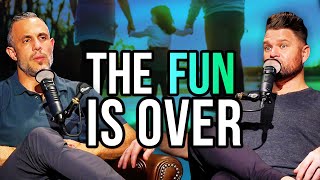
YouTube interview (Josh Trent with Sal Di Stefano) exploring myths about marriage, parenting and masculinity. Sal describes his personal arc — early marriage at 22, a 15-year first marriage with two children, divorce, and later a second marriage with additional children — and reflects on how responsibility, presence, and service reshape identity. Conversation ranges across topics: cultural lies that portray parenthood as loss of freedom, consumerist incentives to keep men 'Peter Pan'‑like, the importance of presence with children, meditation and breathwork, faith and meaning, fitness as a vehicle for growth, and practical lessons for blended families and long-term partnerships.
Chapters
One of the biggest lies ever sold is the following. To men, getting married means the fun is over. Life is over. Really, what you need to do is go bang as many chicks as possible, buy and drive fast cars. Go make money. Go enjoy yourself. Hugh Hefner, Dan Bilzerian. They're the happy, fun ones. You know, being a dad, you're dumb. You get a dad bod, Right? That's a disparaging comment, Right? You wake up, you go to work, go to bed, like, everything sucks.
Okay?
That's the lie that's told to men. Men who believe that lie never grow up. What does that person do? A lot of buy shit. They're consumers. They're easily manipulated, and they don't care. When you become a dad and you have a family and you're devoted, everything changes, including your consuming habit.
You're less monetizable from an unconscious standpoint, completely.
They sell it to women, too. What do they tell women? Having chill children is oppressive. You're going to find fulfillment and happiness by building your career. You want to keep your body because that's what's most important. Looking sexy. Don't have kids. Kids will ruin your body. And that means life is over.
Okay. Sal, What a treat, dude. I get to be here in your studio, but technically, you're on my show, so. Welcome to the podcast, man.
Oh, I appreciate it, bro. You're such a good guy. One of the. You know, it's like, I didn't forget because I, you know, obviously remember as soon as I meet see you again. One of my favorite people to talk to.
Thank you.
Great, deep, thoughtful conversations. We just had you on our show.
Yeah. Which was incredible.
Oh, and one went off. We went off in some good. Some great directions. So, anyway, thanks for having me on.
Yeah. I was sharing on your show. You know, we transitioned to wellness and wisdom because the force wasn't working anymore. It was like this, like, constricting energy. So I think about all the things that happen to us in our lives, and I felt like a good jumping off point for us would be the things that happen to us or the things that happen for us. That's something. In personal development, you and I have heard a lot like, oh, okay, it's happening for me. It's happening for me. And I think a lot of people out there understand the intellectual concept of something working out for us. But for something to actually work out for us, we have to believe in our heart and our soul, like, in our. In our cells, in our body, that an event that's Neutral. We make the meaning that it works out for us. And I think about the way that you're. You're now a father. Right. So three kids, 1 16, and the way that you've navigated the changes of being a father, specifically divorce, and coming into the world as the. Probably one of the biggest fitness, if not the biggest fitness podcast out there. Right. You guys have been voted. I'm sure you're in the top three, top five. So when you look at the arc of Sal and you think about where you came from, whatever attracted you to your first wife, the children there, then having that space in between where you had to feel in your heart, am I really ready for marriage again? Is this really something that I even want? Because last time really broke my heart so much. How did you. Looking back now in the place where you are with even a new baby on the way, which this baby's gonna come any moment now, is there something that you can glean about the way you navigated that road that really has made you the man that you are?
Yeah. Boy, that was. It was. It's a long. It's been a long, hard, painful, growth filled, also blessing journey. I know it sounds all contradictory, but. But it's. It's true. Gosh, where do I start? So, yeah, I. I got married real young the first time. I was 22 years old. And I was raised in a very traditional Italian family. So I'm the first generation American. My parents are both immigrants, poor immigrants, poor Sicilian immigrants. And I was raised with a tight family, tight culture, tight tradition. And also this. This really strong sense of responsibility that was compounded by the fact that I was the oldest of four. So I'm the oldest of four children. And I'm very much more like a father, or at least I felt I should say more like a father to my younger siblings than I did, like, as a sibling to them. So there's four years between me and my sister, and then it goes two years, two years, two years. So I'm like the oldest by a significant difference in comparison to the rest of them. And I was given a lot of responsibility as a kid. So my mom, you know, having four kids, you have to rely on the older siblings to do certain things. I also saw how my family lived and how they accepted and took on responsibility and tradition. And so I saw this. It was modeled. I felt this deep sense of responsibility myself. And so getting married young was just like, well, this is what I'm supposed to do. This is what I'm supposed to do. This is who I'm supposed to be. And that's what I did. I got married young to another Italian girl also, same age, similar background. And I placed a lot of value on when I was a kid, the fact that she was Italian, the fact that we knew.
I love that you threw that in there. That's one of the deciding factors.
It was. Now this wasn't hammered into me by my family, but as a 22 year old kid, because I was a kid and growing up in that, I thought that was very important. Really what it was, what was important were values. It wasn't that we were a tie in, it was values, but I thought it was a tie in. We have to be, you know, from the same, you know, place in the world or parents or whatever. Her family was very close with my family, so. And we'd known each other for a long time, so it just seemed like this is what we're supposed to do. So we got married and I didn't. I mean looking back and this is what. We were married for 15 years, by the way. Two kids. Divorce can break you, especially if you have children that you care about. I know some men, either by force or because they just don't want to, you know, handle responsibility, I guess when they get divorced, they're gone.
Yeah.
Or they become the every of the weekend dad or whatever. And look, I understand if that's you. I know that's hard, but that couldn't, there's no way I could have done something like that. I had, I had to be involved. I had to be. So divorce was really, really hard from that standpoint, from the culture standpoint. But looking back, I didn't really understand what it meant to be a good dad or a good husband or a good partner. I really didn't. And I'm only going to talk about myself, by the way. I'm not saying that my ex wife was perfect. I'm not going to complain about her either. She's not here. I'm going to talk just about me. This was my reflection. What did I do wrong? There was that, that reflection was what did I do wrong and why did that not work out? Part of it was what I thought was valuable going into it, which really wasn't what was important. The other part of it was I didn't understand. I thought my value was working and earning money. That's what I do. Work hard, earn money and that's what I did. I worked hard, I earned money and I worked 9am to 9pm, six days a week. Sometimes seven days a week. I would see my kids in the morning and, you know, play with them on a weekend or something like that. I thought dad was play with the kids. And that's just what I do. I didn't know my kids, didn't realize. I didn't know my kids, but I didn't really know my kids. I didn't contribute to the household very much. You know, I just. I just didn't. It was just something that I thought was valuable, and we would get in fights over it. And I, you know, think of all the other values that I brought. How could you complain? And that kind of stuff. So that. Those are. Those are the things that I brought to the table that weren't so great. I didn't understand growth and working together. There's a lot of avoidance. So problems would brew and then they would just get buried, and we would just kind of, you know, move along rather than we need to address this. That's still something I'm challenged with even till this day. So that was a big. A big mistake. And I also. And this is my fault. So I'm not placing the blame on anyone. But I also grew up in a modern culture, so here in America, California, that glorified being a free, single guy, and that made fatherhood. What was constantly sold to me outside of my own family was that I'm missing out, that you got to go have fun and be free, and all this responsibility sucks. And being a dad, like, oh, you're married now, life's over type of deal. Right. And so there was a part of me that I didn't realize that resented that I had gotten married so early and I felt like I was missing out, you know, like, oh, yeah, life's hard because it is. I got all this responsibility. I got married too young. I could have enjoyed myself. I didn't enjoy myself. And that whether that was true or not, it brewed this, like, resentment in me that also kind of poisoned my relationship.
So the space you're in now is so different, though, because you can look back on that and say, wow, I have so much compassion and understanding for younger Sal. Totally. Because he didn't literally know at that time he didn't have the life experience yet. Like, he hadn't walked the 20 plus years to be where you are now. You're in your 40s now. Yeah.
Yep.
So, okay, 43, 42. So I think we can sit here on somewhat of a life experience plateau and look back and say, oh, that's why I did that. So Looking back, could you share wisdom with maybe a young father who's with us where they're like, wow, I kind of feel like Sal just explained. I feel.
Yeah.
What's something you could give them where you think they might accept that? How could they even accept the wisdom that you might give them now?
Oh, boy. First off, yeah, there's no way. We're almost the same age. You look way younger than I do. I just want to say that. But anyway, one of the biggest lies ever sold to. To us both to men and to women is the following. To men, getting married means the fun is over. Life is over.
Go.
You know, really what you need to do is go bang as many chicks as possible, buy and drive fast cars. Go make money. Go enjoy yourself. Hugh Hefner, Dan Bilzerian, they're the happy, fun ones. That's. That's what you. You want to be being, you know, being a dad, it's just. It's. You're dumb. You become. You get a dad bod. Right? That's a disparaging comment. Right? You, life is over. You go to work in the rat race. You wake up, you go to work, go to bed, like, everything sucks. Okay. Yeah. That's the lie that's told to men.
Hold on. Why do you think that lie is perpetuated? What's the origin of that lie? You had to reflect.
What do Peter Pan syndrome men. Because this is what happens to a man. Man who believe that lie never grow up. Okay. What does that person do a lot of buy shit. They're consumers. They're. They're easily manipulated and they don't care. They don't care about a lot of stuff. They just don't. Anybody who has a kid will tell you, when you have that child, you start caring about things a little bit differently. You just. You're a consumer. That's. That's what you are. And so it's. It's a wonderful, like, it's. It's a very effective lie to keep. To keep this consumer base going along. Because when you become a dad and you have a family and you're devoted to your family, everything changes, including your consuming habits. You're less value things differently.
You're less monetizable from an unconscious standpoint.
Completely. Yeah, 100%. So that's my. That's my belief. That's my theory.
Yeah, I agree with your theory.
Okay, good. It could also be just, you know, the argument of objective morality versus subjective morality, which is this kind of ideological, you know, battle that I think has existed since we've developed consciousness. So it could be one of those, you know, if you want to go even deeper. But that's the biggest lie that's ever sold. They sell it to women too. What do they tell women? Having children is oppressive. Having. You're going to find fulfillment and happiness by building your career. This is what women are told. This is where you find your fulfillment and happiness. Not saying building career is a bad thing, saying that's what you build. That's where you'll find your happiness. You want to keep your body because that's what's most important. Looking sexy. Don't have kids. Kids will ruin your body. And that means life is over. Basically, you should sleep around because. With a lot of guys. Because it's empowering. It's empowering to have sex with lots of people. So I'm not saying it's good or bad. I'm just saying this is the message that's being sold. So these are total lies. Because, because by the way, we have data. This clear data on this is just my opinion. There's clear data to show the opposite. Yeah, that, that men who have children and are devoted to their spouses are happier, live longer, have more fulfillment and purpose and meaning in their life. That, that the unhealthy, the unhappiest, one of the unhappiest demographics, or most unhappy demographics are middle aged female executives without children. This is a fact. Why they bought into this lie. And by the way, women figure this out sooner than men because they have a biological clock. So at some point they reach this crisis period where they're like, oh shit, I can't go back now. Now men, it just takes a lot longer because we can keep having kids until whatever, but we all end up figuring this out. In fact, if you look at studies on people who are faced with their own mortality, people with chronic disease, you know, you have a year to live. People on the deathbed. What did you regret? What did you wish you did differently? Whatever. This is like a very common thing. Like, I wish, like nobody said, I wish I worked more or I made more money. Everybody's like, I wish I spent more time with my kids, or I wish I had kids, or I wish I, you know, stayed with that partner instead of, you know, doing all this other stuff. I wish I, you know, was more with my family and friends. So it's just a huge lie. And so that's what I wish I knew as a kid. Because I wouldn't have built that resentment. I think I would have Worked differently now. I'm not saying I re. This is also the challenge too. It's made me who I am now. It led me to my wife that I know now. So it's hard to say I regret anything, but it's definitely. I learned some stuff. So if you're young and you're listening and you're a guy and you're in the situation and you have a baby and you're not sleeping and it's hard and you, my buddies are going out because they don't have kids and whatever, like it's, you know, I guess the grass is not greener. You're actually, you're actually where you find purpose and fulfillment. You're in the right place.
There's about three different biological processes going on in everything you're describing. One of them is this novelty seeking aspect of the limbic brain where we're constantly wired for novelty because it's what makes us feel, quote, alive. But I would argue to say that that's not really being alive is constantly doing pleasure seeking. It might feel from a senso perspective like we're, quote, alive, but we're not actually living. Like there's some ingredients to living life. Well, which, which we're going to talk about. And then the other one is like, we have this drive in us as men with testosterone to procreate. So that's playing out. And then the third one is like, society is giving us all the satisfaction of being in relationship, but not actually doing the work to be in relationship. If a man chooses to sleep around and lead that hedonistic lifestyle. So there's all these different things going on inside of our biology that are essentially sal. Like tricking us. Dude. They're tricking us from an evolutionary perspective to behave in a way that our ancestors would naturally behave, but we're not actually paying the price that our ancestors would pay.
Yeah, you know, getting the pleasure without the work, that's a big problem.
No doubt.
That's a huge problem. Access to what you want all the time, you know, that can be also a big problem. Yeah, I think it's. I think it's very interesting. I think these problems that we have today are actually not new problems. It's a new environment. But if you look at old wisdom, you'll see that they talked about, you know, what are the seven deadly sins? Like, you know, as far as I was having this conversation with my sister this morning, she's like, oh, you know, why people are unhealthy, unhappy.
That's a casual breakfast Conversation.
Yeah, it's like, you know, the reason why people are unhappy now is because. Yes, although we have more, they can see the next guy that has more than they do and they compare themselves. I said, that's not a new problem. Envy has been talked about in thousands of year old religions, you know, since, since they first came out. Since thousands, for thousands of years. I said, this is kind of human behavior. So I don't think they're new problems. I think we have different circumstances. Human behavior doesn't change. I think we still have to learn the same lessons. And what are the lessons a man needs to learn, you know? Well, look, the reason why it's so valuable to find a woman, a good woman to be your life partner is because she makes you a man.
Yeah.
A good woman turns a boy into a man. And I know I got women right now applauding because they're like, that's, yeah, that's what I do.
That's me.
But no, listen, we have, no, we really don't have a lot of reasons to take on tons of responsibility. We don't have a lot of like, yeah, you know, we don't have the same biological clock. You know, we can detach from feelings a lot easier than women can. Not saying it's healthy, just we have a really good kind of innate ability to do it a little bit more.
Yeah.
And for. It takes longer to build up.
Dude, I remember I heard Chris Rock say this. He was on stage once. He's like a man would live in a cardboard box if that's all he needed to do. Women come along, we got to buy a car. We got to buy a house.
They make us grow up.
We got to make these. They make us grow up. We shackle ourselves. To quote Peterson, we shackle ourselves with responsibility.
Yes.
And when we shackle ourselves with responsibility, we, we find a mate that wants to share that responsibility with us. And that's how the spiral of evolution and really growth actually occurs. How else is growth going to occur for men? Unless they're with the right woman that is shackled in an agreed responsibility for.
That load, they definitely 100% turn us into men. And look, the pleasure part, look at the data on sex. The most satisfying sex that adults have are older adults with partners that they've been with for a long time in good relationships. Huh. So these are the perfect bodies. They're not the hottest. Right. They're not sleeping with a bunch of different people or doing all kinds of weird. It's like the same partner for 20 or 30 years. We got a good relationship and we have the most fulfilled, you know, fulfilled sex. So there's, there's a lot of lies being told. Look, it's like this lie right here. It's like, look, I'm in the fitness space. So that's. So I often bring things that, Because I can communicate that really well. It's like, it feels better. Look, exercise is hard. It hurts. So it's going to feel better to not exercise. False. False. It hurts way more to not exercise. Compare the two and you'll see what happens. And the pain you feel.
Yeah.
For not keeping yourself fit and mobile. Right. It's the, you know, I just want to enjoy myself, so I'm just going to eat whatever I want. False. You actually don't enjoy yourself when you eat whatever you want. And you'll figure that out soon enough. You'll figure that out soon enough. So the real value, the, the real goodness comes from, and I wish I knew this, right? And I know this now from the, the other stuff. It's the stuff that's, it's a, you know, here's a good one. I, I, this one was a bit of a painful lesson for me. It's painful because, you know, it's hard not to feel like. I guess, I don't know if guilt is the right word, but looking back and be like, man, I could have done a better job. But when I first got divorced, I had to become mom and dad there for a little while. So before I was like, like I said, I play with my kids, work all the time. Well, now we're getting divorced, and there's no way I'm gonna be the every of the weekend, dad. Like, I love my kids. I always love my kids to death. And I'm like, I am, I need to be there for them because this is going to be really hard for them. And I got to be there at least what the law Sundays, which is 50% of time. I'm going to try and have a good relationship with their mom so that if I want to be there more or whatever, but I'm going to be involved. But that was a learning curve because now I had to do the stuff for school and get the clothes and what size shoe do you wear? What's the name of your pediatrician? And this school event's happening and what's your teacher's name? And feeding them and all that, you know, washing their clothes and making their lunches. And that was a painful learning curve because I didn't know any of that shit. So it was like, I gotta figure this out real fast. I remember so stressed out, like creating schedules and all this stuff. Yes. But through that process of doing that, I started to know my kids. And I remember being. I don't remember how long it took, but at some point I was like, oh my God. I know I didn't know them before. It's all this day to day shit that I thought was work. I just thought it was work that you actually get to know your kids now. And the reason why I feel a little guilt is because there's a gap. Right? I have my two older kids from my first marriage. Now I have a two year old, almost two year old, and a baby about to come with the second one. And I feel like I'm so much better the second time around. So I look back and I go, oh man, I wish, because now I'm really involved. Like, you know, I change diapers and cook and you know, do all the stuff, the day to day stuff, put him down for bed and wake him up and feed him. Like these are the day to day stuff that I realize is valuable. Not cause I gotta do this work, but because I get to. This is how I know my kid. This is how I connect with my kid.
God, I've had so many moments like that with Nova where I'll take him for a day and I'll have this experience where I'll learn something about him. Like I'll learn the way that he likes to feed me, so he feeds me and I feed him. Which is like, this is so new, it's so cool. And. And I'll think to myself, wow, if I didn't be here, if I didn't choose to be here with him right now. And I could see how easy it would be for all dads, by the way, to just be like, nope, I'm working, I'm providing, I'm gonna bring in the bacon. Like that's how we travel, that's how we do things. It's such a paradox of providing and presence. Providing and presence. It's almost like the seesaw where now you're in it. You afford a really interesting position because you have the gift of gab. You're very articulate. You host one of the biggest fitness podcasts in the world. Like you're in a space where, let's say, potentially just play a game with me that you weren't doing what you're doing now because people know you as really the voice of fitness on Apple and Spotify. But if you weren't that, if you didn't have that, let's just say you were still working in the fitness industry. You didn't do anything in media at all. How do you think you could balance being a provider and being someone who's in presence?
You balance what you produce with your wants, and you create a balance. Balance. So what would that look like? Well, either I'd move to a place where the cost of living is a lot lower, or I'd find a way to maneuver my work to earn more or invest better so that I don't have to work as much. I would have made it happen because I would have valued it. See, I didn't understand it before, so I didn't value it before. It was just put more time.
And when you say it, you mean the balance of presence and providing, Correct? Yeah.
It's even. This. It's even. This is. I even catch myself like this. I'll be at home and my son will be playing and we'll be playing together, and then he'll go off and play on his own. And he's literally playing on his own. I could easily go on my phone, oh, he's playing. He's having a good time. He's doing his own thing. Let me go on my phone, answer emails, DMs, do some work. I catch myself even doing that. No, no, put the phone down and be. Just be here. Be here, be with him. Watch him. By the way, doing this, I mean, this almost brings me to tears because you don't realize this until you do it. When I started doing that, he checks to see if I'm paying attention. I didn't know that. While he's playing, every once in a while he looks to see if dad. What's dad doing? Do I want him to remember me on my phone? Or he looks up at dad and Dad's. Makes eye contact with him.
You know what's even more wild than that is think about the way that his memory and his subconscious are forming now.
Totally.
Because he's two, right?
Yeah. Almost two.
Yeah. Okay. So from.
From.
For the next five years, he's essentially on drugs. His hemispheres are wildly connected. If you look at all the data and research on child development, the first seven years are pivotal from, like a cognition standpoint, and just how the. The axons and the dendrites form. And so every single time he looks at you, you're. And you're present, you're reinforcing that synaptic pathway that. That the world is a safe Place that dad loves me, that I'm here for a reason, that what I do matters. And that is so potent from a long tail perspective on how anyone's child would show up in the world. Why wouldn't we all be practicing this? So what can you share about yourself? And what can you share about society that disconnects either moms or dads, dude. Either moms or dads from being truly present with their kids?
It's hard because presence. Well, look, any. Any behavior that we have to some level is a skill. Meaning if you practice and you value a behavior, you get better at it and you derive more value from it. Okay, so it's a skill. And unfortunately, presence is a behavior. It's a natural behavior. When they study modern hunter gatherers, they have downtime, too. They just sit there. They literally just sit there. Like, they're not looking at anything. They're not doing anything. They just sit there sometimes on their own, and that happens quite a bit. We don't do that at all, at all, ever. From birth. Like, we're almost always distracted. So it's really hard. It's really, really hard. Like. Like, think about, like, when's the last time you went to the bathroom without your phone? Years. Yeah, years. How many times have you gone to the bathroom, realizing you didn't have your phone? Real quick, turn around, got your phone, went back. Right. Or what about when you're in line? You're in line at the grocery store.
Yeah.
You're checking your phone, you're doing your thing. So presence is just. It's a skill that we need to develop or practice so that we can get better at it. Because you'll sit there and this. I still struggle with this. This is hard. I'll sit there with my kids, and I'm like, okay, just be present. You know, it's like it tugs at you. Let's check your phone. Ed, just look at this thing. Ed, you know, go pay attention to this other thing over here. Yeah, it's really weird. So you have to practice it. Meditation, by the way, is why you see the value of meditation. Meditation is literally part of that. That's part of why there's so much value and why you see people become so calm and anxiety rates lower when people practice meditation. It's really just kind of disconnecting, tuning off. I should say not disconnecting, but tuning off. That distraction. What do they call it? The monkey brain.
Yes. And the monkey brain's really a construct of the default mode network, which is like the prefrontal cortex, the posterior cingulate, the amygdala, those three structures. But there's other ones in there too, but those are the main three. And they did PET scans, like where they put people's brains in the machine and they can actually see research on if someone's had trauma in their life, then their default mode network at rest, which, by the way, the default mode network's job is just essentially to make sure that you're present in the moment. And if it's dysregulated, it's gonna focus you on the past with rumination, or it's gonna project you into the future with lack of trust in self and anxiety. So if the default mode network is high and those three structures are super active when someone's at rest, that means that they literally and physiologically don't know how to fucking chill. They just don't know how to chill. So when you talk about meditation, coming from a fitness mindset, man, I think about that as like weightlifting for your brain. But you're not actually, quote, making your brain stronger. You're using your own breath and your own presence and awareness to turn down the volume of the default mode network. Can you expand that a little bit?
Yeah, I remember the first time. So I used to have a wellness studio, and at one point I had a location that was like two doors down where we did group classes and I had a meditation expert come and teach meditation classes. Not because I valued it, because I didn't. I didn't know anything. I mean, other than people like this. Someone offered this class, like, you thought.
I could make money?
Yeah, like, okay, this would be cool. This is balance. I've seen value in other people, so I was at least open minded enough. This is my saving grace, by the way. I care about people so much that I progress and grow through trying to help my clients and through helping people. Because then it's becomes a mirror. Well, oh my God. Okay, well, that helped them. I'm telling them to do this. I don't do that thing. Like, at some point I got to be like, take your own advice out. So, you know, had this meditation class and you know, I went in there, took the class, and it was terrible. I sat there and he's walking you through meditation and doing this thing. I'm like, this sucks. Like, I'm honestly trying to fall. I'm like, I'm gonna fall asleep. I'm just gonna take a nap. Like, this is terrible. And the instructor afterwards who worked for me comes up to me, said, what'd you think? I said, well, you know, I could see the value in it for other people. It's just not for me. And I said. She said, why? And I said, well, it's just. Just sitting here, like, I almost fall asleep. Or. She goes, well, yeah, I got to practice it. And the light bulb went off. Well, no shit. Like, I've never had somebody do a squat. Great. The first time.
Yeah.
Or the first 15 times. You have to. You have to practice it. So it could be meditation, it could be prayer. Now I. What I do is I pray. I like to also place myself in situations where distractions are hard to include. So, like, for example, a steam room. You probably shouldn't bring your phone in the steam room. It'll break. Right. So I know if I use the steam room regularly that I'm gonna be forced to sit in there by myself and try to be present. I know the more I do that, the better I get at trying to be present. There's a lot you miss when you're not present. A lot.
You know what that brings up for me with the steam? A lot of people don't know this about you. You had asthma.
Yeah.
You had trouble breathing as an adolescent right up until what age?
Well, I was really bad when I was real young. And then, you know, as I got into my teens, I started lifting weights and working out, and I think that's what got rid of my asthma. Now I'll probably use an inhaler at most once a year if I get, like, a chest cold or something.
It's something we haven't chatted about yet. And I'm fascinated by this because we have over a thousand students in the Breathe program, and some of them have asthmatic conditions. And I always tell them, like, hey, for me to be safe, check with your doctor. Make sure this is safe for you. But you and I both know the more you use muscles, intercostals, everything, like everything in the internal corset that actually aids you in respiration. And so if the diaphragm needs space to travel and all these different breathing musculatures, they need actual strength and activation to work. How could it not make sense that you doing, like, isometrics, rotational stuff for your tva, all kinds of things that would allow you to breathe from a more strength perspective in your muscles. Of course, that would make your asthma lessen, because what essentially is asthma. Can you talk a little bit about that? People that might have breathing.
Yeah, you have. There's two, like, so when you treat asthma, you'll take a bronchodilator like albuterol, which, what it does is it relaxes the muscles around the bronchial tubes that can tighten and constrict. And sometimes you could take, especially if chronic asthma, you'll take a steroid because it reduces the inflammation in the actual bronchial tubes themselves. Okay, so what does that mean, the inflammation of the bronchial tubes? Let's leave that out for a second. That's an autoimmune condition. There's lots of ways you could tackle autoimmune. And there's much more we know today about autoimmune issues than we did yesterday. And we're still learning more and more. But let's talk about the constricting, the asthma attack. Yeah, that happens. You know, we know this as a fact. Being scared or anxious or frightened can trigger an asthma attack because those, those muscles contract and squeeze around those bronchial tubes. So, you know, moving, strengthening my body also feeling stronger, feeling more empowered. That's what strength training really does quite well. Probably played a role in my asthma going away.
Yeah.
And like I said, I'll use an inhaler like once a year when I'm really sick, probably because I get some of the inflammation that comes along with having a virus. But other than that, I'm asthma free. And I think that played a huge role, the muscle strengthening part that you said. But I also think there's a psychological aspect where feeling more empowered, feeling stronger, feeling. Yes, you know, that also played a role.
It's like when the subconscious mind holds onto a belief and you can look at anybody's, you can look at Dispenza, you can look at Bruce Lipton's work, you can look at anyone in that field. They all say essentially the same thing, that the body is the subconscious mind. And so if the body is the subconscious mind and whatever is true for my subconscious, which is essentially the iceberg below the ocean and the tip is the only thing that people see that is what is actually driving 90 plus percent of everything in our lives. So once you started to, especially because you were a hard gainer, you were a kid that couldn't put on masks.
That's right.
You probably had like pictures of Schwarzenegger like hung up on your wall and stuff.
Oh, gosh, I did the whole thing.
All right, so you went through that whole journey, but people look at you now, they're like, wow, he really has a really strong base of like deep type 1, type 2 fibers. Like, they're in there, they're definitely in there. But it's because at that age, you told yourself from someplace, maybe it was your heart, maybe it was your soul. I don't know. Who knows where choices actually come from. I feel like it is from the heart and soul that you said, all right, I'm gonna go down this path. You got to a plateau. You plateaued for a while. What was it that allowed you to keep going? Cause a lot of people, when they stop and they don't get a result, even if they don't get results financially or in relationship, for you, it was health. When you hit that plateau, what was it about your soul that allowed you to communicate with your subconscious mind so that you'd be like, fuck this, I'm not this plateau. I'm going to keep going.
Yeah, well, it was initially motivated through insecurity, right. Skinny kid. So I want to change myself because I don't like what I look like. Which will get you so far.
Yeah.
Now you combine that with like hard work ethic and tenacity. But also looking, this is me looking back. So this is now, you know, obviously what they say, hindsight 20 20. Looking back, I really liked the empowering, the empowering aspect of it. This was something I could do to change this thing I didn't like. Okay. At some point though, the insecure, I guess, self hate model, it runs its course. So, you know, I actually said this when we had you on our show. I love fitness mostly because it's this powerful, unassuming vehicle for growth. I mean, if you pursue it long enough, you learn acceptance. Like, I remember when I had to accept that no matter what I was going to do, I'm not going to look like Arnold, that there's muscle building genetics, just like there's height genetics. And it just ain't going to happen for me. But I'll keep going anyway, right? I had to learn. I learned the lesson of the value of struggle and challenge. Like, I like that part more than the, I like the journey more than the, than the goal. Now, in fact, that's what I value the most. Right? You learn that if you stick to it long enough, you learn that you, you can get good at things that you suck at, or I should say better at things that you suck at. If you just practice enough. Yeah, if you just, you just practice. And I also learned to not be afraid to suck at stuff because if you want to build muscle, you got to try new exercises you suck at, get good at them. And that's one of the fastest way to build Muscle.
You just put your finger on something so potent. I think what stops people from starting a fitness program or honestly even being in relationship or getting married, it's all the same thing. It's that flinch. It's like a flinch response where it's like, oh, hold on, that's gonna be a lot of responsibility. And by nature, I used to think, and based on some of the new research and podcast guests that I've had on, I used to think that we were just like pleasure seeking beings. But we're not. A lot of the new research coming out is that we're actually pain avoidant beings. And that's the majority of why our decisions make their way in our lives. But I'm curious how you feel about this, because when we look at what really blocks people from starting anything new. Fitness, wealth, health, relationships. Yes, it is half biology, but there's something else. There's something else in you and there's something else in all of us that maybe only you could describe for yourself. There's another ingredient besides just human will. There's another ingredient besides overcoming one's biology. What do you think that ingredient is for you, boy?
I seek. I seek growth. And I don't like being uncomfortable, which obviously uncomfortable. The very definition of uncomfort or discomfort is. It's not comfortable. Yeah, but I like growth more than I hate discomfort. Although there's lots of growth I went through. Well, here's the deal. Typically you won't. People are like, I seek discomfort. No, you don't. You don't really seek discomfort. Real discomfort to you. You'll avoid. Really what it is, is you're going to go through very uncomfortable points in your life. Can you grow from them? Do you look back at them and say, let me grow from this really shitty, hard, whatever, challenging time. That's really what it is. So I value that because I feel like I know being uncomfortable without growth is just pain. There's. There's really nothing behind it. Right. So through fitness, that was, that's always been the journey. And at one point I was forced to make a radical change in how I approach. The voice you hear on my podcast now was largely built around one kind of pivotal, pivotal moment in my life. And this was when my body rebelled. The, the pushing myself because I didn't like the way I looked, the, you know, meathead approach, the it's all about calories and macros approach, the take supplements and designer steroids approach that. That my body eventually rebelled and I got sick. I lost weight, thought I had Crohn's disease at one point, terrible, you know, health issues. And again, my saving grace is that I like people. I really love people. And I had. At this point, I had a wellness studio, and I had wellness experts that I didn't. Wasn't for me, but I liked people so much, I could see the value brought clients. So I'm going to include gut testing, hormone testing, I'm going to include meditation, body work, you know, all the things.
That secretly you needed.
All the stuff that I needed. All the stuff that I really needed. Right. But it was for my clients. Right. It was for the people that I'm trying to help. And when this happened to me and none of my tricks worked and I was losing, you know, this armor of muscle, and, you know, it's like my ego is dissolving right in front of me. Who am I? What do I. Like? Like, am I. I'm not healthy? Like, what's going on here? I'm not even looking good, right? What's going on? I finally sat down with them and I said, I give up. Tell me what to do. I'll do whatever you say. And so I radically changed everything. And so for a year, I pursued wellness for a full year. The irony is, at the end of that year, I had a moment where I. I caught my reflection because up until that point, I really avoided the mirror because it was so triggering. Because, you know, wanting to look better was really what got me to that. That shitty part.
Yeah.
So I'm like, I'm not going to. I'm not going to look at myself. I mean, obviously I pass mirrors and stuff, but I'm not going to sit there and look at myself in the mirror. Well, anyway, I caught a glimpse of myself after that first year, and I looked better than I'd ever looked. And I. And I remember having this, like, aha. Moment. Like, well, that's interesting. Being healthy looks good. Yeah, that's pretty funny. But that. But that. That developed the voice that I have now on the show. What drives me in that direction, I think it's just going through hard shit and saying, how can I grow from this? And what was I. What part was I responsible for? Not what. Not focusing on the parts I don't have control over, acknowledging that. That there's parts I don't have control over, but not dwelling on them, you know, like, it would have been really easy for me to get divorced and been like, you know, she was this. She didn't do that, you know, and there's definitely some element that. Of that. That happens.
Yeah.
But if I hadn't looked back and go, what was my role in all of that? Like, what did I do that I could have done differently? Like, it would have been a waste. It just would have been a shitty time rather than growth. So I don't know, maybe it's. Maybe it's me trying to find meaning out of. Out of hard things, I guess. And it does help provide that, I guess.
And we've heard this before, we're meaning making machines. So we literally are like half beast, half spirit. And if we don't tend to the beast, if we're not breathing, sleeping, training, doing all the things that the beast needs, well, then the spirit can't inhabit. Literally. It's like almost like a dirty plug. You ever try to plug a plug in a wall and there's like cat hair on it or something? You have to clean it off. You have to like, blow it off? Well, we're the same way. If something's dirty, if our conduit is dirty, then we can't have really a connection to our mind or a connection to God. And what's interesting, what's really fascinating, we touched on it a tiny bit on the pod we did with the four of us. But I really want to go a little bit deeper on this because you are a man that has been through many challenges, and one of the challenges you have experienced is what is God? And I think that's a universal challenge that so many of us hold and so many of us honestly still deal with. You even said, I believe you said, I'm still a struggling Christian.
Yeah.
What do you mean by that?
The, the faith question, I think is always a. It's always a tough one because I'm also. I try to. I always try to apply earthly. My earthly senses to things. So some people would say logic was a lot of value in logic, but there's a faith part to. To this that also has to exist. And that's the. Sometimes can bump up against each other, but. And that's. I think. I mean, look, I've been told by my spiritual mentors that that's everyone's struggle.
Yeah.
You know, with this. It's not. That's not just you, but. Yeah, that was mine. I started out, I was raised Catholic, but we weren't practicing. We were like the Christmas Catholics. You know, we go to church on Christmas and then maybe Easter. That's about it. So I was raised with. With morals and culture, but not a spiritual practice. So I was. I mean, in Practice. I was probably more agnostic. Not really that I really think about it a lot growing up. And then it became something that I really thought about probably in my late teens, say mid to late teens.
Why was that?
I don't know. It just, it was interesting to me. I think it's, it's definitely. If you're trying to grow as a person, you're going to be confronted with this question. Yes, it's a part of who we are.
I think that, that the spirituality or the God conversation connects us to our mortality in some way.
I mean, we're all finite mortal beings. Things happen in life that you. That are really hard. There's a lot of unanswered questions. And if you're a thinker, you know, if you like to think about things, which I did as a kid, that you're going to go there, like, that's just where you're going to go. So I would go there and I went from kind of not thinking about it. So maybe agnostic to atheist. Oh, it's. Science is. Got the answers. And my. What I thought, you know, they meant by God was. And religion is just used to, to control people, which I believe it still.
Is in some way.
Well, I mean, we can go there. I, I think anytime you have people, you have human behaviors, good and bad, so you can have something that's great. Look, I work in fitness. Fitness is great. Is there dysfunction in fitness or can there be dysfunction through fitness? Or is there dysfunctional aspects of the fitness industry? Like, yeah, yeah, yeah, you better believe it. So you could look at the orthorexic person who's unhealthy, has a, you know, just a dysfunctional relationship with food, who, you know, takes all kinds of drugs and whatever. You can look at that person and say, fitness doesn't work. But I think that's. That's not, that's not correct. That's right. That's a person. Right. So I think with religion, it's the same thing. Has it been used for those things? Yes, but that's ignoring. But what that did is it made me ignore all the potential, like benefits and values and good sides and good things.
Let's go, let's go here. Something that I've mentioned maybe five or six times. So, like, devout listeners are gonna be like, dude, we've heard this before, but I'll promise you the way that, that we're gonna go about this is gonna be much different. So Isaiah 45, 7 King James, ve I form the light and create darkness, I make peace and create evil. I, the Lord, do all these things. So if we really listen to that, if we really hear it, what is the word of God or what is the word of the Christian faith saying? It's saying that I am everything and I am nothing at the same time. So if I form the light and create darkness, if I am evil, and if I am love, then God literally is you and I, this table, everything around us. That can be very confronting to people because there's really nothing after that. If, like, if God is nowhere and everywhere at the same time, then I can see why people would choose atheism. I can see why people would reject that because it's so scary. And honestly, a lot of Christians don't like that piece that's actually rejected in a lot of churches where they won't talk about it, they won't say it, because that's identifying something almost even more. Almost even more godlike than just having a faith or having a religion where you'll burn in hell forever.
To have the potential for good means you have to simultaneously have the potential for bad. That there's no way to have good without the potential to exist for bad. I remember having this talk with my son. It wasn't this. It was similar.
We were the 16 year old.
Yeah. When he was real little.
Okay.
We were watching cartoons and you know, Superman flies into the burning building, saves the people and he goes, papa, he's so brave. And I said, no, he's not. I said, superman, like, he's gonna fly in the burning building. He can't burn. He's invincible. I said, you know who's brave is the fireman, the fireperson that goes in there. That they could die. That's how you show bravery. Right? That's. That's real bravery. You have to share.
There's more at stake. Yeah.
Yeah. So the potential for good to exist means that you have to simultaneously have the potential for bad. So that's what that, what that particular verse means for me and what it.
Brought up for me when you talked about your journey with atheism and the now to being the quote, struggling Christian is because I don't know if this question is even answerable. I really don't. And I think that the more we try to have a significant solid answer as to what exactly is God, what exactly does that look like? There has to be what a mentor of mine on a vision quest taught me. Tim Corcoran and Mark tollefson. I did four days fasted in nature. It was a 10 day ego dissolving process. It was actually here. It was in the Santa Barbara mountains in the high desert. And this year, actually was my second quest. And one of the biggest things I got from that was when you strip away food, when you strip away distraction, when it's just you and your body and your thoughts and your breath and water and nothing else. Like, no flashlight, no tent. I mean, you're out in the middle of nature where if you go like this, you can't even see your hand. That's how black it is. That's how nasty, dark it is. And so anything that's inside of you from a subconscious perspective is coming up. And what came up for me was a lot of the wounding around my dad that I was, like, actually really wanting to let go of. So it was very cathartic. But also what came up was in my past, how angry I had been at God, how angry I had been at God because God couldn't fix my mom's bipolar. God couldn't make my dad come back. God lets all these people die and all these things. Like, that's a really interesting conversation because someone that. Someone like yourself that's walked that journey of, like, saying there is no God. Now I believe that there is. How do you make sense of why bad things happen to good people?
I asked that question to Bishop Baron when I had him on the show, and he said. He said something that I thought was very interesting. He said, without Hitler, there would have been no Schindler. And I thought, wow.
So which is really. Isaiah 45. 7.
It is. In trying to understand them on our level, not at the cosmic level, I think could be very challenging because, you know, hard is hard. But I mean, we could be. Mind. Look, here's the deal. You could help somebody because you. And you truly help them because you have the choice to not help them. Or you could accidentally help someone because you're on your way. Like, which. Are they both the same? You know? No, they're not. So. So it's. It's. It's a. That's a challenging question. That's the one. Like I said, I asked Bishop Barron then, and he really blew me away with that. And it's like, you know, we could be mindless creatures that just go about and don't have a choice or don't consciously choose, you know, right or left or up or down or, you know. But would that be the same thing? You know, is there then a potential for good if we just act? If we're just perpetual machines that just act without Choice. How are you doing? Good. You're not doing anything. You're just doing, you're just moving. So in essence you have to have that potential. So all the shit that we see is because we have the potential to do good. We're still choosing, we still can choose.
What do you think has made you mature the most as a man in your life?
Oh boy. Having kids and getting divorced and then meeting the wife that I'm with now for sure.
And why is that? Just because of your ability to navigate.
You know, being a dad. You definitely realize how invincible you were before in the sense that you've never been vulnerable like you are. The second you, you care about something more than yourself. Like now you're vulnerable and it's not you, it's like outside of you. So now it's like gets scary. So you grow up real fast. Like you have to grow if you really care and love your kid, you end up growing up pretty quick with that.
Dude, I gotta calm. That is so true for me right now. Nova, 16 months. I would say in the past six months, especially without any fabrication, without any excitation. The past six months have matured and forged me like a sword in an anvil. Going back in and out of the fire, back and forth, back and forth. That's how we get galvanized, right? That's how, that's how we actually become not just. Not just strong, but anti fragile where like when things come along, we won't get crushed by things that. That occur. And I can definitely resonate with what you're saying, so please continue. But like I think all of all parents feel that in some way.
Oh yeah, it's. I mean, gosh, you'll never be, you'll never feel real potential fear until you have, like I said, something that you love more than yourself and it's outside of your body and now you worry and now, oh my goodness. And yes, that can go in a bad direction, but what it does, it really forces you to grow as a person. You have to. The other thing is, you know, my wife, my current wife, knowing the mistakes I made in the past and understanding that there's so much value in growing together and working and growing together. There's things that I can grow and learn from her, vice versa. Working together, not getting into conversations to win, but rather to grow. Right? That's a big one. Understanding that we're different in many ways and trying to understand how to communicate in the ways that she understands, listen in the ways that she wants. You know, it's that forces you to grow. Because I'm with someone else and if I want to grow with this, if I want to be with this other person forever in a fulfilling way, then I have to grow. I can't be the same person. That's impossible. She's going to change. So I got to change and grow along with her and raise kids together and do all that stuff together. So those are the two big ones. And then this one's a more minor one. But it is interesting having having the podcast.
Yeah.
Because under almost no other circumstances would I have good, great, deep conversations as regularly as I do now. Because it's work.
It's the ultimate form of therapy and connection and healing and nurturing.
Yeah. So it's like, yeah, you know, like, would I be doing this? Like, you know, I'd be at work right now on a computer or doing whatever.
Yeah.
So this has been somewhat. And then also my, the fact that my thoughts, I have to think them out and I can listen to them afterwards and I can process them. Like, you ever, you. You probably don't experience this anymore. I don't. But you know when people first hear themselves on radio or they hear their voice like, oh my God, I sound so weird.
Oh, yeah. Maybe like the first hundred episodes or something.
Yeah. You do that enough times and you can start to hear like, oh, I sound like an right there. Or I could have been more open minded in that part. Oh, that's a really good point. Let me think about that a little more. Let me accelerate that thought or whatever. So that, that's also been a part of my growth is just this podcast and the conversations and like, like, like Adam and Justin, who are my co hosts. I didn't know them at all before we started the podcast. I knew them better after two years.
Yeah.
Than I did some of my best friends.
And most people don't know this, but it was actually you and Doug that really were the fuel to start the cast.
Yeah.
Right. You guys knew each other. He was your client.
Doug was my client. Adam and Justin were. They were business partners and they had worked together and.
Yes.
Yeah, Adam, Doug was my client and we became friends through that. And he convinced me to. May take a lot of convincing, but he came up with the idea of. He told me, says, sal, do you, do you have any ideas? If you do, let me know because I understand Internet marketing.
Okay.
And I didn't have any ideas. But shortly afterwards I did and we created the first workout program. And then I met Adam through different, under different circumstances. But I respected his opinion, so I sent him the workout program we created. He loved it, got on the phone, decided we need to meet, and then that was it. Podcast was created.
You know what's really cool is it's easy for us to sit here in this ridiculously amazing studio. Like, I'm having serious studio envy.
Thank you.
We just spent a bunch of money on our studio in Austin. I'm like, wow, it looks amazing. And then I come to San Jose. I'm like, we gotta upgrade. But the reason I'm saying that is because it's so easy to look at someone who's at a certain place on the mountain, or maybe even even at the top of a mountain, and make judgments or make assumptions about how that individual got there. But looking back, was there, was there a certain element of luck? Let's be straight up. Was there a certain element of luck that's allowed you and mind pump to grow in the way that it is, or do you feel like luck had nothing to do with it?
Oh, wow. I don't know about. I don't know if luck is the right word, but I mean, yeah, I mean, the time, of course, the timing was right. Like, had we all met 10 years prior?
But isn't being in the right place at the right time another form of good fortune or luck?
Could be. I mean, I. Okay, here I feel blessed.
Okay.
So I don't know if. So luck to me sounds like.
Or maybe the wrong word.
Yeah, exactly. Yeah. I feel. Yes, blessed. I feel very blessed. Because looking back, it's like, you know, they talk about how Earth is in the perfect position in the universe to have the perfect, you know, conditions for life and like how those odds are so small in the universe or whatever.
Yes.
So I feel like, like, like blessed in that sense. Like, had I met them as a younger man, had all of us met when we were younger, this would have blown up.
You would have fucked it up.
Well, we would have just. It would have. It would have been a bright, crazy flame that burned itself out real quick. Okay, yeah, so that would have happened. Or, you know, podcasting really wasn't a thing. I mean, shit, when we started, a lot of people were like, What's a podcast?
2014, 27.
Eight years ago. Almost eight years ago.
Yeah.
So.
So right around the time that I.
Did, like, yeah, okay, Pretty close.
Yeah.
POD wasn't like this huge thing, but it was this new medium. It allowed for long form conversation. There was unlimited bandwidth in the sense that we didn't. We weren't Beholden to corporate sponsors. Like, I had to like, edit what I said, otherwise I couldn't get my voice out. Yeah, we could say whatever we wanted. We go as long as we wanted. And it was, it was perfect. It was perfect vehicle for us. So that kind of timing also, had we started now as bad as we were those early days, I don't know if it would have gained a foothold back then. There was far less competition. I mean, we're not media guys. I'll be very clear. We were all trainers. Yeah, gym owners and trainers.
But one really amazing thing that I know made me a great podcaster was being a personal trainer. Because the one thing that I would have to do with clients, no matter what, is I would have to keep their interest in the conversation going. Yeah, right. Like when they're in between a set and they're breathing and they're huffing and like, or even when they come into the gym. There's an art form. There's a skill set for all fitness professionals and not just fit pros like massage therapists, yoga instructors, anybody at all that does something physical with other people. They have to develop a way to articulate themselves and be truly, genuinely interested in their client in order for that to progress forward in a, in a fun and engaging way. And I can look back and be like, damn, that made me such a good podcast.
You have to. The most important. When I do talks with trainers, sometimes I haven't done a while, but I would go to gyms and, you know, I'd have the trainers and I'd do like a talk and a training or whatever. And the way I would open would be, I'd say, what are the most important features of a successful trainer as defined by clients who get long lasting, forever results and the ability to build a supported. A business that supports you. That's success. Right. So those two things were the most important features. And they'd say, oh, knowledge, empathy, periodization, tables, like all that stuff. And they'd say, those are all important. But the most important factor is effective communication skills. Because. And I use the word effective communicate or the words effective communication skills because there's another word for it. But if I use the word that I'm about to, it turns people off. It's called sales skills. So effective communication skills, also known as sales skills. So you think, well, what does that have to do with. Yeah, okay, maybe you can sell more personal training, but how does that make you a better trainer in terms of results and whatever? Because you're constantly, you are you are a guide. When you're a trainer, you are constantly selling that person and you have to be effectively selling them on every time you see them. On how they can change fundamental behaviors that are very hard to change.
Yeah.
In ways to improve their health and their fitness. And that's no easy task. Okay. There's a reason why there's a 90 plus percent fail rate when it comes to people losing weight. It's hard. So if you're really good trainer, you know how to sell your ideas, the ideas of health and fitness and changing your behaviors and all that stuff in ways that are effective so the person actually adopts them. And that's a long process. It's not like me selling you something right now. Sure. It's I see you Mondays and Thursdays for, you know, three, four years. And then we start to figure out your food relationship and then. And you start to really enjoy the struggle of exercise, and then you develop this relationship with it. And it's a slow, but it's a constant, effective communication process. So that skill definitely translated to the podcast. We had no media skills. We turned the camera. We actually didn't use cameras. We turned the mics on and it was nerves and it was the, you know, what do guys do, especially gym culture. What do we do when we're nervous? Right. We out. We bro. We out bro each other.
Trying to big league one another.
And we would ever. And we would. And so, I mean, I guess there was an entertaining maybe component to it.
Yeah.
Maybe our most hardcore, you know, fans or whatever. But if you listen to it, it was terrible. But what we did well was communicate health and fitness because we had two decades of. Of practice. What works? What works? What works? Oh, that doesn't work. That doesn't work. That doesn't work. I mean, we all sucked for the first seven years as trainers. That's a fact. Well, we all talk about that. Then we started to figure it out and how to really get people healthy and fit for the rest of their lives. And that's what you heard on those early days in the podcast. So 100% what you're saying, we definitely gained those skills from. From personal training.
I remember when we sat in a Texas rental in 2017 in Austin at the Paleo conference, and we had just like, met each other on a whim. I sat down. It was like the first time I had had like the mind pump experience, and I was like, damn, this is a legit podcast. Because you were sitting next to me and I thought it was going to be a podcast about fitness. And I sat down in this beautiful Airbnb in Austin. You remember that? Like the tree growing through the house and everything. And you asked me, like, right out the gate, something you're like, so tell me. You know, I noticed that you had struggles with weight. Like, what can you talk to us about Emotional intelligence? And I was like, I'm on a totally different podcast than I thought I was gonna be on, you know, And I think that's one of the ingredients of y' all success is because you take a concept like fitness, which can be super linear. Fitness can be very like, you know, cross the T, dot the I's, zeros and ones.
That's the wrong way to do.
Calories in, calories out. It's a very like old school, kind of pig headed, almost archetype of the fitness instructor or just fitness in general. And what I really loved about you that day is, is we, we went into this depth of like, well, talk to us about why you actually gained the weight and what happened when you lost it. And I really appreciate that about you because I thought, oh, this is actually what I've been talking about on the podcast now for two and a half years. But I've never been a guest on someone else's show where they asked me the same thing.
Yeah.
So I really felt a camaraderie and like a brotherhood with you in that moment. I don't know if I've ever shared that with you.
Oh, I appreciate that. Well, right off the gates, we liked you just because you're so, so stimulating and fun to talk to. That's so. We had great. Even Adam said it earlier when you were on our show. You're one of the best people that's ever interviewed us, you know, because of that. But yeah, if you approach fitness like we're robots, where you input data, workout plan, diet plan, meal plan, you know, plug it in. If we were robots, that's that'd be the way to do it. Give us instructions, give us direction, and.
It might work well for a while.
But we're not that. We're behavior based, emotional creatures. Nobody eats. Look, okay, I don't want to say nobody. Fitness fanatics can say, I look at food like it's fuel. Okay? Now, 99% of us don't do that. Most of us look at food and it means all kinds of different stuff. It looks, it's celebration, it's I'm sad, it's I'm anxious, it's pleasure, it's lots of different things. So to pretend like it's not, we're going to fail. Okay, exercise. Yes, there's definitely. You want to definitely follow a plan, but there's a relationship that you have to develop with exercise. Like, I used to love this. I don't. I mean, not love it. I love this realization. I don't know if that's ever happened to you, where you're training a client and they've never worked out before and they feel the burn or whatever the first time, and they freak out. You ever have that? Like, I had a client where they.
Just say, I need to stop.
Yeah. I had this one lady, the first time that happened, she was doing tricep press down with a rope, and she just lets go of the rope, and the stack crashes. I'm like, what's wrong? Oh, my God, it hurts. And I thought, well, did you hurt yourself? And then afterwards, I'm like, oh, it's just the muscle burn. You know, I feel the same pain, if not more than the beginner working out, but what's the difference? I have a different relationship with that pain. I have a different relationship with exercise. My relationship with exercise has grown and developed and will continue to grow. You know, the way I value it now because it's. It's. It's helps my mental clarity and my psyche, makes me feel good. For the podcast.
Yeah.
You know, the first five years, I valued it because it made me feel buffed and strong and all that other stuff. So these are the conversations that we need to have when it comes to health and fitness. We have to have them this way. This is the only way we're going to solve this problem. We're not going to solve this problem if we keep telling people, you just do this, plug this in, unplug that. It's all about, eat this and do this workout. It doesn't work. Of course it doesn't work. That's like telling somebody who's struggling with poverty, you just gotta earn more and save more. Okay, thanks. Thanks, Sal. What do I do now?
Right? Which I remember I was actually listening to a Sean Stevenson podcast once, and he had some guy come on and talk about money. I forget the guy's name, but the guy was like, you need to save more than you earn. And Sean was like, really? That's all you're gonna tell us? Like, sometimes, yes. Even though things are truthful and the truth is simple, simple don't mean easy. Like, a lot of the things in the gym or with nutrition, for me, what's crept up again in Fatherhood is a lot of this stuff around my relationship to food that's actually come up again to be healed, which I thought I healed it. I'm like, I've been in great shape for 10 years. Everything's good. And then with combined sleep deprivation, combined moods from the feminine postpartum, and then combine me growing my business and then growing my staff and, like, all these demands on me, I was like, wow, I'm really. I'm really, like, going to food again. And I thought I had healed it.
Right.
And I remember I interviewed Kelly Brogan. She said, healing's like a spiral. We have this contraction and expansion on a consistent basis in our life. And so even though the healing is coming back around to be healed, the intensity and the severity of that healing will never be the same as when you started.
Sure.
So. So I want, really, people to feel this. If healing is a spiral and we're constantly going through contraction and expansion, that spiral is still going up. So when. When you and I, when all of us experience a trigger come up or something that's asking for healing, it's because it's just more to heal. Right. So how has that spiral played out for you? And specifically in your relationships with, let's say, your wife now, or just relationships, Intimate relationships in general, because at the core of you is, like, fitness. But I know that the way you approach fitness, it really unfolds to every aspect of your life.
Yeah.
So how would you. How would you say that that's really impacted you from, like, an intimate relationship perspective?
Well. Oh, gosh. You know, I got with my kids, I. I had to grow. There was a lot of growth when I first got divorced because I wanted them to always be happy. Oh, you're with me for this week. And so we're just gonna have fun and be happy.
Like, they weren't allowed to be anything other than happy.
That's right. And then when I met Jessica, I'm like, they have to like each other and always be happy. And I got in the middle all the time, got in the middle of my wife trying to, you know, be an adult and maybe parent between my kids, you know, when they start acting up and as a buffer between the two. And I never let them develop their relationship. And that was a lot of work early on. And it still will come around every once in a while. And each time it pops up, it's not nearly as severe as it was before. Like, I'm more aware of it.
Right. This is the spiral.
Yes. I can. I can acknowledge it. And I could still find myself wanting to get in the way. I could still see, like, if Jessica tries to discipline my kids, the urge inside of me is to step in, or the urge inside of me is to take over or protect my kids from getting their feelings hurt or whatever. But now I don't. Or at least I'm aware of that feeling, whereas before it was like, no, that's a. That's a feeling, because that's the way I should feel, and that's what I need to act on. So that's. That's a really big one.
Can you go back to when you said they weren't allowed to feel anything other than happy? Yeah, I think that's something that I was taught as well. I played high school football. I did, like, a lot of sports in high school. And there was always this aspect of, like, never show weakness. There's only two emotions that are. That are valid. It's happiness or anger. That's it. There's no. There's, like, other things just straight up missing from the emotional palette. Right. So where do you think that got instilled with you? That. That they're only allowed to feel happiness? And then how do you guys transcend that?
Well, that was just my own. My own fear of having them feel any negative emotion because of my fear of the damage that the divorce may cause my kids. That's what kept me married for so long. I mean, we probably. Mean, we probably should have got divorced, you know, five years prior, maybe even more. Right. So it's like, oh, this is terrible. I know how bad it is for kids or how bad this can be for kids. I'm going to shield them from any negative emotion. So it's like when they're with me, at first it looked like fun time. Every time they're with dad and spend money and buy you stuff and all that stuff. And then it. You know, and then it turned into no punishments or no. What should I say? No discipline. So. Oh, yeah, you didn't wash it all. Take care of that. I'll make your food. I'll do this. I'll do that. Like, not letting them really gain any responsibility. And then also, you know, finding somebody, falling in and, like, total love with someone like I'd never experienced before, and then fearing that this. I'm gonna lose this, too. Oh, like, this is not gonna work. I have kids, and she has to come into my life, and so I'm gonna make it as easy as possible. I'm gonna do everything, and no one's gonna Feel upset and I'm just gonna shield everybody. I'm gonna protect my kids from her and make sure that everything's cool. And she's.
But this was all unconscious for you. Yeah, this is me looking back. So how did you. So is it only through life experience that you're able to pierce the veil of unconscious? And the way you showed up prior.
Oh, this. Yeah, this is just through the work. And I mean, my wife really forced a lot of this.
What kind of work? Because I know she's super growth minded.
Yeah. I mean, a lot of value in therapy. There's tons of value.
Traditional talk.
Traditional talk. You know, finding someone who's. Who's first off. You have to be open for it. So, you know.
And the previous wife was not open to the work in. In this way.
Oh, oh, oh, no. But I wasn't either as much.
Got it.
I could have been pulled in that direction. Okay. But she was definitely not.
Yeah.
Jessica's definitely very pro. To the point where it's makes me uncomfortable at times, like push me in that direction.
Yeah. So like she's like, let's go to this training. Let's go to this workshop.
Yeah. Or like, if you don't, like, this isn't going to. Like, you have to, like, we have to.
Like, if I had to side one way, I'd probably side that way.
Yeah. And she. And she. And she leads by example, you know, so she'll go. And it's not like she's just sitting on her chair and pointing things out. So that, that forced, you know, that forced a lot of it. But therapy is good. My. My new. My religious practice, really good. That really plays a big role as well. And then the people in that, that I. That have mentored me, so people like Bishop Barron, you know, Arthur Arthur Brooks, who's now a good friend of mine, without realizing he mentors me. So super great communicator, smart guy, very devoted husband and father. And just wanting, like she is uncomfortable but wanting to grow. But again, it doesn't make it easy. I want to be very clear with people. But here's the deal, okay. Here's the lie that if you don't do this, it'll be easy. It's always gonna be hard. In fact, it's gonna be harder if you don't. So as uncomfortable as it feels, your other choice is to be worse and for shit to explode all around you. So the lie is, the false sale is if you don't do these things, you know what it's like. Here's a big one. I have a tendency because I had gotten divorced and because of my. I still have a fear like, oh, my God, I'm going to be divorced twice and I'm gonna have two baby mamas and kids that I, you know, whatever. How am I going to manage that? And I can't see all my kids and what, are they not gonna know each other and all that shit. It can tend to make me avoid him with arguments. Wife says something that annoys me or something happens and I'll just avoid it. So I'm avoiding the small fights, which then cause a blowout that caused the big one. So the lie is you can avoid it. You can't. So it's the same thing. Like, you can't avoid how hard life is, the challenges of life. You can't avoid being uncomfortable. It's going to happen.
Yeah.
So your choices grow or just get crushed or get, or get beaten down or, you know, they say, choose which one. So, I mean, that's the truth. Again, doesn't make it easy. It's still, it's still hard.
It makes me think of Lady Liberty, you know, this, this analogy of, like, the good versus evil, the bad. There's pain on both sides when it comes to entrepreneurship or not relationship, intimate relationship or not. Like, in other words, there's a price to be paid whether, whether what path you choose. If you choose singledom, there's a price for that.
Right.
That you're going to be, let's face it, I've been there. You're going to be more lonely at times. And people could try to spiritually bypass that and be like, oh, no, that's not true. You should be 100% happy, single, and not want to be in an intimate relationship at all and not be looking for your person because that's when you'll find them. I don't know if I agree with that. I'm curious how you feel. Like, what made you find or what do you think it was that brought you and Jessica together, even with your proclivity towards avoidance of intimacy?
Well, first, I mean this, now we're talking. This is. I, I, I was so in a space of I never, ever want to get married again after I got divorced. No way will I ever put myself in this position where this scary thing.
Can happen, which flies in the face of what a lot of people think, which is like, oh, if you really set an intention, then it'll happen. There's two camps there.
Yeah, no, and never will I have more kids. Never. Not That I didn't want. Love my kids. I love my kids to death, but never do I want to make myself vulnerable like that with anyone else again for this potential terrible thing that could happen called divorce or breakup or whatever. So I left. And the funny thing is, while I was married, Mary, I talked earlier about the resentment of not living the single life or whatever, when you'd get mad at your spouse and you'd argue. And I imagine like, oh, man, if I was single, I'd be able to hook up with these girls and go out and do this stuff. And so you fantasize. Well, the truth is, I got divorced and I wanted nothing to do with anybody. Nobody. I don't want to go out with anybody. I want to date anybody. Just want to focus on my work, and I want to focus on my kids.
Understandable.
And that was it. Yeah. And then I met Jessica. And looking back, it was obvious that the. I couldn't. I mean, there was the. The attraction. I don't mean the physical attraction. I mean, something much deeper than that was too strong. It was just too strong. But I met her and we became friends in a very short period of time. Wanted to be around each other all the time. Totally, completely unaware of the fact that, like, I want to be with this woman in that way just because I just wouldn't let myself. And there was a moment there. It was like, literally a week after I met her, we're having this conversation, and it's like 3:00am and we're just, you know, like, we did. We'd have these great conversations, and we're just talking. I don't remember what we were talking about at this point. Like, dreams that we had and, you know, if we couldn't. If we didn't have to work, what would we want to do? I don't remember what it was. And she was talking, and I'm looking at her, and then it hit me. Like I couldn't hide from it anymore. And it hit me, and I thought, literally, this is what I thought in my head. Fuck. Damn it. No. No. Nope. Not gonna let myself get into a relationship. No way. So we finished that conversation, and I just became aware and I thought, not going to text her or talk to her anymore. It's not going to happen. Went to sleep, woke up the next morning, and she texted me. And that was clear. I couldn't stop. And it was just. It was inevitable. It was. It was totally inevitable. But the struggles along the way are. Do I. Okay, fine. Fine. I want to be with you. I Love you. Like, I can't stop this. Not gonna get married. No way. Never gonna get married again. And then it was fine. We're gonna get married. No kids, though. I am done with kids.
It's like this constant surrender experiment for you. Yeah, yeah, yeah.
Yep, yep.
Like, the. Like, you just had to keep letting go. Letting go, Letting go. What are you in the process of letting go of right now, as a man?
Well, I mean, after we had my. My son Aurelius, who's my. My. He's almost two.
His first name is Aurelius.
Aurelius. Yeah. Yeah. After the. The last. Yeah, okay.
Marcus Aurelius.
Yeah. And I like the way it sounds. It's pretty cool. And it's Italian enough.
Does he have a nickname or. It's always Aurelius.
Aurelius.
Yeah.
Yeah. He could be. AJ's middle name is Jordan. So we could do AJ, but. But everybody calls him Aurelias. Yeah, it was Italian enough. It was funny when we were trying to come up with names, every name I'd come up with, she'd be like, that's so Italian. I'm like, honey, that's where I'm from. You're like, we're gonna sound so funny.
We're gonna name him Cologne.
Yeah. She's like, but that sounds so weird for me to have a kid named, you know, whatever. But Aurelius we both agreed on. Anyway, after we had him and, you know, we had a rough. The pregnancy was somewhat rough with the fears and anxieties and the, you know, the hormones for her, and then my own shit that I'm. You know, I had. Like I said, it was not that long before that I had gotten divorced, and we'd only been together for maybe a couple year, year and a half.
Yeah.
So that made it kind of challenging. And then there was a tough birth with the baby. There was postpartum, the lack of sleep, and the challenge with blending households. Right. And all that stuff. Me letting go, not getting in the middle of her and my other kids and all that stuff, allowing them to develop their own relationship. I. We. Her and I, we had our son. I was happy. We're gonna work. You know, we have our challenges, but we're very dedicated to each other. And I remember we got this big fight. I don't remember what it was. We got this big blow, this big fight or whatever, and I had left on a business trip, and I was like, we're not talking while I'm on this business trip. Let's just. Whatever. It was only Like, a few days. And I come home and we start. You know, there's. There's tension still. And we start arguing, and she go. She cuts me off. She goes, I'm pregnant. And immediately felt this overwhelming sense of joy. So we're going through a tough period. We're in an argument. I'm pregnant. And the immediate thing I felt wasn't like, like, damn it, or. Or it was like, joy. And I teared up and I hugged her. I mean. I mean, if there isn't a clear sign that this is a person that you. You obviously are going to do life with. Yeah, I think that's one of the clearest. So that. That was one. One, because it wasn't planned. The second one wasn't planned. It was a. Was a wonderful surprise.
Yeah.
So, you know, that's a big. That was one. And then, you know, just the blending of the families. Aurelius has really brought us all together. I read this book with Jessica because of this challenge of blending families before we had Aurelius. I don't remember the name of the book. I want to say Dr. John Gottman wrote it, but it might have been someone else. But anyway, it was all about blended families. And we are. Jessica and I are probably four and a half years into our relationship, and we're still having these challenges. And in the book, it's all data driven, and they're talking about the studies on blended families and how you make it work and challenges. And it was really cool because there's a lot of stuff that I was resonating. I don't know, a lot of blended families, divorced family. In my family, like, everybody stays married forever or whatever. And they said in there that on average, it takes about five years to fully integrate. And we were like four and a half years in. And I remember going, oh, what a relief. Okay. Like, it's. We're not just sucking. This is hard. And that's, on average, how kind of long it takes.
Yeah.
And then, you know, we had our baby son, and he really has brought everybody together.
I feel like kids either are a bomb or glue. They either explode relationships or they bring them together with love. Either way, it's up to the perception of the mother and the father to look and see what's truly there. So you guys obviously are together for a reason. But, you know, there's this concept of twin flame or soulmate. And I think that I interviewed a woman on my show. Gosh, what was her name? Anyways, I'll link in the show notes, but we Talked about this specifically. Like, there's only really one twin flame out there for us. And it's because when we come together with them, we realize that we were separated from them either in this lifetime or some. Some other lifetime. And soulmates are different because you can be just like somebody's friend and not be physically intimate with them as a soulmate. But. But one of the characteristics of a twin flame is that pretty quickly in the relationship, there's a deep bond that you can't ever have felt with anyone else. And there's more conflict or the conflict that is so intense that at times right away you want to leave, but you can't leave. And a lot of people try to describe this as, like, codependent relationships. And there are. That's true. There are a lot of codependent relationships out there where unless the other person's okay, you're not okay, and vice versa. But what it sounds like, and I wonder how you might express this, this potentially could be like a twin flame situation, because you said you'd never felt it before like this. And you guys have also had really intense challenges that maybe the old SAL 1.0 would have just been like, cool, I'm out, right? So. So there's something there that's different this time around.
Yeah, it's. It's funny, too. We grew up very different. Her and I had. You couldn't have had a more different childhood. I grew up in, like, one house, stable household, you know, you know, culturally from a different country, those values and traditions. And she grew up, and I grew up. You know, my. My parents worked very hard, you know, middle class. She grew up, you know, mom got divorced, and stepdad poor, moving around, very unstable, almost no structure.
Wow.
You know, in her life, she had love. In her family, though, they did have a lot of love, but, you know, just very different. And yet at our core, like, our values were very similar. A lot of differences. Okay. That. That also. We're also very different a lot of ways, but at our core, were the same. With the twin flame thing, there's two ways to look at it. Either one is you believe that there's a twin flame, that you have a flame out there that you're meant to grow with.
Or.
And I think if you both believe that, it's true. Okay. Because for a relationship to work, if you're going to meet somebody and be with them from, I don't know, 30 till the day you die, hopefully you live a long life, and so you live to your 90. Okay. So that's 60 years in order for you to stay with the same person. All the challenges of life, including deaths and job losses and psychological issues and health issues, raising children, changes in the. In the economy, like the world society. The only way you're going to move through and grow together, in my opinion, is if you value the union more than you value. I'm just going to. Just me. That's just the way I look at now. It takes two people to do that. So what I'm not saying is if you're with somebody and they're not in like you are, that you could just make it work because you have to have both. But if both people believe that, like we're meant for each other and. But that doesn't. We're not going to take that for granted. We have to work because we could also just stay together unhappy. We have to work through this and that we're going to be together for the rest of our lives. Meaning we're going to go through seasons. So sometimes we're not going to like each other just the way it is and other times we will. Then you both have to believe that otherwise you're more important. You. You yourself are just more important. Well, I'm, you know, they're doing less than I am in this relationship, or I'm doing more of this, or this isn't exactly equal. Or, you know, they're going through a health problem. I'm not getting my. My needs met with this. Or they require lots of help because they're going through this thing or whatever. Like, if you don't believe that, if you don't both believe that, you're. You're going to be screwed.
Yeah.
You're not going to stick together.
There's also an aspect of identity because one of the things you shared was that it was really hard for you to kind of get over the whole hedonistic California, I can do what I want thing. That plays out on a subconscious level for I think the far majority of men, unless you were raised and you had a solid example of a nuclear family and that aspect was there. But I also think that what's going on with what you're talking about is that there is this part of relationship where. And I'll just speak from a man because I don't know what it's like to be a woman.
Yeah.
Which I'm so glad I'm a man this lifetime. Shout out to women. I love y'.
All.
I really. I love you so much. And I'm so happy. I'm a man. Do you ever feel that? Like, I'm just so happy to be a man.
So.
So there's this part of, you know, death. There's this part of death that occurs when a man makes the decision that you're talking about. And it's a decision that I've made with Kerry, Michelle, with my son, Nova, and with my child on the way, too. And. And so that. That identity for me had to be like, okay, I am no longer just Josh Trent. I am Josh Trent, the father, the provider, the partner in sacred union. And the. The only way I got to that death, true death, was by experiencing the pain of me trying to hold on to the older version where I had to, like, really let it go. And it honestly wasn't until this year. It wasn't until, like, having a year under my belt of being a dad and being sleep deprived and going through all this shit where. Where I really woke up one day and I was like, wow, I've. I have completely killed the old version of Josh and the new version. I just love you so much. Like, I really care about you so much. Like, I'm here for you. I got you.
You got to accept it. You have to accept the. The way it is, the way life is. So you have to accept the fact that you can't, you know, just come home and, honey, let's go out to dinner. Let's go watch a movie. Exactly. You know, let's go party. Like, you have to accept that. You probably can't do that. Like, look, you got little ones, you go to bed late, they still wake up early the next day, so you ain't going to be able to sleep in like when you had kids. Yeah, we'll stay up till three. We'll just sleep the next day. Right?
Right.
It doesn't work that way, but you could be smart.
You can get sitters. You can. It just takes more planning.
That's my point. You can't just do it. Right.
It's right.
You just can't just do it. You can't just spend your money however you want. You can't just do things to your health and throw caution to the wind like you did before.
Yes.
You can't just take the same kind of risks, you know, you got to think about things a little differently. You just accept it. Like, here's the deal. Have you gone on vacation yet with your. With the three? Yeah. Yeah. It's not the same. No, it's different. Look, fly on a plane, go to Hawaii, you got a baby or you like me. You got three now, maybe four kids. It's not like when. If Jessica and I go by ourselves and we go. And we could wake up and we could drink and hang out by the pool.
Yeah.
It's like, pack a bunch of shit and gotta wake up the baby and make sure we have breakfast. And then where are we gonna go eat? And then. Then we'll do this. And then, okay, we're gonna go play at the beach right here. Keep an eye on this kid and make sure you're doing that. And like, it's. But it's. It's different. Doesn't mean it's worse. And you just accept it. You have to accept it. Otherwise you're gonna just fight it. I did that a lot. The. The first time around where it's just. You have that resentment. Like, oh, man, it could be like this or it could be like that, or, you know, oh, we're going camping. Look at all this. We gotta pack. You know, if I did this by myself, like, piece of cake, right? So you just have to. You have to accept it that this is just the way it makes it. And then it allows you to really see the value in what it is. Otherwise, you just. You don't see the value. You just see the changes and the challenges. That's all you see.
I've got a difficult question for you as we round out, because I'm thinking about. For me, I know the answer for me. But for you, like what? From all these episodes. I think it's 2,000 or something. Almost 2,000. It's a lot of episodes, man.
I know.
Come on.
That's like 4,000 hours of talking.
That is so good. So out of all these interviews you've had, is. Is there a moment or is there something that just comes up for you right now where you really actually, in real time, felt yourself get wiser? In other words, you. You had a piece of wisdom stick to your soul.
Oh, God. Okay, so a few. Off the top of my head, Chris Kresser on the podcast talking about ultra processed foods and how they hijack our systems of satiety. He used an analogy that was really, like, right away, like, oh, I get it. He goes, if I put five boiled potatoes in front of you, plain, no salt, no butter, and I told you to eat them, would you be able to? He's like, no, you have to get to the second or third one. You gag, right? Palate fatigue. He goes, but if ate you a big bag of potato chips that has about the same amount of Potatoes. You'd be able to eat them, no problem. And then it just. Like a light bulb, like. Like that is. That makes so much sense. Right? That was like. It's more of a fitness one. Bishop Baron, on the podcast, the first.
Time, when you hear me, I gotta meet this guy.
You hear me interview him. Yeah. And I'm. It's an agnostic asking questions I wanted answers to. And as I'm talking to him, Arthur Brooks says, you know, that the. The. That God sent his. His hounds after me, like, Because I remember talking to him and be like, man, I feel like I am being pulled. And he goes, oh, he's coming for you. I remember him saying that to me. But that was the opening of it. Right. That conversation I had with Bishop Barron, I just felt during it, I felt this extreme growth, curiosity, this presence. I felt this peace. Now, I backed away from it for a second because it's scary, but then it came back. But I felt it in the podcast itself. Paul Check would be another guy.
Likewise.
But it wasn't a podcast. It was. We were having dinner with him, and Paul's great. Love him. Love him to death. We were having dinner, and he's not a religious person, but he's spiritual. And I remember when we handed him his plate because we ate. We were eating at somebody's house, and so it was like our own dinner. Yeah. He did the thing with the. When he puts his hands over the plate, and I'm like, hey, Paul, like, I didn't know you were religious. He's like, I'm not. I said, well, I saw you praying. He goes, oh, I'm asking my body if this. If it would receive this food. I'm asking the food if it. Whatever. And I remember it dawned on me that. And I love doing this, by the way. If you ever want to find truths, like, objective truths, if you got to look across cultures and across religions and find commonalities, and then you'll find, like, real human truth. And across cultures and religions, there's some kind of a practice before eating. It's usually prayer.
Yeah.
Some kind of a pause something. Right. And I thought, we don't do that anymore.
Yeah.
I said, it'd be really hard to do that and eat a Pop Tart. Right. Like, it'd be hard to eat, like, a. Like, shitty food.
Yeah.
And pause. And like. Like, you'd be like, I'm not gonna get this Pop Tart. This is not really, you know, feeding me or whatever. So that was. That was a big one. Arthur Brooks was Another one. Him talking about happiness and the elements that go into happiness and explaining how struggle and challenges apart is needed for happiness. Which actually reminds me of the scene in the Matrix when Agent Smith has Morpheus and they tie him up and they're, like, cracking his brain for the codes to, yes, Zion. And then he's talking to him, you know, waiting for whatever they're doing to work, and he goes, you know, the first Matrix we built was like. Like, exactly what you wanted. Perfect utopia. And we lost entire crops because your feeble human mind couldn't perceive this whatever. So we had to build this reality, like, you know, like the peak of your human civilization, the 1990s or whatever. And I thought, whoa, that's some cool wisdom in a movie. Basically. Like, you need that struggle.
Yeah.
To be happy. So those are the ones off the top of my head.
Wow, those are powerful. And I've definitely had that. We did a series with Paul that was almost four hours long. We broke it into three sections, and the title of it was called all is God. And we went deep. And by the way, he's writing a new book. I think you've heard of it. It's called Spirit Jim.
No, I didn't see this.
I don't know if you've connected with him in a while, but definitely hit him up. I mean, he's been on the show, like, four or five times now. And what you shared with me, really, it reminded me of so many times that I've sought out wisdom. But whenever I seek out wisdom from a place where I'm just trying to fill my ego, or I'm seeking wisdom from a place where I'm just trying to make more money or whatever it is, none of that ever gives me something that really sticks. The only times in my life that I've gotten wisdom that really sticks is when I'm humble enough to receive it, when I've been humbled in some way to receive it. So as we say goodbye, dude, share with us this. We covered so much ground.
I know.
I love our podcast, by the way.
It's a good time.
I really. I really do.
We could literally go.
I could just go. We'd have to take a pee break.
But.
As we say goodbye, you know, in the. In the intersection of all these things that we've discussed today, there's really just, in my opinion, a quest for how do I live my life well? How do I live this life? Well, Fully expressed, thriving, healthy, fit, vibrant. All these good things. How does. Where you sit now in all the Experiences you've had, the divorce, becoming a father, all the things you've been through. How do you define wellness now? And how did you think you might have used to define it? What does it mean for Sal to live a life?
Well, oh, gosh. Wellness before would have been like, I'm healthy, I'm fit, you know, I've got good mobility. I think those are all part of wellness now, but I. Or those are also a part of wellness. But wellness is everything. It's really a balance of everything. It's the health you get from eating healthy food, but it's also the health you get from. From enjoying the pizza and the beer with your friends. It's the health you get from good financial practices, but it's also the health you get from detaching from money to where you don't freak out if you spend it on something and have a good time with it. Right. It's. It's that. It's that balance, and it's. It's also beginning. I still don't fully understand this. I can't wait. You know, it's funny, you know, me now versus me 10 years ago. Like, what a difference. Can't wait for the. What am I going to be like in the next 10 years? I think that's a cool thing to look forward to.
Yeah.
Like, what kind of, you know, how am I going to look back and what am I going to learn through this process? But it's knowing that. That this is a lifelong journey and being in trying as hard as I can. And I say try because it's easier said than done. To be open to really being open to differing opinions, to open discussions.
Yeah.
To not getting so triggered or angry when somebody says something I don't like, where I don't allow myself to try to either argue it in a conscious way or learn from it or just at least be open. Be open. So I think that's. I think that's wellness. Is that openness. Because I also think wellness changes as you get older, and sometimes that means placing more focus on your family or your. Your mental health or your spiritual health. I mean, there's a reason why people, as they. As they get near the end of their life, their spiritual health becomes where they place most of focus. Right. So. So it's just being open, I would say.
I've so enjoyed this, man. Thanks for having me in the studio. We covered a lot of ground. Is there anything that you think we missed when we addressed this conversation of, like, spirituality, wellness, fitness? I feel like we Covered a really big gamut of things. But, you know, one thing we didn't talk about that I want to link people to is your book, actually.
Thank you.
The Resistance Training Revolution.
Yes, thank you. Yes, the Resistance Training Revolution. You can find it anywhere. Books are sold. All right, I'll add one last thing. Here's something. If you value kind of what we've been talking about, and I'm sure they do, if they listen to your podcast, you love discussion, you love debate, you're very open minded. So I'm sure your listeners are as well. Here's a hack. This is a cool hack. Didn't exist before. It exists now. You go on Facebook and find groups within subjects you're interested in. Either you're interested because you don't like them and you oppose them, or you're interested in them because you're just interested in them. Find those groups. So, for example, neuroscience. I'll just pick an easy, you know, bland or whatever. Neuroscience. I'll find neuroscience groups and I'll join the group. Now, the reason why this is a hack is because then when I go on my feed or I go to this group, usually a neuroscience group is comprised of either neuroscientists or students in neuroscience, or people are really passionate about neuroscience. So what they do is they filter studies and articles. They send the best ones because they're the ones that are super into it. So I get the best studies, the best articles, and then here's the best part, I get the best discussions afterwards. So it's literally fast forwarding my ability to learn about things I want to learn about. So I go on there, click on it. Oh, here's this. Because I know fitness, like, I know which studies to pay attention to, which ones don't. I know how to argue and discuss them. They do that with all these other different subjects. Now, if you pick a subject that you hate, you're opposed to, let's say it's an ideology you're opposed to. Also join them. Look at the best arguments. See if any of them either strengthen yours or change your mind. And it really is like it's real. Fast track to growth. It's hard though, because it's hard not to get caught up, but it's, it's fun.
Well, it's also easy to get caught in a echo chamber where you just absorb from your homies all the time.
100.
And then you never get any contrary views. So, dudes, from my heart to yours, thank you for coming on the pod.
Thanks, brother. Appreciate it.
I really appreciate you guys as a movement and you as a man and just a lot of the wisdom that you dropped today, dude. So thank you so much for coming on the show.
Thanks, Josh.
Until we see you again, Josh and Sal are wishing you love and wellness. And also make sure you go to joshtrant.com community. That's where we're talking more about Sal. We'll link his book there. And also head over to the blog joshtrant.com podcast Peace. Hey, thanks for watching the podcast. I appreciate you being here. If you haven't done so already, click the subscribe button and the little notification bell so you never miss any of this free weekly content delivered from my heart with care right to yours. If you love this video, you'll love any of the videos on this page. Just click the one you want to watch next.
More from Josh






Your child's future start before pregnancy... and even before conception! #podcast

MD Reveals: Your Healing Creates Your Child's Reality (The Souls Coming In Need Strong Bodies)



