Fear vs. Freedom: Learn THIS #1 Personal Growth Hack (Adam Lane Smith + Andrey Korikov)
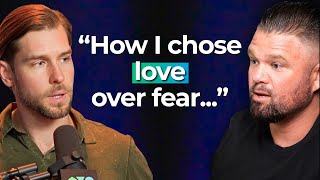
A long-form conversational episode (Josh Trent with Adam Lane Smith and Andrey Korikov) exploring how fear, pain, and identity shape personal growth. Key claims: pain is a necessary catalyst for change; contemporary identity crises stem from weakened familial and cultural transmission (attachment); spiritual/religious frameworks and mentorship can re-orient people toward love and purpose. The episode mixes clinical perspective (attachment, epigenetics, co-regulation) with spiritual metaphors (tapestry, vibration) and personal narratives (divorce, mentorship).
Chapters
If you are currently too comfortable, you will not change. Pain is what makes you change.
Or if you're too scared. Most of the world is living in a state where they're trying to consume things to satisfy their fear. They're driven by that fear.
Do we always have to experience pain in order to grow?
So we have to have pain. It's fundamental. We formed this idea that pain is bad, it's scary and it hurts. But we form this idea that all pain is going to kill us, and that's wrong. Pain, it can make you grow. That's why we're born with pain receptors is so that we will change. The reason pain is scary is we say, what if I can't respond? What if I don't know how to respond? You simply respond and you do whatever you're going to do and then you respond again and again and you continue growing until you gain control of the situation, you make your choice. And that right there is when we start defining our own reality. Pain demands a response. What will your response be?
Ultimately, you're living one of the things. You're either living in fear or you're living in love, right? You're projecting in the frequency of love and you're trying to build and develop it in the world and you have hope and faith, or you are terrified of something or other. And if you live in that, that will project through everything you say and do. If you're able to finally open your eyes and have that honest conversation with yourself and say, why am I choosing this? Because I'm scared of choosing and I'm choosing not to choose, which is still choosing, or. Or am I actually trying to confront this fear, whatever it may bring? We live in an identity crisis that is caused by the lack of universal truth. And we now must all find it again.
Hey, it's Josh. Before we get into this episode, I have a small yet powerful favor to ask of you. The community has been growing by thousands lately and the bigger the tribe, the bigger names of world class guests we can have on this podcast that I can bring to you from my heart, from my curiosity, so you can have more wellness and wisdom in your life. Would you please be so kind as to hit the subscribe button wherever you're watching or listening to this podcast. It'll allow us to rise naturally in the algorithms based on your 2 second act of generosity by you just tapping that little subscribe button wherever you're viewing or hearing this episode. Thank you so much. It means the world to me and our entire team here. At Wellness and Wisdom. Now, enjoy the podcast. We are here.
We are here.
We made it. Thank you all for coming to Austin.
Well, thanks for having us.
What a sweet experience this has been. I got to do your podcast. I wish you knew. And I thought to myself, what is it that they want us to know? Like what. What is it, Andre? What is it, Adam, that we should know? Not just about your podcast, but it's like a looming question. I wish you knew. It's almost like, dot, dot, dot. There's a lot of anticipation there for me. When I. When I was on your show, I was like, what is this show all about? I loved it. We had such a great conversation. But who wants to. Who wants to explain this? Like, where did that name come from? I wish you knew. And what exactly do you wish we knew?
I'm a big advocate for empowering people with education and knowledge so they can make their own decisions. And I know that's a big thing for you as well. And so when we started the podcast, Andre said, adam, what do you want to. What do you want to do on this podcast? And I said, I want to give people as much information as possible so they can make their choices. And he said, well, education and information about what? And I said, and there's everything. Everything in the whole world. I said, there's just so many things that I wish everybody knew, and they've got to know it. And it just rolled right into. That's what the podcast was going to be named.
That makes sense, actually, because, like, this big question mark, I think, collectively that we're all experiencing right now is what do people not know that they don't even know? Unconscious incompetence. Right.
They don't know anything.
There's. So what do you guys feel is the biggest blind spot right now? We can go a lot of different ways with this cast, which I got some questions ready. But, you know, emotional health and neurology and then human performance in not just how they show up on social media, but also how they present themselves to the world. There's a.
There's a cool perceived dichotomy between you guys, but there's also a cool synergy I think we can explore. What do you think is a blind.
Spot that people don't even know they.
Don'T know right now?
Identity. So what is an identity? We actually identify ourself by our belief. Right. We think we know things about the world, and we orient ourselves because of that through that lens, but at the same time, we actually don't know Almost anything. So, as you know, from the health space, most of the things that you see and experience from the medical standpoint are partial truth. Right. They're like little bits of knowledge gained through research or experience and maybe even micro truth. Micro truths, exactly. They're very much micro truth. Right. And the biggest challenge that we have right now is that no longer are we able to formulate an identity the same way we used to be able to before. Because there's such beautiful structures before in terms of religion and different ways to orient yourself in your classes, in your social areas. All of that is gone. All of that has been wiped out, especially by the Internet. And now we must refine that truth again. And the truth that we got from our parents, political, spiritual, religious, many times, does not translate anymore. So we live in an identity crisis that is caused by the lack of universal truth, and we now must all find it again. So a foundational part of your being has to be a complete picture of reality. It has to be very simple, like a child, but it has to be full. And this is actually why for our podcast, I Wish youh Knew, is that we live in the age of curation. We have to find ourselves again. And we need to find people who can help us curate knowledge and curate our own understanding of, first of all, of the world and by consequence, of ourselves, to find ourselves.
And I agree with this, because the way that we formulate identity has been so broken. I think of a lot of young women today, right? When they get out of a relationship, they've identified themselves through the relationship. They don't identify even as a self. They identify as a person who is in relation with others. So they end a relationship, and then they have this idea someone pitches to them. You have to find yourself. And unfortunately, most young women try to find themselves under the nearest man is usually how they identify themselves in a new relation, rather than identifying themselves. What I try to pitch to people is this concept of identity is not something you find. It's something that you fashion through every choice that you make, which is continuously remaking who you are.
How do you guys feel that plays into emotional epigenetics or just genetic expression in a way, because if you think about it, the epigenome sits on top of the genome, and then that's what gets turned off and on by environment and behavior. I remember Chris Kressler was on the podcast. He's like, genes load the gun, environment pulls the trigger. You don't have to be a alcoholic just because you're pain parents. Were you Also, don't have to be a degenerate gambler because you're the Smiths. That is old adage. I wonder how you all feel about this, because, yes, we curate our identity, for sure. We definitely curate. And we also are completely beholden, unless we're aware, to our. To our lineage, to the people that brought us into the world. So it's a really big piece that I'd love to explore with y'.
All.
I agree with that. In a world with no alcohol, nobody's an alcoholic. It takes the environment to even have that right. If. If your addiction can't exist in your environment, then you don't have an addiction, no matter what your genes are trying to do. It's really. What are your genes trying to do? Usually they're trying to cope with stress or they're trying to manage things in a certain way. You have to really control that, and you have to be in mastery of yourself so that your genes aren't in mastery of you.
Very well put. But there's way more depth there. I want to ask you one more. So, like, yes, the apple doesn't fall far from the tree. We have these things that are colloquialisms that are set in our society, and it's like, oh, well, we're the Smiths. We do things a certain way. Or we're the fill in the blank. We have a certain way of being in the world. I actually call bullshit on all of that because we're in this age of information, and there's so much content out there. And we're, like you said, Andre, curating ourselves. We're literally creating identity through thought and physical form. For me, I could have been totally unhappy working at a job. I hated not having a family going through a bunch of failed marriages, because that was. And, you know, I love you, dad, and mom. Like, it's no. It's no drama for you. You did the best you could with the consciousness you had. But for me, I chose a different path, and it came through my own. I guess you could say Dharma or soul expression.
I wonder how much of that plays into this.
Because you're both religious or spiritual men.
What are you? Religious?
Spiritual.
Both.
Very religious.
Very religious. So I think that people that are worshiping any kind of God or that.
Have any connection to higher power, I.
Think we're all doing the same thing with different verbiage. But I think the core of that, it releases us from having to figure it out ourselves. We don't have this pressure of having to be like, well, I don't want to be like my dad. Therefore, all I'm going to get is my dad's life, because I'm so focused on not being like my dad. So what's the spiritual component of the epigenetic quotient here? That's what I'm getting at.
You know, I would say it gives.
You a different father to even aim for instead of, I don't want to be like this one. Well, that's just defining the negative.
Right.
I teach my son to ride his bike, and I don't. And if he's riding his bike, I say, don't look where you don't want to go, because you will go there. Look where you are trying to go.
Don't think of a pink elephant.
Correct. Right. If you think instead of a green giraffe, though, you won't think of a pink elephant. So I think that's one component is the religious aspect gives you a different father to aim for, and then you aim for that, and that's that. That third layer of epigenetics, even if you wish. That's that spiritual layer of it. That's that foundational formation that we have to be in that vein. So we either are aiming toward it and building our environment around it, or we're not.
Let me ask you this, Josh. So you said that you decided to live a different life. Why did you decide that? What did you not like about that alternative that you described where it could be living in a job you hate, you know, divorcing multiple women?
We're flipping the tables back, huh? Okay. So I think that the reason I chose a different path is because ever since I was a little boy, before I even knew what society was or what life was supposed to be like, I just felt from many adults that there was this interstitial tension. People were angry at each other. Taxes aren't real. Slavery of mind, slavery of finance, slavery of body. None of this shit's real. It's all just a construct. And I could feel that interstitial tension from my parents, even from my grandparents, and just from society at large. And I got to this place where I was like, I want something totally different. And it was really just the curiosity instead of the fear that I.
Like you said, you know, instead of your son looking where he doesn't want to crash, where do you want to go? I'm just not interested in the fear game. Have I played in there?
Yeah, I've played in the fear game.
A lot, and I just don't want to play there.
Anymore.
So it's a conscious choice to choose curiosity over fear, because fear is so alluring. It's almost like a muse that wraps its tentacles around your fucking leg and pulls you to the bottom of the ocean.
I just choose consciously. And am I perfect? No way. I'm totally not perfect. But I choose consciously as much as I. As much as I consciously can to inform my unconscious that this fear propaganda and this fear lifestyle that caused me anxiety ever since I was a little boy and actually isn't real. It's almost like somebody's, like, puppeteering and punching a keypad that's controlling us in the first place. So that's actually it. Now I'm going to flip it back to you because you're on my podcast.
What.
How does. How has that played out for you, this fear aspect of, like, leading your life? I don't know what you did before media and before Veritas, which is why I love podcasting, because we get to learn about each other in real time.
Good conversation.
How did the fear component play out for you in that aspect?
I want to hear that answer, but then I want to answer how I've seen it, because I was just talking to your girlfriend this morning about how we've witnessed you tackling fear in your analysis here.
You can't lie. She's in the.
I'm going to analyze you right there. I want to hear your internal expression.
Yeah, I'll give my. My internal version then. I would actually like to cross examine that.
There we go.
That goes.
There we go.
So the reason I actually ask you that question is because I think we're fundamentally looking at the same thing. And that is we are built around the concept of truth or falsehood, right? Yes or no. You rejected a lifestyle because it was seemingly false to you. There's some people who love that shit, man. They love living like the way that you hate living, no doubt. And the same thing is in me, right? And the same thing as an atom. We have a sense of truth, and we try to build ourselves around our internal sense of the truth. It is something that has been inserted into us and we cannot change. Now, that is, I think, what you're talking about. The genetics, epigenetics, potentially, that expression. That is also what we're talking about in terms of religion. So the reason I'm religious is because it gives me the operating systems around which I can explore that authenticity. And I'm not really that attached to, say, the very literal interpretations of many church teachings or anything else. To me, it is the context in which I can explore and envision myself as somebody that is in line with that inner truth. So unfortunately, when you start looking at an inner truth, everything becomes binary. And this really is the only way to live. It's either true or it is false. It is good or it is bad. And you have to have this very clear expression of it. And as you start learning that this idea that truth is a scale or truth is, you know, in the eye of a beholder, it's just, it doesn't work. It doesn't work. You have to take full and ultimate responsibility that you will either be good or you will be bad in every decision you make. You'll be living in truth or you'll be living in falsehood. And every choice that you ever make. And when you start realizing that, you realize that there is no gray zone, there is no past. There isn't something that you can do to avoid taking responsibility of making a decision or the outcome of that decision. And that's where to me, fear comes from that ultimately, fear is the fear of making the wrong decision for yourself, for your sense of truth. And if you're able to finally open your eyes and have that honest conversation with yourself and say, why am I choosing this? Am I choosing this because I'm scared of choosing and I'm choosing not to choose. Bitch is still choosing. Or am I actually trying to confront this fear, whatever it may bring, that is the narrative that happens. And my mind, when we, when we, you know, when I try to, when I actually try to express, express a direction, and this is what we are, we're actually intent. Humans are not really beings with a soul. We're beings with a soul with intent. And our intent is what defines us.
I could see that intent being expressed through kind of the esoteric verbiage of a soul contract or, or dharma, if you will. But it doesn't have to be like, I don't, I don't tend to look at things myopically. I do change my mind and I reserve the right to change my mind based on what is my subjective truth at any moment. I think, I think it's really easy for the truth, right? It's easy for us to get dog eared and be like, okay, it's either this way or that way. Am I seeking the truth? I would say capital F. Yes, there you go. But the truth is truly subjective. Like, we know that harming someone in public with a gun or a knife, that's going to produce a very terrible result. So we all know Collectively, objectively, that that's false. But there's a lot of gray areas once we start getting into objective and subjective. And I think what it really points to is how do we respond to fear? What does our physiology do when we're under fear? Either fear of choice, fear of not choosing, fear of being paralyzed. Because I think about the biggest events in my life, divorce being one of them. I have not been through that, but I can imagine how challenging that would be. You're a very well put together dude. And so I'm looking to get under the collar a little bit. I want to. I want to feel maybe more essence.
Of you on this pod than maybe you've ever shared. Not to put you on the spot.
But here we go.
When. When you were going through the divorce with Michaela Peterson, that took you to a place where you had to choose, right? You probably experienced an incredible amount of fear. What was that like divorcing Michaela? How did that come about? And what did you learn about yourself?
Well, the fear at that point really comes from several perspectives. There's the fear of obviously making the wrong choice for our daughter. That's the primary concern. But then there's also moral questions in terms of, well, if we could not make this relationship work, if this is not something that is good for either, it's not something that we even want anymore, how do we untangle ourselves with the least amount of damage and how do we do this in a way that allows us to process all of these different complicated emotions? Right. This separating hurts. Losing people hurts. Having people turn on each other hurts.
Right?
And unfortunately, as something of that scale plays out, there are so many factors. It's impossible not to be scared. And at least if it's not, maybe if it's not impossible, at least it was impossible for me. Right? It took me several years to process everything that properly happened, to work through the experiences, to let go of the conversations, to let go of, you know, the hopes and dreams you people built together, and then realize that there's an alternative reality and that there's an alternative identity to be built. In many ways, when I left that relationship, I had to leave a lot of myself behind because of how much I applied into it. I can't speak for Mikayla, so I'm not going to. But for me, it was also the fear of saying, I have ended up myself, ended myself up in a place where I don't even know my own identity because of how attached I got and how much time I spent with the Peterson family for Instance, because I spent a lot of time with Jordan Peterson while he was sick, traveled extensively with him. I went to Russia, I brought him to Serbia. We. I've tended to scare for many, many hours a day in Canada. And that's a personal connection. Plus, he's a cool guy. I like him. It's quite interesting. So losing that, losing the people behind it, losing the relationship was. Was a challenge because I'm so, so attached to this idea that we could have this type of connection. But, you know, losing family is tough. And then it was a reinvention, a reflection on myself and saying, well, what do I want to keep and what do I want to discard? And the discarding part was difficult. Right. It's very hard to let go and eliminate parts of ourselves that are present. And they knock on your door, right? They say, I'm here and I'm real and I exist. And if you say, no, you're not. You're just creating problems for yourself. You know, you're creating tension in yourself. What you must do is you must say, you know what? I release you. I let you go. You can. You can hang out with me for the next, you know, many years if you wish. You know, this other side of me, this other section, you know, section of my psyche. But you're not bound to me anymore. You're not connected. And using that release mentality over time where you're simply letting things go and not chasing them away, but also not allowing them to take hold of your life. That was kind of a big thing that I used to come over the fears and process. Process the fears as they. As they came to be.
That's honest. Yeah. I don't know what that's like. I can only have compassion for it. And so many people in my audience are probably like, I've been there. I've been divorced myself. You know, there is mystery of God. A huge. Actually, God. God and God self is all mystery. I don't think we can ever really understand God. I think we can know God, but I don't think we can understand exactly verbatim what God is. God connected you both. Creator brought you together. So you met when you're in the middle of the divorce process. And how did you remember how you even found Adam? Oh, that's so funny.
It's so funny.
So do a Google search.
No, no. Michaela has a podcast and, you know, we worked on that podcast together. At one point. I was kind of helping her organize some of the details and whatnot. And then she brought Adam on as a guest, as we were going through some, you know, initial separation. It was in the spring of 20. 20. 2021. Yeah, 2021. I think just about three years ago. So Adam came on and they did a podcast. And afterwards, maybe. You tell the story, Adam.
Oh, yeah. So she brought me on as an expert in attachment theory and psychology and relationships, and she had me speak on that. And during the episode, we talked extensively about attachment. She asked me to stay afterward, and she said, hey, I'd really like to learn a lot more about this. Do you offer coaching? Do you offer trainings? I said, yeah, I could do that. Which then the conversation shifted. Well, you know, our. This relationship we're in, it's not so great. Maybe we could do something as a couple. And it kind of gradually more shifted toward just working just with Andre.
And so why did it graduate to just Andre just kind of shifted that.
Way during the course of the conversation.
Okay.
Sometimes that happens.
She. She felt that she was complete, and she was kind of secure.
Just wanted to go a different direction, I suppose. I can't really speak for that, but it gradually shifted toward, you know, maybe Andre needs some. Some work with attachment. Maybe we should talk about that. So I. I was a marriage and family therapist for many years, and I said, well, I've seen. I've seen things like this before, so, you know, let me talk to him and see if he'd be comfortable. And so we talked, and I said, hey, look, I'll just help you achieve whatever goals you want. I'm not gonna let anyone else set goals, not even me. I'll come in and I'll talk with you about your goals. And he said, yeah, all right. And we worked together for three or four or five sessions. And then he said it was good. And we started building together, and we really built that relationship. We started defining some of what you were looking for. And then he said, adam, I'm getting nervous because I haven't got a bill, and I don't know how much you're going to charge me. And I said, I don't know how much to charge you, because I don't run a business, really. I just kind of help people. And I'd worked in the clinic before where they set my rates.
I said, were you working in clinic at the time?
I had taken a pause for my clinical work for a while, and he was my only client at the time. And I said, ah, don't worry about it. It's just free. And he was so mortified. Yeah. And he said, Adam, I am going to start a business where I'm helping creators, and I will help you, and you will never, ever have to do this again. So he said, I will set your rates and collect the money for you. And I said, that sounds good. I get to help people. He said, I will help you help everybody in the planet.
Wow.
There was a very profound way that Adam was able to approach my particular situation, and the profound result was that he was not gentle. Right. So there's something that people forget when they deal with fears, when they deal with people who are going through traumatic experiences, they try to be coddling. I am a firm believer of the fact that pity is deadly to men. If you pity men, you will most likely kill them. And you can kill them in a spiritual way and emotional way, sometimes even a physical way. Right. Because you teaching them, you're teaching them that they are weak. Instead, what you need to do is that you need to help them become strong and train. Unfortunately, training to be strong, as, you know, because, you know, physically fit guy, you know, emotionally fit guy, you understand that it comes with a certain degree of pain, and sometimes you need to push. So Adam was able to come in, and in some places, he was understanding and, you know, very, very nice in other ways. He just said, hey, man, this is the truth, and you're gonna have to live with it.
Right.
That's it.
That's been a lot of my training, and it's been a hard thing to kind of wrap my head around. And I think it's something that the field of psychology gets wrong, and the field of therapy in particular, that does wrong for men.
You feel like they're too soft with their language or too soft with their intentionality.
I think that, unfortunately, the way they're pumping out so many therapists are trying to pump them out everywhere as fast as possible. Yeah. I don't think that they're getting the adequate training that they necessarily need as they're going into the field. They're getting a lot of academic smarts, but they're not necessarily getting the experience. And from having gone through that program myself, I can understand why to quite an extent, I think that they are driving men away because they're too coddling of men, and men don't need that. Right. So I'm not mean with the guys I work with, but I am very, very firm and very clear. This will ruin your life. What is your goal? This is your goal, but you're doing this. This will destroy everything you care about. Are you sure you want to Keep doing this, because that means you actually want this thing and you don't care about this thing.
So what was it for me? There were several things. I mean, you'll remember better than me. Adam.
Oh, yeah.
The friendship component for me was a big deal because for me, I kind of have a lot of caution when it comes to letting people. People into my life. I also tend to mix relationships and work. Right. Obviously, I was in the Peterson family business, but I also brought in people who became close to me inside that business and my new business. And in many ways, I also form friendships with people. I work because I try to find only things that I try to find things to do that I respect. I try to find people to be around that I respect. And as soon as I start respecting them, I try to give them as much opportunity as possible to work together, to live together, to have joined, shared experiences that have meaning. And we're actually doing something that's not, you know, watching football or hanging out. That's just not my vibe. Yeah, but unfortunately, that creates an opportunity, a barrier in the relationship. Responsibility. And responsibility is something I enjoy, but it's also something that can become very problematic. So forming genuine attachments, forming a dependent connection was a challenge. So one of the things that I actually fixed working with Adam at the very beginning was this relationship I had with my close friends to actually give them the opportunity to have a place of significance, something that really mattered in their life, and that actually allowed me, over time, to enable my daughter to have this type of relationship, which is truly a foundational relationship, to start formulating after many, many years, relationships with Annelise. Right. With my girlfriend in that way. Right. So that is actually a human to human connection, not an object to object connection. An object to object meaning things. We have purpose and responsibility, but then we also have constraint and a lack of the priority of the soul.
So the constraint was missing beforehand. You worked with Adam.
Well, I can speak to that. So what I saw, what I saw when you walked into me was that you. You hadn't fully examined yourself prior to getting married, and you. You didn't really know yourself, so it was impossible for you to compatibility test. And then as you started really facing those challenges and those questions, the compatibility was just so off that to you, it was really like, this is. This is the worst possible match. Not like, you know, two bad people or anything like that, but it was just such a. Such a massive incompatibility once you really defined yourself there in to you. I remember the moment where you said, like, this is not going to work, is it? And I said, well, you know, if. If you. If you are feeling pulled into becoming this person that you feel that you are, if you're. If you need to be this person, then do you see a way for you to maintain this relationship the way that it currently is? And you said, no, I don't see one. I said, okay, then that's the truth. That's the reality you're living in now. Let's adapt to it, if that's what you're feeling.
Yeah. And this is what I like what. What you said earlier, Josh, and you said, hey, you know, I reserve the right. Change my mind at any point. But the reason why is because we're always getting closer and close to the infinite but desired understanding of the truth, our true selves, right? Whatever that entity that is in that is our soul, and it wants to express itself earnestly. That's what we're always trying to do. I very much look at my life as if it was a fractile equation. The more you delve into it, the more finitely calculated, the better it repeats its own patterns, the more it grows. That's the way I feel when it comes to my own personal experiences. So. And the experience of the divorce, I did. I did my best going into. Knew what I knew. And by the time that I worked with Adam, I got so much understanding and clarity of that that I said, you know what? I can no longer do so earnestly, I can no longer be here earnestly without sacrificing the truth.
And you said, repeating patterns. What was fascinating was after I helped him sort through himself and then he made his decisions in his life, he turned around and did the same for me. And I was a content creator. He pulled me out of the clinical work and clinical ideas and everything. He pulled me out of there and said, all right, now we're going to build you into a guy who helps people. And I said, how the heck do I do that? And who am I going to be?
Totally different.
Who do I have to be? And he said, adam, someday you will be on a podcast set with people, people off camera watching, and you'll be doing this and speaking. And I said, no way, that's weird. I'm not going to do that. And he had to then help me become the person I needed to be next. It was a full reciprocal circle.
See, this is so awesome, because I do believe that the creator or God, you know, some. That word triggers a lot of people. God. But I don't really care. I think that, I think that there is an omnipresent energy that is no thing and everything and that we can never fully understand, we can connect with, we can have relationship with, but it's about honoring the mystery when like these fucking tidal waves of divorce or tidal waves of identity shifting happen. And God brings these people into our lives at the perfect timing. But there's a recipe for that where one can't resist it. If I'm in resistance to subtle energies, resistance of God's wisdom, just resistance of life. If I'm essentially not trusting life, it's very challenging for me to get the right scaffolding and the right support that I deserve. Have you seen this play out? I mean, not just with yourself and Andre. I think we all can universally connect to not trusting life and resisting life at times. But how do you, from a clinical psychotherapy perspective, how do you see that playing out? When does one know that they're not trusting life?
Well, change is an equation, okay? And change is a very simple equation. When will a person change? It's a very simple equation. What is the level of pain against changing? Right. What are they anticipating the pain threshold to be? And how much pain are they currently experiencing with their current circumstances that is resisting that change. So if you're, if you're expecting this much pain, if I change, it will be this painful. And you're only at this level of pain down here, or you're managing it all the way down here with coping, coping, coping, right. Then you are never going to change. But as your pain begins to increase and overwhelms the pain of changing, you have that avalanche effect. Now sometimes there are people's pain is way up here and they have to have that rock bottom moment where life bottoms out. Yeah, Sometimes it's just the pain is here, but they don't really, they don't know the, the effectiveness quite yet to get there. So then the pain goes up because they're confused. Other times their pain is here and they just require very little and they just hop right over. But if you are currently too comfortable, you will not change. Pain is what makes you change.
Or if you're too scared, right. If you're too scared because you do not have a foundational faith that life is going to be okay and God is going to be fair to you and you feel that fairness only exists in a way that you define that you have to be in control of your unfairness. That's the part where you start going, putting yourself against God. You start, start Putting yourself against life and against people. So people manifest intent to you. And if you surround yourself with people who love you, people who care about you, they're going to manifest the intent for you to be well. But if you block that and you preventing that, of course, you know, Adam, you know, from the perspective of neuroscience, you're already blocking all of your bonding hormones. You're screwing with your biochemistry. You're preventing these things from happening.
See, this is why I love, and I'm sure you guys have heard of him, Hawkins, and the Hawkins ladder, the vibrational frequency scale. So some call it esoteric. I actually think if you look at a hertz measurement in electronics or in just physics, it's how many times something vibrates during one second. So you've heard the phrase, your vibe attracts your tribe, which I agree with. You ever met somebody on paper, they're just like, oh, yeah, on paper they're great. But there's something in your enteric nervous system that's like, no, I don't really vibe with that person. I wonder how this plays out, because the good vibes only quotient, you've seen this, like, good vibes only with like the hippies around the fireplace. It's absolutely preposterous. There's no such thing as good vibes only. I think what that does. And I wonder how you feel about this specifically, Adam, the vibrational aspect of our being. Why do some people vibrate at our frequency and why do some not?
What's the science?
And then also, what's the spirit and heart behind that? It's a twofold answer, I'm sure, because you could answer it just by science, but I'm sure you have a personal, spiritual, and maybe even religious explanation as well. Why do we vibe with some people and some people we don't?
You know, you're asking me two different questions there, and you may not realize it, but the. Even. Just the grammar of you asking me, why do we do that? Meaning, number one, what's the. What's the science? But why do we do that? Meaning the larger context. What's the purpose of it? The purpose of it? I think that there is a grand tapestry that we're all woven into, and I think that we're meant to connect with certain things, certain people at certain times. Like you said a moment ago, people come into our lives. Andre, you have a wonderful girlfriend that just came into your life, and she could not have come in at a different time. She would never fit in at a different time. And she came in at the perfect moment to transform everything.
Were you trusting life?
I 100% trusted God at that point.
Yeah.
Okay.
It was 100%. It was a beautiful spiritual experience because. And everything played out in such a way that I could see simply not pretend it wasn't intended. It was so random.
The breadcrumbs were so big you could not ignore them. Yeah.
And the probability of that was approximating zero. Right. Really closely approximating zero. And, you know, as I. As I. As I saw that all play out, I kind of had an internal little experience, you know, going to God and saying, is this real? And he goes, well, do you want it to be real? And I'm like, touche. Right. You know, he just throws you. Throws these things right back at you. Because what he's trying to do is he's trying to teach us how to trust and how to be and how to believe, how to be in touch with these gifts he's giving us through these vibrations, through these improbable circumstances, through the gifts, but also through the challenges. Right. And he's trying to get us to learn how to trust that inner thing that he's placed within us, which is our soul, our spirit, whatever, but also his presence in the world, which is omnipresent. So for me, that was very much a. Are you ready to take ownership of this and stop screwing around, or do you need another round on. On the carousel before you're ready to come back to this point? And this is the time I stepped off and I said, no, I'm going to let go. I'm going to trust, I'm going to be very honest, and I'm going to do my damn best. And so far, it led me to wonderful places and made me overcome some interesting challenges.
Yeah, that's a cool image of a merry go round. I could definitely see that. Whenever people speak, I always see pictures in my mind.
Nice.
And I could see you on the merry go round. I think we've all been there before. And by the way, I want to go right back to your explanation of the twofold. Oh, yeah. I just get to place in one more seed in the garden here. I wonder if it's because just naturally, we have such a tender soul. It's like our especially. Especially for a woman. A woman's heart is like a rose. So if you trample on it, it can. It can damage the petals. But men, we have feminine energy inside of us as well. And I think that's not talked about enough. Right. Earlier you said that pity can kill men, which I agree. And the paradox of that is that we also get to learn how to love the sweetness and the feminineness inside of us. So It's a catch 22. It's a paradox at times because it's almost like the Goldilocks story. You know, not too hot, not too cold, not too much, not too little. What is that? Goldilocks? After you answer the second phase of the question. There's a Goldilocks there for us.
Oh, yeah. The first phase of the question was why do people resonate in the Eastern traditions, and many of them, the body and the soul often are disconnected. Not disconnected, but they're separate pieces, right? One fits into the other. In the Western traditions, and most people don't realize the Christian faiths have this, the Catholic Church, the Orthodox Church. It's that you're. Your. Your body is a manifestation of your spirit. So your body resonates exactly with your spirit. That is the. Not. It's not the vessel of your spirit. It is your spirit. It just happens to be the material form of your spirit. They're one and the same. There is no division. So why are we resonating in that capacity? And then why do we resonate with others who are. I think that one method is to look at our biochemistry in our brain because it identifies what our spirit is doing. At the same time, our brain chemicals, our serotonin levels, which we now know are not just randomly low. For some people, they're low for lifestyle reasons. They're low for dietary reasons. They're low for relational reasons, especially. People don't realize how much loneliness is causing so many problems. But our. Our bodies reflect what our spirit is doing. So I think by measuring our bodies, we can actually measure our spirit as well. So I think that that aspect we resonate with certain people who match in many ways what our body and spirit are experiencing. And then we are woven into the tap tapestry together at that moment.
What's the tapestry, though? Like, what. What even is it?
I think at the dawn of human creation, every human who has ever lived and everything that they've experienced, every bit of wisdom or knowledge as it's been transmitted, pieces that for now have been lost, that will be rediscovered, pieces that have gone underground, that will be pulled out. But the lineage, the unbroken lineage, we. We have this idea that some bloodlines are better than others. But all bloodlines exist, whether there's a name to the them or not. Every bloodline ties all the way back to the dawn of humanity. Whatever dawn you want to look at, we all Tie back. And it's fascinating to see that tapestry of human lives play out again and again. Not just, you know, what are these individuals doing, but what is humanity as a whole achieving? What are they learning? What are they growing? What is the story of humanity?
Dude, one of the. That resonates with me, y' all resonate. And why it resonates is because I heard this from many different people and I can't give credit to who said it because I don't know who said it. But this is borrowed wisdom. And I think most wisdom is borrowed. It's just articulated with different life experience. We are a living library. So not just on a neurochemical perspective, a biological perspective, there's also this generational, like you said, everything that's ever been spoken, the initial words in the beginning was the word. I mean like everything since the dawn of human species and even way before still exists energetically in the world. Just like, you know, the law of thermodynamics, right, and the law of matter and all these laws that we know about energy cannot be created nor destroyed. It can only be transformed or transmuted. So there is something to be said about that, this tapestry. And right now, y', all, I think the tapestry is unfucking folding. I think the, the creator economy and what you do with Veritas and how you're getting people to get back to themselves so they can fend away all the bullshit of society's clutches. I think it's all that basket, that woven tapestry. Well, actually tapestry is more like a.
Wall run, isn't it?
It's unraveling. But I say good, and I wonder how you guys express this.
So.
So let's even update, update the imagery for modern day people who don't know what a tapestry is anymore because we don't even have those. Let's say that it's a cool word. It is. Let's say that humanity is a cluster of data, no nodes that exist independently, but in a woven network where everyone is, everyone is supposed to be connected into all these different networks. From the dawn of time, there were data nodes. Some go dark, other data nodes are created, they weave out. And it's this endless existence of data nodes and all of them are trying to solve one core problem, which is existence, and all the small problems that spread from existence. And we are meant to transmit that information, we are meant to cross check it. We are meant to continuously change and grow and improve. And there's breakages in those different countries split off and won't speak to each other, but sometimes they filter around through allied neighbors. Right. Right now we're having a crisis of attachment where parents aren't even transmitting to children. But maybe those children are transmitting back through grandparents or they're learning through the Internet from a hundred years ago.
Right.
We've reached a point where we've actually woven that collective into the Internet. It's literally a manifestation, a physical manifestation of the spiritual data node collection of humanity. The Internet. Is that that as well or a knowledge receptacle? So we are endless data nodes continuously solving problems forever until we've solved all of them, if we ever do. That's what I see is that network of humans. Right. And that's what we're fostering. So yes, there is breakages, yes, there's gaps, yes. Right now, 35% of people, people have secure connection with their parents. And in the newest generation, 65% have broken attachment with their parents, which is a massive gap in transmission of knowledge and connection. But what we've seen time and again throughout human history is when you have those giant collapses, the data nodes over here are still functioning. Maybe over in Australia, they're functioning. Maybe over in India they're functioning. They're functioning in different capacities. And then the data nodes can weave back together again and fill those gaps and self correct. They can cross check and say, did we get this wrong? Did we get this wrong? And I think we're in a massive correction right now because we have so many factions of data nodes that they're now cross checking. We've got people fighting over their different, different rules, everything. Right. You know, these people have factored off so bad that they've both created separate false equations and now they're going to fight over who's is right unless they will link back into the full collective. And we can all correct together. Sometimes war is that is the data nodes factioning. But we correct, we grow, and then we bring it in and we solve the next problem. That's what I think is happening.
So I want to add a little bit of color to this. So what has changed recently? And this is an unprecedented change. That's why I do agree with you with the idea that this tapestry is actually unfolded before it was folded. In order for you to go through the tapestry, you had to go around in circles for your entire life to find truth. You had to go to libraries, you had to go to universities, you had to find, fly to hike up a.
Mountain and see a guru with a white cape.
Correct.
In India, you actually had to apply this tremendous amount of effort. And you could never really compile enough information in yourself to create rapid change because the critical mass wasn't there. However, what has now changed is that we a have the capacity to have truly free time because everybody, almost everybody, has now free time where they're not fighting for survival, we're not fighting for provision. They actually have hours in their day which they can spend any way they want. I'm sure if they want to be, you know, playing football, watching video games, whatever. Playing video games doesn't matter.
Hopefully not.
Well, many of them do. Right. But then also now you have the ability to transform your life every day. Every day you have the opportunity to go search, find and apply something you've learned online from creators like yourself, like Adam, that will give you such tremendous transformation that the collateral effect throughout the rest of your life will be phenomenal. And we now finally have the capability to seek out and apply knowledge at scale. This is what the unfurling of the trapestry means is what we finally have gotten access to it. And that is why that curation we're talking about earlier is so important. Because we as humanity are very quickly trying to curate what it is exactly that we want.
Yeah.
Because if we don't know what we want, we ain't going to get it, are we?
It's so true. And there's, you know, all right, after I share, I want to bring it back to you when it's like creating our own reality. We've heard that phrase a lot in spiritual growth.
Sure.
And I think it gets misconstrued and really honestly at times abused because people that may have improper intentions, they come from isn't pure. They could preach all day long that, you know, thought creates reality and you can create your own reality. But I wonder how you guys feel about this. I know in my own life, when I've been wounded, when I've been hurt, when I've learned lessons through hardship, like real hardship.
I remember 2014, I split up with a woman I thought I was going to marry.
I put my mom in a mental.
Home for bipolar and I was 80k in debt and I got fired from a corporate job that was safe, which there's no such thing. We create our own safety. All of these things transpired.
And here we are nine and a.
Half years later at point this, this table and I've reached like 13 million people plus. Right. So it's like, and, and it's going to keep going not because I give a about being famous, but because it was birthed through my own hardship. The way that I looked at my tapestry unfolding or the way that I viewed my hardship was that I just trust that I'm going to get the dream that I know is possible. I had that inner resolve, and it was almost like a choice point that happened. And it was a moment with God. In 2015, when I launched this podcast where I didn't know if I wanted to be on Earth anymore. I wasn't contemplating suicide per se, but I literally was just ready to, like, go be homeless and sleep on a couch. If my life was supposed to be a slave and automaton to someone else's dream, I just didn't want to do it anymore. And it wasn't until I connected with God and just trusted, just for a moment, because I'd had so much anger about God in my life. Like, God, why couldn't you fix my mom? Where was my dad? Why are people so angry? Why is money so scarce? I was raised on welfare. My story is just a fragment of many stories in the nodes you're talking about. But I had to really understand, like, my anger at God came from my confusion about how to trust life. And I was never given the. The blueprint on how to trust life. So I created my reality from pain. I wonder, do we always have to create our reality from pain? It seems like it's the case. 600 plus episodes. I haven't had somebody say, no. I liked your model of sometimes we experience pain at different levels.
But I just wonder, like, do we always have to experience pain in order to grow? Is that fundamentally how the creator wanted it to be at the start?
That's. That's why we're born with pain receptors, so that we will change. The average life expectancy for kids who are born without pain receptors is 15 years, because most of them die. So we have to have pain. It's fundamental. We form this idea that pain is bad. We form this idea that pain is bad. It's scary and it hurts.
Yeah.
But we form this idea that all pain is going to kill us, and that's wrong. Pain, pain, it can make you grow. It can do a number of things right. There's no reason to be afraid of it. It can suck. But then you say, what will I do about this? Pain demands a response. What will your response be? The reason pain is scary is we say, what if I can't respond? What if I don't know how to respond? You simply respond and you do whatever you're going to do, and then you respond. Again and again, and you continue growing until you gain control of the situation, you make your choice. And that right there is when we start defining our own reality. I was speaking a couple years back with a member of the intelligence community. I won't say his name because it was under confidentiality, but he told me something very, very crucial. He said, in any given situation, there are 100 facts. Humans are able to approximate and handle about 20 of those. We can't really understand the full hundred range of facts. Media will usually give us about 10 facts on this side, and the other side will use a different 10 facts. And they'll argue over those facts and say, these are mine. Yeah, but these are mine. And then we get that political division. But the smartest people maybe can handle 30. That's what defining your own reality is, is which 20 or 30 will I choose to hold on to and prioritize and adapt to out of the hundred in any given circumstance. So then we define ourselves by that. So you can focus on, my back hurts, I'm tired. I'm not as handsome as I wish I could be. My hair doesn't look great. You know, my dog is ugly. You can focus on these negative of those hundred or you can focus on, I have control here. I can make this change. I have this. I have this time today. I have all of these things I can accomplish. I will do this. So it's not even in inventing reality, like we're just going to go out there and pretend that unicorns exist and leprechauns ride them. We're not doing that. We're saying, these are the facts. I will choose to build my reality around and then I will grow. And that's what you've done.
So pain gives us something to stand against. Right. It creates and it launches this mechanism of, you know, the warrior, the defender, the protector, the activist in many different ways. You having experienced pain, you have gone through transformation and you got a result. And I'm willing to bet that what happened was that when you started this podcast, you said, I never want anybody else to feel this pain ever again. I'm going to go out, I'm going to serve and do my part in helping to make sure that this pain does not have to conquer the world in your understanding.
It was definitely part of some of the motivation.
Yeah. And it is a major part of most of motivations. Now, you said you've never on your or 600 episodes ever had anybody come in who actually did not believe that they. That pain is instrumental in shaping Us. Yeah, but that's why, because you guys are actually looking in the. In the wrong data pool for those people. So those people actually do not start podcasts. They do not become content creators. They do not become activists. A mother who is raising three, four, five happy children on a farm is not driven by pain. She's simply existing in the blessed world that God has made for her, and she's trying to support and develop within it. She doesn't need to be on a podcast. You know, a guy who is perfectly happy being, I don't know, a shepherd in the mountains of Spain. He doesn't need to seek this house. He has no stories like this to tell. His stories are of good things, and he is sufficiently satisfied by telling him to himself. People who have experienced things are the people who come out and try to do something about it. Right? That's why guys don't find them. They exist, but they're very rare because they are truly gems that God has placed in this world. And they've actually taken very good care of protecting that as opposed to, you know, trying to pursue pleasures and sins, as we call them, and many other things. And they. They exist in the world to prove the fact that it's possible. But unfortunately, or fortunately, it is not the road that we, as you know, all creators or people active in the space have chosen to travel. It just wasn't our part of the tapestry.
Sure, right. Yeah, that's really profound. They exist. They're just gems in a mine somewhere or they're on a hillside in Spain.
They have no interest in you or in me.
They don't care about this podcast at all. But for the far majority of us in modernity, those people whom you describe, they're able to supplant their life in a way that it's really old world. Maybe their land gives them all the nourishment they need. I look at the ringing cedars in Russia, where there's these tribes of people that just live on parcels of land and just feed off of the land, and the trees talk to them, and there's actually studies where the trees are speaking to these Russians. It's so insane. Or is it not that insane?
Doesn't surprise me that Russia.
So what. What arises in me is that this. This aspect that we talked about on our pod together with. I wish you knew, and I'm sure you guys talk about this a lot. You already hinted at it when you talked about men being really killed by pity. It just takes a different human in modernity, in society, in concrete jungles to be able to thrive. And really, in a paradox, we're getting as many resources and building our physical, mental, spiritual, emotional, financial self so that we can actually get as close to that shepherd's lifestyle as we can. Isn't it interesting? Like, we are gathering resources and finances and structuring our life in a way that we're getting literally to the top of the mountain where the man who would never want to listen to this podcast actually lives. I find that to be so funny and in the tapestry that God has created to just be so incredibly humorous. Like, what an ironic paradox that we're all struggling so hard at times to get to the lifestyle that so many people in these little pockets of the world are actually already living.
But that's because we're living in a broken world, right, where we as humanity have taken the wrong path. We have chosen to value power and money and, you know, gold, influence, whatever, over things that ended up are being truly important. And we're finally having that reconciliation. We're finally saying it's not about it. You know, we've created amazing technology. We've wiped out, you know, everything that was a major threat to us to the point where we were like, don't hunt the sharks. We need them. It's like, you know, we really have conquered the planet. Then we've conquered ourselves over and over and over and over again, and we're finally done. Because it turns out it did not bring us anything but suffering. We locked ourselves up in these amazing cities with air conditioning and plumbing, and we are more miserable than ever. And all we want to do is get back to the point where we can live on the land and talk to a damn tree.
We want that. Yeah, the people that are with us want that.
But.
But there's unfortunately a dark side to what you're explaining as well. And this dark side is the 15 minute cities. Have you seen this? They're building them in Saudi Arabia. All the comforts of convenience. You will own nothing, and you will be happy. Klaus Schwab at his minions. Look, these people, in their hearts, they probably have some good. I don't think all human beings come into the world inherently evil. That's not what I'm saying. But the dark side of which you speak is real. It's palpable. And I wonder how you feel, how this infects the mind. How do we even allow that to infect our mind? This wetiko that we talked about with Paul Levy on the show, this Native American explanation for a mind virus Or a dark energy virus. Some people could call it demonic energy or dark energy. I wonder how you'd describe it. I'm sure you see it metastasize into people and that probably shapes and cultivates attachment styles itself.
I think we're all measuring something that has shifted over the last 110 years. All of us have to have determined and the research keeps pointing back and different philosophies keep going back to the last 110 years. Beginning in the 1910s, something drastically shifted and we're all measuring it differently. I look at attachment theory and I look at the attachments that have shifted since then, the family patterns. Other will people will look at industrial change. And I was just reading the other day about the accelerator rate of technology changes even in the last year or even the last five years. Yeah, maybe Financial world. I know you came from the financial backing at one point as well and that's helped me a lot. Thank you, by the way.
You're welcome.
But all of us, we keep saying the last 110 years something is very different. It's very out of character for even humanity. Something has changed and we definitely are reaching a massive climax point. Right. We talk about we are in a crisis right now. Now humans, humans with attachment theory, my thing we are, we are meant to break in certain ways where our minds and our relationships break. And that's what attachment issues are, is you're an adapting to an extreme environment where no one will care for your needs. So you shift out of a mode where you will be loving and connected and secure and you shift into an insecure method for surviving in a bad environment. Now I said at the beginning of this that Gen Z, 65% of them have that, that adaptation.
Where do you get that data from?
That's what the research is showing. Over the last, over the last 20 years they've done at least five studies showing an increase. The boomers were 35% Gen X and Gen Y and even the millennials were about 50%. Gen Z now is, is up into 35% and they're, they're just barely beginning to try to figure out the next generation. But it's not promising.
They have to pull off their Facebook goggles in order to even speak.
It's insane. So the, but the measurements show like we are living in a, in a collapse of some sort or a catastrophic.
It's a meta crisis.
It is. And, and people don't realize it because our systems are sort of keeping us compliant and happy. We still have Netflix, we Still have door dash. Yeah, so. But. But more spiritually and mentally and socially collapsing. We are definitely in that right now. And. And everybody knows it. And no one can point their finger at it and say it because they. They feel crazy saying it. But we are all measuring it in all our different fields and we keep seeing it.
Well, I think it has a lot to do with the separation of mother from children and father from children. I mean, look at all the ways that specifically Hollywood. I can't say it here on the podcast because honestly, I don't want to get censored and I don't want to get threats in my inbox because I've alluded to it before, but there is an extremely dark energy in Hollywood.
Very dark.
And I know a couple actors, one specifically this year, who lost his life, and he shared some information with me. The darkness and the propaganda that is coming out of Hollywood is unprecedented. It has never existed in the way that it exists now. And by the way, when did talkies happen? Early 1900s. As soon as films. Hollywood, specifically on the west coast of California, as soon as films started to teach people what life should be. That's when you saw the De Beers campaigns coming out where you should spend at least two months salary on a ring thing. All the propaganda machines started in the early 1900s. Hitler used that same propaganda machine when he did the whole, you know, world implosion with the Nazis.
So what I'm saying is like, we.
Are up against an incredible Goliath. The only way to defeat it is actually not to fight it. It's actually just returned to the family as the family was designed. Mother at home. Yes, mother at home. We've had Teal Swan on the show saying the biggest threat to children is the mom not being there. That's the biggest threat. And then I also think with the advent of the Industrial revolution, where men were gone all day long and they.
Get back home and they're exhausted, they can't even spend time with their kids. I felt this at times. Me personally, I think that is woven into some of the tapestry that is actually harming us on such a deep level that Maybe only now, 100 years later, we're seeing the fallout from that. Do you agree? Do you disagree?
I fully agree that the family is the one thing that is massively under attack right now. It was the last thing that was holding everything together. It's the beginning of our life. It's the end of our life. Family is everything. And people don't realize that we have thrown it so Far aside that when I sit here and say, family is everything.
Yeah.
People will laugh at that. People will scoff. They say, how stupid. Why would that man even say something that idiotic? Family's not that big of a thing. Family is and always has been that big of a. A thing. And I think that there's a massive war on the family right now. And I don't say that like, you know, that group over there, but it's. It's this. This, like we are. Our data nodes are going to war over what role family should play. Right. Some people would say zero. Some people would say 100, everything. And we need to really bear that out. I think that's the biggest fight that we are in right now is what role does a family play in a human life?
This is fascinating because. And I know you're about to say something good. I just. I have to ask you this. Go for it. You have a deep relationship with Jordan. I'm sure you guys still have a relationship in many ways. Yes.
Let's just say it's been on pause ever since he recovered because the experience we've gone through was so traumatic for him. For me, too, that in 2021, we kind of met for the last time. I think it was around November. And he just said, hey, man, I'm not going to be able to talk to you for a while. And we haven't really connected, really, since there's been some, you know, some drama and some issues, obviously, with the divorce and whatnot. But we've left an impact on each other, and I think we're still working through whatever the heck that is.
Sure. Well, the only reason I ask is because I've quoted him many times on the show, and regardless of your personal relationship, I just think there's so much wisdom that comes from him now. Is he a 100% perfect messenger? I don't know who is. I don't think that's possible. Anybody is to be 100 perfect. But one of the things that he talks about is this lobster effect and being the lobster.
Yes.
And he even has a suit where there's, like, lobsters all over.
Likes lobsters. I concur.
I think. I think that we are really just scared to embody the wisdom of nature. I like the analogy he makes with the lobster because it's like a nature analogy, and I think we all can just get that.
It's like a lobster can get it, you can get it.
If a lobster can get it, you can get it. But also, like, we see this when like rams, butt heads, or there's just certain wisdom that we all learn from nature that I think he does a good job of articulating through the lobster. And I think it really points to what I wanted to ask again before that. Now I'm glad we're coming back around to. And that is this pity aspect. When men are pitied. What is actually happening physiologically? I know on an emotional level, we had Zach Bush on the show that. That complimented what you're saying by saying, yeah, it's not pity, or it's actually not like, oh, I feel so bad for you. It's actually reverence and respect for what you're going through as a man or even as a woman, but especially to speak to the men rather than pity. What is the core difference between reverence and pity?
Let me answer it this way. Internally, we have a hunger, and that hunger cannot be satisfied by food, by water, by air. Right. It is a hunger for something that we get from this world can either be one of two things. It is going to be either a hunger for love, or it's going to be a hunger for fear. So what do you. What do I mean by that is you have to satisfy yourself by drawing on energy and resources from the world that satisfy your spirit, not your body. Most people, and this is when you guys were talking about, you know, what is. What's going on with the world? What is really that dark energy? Most. Most of the world is living in a state where they're trying to consume things to satisfy their fear. They're driven by that fear. They're driven by wanting more money, more sex, better weapons, bigger land, because they're trying to satisfy that people like yourselves. You stepped away and you said, we don't want to live with fear. We want to actually live for love. And the desire to live for love is what is the main driver of your souls at the moment. You flipped. You stepped off the fear merry go round. You're actually trying to draw in love from your family, which is what you teach, right? From yourself, in your body, your connection with spirituality and religion. Josh. So you're now trying to source love as opposed to source fear. When you go and you pity a man, you're saying something so terrible is happening to you that I am scared for you, and you should be scared for yourself. And you're feeding that fear hunger. So he has to go now and find more power, find more aggression, find more dominance, find something to combat that and to expand aggressively or to expand protectively or to retreat if you go in and you go give reverence. You say you are being challenged and I respect you for it. You're projecting love. You're giving them the energy vibe and you're saying, I am giving my attention, my soul, my energy to you so you can go and fight this for the good. Fight for the good purpose. You're empowering them rather than scaring them as you would scare a little kid. You're encouraging them through that reverence. And what that changes, it changes everything, right? It says I don't need to go and find more power in this dangerous or difficult situation. I now need to find that best higher calling road. The part of the tapestry that is good where you're actually committing good deeds and good actions and expanding your presence of good in the world in order to continue to be revered in this way. That is feeding my soul. Right? You're actually feeding the nice, good positive parts as opposed to dark fearful parts. Does that, does that kind of make sense?
It cracked the iceberg in half, actually.
Okay.
I really love that because the come from or the intentionality as to which you speak. It's not that like I see this with Italian grandmothers a lot actually. You know, there's a big guilt cloud with a lot of Italian grandmothers and they say things like, oh, I pity you or oh, oh, I feel so bad for you. And they don't mean to hurt their children. I've actually seen this with my. With my own grandparents. I love you. And it's just a. It's a beckoning and a burgeoning of awareness around language. The conscious use of. Of language. One word can change someone's life. Said in a different way. This is why I love neuro linguistic programming. We'll link in the show notes an episode we did with Scott Jackson, who by the way would be amazing for I wish you knew. I love Scott. I think he would be phenomenal. I introduce you to you guys because he taught me about the neuro linguistics and actually what happens when the filter, the barrier between our conscious mind and.
Our unconscious conscious mind is lessened. We can only take in, as you said, so many bits, right?
So imagine if all the bits we get are pity. Disempowering language.
Language that's coming from a good place, but just the speaker is coming from a place of don't even know that they don't know. Unconscious incompetence, the power of language and nlp. How much of that weaves into your work?
Oh my goodness.
Conscious use of words because one word can Change a life set at the right time.
My goodness. Goodness. I had a client just the other day who said, adam, I am. I want to make a change in my life, but I feel so much guilt about it because I would have to move away from my mom, who can't live without me, because, no, no one else is helping her. And I said, pause. No, wait a minute. Pause. I said, you've told me about your family before. I said, first, let's talk about the other people. Okay? No one else can help her. Well, is there literally nobody else that can help, or is there just other people that aren't helping? He said, no, actually, there are other people. She just won't call them. She won't call them. So it's not that she can't call them. She chooses to have you do it instead. You do everything for her. And said, okay, so let's put that aside. What would she do if you said, no, you can't help? Well, she would get really mad at me, and she has in the past. Okay, okay, so wait a minute now. Let's come back to this idea that you said the beginning, guilt. Okay, We've now established there are plenty of other people that can help. We've established that she's choosing to make you do it. Okay? Now, we've established as well that when you've tried not to, she has inflicted hurt on you. Let's go back to guilt. Why did you use the word guilt when it sounds like you're actually afraid? And he said, and he just, like, his brain just, like, cooked at that moment. And I said, it actually sounds like you won't. You don't feel guilty at all. You're afraid of the pain she's going to try to inflict on you. You don't feel bad. You're afraid of her. He said, I didn't think of it that way. I said, yeah, so this word guilt, guilt means I did something wrong. She programmed that into you so that you would never stray from what she wants you to do. She program that word guilt in, but you're feeling afraid. Let's conquer that fear. What's going to bring down that level of fear? What do you want to do with these other things? How can you manage these variables differently? And is it even your job to do that? It sounds like it's not. By the end of that, that took 20 minutes, we transformed him from overwhelmed by guilt, couldn't live his life, couldn't make his choices, to absolutely, I can make my choices and live my life. And she can, too. It's just that she won't. So I'm choosing to do this. It was 20 minutes, but that word guilt, transitioning that into fear, that was everything for him. So just that one word changed his life.
Dude, it's like guilt is really just fear. Wearing a jacket oftentimes, well, that's really what it feels like. Guilt is almost like a passive way of not acknowledging one's own fear. Then you ask, or shame.
Then you ask, who trained that guilt into you and why? And usually it was a mom and.
Who trained it into them.
Correct. And that usually it was a mom who did it to maintain power over you in some capacity. Right. That's a lot of people walking around this world soaked through with guilt 24. 7. It's because somebody trained them to be constantly adapting to that person's desires instead of their own.
Y' all share that with somebody right now. So if you've been feeling this in your life, like the guilt dragon coming up, share this podcast immediately. Because what you just said is, I've never. I've heard of perfectionism being fear, but I've never really explored, like, guilt, the deep, dark essence of guilt, being connected to just fear, of not having the skills or the capacity to face oneself to see why the guilt's even there in the first place. All these emotions are trying to get us back to center. It's just do we have we cultivated the courage enough to let these storms pull us back to the right path? And by the right path, I just mean the truth.
The truth. Ultimately, you're living one of the things. You're either living in fear or you're living in love. Right? You are projecting in the frequency of love, and you're trying to build and develop it in the world. And you have hope, open faith, or you are terrified of something or other.
Right?
You're terrified of losing your job, of losing your girlfriend, of losing your mom, of losing respect, of losing your health, of losing your kids. And if you live in that, that will project through everything you say and do. And I've caught myself doing this with my daughter, especially during the divorce. Right. And then there was a lot of fear happening of like, I don't know how I'm going to do this. I don't know how I'm going to survive. Just for context, we actually got the divorce as I moved to the States, and I had basically had to rebuild my whole life, relaunch my business, restart everything, and then at the same time, go through these complications and kind of Learn how to, you know, really parent separately and independently. And there's always a high amount of stress. I mean, when I met Adam in person, my eye was twitching. He's like, are you okay? And I'm like, no, that's normal. And he's like, that's not normal, bro. That's not a good sign. And I know this. And I learned that even if I'm saying nice words, but inside myself is that seed of fear or shame or hurt or whatever. It comes out. It projects like the Italian grandmas. The reason why they're trying to say nice words, but they comes out wrong and damages the kids is because they are internalized and they've soaked in that fear and they can't not imagine a world where their kid isn't going to get hurt or their grandkids not going to get hurt.
And that right there is so transformative. That was one thing I had to, God bless her heart, I had to train my wife into right. Because that maternal role is stop kids from getting hurt, cater to their needs and nurture them. So one of the worst things moms do when a little boy falls down is go. And then the little boy, when he falls down, he looks at mom to say, how am I supposed to react? Am I, am I about to die? And if mom goes, oh no, then he bursts into tears because he thinks he's about to die. That's what pitying a man does is say, you are so helpless and powerless, what you're facing is going to destroy you and I'm sad for you. Right? So when I, I had to, God bless her heart, I had to train her out of getting of when our son would fall down. And I've, I've trained her. I said, just don't do anything. Just look at him and just look at him and watch what he does. And then he, the first few times he'd fall down, he'd go, and he'd look at mom and she'd go, and she would just not react. And I'd go, hey buddy, did you fall down? You know, bonk? And he'd go, bonk. And then he'd get up and he'd be fine because mom didn't react. Mom was cool, right? The few times he was actually hurt, he would look at us and then kind of cry and we go, hey buddy, are you okay? Let's take care of you.
Yeah.
But the, our fear was gone. So his fear disappeared.
Yeah. Wow, there's so much there. Shout out to Carrie Michelle, cuz she is so good with my son, Nova, he'll fall and I'll have that response to go get him. And she'll be like, no, don't touch him. Actually flip the other way. Yeah. I'm like, wait, no, it's my boy, I gotta make sure he's okay. And she'll be like, no, just let him, let him cry. And then what we've learned to do as parents now is we say, oh, did you have a good fall?
Yeah.
Oh, did you have a good cry?
Nice.
And just make it light hearted and then redirect the energy. That has been the most transformational thing because my son was born cesarean, an unplanned cesarean. My daughter was born natural birth. And through a lot of different guests we've had on the show, we just know that we're still healing his microbiome from not passing through the vaginal canal. And there's a lot of research and science on that, by the way, just from like a microbiome population standpoint. And so my son has these moments where he'll go into really severe, like his PFC has no blood, he'll just be completely reptilian. And so it's up to me to be regulated in those moments. As we end this podcast. Of course, this is the perfect way to end it. The way that we heal this tapestry and the way that we actually bring.
All the different aspects together that we've talked about, the perfect way to end it would be like, well, we actually have to parent ourselves. We have to be able to learn how to relate to ourself and to really take ourselves back to center, to regulate ourselves, to learn like the regulation skills, not just when our sons or daughters are freaking out, but also when society, which is kind of a child at times, is sometimes affecting us to where we feel like we're freaking out. Let's end with this. How do we co regulate and regulate ourselves in an age of dysregulation?
Curate. Right. This is exactly what we started the podcast with. The point is that you're supposed to curate what is coming into you, so you can always seek improving your ability to live, love and be in good, in good vibrations and a good entity. And first of all, cut out all the crap you're consuming in your body, in your social media and everything, and replace it with something that's good and positive, right? And then let yourself heal and transform and build trust eventually to the point where you finally reach equilibrium. Exist in that experience and eventually start giving it out so you can strengthen it you're going to have to have an inflection point. And most people get discouraged because they say, I want to be better tomorrow. You're not going to be better tomorrow. You are going to go through this training experience. It's going to be a journey. And eventually you're going to turn into a servant leader by saying, I will grow myself by helping others grow as well. And that is going to be your lifelong path to that form of salvation. Religious, personal, doesn't matter. Right? That's my take on it. What do you think, Adam?
Well, by salvation, don't you just mean peace?
Ultimately, peace is something that is granted to you by God for being in line with his tapestry and his plan. And you can be getting peace every day. You don't have to wait till you die.
The shepherd has peace with the flock. The shepherd in Spain that you're talking about.
Yes.
He has so much peace. And it's so interesting that we are here being the servant leader, doing our best to figure out how we can have peace as we go through this whole maturation process. It's so wild, you guys. It's like a fucking roller coaster.
It's cool.
I mean, let's enjoy it to the best of our ability, right? But at times, it can be incredibly severe to where we're so dysregulated. And I felt this, like, lack of sleep, like, you know, weeks and weeks and weeks. I'm sure you guys have felt this as fathers. Like, kids are just up and. And, you know, our brain is literally swimming in its own excrement. We're not cleaning our body. We're just completely underslept. So it's in those moments of high tension stress that the. That the regulation skills and the co regulation skills with a partner are so important. It's not when everything's hunky dory that the regulation skills matter. It's when literally hits the fan. How do you see this playing out.
What you just said? There is key co regulation, Right? That's the thing that people get wrong. And Andre, I love you, man, but your answer was an isolationist answer. Your answer was the self. Here's how I will grow. Here's how I will change. Right?
Well, he's going to learn that with Annelise, and that's.
And that's great.
Yeah, but they're going to co regulate.
But that's the component. No. No human comes into this world alone. No human grows up teaching themselves how to eat with a spoon, how to wipe their own butt. That doesn't Happen. Right. Even if you're raised by wolves, the wolves have raised you. So humans are meant to grow and learn in relation with other humans. We're meant to. That was one thing, Andre, you and I have done is you and I have, in essence, you asked about parenting ourselves. You and I have co parented each other in some capacities, but we've used a different word. Right? The actual word that needs to be brought back is mentorship. You and I have mentored each other, which really is re parenting in a different context. So you've mentored me as a creator, as a content creator, as a professional, how to get the word out, how to grow, how to build a business. You've mentored me in all those capacities that I never grew in, that I had my own fears and my own childhood, if you will, in. And I've mentored you with attachment, with relationships, with brain chemistry. We've mentored each other. And as we've done that, what we've done is give each other space to be re parented as a pseudo father figure and then to step back and help you become the adult yourself, all in very quick succession. A year or two years, whatever it is. You and I have mentored each other. And that's how humans are meant to work. We're not meant to work. Like, I will re parent myself. That's not really how it works. You find somebody first to give you the framework, to give you the boundaries, to give you the little sandbox to play in, and then to teach you how to play in that sandbox. And then as you grow up, you become that adult that you need to be.
Listen, my shirt for y' all on Spotify and YouTube says evolve. The word love is in evolve. I haven't ever worn this shirt on a podcast. I think it's very fitting that I wore it for this conversation because every single piece that we've touched upon, whether it's tapestry, whether it's attachment, whether it's regulation, co regulation, it all points to evolution. And evolution doesn't just mean we came from an ape and now we hold spears and we're on computers. Evolution is spiritual. Evolution is mental, physical, emotional, financial, financial. We are evolving. It's so beautiful. It comes with its challenges. There's a lot for people to digest here from this episode. Tell people where they can listen to your pod, connect with y', all, and just end by what's exciting for you in the world right now.
Well, you can come and listen to us on the I wish you knew podcast. So we'll link it in the show notes just to make it easier. Adam, we can find you what attachment Adam was at.
I am at attachment Adam on YouTube and Instagram. Yeah. Please come check out the show. I wish you knew. We have experts on like Josh, like yourself. We have experts all over the world coming in, talking about what you need to know about their field so that you can start building your own tapestry in your life and weaving that knowledge deeper. I'm also on AdamLaneSmith.com with all of my coaching with my mentorship community.
Yes.
I have a new course out for avoidant men who reject relationships with others and who live more in isolation. And I'm doing my part in the war to build better families.
Yeah. And I'm at andreikorakov on Instagram. And you can keep following Verdes creative media for all the work we're doing with content creators and the next evolution of Adam and other Adams and what's exciting me in the world right now, probably the most, it's people who are finally coming out and saying they no longer want to live in fear of whatever kind. Fear of being financially broke, you know, of being dependent, fear of being lonely, fear of being miserable, fear of being angry and them actually converting and going through the inflection points and creating a new way of life. And I believe that eventually we're going to hit critical mass on that and more and more people will choose to go down that path. And you guys, as creators are the beginning of this. Like, the creator economy is only, what, not even a decade? And I am very excited to see what both of you will be doing in the next 20, 30 years.
Me too. I can't even imagine 2030 right now. I'll be 50 years old. Check back with me when I'm 50. Okay, y', all, thank you so much for coming to Austin, for being on the pod. We'll have to do this again.
Let's do it.
We only went a little bit over an hour. Next time, we got to go a couple hours because a lot of these concepts that we've unpacked, Y' all need to think for yourself, right? I wish you knew. I wish we all knew how to better think for ourselves. So, Andre, Adam, and Josh, we will see you again on another show. But until we do, we're all wishing you love and wellness. We'll talk to you soon.
More from Josh






Your child's future start before pregnancy... and even before conception! #podcast

MD Reveals: Your Healing Creates Your Child's Reality (The Souls Coming In Need Strong Bodies)



