Feel Guilty Saying NO? How to Reverse Engineer Your Boundaries
A Josh Trent YouTube podcast episode (May 16, 2025) in which Josh and Mar explore how to set and enforce healthy boundaries without shaming others. They discuss fear, accountability, public vs. private calling-out, family-vs-friend boundary dynamics, and somatic practices. The episode gives practical guidance—most centrally a three-step formula (identify the broken boundary, ask a curious question, agree a shared result)—plus suggestions like tiny experiments, breathwork, and honest communication.
Chapters
Accountability is something that we all tend to struggle with. But what if I told you that accountability is like wearing steel toed boots? It's firm enough to protect, yet gentle enough to guide. We're talking about that today on this lls on wellness and wisdom, right here, right now. So look, Mar, accountability. We all know that strong fences make great neighbors. We all struggle with this at times. Let's just be real. To be human is to enforce a boundary or to let the boundary fall. Have you ever struggled with boundaries yourself?
Yes, I'm pretty much a beginner to boundaries. Still. I feel like I've been practicing them consciously and more strictly for the past couple of years. Before that, I barely knew anything about boundaries, so I probably allowed people to break them and cross them way too many times.
Well, you're not alone. We had a audience member and her name is Cheryl from Instagram, and she said, how much responsibility do we have to hold to others being accountable? I'm learning this very teaching in a whole new way recently and trying to find grounding and clarity with the different layers here. She says, on one hand, people must take personal responsibility for what they practice, the choices they make in the results. Where's the line of holding someone accountable and just setting boundaries? Why would I want to call people out, quote, quote, for their wrongdoings with intent to bring them down? Now, this is really important because as you know, intentionality is everything. And we talk about this so much every single day on this podcast. Awareness is the key. Awareness is the key. That's why at the temple at the Apollo in Greek mythology, it says, know thyself. Because when you know thyself and when you're clear on your boundaries and when you're clear on who you are and you have values that you uphold yourself to, life just tends to click. Can y' all relate to this? Like, have you ever noticed when you have a boundary that's based on your values and you let the boundary fall because you're in fear of rejection, or you're in fear of being hurt, or you're in fear of somebody losing their love for you, this is what I'm here to say right here, right now, as we start this conversation. Fear is false evidence appearing real. It's also for everyone's attention responsibly. Right? Right. Fear is an acronym. It is literally a program that comes into your being, your mind, and it directs you. It directs us. If we let it now, we don't have to let it. And we're going to talk about how we can not let fear. How we can get rid of the fear by facing it. So let's get into this. We can set boundaries that stop harmful behavior without shaming the person behind it. The secret is separating the act from the inherent worth of the human. So there's a phrase called ad hominem. Have you heard of this before? Ad hominem Mar.
I've heard it, but I don't know what it means actually.
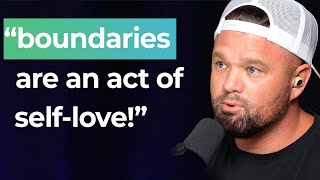
So ad hominem is when you're in a debate with someone and we see this on social media. So I know y' all can relate to this. Someone will say something very, you know, contextual or they'll, they'll say, everyone that does this is wrong. And instead of the person who's attacking them, debating them, they'll attack their personhood. They'll actually start degrading and insulting and being mean to the person instead of talking about the thing that's in debate. I've dealt with this personally where we've posted some very controversial content and more to come. Right? Because the truth is sometimes unsettling. Like it's very important that we shine light on the darkness. We don't have to focus on the darkness. But here's the boundary. The boundary is actually a beautiful act of self love. Boundaries are an act of self love for you and the other. Now why is this? When we uphold boundaries, we tell ourselves unconsciously that we love ourselves. Because what's the number one source of anger in relationships? It's boundaries that are broken, it's boundaries that are crossed. So those boundaries are something that we first put in place and that we practice second. So just to say I'm the kind of person that's never going to allow someone to cheat on me, well, if you just focus on that and you say it over and over and over again and then you notice that your boyfriend or girlfriend is potentially cheating on you. It is up to you to practice the boundary. It's not up to the other person. And this is where self regulation and self accountability really stick in here. How do we hold people accountable without burning bridges? You first let go of the fear of burning the bridge, full stop. You must choose when enforcing a boundary that the boundary is about your love for you and it's about the boundary of your love for the person. That's really what we're talking about here. So if accountability is wearing a steel toed boot, it doesn't mean that you get to be a jerk or a bitch. And just like this is my boundary and it's Tough love. And I'm gonna tell you my boundary. I'm gonna enforce my boundary at all costs. It's like that kind of intentionality that kind of come from can actually paradoxically attract the thing to you because you're so angry and in resistan the thing. So the peaceful path or the woo way, the middle path here is to know your boundaries, practice your boundaries, and then here's the big one. Communicate your boundaries to your loved one, to your friend. This really clicks for parents and children. I've noticed that in my life, I'm about to be 45. I'll be 45 by the time this podcast comes out that in 45 years, the most challenging boundaries for me have been with my woman or my parents and my family. Can you relate to this, Mar? Are boundaries easier for you with friends than they are for parents, or which one's harder?
With family, it's the hardest. And I think that's the problem of not wanting to burn the bridges, because you do want to keep your family close to you. So when you set the boundary with family or a partner, there's the biggest risk of losing them. Whereas when it's a friend, it's usually not someone that's as close to you as your family. You haven't spent your entire life with them. That was one of the reasons when I first started practicing setting boundaries, I started practicing with total strangers because I've never done it before intentionally. So I was like, okay, if I'm meant to do this and learn how to do it, I'll do it with people that I don't really have any connection or relationship with. So it can be even the basic stuff, because it's hard even to do it in a restaurant when they mess up your order. And sometimes when you really have porous boundaries, you're like, oh, I don't want to say anything. I don't want to make anybody uncomfortable. So you just take it. But if you really want to learn to set boundaries, you do it in these little situations. And over time, you build the skill and the courage to actually do it with the people that you love as well.
It's so good. I'm thinking about a podcast we did, and it's on the screen right now with Ann Lore, and she wrote a book called Tiny Experiments. And. And essentially, it just boils down to asking questions. So if one has done the inner work, to know your values, to know who you are, and to know what your boundaries are, that's the foundation. And then from there, when you can feel or when you can sense either visually or somatically or mentally that your boundaries have been crossed or they're about to be crossed, you can just run a tiny experiment. And this is why it's so beautiful. Because in the curiosity of running a tiny experiment about your boundary, you might actually learn that your boundary was self sabotaging or, or your boundary was actually keeping love out. In other words, if you have such a firm boundary and the boundary continues to be crossed and the boundary is so hard for you to enforce, it's either one of two things. It's either you're learning how to be a powerful man or woman that enforces that boundary connected to self love, or the boundary is so rigid that you're actually blocking, God, you're actually blocking the opportunity of love or from real relationship from coming in. Let's, let's paint a picture of this. Let's say that a woman has been cheated on in her life, right? Very sad thing. So my heart goes out to any man or woman that's ever been cheated on. But that can set a hook in the unconscious mind where you will actually attract further people to cheat on you until you heal the wound of trust and self. Here's how it might look. So let's say A woman is 22 years old and she was cheated on. And she goes through three or four relationships leading up to her 30s. And, and there's some cheating, whether it's like messaging on Instagram or maybe there is another infidelity or whatever it is, she gets to learn about herself that she probably could sense the cheating was coming way before it happened. And she knew. She knew there was a knowing in her. Yet because of the lack of trust in self, she was so rigid with her boundary. But what was missing from her rigid boundary was the trust in herself to know that the boundary was already going to be encroached. So follow along here because when she finally gets to that space where she has experienced so much pain, and by the way, this could happen for men too, she will get to a space where she will just know the boundary is there. She won't have to be in fear of enforcing it, she won't have to fight to enforce it. There won't be this rigidity because really whenever we're fighting for something to be in place, like I need even this, I need to fight cancer, I need to fight my disease, I need to fight for my boundary to be there, the energy of it is that the boundary isn't safe, that you are attracting on A very unconscious level. The people that are going to make your boundary tip over so that you finally just put up your hand and say no. But when you finally experience enough pain to put up your hand and say no to the boundary that you already can sense is about to be encroached. Here's what happens. There's a click and the click in your heart and in your neural tree and in your mind. You have integration of love for yourself. And, you know, unfortunately, this really only happens in my experience, Mar through pain, through the boundaries being broken. But eventually our boundaries get crossed enough where we don't have to fight for them to be in place. It's a knowing, it's a way of being where we start to attract a man or a woman into our life that has the same structure of their boundaries. In other words, we'll keep learning the lesson over and over and over again until the lesson is truly learned. And so this is where radical responsibility comes in. So, you know, we could make this an accountability spectrum where, like, there's a shared value between a man and a woman. There's an impact of when the boundary is broken. And when the boundary is upheld, then there's clear consequences and clear verbalization of those consequences. You can do this, is what I'm saying. You can do this from a place of peace. Boundaries don't have to be enforced from anger, from resentment, or from betrayal. Boundaries are super sexy. Like, as a woman, I'm curious how you feel about this, Mar and for all the women and men listening, when you know your boundaries, you don't have to shout them from the rooftop. There's nothing more sexy in my opinion, and this has been reflected to me from my woman than me knowing who I am and me knowing my boundaries. And just by the presence of me looking at someone or me being myself, I don't have to fight for my boundaries. There's a clear come from that I have that the other person can feel that they know, first of all, they get to be in alignment with my boundary. But they also know that they wouldn't cross my boundary because they can feel it from me that I love myself enough where the boundary is just there without me ever speaking of it. Can you relate to this?
I believe so, yeah. That's also why it's so much easier to start boundaries with somebody new. Even like coming to a new relationship or maybe making new connections, meeting new people because your family knows you as somebody already. They have a set idea of who you are since you were a child. So that's why when they look at you, they still see the old version of you, not the new version that you've become. After doing so much of the healing work that I'm just connecting the dots a little bit here, but, yeah, I've been through this myself, where I would even express to my. My ex boyfriend that cheating for me is a no go. It's like, I don't accept that. But eventually, when I had the suspicions that it was happening, didn't love myself enough to leave him to actually go. And even though I expressed the boundary, the boundary wasn't really there because I still put him first before me. And that's the hard lesson that I learned through pain. And I think it's important to also realize that the pain and the sort of, I would say, mistake that we make when setting boundaries, they're here to actually teach us how to truly be true to our boundaries. So it's not to shame ourselves when it doesn't go the way that we expected, but it's like, yeah, we learned a lesson by not doing it the right way. Next time it will go better. So it's good not to get stuck in the shame spiral when that occurs.
I think you just hit the nail on the head with Cheryl's question because she was asking, how do I hold boundaries and quote, call someone out without shaming them or burning a bridge? And that was at the core of her question. And, and in full transparency, y', all, there was a spiritual influencer. I'm not going to name the name. And he was called out. And this is someone that I've called out to, but it was called out by someone else, which actually was kind of joyful for me. I was like, this is kind of fun because I'm not the only one that's seeing this, right? In social media, it is very easy when you have the right amount of followers and the right amount of marketing money to be perceived as something that you're not. But if you train your intuition and if you train your somatic intelligence enough, it doesn't matter what someone's saying. What really matters is how you feel. So when we feel in our gut, when we're around someone that even though what they're saying sounds really good, but we can tell in our enteric nervous system and in our heart and in our solar plexus that what they're saying isn't aligned with who they are, that is actually a beautiful opportunity to share from an observer's perspective. And this is the next part of this podcast when we enforce a boundary publicly, it's the same actually as when we enforce a boundary personally. It's actually the same thing. It's just less intimate because it's in a public sphere. So, for example, let's just say that a spiritual influencer was saying something like this. Anytime that a woman is in her mind, she's in her masculine. And anytime she's in her heart, it means she's in her feminine. Now, obviously, if you've done any spiritual work, you would know that that is a complete false dichotomy. That masculine and feminine energy circulates through our body as men and women. And being in your mind versus being in your heart has absolutely nothing to do with masculine and feminine energy. Right. You could even check in with Keri Michelle, my love. She's in her masculine all the time to manage the children and to be with the children. She's also in her heart at the same time. Being in your head has nothing to do with being in pure masculine, full stop. If I see someone sharing something like that, they're essentially the blind leading the blind. People have questions about masculine and feminine. A woman feels like she's overwhelmed mentally if she hears something like, when you're in your mind, you're in your masculine. That is the worst advice that she could ever receive. So it is my not responsibility. But from an observer's lens, it is a proper context for me to call out without shaming the spiritual influencer. That is saying nonsense. So here's how it might look. And this is to Cheryl's specific question. And this is for all of us to hold others accountable and to not burn a bridge. You could say something like this. Hey, spiritual influencer. I noticed that you said, when a woman's in her mind, she's in her masculine and a woman's in her heart. Could it also be possible that this is a false dichotomy? And could it be possible that this energy circulates inside of us as men and women and that multitasking is primarily a female through diffuse awareness? And also that doing singular focus is more men? But it doesn't relate to your question. You see what I did there? I presented a question. I didn't say, you're stupid. I wasn't shaming this person. I'm just offering dialogue in a public sphere. That is, I guess you could say, calling them out. But it's not calling them out where I'm attacking them. That is the best way to enforce a boundary. It's through curiosity. It's through Questioning. You can do that personally as well. So are you cool to do a real play, Mar? Let's pretend like we're in a relationship, right? So if you came home and you were super tired and one of your boundaries is that you get 15 minutes by yourself to go meditate, to go breathe, and I come to you right now. Ready? Hey, I need you to take care of the kids and I need you to work on this thing. And by the way, we have to go over this spreadsheet, okay? Come on. How would you enforce your boundary?
Ooh, well, if I'm self regulated, I'll be like, josh, come on, we've talked about it. When I come home and eat my 15 minutes alone, can you please give that to me and I'll get back to you once I'm done with this?
That's great. That's a great start. The formula, it's a really beautiful start. I put you on the spot there, so it's all good. And for the record, we're not in relationship, okay? We just work together. So the way you can do it is always by the rule of three. And this is a very simplistic model. And this really addresses the core of our conversation here. You also pay attention here. It's on the screen. The first thing that you do when a boundary is broken is you identify and you verbalize that the boundary is broken. The second thing is that you bring curiosity and a different question to the space. And then the third thing is that you have a shared result. So it might look something like this. So I'll switch it now I'm the one who's walking in, right? Hey, Mar, I totally feel you that this has to be done. And I totally receive how this could be stressful for you. Would it be possible coming from curiosity, would it be possible that, as we've agreed before, I can take 15 minutes in the other room and meditate and clear myself? And then can we come back number three? And can we create this reality where we do all the things that are stressing you out? I want to unburden you. I want to make this real for you. Can we do it after I meditate? That feels much better, right? I identified, I brought curiosity, and then I had a shared result. That is actually the most beautiful way to enforce a boundary. The worst way to enforce a boundary. Let me show you all what you should not do. Mar, what the fuck? You always do this. Whenever I come home. You stress me out. Whatever. I'm just going to go meditate. Boom, boom. Yes. You're still, quote, kind of enforcing the boundary, but all you did was create a rupture in the relationship that now you get to repair. You see, there's just a different level of maturity here, y'. All. So whether it's public or whether it's personal, it's that format that I gave you that is the code. That is the ultimate code for us in relationship or publicly or even in business, by the way. It's essentially nonviolent communication. I pulled this from non violent communication, right? Say what you've heard, bring curiosity in a new result, and then have the shared new result. I promise y', all, if you do this, I'm no joke, no drama, no bullshit. If you practice these three things when enforcing boundaries, watch your life completely transform. Like, it makes the hair on my arms stand up. I wish somebody would have taught me this 10 years ago. I wish, I really wish I would.
Also add from Alison Armstrong, especially women talking to men, expressing how that makes them feel. So it's like, Josh, when I meditate, it makes me feel relaxed and I have more capacity to spend time with you or take care of the children. So just explaining, like how that makes you feel so that he understands. I think that just like adds. That's one extra points to that. That really makes it like, be seen and be, be felt. Really.
It's really a slowing down of communication as well. Because what is the pop quiz for everybody? What is the one thing that goes away when you're triggered or when you're in fear? It's your breath. When we hold our breath. Like, in other words, if, when you're in traffic or when your husband or wife triggers you, you go like this. Well, I didn't. There's. There's a. There's a constipation. There's an emotional constipation that needs to be moved, right? So. So emotion is energy in motion. And so when you're experiencing a stuck emotion, you're emotionally constipated. And so how do you let it go? For lack of a better term, how do you. How do you let it go? You let it go by being a conduit for energy rather than a dam. If you can be a conduit for energy and let energy move through you in conversation, specifically challenging conversations about boundaries, then you have better health, you have better bowel movements, you're able to let things go. And I mean, poop is such a funny topic. It's really true, though. Like, it's funny. We were doing a men's group here last night. And my friend Fish, who's the founder, co founder of Somatic Breathwork, he talked about this. He's like in Somatic Breathwork. And they deal with nervous system regulation and breath work and. Incredible, incredible. If you ever want to get into Breathwork, it's on the screen right now. Joshtrent.com Somatic. We'll add that to the show notes as well. Do their training. It's incredible. So he talks about when they're having a company meeting and somebody has to go to the bathroom, they'll say, I need to go. Somatic Release, which I think is so funny because it's literally exactly what we're talking about here, right? So being a conduit versus being a dam, just simplistically here, is so potent. And it's not just an intellectual thing, right? Because wherever you are in your development of your consciousness, in your development of being the conduit, just be in peace. Just be in grace with it. If your triggers come up, you're going to meet yourself. If your triggers come up, welcome. The triggers. The triggers are the teachers. To quote Mark Groves, right? If we're experiencing a trigger in upholding a boundary, if we're experiencing a trigger because we're in fear of not being loved or we're in fear of rejection, just be honest about it. This is another code that I can stack onto those three and also the one you brought up from Alison Armstrong. If y' all are really feeling the pain about either publicly or privately enforcing a boundary, be honest in the part one and say, hey, what I heard from you is this, that you want this thing to happen. Can I share how I'm feeling right now? Ask for permission? You know, I'm feeling when I hear these words from you that I potentially could be rejected, or that I'm feeling like I'm not enough, or that I'm feeling like I'm going to be completely blasted out of my body here and I'm going to go into some kind of a trauma response. Could it be possible, number two, that I do this to regulate myself or I take this break or that we pause the conversation because I really want. Number three, I really want to create a shared reality with you where you get what you want and I get what I want. But, see, I had to slow way down. We talk so fast as human beings. We're so intellectual. We're so like, chirp, chirp, chirp, chirp, chirp, chirp, chirp, that if we can just slow down the conversation and be honest with ourselves. Honesty creates clarity. Clarity creates speed. Most times, people. I got that from my coach, by the way, so I would shout him out. Joe Stulte, wonderful business coach I have. If honesty is the foundation of clarity, and clarity creates speed, which is essentially getting to joy as fast as we want, then how can we do our work? And how can we be curious about being honest about where we are? Because honesty is the foundation of everything. I've said this a thousand times. I'm curious how you feel. Mar, as we wind down this incredible conversation, this could literally change your life, y'. All. I promise you, promise you, promise you with my whole life experience, if you just relax and allow what we're describing and what we're chatting about to sit in your heart for a moment, you'll know it's true. You'll know it's true because it's a slower pace and the truth is light. The truth is soft. If you can be honest about where you are, you'll get the clarity of how to get to the speed of love or the speed of joy or the speed of the boundary being enforced and you and the person being in harmony. That's what this is all about. So what comes up for you?
When I share this, I wonder, why speed? Why the word speed? That's the only question that I really have about that.
It's a perfect question. Because the resistance. We have an episode coming out fairly soon with Akshay Nanabanti, and he said when he was doing his big journey in Antarctica, it wasn't the suffering, it was his resistance to the suffering that gave him the clarity and the love to keep going. We have a bias in our brain. We're very ancient creatures. If y' all didn't get the memo, we're, like, very old. But our neurology and our software and our hardware is still wired for 2000 plus years ago. We are wired to avoid pain, and we are wired to go to pleasure. So inside of all of us, there's a bias where we want to get to the pleasure or get to the love as quickly as possible. That's where the speed component comes in. Whether we verbalize it or not, it's true for all of us. It's a shared, universal human experience. We want to get to the love or we want to get to the exhale or the peace as quickly as possible. But what trips us up is we're not practicing the honesty and we're not practicing the clarity. If we can actually be unattached to the speed of the outcome and be attached. Actually, we can be attached to these two things. An attachment to honesty with an attachment to clarity will give us the unattachment to speed, because speed is a byproduct of honesty and clarity. So that's why speed is so important, because it talks to the neurology of our ancient creature ness inside of us. We all want to get to the other side as fast as possible, but there's a million personal development books that point us the other direction. Now, why is this? Whether it's Napoleon Hill, whether it's Wallace Wattles or Bob Proctor or anyone out there, they're all saying the same thing with different words. I'm not regurgitating anything new. Focus on the honesty first, get to the clarity second, and then you'll have what you desire, which is really the lack of suffering, the peace, the exhale, the love, the joy, the nourishment on the other side. But if we fall into the trap, this is so important. If we fall into the trap of getting to the speed as fast as possible and avoidant attachment style, this is very hard for them. And we've done a very deep episode with Dr. Stan Tatkin. We'll link this in the show. Notes on attachment styles. Very profound. If a anxious and avoidant, which usually pair together attachment styles, if the anxious is wanting connection and they're not clear on their honesty and they're not clear on their clarity, and the anxious wants to get to the joy and the connection, I've dealt with this personally. They will actually unconsciously push away the avoidant because the avoidant does not want to get to the speed because the avoidant is actually resisting the honesty and the clarity as well, they're just coming at it from two different sides. So if the anxious can take the role and if the avoidant can take the role of sitting in the honesty and sitting in the clarity, which is very hard for both of them. Right. Because they relate to it in different ways. The anxious and the avoidant still want the same thing. They still want the speed of love, they still want the speed of connection. But it's about retuning yourself and recalibrating yourself to sit in the honesty and have the conversation and then get to the clarity, where the anxious feels heard, the avoidant feels heard. I promise, y', all, you can get there in, like, two minutes. Swear to God, you can get there very fast. If you don't resist the honesty, if you don't resist the clarity. That's really what we're talking about here. It all comes from breathing. It all comes from presence. These are not recycled words. These are my lived experience of actually being in a half a decade of craziness in my relationship to then do an IFS ceremony and get even more clarity on my own honesty of the parts of myself that I wasn't able to see. We are only as liberated as our darkest secrets. And the darkest secrets are the ones we're withholding. They're also the ones that we're lying about. So there's a lot here which is good for another podcast. But I really. I really have trust that if you allow what we're sharing today to sink into your heart, to sink into your body, your entire life can change. I really feel this wholeheartedly.
And to bring it full circle, even honesty and clarity start with awareness.
It always starts with awareness. Always. That's the paradox, y'. All. Okay. Until we see you on another Liberated Life series. The goal of this series is to allow you to give yourself permission to look at life through a different lens, right? And that lens is the five sides of self. It's the mental, physical, emotional, spiritual, and financial. You. And as we go to nourish these parts of self, that's what this series is all about. How do we nourish these parts of ourselves? And what parts of us come up that need nourishment? What parts of us come up that sabotage? What parts of us come up that get in the way of the thing that we desire, which is the nourishment of self? So if you resonated with this, please share this conversation's worth sharing. Share this podcast with somebody that is struggling with some of the concepts that we really went deep into today. Share this podcast and if you have a question for us, you can DM me on Instagram. I'm oshtrant official. You can send our podcast account the question as well. It's elnessandwisdom. Or you can leave a voicemail for us. Joshtrent.com Ama Mar thank you for being here with me. Thank y' all for being here in this conversation. Please share it. Unless you share it, you can't give somebody else the real healing and the real nourishment that they deserve. So until we see you again, I'm wishing you love, wellness, but most importantly, peace and power. You cannot have power unless it comes from peace. We'll talk with you soon.
More from Josh






Your child's future start before pregnancy... and even before conception! #podcast

MD Reveals: Your Healing Creates Your Child's Reality (The Souls Coming In Need Strong Bodies)



