Food Freedom Forever | Melissa Hartwig | Whole 30 Diet
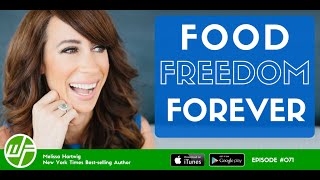
Podcast interview (recorded Aug 16, 2016) on Wellness Force Radio: host Josh Trent talks with Melissa Hartwig (co-creator of Whole30, author) about emotional relationships with food, behavior change, and the physiology and psychology of appetite. Major themes: Whole30 as a 30-day reset (physiology and psychology), hyperpalatable/engineered foods and reward circuitry, satiety vs. satiation, genetics vs. environment, common emotions that surface (anxiety, shame, feelings of unworthiness), habit formation and relapse (yo-yoing), self-work (therapy, boundaries, Byron Katie-style inquiry), and advice for sustaining change (three-part plan promoted in Food Freedom Forever). Includes anecdotes, listener CTA, and author/book promotion.
Chapters
Wellness Force Radio Feelings are essential, but they can't dictate our actions.
We literally inspect each other with our emotions.
We came here for a special purpose.
Let the purpose unveil itself.
Knowing without doing is the same thing as not knowing. They're not just trackers. I'm gonna wear this and it's gonna.
Help me do the right thing.
Wellness force radio episode 71 with New York Times best selling author Melissa Hartw.
These dark corners in my head that like I know were there but the closet door is shut and I kind of don't want to open what's in it. And I think for a lot of people food is like the gateway to that because they understand at some deeper level that it's not just food. And if they take away the things that they're using to comfort or love or self soothe, they're going to have to look at what is my relationship with my mom and like why can't I talk to her unless we're sitting down with a plate of chocolate chip cookies or what's going on with my stress about my job and like what am I going to do if I can't come home from work every night and have a glass of wine?
Welcome back to another episode my friend. I am your host and wellness coach, Josh Trent. Thank you for spending your time with me here on the podcast. This is where every week I bring you access to global experts in wellness, technology and behavior change. On this podcast you'll learn from exceptional people who are dedicating their lives to driving real transformations in physical and emotional wellness. My intention with the show is that together we'll discover the connections between your emotions and healthy habits to live your best life and enjoy the process. This episode is brought to you by Perfect Supplements, a company I'm honored to stand with who walks the talk with their values of non GMO pesticide free real food supplements that support us all on the wellness journey. Hop on over to perfectsupplements.com wellnessforce Enter code wellnessforce to save 10% off your entire order at checkout. I am so glad you're here this week. This is a super special episode. I'm going to go quick on the intro today because I want to jump right in to this fun conversation with Melissa. But if you haven't heard of Melissa Hartwig, here is a little bit more about her work. She is a certified sports nutritionist. She specializes in helping people change their relationship with food to create lifelong healthy habits. Perfect fit for the show, right? She is the co creator of the original Whole 30 program and the New York Times bestselling author of the whole 30. And it starts with food. Melissa has been featured by Good Morning America, Dr. Oz, Wall Street Journal. I mean, guys, anything you could imagine. Detail, shape, outside, self. If. If you haven't heard of her, this episode is gonna blow you away because this is not only the work that she does and contributes to the health and wellness in paleo communities, but we also talk about our emotions and the impact they have on our foods and our habits. She's presented over 150 health and nutrition seminars, and her site gets a million and a half people that she serves through the Whole30 website. We'll link that in the show notes. This is one of those really special episodes where I felt like my guest and I were just in a coffee shop sipping back on an espresso and talking about the things that matter to us. I think you're gonna love this candid, raw, and real conversation with Melissa where we talk about our brain chemistry, our food relationships, our habits, how those dictate our life, reintroducing foods, energies, emotions that come up from changing our food patterns. We'll touch a little bit on addiction, stress. Melissa's new book, Food Freedom Forever and how to give the world what it needs right now, which is more love. And it starts with our self love. Let's jump into this amazing conversation with Melissa Hartwig. Melissa, welcome to the.
Hi, Josh. Thank you so much for having me. I'm psyched to talk to you today.
This is going to be fun. I'm looking forward to this. You know, I want to flash this moment I had last week. I'm sitting on the beach with a friend, and I look to my right and I'm thinking, is that Melissa Hartwig's hair? Turns out that it was. I didn't want to run behind you and seem like ultimate creeper, but it was really cool. And I find this too, you know, when we are interested in certain subjects and when we're putting out this vibration in the world, whether it's of service to other people, don't you typically find in your life that you start pulling in these people to your experience all the time?
I was saying to a friend the other day, it is unreal how many friends I have that all are doing these, like, rad jobs, living their passion, getting paid to do the stuff that they love. And it wasn't like that three or four years ago. But I think as I've become more invested in what I do and it's really turned into like a passion project as well as a job. I think you just attract that same kind of quality of people who are just like positive and psyched and optimistic and like out there making stuff happen.
Yes. And just living their purpose, you know, Talk about living purpose. You reach 1.5 million people plus every month, month on whole 30. With all the information and videos out there about you, Melissa, what's something fun that most of us don't know about you?
Oh, let's see. I'm naturally blonde. I will say that. So yeah, I've been keeping my hair dark for like 15 years, but yeah.
Now, have you talked about that before? That's the first. You heard it first on Wellness Force.
I try not to talk about my hair that much, but since you just mentioned seeing it on the beach, what else? I'm a really good parallel parker. I am exceptionally good at hanging things straight on a wall and I'm left handed.
I love. I am never gonna forget the fact that you said that I'm naturally a blonde. You've had so many years in health, but early on you actually did a lot of different pieces in the CrossFit community. You had this blog, it was way back in the 2000s. I think you called it Urban Gets Diesel. Right?
Mm. Urban is my maiden name and boy, do I miss it. But yes, Urban Gets Diesel was the name of my blog. And I talked about my CrossFit adventures and my training and my Nutri and like, body image stuff and my relationship with food and all of this stuff. And it was just meant to be sort of a place where I could keep like an online journal. And it just amassed this really crazy following, which was great. And that's where all of this got started through CrossFit, through what was the very first Whole30 in April 2009. Like, yeah, it all started with just me wanting to write down my thoughts on health and fitness. And.
Did you always have this knack for writing? I mean, how'd you find this gift for writing? I'm reading. It starts with food. We're gonna talk about both of your awesome books, but I'm reading these books. I'm like, is this her profession? Like, she's a professional writer.
That's so nice of you to say. I feel. I mean, I'm no Herman Hess, but I do, I write. I feel like, I don't know. I write better than I speak, as evidenced by the last, like two minutes of stammering. I feel like when I write, it just allows me to take all of the stuff that's been like, kicking around in my head in this really unco and kind of messy fashion and put it down in a way that hopefully people can connect to and relate to. And I also try really hard to let my personality come through in my writing because I think people want to connect with other human beings, not just a methodology or a philosophy.
God, you're so right. I met you in 2011 at the first ever Ancestral Health symposium. And I remember I was in Dr. Lauren Noel's car. We got rear ended on the way there, so when we got there, we were frazzled. I was one of the people that came up to you and I was like, hey, what's up with bacon and whole 30? And you kind of shook your head to me. So that was the. That was our first meeting. But I just wanted to honor this, Melissa, as we start this awesome conversation about, you know, emotion and food and the way that those play off each other, I just wanna honor what you've created these past five years to be this. I kind of sensed it from you, actually when I met you, that you'd help millions of people. So thank you for your work. As we start this call.
Thank you so much. That's really kind of you to say.
And in your journey, you've. You actually a long time ago worked for this kind of big insurance company. You have this business background, but again, this passion for health and fitness was always kind of on the side for you. Was there a point when you knew that bec becoming a successful entrepreneur was a calling in your path?
It was. I don't know that I ever thought it was my path, to be perfectly honest with you. I never wanted to own my own business. That was never something that I thought like, yeah, I really want to do that. But there came a point where I was working my day job and I ran a team of business analysts and operations people in three different offices. And I loved what I did and I loved managing. But I had this. Ran this CrossFit gym and was writing this blog and was doing some nutrition consulting and getting all these certifications on the side. And there came a tipping point where I was like, I'm either. This has so much momentum that I'm either gonna throw everything I have into it and see if it will go, or I'm just gonna continue to kind of work both things, understanding that neither job was really gonna flourish and, you know, just decided to go for it.
And you wrote this first book. It starts with food, which really is, I believe, kind of the Framework for the emotional side, how that affects our brain. You actually have a chapter I would wanna pick your brain on. It's called your brain on food. But to create this book, there was a point where you hunkered down in Mexico for kind of six. It reminds me of something that I'm dealing with right now as an entrepreneur and creator myself. And I want to ask you this question about fuel. What was your fuel? What was your fire that you drew energy from for this daily motivation to kind of sacrifice and grind to write that first book?
I did not feel like a sacrifice and it didn't feel like a grind. I feel like if it felt like a grind, it never would have come together the way that it did. It felt like all of this excitement and joy and, like, passion and everything that I've been wanting to say, I finally had, like a platform and an opportunity to be able to say it and to connect with so many more people than I was connecting with now and share everything I had to say because I thought it was pretty good and I thought it could really help people. So I think the key was that it didn't feel like work. I mean, obviously there was a lot of discipline involved and I did change aspects of my life to, you know, get the project done on deadline. But, like, it felt like the best parts of my day, getting all of this stuff on paper.
Did you feel like because of your business background, that was a little bit easier for you to be so dedicated to, something that also resonated with your heart?
Yes. So my business background has been incredibly helpful with in terms of operations and organization and project management. Those were all of the things that I managed in my 9 to 5 job. But my personality is also such that, like, I'm very black or white, very on or off. I'm what Gretchen Rubin would call an upholder. So it's like, if I say I'm gonna do something, I just do it and it's not actually hard. And if you tell me, hey, Melissa, I need you to do this, I'll just do it. And it's not hard. So understanding that I had this, you know, six month timeframe and had to get this book out and wasn't like, nothing I'd ever done before. It just became about structure, organization, and routine to kind of get it done.
Ugh. I love Gretchen's work so much. We had her on the show. I am a obliger, so we can kind of maybe contrast some strategies there. And my curiosity is like, you're from the East. Do you notice anything different about people from the west as in regards to how they relate to their food, you know, their ways of being around food. Has that ever come up for you? Have you noticed a difference?
I noticed a huge difference, of course, in, like, personality type. And, you know, the sort of east coast is super busy, super on the go, like, go, go, go. And west coast is, of course, way more laid back and way more sort of laissez faire. I wonder if that translates to food in that people on the west coast seem to have a little bit of a closer connection with their food and where it comes from. And on the east coast, we just never really thought about it. It was like the stuff you picked up at the grocery store and you just, like, consumed. So maybe, I guess if you're asking me to think about it, I could see it like that. But I really think the struggles that we have of our emotional relationship with food are pretty universal at this point.
And universal meaning, I think, globally. You know, I've talked about on the show, I've had some issues with food in my past where when I was a kid, I would use food to numb out. You know, I'm flashing back to my teenage years, and there'd be so many times where if I was stressed, I would eat a burrito. If I was unhappy, I would eat cookies. And so I learned that. And that took a lot of years for me to let go of those old habits. And this whole 30 approach, this is a perfect time, really, to introduce Whole30. If someone's been living under a health and fitness rock, they might not have heard of Whole 30. But you describe this as pushing your reset button with your health habits and your relationship with food. How did you come up with that just clear, succinct message in the process?
I actually came up with it on the fly during a live television interview here in Utah for, like, the NBC affiliate. And I said it, and I was like, wow, that's actually really exactly how I would want to describe it. But, you know, we've always talked about the whole 30 as being a reset. It's not a diet. It's not a weight loss plan. It's not a cleanse, it's not a detox. It is a full reset of your psychology around food and your cravings, of your hormones and metabolism, your tastes, your digestion, your immune system. It really is an attempt to get the body back into that place of balance or homeostasis where it wants to live. Your body has so many amazing, elegant systems to keep you Handy to keep you healthy. And we just keep, like, messing it up with the inputs that we're giving it. So let's give it some inputs that allow it to get back to this place of balance. And that's why we describe it as a reset.
These four food standards you talk about in it starts with food. Healthy gut, immune function, inflammation, hormonal response, which I was really stoked to see that in there. And then lastly, most importantly, the psychological response. Why did you create these four standards? And we're gonna talk more about the book in depth here.
I think when Dallas and I were talking about how we wanted to frame the why behind the whole 30, like, why is this. Why is the program so successful? And how does it work? The way that we've observed it working over the. At this point, it would have been since 2009. So it would have been three years. And those were really the standards we came up with. Obviously, the whole 30 impacts what happens physiologically in a tremendous fashion. But you really can't discount the rules and the guidance and the structure of the program that attacks your psychological relationship with food and your habits. And without those pieces, I think we would look like any other elimination diet out there. It's really the fact that we focus so much on change and psychology of change and habit and willpower that it allows people to do the whole 30 and, like, really change so many aspects of their life and carry it with them outside of just the 30 days.
This is why I'm so excited, Melissa, to talk about this, because food is a relationship. I mean, is there anything more intimate than, like, the food we put in our mouth? I don't think that in our life that gets much deeper than that. So when we look at this relationship piece, can you share something that you've come across in your experience as a health coach, as an author of a story that someone wrote to you about that just made you kind of want to cry, like, happy tears about improving their relationship with food through the Whole.
30, one comes to mind. I was in Portland for a book signing last year for the whole 30. And this guy stands up. He's probably in his 50s. And so he stood up and was talking about his experience with the whole 30. And I expected him to talk about weight loss or maybe blood pressure or cholesterol. And what he said was, I've had this knee pain since I was a teenager. I attributed it to an old football injury. But I've lived with this. This pain. I lived with it day in and day out. And when I did the whole 30. One of the amazing things I experienced was that for the first time in my life, my knee pain disappeared, which was great. So I'm like, cool, this is the best story ever. But what he went on to say is the part that made me tear up, which is. But the structure of the program also helped me identify the fact that I reach for junk food or comfort food when I'm in pain. And it wasn't until I realized that that I was able to change that pattern and recognize and say to myself, I'm in pain right now. What do I need to do to take care of myself and comfort myself? Like, I get choked up still thinking about this man. Talking about how the whole 30 helped him identify this really emotional relationship with food that he had never before been able to sort of make the connection with.
This is so powerful because food has always played a major role in my life personally. When I was about 20 years old, I lost 80 pounds, did all these kind of freak diets. And it wasn't till I became a trainer and a wellness coach, till I learned to just let go of weight from a place of love and abundance instead of scarcity, ang and fear. And I think that's why your work has resonated with me so much. You know, when we look at this food relationship, why do you describe it as the relationship with food? Can you define kind of what that means to you?
I mean, it truly is a relationship in every sense of the word. It's if you think about like a mother, daughter relationship or a brother, sister relationship, it's like love and hate. It's punishment and reward. A lot of. For a lot of people, food is the way you self soothe. It relieves anxiety sometimes. In the case of family situations, often dynamics with moms, food is the only way that you know how to express or receive love from that person. So as I write about in the next book that's coming out, food Freedom, like food isn't just food. It's so much more than just food, which is what makes it so difficult to address and why when you bring up the subject of food, people get so defensive and so anxious and so fearful because to them it doesn't just represent sustenance or nutrition. It's so much more than that.
Yeah, and I'm feeling like this, this piece around when we go for holidays, there's cookies, there's sugar, there's cake. I'm Italian, right? So in my family, it's like a big deal. So when I was growing up, my Grandma made cannolis. I don't know if you. You have a weakness for cupcakes, right?
I do. Okay, yes.
So my weakness is for cannolis. And so when I was a kid, it was like, if you didn't eat the cannoli, you didn't love Grandma. And we'll talk about this a little bit more when we get into behavior change, because I know that's a huge passion for you. Me, too. But I want to talk about this section in your book. It starts, you named it your brain on food, which is like, honestly, that could be a book title, just itself. But in this section, you talk about ancient signals in a modern world. And this is beautiful. Quote, food. Scientists have engineered chemicals and processed foods that light up the reward centers in the brain for a different reason than nature intended. Not because they provide vital nutrition, but because they are scientifically designed to stimulate our taste buds. What was the research that you pulled from on this? I mean, why was that such a powerful statement for you to write?
Right. Oh, that. So that chapter was like, my baby. Right? I think I probably wrote that chapter first out of every single thing in the book because I was like, there's so much that needs to be said here. There are just. There's so much really interesting research on the subject of supernormally stimulating foods in. In nature. For example, some of the research I came across, like, if you give an. A bird an egg that is bigger and shinier than the own egg that it lays, the bird will sit on the bigger, shinier egg, even though the bird knows that it's not real. And it's so fascinating that you see this in nature where, like, pleasure and reward centers are drawn to the things that are bigger, grander. And in our bodies, our pleasure and reward centers are drawn to the things that are supernormally stimulating. They taste sweeter, fattier, saltier than we could ever get in nature. And even though we know that they're fake, we prefer them. And because scientists. Scientists have figured this out, it basically gets us stuck in this loop of craving over consumption, guilt, shame, which only leads to stress and more cravings. And, like, it's this awful roller coaster that we just can't get off. But it's because scientists are sort of bastardizing the relationship with food that we would have from, like, a purely biological perspective.
Have you ever looked at the work of Damon Gamow? He was the number one documentary for Sugar in Australia, and it was just incredibly powerful movie where he just ate, like, the regular recommended daily Amount in Australia. Have you seen this one?
I have, yes.
Oh, my gosh. He basically. He came on the show, he talked about. He was in this one study, Melissa, and they were giving children pudding, and they would actually find this spark point, this sweet point, where it was as much possible sugar as you could put into a child's mouth without them having kind of a gross response. And so the way he described it, my heart started to bleed. I'm thinking, why are we paying these food scientists to basically trick the metabolism and trick this hyperpalatability of a child's tongue? I mean, how. How do you not let this emotionally upset you when you go into your work and when you start doing your studies?
I mean, first of all, we're not paying them the pudding. People are paying them. Right? And I think we have to just understand that, like, from them, it's a purely business perspective. If they make the pudding right to that bliss point, they'll sell more pudding. And I totally understand that. And they are free to run their business, just like I am free to vote with my dollar and not purchase their pudding. So I try not to get really caught up in the. I feel like that's wasted energy, right? And they're like, the system shouldn't be like this. And it's really not fair. Like, I put my energy into, like, what can I do? How can I model the kind of behavior that I'm trying to inspire? How can I share my resources with people and let them know that there's an alternative? How can I make the whole 30 as good and as accessible as it possibly can? So more and more people will start voting with their dollars and not buying the pudding.
Oh, my gosh. Thank you for that refresher and that reminder of where we can put our energy. I'll just go ahead and take a deep breath right now. So when we look at habits, this is such a big part of your work, and I know it's really what you're gearing a lot of the Food Freedom Forever book around, but habits are our life. I mean, everything we do stems from kind of our beliefs. Then it goes into our thoughts, and then it goes into our actions. You talk about the difference between satiety, this physiological response, and then satiation, you know, which is an estimate of our own being. Full perception. Can you describe the difference between satiety and satiety?
Yeah. So true. Satiety happens in the digestive tract. It's like a physiological function where the body is sensing that it has enough nutrients and a wide Enough variety of nutrients to be full and satisfied in terms of your survival. So when you've got food that comes from nature, that has protein and fat and lots of diverse micronutrients and fiber and water, all of that stuff sends signals to your gut that says, at some point, I'm okay, I'm full, you don't need to eat anymore. So the example I give in the book is like when you're eating like a grass fed piece of prime rib, it's delicious, you love it, the first bite is so good. But by like the 20th bite, there's something in your body that's saying, I'm good, I don't need to eat anymore. By contrast, satiation is your perception of your own fullness. It kind of happens in the brain and not in the gut. And it's based on a number of factors. It can be based on whether you're simply tired of the flavor of the food you're eating, or you're jaw is sick of chewing, or your stomach becomes so physically distended that you can't eat anymore. But satiation is not indicative of true satiety. You can take a tub of movie theater popcorn and eat and eat and eat and eat. Because there's no complete protein. The fat is fake, they've sucked the fiber out, they've sucked the water out, they've made the calories even more bioavailable. And until you're physically full or tired of putting hand to mouth, there's going to be no signal that tells you to stop eating. So if we're eating foods that are far more likely to deny that true satiety, and all we have left is this emergency ejector seat that says, oh my gosh, I've just eaten a whole tub of popcorn. I should probably stop. That only sets us up for that overconsumption cycle.
So if in life we have these habits that start at a super early age, they're connected to emotions which we'll talk about. But then if we're not getting this sense of being full, we have this leptin dysregulation, we have our hormones that are out of whack. How do we go about this, Melissa? I mean, just even defining what healthy habits are, is there a beginning framework? I know you go super deep in the book, but just here on the air, in a few sentences, is there kind of a beginning framework for getting back in touch with satiety versus satiation?
So you basically have to go back to eating foods the way nature intended again Your body is so elegant, and it has all of these hormones like ghrelin, and systems that, you know, signals that you. Your gut will send to your brain. And it wants to. Your body wants to be able to tell you, like, I'm hungry and it's legitimately hungry, not a craving, or I'm full and it's okay to stop eating because I've got all the micronutrients I need. You just need to get back to a place where you can actually trust the signals that your body has been so desperately trying to send you, that you have been overriding for the last 20 years because you've been chronically dieting. And so when your body says you're hungry, you're like, shut up. I'm on a diet. Or because of the foods that you've been feeding it, where your body doesn't know up from down, and all your hormones are out, out of balance, and you don't have those. So getting back to. Through something like the whole 30, getting back to eating food the way nature intended you to eat food and really resetting your taste buds and resetting your hormones goes a huge way, even in just 30 days, to you being able to trust the signals your body is sending you again.
And you mentioned this food with no breaks, which is such a cool visual. I'm picturing, like, the E brake on an old Honda. These foods don't have it. I mean, certain foods, like, for people, brownies. For me, it's like dark chocolate, like, I cannot have. I talked about this with Gretchen. I can't have dark chocolate in my house. And I just know that about myself. I am a bit of a stainer. I can't moderate those types of things. How do people recognize the foods with no breaks when they're going into this journey?
I think it's really simple. It's like, what is the stuff that once you start eating, you just can't stop eating it. Because the problem isn't that you start eating it. The problem is that once you're in it, you feel totally out of control. You feel like you want to stop, but you can't. You no longer even want the food, but yet you're still consuming it. You eat. You know, you tell yourself you're going to have one glass of wine and then it turns into two glasses of wine and you're ordering for pizza and your face is in the bag of potato chips. Like gateway foods. I think everybody, I mean, if you ask them really quick, like, what is one kind of food that you just can't control yourself with everybody would have at least one. And I think if you force people to think about it, they'd come up with a pretty decent list.
We'll get right back to the conversation with Melissa. When we go through life changes, especially our relationship changes with food, emotions can come up. We're going to discuss later on in the show how to unpack those emotions and let them be of service to you. But sometimes emotions can literally take us over. We can support our energetic health by taking in clean, quality proteins that give us satiety and satiation. One of the best ways to do that is through powdered collagen from perfect supplements. This is sourced from 100% grass fed cattle with no hormones, synthetics or pesticides. I want to break it down because healthy cows eat grass and sick cows are the ones that eat corn and then we eat the cows. So it's not what you eat, it's what you eat eats. And beyond these healing powers of collagen for your digestive system and joint health, this hydrolyzed collagen has 20 grams of protein in two scoops. To help curb the appetite and increase our satiety, pick up your discounted hydrolyzed Collagen over@perfectsupplements.com WellnessForce. Do not forget to enter your audience code wellnessforce at checkout to save 10% off your entire website order. Let's jump back to this conversation with Melissa Hartwig. One of the cool things that I reflected on is I've written blog posts about epigenetics and genetics. I know you study that quite a bit and in your book you mentioned genetics loads the gun, but environment pulls the trigger. Talk about that.
So you know, there are a lot of, a lot of people will say things like, oh, diabetes runs in my family or you know, I'm predisposed to high cholesterol. But what you have to think about is just the interaction of like, yes, there are genetic factors. I'm not saying that your genes don't matter and your heredity and your ancestry and your family history doesn't matter. But if you are predisposed to having high cholesterol, but you grew up in a household that cooked a lot of their own food and ate a lot of plants and didn't eat a lot of the pro inflammatory foods, that raises body cholesterol, you won't pull that trigger. Your cholesterol levels could be healthy for the rest of your life. So it's kind of a cop out just to say, oh, I'm just genetically predisposed. There are things in the environment for things like autoimmune disease or some of these other kind of lifestyle related diseases and conditions I mentioned where it's like the interplay of what's going on physiologically and your environment are what are the kind of two contributing factors together.
And this brings up something around knowledge. You know, Dan Pardee talks about knowing without doing is the same thing as not knowing.
Don't you love that quote from him?
It's so powerful. Like I want it on my wall.
I love Dan.
I think it might be on my wall somewhere. And so what we talked about on a few episodes, I think it was episode 34, is we talked about like people there three types. And I have always believed this to be true. There's people that are almost ready for change, but they kind of read books and they're not ready for action. Then there's people who are ready for change and they learn by doing. And then the last category is people that are ready for change. They learn by doing. And then they're also conscious and they're tracking. Do you feel like that's an accurate picture or would you change anything about the cycles for change?
I mean, I think that's. So I'm thinking back to sort of the like the psychology of change model. And of course you're talking about the first category is pre contemplation. Right. So people are people who are contemplating rather if they're thinking about change and they're doing the research and they're doing the reading, like that is certainly not the same as having action. But then the last two, you know, I know Dan is like super into this self analysis and the tracking as a means to measure progress and make sure you're on the right path and like stay motivated. So I would say that that's probably pretty accurate. I think, think from my perspective I might change that to like people who are researching and looking into it, people who are ready for change and actually doing it. And then people who are doing it and then seeing what other areas of their life they can extend this change into. Because that's what I see a lot of with the whole 30.
Yeah. And this piece around behavior change. It's something that I love talking about on the show because at this point, Melissa, I don't know if you feel like this. There's so much information out there about what we can do do. We're not reinventing the wheel. All these health shows and all these podcasts and all these things that are out there. I think what you've done such an awesome job of doing is just going back to the fundamentals. You're not making this some kind of specialized approach regardless of people eating specific foods. You know, there's a lot of energy around ketosis and just different things like this. What I love about your work is that you're just bringing people back home. You're bringing people back home to loving their body, to paying attention to their body, to being more mindful and to just eating real foods. But when we look at the emotions that come up when we start to put in the real and take out the fake, the fake stuff is what kind of allows us to hide as human beings in life. You know, we use food, as I talked about in my life, to not feel. What do you think about the emotions that come up for people? Are there key emotions that you hear about through the whole 30 community that come up when people start pushing in the real and removing the fake?
I mean, I think anxiety is a word that comes up a lot. Like a lot. I actually just had a good conversation with a friend recently about this word anxiety and why it's being bantered around so much and like, what it means to people. And for me, anxiety is just this like perpetual low grade state of worry. But around specific situations, it tends to come up for me around like these dark corners in my head that like, I know were there, but the closet door is shut and I kind of don't want to open what's in it. And I think for a lot of people, food is like the gateway to that because they understand at some deeper level that it's not, not just food. And if they take away the things that they're using to comfort or love or self soothe, they're going to have to look at what is my relationship with my mom and like, why can't I talk to her unless we're sitting down with a plate of chocolate chip cookies or what's going on with my stress about my job and like, what am I going to do if I can't come home from work every night and have a glass of wine? So I think anxiety is a really big one because we're asking people not just to remove certain foods from their plate, but also we're forcing them to look at why are you engaging with food in this manner and why are you doing these behaviors with food? And like, if in the absence of these foods, what else can you do? And those are hard questions.
So hard questions. Because they're getting down to what scares most people, and that is radical change. But on this journey, you know, you had this beautiful journey where you kind of just followed your heart in the beginning. And you. You met Rob Wolf and you got a lot of energy from him, and you started to put out content that was based on what you said, wasn't even really hard work for you. It was just something that kind of came through through you. Do you feel, like, the emotions that you experienced when you first began eating clean, eating whole 30, did that ever come up for you? I mean, did you ever have anything where you felt triggered in eating clean?
Oh, my gosh, yes. That was the whole reason that I shared the whole 30 like that. What was to become the whole 30 experience that Dallas and I did? I shared it on my blog because it. I never would have thought that I had this dysfunctional emotional relationship with food. And when I did my. My first program, even as it wasn't even as structured as it is now, but when I did it, it made me realize how much I was kind of using food as a proxy for some of the other things I used to use to numb myself, to not think about stuff. I used food as punishment quite a bit or reward. So I went to the gym and I ran six miles today, so I deserve to have these margaritas tonight. Or I went to the gym and my workout was crappy, so I'm going to eat 300 less calories today. Like, I never got into the disordered eating kind of boundary, but I definitely flirted with it a little bit. And it wasn't until my first whole 30 that I realized that, you know, there was so much more to this relation to my relationship with food. And if that were the case, being as healthy, quote, healthy as I was, it had to be like that for everybody else, too.
And we look at this paradigm of change. You talked about, this pre contemplation piece. When people start to take action, though, this is when I feel like either the wagon is strong or the wheels fall off. And a lot of times in my life and for many clients that I've worked with, there have been these moments where, like, the wheel not only fell off, it broke. And I was sitting there going, what the hell do I do? And so these emotions that I were feeling were kind of a shame spiral. Do you have people in communities that talk about shame spiral, where they're eating great and then they get derailed? I mean, what's the framework for supporting and lifting someone back up when they're on the whole 30 journey?
Yeah. I talk about that in Food Freedom. I talk about it as the concept of like yo yoing but with the whole 30. You're either on the whole 30 or you're face first in a pile of donuts. And like it's almost wor to be yo yoing when you've successfully completed a whole 30 because you know how good you can feel and you know how hard it was and you totally completed it and you felt amazing and you felt like you looked good and your self confidence was up. So it's almost worse when you kind of fall face first. And the discussion I have in Food Freedom in a major way is that like you cannot expect to override decades of a less healthy relationship with food and bad habits around food with just a 30 day intervention. And I try to remind people like, I expect you to fall off the bus. I expect that the wagons are going to come off the wheels and here are the situations in which you're most likely to like lose your path and it's totally normal and it's not a failure. And every one of these incidents is a learning experience. And here's a plan to get you back on track. And the longer you kind of work through this cycle, the more time you'll be able to spend just kind of living your food freedom and not yo yoing back and forth. So I don't think it's as much about how you support people while you're doing the whole 30 or any resources I can create. It's about you need to change how you're thinking about this. This is not like any other nutrition program you've ever stumbled across. You have to think about it differently in terms of it being just one part of a lifelong cycle.
We talked about the people that are tracking, the ones that are taking inspired action, you know, the people that are on the path to becoming well. And when we look at the tracking aspect of it, a lot of what I do in my coaching is, you know, I work virtually and then I use different trackers for my coach clients. And I think it was last year that on Twitter I had written this post and it was called stop using wearables and start living. And I believe you commented and that's how we kind of connected after years. And what I talked about was it's not about the measurement that we're really focused on, it's about the mindfulness that's coming up. So yeah, these devices, these Fitbits are cool. I'm sure that all they're going to continue to grow and they're going to continue to be a focus for people. But what are people really looking for? Melissa? People are looking for increased mindfulness. And below that is seeing the stuff that they're covering up. You know, when we look at how people get sparked into change, it's because they want a different body, they want to be sexy, naked, whatever the feeling might be. But the things that come up in just different layers that we peel off. What have you seen either personally or in groups or just in the work that you've done that really comes up for people the most when they start peeling down the layers? Is it feelings of being helpless? Is it feelings of not being enough? Is it feelings of being cursed from genetics? I mean, what are people telling and talking about online?
Oh, it's always about not feeling like you're enough. I mean, I honestly feel like there are very few interactions or engagements I've had around the whole 30 and like, trying to support people where ultimately it doesn't come down to like some question about am I worthy of this? Am I worthy of being healthy? Am I worthy of being, you know, lean and beautiful? Am I worthy of being athletic? Am I worthy of being fully present and engaged in this relationship? Like, I, I would be shocked if anyone said no. I never thought about that. Or if they said it and didn't at some point just understand that they just weren't addressing it. So I think a lot of it is just this question of self love and showing yourself grace. And for so long, we've all been taught or we've been modeled that the way to get ahead is by beating yourself into submission. You've got to work harder, you've got to do more. If you're an entrepreneur, it's, I'm working while you're sleeping and you're on vacation and I'm working and it's like, oh, hustle, right? Yeah, the hustle. 24 7. And I rail against all of that, but it translates into being a mom. I see that as a mom too, right? Like, oh, I just, I don't sleep at all. And I sacrifice everything for my kids and I'm rushing this one here and this one here and I barely have time to eat myself because I'm cooking them home cooked meals and I'm like, you're doing it wrong. Like, no, it doesn't have to be like that. So that's a long winded way of saying. I think a lot of it comes down to feeling, you know, just exploration of like, can I get in touch with the fact that I am worthy of all of this and more.
Ugh. And I just want to, like, scream it out like, we're all worthy. We just forget. Sometimes we get clouded by the dirt of pressure and responsibility of life. And I think what's really unique, Melissa, about what drives some of your work and why I'm excited to read Food Freedom is because you've done the work. I mean, you've done the inner work. You have talked about on different shows. You were a stress addict at one time. You've done group therapy. You even done tarot cards. We did a show with Adam Farah about tarot cards and kind of practical spirit spirituality. You've been to energy doctors. You've done specialized therapy. Like, what are the things that you really pulled from that that allowed you to empower so many other people? Like, what did you let go of when you were doing all those things?
So much therapy. I've done so much therapy and I love it. I've done things that have been tremendously life changing. So I think one of the things I've realized over the last several years is that if I'm not taking good care of myself, I am of no use to anyone. Not my audience, not my son, not my friends, not my family. So, you know, I think we're often told that it's selfish to take care of yourself first, but I look at it as an act of, like, radical self love. Like, I am gonna set some boundaries in my life so that I am healthy and happy and. And I flourish so that I have more to give to everybody else. I think I am a huge fan of Byron, Katie and the work. Her book Loving what Is was incredibly life changing. And understanding that what causes me pain and stress is not the situation, but my thoughts about the situation and how I'm choosing to react to it has been incredibly powerful and has let me. It allowed me to go through, like, a really difficult two years of, you know, just life stress in a way that I emerged from it, like, just as happy and just as healthy. So. So I think there's benefit to be found in all of these different modalities. And I take what I like from each and I leave what doesn't work for me. But I am always constantly practicing. I think sometimes we go to therapy and we feel like we can just check off this box, like, yep, got my hour in today.
But for me, I did my therapy.
Right, but the value is really, like, being in it, being in this situation where, like, I see something on social media and I get so mad about it and I force myself to sit and down sit, like, well, this is an overreaction. Why am I overreacting? What's the story I'm telling myself? What is it saying about me? What does this mean I need to look at or work on in my own life? Like, it's the application of it, like you said with the wearables. It's not that I've got this band on my wrist and I'm tracking my steps. It's what am I doing with that information? How's it motivating me? And how is it, like, changing my behavior for the better?
Yes. How is it this mirror of how I'm showing up in my life? Am I getting adequate sleep? Am I getting proper hydration and nutrition? Am I getting adequate movement? Not just hardcore exercise? Because people focus so much on, like, hey, I gotta get in my CrossFit work out. But it's about the time sedentary versus the time active. And I think that's really the value of these wearables. Now, which wearable do you use right now?
I'm not using any. And I did. You know, I've played around with the Fitbits and the. I've played around with some of that stuff, but what I discovered was that, well, a. Because I'm an upholder, like, I don't need any external motivation. I really don't. Like, I'm. I don't need a thing to tell me that I need to walk 10,000 more steps. And I found that it just became like. It just became like something that I didn't look at. It was on my wrist for a while, and it was cool for like a week or two. And then it just became like a fixture that I wasn't paying attention to. So I just. I find other things to kind of keep me, like, engaged in that habit. And I found just the way I choose to think about taking care of myself, including movement every day and not just in the gym and, you know, spending time in the sunshine and connecting with friends and family. Like, I don't. A wearable is not going to help help me, I think, accomplish that. And that just. I think a lot of that is my personality.
Yeah, I love that. And, you know, me being an obliger, we've already talked about the different types as an obliger. You know, the whole reason that I do coaching and that I do this podcast is because I'm actually trying to just be this best version of myself to learn from amazing creators like, you and then share that with other people. I mean, that's the whole mission here. And I feel like, for me, that's my framework. But that's what I found, Melissa, by going through personal development workshops, by going to therapy, by doing tapping, by doing all these things that allow me to actually look at how I'm showing up instead of just looking like I'm doing work. I think it's so easy for people to just be on the outside and posting on social and crafting this image of themselves. Like, hey, look at all this great work that I'm doing. But meanwhile, they're never having honest and uncomfortable conversations about their way of being. Do you find that this is a. A dialogue that gets to be more popular in the paleo and in the fitness world? This way of our being, you know, in touch with our emotions and how we actually show up in our lives?
I hope. I hope that it's changing. I hope that that is becoming more prevalent and more powerful. And what I think is that it's almost like an undercurrent. I think people sense authenticity and that, like, depth in an Instagram profile, like, in a heartbeat. And I would like to think that it's the difference between somebody who's got, like, a really flashy image and a whole lot of followers and, like, really pretty pictures, but. But not that same, like, loyal, authentic, really close connection with their audience versus someone who maybe doesn't have, like, the flashiest and they don't have the most followers and whatever. But, like, that connection is real and very genuine, and I would like to think that it's trending in that direction, and I would like to think that people are really. I mean, I know I'm tired of looking at these Instagram profiles that are nothing but, like, boobs and butt and muscles and abs. And, like, you know what my story about it is that it's just narcissistic and a cry for validation. And, like, I want more. I want to connect with people, like, on a deeper level. I want to have important conversations and laugh about silly stuff, and, like, I just want to engage authentically. And it can be really hard to do that on social media.
God, this is such a powerful topic. I know we're going a little bit of away from the topic about food and the relationship, but it's powerful because look how we show up on social, what we want others to perceive about. About us. It's kind of like this duality between what our life is online versus what our life is offline, and it's really easy for me. I know I'll raise my hand when I'm feeling lonely. Sometimes instead of just feeling my loneliness, I'll go on Facebook, I'll check my friend's posts. You know, I might post a picture and be like, oh, I got 50 likes on that. That's awesome. Do you find that in your own life that you've adjusted the way that you post on social? Because where you post, Melissa, I mean, you inspire a lot of people. So you get to be very careful and very present and authentic about the way you post. Have you recently changed way that you post on social, especially Instagram?
Not recently, but definitely within the last few years. Like, I talk about the fact that as a young woman, like when I was in college, I had no sense of my own, like, self worth outside of what other people thought of me. And if I had a platform like Instagram where I could share, you know, get validation, like from the whole world, I would be a mess. I would need way more therapy than I need now. So I'm really conscious of, especially with an audience that's big. I'm really conscious of the idea that, like, it would feel really good to put up a picture and have a hundred thousand people tell me I was pretty and it would feel great, but like, it's not real and it's not feeding me and it's not the kind of dialogue I want to foster. So I am really careful and like, this the one kind of metric that I use and it's really rough, but it works well for me is, does this feel gross if I put something up and I have this like, weird feeling where I'm like, oh, that feels like kind of like it just feels kind of gross. I know I need to take it down because there's something about that post or that message or the picture that is not me living in my integrity. And I can always go back and pinpoint and be like, yep, okay, so I was. I either posted from a place of insecurity or the photo just wasn't the kind of image I want to represent or it wasn't entirely authentic about where I am in my life. And like, those are always really good experiences for me to just a reminder to kind of, I guess, stay true to like, where I am, man.
And how is this a beautiful mirror of the way that you run your business and the way that you create this space for people to be real and authentic themselves? Like, listen, we're not perfect. Melissa has an amazing image. You serve so many people. But I love the fact that you just admit from time to time, like, hey, I don't have this game completely wired. And I love that about you. So thanks for being that way.
Yeah, I mean, if I don't share that, I'm gonna start to feel like an imposter in my own life where not even I can live up to the social media image that I've crafted. And that's a really crappy feeling. Like, nobody likes feeling like they can't live up to other people's expectations. And if you feel like you can't even live up to your own, I just don't want to be in that place. And also, like, that doesn't make me a better role model. Trying to put out this image of me being, like, perfect and having everything together and always knowing exactly what to do to keep myself optimally healthy. Like, nobody can relate to that because it's not real. So if I want to authentically engage with people, I have to show them them that, you know, in so many ways, I am just like them, trying to figure it out just the way they are.
Well, I want to transition. This is the last part of the show, and I really feel like the way that you've written it starts with food. And the whole 30 is from this place of practicing self love. It's just bringing the body back home. It's like what this world needs so much right now. Last week with Tony Federico, we talked about what the world needs and the changes that we want to see in the paleo industry. My first question to you is this is just seven fast ones. Okay. I know I didn't say send you these, so whatever you want to say, go for it. No pressure, though.
Laning around, I love it.
No pressure. Just try to be perfect. Okay, What. What would you tell people if you had just one day to be on social media? Let's say you could be on all the news channels at one moment. What message would you share about wellness, about health to people if you had that moment where you could just blast it on every news station in America?
I think it would be this big picture message that, like, changing the food that you put on your plate can literally change your entire life. That feeling in control of your food and getting back to a place of balance and sustainability with your food will spill over into every other area. Your relationships, your self image, your self confidence, your other health and fitness initiatives. Like, food is just so incredibly powerful. And if you just had to pick one thing to start with to change your life and get healthy again, I Always would encourage you to start with food.
My next question is what makes you laugh? What are the things that just make you belly ache laugh? Like where you're crying, laughing.
Oh, I mean my kid, he's three and you know we always just find like really fun, stupid things to get into. So just enjoying like seeing the, just the joy in him is really amazing. I have a lot of great friends and we have conversations where we are not afraid to make fun of each other. And I like nothing more than when a friend is willing, willing to like call me on my stuff, you know, make a little bit of fun of me for like something I posted or something I said. So I think the self deprecation like sometimes makes me laugh really, really hard. And then sometimes I look at buzzfeed videos of like dogs that get stuck in things like hammocks and who doesn't, right?
Cats playing the piano. I know I go there, I go.
There from time to time. I am, no, I'm not averse to checking out a stupid animal video on YouTube every once in a while. In a while. Just for some like light hearted, you know, I don't always need to like focus on the news and stuff so.
Oh, you're so right.
I think that stuff is fun and.
This directly ties in with wellness because to be, well, you know, there's so many positive chemicals, dopamine and all these just bonding hormones that happen when we're crying and holding our stomachs and laughter. So it's huge. Now my third question, what kind of breaks your heart or lights a fire in you about how current media or social media creates the narrative around people's relationships with food.
Oh, you know what really breaks my heart is when I see people's before and after kind of photos and they're never like the photos in a, you know, they're never the bikini ab shots. It's like they're focusing on their non scale victories. They're talking about their skin or their self confidence or the fact that they ran five miles for the first time in their whole life. But what breaks my heart is when they say, I know I still have so much more to go but here's where I am right now and I just like always want to hug them and say like can we please just give ourselves permission for like five minutes out of our day to just be so proud of where we are. There's something about our society that, you know, it's like love yourself but not too much. Be self confident but not overly confident. And it's like for five minutes, let's just say like not right now. For five minutes I'm just gonna be so stinking proud of exactly where I am and like so happy with all that I've accomplished.
I hope everyone really took that message to heart. I actually had to like take a breath because you're so right. Like we get to just, even if it is for like five minutes, just like love ourselves for the moment. And typically I'll say this like it's easier for women to do that. I know I'm making a sweeping generalization, but I feel like for men, especially in the fitness culture, we're not really that cool when we show feelings. So let's just have this open opportunity. Thank you for saying that, Melissa. To feel our feelings. Next question. Question. What is your favorite way to get grounded and kind of reconnect with you and not just the incessancy of life?
I get out into the mountains by myself, easy. I spend we here in Utah. We've got amazing mountains, beautiful hiking. I just spent a week in Banff hiking by myself. I'm going to be in the Tetons on Thursday. Hiking by myself. I get outside in nature. No music, no books. Like just me and my feelings and like the sunshine and the ground. That's all I need to like reconnect with basically everything.
If there was a chance for you to kind of roll back in the DeLorean, I don't know if you were a fan from Back to the Future, but if you could roll in a DeLorean and just check in, you know, sit across the table from your 18 year old self, would you say anything to her? Would she listen? What do you think she would have loved to have known?
Oh, so much stuff because bless her heart, at 18, wasn't I such a mess? Mostly I think I'd probably just have hug her and let her know that like all of the stuff that she was freaked out about isn't actually going to be that important. And then I would encourage her to get started on all of this health and wellness and self discovery journey so much earlier because I think about how late I got into it and how much of an advantage my 3 year old is going to have being raised in this environment. So I think I would do that. But mostly I would just hug her.
What is a mantra or message that you might take? Tell yourself if life presents you a struggle or kind of a section of pain, what do you tell yourself? Do you have a mantra or a message?
I kind of, I kind of really like this concept of like, so what? I ask myself that a lot. I will force myself to say out loud, like, oh, I'm writing this book and for the first time it's just going to be my name on it. And like, what if it's really critically panned? And like, what if the New York Times doesn't like it? And what if this and what if that? And then I sit back and I go, so what? Like, so what? What is that? What would that mean? I poured everything I have into this and I think it's so good. And I know my community is going to find it valuable because I wrote it for them. So, like, so what? Honestly, that's been so freeing for me is just to ask myself, like, so what? Really?
Last question. This is a powerful one. And you know, from your background, the amount of people that you come in contact, I am so excited to hear what you have to say about this. And it's wellness, you know, if you had to define it. What is wellness to you? What's your personal definition of wellness?
Oh, my gosh, that's such a big question. I feel like I maybe should have thought about this a little bit. I guess wellness is like, you've got to think about it from a really big picture perspective. So I think it's like health and happiness and self confidence and peace and self love from every possible angle, which is kind of generic. But, like, wellness is more just about, I think, feeling at peace with yourself and your place in the world. And whether that's coming from a sense of spirituality or a sense of your diet or a sense of your healthy movement program or your relationships, like, it just, it encompasses so much. But I think it's really about am I at peace with, like, where I am and how I'm engaging?
Such a great answer, Melissa. Thank you. I would not expect any less from your powerful work. And I really just want to take a moment here to pause. Thank you for the whole 30. Thank you for. It starts with food and just your work of giving people permission to come back home to the way they eat and they live in their bodies. So thank you for what you do.
Thank you so much for your support and for this awesome dialogue. Next time I'm in San Diego, you better stop me on that beach. And then we're gonna go get lunch and talk about this stuff for like three hours.
Let's do this. I'll make sure that I chase you if I think it's you. Now, I wanna give people a chance to connect with you. This new Book which by the way, can I be on like the pre order list? Can we helicopter that to my place here now, Encinitas?
Absolutely. Absolutely.
The book picks up kind of where the whole 30 leaves off. Right. To achieve this freedom from really the habits, the guilt, the anxiety about food. Why are you so excited about this book?
I think I'm excited because this is what my community has been telling me they need for the last two years. I did the whole 30. I had awesome results. I feel amazing. I love it. I want to continue with the lifestyle, but I still need a little bit more guidance because I don't quite know how to sustain these habits that I've built. So I really think that Food Freedom Forever is going to be this really kind of big picture approach, but also very specific. There's like a specific three part plan because people really want specific directions to follow. But I think it's going to help them take what they've built during the whole 30 and use that as a springboard to really carry this stuff forward with them for the rest of their life.
I am really inspired by your two books. I read them over the weekend and there was a couple moments where I was like, did I just use my whole highlighter? I was highlighting so much in this chunk of food book and I want to give away the two copies that I purchased. I want to send them to a listener. So you guys, if you want to win a copy of it starts with food and Whole30, just post a picture of your kind of favorite Whole30 meal or Whole30 belief. Whether it's a quote or a meal or a meme or whatever it is, just send it to me on Instagram, tag ElnessForce and hashtag Whole30. I'll choose the best photo this coming Friday and I'll message you. Melissa, thank you for coming on this show so much.
I love it. Thank you so much, Josh. This was a really awesome conversation. It's always a pleasure.
All right, we'll see you on the beach soon.
Thank you. Sounds good.
How much fun did we have learning from and talking to Melissa Hartwig on the show today? Thank you for sticking around till the end of the episode. Show notes from today can be found@wellnessforce.com Whole30 if you want to pick up that free hardcover copy. Well, it's not free. I mean, I'm a buy it and give it to you. Somebody's got to pay for it, right? But I'm happy to do that because this book rocks. This is not just your run of the mill cookbook It's a book where you can learn the science behind and how to change your habits for life to create what Melissa calls, you know, this food Freedom Forever, which I completely love. I cannot wait to get a new copy of her book. So if you want to win that hardcover copy of Whole 30 and it starts with food two books sent in the mail right to your house for being an awesome audience member, then just post a picture of your favorite Whole30 meal on Instagram or meme or just something fun that really relates to how you view in your life. Whole30 go ahead and tag Elnessforce and Whole30. So tag Elnessforce symbol and Whole30. I'll choose the best photo by next Friday and I will message you personally. We can have a little party and send you some books in the mail next week. And I'm amazing solo episode where I'm going to go deep on a few topics that are super close to what's made a difference for me in my life, in my heart and in my head, both. Now the only thing left to do is for you to go out and create an amazing and fun day with all the tools and inspiration and knowledge from Melissa and every guest who's been on the show. So until I see you again real soon, I'm wishing you love and wellness.
It.
More from Josh






Your child's future start before pregnancy... and even before conception! #podcast

MD Reveals: Your Healing Creates Your Child's Reality (The Souls Coming In Need Strong Bodies)



