Greg Schmaus | Ancient Secrets: Healing OCD & Boosting Mental Health | Wellness Force #Podcast
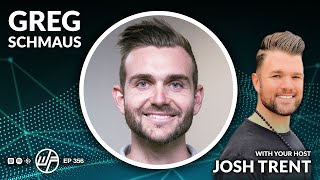
A recorded interview (Wellness Force podcast) where Greg Schmaus describes his lived recovery from severe OCD following surgical trauma and outlines a holistic framework for mental-health healing. Key claims: curing (removing symptoms) differs from healing (integrating lessons), trauma often underlies obsessive/addictive patterns, and practices that aided recovery include meditation, breathwork, somatic grounding, diet adjustments, and addressing gut health. The conversation also situates individual healing within broader social shadow work (2020) and warns about technology, information overload, caffeine and processed carbs worsening symptoms.
Chapters
My OCD was the greatest spiritual teacher I've ever had. It's the only reason I can really understand how the mind works and how consciousness works.
Yes.
So the idea of can we heal it a hundred percent is yes. But the healing it 100% is the acknowledgement that I'm not here to get rid of it. I'm here to integrate it so it doesn't become something that we get rid of. It's something that we integrate into our being. So paradoxically, by carrying with it, by carrying it with us, we heal it 100%.
What's up, everyone? It's Josh Trent, and this is a beautiful Friday. I'm here to talk about something that is very, very important. It's on literally the top of the mind and top of the heart for everyone right now. It's with a gentleman, Greg Schmaus, and we're going to about a holistic health approach to healing. Greg, thank you for coming on the show, and welcome to Facebook Live, by the way.
Thank you. Thank you for having me and you and I connected after I did the podcast with Paul Check and you shared a little bit about your story. And something that's been coming up for me today that I'll share, just to get started, is something that you shared about your inner child.
Yeah.
That was very much coming up for you and your challenges. And something that's very present with me right now is my inner child that was very much made fun of for being very quiet, never talking. So me presenting myself on a platform like this is actually way outside the comfort zone of that inner child, but also very healing.
Yes.
Because the wounds that I've acquired, I'm able to feel on a platform like this. So feeling, obviously, is the prerequisite to healing. So you and all the listeners today are actually healers for me. So thank you, guys.
Wow, man. What a great way to start a podcast. It's like bomb drop with the truth bomb. So many people are watching us across the world, and I just sent an email to our community to let them know that we were jumping on. And one thing that I think is a beautiful stepping off point for, for you and I both as we start to explore this extremely nuanced world of mental health and OCD and holistic healing is this. There is a chasm right now between people that want to push pharmaceuticals as an agenda for, quote, healing. And then in between that, there's the other side of healing, and on the other side of healing, there is people taking health of their mind, body, and spirit. Into their own hands and not being reliant on, on a pharmaceutical drug. If you could just paint a picture of. We're going to go into your story, which is incredibly powerful, but if you could paint a picture right now of your current state of the union when it comes to mental health, pharmaceuticals, and holistic healing, can you just start there with us and explain what you see from your vantage point going on?
Okay, so from my perspective, the difference between the pharmaceutical approach and the holistic health approach, obviously the holistic health approach takes the mind into consideration, it takes the body into consideration, it takes the diet, the environment, the lifestyle. But one thing that I'll share that I feel like is directly related to this question is the difference between curing and healing. I feel as though pharmaceuticals, although there's a time and a place for everything, I feel as though that's the truth as well. Curing is the removal of something. It's the removal of symptoms, it's the removal of a disease, it's the removal of an illness, where healing is the journey towards wholeness. When we're taking pharmaceuticals or we're going the conventional medical route, although there's a time and a place for it, it's too focused on curing, it's too focused on removing something that was broken, rather than using the illness, the disease, or the challenge as a catalyst for growth and a journey towards wholeness. Because that's what we're all on, is a journey towards wholeness. And we all need a catalyst or an endeavor. We all need to go on the hero's journey in terms of breaking free from a lot of the self limiting beliefs and a lot of the enculturation and the shadow behavior. And healing to me is the journey back to wholeness, where curing is the removal of something, but it's not really doing anything else. So it's not really bringing us on that journey back to home, which is where we're all headed.
Mm, that's great. Because in the middle of this gap between how do I cure myself versus how do I heal myself, the wholeness actually has always been there. You know, it's talked about in the logos, where we all drink from the river of forgetfulness and we spend the rest of our lives remembering who we are. So the follow up question immediately for all of us, my curiosity included, is when it comes to the healing path, the return to the wholeness, how does that really differ from curing oneself? Because it seems like they're totally different paths.
So to put it simply, from my perspective, Curing is the removal of something. Healing is the integration of something. So when we're curing, we're removing a disease, removing an illness. When we're healing, we're taking the disease, we're taking the illness. We're going into it rather than moving away from it. So when we go into it, we integrate it into our being. And when we integrate it into our being, we're able to extract the message that was underneath it. We're able to extract the lessons that we're here to learn. From my perspective, each soul comes into this lifetime with a certain lesson to learn, a certain curriculum that they're here to engage. And a lot of the challenges that we have, whether it be mental health, physical health, disease, whatever it is, that's part of our curriculum that we signed up for, and it's part of the healing process to master that curriculum so we can go on to whatever next. Where curing is kind of like the avoidance of the curriculum, it's kind of like that question's too hard. I pass. So the curing is the removal of the opportunity to engage in the classroom that we call life.
We all have this contract. Whether you follow any kind of Caroline Ms. Literature, or if you look at contemporary or ancient masters, there is some text that's pretty much a common thread, like a through line with any teacher of spirituality or the arts, and that is that we all kind of make a contract at some point. We come down here from wherever we start from. Maybe it's a moonbeam in outer space, who knows? But we. We come down here, and we come down here to learn and to live and to actually share that message. And one thing that was really apparent to me when I listened to your podcast, which utterly gave me chills, the one that you and Paul did on Living4D, is you had such a tremendous journey when it came to obsessive compulsive disorder. And you healed it. And you healed it by actually letting go of healing it, which is such a paradox. I'd love to share with people this journey because people know you now online as a holistic life coach, a body worker, a strength coach, a holistic practitioner. Like, your resume hits the floor. But nobody really knows this about you, Greg, and especially in our audience, this healing path you took with OCD and with mental health. Can you take us to the beginning, man?
Yeah. So the beginning would be, I mean, just to give you little backgrounds. I grew up in New Jersey, and I was always an athlete. Growing up, I was a soccer player, a golfer, ski Racer. Then I moved to South Carolina at the age of 16 to go to a golf and tennis academy to pursue golf exclusively. My dream was always to play on the PGA Tour. And when I was 18, I got a scholarship to go to the University of Houston to play Division 1 golf. So I was very much on my path to living my dream. And about three quarters of the way into my freshman year, I wake up in the middle of the night with the most excruciating pain in my testicles. And I wake my roommate up, and I'm like, man, you got to take me to the er. Something's not right. And I'm not able to walk. I try and get up, I pass out. I feel like I'm going to throw up. And it was really, really brutal. So it turns out I had a testicular torsion. Essentially, if I didn't have surgery immediately, I would have lost my male members down there, which would not have been good.
That's an instant. That's an instant party crusher. I mean, like, in that moment, to even realize that. I'm sorry, continue.
Yeah. So I come out of the surgery, I come out of anesthesia, and for the next few nights, I start having a lot of trouble sleeping. I start having a lot of nightmares and hallucinations. And remember, when you come out of anesthesia, a lot of the mental processes are a little distorted. So I'm really struggling, and I'm having a lot of obsessive compulsive thoughts and images. The hardest part was I wasn't able to get out of bed because I couldn't walk. I was still in a wheelchair. So a part of me felt this level of vulnerability of I don't feel safe. In my mind right now. I'm seeing images. I remember seeing this image of a woman in the hotel room by the door, and it really scared me. It really shocked me. And fast forward the next couple years. Anytime I was in a building, I would always be checking doors to make sure there was no one there. And I would have trouble sitting in a classroom for more than 20 minutes without having to go outside just to get some fresh air. But that surgery and that trauma and the vulnerability afterwards and the insomnia, that really triggered a lot of obsessive compulsive thinking patterns, constantly repeating the same words and thoughts and images in my minds probably thousands of times a day. Where for the first few years, if I went maybe five or six minutes at a time without one of those episodes, it was a very peaceful state. It was a miracle And I almost looked forward to going to bed because going to bed was a break from this machine constantly running. So that probably lasted a good five or six years. And I actually had to leave school because I wasn't really able to stick with the college golf and the. The academics. And that's when I met up with Paul Check. And he took me on as a client. And we did a lot of healing work together. And through various meditation practices, shamanic practices, tai chi and qigong, nutrition, breath work, all that. It took about two and a half to three years to do the healing work where I feel like I really came out the other side of it. But looking back at it, one thing that I'll definitely share is, you know, at the time, it was real challenge. And there were periods of time where I didn't think it was really worth going on. And I really had this feeling that, you know, why is this happening to me? And now the place that I'm in now doing the work I do, I realize all the reasons why it was happening for me. And when you were introducing me and all my credentials, I feel as though, you know, those are my credentials professionally. But what I really am on a deeper level is a wounded healer. And the wounded healer is the one who acquired a wound and went through the necessary hero's journey, the trials and tribulations to go into the wounds and extract whatever healing was necessary, whatever message was underneath it. And then when I make the return home, I now have the wisdom and the authentic experience of healing various issues where I don't have a degree in psychology, I'm not a mental health expert. I didn't study this in school, I didn't read this in a textbook, but I learned it in the classroom that I call life. And this was part of my soul's curriculum. And also as a wounded healer, I have empathy and compassion for where other people are at on their journey because I see myself in them.
Oof. This is powerful. And there's, like, so much to unpack there. Greg. I can visualize when I was training clients in gyms, I was a fitness professional for 10 years, like 10,000 hours with people. And the one thing that I always knew that was true is that I could actually feel where they were because I used to be 280 pounds. So I really had the emotional, the energetic connection to where they were in front of me. But so many people that are mental health pros per se, they really haven't gone through thresholds of being the wounded healer or even going on a Hero's Journey. They just chose it because maybe they learned it from their parents where that was something. They wanted to be a doctor, they wanted to be a mental health pro, whatever. But there's something so powerful, and I want everyone to really feel into this. You can only take a client on a journey as far as you've been. And that's in one of the very first pages of Paul's book, How to Eat, Move and Be Healthy. I read that quote in 2008, Greg, and I knew right away. I was like, wow, this is what we learn when we understand the components of intelligence. In this podcast, just like all the shows on Wellness Force, you know, we explore this continuum, Greg, of the Hero's Journey. And I believe intelligence is our ability to gather info, to apply it and test it and heal from it, and then lastly, to embody the healing. I'm curious your take on this third phase, the embodiment phase, when you were literally getting, like, your balls threatened, which is crazy to even think about. I mean, for most men, that would be like the ultimate. I don't know anything worse than that. Did you even have any idea that you would be healing someone or were you just holding on for survival? At that point.
When I was going through the experience, Right. Did I have any idea the journey that was about to unfold or what was waiting for me on the other side? No, I had no idea. And I think that happened for a reason, because I don't think I was ready to see what was on the other side, because I was still very much in my old paradigm where, from my perspective, the soul or spirit's only going to show you what you're ready to see. And if. If my soul revealed to me the rest of the plot, I think it would have ruined the experience of the journey. It's kind of like. It's kind of like if you go to a movie and someone tells you the way the whole movie unfolds and the plot ending and the twist at the end, you're not going to really enjoy the movie that much because you're like, I know how this thing ends. So I think the fact that a lot of it is not revealed ends. It's only revealed when we're ready to see it, and we're only provided what we need when we're ready to receive it. So that's why I believe it is important for me to not have that knowledge at the time.
And how much does that relate to where we are now as a society with the insane levels of suicide? That are rising. I mean, in my lifetime, I have never seen anything like this where there's media manipulation that's forcing people to wear a mask, sit down, be quiet, stay at home, follow the rules. That, to me, is a signal that we're actually in a collective, societal hero's journey, whether we know it or not. Where do you think we actually are? And can you contrast that to your own hero's journey that you had healing ocd? Because there's really an ocd with unconscious capitalism that we're dealing with right now.
Yeah, I mean, I think as a collective, we're all on a shamanic journey right now. And the phase that I feel that we're at right now is I think the year 2020 is the year that we look into the mirror of self. And it's a mirror that we've been avoiding looking into for a very long time. And the more we avoid looking into that mirror, the more parts of ourselves we repress into the shadow. And the more we repress into the shadow, the more that shadow gets projected outward. And that shadow is the unconscious. So a lot of the unconscious behaviors and belief systems and choices that we're all making, a lot of that is because we've avoided our own shadow. And, you know, there's an old saying, A tree can only grow to heaven until it. In order for a tree to grow to heaven, it must first dig its roots in hell. So in order for us to really look into the light of ourselves and see the expression that we are and the source that we're all an expression of, we must first have to look into the shadow. And a lot of the violence that we see right now is that shadow being projected outward as a means of avoiding looking inward. So if we look at the stress response, anytime we have that sympathetic response, we fight, we flight, we freeze, and we facade. So the fight or the flight, we see all the violence right now, the freeze is where all quarantine. Don't move. Don't go anywhere. And the facade is put the mask on. So that's really very much the avoidance of the shadow. But I feel like the year 2020 is the shamanic journey that we all go on, which is going into the shadow and kind of like lifting underneath the carpet to see what we've tucked underneath it for so long, where it's built up enough where we can't really handle it anymore without really unpacking what we need to unpack. So to me, it's really just an opportunity to look into the mirror of Self.
That's profoundly put, because sometimes when we look in the mirror, the thoughts that we have or the feelings that we have, we're not prepared to feel or to think. And then that begs the deeper question, well, why do those thoughts and feelings exist in the first place? And are those thoughts and feelings even ours? You know, we had Mark Wolin on the show, and it was a profound experience for me just to go through a 20 minute healing with my partner, Carrie and I, where we held each other for 20 minutes and. And we both had what he called an incubator wound. And you can only heal an incubator wound. We were both in incubators when we were born through actually healing through the amygdala. It's a very primal wound that happens when we come into the world. When you look back on your life, do you think before you even had the testicular issue, was there any other wounding that you experienced that was part of your contract that gave you the gift? Which is crazy to say. Some people like the gift, the gift of ocd. Was there something in your past that was an injury of some sorts that even set you up for this gift?
Set me up for the ocd? I mean, I've had other wounds that have been gifts as well. I think we all do. And most of them usually start as children. And one thing that comes up for me right now is something I alluded to earlier, is being a very quiet child. I never spoke, and I was made fun of for never speaking and never using my voice. But at the time, it didn't really matter because I was a very good athlete. So my mode of expressing myself was through my physical body. So at the time I was like, well, you know, this is the way I get approval and validation from others, is through what I'm able to do physically. So the testicular surgery was really the turning point in which my physical path and my way of relating to the world through my physical body started to come to an end. And as that came to an end, I really needed to develop a new mode, a new vehicle of expressing myself. And that's where I feel like I went from a physical warrior to a spiritual warrior. And what I realize now is.
My.
Creative genius is when I'm in silence, my ability to sit in silence is where all my creativity and my passion comes from. And my quiet child, my inner child that never spoke, I looked at that as a negative thing because I was made fun of for it. So I cast that into my shadow, because anything that is different than the Cultural norm, we repress into our shadow. And it's actually not just the bad things. It's very often our greatest attributes. Because if it's anything above or below the norm, it gets repressed. Because when we go through the process of enculturation, we need to maintain the status quo. We want to make sure that we're kind of like, right in that medium, that cultural norm. So anything above or below gets repressed. And I looked at my quiet silence, still inner child, as a negative thing. But now I realize with the work that I do and the journey that I went on, what I looked at as a negative thing and what I repressed into my shadow was actually some of my greatest attributes. Because when I sit in stillness, I can hear, I can listen. When I sit in silence, I can be the witness, the observer. And that's when I'm able to really essentially climb up to the lifeguard tower and view everything from a higher vantage point, where if I'm stuck in the noise, I'm too engaged with everything, where in order to see into something, you need to be outside of it or rise above it. So from my perspective, all of our childhood wounds are really gifts that we receive if we're willing to go into it and break free from the taboos that society and our culture have programmed into us to believe.
Yeah. And if you're just tuning in right now on Facebook Live, we're talking with a holistic health practitioner who works with people across the world who healed himself from OCD and mental health symptoms. You even said earlier there wasn't five minutes that would go by where you wouldn't have the OCD thoughts coming through. And I had something really personal happen to me in an ayahuasca ceremony that did not have the right kind of space being held. And I had looping OCD thoughts around a previous addiction I had where it was around pornography. And I've been very open about this. You know, our healing path. We're all wounded healers. That addiction to pornography, I saw so many things that caused micro traumas in my. Not just my heart, but in my deep subconscious. And I can remember looking back on that and having so much compassion for myself, for even the fact that I would view the screen. Just like any addiction, you know, the addiction is really our lack of connection to spirit and a connection to ourselves. And so I look back on that, and my healing journey is massive, which I really haven't had a podcast on. But what really, I wanted to talk about with you on the podcast today Was when I heard you, and I felt the journey that you had been through. The biggest takeaway for me is that you and I had similar paths of going so many years trying to fight an addiction and trying to kick the addiction's ass and be angry at it and do everything we can to get rid of it, Instead of finally just being beat down to the knees and saying, what are you here to teach me? Hello, addiction? Hello, whatever it is. OCD thoughts. What are you here to teach me? Can you talk about that a little bit? How you reframe trying to fight and white knuckle the ocd by actually receiving its gifts and asking it, hey, what are you here to teach me?
Well, OCD is a form of addiction. And the. The challenge we run into with trying to get rid of an addiction Is the part of ourselves that are engaged in the addiction is also the same part that's trying to get rid of it. So it's almost as if the addiction has this Persona and it's wrestling itself, and we're creating the illusion that we're in the wrestling match. So the first thing to do is to become aware that you are separate from that conflict. You are the one that's observing the conflict. So that's where meditation is so important. But something like obsessive compulsive disorder and addiction, because they're very similar in their energy and their root cause is there's usually some form of trauma in which we feel a level of vulnerability that runs so deep that we will set up these conditions, these routines, these rituals, these addictions, As a way of making sure that we never re experience that level of vulnerability again. Because when we were in that state, Our sense of safety, security, and survival were threatened. In order to make sure that we never re experience it, we put together all these behavior patterns, all these routines and rituals and addictions as an avoidance mechanism. Really, what happens is like in shamanism, this is called soul loss, where the part of ourself that experienced the trauma Is a part of our soul that fragments off of our being and becomes almost like a watchdog. So the more fragments we have that break apart from the wholeness of ourselves, the more watchdogs we have looking out for any potential threats to make sure we never re experience what we experienced in the past.
Could this also be described as a protector? You say watchdog. Is this also the archetype of a protector, looking out for one's safety?
Yes. The image I like to use is if you've seen the Batman movie with the Joker The Joker has its pit bulls that are around him at all times, protecting him. And obviously the Joker is someone who had a very wounded childhood and has a lot of soul loss. So I always imagine each piece of the Joker's soul is one of those pit bulls looking out for him. But what we don't realize is that the lens that the watchdog is looking through is the lens of the trauma, not present day experience. So it's really a shift in perspective in the sense that we have to understand that the obsessive compulsive thought patterns, the obsessive compulsive behaviors, the addictions are all aspects of our psyche that are looking through the lens of the past, thinking that it's present day. So that awareness in and of itself is very healing. But then also, one thing I started doing with a lot of my obsessive compulsive thought patterns is actually sharing gratitude with them because they're actually looking out for me. Almost like an untrained puppy that just wants to bark and cry whenever it sees anything threatening in the environment. So the first thing I would do is say thank you. Thank you for looking out for me. But I want you to know that we're safe, that we're home, that we're whole. And just giving the thoughts that awareness and that attention and that gratitude really diffuses the energy out of them, because the thoughts are kind of just trying to get your attention, and if you ignore them or repress them, it's just going to get louder. So just acknowledging and accepting and surrendering and giving thanks is a great way to diffuse the energy and the thought patterns. The thought body say, okay, he heard me. Yeah, I can quiet down. But if we take this actually a little deeper, one thing that you had shared earlier is when I had stated that I healed my OCD when I decided to let go of the need to heal it. And the reason that was so important for me is because if we look at the divine as the source of everyone and everything, we look at the divine as the absolute, which is all inclusive. Someone with obsessive compulsive disorder or addiction or any other mental health challenge is essentially saying, I'm willing to experience this, but I'm not willing to experience that. As soon as I said I shouldn't be experiencing this, I should be experiencing that, I set up a condition. And if God or source or divine or the absolute is unconditional love, that's beyond condition. So in order for me to access the divine consciousness within me, I would have to Let go of all conditions. And one condition I had was I should get rid of ocd. And if God or source exists within everyone and everything, then it also exists within the ocd. So if I'm turning my back to the ocd, I'm turning my back to a piece of the divine. So the way in which I had to sit with this is I'm willing to experience all of it. And when you're willing to experience all of it and you drop the conditions, you drop the resistance. And there's an old saying, what you resist persists. So if you drop the resistance, you stop feeding energy into it. And when you're willing to experience the totality of your own existence, then a lot of what you are entangled with anymore doesn't have the energy to survive because you're not really engaging it anymore.
I'm blown away at your last three minutes of the stream of consciousness, because there were years, I look back on 2011, a journal entry I had in 2011, and I wrote down in 2011, hey, maybe I have an issue with porn. And I was just like, journaling to myself. It took eight years later, eight plus years later, for me to actually turn to, like you had said, the Absolute, and have the courage and the training really to ask it, what is it here to teach me? And what I found was it was here to teach me that the medicine that works for so long literally stops working when it's really time for the wounded healer to heal. And that's what it did for me. Because in order for me to let go of OCD thoughts and a fake addiction to a screen that for so long just wreaked havoc in my personal life. Multiple Ayahuasca journeys, dozen, actually, they pointed me towards it. But the real ceremony is life. And the real healing that I had happened after my journey with Paul, after my session with Paul, and what I learned and what I'm still integrating and what I actually share with our audience is that it's not the fighting of the thing that gets rid of the thing. It's the acceptance, like you had mentioned, to everything that's there. It's like we all have a well inside of us, Greg. At the bottom of the well is sediment, whether we want to clean it or not, but that sediment, if we go too long, it can poison the water. My question to you now is, with this analogy of the well and the water and the sediment and the absolute and really going down to the bottom to clean it, how does OCD differ from other forms of mental Illness. What is it so specifically about ocd? These looping thoughts that so many people have that actually are being quiet about it? What is it about mental illness and ocd? That's really separate categories.
So I think that they're all symptoms. And OCD is a symptom, ADD is a symptom, ADHD is a symptom. Anxiety, depression, those are just two sides of the same coin. But they're all symptoms of mental constructs that we use as a way of avoiding parts of ourselves that we're not yet ready to experience and reintegrate. So if you think of thinking as the language of the mind and feeling as the language of the body, we use thinking as a way of avoiding feeling. They're complementary antagonists. So we almost live from the neck up as a way of avoiding experiencing anything from the neck down. So a lot of the obsessive compulsive thought patterns are a way of keeping the mind occupied to avoid feelings and emotions that we're not yet ready to feel and experience. And the way that differs from something like, say, ADHD is one thing that I feel is very true, is something that Paul stated on the podcast we did together is a lot of the ADHD is rooted in childhood experiences when the child didn't feel safe. Either mom or dad was violent or that there was a chaos in the household. So the child is always kind of looking out for all these potential threats.
Yeah.
And the inability to focus on something is because if it focus focuses on one thing, it might miss something over there that might be a threat to its survival. So they are very similar. And obviously anxiety is very similar. Anxiety is a fear of the future where depression is being stuck in the past. And a lot of times anxiety is the masculine energy where depression is the feminine energy. And we usually start with anxiety, and we burn that energy out to a certain degree that we then rebound into depression because we don't have the energy to look outward anymore. So then we close down and shut down inward. So they all have their own characteristics and their own patterns. But the overarching theme is using the mind to avoid emotions, using thoughts to avoid feeling, and the feelings that we're avoiding, the parts of ourself that are. That we're avoiding, are usually tied to the wounds that we experience during some sort of trauma.
Let's pause right there, because if you're watching this live, immediately share this with somebody who is struggling with ocd, because the way that you just differentiated that, if people really listen to that and do the work to apply it and embody it. That can change someone's life. Just that one awareness. It changed yours. It changed mine as well. And we had somebody that wrote in. Nina said, hey guys, I'm 72, I've been seeking health for 50 plus years. The virus came to wake me up. She said, we do choose long and winding ways for ourselves. And I would like to say, yes, Nina, sometimes we do choose those. But Greg, when it comes to actually choosing the healing path, you know, the ocd, the healing, the healing comes in ways that sometimes we just maybe aren't ready for at that time. Do you believe there is always a divine timing? Is that part of the soul contract where it always has to be divine timing? Or do we say so does the soul say so when we're ready to heal?
I would say that there is certain truth to the divine timing because a lot of times we're not yet ready to heal, and a lot of times we're not yet ready to integrate the parts of ourselves that we've rejected or abandoned. And I do feel as though that there is divine timing in terms of when we are ready and the opportunities present themselves. But the prerequisite to that is awareness. We have to be aware of when those opportunities and those teachers or those mentors are presenting themselves to you. And I mean, it might not happen in this lifetime, you know, I mean, some are of the belief that it might take many lifetimes to heal a certain wounds and we might be healing wounds from past lifetimes that we're not even aware of.
Yeah.
So we can obviously entertain that perspective. But in terms of this lifetime, I do believe that there is divine timing in terms of when we are ready to heal and when the opportunity to do the work and have the awareness presents itself. But the prerequisite to that is to be aware of when that opportunity does present itself.
It's extremely complex. And I would even say, just based on the conversations I've had over the past five years on this show, is if you have a state of awareness that puts you into a victim consciousness, then yeah, Greg, it could take five lifetimes to heal. Unless there's this recipe. And this is what I want to figure out with you. This is like my, my own discovery for humanity here. What is the recipe for someone deciding, making the decision that it's time for them to heal? Because you could have taken this as, oh my God, that's my path, I have ocd, I'll have it for the rest of my life. There was some kind of secret recipe Like a contract, an ancient healing that's coming through you. I don't know what it is, but can you enlighten us on what you think it might be?
So I believe that the secret recipe for healing is having a reason to heal. If you don't have a reason to heal, then it's very easy to stay stuck in the victim. It's very easy to self sabotage. It's very easy to stay in the child archetype, where you look for authoritative figures to clean up your mess and you fail to take responsibility for yourself. So the real prerequisite is having a reason to heal. And you know, one of my favorite sayings from Paul. Check. Is when you have a big enough dream, you don't need a crisis.
Yeah.
So having a reason to heal, having a sense of purpose, and having what Paul calls your dream, which is really the first step and the prerequisite to healing. Because if you don't know why you're healing, it's very hard to stick to a program and really do the work. So for me, I really reached a pivotal point where one, I had enough pain in my life where it was either not doing this anymore or I need to figure this shit out and dig my way out of it. And that was the start. And then the second is when I started working with Paul. You know, Paul said, greg, this is not therapy. This is your internship. And what he really stressed to share with me is that this was my curriculum that my soul signed up for in order for me to learn what I'm here to learn so then I can be a guide for others on their journey. So I reached a pivotal point of having enough pain that I said I need to do something. And two, I really had a reason to heal because I felt as though my life purpose was woven into the process.
Greg, just so powerful. Nina, you're welcome. Nina said, thanks for recognizing me. The dream that you spoke about, everybody's got a unique one. It's so interesting in my training and I'm sure in your holistic health coaching and the practice you have, we all have a unique thumbprint. Everybody, no one person on the entire planet has an identical thumbprint to anyone else. It's the same thing inside our bio, our individual biology. Right, Our bio. Individuality. That thing applies to our emotions as well. That individuality applies to our path. For you, it was, it was, you know, maybe throat and speaking your truth and really letting your voice be known. For me, it was feeling worthy enough, like you don't get to 280 pounds. Unless you have some worthiness issues. Okay. Like, that was. That was something that I had to really work through and work on, and it still is part of my psyche. Do you believe that when it comes to OCD that there is permanent, sustainable healing as long as your life practices are aligned with that healing?
Are you asking, do I feel as though we're able to heal it 100% correct.
As long as your life practices are aligned with that healing?
Yes. But it's really a shift in perspective in the sense that when we say, can I heal this 100%? That very often has the undertone of, can I get rid of this for good? And I mean, for example, like this morning in my meditation practice, I actually started having a lot of the same obsessive compulsive thoughts that I would have years ago. But I didn't try and get rid of any of it. I just sat and watched it like I was watching a funny movie. And I would just listen and observe and be like, okay, like, I noticed my mind doing this and doing that. I'm just going to sit and watch just like I'm watching a puppy playing around in the park, and eventually it tires itself out and goes to sleep.
Yeah.
So have I gotten rid of everything? No, but I don't have the desire to get rid of anything because I've integrated it, if I've integrated it into my being. And I know that it's the greatest teacher I've ever had. My OCD was the greatest spiritual teacher I've ever had. It's the only reason I can really understand how the mind works and how consciousness works.
Yes.
So the idea of can we heal it a hundred percent is, yes. But the healing, it 100% is the acknowledgement that I'm not here to get rid of it. I'm here to integrate it so it doesn't become something that we get rid of. It's something that we integrate into our being. So paradoxically, by carrying with it, by carrying it with us, we heal it 100% by saying, can I get rid of it for good? You're still engaged in it.
Yeah.
So there's a paradox in there, definitely.
I mean, like, this is so huge for me personally, because I've had to go down this path. And actually, that's the wrong word. I didn't have to go down this path. My soul was here to learn about what looping thoughts can do. And I loved earlier when you said this, Greg, this is a huge takeaway. You said that sometimes we actually engage in these thoughts so that we cannot feel the feeling, because energy in motion is really just something wanting to be expressed. And the opposite of expression is depression, being sad, focusing on the past. So when we look at now, this age of technology and the mainstream media, where there's big, bold text that says, be afraid, make sure you're wearing a mask, sit down, shut up, do what you're told. Just this incredible deafening noise. The only way that we're going to hear the truth is if we turn off the outside noise and listen to the noise that's going on inside of us. And that noise is actually a beautiful teacher. Can you share right now what we're dealing with as a society? When we look at smartphones and computers that, in my opinion, drive people deeper into believing that their OCD is real, can you contrast that, the technology and the smartphones, and the way that that can make people get stuck in thoughts, which further perpetuates OCD and poor mental health?
Yeah, so, I mean, there's a few elements there. Number one is all this technology. They're numbing agents. So we have now, more than ever, more vices that we can use as numbing agents to numb out the parts of ourselves that we're unwilling to experience. You know, if I don't want to experience myself, I can go watch Netflix. I can go watch reality tv, I can check out of my reality and check into someone else's reality as a way of avoiding parts of myself I don't want to experience.
Raise your hand if you've done that before.
We've all done.
We've all done that.
I probably still do it to this day on some level. So there's also the element of when we inside of ourselves have a level of noise and chaos that reaches a certain degree. We often use external sources of noise and chaos as a way of canceling them out. So if I have a volume inside of me of thoughts and emotions and chaos, that's like 75%. If I seek out a cell phone, a computer, an iPad, and I raise that volume to 75%, the 75% cancel each other out. So I actually feel a sense of stillness. But when we empty ourselves and we get still inside, we realize that the 75% outside of us is actually quite disturbing. So the more still we get inside of ourselves, the more sensitive we are to the external noise. But when we have a certain level of noise internally, we actually seek out the external noise to cancel it out. I would say, number one is the numbing agent. We use these Forms of stimulation as a way of avoiding feeling and avoiding parts of ourselves we don't want to experience. Then we use the noise outside of ourselves to numb out the noise inside of ourselves. So those are two ways in which we use the technology. And then obviously in terms of mental health, we have all the neurotransmitter depletion and the dopamine addiction. So there are some biochemical ways in which, neurochemical ways in which this has an effect on us. But I feel as though the first two elements that I mentioned are probably the most important.
Thank you for that differentiation. You know, I think about the caffeine quotient with this. One thing that you mentioned in media before that I can attest to is when I'm not being mindful of my caffeine consumption. Let's face it, you guys. Greg, I'm curious what you feel. Caffeine is probably the number one societal addiction. I mean like coffee, green teas, frappuccinos, like all this stuff. It just drives people to like what I call in our breathe program, be neck up, not be in their body. Like there's no somatic experiencing if you're not breathing and what caffeine does. And I've noticed this in my own life. If I'm having too much caffeine, that's actually when my thoughts tend to loop and they loop at night. And so then I'm, I'm. My, my medicine is to go into meditation, turn to it, ask it what it's here to teach me. But there's also an awareness when I take too, too much caffeine. I put too much caffeine in my system and also too much carbohydrates. I've noticed this this week actually we went to a restaurant and I had like some gluten free pizza and some other carbs and I just felt off. I mean I felt like totally not healthy. Too much carbohydrate. Can you talk about the science of this for healing OCD from a holistic perspective? The caffeine and the foods for, for people that have mental illness and maybe share some of your own story?
Yeah, so in terms of the caffeine, I mean the caffeine stimulates the left brain. So someone with ocd is very left brain dominant. So the caffeine is definitely further facilitating that imbalance. So I definitely had to get off of caffeine in order to really just balance the two hemispheres of the brain in terms of carbohydrates. That really comes down to management of Blood sugar. And if we eat too many processed carbs, what happens is it speeds the system up when we're blood sugar is elevated, and then it's followed by a crash. So when we're low blood sugar, we get this cortisol release and the stress response. Because being in a low blood sugar state is very stressful to the body. But someone who's not in tune to the diet doesn't actually acknowledge that the stress is occurring within their system and within their biochemistry. So they project their awareness outward and perceive the stress to be something in their outer environments, whether it's relationships or something at work or whatever it is. So a lot of times when our own biochemistry is off, we perceive the lens. The lens that we perceive the outer world from gets distorted because we're projecting that stress response outside of us and the carbs and the caffeine, it's really too much inner fire. And when we have too much inner fire, we need more of the water elements. So if you think about earth, water, fire and air, a lot of these issues with addiction, ocd, mental health. We have too much air, not enough earth, too much in the mind, not enough in the body, too much thinking, not enough feeling, and then we have too much fire and not enough water. Usually someone with OCD addiction, they're very much burning the candle on both ends, so to speak.
Yeah.
So that burnout and the caffeine dries the system out. So someone with a lot of these challenges needs more earth elements. So getting grounded needs more water elements. So a little less of the caffeine and the sugar and the carbs and, you know, getting in cold showers and things like that. So it's really comes down to working with the elements in the body.
So powerful, because whether you believe in the doshas or the constitution, Ayurveda, you know, I took the assessment, I believe it was astrology and a little bit of psychology both. But I identified as the fire element myself. So I notice when I run too hot, like, if I'm eating spicy foods, it's summertime, I'm not getting enough water. I just feel like a fried cookie. Like, I feel like you could literally put me out in the sun, I would probably cook. So I go to, like, the cooling foods. And lately I've been really drawn to smoothies, like colder foods. Is there something about our biochemical individuality that we can all tune into this, this really somatic experience, this ancient wisdom that we have inside of all of us? Greg. That our body actually not only keeps a score, but it wants the types of foods and the hydration that it wants. How did you. And how do we get really clear on our body's intuition as to hydration and food? How do we get super clear on that?
So one thing you can do is, in terms of diet, keep a food log and just journal the foods you eat and journal any symptoms you have, journal how your mental emotional state is, and after a while, you can start seeing patterns. And then also one thing I would do is I would test the extremes. I would say, all right, I'm going to go vegetarian for a couple days, see how I feel, see what was good, see what was bad. Then I'm going to eat as a carnivore and just eat a bunch of meat and fish and eggs and see how I feel. So a lot of times I would test the extremes and be like, okay, when I ate this way, this felt a little better, but this felt like crap. When I ate this way, this felt a little better, but this felt like crap. So then you start doing the fine tuning, okay, when I feel this way, I know I need a little bit more of this, and when I feel this way, I need a little bit more of that. So journaling, testing the extremes, but not having any attachments. That's the thing, is we have to let go of the dogmas that there really is no best diet. And for me, some days I eat as a vegetarian and I feel great. Some days I feel like I need more meat and I feel great. And sometimes I might be somewhere in between the two, and that works for me. But a lot of it is a lot of trial and error journaling. You can even look into some muscle testing. And then finally, you know, Paul teaches soul connection in terms of asking your body what. What it's asking for in any given moment. And if you just practice just getting still with yourself, having the eyes closed and just asking yourself, asking the soul, you know, show me what a yes feels like, and then just wait and just receive and feel. And then show me what a no feels like. Wait, receive and feel, and you'll start to feel a little difference. And a lot of times if I just grab a food, I'll start feeling the yes or the no in my body and I'll know whether or not I should be eating it or not. So.
So this is what happens, Greg, when people stand in front of the fridge. It's not. It's maybe that part of our intelligence trying to come through. It's not just nervous energy of looking in there and hoping there's something behind the pickles. It's like we look there because that is our tuning mechanism to see what does our body actually want.
And I mean, that's, that's my process of doing it. The only, the only time that that gets challenging is, number one, when we have diet dogmas, when we have belief systems that are really influencing our ability to listen. And then number two is when we have addictions, when we have emotional attachments to foods, when we have biochemical imbalances, maybe in the gut, where we might be craving sugar because we have an undiagnosed parasite. And the parasites and the fungus, you know, they'll feed off of sugar. So your cravings might actually be the bugs Cravings, necessarily your own.
They feed at night because they have the opposite sleep, wake cycle as us. So people that have these nighttime cravings, I felt that for sure where I'm like, why am I hungry right now for sugar? Like, there's no real need for this. So that's the parasites having their own sleep wake.
Yeah. So be mindful of when you have an addiction, a dogma or a dysbiosis or any biochemical imbalance, because that can make the, the message a little bit more clouded. It's not going to come in as clear.
Looking back, can you see that there was a parasite that you were also dealing with, or was it the surgery and the anesthesia that caused the spike in the woman appearing?
So, I mean, most of it was the surgical trauma. But as I went forward, I started with a lot of the stress and the mental health challenges I was going through. There was a lot of symptoms showing up in my gut, and for me, it was just my gut was holding onto a lot of the stress. So I would have poor digestion, I would have poor elimination. And I started having a lot of food sensitivities and dysbiosis in the gut. And what was interesting is I started to find that the state of my gut had a huge influence on the state of my mind. Most people perceive it as the mind affecting the body, but not as many people will look into how the body or the gut will actually affect the mind. So, I mean, we know that, you know, 80% of serotonin is made in the gut, and 90% of the pharmaceuticals that we use for these challenges are working on the serotonin levels in the brain. And a lot of times that can be just directly related to a gut dysbiosis. So a lot of the neurotransmitters can be at play here. In terms of the gut. But then also one thing I found that was really interesting was when I had symptoms in the gut and my body felt uncomfortable and I had sensations in the body that were unpleasant and I was unwilling to experience, my mind would actually start generating thought patterns and mental activity as a way of avoiding the body. So it's like, oh, it doesn't feel good in there. Okay, let's retreat into the mind, stay in the mental level and stay in the realm of thought. Because, you know, my belly hurts, I feel irritable, I feel, you know, hot or sweaty or itchy. And, you know, I don't want to feel that right now. So let me just stay stuck in the mind to avoid the body. So that's very similar to the. The ways in which we avoid the emotions as well, is it can really just be a biochemical issue that we're avoiding and using thoughts as a way of numbing out the feeling.
This is why discovering physical and emotional intelligence is a lifetime of work, multiple lifetimes. Because what truly is intelligence is. It's not just like the certificates you have on the wall. It's like what you've done going through a cycle or maybe multiple cycles of the hero's journey. Like, Greg, how do you define intelligence? Like, what is your relationship with intelligence? How do you see what intelligence actually is, Especially through this lens of healing, OCD.
Intelligence?
So.
I mean, I'm, I'm very careful with the, with the intellect because from my experience, a lot of times we use intellect as a way of avoiding experience. So if we're afraid of experiencing something, we're going to stay in the intellectual realm as a way of avoiding engaging whatever it is. You know, that's like the expert on meditation that's never meditated. Yeah, the researcher or the scientist that studies X, Y and Z, but has never had any practical experience or engagement with what they're studying. So a lot of times the intellect allows us to keep a layer of separation to make us feel safe and secure. And the intellect is actually a form of armoring that we wear. It's kind of like a shield that we are going to hold up as a way of making sure that we don't experience vulnerability or expose ourselves to the actual experience. So to me, that's the shadow side of the intellect is the avoidance of the experience. The light side is intellect is also a form of power. So, like, the more knowledge we have, the more perceived power we have, as long as we're using it as a form of awareness. So to me, what's more important than intelligence is awareness. And awareness is most found during the meditative practices. And that's very much how we have the ability to rise above the thought patterns, the self limiting beliefs. And with awareness we can look into the shadow, we can look into the unconscious and see all the patterns, the belief systems, the choices, behaviors that are manifesting on the surface. So I think the awareness is where the true power is. And that's where I feel like the intelligence, true intelligence comes from, is awareness.
That's so good, man. I know that something's true when I feel my solar plexus kind of light up. And I felt it there because I used to think, I really did. Even when I started this podcast, I was like, okay, the more guests that I have on, the smarter people that I have on, the more certifications that I get, the more like books that I read, the more conferences that I go to. These are all great things, but they're just that first phase of intelligence which is gathering. But what you're talking about, where the awareness, the stillness is, is in the application and the embodiment sections. This is where the magic is. This is where like the juice of life is. This is where we all connect with one another. You know, it's really hard to connect when we're not connected to us. Like, if I don't know who I am, if I don't have the awareness of who I am, and really like a foundational practice of reconnecting all the time to who I am, other thought forms, social contagion, emotional contagion, thought contagion, they can creep in. Can you talk about hygiene when it comes to your own mental health and your own connection to awareness? As you had said, this intelligence, what's that hygiene look like for you?
So the way that hygiene looks for me is obviously having a consistent meditation practice. That to me is just a non negotiable. Number two is exposing myself to hormetic stressors, heat, cold, doing breath work. That all is so important to me in keeping myself grounded and allowing myself to strengthen the muscle of my willingness to embrace discomfort and the ability to sit in that discomfort and find stillness in it. So for me, that's huge. Spending time out in nature and getting barefoot on the earth for me is also huge because someone with a lot of these challenges is very much oriented to the air element and very much needs more earth elements. They're kind of like a kite with no tail. So getting the bare feet on the earth is really an important grounding force for Anyone with a lot of these mental health challenges. And then I would say the last component that, I mean, there's a ton, but the ones that come to mind, the last one, which is probably the one I struggle with the most, is still to this day, is being mindful as to how much information I'm consuming.
Oh, and you're learning that right now, for sure.
I'm still learning, as we all are.
Yeah.
And, you know, one thing that my mentor, Paul Check, said to me is don't consume more information than you can put in formation. And a lot of times when we consume more information than we can put information, it's kind of like consuming more food than we can actively digest, assimilate, and eliminate. So just like our physical digestive system gets backed up, our mental and emotional digestive system gets backed up.
Yes.
So for me, making sure that I'm kind of living a little bit more of that minimalist mentality and only consuming what I'm going to utilize. And I mean, circling back to the intellectualism, like I'll share how this applies directly to the mind is say we're reading 20 books on meditation. We have a mind full of ideas on what meditation is. Meditation is the practice of emptying the mind. Reading books about meditation is the practice of filling the mind.
Right.
So the more books you read about meditation, the further away you're getting from the actual experience of meditation.
Yeah.
So for me, the consumption of information and consuming it mindfully, just like we consume food mindfully, is so important.
Thank you for that. It's so big, especially right now. Ling is asking a great question that we're going to ask Greg in a second here before we get to it. Greg, when that stillness is there, have you found that that's where everything actually lives? In other words, when you go to Dr. Quiet, when you go to the stillness, do you consistently find over and over and over again that that is actually where every answer lives? Or.
Or.
I'm not attached to that being true. I'm just asking you that because it seems like the more still that any of us are, the more we can actually find out what's the truth?
I would say my answer is yes and no. The yes is because stillness is where we access truth, and truth is really what we're all searching for. A lot of the answers that we think we're searching for kind of like chew toys for the ego, but in reality, the stillness is the truth that we're all looking for. So that's the yes component. The no component is a Lot of times, there's things that we think we need to know, and needing to know is actually a form of addiction. So there's a great book called the Fourfold Way, where it's a. I forget the woman's name, but she's a shaman, and she lays out the four most common addictions, which are intensity, perfectionism, needing to know, and the fixation on what's not working or what's wrong. A lot of times, the answers that we're trying to get is really the addict inside of us that is using it as a form of control. One of my favorite teachers is Matt Kahn, and he says whatever question you have, the answer is exactly what you don't need to know right now. But the answer will be delivered when you're ready to receive it. But you need to be able to live without it first. So for me, the stillness is the access to truth, but it's not necessarily the access to all the answers, because the questions that we're asking are usually the wrong questions. But one thing that I found in terms of being in that stillness is I have experiences now where I'll sit in my room on the floor with the door closed, by myself, with my eyes closed, and I'll have an experience of ecstasy that I have never experienced with anything else. When I look back 10 years ago, I'd be on vacation with my family at a beautiful resort in Mexico with beautiful beaches and just paradise. But at the time, I was going through my OCD and I thought I was living in hell. So what I realized is, first of all, heaven and hell have the same zip code, and it's the space between the ears. So what I realized is there's absolutely nothing outside of me that could provide me with the experience that I'm really looking for. And that's where, you know, the search for materialistic pleasures or feeding our senses with all the stimulation, like, I realize none of that is really giving us what we're searching for. And the only time we're really going to experience that stillness and wholeness is when we let go of the wanting and desiring for anything outside of us. Because we have the realization, the realization that there was nothing missing inside of us. Yeah, but we create that illusion, and that's the game we play.
Well, I want to play, quote, Devil's Advocate, because it's the part of the shadow and the ego that I think all of us experience from time to time. We hear the truth that you're speaking, we feel the truth that you're speaking. Yet Even for myself, there's a voice that pops up and it says, well, how can we be so sure? How can we be so sure that heaven and hell are between our ears? Is this really predestined? You know, is there choice, destiny, manifest destiny? Like, there's a paradox with everything, even within a paradox. So that's a very philosophical approach to this. But, you know, this healing that you have really found. I mean, the healing that you found was a discovery. It was a discovery of self. How did you discover, like, true discovery, that this OCD was the most powerful gift that you've ever received? How did you find that to be true?
The first time I really found that to be true was when I was really hurting. And when I was really hurting, I was just looking anywhere for answers. And the first place that I really started to find answers was when I started looking into a lot of Hindu teachings and a lot of Taoist teachings and a lot of Zen Buddhist teachings and a lot of the Eastern philosophies where a lot of the teachings are very paradoxical. And to the rational, logical, intellectual mind, it kind of. It puts the mind in a chokehold. And it's like, you can't understand this just by reading and intellectualizing and thinking about it.
Yeah.
And I remember reading these proverbs from a lot of, like, the Hindu teachings that would say. Or the Taoist teachings that would say, you know, if you want to get rid of something, you must first allow it to grow. If you want to shrink something, you must first allow it to expand. And to the rational mind, you're like, that doesn't make sense. But then I'll be like, okay, I have this obsessive thought that has been repeating itself in my mind for the last three years. I'm going to. Instead of trying to get rid of it, I'm going to tell this thought pattern, I want you to grow and expand as big and loud and wide as you can. And all of a sudden, it went silent. And when it went silent, I'm like, wow, there's truth to that. So the OCD was my vehicle to understanding these spiritual teachings. So I would take these proverbs and say, okay, how can I apply it to this thought pattern? Well, if I want to get rid of it, let me first allow it to expand. So it's like, all right, thought pattern. Like, go get as loud as you want. And all of a sudden, it stays right by your side. So I knew that I was having an experience, and I had a tool that can give me a Level of understanding of these deep spiritual teachings that without it, I wouldn't have had the opportunity to really unpack and apply. So that's when I knew that, okay, this OCD is my teacher, and it's guiding me into how the mind works. And the mind is just a flow of energy and information, and these mental health issues are just a mismanagement of that energy and information. So the OCD and these Eastern philosophy teachings were really my vehicle for understanding exactly how the mind works. So that's when I knew. I just. I met my master.
Wow, man. Just huge mic drop. Because it brings me so much joy to know that this world that you talk about, the DAO, the middle way, is 100% the way for all of us. Yet we only find that middle way when we go really hard to the left, really hard to the right. For some reason, the human experience, the playground that we're having here, like, we. We tend to go super hard left, super hard right, maybe massive addiction, and then sit on a mountain wearing a white cape, floating. But in the middle of this, there is this beautiful, peaceful path that all of us either find in this lifetime, like you said, or another one. My question for you, is this that middle path for us as we approach 2020, where we're looking in the mirror, where we're having a massive gut check as a society, as humanity as a collective? How do we maintain this middle way? Do you think that the middle way is really the path right now, or do you think that with the unique challenges we're experiencing that we might have to go hard right or hard left right now?
I think right now we're using the hard right and the hard left as a way of counterbalancing the imbalance that we had prior to this quarantine and this coronavirus. It's kind of like a seesaw where we were so tilted to one side that we actually need the other extreme to rebalance us. So it is a form of alchemy of using the medicine on the other extreme to rebalance ourselves. But once we rebalance ourselves and we come back to that middle way, we come back with more awareness. And we're going to stray from the middle way. We all do, but we kind of have to test the extremes to see what works and what doesn't work. Just like the kid needs to touch its hand on the hot stove to realize that it shouldn't touch that the next time.
Yeah.
So in order for us to find the middle way, we do have to test the extremes. And right now I feel as though we've been a culture, especially in the west, that's so outward oriented, that a lot of this quarantine, symbolically and metaphorically, is the other extreme of saying, look, it's time for you to go in and it's time for you to retreat into yourself because you need to rebalance yourself in order to then reintegrate and find the middle way. And unfortunately, I feel as though a lot of the violence that we're seeing is the avoidance of going in.
Yeah.
It's the avoidance of looking at the shadow. So then we just project it outward. So finding the middle way is testing the extremes. And each time that we fall into the trap of going too far one way or too far the other, like Paul Check says, the pain teacher comes and knocks at your door.
Sure.
So we all have the pain teacher that reroutes us back into the middle.
And I'm not. My next comment is not coming from judgment. My next comment is coming from awareness. What I'm aware of is that there's 400 years of a pain body with African Americans being completely robbed of so many things, including human decency. There's also the same thing that exists with women where they were owned, like property and land and title were passed from women being traded. Masculine's due for a teaching. Right. And so you and I represent this new wave of masculinity where it's okay to feel all these feelings, it's okay to let the pain teacher come in, it's okay to feel all these things. Like. Like is mentioned in the dao. The dao flows to the left and to the right. It loves and nourishes all things and it does not lord it over them. All things include the scale of anger. And, you know, anger is so much more powerful than despair. Do you think there is a place for anger in the middle way?
Yes, as long as it's not expressed destructively.
Give us an example.
I think if we have anger, using it destructively would be inflicting that anger on another being.
Yeah.
Using the anger constructively would be maybe going to the gym and lifting weights or jumping on a trampoline for 10 minutes and just moving it out of you. Or if you want a more subtle, feminine, receptive way, would be like doing eft and doing some tapping and kind of tapping that emotion out of you. So I don't really think that we have emotions that are necessarily bad or good, because when we say an emotion is bad, we repress it. And when we repress it, it's stored in the unconscious, but when it's stored in the unconscious, it then gets projected outward. So I think our willingness to experience the anger and to experience the despair and experience the guilt or experience the shame is just a way of taking that energy and allowing it to move through the emotional digestive process and making sure that we don't hurt anyone along the way. I think true mastery is when we can acquire wounds, but never wound another because of our wounds. So I think the anger can be used in constructive ways as long as we're aware of how we're expressing and using it.
Last night, I'll share this because it's perfect timing for me. We did a soft program launch behind the scenes for our breathwork program. It's Breathe, Breath and wellness. And I found that when I can actually do my deep breathing, there's tears that come out of my eyes. I mean, just happened last night. I'm laying on the couch, I'm doing my cyclical breathing. I'm holding in and I'm letting go, and I'm not crying crying, but there's, like, tears coming out. How has breathwork played a role with this in your life? And how is that something that you can see fortifying everyone that's watching so they can go within?
So I would dare say that in terms of healing from a lot of these challenges, the breath is the most powerful tool that we have. The breath is it kind of bridges the mind and the body, and we can use the breath to shift our autonomic nervous system faster than anything. If we can shift our autonomic nervous system out of a fight or flight state and into a more parasympathetic state, the mind gets messages that everything's okay, that we're safe. Shifting the physiology and the nervous system is huge when it comes to working with the minds, then also understanding that we can only breathe in the present moment, we can't breathe in the past, we can't breathe in the future. And all the challenges that we get caught up in with the mind is when our mind goes back into the past or it projects into the future. So if we can reconnect with the breath, we reconnect with reality, which is now. And then also the mind and the breath mirror each other. So anytime we can slow and calm the breath down, we slow and calm the mind down. So really, these breath work practices, whether it's box breathing, 4, 6, 8 breathing, or any of the yogic breathing, alternate nostril breathing for balancing the hemispheres of the brain like These are powerful tools. And for me, when I'm working with a client, the breath is really the most powerful tool I have to work with with them because we're carrying it everywhere we go and there's really not much time throughout the day that we can't use the breath as a form of awareness.
Yeah.
And this all comes down to awareness.
Well, I have something on my arm and people that have listened to the podcast, they've heard this before, but it's, it's. And in Italian, that means if I can breathe, I can choose if I can take a deep breath. Whatever's going to come after that deep breath is going to be more connected, head to heart, which is really who I am. But if I'm, if I'm holding my breath and I'm not here present with you, Greg, my questions, my connection to you is severed. So I've been, as we've been doing this, people might notice, like, I keep my mouth shut when you're talking a lot because I'm breathing through my nose so I can stay connected. And I want to give everyone a gift before they can learn about connecting with you. And that is wellnessforce.com 21. We have a three minute breathwork practice in there. You can go there right now. You can get it for free. It's my gift to you, especially in this time, Greg, if people want to connect with you. I can't believe we've been talking for an hour and a half. I mean, I'm blunt. The time with you flies, man. And I know everybody's feeling the same way. Where can people get coaching with you, get guidance from you, connect with you, work with you? And what do you think we missed, by the way? So two answers there. Number one, how do we. How do we play with you? How do we work with you? And then number two, what do you think we missed? When we look at mental health and ocd, we covered a lot of ground.
So the best place to get in touch with me is my website, GHStraining co. And if they go to the contact page, they can reach out to me via email. I also have on my resources page a lot of video content, some guided meditations, all for free. So if they want some content straight from me on their meditations and such, they can go to the resources page. But my website, GHstraining Co, is the best. I am on Instagram @ghstraining, so I do post some content up on there. But through the website is the best place to get in touch with me.
Awesome.
In terms of anything we missed, man, we covered a lot.
We did.
I would say the only thing that comes to mind is when it comes to addiction, understanding that all addictions are a form of safe love. And a lot of times when we acquire wounds and we have traumas as children or anytime on our journey, there's a part of ourself that doesn't feel worthy, doesn't feel lovable. And a lot of times we use the addiction as a form of feeling, a safe sense of love and connection. And what's important is to realize that, you know, say we felt rejected as a child or we felt abandoned as a child. A lot of times what happens is we stop being ourselves. We start becoming who we think everyone else wants us to be to ensure that we never get rejected or abandoned again. But what happens is we actually start rejecting and abandoning ourselves. So when we acquire a wound as a child, one way we avoid the wound is actually by wounding ourselves. And as time goes on, the pain we experience from not being in alignment with ourselves is very often the root cause of a lot of addiction. Because our soul knows that we're not living our truth. And that's really painful on a cellular level. So a lot of times we feel the need to self medicate that. So the reason I bring this up is really to understand that we're all worthy of love, we're all worthy of connection, and we are all an expression of the divine. And just because we've had challenges or wounds or tough experiences, traumas in the past, it doesn't mean that we should be divorcing ourselves from ourselves. So that's where I feel like the greatest way in which we heal addiction trauma is really self love. And for me, that's an ongoing process. That is where we are on the healing journey towards wholeness. We're not curing, we're healing. And that's a process that doesn't have a beginning date or an end date. It's just part of the hero's journey.
I am so fascinated by your story, the way that you've been able to literally heal and continue to heal yourself. And just the way that you have empowered, literally, like the thousands of people that have been on with us here on Facebook, the tens of thousands that are going to hear your voice when this is on itunes. So just huge honor to be able to be here with you and get down to the truth, you know, the real truth about how do we heal? How do we use a holistic, circular, whole approach to get down to the Truth of who we are, man. And like you said, we covered a lot of ground. Like, I could definitely do another podcast with you.
I'm sure, anytime.
I'm sure that people have a ton of questions which we'll answer. GHstraining CO is the website. And as we say goodbye, can you define for us the nexus, the middle of spiritual and emotional and physical intelligence, which I believe is the nexus of wellness, the connection of those three. But how would you define this man? How would you define wellness in your life?
To me, wellness is the courage to engage your life honestly and authentically. I feel as though what pulls us out of alignment with our wellness is when we're not being honest with ourselves, we're not being authentic with ourselves. And a lot of times the story we're telling ourselves is different than the story we're telling the world. And what pulls us out of wellness is when we have to feed energy into both stories. So the head says one thing, the heart says another thing. So we create division within ourselves. So for me, wellness is the courage to be honest and authentic with who you are, what your needs are, what your values are, and that the internal truth that you live is a mirror of the external truth that you share. So for me, honesty and authenticity is probably what anchors us into wellness.
Another moment where my solar plexus lit up like a tree. Greg, thank you for coming on the show. Just as a call to arms for everyone. Not to fight, not to be at work, war with the self, but like you said, to be in the all encompassing awareness of what's really there. You know, Jung talks about this with the shadow, the middle way. We explore both the dark and the light. Duality exists for a reason. There's archetypes that are talked about on many, many different channels and podcasts. But one thing that I got from you today that I'm super grateful for is this understanding that when we're healing ourselves, whether it's through past life or in this life, we unlock the greatest gift that we have for our future sisters and brothers and children that we might bring into the world, and that is their healing. That we can actually heal the sins of our grandfathers and grandmothers. And that healing exists for all the pages of humanity that are going to come after us. So, Greg, thank you, man, for the work that you're doing in the world. It just lights me up and it's the path that I'm on. And again, the website is GHstraining co. Greg, thank you for coming on the show.
Thank you so much, man. I appreciate it.
We'll talk to you guys soon. We're wishing you love and wellness until we do again.
It.
More from Josh






Your child's future start before pregnancy... and even before conception! #podcast

MD Reveals: Your Healing Creates Your Child's Reality (The Souls Coming In Need Strong Bodies)



