Gut Health Expert: Stop Wasting Money on Probiotics! Why Most Probiotics Don't Work
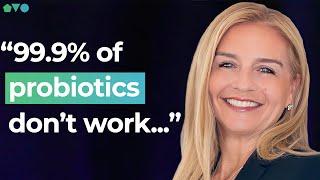
YouTube interview (Josh Trent with Tina Anderson, July 23, 2024) about spore‑based probiotics and gut health. Tina describes licensing spore strains (Dr. Simon Cutting, London University) and founding Just Thrive after investing personal savings. Central claims: most conventional probiotics die before reaching intestines (quoted 99.99%); spore‑based strains survive gastric acid and germinate in the gut; Just Thrive product is shelf‑stable, contains four strains totaling 3 billion CFUs, and has clinical evidence (gastric survivability studies, gut model, and a double‑blind human trial showing reduced LPS/leaky gut markers). They discuss antibiotic overuse (cited CDC claim that 50% of prescriptions are unnecessary), the microbiome’s role in immunity (claim that ~80% of immune system is in the gut lining), connections to mental health via the enteric nervous system, ancestral exposure to soil microbes, and lifestyle actions (nature exposure, reduce antibiotics/pesticides, dietary diversity). Practical guidance offered: 30‑ to 90‑day trial period; spores may be taken long term or intermittently.
Questions this video answers
Licensed from London University (Dr. Simon Cutting).
They state 99.99% die by the time they get to the intestines.
They cite that 50% of antibiotics prescribed are unnecessary (attributed to CDC).
They claim about 80% (or more) of the immune system is found in the gut lining.
In a 30‑day double‑blind trial of college students (100 enrolled; 55% had elevated LPS): the treated group (spore probiotic) had a 42% reduction in LPS toxins after 30 days; the placebo group had a 32% increase.
Chapters
We found this problem that most probiotics weren't surviving the gastric system. If a probiotic needs to be refrigerated in order to stay alive, it means it wouldn't even survive on the store shelf. So how in the world would it ever survive your body temperature, which is 98.6. We've tested this time and time again. 99.99% of them die by the time they get to the intestines.
What people don't know may be actually harming them and it's definitely making them waste money. You and your husband spent your life savings on this mission, on this I for the spore based strains. So the science is really powerful because otherwise you wouldn't have risked at all.
We were able to license these incredible spore based strains from London University. They're called spore based probiotic and they are called that because they have this endospore shell around itself and this spore shell allows it to be a very hardy organism and actually survive the journey from the mouth through the gastric system into the intestines.
There's got to be a repair protocol for the gut when it comes to not just environmental damage, but also damage from overuse of antibiotics.
Even the CDC will admit that 50% of antibiotics that are prescribed are actually unnecessary. If you have a viral infection and you're taking an antibiotic now, you're destroying your gut microbiome, which 80% if not more of your immune system is found in your gut lining.
Is there a way to reverse the the damage? Hey, it's Josh. Before we get into this episode, I have a small yet powerful favor to ask of you. The community has been growing by thousands lately and the bigger the tribe, the bigger names of world class guests we can have on this podcast that I can bring to you from my heart, from my curiosity, so you can have more wellness and wisdom in your life. Would you please be so kind as to hit the subscribe button wherever you're watching, watching or listening to this podcast. It'll allow us to rise naturally in the algorithms based on your 2 second act of generosity by you just tapping that little subscribe button wherever you're viewing or hearing this episode. Thank you so much. It means the world to me and our entire team here at Wellness and Wisdom now. Enjoy the podcast. Tina, welcome back to the podcast. So glad to have you again.
Hi Josh, thanks for having me. So happy to be here.
I'll tell you what, we have so much to talk about.
Last time we interviewed, it was in the middle of Crazyville.
You remember those times, 2020, y' all.
Have come a long way at just thrive. We're going to talk about maybe the most exciting things that somebody could ever know about how their gut works, their enteric nervous system, shelf stability. And by the way, y', all, you're wasting money on supplements. And we're going to talk about that today with Tina. But, Tina, if you were to just pull the E brake, you know, float above your timeline three years ago and then come to now, is there something that sticks out to you that you've been really proud of or most excited about since we interviewed last in relation to just thrive health, gut health, and just human health in general? Is there something that sticks out that you've been mesmerized by or excited by since we interviewed last?
Yeah, I think what I've been most excited about is since 2020 and, you know, since we last interviewed is just how much more empowered people are. I think, you know, we know what happened in 2020. I think so many people are realizing they need to take control of their own health. They can't rely on government, they can't rely on their doctors, and they are just empowering themselves with their health. And I feel like the fact that we've been able to be out there speaking and being on podcasts and getting the message across, we've played a little small part in it. And I am pretty proud of that. And I'm excited about it. I'm so excited to see how people have taken control of their health.
Me too. It's this finicky word, control, because, you know, I'm a very faith based man. I know you're a faith based woman as well. God, creator. There's so many things about mystery when.
It comes to health.
Like you could be super healthy your whole life, Tina, and then all of a sudden get cancer. There's so many things that happen in this world that are completely undeniable, that are mysterious. But here's the cool thing. We can control what we eat, we can control what we drink. And for the most of us, we can start to control the way that we think about ourselves. So I love how you're all about empowerment, because I am, too. You know, it's funny, I didn't even think I was gonna say this, but I'm gonna go for it. Cause it really relates to our conversation about emotional health and gut health, how they're so tied together. My mom is here and I've been taking her to dialysis appointments. And I think about the way that she had neurodegeneration and just dealing with bipolar and just really having compassion for her, but also noticing that my story was, is probably a story for millions and millions and millions of senior citizens that, let's be honest, Tina, it could have been caught earlier.
Like, it really breaks my heart. You know, it could have been caught earlier.
If we knew what we knew now.
About gut health, specifically spore based probiotics and how that can improve the enteric nervous system and the gut brain axis, I really think we could ease the suffering for a lot of people. Do you feel the same way or what's your take on that?
Oh, absolutely. I mean, the studies are so profound, telling us how the microbiome is dictating virtually all aspects of our, our overall health. And you know, for so long we've, you know, identified like, oh, well, I've got a, you know, I've got gas or I have bloating, I have diarrhea or constipation. And those are signs that I have something going on in my gut and our, my microbiome. But what we now know is that every type of disease out there is really related to either a, you know, an imbalance in our gut. So either our microbiome is so protective of every mechanism, every organ system in our body, or it's so toxic to every organ system in our body. And once start to realize that, and I mean, like I said, the science is out there, the research is out there about how our gut is dictating our overall health. And I just, I couldn't agree with you more. I mean, if we are focusing on our gut health, it's going to help resolve so many of our issues of our overall health, from cancer to diabetes to mental health disorders to autoimmune issues, just our overall immune system, all of those conditions are, you know, related to an imbalance of our gut.
Later on in the podcast, we'll, we'll definitely touch on the enteric nervous system, you know, also known as the second brain, and how the axis between our gut and our brain actually works. But I want to go back to maybe something you haven't thought about or talked about in a while. And it was actually part of your motivation, part of your fuel to found just thrive health. And that was your own litigation experience in the pharma industry. And then stack on top of that, one of your relatives was having issues and they were getting prescribed a bunch of things that quite frankly, they probably didn't need. Now look, there's a time and A place for medicine and antibiotics, but I believe it's completely overprescribed. And coming from the litigation background you were in an attorney in the pharmaceutical industry. It's almost like you're having soul redemption. Tina, you're having a soul redemption for what you're doing now because you kind of came from the belly of the beast in a way. What do you think about that?
Yeah, so I was in litigation and when I was in litigation, it was just so unfulfilling. And I was like, this is not great. And I, I was starting to have children. I wanted to be home with my kids more and have more of a work life balance. And so then I went into the pharmaceutical industry and that's where I was do. I wasn't doing as much litigation in there. I was doing more. I, I was managing some litigation, but I was mostly doing a lot of contract work. But I thought this was great. I mean, my husband and I were both in the industry and we were like, the pharmaceutical industry is awesome. Like we're helping people, we're helping deliver life saving medications to people. And this is really cool. And I felt like I was doing my life's work and being in that industry, just seeing the over prescribing of medications where we saw it over and over again, you know, pharmaceutical reps coming into the office saying, oh, this is great. You know, we won this bid for one of the largest hospital systems in the country. And now he would tell us, my job now is to go tell every doctor to lower the number that they would the threshold for them to prescribe the medication. So basically encouraging doctors to prescribe a medication when a patient didn't necessarily need it, but they're just lowering the that number. And, and then like I, like you mentioned, we saw it with our own relatives, you know, we had a relative to who was on one medication for, you know, a stomach issue and then that issue caused joint pain or that medication caused joint pain. And then she was on another medication for the joint pain which caused a skin rash. And it was like before you know it, she was on a half a dozen medications and not getting any better, in fact getting worse. And, and it, it just was like this band aid of symptoms. And, and yes, I agree with you. I mean there is a time pharmaceuticals, of course, like in emergency type situations, you know, you break a bone, you want to go to the hospital and get it fixed, you know, you have an infection of some sort, you want to go get some treatment for it, that it could be a life Threatening infection. There are certainly. There is certainly a time and a place for pharmaceuticals, but it's not a place for chronic conditions. You know, maybe a temp, maybe temporarily. You want to be on a pharmaceutical just to help you figure out what the cause is, but you need to get to the root cause. We want to get to the root cause of an issue and figure out why you have high cholesterol, why you have an autoimmune issue, why you have, you know, whatever it is. And then, you know, you start to chip away at that root cause and fix that root cause. And that's where you start to see health.
It's interesting that you chose the name Just Thrive, because I know as an entrepreneur, and I'm sure you can relate also, you're a mother and a wife and a human with her own spiritual journey and development, and you're running this company. It's so interesting. And I find this to be a through line in our space. Most of us that have a journey of health ourselves, that journey is then challenged by the company we create. And so have you found this to be true? Like, you left pharma because you wanted to spend more time with family and kids, and, you know, you're an entrepreneur now, but then maybe you even spend more time working than you did when you're in pharma. Is that true?
Oh, my gosh. You hit the nail on the head with that, Josh. I mean, you are describing exactly, I think most entrepreneurs in our space because I was so passionate about, like, bringing these products to people and helping people empower themselves. And then what I found is, like, I was just, you know, I mean, I had three kids. I mean, I have three kids. But at the time, middle school, high school, three sport, all three of my kids are college athletes. All of them played three sports for four years in high school. I wouldn't miss a game. I wouldn't compromise my very healthy, wonderful marriage. I wouldn't compromise my family life, and I wouldn't compromise our business. And so what I did is compromise my own, you know, self. You know, it was. It was bad. I mean, it did get bad. And I. I was waking up at 4am and working and then staying working at my son's baseball games, bringing my laptop. Even to this day, you know, I go to my son's college basketball games, and I'm working in the car while my husband's driving, and it's pretty crazy. But, you know, I did wake up and smell the coffee, which is good. So I definitely woke up and realized you can't do that. And here I am trying to send this message of health and destroy my own in the process.
That's really honest because I don't think everyone knows what it's like to really move a mission forward, and especially a mission like yours where you're reaching so many hundreds of thousands. I mean, it's hundreds of thousands of people for sure that are being impacted, if not millions. I mean, do you know how wide your net of just thrive health has been casted at this point?
Yeah, you know what? We've been trying to measure that. I think we're pretty close to a million. So, yeah, we are, we, we're really trying to measure. It's so hard because, you know, people are buying from all different sources. But yeah, I mean, we are. We've really made an impact. It's really exciting.
Yeah. I remember back in the day, do you remember Jack lalanne, the fitness guru, the grand grandfather of fitness? That name, Jack lalanne.
I don't.
All right, well, he said something really beautiful that I think is going to relate to all of us. He said, you know, when everything in life is sales, if you love something, you sell it. And I think that selling things, especially in our world, has a bit of a shadow from the unconscious mind of perception. But for the rest of us, we're buying products all day long, right? People are going Amazon and they're buying stuff online. And really it's just, let's all take a breath, let's pull way back and think, what is our intention with buying supplements in the first place? Right? It's to build this scaffolding of health around us so we can come back to center which physiology states as homeostasis. And what's interesting about your technology that I want to now get into, because I've been taking it for over a year, actually two years since we met. I took a little break, I went back to it and it's, you know, I just love it. I literally love the fact that I don't have to put this stuff in the refrigerator. Let's talk, let's talk about this. Because you spent your life savings, you and your husband spent your life savings on this mission, on this IP for the spore based strains. Talk about that a little bit. And then let's get into what spore based really is.
Yeah. So we were looking to do something, my husband and I were looking to do something in the natural health space because that was the way we lived our lives already with our three children. And we're always we always gravitated towards that. And so we, we looked into a few different options and then we started to research a lot about the gut microbiome. And this was shortly after the Human Microbiome project was launched by the National Institutes of Health. Told us more about the gut than we ever knew before. And we wanted to do something in the gut health space. But we found this problem that most probiotics weren't surviving the gastric system. And so through being at the right place, through my husband's naturopathic physician and a research microbiologist, we were able to license these incredible spore based strains from London University, from Dr. Simon Cutting. And these strains are, they're called spore based probiotic. And they are called that because they have this endospore shell around itself. So it's not a mushroom spore, but it has this endospore shell around itself. And this spore spore shell allows it to be a very hardy organism and actually survive the journey from the mouth through the gastric system into the intestines. And so we were, we did it, we just took our life savings and we purchased the exclusive rights to these strains out of London University. We came to the market as complete disruptors. Nobody had had a spore based probiotic on the market. It was totally new technology. Nobody knew anything about it. I don't want to say new technology because it's not really new technology. It's a completely different category of probiotics and really a true probiotic, because just to be defined as a probiotic, it needs to be a live microorganism that confers a benefit onto the host, which of course is the body. The overwhelming majority of probiotics on the market don't even meet the first part of that definition, which arriving alive in the intestines, they are not surviving that journey from the mouth, through the gastric system, the stomach, into the intestines. The majority of them are dying. 99.99% of them die by the time they get to the intestines. So and when we went to health food stores or we started our journey not direct to consumer online, but to health food stores. And these health food store owners are very knowledgeable, they're very, very educated, they research and they would, time and time again they would say, you know, it never made sense to me that a probiotic needed to be in the refrigerator. It never made sense like what you're telling me makes. And it's not that they have to believe me. They, we had the research on it we had the double blind human clinical trials on these strains. So the probiotic myth is one of the favorite, my favorite ones I love to talk about. You know, if a probiotic needs to be refrigerated in order to stay alive, think about it like it means it would not. It wouldn't even survive on the store shelf. So how in the world would it ever survive your body temperature, which is 98.6, and that in and of itself, you know, it just doesn't. They don't. We've tested this time and time again. So the overwhelming majority of probiotics would probably be dead just by your body temperature, but much less when it hits your stomach. Your stomach is meant to be the gastric barrier. It's very acidic. The overwhelming majority of probiotics on the market are dying by the time they hit the intestines because that gastric system, the stomach acid is killing it. And so we're basically getting dead bacteria. And we could call that response mod, metabolic response modifiers, but they're not probiotics. They may provide some, you know, symptomatic relief, but they're not really making a true change in the microbiome.
Okay, on the screen right now is exactly what Tina is talking about. There's HCl, hydrochloric acid. Acid, right. So it has to get through acid. If it has to be refrigerated, odds are, y', all it ain't gonna survive. It's just not gonna work. And it must have been. So you had to do a trust fall. I mean, you found the IP and the science from London University and you and your husband had a, you know, come to God moment where you said, we're going to risk this, we're going to go spend our life savings because we believe in this so much. How did that work out?
How did it work? How did we make that decision? Or how did.
Yeah, how did you come to God? How did you say, here's our life savings, we're going to throw it into this mission? What did that feel like? How did that work out as a story?
Oh, my God, it was so scary. And, you know, my parents are entrepreneurs, so that helped a little bit just knowing that they did it and they failed and then they got back up and they did it again. And, you know, I think that's, I think just having people around you that have gone through it. But I remember we were contemplating going, you know, back and forth, should we do it, should we not? And we were actually going to Europe that summer. We were going to Italy. And we were with our kids, our three kids, on the island of Capri just for a day trip and having the most amazing day, you know, like one of the top 10 days of my life with my kids. You know, we're in on the island of Capri and who do we run into? I have goosebumps telling the story, Dr. Oz. And I'm like, oh my God, like, what are the chances? I'm gonna. Because we had my husband, I should have backed up my husband. And I said, you know, we are going to decide whether we do this on this trip. Like by the time we come back, we're gonna like listen to signs and, or, you know, look at signs and see, you know, if this is the right thing to do. And while we were at the island, in the island of Capri, we run into Dr. Oz and we actually approached him and he was very nice, very, very kind. And I'm like, I'm so sorry to bother you. But, you know, I told him what we were doing. He. And he just, you know, he didn't know anything about spore based probiotics at the time, but he was like, you know, gut health is so critical right now. What a great mission you're on. And he was super encouraging and all that. So we just, at that moment we made the decision. We are, we are moving forward with this. If it was a pretty good sign.
That'S a serious breadcrumb from God right there. Meeting Dr. Oz on a vacation.
Yeah, I agree.
Come on.
Yes, I agree.
Oh, my gosh. Okay, let's get into the science because, you know, I love science and I love spirit. I think that, you know, like Dispenza says, unless you attach emotion to a thought or to an intention, it really doesn't make sense. And it really never comes to much. So the emotion behind what you're doing is pretty clear. I mean, you believe in this so much, you were willing to risk everything and then you got this huge sign, this huge guidepost. So the science is really powerful because otherwise you wouldn't have risked at all.
The survival, the stability of the spore based probiotics. This is probably the most important thing. And you already talked about it a little bit. But can you go deeper into this.
Concept of dead on arrival? Because it fascinates me that when I go into sprouts here in Austin, there's probably like 50ft of refrigerated supplements and what people don't know may be actually harming them and it's definitely making them waste money.
Talk about that a little bit more.
I think this is one of the.
Biggest points about spore based.
Yeah, well, I think the whole concept of refrigeration just stem from good intentions that we know a probiotic needs to be a live microorganism. The part that we forgot or, you know, people around us forgot is that when you have it needs to be alive in the intestines, it doesn't need to be alive in the refrigerator, it needs to be alive in the intestines. And the interesting thing about the spores is when you buy our product, it is not a live microorganism. These spores are actually dormant in the bottle. It's not until they hit your intestines that they take their shell off and that's when they go live vegetative cell state. And I think even backing up further is our ancestors used to get these spores every day off the land. These, you know, our soil was teeming with this very good bacteria. These spore based probiotics were, or spore based strains were actually in the soil. So our ancestors used to eat off the land. They would eat roots and tubers off the land and they would get these microorganisms from the, from the soil. We just don't have that anymore in our soil. I mean, we don't. Obviously our soil is so deplete of nutrients, so deplete of all these important microorgan organisms. And, and so it's just important to know when they were in the soil they were actually dormant. And it's not till our ancestors used or we used to eat them that they would become alive. They wouldn't become alive until they hit the intestines. These are very intelligent microorganisms. Bacteria are very intelligent organisms and they know they hit the intestines and that's when their shell comes off and that's when they go into their live vegetative cell state. And the whole concept of a probiotic, you know, we never got Lactobacillus and Bifidobacterium strains through our environment through evolution. So Lactobacillus and Bifidobacterium strains are the majority of strains we're going to find on the market. You know, if you go to the refrigerator section, that's what you're going to see. We purposely did not use those strains because the only time we were inoculated with our this Lactobacillus and Bifidobacterium strains is through vaginal childbirth and close skin to skin contact and breastfeeding. We did not get Lactobacillus, bacillus, and Bifidobacterium from our environment and our soil. So, I mean, a lot of times I just like to go back to evolution and the way we evolved. And it's just, it's nature's best way to take care of our microbiome is getting those same strains that were found in our soil and that our ancestors evolved consuming on a regular basis. I mean, if you go to a tribe in Tanzania, you aren't going to see, you know, people with ulcerative colitis, allergies, autoimmune issues. They are eating off the land, and they are getting these really, really critical microorganisms from the soil.
You probably aren't going to see Purell hand sanitizer in those tribes either. It's probably not going to exist.
No, you are not.
Yeah, my, my daughter's got it on lock here, what you're talking about. She actually eats dirt. Like, she'll be, we have three acres and she'll put dirt in her mouth and chew it. And I'm like, hold on, what are you doing? And then part of me is like, Part of me is like, oh, that's actually kind of good for her. I mean, as long as there's no pesticides, which we've been scraping and making sure that we don't use any pesticides.
Right?
Yeah, this, this, this phrase, dirt don't hurt is so big for parents, and so many of our audience members are comprised of moms and women, you know, people that care for children. And I think about the ways in which you've already talked about so brilliantly that we get to return to nature. I mean, in Japan, doctors actually prescribe nature and forest bathing. It's called shinrin yoku, and they prescribe it to their patients. So what does that tell you if.
A medical doctor in Japan is prescribing nature Time, where we get these spores from the dirt. My daughter's eating dirt. There's some truth to this that we, we don't always need. I understand we need science. I understand we need proof. But also, there's just a general way of living that I believe we're returning to. And I think that's really what these spores afford us, is a return to nature in a way that, let's be honest, if you're living in a concrete jungle, maybe you can't go play out in the dirt. Well, you can get the good parts of the dirt through the spores. Have you had any people that are living in these concrete jungles? Right in and say, wow, I actually, I feel better. They're not playing in the dirt. They're not going out there in the playground. Like maybe some people are afforded to in they can do.
But have you had a few stories.
Come in or maybe one that touches your heart the most where it's like, okay, my child has been taking the spores, My young adult has been taking the spores, I've been taking the spores. And I notice something different. I mean, there's got to be so many, but is there one that pops up?
Oh, gosh, there are so many. I have like handwritten notes from people that have just took. Taken the time to write out their story and what they, they've experienced. And obviously they write in on our, you know, in our website and it, it's been amazing. One that pops out probably. And you're right. When it deals with children, when, when we're helping a child, that is what just feeds me. I, I can't tell you what it does for me as a mother of three myself, but my. We have one customer whose child is on the autism spectrum. And obviously kids who are on the autism spectrum have quite a, a bit of gut dysbiosis. They have a lot of bowel issues, have trouble going to the bathroom. And this mom would call me constantly giving me updates, but she actually, even so, he started having improvements in his bowel movements. He started sleeping better because when you start getting rid of those toxins, when you start going to the bathroom regular, when you start absorbing nutrients better, you have more energy, you're sleeping better. And that's exactly what he started experiencing. I, I mean, just overall, the improvements he has had in his life have been incredible. No, I, we. I'm not saying he is no longer on the autism spectrum. I'm not saying that. But certainly he has made vast and drastic improvements on other, you know, his ball movements, his gastrointestinal issues, all of his sleep and energy. Mood. The mood was probably the most important that she, you know, really tried to communicate to me. So I have several voicemails that I will not delete from my phone because they just, just they're so impactful. But yes, I could go on and on forever with the stories that people have had.
So someone actually hand wrote a letter?
Oh, yeah, it was an older woman. She hand wrote a letter to us. I have it, I probably have it right here, actually. I save, I mean, I save everything because it's what feeds you. You know, when those days that we talked about when I was so stressed out it's like, it's what feeds you to keep doing what you're doing and. But yeah, hand wrote. I, we've had several handwritten notes.
I mean, that's touching because my handwriting is like chicken scratch and I, I basically type and I write emails and I do dictation. For somebody to sit down and write a letter, that's really special. And I think about, you know, as I mentioned earlier, my mom's here on a trip. I've been taking her to dialysis appointments. And there's this reactive health model that I think we're all in here in America and North America and really many parts of the world. And then there's this responsible or responsive health model where if you can, let's be honest, if you can get a.
Child'S microbiome really healthy, that's setting them up for a lifetime of a stronger immune system. Literally a lifetime. We're going to link in the show notes some science about the immune system and these spore based probiotics. It's actually an image on the screen right now. And the science that I'm linking in our show notes today is the immune modulation can help maintain a healthy environment in the gut, which is beneficial for the ENS or the enteric nervous system. And we're talking specifically about these spore based probiotics. There's something really special about this because the enteric nervous system literally and in our gut is, is a direct connection to our brain. I mean, we think about all the roots in the trees that are in a forest. That's essentially what the ENS is inside of us. There's literally billions. It's, it's crazy to even conceptualize how.
Many nerve endings there are, are in the ENS and how those dovetail with the autonomic nervous system and how that regulates our entire homeostasis. I think most of us are in an allostatic load, AKA stress load, probably the most we've ever been. You know, when we think about EMF and pollution and the, the low quality of our dirt, even when my daughter is putting it in her mouth, it's like it doesn't really have maybe the spores that it used to have. What do you make of this, the connection between the enteric nervous system, that second brain, and the way that our primary brain actually functions? How do you understand that? What's your language around that so people can understand?
Well, my language is just that they are so connected. I mean, the vagus nerve connects from the brain stem down to our intestines. And they are both sending. The brain is sending signals to the gut and the gut is sending signals to the brain. And they are so interconnected. I mean, you see, we see this all the time, just starting with the probiotic alone. We see people will write in and say, oh my gosh, you know, I'm like in a better mood and I'm calmer and, and it's. Yes. I mean, 90% of our serotonin is produced in our gut, not in our brain. Like we've been, you know, told all these years. It's really 90 of our. All these neurotransmitters are being produced in our gut. So 90% of our serotonin is produced in our gut. Gaba is produced in our gut, which is our calming hormone. Dopamine is produced in our gut. So there is a clinical total connection between the gut and the brain. And the brain, if they're, if you're stressed out and you're constantly in that fight or flight response, it's sending signals down to your stomach. And, and we know this like, you know, when you're excited about something, what happens? You get butterflies in your stomach or let's say you're nervous about something, you know, you have to go to the bathroom or your stomach, or you're super scared or you're nervous or you're stressed, your stomach, you start having stomach issues. That is because there is this communication constantly going on between your gut and your brain and your brain and your gut and you. We cannot discount that.
There's a second piece of this study that I absolutely love, and I'm sure you've heard this before, but just bear with me here. And this is exactly what you talked about with neurotransmitters. So in this research, it said spore based probiotics have the ability to produce neurotransmitters such as serotonin and dopamine directly in the gut. These neurotransmitters are involved in regulating mood, emotions and gut motility, which are all directly influenced by the ens. I find it really fascinating that most of the western mind around illness and disease, especially neurodegeneration, you know, things like Alzheimer's and even bipolar, which my mom has been suffering with for decades.
If people take these earlier, it's like.
That phrase, the best time to plant.
A tree was yesterday. The second best time is today. Y' all need to do this. It's on the screen right now. Joshtrent.com Just thrive. Go there right now and look while you're Listening or watching this podcast and look at some of the research on the Just Thrive site as well. When we look at neurotransmitters, so much of the serotonin and dopamine being produced in the gut, is there any ambiguity at all in the scientific community about how directly impacted the brain is by the gut? You really can't ignore this anymore. I mean, the evidence is just overwhelming at this point.
Yeah, and you bring up a good point about starting early. I mean, you see, like our kids, when I was a child, I knew one classmate that had a peanut allergy from kindergarten all the way through the end of high school. And I went to a very large high school school. Now, of course we know that you can't go, you know, there's peanut free tables at schools. You can't go to a restaurant without asking if there's allergies that we have to deal with. I mean, our kids are literally have been born in this toxic world. I mean, we are more so than ever before with the introduction of pesticides and glyphosate all over, sprayed all over our produce. I mean, this, this whole thing about being clean and sterile and kids being born into this sterile environment and getting rid of the bacteria. Bacteria is our friend. We have to remember that bacteria is our friend. Less than 1% of bacteria is actually harmful. The overwhelming majority of bacteria is so beneficial, if not critical for our overall health. And, and I see this with kids so much now. I mean, kids are being born and they are, they all, I feel like, have some type of issue, like an autoimmune issue. They have allergies, they have, you know, autoimmune issues, autism. I mean, the autism is off the charts right now. And so we really need to start young and planting those trees right now. Right now we need to be planting those trees and fixing our kids microbiomes because they are, they have been exposed to these pesticides so much more, so much earlier than I know I was exposed to them. And we have to be taking care of them.
Have you seen the apeal coatings on fruit with Bill Gates and the movie stars? They all partnered up and they bought, I believe they bought Bragg's apple cider vinegar, which, you know, that crushes my heart because that used to be a staple for my family. I mean, I can't believe now it's not even organic. It's like, like modified, genetically modified. But this apeal, this apeel is interesting because it's actually fractionized from seed oils and we all know how much seed Oils can destroy the gut. Have you heard about this?
I haven't. I mean, I've heard about it, but I haven't. I can't. I don't know that I could speak much to it, but yes, I, I, I've heard of it, but don't know much about it.
This is one of the loads that you're talking about, though, if, you know, unconscious, which is none, none of our audience. We're all conscious. That's why we're here empowering ourselves.
Ourselves.
But if you're not careful, you could be duped by special marketing.
Special marketing. Tina, you go into the grocery store.
There's a picture of a cow on.
A package, and it says natural, which doesn't mean anything. That means absolutely nothing. Same thing with fruit or vegetables when they have this coating on them that's fractionized by Bill Gates and movie stars that actually coats our food so it lasts longer, but it's coated with seed oils that destroy your gut. Case in point.
Point.
I think about all the ways that, you know, maybe if you pull the E brake.
Fifty years ago, our parents and definitely our grandparents, they didn't have to contest with the certain things that, that children and even adults have to contest with now. Is there a way to reverse the damage? This is not medical advice, but, like, there's got to be a repair protocol for the gut when it comes to not just environmental damage, but also damage from overuse of antibiotics. What does that look like?
Like, that is a great question, Josh, because we know that we can't escape it in the world we live in. I mean, we are born in, you know, sterile environment. We are, Our guts are being attacked on a daily basis from antibiotics, from the pesticides, the, you know, glyphosate. We know this. I mean, the household cleaning products. You know, there was a study that said households that use cleaning products that says kills 99.99% of the bacteria actually has a higher kids with a higher incidence of allergies and autoimmune issues. So doesn't surprise you?
Me?
Yeah. No, not at all. And I mean, we, we, we cannot get around it. Our guts are being attacked on a daily basis. There are so many offenders out there. But there is good news. We can heal our guts. I mean, there are things we could do to help that process by trying to minimize your exposure to antibiotics. You know, it's not just. I always say antibiotics save lives. And I don't dispute that there are times and a place that we all need that. But even the CDC will admit that 50% of antibiotics that are prescribed are actually unnecessary. And a lot of that isn't due in large part because physicians are just writing the prescriptions, but a lot of it is also due in large part because people beg for them. You know, I'm going on a trip, I'm going out of the country. I want an antibiotic. I just want to. And really we know that that actually can make a problem worse because if you have a virus and viral infection and you're taking an antibiotic now, you're destroying your gut microbiome, which, which 80%, if not more of your immune system is found in your gut lining. So, you know, we want to make sure we're reducing our exposure to antibiotics. Antibiotics are also found in our food supply and our animal products, reducing our exposure to pesticides by trying to eat as clean as possible, as organic as possible. And I know your audience already knows this, but I think it's worth mentioning that these are things, these, these glyphosates are destroying our gut microbiome. I also think doing things like meditation are very important to helping you with your microbiome. And for many years people thought that was so crazy that I would say that. But we already just talked about the gut brain access. When you are calming your mind, you are sending those signals down to your brain. So we, you know, you need to be calming your mind, taking nature, what walks in nature, exposing yourself to nature, exposing yourself to the microorganisms that are in nature, or is that those types of things are really important? I also think eating a very diverse, diverse group of foods is really important. You know, we are so conditioned to be eating the same type of foods. Our ancestors used to eat 500 to 600 different types of foods in a year. And we're eating like 15 to 20 different types of foods in a year. So really trying to expose yourself to different types of foods, just being prescriptive about it, you know, going to the grocery store and trying a vegetable that you haven't tried or a fruit that you haven't tried, and just exposing yourself to different types of food, foods, those are all things that are really important to help that healing process in your gut. And then, and of course, taking a spore based probiotic is probably one of the biggest needle movers in supporting your gut health. We know that the spores, we have double blind human clinical trial on leaky gut, that these spores are actually helping sealing up that gut lining and stopping that seepage of toxins from our gut gut going into our bloodstream. So I, you know, I, I cannot, you know, overstate enough the importance of spores in that journey of supporting your microbiome.
It's almost like, and you know, I'm not a scientist, nor do I have a microscope, but if I did, I could probably go deep into those little tight junctions and I could see where these holes happen from the seed oils, from glyphosate, from so many things that we've talked about so much in this podcast over almost a decade now now. And I think about the way that the damage happens in the damage is the solution for the repair itself. So if we know what the damage is, then we can just simply get supplementation and scaffolding to slowly repair. And I want to get your take on this because this is something that I think we have a proclivity as human beings to go for like quick fixes where we just want to like get the pill and get the thing. And you know, it's, it's to be said like, I'm, I'm very busy. I know you are. We have full lives and most of us that are taking time to watch a podcast, podcast, it's a treat. It's like time where we get to invest in ourselves, in our own knowledge. There is a way to turn the vehicle around from disease and, and these tears in the tight junctions to over time having grace for yourself and know that this is going to take months.
Or maybe years to repair.
It's not going to happen just after you take the spore based for a week. Can you talk about that?
Because the repair process isn't something that happens overnight, right?
Oh, absolutely. You know, the, the study that we did on leaky gut was a 30 day study. And what it, this is really an interesting statistic that came out of that study. So they basically took 100 college students, this is University of North Texas did this study. They took 100 college students and they gave them. They found out that out of those 155% of them had a leaky gut and didn't know it. And the way they measured this, why they were measuring the LPS toxins, which is lipopolysaccharides, the toxins that are in your gut, in your gut, they're not really problematic. It's when they hit your, they seep out of your gut lining and they go into your bloodstream. That's when they start to become very problematic. Of those hundred healthy college students who were not at any pharmaceuticals, no medication, nothing, no symptoms, they were healthy, 55% of them had a leaky gut and didn't know it. So they took the 55% of those college students, they divided them in half, and one was sent home for 30 days with a placebo, one was sent home with the spore based strains. And they had no dietary lifestyle modifications, which we all know what college students do to their microbiomes on a regular.
Beer and pizza. Beer and pizza, y'. All.
Exactly. And they came back after 30 days. They tested that, they gave them a challenge meal. They found that the treated group, so the group that got the spores, saw a 42% reduction in LPS toxins. So that meant after 30 days, days, just 30 days, they saw 42% reduction in those toxins from seeping into the bloodstream, which is telling us that these are, these tight junctions are now getting sealed up. And you're right, just like you said, it's not an overnight process. It takes a while. But here's the scary part. The placebo group that had, you know, nothing, they just had a placebo, they actually saw a 32% increase in LPS toxins seeping into their bloodstream. So what that tells us is it's like this drippy phosphorus faucet. You know, when you have a leaky gut, you don't have a problem for a while. You know, just like when you have a drippy faucet, there's no overflowing of the bathtub. But one day, all of a sudden, you know, somebody starts getting, has having an autoimmune issue. Somebody starts having, you know, whatever, you know, anxiety, depression, whatever it might be. And they think, oh my God, all of a sudden I have this allergy. Well, no, it's actually been brewing for a while and, and so a lot of times we don't know this and we're, our gut is being attacked and those tight junctions are getting worse and worse on a regular basis. And so it is so important to be, you know, focusing on this is a long, this is a journey that you need to be focusing long term to be taking care of your gut microbiome because you don't want those toxins seeping into your bloodstream. Even food particles, when you have a leaky gut will seep into your bloodstream. And that's when those particles, food particles, they don't belong in your bloodstream stream, they don't belong in your circulatory system. These LPS toxins do not belong in your circulatory system. And when your body sees that, it starts an attack and you have this chronic inflammation. And this is the root cause of all disease, this chronic inflammation that so much of it is caused by these LPS toxins that are seeping into the bloodstream.
And the body's just doing what it does to protect you. It's not like, you know, these inflammatory markers rising are a bad thing. It's actually the body trying to heal itself. So when there's the cytokine storm and when there's inflammation, it's kind of like. Here's a good analogy. When we sprain our ankle, it swells up, right? That's actually a good thing. That's the body responding to the injury. Well, those injuries happen on the inside of us as well. And I, and I go back to what I talked about in the very beginning. If we knew what we knew now about gut health 20, 30, 40 years ago, how much suffering, suffering could have been assuaged by just spore based probiotics. It's so wild to think about. So now, you know, y', all, you can't unknow this, right? Like, once, you know, you can't go back on what you know. What do you think we missed when we talk about moms and families? We talked about my daughter. You know, she eats dirt. And you're a mom. And a lot of these moms, my heart goes out to them because they want to do so good for their children.
And I see it with Carrie Michelle.
I mean, we're very, we're always researching. You should look in our pantry country, Tina. On the fourth shelf, there's a bunch of just thrive. There's all kinds of stuff around that, right?
We build a true support system for not just our health of the gut.
But our children's health as well.
Moms, it seems, are targeted by companies that don't really always have good intent. Have you seen some of the malevolent advertising and kind of misnomers that are being spread about gut health and supplementation? How do moms protect themselves from marketing companies that are just trying to make a buck off of them?
Yeah, well, I think moms, unfortunately. I mean, gosh, as a mother, I know all I wanted to do for my children was make them healthy. I mean, what better gift can you give your kids than to make them healthy? And I think, you know, they are. I would always listen to the doctor, you know, you always listen to the doctor because they know best. And I'm old enough to like, remember Marcus Welby and like, you know, the doctor knows best. And that's the way you, you Just always listen to the doctor. And I mean, I can't believe that in this day and age there's still so many people that are just still listening. So what's the word I'm looking for? Just so they're just listening to every single word. They're so non.
They're being obedient. Good children, right?
Exactly.
They're just being obedient without question.
Yes. And I think, you know, doctors are not horrible people. They're very well intentioned. I just think they are being educated by big pharma. I mean, most medical schools are getting significant funding from big pharma. So they are being taught the pharmaceutical way, obviously. And, and this is what doctors learn. And I don't. This is what they believe. It's not just this is what they learn and this is what they believe and this is what they're telling their, their, you know, patients. And I think that that's where we're running into problems in this country. I think this is where moms have problems. And I think you're right, Mark. You know, we're, we're being told, told, give your kids yogurt because it's good for your microbiome. And you know, I think yogurt is, you know, if you have yogurt that's clean and no sugar, I think that's great. But we all know so many yogurts that your kids are going to eat are loaded with sugar and that's actually making the problem worse in your gut. So we know sugar is one of the biggest offenders to our gut health. And yet we're telling people to have yogurt, which most of the yogurt is going to. Most of the bacteria that's in yogurt will die the same way that that probiotics with made up of lactobacillus and bifidobacterium will die. So I think the yogurt is one piece where I think moms, you know, get misinformation from advertisers and then just doctors. I'm not saying not to ever listen to a doctor. I'm not saying. I always feel like we have to go in with more critical mind.
Yeah. But the critical mind can only be sharpened by learning through life experience. So let's say that a mom has, and my heart goes out to a mom like this because I know I'm speaking to you right now. Maybe your kids have had gut issues forever and you haven't figured it out. And they're doing rounds and rounds and rounds of antibiotics I'm a case for that. I mean, I literally. Tina, I probably did every single antibiotic in my first 10 years of life that was on the market. I have had three sinus surgeries, chronic sinusitis, gut problems. I'll never forget. I'd be in the. The school, and I'd be in the bathroom, and my stomach would be hurting so much because I had cereal with milk, you know, dead pasteurized milk, and. And dead. Basically sawdust, Cheerios, and bless my mom's.
Heart, like, she didn't know.
Right. So it's not to shame parents. It's not to make people wrong for.
Giving their kids what they think. Maybe even, like the yogurts and whatnot. But, gosh, there's so much proof in the pudding of how your child is behaving, how their. How their stool looks. Looks.
Yeah.
How.
How their mood is. All these things are a report card that we don't necessarily need to go to a doctor for.
Right.
Is there a trial and error period?
I'm sure this has come up a.
Lot in forms with your company where.
Moms are really struggling with their kids, and they just want to know what is the truth. I think the truth is actually a return to nature. Have these conversations started to surface more and more for you about moms who are struggling with their kids Gut health?
Oh, my gosh, it's almost amazing how many customers we have calling into our customer service team about their dealing with their children's issues. I mean, it is an epidemic of what we're seeing. And we're seeing this rise in, you know, anxiety with children, gut issues with children. They're not going to the bathroom regularly. And we. I. I would love to actually look into this to see how many customers call in for themselves versus their children. Normally, they're generally. It's the same. I mean, it's like your mother. The mother passes on their microbiome to their child. That is. I mentioned that earlier, that is when you are inoculated with your microbiome is through vaginal childbirth. So when you are pregnant. My daughter's pregnant now. I'm like, you better not miss a day of your probiotic because you. That is the best gift you could give to your child is a healthy microbiome, and it is the mom that is dictating that. So, yeah, I cannot. I cannot emphasize that enough to just really, as a pregnant mom. And, you know, C sections are at, you know, high, the highest levels ever. I mean, C sections are sometimes necessary for the safety of the child. And the safety of the mother. And I fully respect that and understand that and grateful for the fact that we're able to have that technology out there, you know, to save a mother and a child's life. But we know there's just scheduled ones for convenience and all of that. So, yeah, we just. We want to do everything in our power that's safe to do a vaginal childbirth if you want to help your child's microbiome, which is, of course, dictating all of their health.
You know what? I've actually heard from a few doctors that I've interviewed, and I'll make sure that we link this in the show notes. If you are a mom and you happen to, you know, for the safety of yourself and the child, you have to have a C section. You can still inoculate the baby because you can do a vaginal swab and you can put, you know, in. In the nasal and in the mouth. You can still inoculate the child, the baby, with the mother's microbiome. It's not because just like you have had a C section that all of a sudden, you know, that child is cut out from being inoculated. There is ways to do it. It's not a sentence for life. You literally just take some of the vaginal secretions and you place them into the orifice of the nose and the mouth of the child. And so I'll make sure I link that. Have you heard of that as well?
Oh, absolutely. Yeah. I always tell people that. Yeah. To do that.
And also through the breast milk. I mean, we had so many episodes talking about this, and it's near dear to my heart because I. I'm a. I'm a parent. Our. Our second child, Naya, was born naturally at 9,000ft in Golden, Colorado, which was incredible in, like a. And like a water pool with these two mystical doulas and midwives. But Nova, my son, he unfortunately was born C section. And I don't wish that upon anyone, you know, to be going through the nicu. And it's just so traumatic that what parents go through, and I've lived that myself. But the bright side of this is that there's an answer. There's healing in the problem. Encapsulated in the problem problem or in the trauma, is the healing itself. It's this return to nature. And I've talked about this so much, and I know you talk about it all the time. It seems so simple for us to return to nature. Are there a handful of other ways that let's say that a child was born cesarean, or let's say that just families want to get back to the wisdom of nature. We talked about Shinrin Yoku and forest bathing and maybe even just like not washing your hands sometimes and not using the Purell sanitizer. Yeah. You know, in all your research with these tribes and so many papers that I'm sure you've gone through, what are other ways that we can get closer to nature herself?
Yeah, I mean, I think definitely just taking like the walks in nature, really trying to like being in the ocean. If you're lucky enough to live near an ocean, you get so many different micro microorganisms. You're exposed to so many different microorganisms living near an ocean and, and actually going into the ocean and just using those times. It's funny, you talked about how Japan, they go out in nature as a prescription. My husband and I were out in Europe. We were in Serbia at the time, meeting with someone in the business space and we had a meeting and the actual guy said, well, I have to cancel because my daughter is sick and we have to go go to the sea. My doctor prescribed going to the sea to get healthy. And so I'm like, what? That was. This was many years ago. And I'm like, that's the craziest thing I've ever heard of. Like, he just wanted to cancel the meeting. And now I'm like, oh, my God, now it totally makes sense. So just exposing yourself to nature is really, really important. And you know, gosh, if we were all lucky enough to live in some of those tribes, we would be exposed to those organisms. But, yeah, unfortunately, we're just not getting that in our soil now. Now.
Wow, that is a crazy. So you were triggered and you're like, why'd you cancel the meeting? But then now you know it was actually for the daughter's good.
Yes, yes, exactly. It was so funny.
It's a byproduct of our society. I wonder how you feel about this. The over sanitization, the homogenization, the pasteurization, the quote, clean and safe, everything. Even what's come out lately with Fauci saying, oh, I made up the six foot rule.
Have you seen this? I mean, there's.
There's just so much, much that, you.
Know, the road to hell is paved with good intentions.
I don't think that Bill Gates and Fauci and all these people at the nih, I don't think in their hearts they're evil.
I don't think they're evil people.
I just think that they were put in situations where they maybe did the best they could, and now they're actually called to be honest about what true health is and how we can be healthy as a human species. But there's so much. What we're fighting against, Tina, is there's so much, much financial interest out there that once we find out the science, quote, quote, and I say science in air quotes, because science has become a new religion. There's so much money that's poured into all of these studies and all of these pharmaceuticals, and just there's so much weight stacked against us. Do you ever feel that weight in your world? Because you're really going against the grain. If people are going to just thrive, they have to be willing to let go of certain beliefs, beliefs that they believed were true, that just simply were not true.
Yeah, yeah, no. I do feel that the. A lot of things are stacked against us, but I was just talking to my mom about this yesterday. It's like, we're so grateful for the podcast like yours. I mean, this is how we're being educating. That's how we're educating ourselves, is listening to podcasts, listening to critical thinkers, and just applying our own common sense. You know, I'm not suggesting that everybody believe you and I, this conversation we're having, having, but maybe it, like, sparked a light bulb. You know, maybe a light bulb went off in their head and they thought, you know what? That makes a lot of sense to me. And I think that's where we're just forgetting in these conversations is just applying common sense and. And seeing what works for you and what makes the most sense and things like, you know, shutting down the beaches. It's like when I just told the story about how a doctor sent a child to the sea to feel better, and yet we're not allowed to expose ourselves during a time when we have. Have. We're, you know, we're trying to fight this virus that we're, you know, that's being exposed. We're all being exposed to. It's like we just have to apply common. Common sense to things. And I don't ever expect someone to listen to us and say, oh, this is absolutely right.
Yeah.
But I will tell you that, you know, yeah, we've done the research. We've seen the stories, but try, you know, you try things for yourself and see if it makes sense.
Yeah. I've never once sat here and said, you need to believe what I'm saying, or you need to think how I think. It's about just giving people a different perspective. Perspective. And I think, you know, like when you go on a hike, right, you climb up to a plateau and oh my gosh, you can see the shoreline. You can see things from a different perspective. But until you do the work to climb up to that new barrier, to that new threshold, you know, the, the analogy is hiking. It's so hard to see it is what I'm saying, when you're so close to what you're being told, that comes from good intention but is actually harmful. When it comes to gut health and just medical health and human health in general. General, it's so challenging unless you do the work to see things from a higher perspective.
Yeah, no, it is. I'm, I'm. And I see this with so many different, like, products out there and so many different messages out there where, you know, so many of these companies are just backed by venture money. They're backed by all of these investors and they've got, they have to meet goals and they'll, they'll do whatever they need to do. They'll be not compliant with the fda. I mean, they'll do anything just to get the sales up for short term game. And I think that's one of the things, things that we're so proud of is that we are bootstrapped. My husband and I, like you said, we took our life savings and we put it into this company. We've never had to answer to anyone but ourselves and to God and to doing the right thing. And that's been really important to us. It's why we, I feel we treat our company so well and our, our team because this is, it's just, it's so fun. It's just fun doing the right thing and not having to answer to anyone. And, and you see these companies, you see them on Instagram, you see them all over the, they're just blowing up really fast and, and then they'll go down just as quickly as they went up because they're just, they're backed by, you know, millions and millions of dollars of investor money that are not. They're looking at the balance sheet and they're looking at the P and L. They're not looking at, you know, how we're really impacting lives and our mission is impacting lives. And, and we do it every day. And it's been, it's been amazing.
It's palpable. I mean, I can feel it from you, I can definitely feel it in the products. It's on the screen Right now, JoshTrend.com for forward/ just thrive. The code is Josh, by the way, give this 90 days. I think 90 days is a good test run, don't you think, Tina? 90 days of taking the spore base. You should definitely notice and feel something after 90 days.
Yeah, definitely. And you know, I. People always say, well, do I have to take this for the rest of my life? And I mean, no, you don't have to. It's just that when you think about it, we're being. Our gut is being attacked on a regular basis and we are being every day, everything we do, the air we breathe, the food we're eating, and we're just being attacked on a regular basis. So maybe you don't have to do it every day, but you could go to every other day. But I do think that 90 days is so key because, you know, you may start seeing some symptomatic relief in the first couple weeks, which most people do within the first couple weeks. Definitely the first 30 days. But the magic starts to happen after that when you start seeing like, oh, I'm sleeping better, or I hear a lot of people say that they are managing their weight better because when you start going to the bathroom regularly, you know, you're getting rid of some extra excess baggage around and so, you know, you have more energy, you're in a better mood, and all this other fun stuff starts to happen. You know, I always laugh, like in the pharmaceutical industry they say side effects include suicidal thoughts, death, bloody stools. And I'm like, our side effects are like, oh, you might have a side effect of like, oh, I have a better, I'm in a better mood or I'm sleeping better, I have better weight management. So it's, it's really fun to. You have nothing to lose to try, try it because it makes you, I mean, people just feel so great on it.
Yeah. The upside is only a gain because the healthier we are from the inside, the more we can build a barrier from all that gross stuff, toxic stuff on the outside. Tina, we covered so much ground. I really enjoyed this. I mean, just seeing how much you've grown and how much, how many people. I mean, thousands of people in our audience at this point have tried just thrive. What did we miss? I mean, we went into neurodegeneration to gut health, brain axis emotion. We talked about children's health, my daughter eating dirt. What, what, what did we miss? What's something that you've been really wanting people to know about? Spore based probiotics. Or just gut health in general that maybe we haven't touched on.
Yeah, so I think we touched on the. Some of the myths out there, one being refrigeration. And I think the other big myth out there is that in order to be a good probiotic, it needs to have, you know, 50 billion CFUs or 100 billion CFUs or 250 billion CFUs. And I think that's one of the other big myths out there. There is actually no, there are no studies that I'm aware of that shows that more is better when it comes to CFU count. You know, our probiotic only has 3 billion CFUs. We have four strains and 3 billion CFUs. And yet we know that our product actually caused a 30% favorable shift in the gut after two weeks. In a study that we did, we did a gut model study, we where you see a product that has 50 billion CFUs. And I've never seen a product with 50 billion CFUs that showed that kind of profound change in the gut that is literally marketing. That's actually one of the biggest, I think, marketing myths out there. That 250 billion is better than 50 billion or 50 billion is better than 3 billion. What you need to know is the quality of those strains and what those strains are doing. And we've studied this, we know this, we've tested this. Like I said, we did a gut model study. We, we've done gastric survivability studies. We did a double blind human clinical trial on leaky gut that we talked about. So I wouldn't get caught up in a lot of the marketing between, oh, it needs to be refrigerated, not true, or you need, you know, 250 billion CFU's. And then the other myth is just worth mentioning is that people will often say you need to switch up your probiotics. You know, you need to take one for a couple months and then another one to create diversity. And yes, diversity is so critical to your microbiome, but what you want, what you really want is a probiotic that creates diversity. And that's what the spores do. And the best way to illustrate that is just by using a garden analogy that I use over and over again. But I will bore your audience with it one more time. If you envision a garden and a garden has been stepped on and trampled on, and that garden has weeds all over it, and you kind of compare that to your intestines, and in your gut you have, have, you know, weeds growing. So you have pathogenic bacteria, you have Your good bacteria that's there, but it's just not thriving in your gut. So in that same garden, you throw those seeds in that garden, most of them won't even get there. Most of those probiotic strains will die by the time they get to that garden with the spores. They get there, and they actually have the ability to get rid of the overgrowth of the weeds. So they're getting rid of that overgrowth of the pathogenic bacteria. They're not completely getting rid of it, like, not 100%, but they're helping get rid of the overgrowth of the pathogenic bacteria. Then they have the ability to help the strains in your gut come back to life, if you will. So it's helping those plants that have been stepped on, trampled on come back to life. So now you have this very diverse, lush garden, and that's what we're doing in our gut. We're creating this lush ecosystem, this lush garden, and that's how you create diversity. Taking, you know, switching up your probiotic from month to to month is like taking the. Can you imagine a pool that's filled with quarters and you're throwing on a penny in it? That's really the diversity. That's the significance of it. You know, it's not really doing anything. So these strains are actually creating a diverse microbiome just by the fact that they're helping get rid of that overgrowth and helping our own bacteria that's there and help it come back to life. And that's really the difference.
Wow, you're so knowledgeable. It's been how many years since you met Dr. Oz on vacation station?
11 years.
All right, so in the past decade, you've developed a lot of wisdom. We're super grateful that you followed your path, that you threw out the life savings, that you went for it, because otherwise you wouldn't be here. So thank you. Thank you for your partnership. We totally believe in you. We love, love, love, my family loves. I love. Just thrive, health, y'. All. It's on the screen right now. Joshtrend.com forward slash, just thrive. And make sure you use the code Josh. Okay? And share this podcast with somebody that's been sucked, suffering. It does not have to control your life. And when I say it, I mean belching diarrhea, anxiety, poor mood, all these things.
If we just start at the root, which essentially is the gut, you can be so much healthier. We don't have to go through so much suffering in the world. That's my goal with this podcast. Right to make sure that we can assuage some of the suffering. I know we, we actually do learn a lot through some suffering. But we do not have to suffer, Tina, as much as we do do.
As we say goodbye.
I asked you this question about three years ago, four years ago actually. What do you make of wellness now? You know, this intersection of gut health and wellness and well being and spending time with family and being out in nature. So many cool ingredients that are so necessary for this recipe of wellness. But how do you define it now? How do you define wellness in your life in 2024?
I think I define it now as just being at peace with what is. I think I'm type A. I'm very control oriented. You mentioned control earlier. I think the evolution I have had is just trying to be at peace with what is. I think that really defines wellness. And of course we take a lot of steps to create our wellness and I. I'm very passionate about that. But also just being at peace with where you're at.
Beautiful wisdom. Thank you for coming on the podcast. All the details are in the show notes. You're so welcome wherever y' all are listening and watching and I really mean this. Share this podcast please I implore you. Because people that are out there suffering, they just don't know that. They don't know they're literally living in unconscious incompetence. At least make them aware so they can try on the sweater and see if it etches right. Go the 90 days and see what actually happens. So until Tina we see you again, all of us are wishing everyone here here love and wellness. We'll talk to you soon.
More from Josh






Your child's future start before pregnancy... and even before conception! #podcast

MD Reveals: Your Healing Creates Your Child's Reality (The Souls Coming In Need Strong Bodies)



