Heal Your Core Archetypes: How to Quit Self-Sabotage + Win Your Life
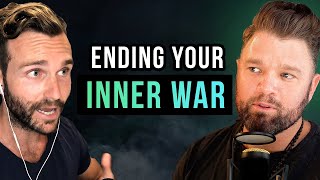
A recorded conversation (podcast/video) between Josh Trent and Greg about healing through archetypal work. Greg presents seven core archetypes (focus here on four survival archetypes: Child, Victim, Saboteur, Prostitute) and three relational/spiritual archetypes (Mother, Father, Imago Dei). He links archetypal contracts formed in childhood and ancestry to physiological stress responses, parts work/IFS, dream material, and collective patterns; outlines a practical 4-step course structure (teach → meditation/IFS → EFT tapping → journaling/integration) for transforming these patterns. Central claims: these archetypes protect wounds and block healing/empowerment; healing involves renegotiating safety contracts, nervous-system regulation, and surrender/participation in life.
Chapters
Where you give your power away is where you give your energy away. Where you give your energy away is where you give your vitality away. Anytime you go into a fight or flight state, you always go back to these four archetypes, which are the child, the victim, the saboteur, and the prostitute. The essence of the healing journey starts with healing. These four survival archetypes, these are the four most common roadblocks as to why people don't heal, and these are the most common reasons why people have secondary gain in their illness. The part of them that is getting their needs met through their pain, whether it's getting more empathy and compassion from people getting medical leave from a job that they don't enjoy. You know, these are all the archetypes that show up in the healing process that prevent people from actually, on a deeper level, wanting to experience health and vitality.
Foreign. The podcast, and this one's going to be probably the best one. The third time's the charm. Welcome back to the pod, man. Welcome back to wellness and wisdom, dude.
It's an honor to be here. It really is. And, you know, this course I just created, I owe so much of it to you because you were the individual that really guided me in creating my first program, Healing the Mind. And as I was creating this one, I was like, there's no way I would have been able to do this myself if it wasn't for Josh's guidance and really learning how to create authentic content. So, you know, thank you. I have so much gratitude for you and kind of the role you've played on my journey.
Oh, man, feels good to hear you say that. And. And it feels good to receive that. And, yeah, we're. We're all, I guess, as Ram Dass would say, walking each other home. And home to me is when we're at peace. I just feel like that is the greatest gift that you and I could give to our partners, that I could give to my son and my daughter. As a father, like, peace is what we're all looking for. And sometimes we have to go deep into history, which is why I'm so stoked that you've come out with this program. The link is on the screen, you guys. It's JoshTrend.com archetypes and this is Greg's brand new program. We already went through Healing the Mind in the past, but this one's going to be an absolute game changer. Because, Greg, I'm curious how you feel about this man. As a jumping off point, sometimes we have to go far back into history to understand what people have been dealing with for a long time, thousands of years, and maybe just start, don't get too deep into the weeds, but just on a high level, 30,000ft. If people haven't heard of you, who are you today versus maybe when you came on the pod last time and why now with the archetypes and healing your core archetypes, what's the, what's the gravitas behind that for you?
So the me that I am now, you know, I, I feel like I'm always going through this constant death and rebirth process. And the me that I am now is a me that I'm just getting to know. And that's the thing about archetypes is archetypes are really your relationship with your own power. And the me that I was two and a half, three years ago, I could see the disempowerment that I was still struggling with and the parts of me that I was still sabotaging, prostituting, falling into the victim, which a lot of these archetypes will get into. And the me that I am now, I could say I'm just coming into relationship with the power that I was afraid to embrace and the power that I was afraid to step into out of the fears of what the repercussions of that might be, which is the essence of a lot of self sabotage, which is our fear of our own power. So I would say the Greg that's coming onto the podcast to today is just less afraid of his own power. And that allows me to come forward with more of the fullness of my being, less compartmentalized in a way.
I got a full body. Yes. When you said that. And it's funny because it's not funny. It's actually awesome. I can feel it from you. And this is the mark of somebody that's actually committed to doing the real work. And let's be honest, the real work gets messy. It gets pretty messy at times. And I'm wondering, just to circle back to the. I asked you a two folded question, like, you know, as a holistic health practitioner, as a shamanic energy healer yourself, we've already talked about your Healing the Mind program and the great success that a lot of our audience members had in going through that program already. I'm curious now, like 2023, is there something specific about this time that really makes archetypes a focus for you and also that you knew would be really helpful for your students?
Yeah, I mean, archetypes kind of showed up in my life over the last few years as being an incredible vehicle for self exploration. And one of the reasons for that is when you understand the nature of archetypes, you don't see it as a personal thing. You see it as collective patterns. And what better time in history to understand collective patterns than right now? You know, if we look at, you know, everything that's unfolded since 2020, we could see, for example, like, those four survival archetypes just coming up, like, front and center. And anything that you're seeing in the external world is a mirror of something, some pattern happening and unfolding inside of you. Like, I was just thinking, like, this morning, looking back at a lot of the things that we would get so enraged about, like the censorship and the kind of totalitarian, kind of, like, control and abuse of authority. And I was just thinking, I was like, there's nobody that has censored or silenced me more than myself. There's nobody that's victimized me more than I victimized parts of myself. There's no one that's sabotaged me more than I've sabotaged parts of myself. So what you see going on in the world is a mere reflection of some archetypal pattern inside of you. And what better way to do healing work, to do shadow work, to really reintegrate these parts of us, than to use what's going on in the world as a reflection of your own psyche so you can actually use times of craft crisis and chaos as a beautiful opportunity to shine light on the parts of us that are still disempowered, that are still in old contracts, that need to be renegotiated. And that's why I felt like, you know, this time creating a program around archetypes was so essential. And everything that was coming up in my own life, in my own personal life, it was just a beautiful opportunity for me to create a program that was really a reflection of that. And that's why I'm so excited to share this program.
What was one of the old contracts that you burned in the fire of transformation as you were compelled to create this program?
There's so many, I would say a big one is the contract, that it is my responsibility to micromanage other people's experience of me, which is a huge source of self sabotage, a huge source of, like, people pleasing, which is an expression of the prostitute archetype, you know, kind of like the shapeshifter who's trying to be all things to all people. So a lot of that, you know, contract that says someone else's disappointment is my responsibility. Someone else's trigger or upset or. Or emotional experience is my responsibility. Therefore, it's not okay for me to speak my truth, to step into my power, to live in alignment with what feels true for me because of how someone else might be experiencing that choice. So that was a huge contract that I learned as a child that kept me safe and secure at the expense of my own freedom and empowerment. So what you realize is with all these archetypes, the initial contract is what keeps you safe and secure. It gives you survival, right? It gives you security. But you reach a point, and most people's health challenges or healing crisis starts when that old contract is outdated and the new one needs to be negotiated. Which is what's the new version of this archetype that allows you to step into your own empowerment and your own sense of freedom and sovereignty and let go of some of the old narratives that you had to, or let some of the old contracts go that were just to keep you safe and secure. So I think that's. That's how I would kind of explain what's come up for me and how that kind of journey evolves. And the beautiful thing is, you know, everyone can relate to these patterns because everyone has a saboteur, Everyone has a victim, everyone has a child, everyone has a prostitute, Everyone has the mother and father archetype inside of them. But it just gets expressed in different ways. So we can all relate to these patterns, which makes it easier and more approachable to look at. You know, when you realize that everyone has a victim, it's not as hard to look at your own victim, because you realize I'm not the only one expressing these patterns.
I love that you said that at the contract creation point, at that source point of the creation, it's about safety. I mean, that is really big because. And I'm curious how you feel about this from like a. Both a physiological standpoint, scientific standpoint, but also an emotional intelligence standpoint. Look at the lens, if from 30,000ft in the air, when the child or even the adolescent, by the way, these. I'm sure you talk about this in the program. These archetypes can come online almost at any time in someone's life. It doesn't always have to be in childhood, but at the core of it, wrapped around it, is a contract for safety. Like, what's. What's actually going on in the physiology of the body? Is it a hormonal cascade? Is it trauma response? Like, and then also what's the emotional side of it? Like, how can we actually allow this traumatic event or painful event when we are on one side, create a contract for safety which then closes our heart, locks us from life, from a life of freedom, and then on the other side, we can consciously choose, with the right kind of education from a teacher like yourself. There's a bridge between shutting down and silencing yourself and living a life of freedom. What is that bridge? And what's the physiology of that bridge?
I would say it starts in the nervous system. Right? Anytime as we know, that nervous system goes into a fight or flight response, you know, we're shifting into survival mode. And these survival archetypes are the. Are the archetypal forces that show up anytime we shift into survival mode. So if there's a situation as a child in which we feel unsafe processing what's coming up for us, what's going on inside of us, maybe we don't have a mother or father figure that we feel like can be a safe container for whatever process we're going through. There's a trauma response, and the trauma response is essentially, there's a part of our psyche that gets frozen in time. It kind of like fragments off and it stays in that experience. And when it stays in that experience, we then recruit some sort of protective mechanism, kind of like the ISS type approach. Like we have these protectors, we have these managers that are there to protect the exiles, which are the wounded parts. And essentially what a lot of people don't realize is parts work is just archetypes. Every part that we're working with from an IFS standpoint is really an archetype, right? So the parts work is really, it's really repurposed archetypal work that we're doing with within ourselves. And it's a really easy and beautiful framework to work with. So a lot of the old contracts with these archetypes are those protective managerial type arts that are there to protect the wounds, to protect the trauma.
Why do they actually want to protect the wound? I think our higher self, our most loving self, our most ascended self, knows that the wound is just a teacher. Then why, why on earth would an archetype try to protect the wound that keeps us stuck?
It's an aspect or an expression of ego, which the ego, you could say on an archetypal level, is your inner child survival team. That's all an ego is. An ego is literally a collection of archetypes that are there to protect the safety and security of your inner child. Right. And you're not really able to ascend into Higher states of consciousness, that 30,000 foot vantage point until you've healed your inner child. Because the vulnerability of your inner child will always keep pulling you back down. Right. Almost like you can't go and leave him behind. Yeah, right. So the ego is really, you know, people that really have a strong ego that won't let go, that resists, that have a hard time in like medicine ceremonies and just like that real. That's really just how wounded the inner child is. So the ego and all these parts are really there to help protect an inner child that hasn't been healed. And you know, for an aspect of the inner child that's kind of frozen in time, remember time's really an illusion when it comes to the psyche. It's really not, doesn't really exist in that way. Then those protector parts don't really understand that, hey look, we're actually 35 years old now. We're not 12 years old. So the boundary that I'm setting with my partner, that's not my mother. But there's a part of your inner 12 year old that still projects your partner as your mother. So that's where all those archetypal protectors come up. Protecting you from your mother, not necessarily engaging your partner.
Damn Greg, that's so good. Okay, so my, obviously you've gone way down into the ocean floor and archetypes. The closest thing I've come to your research is I read King War and Magician Lover by Gillette and Moore. Yeah, and you know they, the king is like this energy of, of creation and order and then the, the warriors, the aggressive but also the, the non violent action with an open heart. You know, the true warrior like Leonidas in 300. It was like their hearts were there, but violence was not always what they led with. It was their hearts. And then there's the magician. That's like the initiation, the transformation, you know, the magic of life and, and then the lover which can have its, its light and dark shadow as well. The, the, the one that connects us to the world, the one that connects us through love to everyone else. That's as far as I've gone with archetypes. Now I know in every tradition there's many, many styles of archetypes. And like you said with Schwartz's work in ifs, maybe the parts, quote, quote are just a way to express ancient archetypes in modern day language. Why did you choose the four you chose? And, and let's take this time to slowly and methodically unravel the four archetypes and how they start to show up for people to are suffering. I mean, if they don't know, they don't know, then it's unconscious incompetence. Right? So we want, we want to move them up the ladder to where they're after working with you, consciously competent and then unconsciously competent. They don't even know that they're healed, but they are. So let's unpack methodically the four that you chose to go deep on. And why did you choose these four? Because I'm sure you could have chose many more.
So the course actually goes into seven, but we're going to start with those first four. So what I chose in the course are seven core archetypes. The first four are the survival archetypes that were identified by Caroline Miss. And these four survival archetypes are kind of like the four legs of a table that kind of give you a foundation of security, right? So anytime you go into a stress response, anytime you go into a fight or flight state, you always go back to these four archetypes, which are the child, the victim, the saboteur, and the prostitute. Right? So the child relates to your inner child. And the light side of the child archetype is your playfulness, your beginner's mind, your curiosity, your spontaneity. The light expression of your inner child, the shadow expression of the child archetype is our helplessness, our powerlessness, our codependencies, our projecting others as authorities and not taking full ownership of ourselves. So that's the shadow side of the child archetype. The victim archetype really is your relationship with boundaries, right? The, the victim is the part of us that feels like a boundaries being crossed. If someone is a victim of sexual abuse, for example, there's a physical boundary being crossed. If someone's emotionally abused, there's an emotional boundary being crossed. So the victim, the light side of the victim is all about paying attention to when there's a time and a place in which we might be victimized and setting a boundary that's the empowered victim. A lot of times in like the personal development worlds, there's a of lot only looking at the shadow side of the victim, right? There's kind of like, oh, I, you know, I need to heal the victim inside of me. Never play the victim. Well, it's there for a reason. It's there actually to protect you from being a victim. There's a difference between being a victim and playing the victim, right? If you're being abused in a relationship, for example, you're being A victim. So you need to acknowledge that and make a plan to take action and get yourself to safety. To say, oh, no, I never play the victim. That would be ridiculous to like stay in an unsafe situation. So the light expression of the victim is empowering yourself to set boundaries. The shadow expression is when we're playing the victim to get our emotional needs met. Right? We're playing this powerless role to feel more of a sense of power and control. Paradoxically, like my dad was a physician when I was a child. I never felt a deep emotional connection to him. But anytime I was sick, injured or in pain, my mom would take me to his office and I would get the best treatment from him, his partners and his nurses. So the victim inside of me said, when I'm a victim, I get more love from dad. I get more empathy, I get more compassion.
That was when you created the contract.
That was when I created my victim contract, Right. So there's a part of me that has actually used illness as a way of getting my emotional needs met. Right. So there's an expression of the shadow side of the victim. Right. The saboteur is what everyone knows of as self sabotage, which everyone can kind of relate to times in which we've self sabotaged.
I think that's pretty universal.
Most people, it's universal. But what people don't realize is the saboteur on a foundational level is your relationship with truth. The saboteur is the archetype that tries to protect you from truth. It tries to protect you from a truth that's inconvenient. It tries to protect you from your own power. Because the saboteur knows that once you step into truth, once you step into your whole, once you step into your own power, everything changes. Your life gets turned upside down, right? Once you step into your power, relationships change. Once you step into truth, your career might have to change. So the saboteur actually protects you from your power and protects you from truth because it's inconvenient. It tries to keep you in your comfort zone. It tries to keep you with what's safe and familiar at the expense of what feels truthful and empowering. Because it knows that once you step into your power, everything changes, right? And it wants to protect you from that because that's the unknown, right? It's unfamiliar. The prostitute is the archetype of self compromise. And we self compromise usually out of a sense of safety and security, Right. The prostitute archetype is always trying to ensure a guarantee. It could be working a job that you don't enjoy, but there's a guaranteed paycheck. It could be staying in a relationship that is not compatible, but there's emotional security there. Right? You know, I remember, you know, I always like to go back to childhood because that's where these archetypes really formed. I remember my mom giving me some money to go to the movies with some friends. I was like 12 maybe. And I remember buying my friends movie tickets. Now, at the time, I was like, oh, I'm being a nice friend. I'm being generous. But now looking back, doing this work, that was my prostitute. I was buying their loyalty. Right. So the prostitute all relates to our self worth and self esteem. I didn't have the self worth and self esteem to think that they would want to be friends with me just for me. So I was buying an insurance policy. Right. That's an example of the prostitute archetype. So the prostitute is all about your relationship with your own self worth, your own self esteem, and where you override intuition to always ensure some sort of guarantee. Like you get an intuitive hit. I need to leave my job and go be an artist. But the prostitute says, well, you're making good money being an accountant. Even though your soul's dying inside, you have a steady paycheck. So the prostitute's always bringing you back to what guarantees survival. So the reason I started with these four survival archetypes is these are the archetypes of where you give your power away. And where you give your power away is where you give your energy away. Where you give your energy away is where you give your vitality away. And it's also. These are the four most common roadblocks as to why people don't heal. And these are the most common reasons why people have secondary gain in their illness. The part of them that is getting their needs met through their pain, Whether it's getting more empathy and compassion from people getting medical leave from a job that they don't enjoy. You know, these are all the archetypes that show up in the healing process that prevent people from actually, on a deeper level, wanting to experience health and vitality. So these are, you know, really the essence of the healing journey starts with healing. These four survival archetypes.
It's really beautiful the way you laid that down. I love it. Y' all rewind that and watch it again. Maybe you're already watching it again. The way that you describe them on a visceral level. I was. I was almost seeing the contract being wrapped around our wrists like handcuffs.
Yeah.
You know, I want to do A, but I can't because I unconsciously believe B. And that contract that we unconsciously believe, there's ways to suss it out. There's breath work, there's plant medicine, there's. There's external tools that bring light, that shine light on some of these contracts. But just because you know doesn't mean that you'll heal them. One can know about archetypes from top to bottom. It takes life experience and really meeting themselves in the mirror and being able to get their face bloody and their hands dirty and be in the arena. That's where the real work happens. So from all the clients you've worked with up to this point, it's been many years now, over a decade, actually. For you, in holistic health, what is a through line with people across the planet, specifically in North America? That's primarily where most of your clients are. What is the thing that is projected onto children from parents where the parents don't even know they're doing it? In other words, what is a contract that the parents themselves tended to have made from their parents that was learned? This just gets passed on. Alan Watts describes it all. Wretch and no vomit. We just keep teaching our kids to do the same thing over and over and over again. And I laugh. It's not actually funny. But it is comical how we continue to allow this to happen until someone conscious comes along and they sit with our podcast and they start hearing and feeling new information that starts unlocking their chakras and starts making them feel and experience different energies of possibility. Like, that's what this really is. This is a conversation that can change your life if you have the courage to take hold of it, if you have the courage to actually feel it and use it. So what are those things, Greg, that you've seen on a high level that parents unfortunately project onto their children, and then those children grow up to be adults and projected on theirs, like, what is it the four, or is it something else?
Well, that's why I included seven, because the other three archetypes are the mother, the father, and the Imago Day, which is the image of God. And those seven archetypes really are an expression of all of these patterns that get passed on from one generation to the next. You know, Carl Jung's quote that all children are tasked at healing the unresolved wounds of their parents, but whatever contract that they had with their parents of who they had to be as a child to get their needs met, if they don't heal, that within themselves, then they take on that as a parent and project that onto their children. So all of these contracts are really ancestral patterns that just repeat over and over and over again. I included the imago DEI because a lot of it are rooted in religious origins. You know, a lot of people's beliefs around what God is or what God wants that dictates when they feel victimized, when they self sabotage, when they prostitute themselves, when they shift into the child archetype. You know, an example of that is, you know, my mom's idea of unconditional love was just like saying yes to everything, you know, always being there, you know, never saying no if you needed something on. So there was a part of me that adopted this idea that the highest form of love, of unconditional love, meant giving myself away, you know, being that people pleaser, you know, always saying yes, never saying no. So there's the prostitute archetype that's actually being informed by your idea of what God is or what God wants, et cetera, et cetera. You know, also, I come from a lineage of Holocaust survivors, so there's a huge ancestral piece to these archetypal contracts. Now you take a generation like that and ask yourself, well, who did they have to become to adapt to that trauma? What contracts did they have to sign? Whether it's, you know, to not stand out, to stay in the box, to not speak your truth because you might get attacked or persecuted, et cetera, et cetera. So that gets passed down from one generation to the next and is now expressed in these archetypal patterns. So if you look any way you want to go about it, there's an ancestral piece to all of these archetypal patterns. And that's why they're collective patterns. They're not personal things. If they were, if they were personal, it would just be for Josh. But the fact is, well, the patterns that Josh is exploring in himself, it's the same victim that I'm exploring in myself. We just have a different lineage. We have a different ancestry, we have a different childhood environment. So the ways in which we go about it might be a little different, but it's the same root contract of the victim archetype.
It's so fascinating. Like, earlier in the conversation, you said that sometimes people can be, quote, stuck in time, which I really love, because I've experienced this, Greg, and maybe you have, and I know people in the audience have for sure. Have you ever met someone and they're 50, 60, maybe even 70, yet their responses to life are so reactive that it Almost feels like you're in the presence of a teenager or the presence of a child. Now, it's not to be mean to these people or call them out or to be rude, but it is to say that we all intuitively feel, if you've done any work on yourself, that to the degree somebody is aware something was fractured, Native Americans call it soul loss. Sometimes that happens for people in psychedelic ceremonies where they just get hit so hard that they never come back from that. And maybe even looking at the fracture causes them so much fear that they don't trust themselves that they could heal it. What I'm trying to say is, like, when we have events that happen for us, not to us, I really believe this. I believe this with my heart and soul. Now in my life, based on everything I've been through, everything is truly happening for us, regardless of if we feel like it is. Because sometimes the feelings can be so overwhelming. There can be maybe three or four contracts created because of one traumatic event. Who knows? People can't be trusted. The world's not a safe place. I can't trust myself to defend myself, whatever it is. The list goes on and on. What do you feel about people that are, quote, stuck in time? I've experienced this on both sides of my family tree and also my lady's family as well. There's a certain person or two in her family that exhibit this kind of behavior. Greg, this stuck in time. It's almost like they. Their psychological and their emotional maturation halted at the moment of the trauma. Can you unpack that a little bit more?
Yeah. Like we were saying earlier, anytime we experience trauma, the part of our psyche that fragments off gets frozen in that experience. And as that happens, we recruit a protective team. That's an aspect of the ego structure to protect that wound, protect us from any situation in which we might re experience that trauma. And it could literally be as simple as you got mugged by someone in a red sweatshirt. And anytime you are walking down the street and you see a red sweatshirt, a part of your psyche associates that with that trauma and goes into a stress response. Now, you even having a conversation with that person, there's a part of you that'll kind of be on guard all the time.
Yeah.
Yeah. So all it is is the ways in which we try and protect core wounds. And the paradox is what our ego is always trying to protect is what life is always trying to annihilate. Right. So life literally has a target on your core wounds, because the universe knows that until you heal those Core wounds, you're always going to be brought back down to that level of development. So life is literally going to orchestrate situations. If you want to really understand the true law of attraction, you're literally going to attract situations in life that are going to give you an opportunity to heal a core wounds that you experience as a child. It could be there's a core wound that meant, you know, there was a contract that I. It's not okay for me to speak my truth. Well, guess what? Life is literally going to give you situation after situation in which you're being called to speak your own truth. And once you do it, you heal that core wound and life no longer has a target on that anymore. But what the ego tries to do is protect the wound at all costs. Right? So it starts people pleasing, you know, facading, avoiding situations, sabotaging self censorship. Why? To avoid any possible situation of re experiencing that wound.
That's right. It's a protector in a way. It's a loving protector, but it's not talked about. Look at Ryan Holiday's book, Greg. Ego is the Enemy. It's such bullshit.
It's bullshit.
I'm not here to kill my ego or not be the friend of my ego.
I want to say the ego is the enemy.
Ryan Holiday. Ryan Holiday's ego is.
Only egos have enemies. The soul doesn't have enemies. Right. Only egos have enemies. And all enemies are, are essentially things in life that are going to activate in you what still needs to be healed. That's all an enemy is. And an enemy. A lot of times, like I made the social media giants the enemy because they were censoring people. Well, they were just mirroring back to me a part of myself. You know, the villain that we project on the outside when we're playing the victim is a mirror of some villain inside of us that we're feeling victimized by.
This is so good. Let me go into this with you because this has been such a paradox in my life and I know that y' all can feel this. Like you said earlier, if you're in an abusive relationship, then you are playing the victim. And sometimes you have to go through that situation in order to figure out that, hey, this is my maturation. This is. This is me actually growing as a soul. I choose not to be a victim anymore. There are certain things that happen, and I don't know if it's like bumps in the algorithm for the matrix or if it is part of the divine orchestra that you talked about earlier. There are some Times where I see such amazing people, such loving, awesome people, and they'll lose a child or they'll get in a car accident. And I ask myself, Dr. Maticosa was one of them. He lost his wife in childbirth. And I thought to myself, here's a man who's dedicated his life to service. Love pours through every word he speaks, yet God, divine creator, chose to take this life from him. In other words, there's such crazy things that happen, such unimaginable, such unexplainable, horrific acts that. That don't make any sense to the conscious mind.
Yeah.
How do you. How do you describe that in this divine orchestra? And what does one even do with that? Where if there's somebody on the podcast with us right now and they've gone through a death, the family that's still hurting, they've lost a child, they've been through a very serious physical abnormality, whatever it is, like, fill in the blank. How do you even begin to do the work on that so that you can be at peace and that your ego is just not leading you around angry at life itself?
I'm going to borrow one of Matt Kahn's teachings. Matt Kahn's one of my favorite spiritual teachers, and one thing he said that really stuck with me is a lot of the spiritual journey is how you move through devastation. And devastation is designed to annihilate aspects of the ego from your cellular body. And if you allow yourself to be annihilated, you come out the other side reborn, and you're reborn with less ego, which creates more space for the expansion of your soul. Now, he says that evil is actually when people move through devastation, but the ego comes out the other side, where the ego was supposed to be annihilated through that process. But it's kind of like it makes it out the fire on the other side with its burns. And now you have evil, now you have the desire for revenge. You have, et cetera, et cetera. So I love this premise that, you know, anything that we're holding as attachments of conditions, of expectations, of whatever it is that's keeping our ego, you know, that's keeping the limited expression of us, life is always going to have a target on that. Life is always wanting to annihilate that, because the annihilation of expectations, the annihilation of attachments, the annihilation of disappointments, the annihilation of all of that is what creates the space for our soul to really expand, for our light to really shine. So I think our relationship with devastation and what we allow it to do to us, where on a spiritual level, we're meant to allow devastation to annihilate us. It's like when you're in a medicine ceremony, you have to allow the medicine to do the work on you.
Yeah.
You just have to lay back and take the medicine. And I think life works in a similar way. And I've worked through a lot of this in my own life, with a lot of the challenges I've worked through over the years, which is how much you can allow life to annihilate the part. Parts of you that are still living in resistance. That's what allows these devastations to actually be a springboard for higher consciousness. And I think some souls like you're speaking about just need a higher level of devastation to really reach an even higher point of consciousness.
Be careful what we pray for. I remember I was in a sweat lodge with. With Mark, and he's been here in the studio, Greg. And if you ever want to do a vision quest, you know, Mark is your man. And. And also Tim. Mark and Tim lead the vision quest. And we were. We were praying, we were singing songs, and we were sweating. And it was like that fourth round where you feel like you're going to pass out in the sweat lodge. And he stopped and he said, you know, it's. It's really important that you are careful what you pray for. If you pray for strength, then. Then God, universe, creator will give you experiences to grow strong from. Yeah, if you pray for resilience, you know, same thing. So there's something that hit me really hard recently. It was actually just this week. A few days ago, I had a dream. I took some new gummies from a potential partner. And they're not THC gummies, they're just mushroom gummies. And it was so profound. The dreams I had. I had the most lucid dreams, Greg, you could ever imagine. It was like I was walking between worlds, and I was just, you know, just bear with me while I tell this short story. And then I'm going to ask you the laser question that I was feeling.
Yeah.
So I. I'm in the. I'm in a shopping mall, I'm young, and I'm talking to this woman with white hair. And I don't know her, but I. But I know her on some level. And we were both laughing, and I said, I've. I've been afraid of death for so long, and it's been this fear of death that's been actually holding me back from Living my life. It's been this fear of death. It's been holding me back from like, loving fully and living fully and expressing myself and just living my best life possible. And she said, well, there's no point to it all. And I was like, oh yeah, there's no point to it all. We both started laughing. That's the paradox. I wasn't swallowing the paradox that there's no point to any of this. There's no point and there's no point to any of this, which is why we get to live so fully in love and love each other and connect. And it was this crazy dream. I. I woke up six in the morning. I. I journaled, I texted people, I shared it. And I haven't shared this on a podcast yet. It literally, I mean, makes me almost want to cry just talking to you about it. Like, it was such a profound dream. It was so powerful. And the lesson is, we're going to die. We're going to die. So I'm going to do everything that I possibly can from a place of curiosity and wonder and self empowerment to peel away all these contracts and all these fucking layers that block me from loving my son and daughter or my woman or my family or my audience or you as a friend, you know, as a teacher, like, oh, God, we just, we believe so many things that aren't true because we created, as you said, these contracts at some point in our life where we, where we thought they were true, but they're actually not true at all. And the gift of life is that we die. That's actually the whole gift. Because if we lived forever, we wouldn't treat it as special. We wouldn't really know what love is because it would have no opposite. The snake would never eat its tail. So this dream aspect, you know, Jung and Freud, they both had their, their stuff with dreams. What do you make of dreams? What. What did you feel when I was sharing? And then also, what do you make of dreams as it relates to healing the archetypes? Because a lot of times archetypes come and speak to us through dreams. I know this woman did. She was some wise elder that came in. Maybe it was the mother archetype that came in. Maybe it was the imago dei. I don't know. I'm curious what you feel about all that.
Well, I think dreams are a lot of times when our soul or higher consciousness speaks to us, and it's usually speaking archetypally, you know, it's usually not speaking literally. So a lot of the dreams that we experience. If you understand archetypes, you then have a language to be able to interpret the dream. I think also sometimes dreams are ways in which our psyche defragments stress. So a lot of people, you know, teach that, you know, the more. The more you grow spiritually and the more you heal, the less dreams you actually have, because your psyche doesn't have as much material that it needs to work through anymore. So I think there's many aspects of dreams. But what I think, you know, what comes to me is the connection between dream and myth. You know, dreams and myths are the stories that we tell ourselves, the narratives that we create about ourselves and about life. And all of these archetypal contracts are based on. Our narratives are based on the stories we create as a result of certain experiences. We go through a trauma, and after that trauma, we create a narrative about ourselves, about others, and about life, right? And in that contract is who we have to be as a result of that narrative. And that's a dream that we live in. That's a myth that we create. You know, so a lot of shamanism is about creating a counter myth, which is creating a new story, creating a new narrative, creating a new dream, which tells a more accurate depiction of reality. Right. Rather than the fantasy of what we thought was true. So a lot of the archetypal contracts are really based on the dreams that we dreamt up, the narratives that we created as a result of our experiences. And that's also a lot of the stuff that was being passed down from one generation to the next, from our grandparents to our parents, from our parents to us. So it's our responsibility to redream a new dream that's more in alignment with truth, that's more in alignment with freedom and empowerment.
It's our responsibility to dream a new dream that. That takes me back in the time machine to having Paul Levy on the podcast where we talked about Wateco and the many ways that Wateco uses us as an unknowing host. I say unknowing because if we were willing, then that would be a contract with demonic energy. Maybe that's present too. So I wonder if you could think about diving into your own healing spiral and the ways that you've gotten to dream a new dream. I mean, I've heard so many people talk about this. We had Kelly Brogan on the show. I think you and I even talked about it on our first podcast, the Healing Spiral. Things will come around. Like you had said, sometimes when someone's spiritual development is so high Maybe they won't have a lot of dreams because they don't have really any work to do at that moment. But eventually, Greg, it's like the, the chickens come back to roost again. Have you ever dealt with this yourself? I know I have. I thought something's healed. And then three years later, it's like, boom. It just hits me in the face. I'm like, I thought I healed that. I thought I healed that. You know?
Yeah. You know, there's a way you can reframe that, because a lot of times we have this illusion that if we keep revisiting things or if the same things keep coming up, it means we haven't healed that in ourselves, which maybe that's true, but I think there's a possibility that that's not true. And the reason it might not be true is a lot of the things that we're healing within ourselves are not actually ours personally. They're collective patterns that we're voluntarily working through as a way of transmuting that energy out of the collective. So, for example, a lot of times if I have anxiety that rises up in me, I could say, oh my gosh, I haven't healed my anxiety, or I could say I'm having the experience of anxiety, but I don't need to call, call it my own, that I need to keep working on. And you will you then allow your body to be a vessel of transmutation, which means that whatever patterns are coming through, anxiety, depression, ocd, this, that essentially you're allowing yourself to be a vessel of healing for whatever that collective pattern is. And the revisiting might be you're now at a higher state of consciousness to revisit that thing, to transmute the energy, but not necessarily have to call it your own. A lot of times people keep reverting back to old patterns, going back to old traumas and recirculating the same energies because they think it's theirs. So there's actually a part of their ego that takes ownership of it. It's kind of like the shadow side of taking ownership of, like, this is mine, and there's a part of you that doesn't want to let it go. So if you actually shift the mindset from this is my anxiety to this is my experience of anxiety, it's a whole different energy. You don't see it as something that you have to keep working on, like a never ending project, and instead you see it as an opportunity for you to transmute an energy using your body as the vehicle.
If I can Breathe. I can choose. If I take a moment to breathe and, like, actually pause and ask myself, is this trauma even mine, or is this thing even mine? Could I be healing something collective in the ceremony called life, where we're all juggling around in a cosmic soup, Greg, and you and I are bumping into each other? Like, there's many things that can occur, especially when we live in large metropolis. Like, my heart goes out to people that live in New York. I just don't even think they know that. They don't know that they're kind of bathing in not just emf, but trauma all day long. Sirens, noise pollution, smog. Just insanity. I wonder what you make of this. Like to go back and pull the E break a little bit, because I want to get your take more on the dreams. A lot of people follow Freud, A lot of people follow Jung, and I know you probably have studied both, but maybe you've gone a little deeper into.
Young, probably more so than Freud.
So this is interesting, and this is an excerpt that we'll have in the show notes. Young criticized Freud for focusing purely on the external and the objective aspects of a person's dream, rather than looking at both the objective and subjective content. Finally, one of the more distinctive aspects of Jung's dream theory was that dreams could express personal as well as collective or universal contents. This universal or collective content was displayed through what Jung termed archetypes. And that's why I asked you, if we're bathing in this cosmic soup. And like you said, maybe it's not ours. How do we decipher that? Like, how do we. How do we know when something's ours or not?
It's ours and it's not ours at the same time. You know, I mentioned Matt Connor earlier. He had this teaching once that I really enjoyed. He's like, if he went to visit hell, if hell was a real thing, and you listen to the voices of what was being said there, all you would hear was my pain, my trauma, my this, my that. You would hear the word my at the beginning of every sentence. And he said, what if we eliminate the word my and just allow it to be the experience of blank, the experience of pain, the experience of trauma, but not necessarily mind. There's actually more of a willingness to step into it because you realize that you're coming to it from an empowered place, knowing that your engagement with that energy is not just supporting the healing and evolution of you, but for a whole planet, right? So when you actually let go of this attachment to what's mine, and you see it as collective patterns. There's actually more of a willingness to take responsibility and ownership, not less. A lot of times we think, oh, it's just like I'm being detached or dismissive or not taking responsibility. None of it's mine. But if you actually see the truth of it, it actually paradoxically becomes the opposite. You're like, oh, healing the victim in me is actually supporting healing the victim in everybody. Healing the prostitute or saboteur in me is actually supporting the healing of the prostitute and saboteur in everybody. And therefore your healing then becomes a contribution to a greater whole, not just for you. There's almost like more, more of a sense of empowerment in that and there's more skin in the game, in the own, in your own healing process. So, so that's where like, yes, it's personal because you have your own story, but the vehicles in which you're using to act out that story are the same archetypes, right? You have your own victim story, I have my own victim story, but it's the same victim, right? So you healing your victim story is your contribution to healing the victim archetype. Me, healing my victim story is my contribution to healing the victim archetype, which gives everyone else more of an opportunity to heal their inner victim once we've done the work within ourselves.
It's so good. And I wonder, yes, let's spend some time here. The imago dei. Yes. So the mother and father are fairly self explanatory. And you know, everyone with us in this audience is definitely committed to doing the work. So they've already probably come into touch in some forms with mother and father archetypes. But the, the imago DEI is really interesting to me because I've never really studied that whatsoever. Why did you choose that? What is the meaning of that for people on this path?
Can I just say one absolutely thing about the mother and father?
Go for it.
A lot of people have done like the inner parenting and exploring their relationship with mom, exploring their relationship with dad. But one aspect archetypally that a lot of people aren't fully aware of is your relationship with mom and how your mom received you a lot of times sets the stage for how you receive yourself and the way in which your dad received you is how you think you're going to be received by the world. So a lot of times the mother and father archetype set the stage for how we receive ourselves and then how we feel received by the world. And that sets the stage for how we parent Ourselves, Right. What we say yes to, what we say no to, you know, how what version of us we bring to the world based on how dad used to receive us. So a lot of renegotiating the contracts. Like, for example, my mom was very loving, but there was a smothering aspect to her. A lot of times I find myself loving my body, but smothering my body when symptoms come up. I don't give the symptoms room to breathe. I'm, like, on top of it. Like, what's the supplement I need? What's the food I need? There's my mom's energy coming through. How I'm mothering my body.
Yeah.
My dad was very, like, intellectual, but not very emotional. So I used to bring all of my knowledge to the world, but not my emotions to the world, because I thought that what the world could receive was based on what my dad could receive. So these are a lot of the things that we go into the program that go way beyond, just like inner parenting, but more some of the deeper contracts of how you receive yourself and how you feel received by the world. And once again, updating and renegotiating those contracts. So I just wanted to throw that in because that's a different perspective than some people are used to when it comes to, like, inner parenting.
Yes, it's very good. You know, it brings it. You know, it comes up for me in that is the narrative that goes on in everyone's mind. Right. And you talk about this in Healing the Mind, which we'll link as well in the show notes. In Healing the Mind, you first have to identify, well, what are the voices that you're hearing, Whether it's ocd, whether it's self narrative, and I loved what you said about the father is how we think will be perceived. That's a big one. I think there's a collective masculine wound in this world. Otherwise, King worm, magician, lover, and, you know, even the archetype of the king wouldn't be such a talking point for it seems like almost every influencer that's in personal development or psychology right now, I think there's a return, there's a call for the sacred masculine. And I wonder, like, I'm glad you stopped us, because I wonder what you even feel the sacred masculine is in 2023. It's so much different than maybe what was projected onto us and we were kids, you know, the night on the shining horse. And that's what's masculine. It's like, Well, I think 2023 and beyond is calling for something Way different. And I wonder what you feel that is.
I think it's a. The word container comes to mind. It's doing the work within yourself to be able to be a strong container for the feminine. Right. The feminine is that, like, deep vulnerability and all that movement that goes on inside. But the masculine is the container that holds the space for that process to happen. And until we've done the work within ourselves and become whole unto ourselves, we can't effectively be a container for anything or anyone else, because anything that comes up for someone else is going to trigger some part of us that's unresolved. So we're not really going to be able to be a safe container. And, you know, for me, a lot of the inner work, the purpose of it, is to continuously empty yourself. The more work you do within yourself, the more you empty yourself, and the more you empty yourself and there's less content inside of you. Like Ram Dass calls it the emptiness of compassion, of as you empty yourself more and more now, you can actually be a container for the feminine to have its process. So that's where I feel like the strong masculine is, in the empty container. Right? And in order to do that, you have to heal these archetypal contracts, because if you don't, you still see yourself in everyone else's narrative. And you can actually be a container for someone else if you're still entrenched in their narrative. Right. If you're still a part of their story rather than seeing their experience as their experience. You know, for example, your wife could blame you for something or project something onto you or, you know, get triggered about something that you said or did.
Well, Greg, that would never happen.
Now, if you still see yourself as a child that's responsible for her experience, you can't effectively be a container for her experience because you're going to go into guilt, shame, defensiveness, et cetera. So once you see her experience as independent of you, now you can actually be a container for it.
So good, Right? So good.
So that's where I see the development of the masculine.
That's so powerful. And, you know, I've. I've been talking with my men's group. I lead a men's group here. And this is something that comes up on the regular with all nine of us. And that is, when do I know when to grit and when do I know when to quit as far as it comes to a new relationship or even an argument with. With a woman or with a wife or with a partner? And the way that I see it is again, if I can breathe, I can choose. If I breathe, then I can actually fill the bolus of my container with spaciousness because I'm breathing. And then next, can I use all my training and tools in that moment? Can I essentially prepare myself for that moment? I think what would be really helpful for all the women out there listening is when you come to your man with. And this works in any kind of hetero, I'm talking heteronorm, normative, but this works in any way that you relate. When you come to your man, women with a complaint or a grievance or something, give him somewhat of a heads up so that he can prepare himself and ready all of his tools. Now, this doesn't have to happen all the time. I know, I know sometimes things, shit just happens. But I'm just saying, like, if a man's on the conscious path and he chooses a woman to be on the conscious path, I'm just giving all the women out there just a way to get more out of the relationship with your man that you want. And that is prepare him, prime the pump, if you will, and say, hey, you know, babe, I've been really feeling, you know, subject A, can we talk about subject A tonight? You know, give him a primer, give him something where he can prepare himself to really think and hold space and be a bolus container that allows him to give you women everything you want. All you have to do is just give us a slight heads up that it's coming. And I promise you, 10 times out of 10, it's always going to work out. More loving, more connected and give you everything you want just by giving him what he wants. Now that's my own experience in life. It's definitely the experience of the men in my men's group. I'm curious, for your clients, is it the same that kind of relational dynamic, that kind of conscious communication?
Yeah, it's really just letting your needs be known and you're setting yourself and the relationship up for success when you do that. It's kind of like one of the four agreements of never make assumptions. You know, when we're assuming that our partner knows what we want or what we desire or what we need in that moment. That kind of sets us up for disappointments, you know, and over time, yes, it doesn't need to be as spoken because we start to learn each other. But, you know, the more we can be expressive of our needs, you know, the more we set our partner and their relationship up for success. Now, a lot of times Kind of going back to the archetypes. If we haven't healed our survival archetypes, it's going to interfere with that process. For example, if we still have an unhealed victim story, then we're going to look for ways to confirm it. If we have an orphan child that says, no one's ever there for me, I always have to do things myself, then we're going to look for ways to confirm that. And that might be not expressing our needs to our partner. Because the child in us says, remember what happened when we did that last time? No one was there for us. We got disappointed, so let's just do it ourselves. You could see how a lot of these old archetypal contracts actually get in the way of conscious communication if we haven't. If we haven't fully healed that narrative.
Now in the program, you go into depths on the practicality. That's a big word, practicality.
Yes.
Because a lot of times this stuff can be so esoteric that people could get. Without the right guidance, they could get lost. So in the program, you definitely go into the depths of the practical uses of how to identify when one is operating from the archetype and how to move through that effectively. Most loving.
Yeah. I made this program as practical as practical can be. So I took the seven archetypes, the four survivals, the mother, father, and imago dei. And we'll loop back to the imago dei, because I know that was one that we were wanting to get to.
Yes.
And so we have seven archetypes. I created four sections for each archetype. So the first section is really diving into what the archetype is. You know, what it's all about, the light and shadow where it shows up. That's part number one. Part number two is I then take you through a meditation using a lot of IFS principles to connect with that archetype inside of you, to get back to the root of it, to see it as a protector, where it lives in your body and getting to know it. So you cultivate an inner relationship with the archetype. So step two is meditation. Then step three, we take everything that we learned thus far. And I take you through an EFT practice, which is Emotional Freedom technique, a tapping technique. And we do a lot of repeat after me is where you're speaking certain words that I'm kind of literally guiding you through step by step.
You're putting the unconscious in a malleable state where you can start attaching.
And we're going to the body at the same time?
Yes.
So we're tapping, we're speaking, and I'm taking you through active, energetic clearings to work with some of those old contracts and clear them out in real time. And then in part four, we then do some journaling and integration. So I literally take that structure for every archetype systematically of introduce and explore the archetype, take you through a meditation to connect with it, then do an energetic clearing after the meditation, and then do some integration work. So it's like so simple and practical, but it's not one that I'm just giving you the information. And here, here you go. It's active healing taking place in real time. Right. So I. I was so excited when I just had the structure of the course in my mind. I knew exactly how it needed to be. So people were taken through a systematic process of healing the archetypes.
I mean, it's amazing and I know you because I went through healing the mind myself. So I know it's incredibly thorough. It's on the screen right now for everyone. Joshtrend.com forward/ archetypes. And you get 20% off, by the way, if you use the Code Wellness Force, which is a huge discount. It's not easy and it's very time consuming, very energetically draining. I know I've created programs and so have you. So thank you for that generosity. It's the Code Wellness force. You get 20% off@joshtrend.com forward slash archetypes. Let's shift to the last segment where we talk about the Imago Day, because I haven't gone into that at all. And we'll save the seventh, the crown, the keystone for last. Why is this important for us to know? What does this mean for our own healing and what does it represent in the realm of healing? The imago dei.
The imago dei, which means image of God, informs all other archetypes, right? So the imago DEI is the original archetype, right? The image of God is the original archetype. And everything is informed by that one. And essentially what that looks like in real life is whatever your beliefs are about, what God is, whatever you were taught by your parents or your church or your temple or whatever it is that informs every other archetypal contract. For example, if you were taught that God is a father, that triggers your child archetype. If you're taught that God is going to punish you for doing certain things that activates your victim archetype. When you feel victimized. If you believe that God wants this from you and wants you to do this and whatever it is, any wants or desires that God has that are projected onto you that could activate your saboteur archetype. Right, Ways in which you sabotage yourself if it differs from what you think God is wanting from you, your prostitute archetype. If you're taught always to say yes to everybody at the expense of your own well being, that could activate the prostitute archetype of self compromise. So you could see how the imago dei, what your beliefs are around God literally dictate how you engage every other archetype and also your relationship with God and your relationship with death will inform all your survival archetypes. Remember these four archetypes of child, victim, saboteur, prostitute, they're survival archetypes. So if you have a belief about reincarnation, that's going to change your relationship with survival archetypes compared to if you think it's just lights out, right? How is that going to inform your relationship with money, Your relationship with what you say yes to and what you say no to, your relationship with taking risks, your relationship with following your intuition when it goes against what feels safe and secure. If you have a belief system of the soul, right, our consciousness that's beyond just this physical realm, you're going to feel more free in yourself to live according to what your intuition is telling you to do versus someone that is maybe an atheist or just believes it's lights out. They're going to be more security oriented, right?
Because they believe that this is all there is. When we die, we don't go anywhere.
Preserve and prolong this at all costs.
That's right.
Right. So a lot of this comes down to your relationship with God, source, the universe, whatever word you want to use directly connects to your relationship with your intuition, right? Because your intuition is essentially an expression of the higher self that's guiding you. And the higher self that's guiding you is always guiding you towards your potential, which a lot of times goes against what feels safe and familiar. So if you're still steeped in your survival archetypes, always needing to go into self preservation, you're going to override intuition to always go into that self preservation because the two are in conflict. So a lot of people say, well, how come I can't hear my intuition? How come some people are psychic and others are not? Well, a lot of it starts with healing these survival archetypes. Because once you heal these survival archetypes, now you're in a different relationship with truth. And when you're in A different relationship with truth. Now it can come in without as much interference from all of these survival parts telling you why that's not a good idea.
I feel like this has been a spiritual pressure wash today on this because, look, to be human is to collect sediment and dirt. And I'm going to butcher this a little bit, but I love passages like this. And it is that we already have truly everything we need inside of us. We really do. We have this incredible diamond, this soul that inhabits our body. Yet the window into the soul, it gets sooty and it gets dirty from tension and confusion and we just forget. Like, in order for us to clean all of that away, we have to just first acknowledge that the window into our soul is dirty and it's all right because that's part of the human experience, Greg. It's part of the way that we go through life and, and we fall down and we have things that happen for us. And a lot of the cleaning, I think, happens in moments where, like you said, there's a health crisis, there's something radical that's occurring where all of a sudden we get pressure washed by the universe. We see the magnificence of our soul. We. We look into what's already there and it's so amazing and it's so loving and it's so pure and it's so good. And we forget again and we pressure wash again and the spiral happens and our consciousness grows. I wonder with everything that we've talked about today, it's been so good. I've just loved. I've loved our conversation. I know everybody else has loved it too. As we say goodbye and you've answered this question already twice before. If you were to encapsulate, which can be challenging at times, or not. If you were to encapsulate wellness now with. With everything that you've been through with this second program, with all the clients across the world and your own personal healing. Rise above, high in the sky as much as you need to. And answer this for us. How do you define wellness now? With the healing spiral that you and all of us are in, what do you think it takes to really live life?
Well, that answer is always changing. I feel like, you know, being on your show three times, I'm giving three different answers, which it's supposed to be that way because it's ever evolving.
Yeah.
You know, I would say living well right now, for me, what that looks like and what I aim to experience is the letting go of my way in surrender to life's way, letting go of my way in surrender to life's way. And the reason I say that is we spend so much time and energy trying to work on ourselves and trying to make things happen. And what I've started to realize, especially with a lot of this archetypal work, is if you're willing to participate in life form fully, life is already doing the work for you. If you just show up, you don't have to work so hard on yourself. You just have to allow life to have its way with you. Like we were talking about the devastation and the annihilation and that kind of power washing, that steam cleaning. That's life doing healing work on you by you just participating. You don't have to constantly poke and prod at yourself, because a lot of times the poking and prodding at yourself is actually us subtly trying to avoid life doing its work. It's like, let me do this on myself, because I know if I open myself up, life's gonna do it for me, and it's just gonna be more challenging to my ego. That's wanting to get cleared out. So it's really the letting go of my way and surrender to life's way, that's. That's how I could best describe it. And all that is is surrender and participation.
Well, Greg, I think that was eloquently said. And your way sounds like a really good way. I really love the piece. You know, it's funny, we started the conversation, the very first thing we were talking about was peace when we first started the podcast. And I think out of all the different concepts and the archetypes and everything that we've explored today, and both the personal stories that we've shared, really the whole goal is not to have the most money. I mean, look, money is a good thing. I love money, and I love the energy that money represents. The whole goal is not to have all the boats and all the cars and all the things. And if you want that and it makes you happy from a place of consciousness, cool, knock yourself out. I feel like what I've learned from you the most on this podcast and just reflecting in my own life is that the goal is actually to live love and be peaceful. That's the goal. Because at the very end, whenever that end is for all of us, we're going to look back and there's going to be an inventory of some sort, and we're going to cherish the moments where we held our children, where we loved each other, where we shared memories and conversations like this, where. Where we Just did it right.
Yeah.
And it's not even the term of doing it right. It's more like we just did it from a place of curiosity and of creativity. And you cannot create or be curious from a place of hatred or pain and have it be sustainable or fear or judgment. Or judgment. So I've really loved where we've explored today. Tell people again a little bit more about the program, who it's for. By the way, it's on the screen again. Josh trent.com archetypes and the code is wellnessforce for 20% off. So as we say goodbye, just speak to the person. Maybe they're closing their eyes right now. If you're in the car, don't close your eyes, pull over. And they're struggling and they've had a lot of things come up for them and they've felt a lot of what you've said in their heart. When they listen to the podcast today, just speak to them as we say goodbye with parting guidance. Any. Any leaving thoughts or. Or any wisdom that you could set upon the mantle for them to marinate on.
You know, the first thing that I'll share is that the reason I was able to create this program is because of how many times I've fucked things up, how many times I've sabotaged myself, how many times I've prostituted myself, how many times I've played the victim, how many times I've fallen into the child archetype. And each time I went back back into those aspects of me, it gave me greater awareness of where my potential lies. So the first thing is exactly where you are, exactly what you're struggling with, exactly the ways in which you're sabotaging or whatever it might be. Know that the only reason I was able to create this program for you is because I'm walking that path with you. I'm not even ahead of you. I'm not behind you. I'm by your side, walking that path with you. And that's why I'm so excited about this program, is because it's a program that really came from my heart. It's a program that came from my authentic life experience of understanding these archetypal patterns within myself. The light, the dark, the pretty, the ugly, all of it. And when you can understand that, you realize that we're all on the same journey. Like you said, we're all walking each other home. And this program is me supporting you on your journey and walk back home, acknowledging that I'm not at some destination waiting for you. I'm walking alongside you, you know, and this program is just an expression of that. The other thing is something I wrote down earlier, which is something that will really help this process, because these archetypes are always looking out for potential danger and trying to protect you from that and to remind yourself that there's a difference between danger and discomfort. And a lot of times our patterns of self sabotage, victimizing, et cetera, et cetera, comes from not being able to differentiate what's uncomfortable from what's dangerous. And once we're able to do that, we're more than willing to step into the discomfort that otherwise we were unwilling to step into. And the willingness to step into discomfort is when these archetypal contracts evolve, grow, renegotiate, and get upgraded. So being able to differentiate is this dangerous or is this uncomfortable? And if it's dangerous, get out. But if it's uncomfortable, lean in.
Lean in. That was exactly what I was going to say. Thank you, Greg, for this podcast. It's been so amazing and from my heart to yours, from both of our hearts, until we see you again on the next podcast. Greg and I are both wishing you love and wellness. We'll talk to you soon. Hey, thanks for watching this video. If you love this video, hit subscribe. That way you'll be automatically notified when new videos come out, new episodes. And also share this video with a friend. If you loved it, they're gonna love it too. Check out some of the videos on this screen that are perfectly curated based on the video you just saw. Make sure you follow me and I'll see you in the next video.
More from Josh






Your child's future start before pregnancy... and even before conception! #podcast

MD Reveals: Your Healing Creates Your Child's Reality (The Souls Coming In Need Strong Bodies)



