Healing The Masculine Wound with Josh Trent
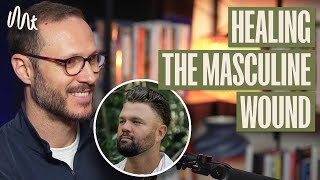
Conversation between host Connor Beaton and guest Josh Trent exploring masculine wounding, childhood trauma (notably Josh’s experience with a mother who has bipolar disorder and an absent father), and how those wounds impacted relationships, addiction (pornography) and self-leadership. They describe healing pathways — men’s groups, mentorship, breathwork, IFS/MDMA-assisted therapy, emotional epigenetics framing, and nonviolent communication/containment in partnerships — and offer practical guidance for men to develop honesty, containment, and deeper relational connection.
Chapters
Mr. Josh Trent. How you doing, buddy?
So amazing.
Thank you for having me in your home, in your studio. It feels fun to have been interviewed by you and then just get to role reverse.
Yeah. We get to know each other deep in these conversations.
Yes. And it's such a cool thing to just meet your family. You have great kids.
Thank you.
And great wife.
So.
Well, let's start there. How has marriage been a conduit for your own growth and transformation?
When I was a single man, I was very selfish, and I did everything from a hedonistic perspective where I would feed the part of myself that was a hungry ghost that just wanted to feel pseudo peace without actually feeling real peace. And when I met my wife six years ago, it was tumultuous from the jump because there was deep love there, but yet there was patterns on both sides. And I can only claim my own, but I had this really deep pattern of anger towards women and anger towards the feminine that took quite a while to surface. And I find that most people that listen to your podcast and my podcast in some way are carrying what I was carrying when I met my now wife. And that is a part of myself that I wasn't ready to look at. And the part of Josh that has become more aware can now look back on the version of Josh that was hiding and coping and doing all these things. To have a pseudo sense of control was really just operating from fear. I was afraid. I was a little boy in the shell of a man. I'm 6 foot 2, 30. So, like, I'm a large man, but I had a small, young boy in there that was at the wheel, and he was running the show for quite some time. So marriage for me has been the ultimate crucible. And having children of being honest with Josh about what's really happening inside of me and what's really the fruits of my life being directed back to me. And it's through my wife's feminine guidance. She's a fucking oracle. She really is an oracle. She has shown me things about myself that I honestly never would have seen if it wasn't for my marriage and being with her.
What have you learned about yourself? Maybe speak to some of the impasses that created conflict where it was like, okay, maybe this isn't going to work, or is it going to work? And what was coming up inside of you? Because I think for a lot of men, because what I. What I heard and what you were saying is I came into this relationship with kind of severed or injured relationship to women.
Yeah.
And. And that affected how I related to my wife. So what were some of those injuries that you carried in previously into the relationship with your wife?
Yeah, the first injury was being born to a mother that was struggling and still is struggling with manic bipolar disease. And so my heart goes out to anybody that deals with that. And I can speak to my heart right now and say it has been my biggest blessing, but also my biggest challenge in my life to be the son of a mother who struggles with her own mental health. And how that showed up was I felt like for a lot of my life, I had to be her father. So I had to morph and sacrifice my own childhood and adolescence to be a father to my mother.
Was your dad in the picture or was he.
He left when I was young. I mean, there's ambiguity there, but I think it's in the first couple months when I was born. And so I always had this deep wound or feeling or essence that something interstitially was off and that the world wasn't a safe place. And there's been a ton, like, literally my whole life's work, but especially this. The podcast that I have has been 10 years of deep therapy to point me back to the truth that my mother actually did the best she could with what she had, her level of consciousness and development. She came from parents that, you know, my grandfather fought in World War II. They were a very, like, stiff upper lip, like, you know, suck it up and just live life, and who cares about feelings? And I think I can sense that she really never wanted that. I think my mother wanted a familial structure where things could be shared, emotions could be processed, There was safety in her home. And so, like all of us do, she unconsciously created what she was angry about in my childhood.
Structure.
And the same with my brother. And so that was probably the biggest piece that I brought into my marriage, is that women aren't safe. Women can't be trusted. But it's so ridiculous, because I had this moment recently. We got married this year in Hawaii. And I was looking at my wife and I. I had a breakthrough. We. We actually were about to break up because she could feel something in me that I couldn't feel, and it was that she didn't want me to be her father, and she didn't want to pay for the sins of my mother. Wound, quite frankly. And so I came to this realization and apology and grief and processing of what was there, and I just looked right at her and I said, you know, I know now. I know now. That you are not my mother and you are not all women. You are my woman. There's a core difference there where I was able to psychosomatically section it off and break her away from lumping her into a category where she is all women.
Yeah.
And as you know from the Jungian psychology, it's like that internal experience of me is my mom. So my mom taught me about the inner world and, like, what's going on with my emotions, because I and her are one of the same in early developmental stages. And so I took ownership for that. I was able to. And this is just this year. I mean, in September of this is coming out in 2025, 2026. But this just happened. And I look back on all the ways in which this bubble, this beach ball that I was holding in the pool under the water, it was so much effort. It was so much effort to hold this wound and not actually feel this wound. Quite frankly, I didn't know how to feel it because I had used my podcast as a way to intellectualize my healing. That's the first thing. And then the second thing was I didn't have enough experience in actually being honest about what was going on in me. I didn't have the skillset to be able to feel it, speak it, and move through it. It just wasn't a thing. But I realized that the biggest curse in my life has actually been the biggest blessing with my marriage, because this curse of being born to a bipolar mom isn't a curse at all. It was just as Aristotle says, nature abhors a vacuum. I was sucked into a vacuum of something that's so painful. Like, imagine. Mark Wolin was doing a session with me and he said, you know, when you were being raised by your mom, it was almost like she was driving a car off a cliff and you were in the backseat screaming, feeling like you were gonna die. And so when your wife, when Carrie brings up any emotion in your marriage that's not happy or trustable, that you immediately time travel and you go back to a state where you're on the back of a car going off a cliff and you feel like you're gonna die. So there's been many, many, many moments like that of spiritual teachers and mentors and guests on my podcast that have been really my own high level therapy that have brought me now to this place where I can be with my wife and be able to experience all of. I'm not perfect with that.
Right.
But I would say I'm batting a really good average there Because I can actually be a container for her being a woman without projecting onto her the fact that she's my mom. She's not trustable, and women are crazy. And I would be suffice to say, if you look at the research and especially in your work, most men that aren't conscious to what I'm speaking about are doing what I was doing. And they're doing it in ways where they think it's the woman and they think it's her. But the moment that God, universe, mentorship, high level input comes in, you have to be able to look into the mirror and take ownership for that which you have been behaving. And that was the big piece for me. I mean, there's been many, but that was a pretty profound one.
Well, say. Say more about what it was like to be a boy growing up with a mom who was struggling. Because I think, you know, a lot of the men that I've worked with over the years, it's like mom had severe anxiety. Mom was depressed. Mom was super angry and hostile. Mom was disconnected. I mean, I grew up with, you know, a mom who struggled with substance abuse. And so say more about what that was like for you.
It was like trying to take care of a squirrel who had had four shots of espresso.
There's a visual.
Pew, pew, pew, pew. And then some days it was like trying to take care of a squirrel who would just want to sleep all day. So with mental disorders of any kind, and what I didn't know as a child, that I know now that I've actually. The beauty of this is it informs my work in emotional epigenetics because I'm able to go back and do timeline therapy and be with this younger version of Josh and hold him and speak to him and be there for him in moments like, I'm going to share. There's one specific moment where I remember it was like a day long and my mom was screaming in her room and she just kept saying, jesus, help me. Like, screaming, screaming. My brother and I were, like, playing video games and eating cereal, going, like, what the hell is going on right now? So that was one memory. And then another memory when I was about 11 years old. I remember she was getting carried out of the house on a stretcher because she had had a big episode. And I will never forget the feeling of fear and the feeling of anger that I had because my grandparents were there and they were trying to placate it. They were trying to say, oh, your mom's fine. You know, she'll be okay. And meanwhile, inside of this young psyche, there was just a boy who was craving the truth.
Right.
Like, what is the truth of this moment? And why are these adults acting this way? What's really going on with my mom? And so, you know, in a perfect storm, through that experience, I really developed a coping mechanism that if I'm going to be safe, I have to create my own safety. At any cost, right? At any cost. And then when I was about 13, I think somebody showed me a Playboy, and I'd seen some Playboys on my dad's table, and all of a sudden I was like, transcended into this playground where I'm like, oh, pubic hair, a vagina. Wow, this is so cool. This takes me away from this sadness and grief and anger that I'm feeling. So I'll just go deep into this magazine. And then vhs. And then when Internet came along, it was like, lights out, you know, game over. Because then the coping strategy became an unconscious way of being that really facilitated decades of sabotage.
Honestly, I like to say that I'm. I'm very grateful that I grew up in the era of dial up, you know, that I, like, I can't remember who I was. I was talking to, like, a sex psychologist or therapist and like that. And I'm like, you know, I inadvertently learned edging early on because it was like, you're waiting for watching the fucking porn, you know, slowly load up. But, you know, as I'm listening to you, it really sounds like you were shielded from the truth.
Yeah.
Which as a kid, that's so distorting and disorienting because it's like you can see objectively something's wrong.
Yeah.
And then. But you are being told that that's everything's fine, everything's okay. And I think that that's what a lot of young boys experience. Right. It's like their parents are having trouble, they're going through divorce, like, everything's okay, everything's fine. And I understand wanting to shield a child from the hardship.
Yeah.
But maybe just talk to what that made you question about relationships or life or what it means to be human or. Or a man.
I have distinct memories of looking up in the sky because I thought that's where God lived at that time. And I kept saying, like, you, God, how could you let this happen? What. What did you bring me into? What is this? Where is my dad? He gets this woman pregnant and then leaves. What the hell is going on? You leave me with this bipolar woman as a child. What the fuck? So there was that awareness, and then there was also the awareness of, like, okay, what do I do now? What do I do now? I'm being bullied at school. I'm overweight because food became a coping source as well. Chronic sinus issues, like the wheels totally falling off the wagon. And it wasn't until I was in my early 20s that I was working as a mechanic. Actually not even in my genius at all. Like, I was like, I'll get this safe job. I'll just work on Mercedes Benz and, like, make good money, what I thought. And my soul kept screaming at me so loud of like, there's more to life than this. That message. Like, you know the stock market, how it has those ticker tapes.
Yeah, yeah.
There would be a message when I would wake up in the morning at this mechanic job, and it would just be like, there's more to life than this. This isn't where you're supposed to be. So I just said, all right, I sold everything I owned and I moved to Hawaii. And I was like, I'm going to get this body. Well, so I hiked and I surfed and I fished and I just spent time in the ocean. You know, my. I think I was 24 years old and I learned surfing. And I was so cooled by the feminine energy of the ocean. It was such a cooling experience of like this beautiful grandmother energy that I had never really felt. And I found training. I was. I was working out at a 24 Hour Fitness, and this fitness manager came up to me and he was like, hey, you're getting good results. Have you ever thought about being a trainer? And I was like, what's a trainer? I didn't even know what personal training was. I did that for 10 years. But when I did that for 10 years, I was bottled with that beach ball. I mentioned to you of all these things, these emotions that I had no conduit, I had no arbiter of feelings to actually experience. And that led to deeper levels of pornography addiction, extreme womanizing. Like, it's not. I'm not like, proud to say this, but like double or triple digits of being with women unconsciously, right? And it's funny because that was really celebrated back then. You know, my friends and I would joke, like, who did you have sex with last night? Just a very unconscious way of being. And I look back on that version of Josh and go, wow, like, you literally didn't know what you didn't know. Like, I'm so grateful for that version of Josh who was addicted to porn. Who was coping with all these things? Because if I didn't have those coping strategies, I don't think I'd want to be around anymore. There was many moments where I didn't necessarily have a suicidal moment where I wanted to leave the earth, but there was many moments where I was just like, there's no point to life. Yeah, this is just a jail cell. I don't really enjoy being here. And then I had a couple other heroes, journeys that really knocked me on my ass. And that led me to you here. There's a big story there.
But.
But, yeah, that was essentially the crux of your question is, is the. The feelings that I didn't know how to feel, that I didn't have the skill set to feel? And now I know wholeheartedly, like, my mission on Earth is to feel my feelings, to help others do the same and to be curious and to speak the truth. I had no awareness of that back then. It wasn't a thing for me. It wasn't online.
How did. How did some of that start to show up when you met your now wife? Because it sounds like, I mean, this is very common. The same thing, too, where it's, you know, you sort of ignore the pain.
Yeah.
You know, ignore what you're like. Dysfunctional relationship with women and the feminine, and that just kind of carries on for a period of time. And then eventually you get to a place where I see this with a lot of men, where either that's just not workable and you're not getting what you want relationally, or you fall in love with somebody that you're like, oh, shit, I really want to make this work. But now I have all of this shit inside of me that I haven't dealt with that's fucking up the relationship that I'm in with this woman.
Yeah.
And so it sounds like a little bit of both happen for you. I'm curious, how did that start to show up in your relationship with your now wife from the beginning? Like, did you find yourself getting angry with her? Did you find yourself not being able to trust her emotions? Was she the problem in the relationship? Like, talk to me a little bit about that, because I think that'll help contextualize it for. For men.
Yeah, pretty much everything you said.
Okay. Option D, we can just put that.
On screen right now.
Yeah, all the above.
Yeah. It was this. What I started to really notice is that my inability and my hypersensitivity to feminine mood or feminine criticism became so apparent that I thought, I can't do this anymore. And by this I mean not being honest with Josh, not feeling my feelings, using pornography as a coping strategy, and honestly, even using food still as a coping strategy. So these coping strategies, and I love this, and I know you've heard this before, Gabor Matei has this metaphor of the hungry ghost. So it's like, you can keep feeding it and feeding it and feeding it. It'll never be satiated. And that's what I started to be aware of, is like, there's a hungry ghost inside of Josh that will only actually be satiated when I can set that ghost free. And the path to me setting that ghost free was me starting to lean in and be honest and speak it to my then girlfriend, now wife about ways that I was out of integrity. And it was both terrifying and liberating at the same time. And that was really the genesis of the blooming of new neurons. The blooming of Josh was being honest with my woman and being honest about the struggles that I was having. And she did her best to hold me through that, but she was dealing with her own stuff. And quite frankly, like, it wasn't hers to hold, it's mine to hold. And so I'm like, so deeply grateful for my wife. Oh, my gosh, I'm so grateful for her because she was so patient, so loving. Yes, she has her stuff and had it then, but her ability to see my heart and be present with me and love me and be in union with me now is the greatest champion of my life. It's the greatest part of my life. And that wasn't the case for a long time.
I think your life and what you're talking about really is a mirror for a lot of men. I think a lot of men get into relationships with somebody that they really love and they're confronted by the dysfunction that exists inside of them that is causing havoc in the relationship.
And.
And it's like, I really want this to work. And I know that I'm screwing it up. You know, I know that I'm doing things that's causing collapse and conflict and disconnection, but I don't know how to fix it. And then that makes me feel shame and. And I know that I'm contributing to some big problems in this. And then it can be so easy to just be like, but she's this way totally. You know, did you find that coming out? Or is like, she's doing this and she's the problem? And how did you confron on some of that? Because I would Imagine that it took a certain level of confrontation within yourself to be like, no, like, yes, she's got her own. But no, there's a huge part of this that I'm bringing to the table because I think so many men have a deep well of shame around the. Their contribution to dysfunction in the relationship. How did you deal with that? Because I think that's a. That's, like, such a tender place to be, but I think it's also the place where so many men get stuck.
Yeah.
You know, is in that, like, fuck, I'm causing a huge amount of dysfunction here.
When I found David data's work in 2012 and I got into men's groups in 2014, that was an opening that I didn't even know existed. It was from a guy named Johnny Blackburn and Encinitas, and he had actually trained with John Weiland, and they had learned from Data together. And I started to read the way of the Superior man, and the concepts that he was bringing forth just made no sense.
What the hell is this guy talking about?
What does he mean, my woman is mirroring back to me my behavior? What does he mean that a woman is constantly changing? What does he mean? Like, I just didn't understand it. It was like trying to read a different language. Right. And so flash forward five years doing deep men's work in Encinitas, like, literally twice a month, sitting with men, 10 men in circle, having a framework of impact and questions. Having a structured framework really was of deep service. I mean, if I look back on my life, the greatest healing happened for me in other circles of men, period, full stop. They were able to see things in me. And as Johnny being the leader at that time and other men being more seasoned now, I feel like I'm more seasoned. I've been leading a group here for four years in Austin. I was able to call in kind of quasi mentorship from other men that had marriages and had showed. Had these things that I wanted, but I couldn't embody. I couldn't own it. It wasn't mine yet. And I would learn that love is not a transaction. Love is not something that this person has to be a certain way in order for me to be okay. And these were very foreign concepts coming from a bipolar mother where I actually, from an entrainment perspective, had to make sure she was safe to make sure that I was safe. It was actually a survival paradigm that I was operating from. And so the unwinding of that in 10 now almost 15 years of men's work has been so profound because it enabled other men to give me true feedback on stuff they were seeing that I didn't have the consciousness or the awareness to see. And that was full stop, the most important thing in my life. And then also having mentors just show up. I think I'm answering your question still, right?
Yep.
Having mentors show up in ways that I was seeking them out and they were coming to me. I read this book, how to Know Outer Worlds from Rudolf Steiner, and he said in the first passage of the book that when the student is truly in integrity and their heart is in a pure place about seeking higher wisdom, that the mentor can't not share it with them. The mentor is called to share it with the student if they sense that the student's intention is pure. And my intention was very pure. But I was battling with so many coping strategies of this hungry ghost that I just kept failing and falling forward and failing. Two steps forward, three steps back, five steps forward, seven steps back. And I got to this place that I just in Hawaii when I came back and I left training and I went to corporate America, of all places. And I said, oh, I'll just put my dream of, like, having my own business and a little box on the side, and I'll just check on it every once in a while, but I'll just do this thing that's safe. Well, I got fired from a job that I hated. I put my mom in a mental home, and I broke up with a woman that I was dating that I thought I was going to be with. And this all happened in the span of six months. So it was like true heroic journey of deep initiation. I was separated from that which I knew. I. I was initiated into something that literally I was living out of my car. I have a photo of this to prove it. I had all my stuff, all my clothes, and my little Subaru that's parked out in front of my house right now.
Nice.
And I just set up my podcast and I'm like, I cannot go one more moment without launching this podcast and doing something that's true to my soul. I just felt like God wanted me to learn by podcasting. I'd sat on the idea for, like, three years, and I finally, I bought a course. It was called Podcasters paradise from John Lee Dumas.
And I interviewed John Lee, like, years and years and years years ago, like.
One of the OGs in the space. And so to culminate this, I. I launched the podcast in a spare bedroom on some rickety ass, cheap plastic stand. And one of my very first guests was Dr. John Gray. I don't know why he was able to talk to me at that time, but he was willing to. And he started to teach me about how women are and about how not just his famous book, you know, Mars Venus, but how to actually be with a woman. And then I interviewed Gay Hendricks, and then the list kept escalating and going on and on. I found as I interviewed more people that had higher levels of wisdom and true mentorship, like masculine leadership, I started to have that part of Josh that really missed the leadership and really missed the mentorship from my own father be filled with. And then once I had that place more full, then I was able to go out with just a little bit more confidence in the world. But yet I still was dealing with these coping strategies and everything else. So it's just been this amalgamation of healing and of really facing the truth. But it wouldn't have happened without men's groups and mentorship, period. There's just no. I don't believe, for any man, and by the way, or woman, but specifically to men, I don't believe that true introspection and healing and personal development, consciousness awareness can happen without men's group and masculine mentorship. I don't see it being possible.
Well, it's so funny because so many men, I mean, we have a community called the alliance, and it's basically, it's a men's community.
Right.
And there's a whole bunch of resources in there and blah, blah, blah. And, you know, we've got almost a thousand guys in there. Probably by the time this comes out, there'll be more than a thousand guys in there.
Wow.
And it's so funny to see how. And I tell the guys, like, how you show up in this space is how you're probably showing up everywhere. But at the very least, how you show up in this space is how you're showing up for yourself. And, you know, you were talking about that mentorship piece. And I've always found that really good mentors, they're not going to chase you down. Like, you really have to be in this energetic place of I'm ready to receive what you have to give and what you have to teach. Yeah. And it's so funny to see men come into that space and say, I'm ready to do the work, but there's this resistance that shows up of, I'm ready to do the work, and I'll do the courses that are in here and I'll do some of the pathways and I'll do some of that kind of work. But then to show up on the call with me and to get into the arena is like so confronting for so many of the men, you know, because there's this layer of receiving some type of direction. And I remember having, I mean, I've had three really potent mentors in my life. And the resistance that I would feel, even though I was like, I know you have something that I fundamentally and undeniably needed.
Yeah.
But the resistance towards allowing myself to do that because there's shame and there's, you know, there's self judgment and it's just like, we must mean that I'm broken. Right? Must mean that I'm fucked up, that I need somebody else to support me or guide me. So maybe speak to that, because I think you're, what you're talking about is the, the kind of break with the trust in the masculine. And, you know, I think we all as men know that to bridge that gap between the boy and the adolescent man into a mature man requires us to be in relationship with other men, with elders, with men that are further along the path in some way, and to receive some type of transmission from them. And I think that that's, I think it's an underrated difficulty that we as men have with this resistance of I'm going to receive this type of wisdom or direction or challenge from another man that really has my best interest in mind. That's the kind of weird part about it. So can you just speak to that sort of like core masculine wounding, the resistance that shows up, or maybe that has showed up for you in that space of I want to receive mentorship, I want to receive guidance. And what that journey was like for you.
Wow, that's such a loaded question. It's a good one. Let me pre frame it by this. So what I've been learning over the past two years is this concept of emotional epigenetics. And that means that our DNA is fixed, but our epigenome turns on and off certain factors of our genes that either wire us for trust or wire us for trauma. And trauma, I just use that as stuck energy, energy in motion, emotion. And so what I've learned is that whether it's the rodent study that was done, I believe it was 2014, where shock the male rodent and they would have it smell cherry blossoms and then they would measure the hypervigilance and the neural system two generations down, and they actually proved that just by the offspring in two generations smelling the cherry blossom that they would have a fear response. Now, I know we're not rats, but if you look at that data and many more, all of the things that we are encoded with from the birth and going way back, there's actually research that shows seven generations, I bring that to my both quest for mentorship and my resistance to it. Because on an epigenetic level, if I'm expressing trauma or stuck energy or hyper vigilance of can I trust this person? Then my focus on can I trust this person Would cloud the very wisdom that they're trying to bring to me. So that's what I met on an epigenetic level. And I love this because I think the table, there's room for science. I know you go deep into science, but there's also just room for spirituality and God. Like, both of these things are explainable. Yet the point in a man and the point in me that's actually able to receive mentorship can only happen when I finally let go and just trust God. We can focus on the science, and there's a whole deep well of it. The reason I'm so passionate about emotional epigenetics is because I think as men, we want the how and the why. We want the structure of how it works first. And so if I can give men and women the structure of how epigenetics are expressed and which genes are turned off and on and show them the research, it can allow them to have curiosity of, oh, well, maybe that's why I act the way I act. Maybe that's why even when my wife or husband loves me and they're showing me love, that I have a somatic response that's the opposite. And so it's just a way for people to be curious about the way their epigenome is expressing in real time. And so that's the pre frame to your question. Now, how did I actually receive the mentorship? I got to be honest about what I was feeling and tell my mentor what I was feeling. So in sessions with Johnny Blackburn, and I'll shout him out right now. Just recently this year, Alex Charfen, a good friend of mine, said something that just made me so angry and so like, I wanted to hide. He said, everything that you want in your life, money, health, marriage, sex, everything is on the other side of masculine containment. And I didn't know what that meant. And I was like, what the fuck are you even talking about, dude?
What is this ambiguous thing?
Yeah, there's another David Data moment where he's bringing forth this golden goblet, and I'M like, nah, I'm going to hang out over here with my resistance. And it wasn't until I put it to practice of it's okay that my wife is how she is. I don't need my wife to act in only two emotions, you know, happiness or appreciation or joy. I don't need that from her. What I get to do to practice masculine containment is to be able to be with her and not allow her vortex or her emotions to be worn by me. I think that's essentially what containment really is. I mean, there's many other factors, but true containment that I've learned through mentorship through Alex has been this process of practicing how to breathe when she's triggered. Be with her and just say, tell me more about that, or be curious about her experience instead of judging her experience, projecting my stuff onto it, because I'm afraid of my own feelings in the presence of hers that aren't happiness and joy. And that's a really big one for all men to learn, by the way.
Totally.
I think all men. I think the final frontier, and especially what you teach and what I'm starting to understand that's epigenetically expressed in our. In our body is understanding that our feelings are actually this beautiful gateway. They're this awesome bridge for us to be honest in the moment with somebody we love.
Yeah.
Because they're going to feel it whether or not we're being honest about it anyways. So we may as well just develop the skills to feel it.
Right.
And that's really what you're definitely here to do. I'm here to do is like, all right. In every unique situation in my life, whether it's through mentorship or through my own practices of spirituality and development, how can I get closer to shortening the pain curve or shortening the learning curve of how long it takes me to repair or how long it takes me to just be in the presence of her. I think those two factors are really important because that's the mirror that life is shining back to me. That's the way I can judge the fruits of my life, is by her feeling safe and feeling like she can be and express whoever she is. And also the beauty of this in the healing is my. My children watching it, my children seeing me. Hold space for her. Hold space for them. Be a container that has no bottom. That's not a hungry ghost, because I finally found a way to let go of that ghost so it doesn't have to be fed.
Yeah. It's interesting because I think after Having done this work for such a long time now and worked with so many men, I really think that one of the challenges that we face is that we as men, not. Maybe not you and I and some of the men that, you know, that I know, but for many men, they. The quality of their relationship with other men will dictate the quality of relationship with themselves, or at the very least, is a kind of mirror for the relationship that they have with themselves. And so many men have these very shallow relationships. I mean, I had that for so long where it's like, the dudes in my life, they had no idea what was going on inside of me. They had no idea what was going on inside of my relationship. And it was either highlight reel or complaints. And it was just those two things. Right. It's like, everything's amazing. It's so wonderful. Here's how great all these things are going in my life.
I.
Or here's the complaints that I have with the woman that I'm dating.
Yeah.
And. And it's just a kind of, like, very narrow bandwidth. And I do think that there's, you know, there's the sort of cliche of iron sharpens iron, but I think it's. I think it's deeper than that. I think that it's. We learn how to be competent, functional, expansive men by really being in deep relationship with other men.
Yeah.
And the. Our willingness to do that, to see another man, to understand him, to understand the challenges that he's going through, to be able to expose ourself, the truth of what we're dealing with and struggling with, and know that that man's going to stay in relationship with us is incredibly healing. You know, but it's also, at the same time, it's very confronting. You know, it's really, really confronting because there's always this little bit of, like, am I competing with you?
Right.
You know, am I in competition with you right now? Will you think less of me if I tell you that, you know, this part of my relationship isn't working very well, or that the finances aren't going well, or my health is actually. Or, you know, I've been jerking off and watching porn fucking five times a week? Like, I think that that's. That's the barrier for most men to have better relationships with other men? And I think that that depressurizes the relationships that we have with the women. If we're in a heterosexual dynamic, it depressurizes that because then it's not all on that primary relationship with your girlfriend. Or your woman or your wife to allow all of you to be there.
This is. I love the. This is one thing that I learned from John Gray. He has the love letters that you write to your partner, and he also has a pre. Frame of. He actually said this on my podcast. He was like, never complain to your woman. But there's a caveat, because most men hear that, they're like, what?
What do you mean?
I can't ever complain to my woman?
So some guys are like, yay, validation.
You're not off the hook, bro. Yeah, but what I'm saying, what's deeper? So it's. It's a yes. And so the. The. The deeper context is when you do bring something to your wife that you'd like to improve or be curious about, that there's a structure in which you bring it to her.
Yeah.
And this is the really beautiful part about being able to still be yourself in relationship, but also holding a container as a man. So the. The frame is, you know, my love, this is what I'm experiencing. It's just basic nonviolent communication. This is what I'm experiencing. When this happened, I felt this way. So it's just naming it the I, which is the opposite of what we're taught. You know, we're taught, like, you know, go in and point the finger, because we see what is modeled, we learn what is modeled unconsciously. That's what everything is created by, whether we want to admit it or not. And so the way to generationally twist this 180 is to use NVC. And I remember I interviewed somebody that had trained with Marshall Rosenberg, and he's like, you're either a giraffe or a jackal. You know, giraffes stick their necks out and they're vulnerable, and they use certain language to explain sticking their neck out. And it looks like this. When this happened, I felt this way. Is there a possibility that we could create a different reality? Or can you tell me that in a different way so that I can feel less pain? If you come to a woman like that, if she's conscious, she's going to respond. I mean, that's a beautiful mirror. Right? Now, if I came to my wife and I said, when you said this, it pissed me off. I can't believe you said that. Then her defenses are going to come up. Yeah, that's not a safe space. So. And then at the very end, it's just great. So how can we create this together? Or how can I support this happening more often? Right. Just. Just. And I didn't use exact NVC language, but that's the crux of it. And so that's a really big piece for me. And I think for men of what you're talking about is it's not that we can't ever complain to our woman. It's not that we can't ever voice our concerns. It's just what is the structure and what does the come from, the intentionality of which I'm bringing something to her that actually is just really cool, because we can be curious about a rupture, we can be curious about pain, instead of having pain activate and trigger all of our wounds of survival, which came from epigenetic expression that goes seven years back.
Well, I think it's interesting because in a lot of ways, one of the most confusing things that I hear men talk about or ask is, you know, my girlfriend's telling me to open up more. You know, my wife's telling me to share more with her. She's telling me that I need to be more vulnerable. And the next part of that is always a question, which is, how the do I do that? Like, what does that actually mean? And I think that you're describing it right. It's like, here's how you actually tell your partner what's happening inside of you, what's going on. To be real, to be transparent without passing burden onto them of saying, like, fix this for me. And I think what happens for a lot of men is because they don't have substantial relationships with other men, they turn their girlfriend or their wife into, like, an emotional processing center where it's like, I feel all this stuff. I don't know what to do with it. And you've given me permission to open up now. So now I'm going to open up. I'm going to give you everything that I'm feeling in the hopes that you can help me process what the hell's going on. And that creates this mother son dynamic, you know, and it turns her into this very, like, maternal role. And then, you know, she doesn't also feel safe because she's like, now I'm having to tend to your emotions.
And she doesn't have sex with you either.
Yeah. And she doesn't want to have sex with you. So it's a really complicated thing because I think for a lot of guys, it's like, well, then I'll just hold them in, right? I'll just hold them in. So can you maybe just go a little bit deeper into how can a man open up? What does it look like for him to be vulnerable? What does it look like for him to be transparent and maybe talk a little bit more about containment? Because I think this is something I've seen online. I see, like, the YouTube comments that are on my videos sometimes, or the interviews where guys are like, oh, so I just have to, like, you're telling me that I, like, I have to be in complete control of my emotions at all time, and even when I'm expressing myself to my wife or my girlfriend, that I just have to be completely contained, but it's okay for her to be dysregulated or emotional and just like, the animosity comes out?
Yeah. I mean, for every man. Would you place your wife and children or your girlfriend in a car with no steering wheel that was going 80 miles an hour the wrong way down a freeway? The answer is no, you wouldn't do it. So first thing is put the steering wheel on, control the car, slow the car down, move it to the side of the road, then invite your wife in, then invite your woman in. I'm giving a metaphor, but essentially what I'm saying is be attuned to your own experience of what's actually happening inside of your body. Then once you have a grasp on what that is. And by the way, it could be a minute, could be a week. Who knows? Just use communication with your wife or with your girlfriend and just say, hey, you know what? I'm feeling a whole bunch of stuff right now before I share it with you. I want to go do work with it and I want to learn from it. Is it okay if I come back to you tomorrow at 12 o'? Clock? Especially for an anxious attachment style, that's going to be candy for them, right? They're going to be like, oh, yeah, we'll talk tomorrow at noon. Great. Then do your work and sit with it. I have found that in my life man mentorship that we talked about, sitting with. Men and Breath Work specifically have a program called Breathe, Breath and Wellness. And we have 1100 students that have gone through it over five years. And when I found Breath Work, it was actually through a Navy seal, Commander Mark Devine, of all places. Who's this Navy SEAL Command or teaching Breath Work? I gravitated towards Mark at that time in 2016 because I was like, wow, he really has an embodiment of something that I'm working on. And so I sought out his mentorship and I went to his Unbeatable mind retreat. And I'm sitting there. I'll never forget this. I'm sitting on the floor with, like, special ops and rangers, and all of a sudden I'm like, what is this water coming out of my. I was crying. I was emoting. And I didn't know it at the time, but that unlocked a huge piece of my development where, wow. When I can breathe, I can choose. It's actually written on my arm in Italian, se poso respirare poso che guere. Which means, if I can breathe, I can choose. And so it's this homage of wow. The very thing that's right under my nose that actually turns down the volume of my default mode network that actually takes me out of Fight or Flight. That's both voluntary and involuntary. It's the only lever we have. It's amazing. Breathwork is truly the most incredible thing that I can actually attune myself and breathe and go into meditation or sit in red light or just go out into nature, do a workout, do cold therapy. Do something. Put the energy that's stuck, the stuck emotion that feels traumatic. Put that energy in motion. In motion. And then when we put the energy in motion, the wisdom comes through, but the wisdom can't ever come through unless we put it into motion. And so that's the big one, is like, put the energy in motion, stop the car, then invite your woman in. Then invite her in and say, hey, here's what I've learned about myself. Here's the ways that I haven't been showing up. Here's what's going on in me when this event happened. Like, can't you just feel the peace in that? It's just so different of a way to operate than clenching my jaw and having to crack my neck and, like, fight the wheel. Meanwhile, I'm the one driving the car the whole time. It's been me the whole time, and it always shall be.
So.
So calm the car down. And then I want to speak to what you said, because there's this bifurcated, illusionary bullshit war of, like, Andrew Tate and the Red Pill and the Fifth Wave feminists that are just feeding this thing of, like, men either need to cry in their woman's lap or they need to stuff it down and watch porn. There's a middle, and the middle is exactly what we're talking about today. And that middle takes time. And I think for so long, I was so angry at myself for not being in the middle or even not even having the skillset to be in the middle that I would judge myself. And then that would actually induce a shame Spiral. But then, of course, I wasn't ready to feel my shame either. So then I would show up sabotaging relationships, still doing coping mechanisms, all because of this one simple fact, that I didn't know how to put the steering wheel on the car and pull it to the side of the road before I bring it to my woman. That's the main thing. And if everybody can take this home, like, learn through development how to do that, and I promise you, everything will get better. Your money, your body, your women, your children. Like, everything works when we do that. Yet if we're not cautious, if we're not careful, society comes in with its little hooks and it says, you're pissed off at your wife. Go drink, you're angry. Go watch porn, you're frustrated. Go drink at the bar with your buddies on the weekend. It will feed that part of the ego so deeply that we will become a fucking prisoner of our own creation. And that is a big lesson for all of us as men. And I'm here to tell you, I don't think that those hooks ever go away. I think they're kind of always there. Like, I heard this phrase, the devil's in the corner, always doing pushups when it comes to pornography. And the only way that we win the war of self and of love with our women is actually by nourishing the five parts of us. And that's why in my programs, I have what's called the wellness Pentagon. It's the physical, mental, emotional, spiritual part of self that actually gets to be fed. These five domains are so important. I have to give homage to Paul Check because he taught me about mental, emotional, spiritual, and physical. I added financial onto that to make it a pentagon. Because my biggest learning curve that drove my pornography was actually my fear of financial ruin. I grew up with a mom who didn't work. I grew up on welfare. And so there's been a lot of uncoiling, so I can feed that financial part of myself. And we're here living proof. I mean, I'm not super mega wealthy, but, like, I built my studio on my land. We have this beautiful home. Like, we're in abundance. You know, it's here. And so now my work is to continually feed these five domains in my life and to share how I'm doing that with my audience and with my students. And it's such a gift, man. Do I have it completely mastered? No, I think it's mastery of self or mastery for self. And I think that mastery for self is way more empowering than Trying to master the self. Yeah, Mastering the self is like putting the self in a box. Mastering of or mastering for the self is so much more empowering.
Yeah, I mean, I think I talk a lot about self leadership and developing that as a skill set, you know, and that for so many men, they are feeling a lack of self worth because they have terrible impulse control. They aren't able to make good decisions. They feel like they're not at the wheel of their own car. And so they lack these sort of like basic leadership skills that historically we have looked to men to teach us. That is the role of the fathers, like here's. To sort of push us to take healthy risks, to push us to make good decisions, to push us to rein in the impulse control. And I think that so many men have lacked that. And I, I think from an epigenetic standpoint, you know, one of the things that I've talked about as well is, you know, we are, we're coming out of the wake of. You and I were raised by men who were raised by the men that fought in World War II.
Yeah.
That were taught the slogans of, you know, suck it up. Who were taught the, the man up.
Right.
Which was like, go get in the tanks to go and die. You know, there were all of these sayings and there was this huge sacrifice where men literally had to sever themselves off from any type of emotionality to just go and do what was necessary to go and fight a war. And that has a very real impact. You know, my grandfather fought in World War II. He came back not the same.
Right.
He enlisted when he was 19 years old. And then, you know, when the war was done, he had met his, his wife. He was Canadian. Well, he was from Scotland, but was in Canada. And she was in the uk. She was a nurse from the British military. And, you know, and they started a family and they started as farmers. Right. But here's this man who has seen people die, who has been on the battlefield, who has been in, you know, airplanes with soldiers, watching them get killed around him as a 20 year old man who's had to kind of sequester away his emotions and then raise three boys. And it's like, well, you think about the impact that that man has then brought into raising his sons and that those sons are then trying to compensate for that when they raise theirs. And so I think that, you know, I think that as a culture and as a society, our generation of men are really coming out of this like trauma soup. You know, that is just this Wave from two world wars that happened back to back. And every single man was affected by it. Maybe not every single, but the majority of men was. Were affected by it. Majority of women were affected by it. There are different impacts. I want to come back to that in a second. I do want to do, like a little bit of a deeper dive in on the epigenetic side of things. But I want to come back to pornography because it's such a. It's such a hidden driver of disconnection between men and their partners and men and their sense of self, their sense of purpose and mission. And it's something that I battled with, that I've talked about. I see so many men battle with. What was your journey? What were you using it for? How did it start to impact your relationships? And then we can kind of talk about, how did you actually create enough escape velocity to get out of it? Because I think that's the big thing for men is like, they can quit it for a period of time, but they can't seem to create enough escape velocity to actually break out of the atmosphere and not return to it over and over and over and over again.
There's a biological part of the answer, and there's also a spiritual collective part of the answer.
Right.
I think it's a great segue, actually, because the men that go to war that come home with all these stuffage of feelings, they have no idea what to do anything with, they'll go right to porn.
Yeah.
Porn is, like, complete. I think if you look at the research, like, it's almost three quarters of military men that suffer with pornography. I don't have an exact data set on that, but it's just obvious. Right. And porn is glorified in our society, so we have a spiritual sickness component to this. War is also a spiritual sickness as well. The justification of killing other people and pushing your emotions down. You know, in Nazi Germany, they would feed them chocolate with methamphetamine so that the soldiers could actually disconnect and disassociate and kill other people. Most people don't know that war and all these things in life that drive pornography is really biological in the fact that our limbic system and our brain. A really great resource for any man who's struggling. Is Gary Wilson's yous Brain on Porn a really solid resource because he goes deep into the neurology and how the limbic system actually wants to have what Nir Eyal calls a variable reward. It's the same reason why on our phones, when we See the notification button that we're always going to get a squirt of dopamine because it's a new novel stimuli. And so that's a great resource to start with.
I don't know if you should say squirt on my podcast.
Probably the wrong, probably the one wrong word.
On the MAD talk show. I could like hear half of my audience just laughing, giggle, just, just like the little giggle. And like the 14 year old boy like scored like, okay, well technically it's a squirt. We had to get it out of the way.
And the axons and the dendrites. That's true.
It is true.
All right, but so that, that was funny. So that being said, like, the reason why pornography, it has such deep hooks and why it had it for me and why it has it for so many men is because it offers this pseudo piece. It offers this pseudo exhale or pseudo dopaminergic cycle that the limbic system can feed on and can kind of calm down what you had described as the elephant and the rider. So the elephant inside of the body. It's a great metaphor. I'd never heard that before. I love it. The elephant, our somatic is trying to deal with all of this stuck energy. Whether you look at Michael Edward Johnson's latch theory about smooth muscle tissue, whether you go into Bessel van der Kolk's work, whether you look at Sarah Baldwin and time travel, it's all the same thing. Essentially what's happening is there are packets of information of data that are stored in the body and the body's trying to inform the mind as to where we can go to off gas or let go. And what happens is because there's so much stuck energy, the unconscious feels like it's going to die if it touches it. There's no way out. Oh my God. If I feel the war, the grief, the despair, the lack of purpose, the mother wound, the father wound, you name it. Like any kind of adhesion or any kind of bruise can be if they're stacked up high enough. So incredibly painful and scary that the psyche cannot touch it because it fears that it may die. But the paradox is that it actually will die. The part of the psyche that is so attached and identified with those wounds and the outer exterior that carries those wounds and how one presents them in the world as being the tough guy with full tattoos. I'm not anti tattoos, by the way, but there is a spiritual meaning of that, that the only way out of all of this stuff is to actually feel what's going on and seek out the right kind of facilitation and mentorship and even psychedelic therapy and breath work. In many cases, that becomes like a scalpel. You know, I listen to the four Agreements a lot. One of my favorite books, I have it on repeat all the time. And Miguel Reese said that the truth is like a scalpel. And when you cut, it's going to be painful in the beginning, but that's where the poison can come out. And when the poison comes out, there can be a liberation and a freedom and a release of this domestication that we've all been entrained by. That war is okay. Pornography is okay, Womanizing is okay. Drug use and drinking, all these things have become a platitude, normalized, completely normalized of how it's okay for men to act. But yet the paradox is most men are just afraid of the scalpel. They're afraid of the cutting, and they're afraid of the poison coming out. And that's why, for myself, the escape velocity that you had mentioned, which I think is a really good point, my sense is that escape velocity can only happen when there's a foundation of honesty. You have to have honesty in order for velocity to happen. You wouldn't launch a rocket on sand. You need, like, a platform to launch a rocket to have velocity. So the inner work and the relational work and the therapeutic work that's needed in order to have a foundation of honesty is how you start to achieve escape velocity. Now, for me, escape velocity was only from me sharing with my wife, then girlfriend, me seeking out real mentorship, real therapy. And quite frankly, I have no qualms about sharing this. A man named Mike Zeller came into my life from a mutual friend, Mark. Gr. So huge love and appreciation for Mark for this intro. And over the course of a year, he took us through three mdma, ifs, guided therapeutic sessions. And I'm sure you've talked about ifs on your show before, but internal family systems. There's essentially a part of the psyche that's in exile, that's being rejected, and there's a protector, and the protector is his or her job is to make sure that those feelings of fear, of that exile never get felt. But what happens is that exile runs the show for our entire lives until they can finally take a breath and come out of the closet. So for me, it was having this deep realization in our final ceremony. And honestly, it was an amalgamation of escape velocity to get to that point. But I had this moment where, and if anybody's Done an MDMA IFS ceremony. They know that you are going deep inside of your unconscious mind. Because what happens with MDMA is that the hemispheres in the brain can relax, and the typical neural pathways that are providing strength for the protector to protect the exile can put down their shields for a minute, and so the brain can actually relax. The default mode network can turn down, and we can start to take in new information. Because with the facilitation, it's funny, we actually did it right here in the podcast studio. So it's pretty cool we're talking about this. He was able to ask me questions in a facilitated way, where for two hours, I fought the medicine. I fucking fought it so hard. I did not want to see this part of myself. And this part of myself was the part that was unconsciously projecting 45 years of mother wound and of mistrust of the feminine onto my wife. It was just so apparent to me. I can feel it right now on my body as I'm talking to you about it. And the amount of grief and shame that I felt in that moment was fucking overwhelming. I'm actually still processing it, as you can tell, right? The amount of grief and shame that when I knew my behavior unconsciously had caused my wife pain was, like, unbearable. It was, like, unbearable at that time. And I got to this place where I could see the lines in her face that I had created. It was very profound. And it took me to this place of excitement because now I can clean up my side of the street. I can be loving to her. I can provide containment for her. I can give her spaciousness to be a woman without projecting and putting her in a little box of what she should be like. And, I mean, porn's been on my life for a long time, but it was just this. So many recognitions. If you do a true ifs MDMA ceremony of rapid healing that transpired after that, I was able to have another healing session with no mdma, just breath work with a man that I've had on my podcast named Daniel Raphael. And I had this full body exorcism where I was sitting on my knees coughing grief out of my lungs, like, physically coughing stuff out. It was kind of wild, y'. All. It was super weird. But I had this visualization of, like, my father connected back to the seven generations. Literally. The very thing that I'm about to bring to the world is the healing that I experienced for myself this year. And I saw, I could see it clear as a bell. My father, my grandfather, my great, great My great, great, great all the way back. And I could see how every man was dealing with such immense amounts of stress and of pain and of anguish and of survival. Survival that our men and our grandfathers have gone through. And how much reverence and respect they deserve for going through what they've gone through. And knowing that when they came back home or when they come to the family, that they're literally doing the best they can. It's not just some intellectual thing. It's a true, deep understanding in my heart of wow. Every single man on both sides literally did the best they could with the level of development and consciousness they had. And what happened there was, like, this explosion in my heart. This explosion and release of resentment, this explosion and pouring in of forgiveness, knowing that my father was raised by a Pentecostal religious man who didn't speak, his grandfather, had holes in his shoes and walked on the prairie and almost died. This epigenetic expression that the Native Americans call the seventh generation principle. I could see it. I could feel it like it was in me. And the Native Americans say that when you heal something in your lineage through love, through forgiveness, that it not only ripples back seven generations, but you also heal seven generations forward. Mm. And, like, dude, the amount of pride and the amount of sacredness that I. That I'm bringing to my work and that I'm living through my life knowing that my children will not have to pay for the sins of me or from seven generations back is so beautiful. It's the most beautiful gift I could ever give to my children. To be able to say, I am the cycle breaker. Not because I'm better than y', all, just because I know, just because I'm here. And thank you, God, for allowing me to be here and do this work and have this conversation in this quantum timeline that we're in so that my children don't have to suffer like I did. Isn't that every father's wish? That their children don't have to bear the burdens that they themselves have bared? That is the ultimate wish of every father to live that kind of life for their sons, for their daughters, for their wives. And so all of that said, the healing of pornography came when the hooks were released. As I was putting together this spaceship. I was putting together this ship that was getting me to even be honest in the IFS process. Because the work only works when you work it. And we can go to ceremony. There's people that I know that have been through a hundred ayahuasca ceremonies. They're still an asshole, right? They're still judgmental. They still hate their mother, they still hate their father. They're still holding on to the very resentment that drove them to the ceremony in the first place. And so that's what it felt like. That's what it looked like to go and let go of porn and let go of judgment, really, of self. And am I fully healed? Have I been fully cleansed of everything that I've been through? No, but at least I have the awareness and at least I'm here to break the cycle of that which I inherited, which is at the core of emotional epigenetics. It's the way that we bring in energy in our body from our lineage, and it's the way that we give it the gift of goodbye so that our children don't have to suffer like we did.
I saw this quote from Stephen Jenkinson. I don't know if you've ever had him on your show. He's such a character. He worked in the death trade for a long time. And, you know, it's sort of common. It's becoming more commonplace knowledge that this generation will, quote, unquote, do worse than previous generations. Right. It's becoming harder and harder for the generations to do better economically. Right. So the current generation is projected that they won't be able to out earn us, you know, or do better than us from an economic standpoint because it's so much harder. And he said, you know, maybe the goal isn't to ensure that our children get more than us, but that they actually have less. And in doing so, we strip away some of the insanity that we're forcing into people's lives. And I do think that people are just over inundated. They're just inundated with information and data and sensory input and blah, blah, blah, blah. And I think that porn is a part. I think that porn is a representation of that. Right. It's like always accessible. It's always in your pocket. It's like, you know, it's like an alcoholic just having a liquor cabinet in their pocket at any given time. And I think for a lot of men, you know, I can imagine myself hearing your story from the me, you know, 10 years ago.
Yeah.
I mean, like, oh my gosh, am I going to have to go like, do I have to go through all of that? Do I have to go do all like that sounds like I'm going to get freaking rocked.
Would you want it any other way, though? If the end result meant I wouldn't, I would if the end result meant peace and freedom. Would you. Would you be scared of it? That's okay to be scared of it.
I think. I think what I see with men that are struggling with pornography, though, is that there's like a. I want a quick fix now. Yeah, I want a quick thing now. And I think the hard truth that you're talking about is that the porn is always indicative of. Pretty much always of something that's very deep within their psyche. Is that a fair assessment of what you're saying? That there's, like, the porn is a substitute for something that's missing in your life, and the porn is a representation of some very deep pain that you're carrying inside of you that you're gonna have to address.
Every man can feel some compartment of truth in what I'm sharing now, and that is that it's not about the orgasm. It's about the feeling you get of pseudo peace after the orgasm. That's what.
It's the reset button. Porn's the reset button, Right? It's like, I feel lonely, I feel angry, I feel pissed off that my girlfriend is. Want to have sex with me. Whatever.
Yeah.
And it's like, reset button, right? Watch porn climax.
The time better. The times in my life where porn ran, the show was when I was deeply afraid of actualizing my purpose. So whenever I would be scared of doing a big podcast interview in the first five years or whether I would be afraid of being something on camera that I wasn't off camera, that's when porn would creep in. And it goes back to, you know, your question of escape velocity. It's like, the only way. I'll say it again, man. The only way that pornography, or really any addiction of any kind, will not run the show is when there's a foundation of honesty with myself and with my woman and with my life, with God, with that which created me. That's a big piece. Why? You know, in 12 step, it's very aligned with the Christian faith. And I'm not here to knock 12 step. I think there is a part of 12 step that actually keeps people in that vibration personally because. Just because of the nlp, the language they use. But when we really look at what 12 Step is doing and why it's so successful is because it connects people to a power and a creator that's outside themselves. And so that's actually a part of the answer to your question with pornography for men specifically, is, do you have a connection or do you have some kind of relationship with that which created you you can call it God, universe, Spirit, whatever you want to call it, that place has to be there as well. And that's also a part that I neglected to mention until now, is that part of my healing with pornography came from letting go of my anger towards God. Letting go of the fuck you, God, and the judgment of God. And why is this happening to me, God? And surrendering to the lessons that God brought forth. My creator brought forth these lessons of humility and forgiveness and acceptance. And on the other side of all of that is everything I've ever dreamed of. I mean, I'm living it right now. I'm sitting here with you. L living my dream right now. So that's a big piece of it. Right? And I think that you mentioned the reset button. Yes, it's a reset button, but you still have to play the video game. When you turn it back on, you can reset the Sega Genesis now. I just, like, marked how old I am. You can reset. You can reset the video game for a moment, but then the screen's still going to come up. You're going to have to press start, and you're going to have to live it again anyways. So it's. It's not necessarily being afraid of the game. It's becoming a more masterful game player. Yeah, that's how you beat pornography, which paradoxically, it's not about winning or beating pornography. That type of energy will actually propagate so much harder that you use it.
Yeah, there's a.
There's a paradox there, but I think it's. It's having that escape velocity, but also bringing in a higher power that has to be there. If it's not there, then there's going to be a feeling of apathy and there's going to be a feeling of, well, why should I even care? Because there's no meaning to life. There's no point to life. So I'll just watch this porn and eat this food and, you know, go to the 49ers football game and make my whole life about who's winning a sport and who's not. You know, all these crazy hooks that modernity brings in. All of these go away. Because the crazy part, Conor, is like, we don't have to fight any of this stuff. There's this whole movement that says, fight the new drug for porn. I took one of their online courses many years ago because I was like, yeah, mentally, I know that I'll beat porn this way. Healing from porn is a spiritual and emotional process. It's a spiritual maturation of your relationship with God. Trusting life and yourself and being honest with the person you love that you may or may not have children with. Like, that's how you heal pornography. That's how you let it go. It's like an entity. In any ceremony, entities only live in spaciousness of somebody who has space for them to live. Nobody gets entities in psychedelic ceremonies that doesn't have greater healing to do. So it's the same thing with porn. They're actually one in the same.
It's interesting because as I listen to what you're saying in terms of your journey in letting go of porn and how epigenetics has played into this, in my frame, we use porn as a kind of pseudo attachment. You know, in the. In the. In the place of actual relationship, we. We put porn.
Yeah.
And when relationship is hard or we're not getting what we want from it, or we don't know how to get our needs met, we move to this other kind of attachment, which is pornography. And I think in many ways, I've started to say that, like, relationship is the antidote to addiction, and that when we move out of addictive behaviors, it requires us to move into relationship more fully with primary attachments. And it sounds like for you, part of that attachment has been your relationship with your wife in a huge way, bringing more of yourself online and into the relationship with her, and the truth and the honesty of what you want, what you need. Your part taking ownership over it, and then the other part was moving back into relationship with God. And, you know, I think I say that because I know for some people, it's a mixed bag when it comes to God.
Sure.
You know, and that's. And it is a big part of the AA process as well. And it's interesting because AA started as an offshoot because of. Actually because of Jung and one of his patients, and he was working with a client who was an addiction and who was alcoholic. And he said, your. Your problem is not a psychological problem. Your problem is a spiritual problem. Your problem is that you're missing God. And I think that was the brother of the guy that ended up starting aa, and that's why it's such a huge proponent of it. So, you know, I say that because I think for everybody, there are different stages, there are different life choices, and. But I do want to just emphasize that piece of bringing yourself more fully into your relationships.
So. Good. I hope you don't mind. I just want to layer on top of what you just said one biological truth. Yeah. So there is scientific research about the epigenome activation for methylation on FKBP5. And FKBP5 is one's attunement to life stressors. So there's many research reports that have been done that show when someone goes through trauma wiring or stuck energy wiring, that on an epigenetic level, they're actually going to have a filter that looks through anything in their life that's not trusting. Including God? Including God. So not only will they not trust mentorship or men's work, but they also won't trust life itself. But it's actually a spiritual problem that's being expressed in biology. So this one methylation cofactor that is so profound, if y' all want to know this, there's a lot of research on this. It's so good. And I'm saying this because as a man, I like to know the science and the how. Because then, then I once I know the science and the framework of like, oh, this is what's going on in me. Cool. Well, how can I shift it? How can I change it? So I had to say that because I think most resistance to God comes from this spiritual disconnection from God. But it creates a biological reality that's not in alignment with our true reality. Like, I think our greatest freedom really comes when our biology is not in argument to our reality. That's the greatest freedom we could ever have. And if anyone thinks that's listening, that you are not a son of God, then that is your first place to discover the truth. You were like, you were brought here, Connor, to 10 to not take your life and to be a father to your children and to do things for men that is so powerful and so sublime that now you can feel it, that there's no other way you'd ever want to live. But look what you had to go through in order for you to be here and me the same. I had to go through this ordeal, this insane ordeal that I don't wish on my children. So the only way, what I'm saying is, the only way that we can make sense of any of this is to give it to God. To just trust that life has a plan. And we don't have to even call it God. We can just call it life, universe, whatever you want to call it. The reason it's in AA and the reason I'm bringing it up is because if that is not there, if there is not a substance or a felt sense that life is in control or God is in control or something greater or outside of you is in control, then if we're not careful and we disconnect too much from it, there can be no launching pad for any kind of velocity. There can be no desire to do men's work. There can be no really emotion at all besides potentially apathy or shame, in my opinion.
Yeah, I think, I think most people don't have an issue with God per se. They have an issue with religion. Sure.
And rightly so.
And I think that that's. Those two things have been largely conflated to such a degree and religion is, you know, religion is just a mixed bag. Right. I mean, when you look at the amount of good and harm that's come from religion and it's a whole podcast on its own co opting power. I mean it's just, it's very interesting, but I think we're gonna have to pause here. I'd love for you to just maybe leave folks with any final words of wisdom that you have for them. Share a little bit about where you would like for them to go. Anything that we didn't touch on.
Great. Yeah, thank you, man. I really appreciate the space. So thank you for allowing me to emote on your podcast. Look, I just want to say this one thing. For a long time I thought I was really broken. I actually believed it.
Same.
I'm broken. I'm not lovable. All these things. I'm here to tell you guys, you're not broken. You're just biologically burdened. That's it. The science of bioenergetics and emotional epigenetics is here for you. If, if you gravitate towards it. Head over to liberatedlife.com I have a free 10 day course. It's 100 free. It's the opposite of what most marketers do where they try to give a little thing. I just gave a 33 video 10 day course just because I want to share it with people and that's it.
Cool.
And so I would head over to that and yeah, I just really appreciate the space to bring forth my understanding of what it means to be a man, what it means to heal, and how it impacts our generations forward and backwards. So thank you, man.
Awesome, buddy. Well, thanks so much for joining me. For everybody that's out there listening, definitely. Man it forward as always. Man it forward. Share with somebody that you know is going to enjoy it, start a conversation, maybe share with your men's group, talk about, you know, whatever stuck out to you about our conversation today. And that's it. Thanks so much, Josh. Appreciate you, brother.
Thank you.
Thank you.
More from Josh






Your child's future start before pregnancy... and even before conception! #podcast

MD Reveals: Your Healing Creates Your Child's Reality (The Souls Coming In Need Strong Bodies)



