How I Healed an "Incurable" Disease Through God and Steak
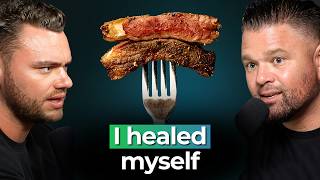
YouTube interview (hosts Josh Trent; guests Brett Ender and Harry Gray) where Brett describes healing from ulcerative colitis after years of medication (prednisone, Remicade infusions) through lifestyle changes, carnivore-style nutrition and later spiritual transformation (finding Christianity). Conversation links gut health to intuition (enteric nervous system/gut-brain axis), discusses environmental exposures (glyphosate), and shifts into the founders' CPG brand Noble Origins: beef protein isolate sourced from bones/organs (liver, heart, spleen, pancreas, marrow, small blood inclusion), freeze-dried into a shelf-stable powder, ~85 kcal per scoop, includes ~25 mg colostrum; claimed benefits: less bloating vs whey, suitable for many lactose-intolerant users. Themes include moving from anger to service, building brands with authentic stories, and practical habits for intuition (fasting, walking without phone, scripture).
Questions this video answers
nobleorigins.com
Remicade; stated ~$50,000 per blood infusion every eight weeks.
Approximately 25 milligrams of colostrum per serving; about 85 calories per scoop.
They cited that 80% of people have exposure to glyphosate.
They said freeze-drying yields about 80–90% efficacy compared with eating the actual animal.
Chapters
I cured a disease by eating all the foods I was told not to eat. That journey was actually the gateway that led me to God and to find Christ. Even when I was sick and facing death, I still wasn't self aware enough to realize that the shit that I was doing was what got me sick and in the hospital. And so what they tell you is that it's an incurable disease.
They actually told you that there's nothing they can do for you.
That's what they tell you. You're going to have the disease for the rest of your life.
Brett Ender and Harry Gray are the hosts of the Meat Mafia podcast and founders of Noble Origins. What do you make about the connection between gut health and gut feeling?
I don't think you can tap into your gut instinct if you have an inflamed gut, because think about all the inner work that your body is trying to do just to repair the inflammation that you've created as a result of your decisions. It would essentially be like going through life with a parking brake on.
80% of people have exposure to glyphosate. Your gut is one cell membrane thick. So if you have any exposure to glyphosate, it's going through your gut.
What is the pain that you think your age bracket is really drowning from when it comes to health? When we're faced with our own death like you were, you have to become the signal above the noise. There's no other way. Otherwise you die.
Yes.
How did you become that signal above your noise to actually live?
Even when I was sick and facing death, I still wasn't self aware enough to realize that the shit that I was doing was what got me sick. And in the hospital that came two years later.
Wow.
Yes. I was in the hospital bed watching like YouTube food videos. Cause I'm like, dude, I just want to go back and like eat it, eat a cheeseburger and get french fries and drink a beer and go back to college and just start banging chicks again. Like that was literally what my mindset was at the time in the hospital bed.
Yes.
There was just so much self worth attached to that stuff. And it was doing, starting to do the right things gradually that led to that night in 2018, which was about two years after I got sick. There was finally this moment of clarity of there could be some genetic predisposition. But brother, it really is the accumulation of the poor decisions that you made led to get you into this spot where your life is now affected. But how amazing of a story would it be if you write it, all those decisions and actually became your version of the person that you look up to on all these podcasts, like, how much pride would you actually have for yourself? You know, how would you be able to help people if you could actually put this thing into remission and teach people about how you. How you did it? So I think, I think for myself, it was like really just taking that responsibility for the decisions that I had, that I had made leading up to that point. And really, like, a lot of those decisions were just reflective of, you know, cheap dopamine, my self worth being so identified to baseball. And I felt like my baseball career had failed. So my way to cope with that was I'm just going to drink, womanize, eat like shit, and I'm going to feel like the man. And for that one night, and then afterwards, I just felt terrible afterwards, just like putting all of that stuff to bed, and then it literally felt like the rebirth of a new man.
Wow, that's a. There's a big story there. Okay, hold the bus.
Yeah.
Well, that was really good. What do you know to be true now at your age that you didn't know in your twenties that could speak to the heart and mind of somebody lost in their health journey in their 20s?
I would say that in my 20s, this is so relevant in 2025 too. It's very difficult to know who you should be taking advice from. There's been this amazing democratization of social media and the Internet. And what's great about it is you get access to alternative health practices that your standard American diet isn't teaching you. But at the same time, you don't under. Like, you can't really look under the hood of who this person is that's speaking to you. You just see someone that's super jacked and aesthetic and the telling you how to eat and how to train and don't do this and vegetables are going to kill you and this thing is going to kill you. And so as the everyday consumer, we, like, look, I just want to look good, feel good, lay a, have health, be just this awesome base layer so I can go do awesome things. It's very tough to distill between the.
Yeah, we're in an ocean of information. It's like we're swimming around. And then with AI and everything else, like, do you find, I'll pass this to you, Harry. Do you find that, like, the people that are attracted to Meat mafia are mainly men, or is it women? Is it both? And if so, what are they really Struggling with.
I think it's. I think it's a mix. It's like pretty much it's 60, 40 guys to female men. Yeah, a little more guys. And I think a lot of the. The guys who show up and listen to our show are younger. And honestly, I feel like Brett and I try to like, speak to our younger versions of ourselves. So it makes sense that it's like younger guys who are kind of the core demographic.
Yeah.
But there's also like the young moms who are looking for, like a little bit of the contrarian take on what it actually means to be healthy. And I think that we've done an honest job of trying to bring guests on who are going to just speak some truths that might go against the face of conventional health advice that your doctor might prescribe. But, you know, we try to take a holistic approach. And I think, like, a lot of times the people who are coming to listen to our show are looking for a little bit of information, a little bit of like a dress down conversation, something that's not like, overly produced, but brings just good, quality, authentic voice of reason to this health space.
On your website, there's investigative journalism, which I love, and there's never been a better time to have edutainment like Patrick Bet David has, the whole valuetainment thing. I think teaching is beautiful on podcasts, and I've learned so much in the past 10 years. But I'm curious, Brett, like, out of all the podcasts you've done so far, which one has really hit the heart on the nutrition standpoint? Because it seems like the majority of your audience, they're wanting to start at that physical part of the Pentagon, which I believe is the best place to start. Actually, the best place to start is wherever you are, whether it's mental, physical, emotional, spiritual, or financial. Start with one and eventually you'll meet yourself as you start to nourish the Pentagon. But I would assume, and let me know if I'm on the right track here, People come to you because they know your story. They understand your ulcerative colitis. They understand your journey, your journey too. With all this sinus issues and the health stuff you've gone through, what do they really want when it comes to nutrition? Is it just like not just carnivore?
Right.
There's more to life than just carnivore. What are they really seeking? I understand they're starting at the physical, but what is their soul really seeking when they come to your podcast and when they want to absorb this Knowledge.
That's such a good question. I don't think we've ever been asked that before. I think the people that are coming to our show are somewhere on the spectrum of, I don't want my doctor to be the CEO of my own health anymore. I think I can actually wear that title and crown myself that title.
Yeah.
But I just need the right nuggets and information to be able to be the CEO of my own health more so as a gateway to live an incredible life. Like, even with our podcast, like you were saying, it's very easy for someone to pick one nugget of your story and they just associate you, oh, this guy was blood 30 times a day. He's. He went carnivore to heal himself. He's the carnivore guy. Where it's like, that was just a tool along my journey. And really what I learned through that journey, it was actually a lot of stress, a lot of self identification with the way that I was as a collegiate baseball player and needing to just prove to everyone else that I was successful. It was a number of different factors that ultimately got me sick. The physical unlocks with nutrition helped get me out of that state. And I'm constantly on a. A journey now too, to just continue to tinker and experiment and get the most out of life. But I think it's free. I think freedom is the. Is the reason why people are coming to us. And the physical inputs can be. Can be this amazing nutritional gateway. Even for me, man, when we, you know, went carnivore first, then got into regenerative agriculture, then Harry and I started publishing these blog posts and Twitter threads and starting the podcast. And I view that journey was actually the gateway that led me to God and to find Christ.
Bright when you were blood and when you went on this journey. Because ulcerative colitis can unfortunately kill a lot of people.
Yes.
People die from this. So it's a very. It's a tender topic. Right. You started to work your spiritual frame and your mental frame and your emotional frame that allowed you to accept the changes of nutrition. A lot of times when people take on nutritional changes, they'll do it for like a few days and then they'll stop because there's no emotional, there's no mental, there's no spiritual connection. How did that formulate for you to. To let you really let those changes heal you, starting with the nutrition, but then it bled to everything else. You said you found God.
Yes. It's such a good question. And what's funny is that I got sick going into my senior year of college. And so what they tell you is that it's an incurable disease. So they're. What they're trying to do is just put you into remission through drugs and medication. The drugs have gotten a lot better over the last decade.
Told you that there's nothing they can do for you.
That's what they tell you. You're going to have the disease for the rest of your life. And what I say to that is, yes, if I'm not doing the right things, and we could define what those right things are, you will have that disease. But I'm confident, just based on my own experience and thousands of other people that I've spoken to, if you execute the right playbook, the first thing being, like, belief that you can actually heal, you can live this incredible life that's free of, like, you know, going to the bathroom and your life being dependent on the toilet and being worried about colon cancer and all these other things. But my whole point in saying that is, so I get on all these drugs and meds. It was prednisone, LI Alda, this biologic drug called Remicade, which for me was $50,000 per blood infusion that I was getting every eight weeks so I could, you know, hey, I want to go on this vacation. Nope, I got to get this infusion. That's a lot for people that have Crohn's and colitis. Their life is dependent on those biologic drugs. But I got that medication going into my senior year of college. But I still didn't have the correlation of, oh, all of these things that you did. The sleepless nights, the alcohol, the stress, the processed food, the self worth being dependent on baseball, that was actually what got you sick. I just thought, oh, I had a genetic predisposition at that time. I didn't take ownership over the things that I was doing to get myself sick to begin with. And, man, I just had this feeling when I. When I went back, I graduated. I didn't change much of my diet and lifestyle. I don't know, I just. I started noticing, hey, you. You look up to David Goggins at the time and Jocko Willink and some of these guys that Rogan is having on his podcast. But you're kind of a coward. You're really just a theorist where you enjoy getting the dopamine hit, but you don't do the things that these guys actually tell you to do. And then my first step was literally just lacing up running shoes. When I was living at home with my parents when I was 22 years old and just going for a run on my own for the first time and pushing myself at the gym. And then I started tinkering with. With my sleep and, you know, physically, I'm building the base. And then finally, in 2019, I happened to stumble upon Dr. Sean Baker going on Joe Rogan's podcast, talking about the Carnivore diet. And he threaded the needle between people that had autoimmune diseases with Crohn's ulcerative colitis. And this diet might actually be able to be the thing that can cure you. And for whatever reason. Actually not for whatever reason, because I had laid a base layer and started building confidence in myself when I listened to that clip, that was the first time I have. I remember having a conscious thought of, wow, I can actually heal this thing. They're a life of drugs and pain and bloody bowel movements. I can actually live a life without that stuff. And then once I had that belief and I figured out the playbook to the diet, I just went all in, and it changed my entire life.
So in my mind, I wonder how you feel about this, Harry. In my mind, I'm like, I'd rather just believe in something and have faith in something. Especially in my 20s or early 30s. That gives me fuel, that gives me hope, that gives me a capacity to love more or to care about myself and others more. It's just not the case when you're atheist. It's not the case when you believe that there's no point to life. There's no creator. We're just a blip in the universe. Can you go into how this is a really deleterious mindset?
This is crazy that you're bringing this up, because I was reading this book, Inner Excellence, this morning, and the author's a Christian. He's talking about just how we're designed as people to worship. And so if that an atheist is still worshiping, he's worshiping the no God. Yeah, exactly. So I think what you're hitting on is so, so important, and it speaks to, like, what your life could become if you. If you just suspended disbelief for a second and, you know, maybe put yourself out of the center of the universe and just put. Put yourself into this grand design of what could be. And then I think kind of like unpacking, like, world religion in general is really interesting. Like, most of the world religions today believe in the Genesis story, which is like this oral tradition that was passed down, you know, it wasn't written down, it was passed down verbally. And this, this idea of creation being this, you know, created by a creator and this story that is so magnificent, like all the different pieces of the world coming together. I think there's something to like, all the major world religions sharing the same origin story.
Yeah.
And I think that a lot of, like the scientific community, like, looks at the origin story of the universe and is like, well, this, this just sounds like a fairy tale, you know, But I think what is missing is these are actual people telling stories about kind of just the grand image. Like it's not necessarily supposed to be a scientific proof. It's supposed to be something that almost expands your mind, your belief of just how it all came to be. Right. And I sometimes wonder, like, how much of our connection to God is being drowned out by the fact that we never get to center of the stars. And think about how expansive the universe is, how the universe lives in every single one of our cells. Like, our cells are so unknown to the scientific community because they're so dynamic and complex. And that's just one cell within this massive universe. Like, the actual magnitude of what we're living through is so unprobabilistic that I think taking belief into the fact that you just being here is, is literally unbelievable.
It's a miracle. We are literally a miracle. And of course we're going to go here. How can I not go here with you guys? When you look at the real scientific data, if you pour through all the PubMed studies and you go through all the scientific literature about quantum entanglement and quantum theory, I think it was Neil DeGrasse Tyson. I'm not a huge fan of this guy, but he was interviewed by Rogan and he was like, yeah, when we use the most powerful microscopes and we went to the bottom of the cell to the highest magnitude, we found that the cells were just replicating on their own. Well, why is that? So science is actually in their kind of limited form without the spiritual connection to God, proving that something is creating something. Something's creating something at the highest magnitude of a microscope, at the lowest level of ourselves. It's just replicating on its own. So then one would ask, what's replicating? It's God, it's creator. So this is the part that I love about you guys, is that you talk about God. You're not afraid to talk about God, the creator. So did God bring the two of you together? And if so, how? Harry?
I think 100. Yes. I think Brett transferred Into. We went to college together and he transferred into Babson my junior year when I was studying abroad. And then senior year, we started to become lifting partners because just timing was perfect. Like I was lifting a bunch. I wasn't playing baseball anymore. Brett was injured, so he was in the gym a lot more. So we started lifting together. And it was just like this seedling of this relationship that I feel like we didn't even really realize at the time. And we weren't, I would say, like through college, like we weren't even like the closest of friends. But we had that like initial spark. And then fast forward like five years. We really hadn't talked together at all, Talked much together at all. Stayed in touch, and a mutual friend brought us back together. We started training for an Ironman during COVID and just through this like physical pursuit, this shared. I think we just had this shared value system and really deep feeling like we didn't want to let our potential go to waste. And I remember while we were training for the Iron man, we were walking around the Charles river in Boston just talking about life and connecting on this level that guys usually don't get to. But like quickly Brett and I had gotten there and I was just like, man, like 25 years. I think we were both like 25, 26, talking about where we wanted to go with our lives. And I just felt like this was a guy I could run with. So I. I just feel like God kind of like placed him in my life at the perfect time. We were both looking to break away from the corporate PAT path at the same time. And we got down to Austin and it was just like very clear after we had run the Ironman. So we, we come down to Austin, live together for a month leading up to this Ironman race. We run the race. Brett ends up staying down here another two months. I signed a full year lease down here. I wasn't totally sure I was going to move down here. And at that point it was like, man, we have to figure out a way to just go deeper on whether it's work or just some passion project to keep this energy, like the way that we're thinking about life. It's so much bigger than I think both of us had felt basically our entire lives outside of baseball.
Dude. So good. Yeah, you guys give me hope for the generation before mine. I really mean that. It's so awesome to be able to sit with younger. I'm 45. I just turned 45. You're 30?
31.
31, 31 and 30 so five years ago, in your 20s, your higher self can give that 24, 25 year old some serious wisdom and then imagine where you're going to be when you're 35. When you're 40, y' all got a head start spiritually, emotionally. Like that walk in Boston that brought you together. This is the stuff that so many of us as men and also women don't get because we're. Modeled it so differently from our parents and God loved them. Right. They're truly doing the best they can. Wholeheartedly believe that with the level of consciousness they have yet.
Yes.
And so many people don't have the skill set, especially even the generation before yours. If you could speak to them now about how to be analog, about how to be in conversation, have an open mind. This emotional intelligence of the 30 year old and the 25 year old is not as fulfilled right now on planet Earth as I believe it needs to be for that generation to become the one that changes the whole system for us. What do you make of this? I'm sure you get a lot of people writing in that we are that previous self of you.
Definitely.
What wisdom do you give them when they're like, I'm disconnected from my body, I look good, I have a six pack, I'm banging all these chicks all the time, but I feel so empty. I feel so empty inside. Where do you begin the conversation with them?
I think the biggest thing that I've learned the last year is that if you want to take what we're doing, for example, whether it's meet Mafia or noble, I do believe that in a lot of ways what Harry and I are working on is our life's mission and it matters so much. And at the same time, it doesn't matter as much as we think. Because I just find that when I gravitate towards the things that the flesh really wants, whether it's like dopamine, sex, money, external value, validation from other humans of our business, it's always been shallow and fleeting and unfulfilling. And I could just make a list of all the times throughout the course of my life where I've chased that. And I view that as God is continually giving the right, giving you the right signs that that's not what you're supposed to be going after, yet you continue to chase the wrong carrot. But what I will say is that I, I think men, we're, we're just. We're dying to understand what our purpose is. And how do I bring that purpose into. How do I Actually tangibly bring that into the world. And that's why I think God bring. Bring both of us together. What you said before we recorded was, hey, if you can take the time to get out of your routine and slow down a little bit, he in the world is going to show you these signs of, like, his blessings and things that you should be doing.
Yeah. And.
And Harry and I, me getting out of New York and Harry getting out of Boston, and us being in Austin, Texas, and just tapping into training for this. This pursuit of the iron man together and meeting people and being in a new city. We were just listening to what people were saying. People were like, you guys have really special energy together. Like, I don't see a lot of male friends like you guys. You should think about doing something together.
Yeah.
And then when you hear it for the 15th time, you're like, oh, maybe we should actually start something together.
I have a three Brady breadcrumb rule where, like, if I hear something three times from different people that don't know each other, I go deep. How do you stay committed to liberating yourself and from what you should be doing versus just trusting life and trusting God?
There's almost. I've never actually publicly talked about this, so I'm almost trying to work out a mental model live on the show.
But just go in your heart, forget about the mind, dude.
I almost have. It's almost pride for the certain fears that I have now versus the fears that I had when I felt caged in New York. Where the fears back then were. It was like, dude, what if I post this piece of content and all my former teammates just think a loser or they make fun of me or like, what if I'm the guy at the bar that's not drinking? Like these really low level fear fears.
Yeah.
Where now I almost feel like a sense of pride where I'm like, well, my fears now are like, dude, you're about to marry the woman of your dreams. You guys are going to have children. You have a business. You have a business partner, that closest friend. You're afraid of letting those people down. Like, that's actually a really. I think it's a good thing as a man to like, feel that responsibility towards the people and in. In pride for bearing more weight. And there's fear associated with bearing more weight, but I know the opposite of not bearing that weight and that lower level fear that would never go away.
Yeah.
And anytime you've ever worried about something like God is working it out every single time. My biggest fear in College was getting cut from the Seton hall baseball team before I transferred to Babson because I had a big scholarship and 30 offers and all my net worth was tied to baseball. Guess what, man? I played like shit. I thought really negative thoughts and I got cut and ended up being the thing that led me to Babson to meet Harry, to put us on the path that we're on now. It's like the worst thing that I thought could have happened to me happened. And it ended up being the biggest catalyst of all time. But to directly ask, to directly answer your question, the only thing that I am chasing right now is going to bed in my head, hitting the pillow, and actually being proud of the work that I put in for that day. And I don't mean work just in terms of like, oh, I was diligently pushing things forward for Noble. Like, did I tell the truth to Harry when we had a tough conversation? Did I wake up when I said I was going to wake up? And did I fuel myself with the right foods and go to the gym? Did I make time for the Lord and read scripture? Not in a check the box kind of way, but more of this, like, cumulative result of all of my effort for that day. And I'm like, dude, if you feel really good and you do that for enough days, like, I just think God is going to work everything out and you will be successful.
Well, that's why Noble is going to be successful. Because to really put your heart and have a story behind a product, people don't buy what you're selling. They buy you. They buy the energy of you in the product that you're putting out. I could come out with a methylation supplement and I could come out with a supplement and people would buy it because I would have a real story of my MTHFR and, you know, my methylation issues, and that would be real for me, right? But if I'm just hawking a product just because I see a white space in the industry and I know I can make a lot of money, people are going to feel that. People are going to sense it. Like, they're going to know. So the fact that, the fact that this carnivore and this, I guess you could even say ancestral way of eating, has transformed your life and your life and so many people's lives that have already eaten the product. There's a reason it's at SunLife, right? Like, the. The success that it's having is really a clue for the success that it will hold. Do you sense, do you trust in that.
I sense that. And I. And I sense, too, you know, what we've. We've almost unintentionally hacked is that. And you know this so much better than us. When you have a podcast in your. For, you start punching above your weight with guests, like people that you've looked up to for a long time, it creates this realty of man. Like, Josh is such an amazing guy. He's so smart, he's so talented. And at the same time, like, when I see Josh's beautiful house in his podcast studio, maybe I could do some of the same stuff for myself, too. Like, it creates. I think it's almost like, created that belief that allowed us to start Noble. And then I would say with Noble, there are these synchronicities where it's like, hey, this person, you know, buys the product on subscription every month, or like, hey, you know, Khalil saw something in it. He wants to put in all of its. All of its stores. And you become proud of those wins, and then you. You become proud of the product. And there are a lot of moments where Harry and I will just look at each other, and we're just like, dude, we have. Like, we have something special here. And let's just like, let's pray to work hard and be humble, too, because.
There'S lots of protein powders. There's lots of stuff out there, dude. Yeah, the market's pretty.
It's pretty saturated.
However, what's not saturated is honesty. Honesty is not saturated, and I don't think it ever will be, because there's a fleeting financial allurement that happens when you sell a product, when you see a white space and you think it'll do good based on research other than, wow, this founder actually has a real personal story behind this, and I can feel the energy in the product. I actually told you guys that I let go of the producer for the podcast studio because the energy wasn't right. Energy, frequency, you know, Nikola Tesla and cymatics and the science of sound and Paul Chek and spiral dynamics, you name it. Like, the frequency of everything can be felt, but it can't always be spoken. It can't always be recognized with words. So the frequency of your healing journey and of your healing journey and of the gift that you want to bring to people is actually baked in and infused in the powder. And that's the beauty of it. And so, yeah, if you. If you want to experience the frequency of a product, I would say first go to the founders. First go to the origin of the Energy that created it. The energy conversation can get a little bit scary for people. It can be a bit esoteric. So I'll just break it down scientifically, and then I want to hear from you guys about it. When you put your heart and soul into something and you're honest with the craft and you're really putting out the best thing that you possibly can, regardless of what the product is, it's eventually going to become successful. It can't not become successful, because God only hears.
Yes.
God only hears.
Yes.
You know, you can do anything in this world if you're doing it in a pure heart and with the right intention. Eventually will you face pitfalls and roadblocks for show? You definitely. You definitely will. But eventually, like, look what I've created. It's like. It's like an emotional moment for me every day when I get to do what I do. I'm so fortunate. I'm so fortunate. But I've put my heart and soul and blood into what I do. Right. So that's why you get inspired when you come to my house and to my studio, is because you can feel my heart in it. You can feel my intentionality. That baked into everything. The table, the equipment, all of it. And this is the stuff that. That can be a bit scary for people that have been disconnected intuitively from actually sensing and feeling energy. So how do y' all practice sensing and feeling energy? I bet nobody's ever asked you that on a podcast. How do you. How do you strengthen your intuition to be able to somatically enteric nervous system, feel people, feel things. It's the same wisdom that God preaches, right? It's the same. You probably know a lot more scripture than I do, but it's about believing before you see it, essentially.
Right.
So whatever that is, don't let it scare you all, because just because esoteric and you can't see it doesn't mean that it's not there.
Yeah. I think the first thing that comes to mind for me is, and my pastor says this is. Faith is spelled R I S K. Like you need to. If you want to feel a gut feeling, you actually have to go take a. Go take a risk. Like, be willing to see the downside of a decision. You know, we've. We've hired a few people that didn't work out, and it's like, well, we had to take the risk in going out and making that mistake in order to learn the lesson. And I think if your intentions are pure, like you're talking about, you're always going to revert back to, okay. We had to go through that. This is part of the process. And if we're going to build something that that lasts, we have to learn from that. And that intuition is being built up over time. Like. Like anything else, it's. It's a muscle.
So is it beyond just going to church and having a connection with God? Because there's a lot more there for me. I'm just curious, like, is that the only thing, or how else do you build your intuitive sensing faculty?
Yeah, I mean, I think for me, it's getting into scripture. It's getting. Getting silent, getting still being in relationship. Like, having people who can spar with you in terms of. Like, okay, this person's really testing me right now in terms of my patience and the things that I'm reading that I am supposed to be embodying. Like, I'm not feeling like I'm that person right now. What. What am I not being or. Or what is this person doing that's making me feel this way that I can reorient myself? So I think there's a lot of. Yeah, just kind of like basic daily habits that I try to do. Like, I think there's, like, fasting is one where it, like, totally helps me unplug and, like, reduce down to the core of kind of, like, how I'm feeling.
Like, what's been your. What's been your codes on fasting that are giving you more sensory awareness?
Codes is in just like.
Like, knowledge awareness. Like, what codes is a. Cool. I got it from my buddy, Alex Wolf. I don't know if y' all know him. He's the founder of Eons. Just love it. They have a legal microdose. It's amazing. One of my favorites. It's legal, and you take it, and it works on the GABA receptors. Anyways, the reason I'm asking you that is because he has this phrase of codes, which in the Austin community, people say, I got a spiritual download, brother. And I'm just like, shut the up. Like, what are you even talking about? But the code would be. Would be in the game of life. What's a code that you've learned beyond just the scripture that allows you to be more in tune with your sensory mechanisms, with feeling energy, with putting energy into things.
It's almost that point in itself. I think fasting has taught me to be aware of the patterns that I'm constantly in that I'm aware of, and the patterns that I'm constantly in that I'm fully unaware of. There's things that are happening on a day to day basis that I don't even realize. The negative self talk that was happening for months and months and until I actually put a pin in, it was like, dude, I'm actually just like bashing myself right now. And it's not, it's not resulting in anything bad. But like, other than kind of not reaching my like potential as a business partner or fully being available for like everything that people are asking of me or things that I'm trying to pour myself into. So yeah, I think it's taught me just to be have that heightened awareness, like limiting food intake and limiting distraction, like fasting from technology too. It's like just kind of teaches you to just be more aware, be more present. And that in itself, like, if I could plug into just full presence more regularly, that will just be a constant teacher because it allows us to see ourselves for who we are and really wrestle and come to terms with like the things that we're struggling with, which I think is. It's easy to escape, constantly escape those things, even if you're escaping into things that are good.
There's a podcaster out there, his name is Sean Stevenson. He hosts the Model health show. And he, he wrote this book, Eat Smarter. And he talked about food as being information, which I love because it really is. Right. If you break it down, food's just like we're plugging food into our electrical system, our digestive system, and we're giving our body information. So if we're giving our body information that is like filled with formaldehyde and seed oils and it's confusing the body, well, then our mind is going to be confused. Confused as well. I mean, you don't have to be a scientist to figure this out. So when we fast, I did a four day fast twice actually, in nature. It was a vision quest. And I got the most spiritual connection to God. I was having a conversation with my grandfather in the middle of the forest, like tripping out, no psychedelics needed. Yeah, like true spiritual downloads though, not just like saying it because I want to hashtag it on Instagram. Like so I wonder for you, how have you, Brett, is it fasting? Is it scripture? What other ways can you share with not just your age bracket? This is for all of us. Right? You just happen to be getting into the codes early in your life, which is amazing. What other ways do you build your intuitive faculty on your sensing mechanism? And what does that look like for you, man?
Something that I've Rediscovered, which is so basic but so profound, is making the space to do the things that cultivate that feeling. And so what. I mean, I think the best example for me is I was noticing that even though we're building a business centered around health and wellness, I got away from a lot of the practices when I was living in San Diego that got all my creative juices flowing and that. That great intuition that led me to want to start Meet Mafia and Noble with Harry. And the biggest thing for me was like, actually just going outside in the sun to walk without my phone for 30 plus minutes at a time, because I manipulated my brain into thinking, oh, well, if I'm not just banging away at the business 24 7, I'm not being productive. And what I've learned is that getting back to just myself, my two legs, son, God, the quality of thought that I'm having is so different. And I was noticing that the more that I was doing that, my thinking was actually changing and I was like, oh, I actually want to be more creative and I want to go hard at the podcast. And, hey, maybe we should think about doing this with Noble. And we're, you know, hey, we're listening to too much about what our investors and these credential advisors are telling us to do. Like, we need to get back into the, like, the heart and soul and why we started this thing all the time. So walking has really helped me bring that feeling out. And what I also just fundamentally believe is you said this earlier, that we're, you know, created by the creator in the image of the creator. And I think God has blessed us with the best gut instincts out of any animal, which is why, you know, which is why we're human beings and we just. We're. We just constantly go away from that gut instinct. And what I've learned is that when I look back at the course of the good and bad decisions I've made, my gut decision was typically right where I. It was literally just a feeling where I'm like, I know that this is the right person I should be doing business with, or, hey, I know I shouldn't go down this path, yet I let other factors preclude, like, prevent me from listening to that gut instinct. So what I've learned a lot for myself is that I probably know what the right instinct is. But I found that my tendency is to actually be a people pleaser. So say we talk to someone that wants to pitch Noble on services. There might be, like, one or two things that I notice about the way the person's speaking or what they say or just their body language. And I know that that's not the right person. Yet there is still this, like, people pleasing where I maybe create reasons or justifications for why we should continue the conversation.
Yeah.
When really, like, my gut instinct knows.
Yeah.
And when I look back on all those decisions, it's always known the truth. It's just, do I listen to it or do I let these other factors get in the way?
This is so good. And I've talked about this a few times. This is. This is gold, you all. So the gut brain axis is very potent. So the enteric nervous system and then up the neural tree to the brain and the gut brain axis of how basically our microbiota communicates with the cells in our brain. I love this. Am I an expert on it? No. But at least I know the basics of it. You said gut instinct. What I find that's really fascinating is that when people are taking in that information from food that is toxic with seed oils and all this stuff, they're actually blunting their gut. They're. They're shutting down the natural microbiota that would increase that capacity or connection with their brain. So they're. They're actually numbing their ability to have a gut feeling. And then when you stack on top of that trauma, like if somebody's experienced sexual abuse or physical abuse or just abuses of any kind, the. The gut starts just going into like, hyper vigilance and protection mode. So the gut feeling that you're talking about, it's a noble thing. It really is like having a gut feeling and knowing the truth. It's really easy to say out loud and like, yeah, just trust your gut. And most people that their guts are all messed up. They're like, what are you talking about? Trust my gut? My gut feels terrible all the time. I keep attracting men that leave me or I keep attracting women that cheat on me. So I wonder the connection that y' all can make between gut health and gut feeling. Because at first audible, it might be a little confusing. So what do you make about the connection between gut health and gut feeling?
I don't think you can have. You can tap into your gut instinct if you have an inflamed gut, because think about all the inner work that your body is trying to do just to repair the inflammation that you've created as a result of your decisions. Like, I just, I don't know if we can. It sounds like we can prove this through science. I just intuitively don't think that your quality, it would essentially be like going through life with a parking brake on. And that's partially why we're so inspired to talk about what we're talking about, because I know what it feels like to have that feeling and then actually do the right reps and iterations for an extended period of time and come out as this different person. You're like, oh, not only do the abs or whatever, that's just a byproduct. I actually feel more confident to take that risk. Or like, hey, I'm gonna go ask this girl out that I met a couple years ago, and I thought she was really cute. And I was afraid at the time, but now I have confidence where I'm gonna go talk to her. It's all the ways that getting that gut instinct actually correct and that. That metabolic health so you can go out and be a. Live an incredible life. Like, that's actually the secret sauce of what we're trying to talk about.
Yeah, we need to bottle this secret sauce and sell it, guys. If we can think about making some sauces with.
With the noble protein, it's called the secret sauce. Secret sauce.
Okay, so. So then let's get into it. So the. The repair of the gut can actually give us more intuitive faculty to have a gut feeling.
Yes.
So then when we look at repairing the gut, we. We know about the. The healthy chain fats in animal products. How do you get the animal products in powder form to actually heal. Help heal the gut instead of them being in their natural form? Like, what's that process look like? And how can actually this protein powder, the noble protein powder, help to repair the gut and inflamed gut?
Yeah, I think it's the. The parts of the animal that we're actually sourcing it from. So, like the beef protein isolate, it's coming from the bones, the bone marrow, the leaner parts of the animal, a bunch of different organs like liver, heart, spleen, pancreas, bone. A little bit of blood in there.
You still make it taste good.
You can still make it taste good.
It is pretty good. Vanilla is good.
We sweeten it with stevia.
Yeah.
Which is. Which is interestingly polarizing to a lot of people, because Harry and I have drank stevia for years, never have had any issues with it. We feel like it's a better alternative to a lot of sugars and sugar additives that exist out there, but it's really just the parts of the cow versus, like, whey protein. There are quality whey protein powders that exist. They did 100 could be a quality product, but because weigh in itself is just a byproduct of the cheese making process. You're just getting these industrial pumped up cows taking their milk and then just taking the waste product of that milk, packaging it as a protein powder for insane margins, and then you're just selling that to your customers. Where we almost stumbled upon beef protein isolate because we just starting, we started talking to manufacturers and we were like, I didn't even know beef protein isolate was a thing. And then we started doing more research and seeing some of these facilities and things like that and being like, damn, like, this is a, this is legit. Why Is this only 1% of the protein market is beef protein isolate. Yet the most consistent piece of feedback we get from customers is this is the first protein that actually doesn't make me bloat. And it's like, oh, it's not the cow, it's just. It's the part of the cow that you turn into the protein source.
Why does the whey make people bloat?
I think it's the concentration of the specific whey protein. So like if you're a waste product, the whey, it's a waste product of cheese. Yeah. They had.
So we're eating waste product. I don't do whey, but many people do.
Yeah. Not waste as in like they've turned it into a product that they are just like the part they used to throw away. Yeah, they're just throwing it away. Yeah, yeah. So I think you're just getting it in like this protein in like the most high singular. Like it's, it's not in this complete form where, you know, if you have a thing of cheese, like it's going to come with all the different types of proteins, the enzymes that come along with that. You're just getting a specific whey protein which I think in the concentration your, your gut's just not used to.
Got it?
Yeah.
Because it's, it's essentially been heated, it's been treated, it's been cut off from the cheese. So it would make sense that it would be some incomplete infrastructure in the protein itself.
Definitely.
For people that have lactose, does your product bother them if you have lactose intolerance?
It doesn't. There's. There's 25 milligrams of colostrum in it, which is a very, very small serving. Like at least a gram is a full serving. So we put a tiny bit of colostrum in there just to give you exposure to it. But the protein source itself, like if anyone is lactose intolerant, what we see a lot is, hey, I couldn't do whey. I, I opted for like a plant source or a p source of protein that didn't digest super well.
Oh wow.
Beef protein isolate actually exists. And it's like these, these collagenous parts of the animal and the leaner parts of the animal too. And it finally doesn't bloat me because it's what I'm supposed to be consuming. It's almost like with carnivores, there are a lot of carnivores that don't consume dairy because it's like the, it's the, it's the meat, it's the bones, it's the organs that tend to digest really, really well and be super bioavailable. And dairy can be that too. But there's just like a lot of forms of industrialized dairy. They're just really harsh on the stomach which is why the quality of where you source from matters so much.
What's the biggest difference between whey protein and beef protein isolate?
The biggest thing is just that the whey is all dairy because it's coming from the milk of the cow. Where beef protein does not come from the milk of the cow, it comes from the actual muscle tissue in the bone in the hide of the animal.
Yes. Okay, so how do you get it from the cow breathing on a field to the powder form and not lose the bioavailability?
You are losing some of it in the freeze drying process. I think they say about it's like 80 to 90% as efficacious as eating the actual animal. Which I think for a lot of people if you're supplementing, you're okay making a little bit of trade off there for convenience.
So it's hard to eat like 15 pounds of beef a day.
Totally.
That's going to wreck your digestion.
Yes, totally. So if you're able to make that trade off and the convenience factor of the protein powder through the freeze drying process, like it makes it so it's easier to get protein which so many people are struggling to do. Yeah, that freeze drying process simplifies so much. Like it makes it shelf stable for two years. You know, it makes it so it's portable, convenient. So when you're on the run you can still have that protein with you. So yeah, it's through the freeze drying process that we're able to do that.
This is game changing for lactose intolerant people. I did the, the 23andMe back in the day, before I knew they were going to sell my data even though they told me they wouldn't because fuck them. But now I know beyond just the 23andMe, I had these memories of being a kid and I would be like in the toilet every day at school, like just like hurting my parents. Didn't know I was eating like kick cereal with like 2% low fat milk. The worst possible thing. That probably led to my sinus issues. That probably led to my chronic antibiotic use. It led to a lot of things and they just didn't know what they didn't know. So I think this is really powerful. What would you say to somebody that has tried a lot of protein powders and, and a lot of stuff that's irritated their gut, especially speaking to the lactose intolerant person that the beef and organ isolate could really give them relief on?
Yeah. Well, I think the encouraging thing is that if you're just optimizing, you don't, a protein powder is a supplement by nature. Right. You don't, you don't absolutely need it. Like there's a lot of people that I know where they don't take powders because maybe they work from home and they're able to cook 24, 7 and they hit their protein goals. What Harry and I found when we were talking about shifting our stance and pulling these big levers, just being able to get a gram of protein per pound of ideal body weight is such a huge step in the right direction. Like it's one of the most macro level things you can do.
Yeah.
And for example, I couldn't tolerate whey protein powders at all or plant based proteins with the uc. Once I figured out that beef protein can work, I just incorporate it just very uniquely throughout my day where like in the morning I make a dark cup of coffee, I throw two scoops of the vanilla in, I throw a little bit of ghee in there, some cinnamon and egg yolk. I blend that up and I'm like, dude, I'm at 50 grams of protein just to start my day. That's a solid shake right there and it tastes delicious. And there's caffeine and things like that.
Throw an egg in there. Like rocky.
Yes.
Wow.
So I think it's, I think it's almost, it's for the customer that he or she knows that they need more protein. And just imagine that there's a world that exists where there's a company that's worked so hard to create you a powder that's delicious. It gives you the nutrients, and it won't bloat your stomach at all. And then you can. Can very effortlessly get more grams of protein, and so you don't have to worry about all the minutiae.
I love how just through my own curiosity and the energy of this conversation that we got from gut health to gut feeling.
Yes.
Like, what a beautiful transition. Because, man, it's so important. I think the data. Maybe y' all know the data. I think it's like 70% of people that have leaky gut or dysbiosis. Maybe more.
Dude, it might be more. I was reading more. I was reading on the way in here that. That 80% of people have exposure to glyphosate and glyphosate. Your. Your gut is one cell membrane thick, so it's like if. If you have any exposure to glyphosate, it's going through your gut.
Yeah.
I bet you it's higher than 70% potentially.
Well, yeah. And that's just the people that are reporting, right?
Yeah.
So. And it's like that with all these placebo and blind studies, you're still getting a control group where people volunteered to submit data. What about the millions of people that aren't submitting data? That would totally skew the results. Right. So I wonder, from a gut repair standpoint, it's like, yeah, there actually is people. There are people that have, like, ulcerative colitis and autoimmune issues. Like, all of this stuff is welcome at the table. But what is it about the organs specifically? Because I know this is another code. This is another really cool code for the video game of life. Our ancestors used to eat the organs first, and they would eat, like, even the eyeballs, and they'd eat all the stuff that had the collagen and the colostrum and, like, the bone marrow with all those purines and the protein content, it's so powerful, but it just hasn't been edible for most people. Like, try to give my kids bone marrow. Well, actually, I think my son would love bone marrow. That'd be amazing. And how do we make this applicable for people besides just smoothies? Right. Because smoothies are great. I think they're an easy transport. You can. You can. Can you put your product in water?
Yeah.
Yeah.
Okay.
So you throw ice in water all the time? If I'm cutting a little bit, because it's only 85 calories a scoop.
Oh, great.
But it's still to your point point. It's not a full serving. Of organs. And that's what's interesting about the US Diet in general, Man. It's like, you go to these other countries, they have all these prized, delicious dishes that have different types of organ meats and things like that in it. Bone marrow, like, these things can be a delicacy. But I think we've manipulated ourselves into thinking that, oh, if it's not the. Just the muscle meat of the animal. Yeah, it's gross. And we shouldn't eat it at all, too.
Yeah.
And I feel like our ancestors, they just intuitively knew, hey, if I'm eating the different parts of the animal that we're harvesting or hunting, I'm going to get exposure to different micronutrients that I might not be getting through the muscle tissue. And I think that's the best argument to be made if you want to go a little bit further down the rabbit hole. We've heard that there are studies that are essentially locked in Germany that have scientific research that proves the. The whole theory of, like. Like supports, like, so if you eat bovine liver, it supports liver health. We actually, we met a guy that did a lot of that. That research and, like, uncovered those studies in German and, like, translated them to.
The US So if you're having eye issues, you could actually eat animal eyes. If you're having liver issues, you could eat liver.
That's like. That's what this. That's what these papers.
I mean, it makes. It makes, like, intuitive sense. Why. Why wouldn't it? Because it's made up of the. The substance that the organ is made of, too.
Yeah, exactly.
That would make sense. Yeah.
We think that sounds crazy. And then we have no problem just eating, just seeing hot Cheetos in the airport, all over the place. You know what I mean? It's so crazy.
Hot Cheetos are not found in nature. Okay. Yeah. There's no hot Cheeto tree. At least I think not. Maybe in, like, a psychedelic journey. So. So making this applicable for life is like, how does noble become the signal above the noise? How do you do that?
I think what we're really going after is, and we touched on a little bit, like, the product is designed to be simple. And I think that that simplicity is at the heart of what we're trying to do. Simplify your life in a way where if you need to get a little bit of extra protein, if you need those micronutrients from the heart, liver, pancreas, spleen, the colostrum, the collagen that's in there, if we can just Play a role in simplifying your life, in showing you that these foods are Mother Nature's, like, like perfect foods. These are God's perfect foods. Like, that's all we're trying to do. And if you can go find the more pure version of it through, you know, real food sources. Yeah, that's incredible.
I use supplements every day, multiple times a day, because I know that I'm not in my grandparents generation anymore. Like, they had great soil, they had great water. We don't have any of that if you look at the research on soil right now. And by the way, the reason y', all, I'm saying this is because all this whole conversation of nutrition and food directly impacts our intuition, our gut feeling, which then allows us to make better choices. And so I'll go back to you on this one because you had said on your website that you're, you're fighting against something. And I want to challenge you on that because I find that whatever I fight, I feed. And so is it really that you're fighting something? And if so, what I want to, I want to go into that a little bit. I want to, like, respectfully challenge you. Let's get to the good in the conversation. So are you really fighting against something?
I think in the beginning how we, how we grew the show and grew our meat mafia following was kind of like artfully breaking down through the form of threads and blog posts. Just the different series of events that had happened that we felt led to the food system being so broken. So the hyper industrialization of chicken, like Chicken has gotten 350% larger. You know, the American Heart association paying off Procter and Gamble to demonize saturated fats and promote vegetable oils. We told those stories for like a year straight. Yeah. And so I think at the beginning we really felt like we were warring against these big food conglomerates that had just duped so many Americans and just led to, you know, just so much chronic disease and death and things that we viewed were preventable. So there was a little bit more of an aggressive mindset, but I think you're spot on where, like, what are we feeding? I think we're trying to feed our audience towards just fulfillment in life, dude. Physically, spiritually, mentally. And like you so adequately said earlier, where it's like, it's like this flywheel where all these things play off of each other. Where, you know, your gateway drug might be, hey, I'm go Carnivore for 30 days and take control of my food for the first time. And then I'm Actually, I'm walking without my phone, and I feel the sun, and I feel God's presence. Oh, maybe I'll, like, start going to church or something like there. It's just this beautiful flywheel.
Yeah.
And I think that's what we're trying to fulfill, because I think what Harry and I have pride in is the way that we're. The way that we're living our life, and the feeling of pride that you have creating a show 10 years in the making and what we're doing with Meet Mafia Noble, and just that feeling of holding our bag for the first time. I remember thinking, like, I. I feel like so many men are just dying to hold something that they created, and women, too. And I think that's really what we're trying to feed, is how do we get people.
Yeah.
On that fight.
Yeah, just get them in the game, dude.
Get them in the game. I like game more than fight. And by the way, I'm not shaming y'. All. I'm just pushing back on that because, like, you know, I'm 15 years older, so I. I've lived a little bit longer. And I totally relate to being so angry at the seed oil conversation, at the butter conversation. I mean, it's like, I live that world. I lived and breathed it for, like, five years, and I put out so much content on, like, how broken the system is. And then at some point, I'm like, all right, like, I don't need to yell about this anymore. Like, but so I respect where you were at, and I also respect where anybody's at in their maturation process of, like, before, anger is despair. So anger is so much more potent than despair. I think it was Arnold Schwarzenegger that said that in Terminator 2, right? He's like, anger is more powerful than despair.
It is.
It was a little seed of wisdom that was being planted in that movie. When you're in despair, when you're broken, when you're shitting blood for months, when you're dealing with health issues, when you're broke, the last thing that you want to do is take away someone's anger. That is the most disempowering thing you could ever do is try to quell or sedate anger. And I think this conversation of, like, sacred rage or sacred anger is really important in our. In our maturity process. Because, you know, there's despair, there's shame. Then above that, there's anger, then there's courage and acceptance. And I think at about 250, there's neutrality. Then you can actually do the work on the Hawkins scale to be like, all right, how can I bring love to this situation? How can I bring presence to this situation? How can I bring maturity to this situation?
Yes.
So I fully respect. And I walked it with the COVID Shmovich. I mean, I was like, for two years, I was just, like, banging my head, banging my hand on the pulpit. Like, you guys, take off the diapers. Stop doing this experimental. Like, you're not a slave, you're not a rat. You don't have to go this route. And then I just got tired of being angry, and I got. I got tired of being sick because I was so pissed off about our world and our environment and these really totalitarian structures that run the food industry, that run the insurance industry, and actually run agribusiness as well. They all meet every year in multiple meetings. Right. How have you all transferred from the anger to the acceptance to the service? Because that's really what the maturation process of Meat Mafia is and is going to be. It's going to be like, hey, now that we know the 200 podcasts where we realize that butter is actually good for you and it's okay to eat a steak.
Yes.
Where do you go from there? Right. Like, what's the next step in bringing love and acceptance and maturity, which is really power.
Yeah. I think we. We really do try to empower people with the message now. Less so. Kind of like uncovering these. These injustices within the food system.
It's kind of fun to poke fun at them, though. It. They're great just to do satire. I'm like, I like the satire.
It's fun, dude. It's definitely fun.
Yeah.
But I think at a certain point, you have to. You have to realize that more people are out there with ears that are sensitive to that harsher tone. And I don't think we ever really picked up, like, a harsh tone at all with the way that we were going about things. But I think there is a point around just, like, standing up against injustice, injusticeness. Like, sure. You know, our generation is the generation that's been told masculinity is toxic and all these things that are just complete lies. And I think there's a way to quietly, sternly stand up against that stuff. And I think that that's kind of our role to play and not do it in a way where it's like. Like we don't have empathy or love for the other side. Yeah. But it's like, we're not gonna just back down because you think that you can, you know, sell a product, sell seed oils to kids and profit off it, or sell, you know, these toxic foods to kids and profit off it. Like, we're not, we're not gonna stand for that. So that's kind of more of our message, I think, is like these, these are more or less good people in a broken system.
You're sitting right next to a mentor that I don't even know if you know, you just quoted, right? Martin Luther King. So he said that evil flourishes when good men do nothing. I just like, almost makes me want to cry. It's so powerful. Evil flourishes when good men do nothing. So I feel like our role as parents of self and parents of our businesses and leaders of our families and this could, by the way, this could be, you know, not gender specific. There are a lot of single moms out there that are the leaders of their families. You know, my heart goes out to him. Right. But when we see evil, when we are approached with evil, it's not just cowardice, it's actually our tacit approval of evil continuing. And that's the part that's hard to hold. So I wonder how you hold those two worlds. Because, you know, I'm sure your faith is a big part of seeing evil for what it is and recognizing how to bring love to injustice, but also dealing with the fact that you're a fucking human being and you're going to be angry sometimes and, and like, how do you hold those two worlds, Brett?
You're saying the, the hatred versus, like.
Being human being pissed off, that like people are being told that butter is bad for them and steak will kill you and eggs are toxic and masculinity is toxic. And just honestly, all this garbage that's coming from fear. Yes, that is inherently at the core of it, God experiencing God's self through that. So I believe everything's God. I do. But how do you deal with that and also being a human at the same time? Like, what's been your maturity process there to hold the two worlds?
I think it's doing some honest reflection on if we actually want things to get better. What are the things that I actually have control over? And me trying to tell the truth about these certain macro level issues and then me getting really pissed off and frustrated and angry, is that really contributing? And I think also too, brother, if I'm being totally transparent, I think both Harry and I rode like the ultra purist nutritional line for a long time. And you start to realize, like, hey, I started Doing this because I was so desperate to heal. And then I remember just starting to ask myself questions where I'm like, okay, everyone knows me as the carnivore guy in the podcast. We're talking about carnivore and raw milk or going the most viral and during the most popular. They're great for the business, but I actually enjoy fruits and vegetables and I actually like, like to go back home with my parents in New Jersey and have a pizza and be a normal person or maybe drink a Celsius every once in a while too. But I'm speaking about these things almost like puritanically. Like a purist.
Yeah.
In that I felt this, like, weird, like, dis. This conflict happening where I didn't feel like I was being authentic. And then I started feeling more resistance towards the podcast. And so Harry and I have had this really awesome evolution where I think we've taken the pressure off of ourselves, where it's like, let's just, let's create content that we're truly the most passionate about, that we really think will. Will add value to our audience's lives. And let's focus on like, the big levers and the individual person taking autonomy. Because I think how we spread this thing and, and actually fix this is Josh taking autonomy over his life, Harry taking autonomy over his life, Brett. And then we just try and hopefully do that at scale, one person at a time, and not on the farmer that's, you know, growing grain, finished meat, or this person that's eating that food or the guy that's touching receipts. And I don't think people eating kale is the reason why we're so metabolically unhealthy. Like, let's focus. Let's like, let's focus on the big lever issues, right? Like, we sell a protein powder that's technically a processed product, but we think that it's better than anything else on the market. And if you're a woman, you're probably struggling to get good quality protein. Is it quite as good as a grass finished steak? No, but it's pretty damn good. And it's going to help you move the lever in the right direction. So it's been focusing on that man, like, just taking the pressure off of it. Do you know? And just also the.
The lit.
Like listening to yourself, how much freedom.
Did you give your nervous system when you move from puritanical nutritional dogma to acceptance for everybody on their journey?
The most freedom.
How so?
I felt like I was just following these rules with such rigidity and being so afraid of doing certain things. And I remember just poking my head up and being like, do I actually believe this? Or is there some ego associated with the fact that this is what my audience knows me for?
Yeah.
And if you continue to go down this path and pretend like this is what you're doing or this is what you believe, are you going to feel like you're courageous or are you going to kind of feel like a coward? And I really felt like that. I think. I think that's a big driving factor for me, man, is like, you were talking about the mental freedom you get going to bed when you tell the truth to your. To your audience. Yeah, I know the feeling of, like, lying on camera to my audience. And I go home. I remember going home and being like, dude, I feel like such a fraud.
Yeah.
And the most vulnerable that I've ever been is when the audience will send you that amazing DM of like, hey, I really needed to hear this, man. I was struggling with this, too, so.
Good, because the truth is light. I'm gonna go second simplicity. To quote Mark Gaffney, I used to say reductionized. So what I might say might feel reductionized, but it's really second simplicity. The truth, whenever we feel it, like right now, if you just check in with your gut and your enteric nervous system, you know, like, we're in an engaging conversation. So you're not in complete bliss and peace, but it's pretty fun. Yes, it's pretty enjoyable. And so, like, you're not thinking about aches and pains or, you know, you're just resting in who you are. Are. The truth is light is what I'm saying. The truth is really light. The lies feel super heavy.
Yes.
So whenever I. I really poke and prod on my guests, because I can tell when they're tweaking or when they're lying a little bit, and I'll just go for it.
Yes.
And I'll. And I'll, like, hit their nervous system. I don't know if you've ever felt this on a podcast. Like, the guest kind of squirms. Like. Like, it's almost like, you know, you got them.
Yes.
Yes.
It's like spearing a fish, and they're.
Like, you don't have to name any names, but you know what I'm talking about, right? Oh, absolutely. And then it's the audience getting to see that you're a beacon of truth. You're a soldier of truth. Right. And so this truth conversation is really interesting because there's objective truth and then there's subjective truth. And I believe. I wonder how y' all feel about this. When we are moving through our objectivity of truth as a subject, the truth is always, always getting renewed. Look at Paul Saladino and how he started out. Everything was just like, steak.
That's it.
Not even salt. I remember he was on a podcast once. He's like, I don't even put pepper on my steak. Yeah, pepper is for peasants. That's how much of a purist he is. And now he's eating mangoes and bananas and all this stuff. What I'm saying is, like, we have to be willing to set aside what we dogmatically believe is the healing golden ticket of our health or the healing golden ticket of ourselves to be renewed based on where we are in our spiritual process and our maturity process. Do you all relate to this 100.
I think just cure. Like, if you can get to a place where someone shares some health practice, that would normally make you frustrated or critical, but you can change that to curiosity.
Yes.
That's like. There's so much gold in that. Like, I remember having guests on where I would initially be skeptical, and I'm like, well, they actually look and seem healthier and happier than you are, so maybe there's something that you could actually learn from that person, too.
That's right. It.
Yeah, it's. It's. It's just like letting, like, just. The thing I struggle with the most is just judgment of other people, because I will judge someone for one thing, and then that same day, I literally go do the same thing. It's so humbling. So that's why I have to, like, continue how God works, right? Yes. Yes.
I'm going to show you how. You were actually casting judgment. So what I'm about to say, I'm not recommending y' all do ketamine, but I had a really powerful ketamine journey, and it was at a buddy's house, and I was going through maturity process to be able to ask my now fiance to be my wife, which is amazing. It's so beautiful.
Congratulations, by the way.
Thank you. Thank you. It's amazing to see it. All right, well, you guys can come to the wedding.
Yeah, so.
So you can't sneak out of that one. So I. I look in the mirror, and I'm on, like, a fairly mild dose of ketamine. I actually don't need a lot. Like, I. When it comes to plant medicines and entheogens, I don't think it's the dose. It's the intention and then bringing you up the ladder. So I'm looking in the mirror and I'm noticing like, wow, this is such a great man. But I'm watching the judger watch me and I'm watching the judger pick apart my eye or, you know, a little bit of fat here and I'm just like, wow, I'm like in awe of this judger. He has kept me so safe for so long. What parts work is needed inside of my psyche for me to calm this judger so that he doesn't have to protect something in exile in my nervous system that's just afraid of being seen. And even at 45, I was like, oh, you're still afraid of being fat? The truth of that just hit me like a ton of bricks. And I'm like, so what? So what if you're a little fat? So what? It's a really powerful two word question, isn't it? So what? So what if I lie on the podcast and then people come back to me and then I tell the truth the next time? So what? So what if I have a little bit of fat on my iliac crest? So what? Right? I wonder how this lands for y', all, this, this concept of so what. It's a paradox because I actually learned this from Melissa Hartwig when I interviewed her seven years ago. And then here I am on your podcast being like, wow, she, she really a lot of people over. It's so interesting, these paradoxes, right? So what comes up for you when you hear this phrase, so what in the face of your own judger, in the face of the part of you that likes to tear you down and make you feel like you're not enough.
I think what's so cool about that story is you've probably told yourself for years, like, I'm, I'm freaking shredded. I don't worry about that stuff anymore. I was personal trainer and I've got this podcast now and I don't know if it, I don't know if that small voice was always in there and you were just like, you could do the right things mentally to push it off or maybe the ketamine just exposed that. But yeah, I think for me, the, the biggest so what thing for me is just I still feel like so much of my self worth is tied to the success of what Harry and I are working on. Like the ship needing the show to do a hundred thousand downloads a month or noble selling for X multiple. So I can provide, so I can prove to my entire family and My friends that I'm someone that's successful. I think that's the biggest thing that I still wrestle with.
Yeah.
I love that your company name is Noble.
Yes.
Because providing for family is so Noble.
Yes.
So we've covered a lot of ground and I'm curious, what do you feel is the ground that y' all would like to cover next? You know, what is next for Noble? What is next for your pod? What's next for yourselves? Where do you want to take this in the next one, three, five years?
I think we're just, we're living through such an incredible time. There's obviously a lot going on and a lot of reasons to, like, if you're paying attention to what's going on, there might be reasons to be fearful. But I do think that there's more opportunities than ever with the rise of specific technologies and the Internet, AI being able to connect with great people in person. Like, there's so much opportunity out there. So I just hope that whatever we end up doing it, it carves a path for other people to see that. We were talking a little bit about that when Brett went out during his halftime performance, but just like wanting to. Just wanting to lead in a way that setting a standard for other people to like, want to take a risk and go after it, because you only get one shot at this life and let's make it worth it. So I think that that's, for me, is what resonates most.
It's Noble.
Yeah.
What about you?
No pun intended. I would just say if my life was just more conversations like this through media and more brands that support the way we feel about nutrition and can promote them to as many customers as possible and teach them about these things. I think that what we've learned is through Noble, we really love the business and building brands and we hope that Noble is one of, you know, God willing, ten plus ventures that exist where we have, you know, this, this cool little portfolio of regenerative meat based brands and, and be able to help hire really cool people from Twitter and young 25 year olds that are dying to break out of their sales job and get into the CPG space or the health and wellness space. I think it'd be really cool to be a shepherd for a lot of those people because that's what I wish had existed at the time.
Really great. You guys, I loved having you on the pod. We baked this in the oven for a while. I'm glad that we can now serve it. So tell people the website where they can get The Noble. What is that?
Yeah, nobleorigins.com that's where 90% of our businesses. We're in some retail stores, but online will be the best.
Yeah. And you guys have been very generous. It's not cheap to take a cow and put it in a bag, so thank you for the discount. It's on the screen right now. Josh 20. Use that code. Share it with your friends. Share with as many people as possible, because the only way that we change is if we share. I know that sounded like an infomercial, but that's just the truth to my heart. The only way we're going to get better, y', all, is if we share the stuff that we want to share, but we're not sharing it. Yes, that's the stuff to share. So if you feel like you have fog brain, your gut feeling and your gut health are completely off, make sure you go use the code. Josh 20 over at the website. It's on the screen right now. Y', all, thank you for being my guests and my friends. I really, really value these types of connections because I think every generation has a voice. And I think I can feel, actually, I can feel that you're the voice of a more mature generation for the people that look to you for that. So hold it sacred. It's a really sacred thing. It's really important to be able to have a voice of truth in this world where there is so much confusion. So until we see you again, another podcast, we are wishing you love, wellness, but most importantly, peace and power. You cannot have power unless it comes from peace. We'll talk with you soon.
More from Josh






Your child's future start before pregnancy... and even before conception! #podcast

MD Reveals: Your Healing Creates Your Child's Reality (The Souls Coming In Need Strong Bodies)



