How To Calm Your Monkey Mind | Physical + Emotional Intelligence In Our Modern World w/ Josh Trent
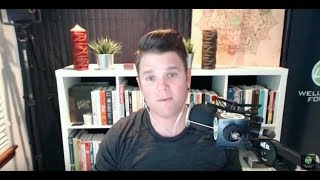
Transcript of a Live to 110 podcast episode (host Wendy Myers) featuring Josh Trent (Wellness Force). The conversation covers Josh's personal wellness journey, the role of emotional intelligence in weight loss, decision fatigue and using routines/technology to reduce it, how to perform an emotional inventory (breath work, journaling, environment/accountability), and Josh's six pillars of wellness (eat, move, sleep; think, feel, act). The tone is practical, conversational, and coaching-oriented with actionable suggestions (box breathing, tiny habits, accountability).
Chapters
Hello everyone, my name is Wendy Meyers of MyersDetox.com welcome to the Live to 110 podcast. Thank you so much for joining us today.
I'm so excited to have my friend.
Josh Trent of Wellness Force on the show today.
He has so much energy. I just love his attitude.
He's so much fun.
And he's going to be talking to.
Us today about the role emotional intelligence plays in weight loss. That's a huge factor preventing some from weight loss. And we'll also talk about the least you have to let go of to be your best. How to do an emotional inventory to create the life we truly want and Josh's six pillars of wellness that he really believes make up your quality of life. And I was really excited to talk to him because we delve into a lot of subjects, our emotional life. I don't really touch on too much. I'm usually busy geeking out and biohacking or science or detox or something. So I really like this show a lot of. Josh Trent is the founder of wellnessforce, wellness industry influencer and consultant specializing in health technology as a top ranked iTunes podcast host of Wellness Force Radio. With over 13 years in the health and wellness industry, Josh leads a Wellness Force community in discovering physical and emotional intelligence to help men and women live life well. His work has been featured in major health and wellness publications such as Wellness Effects. NASM previously hosted the fitness technology podcast and is a speaker for FitTalk CFS. You can learn more about Josh Trent@wellnessforce.com.
Josh, thank you so much for joining us on the show.
Thank you for having me.
Why don't you tell the listeners a little bit about yourself and how you got into the health field.
Well, I'm a Taurus and I love long walks on the beach. That's what you should know about me. I got into the wellness industry. I was a trainer for 10 years actually. So I worked in fitness clubs and I ran teams. And then of course before that we all have a story, right, that leads us to being a healer or being somebody that's interested in our health and wellness space. And so for me, I was a really overweight kid that didn't have the tools, either the psychological tools or even like the physiological knowledge of how to live my life well, because when I grew up there was a construct of my dad was gone and there wasn't the right things in place. You know, there wasn't this healthy framework where, where it was a home base of safety. So I had these beliefs and I had all these things that happened to me, for me, when I was a kid, to no surprise, without these tools that I needed, I'm like 21 years old and I'm 280 pounds. I'm in this job that I hate. I'm in a relationship I don't like. And so I just thought to myself, there's got to be more to life than this. And I'll actually never forget this. I was at a party. You know those red party cups where people drink beer in the red party cups? I. I was at a party and I was drinking beer because I just kind of wanted to numb out. This is what happens before we kind of get what the young people call hashtag woke. So before I got woke, I slammed the party cup down and I just felt this message come through me. And it was like, there's more to life than this. And I ran home three miles. Three miles drunk. Opened my computer at the time, this is like 2002. And I'm typing in, how do I be healthy? How do I live well? How do I lose weight? And the next 18 months, Wendy, we're like trial by fire. I did low carb, I did Atkins, I did low fat, I did all these different diets to. Finally, I got so frustrated that I just sold everything I owned and moved to Hawaii. And in Hawaii, I started working out at a 24 Hour Fitness and actually getting results because I took my health very seriously. And the fitness manager came up to me and he was like, hey, I've seen you working out. You should think about being a trainer. And I was like, what's a trainer? I didn't even know what training was. And that was the catalyst. I mean, that was the thing that led me to becoming a fitness pro and then formulating wellness force a decade later. And so my journey kind of started with when I was young, I didn't get what I needed, and I had to figure it out as an adult, which is kind of what I think a lot of people watching or listening also go through. Yeah.
Are you still in Hawaii?
No, I'm in Encinitas, which, like some people consider to be maybe a fraction of Hawaii, but there's not as many palm trees out here as there is in Hawaii.
Encinitas is really, really nice. I used to live in San Diego.
Yeah, it's gorgeous. It's a gorgeous place.
Yeah. So let's talk about physical and emotional well being. So. So when it comes to living a life of true wellness, what focus is missing in the health and fitness industry?
When you look across the majority of marketing out there right now, it's typically on a goal focus. Lose 20 pounds in 20 days, get a six pack and then you're worthy. Whatever it is, it's all goal focused. It's all when you get to the end, then you'll actually be happy or then you'll get whatever it is that allows you to be worthy.
But I actually, in that mindset, like I can't even tell you, I can't even tell you how many times I said, oh, if I lose £5 then, or if I lose £10 then I'll feel good or whatever. It's like that message is fed to.
Us so much from multiple sources. Right. And it makes sense because let's be honest, like money's tool, money's an energy. So a lot of things that sell money are immediate results. So we look at like how the brain works and immediate gratification is such a big deal for so many people because that's what drives immediate revenue. But real long tail revenue is driven by people that actually feel their worthiness. And so for me, I think when we look at what's missing right now and the things that are in place that is blocking the miss, what's missing is a narrative around self love, a narrative around emotional intelligence and how that relates to letting go of old weight and how that relates to a life of true wellness. Because without that, you may get something short term, but it's coming back with interest. And I've gone through that myself.
Yeah. So you talk about something in your work called decision fatigue. So how do we use technology to beat decision fatigue?
Yeah, decision fatigue. There's a reason that Steve Jobs wore the same outfit every day. It's because he knew and actually Mark Zuckerberg. And you look at a lot of these CEOs, they typically wear the same thing. We have in our bank of kind of like a. Think of it like a financial exchange. We have a bank and there's only so many decisions we can spend each day. So if we have 150, and this is what the research is showing, we have around 150 high tension, high quality decisions we can make every day. Every day. So if you're wasting a decision on what you're going to eat or if you're going to work out or what clothes you're going to wear, the more decisions you add into your day, the more tension you're going to be, the more you're going to be shifted over to that sympathetic nervous system branch. Because when we're constantly trying to figure out what we're going to do instead of being in the relaxing and the flow of what we're doing. That's what leads to more tension. So decision fatigue for people that don't know we only have so many decisions and if we spend all of them, we. Well, then we're going to make the wrong decisions when it matters the most. Like 8pm at Sprouts, when you grab the chips because you're tired. Well, if you've told yourself that you're going to lead your day differently, a day that's based on health, then it's going to work out a lot different when you buy the chips because there won't be a decision. You've already promised yourself those chips won't be a part of your decision making process.
Yeah, yeah, that's a really, really good point. And you know, we're all faced with so many decisions every day and it's really those small decisions, those hundreds of small decisions that we make every day that add up to big changes. It's not this big thing that we do. It's all.
It doesn't seem like it in the moment though. Right? Because in the moment it's like, oh, it's a little tiny decision. What does this matter?
Yeah, I'm going to give this to myself because I worked out this morning or whatever it was. Yeah. And you rationalize. But it's those little decisions that add up to big changes. That's why you can't discount the little cookie you ate or the little chocolate or it adds up. So what beliefs do you have to let go of that allow you to be your best?
I mean, this is a big one. I almost feel like for most people, and I'm sure you see this in some of the work, in the spaces that you run in. I believe it really comes down to keeping a promise to yourself. And then below that is a belief of am I actually worthy of keeping this promise? I think the number one reason why people don't keep that promise in regards to health and wellness behaviors like, am I going to eat the foods I told myself I wanted to eat? It's because it really boils down to, do I actually believe that I love myself and I'm worthy of this? And at the very core of our being, do I care so deeply about me that I'm willing to make this promise be real? Am I willing to make that promise be real? I think that's the missing part. And I learned that the hard way, you know, for A lot of time in the fitness industry. It was really about, like, exercise, even if you're tired. I pushed myself into adrenal fatigue. I regained a bunch of weight, and the journey still continues. This journey of self love. I'll tell you, like, my gremlins come up all the time. Like, there's always little voices throughout the day where it's like, take a nap, eat this chocolate. Do this thing. But I've taught myself through breathing and just through being on so many different podcasts and interviews with really smart people like yourself. It's like we constantly fortify this narrative of what we actually love about ourselves and what we're committed to creating and the promises we want to keep. And it's through that repetitive dialogue, Wendy, that really makes the beauty of, like, true health happen, true wellness happen. It has to be fortified on a daily basis.
Yeah. You've got to really control that monkey mind. That tape loop that can keep playing like, you're not good enough. You're never gonna do this. Like, what's wrong with you? You're stupid, you're fat. Like, people say these horrible things to themselves, and I definitely can get in that mode as well, you know, Definitely have suffered from that in the past. These ruminating thoughts that just keep playing over and over and over, and you have to retrain that.
Let me say one more thing on that, if I may, about the monkey mind. This is fascinating. Tim Ferriss talks about this a lot. The monkey mind is just based on old software. So we have this really old amygdala that's hardwired into our nervous system, and it makes us go into fight or flight or sex and attraction without us even knowing it. I mean, it happens in a fraction of a fraction of a second. So when the negative thought comes up, we have to train ourselves. We get to train ourselves so that we're not just a victim to our biology, because, like, if we let it go unchecked, our biology will just take us anywhere. I mean, it can literally. You'll be like, why am I surrounded by these bags of Cheetos right now? I don't actually want this. Right. But it happens because we stop being mindful. We stop forgetting that we're, like, half of a beast and half of a spirit. We're both of those things. And so it's the understanding and the learning of that.
Yeah. There's a really good book called the other 90% that talks about this. That, you know, you have your mind and where our mind is trained to look for threats in our environment and to focus on threats in our environment because it's a survival mechanism. And if you aren't paying attention to threats in your environment, you die. So the people that have survived focus on threats and you're trained. That's why we love news. We're like squirrel, bad news item. You're just drawn to that. And you really have to retrain your brain to be thinking positive thoughts, thinking about gratitude and doing that on a habitual basis, waking up every morning or going to bed before you go to bed, writing in a gratitude journal and just retraining your brain to think positive thoughts instead of negative ones.
Yeah. And I don't know if it always boils down to positive thinking because I know that from a logical perspective, like you and I might be able to have that narrative and have that dialogue. But when someone, you know, I don't know if we can curse on your show or not, but when the blank hits the fan, you know, all the theory and all the logic and all the lessons we've learned, they exit the current moment. None of that matters when we're feeling the trigger. And so long term behavior change is based on conscious repetition. Even if you look at the work of BJ Fogg and the tiny habits model, you know, flossing one tooth is a goal for a reason. It's because flossing one tooth, doing a two minute walk, doing something tiny on a regular basis, that's what leads to sustainable behavior change. But it's because of what you and I are talking about, which is we're fortifying our environment through conversations like this, through put, you know, gym memberships in our experience, through having programs that we purchase. It's all these little things, all these little bricks in the wall that actually get us there. And I'm speaking from my own experience.
Yeah. Or maybe it's not even trying to have positive thoughts, but more, you know, trying to think about positive things in your life or focusing on having gratitude for the things you are thankful for, rather than focusing all the negative things and the stress and the this and the that and all the things that we do. If you focus on that, you have the biology of belief. You release all these stress hormones. If you're thinking about happy things, things that you really enjoy that you're thankful for, you can release more calming hormones and just, you know, for example. So let's talk about how do we take an emotional inventory to create the life that we truly want?
You know, any business has a warehouse, right? So we sell things, we have a Business. We have to track what we're doing. I think this is what people forget, Wendy. I think people forget about taking a real inventory of their emotions, what's actually there, because it's kind of scary. I mean, let's be honest, when was the last time that you truly meditated on the things that you get to let go of or the things that are holding you back? And what I believe a real emotional inventory is, is creating a space. Whether it's two hours, whether it's a weekend. I've done a vipassana retreat. I'm sure you've heard of these. Like a ten day silent retreat meditation. Okay. So you can do something like that. It doesn't have to be that big. But a real emotional inventory is something that is probably the most important for people to have intelligence around how they're showing up. Like, who actually are you? Do you like the person you are in a moment? Like, do you enjoy being across from a stranger? Do you feel nervous? Do you sweat? Do you love the person you are when you're interacting with others? If not, it's probably a clue that there gets to be an emotional inventory. And here's how I think people can do it. It's really simple. You get a journal or a piece of paper, you get a good workout in, you get a great night's sleep. You hydrate yourself and you just turn off all electronics. You do like a four hour technology fast. You go out to a park or just somewhere quiet. You do box breathing. And I don't know if you've talked about box breathing on your show before.
No.
Okay, so box breathing, probably I have on my arm right here, se poso resperare, poso seguere, which means in Italian, if I can breathe, I can choose. Because for me, if I don't have consciousness over my breath, then I tend to go towards those deleterious health habits. And so it's just a reminder for me to breathe because breath unlocks everything. And so if people can go to take this emotional inventory in a quiet space and just remember to do five cycle breathing. So you inhale for five, you hold for five at the top, you exhale slowly through your teeth for five, and then you pause at the bottom for five. This has been the most powerful thing. You know, a lot of people right now are very interested in the WIM HOF method and all these other breathing techniques. But getting yourself to that space where you can do five cycles of five and then be in a space where you can write on one side of the paper. These are all the things that I believe are serving me. These are the things I love about my life. Have 10 minimum. And then on the other side of the paper, after you've done the breath, you've cleared out your physiology lens, you're in a good space to now admit to yourself what's truly going on. The real inventory is I might be in the wrong marriage, I might be in the wrong relationship, I might be in the wrong job. I don't like how I look in the mirror. I don't think I actually love myself. I haven't loved myself since 2014 or whatever it is. Take that inventory. Like, that's the big one. Because without that, you can get any PDF guide or you could pay for any program, and none of that's going to matter. I mean, people are here because they trust you. Like, they want information from you. That really matters. At our deepest core, we know the truth. And if we're not taking the inventory on a. On a bi yearly basis or maybe even three times a year, shoot. Especially how fast the world runs right now.
Yeah. And it's important to take an inventory of the people around you as well. That, you know, like you said, your relationship or your friends or your business partner or whatever, whatever it is. A lot of people aren't happy with their relationships. They have to cut people out of their life. And it may be very, very difficult. I had to do that last year. I had to cut a business partner out of my life.
How hard was that?
It was so hard and so scary.
So hard.
But I knew I had to do it for over a year, year and a half, and I didn't want to do it. But now that I did it, it was so scary and so difficult. I was nauseated for about a week after I did it. I was just terrified. But I did it. And I feel amazing today because of it, because I knew that it was right, even though it was. Change is scary. We don't really want to change as people. It's. Change is very, very difficult. We're habitual creatures.
Did you do kind of an inventory or was it your own version of an inventory?
Yeah, I did do an inventory. Yeah. I just thought, is this person serving me or not? Is this. Do I feel good when I'm around this person? You know, you have to do that with friends as well. There's people, like, I've had people in my life that I've loved for 20, 25 years, but then you reach a point where you just don't Feel good with them or after. And it's just they have such a history with you, and you care about them, but sometimes people just have to go. Or you.
Oh, my gosh. You bring up such. Wendy, this is such a great point, like. Like everything you're saying here. Because typically, it's. It's our friends and our closest family members that unconsciously or consciously block us. They're the ones because they have this old relationship with us. They just stand in the way. Either knowing or not knowingly they do this. And I think it's a way for us to flex our power. I think the reason why maybe we're not in the space we want to be either with our physical health or in relationships is because that's the universe putting that threshold in there to allow us to become strong enough to push through it. And a lot of times, it's more like deafening to our nervous system because we're just so upset, and we can't believe this person did this to us or our family member treats us this way. That's the universe giving you the deepest, darkest contrast possible so that you can rise to the occasion. Like, I still get nervous public speaking. Right. But I just did this event in Las Vegas because I knew that I had to do it. And if we don't do these things that scare us, then no inventory needs to be taken. Because if you're not willing to do the work, then why even take the inventory?
Yeah, you're not growing unless you're doing things that scare the hell out of you.
Even, like, make you pee a little bit.
Yeah, exactly. And that's my kind of barometer, is I've tried to do things that scare me, and I know that I'm doing the right thing if I'm a little bit nervous about certain things.
You're so on point. There's this one last piece, too, when I'm thinking about the inventory. So we talked about the inventory. At the end of the inventory. There has to be somewhat of a bridge to accountability. So someone's done the intelligence, and they've scoured and they've figured it out. Okay, I'm willing to do these three things this year. Well, set up your environment so that you actually do them. And it could be purchasing counseling sessions, purchasing a program, but literally do the one thing, tell people you're gonna do it. The number one thing for men especially, and this has been a really hot topic right now, is a lot of men are being kind of pushed to the side with this MeToo movement. Right. We have women's liberation coming up, which has been so needed because of the pain body. But on the other side of it, there's a lot of men that don't know what the heck to do. And so it's really important right now for people to be as open as possible about what's important to them, what they want to create, because otherwise we can become a victim to social contagion. Right. And this is for goal setting or masculine feminine balance.
Yeah. And I think it's also important to.
To.
I really like a phrase. I forget who said it, but you're the average of the five people you hang out with the most.
It might be Stephen Covey or Zig Ziglar. Like. We know. We know that's true.
Yeah, yeah. We forget who said it. Exactly. People repeated it. Like, Tony Robbins has repeated that a lot.
Sure.
But it's. It's so true. And you really have to think about the. The five people you spend the most time with and take an inventory of those people and think, if I met this person today, would I still want to be in a relationship with them? You know, because I think people get. They just get caught up in that history and. And they've enjoyed spending time with them in the past. But you really have to cut some people out of your life to ascend. People can be holding you back, like you said. And when you cut those ties with some people energetically, the universe opens new doors for you and provides for you and improves your life dramatically. And that's been a real theme for 2017. My 2017 was really difficult, but I made a ton of changes and made a lot of cuts in my life, and I just feel so much lighter and freer in 2018 as a result.
In the moment, it doesn't feel like that, because in the moment it's like, oh, my gosh, it's so heavy to make the change. But what we don't realize is the paradox is if we make the change, it'll be so much lighter.
Oh, yeah, yeah, exactly. You just gotta get. You're just gonna walk through. Walk through the fire to get to the other side.
Yeah.
So let's talk about what are the six pillars of wellness that you believe make up our quality of life?
Well, it really is a framework of ancestral health. So I'm sure you've been to the Paleo conference, and you probably have a lot of people on your show that are in this Paleo world. Well, way before we even knew what the term Paleo was, we all knew what it was to breathe, to sleep, to eat and to move. So the three pillars that I believe are the most important for every single human are eating, moving and sleeping. If we do those things and we do them well and we just stay curious, Wende, like we all get to stay curious about this too. That's kind of like maybe a hidden pillar. We have to stay curious about these eating, moving and sleeping pieces because they're always evolving, aren't they? We're in this new age of technology where these devices are distracting us and there's all this crazy stuff going on. It's pulling us away from eating, moving and sleeping. So those are the basal three. Now, because we're half beast and half spirit, we also get to know that the other three pillars of how we think, how we feel and how we act, those are really big as well, because that's catering to the spirit inside of us. So the beast needs to eat, move and sleep and the spirit needs to think, feel and act. And those have so many different digressions inside of them. I mean whole programs are created from just one of those pillars. Right, but those are the six that I think all humans must thrive in. Not just like do, but every human must thrive in each of those categories. And that's why I'm so fascinated. I know you are. With this physical and emotional intelligence. That's what Wellness Forest is all about.
Yeah. So talk to us about that. So Your website is wellnessforce.com. so what kind of things do you provide for people or programs and like.
What do you do in those six pillars? We give people trusted content for each one of them because like I'm sure you can relate to and people out there, there's so much. We're swimming in an ocean of information. And so I've actually walked the fire myself. I've been 280. I know what it's like to be lost and not have the answers. I've done the work and I continue to do the work. And so I give people through podcasts, through video, through blog, through email, the tools they can actually use so they can live their life well. And I found that it's just like you asked me in the beginning, it's not about getting the six pack or getting to a certain amount of weight. It's about being curious and enjoying the frickin journey along the way. That's the major deal. And that's what so many health programs and wellness programs and honestly even podcasts are not focusing on is they're focused on the goal and the end result, and I'm trying to say, hey, guys, we're in this for the long haul until we die. So let's get some information out there from people that I trust that I think are doing a great job. And let me, let me share that with you. Let me make sure that I've done the work to vet them out. But I think it's needed, I think it's really needed in our world right now because it's so easy for anyone to go online and say, I'm an expert, I know exactly what I'm doing. But you know, eight times out of 10, it might not be the case.
Yeah, I think that's a really important point to really send that message out to people to enjoy the journey.
Doesn't that feel good?
Yes.
Can we just enjoy this journey?
You know, it's very important because I think some people, and I've been in this space before also where I felt like I was working all day long on my health. And sometimes I'd feel frustrated because I'm like, oh my God, I have to go to the grocery store and I have to go to the farmer's market and I have to do this and then I have to cook it and I've got to, and I've got to like go work out. I felt like it was this full time job to get healthy and then throw on my detox stuff and coffee enemas and saunas and supplements for that.
That actually the coffee enemas and sauna sound kind of fun.
Yeah, it's gonna work. They're not so glamorous, but, you know, they're, they're a very effective detox method. But, you know, it can feel like a full time job getting healthy. But I think it's really important to kind of change the messaging, change the perception or what you're telling yourself, the voices in your head that you're really loving yourself and taking care of yourself and that you, you're making this choice to live a long, healthy life disease free and try to just change that messaging around a little bit, that it's not work, it's not all, you know, it's not this, you know, job that you have to do. It's something that you're doing because you love yourself.
I'll never forget this. I interviewed Brett Hobel. He was one of the trainers on the Biggest Loser. And whether or not someone listening or watching agrees with the Biggest Loser, we still have to know that these trainers, like, they really do care in their deepest core like, and that was what he said. The majority of people that would be able to keep the weight off, Wendy, were the ones that became health and wellness and fitness pros themselves. They were the ones that actually kept it off. When people stopped doing the Biggest Loser and they like regained all the weight with interest, it's because they weren't doing it because they wanted to enjoy it. They were doing it because they wanted to win the contest or they wanted to look good naked or they wanted to wear their outfit for their high school reunion. And like, that's cool in the short term, but if you really want long term health, you have to love it. Like, you have to be curious and you have to like love what you're doing as you discover more of it. Because if not, then you're going to get to the top of a mountain and it's not going to be that sexy. You know, the high school reunion is going to be done and you're like, what next?
Yeah, exactly. Yeah, you have to get up every morning and like, yeah, I'm going to go for my walk, I'm going to do Pilates or go to the gym. And you just make that a habit for life. It's not something you're doing for two months to go to the high school reunion.
Can you love the process? Like, can you actually love the process, which by the way, is that mirror of loving ourselves. And I don't mean to sound so woo woo right now, but it's the truth. It really is the truth.
Yeah. Can you love that coffee enema doing it?
I mean, I personally, I like how I feel when I'm done. I've done coffee enemas and like, I enjoy my day after the coffee enema. It's a good feeling.
You feel like a million bucks.
It's a really good feeling.
Yeah, exactly. So I have a question I like to ask all of my guests. What do you think is the most pressing health issue in the world today?
I think relationship with food. And behind that, our emotions. So our relationship with food, number one. And then our emotions right behind that. And when I say our emotions, I mean the ones we're allowing ourselves to feel or the ones that we're mashing down, which is really what comes out sideways. And that's what makes people eat food that they don't want. And then that kind of deteriorates the relationship with food. But it's not sexy. It's the real hard work. People want immediate. Right now people want 30 day, 60 day. It's not going to happen in 30 or 60 days, you're going to scratch the surface. You're going to do a great job of starting the discovery process. But I think what really kind of triggers me and honestly what still makes me angry is that people that are out there, especially we see like, you know, smart marketers that are out there that know exactly what to say to people to get them to buy some $27 guide, but then they know in their deepest heart that these people aren't going to make any changes, but they just knew exactly what to say to him to buy the guide. And we don't need that in our country anymore. Like we don't need that anymore. What we need is people who are willing to take individuals through a long term process. Months of training, months of coaching, months of life change. Like that's what I believe this industry needs the most right now. Unfortunately, it's not as sexy and it doesn't sell as much.
Yeah, yeah, I 100% agree with you. That's why I'm always telling people, you know, if you want to detox your body, it takes two to three years. It's not an overnight process.
Does it take that long?
It does, yeah.
Yeah.
See that talk about even you don't want to hear it.
Two and three years to detox. But if that's the truth, I want to know the truth.
That's the truth. Yeah. And that's why it's, it's important to say the truth and not try to sell people a 30 day type program and or 10 day detox in a box because that's, you might like to hear that more and you might want to buy that, but it's not going to get you where you want to go. So it's so I love your message about really enjoying the journey and staying committed to health for a lifetime. You have to enjoy the journey.
Yeah. Because why are we here then? Like what, what are we actually. Who do I want to look good for? Like why am I, why do I want to be healthy and sexy and why do I want to feel good? It's because, don't we want to just do that so that we show up for other people around us in the best way possible? Isn't that really what it's all about? At least that's what it is for me and the people that I know. It's like we just want to have the best health and wellness possible so that we can have relationships with other people and feel great about ourselves. It's this goal versus like the enjoyment I think that's the big catalyst that we're going to see change in the industry over the next five to 10 years.
Yes. Well, wanting to the listeners more about where they can find you and how they can engage with you.
Yes, I would love to have people engage with me. And I'm single, so I'm looking to get engaged. Yeah, I'm taking applications. Wellness Force is all over the Internet, so it's Wellness Force Radio and we do explore, which I'm really excited to have this detoxification episode with you because it's something we have not dove into yet. Like, I was very shocked that it takes two years, but for the physical and the emotional intelligence in this process so that men and women can discover it, that's what I'm committed to. So I'm committed to if you're listening right now and if this sparks you, that's the process that I'm actually learning myself. So I'm just sharing what I learned from an authentic place. And if you're interested in that dialogue and conversation, it's WellnessForce Everywhere. You know, Twitter, Facebook, Instagram and everything else.
Fantastic. Well, thank you so much for coming on the show. I know that everyone listening, that's, you know, kind of a departure from what I normally talk about is the, the emotional, wellness, emotional aspect of taking care of your health. But I need to do more shows like this because all my ladies that are listening really like to talk about subjects like this.
And your ladies are the ones, let's be honest, they make 80% of the purchases, purchasing decisions and they make the majority of decisions when it comes to wellness. The wellness is a female focused and female driven market. Please, we need you to tell our men what's up.
We are dedicated. We have to take care of our men.
We need your women to tell the men what's up.
Well, thanks so much for coming on the show and everyone. I'm Wendy Myers. You can learn more about me@myersdetox.com and please take a couple minutes to go. You know, rate the podcast in itunes. Search for live to 110podcasts and please leave a review so we get higher up in the ratings when people search for us and we can help more people. Thanks so much for tuning in today.
More from Josh






Your child's future start before pregnancy... and even before conception! #podcast

MD Reveals: Your Healing Creates Your Child's Reality (The Souls Coming In Need Strong Bodies)



