How To CLEAR Generational Trauma (Emotional Epigenetics™️)
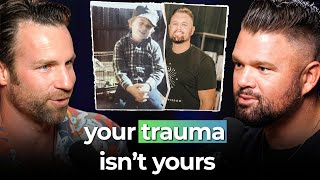
A recorded studio conversation between Josh Trent and Abel James (YouTube episode titled “How To CLEAR Generational Trauma (Emotional Epigenetics™️)”) exploring emotional resilience, inherited patterns, and healing through 'emotional epigenetics.' Josh frames podcasting (launched 2015) as an alchemization process that helped him move from survival to purpose. He links childhood and ancestral trauma to epigenetic methylation (cites a 2014 mouse cherry-blossom study), describes practical tools (movement, breathwork—Breathe program 2021—microdosing ~0.2–0.25g, calendar time-blocking, Wellness Pentagon model), and emphasizes cycle-breaking, community, and men's work (running men's groups since ~2014). The conversation blends scientific references, spiritual language, and programmatic offers (liberatedlife.com, Self Liberation Blueprint).
Chapters
Hey, welcome back to the Wellness and Wisdom Podcast. Today's episode is a special one. This conversation I had with my brother Abel James on his show, recorded in the studio, where we dropped into something that felt more like a friendly conversation of wisdom with a really beautiful gold nugget at the end. And that is, how do we build emotional resilience in a world that's constantly pulling us away from ourselves? In this episode, I shared with Abel's audience a concept that you've been learning on the podcast for some time called emotional epigenetics. The science and spirit of how your emotions, beliefs, and environment shape your biology and create your life. We talk about inherited patterns, burnout, and what it really takes to move from survival into peace and power. So if you've ever felt overwhelmed by the noise of the world or disconnected from your truth, this conversation will bring you back to center, back to remembering that you're not broken, you're just burdened, and that freedom is your ultimate birthright. Let's breathe, feel, and dive in together with my friend Abel James on the Abel James Podcast.
You've been doing this for a minute? Yeah, over 700 episodes. How do you achieve something like this, you know, personally, professionally, without completely frying yourself, burning yourself out forever?
Man, I think that's part and parcel of the job, right, Is to burn off the old identity or, you know, like snakes and nature, shed their skin. Yeah, I think it's part of it. I think that we have to really break down. I'm going to use a catchphrase, but it's not bs I really feel it. We have to break down in order to break through.
Yeah.
I really mean that, like, in every way. I'm wearing a alchemist, a philosopher's stone today for. For y' all watching on YouTube.
Totally.
Yeah. Spotify and Jung saw the process of identity transformation as moving from lower self to higher self, but also honoring your. Your current self. And so podcasting for me has been that in, like, a magnitude tidal wave order. Like, when I started podcasting, I had just broken up with a girl I thought I was going to be with. This is 20, 2014. And then I launched in 2015. Yeah, I was, like, 80k in debt. I just put my mom in a mental home for her bipolar disorder, and I got fired from a safe corporate job. So it was like, everything, health, wealth, relationship, spirituality, like, just hit me in the face. Yeah. And I'll never forget this, man. I was in San Diego in La Costa, and I was renting out a room for, like, 300 bucks for my friend starting my podcast on a rickety ass plastic stand about to interview John Gray, of all people, about relationships, when my relationship with myself was truly non existent. If I'm being honest, I had ignored a lot of my somatic intelligence and my emotional intelligence for the far majority of my life.
Sure.
And so in Jung's lens, I was really operating from my lower self attached to my current self. Now my higher self was calling me forward. But in any identity transformation process, there is alchemization, there is galvanization, where you put the sword on the stone and you slam it and you pull it in the fire. And that's what podcasting is.
Yeah.
And if people think they're just going to like launch a podcast and see what happens, good luck. Good luck, man. That's a very small part of my story. But like that's, that's the crux of it is like I, I basically asked God, how do I live my life? Well, because I didn't want to commit suicide, but I was in that rental room with my buddy and I'm just like, God, what, what do you want me to do? What do you want me to do with my life? Because everything's not working. I'm angry at you for my mother's illness. I'm angry at life. I don't trust you. Just a lot of anger. And if you look at the Hawkins scale, I was stuck in the survival paradigm at the bottom of the Hawkins scale. And so podcast was and is still my alchemization process.
I love that. And it's so similar to my story, it certainly rhymes where I had recently broken up, I had been engaged for a few years, lost everything in an apartment fire, lost my health. And it just kind of launched out of that with a little bit of momentum, you know, so career changes, all this stuff, moving cities, starting off the podcast. And I think, I think the way that that works is if you don't fall into guru mode. Right. You stay the one who's the seeker and, and the guide, hopefully just bringing other people along for the growth. And so, yeah, yeah, recently as, as you know, I was in a serious car accident where I was rear ended just out of nowhere. Everything had been going well up to that point. Yeah, in many ways. And so like my nervous system was compromised and brain took a hit and all that. And so it's never something that you have figured out. You, sometimes you need to build yourself back up. But the process of being like having my bell rung and having to go through speech therapy, but still being on camera and doing podcast appearances and that whole thing. Chris Williamson, also a friend in town, he recently just put out his episode about the health struggles that he's been going through.
Lyme disease. Right.
Lyme disease. And, and it sounds like a constellation of a whole bunch of other things. Epstein Barr and, and other. Just basically metabol, metabolic, mitochondria related energy issues that I've also experienced with mold and things like that. But we were talking before we hit recorded about how when you have a podcast like this, and I think this is one of the reasons so many people stop, you have to wear those scars on your face and you need to go through the hurt publicly, publicly, and still get the trolling. So how do you as a person manage some of that? Especially having a high profile show for as long as you have, going through the things that everyone goes through as a human, you know, the. The down parts included.
My podcast is free therapy.
Yeah.
I mean, it's not free because there's a large cost to put it on. Sure. And the cost of my life force energy, which is the most expensive thing in the world. But there's no thing. I truly mean this, Abel. I would not want to do anything else than what we're doing right now. Ever since I was a little kid, one of my earliest memories ever was like, why are you adults so angry at each other? What is all this interstitial tension? What are taxes? What is the government? I just knew. I think most of us do. We just know that something is off, but we don't know what it is. And it's essentially the matrix, the matrix of control. This is not a tinfoil hat. This is a scientific and spiritual truth. Belief systems that are formed seven years back. The Native Americans have the seventh generation principle where every single thing that happens seven generations before you impacts you on an epigenetic level. Which epigenetics is so fascinating. I hope we talk about that too.
Definitely.
And then seven generations forward. So I look at my children and my children's children and my great, great, great, great, great grandchildren and I'm just like, okay, how can everything that I do, It's a tall order. I'm not saying I haven't mastered yet, because I don't. But I'm doing my very best to master it. I'm in this process of self mastery that allows me to speak from authenticity in my role of the seventh generation principle. Yeah. Therefore, the projections that I have, the wounding that I have, the addictions that I've had All these things inherently served me because I was matriculated, these things by my lineage, they actually gave me these gifts. I didn't necessarily ask for them. Now, if you look at some of the Eastern philosophy, maybe we do choose our parents and maybe that's a very empowering way to approach life.
Sure.
But for me, I've always taken the stance of all right, if I knew something was wrong in childhood, then how can I be its solver as an adult? How can I be the solution to what I've always felt was wrong inside of me, inside of us, inside of society? And how can I do it in the most honest way, publicly, which is fucking hard sometimes, because it involves me being open hearted. And when I'm open hearted about my truth and what I believe, I receive attacks. You know, specifically my views on protecting children from the mind virus. Paul Levy calls it Watiko, the Native American mind virus. And so how do I deal with it? I think I deal with it just like you, where I move forward with love and with courage, even in the face of spite, even in the face of judgment. And you know what's funny is that's actually a mirror for my marriage. It's the same thing. Right. If my marriage is up to be, it's my responsibility. If it's going to last, if I'm going to nourish it, I. I have to be willing to stand in the fire with my wife and experience all of her emotions and not take it personal. Right. Number two on the four agreements with Ruiz.
Yeah.
If I can truly live my life not taking things personal, including audience members writing in, being like, you're an idiot. F you people posting on YouTube, you're fat, you're stupid. And I'm just like, hey, thank you for showing me your wounds.
Right.
Because there's obviously a wound there for all of us. And if I can touch someone's wounds, at least they know they're there.
Yeah. What I found too, and I don't advise anyone to really engage with the trolls, is that when I have. I've made quite a few friends that way.
With the troll, with the troll. That's a paradox.
There are people who, you know, might be looking for attention, might probably are just looking for a reaction to see if you're even real at this.
Right, Right. Are you AI. Is this AI able?
Yeah. And man, it's, it's tough if you're building your identity there on the Internet, as so many people have, especially young, young people. Yeah.
It's.
That's a difficult way to live. So I think you're a great example of living, living in alignment with who you are. Instead of having that separation. As soon as the camera goes on, it's like, right, your voice changes. The things that, that your, your general state, your presence completely changes. We all know people like that who know that.
Yes. Interviewed many of them.
Right.
And it's always a shock too, right, isn't it?
It can be.
As soon as the mic comes on, it's like they put on a different mask.
Yeah.
And I'm like, isn't your arm going to get tired of holding that up? You're going to have to hold that up forever now. And then the camera goes off, they're. They're checking their phone, they're not interested. And I'm just like, yeah, is this really you or not? You know, I think that's the question.
How about why do you keep going? Because, like, with podcasting especially, I know you said you, you love it, right? But are there other reasons? Because it must get hard, right, to keep going. There must have been times in the journey, whether it's maintaining enough cash flow to cover overhead for the team or just like, you know, the setbacks during the pandemic and all the changes that we needed to make. Like, what, what is it that really keeps you going, aside from liking it? That must be very mission based. Right.
I respect that. You said pandemic. I call it plandemic. Right. But I respect everyone's. That's actually that the, that's the answer to the question. I, I respect everyone's views. Like two realities can always exist and be okay as long as there's not judgment or condemnation of someone else's reality. And so how do I keep going? I stick to my reality. Even when I'm faced with others reality. I think that's the big one. So the reality that really, honestly relates to our epigenome is we're either wired for trauma or we're wired for trust. Yeah, Right. On a, on a very genetic level, there's this one specific gene that alters methylation, and it's inherent in people that have gone through childhood trauma, but also traced back even seven generations scientifically through many publications. How do I keep going? There was this study that totally relates to this, and I think you're going to love it. 2014, there was a cherry blossom study with, with mice. And what they would do is they would shock the father mouse and they would have him breed, and then they could check the hypervigilance and neural system response two generations forward, when they would have the offspring smell the cherry blossoms. Now why is that this is so fascinating? It's like, duh, I think we all know this on some level. And it speaks to what I felt when I was a child. If science is showing us through this really powerful study on mice, that you can actually cue someone's epigenome to turn on and off methylation cofactors, that would make them more hypervigilant just to a smell, when they themselves didn't experience the trauma, just their parents did. How could that not apply to us as adults? And how could that not be in our epigenome? This is so fascinating. So that's how I look at life, is like, okay, I am a cycle breaker, but not because I need a medal. I don't need public notoriety. I don't need to be a hero because I'm healing my lineage. I don't really give a fuck about that. All I care about is that we just love each other and that I learn how to unconditionally love Josh, my wife, my children, my audience, and everybody around me. Now, that's a very grandiose phrase, right? Unconditional love is like the hardest part of self mastery. But if we can start to unravel the science as to why we block ourselves from love, and because it's actually not our fault, that's the big one. It's not our fault that we learned through epigenetic trauma that. That our hypervigilance and the way we look at life, where the shoe's always going to drop or anxiety or depression many times I would probably be sufficed to say, I don't have data on this, but it's probably eight or nine out of 10 people that are dealing with some type of mental health issue. That's where emotional epigenetics was born. That's where my life work was born, by me going through the transformation process itself, which I'm still in. So how do I deal with it? I deal with it by knowing there's a scientific and spiritual reason why I feel the way I feel and why I am able to love to the degree I do with myself and others like I do. And I think for me, this will be a lifelong calling because it's so needed. It's so needed as to how we can love ourselves and love other people. Not in some woo woo spiritual way, although it is spiritual, but getting the science behind it and unpacking the science of epigenetics so that we can start really understanding our Emotions and our emotional patterns, our generational, unconscious beliefs. And then lastly, dude, the big one is our environment, right? How do we nourish ourselves? In my courses and teachings, I have a model called the Wellness Pentagon, which is the nourishment of the five sides of self. And so it's physical, mental, emotional, spiritual, and financial nourishment of self. Now what happens? And I'm sure you've dealt with this. I know y' all have dealt with this too. When we go to nourish one of these five sides of self, you know what we meet? We meet the stories that were self created or inherited as to why we can't nourish these things. But they're all a lie. They're all a lie, man. We're not broken. We're literally just burdened. We're bioenergetically burdened. If you look at the science of bioenergetics, and I think my role here on planet Earth, again, not because I need notoriety, I just want to heal it. I just want to get to the love. I want to get to the good stuff, is to be a voice and to be someone who can be a shepherd of emotional epigenetics and give people the understanding that no one's broken. I think we've all been trained by society and by the hooks of modernity to believe unconsciously that we're somehow broken, right? I mean, look at the billboards in New York Square, right? Tits popping out. And look at Instagram and TikTok and just the war, the illusionary, bifurcated war that's created by the puppeteers. It's wild, but once you see it, you can't unsee it, right? It's like once you've awakened to the truth, you can't live your life in a lie anymore. And so that's how I deal with it. And in kind of a long winded answer, but I love it. There's a lot more there, but that's. That's essentially how I deal with it.
And that's another cool part too, of, of having this episodic capture of your life over the years. And now you've been doing this for 10 plus years and you can see those earlier versions of yourself and hopefully you can see how you've grown and other people can too. You can see when you were wounded, when you know the place that you were living in wasn't ideal, when the stress was just like, oh yeah. Displayed to everyone on your face, that sort of thing becomes a testament to the fact that you persevered and that you grew. And some of these things like hyper vigilance, which I also suffered from, especially younger, in younger years as a type A overachiever type person. These things serve you for a while. You're rewarded for. They're a great fuel source until you run out of energy or until you're out of that life stage. And I think there's no use beating ourselves up for essentially what is a response to trauma that happened to us, whether known or unknown.
Right.
But is adaptive in some ways. It's more of a process of like, we have to go in there and clean it up from time to time and life just throws it at us at other times. Then we have to clean that up too. It's not always your fault. Yes, you don't always expect it, don't always know that it's there. But it is something that is all of our responsibility to keep on the radar and, and go through that process, like you said, of identifying it, working through it and then moving on, even if that's public. Sometimes we have to do that behind closed doors as well. But doing it publicly also, it's easier behind closed doors. I would love to do a lot of things behind closed doors. Like, and that was a discussion that we had too, like with my wife when, after the accident and that sort of thing. Because I had a bunch of stuff scheduled and it's like, I'm not at 100. Like, obviously I'm stumbling over my words and that sort of thing. She's like, should we hold the episodes? And I'm like, should, yeah, should we. I'm not at my best.
Yeah.
Or yeah. Is it something that can be used as a, as an example of what you can recover from and can be used later to kind of track progress? Because my goal is to come back to 110%. I had wiggle room before, which I don't have now, which will probably come back over time. But the goal is to let these setbacks become opportunities to kind of launch even farther to the correction on the other side. Tightening up your lifestyle and that sort of thing. Waking up to see the sunrise, like non negotiable, that sort of thing.
Well, and plus, how trustworthy is it that you're not preaching to your audience on a pulpit?
Right.
And hiding your own insecurities, vulnerabilities, and health issues because they're dealing with them too.
Exactly.
And anything that I withhold, people can feel on like a very nervous system level, neurosystem level. One thing that fascinates me about the body is we have this redox system. I interviewed Zach Bush about this. And so in our enteric nervous system, which is so wild, it has more connections than there are stars in the sky. Trillions of connections in our enteric nervous system. Now this redox system is six feet. Isn't that interesting? During the pandemic, we were told to stay six feet away from each other. I find that the. The somatic intelligence that you and I have, like, when we sit with each other, we're watching our micro muscles in our face. And if you look at Stephen Porges polyvagal theory, this is very deep on this. The thing that connects us most isn't really our words, it's our presence.
Yes.
The thing that heals us the most is you being confident in yourself and me being confident in myself to be able to share authentically whatever the hell's going on.
Yeah.
Because most people are dealing with these things anyways. So why are we trying to pretend? It's like we're going to get really tired trying to pretend. Because you keep having to make up the story that you're holding onto in the future. I'd rather just be honest about my shit now because then I can actually lead people from the people instead of to the people. It's just a different mindset. So I value what you're saying, because why wouldn't we share our stuff? Why not? It's probably the most popular episodes. Right, right. When you actually share your stuff.
So if it comes that way. But so. So for you, I mean, what are the things on a daily basis that allow you to stay out of the reactionary mode where you're like, deeply in the sympathetic, that sort of thing. I know that you're an expert and a master in breath work exercises and that sort of thing, but, like, what are. Yeah, and maybe we. We could go through a little bit of that too. But what are the things that you use when you notice that you're out of sync?
One of the biggest tools I've come across in the past year has been microdosing psychedelics. So there's a company called Golden Rule Mushrooms, and I love them. They're great. Golden Rule, I'm not an affiliate. They don't pay me to say this, like, I'm not in business with them, but it's amazing. And so I'll take. It's like 0.2 or 0.25 in the morning on an empty stomach before training session, actually, because in training, you know, when we think about the Word movement. That movement is happening physically, but it's also happening bioenergetically in our emotional system as well.
Yeah.
So anytime that I'm nourishing myself physically, it's actually feeding all the other four on the Pentagon. And that was something that I learned super on in super early in life. I found football in high school, and it was a way for me to get out my anger. I was so angry as a child. I'm like, my mom's got this disease, Home is insane, dad is gone. I just felt alone. And when you feel alone, I think Teal Swan wrote about this in her book the Anatomy of Loneliness. The COVID emotion for sadness is anger. And even if you look at the Hawkins scale, too right, anger is much more powerful than despair. It was actually a really cool quote from a Terminator movie when he said that. And so when I found movement, the way this relates to your question is that movement became a crucible for healing. Because when I move, I'm not only moving all the stuck energy in my fascia, I'm not only getting my, you know, my muscles to fill with lactic acid and, you know, the sarcomeres expanding and all the scientific stuff that I love is just pretty cool. That's happening. But what's really happening is I'm moving all this energy in my body.
Yes.
And I can't tell you how many times after a good workout, I've cried.
Yeah.
Or I've came to a realization about a shadow that I have. Exercise is a spiritual practice that isn't talked about enough. I did it with our buddy Dan Go on the podcast from our Frontier Club.
Yeah.
Where we talked about, you know, weight loss is actually a spiritual practice.
Agreed.
Because when we're letting go of physical weight, and I know this firsthand, I used to be £280. When I was letting go of the weight, I was doing it from a very egoic perspective. So of course the weight came back on. Right. Because anything done from a self serving, selfish viewpoint can't be sustainable. The only thing that can be sustainable is peace and love. And really what I believe in, my teachings and my understanding is that any type of power has to come from peace. Because if I'm wielding power from a place of ego or a place of me taking from you or taking from someone else, I have to keep that going, and it's exhausting. But if I can do the work in my neural tree and in myself emotionally through movement and through a couple other things that I'll mention, then I can really start to have a sustainable fuel source to lead my life where I'm not exhausted. In a way, breathwork is big. I started in 2016 with Mark Devine.
He's amazing.
He's amazing. And then in 2021, I launched the Breathe program, where after, like, five years, I felt like I was good enough and skilled enough to teach others. And then, you know, like, over a thousand people signed up for that program, which is amazing. And so movement and breath work that, you know, we hear these things on podcasts, and people listen to Huberman and they listen to all these shows. Yeah, you should be doing breath work. You should be doing movement. But I. I take a counter approach. I say it's not that you should be doing these things. It's show me the fruits of your life when you don't. So it's a total reframe. It's like, yes, you could shame someone into behavior change, but you know this probably more than anyone. I mean, with the tens of thousands, maybe hundreds of thousands of people you've helped, the only sustainable weight loss can come when they've done the emotional work and the inner work to actually let the weight go. Because if you think of what's manifesting in the body, I mean, we're always manifesting 24 7. When I hold extra weight in my body, and it's actually my body thinking it's not safe and that it has to hold on to lipids in order for it to be safe. This is why trauma victims or women, unfortunately, that have gone through sexual trauma, they'll gain weight afterwards. There's a scientific reason for that, but I think it's scientific and spiritual. I think that our neural tree and our entire system, the enteric and the somatic and the ans, and all the ways in which our electrical system works in the body, we can't fake it. We can't lie to it. You know, we. When we lie to ourselves, there's a weight that's gained. When we lie to others, there's a weight that's gained. And then we start walking around in life with this box, and inside of the box is all the weight. And of course, we have to have enough energy to carry this heavy box. And that's where fat storage comes in, right? Because fat is, like, the most massive storage unit on the body. So I think those two things are, like, ultimately paramount. But I can't stop my little spiel here unless I teach what I know to be true from my own life. And that is, if I'm doing the work to be able to understand what I got from my lineage and to have the maturity to do the inner work, to let it go. That's the most important thing. You know, there's people that don't even work out and they have six packs. Well, why is that? People are frustrated. Like, you know, Sam can eat a pack of Oreos and grow an extra ab muscle.
Right.
Well, Sam probably has a very clean conduit for emotional processing. Sam either unconsciously or consciously has harnessed the power of emotional epigenetics so that he can understand when he's off and he can do the work to reset his system internally, which then shows up externally.
Yeah, he's in alignment. And we've all seen examples of this. One funnier one that I saw recently is basically this meme, maybe you saw it too, of like, why are homeless people and meth heads healthier looking than your doctor? And has all these doctors, like, people live living on the street. It's true. It's not always true, but it's just like you think of the beach bum in California, right? Who's literally living on the beach, whatever. Like tan, skinny, probably six pack, like, smile on their face most of the time because they're living in alignment with nature. Now, the meth doesn't help, of course, with any of this.
That'll keep the weight off.
It's my kids, the weight up in a healthy way. But I think the moral of the story is that we could all do some of these simple things to be better in alignment and. And oftentimes nature can be our cue, and subtraction is the answer. Right. Like, everyone these days is looking for another podcast to listen to, another supplement to take or another thing. But generally you're going to find a lot more results come from dialing down the noise. Right. And subtracting things. What are some things that you've gotten rid of that have allowed you to step through the next stage of growth in your life?
This is going to fly in the face of David Goggins, but the thing that served me the most has been letting go of self hatred and self judgment. Because self hatred and self judgment can be a lot of the reasons why some of the buildings in downtown Austin even exist.
Right?
It's men that hated themselves and were so dissatisfied with themselves and felt so unworthy that they use that as a fuel source to build skyscrapers. And in a way, this is the paradox of life, right? In a way, it was actually really beautiful because it created these awesome things. But I think every human Being has. Whether you use Joseph Campbell's Hero's Journey or the cellular return after 7 years, however you want to look at it, I think eventually we get to this point as a soul where we ask ourselves, do I want to feel this way anymore? Even with the results of my life, even with the fruits that I've bared for others, can it be sustainable? Any. And quite frankly, I'm just going to go for it. I saw a post from, I think his name is Carnivore Aurelius. Oh, yeah, I know that was on Social and he was talking about Chris Williamson and he's like, look, it's very obvious if you look at Chris Williamson's YouTube video, he's pushing himself to the ultimate max at all times. Yes, he's got a healthy body, he trains in the gym and everything. But from an emotional standpoint, if you look at a lot of Chris's content, he's been going very deep into self love, very deep into emotional intelligence, very deep into psychology. I think it's because in his soul, his soul is wanting rest. His soul is wanting some reprieve of the absolute insane pace that he's leading his life from now. His podcast is massive. He's. This is the paradox. He's serving so many people with such great information. It's not a judgment on Chris. Right? I've met Chris. He's been at our house, he's been at my house. We all met him together. But what I felt from him in person was just so much intensity. He was almost piercing my soul as he was talking to me. And in my opinion, no judgment on Chris. I don't believe that's sustainable for any of us. If we have such a high set point of intensity that we lead our life from, is there time for intensity? For sure. Right? But then there has to be rest and recovery. Otherwise eventually the body will break down. And when the body breaks down, it's going to happen in very serious ways. I mean, my own health journeys and your health journeys are probably a testament to this, right?
Definitely.
So I think that there's a real wisdom in the public Persona and the display of public Persona that Chris is bringing that he may not even be aware of. He may be teaching people what he thinks he's teaching them, but we're all watching by his example and we're. And we're seeing the ways in which we can learn by not falling into the traps that he potentially has fallen into.
Same with Brian Johnson, who also same, you know, we've met, you know, and it's like, I think everyone has their own path, and everyone also should be applauded for the courage that it takes to follow their own path. I think that's incredible, what a lot of people are doing. But at the same time, yes, I agree. And I've. I've been there. That level of intensity isn't something that you can always bring. Yeah. But when you can, when it's working, it's pretty cool.
It's pretty amazing.
Until it's not. And, yeah, that tendency to keep going and to keep doubling down and once again, I applaud him for being public about this. Is something that, when we experienced it in our life, we indulged in the romantic fantasy of running off to the woods for a few years and just kind of, like, living that way in nature. Turning off the Internet for a year.
Yeah.
Disconnecting from social media and all of that. And everyone thought once more that I was crazy or said that I can't do that. Right. Like, no matter who it was around, we're just like, all right, we're doing it anyway. And we've done it a few times over the years because now, as a couple, we've been, you know, working together in the area of health and podcasting and writing that. That sort of thing for almost 15 years. And so you are severely punished from almost every direction when you take a break, when you're an entrepreneur in this way, or when you're a creator. Right. The algorithms have no mercy when it comes to, you know, shutting off the tap even for, you know, a few days, let alone a few weeks or a few months. Right. And then in your personal life and your business, that. That sort of thing. Yet we must do this. Right? Like, we grew up in a world where we didn't have cell phones as children. We weren't reachable all the time, yet we still, like, met up with friends magically and ran into people and plans came true and stuff happened. And in fact, I think we were also more present back then. So we need to challenge ourselves to take those breaks. And even when everything's working, if you find that you check in with yourself and you're starting to break down a little bit, that's the time to take the break. Because if you don't, life will give that to you and make you take a break.
Yes. Yeah. I mean, some dude. Something tactical. Very well said. That I've done. And I learned this probably, like, three, four years into entrepreneurship. If I don't put time for Josh in my calendar, it doesn't exist. I actually put in, I bake into my calendar. Time for me.
Yeah.
And time for my children. Like, if you look at my calendar, it's color coded. It's like an analytics. Analytics dream.
Yeah.
Personal time and family time is blue. Work time in person is red. Work time virtual is green. So it's like it's all color coded because that is the way I run my life. That way I don't have to have the mental load and the cognitive load of trying to remember all this stuff.
Right.
And that even includes time with my wife as well, like intimacy time or connection time. Because, you know, if you don't make your schedule and your life a priority, whether it's going to nature or even taking two hours in the morning to move, life will present you with people that are going to gobble up all your time.
Oh, man.
Right. This is. This is Parkinson's law. Parkinson's law states that the work will fill the capacity of the time allotted. And so that is true not just on a scientific level, but on a spiritual level as well. There's science and spirit at the table today, if you didn't notice, like they're here because they're one in the same.
Yeah. What about when you don't want to record that day or don't want to do that work that day? How do you separate the times when you truly take a break and a day off from the times when your mind might be playing tricks on you and you kind of power through? How do you differentiate that?
If it's. If it's something like this, where we have something on the calendar or a guest has flown in, I'm. Whatever happens in my personal life, I pre frame it so that I'll be present and I really will show up, like, rested. Like, I got my movement in. I did my sauna this morning right before we sat down, because I wanted to be genuine and I wanted to be present. So it's really the intentionality. If we were to hinge one tool, it's that the intention is actually 90% of the work or the capacity to do whatever the intellectual thing is. So, yes, have your calendar, yes, do your things, but have a super clear intention. Like, my intention is just to share my heart, my message with you and just connect with you as a friend. And my inspiration for that is that somebody will catch something I've said or catch something that we've created together and they'll run with it. And maybe tomorrow morning they will move and they will start to. Maybe somebody cries Tomorrow morning after a workout. Great.
I hope so.
Great. Right? John demartini was on my show. He goes, any day as a human being that you cry is a good day. And I'm like, yes. Because look at the conditioning we've gone through as men, specifically. I mean, I was born in East County, La Mesa. Okay. In the 80s, which is like geriatric ward. And then, like, who are you going to hook up with? Culture. Not. And like government cheese. I was raised on welfare. Like, talk about emotional epigenetics that were not broken, that we are burdened. I had unique burdens that we all do. Right. I'm not special in that way. We all have unique burdens. Those burdens are actually, paradoxically, they're kind of this guardian of our own growth, where the more burdens that we have, the more we can actually rise to meet those burdens and eviscerate those burdens so that we can actually be this whole complete body, beautiful, strong being. And it's like such a beautiful concept that I didn't grok for a long time, Abel, because I was the. The victim of my circumstances.
Sure.
And when I started podcasting, it was so rough. I. I remember I was in Encinitas renting out a. A one bedroom apartment, two bedroom apartment, and I had my bedroom, and I rented out the other side because I couldn't afford the rent. And so I would, like, sleep next to my podcast studio for like two years.
Wow.
And just do it. Because I kn. Knew that I needed this. I knew I needed to work through my own burden. I knew I needed to work through my own burden, of my own anger, of the life circumstances that, by the way, I was the creator of. And this might be really abrasive to somebody listening, watching right now. You are the creator of everything in your life. I didn't believe that for a long time. It didn't. It didn't sit well. Because immediately my ego would say, well, what about my mom? What about my dad? What about life? Where is God? What about these evil people that are running the world? And I had a laundry list of reasons, like we all do sometimes, to why my life wasn't my creation. But what really clicked, man, was right around 2022, I did a mushroom journey with my now wife. She was my. My girlfriend at the time. And I was like, I just feel so out of alignment with my business. Like this, this name of the old podcast, Wellness Force, it just. Just doesn't work for me anymore. Like, I don't like the word force because it's in the opposite of everything I'm sharing with you today. Forcefulness. All the questions you've been asking me have nothing to do with force.
Yeah.
And she turned to me and she said, well, what do you really want? And I said, I'm just seeking wisdom. I. I want to be wise. I want to embody wisdom. And then that's where wellness and wisdom was born. And so when I started to really understand in 2022 that I was the full blown creator of everything in my life, the fighting, the discontent, the survival paradigm, the reason that I wasn't where I wanted to be in my business or in any area of my Pentagon was 100% my own creation.
Yeah.
And that can be really confrontational because I want to speak with respect to people that have had trauma. Right. Of any kind, whether it's a car accident or sexual trauma or lowercase T trauma or capital T trauma. These things are very hard. And I'm not saying that they're easy for you to move through full stop. Like, they're. They involve a lot of grace, a lot of respect, a lot of tenderness, and a lot of specialized work yet. And it's your creation. You signed up for this life. You chose your parents. If we look at that philosophy, you have created everything you've created by what I like to call the BTFA loop. Belief, thought, feeling and action. And I learned this. I'll give credit where credit is due from Near Ayal.
He's a. Oh, yeah, I love Near.
Do you know Near? So. And I also learned from Charles Duhigg and B.J. fogg and other behavioral specialists. I haven't interviewed them, but I interviewed near, and he had this thing called the. The loop model, where it was the stimulus and the variable reward that created the behavior. And that just, like, blew me away. I was like, wait a minute. So the reason that we're addicted to social media is because we never know what we're gonna get. And so our attention gets harvested, and then I start being a consumer instead of a creator. Yeah, that's the hook that really got me. And then I sat with it, I meditated, and I'm like, well, what is this really? Because I had. I had learned from a lot of teachers in our space about the power of belief, specifically the biology of belief. And I understood that, okay, if I'm holding on to a belief, it's actually my own creation, that that belief is there, and then what is the thought that that belief creates? So if I have a belief that I'm unworthy Because of. In full respect of trauma. Right. Or a missing mother or a missing father that installed a belief which, by the way, emotional epigenetics states that if it's seven generations back, it's probably going to repeat until someone's aware of it. Then I create a belief that makes me think I'm unlovable, I'm not worthy. Then I start to feel sadness, anger, despair. Then my action is to go eat ice cream or watch pornography or go scroll on social media. So I've really, I've really groked this in a pure way now where I can understand my own behaviors. And it's part of our life method where we teach people to go through an inventory process of this BTFA so that they can rationally, like, like logistically, not in some crazy kumbaya way, but in a real way they can start to understand why do I feel the way I feel and how is it related to the beliefs that were installed long before I even knew what a belief was. Yeah, we're all, you know, CBT therapy and all these therapies, they're all about the A. Well, what are you doing and why are you doing it? Gabor Mate says that, you know, don't ask why the addiction, ask why the pain. I'm like, this man is switched on, you know? Yeah. Like, really, like, like people want to go to Alcoholics Anonymous and that's fine. And, and whatever makes people accept themselves and love themselves and process. I'm all for it. Right. I'm not, I'm not saying that my way is the way. I'm just saying that my way is a way way.
Yes.
And my life is a fruit of what I've created. And so that's why I think it's really important, man, for all of us to understand this btfa, because if we don't, our beliefs are going to run our life and it's going to hold us hostage. Right. It's like Carl Young said, you know, until you make the unconscious conscious, it'll run your life, but you'll call it fate.
Yeah.
And that's the crux of what we're really getting at here, is, like, it doesn't have to be so spiritually commodified. Personal growth, it can be real, it can be tactical, it can be like ground floor and it can be gentle. It doesn't have to be this hard, crazy thing where, you know, for 50 ayahuasca ceremonies, you're trying to find yourself. It's like, it ain't working, bro. Yeah, it Ain't working.
One really helpful little quip that I heard from my friend Isabella was, remember when you wanted what you have now? Be grateful. And not that we create everything in our present. Like, it doesn't feel like that right. In our present, especially the traumas and the things that are kind of outside our control. But if you zoom out and you think about life, as you said, from a more spiritual perspective, where time's not real and other is not real. Right. It's all oneness, then it becomes easier to accept that you can just ask the question, what is the lesson in this for me, if it were my oversoul or the higher self choosing this for me, and I'm enduring it, kind of cut off from that right now by virtue of duality or the illusion of it. Anyway, what is the lesson here? How can I grow from this? How can I get for me, you know, from the. The 50% that I was knocked down to back to not 80 or 90 with that wiggle room, but 110. How can I, like, get back there? And what is the hidden gift in this? And that's what you have to ask. You learn over time. Because the traumas never stop coming. And for everyone, they look like little different. Some of them are, you know, lives are on the line. Lives are being lost. Blood is being shed. Yeah. And other ones, none of that happens in. In physical reality. But even worse stuff is happening in the mental, spiritual realm. Right. So it's. It's really once again on us to build. Not kind of avoiding all of this into our lives because we can't coddle ourselves that way. We're never going to be able to protect ourselves, but build resilience against the incoming threats that are inevitable. Right.
I gotta speak to that.
Yeah, please.
I love this. It feels like a tennis match, but like a fun one. Yeah. Like maybe pickleball, since we're. Which I've only played twice, by the way. I got to get. I get. I get to get out there. It seems so fun. Pickleball.
We got to do it.
Oh, my gosh. All right. So what you brought up is so profound and, like, it's literally a podcast of its own. But I'll. I'll speak to, like a minute of it because I have learned through Dr. Steven Young and also even John Demartini and other people that I've interviewed that the language that we use is actually a prayer. And I am not a Christian per se. I believe that all religions and all metaphysical teachings have really important wisdom. So I'm not here to say a certain denomination, but what I will say, if you look across and I've done this with GPT, I looked across every single philosophy on planet Earth and I started with like a thousand and I broke it down to 100, and then I broke it down to 44. I don't know why that number came up, but it was 44. And out of the 44 philosophies, all of them had one common thread. And that thread was, can I be authentic? But not at the cost of you. That's the big takeaway. My authenticity doesn't mean that me being myself or me speaking my truth is at the cost of your well being in any way.
Right.
And that's the big one that I think involves a lot of maturity. Because here's the, here's the push you, you talked about. You know, we, we get to choose this higher vantage point, which is so true. But the only way that we have that wisdom is if we have the humility and the courage to face it.
Yeah.
And we live in a world that doesn't reward courage. The universe, God, our creator definitely rewards courageous. Eventually, eventually, like even the courage you had to, to leave the music industry and to go and be a health promoter, you're probably like, what? Right? Oh, yeah, everyone, I was a personal trainer and I'm like, I'm gonna be a podcaster from a personal trainer. What? How am I gonna do that? And I suffered. Right? And you suffered as well. And I think we all suffer to earn the wisdom that God is wanting to bring us. Because if we don't suffer, if we don't have some kind of time in that, you know, there's this story of the butterfly being the transition of the caterpillar, but the chrysalis, if you look at nature, it's where the caterpillar has to liquefy. It goes through this process called metamorphosis. And it changes from a caterpillar to a butterfly. Well, we're the same. We're actually completely the same. And this is not me waxing poetic or waxing nature. I'm being like full stop honest about our human evolution. If you look at evolution from any lens, every species always suffers to transform to the next version of that species. And I believe, I'm curious how you believe. I believe we're here on planet earth right now, 2025, 2026 and beyond, with AI looming and political unrest looming and EMF toxins and environment and our emotional burdens and our unconscious patterns and our generational beliefs. Which is why I'm so, like. I want to, like, scream it from a rooftop. Once I found out the truth about emotional epigenetics, I'm like, this must get into as many eyes and ears as possible. But it's really just a maturity process. It's a maturity process to face the things that have happened for us, not just to us, so that we can see life through a different lens. That's the whole vision of my podcast, right? So we can see life through a different lens of.
All right.
God, I just prayed before we got here, man. And like I said, I'm not like a Christian per se, but I pray to God all the time. And sometimes I fumble around, and sometimes I feel stupid when I do it, but I just do it anyways. And I sat in my closet today before you got here, and I was like, God, Thank you for my life. Thank you for these lessons. What is it that I most need to learn? And how can I be most humble to learn it? And I just said that. And I. And I say that all the time. What is it that I most need to learn? How can I be most humble to learn it? And the answers eventually come through. Like, they eventually come around. And if we lead life through that lens of honoring something outside of us. A lot of people are very wounded with God, and I want to respect that. I was very angry at God for a long time in my life. It's what created a lot of my terrible results, was my anger towards God. Sure. But when I finally opened my heart to God and when I finally opened my heart to that which created me. Even if you're an atheist, by the way, something still created you. So your logic is inherently flawed. Newsflash. If I can open up my heart to that which created me, then I can get some wisdom, something new. New besides my own ticker tape of my neurochemistry and my inherited beliefs, it is God that actually is. It's not in our podcast right now, because we're on your show, but there's a. There's a logo that I have, and it's a pentagon and upside down triangle in a circle. And the pentagon is the nourishment of ourself.
The.
The triangle is our ability to access feminine energy and to process emotion. News flash to all the men. Women are a lot more intuitive and they process emotion a lot more and sometimes a lot better than we do. You know this because you're married, right? And then the circle in the podcast logo is a return. It's a. It's a circle of peace and wholeness with God. That's what we all want. We want to feel peace. We want to feel whole in our body. We, we want to go through a car crash, we want to go through addiction, we want to go through these things. And we still desire to have a recognition with that which created us and feel whole. We're all on this journey of fortifying and recognizing and remembering our own wholeness. Yet we're in a society that doesn't reward our pentagon, our triangle or our circle. It doesn't reward it. Nature and God rewards it eventually. But the maturity you're speaking about is only earned, I believe, through experience. You can't get it any other way. You could listen to our show right now and be like, I'm changing some stuff. Or you could listen to our show and be like, yeah, that's cool. Anyways, let me go eat ice cream. The choice is yours. And I think that choice comes from maturity and life experience.
I think so. And also the pattern of making those decisions and hopefully the correct ones when you get a setback. And like an example for me was the amount of suffering and pain that I was in is kind of hard to describe and shouldn't really be compared to anyone else because everyone, like I said. Yeah. So after it, like my spine was, was in torsion. Right. And I had several herniated discs and torn tendons, messed up shoulder and a traumatic brain injury. So my brain didn't know which way was up.
You seem solid right now.
Thank you. It's been like four months, you know, 50, 60 plus visits with physical therapy, doing vestibular training, balance training, like building everything back up from, from the ground. But when you're locked into that state, it's not something that you can intellectually get out of. Right. As you brought up before 4. It's one of those things where the body has processes where you can become dissociated. You, your body will start putting on weight, certain things will start breaking down. Yeah. So the pain that I was in was such that I kind of had the option of trying to dull it by getting back, like realizing that I wouldn't be back to normal in the next six plus months or something like that with the injuries that I had, experiencing the pain, not knowing how much of it was permanent, and loving alcohol and a good time or whatever with invitations to parties and that sort of thing. Alcohol is pretty much the only like socially acceptable, at least publicly, when you're going out. Anesthetic that you can like take As a social tonic, that sort of thing. And so being paid in booze for a long time as a musician and having a relationship with booze for a lot of years, that was really quite good. Yeah, I kind of, you know, entertain the option. Well, I could go in this direction, right? Like, this is something that I could do and it would take me longer to recover and maybe I would never. My brain nervous system might never get back to where it was. Oh, poor me. Right. But at least I get to have my fun. Or I could just go to all of these appointments and do the stuff that makes me nauseous and dizzy and hurt every single day, multiple times a day. Just suck it up for months and months on end and hope that I eventually get better, but just, like, not drink for the rest of the year. Tighten up all these other things, like, really focus on sleep and accept the fact that we're going to lose money and just take a financial hit, too. And that's what has allowed me to get here. Because that decision tree also happened when I lost all my material possessions in a fire. It was just like, I guess I could drink away my sorrows and try to have a good time and party with friends or whatever. Just avoid this, right?
Yes.
Or I could face it head on and be like, dude, you're looking a little fat. I know you just lost everything, but, like, let's at least work on that. Let's make that our project. Right? So we all have these opportunities over the course of our lives and. Or the oh, poor me, the oh, pity me. Whenever you feel that, remember you have this decision tree and you can choose to make that decision that's going to long, launch you hopefully into that better trajectory for the future. And that's the gift from your future self, if you see it that way. But, man, it doesn't feel like that at the time. But those are all the times in my life that I've grown the most, by far, have been the hardest ones.
I'm so glad you shared that about alcohol because it is this social lubricant, by the way, y'. All. There's kava.
Okay, so kava's amazing.
Do kava instead. You get, like, a nice buzz and it doesn't mess you up. And it's actually quite good for you if you look at the neurochemistry.
Yeah, it tastes like mud, but there are ways around it.
Well, actually true. Kava is pretty. Pretty good.
It is pretty good. Yes.
Cameron's company. So, like, I. I want to speak to that because through my 20s and even my early 30s, I was doing a lot of partying. I was sucked into what I call modernity's hooks. And we have to realize that this is not me being a conspiracy theorist. This is just me being a realist. We live in what some religious texts and ancient texts call the devil's playground. Right. There is some truth to the fact that we are here on planet Earth and there are all these trappings around us and billboards have hamburgers and New York Square has breasts pouring out. And all these things are actually really inherently designed to hook us. And not just to hook us, but to harvest our attention. And harvest our attention means that we don't have that decision tree that you talked about anymore.
Right.
The decision tree is like gone. It's like in another building.
Yeah.
There's no decision tree. So if we choose and everything's a choice, which is again, like a hard lesson to learn, but this is where we get more mature. Can I be the arbiter of all my choices? And can I take ownership for all the choices in my life, even when I get in a car wreck? Even like, for me, when those three things happen, the job, the mom, the relationship, the finances. I believe that these incredibly arduous experiences, they happen for us because we need them. Yeah, this is totally weird, but it's so true for me. And this is the way I look at it. And it's been really of service. So take it on or not. You know, I'm not here to tell you what to do. I will say that if you can approach every single hardship specifically, it's been with me and pornography addiction and pure sexual energy and my wife and also, like, being open hearted in business. That's how it's shown up for me. Early on in life, I had chronic sinus issues. I didn't know it at the time, but I was lactose intolerant. And so I would be on the toilet every morning. My parents didn't know.
Right.
So all these things happened. What do I choose to make of them? Yeah, that's really it. And I'm not. I'm not desiring to be a soundbite, but when these things happen, what meaning do I choose to make of them? Can I see these things as true gifts, which is so hard to do in the moment when you're in the pain. I'm not saying you have to jump right to that mindset. You actually inherently need to go through the Hawkins ladder. You have to go through the shame, which is 20, before you get to the Love 400 and above. You have to go through all of it. I'm sure that when you got out of the car, you were like, mother, how am I going to deal with this? And the finances and all these things? But that is actually the conduit. That is the threshold that births you and me into the new version of us. That is the alchemization process. That's inherently it, because whether you're Joe Rogan or Gary Breca or Abel James, it really doesn't matter. You are going to receive very, very hard situations in your life and God, Creator, through your soul. You're going to access these challenges as either this is happening to me or this is happening for me, and I'm going to make this happen for me. And you might call me crazy, and that's fine, but I will share that every single time. Full, like, hundred percent, no ambiguity. Every single time. I have gotten out of the victim phase and I have moved through my emotions. And this is a big part of the chalice of renewal that we talk about in the program. When you know how to move emotion, which is energy in motion. Most people don't know that. We just, we hear the word emotion, it's like, what even is emotion? It's energy in motion. And we know from the law of thermodynamics that energy cannot be created nor destroyed. It's a scientific fact. So science and spirituality through the emotional lens of this chalice of renewal is so important because we cannot think our way out of something that's spiritual. We cannot think our way out of something that happened when we weren't thinking. You weren't inherently thinking, I'm going to get in a car accident today. Like, it just happened, right? So you can't, your logical mind can't make sense of what happened, right? When it happens, you need time. And that's what I'm saying. We need time. We need support, we need community. We need tried and trusted programs that are backed on science to be able to move us through our own process of grief, sadness, shame, anger. But you know what's really amazing, man? And I just talked about this with my men's group this week. When we get to 200 on the Hawkins scale, this is like the most incredible thing. 200 is courage, but pride is 175. What happens for me and all of us is when stuff happens. Like, you know, I'm so sad that happened for you, right? Like, I don't, I don't want you to be in pain. And I, I don't want to be in pain. I don't want any of us to be in pain. If you held on to the pride and said, I'm just going to keep drinking and I'm just going to get fat and I'm just going to feel sorry for myself for whatever reason. Your soul and our souls, they cross this chasm vibrationally. And they measured this in herz, which a herz is a unit of measurement of how much something moves in one second. So Dr. Hawkins is, like, literally one of the most powerful minds in psychology. He was an MD and a PhD. So this is both a scientist and a medical doctor and a philosopher. So he states that when you start raising your frequency because of the btfa, by the way, you believe that this happened for you so that you could think about it differently and feel differently and act differently by not drinking, that you will actually create whatever reality you want to create after the event happened. Because inherently, inherently, the event was neutral, right? The event was, you got in a car accident. The event was, I had a belief that I wasn't lovable, that my mom couldn't heal herself, that my dad didn't love me, that God wasn't real. I created all these beliefs, but when I reworked my own belief patterns through the system and I really saw them, that, oh, my God, this is actually something that I get to share. I get to share this with people. How amazing that I, like, figured it out. I figured it out, but I didn't figure it out from my mind. This is the big one. We don't figure out life's spiritual lessons through the lens of intellectualism. We figure them out by moving the energy through us and by being honest about our own BTFA so that we can create whatever the we want. Because if we're not creating what we want, then we're just creating, we're consuming, and we're. We're harvested by the technocrats at Facebook and Meta, which is the epidemic. It's truly an epidemic right now. If there was one epidemic that's taking away all the wisdom that you and I are sharing with each other, it is the phones that we hold in our hand.
Definitely.
This is the number one thing, and this is the thing that, like, breaks my heart, but also because I know we won't save everyone. And I'm not here to fix anyone, but I am here to be a model of my own life, that I can control my attention and where it goes. So there's a lot here, man. But that's. That's what I feel about the, the tree you mentioned. Because we can't access that tree if we're being harvested.
Exactly. And it brings to mind, too. It's like I've asked so many of the. The healers, from the doctors to physical therapists, you know, neurologists, all this, like, who gets better from spinal injuries and neck injuries? Like, who. Who are the ones who get better? Is it, you know, the athletes? Is it the ones who go to physic physical therapy or do this type of physical therapy? Is it the ones who get surgery? And they. Every single one of them says this. Except for the surgeons. Maybe surgeons are like. We'll just say the ones who believe they will get better get better. The ones who don't believe that they'll get better never do. Whether they get surgery, whether they go to all of the appointments and do all the things, those ones don't get better, but the ones who believe it actually do. And I looked into the research, and this is like, in a lot of different research studies that shows up and it applies to pretty much everything in life. It. It's basically the placebo nocebo effect, and we might as well use that, you know, is it bs? But this brings up another question that I'm curious as to how you'd answer, because from time to time, you, you, and especially you interview these guests who have a different understanding of reality than most people or perhaps yourself, generally speaking, it's a much more vast understanding of reality, and sometimes it might be complete.
You.
Not that it's your, you know, job necessarily to. To know which is which, but how do you navigate that? And. And also how do you decide which of those learnings go into your own personal bag of tricks to move forward with? Does that question make sense?
Yeah. This is what happens when two podcasters get together. It's just like epic things. Things happen, man. In 2017, I did a vipassana, which is this silent meditation retreat for 10 days where you don't eat meat, you meditate for. I think it was like 12 hours a day we were meditating. It was crazy.
Yeah.
I had more like access to consciousness than I've ever had in my life. And at the very end of it, because people can fall into the trap of being hyper spiritual, which creates pseudo spirituality, a lot of meditators fall into this. And that's why JP Sears does his, like, you know, triads on uber spiritual people. Yeah. What happened at the very end, it was so beautiful. Here's Goinka, the one that created the whole training, and he Goes, it was on a, like a VHS in the corner. And he goes, you know, when it comes to this, take what resonates and leave the rest. And that was all I needed to hear. My answer to your question, by metaphor is, in any guest, in any conversation, I take what I know to resonate as truth and then I leave the rest. Like Paul Check being a great example. Right. Probably one of the most spiritual medicine man, phenomenal thinkers and beers doers of our time. You know, the founder of the Czech Institute, he's. He's helped and trained more people, I think, in our world of health than almost anyone.
It's unbelievable, really.
Like, he's made such an impact. Yes, but I don't agree with everything that Paul says. And I, and I assume, I know that he would respect that. Right?
Yeah.
Because part of my, my individual maturation is me, and this is really answering your question is me developing an intuition that's connected to my gut, my enteric nervous system that goes up all my chakras and that connects to my highest self. And if I can do all the practices that we're talking about, then I can really answer the question of does this person sharing with me what they're sharing with me, does it feel worthy of sharing with others? That's like the real at this table. There's been like hundreds and hundreds of conversations. And you know, when my guest says something that I may not agree with, my. My biggest learning curve is to challenge them respectfully on it.
Yeah, right.
Like, hey, I actually don't. Can you tell me more about that? Because I'm seeing it a different way or, you know, I can see some truth in what you're saying yet. Have you thought about it like, like this a good example. I interviewed Amanda Hansen and she was sitting here a few weeks ago and she said, you know, the patriarchy has been destroying us or whatever she said. And I said, you know, Amanda, I, I understand what you're saying. Do you feel like it's really healthy for us to fight against the patriarchy, or do you feel it's really healthy for us to just stand for love and equality and being with each other? And I don't think anybody's ever asked her that because I didn't make her wrong. I just brought a different viewpoint that my audience can learn by their own eyes and ears. And I think that's the mark of a great conversationalist, is like never, ever, ever making anyone wrong and letting your reality be 100% yours and just artfully, craftfully dropping In a question that will pierce the guest's heart and their mind with a question that they've never been asked before. I think that's the art of podcasting that people love.
Yeah.
And that's how I. That's how I practice it. You know, I practice that aspect that I'm describing to you because that's what makes rich conversations. If we were just going to sit here and agree with each other on everything, it's kind of fucking boring.
Totally.
Right. Like, you've seen these. You've been on shows as a guest, I'm sure. And the guy has, like, his list, and he's just reading you the questions before he gets to, like, the seventh interview that day.
Yeah.
There's a reason why those shows don't grow. It's because I think inherently, we all want a little bit of friction when we sit with each other, but not too much. Right. Like the Goldilocks zone. So, like, you know, Paul. Whether it's Paul or Amanda or, you know, Dr. Steven Young, who I love, quite frankly, I didn't really disagree with anything Steven Young said, but I would bring.
That happens, too.
Yeah. I'd bring in my own viewpoints and. And ask questions because I. I just want to get to the truth. And in the past, I would want to get to the truth as quickly as possible. And now I've trained myself to slow down and to speak to get to the truth, but not with a rush. And I think that's also really easily digestible for people to make their own.
Decisions as well, let the truth emerge instead of trying to force it out. Right.
Like, I've had guests right there, and, like, my audience will comment like, this person was so in their ego. And I'll just be like, I'm glad you saw that.
Right.
But I wasn't going to say, you're in your ego right now, you know?
Totally.
It's like. It's like learning by watching and viewing, which is so powerful for them because then they can make their own decisions without me barking orders at people.
I completely agree. And this is like, conversations I've had with, with listeners, with my wife and other people who I've worked with on the show, where it's like, I don't want anyone to get the wrong idea that I condone and agree with absolutely everything that every guest says. That is not what this is.
No.
Some people take it that way. Of course. Course. Right. Like, where they want to, like, hold the host accountable for every word that a guest said on the show. Yeah. That's a dangerous position for other people to take. It's a dangerous position for the guests to be in. I worry about that sometimes in foreign countries when I cross borders. Right. It's like, God, I don't know what is on Twitter or in the podcast sphere at this point. That's attached to my name or an AI spoof version, whatever. Who knows? It can be hard to keep all of this straight. So we have just a few minutes left, so I want to make sure that we talk a little bit about men's health as well. This is something that has been an unpopular subject to talk about, at least in the public sphere.
Interesting.
For a while, or at least males have kind of been scapegoated for a few years, that sort of thing. It's become politically difficult to talk about men's health and. And kind of men's issues. How do you navigate that and what is the importance of. Also some of the more behind closed doors, less public conversations that. That happen between same sexes.
Well, I can speak to this from my experience in doing men's work since 2014, and here in Austin for the past four years, I've actually led a men's group that we meet twice a month. And so I get to see and share my own struggles with men who are doing the same. And they're from all walks of life, you know, mainly entrepreneurs, but also some that are just working in corporations. And. And, you know, the through line that I see with all men is that we are dying to have a space to share in. We're dying for it. But you know what's replaced in that space that, like, literally makes me. Well, it used to make me angry. Now I just see it for what it is.
Pickleball.
Actually, yes. There's a guy in my group, I won't name him, but he recognized that his addiction to pickleball was blocking him from looking at his shadow. This happened.
Yeah, totally avoidance.
Yeah, this happened. The. The through. That was good timing. I love that. The through line. I can just see like. Like some pickleball bros playing right now, and they're like, I'm good, bro. What do you mean? Meanwhile, like, their wife won't talk to them. So the through. The through line is that every man is dying. We're like. We're, like, parched. Almost like if you were in the desert for two days and you just were about to die because you needed a drink of water. Men so desperately are. Are thirsty for spaces where they can share and then learn how to receive. That's the big one, because the art of sharing and the art of receiving I've cultivated over 10 years now with men, and actually more than 10 years. And the thing that I understand to be true about it now is that there's a really beautiful way that men can share, and then there's a super toxic way that men can share, which actually creates what feminism calls toxic masculinity. Right? So that's why I'm saying I can see the truth in why feminism is around, but I can also see the truth in why feminism is around because of its very own wound and because of its anger towards men, which is very unhealthy. If you look up fifth wave feminism, you'll see this on, online, the way that we share in group and the way that I believe is most potent and powerful. It's a structure that will ground, will breathe. We'll sit in a space, we'll meditate, we will share. And in the share round, it's really special because there's a timer, and for five minutes, the man has to share whatever is on. On his heart, whatever's there for real. He doesn't get to drink, he doesn't get to smoke. He doesn't get to distract himself. And I, as the group leader, if a man starts going off and being in his mind, I can bring him back in his body so he can actually share what's there. Because a lot of times men will share from the mind because they're afraid of what's living in their body, right? And this has been the most potent thing in men's group. And so after the man shares, we open it up and we say, all right, impact and questions for Josh. You get to share an impact or you get to share a laser question. And this is where men miss the mark. I don't know if you've had Connor Beaton on your show. If you know Connor, he's a really good expert in this. So is Mark Groves. There's a way that when, like, if you've just shared for five minutes in our group, there's a way that I can use my intuition and ask you a question like, hey, impact, for me, that car accident sounds absolutely insane. And I can relate because I went through this and so I'm sorry that happened for you. So you acknowledge it first. First, then you ask, okay, Abel, brother, what is the real lesson that you're taking from this? And how is this lesson going to make your life so amazing in ways that you could have never even imagined? And when you get a question like that.
I love how it's framed. Yeah.
When you get a question like that as a man, I'm not coaching you. I'm not here to fix you. I'm literally just practicing the art of men's work. Because the art of men's work was taught to us through our ancestors. We've just forgotten it, you know, Many men. That's why Tim Kakorin, who I've had on the show, does what he does with vision quests. That's why I've gone through two vision quests. Because the art of really having men go through some matriculation process. Right. Women go through it when they get their period. That's why the Latin culture has the quinceanera. But for men, for us to actually be mature, we have to go through a threshold. And unfortunately, most men never go through this threshold. There's no rites of passage, if you will.
Right.
And so men's work becomes a cleanup for the lack of rites of passage in men, because we start to actually acknowledge, learn how to acknowledge, learn how to not coach, learn how to not dump over another man, and learn how to ask from our heart, what's going to be the most important question that gives this man his own coaching? That's the beauty of men's work.
Yeah.
And what is taking place instead of that is pickleball and drinking and football and all these things. And I'm not anti football. I think football is amazing.
Sure.
And if you want to drink occasionally, have a drink, but do it once you've cleaned yourself up.
Right.
These pseudo tools, these pseudo pacification tools that really, if we're being brutally honest here, we're in a society of sedation. The trappings and the hooks of modernity are all built and attached to sedative tools that want to sedate men. That's why the narrative from feminists is actually, if men aren't careful, they can become sedated. They can lose their masculine core. They can fall into the trap of just happy wife, happy life, which is such a bullshit phrase. It's not happy wife, happy life. It's happy whole, complete human being. Other happy, whole, complete human being.
Yeah.
Happy wife, happy life is just complete. It doesn't work as men do. We want our wives to be happy?
Of course.
Of course we do.
Right.
But their happiness is not that simple. It's not that simple because women are very complex creatures that are very inherently different than men. And we saw this, by the way, in Communist China, when Mao actually would shave the heads of women and Men and make them wear the same clothes they wanted to. I believe the phrase is androgyny. I believe that's the right phrase. It's where you take away gender. We're going to take away gender. We're going to take away male aggression, we're going to take away feminine softness, and we're going to replace it with boss bitch. Doesn't work. And we see this because the divorce rates are high. We have women right now, which is really sad. We have women glorifying divorce on Instagram. And, of course, what does this do? It's like, you know, hornets to a nest.
Yeah.
All the women that have ever been hurt by any man, ever, they jump on this woman's Instagram and they say, yeah, girl. Hashtag boss. Yeah. Men inherently. I know they're not saying that, but the energy. Some. Some are, yeah. And then we have the red pill movement, you know, Andrew Tate and even, in many ways, David Goggins. Right. Stay hard. It's like this. This camp and this camp are all illusions of our own wound. They're literally just illusions that we've collectively summoned up to bifurcate us. And, you know who's feeding it all is the puppeteers that control the whole thing.
Yeah.
The puppeteers that control the whole thing are pitting gay against straight, man against woman, pro life, pro choice, Democrat, Republican. It's all the same fucking toxic game. Yeah. And if we can just do our spiritual work to not be susceptible to the hook, because the hook gets in there. And by the way, I've. I've fallen prey to it. I see a post one, I'm like, yeah, yeah. Like, yeah, yeah. Like, fuck her. But. But then. But then when I reflect on it, I'm like, wow, I just got duped. You know, like, even the Charlie Kirk stuff that happened, it was really sad seeing people celebrate another human being's death. But this is all part of the coming home process that we're on here. And when I say coming home, I just mean we're either a whole complete human being that's interfacing with another whole complete human being, or we're projecting our inherent wounds, epigenetic wounding, onto others. And the last thing I'll say is this has not been happening just in the past 10 years. This has been happening since B.C. the churches that took the power that used God's Word, and I have to be the mediator of God's Word to you. You can. Can't access God's Word unless you do it through me. Right then it Came on to Genghis Khan and Eastern Asia and India. And if you look at the whole cultural matrix, there's always been this control system that says if you want to access your own wholeness, then you have to go through me first and you have to pay me for it. If you look at tithings with church and whatnot, this has been going on for a long time. It's only because of the rise of AI and technology since, you know, the 90s. Right. Is when computers came out.
Yeah.
So we're in like this 75 year experiment. If you look at the Fourth Turning literature, where we're about to burst through a level of consciousness that we've never been able to access before. And it's because on the side of the pendulum, it swung so far to the other side. Like, if you look at chaos theory, chaos cannot exist in perpetuity. Eventually all chaos has to seek order.
Yeah.
We are right there, Abel. Like, it's so exciting, man. I'm really hopeful. I'm really stoked and hopeful about our world. I really am. Like, it's. I feel it, I see it. I don't fall into doom and gloom about AI and all this.
Yeah.
I think that humanity's here to rise. And I'm not like a Luddite that's shaking my fist at a fire. I'm just seeing it for what it is. These systems have gone on for thousands of years in every religion, whether it's the Aztecs, whether it's the Mayans, whether it's Christians and all the stuff we are all. Whether it's us coming over from England in 1776 because we were oppressed and what did we do? We oppressed and killed an entire nation. We. We committed a genocide on the Native American people. We learn through epigenetics. It's so clear for me now, like, it's so clear for me now that I just can't believe I couldn't see it before. The epigenetic emotional transfer of trauma, which I like to call stuck energy. Energy in motion is really what we're all looking at. That's why Instagram exists. That's why the feminist movement exists. That's why red pill exists. It's all, like, we're about to throw up here. Like Alan Watts, one of my favorite mentors, he says, it's all wretch and no vomit. We just raise our children to raise their children, to raise their children the same way. I think we're about to throw up and I'm ready for it. Because I knew ever since I was a kid that I told you that something was off. And I think that there is going to be this eruption. I hope it's not bloodshed. I hope it's not war. I don't want that. But if that comes, it's part of the process. Right? So that's the long answer to your question of what is male health? Male health is when we learn what it is to be a real man. And from my own life, I can say that being a real man is when I have the maturity to face whatever comes to me without judging it. Do I have that on lock? Absolutely not. Am I learning more and more and more how to. How to master it? For sure. And my wife and my children and my business and my honesty of self and my prayer to God helps me with. With all of it. But I'm excited where you'll be. I'm excited where I'll be in five years, in 10 years. Can you imagine the people we're going to be in 10 years? It's so. Can you imagine where you're going to be? I'm looking at the camera. Where are you going to be in five years, 10 years? It's so amazing. The. The Internet, especially. AI is giving us something that our grandparents would have died for. And actually they did. So we can't just go with the tools that we have. We have to understand how this transfer has happened through our epigenome. And, like, that's why I'm here, man. You know, I'm here to understand that and to be honest about my understanding. And, you know, my hope is that somebody listens to this and they choose something different. You know, they choose to see their life differently than maybe they did before.
I think they will. And I mean, to your point, what's been normalized in recent years, even pre AI is so radically different than the world that we were raised in. Where I remember it might have been Roseanne or some other sitcom had, like, the first divorce on a sitcom. Do you remember this? Like, it was a huge thing back then. Yeah. This was normalizing bad behavior that this is. And now, you know, skip ahead to where we are and people are, you know, being publicly applauded. It's glorified divorce and other things are glorified. And now with AI, we have unlimited potential for chaos, for all sorts of things to be normalized that are literally impossible to be normal in this reality. Right. But now that can of worms is also open. So I think hopefully that means peak chaos and the return to order.
Yes.
Hopefully will also be returned to analog because, you know, technology is incredible, but it's also terrible and can be a force for evil and all sorts of awful things. But we can turn it off and we can just go to analog and we can go to a pond or we can go to. To the woods or the beach or whatever, or just close our eyes for a minute and try to enjoy space and. And silence. And, you know, hopefully you can get to the point where you realize that that is enough. And we were here the whole time. That is the point. But, gosh, it takes a lot of willpower and energy and systems to make sure that you don't get pulled into the beast that some technologies have become. And that's not going to get any easier. Technology will only become more addictive and more, you know, enticing and also perhaps more rewarding in some ways, at least to our brains than actual physical human relationships. That's definitely in our potential future. But at the same time, if any generation is built for this, it's the generations that are living right now. We've watched all the movies, we've been through the dystopian, you know, brainstorming and that sort of thing. We are ready for this. We can manifest a better version than hopefully was in the movies.
Okay, so back to what we were talking about with, like, push Back and tennis match. I want to push back on willpower, because I noticed you said that. And. And I think what you're saying has a lot of truth to some degree, like the level of willpower is really necessary. So I'm. I'm not dismissing that. I see it differently where. And I had someone on my show talk about this. I think it was Dr. Judd Brewer, neuroscientist. If it wasn't, it was someone else. And he. He said that it's not necessarily about willpower. It's about training oneself for emotional resilience. I think that willpower is a byproduct of emotional resilience. Yes, but people think of willpower as, like, just a mental thing, like, oh, I'm gonna resist it. Well, whether it's science or spirit, what you resist persists, and eventually you're going to need to take a break and, like, stretch your arm, and then the. The water is going to come in and devour you. Right. If we're just leading life by willpower. So I would say that you're right, that willpower is there. And I. I feel like really what we're talking about is having such a strong Emotional body, like making emotion more practical for men is really something I enjoy because it's my own mission, it's my own learning in life. And I think that for me and for all of us, willpower is a byproduct of emotional resilience. But yet what creates emotional resilience is literally all the things we've discussed today by understanding how things have occurred for us, by understanding how to move that stuck energy that's actually turning off and on the piano keys of our DNA. Our DNA can't be changed once we have it. It's coded. But the epigenome can turn off and on either the trauma or the trust. And I think that's where the resilience which leads to the willpower really comes from, in my opinion.
Yeah. And epigenetics is something that I, I've definitely talked about a lot on the show, but cannot be talked about enough. Right. When people talk about genetics, they're really talking about epigenetics. Yeah. I think also it's, it's kind of more than that too, because it's not just your epigenetics, but also your hollow biome. Right. Not just the microbiome, but also all of the bugs and species of things discovered and undiscovered that kind of are with us in the six feet around us at all times. Right. That are, you know, like most of this DNA isn't even human. So like, how can we learn how to program it like a computer? It doesn't work like that. It's a little bit more meta in the true sense of the word. And it does take. And willpower, I agree, is not always the right term for a lot of this. But, but intention will. Your emotions need to be in alignment with, with that intention. Right. And that's, that's what we're moving toward. But yeah. Anyway, I did want to ask you a couple more things, which is just one. What is a, you know, like, particularly mind blowing thing that you've heard from a guest that changed your mind about something and then. Or what is something that podcast guests don't typically ask you that you wish you were asked?
Oh, this is great. So, I mean, God, so many things have blown my mind. But what's present for me is a recent conversation I had with Steven Young, and he echoed something that many masters have said. But he said, if you can really, if you can live your life and allow a full spectrum of emotion without judging the emotion, you will be able to manifest whatever you want. It's the ultimate code with no woo attached. It's actually scientific fact, but it's also a spiritual teaching. To be able to let my wife, let myself, let other people express whatever they want to express and just witness them in that without me judging them in that. That's the ultimate code. Because when I can do that, things move through me super fast. How many couples have the same fight for like 10 years?
Right.
It's because they haven't gotten the lesson yet. So that was super mind blowing. I mean, that whole conversation was mind blowing. That's a really good one. And then that's still a practice for me. Right? For sure. And for all of us. But I think even just knowing that it's there changes the code in the game right away.
Yeah.
Oh. If I can experience an emotion and not judge it, wow. The energy reserves I have. And then those energy reserves can be pointed towards purpose and pointed towards all kinds of other amazing things rather than judgment. Right?
Yeah.
Because essentially judgment is some type of shame. It's. It's a. It's a lower level survival. Survival paradigm emotion. What's somebody that somebody's never asked me.
It doesn't have to be never either. It could just be something that you wish you were asked more often.
Yeah. The. The question that was asked me recently, someone said, you know, we all have dark nights of the soul, but what's the dark night of the soul you'd wish on your children? And I was like, I think I cried because my answer to that was, I, I want them to do whatever their heart is calling them to do, and I want them to go through a dark night of the soul. I mean, I want to minimize their pain as much as possible, but yet I know that that pain is inevitable for them.
Sure.
Who wants to wish pain in their children? And I want both my son and my daughter to be able to go through a dark night of the soul and to be able to learn that they're so worthy and valuable of following what it is they want to do with their life, that they will let go of anything they learn from either my own projections or from the projections of society in order for them to do so. And I thought that was a really powerful question. Yeah.
That's beautiful, man. Josh, I just want to say thank you so much for once again hosting us in person. Yeah.
Thank you, man.
This is really a gift and so much fun to be with you. What's the best place for people to find wellness and wisdom and everything that you're working on?
Just head to liberatedlife.com it's a free community. The community is always going to be free no matter what. Because I live my life by reciprocity. Like everything I do. I ask myself, okay, am I honoring this person's attention? Am I giving what I believe to be so much value that they don't have to, quote, pay me anything for it? Well, then that naturally leads to ways and systems like the Life Method Identity Transformation system that we have, which is a six week program once somebody has done the Liberated Life Free Tribe, where they can engage with others. Part of them joining the Free Tribe, which is so amazing, is a 10 day 30 video module called the Self Liberation Blueprint. I went the opposite. I know in marketing we were trained to be like, give this tiny little thing and then ask them for a whole bunch. I just went the other way. I was like, I'm going to literally give you a 10 day 30 video system that's based on 10 years of my life and 800 guests that'll actually change your life and you never have to pay me for it. But I know secretly that somebody's going to go through that whole thing and then they're going to ask, well, what's more. Yeah, and then I'm here for them once they're, once they want to do more.
Right.
But you could actually go to liberatedlife.com get the liberation blueprint, go through all the videos and start having rapid transformation in your life. Because I've distilled it down from the craziness of my life and I want to save people time and pain through it. So they can just get all that@liberated life.com Amazing.
Josh Trent, thank you so much. Let's do this again soon.
Thank you, bro. Thanks for being here.
Sa.
More from Josh






Your child's future start before pregnancy... and even before conception! #podcast

MD Reveals: Your Healing Creates Your Child's Reality (The Souls Coming In Need Strong Bodies)



