How To Clear Nasal Congestion Naturally Using Acoustic Energy (No Drugs!)
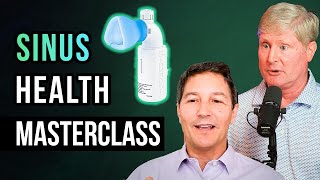
Episode (YouTube video, Oct 17, 2023) featuring host Josh Trent with David Lewis and Dr. Rod Schlosser about sinus health and an acoustic device called Sinusonic. The conversation covers the device origin and engineering (positive expiratory pressure + acoustic vibration/humming), clinical testing design and outcomes (objective PNIF airflow increases and symptom questionnaire improvements), practical use instructions (short daily sessions, 128 Hz hum, gentle nasal placement), target populations (allergic/nonallergic nasal obstruction, post-surgical recovery, singers, athletes, pregnant women), limitations (won't fix major structural deviations; ~20% nonresponders), and broader topics linking nasal breathing, nitric oxide, vagal stimulation, and wellbeing. The hosts offer a promotional code (Josh15) and note ≈50,000 devices sold.
Questions this video answers
128 Hz
About 30% improvement in airflow at two weeks
Roughly 75–80% reported clinical improvement on symptom questionnaires
About 50,000 or more devices sold
October 17, 2023
Chapters
Monks hummed, right?
Yeah.
Why were they doing that? To clear their head. Humming or acoustic vibration is well known to increase the body's production of nasal nitric oxide. And nitric oxide is antiviral, antibacterial, antifungal. It's a vasodilator.
I had struggled with sinus issues my entire waking life. You name it, I've done it. Whether it's the turbinate reduction or the balloon sinuplasty or, or the multiple rounds of antibiotics, like it was really a struggle.
Nasal obstruction, nasal congestion, super common problem. Can be from allergic or non allergic triggers. Affects 20, 30% of the population in the U.S. but it's not just a nose problem. It affects your sleep, it impairs your cognition, your mood. You get depressed, you get anxious, there are a whole variety of effects. If you can't breathe through your nose.
Can we stimulate the vagus nerve with acoustic energy? Yeah, you press the button here and it's now humming. So it's 100, 128 Hz frequency hum. Then you just breathe in and out. It's simple.
When I use this, that positive pressure, it was a total game changer. For over 30 years, I've been dealing with sinus issues. This to me, seems way more powerful than just nasal irrigation.
Foreign.
David. Welcome to the show, Rod. Welcome to the show. This is actually the first time we're doing a virtual with an in person at the same time, which is amazing. This is the beauty of technology and this is a really timely conversation because in the news right now, just recently, there was an article by the New York Times, and the article was all about sinus care, sinus health. And what was so fascinating is the title was, a decongestant in many cold medicines is ineffective. We're going to talk about that today. We're going to talk about sinusonic. We're going to talk about my own sinus care. But to kick us off right here, how did you gents even meet? Maybe you can begin. I mean, it's not like you just fall into the world of sinus care. Like, that's a very interesting lane. So just tell us how you began and how you found Rod.
I'll do the real quick version. But my original background, I have an MBA in finance and an mha. I was gonna be a hospital administrator. That's, you know, when you're in college. What am I gonna be when I grow up? Well, that's what I thought I was gonna be.
I mean, hopefully we never grow up.
Well, that's a good point.
Yeah.
And so I began work with a. With a company that did chemotherapy in little outpatient centers. And Dr. Richard Bogan, who we will talk about, who is the really primary inventor of the sun. Usonic is a pulmonary doctor and a sleep doctor. And he and I knew each other and were friends. And he said, you know what, we should take those oncology chemo centers, change the sheets after the patients come home, and then run them as sleep labs at night. And we said, okay, we could do that. But the company I was working for was a publicly traded company. It was then on the COVID of Barron's for accounting irregularities and some stuff. I was like 25 or 6. And I went, I don't think so. So we found an investor and we bought his sleep lab in a friendly way with the administrator in Columbia, South Carolina, which is where I am. We actually went to the administrator and asked if he wanted to do it with us. And he said, you know, we're a community hospital. That's not what we want to do. So we started opening sleep labs in hospitals. We trained physicians, we did research, we did therapy. So we did cpap. And we. And then we merged with a division out of Harvard, Beth Israel that did EEG testing. So epilepsy, primarily testing. And they had an FT510K approved device. So it became part of what was then SleepMed. And I was the CEO and president of Sleep Med for almost 15 years. We grew it to about 1,000 employees. We had to over 200 sleep labs across the country. But then I went left. 50, turned 50, went on a mission trip. I heard you say you were going on a mission trip. I went to Peru for a while. My kids were getting a little older. And I said, you know, it's time to do something else. So I worked then I did EEG testing with a company out of Israel. But a couple years ago, Dr. Bogan called and said he had this idea, right? This idea that when he hummed and occluded his nose a little, that it opened him up. And so he had three months left on his provisional patent that he had submitted. And so we said, let's see if this is real. And we did a little study in his sleep lab that's published. And it kind of knocked her socks off. How effective? And we'll get to this Acoustic vibration and positive expiratory pressure were. And that gets us to. We did that study and we said, look, we, you know, we ran Sleep Med. It was a over $100 million company. We don't want to sell a gimmick, right? This is. We don't want the all natural gimmicky thing. So we said, where do we go to test this to see if it really works? And I said, you know, do I need to go? I live in Columbia. So I was like, do I need to go to Chapel Hill or Duke or Emory or, you know, Jacksonville to Mayo? Where do I need to go? And I was lucky that in Charleston, South Carolina, Dr. Rod Slosher, President of the American Rhinologic Society and a rhinologist, is an ent, but their specialty is sinuses. And Rod is internationally known, you know, the top guy. So I drove down to Charleston with my sinusonic and said, hey, Rod, will you test this for us when you got there?
Rod was probably like, who's this guy with the funky thing in his hand, right? Do you remember that moment, Rod? Like, what was that like for you?
I remember it vividly because they come in and they have the device, and from a medical standpoint, it kind of makes sense. Vibrations and positive pressure. We've been using that in the lungs for decades to mobilize the mucus and especially viscous mucus and cystic fibrosis patients. And they kind of said, well, can you design a study? Because we're the nasal experts and we do a lot of clinical research, clinical trials. And they said, can you design a study? And so we said, yeah, sure. And, you know, the way we design these trials is that we're going to get, you know, we get paid for designing the study and executing it, that type of thing, but we retain our academic freedom so that if the study is negative, we can still publish it. We're not beholden to the investor or the company. And so my partner and I looked at it and we're like, okay, let's. Let's design a very thorough study to prove that this thing's probably going to fail. And because we don't want it just to be placebo effect and have our names attached to that kind of thing. And it's. So we thought of every metric we could use, so how patients feel, which patients we should select. We wanted some biologic or physiologic measures. So, like peak airflow. That's. That measures how much airflow goes through your nostrils. And so it's kind of like your blood pressure or your blood glucose. You know, you can't fake it, or there's not a really a placebo effect per se in that regard. So we wanted all of these measures to See if this thing was really going to work. And then we kind of forget about it, because as the principal investigators, we then have to step back and kind of shield ourselves from the study as it's going on so that the participants aren't influenced unduly by me kind of lurking over their shoulder.
Is that what they mean by double blind or is that something different?
Well, so it wasn't a blinded study, because. Blinded. And we've done some blinded studies. We can talk about that with sham devices and other things, but basically it means that the patients were being enrolled by our research coordinators, and I was not there. And I wasn't there kind of encouraging them or trying to influence them. And we didn't really see any of the data until the study was completely done. And then my partner, you know, Zach Solar, who's, who's the other sinus guy here, he looks at the data and we're like, wow, this. This thing really works. And it works in the vast majority of patients. And there's real solid evidence. And so that's what really. I, I think Zach and I both became believers, but I still remember that initial encounter and kind of a lot of skepticism, you know, because we just didn't want to latch on to some kind of, you know, like David said, a gimmicky thing. We want know if I'm going to, you know, put my reputation on the line, it's got to be for something that's going to work and, and it has proven evidence.
Well, I can just probably put myself there in that moment when you actually walk up with maybe like the Gen1 prototype and, and you're talking to a gentleman that's now 20 plus years, right? In rhinology, that's. It's been your career. And at first glance, you know, when I, I'll tell you, when I first came across this, Lauren, from our team, shout out to Lauren, she found this device. I was about to go through surgery myself. And the jumping off point for the science of this conversation and also the story through David is this. I had struggled with sinus issues my entire waking life, you guys. I mean, like forever, ever since I was a little boy, and you name it, I've done it, right? Like, whether it's the turbinate reduction or the balloon sinuplasty or the multiple rounds of antibiotics, like it was really a struggle. And, and I came across this at the perfect time because I had just gotten a sinuplasty done where they actually bored out the nasal passages. And I'm in the Office. I will never forget this. It was like one of those breadcrumbs from God. I'm sure we all can feel a moment like this. I was in the office, and the physician was like, hey, you know, well, when you recover, here's your recovery protocol. And I pulled out the box of sign you sonic. It's on the screen right now for everybody watching. And he's like, wow, what is this? I've never seen this before.
And.
And he's like, can I take this back to the main surgeon? He takes the box back to the main surgeon. 15 minutes go by. He comes back and he says, hey, we had the chief pharmacological director. We had the surgeon. We had a couple other office members in there. We've never seen this before, but we think it's amazing, and we're actually going to look into it. And he's like, the answer was, yes, you can totally use this to aid in your recovery of your sinus surgery. And it was absolutely incredible. I did ozone. I did some hydrogen therapy. I obviously went through their medical protocol. But I got to say, like, when I use this, that positive pressure that we can talk about, it was a total game changer. And this is coming from a guy who's 43 years old. Literally, for over 30 years, I've been dealing with sinus issues. This, to me, seems like something way different, way more powerful than just nasal irrigation. So let's. Let's kick it off right there, and then we'll go to Rod.
Yeah. So I had an interesting career with sleep and other things. And what was so interesting when Dr. Bogan says, hey, when I do this, when you start looking up the science of the two items and the two items. Let's. Let's that are. Make the technology. This is a. This is one version of a positive expiratory pressure device. Can they see this?
Yeah. So with.
And Rod said this. When you have cystic fibrosis or other lung things, and a lot of people have had a relative in the hospital, and you go in there and they're blowing on that, and it creates a flutter. And the theory behind that, Rod can tell me, I'm not a. I'm not a doctor. So you have cilia that are. Line your, you know, down to your lungs.
They're like little hairs, right?
Absolutely. Like little hairs.
Yeah.
And the idea of this. This is simplified, but you really want those hairs to work, like, oars together to get the mucus up and out of your lungs. Specifically, cystic fibrosis patients don't clear their lungs well, but so do a lot of other lung conditions. So Dr. Bogan, as a pulmonary doctor, use this all the time. These are mostly off patent. There's lots of them. This is just one flavor of it. So that had really never been used with the sinuses or ears or nose. Why not?
We'll.
We'll talk about it. The other is humming. And when you Google humming and sinuses, unbelievable amount of stuff out there that talks about nitric oxide increase and other things. And we'll talk about nitric oxide. Athletes and there's a lot of stuff with the sinusonic they're anxious to talk to you about. But humming or acoustic vibration is well known, not our science. It's all out there to increase the. The body's production of nasal nitric oxide. And nitric oxide is antiviral, antibacterial, antifungal. It's a vasodilator. Viagra works by increasing the body's production of nitric oxide.
But this will not give you a firmer erection. Okay, that's. Let's be honest about that. Right now we're talking about sinuses.
We haven't done a study on that.
We're talking about sinuses on the.
Certainly not correct. That's certainly not the, not the claim at all. But what it does help with. With blood flow. Right. Makes sense. So. So the two things combined, we now have six patents. Four are methods patents or which, quite frankly, you'd think this is so simple. Those two items have been around for centuries. By the way. Monks hummed, right?
Yeah.
Why were they doing that? To clear their head. Yeah, they were doing it to clear their head. So it all just makes sense. It just hadn't been done. So, you know, I go back to my visit to Rod, showing him this, you know, with, with the career in sleep med. I wasn't 26 anymore and I wasn't scared. It was. We're holding on to a tiger's tail with this thing because we had done this first study and it was unbelievable how successful it was. So I was all, you know, gung ho. So it was fun to hear odd posts say, you know, we're going to prove it didn't. And I was kind of going, you know, the timing of when he started the study. They started the study to the end. I think back now and say, God, I should have been a wreck. Because if it had, if they had proved it didn't work, I guess I was going to do something else. Sure.
It's interesting too. Rod to think about the way you started the study where you actually said we were, we were wanting it to fail, I think that's a really interesting way. That's, that's a lens of truth that many people might not always have. And, you know, you've been doing what you've been doing for so long. The Medical University of South Carolina. What are the top handful of chronic or even acute sinus conditions that people are dealing with on a regular basis? I'm sure you see some of the worst cases in the United States, right? The most challenging ones. What are some of the top three things that people actually are dealing with? What's the landscape look like for national sinus health?
So, first off, it's a huge problem and it's really underrated. I think we've done some studies and others have as well, showing just nasal obstruction. Nasal congestion, super common problem, can be from allergic or non allergic triggers, affects 20, 30% of the population in the U.S. but it's not just a nose problem. It affects your sleep, your cognitive ability. We've done studies on cognition, and it impairs your cognition, your mood. You get depressed, you get anxious. So there are a whole variety of effects if you can't breathe through your nose. And then, you know, it affects sleep and everything else, exercise ability. So I would say probably number one is nasal. Nasal obstruction is probably the most common symptom or complaint that I see. And then the second one is more along the lines of sinusitis. So polyps, infections, things like that. And sometimes patients have trouble differentiating those two conditions because a lot of the symptoms overlap. But typically with a sinus problem, it's more like facial pain and pressure, discolored drainage, fevers, those types of things, polyps. And so the sinusonic is really to address, at least initially, the studies were in rhinitis in the nasal cavity condition, nasal obstruction, allergies, those types of things.
You basically described the past 30 years of my life. And honestly, I don't know if you know the data, but let's just say that you were going to pontificate about what an exact data piece might be, that how many people in the United States struggle with some type of respiratory sinus condition, either acute or chronic? If you had to guess, it's at.
Least 30 to 40%.
That's a huge. I mean, we're talking about hundreds, over 100 million people dealing with this.
And Josh, they've shown that incidence is actually going up and we're not sure why. There's a lot of Speculation over why that is.
Some people might say chemtrails.
Maybe we're taking too many antibiotics, maybe there's environmental exposures. So it's becoming more common of a problem.
One we haven't really showed it. So let me.
So this is. There it is.
This is a sign you saw.
This is the magic device.
When you get the device, there's a little pull tab that starts it wakes it up and it'll give you a little wake up noise. And the thing you hear rattling, by the way, is what creates the positive expiratory pressure. So there's a stainless steel ball in the top, but you press the button here one good firm time and it's now humming, right? You don't have to hum. People like, when do I hum? You don't have to hum. It does the humming. So it's 128Hz frequency hum. And it's a pleasant sound which we'll come to, by the way, from yoga breathing. And there's a lot of reasons for this. For the moment, let's stick with congestion. Right. What we originally started with. And so the idea here is you put it sort of gently against your nose. Not, you know, it's nothing uncomfortable. Don't worry, you're not going underwater with it. So you don't have to seal it, but then you just breathe in and out. It's simple.
Right.
So do people do it wrong? Maybe once. Right. They may get it hyperventilate a little bit. But you're not going to do that very many times. Yeah, once is enough. You won't do that again. But it's simple and you get good at it. And what I will tell folks, interestingly, if you're not as chronic as like you have or the 20, 30 million people who are everybody's stuffy, sometimes a little red wine too much the night before, whatever it is.
Yes.
Right. You mow your grass. So every Saturday afternoon you're stuffy. You're not stuffy the rest of the time or exercise or again, we talk a lot of things. What will happen is when you use your sinusonic for two minutes and at the end of two minutes it will give you a. Like a. Like you got coins from a video game. It's kind of a. And you will put it down the first time and you will go, maybe, maybe, maybe that helped. I don't know if you remember not but about three minutes or four minutes after that you will go, that is weird. And that's the feeling we've heard thousands of times, we've sold 50,000 or more of these. So there's people that love their sics.
I. I love it personally. And you know what I actually love, too, is Rod, you were talking about when we had a call a month or two ago. It works for 80% of the people. And you said something really interesting because I believe you said, anybody that says something works a hundred percent of the time is probably lying 100% of the time. So. So if something works 80% of the time, who are the types of people that this work for? I mean, look, I. I gave my background about my chronic ill, and it definitely works for me. It provides. What I could say it provides is it provides a cleaning. It feels like. Now, you could tell this from a medical perspective, but it almost feels like it cleans my ear canals. It's getting all the dirt and the soot and confusion emotionally and physically to drop out, which honestly, just blowing my nose or sitting in a steam shower, like, these are. These things are totally different modalities. So can you talk a little bit about that?
Yeah. So, first of all, that 80% success rate, and why doesn't it work for everybody? You know, when we designed the study, we wanted to. We tried to rule out things like deviated septums. Okay, So a septal deviation. Most of us have a crooked septum inside our nose. That's the bone and cartilage down the middle. But usually they're kind of mild and not cause a big problem. But if you have really crooked bone and cartilage inside your nose, sinusonic is not going to help you. And that's why, you know, we typically would say, you know, check out, have your ENT doctor look in your nose, make sure there's not a structural problem. Because sinusonic works on the mucosa. It's the lining inside the nose. And that's really where it's going to work. So, you know, if somebody says, I used, and we could talk about nasal decongestants, but it's actually kind of a nice barometer. I say if you use Afrin in your nose and your nose opens up, that's a soft tissue problem, because you're decongesting the nose. You're not moving bone and cartilage with Afrin, nasal spray or Flonase or any of those products. And those are the patients that might benefit from sinusonic with a different modality to treat the mucosa. And so that's really what the goal is of sinusonic, and try to figure out who's going to respond to the therapy appropriately.
Amazing.
I want to come back to. Because, Rod, we've got the specialists. You don't need to hear me talking about it. But two things I'd love, Rod, for you to go through back to that original sort of pivotal trial, right? One is the PNIF scores. What you saw, which was, quite frankly, remarkable, but you can talk about that. And then also the. I guess it was the snot questionnaire, which, by the way, ents have great. That's great names.
Is that actually the acronyms Call One.
Is one is no question. One is the nose questionnaire. One is the snot question. I mean, who makes that up? It's great stuff.
This just reminds us we're human. Wow.
But, Rod, if you could talk about the. I think it was the snot score, right? That relative to decongestants and surgery and how truly sinusonic. Just didn't work a little. It worked really well.
So to your point, David, we used a number of different questionnaires to try to look at the efficacy of this product. So the snot, which is sinonasal outcome test, is 22 questions now in the latest version. It's designed for people with sinusitis, polyps, inflammation, infection, and it asks a variety of questions about nasal symptoms, sleep, your activities, your mood, ear symptoms, those types of things. We also use the nose questionnaire, which is nasal obstruction and septoplasty effectiveness. So those are people who don't have sinusitis, but they have crooked septums. And the questionnaire was developed to try to determine the effectiveness at nasal obstruction on people with deviated septums. And there were a couple others. There's one called the TNSS that's used mostly for allergy studies. So things like, you know, Claritin, you know, Zyrtec, Flonase, Nason X, those types of products. A lot of those use the tnss, the Total Nasal Symptom Score. We used all of them because we, again, we wanted to look at every single angle on this product. All of them showed, you know, roughly 75 to 80% of patients had a clinical improvement. So no matter which of those questionnaires we looked at, they improved. And that. That was kind of the. We were just trying to be overly redundant, overly cautious, very comprehensive in our evaluation. And then to David's point about the pnif, you know, that's. That's the thing where you can't really have a placebo effect because it's your airflow through your nose. And so you can't change that just because, you know, the placebo effect means I think this should work. And so I'm going to have a placebo effect, and we all know that's about 30% in most trials. But with a PNIF, there's really not a placebo effect because that's an airflow measure.
That's really interesting to me because you can't fake blood flow, you can't fake respiration, you can't fake strength. Well, maybe you can do steroids. We're not advocating for that on this podcast. But. But there's certain things about the body that you know are unequivocally true when they're measured in the right way, in a scientific way. So I would think all roads lead to truth when it comes to how much air volume are you actually transferring through your head? I mean, that's a baseline for all of us.
And. And the results of the immediate use and after two weeks were incredible.
Yeah. I think I'd have to look back at the study because it's been a couple years now, David, but I think it was like a 30% improvement in airflow at two weeks. So there. There is some improvement because we measured it right after the first use, and then if you keep with it at two weeks, it gets even better. And then at four weeks, we measured the questionnaires, but not the airflow because we did it remotely and just continued improvement. So if you kind of stick with it, you're going to see the benefits.
Generally, you know, 31 airflow increase. That's. What's. Airflow.
Oxygen, maybe.
That's exactly right.
We kind of need that. We need oxygen to stoke the fire of human life. Yeah, let's. Let's shift gears, because, you know, one of the things I mentioned at the outset of this podcast was the article from New York Times. It just came out, I think, this week. Right. A decongestant and many cold medicines is ineffective. Why do you recommend ROD against pretty much all oral and topical decongestants except for the Afrin for three to five days with acute uri?
And what did the FDA say this week?
Let's kick this off because this is a really big one. This will probably change literally hundreds of millions, if not billions of dollars in acute care and even chronic care for sinuses?
Yeah. So I'm not a big fan of really any of the decongestants, quite honestly. And the example that I use is for oral decongestant. So Sudafed is the most common one that we're probably familiar with. And that's an ingredient in a lot of products that have the D. So like Zyrtec D, Claritin D, that's usually Sudafed. That's an oral decongestant. And probably the worst scenario I ever had or that I still remember is a marathon runner who was in his twenties who was taking Sudafed every day. And he was also taking a blood pressure pill. And. And he was a marathon runner. And so he's probably in the best shape of any patient I've ever seen. And because he was on chronic oral decongestants, he was taking a pill for his blood pressure. So that's one reason that I'm really against oral decongestants. There's a lot of other things with causes your heart to grace. It can cause problems with urinary retention, constipation, jitteriness. You know, a lot of older patients have AFIB and other things. As far as the nasal decongestants, you know, typically oxymetazoline, which is Afrin, is okay for three to five days. After that, you get the rebound effect. And. And again, I see a lot of patients, sometimes they have it in their pocket and they're taking it every hour. They wake up in the middle of the night, they have to use their Afrin. And because you get what's called a rebound congestion. So, you know, the Afrin or the oxymetazoline, it's designed to work for about 12 hours, but if you use it habitually, then the duration of effect starts to shorten. So then it only worked for eight hours, then six, and you have to start. It's addictive, quite honestly, and it's. It's hard to get patients off of that once they're on it.
I've been down that road myself, like, the whole nasal spray road. And to be honest, like, I didn't feel any better for the rest of the day. Maybe I get five to, like, 20 minutes of relief. But the only way that we're really going to be able to treat the body, and from a medical perspective, and also anecdotal, I'm curious what you feel too, David, from a medical perspective, Rod, like, if we just follow the laws of nature and do maybe the top three to five things that are the most natural, the most healthy for the care of the sinuses, what would those be? And I'm not saying that this is a treatment plan you're giving people. I'm just asking for, in your medical opinion, what are the top three to five things that all of us can do. Even if we live in, you know, hay fever environments or asthma environments, things like that, no matter what we're struggling with, are there top three to five or is it always individual for the person?
I'm kind of a fan of the non pharma and non surgical options if we can do that. Because I think nature and our human bodies are probably better than doctors at concocting things, quite honestly. So, you know, keeping things clean. So if you can avoid environments that are going to cause, you know, whether it be allergic or non allergic triggers, then you could then do that, you know, stay in a healthy, clean environment. Rinsing your nose out with sailing is something super easy. And, you know, you're just kind of flushing things out. You know, most of the mucus in our nose is kind of saline anyway. And so you're just really kind of liquefying things and mobilizing it and to get it out. And that's another reason that I'm attracted to sinusonic and I think a lot of my patients really love it, is because, first of all, you don't have to squirt anything up your nose. It's all natural. It's just air. You know, it's a breathing exercise, a breathing treatment with acoustic energy and positive pressure. So you're really kind of harnessing the nitric oxide that our body makes anyway. And it's part of the natural defenses. You're just boosting the natural defenses. One thing, Josh, you know, I know people probably ask about diet. They ask me a lot about diet.
That was my question for you. Does dairy make me inflamed? I found that it did, by the way. Right. But that might not be everyone.
I first of all, like, the disclaimer is that there's not very good research in this area. And so I try to always kind of Clarify my experience vs what's proven evidence and research. Dairy is probably the number one thing I hear about thick mucus, thick phlegm, throat clearing, those types of things. But I've had patients probably just about every diet that's out there who swear by it, whether that be from a vegetarian diet to paleo to no dairy. And so I just tell patients that they're each individual and they're going to have to kind of experiment a little bit on their own with their diet. But there's no question that dairy is probably the number one culprit, at least in my experience.
Okay, yeah. Because I'm thinking about if you've sold 50,000 of these sinusonics. There has got to be at least a few stories that even brought up emotion in you, where somebody got such a beautiful result from it that they wrote in and they were emotional, too. What was that like?
You know, there's tons of those stories. Pregnant women are big users. So with pregnancy, I think I read somewhere it's the sixth most common complaint of pregnant women. They're. They're full of fluids.
Right.
They're swollen.
Being pregnant is hard. Y' all shout out to every mother.
Guess what? Most moms most like. Like a lot of us don't want to take steroids or some of the things that you might do.
Of course.
Definitely don't.
Yeah.
So there's. It's been difficult to get relief. So the sinusonic. Yes. Rod said all natural. You're not putting anything in your body. And oh, my gosh, if you can get a little relief, fantastic sleep. Another huge area. Right. CPAP users who aren't CPAP users because they put it on and then they get claustrophobic and they rip it off. Why do they get claustrophobic? They can't breathe.
Yeah.
Same thing, really, with mouth taping right now.
Right.
There's a lot of discussion around mouth taping. Do it with a stuffy nose, and you'll rip it off because you get claustrophobic.
Sure.
Now we can. We'll come back to why mouth taping and nose nasal breathing are important, but that just fits perfectly right into the sinusonic.
Yeah. Okay. So think about this, gents. Like, we are in a time where, you know, our. Our food supply is not the same that it used to be. Our air quality is not the same that it used to be. But on the flip side, we have all these resources, the technology like this acoustic therapy. We have the ability to connect with physicians online. If you would have told my. My grandpa that, he would not have believed you. Right. Like, so what I'm saying is it's the best of times, it's the worst of times. It's like freaking Oliver Twist right now. So to make sense of all of this, would you. Would you, Rod, stack the sign the sinusonic with any other supplemental therapy? In other words, would you include this in a protocol of any kind, like irrigation and the sinusonic or a certain lifestyle habit sinusonic or whatever it might be? Like, what does that look like? What have you seen with patients as far as an actual protocol or a sequence of order of how to use the acoustic therapy so that we can get some long term results here.
So, Josh, I offer it really to all of my patients who have this kind of condition. And I'll tell you just the nature of my practice is that most people have already tried over the counter anti histamines, over the counter nasal steroid sprays. If they're on that and they've had some benefit or even if they just want to kind of continue. I try to use sinusonica as an add on therapy for it because I kind of figure if we're trying to take care of the inflammation in the nasal passage with a couple of different strategies, then that's hopefully going to be the best way to get the patient relief. And then maybe in a month or two, if they come back and they say, I feel a whole lot better, then I say, okay, now let's try to wean, you know, the things that cause you cost the most and have the most side effects, usually like a nasal steroid spray or an oral antihistamine. And I say, let's try to wean that. But there's. We're getting ready to do some research where we think that sinusonic may augment drug delivery in the nose. So that's in the sinus world, especially for like polyps and sinus infections and other things. We're trying to deliver medications topically, so with a rinse or a nebulizer or a spray to avoid side effects. So when you take antibiotics and you get GI problems and yeast and other things, you know, if you can put the antibiotic up your nose and then maybe use the sinusonic to push it out peripherally or the steroid and push it out peripherally, you're going to have better distribution of that medication. So instead of it all just going down your throat or coming out your nostril, other nostril, maybe it'll get to the areas that we needed to. So that's an area that we're excited about. I think there's huge potential for that in the future. And so I guess kind of stay tuned. But at least that's kind of. My algorithm is full court press, get you feeling good, and then taper things off.
It sounds like, and correct me if I'm wrong, that you would want to use the acoustic therapy first to open up the passageway and then after that you'd want to put in whatever your physician is recommending for you. Is that the order of operations there?
Yeah. So typically I do say that because I say, okay, you're going to do this for a couple minutes. Let's do it for a minute and you open your nasal, you know, your nasal passage, you blow your nose, you get the mucus out, then use your drug and then use the sinusonic to help push it out now that you've opened things up. So I, I do a lot of that kind of stepwise, you know, practical hands on treatment algorithm for that.
Yeah. Makes sense.
Yeah. If you're getting 15% more airflow or 31 or somewhere in between, what does that mean? That means you're getting that much more medicine back, right?
Yeah.
When you're stuffy and you squirt something in there, you taste it in your mouth, well, it's just hitting the stuffiness and then going down. Well, let's get it back there. It's back there now. Let's get it, you know, as far back as it possibly can be.
So I can speak from personal experience on that. One of the things that I found when they did the scan of my head was finally, you know, at 40 years old, I'd been through probably like 10 or 15 different ents, Rod. I mean, it was crazy, the journey I've had. And, and honestly, my journey is a mirror of probably millions of people in our country where they're just not meeting with the right physician, physicians doing the best they can. I'm not here to demonize physicians. I mean, look, my surgery was from a physician. I'm super grateful for some portions of western medicine. Right. I'm not here to demonize that, nor do I think we ever should. But think about this, like, if, if somebody is born, they found this in my scan and like myself, somebody's born with smaller frontal sinuses. That's what I was told when I was in the ENT office. I'm actually, I was born premature. I was born less than, than five pounds when I came into the world. And I just have literally 50% smaller cavities here in my frontal sinuses. So they had a lot of trouble throughout my life. Draining. Now, for someone like myself, where there is an obstructive problem, it's actually a structural problem that gets to be addressed. The sinus care gets to be addressed and the acoustic therapy, all three of these things must be addressed. Right. Do you have anything else for that might make sense for somebody that has a structural issue when it comes to sinus care, really, just so they can feel good.
Yeah. So, so great point, Josh. So the, you know, the structural piece of it, historically, we always thought you need surgery to make big holes to get medicine in the nose and in the sinuses. And to a large extent that's true. But if you're delivering therapy, that's either a missed or. Or sinusonic is just all air pressure. Maybe we don't need to make big holes. Maybe, you know, the balloon sinuplasty is actually kind of an in between step that has evolved over the last 20 years where you just dilate the opening. So you're not making quite as big of an opening as the traditional surgical methods are. But we might be able to be more conservative. And so that still is a changing philosophy amongst ents, quite honestly. And exactly how these, all of these therapies fit together is something that we really need to kind of keep our minds open to thinking about new ways of doing surgery, new ways of delivering therapy to help patients in an evidence based fashion.
All true. But guess what? Try it.
Right?
This isn't going to hurt you. That one beautiful thing. With everything Rod's saying, taking some medicine might increase your blood pressure or might make your nose bleed. Might do lots of stuff. This might not work for you. You might be that 20%, but it's not going to hurt you. It's air, it's humming. Right. So I think that's one thing that's just incredible about the S onusonic. The risk is nothing.
Yeah.
But the potential, which we've now seen in studies is massive, life changing. You've seen it. You know, you asked if we've seen some interesting anecdotal sort of patients. One is, we say it every time. This will not fix structural problems. I said it right. Deviated septum. Really bad deviated septum. This isn't going to help that deviated septum. But here's what I hear from people who have bad deviated septums is the side that's open, right? It's closed. The side that opens is open. Needs to be open. So when that gets stuffy, oh my gosh, I'm in trouble. So I use my sinusonic and I can breathe again. The one side doesn't work anyway, so it's interesting. Right? So it's, you know, I guess I'm always a little skeptical with that. It didn't work on 20% of the people because I see how many folks don't use it. Especially, you know, our Amazon reviews are terrible. Which a lot of our docs are like, don't sell a medical device on Amazon. You know, you just get people who are buying it. We, we get those back, the returns from Amazon and over 80% of them have been used less than one time. So somebody got it, they pulled the tab, they went, this is stupid, right? They saw it on Facebook, so they think, gimmick crap, but I'm miserable. I'm going to buy one of these, and I can return it if I need to. And so we get that over and over again. And I would suggest them, if you really are miserable and you bought one, use it. Right? Yeah, do it a couple weeks. You've seen that.
Well, David, you know, you made me think of my mom because my mom was like, 75, bad heart, really crooked septum. And her local ENT wanted to take her to do a septoplasty. And I said, mom, you've had seven cardiac stents. Don't undergo surgery for a septoplasty. She tried Sonia Sonic, and she swears by it. It was sleep, headaches. Everything got better. And so I would give her. I'd buy her sinusonics and ship them to her.
But it didn't cure the deviated septum. That's right.
Sure. Yeah. No, we're clear on that. I mean, once the structure is addressed, then there can be some other ancillary methods that'll help people. So, you know, structure aside, I think about the psycho emotional component to this. You said that a lot of people on Amazon, they'll use it one time and then they'll say, oh, it didn't work. But in my mind, and I'm sure, Rod, you see this with patients that are really tough cases where there's an emotional component to their healing. And this is a really big piece because. And I found this as a fitness professional, a lot of people don't know this. I mean, if you're new to the show, this is brand new. If you've been with us for a long time. You know, I spent 10 years in gyms, and I would find that the people that would lose weight and the people that would actually be healthy, they had a certain mindset around their healing. They. They were actually looking for the solution, and they wouldn't allow themselves to really unconsciously sabotage their progress. So when I hear from you that somebody on Amazon is like, oh, it didn't work. To me, that's an unconscious sabotage. I wonder if you see that with the really tough cases, if all of a sudden they realize through the right conversation with you or through this, you know, trifold approach to. To healing, that all of a sudden a memory pops up that they had trauma with their parents or they have something that really comes up in their nervous system. That was blocking them the whole time. It's a bit out there, but we're on wellness and wisdom. Like, let's cover the whole gamut here. Right. Do you see this, Rod, from a medical perspective and also just as a father, as a man?
Well, Josh, I guess I'll say that first off, like, we've done some research, others have too, that chronic illness, even though, like sinusitis and nasal obstruction are not life threatening, they are, without a question, associated with mental health issues. So depression, anxiety, the social isolation, those types of things. And a lot of patients, they could become fixated on their sinuses or their nose problem. And I think that once they understand that there's a professional, a medical professional that's going to come alongside them and that they're going to need treatment, but we can get them better and that they just have to, you know, they have to buy in. Right. It's like a diet or a workout plan. You can't go on a diet for one day and expect results or a workout plan one day. But if it becomes part of their lifestyle, then their mood improves. We know that, we know that their depression, their anxiety, all of those things get better if we can improve that chronic sinonasal condition.
Yeah. And that's a really, that's actually a very beautiful top down answer. I'm, I'm curious, I want to ask it again because that was really powerful and if you stuck the bottom up approach to that, like, in other words, if somebody has had a very, let's say, toxic lifestyle or they've been through a lot of trauma in their life. Have you seen that as a medical professional, where someone has led a really traumatic life or they've, you know, been a smoker or a drinker, like they've been beating themselves up or they've been beat up by life and that actually what manifests in sinusitis? I know it was for me, I mean, I've been on a spiritual journey for my sinuses to heal these things. There's a reason why we got connected for this acoustic therapy. Do you see that in your practice where the more you talk with a patient, the more you start to understand that it's actually vice versa? Yes, their sinuses cause mental health, but they also had mental health that caused their sinuses.
Yeah, no, absolutely, absolutely. It can go both ways. And I guess from a research standpoint, it's hard to know which comes first. And in some patients, it's probably, as you mentioned, the top down sinus problem starts first and then they get Mental health, you know, issues and other. It can probably go the other way. Unfortunately, with medicine, it's hard. It's hard to study that. Right. Because the patient presents to me, and they have both issues. And so I don't know which came first. And especially as an ent, you know, I just tell them, I'm going to get your nose problem better. And I think the other stuff will follow suit. And if they still need other treatments, let's say for. Whether it be for mental health, spiritual well being, you know, I'm not really super qualified for that.
So as a father and a husband, we're qualified on mental health. Guys, come on.
Well, we had a zoom that I was on. That was fun. So Stephen Porges, Dr. Stephen Porges, who is the developer of polyvagal theory. Right. We're going to switch off just a bit.
Yeah.
And Rod and I were on a phone call together, and it was fun. So everything we're talking about right here, obviously vagus nerve stimulation, nasal breathing for safety, you know, Right. When you, when you're stressed, how do you breathe? You breathe through your mouth, right?
Yeah.
So the whole world is talking about trying to breathe through your nose and calm down and do those things. And what one, one thing Dr. Porges said that just struck me was on this topic we're talking about here was the vagus nerve affects, you know, the sinuses and the gut and all up, you know, all your functions of your body. And so can we stimulate the vagus nerve with acoustic energy? Yeah, everybody's doing that. He actually has now designed a study for us that he got one of his colleagues at the University of North Carolina at Chapel Hill to finalize and send to the IRB at Chapel Hill. So we should be starting that study any time now looking at polyvagal stimulation and the sinusonic. So I don't want to say anything more until we get there, but the fact is, training yourself to breathe through your nose is a yoga exercise. You know, millions of people are doing that anyway.
True.
And so we have lots of folks who, their issue is not congestion, it's they want a deep breathing exercise. And, oh, by the way, guess what? You get the benefits of being open and feeling better. We did a study. This was an interesting1. During COVID we didn't. Rod did or Musc did. We wanted to see if the antiviral activity of the nitric oxide from the sinusonic could abate or mitigate a cold. A virus. Covid was going on. We didn't structure it around that as much as people get colds. And we had approximately 60 patients, Rod, I think. And two thirds, One third, Two thirds got a real sinusonic. A third got. Or was it half? It doesn't matter. It was. But half got. Or a third got a fake device. So there was a plastic ball. It hummed at a different, higher frequency with less decibel. But in that study, we wanted to again see what sort of viral activity happened in a set 60 day period. And it's funny to hear Dr. Solar say, you know, it's almost like in hindsight, you know, we were doing this during COVID Everybody was social distancing and masking. So in the 60 day period, nobody got sick. So you could say that study was a complete bust. But in analyzing the data, when you heard all the data they analyzed, they actually did a daily diary. And what they found was 70% more days of feeling fantastic, feeling good, or the people that use the active sinusonic than the fake than the sham. We didn't think that much about it then, but then you talk to Dr. Porges and you look at all this other activity and it completely, completely makes sense. They felt better. So we have that study. It's a sham, controlled study. That was not the end point that the doctors were looking at from a scientific perspective. And, Rod, it was statistically really relevant. It was pretty neat. So that study's done. There'll be more to this athletic use. You know, if you're a PGA golfer and you got a, you know, now it's a $10 million putt, right? Or 12 million, whatever it is, right? You want to train yourself.
You definitely want to breathe.
To breathe through your nose, Right?
Right, right.
You don't want that fight or flight chemicals rushing through your thing. I don't make a putt when I'm by myself because I'm, you know, I'm thinking, oh, gosh, I gotta make this. But, yes, you want to train yourself to breathe through your nose. And the sinusonic is a great, you know, great way to do that.
You know, what's really fascinating to me is ever since James Nestor was on the Joe Rogan podcast, it became like a groundswell of people that were waking up to nasal breathing, which I love. I mean, we've talked about this in the breathe program for over three years now. You know, we have a thousand students plus in the. In the breathe program. The sinusonic is in our breathe program. We do alternate nostril breathing in the program. The reason why I'm so stoked on this is because he really shared about the physiology and the calming benefits of nasal breathing. And look, whether you're a fan of Nestor or not, we all know that we feel good when we breathe through our nose. Case in point. And I wonder how you guys feel about this. Case in point. I was doing research when I came out with the program, and I was meeting with different physicians and different spiritual teachers. And one teacher was like, you know, if you look at a child when they're born, they all breathe naturally through their nose. If you plug a child's nose, they'll start to choke. And I thought, no way. That's not real. So when my son Novo was born, that's not very nice. Okay, Karim, don't worry. I did not try to choke our son. I covered his nose just for, like, five to ten seconds, and he didn't breathe through his mouth. This is a huge, huge point. We are wired from the creator to breathe through our nose. So the reason we're all struggling, and my son proved it to me in my own life, we are struggling as a country to breathe through our nose. That's. That's really an epidemic of mouth breathers. Let's talk about mouth breathing here, because if this is a new topic for somebody, maybe they haven't heard of Nestor's work or seen that interview. We're going to link that right below. Why don't we go first with you, Rod? Then we'll go over to David. When you look at mouth breathing, like, what are the physiological effects that are very, very deleterious to health?
Well, so we know that it impacts your sleep. You know, Nestor did the thing where he just blocked his nose for 10 days, and all of his sleep parameters were off the charts terrible.
Right?
So it's not like he all of a sudden gained a lot of weight or developed sleep apnea. So, you know, nasal obstruction will force you to become a mouth breather at night. We think, you know, at least in our research, there's probably other things than obstruction that cause sleep impairment. And it may be it's nasal drainage that's going down the back. You're choking, you're coughing, you're kind of waking up, then your mouth becomes dry. And when you're a mouth breather, then, you know, we know from, like, especially children, there's something called the adenoid face, which, you know, kids have big adenoids in the back with their tonsils, and it if obstructs their nose and they become a mouth breather. It actually changes the shape of their face, and it's described in the medical literature. So those are kind of the big things. You can get more cavities because now your mouth is all dry. You can't humidify the air. There's really good research, you know, no matter. Our noses are amazing, because no matter what environment we're in in the world, by the time it gets down to your trachea, it's always the same humidification and the same temperature. So you could be in, you know, the Arctic or in a desert. And the nose conditions that air perfectly. And so it's got a huge job, it's a huge filter. And. And you lose all of those abilities that the body normally needs to perform. If you're a mouth breather, if you're an obligate mouth breather.
Wow. If that wasn't enough to motivate somebody to breathe through their nose, I don't know what would be. I do not want more cavities, and I do not want to change the shape of my face or my children's faces. I. I don't want that. I wonder, you know, anecdotally in your own life, and you know, the polysomnography, which say that three times fast, it's sleep labs, polysomnography, the study and the science of sleep. And to really, you know, brace this question, I wonder, because I've been in those sleep labs at UCSD when I used to live down in San Diego, and to me, it didn't seem like a place that was really conducive to great sleep. You know, in the question itself of how do sleep labs help people? It seems like the sleep labs are. Aren't really that great for sleepers. Is that kind of why you left the industry and then went on to the acoustic therapy?
You know, sleep labs are great. I mean, if you have a sleep issue, you need to find out what it is.
Yeah, right.
And so if you have really bad obstructive sleep apnea, or you have narcolepsy, or you have a lot of other things that go bump the night when you're in that sleep lab and you say, I won't sleep, you will sleep.
Okay?
You still sleep because something's wrong with your sleep normally, Right? So that's just a good way to get diagnosed. But why sleeping probably matters. But even think, I'll go to the athletic use, right? So there's the oxygen advantage and the Nestor stuff. When you breathe, a football player, big guy comes off, takes his helmet off. That shallow breathing gets the oxygen to maybe the very Top of the lungs. But there's almost no interchange with the blood system to get oxygen to where it needs to go. And you got these chemicals fire. And you can feel them yourself. Right. Any of us sitting here do that. You'll feel the adrenaline rush that you get from that. So instead what you want to do is maybe you can't do that when you're on the field with your, you know, but you got your mouthpiece in, so you really want it. But just in daily life, if you can take those deep breaths, then calming happens, Right. When you breathe deeply through your nose. But the other thing that happens is you get that upsurge of nitric oxide through the nasal paranasal sinuses. And now you've got blood flow increasing because of the nitric oxide mixing with the 31% more oxygen that you're delivering, especially if you use your sinusonic but just nasal breathing. So now you've got actual muscle performance improvement versus just, you know, breathing real fast.
It's such a huge topic.
So many aspects of. Of nasal breathing.
It really is interesting. I want to go back to the question, though, because, you know, I'm really interested as to why you left the industry. Was it something where you saw through the other physician, the inventor of the acoustic therapy, like, what was the real pull? Because you were quite comfortable in that world.
Yeah, well, I turned from 50 and decided to go on a big mission trip. And I have three kids, so they were all sort of getting into college and moving on. So I had done sleep for a long, long time. So I actually went to work for an Israeli firm that was looking at eeg, an EEG technology that maps neuronal firings for another day. But a really, really cool technology. So they would. You would repeat tasks, and they used, you know, EEGs, and they can actually map the firings of the electrodes. So if I should. I'm going to simplify. If I show you the same picture twice, that thing stimulates some thought in you.
Yeah.
And it's predictable. So. But then if you take a med or you have a concussion or something else, and you see that same picture and it doesn't fire the same way, what's going on? Neat. Really neat technology. And that came out of my work in sleep, because sleep, you know, sleep studies and sleep doctors are really. They're pulmonary, they're breathing guys, gas exchange guys, and they're brain guys. Right. So if you have narcolepsy or some of those weirder things that go bump in the night, those are neurological. In nature, usually, yes. And then the other, you know, the big, you know, mass loading of the diaphragm. Big, big gut or otherwise. This obstructive sleep apnea is real and very problematic, is more of a breathing gas exchange issue. So I was having fun with the EG technology when Dr. Bogan called. And again, my original reaction was a little. Huh. But I tell you, every ent I went to to talk about this, not unlike Rod, even Rod said, that makes sense. Now we're gonna see it does or doesn't work. But here's an issue. In fact, Rod, you had done some research on nitric oxide and cilia stimulation, so we didn't even talk about that. One of the benefits of nitric oxide is it's a cilia stimulator, which we want, right? So if you're breathing in pathogens, you want to move it on out of there. Different from the lung, you know, this little thing where you want to get the mucus up and out. When you're breathing in pathogens, you want those hairs free to be moving it back. Like, you know, we're breathing bad stuff now, and it's just going. If we're working correctly, we're moving them down through into our stomach, and the acid kills it, and we, you know, go on to feel good. Nasal breathing is just tip. You know, the tip of the iceberg there. The performance stuff we're still really excited about. We train Olympic athletes.
Yeah.
One they'll miss less practice. Custom might keep them well and clear. And one thing we didn't. We didn't prove that the nitric oxide kept you from getting a virus, but we didn't prove it didn't. And so, Rod, we had a really neat call that I got to be a part of. But I think there were six or eight doctors on that call with the FDA during COVID considering using the sinusonic as a. With an emergency use authorization as a prophylactic device against Covid. It was a fun call.
And this other docs, listen, if you can push that through, that would be amazing. So whatever you guys have to do to get this approved at the highest levels, let's go for it. Because really, what you're doing is you haven't really reinvented the wheel, if we're being honest. Humming and, you know, getting the airflow to modulate and that positive pressure that's been around for a long time. I've even read studies about people that do the didgeridoo device. You know, that long African device where it Makes the vibrational sound that improves the sinus condition. And nasal breathing, what continues to fascinate you guys about this world? I mean, it is such a massive world. And most people at first audible, they might say, oh yeah, it's good to breathe through my nose, but are you actually doing it? Are you actually doing. Just because you know something doesn't mean you're going to do it. The bridge between knowing and doing is really unique to the individual. So let's start with you, Rod. What continues to fascinate you about this world of really your specialty and the sinuses in general and how that impacts the, the radical lifespan or the deterioration of lifespan for so many people? Like, what stokes you about your work?
So, so the thing I'm excited about is I think there's probably multiple mechanisms of action going on. You know, David talked about nitric oxide, that molecule, it's a gas anti, antiviral, antibacterial, anti, inflammatory. So it might just not be Covid. It might be. There are colleagues who are looking at nitric oxide donors as kind of a natural antibiotic to fight bacterial infections or fungal infections. So, you know, that's one aspect of it. We're looking at it for eustachian tube dysfunction, drug delivery enhancements. So I think there's a whole spectrum of potential conditions. Now, you know, you say, well, why haven't you studied all those? Well, we start with the, you know, the low hanging fruit, so to speak, which was nasal obstruction. You know, you do a non placebo controlled study, non sham, and show that it works. And so now we've kind of laid the framework to prove that this works. And now that's why with David's study that he mentioned about the COVID prevention, that's why I was super excited about a sham device because I really want to get the highest level of evidence. You know, it's not placebo, but it's a sham. So for devices, that's the best you can do. And to show that there were some benefits in that. Even though it didn't prevent Covid because nobody got it for a variety of other reasons, I still think there's potential there for, for looking at antiviral things. So I just think there's so many potential applications, it's just a matter of trying to prioritize them. And, and a lot of patients don't want to squirt stuff up their nose because they're waterboarding and they're doing other stuff. They don't want to have procedures. And so this is such A simple, easy thing that if it helps to kind of boost the natural respiratory defenses, then I'm all in. And I think it's exciting. It'll help a lot of patients.
As a lot of people that love doing it. That two minutes is a meditative time in the morning.
It kind of is. I mean, it just time to check in with yourself.
You get good at it. So if you get one and you try it first couple of times, God, that's kind of hard. Keep doing it because it really, I mean, you saw me do it. It's easy again. You get good at it.
Yes.
Other areas we haven't talked about, we have Broadway folks using the device to open up their voice. So we have singers that, you know, are buying it. We have musicians. Right. If you're a professional, you know, woodwind or clarinetist, you got to perform. And when you're stuffy, that's tough to do. So, you know, the sinusonic is a perfect way to, you know, open. Open you up. We have divers and pilots or plane folks. You know, Dr. Bogan always says, anybody flying east, west coast or, you know, or internationally, when the ding goes for the beginning decline, everybody in the plane should, you know, whip their sinusonic.
Sure.
Modulate the pressure between the outside air and, you know, and yourself. So the one study, quite frankly, we haven't even talked about is sinus pain and pressure. So the folks you know that are listening, that get migraine, ish type headaches, they, you know, they come into. The one thing I'll say about Rod, you know, Rod, Rod doesn't see normal patients. If you're seeing Rod, you might even.
Have been to some other.
Well, you've probably got sinus cancer or. I mean, he. He is not your average. So he. That's when he said, they've burned through. They've already gone to everybody. By the time, you know, if you're in north and South Carolina, you're coming down to see Rod. So be clear that the specialty there is, you know, way up the scale. So sinus pain and pressure musc did a non sham look at those patients.
What does that mean, non sham?
So everybody in the study used a real sinusoid.
Okay.
And the problem with that is, is if you're. They're biased to say, oh, yeah, it helped me and it helped me, then you don't have anything to compare to. Okay? But if. So if everybody with the sh. The fake one says, didn't do shit for me, excuse me, or that's great. The other said, oh my gosh. It helped me then, you know, wait a minute. These are same people, we treated them the same. So shams really matter because it wedges that out. Matters if you don't have a measurement like we had with the pnif. Right. We, our study, we knew people who were faking or not because we could see they were had more or less airflow. But on something with like sinus headaches where you're just asking them, how is your pain, Josh, Are you feeling better? Well, when a doctor asks that, and there's a lot of studies that show this, they're inclined to say yes, Rod, this, thank you. This, you know, it's a lot better. Well, are you or not? Most people tell the truth or they don't even know they're not telling the truth. That's maybe Rod could say.
But.
So that study, by the way, at musc without a sham showed that we helped those sinus headaches. We being the sinusonic at 78% of huge number. And by the way, these are patients that are miserable. So these are, I mean they don't go to work. You turn the lights off and you're, you know, you're, you. It's a, it's like a migraine. They're miserable. And the fact is there's not much. When you go see your local ENT, the ENTs go, oh gosh, what am I going to do for John?
They're going to throw pills at it, you know.
Well, you know, yeah, sometimes they send them to a neurologist and of course the neurologists throw tougher pills than the ents throw. There's just really not a great answer. This helps 70 plus percent of these people. So we didn't do a sham. So guess what? Mayo Clinic is as we speak funding. We're not paying for it. Mayo Clinic is funding a multi site. Look at those sinus pain and pressure using the sinusonic with a sham. It's recruiting right now in Phoenix and in Jacksonville there's Mayo's, you know.
Yes.
Excited about it and looking at that. So more to come there. But quite frankly it'd be another one of those if I had a sinus headache. This is over the counter simple. Try it because if you're miserable it might help.
You guys are a good team because you know, with your medical background and with your specialty, Rod, and also just you being an entrepreneur and your sleep background, like this is a really good ingredient for a good tasting cake for this sinusonic. And I, and I feel like, the. The big question that probably everyone is thinking is, okay, what causes all of this in the first place? Because if we knew that, right, if we knew what made people have sinus headaches, like, at its core, then maybe we could just go back to the ways of nature that the body already has the production of nitric oxide to help us heal with. In other words, what actually causes Rod, the sinus headaches in the first place? What is it?
Yeah, so. Outstanding point. So we're not quite sure. And the patients that David's talking about that we struggle with, those are the ones that have clear CAT scans, clear sinus CTs, endoscopy. You know, there's no infection there. And unfortunately, I see a lot of those patients who've had antibiotics thrown at them, steroids, sometimes surgery, and they. Sometimes they're worse than they were before because there's not an infection there going on. Probably the two leading hypotheses, maybe three, we could say maybe there's a pressure differential. Okay. Just like when you pop your ears when you're going over a mountain or in an airplane. Maybe it's a pressure differential. Well, sinusonic should hopefully help with that. Maybe it's some kind of neural problem, you know, like. Like, you know, sensitive nerves. And you all mentioned the polyvagal therapy and the pressure and the oscillating pressure is going to affect the trigeminal nerve in the nose and in the sinuses. That's the sensory nerve that, you know, skin and your mouth that senses temperature and pressure and pain. So maybe that nerve is just a little bit too sensitive. And that's what some of the medications that are given are, to downregulate the sensitivity of that nerve. And then maybe it's some type of a vascular issue. So it might vary a little bit depending upon, is it a migraine or atypical or trigeminal neuralgia? It's. A lot of those are in the neurology realm, obviously. But the fact of the matter is that sinusonic may address a little bit of all of those potential mechanisms in a fairly safe way. And so, as David alluded to, you know, this is a population that I struggle with because I just say, go to the neurologist, that most of the medicines just make you sleepy, so you forget you have a headache because you just go sleep.
It's like putting a big band aid on it.
Yeah. And so, you know, that's why we did the study without a sham, because if it didn't work at all without a Sham, then it's not worth investing in a bigger trial. And also when you do a non sham controlled study, like David talked about, like 75% or 78% got better. That allows us to then determine how many patients we need in the sham controlled study that the Mayo Clinic's doing. Because if, if sham gets you like a 30% improvement, but the active device gets you 75, 78%, you don't need that many patients as opposed to like, if it's 30% and 35% difference. So you know that that's the reason that we did that first study. The challenge is there's no objective measures. You know, it's all patient symptom scores because there's not like a biomarker or a CAT scan or anything you can do biologically to measure pain. And so that's why it's tougher to prove, I think. But this, this sham controlled study, I'm excited because it's multiple institutions, it's Mayo Clinic, it's separated from the company, separated from me. So, you know, other quality people who are independent are going to do the study. So it's. I'm looking forward to the results.
You know, what's quite fascinating to me is that it's easy for us to forget that we're a soul in a body. So we have to honor both of them. There's the spiritual camp that says, oh, it's all energy. And then there's sometimes not all the time. The medical camp that says, oh, it's all just the body. Well, you can't have a brain without a body and vice versa. So in order for us to be a healthy human, and, you know, the purpose of this company, this show, this mission is how do we live our life? Well, that's the whole meaning behind why we're here at the table today. How do we live our life well. Well, the only way we can live our life well is if we're giving the body the nutrients, the nutrition, the, the care, the love and the things that it needs. How could we possibly function in this world if we weren't giving the body oxygen, if we weren't getting the right kind of oxygen? I think, and I'm curious how you feel, Rod. I think this is an oxygen issue. I think it's about people that are basically having protracted shoulders forward, head posture. They're not breathing through their entire passageway. They're not getting their cerebral spinal fluid to recirculate in their body. And then that leads to all these other maladies, all these These other things that are going on. If you were cornered and I'm going to corner you right now, let's put you on the spot. Is this just an oxygen issue? Is that really what we're talking about here?
I'm going to say it's definitely possible. And the reason that I chuckled, Josh, is when you talked about the posture.
Yes.
I was recently in this. I do kind of this free clinic one night a month. I was with a chiropractor side by side, and he talked about our society. And the posture is exactly what you talk about, which is why he said, everybody's hunched over. You can't breathe. They now we have spine issues and hip issues and. And our overall health has just kind of gone down. And to your point about, you know, is it an oxygen issue? Spiritual, mental, physical? I don't. I. As much as I'm a doctor and I'm a medical person and I want to kind of be able to pigeonhole and segregate those. I don't think you can. I think they're all entwined and integrated, and you can't have one without the other, quite honestly.
What do you feel about that? With all the 50,000 plus and probably 50,000 more in the next six months that are going to be on the market, people actually trying this. What do you feel is the reason why people actually even come to sign usonic in the first place?
Well, there's no good options right now. And obviously the FDA decision this week shows you that $1.4 billion were spent last year on a drug that doesn't work. That's staggering.
That's.
That's the significance of the pseudo feds and the stuff that Rod talked about. This one.
So much wasted energy.
Billion. On something that didn't work. The FDA said there wasn't a safety issue, so it wasn't like, oh, God, and you hurt yourself. Although I don't. Not sure how that works either. Taking a drug that didn't do anything but that they said it was, you know, wasn't. Wasn't particularly a safety issue. It just didn't work. Yeah, well, we have studied. This does work, right? I mean, this thing works. And it's everything we've discussed, all natural and all the things that go along with that. So it's just fun. And I said before, it's a little like we have a tiger by the tail. It's just. So keep it simple. Stupid device that when you're done with.
It, you get good at it.
You put it down and you just go you know, worst thing that happened to you is you had a two minute meditative nasal breathing session.
Sure.
I mean, that's not all bad either. You know, I've got a son in law school in Chapel Hill and he's used his since. I've been doing this every single morning after his shower for three years. And when he lived in the attorney house when he was undergrad, he had like eight or nine of his guys, all using the sinusonic. It just, you get good at it. It becomes part of your daily routine. And it's, it works. I want to take one moment and just talk about the negatives. Right. And the negative is, and I get this, is it's not rechargeable and you can't change the batteries. And in our world that's not great. I get that. And we've instituted a recycling program and we've done some stuff. The problem with just making it recyclable or not recyclable, rechargeable or change the batteries is twofold. One is just flat out a hygiene issue. Like you need to change your razor and you change your toothbrush. You are breathing warm, moist air into this thing. And over time, it's time for a new one. So that's, that's one thing. And we've looked at the engineering, but then even if you do seal off one, it'd be a way more expensive device. But two, it still would have to be clean. So, you know, then you're going to put it in an ozone. There's a lot of issues with that. The other, quite frankly, is there's microelectronics and a little speaker that is cardboard. And those things don't hold well with, you know, warm moist air over long time. Yeah, so I get the complaint about it. Totally do. It is tough in today's world to get anything seen. You know, you couldn't go to door to door to docs. So we have struggled telling people about this. So again, thank you for having us on today. Yes, that negative is real. I don't have a, we don't have a perfect answer for that. Again, we do have a subscription model where we'll send you one every six. They last six months. If you sign up for the subscription model, you get 25% off and we send you a return postage paid envelope to send these back. Because we can recycle the plastic, the silicone, not all the batteries, but most of that. Then we can take care of and make sure we do recycle those in a, you know, Put them in an appropriate place. So I want to make sure I hit that while we're.
Yeah, well, the. The pieces of the machine that need to be clean are the ones we're breathing through. So it's pretty freaking efficacious that they're clean. I mean, we definitely need it to be clean.
And.
And on top of that too, if you look at just the physiology of humming and the way that there's the acoustic vibration that's actually being used through the machine, nothing in this life is permanent. I can't exhale for eternity. I eventually have to inhale. When I think about how much money I've spent and how much pain I personally have gone through with my own sinuses, the cost of a device like this is absolutely nothing compared to the long term chronic pain that so many people are in. And also on the screen right now, it's JoshTrent.com Signusonic. Just use the code Josh15. If you want to just buy it once, use code Josh15. You save 15% off, which is amazing. So thank you so much for that generosity and, you know, extending the olive branch to our audience so they can actually try this out and see if it works for them. Hopefully they're one of the 80% of people that it works for. You know, this has been really interesting, you guys. It's been a first, like, to have a virtual guest here at the table. It's been really exciting. It worked awesome. So kudos to technology and technology has brought us together. And I'm curious, as we round out the show, as we say goodbye, what is this question that I asked before for both of you, what are your answers to this question? How do you live your life well? What does wellness mean to you? How do you encapsulate well being? And how would you define that in your own life? Let's go to Rod first. How do you define well being? How do you define wellness?
Well, I think maybe I'll answer a little bit of a roundabout question, is how I achieve it in my life. And I would have to say balance. So spiritual balance, physical fitness, balance. Relationships are probably the most important thing. And I've learned that the hard way. And then if you keep all of those things in line, then my professional life is a piece of cake. If. If I mess up all those other things, then I struggle at work to interact with other people outside of my family. So I think it's gotta be a balance of everything. You can't just kind of, you know, be a, you know, keep one focus in life and expect to have well being, I would argue, yeah, I might.
Even say if I could, you know, challenge you, balancing. Because it's this constant moving target with my family, my business, my career, my. My spiritual pursuits, my connection to higher power. A lot of that, I'm sure, came through for you when you were at West Point. That had to have been a huge motivator for you to get clear on your habits, what's important, important to you, what your mission is, why you're here in the world. So, yeah, thank you for that answer. That's an incredible answer. It's the balancing of all these elements.
And I also think every once in a while, take a time out and figure out what your ultimate goals are in life. Right. You kind of alluded to that, Josh, but you get caught up in the day to day grind and then five years later you're like, what have I accomplished in the last five years? So, you know, to talking with your loved ones about where do we want to be in five years from now? And so, you know, my wife and I talk about that all the time. And so I think that's important to keep a, you know, look at the horizon.
Yes, beautiful. That's really solid advice. And then for you, David, take us home. Like, what's wellness to you? How do you define wellness?
Well, so faith is first, second, and third in my life. So, you know, I'm not driving the bus. And so. And that's easier to say today as I've gotten older. Right. You see, you're really not as you live your life. And so I'd say, you know, the peace of God, which, you know, surpasses all understanding. I say that multiple times during the day. Right. When you're flying, when you're. Whatever you're doing. And there are times I just have to say God, this. Thank you. I can just calm down because I'm not in charge here. You are. And I think that's the, that, that piece makes meeting new people and your family and all that stuff easier because you don't have to prove anything. You. It's just, it. It's happening and you can enjoy it. And so again, that's.
That's sort of where that's really beautiful.
I try to live my life. Yeah.
Thank you for that. And, and thank you guys for joining together like this. This has been a really great conversation. I know that we've explored a lot of different cul de sacs. And you know, for me, just everyone, this is an example of what happens when you follow something that you feel is right and then you back it up with the logistical 3D world science that we need here on planet Earth. So it's been amazing, you guys. Thank you for coming on the podcast again. It's joshtrend.com Signusonic. The code is Josh15. Give this a shot. I mean, you're not going to hurt yourself. You're not going to waste anything, you're not going to lose anything, but you might mobilize some of this mucus that's in your face, which, God knows I've had a journey with that. Okay, so until Rod and David and I see you again potentially in another podcast in 2024, we're all wishing you love and wellness. We'll talk to you soon. Hey, thanks for watching this video. If you love this video, hit subscribe. That way you'll be automatically notified when new videos come out, new episodes, and also share this video with a friend. If you loved it, they're gonna love it, too. Check out some of the videos on this screen that are perfectly curated based on the video you just saw. Make sure you follow me and I'll see you in the next video.
More from Josh






Your child's future start before pregnancy... and even before conception! #podcast

MD Reveals: Your Healing Creates Your Child's Reality (The Souls Coming In Need Strong Bodies)



